
Investment Climate Podcast
Alex Shandrovsky
0
We are uncovering the investment playbooks of successful Climate Tech CEOs and Leading VCs.
Episodet
-
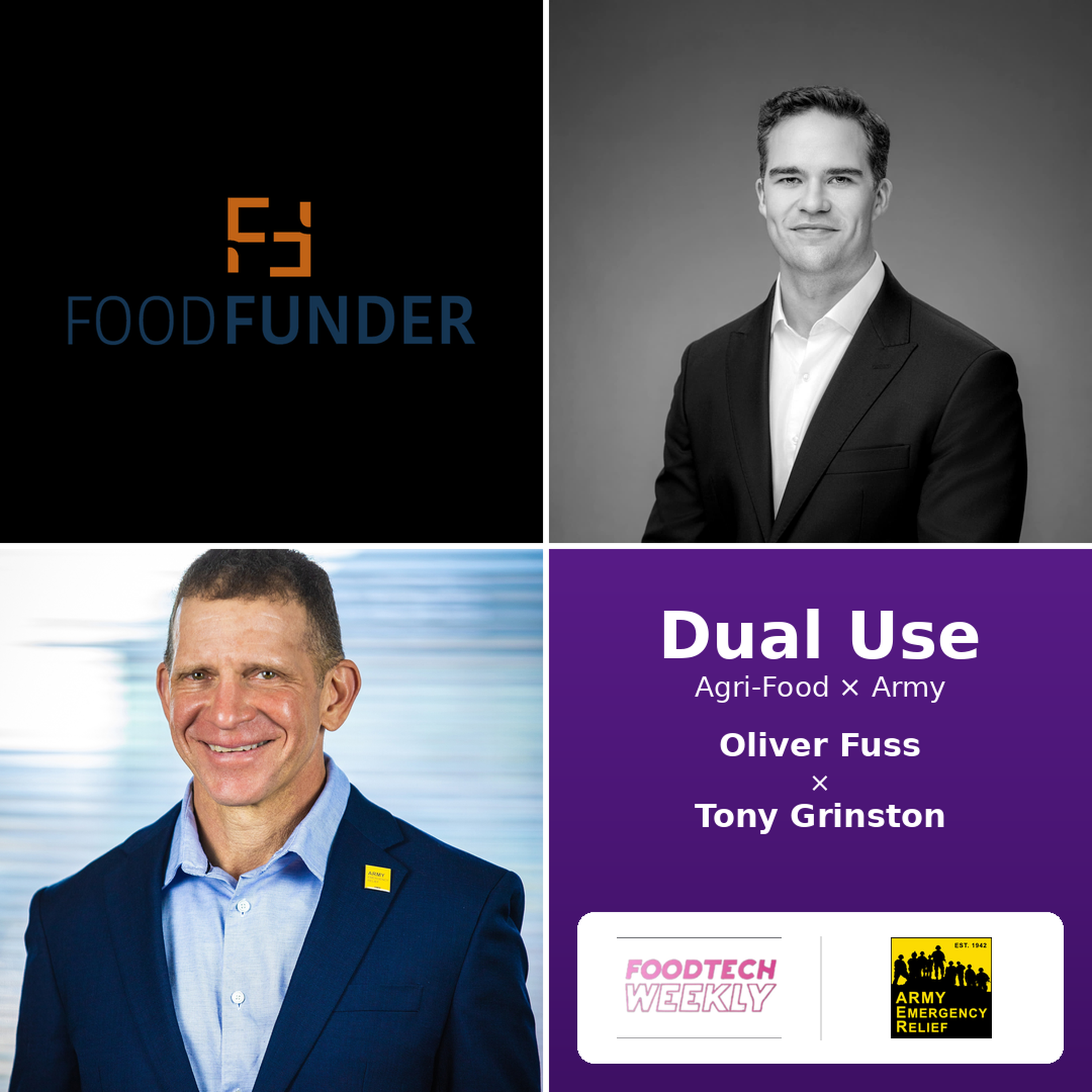 Oliver Fuss × Tony Grinston — Dual Use: Agri-Food × Army (FoodFunder / AER) 01.10.2026 50minOliver Fuss (FoodFunder) sits down with Michael "Tony" Grinston — 16th Sergeant Major of the Army (2019–2023) and CEO of Army Emergency Relief — for Episode 1 of Dual Use: Agri-Food × Army. The U.S. Army spends billions each year on food, materials, and biotech, yet most agri-food startups have no clear path in. This conversation opens that gap: what the Army actually needs from feeding and readiness, how change gets funded and scaled, and how founders can engage without wasting cycles on the wrong doors. Topics include: • Why fuel (not just fitness) is the missing readiness piece — and how DFAC modernization became a signal of how far feeding ops had to move • Campus-style dining as a live garrison model (choice, quality, off-DFAC operators) • How Army initiatives actually scale: champion + POM budget + accountable leadership • What soldiers adopt in the field: taste first, then performance, then emergency rations — and why weight/cube matter in contested logistics • Practical founder engagement: AUSA/LANPAC and logistics/food shows, innovation labs on large posts, and bringing real problem data Guest: Michael "Tony" Grinston — 16th SMA; CEO, Army Emergency Relief (from Jan 2024); first former NCO to lead AER. Signature feeding/readiness pushes include campus-style dining, DFAC modernization, Go for Green, and Holistic Health & Fitness (H2F). Host: Oliver · FoodFunder Series: Dual Use — Agri-Food × Army Distribution: Food Tech Weekly / Investment Climate Podcast Links: • Army Emergency Relief: https://www.armyemergencyrelief.org/ • FoodFunder: https://foodfunder.com/ • Food Tech Weekly: https://news.foodtechweekly.com/
 -
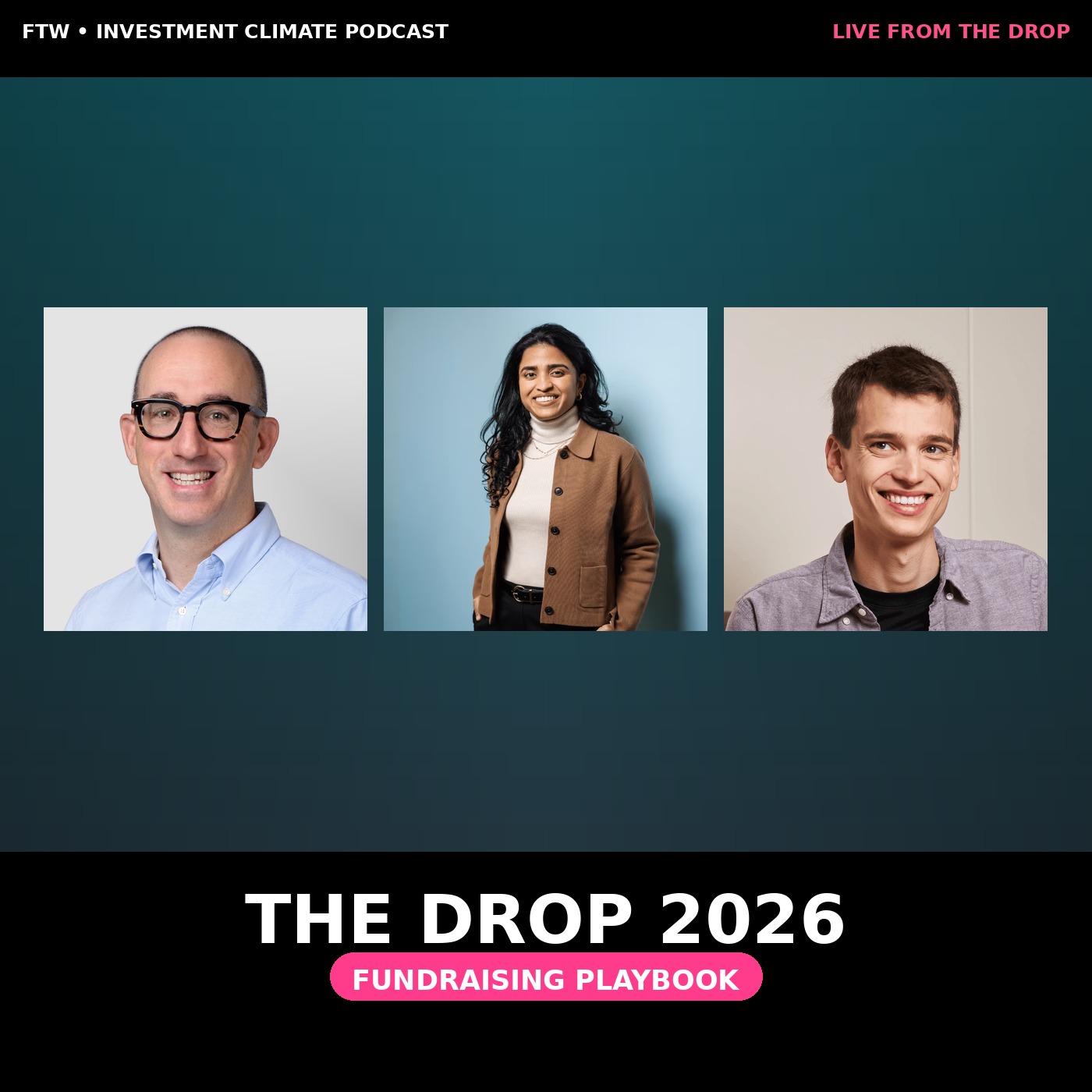 The Drop: Raising Money During A Down Market - Featuring - Mark Kahn, Divya Murthy, And Tomas Turner 30.09.2026 36minLive from The Drop 2026 with Mark Kahn (Managing Partner, Omnivore), Divya Murthy (Principal, Oyster Bay Venture Capital), and Tomas Turner (CEO & Co-founder, Cosaic).We dig into how AgriFoodTech founders and investors are actually raising and deploying today, funds under management, what still works in a tough market, and the human side of private capital: connect before business, chase excellence over money, and why CEOs should still talk to VCs after a raise.Guests:Mark Kahn: Omnivore (Global South agrifood VC)Divya Murthy: Oyster Bay (European early-stage agri-food)Tomas Turner: Cosaic (yeast fermentation / clean-label ingredients)Hosted by Alex Shandrovsky · Investment Climate Podcast · FoodTech WeeklyWant me to put this on the episode as-is, or tweak tone/length first?
 -
 Guillaume Béland (Zone Agtech): Quebec’s Agrifood Hub, CapEx→OpEx & Strategic Capital for Founders 18.09.2026Guillaume Béland of Zone Agtech walks through Quebecs “City of Ag & Food Tech industrial land near Montreal, cheap hydro power, and a third/third/third funding model with government and banks. He explains how founders can shift facility CapEx into leases/OpEx, tap R&D supports via the innovation complex (labs ~Jan 2027), and set up a Montreal HQ without moving IP. Alex and Guillaume cover fit criteria, visas, timelines, and the top deal-breakers: offtake, regulation, and supply.
 -
 Adam Tarshis (Mozza Foods) — Growing Real Casein in Soybeans 08.09.2026 40minAdam Tarshis, co-founder and CEO of Mozza Foods, joins Alex Shandrovsky on the Investment Climate podcast.Mozza is a molecular farming company engineering soybeans to produce authentic dairy casein — the protein that makes cheese melt and stretch — as a drop-in ingredient for dairy manufacturers, without cows and without building precision-fermentation factories.In this episode: why molecular farming beats bioreactors for cost parity, funding deep tech in food when capital is scarce, infrastructure and regulation paths (USDA/FDA), and what it takes to get soybean-grown casein to market (target launch late 2028).Guest: Adam Tarshis, Co-founder & CEO, Mozza FoodsHost: Alex ShandrovskyMedia partners: vegconomist · Food Tech WeeklyBook a conversation: https://cal.com/foodtechweekly/1-1-call
 -
 Javed Husain (Totaleehalal) — Bootstrapping a UK Halal Food Delivery Marketplace 08.09.2026 34minIn this episode, I sit down with Javed Husain, Founder & CEO of Totaleehalal — the UK's halal-only food delivery marketplace for restaurants, groceries, and meat, built around strict halal assurance (HMC-certified positioning) so Muslim consumers aren't guessing what's on the plate.Javed came out of advertising/media and bootstrapped Totaleehalal after an exit rather than raising a classic VC round. We get into why he built a 100% halal marketplace instead of sitting on existing delivery apps, how certification and contamination controls actually work in food delivery, the London rollout (West/East) and path to broader UK coverage, and what kind of capital — if any — fits a values-driven, assurance-first consumer marketplace.🎧 Listen for the bootstrap story, the halal-assurance ops playbook, and what support Totaleehalal needs next from the Food Tech Weekly community.Key Facts: TotaleehalalJaved Husain (Founder & CEO)Based: London, UKWhat they do: Halal-only food delivery marketplace (restaurants, groceries, fresh meat) with strict certification / no non-halal contamination; charity pledge in launch coverage.
 -
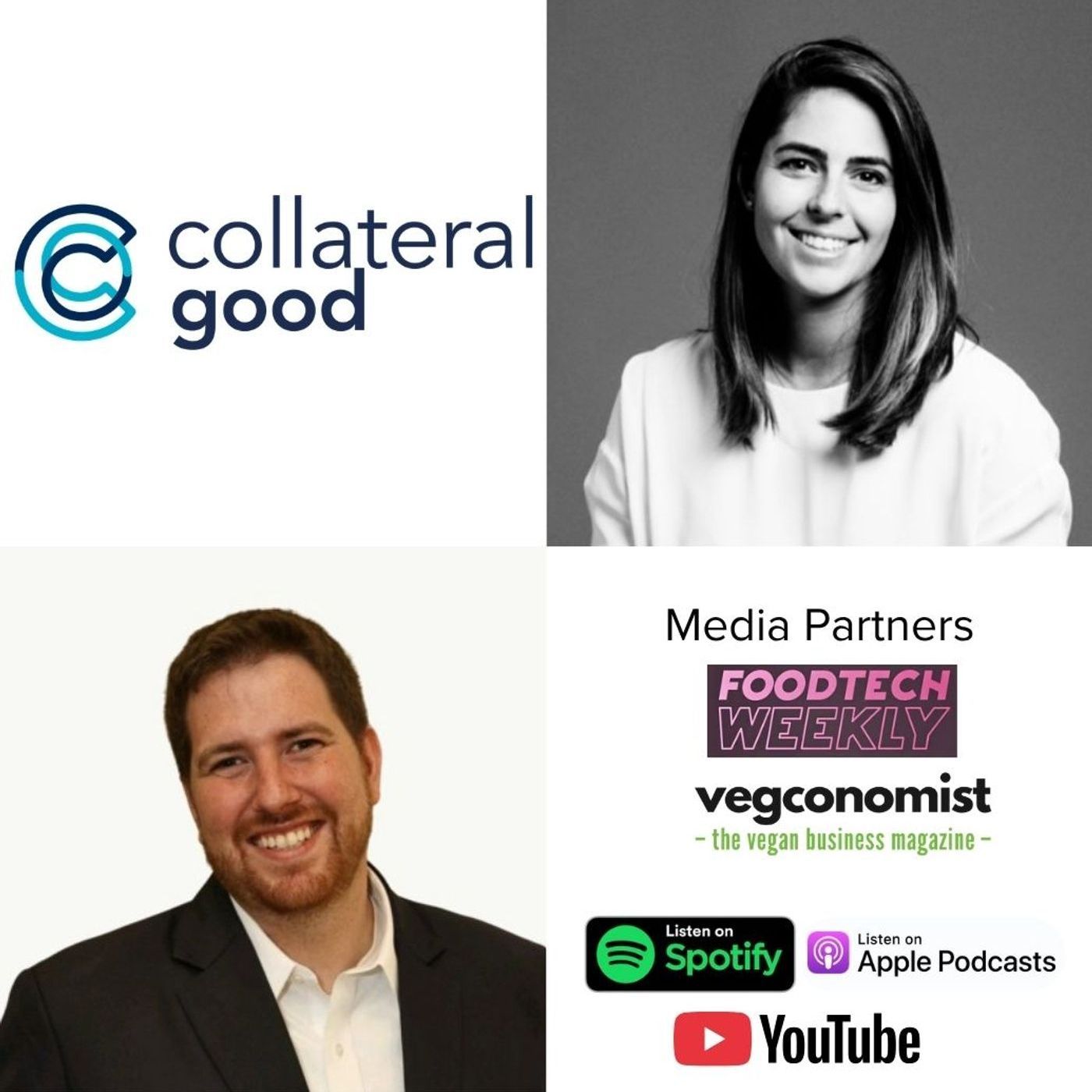 Why "A Flat Round Is the New Up Round," and Investing Through the Food-Tech Reset - Collateral Good 27.08.2026 38minEpisode 123: Collateral Good: Mariana Gonzalez on Why "A Flat Round Is the New Up Round," Corporate-Backed Venture, and Investing Through the Food-Tech ResetIn this episode, I sit down with Mariana Gonzalez, Co-Founder & Partner at Collateral Good, a Zurich-based, globally-investing venture fund managing €100M across three funds — food innovation, packaging innovation, and textile innovation — with 24 portfolio companies and a distinctive edge: they're backed by major corporates. Grupo Bimbo (the world's largest bread manufacturer) is a key LP in the food fund; Hugo Boss anchors the textile fund. That closeness to industry gives Collateral Good direct access to corporate pain points and the R&D decision-makers who actually adopt new technology. Mariana — a Mexican industrial engineer who cut her teeth as a buyer and then in operations and logistics at Costco — brings a rare retail-and-supply-chain lens to venture. We get into her clear-eyed read of the market reset: why "a flat round is the new up round," why this is an investor's market after the founder's market of 2021–22, and how Collateral Good's new, larger strategy will target more market-proven companies plus "special situations" created by the valuation correction. Along the way, Mariana delivers some of the most practical fundraising wisdom we've had on the show — on pressure-testing business models, transparency as a two-way street, cap-table alignment ("it takes a village"), how she actually approaches bridge rounds from the investor's side, and the founder qualities she now screens for.🎧 Listen to the full masterclass to hear why food-tech timelines run 5+ years longer than the deck says, how corporate LPs and CVCs are getting far more strategic (and why they still need funds like hers), when Mariana will and won't back a "moonshot," how she runs bridge conversations honestly from a position of strength, and the two founder traits she believes separate the survivors: brutal honesty and asking for help early.Key Facts: Collateral GoodMariana Gonzalez (Co-Founder & Partner): https://www.linkedin.com/in/mariana-gonzalez-lopez-25093817aWebsite: collateralgood.euHeadquarters: Zurich, SwitzerlandFirm: A climate-first / impact venture fund operating since 2018, managing €100M across three funds — food innovation, packaging innovation, and textile innovation — with 24 portfolio companies. Leads, co-leads, or follows depending on what's best for the company.Select Portfolio (food): The EVERY Company, LiveKindly, Heartbest (plant-based dairy, Mexico), Bramble (pet food, US), among 24 companies across the three funds.BlurbCOLLATERAL GOOD is a different kind of venture firm: a Zurich-based, climate-first fund that has spent since 2018 building three thematic funds — food, packaging, and textile innovation — on a foundation most investors can't replicate. Its LPs are the corporates that ultimately buy innovation: Grupo Bimbo in food, Hugo Boss in textiles. That gives the €100M, 24-company firm something rarer than capital — a direct channel to the industry's real pain points and the R&D teams who decide what actually reaches a shelf. Led in this conversation by co-founder Mariana Gonzalez, a Mexican industrial engineer whose formative years were spent inside Costco's operations, the fund pairs venture conviction with a hard-nosed understanding of how slowly consumers and supply chains truly change.
 -
 On Winning Pitch Competitions and its 5-Minute Pitch Anatomy - Nurtured Nuts: Bryant Williams 24.08.2026 26minEpisode 122: Nurtured Nuts: Bryant Williams on Winning Pitch Competitions, the Anatomy of a 5-Minute Pitch, and Gene-Editing the Allergens Out of PeanutsIn this episode, I sit down with Bryant Williams, Founder & CEO of Nurtured Nuts Company — the Minnesota-based food-tech startup commercializing the allergen-less peanuts created by AgriNetica's gene-editing (CRISPR) and bringing them back to the schools, airlines, and restaurants that banned them. Just weeks before we spoke, Bryant took first place at IFT FIRST's "The Pitch!" competition in Chicago — his fourth pitch-competition win — so we turned this into a genuine masterclass on the single most underrated founder skill: pitching. Bryant walks through his exact 5-minute pitch, beat by beat, and explains the thinking behind each move: why he opens with a 14-word one-liner in the first fifteen seconds; how he builds an emotional "hook" that makes even the peanut itself a character worth rooting for; how he frames the solution, the market (a ~2BUSpeanut-buttermarket,~200M in restricted food-service, and a secondary opportunity he sizes north of a trillion), the products and business model, the scientific credibility, and the go-to-market; and how he "lands the plane" with an ask that turns the whole room into potential partners. We also get his practical preparation playbook — mirror reps and timed run-throughs, knowing your audience, researching the judges, and slowing down because "you have more time than you realize."🎧 Listen to the full masterclass to hear the exact line Bryant closes every pitch with ("I've shared a lot with you — but the most important thing I'm missing is you"), why concise beats comprehensive, how he makes nostalgia do the selling, and where Nurtured Nuts is on its path to the first commercially available allergen-less peanut.Key Facts: Nurtured Nuts CompanyBryant Williams (Founder & CEO): https://www.linkedin.com/in/bryant-c-williamsWebsite: https://www.nurturednuts.com/Based: Minnesota (Minneapolis), USAWhat They Do: Commercialize AgriNetica's peanut, gene-edited to remove the three clinically relevant proteins responsible for the anaphylactic response in peanuts — creating an allergen-less peanut that can re-enter "restricted" markets (schools, airlines, restaurants) while preserving flavor, nutrition, and versatility.Recognition: Grand-prize winner of "The Pitch!" at IFT FIRST 2026 in Chicago ($10,000 prize) — Bryant's fourth pitch-competition win (also Bend Venture Conference 2024, a Sango virtual competition, and Summerfest Tech AI in Milwaukee).BlurbNURTURED NUTS COMPANY is chasing something that sounds impossible and feels inevitable: a peanut that can't hurt you. Using second-generation gene-editing, AgriNetica — which owns the gene-editing technology and IP — has removed the three clinically relevant proteins behind the anaphylactic response, "rebuilt the peanut," and — with USDA approval and a Georgia field planting — begun what's reported as the first commercial-scale outdoor cultivation of gene-edited peanuts in the U.S. The prize isn't just safety; it's category re-creation. Peanuts once lived on every lunch table, plane, and ballpark before allergy risk exiled them. Nurtured Nuts wants to bring them back — and open entirely new doors in beverages, confectionery, snacks, and sports nutrition along the way.AgriNetica developed the peanut — it owns the gene-editing technology and IP, and runs the clinical and scientific work. Nurtured Nuts is the commercialization partner (sales, manufacturing, distribution, marketing).
 -
 CPG Venture Math Behind a Series A, and Making Founders "Whole" on Dilution - Iris Ventures 20.08.2026 38minEpisode 121: Iris Ventures: Florian Wojewodzki on the CPG Venture Math Behind a Series A, Making Founders "Whole" on Dilution, and the Health-and-Wellness SupercycleIn this episode — the show's first growth-stage consumer/CPG investor after 130 episodes — I sit down with Florian Wojewodzki, Partner at Iris Ventures, an early-growth, consumer-focused fund headquartered in Barcelona with a satellite in London, managing just over €225M across two funds. Florian gives one of the most transparent breakdowns of venture math I've heard: Iris underwrites every deal to 4x its money (they're a MOIC shop, not an IRR shop), targets a 3–5 year hold, and typically leads or co-leads for 15–25% ownership with €7–8M initial checks that can step up to €20M inclusive of follow-ons. We get into exactly what a Series A founder needs to clear the bar (roughly €3M+ revenue, real capital efficiency, healthy gross margins, strong repeat), why Iris never underwrites to multiple expansion or to IPO, and how they think about exits (mostly strategic sale). Florian is refreshingly candid about founder incentives — Iris has asked existing cap tables to hand founders back 5–10 points when they've been over-diluted, because a founder without skin in the game is a problem down the line. Then we go deep on his biggest conviction: a 10–15 year health-and-wellness supercycle, why "health is wealth" is reshaping wallet share, where the real edge lives (novel, science-backed ingredients over commoditized "brand plays"), and the thesis behind his recent seed investment in Lucille, a senior-nutrition brand chasing a massive, un-innovated white space.🎧 Listen to the full masterclass to hear the founder question Florian always asks ("what are you optimizing for?"), why raising at the highest possible valuation can set you up for pain, the 4–5x top-line growth you need to be "in the money," why consumer is a natural moat while everyone else piles into AI and defense, and how Iris found Lucille pre-launch through an angel network.Key Facts: Iris VenturesFlorian Wojewodzki: https://www.linkedin.com/in/florian-wojewodzki-36434424Website: weareiris.comHeadquarters: Barcelona, SpainFund: An early-growth, consumer-focused venture fund managing just over €225M across two fundsStage & Focus: Almost exclusively Series A / Series B branded consumer propositions (with a very high bar for 1–2 seed deals per fund). ~80% Western Europe + UK, up to ~20% opportunistically in the US.Check Sizes: €7–8M initial, stepping up to €20M inclusive of follow-on reserves; leads or co-leads all rounds and takes board seats.BlurbIRIS VENTURES is a rare thing in European venture: a true consumer specialist, deploying just over €225M across two funds into Series A and B branded consumer businesses with the brand sensibility and ear-to-the-ground the category demands. What makes this conversation so useful is Florian Wojewodzki's willingness to show the actual machinery of the decision. Iris is a MOIC shop that underwrites every deal to 4x over three to five years, never bets on multiple expansion, and is transparent with founders at the term-sheet stage about exactly what it has promised its LPs. The result is a clear, teachable picture of what a growth-stage consumer round really requires — roughly €3M+ in revenue, genuine capital efficiency, durable gross margins, and a credible path to a strategic exit — and an honest account of the traps, from raising at a valuation you can't grow into to arriving at Series A already over-diluted.
 -
 Re-Examining Tech Adoption: Lance Lively on Market Pull, CPG Unlocking, and Beyond Meat’s Missteps 18.08.2026 47minEpisode 120: Re-Examining Technology Adoption: Lance Lively on Market Pull, CPG Unlocking, and Beyond Meat’s Missteps In this episode, I speak with Lance Lively, founder of Livelyhood and former executive at The Every Company and BioLumen. Lance breaks down why the alternative protein industry hit a commercial plateau despite early techno-optimism, challenging standard S-curve adoption models and offering a masterclass in how market demand actually works. Lance walks us through the intellectual foundations of alternative protein, dissecting how pioneers misread historical case studies like kerosene, automobiles, recombinant rennet, and synthetic insulin to build a flawed premise: that "superior" technology inherently guarantees market dominance. He exposes the severe survivorship bias behind the S-curve, explaining why tech features do not drive adoption, but rather how unblocking pre-existing, acute market demand creates the conditions for new technologies to flourish. We go deep on the contrast between pitch-deck promises and real-world supply chains: how animal welfare pledges failed to drive commercial adoption for precision-fermentation eggs until Avian Flu price spikes forced multinational food brands to seek a functional hedge; why plant-based meat stalled sub-1% market share as animal meat was culturally reframed as a healthy, whole food while alt-meat got labeled as ultra-processed; and how CPG breakouts like Gruns achieve explosive scale not through deep tech, but by unblocking friction points for hyper-specific customer profiles.🎧 Listen to the full episode to hear why kerosene didn't displace whale oil simply because it was "better," but because industrial growth desperately needed evening light right as whale scarcity priced buyers out; how Avian Flu outbreaks turned precision-fermentation egg proteins into an essential supply-chain hedge; why animal meat flipped into a "health food" in the cultural zeitgeist while plant-based meat lost its halo; and how deep-tech founders can stop building in a vacuum by embedding themselves in industry to solve blocked customer priorities.Key Facts & Key Concepts Lance Lively (Founder & CEO): https://www.linkedin.com/in/lancelively Website: https://www.findlivelyhood.com/Headquarter: USACore Thesis: Advanced technology does not generate market adoption—unblocked market demand does. Startups that focus on tech specs rather than unblocking customer friction are trapped in survivorship bias.Blurb LIVELYHOOD founder Lance Lively addresses a fundamental question facing food-tech: where is the adoption we were promised? Around 2019, alternative protein pioneers operated on an axiomatic belief that animal-free products would inevitably conquer animal agriculture following the classic sigmoidal "S-curve" seen in smartphones, automobiles, and synthetic insulin. But as plant-based meat market share sits below 1% and former industry darlings struggle, Lance delivers a candid diagnosis of what went wrong. By re-examining the real economic forces behind historic tech shifts—from whale oil to kerosene—he shows why ethical pledges fall flat until supply chain shocks force enterprise action, and outlines a practical framework for founders to build products around unblocking real customer pain points.
 -
 On Landing DSM as a Strategic Lead, & Why He Chose B2B Over Building a Brand- Lorenzo Pessini, NOUS 12.08.2026 42minEpisode 119: Nous: Lorenzo Pessini on Landing dsm-firmenich as a Strategic Lead, the Clinical Study That Closed the Round, and Why He Chose B2B Over Building a BrandIn this episode, I speak with Lorenzo Pessini, the 27-year-old CEO & Founder of NOUS, an Italian food-tech company building the functional ingredients of the future for food, beverage, and nutraceuticals. NOUS just closed a €2.315M seed round led by dsm-firmenich Ventures (co-led by Eatable Adventures and CDP Venture Capital) — and the story of how it came together is a masterclass in working with a strategic. dsm-firmenich's scouting team found Nous roughly 18 months earlier, when the company was a pre-seed unknown whose only real digital footprint was a press release from its FoodSeed pre-seed. Lorenzo walks us through the pivot that reframed their flagship ingredient, Koncentra, from a "caffeine alternative" (a losing race against cheap synthetic caffeine) into a botanical brain-wellbeing ingredient for energy, focus, and mood — and how a jointly-run clinical study with dsm-firmenich became the single thing that closed the round. We go deep on the mechanics most founders never hear: what clinical studies actually cost (€70K to €180K+), how crossover designs cut the bill, why placebo is the golden standard, and the 9–15 month timeline from protocol to publication. Then Lorenzo makes a candid case for B2B over B2C, explains a deliberately counterintuitive IP strategy (patent the product, keep the process a trade secret), and shares grounded wisdom on valuation, transparency, and the patience a corporate partnership demands.🎧 Listen to the full episode to hear why a press release should spotlight the company, not the founder; how to get a strategic to co-invest in the very clinical study that de-risks their own deal; the crossover-study trick that turns 20 participants into a 60-person comparison; why Lorenzo would rather be "in the shadows" doing R&D than exposed to consumer pressure; and his approach to benchmarking valuation by calling other founders — with a crucial caveat about comparing apples to apples.Key Facts: NousLorenzo Pessini (CEO & Founder): https://www.linkedin.com/in/pessinilorenzoHeadquarters: ItalyWhat They Do: A B2B food-tech company developing science-backed functional ingredients for food, beverage, and nutraceuticals. Flagship ingredient Koncentra is a botanical phytocomplex (a combination of molecules from four raw materials) positioned for brain wellbeing — supporting energy levels, cognition/alertness, and mood — via a proprietary extraction and granulation process.Funding: €2.315M seed round led by dsm-firmenich Ventures, co-led by Eatable Adventures (via Accelera Ventures) and CDP Venture Capital.BlurbNOUS is built on a disciplined idea: that the winning functional ingredients of the future won't be the loudest consumer brands, but the scientifically-validated building blocks inside them. Its flagship, Koncentra, is a botanical phytocomplex engineered through a proprietary extraction and granulation process to support energy, focus, and mood — a "brain-wellbeing" ingredient designed to sit inside the products of the world's biggest beverage and supplement companies rather than compete with them on a shelf. When a race against cheap synthetic caffeine proved a dead end, Nous repositioned the ingredient around what a third party could actually prove it did, and let the science lead.
 -
 Being "Found" by Investors, Pivoting from Product to Platform, Turning LOIs into Paid Pilots - XiA'H 10.08.2026 25minEpisode 118: XiA'H: Dan Cabral on Being "Found" by Investors from Monterrey, Pivoting from Product to Platform, and Turning LOIs into Paid PilotsIn this episode — a first for the show, our first founder from Mexico — I speak with Dan Cabral, CEO & Co-Founder of XiA'H, a Monterrey-based biotech that discovers, develops, and scales science-backed functional ingredients from nature using biotechnology. XiA'H just received investment from Big Idea Ventures, kick-starting its pre-seed round. Dan's story is a playbook for building outside the big VC hubs: starting with essentially zero pesos and an FFF round, she stitched together global accelerators — a START Fellowship at the University of St. Gallen that took him to Switzerland for six months, then Mass Challenge — until the ecosystem started referring him upward and Big Idea Ventures reached in on LinkedIn and "found" him. We dig into XiA'H's sharp pivot from a B2C functional chewing gum to a B2B ingredient platform, how they de-risk a famously fragmented ingredient-development pipeline, and how they beat the "you're too early / can young scientists really execute?" objection by converting LOIs into paid pilots and scaling to 50-litre bioreactor batches.🎧 Listen to the full episode to hear how a founder in a "blooming but new" ecosystem gets found by a global fund, how XiA'H compresses ingredient development from 6–10 years to 2–3 (and one protein matrix from months to two weeks), the pet-nutrition work they're proud of, how Dan raised an FFF round without fear, and why she'll "follow XiA'H to the end of the world" if that's what scaling takes.Key Facts: XiA'HDan Cabral (CEO & Co-Founder): https://www.linkedin.com/in/dan-cpWebsite: https://www.xiah.com.mx/Headquarters: Monterrey, Mexico What They Do: A biotech ingredient platform that discovers, develops, and scales science-backed active functional ingredients from nature. XiA'H transforms plant biomass into high-value bioactives using precision fermentation and enzyme-based processing (rather than harsh solvents or heat), bridging the gap between science and commercial execution for brands.Funding: Pre-seed round kick-started by an investment from Big Idea Ventures (Global Food Innovation Fund II); currently raising the balance of the pre-seed from angels, VCs, strategics/CVCs, and non-dilutive grants.BlurbXiA'H is proof that world-class deep-tech founders are everywhere — the opportunity just isn't evenly distributed yet. Based in Monterrey and built by a pair of self-described "crazy scientists" (Dan Cabral and his sister), XiA'H uses precision fermentation and enzyme-based processing to turn plant biomass into high-value functional ingredients, standing in the gap between promising science and market-ready product. In an ingredient industry that is powerful but deeply fragmented — where brands want new, natural, functional ingredients already shelf-stable and de-risked — XiA'H compresses a development cycle that normally runs six to ten years down to two or three, and takes an ingredient from discovery to pilot in about twelve weeks.
 -
 On Ghent's Founder-Friendly Spin-Out Playbook, and Why Lean Beats Big in AgTech- Chiara Guidi, B-COS 05.08.2026 27minEpisode 117: B-COS: Chiara Guidi on Ghent's Founder-Friendly Spin-Out Playbook, Plant Vaccines Over Pesticides, and Why Lean Beats Big in AgTechIn this episode, I speak with Dr. Chiara Guidi, Co-Founder & CEO of B-COS — a University of Ghent spin-off, incubated at Biotope by VIB, that is building "plant vaccines": carbohydrate bioactives (chito-oligosaccharides) produced by precision fermentation that switch on a crop's own defense system, making it more resilient and cutting the need for chemical pesticides. A year out of academia, Chiara and her team have raised €1M combining VC and grant funding. She gives an unusually candid look at what it takes to commercialize 15 years of university research: how B-COS became the very first company through Ghent's new "Fast Lane" spin-out program — a standardized, founder-friendly deal (low equity, low royalties, a worldwide exclusive perpetual license) that let them incorporate in a month instead of a year — and why a brand-new deal structure that no investor had seen before became one of the trickiest parts of the raise. We dig into how she turned public research into a de-risked asset investors love, how she built commercial traction at pre-seed through 100+ customer conversations, the two-track product strategy (long-horizon crop protection plus faster-to-market biostimulants), the reality of Belgium's grant ecosystem, and a refreshingly disciplined, "lean-and-mean" philosophy on valuation and survival.🎧 Listen to the full episode to hear why a spin-out license can hand investors 15 years of de-risked science essentially for free, how B-COS answered the "there's nothing here yet" objection at pre-seed, why you often need funding in hand before you can win a VLAIO grant, how Chiara benchmarks valuation in a market with only five or six possible acquirers, and her answer to the question every deep-tech founder dreads: why won't the giants just crush you?Key Facts: B-COSChiara Guidi (Co-Founder & CEO): https://www.linkedin.com/in/chiara-guidi-Website: b-cos.euHeadquarters: BelgiumWhat They Do: "Plant vaccines" for sustainable crop protection. B-COS uses precision fermentation to produce carbohydrate bioactives (chito-oligosaccharides) that activate a crop's natural defense system — improving resilience against fungal disease, nematodes, and drought stress, and reducing chemical pesticide use. Initial focus crop: Funding: €1M pre-seed (VC + grants), backed by Agri Investment Fund (AIF) and VP Capital, with support from Biotope by VIB, a VLAIO research grant, and EIT (European Institute of Innovation & Technology).BlurbB-COS is built on an elegant idea: instead of spraying crops with chemicals to kill what attacks them, teach the plant to defend itself. Using precision fermentation to brew carbohydrate bioactives — chito-oligosaccharides that act like a vaccine for plants — B-COS switches on a crop's own immune response, building resilience to fungal disease, nematodes, and drought while cutting reliance on synthetic pesticides. Spun out of fifteen years of research at Ghent University and incubated at Biotope by VIB, it is a platform with reach well beyond its first focus crop.
 -
 Landing a Strategic Corporate Lead, and Structuring University IP - Just Meat Protein 03.08.2026 31minEpisode 116: Just Meat Protein: Ellie Whelan & Aarti Tobin on Landing a Strategic Corporate Lead, Upcycling Chicken into Whey's Rival, and Structuring University IP That Investors Will BackIn this episode, I speak with the two women behind Just Meat Protein — Ellie Whelan, CEO & Co-Founder, and Dr. Aarti Tobin, Chief Scientific Officer and the scientist behind the technology — fresh off closing a A$1.8M seed round. Just Meat Protein takes low-value cuts of meat and turns them into high-value, nutrient-dense ingredients: their hydrolysed chicken protein powder (ProPepta) is roughly 90% protein, highly soluble, clear in solution, and allergen-free — an alternative to whey protein isolate arriving right as whey prices spike and supply tightens. Ellie walks us through how their lead investor, poultry giant Ingham's Enterprises, came out of a multi-year R&D relationship that began while the tech was still a project inside CSIRO — a strategic partner that both supplies the raw material and shares the circular-economy vision. We get into the real objections they faced (plant-based skeptics, the "meat in my cookies-and-cream" consumer perception question, and scale-up manufacturing risk), and Dr. Tobin gives a masterclass in how a scientist earns an investor's confidence on scale-up. Then Ellie breaks down two things founders rarely explain well: how they structured CSIRO's IP as a license-for-royalty (keeping the research org off the cap table) and how Australian matching grants stack on top of a closed round.🎧 Listen to the full episode to hear how a low-value poultry cut worth $1–2/kg becomes a $40+/kg ingredient, why whey's price surge and supply shortage are a tailwind, Dr. Tobin's answer to "how do you know it scales?", the bare-bones fundraising stack (a Canva deck and a Microsoft Teams data room), and the exclusive-worldwide-license-with-assignment-triggers structure that made investors comfortable with university-born IP.Key Facts: Just Meat ProteinEllie Whelan (CEO & Co-Founder): https://www.linkedin.com/in/elliewhelanDr. Aarti Tobin (CSO & Co-Founder): https://www.linkedin.com/in/aarti-tobin-82a121141Headquarter: AustraliaWhat They Do: Upcycle low-value meat cuts (poultry) into high-value, nutrient-dense protein ingredients. Flagship product ProPepta is a hydrolysed chicken protein powder — ~90% protein, highly soluble (stays in solution up to ~60%), clear in solution, and allergen-free — positioned as a whey protein isolate alternative for sports nutrition, functional foods, beverages, and specialized/aged-care nutrition.Funding: A$1.8M seed round, led by strategic corporate investor Ingham's Enterprises (Australia's largest poultry producer), which invested A$1.05M for a ~10% stake. Ingham's is both an equity partner and a raw-material supplier.BlurbJUST MEAT PROTEIN is built on a simple, powerful piece of arithmetic: a poultry cut worth a dollar or two a kilo can become a protein ingredient worth forty-plus. Born from four years of research inside CSIRO, the company's hydrolysed chicken protein — ProPepta — hits roughly 90% protein while solving problems whey can't: it stays soluble at high concentrations, runs clear in solution for protein waters and beverages, and is allergen-free. It arrives at an ideal moment, as whey prices climb and supply tightens, and as demand for high-protein foods surges across sports nutrition, functional foods, and GLP-1-era nutrition. It is upcycling as a business model — more value from every animal, and a genuine circular-economy story.
 -
 On Crossing to the Other Side of the Table, & Off-Take Agreements Over LOIs-Darko Mandich, gener8tor 29.07.2026 33minEpisode 115: BEAM Circular Accelerator (Powered by gener8tor): Darko Mandich on Crossing to the Other Side of the Table, Off-Take Agreements Over LOIs, and Turning Almond Waste into a BioeconomyIn this episode, I catch up with my friend Darko Mandich — Managing Director of the BEAM Circular Accelerator (Powered by gener8tor) and Ag Practice Chair at gener8tor — for a rare look at fundraising from the investor's seat. Darko knows both sides intimately: he built and exited MeliBio, the bee-free honey pioneer (acquired by Switzerland's FoodYoung Labs), and has now crossed the table to back early-stage founders turning agricultural waste into value. He shares what genuinely surprised him about the investor side — how many internal "yeses" it takes to cut a single check, and why founder patience is so misunderstood — and makes a passionate case that the founders winning in 2026 are commercially driven, not science driven, doing far more with far less. We dig into why LOIs no longer cut it (investors now want signed off-take agreements), how gener8tor and BEAM Circular are attacking the CapEx barrier head-on by building a shared California Bioeconomy Innovation Campus in Modesto, and why California's Central Valley — with 80% of the world's almonds and mountains of hulls and shells — is one of the best launchpads on earth for the circular bioeconomy.🎧 Listen to the full episode to hear the single biggest mistake founders make when following up with investors (and the "keep delighting us with news" approach that works instead), why aggressive AI-generated outreach lands you in the spam folder, how building in public and authenticity get investors to source you, what BEAM Circular looks for in an applicant, and the incentives that make the Central Valley — not just San Francisco — a place to scale.Key Facts: BEAM Circular Accelerator (Powered by gener8tor)Darko Mandich: https://www.linkedin.com/in/darkomandichWebsites: gener8tor.com · beamcircular.orgProgram Base: Modesto, California Focus: Early- to mid-stage startups in biomanufacturing, waste transformation, and circular solutions across agriculture and natural resources — turning agricultural side streams (e.g., almond hulls and shells) into materials, fuels, ingredients, and chemicals.Support (per company): ~$100K in combined support — a $15K non-dilutive grant, a $35K investment, and $50K in California Bioeconomy Innovation Campus credits — plus mentorship and partner perks. BlurbThe BEAM CIRCULAR ACCELERATOR, powered by gener8tor, is built on a bet about geography and timing: that the next wave of the bioeconomy won't be built only in San Francisco or Boston, but in places like California's Central Valley — where 80% of the world's almonds are grown, and where the hulls, shells, and side streams once treated as waste are becoming feedstock for materials, fuels, ingredients, and chemicals. In partnership with the Modesto nonprofit BEAM Circular, the program pairs small, concierge cohorts with a shared California Bioeconomy Innovation Campus designed to remove the single biggest killer of deep-tech startups — CapEx — so founders don't have to burn venture dollars building their own pilot facilities.
 -
 Raising Friends-and-Family in a Frozen Market & Giving a VC Goosebumps in 5-Mins - Saku Biosciences 27.07.2026 29minEpisode 114: Saku Biosciences: Mark van Zee on Raising Friends-and-Family in a Frozen Market, Betting on the Jockey, and Giving a VC Goosebumps in Five MinutesIn this episode, I sit down with Mark van Zee, Co-Founder & CEO of Saku Biosciences, who just closed a $940K round with Big Idea Ventures coming in as the institutional lead. It's a refreshingly different conversation for this show — instead of a later-stage playbook, Mark takes us all the way back to the very first checks, and how you actually raise when the market is frozen. Saku started fundraising two weeks after the tariff announcement that sent institutional capital "to zero," so Mark and his co-founder John got scrappy: friends-and-family checks of $5K–$100K that triggered a "pile-on" chain reaction, plus capital from a non-obvious private institution that took a year of relationship-building and ultimately saved the company. Mark reframes friends-and-family money not as a source of anxiety but as motivation — a commitment "in blood" — and makes the case that early-stage investing is betting on the jockey, not the horse. We close on one of the best fundraising stories I've heard: how the Saku team reverse-engineered exactly what Big Idea Ventures' decision-maker was looking for ("something that gives me goosebumps") and built a five-minute narrative to deliver it.🎧 Listen to the full episode to hear why fundraising is more like dating than a transaction, how to unlock non-obvious capital that isn't promoted anywhere, why you sell to the associate and the partner completely differently, how Mark turned "I ride my bike to college classes at fourteen" into a goosebumps pitch, and why nobody in food tech has cracked the scalable-company code yet — but the wave is coming.Key Facts: Saku BiosciencesMark van Zee: https://www.linkedin.com/in/mark-van-zee-089910154Website: sakubio.comHeadquarters: Los Angeles, CaliforniaFunding: $940K round (SAFE), with Big Idea Ventures as institutional lead (Global Food Innovation Fund II) — following a friends-and-family raise and capital from a private institutional source.BlurbSAKU BIOSCIENCES exists to fix a quiet but expensive failure in biomanufacturing: the strains companies screen in the lab are optimized for the lab, not for the fermentation tank they'll actually run in. That mismatch produces false positives, wasted scale-up campaigns, and stubbornly poor unit economics. Saku's PicoShells platform — hollow, porous hydrogel particles that isolate millions of strain variants and let them be tested under true bioreactor conditions — lets producers select for real-world manufacturing performance, and get to the cost parity that fermentation needs to displace incumbent animal- and plant-derived inputs.
 -
 Treating Every Investor as "One Shot," Selling w/o Selling, and Fundraising as a Probability Matrix 22.07.2026 28minEpisode 113: Rainbow Crops: Giacomo Bastianelli on Treating Every Investor as "One Shot," Selling Without Selling, and Fundraising as a Probability MatrixIn this episode, I welcome back Giacomo Bastianelli, Co-Founder & CEO of Rainbow Crops — and one of the first founders to return to the podcast, because eighteen months ago we were talking about his pre-seed, and today he's just closed a €9.7M seed round plus a $7M grant from the Gates Foundation. Rainbow Crops is a VIB spin-off out of Ghent developing next-generation crop genetics, combining precision breeding, multiplex genome editing, and AI to tackle the complex, multi-gene traits — yield, stress resilience — that a single-gene approach can't touch. Giacomo walks us through how he ran the raise like a disciplined operator: preparing the seed materials before the pre-seed even closed, building a manually curated 60-name investor funnel in Trello, and treating every first interaction as a single shot he couldn't waste. He explains why his lead investor, Turin-based LIFTT, was nowhere on that list — and why doing the work is exactly what opens you up to that kind of serendipity. Along the way we get into a genuinely different take on persuasion for deep tech: honesty as a sales strategy, presenting risk as a probability matrix, and why the best salespeople never actually sell.🎧 Listen to the full episode to hear why Giacomo built his own pitch deck instead of hiring an agency (and when a "polisher" makes sense), how he structured a results deck that lands for both non-technical investors and PhD experts, why you should pitch your tier-two and tier-three investors first, how he used a probabilistic model to talk investors through regulatory and patent risk, and the "tip of the iceberg" principle behind a deck that could survive real due diligence.Key Facts: Rainbow CropsGiacomo Bastianelli: https://www.linkedin.com/in/giacomobWebsite: rainbowcrops.comHeadquarters: Ghent, BelgiumFunding: €9.7M seed round led by LIFTT (with LIFTT EuroInvest), alongside AIF, PINC, VIB, Corteva (via Corteva Catalyst), and Maia Ventures — plus a separate $7M grant from the Gates Foundation for climate-resilient corn and sorghum.BlurbRAINBOW CROPS is built on a hard genetic truth: the traits that matter most in agriculture — yield, drought tolerance, climate resilience — are almost never controlled by a single gene. They emerge from networks of genes interacting at once, which is precisely why they've resisted decades of conventional breeding and single-edit biotech. Rainbow Crops attacks that complexity head-on with its Trait Foundry™ platform, pairing multiplex genome editing with AI and automated phenotyping to search enormous combinatorial spaces and engineer the multi-gene traits that older tools simply can't reach.
 -
 On Treating the Raise Like a Sales Process, 110-Slide Data Room, & Turning Complex Into Compelling 20.07.2026 38minEpisode 112: Michroma & We Are Palta: Ricky Cassini and Alan Valicenti on Treating the Raise Like a Sales Process, the 110-Slide Data Room, and Turning Complex Into CompellingIn this episode, I sit down with two Argentinians who have been building together for almost six years: Ricky Cassini, Co-Founder & CEO of Michroma, the precision-fermentation startup making natural food colors from fungi, and Alan Valicenti, Partner & Chief Growth Officer of We Are Palta, the design-and-marketing agency built for science-driven deep-tech companies. It is a rare, candid look at what it actually costs — in dollars, in time, and in discipline — to make a deep-tech company look as serious as its science. Ricky breaks down how Michroma rebuilt its entire data room into roughly 110 professionally designed slides — carved into a teaser deck plus dedicated decks for market opportunity, the platform, the ingredients, regulatory, IP, team and advisory board, and techno-economics/manufacturing — and how that data room helped oversubscribe a $5M target into a $6.4M seed that investors said "looked like a Series B." Alan pulls back the curtain on how We Are Palta scopes and prices the work, why "subtracting" is the highest-value skill in an age of AI slop, and how one professional photoshoot and brochure flipped Michroma from radio silence to inbound sample requests — without changing the product at all.🎧 Listen to the full episode to hear why Alex argues founders should budget roughly 10% of a raise toward actually raising it, why an in-house designer can't replace a multidisciplinary team that understands both biotech and what investors need to see, how We Are Palta turned a 110-slide master deck into five reusable decks plus website and commercial assets, why colorants that don't change taste still command a premium (and what that says about design), and the three questions every founder should ask before hiring an agency.Key Facts: MichromaRicky Cassini: https://www.linkedin.com/in/cassinir/Website: michroma.coHeadquarters: San Francisco, California and ArgentinaWhat They Do: A precision-fermentation platform using fungal "biofactories" to produce natural food colors and flavors — led by the heat- and pH-stable natural red designed to replace synthetic Red 40.Funding: ~$8M raised to date, anchored by a $6.4M seed round that oversubscribed an original $5M target (led by Supply Change Capital, with SOSV/IndieBio and a deep syndicate of strategic and food-industry investors).Key Facts: We Are PaltaAlan Valicenti: https://www.linkedin.com/in/alanvalicenti/Website: wearepalta.comHeadquarters: Argentina (operating globally)BlurbMICHROMA is built on a stubborn technical problem the food industry has never fully solved: natural colors tend to fall apart. They fade, shift, or break down under the heat, light, and pH swings of real manufacturing, which is why so much of the world's food supply still leans on petroleum-derived synthetic dyes like Red 40. Michroma's answer is biology. Using fungal "biofactories" and precision fermentation, the company brews natural colorants — starting with a heat- and pH-stable red — that are designed to survive the processing line and match the performance food makers expect from synthetics, at a cost that can compete rather than command a sustainability premium.
 -
 On Surviving the Long Game, and Renegotiating a "No" - Sérgio Pinto, Cellva Ingredients 06.07.2026 24minEpisode 110: Cellva Ingredients: Sérgio Pinto on Surviving the Long Game, Renegotiating a "No," and Upcycling Coffee Side-StreamsIn this episode, I sit down with Sérgio Pinto, the unyielding founder and CEO of Cellva Ingredients, who shares one of the most intense, relentless fundraising stories you will ever hear. Sérgio reveals how he turned a critical, last-minute "no" into a 20 million Reais (~$4M USD) Pre-Series A round led by Amazonian corporate-backed tech powerhouse Digiboard. He outlines the operational complexities of straddling Brazil’s commercial epicenter in São Paulo and its rugged robusta coffee infrastructure in Manaus. Sérgio also takes us deep into the underlying regulatory strategies and unit economics driving Kafkoa—their high-margin, functional cocoa substitute derived entirely from upcycled coffee side-streams.🎧 Listen to the full episode to discover how Sérgio rescued a dead deal just ten days after his second child was born, how Cellva navigated European and Japanese regulatory pathways without novel food classification, and how they built an integrated network of over 150 local coffee farmers.Key Facts: Cellva IngredientsSérgio Pinto: https://www.linkedin.com/in/sergiorpinto/Website: cellva.comHeadquarter: São Paulo, BrazilFunding: Closed a 20 million Reais (~$4M USD) Pre-Series A round.Investor: Round led by DigiBoard, with additional participation from existing backers such as Air Capital and angel investors like Rubens Pereira BlurbCELLVA INGREDIENTS is redefining circular nutrition by turning Brazil’s massive agricultural side-streams into premium, high-value functional ingredients. While traditionally known for cell-cultivated fat development, Cellva has rapidly scaled a market-ready infrastructure that utilizes micro-encapsulation to transform coffee husks and byproducts into Kafkoa, a multi-tiered structural substitute for cocoa.By operating directly in the Amazonian robusta coffee corridors, Cellva secures low-cost raw materials while creating sustainable employment for remote farming populations. This distinct environmental mandate provides a unique competitive edge, allowing Cellva to unlock regional state-backed funds, build a resilient supply chain of over 150 local growers, and establish a clear path toward processing thousands of tons annually.
 -
 On "Agtech 2.0," Managing Smart Capital Stacks, and Scaling via OEMs- Liron Yanay, AgriPass Robotics 01.07.2026 27minEpisode 109: AgriPass Robotics: Liron Yanay on "Agtech 2.0," Managing Smart Capital Stacks, and Scaling via OEMs In this episode, I catch up with Liron Yanay, CEO of AgriPass Robotics, an innovative agtech startup that recently closed a $7.5M Seed round. Liron details their journey from their initial pre-seed and matching grants with the Israel Innovation Authority to locking in Harbor Venture Consulting and E44 Climate as key institutional backers. Liron outlines what she calls "Agtech 2.0"—a disciplined philosophy that avoids building hardware from scratch, focusing instead on proprietary AI and contextual intelligence. She shares incredible, practical advice on managing data rooms, building detailed financial projections, and bypassing standard agtech pitfalls through strategic partnerships with global Original Equipment Manufacturers (OEMs).🎧 Listen to the full episode to learn how Liron leveraged specialized video updates to maintain deep investor trust, why targeting mid-sized farms beats chasing 18-month enterprise sales cycles, and how to successfully structure blended project financing for hardware tech.Key Facts: AgriPass RoboticsLiron Yanay: https://il.linkedin.com/in/liron-cohen-yanayWebsite: https://www.agripass.co/Funding: Recently closed a $7.5M Seed round (incorporating matching non-dilutive grants from the Israel Innovation Authority).Core Backers: Led by Harbor Venture Consulting (representing premier US and Latin American family offices) alongside E44 Climate.The Mission: Eradicating weed pressure in open-field agriculture through human-inspired, multi-handed mechanical weeding robots driven by real-time contextual intelligence.BlurbAGRIPASS ROBOTICS is pioneering the "Agtech 2.0" wave by engineering an affordable, high-precision mechanical weed control system. Rather than continuing the traditional chemical warfare of spraying or resetting soil biomes through destructive tilling, AgriPass utilizes human-inspired AI to mimic manual weeding at a massive scale. By deploying up to 20 mechanical "hands" governed by real-time spatial vision, their automated system selectively uproots weeds without harming nearby crops or disrupting the soil's organic carbon structure.
 -
 On Bypassing "Grant Traps" & the Art of Professional Pre-Seed Agtech Strategy - Arnout, Rockstart 30.06.2026 25minEpisode 108: Rockstart: Arnout Dijkhuizen on Bypassing "Grant Traps" and the Art of Professional Pre-Seed Agtech Strategy In this episode, I sit down with Arnout Dijkhuizen, Principal at Rockstart, a leading early-stage accelerator-vanguard and venture capital fund anchored out of Amsterdam and Copenhagen. Arnout, an agtech investing veteran, opens up about what it truly means to deploy professional capital into pre-seed startups. He explains why Rockstart prioritizes founder "coachability" and deeply grounded industry insights over dense financial plans, and breaks down the exact mechanics behind their selective €100k–€150k initial check model. He also drops some hard truths regarding the European funding landscape, warning founders about the subtle dangers of falling into "grant traps" that can turn a commercial business into a slow-moving, administrative vehicle.🎧 Listen to the full episode to hear Arnout explain how they helped guide the Indian marketplace Tractor Junction all the way to its massive later-stage rounds, why an exit doesn't need to cross the unicorn threshold to achieve superior venture returns, and how physical AI is optimization-proofing legacy systems like industrial slaughterhouses.Key Facts: RockstartArnout Dijkhuizen: be.linkedin.com/in/arnoutdijkhuizenWebsites: rockstart.comRegional Base: Active physical hubs in Amsterdam, Netherlands, and Copenhagen, Denmark.Target Profile: The ultimate first institutional capital in a company's life cycle. Primarily focused on North-Western Europe but structurally built to back elite teams globally, with active portfolio winners in the US and India.The Math: Deploying €100k to €150k initial checks at the ultra-early, pre-seed junction. Crucially, Rockstart reserves significant capital to protect, defend, and follow on their positions directly up through Series A.BlurbROCKSTART operates on the unwavering principle that founders are the true rockstars of modern industry, positioning the fund as an embedded operational engine rather than a passive source of capital. Investing at the absolute beginning of an architectural idea—frequently partnering with founders fresh out of research labs or native family operations—Rockstart pairs rapid, multi-week investment decisions with an expansive, a-la-carte network of mentors, commercial architects, and agricultural experts.
Podkaste të ngjashme


I/E popullarizuar në
Ky podkast shfaqet edhe në listat e podkasteve të këtyre shteteve.

