
If/Then
Stanford GSB
0
If/Then is a podcast from Stanford Graduate School of Business that explores how to lead with purpose, make better decisions, and navigate an uncertain future. Faculty members break down cutting-edge research on leadership, strategy, and more, addressing enduring questions and the forces reshaping business and society today, from AI to geopolitics. The show is hosted by senior editor Kevin Cool.
Episodet
-
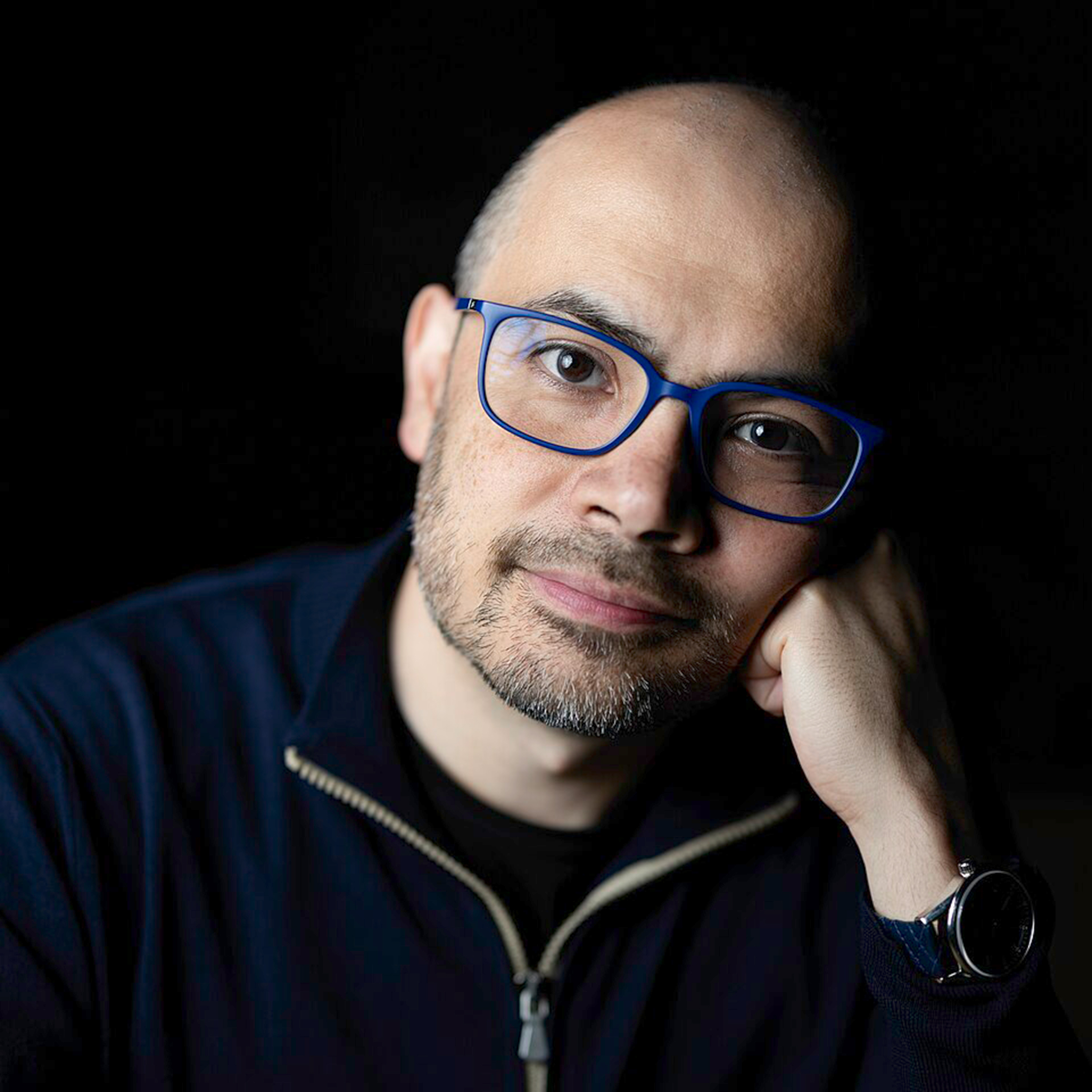 An AI@GSB Special: Demis Hassabis Thinks We’re in the ‘Foothills of the Singularity’ 23.09.2026 54minGoogle DeepMind's CEO discusses solving intelligence, giving away AlphaFold, and why he believes AGI is just around the corner.
 -
 Think Fast Talk Smart: "What Other People Teach You About Your Communication" 26.08.2026 20minWhat if purpose is what drives us to act, but meaning comes from how those actions affect other people?This week on If/Then, we’re sharing a conversation between two Stanford GSB colleagues: Think Fast, Talk Smart host Matt Abrahams and organizational behavior professor Brian Lowery.Recorded live at Stanford’s LEAD Me2We event, Matt and Brian explore the difference between purpose and meaning, why meaning is rooted in our relationships with others, and how the way we show up shapes the people around us. They also discuss sincerity, leadership, and how to give feedback that helps people feel seen rather than judged.It’s a conversation about the ripple effects of our interactions — and what they mean for how we work, lead, and connect with others.Related Content:Think Fast Talk Smart, the podcastMatt AbrahamsBrian LoweryChapters:00:00:00 Introduction00:01:14 Meaning vs. purpose00:02:14 How to find purpose00:02:50 Finding meaning through service to others00:04:49 How relationships shape identity00:05:54 The leader’s role in shaping others00:09:32 Self-awareness and psychological safety00:11:10 Respecting perspectives you don’t share00:12:23 Sincerity vs. authenticity00:13:28 Giving feedback that people can hear00:17:47 What it means to be a better human00:18:57 Conclusion See Privacy Policy at https://art19.com/privacy and California Privacy Notice at https://art19.com/privacy#do-not-sell-my-info.
 -
 Stanford Legal: "The Importance of Critical Thinking and Civil Discourse in Today's Polarized World" 08.07.2026 32minHow do you engage effectively across deep disagreement without shutting down the conversation?This week on If/Then, we’re sharing an episode from our colleagues at Stanford Legal, the podcast from Stanford Law School that looks at the cases, questions, and conflicts shaping public life.In a world where confidence is rewarded and humility can feel like a liability, Stanford Law professor Robert MacCoun argues for something radical: fewer unwavering opinions, more critical reflection, and a better way to disagree. On Stanford Legal, MacCoun joins co-hosts Pam Karlan and Diego Zambrano for a conversation about how “habits of mind” borrowed from science can help citizens, lawyers, and policymakers think more clearly, listen more carefully, and build better public debate around difficult questions that don’t have easy answers.Trained as a social psychologist, MacCoun's work sits at the intersection of law, science, and public policy, with decades of research on decision-making, bias, and the social dynamics that shape how evidence is interpreted. In the episode, he draws on his most recent book, Third Millennium Thinking: Creating Sense in a World of Nonsense, co-authored with Nobel Prize–winning physicist Saul Perlmutter and philosopher John Campbell, to explain why probabilistic thinking, intellectual humility, and what he calls an “opinion diet” are essential tools for modern civic life.Related Content:Robert MacCoun faculty profileThird Millenium ThinkingStanford Legal PodcastChapters:00:00:00 Introduction00:01:23 The course, the book, & what motivated it00:04:06 Habits of mind for better decision-making00:06:20 Probabilistic thinking and intellectual humility00:09:57 An “opinion diet”00:12:16 Reasonable doubt, community, & collective judgment00:14:13 Scientific optimism and the problem of cynicism00:17:31 Why trust in science has eroded00:20:10 Law, science, & the value of procedure00:22:50 Steel-manning the other side00:24:58 Public policy as provisional problem-solving00:30:07 Deliberative democracy and informed public debate00:32:03 Conclusion See Privacy Policy at https://art19.com/privacy and California Privacy Notice at https://art19.com/privacy#do-not-sell-my-info.
 -
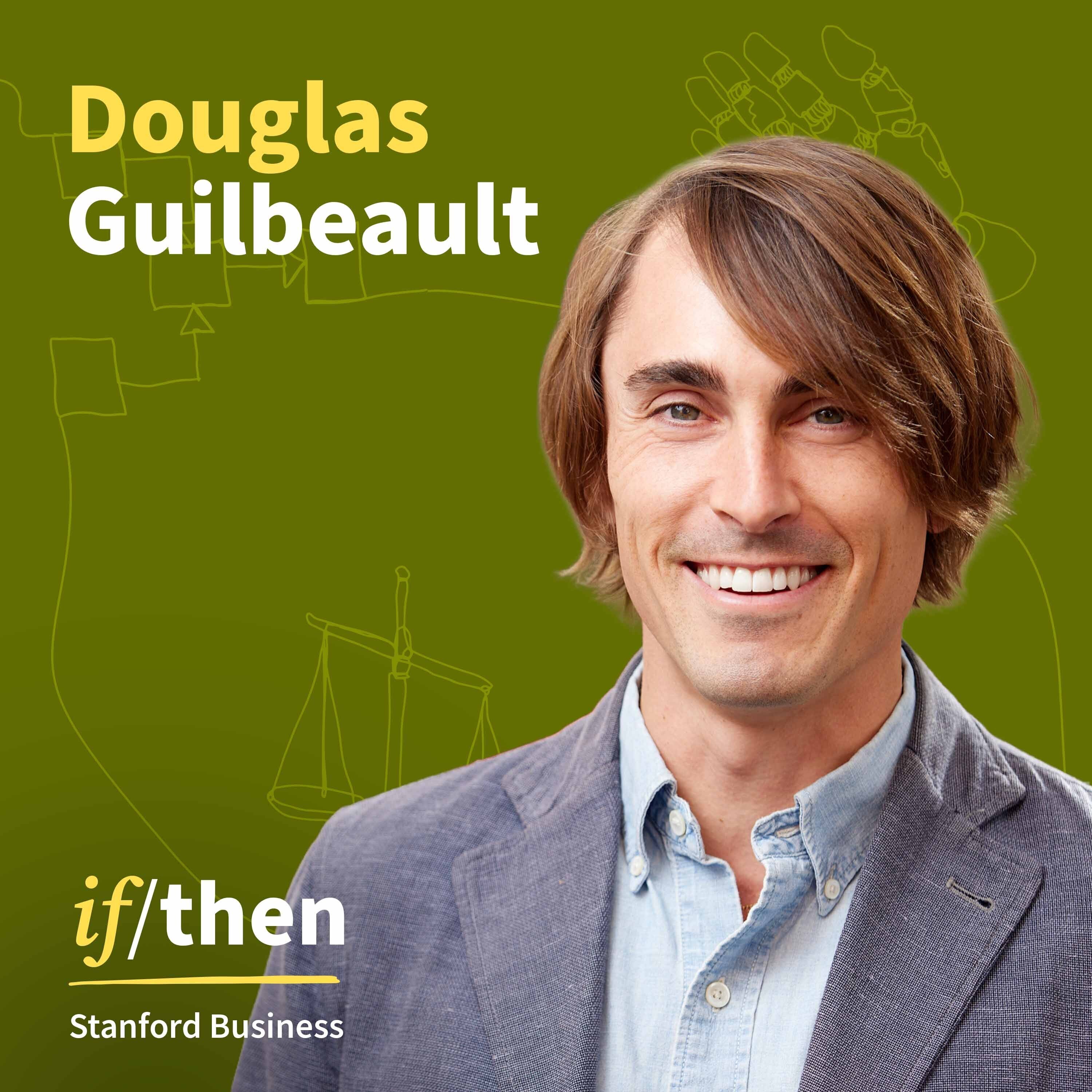 What AI Can’t Do — And Why 25.06.2026 28min“Humans manage to do so much with surprisingly little,” says Douglas Guilbeault, an assistant professor of organizational behavior at Stanford Graduate School of Business. “Whereas AI, by comparison, is doing relatively little, but with so much power, so much compute, so many resources, and by comparison, relatively fewer constraints.”On a bonus episode of the If/Then podcast, Guilbeault describes the implications of his recent work. Although he readily acknowledges that AI is “increasingly able to do quite a lot,” Guilbeault and his colleagues believe they have identified a key principle that distinguishes human intelligence from machine intelligence — and one which illuminates the limitations of machine thinking. Although some researchers and AI boosters believe both humans and AI learn via optimization, Guilbeault and his colleagues have shown that another process more accurately captures how people distill the seemingly infinite complexity of the world and act based on limited information. “You encounter a lot of noise, a lot of chaos, a lot of randomness,” Guilbeault says. “We somehow figure out how to make meaning and establish strong understandings from within that.”What limitations have you encountered in your work with AI? Share your story with us at [email protected] Content:Douglas Guilbeault faculty profileRead "A Simple Threshold Captures the Social Learning of Conventions" hereChapters:00:00:00 Introduction00:01:40 Why human learning matters for AI00:05:03 Satisficing and the limits of optimization00:06:41 Why LLMs learn differently from humans00:09:58 The stakes of AI hype00:13:11 “Humanity has had a good run”00:15:19 Intuition, insight, & conceptual leaps00:17:38 Beyond statistics: metaphor, vibes, & reasoning00:19:39 A simple rule for social learning00:21:18 Is there a ceiling for AI?00:23:00 Randomness, disorder, & the path to insight00:25:00 What an optimization mindset leaves out00:27:54 Conclusion If/Then, from Stanford GSB, features conversations with faculty that explore how their research deepens our understanding of business and leadership. See Privacy Policy at https://art19.com/privacy and California Privacy Notice at https://art19.com/privacy#do-not-sell-my-info.
 -
 Our AI Future: From Abundance to Apocalypse 10.06.2026 45minAbundance, anyone? While the risks posed by artificial intelligence are extraordinary, so is the potential, says professor of economics Chad Jones.
 -
 The Art of Friction 20.05.2026 23min“Great leaders are people who think of themselves as trustees of other people’s time,” says Huggy Rao.
 -
 Unconventional Wisdom 06.05.2026 26minSeeing the world differently can be costly, but it can also provide a competitive edge.
 -
 Why Who You Are Affects How You Think 22.04.2026 24minThe moment we see someone as an individual rather than a category, we become more likely to find common ground.
 -
 The Paradox of Masculinity 08.04.2026 26min“We spend a lot of time talking about gender inequality through the lens of women’s disadvantage,” she says. “I think that many of the problems that we’re seeing today… are actually bound up in masculinity.”
 -
 What We Actually Learn From Experience 25.03.2026 25minSteven Callander has spent years building a mathematical framework to answer the question of how people learn from experience. “Here in Silicon Valley, the expression that you learn from failure is very widespread and very intuitive. But the question is… what do you learn? How do you optimally learn from that experience?”In this episode, Callander, the Herbert Hoover Professor of Public and Private Management and Professor of Political Economy at Stanford Graduate School of Business, explains the hidden, deceptively simple logic of correlated learning — and it may change how you think about finding the right job, the right market, or the right strategy. “It fascinates me and I can't stop thinking about it,” he says. Has theory made an impact on your life? Tell us more at [email protected] Content:Steven Callander faculty profileHow to Turn Old Ideas Into Creative Solutions to Modern ProblemsWhat We’re Still Learning from Silicon Valley’s Bank CollapseChapters:00:00 Ann Miura-Ko on learning and the search for patterns in Venture capital02:51 Introduction05:23 What is correlated learning?06:40 Where does this research apply in the real world?09:28 Brownian Motion12:45 Steven Callander’s Framework15:25 Examples of correlated learning when seeking expert advice20:53 Applying correlated learning23:57 Why correlated learning research?24:51 ConclusionIf/Then, from Stanford GSB, features conversations with faculty that explore how their research deepens our understanding of business and leadership. See Privacy Policy at https://art19.com/privacy and California Privacy Notice at https://art19.com/privacy#do-not-sell-my-info.
 -
 How Dating and Sports Explain the Job Market 11.03.2026 25minSeemingly unrelated activities — like taking a soccer penalty kick or crafting an online dating profile — involve an embedded economics.
 -
 If/Then Returns: Season Three 04.03.2026 1minIf/Then Season 3 is coming next week. GSB faculty explore innovative research that deepens our understanding of business and leadership.
 -
 GSB at 100: "The Moment" 22.12.2025 28minThe fourth and final episode of GSB at 100 captures a snapshot of a once-in-a-century milestone.
 -
 GSB at 100: "The Experience" 26.11.2025 29minFrom management to modeling, we explore the classroom experience at Stanford Graduate School of Business.
 -
 GSB at 100: "The Spirit" 12.11.2025 24minMeet some of the people whose work powers a school that changes lives, organizations, and the world.
 -
What's Your Problem: "Teaching Computers to See" 29.10.2025 27minThis week on If/Then, we’re sharing an episode of What’s Your Problem?, a show from Pushkin Industries where entrepreneurs, engineers, and scientists talk about the future they’re trying to build—and the problems they must solve to get there. Hosted by former Planet Money co-host Jacob Goldstein, each conversation explores the challenges and breakthroughs shaping the next wave of innovation.In this episode, Goldstein speaks with Fei-Fei Li, Stanford computer scientist, former Chief Scientist of AI and Machine Learning at Google, and one of the most influential figures in the field of computer vision. Li reflects on her pioneering work developing ImageNet, the massive dataset that helped spark the modern AI revolution, and the “north star” questions that have guided her research from neuroscience to machine learning.Together, they trace how a single insight about how humans see the world led to a paradigm shift in artificial intelligence—and how Li’s vision continues to shape the way we teach machines to see, learn, and collaborate with us.More Resources: • Fei Fei Li • Stanford Institute for Human-Centered Artificial Intelligence (HAI) • ImageNet • What’s Your Problem?If/Then is a podcast from Stanford Graduate School of Business that examines research findings that can help us navigate the complex issues we face in business, leadership, and society.Chapters: (00:00:00) Introducing “What’s Your Problem?” Kevin Cool introduces the Pushkin Industries podcast hosted by Jacob Goldstein.00:00:45 — What Is Computer Vision? Jacob Goldstein and Fei-Fei Li explain how machines learn to see and interpret images.00:03:18 — Real-World Uses of AI Vision Li shares examples from healthcare, robotics, and environmental science.00:05:06 — Discovering the Science of SeeingHow human vision research inspired Li’s lifelong “north star” in AI.00:09:56 — Creating ImageNet Li builds a massive image database that transforms computer vision research.00:13:29 — Defining 30,000 Visual Concepts How cognitive science helped shape ImageNet’s massive scale.00:16:41 — Building the Dataset by HandLi's team uses global crowdsourcing to label millions of images.00:19:38 — The 2012 Breakthrough Jeff Hinton’s neural network shatters records and sparks the deep learning era.00:22:19 — Data Meets Hardware Li reflects on how big data and GPUs converged to power modern AI.00:24:55 — Lightning Round with Fei-Fei Li Quick insights on resilience, mentorship, and the future of human-AI collaboration. See Privacy Policy at https://art19.com/privacy and California Privacy Notice at https://art19.com/privacy#do-not-sell-my-info.
-
 GSB at 100: The Magic 24.09.2025 20minProfessors reflect on what Stanford GSB has accomplished in one hundred years and what the future may hold.
 -
View From The Top: “Lisa Su Is Still Curious About How Things Work” 27.08.2025 56minThis week on If/Then, we’re sharing an episode of View From The Top: The Podcast, an audio series featuring leaders from around the world in conversation with MBA students. Recorded live at the CEMEX Auditorium at Stanford Graduate School of Business, episodes feature insights on effective leadership, the values that guide it, and lessons learned along the way.Lisa Su, the chair and CEO of Advanced Micro Devices (AMD), leads one of the world’s most influential technology companies, a pioneer in high-performance computing and designer of chips that power everything from cellphones to supercomputers.Su joins Michael Liu, MBA ’25, to talk about what it takes to stay on the cutting edge of technology, the tremendous potential of artificial intelligence, and why her superpower may be her commitment to learning.“Careers are very much by chance,” Su says. “The nice thing about my early career is I was lucky enough to have bosses who asked me all the time, ‘What do you want to be when you grow up?’ And I was like, ‘I don't know. Let me think about [it]...what I like to believe is the ability to learn at each step was what really helped me in my career.”This conversation was recorded on February 24, 2025. More Resources: • Lisa Su • GSB Insights • View From The Top If/Then is a podcast from Stanford Graduate School of Business that examines research findings that can help us navigate the complex issues we face in business, leadership, and society.Chapters: (00:00:00) Introduction Kevin Cool introduces a summer spotlight on other podcasts, featuring View from the Top.(00:00:59) Meet Lisa Su Michael Liu introduces Lisa Su, AMD CEO, and highlights her career transformation.(00:04:13) Growing Up & MIT Years Lisa reflects on her immigrant upbringing and her journey through three degrees at MIT.(00:05:43) Discovering Semiconductors A part-time lab job at MIT ignites Lisa’s passion for chip technology.(00:07:21) From Engineer to Leader Lisa describes her transition from technical work to managing people and projects.(00:11:19) Tackling Hard Problems How curiosity and teamwork help Lisa embrace high-stakes technical challenges.(00:13:40) Betting on Talent Lisa recounts moments when she was given a chance—and how she now pays that forward.(00:17:03) Becoming CEO at AMDWhat brought Lisa to AMD and the unexpected call to lead the company.(00:21:51) Strategy in a TurnaroundHow AMD focused on high-performance computing and long-term bets.(00:25:41) Cultural Shift at AMD Lisa outlines how AMD’s culture became collaborative, ambitious, and learning-driven.(00:27:19) AI & Global Tech PoliticsThe complex intersection of AI innovation and geopolitical regulation.(00:32:37) Open vs. Closed AI PlatformsAMD’s open-source AI approach with NVIDIA’s more vertical model.(00:38:54) Future Vision & Final ReflectionsLisa offers advice to MBAs and shares what she wants her legacy at AMD to be. See Privacy Policy at https://art19.com/privacy and California Privacy Notice at https://art19.com/privacy#do-not-sell-my-info.
-
The Joy of Discovery and Why Research Matters 13.08.2025 16minAs we celebrate the conclusion of the second season of the If/Then podcast, we present a bonus episode featuring Deborah H. Gruenfeld, the Joseph McDonald Professor and Professor of Organizational Behavior and a Senior Associate Dean for Academic Affairs at Stanford Graduate School of Business. Gruenfeld, who appeared on the first season of If/Then in an award-winning episode about hierarchies and the nature of power, returned to the studio to share her thoughts on the value of academic research and its impact on individuals and organizations. “The nice thing about research is that it provides tools and methods and an approach to learn about what’s true in the world, taking into account that what we learn from firsthand experience is not reliable,” she says. “Research helps us build a body of knowledge about what's actually true that we can trust.”This episode was recorded on July 16, 2025.Related Content:Deborah H. Gruenfeld, faculty profileWhy Research MattersWhy I Research: Findings Fueled by the Head and the HeartIf/Then is a podcast from Stanford Graduate School of Business that examines research findings that can help us navigate the complex issues we face in business, leadership, and society. Each episode features an interview with a Stanford GSB faculty member. See Privacy Policy at https://art19.com/privacy and California Privacy Notice at https://art19.com/privacy#do-not-sell-my-info.
-
The Future of Everything: "The Future of Motivation" 30.07.2025 34minHow do you stay motivated when your goal is months — or even years — away? Stanford’s Szu-chi Huang breaks down the science of sticking with it.
Stacion radio

Podkaste të ngjashme


I/E popullarizuar në
Ky podkast shfaqet edhe në listat e podkasteve të këtyre shteteve.

