
The Via Stoica Podcast — A Stoic Way of Life
Benny Voncken
0
The Via Stoica Podcast focuses on Stoicism as a practical philosophy for everyday life. Drawing from ancient texts, it addresses real-world challenges like emotional reactivity, discipline, purpose, relationships, and adversity. Rather than abstract theory, the show emphasizes practice and attention to what is within our control. Episodes feature reflections, practical topics, and interviews with guests. The views expressed are the host's own and intended for informational purposes.
Episodet
-
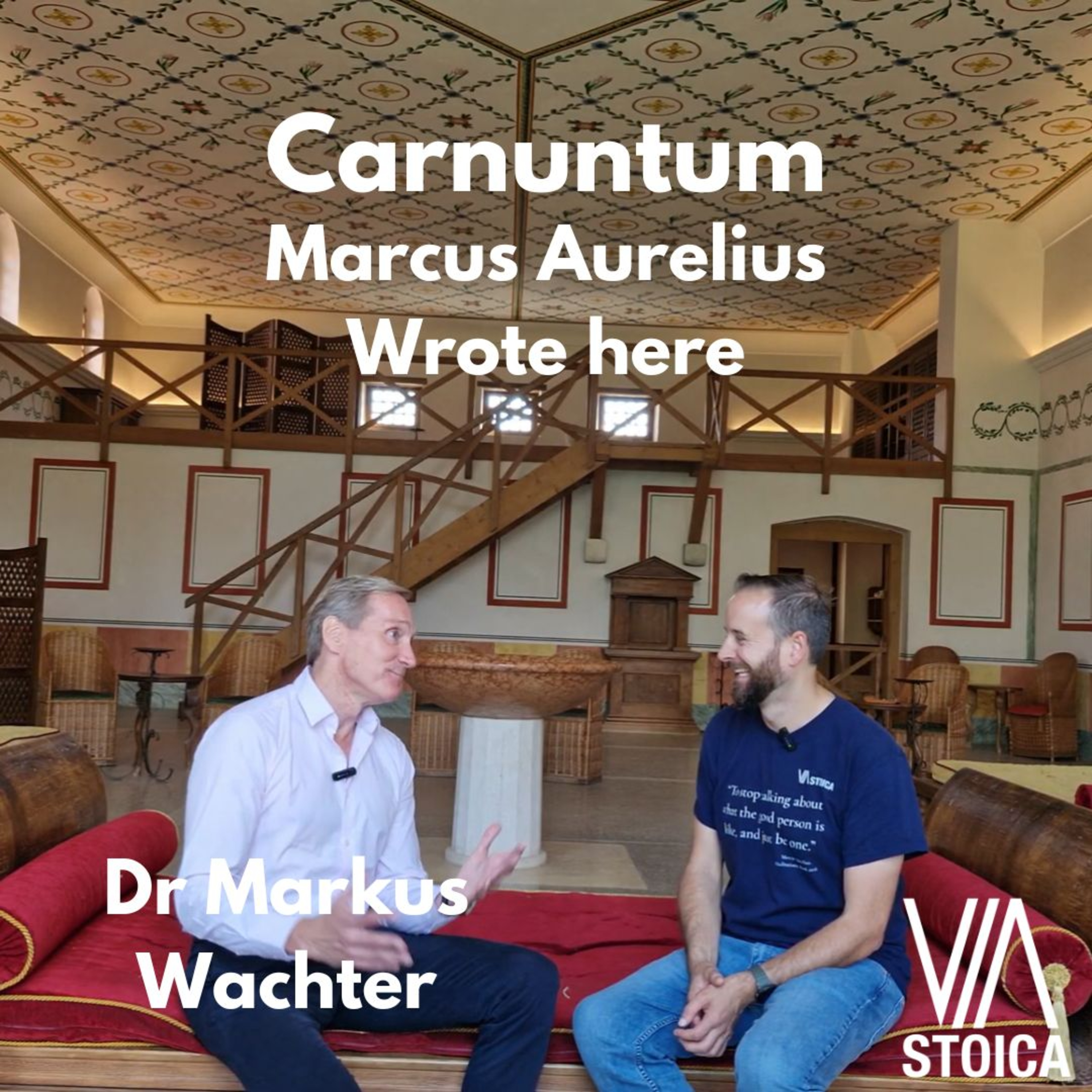 Carnuntum: The Roman City Where Marcus Aurelius Wrote 28.09.2026 19minWhat does the Roman city of Carnuntum look like today, and where did Marcus Aurelius write part of the Meditations? In this episode of the Via Stoica Podcast, I walk through Carnuntum in Austria with Dr. Markus Wachter, managing director of the Museum of Carnuntum, to explore the ruins, the reconstructed Roman houses, and the story of a frontier city on the Danube.Welcome to the Via Stoica Podcast, the podcast on Stoicism. This conversation steps outside the texts and into the place where one of the great Stoic emperors lived and worked during the Marcomannic Wars.Carnuntum began as a winter camp under Tiberius in 6 AD and grew into the capital of Upper Pannonia, with at least 50,000 inhabitants at its height. Dr. Wachter explains why the Romans chose this spot above the Danube, how the city developed, and why archaeologists have excavated only a small part of it. We visit the baths, which still heat with Roman techniques, walk through the homes of ordinary residents, and talk about the note in the Meditations that connects part of the work to Carnuntum.Visit CarnuntumWebsite: https://www.carnuntum.at/enAddress: Roman City Visitor Center, Hauptstraße 1A, 2404 Petronell-Carnuntum, AustriaSeason: Carnuntum opens from mid-March to mid-November, daily from 9 a.m. to 5 p.m., with longer summer hours. Check the website for the current dates before you plan your trip.Good to know: The day ticket covers the Roman City Quarter and the Museum Carnuntinum. The amphitheaters and the Heidentor are free to visit.Whether you plan to go or simply love Roman history, this episode invites you to see the ancient world as a place where people lived.Aerial footage: © RSCSupport the show🌐 viastoica.com▶️ YouTube: @viastoicaProduced by: Badmic.com
 -
 A Stoic Conversation with Justin Mainous: The Agora Network and the Power of Socratic Dialogue 21.09.2026 1h 4minWhat happens when philosophy stops being something you read about and becomes something you practice together? In this episode of the Via Stoica Podcast, recorded in Prague, I sit down with Justin Mainous, one of the driving forces behind the Agora Network, a community built almost entirely on Socratic dialogue.Welcome to the Via Stoica Podcast, the podcast on Stoicism. Justin's path to philosophy started with losing his faith in university and navigating real mental health struggles largely on his own. Teaching himself cognitive behavioral techniques eventually led him back to a name he half remembered, Epictetus, and from there into a philosophy of life he still practices today.We talk about building a community around questions rather than answers, why Justin sees his role as a mirror rather than a teacher, and dialogic thinking, the idea that focused thought lasts only seconds alone but can stretch for hours in genuine conversation.This is a warmer, more personal conversation than usual, and a good reminder that philosophy was never meant to be a solitary pursuit.Support the showviastoica.comYouTube: @viastoicaProduced by: Badmic.com
 -
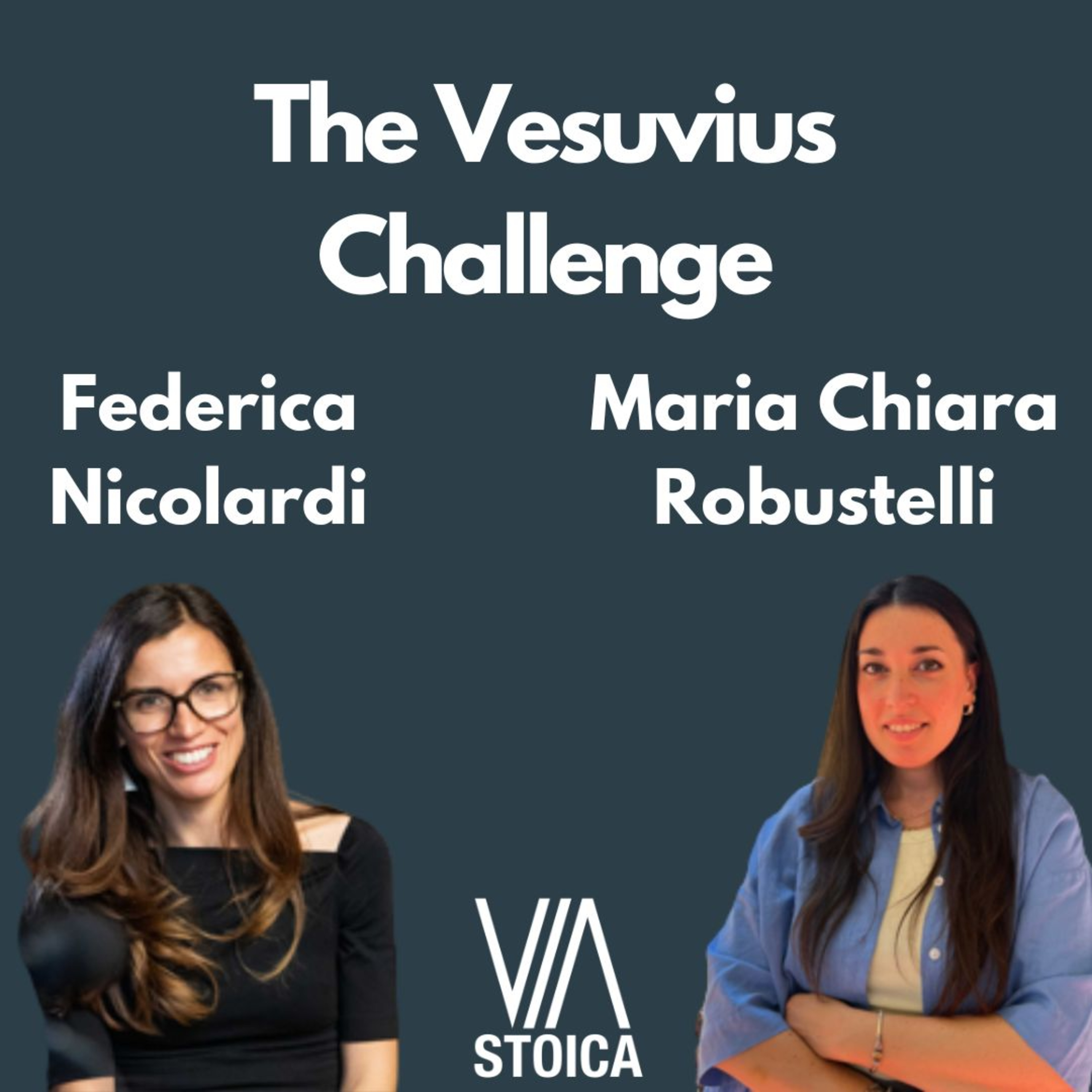 How AI Helped Unwrap 2,000-Year-Old Herculaneum Scrolls - The Vesuvius Challenge 14.09.2026 1h 4minIn June 2026, a team of papyrologists and AI researchers achieved something once thought impossible: reading an entire ancient scroll, carbonized by the eruption of Mount Vesuvius in 79 AD, from beginning to end, without ever physically opening it.In this episode of the Via Stoica Podcast, I'm joined by Federica Nicolardi, lead papyrologist of the Vesuvius Challenge and Associate Professor of Papyrology at the University of Naples Federico II, and Maria Chiara Robustelli, a member of the Vesuvius Challenge papyrology team and postdoctoral scholar at the same university, currently preparing a critical edition of a Herculaneum scroll on the Stoics.We talk about how they each found their way into papyrology, what Pompeii and Herculaneum actually are and how differently they were buried by the eruption, the history of the Villa dei Papiri and its library, and how the Vesuvius Challenge used X-ray imaging and machine learning to virtually unwrap scrolls no one has been able to read in nearly two thousand years.At the heart of the conversation is PHerc. 1667: a philosophical treatise on impulse, human nature, and practical wisdom, found in a library that's almost entirely Epicurean, except for this one Stoic text. Its final surviving column names Aristocreon, the nephew and student of Chrysippus, raising the genuine possibility that this could be connected to Chrysippus himself, one of the most influential Stoic philosophers whose own writing has otherwise been lost to history.We close, as I do with most guests, by asking about their own personal philosophy of life.Topics covered: the Vesuvius Challenge, virtual unwrapping, Herculaneum papyri, the Villa dei Papiri, Pompeii vs Herculaneum, Philodemus, Stoic philosophy, Chrysippus, papyrology, and what it means to recover a voice from the ancient world.Learn more about the project:🏺 The Vesuvius Challenge: scrollprize.org📜 The PHerc. 1667 announcement: scrollprize.org/firstscrollSupport the show🌐 viastoica.com▶️ YouTube: @viastoicaProduced by: Badmic.com
 -
 The One Habit You Need in Life 08.09.2026 15minMost advice about habits is really about saving you time. This episode of the Via Stoica Podcast looks at a different kind of habit entirely, the one Epictetus considered the only one that actually matters.Welcome to the Via Stoica Podcast, the podcast on Stoicism. We all build habits to avoid the exhaustion of deciding everything from scratch every day, from what we eat to how we start our mornings. That kind of habit is useful and worth having. But it isn't the habit the Stoics were most concerned with.Epictetus taught that the real work is training your response to impressions, not your morning routine. His method was simple and demanding: since bad habits form through repeatedly giving in to an impulse, you fight them the same way, by deliberately practicing the opposite, on purpose, again and again, until it becomes second nature. This episode also looks at how to tell whether a habit still genuinely fits you, or whether it's something you inherited without ever choosing it, and why a habit that breaks the moment your circumstances change was never built well in the first place.Because the habit that actually shapes your character isn't the one that saves you five minutes each morning. It's the pause you train yourself to take before you react.Support the showviastoica.comYouTube: @viastoicaProduced by: Badmic.com
 -
It's Not What You Do. It's Why You Do It. 01.09.2026 11minOn the Ides of March, 44 BC, sixty men took part in a single act: killing a tyrant. In this episode of the Via Stoica Podcast we ask a question that still matters two thousand years later. Were all sixty acting virtuously, or were some of them doing the exact same thing for entirely different reasons?Welcome to the Via Stoica Podcast, the podcast on Stoicism. The Stoics were clear that virtue never lives in the visible act itself. It lives in the judgment behind it, in what they called prohairesis, the reasoned choice that belongs to you and no one else.Two people can do the identical thing, reach out to a friend, stay quiet in an argument, walk away from a fight, and only one of them is acting from genuine character. The other might be doing it for approval, out of fear, or to avoid feeling guilty. From the outside, both actions look exactly the same. Only the person doing them ever really knows which one they did. This episode also looks at a simple, practical question worth sitting with before any decision, big or small: would I still do this if no one else would ever know? And it explores why this isn't just a private matter, since a society built on the right actions for the wrong reasons rarely holds together for long.Support the showviastoica.comYouTube: @viastoicaProduced by: Badmic.com
-
Does Your Legacy Matter? What If You Left Nothing Behind? 24.08.2026 11minDoes your legacy actually matter, and what if you left nothing behind at all? In this episode of the Via Stoica Podcast we look honestly at why so many of us build our lives around being remembered, and what the Stoics actually thought about that impulse.Welcome to the Via Stoica Podcast, the podcast on Stoicism. Only twelve people have ever walked on the moon, and their footprints will likely outlast almost everything else humans have ever built, yet ask someone to name the seventh person to do it. That gap between permanence and memory says more about legacy than most of what gets written about it.This episode looks at the strange case of Marcus Aurelius, whose private journal was never meant for publication, and yet two thousand years later it remains one of the most read books in the world. He could not have controlled that, could not have predicted it, and never got to witness it. His actual legacy came from doing the work in front of him, not from chasing how he would be remembered. We also look at what happens when people build a career around legacy directly, from famous musicians and actors whose personal choices ended up defining how they are remembered, to the quieter ways all of us attach our sense of worth to something that will outlast us.Because here is the uncomfortable truth. You will not be there to see your legacy. So the only honest question left is what you do with today.Support the showviastoica.comYouTube: @viastoicaProduced by: Badmic.com
-
Are you relevant enough? To Whom and Why? 17.08.2026 12minAre you relevant enough, and relevant to whom exactly? In this episode of the Via Stoica Podcast we look at why this question comes up so often during moments of change, and what Stoic philosophy actually says about the value we attach to being needed.Welcome to the Via Stoica Podcast, the podcast on Stoicism. Relevance always exists in relation to someone or something else, at a particular moment, which means it was never a fixed thing to hold onto in the first place.Twelve people have ever walked on the moon, and their footprints will likely outlast almost everything else humans have built, yet ask someone to name the seventh person to do it. That gap between permanence and memory says a great deal about what we are really chasing when we chase relevance. The fear of becoming irrelevant is rarely about relevance itself. It is grief for something that mattered, a role that shifted, a relationship that changed shape, a chapter that ended without warning. This episode also looks at Hierocles and the Stoic idea of concentric circles, and why the people closest to you may deserve more of your attention than the audience you imagine is watching.The question worth sitting with by the end is simple. What does relevance actually mean to you, and who do you really want to be relevant for.Support the showviastoica.comYouTube: @viastoicaProduced by: Badmic.com
-
How Influencable Are You? Or Do You Trust Your Own Judgment? 10.08.2026 12minFamily, friends, colleagues, and strangers on a screen all try to sway how you think and act. In this episode of the Via Stoica Podcast we look honestly at how influencable we really are, and what it takes to trust your own judgment instead.Welcome to the Via Stoica Podcast, the podcast on Stoicism. If the previous episode was about what we put out into the world, this one is about what we let in, and how easily that shapes the direction of our lives.Influence is not new, and it is not only found online. Family, teachers, partners, and friends have always had ways of nudging us toward what they believe is right, often with the best intentions and sometimes without either of us noticing. The moments that carry the most risk are rarely the ones that upset us. They are the ones that inspire and motivate us so strongly that we stop questioning them altogether. The Stoics called our capacity to choose our own judgments prohairesis, the one thing that always remains ours, no matter how loud or convincing the voices around us become.This episode explores what it actually looks like to receive information without surrendering your direction to it, and why the pause before you are swept along matters more than the source of the pull itself.Support the showviastoica.comYouTube: @viastoicaProduced by: Badmic.com
-
So You Have an Opinion? Does Everyone Need to Know? 03.08.2026 17minDo you really need to share that opinion? In this episode of the Via Stoica Podcast we look at what drives the impulse to comment, react, and weigh in online, and what Stoic philosophy says about examining that impulse before we act on it.Welcome to the Via Stoica Podcast, the podcast on Stoicism. This episode is not about whether you are allowed to have opinions. It is about what you do with them and why you feel the need to share them at all.Social media rewards reaction. Every post, every event, every scroll seems to demand a response, and the algorithm feeds on the comments and replies that follow. Underneath that pressure sits something older than any platform, the quiet pull to be relevant, to be heard, to matter in the moment. The Stoics called the practice of pausing before adding judgment to an impression the discipline of assent, and it applies just as much to a reply typed in anger as it does to any other reaction. Most opinions shared online skip that step entirely.This episode also looks at what changes when you start asking a harder question before you speak: what does this opinion actually reveal about you, your values, and what you are really seeking in that moment?Support the showviastoica.comYouTube: @viastoicaProduced by: Badmic.com
-
Anger: The Stoic Way to Reclaim Your Sanity 27.07.2026 15minAnger protects us. It motivates us. It gets things done. These are the arguments people make for keeping it, and in this episode of the Via Stoica Podcast we take an honest look at why Seneca called anger momentary madness and what that means for how we live.Welcome to the Via Stoica Podcast, the podcast on Stoicism. This episode examines one of the most defended emotions in modern life and what Stoic philosophy actually says about it: not that we should suppress it, but that we should understand it well enough to choose differently.The Stoics made a clear distinction between the involuntary first flash of irritation and the full emotional response that follows. That gap is where your agency lives. When we add the judgment that an injustice has occurred and that we are right to be furious, we step through a door from reason into what Seneca called momentary madness. And unlike most emotions, anger is contagious. One angry person in a room changes the room. The Stoics were deeply pro-social and cultivating anger is a direct betrayal of that responsibility toward others.This episode also looks at what replaces anger when we choose not to walk through that door. Not emptiness or passivity, but the Stoic positive emotions: joy from doing the right thing, calm from acting in line with who you are, and the kind of presence that actually changes situations rather than inflaming them.Anger will come. What you do with it is entirely yours.Support the showviastoica.comYouTube: @viastoicaProduced by: Badmic.com
-
The Blame Game: Stop Pointing the Finger and Start Growing 20.07.2026 13minWhen did we stop asking what we could do better and start looking for someone else to blame? In this episode of the Via Stoica Podcast we examine one of the most common and costly habits in modern life: the blame game, and what Stoic philosophy says about how to break it.Welcome to the Via Stoica Podcast, the podcast on Stoicism. This episode is an honest look at how blame keeps us stuck, why it feels so comfortable, and what taking real responsibility for our lives actually looks like in practice.The shift did not happen overnight. A teacher approaching retirement described how in her early years, parents would tell underperforming children to work harder. Over time, that finger moved from the child to the teacher, from the self to everything outside it. That shift is not just happening in schools. It is happening in our relationships, our careers, and our inner lives.Epictetus placed blame squarely on the discipline of assent; we are not adding the correct judgment to what is happening. The discipline of desire reminds us that chasing externals makes blaming externals inevitable. And Epictetus described three stages of progress: the beginner blames everyone else, the intermediate blames themselves, and the advanced person simply does the work.The moment you stop blaming is the moment you start growing.Support the showviastoica.comYouTube: @viastoicaProduced by: Badmic.comNote: In the episode, I attributed the three stages of blame to Marcus Aurelius. This is actually from Epictetus, Enchiridion 5. The wisdom is the same; the source just needed correcting.
-
Your Life Is Not Short. You Just Don't Know How to Live It. 14.07.2026 11min"Life is too short." It is one of the most common things people say and, according to Seneca, one of the most misguided. In this episode of the Via Stoica Podcast we examine what the Stoics actually thought about time and why the problem is never how much of it we have.Welcome to the Via Stoica Podcast, the podcast on Stoicism. This episode draws on Seneca's On the Shortness of Life to make an argument that is uncomfortable and liberating in equal measure: life is not short. We spend most of it somewhere else.Seneca observed that people guard their money and possessions carefully but give their time to anyone who asks. Every second lost is gone for good and we do not know when the last one will come. The people who complain loudest about life being short are often the busiest, but busy with the wrong things.This episode also explores what it looks like to design your life around what actually matters. Not as a distant goal to arrive at, but as a direction you can begin moving in today. When your values and priorities are clear, every small decision becomes deliberate and the feeling that life is passing you by begins to fade.As Seneca wrote, "Life is long, if only you knew how to use it."Read the full article: https://viastoica.com/how-to-design-your-life/Support the showviastoica.comYouTube: @viastoicaProduced by: Badmic.com
-
The Real Stoic View on Emotions: What Are They Telling You? 06.07.2026 21minWhat are your emotions really telling you? In this episode of the Via Stoica Podcast, we take a closer look at one of the most misunderstood aspects of Stoic philosophy: the real Stoic view on emotions and what they can teach you about yourself.Welcome to the Via Stoica Podcast, the podcast on Stoicism. This episode challenges the popular belief that Stoicism is about suppressing emotions and replaces it with something far more useful: understanding them as a source of information about your beliefs, your fears, and who you are becoming.The Stoics made a clear distinction between the involuntary first flash of feeling and the full emotional response that follows. That gap between the two is where your agency lives. By learning to pause and examine what judgment you have added to an event, you begin to see what your emotions are actually pointing at. Not an enemy to defeat or a wave to ride out, but a signal worth reading.This episode draws on the Stoic concepts of pathos, eupatheiai and propatheia to show how emotions rooted in false judgments take us away from reason, while emotions rooted in accurate ones can guide us toward virtue, better decisions, and more authentic connections with the people around us.If you have ever felt taken over by a reaction you did not choose, this conversation is for you.Read the full article: https://viastoica.com/what-your-emotions-are-trying-to-tell-you/Support the showviastoica.comYouTube: @viastoicaProduced by: Badmic.com
-
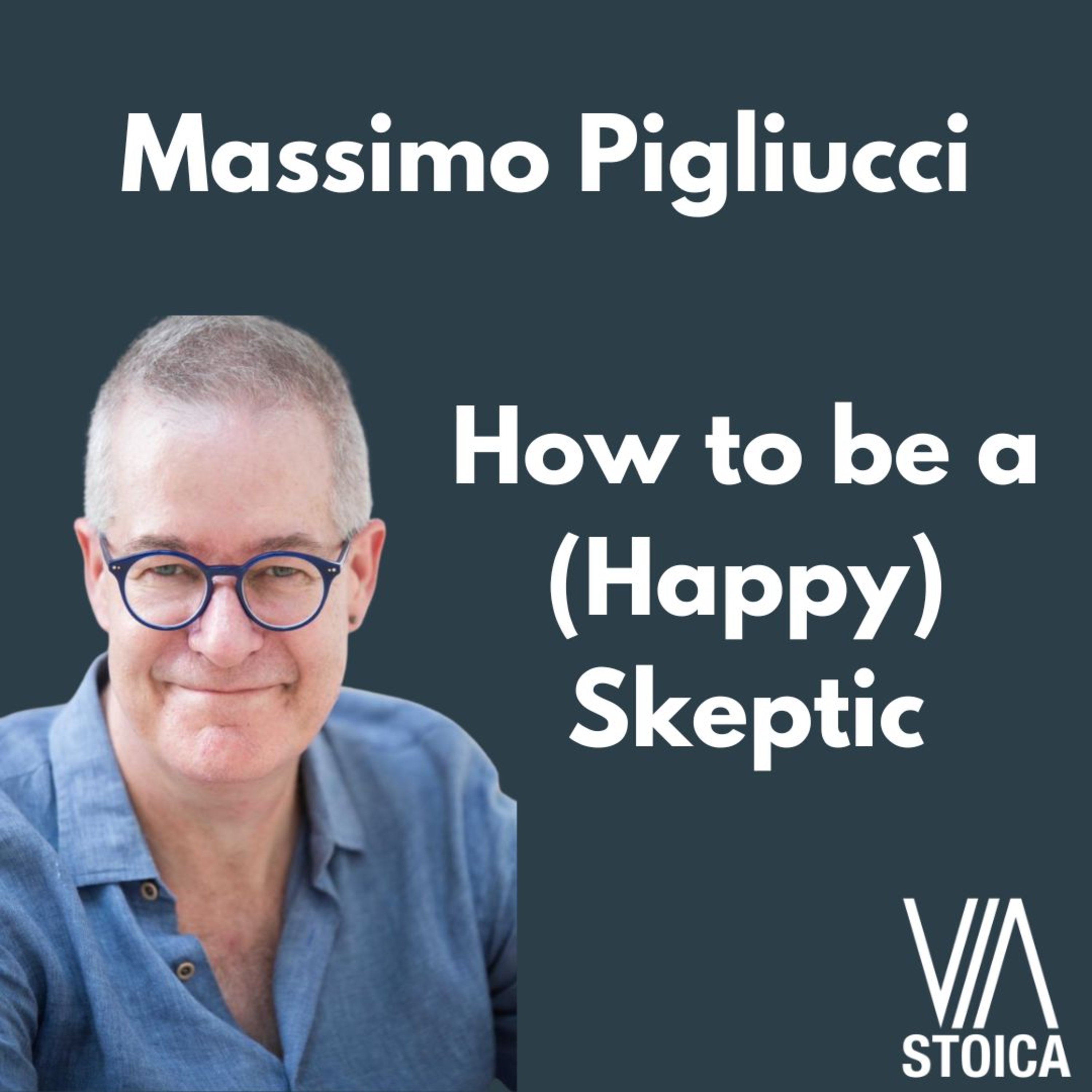 A Stoic Conversation with Massimo Pigliucci: How to be a (Happy) Skeptic 26.06.2026 1h 2minWhat does it mean to be both a Stoic and a skeptic?In this episode of the Via Stoica Podcast, philosopher and author Massimo Pigliucci returns to discuss his new book How to Be a (Happy) Skeptic: a guide to building a philosophy of life rooted in Stoic virtue and the ancient art of proportioning belief to evidence.Welcome to the Via Stoica Podcast, the podcast on Stoicism. Massimo Pigliucci is Professor of Philosophy at the City College of New York, a former evolutionary biologist, and one of the most important voices in modern Stoic philosophy. This is his second conversation on the show.The discussion moves from the foundations of a philosophy of life to the ancient debate between the Stoics and the Academic Skeptics, and then to one of the most compelling figures in Western history: Marcus Tullius Cicero. Not a Stoic himself, but deeply shaped by Stoic ethics, Cicero lived through the fall of the Roman Republic, exile, personal grief, and death at the hands of Mark Antony's soldiers. His life, Pigliucci argues, is a model for holding strong convictions while remaining honestly uncertain about what you know and why.The episode also explores how skepticism is not the enemy of commitment but its most honest companion: that our beliefs should be proportioned to evidence, and that a life examined with intellectual humility is not weaker but more durable.Read the full article here: https://viastoica.com/a-stoic-conversation-with-massimo-pigliucci/Support the showviastoica.comYouTube: @viastoicaProduced by: Badmic.comEpisode Outline:00:00 Introduction to Massimo Pigliucci02:30 The Importance of Personal Philosophy11:46 Key Ingredients of a Philosophy of Life15:12 The Evolution of Skepticism in Philosophy19:31 Understanding Skepticism: Pyrrhonism vs. Academic Skepticism29:52 The Evolution of Persuasion and Belief33:15 Stoicism vs. Skepticism: A Philosophical Rivalry42:49 Cicero: The Relatable Philosopher52:05 The Structure of Cicero's Philosophy58:53 Future Endeavors: Exploring New Philosophies
 -
The People Pleaser: How to Stop Living for Other People's Approval 22.06.2026 16minPeople pleasing is not kindness. It is fear dressed up as generosity. In this episode of the Via Stoica Podcast, we look honestly at what it means to stop living for other people's approval and start showing up as yourself.Welcome to the Via Stoica Podcast, the podcast on Stoicism. This episode builds directly on the previous conversation about the scripts we inherit. People pleasing is what happens when we keep performing that script out of fear rather than choice.Most of us learned early that being agreeable was rewarded and that causing discomfort came at a price. That lesson becomes a habit, the habit becomes a pattern, and the pattern quietly erodes the person underneath it. You say yes when you mean no. You manage the emotions of others at the expense of your own. You lose track of where their needs end and yours begin. Epictetus was clear: what others think of you is entirely outside your control. Handing your life over to opinions you cannot control is not kindness. It is fear with a generous face.This episode of the Via Stoica Podcast asks the question most people pleasers never stop to consider: am I doing this because it is right, or because I am afraid of what happens if I do not? The in-between is yours.Read the full arctile: https://viastoica.com/how-to-stop-being-a-people-pleaser/Support the showviastoica.comYouTube: @viastoicaProduced by: Badmic.com
-
Who Wrote Your Script? The Stoic Guide to Authentic Living 15.06.2026 18minHow much of the life you are living was actually chosen by you? In this episode of the Via Stoica Podcast, we explore authentic living: the practice of examining the scripts inherited from parents, culture, school, and social media, and deciding for the first time which ones are genuinely yours.Welcome to the Via Stoica Podcast, the podcast on Stoicism. This episode invites you to look honestly at the voices shaping your choices, not to blame them, but to see them clearly and to begin living from your own values rather than someone else's story.Most of us were handed a script before we could read it. Family wrote the early lines. School added more. Culture and religion filled in the gaps. And now social media rewrites it daily: feeding you someone else's version of success, happiness, and what a good life looks like. The Stoics called the faculty of conscious choice prohairesis, the one thing that has always been yours. Most people spend their entire lives using it to fulfil someone else's vision without ever noticing.This episode of the Via Stoica Podcast asks one of the most important questions in Stoic philosophy and in life: who wrote your script and why are you still listening to them? If you have ever felt that the life you are living belongs to someone else, this conversation is for you.Read the article on: https://viastoica.com/how-to-stop-living-someone-elses-life/Support the showviastoica.comYouTube: @viastoicaProduced by: Badmic.com
-
Amor Fati: How Do You Love Your Fate? 08.06.2026 18minWhat does it really mean to love your fate? In this episode of the Via Stoica Podcast, we look at one of the most used phrases in modern Stoicism, where it actually comes from, and what Stoic philosophy says about acceptance, fate, and how to show up when life does not go as planned.Welcome to the Via Stoica Podcast, the podcast on Stoicism. Here, philosophy is not something you recite. It is something you practice, especially when the difficult moments arrive.Amor fati was never a Stoic phrase. Nietzsche coined it, and his version was radical: a total, eternal affirmation of everything that has ever happened, exactly as it happened. The Stoics had a different relationship with fate. They saw the world as a chain of cause and effect governed by the logos, and they asked a simpler question: Will you walk with it, or be dragged?That is where the real practice begins. Not in the good moments, when acceptance is easy, but in the ones that test you. The rejection, the injury, the plan that falls apart. Those are the moments Epictetus called the exam. The ones that show you how much you have actually learned.This episode will not tell you to love what hurts. It will show you how to welcome it anyway.Want to go deeper? Read the full guide: viastoica.com/how-to-practice-amor-fati/And the article of this episode: https://viastoica.com/how-to-welcome-difficult-moments/Support the showviastoica.comYouTube: @viastoicaProduced by: Badmic.com
-
Stop Waiting: Take Responsibility for Your Soul 01.06.2026 17minAre you waiting for the right moment to start living your life? In this episode of the Via Stoica Podcast, we look at what Stoic philosophy says about responsibility: not the kind the self-help world sells you, but the deeper, more demanding kind. The responsibility for your own soul.Welcome to the Via Stoica Podcast, the podcast on Stoicism. Here, philosophy is not theory. It is a daily practice of honest choices, taken one moment at a time.Most of us are waiting for something. For the situation to improve, for permission, for the stars to align. But every moment spent waiting is a moment of handing over the wheel to someone else and hoping they are driving in your direction. The Stoics called this the loss of your prohairesis: your capacity to choose, to act, and to become who you are.Self-knowledge is where this starts. You cannot take responsibility for someone you do not know. That means sitting with the uncomfortable parts, the patterns, the past experiences, the beliefs you have never examined. Not to judge them, but to understand them. Because once you know where you are, you can begin moving toward where you want to go.The lights are already on green. This episode will remind you of that.Read the full article on the website: https://viastoica.com/how-to-stop-waiting-and-start-living/Support the show🌐 viastoica.com▶️ YouTube: @viastoicaProduced by: Badmic.com
-
Who Are You? Time to Remove the Mask 25.05.2026 12minWho are you beneath the persona you perform for others? In this episode of the Via Stoica Podcast, we sit with that question and what Stoic philosophy says about the difference between the character we are building and the mask we wear for the world.Welcome to the Via Stoica Podcast, the podcast on Stoicism. Here, philosophy is not theory. It is the daily, honest work of examining who you are and how you show up.Most of us are building something for an audience. A reputation. A version of ourselves shaped by approval, attention, and the fear of not being enough. Marcus Aurelius wrote his Meditations for no one but himself: an audience of one. That is not a small detail. It is the whole point.The Stoics called our deepest aim eudaimonia: a well-ordered life, lived from the inside out, in accordance with your own nature and values. Not fame. Not wealth. Not the version of success that looks good on a screen. To get there, you have to strip away what is not truly yours: the noise, the performance, the need for external validation. And ask the harder question. When the audience disappears, when the algorithm moves on, who are you then?This episode will not answer that for you. It will help you start looking.Read the full article on this episode: https://viastoica.com/who-are-you-really/Support the showviastoica.comYouTube: @viastoicaProduced by: Badmic.com
-
Control: The Side Most Choose to Avoid 18.05.2026 17minEveryone talks about letting go. But what about the side that actually demands something of you? In this episode of the Via Stoica Podcast, we look at what Stoic philosophy really asks of us when it comes to control and why most people stop at the easier half.Welcome to the Via Stoica Podcast, the podcast on Stoicism. Here, Stoic philosophy isn't a wellness tip or a productivity hack. It's a serious and urgent call to examine who you are and who you are becoming.The dichotomy of control is one of the most recognized ideas in Stoicism. But the way it gets used today, mostly as permission to detach and move on, misses the deeper point entirely. Epictetus wasn't inviting passivity. He was demanding self-awareness, character work, and the kind of daily practice the Greeks called askesis. What is yours to work on is not just a short list. It's everything: your judgments, your habits, your values, your reasons for acting. That's where the real work of Stoic philosophy begins and where most people quietly step back.If you've ever felt like you understood Stoicism in theory but couldn't quite connect it to real life, this episode is a good place to start looking at why.Read the full article on this episode: https://viastoica.com/what-is-really-in-your-control/Support the show: viastoica.com YouTube: @viastoicaProduced by: Badmic.com
Podkaste të ngjashme


I/E popullarizuar në
Ky podkast shfaqet edhe në listat e podkasteve të këtyre shteteve.
