
The Greener Way
FS Sustainability
0
The Greener Way is a podcast from FS Sustainability that explores environmental, social and governance issues. Each week it features deep conversations with investment and corporate experts managing sustainability challenges. Topics include climate change, biodiversity, human rights, modern slavery, corporate purpose, and governance. The show examines the nuances and trade-offs involved in changing real-world outcomes across ESG issues. It is produced by FS Sustainability, a weekly trade publication covering how investors and companies are addressing these challenges.
Episodet
-
 🌡️ Super El Niño: Winners and losers 15.09.2026 15min☀️ Super El Niño, AI and water scarcity: The investment trends that could reshape the ASX❓ Question:How could a potential Super El Niño, rising temperatures and the rapid expansion of AI data centres create new investment opportunities and risks for investors over the coming decade?✅ Answer:According to Claudia Kwan, managing partner and portfolio manager at North Star, investors are entering an unprecedented period where climate change, extreme weather patterns and AI-driven infrastructure demand are colliding. A potential Super El Niño could affect water availability, energy demand, supply chains, commodity prices and capital allocation decisions across the economy. Kwan believes investors who understand these interconnected trends will be better positioned to identify the next generation of winners, while those relying solely on traditional investment metrics may miss significant opportunities.🌟 Investors are facing a climate event without historical precedentWhile Super El Niño events have occurred before, Kwan notes that they have never occurred alongside today's backdrop of rising global temperatures and accelerating climate change. This makes forecasting more difficult and increases uncertainty for investors.🌟 AI data centres are becoming a major economic forceThe surge in AI adoption is driving unprecedented demand for data centres, placing increasing pressure on energy systems, infrastructure and water resources. This is creating new investment themes that extend well beyond the technology sector.🌟 Water may become one of the most valuable investment themesKwan argues that water remains overlooked compared with energy and electrification. Changing rainfall patterns, droughts and flooding could create both risks and opportunities across industries, making water-related infrastructure and solutions increasingly important.🌟 Supply chain disruptions are becoming more frequentExtreme weather events such as cyclones are already affecting manufacturing and logistics networks. Investors can no longer view climate disruptions as isolated events because their impacts are spreading across global supply chains.🌟 Climate adaptation is creating new commercial opportunitiesAs businesses adapt to changing environmental conditions, demand is increasing for technologies and services that improve efficiency, resilience and resource management. Companies providing these solutions may benefit from long-term structural growth.🌟 Rising commodity prices are helping circular economy businessesHigher resource prices are improving the economics of recycling, reprocessing and waste recovery. Activities that were previously uneconomic are becoming commercially viable as demand for critical materials increases.🌟 Investors may need to rethink how they value growth companiesTraditional measures such as earnings, free cash flow and balance sheet strength remain important, but Kwan believes investors should also evaluate market size, adoption potential and unit economics when analysing emerging industries.🌟 The next decade could create entirely new market leadersKwan expects many future ASX success stories to come from sectors linked to electrification, climate adaptation, digital infrastructure and resource efficiency. She believes the composition of the ASX 200 could look very different by 2035.🚩 Funding the transition remains a major challengeThe enormous investment required for energy infrastructure, data centres and climate adaptation will require substantial capital. Investors need to pay close attention to funding sources and the cost of capital.🚩 Volatility is likely to increaseMore extreme weather events and shifting climate patterns may result in greater uncertainty across financial markets, creating both opportunities and downside risks.🚩 Climate risks now affect almost every sectorFrom supply chains and insurance costs to resource availability and consumer spending, climate-related impacts are becoming embedded across the broader economy rather than affecting individual industries.⚠️ Black swan events may become more commonKwan warns that investors should prepare for unexpected climate-related and capital-market shocks. Events previously considered rare could occur more frequently in a world shaped by climate change and rapid technological transformation.⚠️ Investors who ignore emerging data could fall behindAs climate, weather and infrastructure data become increasingly important drivers of performance, investors who fail to monitor these developments risk mispricing opportunities and threats.💡 Why it matters:Climate change is no longer simply an environmental issue. It is becoming a powerful investment driver that influences energy demand, water resources, supply chains, capital flows and market valuations. Kwan's research suggests that understanding the interaction between Super El Niño, AI infrastructure growth and climate adaptation could help investors identify future winners while better managing long-term portfolio risks.🎙️ Sources:Claudia Kwan, managing partner and portfolio manager, North StarMichelle Baltazar, host, The Greener Way⏱️ Timestamps:00:00 – How Super El Niño could reshape investment markets00:45 – Introducing North Star and impact investing01:44 – What defines a Super El Niño?02:34 – Why investors should pay attention now04:04 – Climate adaptation and investment opportunities05:05 – Why water is an overlooked investment theme05:45 – AI infrastructure and supply chain impacts06:46 – Commodity prices and circular economy opportunities07:26 – Rethinking traditional investment metrics08:55 – Evaluating growth opportunities in emerging industries09:52 – M&A activity and industry consolidation11:40 – Claudia's prediction for the ASX in 203512:04 – Funding challenges and key investment risks13:37 – Black swan risks and increasing volatility14:55 – Final investor takeaways🌿 We record on Gadigal Land and pay our respects to the traditional custodians of Country and elders past and present.https://www.fssustainability.com.au/This podcast uses the following third-party services for analysis: OP3 - https://op3.dev/privacy
 -
 Next wave in ocean investing 08.09.2026 22min🌿 Why investors may be overlooking one of the biggest risks in their portfolios❓ Question: If the ocean underpins climate stability, food security, global trade and biodiversity, why has it remained largely absent from investment frameworks, and how can investors better account for ocean-related risks and opportunities in their portfolios?✅ Answer: According to Sudip Hazra, director of the First Sentier MUFG Sustainable Investment Institute, the ocean is the world's largest natural asset class but remains one of the least understood by investors. Many investors already have significant exposure to ocean-related risks because industries across food production, tourism, shipping, infrastructure and consumer goods depend on healthy marine ecosystems. Hazra argues that oceans should be viewed as critical economic infrastructure rather than an environmental externality. By better understanding these dependencies, investors can improve risk management, identify new opportunities and support the transition to a more sustainable blue economy.🌟 The ocean underpins far more of the economy than many investors realiseHazra explains that ocean health influences a wide range of industries, even those not traditionally associated with marine assets. Every diversified investment portfolio is likely to contain companies that depend on oceans, waterways and marine ecosystems. Rather than sitting outside portfolios as an environmental concern, ocean-related risks and opportunities are already embedded within many existing investments.🌟 Natural marine assets deliver significant economic valueThe report highlights the Great Barrier Reef as an example of a natural asset that generates substantial economic activity. Beyond tourism, marine ecosystems such as coral reefs, mangroves and seagrass meadows provide coastal protection, support fisheries, store carbon and help sustain local economies. Hazra argues these assets should be recognised as economic infrastructure rather than simply environmental features.🌟 Ocean exposure exists across unexpected sectorsInvestors often assume ocean-related risks are confined to fisheries or shipping. However, Hazra points to examples such as pet food manufacturers whose supply chains depend on healthy marine biodiversity. As a result, companies in seemingly unrelated sectors are increasingly recognising the business value of maintaining healthy ocean ecosystems.🌟 Better frameworks can improve investment decision-makingTo help investors identify and manage ocean-related risks, the institute developed the Ocean Framework report. The framework is designed to help investors assess dependencies, evaluate risks, engage with portfolio companies and allocate capital more effectively. It includes engagement questions and sector-specific guidance for industries with significant ocean exposure.🌟 Super funds can help close the blue finance funding gapHazra believes Australian super funds have an important role to play in accelerating investment into ocean-related solutions. This includes supporting investment-ready projects, improving data quality and engaging with companies on practical sustainability issues that affect marine ecosystems. Effective engagement can also influence policy outcomes and drive behavioural change across industries.🌟 Ocean investing is closely linked to climate, biodiversity and food securityRather than being a standalone sustainability theme, ocean health supports several of the most important long-term investment trends. Hazra argues that investors focused on climate resilience, biodiversity protection, food security and long-term value creation should also consider ocean-related risks because these challenges are deeply interconnected.🚩 A lack of data continues to limit investmentOne of the biggest barriers to ocean investing is the absence of consistent data and widely adopted frameworks. Investors often struggle to quantify ocean-related risks, resulting in underpricing of environmental impacts and underinvestment in solutions. Closing these data gaps is essential to improving capital allocation.🚩 Governance remains fragmentedUnlike climate reporting, ocean-related regulation and disclosure frameworks remain relatively immature. Hundreds of overlapping policies and varying levels of enforcement can create uncertainty for investors seeking clarity around risks, standards and accountability.⚠️ Ocean-related risks may emerge sooner than investors expectHazra cautions that ocean-related issues should not be viewed solely as long-term concerns. Marine pollution, biodiversity loss and water contamination can create immediate financial, operational and reputational risks for companies. These risks may affect supply chains, product availability and business profitability far sooner than many investors anticipate.⚠️ Pollution and legal liabilities can become financially materialThe interview highlights PFAS, or "forever chemicals", as an example of how poor environmental management can lead to significant litigation risks and financial impacts. Investors who fail to understand these exposures may underestimate potential liabilities within portfolios.🌟 Looking ahead, oceans may become an increasingly important investment themeHazra believes investors are beginning to recognise that ocean health is fundamental to long-term economic resilience. As understanding improves and frameworks mature, investors may increasingly integrate ocean considerations into portfolio construction, stewardship activities and risk management processes. He argues that healthy oceans are not merely an environmental goal but a prerequisite for sustainable economic growth.💡 Why it matters:Ocean health supports critical economic systems including climate regulation, food production, global trade and biodiversity. Yet despite its importance, oceans remain underrepresented within traditional investment analysis. Hazra's research suggests investors may already be exposed to significant ocean-related risks without fully recognising them. As data improves and awareness grows, the ability to identify ocean dependencies and incorporate them into investment decisions could become an increasingly important part of managing risk, protecting long-term returns and supporting a more sustainable global economy.🎙️ Sources:Sudip Hazra, director, First Sentier MUFG Sustainable Investment InstituteMichelle Baltazar, host, The Greener Way⏱️ Timestamps: 00:00 – Why oceans should be viewed as economic infrastructure01:15 – Introducing the Ocean Framework report02:00 – Why investors already have ocean exposure04:23 – Examples of ocean assets hidden in portfolios05:28 – Coral reefs, biodiversity and business dependency07:00 – Why oceans have been overlooked by investors08:51 – Understanding the blue finance funding gap10:17 – Climate change, oceans and investment implications11:28 – How super funds can help close the funding gap13:00 – Policy engagement and reducing marine pollution14:37 – Responding to short-term investment concerns15:21 – The financial risks of marine pollution17:00 – Where investors should start integrating ocean risks18:15 – The Ocean Framework and engagement toolkit20:15 – Final messages for investors and super funds🌿 We record on Gadigal Land and pay our respects to the traditional custodians of country and elders past and present.https://www.fssustainability.com.au/This podcast uses the following third-party services for analysis: OP3 - https://op3.dev/privacy
 -
 Financial inclusion at a crossroad 01.09.2026 20min🌱 Financial inclusion in the age of AI: Why access matters more than ever❓ Question:As artificial intelligence transforms financial services, how can the industry use technology to improve financial inclusion, and why should sustainability professionals view access to finance as a core sustainability issue?✅ Answer:According to Stuart White, executive director of business development at Impax Asset Management, financial inclusion extends far beyond simply having a bank account. It encompasses access to affordable financial products and services, including savings, credit, insurance, investments and retirement solutions.While Australia has one of the world's highest rates of financial account ownership, significant challenges remain around financial literacy, affordable advice, retirement preparedness and access to suitable financial products. White argues that AI and technology could help narrow these gaps by making financial services more personalised, accessible and cost-effective. However, real progress will require strong governance, diversity of thought in AI development, and a greater focus on what he calls "human sustainability" alongside environmental sustainability.🌟 Financial inclusion goes far beyond bankingWhite says financial inclusion is about ensuring people can access affordable financial products throughout their lives. That includes bank accounts, savings products, fair-priced credit, insurance, investments and retirement savings solutions.Importantly, financial inclusion also involves education and helping people better understand increasingly complex financial decisions.🌟 Australia remains a global leader in retirement savingsDrawing on his experience with the UK's pension system, White points to Australia's compulsory superannuation framework as a leading example of long-term financial inclusion.While the UK has made significant progress through auto-enrolment pension schemes, Australia continues to demonstrate how consistent retirement contributions can improve financial outcomes across generations.🌟 AI could dramatically lower the cost of financial adviceOne of the biggest opportunities presented by AI is the potential to make financial guidance accessible to more people.White notes that hybrid and technology-enabled advice models have already significantly reduced costs compared with traditional financial advice. As AI tools become more sophisticated, consumers may gain access to personalised financial support at a fraction of today's cost.🌟 Personalisation could improve access to financial productsAI has the potential to create more accurate credit assessments and better match people with suitable financial products.From lending and mortgages to savings and investment solutions, technology may help providers deliver services tailored to individual needs rather than relying on broad demographic assumptions.🌟 Governance and safeguards remain criticalWhile AI creates opportunities, White cautions that risks are growing at the same time.Cybercrime, deepfakes, scams and algorithmic bias all present challenges that must be addressed through strong governance frameworks. He argues that human oversight remains essential to ensure AI systems operate fairly and responsibly.🌟 Diversity helps reduce bias in financial technologyWhite is a strong advocate for diversity and inclusion across financial services.When designing AI systems, he believes diverse teams are better positioned to identify blind spots and reduce unconscious bias in algorithms. Diversity of thought, experience and backgrounds plays an important role in creating financial products that better serve society as a whole.🌟 Financial inclusion supports economic growthGreater access to financial services benefits not only individuals but entire economies.White argues that helping more people save, invest and build financial resilience creates stronger communities, improves intergenerational wealth transfer and contributes to long-term economic prosperity.🌟 The investment industry can play a larger roleInstitutional investors are increasingly recognising financial inclusion as part of a broader sustainability agenda.White says access to finance is one of the key sustainability themes considered by Impax Asset Management and should be viewed both as a societal opportunity and an investment consideration.🌟 Sustainability is becoming more pragmatic and commercialWhite believes sustainability is entering a new phase.Rather than being driven primarily by ideology, sustainability is increasingly being linked to practical concerns such as energy security, economic resilience, supply chains and financial wellbeing. This pragmatic approach is helping organisations connect sustainability outcomes with commercial value creation.💡 Why it matters:Much of the sustainability conversation focuses on climate change, biodiversity and decarbonisation. However, financial inclusion is equally important for creating resilient communities and sustainable economies.As AI reshapes financial services, organisations have an opportunity to improve access to affordable advice, credit, savings and retirement solutions. For sustainability professionals, the challenge is ensuring new technologies are designed responsibly and deliver benefits fairly across society. White argues that "human sustainability" should become a permanent part of boardroom discussions, sitting alongside environmental priorities as a core pillar of long-term value creation.🎙️ Sources:Stuart White, executive director of business development, Impax Asset ManagementMichelle Baltazar, host, The Greener WayImpax Asset ManagementNest (National Employment Savings Trust)⏱️ Timestamps:00:24 Introduction to Stuart White and financial inclusion03:00 Defining financial inclusion beyond bank accounts04:35 The biggest global financial inclusion gaps06:31 How AI can improve access to financial services08:13 Governance, cybersecurity and AI risks09:30 Diversity and bias in AI development11:40 How financial inclusion benefits economies13:33 Creating jobs and investing for future prosperity15:11 Practical lessons for sustainability professionals16:29 Why sustainability is becoming more commercial and pragmatic18:40 The case for human sustainability🌿 We record on Gadigal Land and pay our respects to the traditional custodians of country and elders past and present.This podcast uses the following third-party services for analysis: OP3 - https://op3.dev/privacy
 -
 When energy security is the new currency 25.08.2026 17min🔥 Climate Investors Have a New Obsession: Energy Security❓ Question:As geopolitical tensions rise, physical climate risks intensify and energy systems undergo rapid transformation, how are institutional investors approaching climate investing in 2026, and where do they see the biggest opportunities and challenges ahead?✅ Answer:According to Lucian Peppelenbos, climate and biodiversity strategist at Robeco, institutional investors remain committed to climate investing, but their motivations are evolving. While climate change remains an important consideration, investors are increasingly focused on performance, energy security and managing physical climate risks rather than pursuing net-zero objectives for their own sake. The findings come from Robeco's 2026 Global Climate Investing Survey, which surveyed 300 institutional investors representing US$35 trillion in assets.Peppelenbos argues that climate investing is entering a more mature phase. Rather than being driven primarily by ambition and commitments, investors are now concentrating on practical investment opportunities created by the energy transition, particularly in renewable energy, energy infrastructure, electricity grids and battery storage. At the same time, they are becoming more aware of the financial consequences of climate-related physical risks, including floods, bushfires and extreme weather events.🌟 Climate investing may have moved beyond the hype cycleOne of the survey's most notable findings is that investor enthusiasm for climate investing appears to have stabilised after several years of decline. Peppelenbos describes this as a "net-zero hype cycle". Investor support reached very high levels several years ago before falling as the realities and complexities of the transition became clearer. The latest survey suggests that downturn may have bottomed out, with investors expecting climate considerations to become increasingly important again over the coming years.🌟 Energy security is becoming a powerful investment driverWhile climate policy remains important, many investors now view energy security as an equally compelling reason to invest in the transition. Peppelenbos says ongoing geopolitical tensions, including disruptions to global energy markets, have strengthened the case for domestic renewable energy generation. Renewable energy is increasingly being viewed not only as a decarbonisation solution but also as a way to reduce exposure to geopolitical risks associated with fossil fuel dependence.🌟 Renewables, electricity grids and batteries remain investment favouritesInstitutional investors continue to see attractive opportunities in renewable energy, electricity grids and related infrastructure. However, battery storage is emerging as an increasingly important theme. As renewable generation grows, storage solutions are becoming critical for balancing electricity supply and demand. Peppelenbos says investors are paying closer attention to batteries because they help support more resilient and secure energy systems.🌟 Investors expect a disorderly climate transitionThe survey found that many investors do not expect an orderly path to net zero. Instead, an overwhelming majority anticipate a future characterised by both significant transition risks and increasing physical climate risks. In other words, investors expect climate action to occur too slowly to fully avoid the consequences of global warming, creating challenges on multiple fronts for economies, businesses and portfolios.🌟 AI and data centres are being viewed as long-term sustainability enablersArtificial intelligence and expanding data centre infrastructure are often criticised for increasing energy and water consumption. However, investors generally believe the long-term benefits will outweigh the short-term costs. Peppelenbos says many respondents view AI as creating upfront resource demands that could ultimately lead to a more efficient economy with lower emissions and better resource utilisation over time.🚩 Physical climate risks are moving into investment decision-makingInvestors are becoming increasingly concerned about the direct impact of extreme weather events on asset prices. According to the survey, many respondents expect physical climate risks to influence asset valuations within the next five years. As a result, investors are adapting portfolio construction, strategic asset allocation and stock selection processes to better account for these risks.🚩 Data challenges remain a major obstacleDespite growing awareness, incorporating physical climate risk into investment decisions remains difficult. Peppelenbos explains that climate-risk modelling has traditionally been used within risk-management teams rather than investment teams. The challenge now is converting climate scenarios and risk analysis into practical inputs that can be incorporated into investment decisions and asset valuation frameworks.⚠️ Insurance markets may face increasing pressureClimate risk is creating both opportunities and concerns for insurers. Demand for insurance, reinsurance and catastrophe-related products is growing, but there are also concerns about whether some risks will remain insurable. Peppelenbos points to instances where insurers have retreated from high-risk regions, potentially exposing homeowners and creating longer-term implications for property values and market stability.⚠️ Regional approaches to climate investing remain very differentThe survey highlights significant regional differences in investor sentiment. European and Asia-Pacific investors continue to place greater emphasis on climate investing than their US counterparts. While enthusiasm in Europe has moderated since its peak, Asia-Pacific investors have remained relatively consistent in their approach, suggesting that climate investing continues to evolve differently across regions.🌟 The next phase of climate investing may be more pragmaticPeppelenbos believes the future of climate investing will be less ideological and more commercially focused. Investors are still pursuing renewable energy and climate-related opportunities, but increasingly because they see strong long-term economic fundamentals and attractive investment outcomes rather than simply because they align with net-zero goals.💡 Why it matters:Climate investing is no longer just about emissions targets and sustainability commitments. Institutional investors are increasingly approaching the transition through the lens of energy security, economic resilience and risk management. The growing focus on batteries, electricity infrastructure, renewable energy and physical climate risks suggests that climate-related investing is becoming more integrated into mainstream portfolio construction. For investors and asset owners, understanding these changing priorities may help identify where capital flows, opportunities and risks are likely to emerge over the next decade.🎙️ Sources:Lucian Peppelenbos, climate & biodiversity strategist, RobecoMichelle Baltazar, host, The Greener WayRobeco 2026 Global Climate Investing Survey⏱️ Timestamps:00:00 – Investors expect a "too little, too late" climate transition00:13 – Introduction to Robeco's 2026 Climate Investing Survey01:10 – Who participated in the survey and why it matters02:01 – Climate investing's hype cycle and changing priorities04:00 – Regional differences between Europe, Asia-Pacific and the US05:27 – Why investors expect both transition and physical risks06:15 – Energy security's growing influence on investment decisions08:07 – Renewable energy, grids and battery storage opportunities09:01 – AI, data centres and sustainability impacts10:42 – Net-zero goals versus investment performance12:22 – Physical climate risks and asset pricing implications14:25 – Insurance markets and climate-related challenges15:39 – Key investment takeaways from the survey🌿 We record on Gadigal Land and pay our respects to the traditional custodians of country and elders past and present.This podcast uses the following third-party services for analysis: OP3 - https://op3.dev/privacy
 -
 Leading the battery storage race 18.08.2026 14min🌿 Why are batteries becoming one of Australia's most attractive renewable energy investments?❓ Question:As governments introduce more supportive energy storage policies and Australia's electricity system continues to transition away from coal, what role do batteries play in renewable energy investing, and why are institutional investors paying closer attention to the sector?✅ Answer:According to Sonia Teitel, co-managing director of renewables at Octopus Australia, batteries are becoming a critical part of Australia's energy transition because they help solve one of the biggest challenges facing renewable energy: reliability. While solar and wind generation depend on weather conditions, batteries can store excess energy and release it when demand rises, helping create a more stable and flexible electricity system. Teitel argues that supportive government policies, strong market fundamentals, growing electricity demand and Australia's stable regulatory environment are strengthening the investment case for battery infrastructure and renewable energy portfolios.🌟 Battery storage is becoming essential to the energy transitionTeitel explains that batteries play a vital role in transforming intermittent renewable energy into a more dependable energy source. They can absorb excess electricity generated during periods of strong solar output and release it during evening demand peaks. This ability to provide "firmed" renewable energy helps replicate some of the reliability traditionally delivered by coal-fired power stations, making batteries an increasingly important complement to wind and solar assets.🌟 Australia is emerging as a global leader in battery deploymentWhile many investors often look overseas for examples of energy innovation, Teitel argues that Australia is setting the benchmark for large-scale battery deployment and optimisation. She believes international markets are increasingly studying Australia's approach to battery storage, particularly the way batteries are used to provide network support services and improve electricity system performance.🌟 Institutional investors are attracted to strong long-term fundamentalsA key factor supporting investment is the retirement of Australia's ageing coal-fired power stations. As coal generation exits the market, new energy infrastructure must replace lost supply. Teitel says this transition creates a compelling long-term investment opportunity, supported by government policies aimed at reducing carbon emissions while maintaining energy reliability. Australia's political stability and regulatory certainty further strengthen its attractiveness to institutional investors.🌟 Battery projects generate value in multiple waysBeyond storing electricity, batteries can create several revenue streams. They enhance renewable energy projects by helping deliver power when customers need it, they perform energy arbitrage by storing low-cost electricity and selling it during peak demand periods, and they provide ancillary services that support transmission network stability. These multiple revenue sources can improve investment outcomes and increase the attractiveness of battery assets within diversified portfolios.🌟 AI and data centres are creating new demand for renewable energyTeitel highlights the growing influence of artificial intelligence and data centres on Australia's energy landscape. As large technology companies expand their infrastructure requirements, demand for reliable electricity is expected to increase significantly. Government plans requiring some data centre developments to secure firmed renewable energy contracts before receiving approval could further support investment in renewable generation and battery storage assets.🌟 Diversified renewable portfolios may deliver stronger outcomesRather than viewing battery, wind and solar projects as separate investment opportunities, Teitel advocates for a portfolio approach. Combining multiple technologies across different regions can help manage risk, improve reliability and better align electricity supply with customer demand. She argues that this integrated approach may be more effective at generating long-term investment returns than relying on individual asset types.🚩 Infrastructure development remains complex and execution-focusedBuilding large-scale renewable and battery infrastructure requires significant expertise. Teitel notes that investors need to assess whether project developers have the capability to manage construction, secure transmission access, negotiate offtake agreements and operate assets effectively. Transmission capacity constraints can also influence project economics and investment outcomes.🚩 Choosing the right portfolio matters more than selecting individual technologiesTeitel cautions against focusing too heavily on whether a single wind, solar or battery project will outperform another. Instead, investors should evaluate how assets work together within a broader portfolio to provide customers with reliable electricity and generate sustainable long-term returns.⚠️ Australia still needs significantly more renewable energy infrastructureDespite favourable policy settings, Teitel believes renewable energy deployment is not yet occurring at the pace required to support future electricity demand. Coal generation is steadily leaving the system while AI-driven demand growth continues to emerge. Failure to accelerate renewable and storage investment could place additional pressure on energy supply and affordability.⚠️ Network constraints can affect project viabilityBattery and renewable projects depend on access to transmission infrastructure. Investors who overlook network limitations and grid connection challenges may face delays, increased costs or reduced returns. Understanding where projects are located and how they connect to the electricity system remains an important part of investment due diligence.🌟 Looking ahead, Australia could be entering a major growth phase for renewable investmentTeitel believes the combination of supportive government policy, rising electricity demand from AI and data centres, the retirement of coal generation and growing investor interest is creating favourable conditions for renewable energy investment. She argues that investors entering the sector today have an opportunity to participate in what could be a decades-long period of energy infrastructure growth and transformation.💡 Why it matters:Battery storage is rapidly moving from a niche technology to a core component of Australia's electricity system. As governments pursue decarbonisation goals and demand for electricity continues to rise, investors are increasingly looking at how batteries, wind and solar assets can work together to deliver reliable energy. Teitel's insights highlight how the investment discussion is evolving beyond renewable generation alone toward building integrated energy systems capable of supporting future economic growth. For institutional investors, battery storage may become one of the defining infrastructure opportunities of Australia's energy transition.🎙️ Sources:• Sonia Teitel, co-managing director, renewables, Octopus Australia• Michelle Baltazar, host, The Greener Way ⏱️ Timestamps:00:00 – Why Australia is leading battery deployment00:18 – Introduction and Chris Bowen's battery storage comments01:33 – Octopus Australia's renewable energy portfolio03:00 – How government policy influences investment decisions04:18 – Australia's growing battery storage market05:00 – How battery assets create value for investors06:20 – Network support and ancillary services06:39 – Why other markets are learning from Australia07:33 – AI, data centres and future energy demand08:38 – Risks investors should understand10:00 – Why portfolio construction matters10:47 – Investment opportunities over the next decade11:42 – Balancing long-term returns and energy transition goals12:02 – Key messages for superannuation investors12:34 – Why now may be the opportunity to invest13:05 – Final reflections on Australia's renewable energy future🌿 We record on Gadigal Land and pay our respects to the traditional custodians of country and elders past and present.This podcast uses the following third-party services for analysis: OP3 - https://op3.dev/privacy
 -
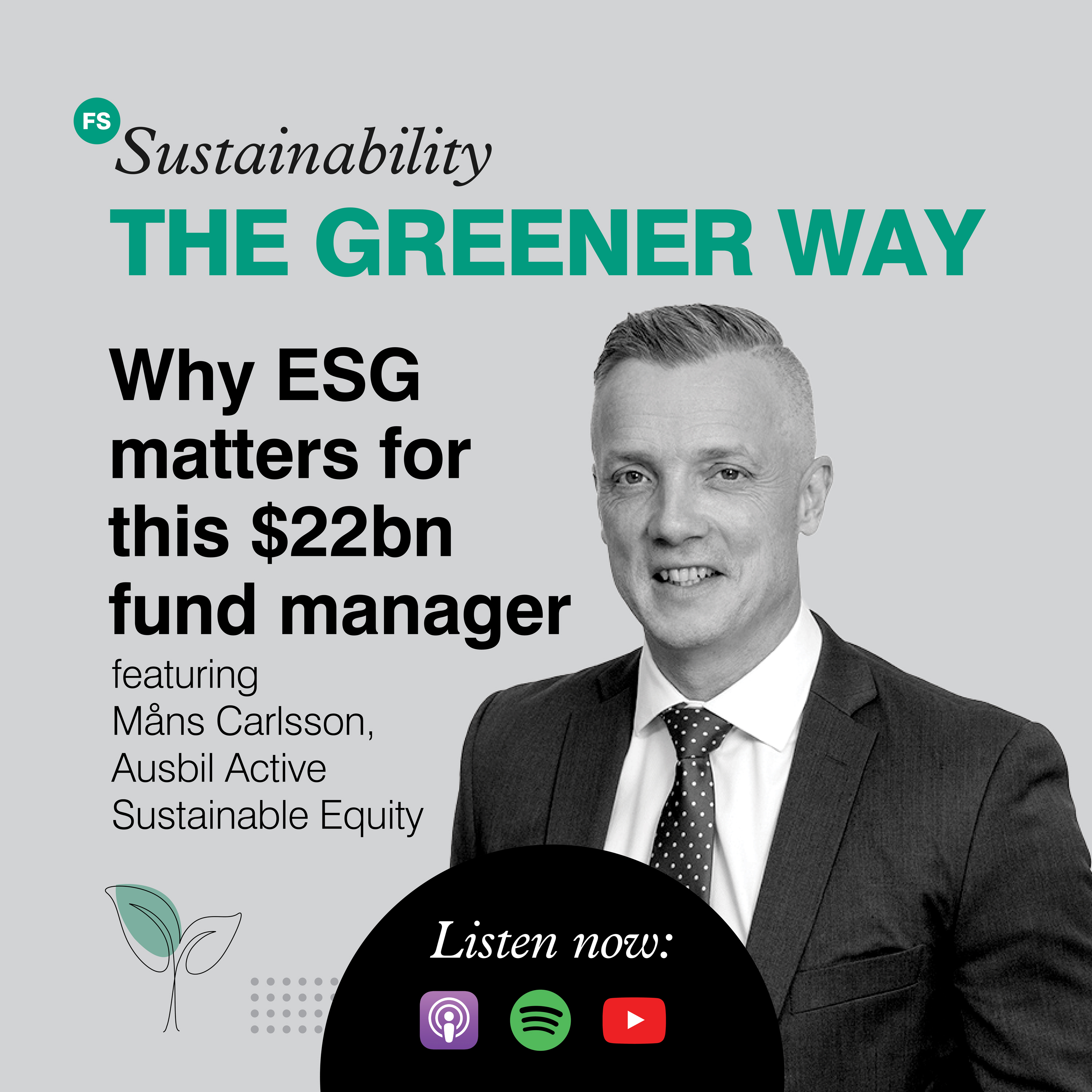 Why ESG matters for this $22bn fund manager 11.08.2026 17min🌿 How are ESG fund managers using sustainability to make better investment decisions?❓ Question: As ESG investing faces increasing scrutiny and evolving reporting requirements, how do professional fund managers integrate sustainability considerations into investment decisions without sacrificing returns?✅ Answer: According to Mans Carlsson, head of ESG and co-portfolio manager at Australian fund manager Ausbil Investment Management, ESG integration is fundamentally about making better-informed investment decisions. Rather than focusing on ideology, Carlsson argues that ESG research helps investors identify risks, assess management quality, evaluate stakeholder relationships and uncover long-term opportunities that traditional financial analysis may overlook. Through proprietary ESG research, company engagement and on-the-ground investigation, investors can better understand which companies are managing risks effectively and which may face future reputational, regulatory or operational challenges.🌟 One of Carlsson's key messages is that ESG investing does not necessarily require investors to sacrifice returns. He challenges the long-standing perception that excluding companies on sustainability grounds automatically reduces performance, arguing that ESG analysis helps investors avoid poorly managed companies while identifying businesses that are improving governance, risk management and stakeholder relationships. In his view, these factors can contribute to stronger valuations over time.🌟 Ausbil's investment process combines traditional financial research with proprietary ESG analysis. The firm's ESG team continuously assesses ASX 200 companies and works closely with portfolio managers and analysts. Engagement with companies is a core part of the process, with more than 200 ESG-related company meetings conducted annually. These engagements are often used to encourage companies to adopt best-practice approaches to issues such as climate change, responsible sourcing, corporate governance and workforce management.🌟 Direct engagement and field research remain critical despite advances in artificial intelligence. Carlsson argues that while AI can assist with data collection and summarisation, ESG analysis involves qualitative judgement that cannot easily be automated. Understanding how seriously a company manages risks, responds to challenges and implements policies still requires human expertise, experience and direct interaction with management teams and stakeholders.🌟 Supply chain transparency is becoming an increasingly important area of ESG analysis. Carlsson described how technology now allows companies to trace the origins of commodities and products with greater accuracy. Businesses that invest in supply chain visibility can reduce the risk of reputational damage, particularly as regulators, investors and consumers pay closer attention to issues such as modern slavery and responsible sourcing.🌟 ESG analysis can identify risks before they become widely known. Carlsson shared an example of avoiding an investment in a high-profile company after proprietary research uncovered allegations of worker underpayment. Once the issue became public, the company's share price fell significantly. He argues that this demonstrates the value of conducting independent research rather than relying solely on company disclosures.🌟 Sustainability reporting requirements are improving the quality of information available to investors, particularly around climate risk. Carlsson highlighted climate-related disclosure frameworks such as the Task Force on Climate-related Financial Disclosures (TCFD) as useful because they encourage companies to examine future risks and opportunities rather than simply reporting historical emissions data. He believes forward-looking climate assessments provide a more complete picture of potential investment risks.🚩 One challenge is that ESG data alone does not provide investment answers. Carlsson cautions against overreliance on datasets and reporting frameworks, arguing that the value lies in interpreting the data and understanding how it affects a company's future prospects. Investors still need analytical judgement to separate meaningful signals from noise.🚩 The transition to a lower-emissions economy is proving more complicated than many anticipated. Carlsson noted that rising energy demand, slower-than-expected commercialisation of some decarbonisation technologies and increasing demand from AI-powered data centres are creating challenges for the energy transition. He argues the discussion is increasingly shifting from "energy transition" to "energy addition" because overall energy demand continues to grow.⚠️ Modern slavery and supply chain risks are likely to face greater regulatory scrutiny in coming years. Carlsson points to emerging international regulations, particularly in Europe, that could impose stricter due diligence requirements and restrictions on goods linked to forced labour. Companies that fail to understand and monitor their supply chains may face operational, legal and reputational risks.⚠️ Reputational damage can emerge rapidly when supply chain issues become public. Carlsson believes advances in traceability technology mean companies will face increasing expectations to verify where materials and products originate. Organisations that fail to invest in transparency could find themselves exposed as external scrutiny intensifies.🌟 Looking ahead, Carlsson expects ESG investing to become more focused on financial materiality. Rather than broad ideological debates, he believes the future of responsible investing will centre on identifying sustainability issues that have direct implications for company performance, risk management and long-term shareholder value. For active managers, this means maintaining a disciplined focus on material ESG factors that influence investment outcomes.💡 Why it matters:As sustainability disclosure requirements expand and ESG investing continues to evolve, investors face growing pressure to separate meaningful sustainability risks from superficial reporting. Carlsson's approach highlights a broader shift taking place across the investment industry: ESG is increasingly being treated as a tool for risk management and company analysis rather than a standalone investment philosophy. Issues such as supply chain transparency, climate resilience, workforce management and corporate governance are becoming material financial considerations that can influence company valuations and long-term performance. For investors, understanding these factors may prove increasingly important as regulations tighten, stakeholder expectations rise and new technologies expose risks that were previously difficult to detect.🎙️ Sources:Mans Carlsson, head of ESG and co-portfolio manager, Ausbil Investment ManagementMichelle Baltazar, host, The Greener Way ⏱️ Timestamps: 00:00 – Why supply chain transparency is becoming critical00:19 – Introduction to Ausbil and ESG investing01:14 – Ausbil's investment approach and ESG capability02:31 – Proprietary ESG research and company engagement03:20 – ESG field trips and responsible sourcing insights04:01 – Encouraging companies to adopt best practice04:44 – Can AI replace ESG research?06:04 – The biggest myths about ESG investing07:00 – How ESG factors influence company value08:07 – Sustainability reporting and climate disclosure09:15 – Climate risk versus emissions reporting10:05 – Examples of ESG leaders and laggards11:09 – Supply chain traceability and modern slavery12:28 – Decarbonisation, AI and energy demand growth14:21 – The future of ESG investing15:21 – Why financial materiality matters15:45 – Modern slavery regulation and supply chain due diligence16:14 – The broader benefits of supply chain scrutiny16:37 – Final reflections on ESG and responsible investing🌿 We record on Gadigal Land and pay our respects to the traditional custodians of country and elders past and present.This podcast uses the following third-party services for analysis: OP3 - https://op3.dev/privacy
 -
 Australia's big bet on green steel 04.08.2026 20min🌿 How can Australia catch up to the frontrunners in the green steel race?❓ Question: As global demand shifts towards low-carbon industries and clean supply chains, does Australia have a realistic opportunity to move beyond exporting raw materials and become a leader in green steel manufacturing?✅ Answer: According to Tim Buckley, founder and director of Climate Energy Finance, Australia has a once-in-a-generation opportunity to transform its economy by decarbonising the steel supply chain and building domestic green steel manufacturing. While Australia is already the world's largest exporter of iron ore, it captures very little value from processing it. Buckley argues that with the right policy settings, investment frameworks and industrial strategy, Australia can create jobs, strengthen regional economies, reduce emissions and become a major supplier of low-emissions steel in a decarbonising world.🌟 One of the report's central themes is that Australia needs to move beyond its traditional "dig and ship" economic model. While unprocessed iron ore remains one of Australia's most valuable exports, Buckley argues that future competitive advantage will come from adding value domestically and supplying trading partners with the low-carbon products they will increasingly require. Decarbonising steelmaking represents one of the largest industrial opportunities globally, and Australia is uniquely positioned due to its iron ore resources and renewable energy potential.🌟 Buckley believes the global transition away from fossil fuels is inevitable. The real question is whether Australia benefits from that transition or becomes one of its casualties. As one of the world's largest exporters of fossil fuels, Australia faces significant economic risks if it fails to diversify. Green steel manufacturing offers a pathway to protect export revenues while positioning the country for future growth.🌟 Rather than immediately pursuing large-scale export ambitions, Buckley argues Australia should begin by developing domestic low-emissions steel production using electric arc furnaces. These facilities use scrap steel and renewable electricity instead of coal-intensive blast furnaces, significantly reducing emissions while creating local manufacturing capacity. He sees electric arc furnaces as a practical starting point that allows Australia to learn, build expertise and establish supply chains before scaling further.🌟 Regional Australia could be one of the biggest beneficiaries of this transformation. Proposed electric arc furnace projects in Western Australia, Queensland and South Australia could create construction jobs, ongoing manufacturing employment and opportunities for associated industries such as recycling and renewable energy generation. Buckley argues that successful energy transition policies must provide replacement industries for coal-dependent communities rather than leaving workers behind.🌟 Green steel is also about national resilience and supply chain security. Buckley notes growing concerns across Western economies about overreliance on offshore manufacturing. Developing domestic processing capability would not only create economic opportunities but also strengthen Australia's strategic position by reducing dependence on imported industrial products.🚩 One major challenge is the scale of investment required. Climate Energy Finance estimates Australia will need hundreds of billions of dollars of capital to transform its economy. Buckley argues that private capital is available, but governments must provide policy certainty and strategic investment mechanisms that help crowd in private-sector funding and lower project risks.🚩 Another challenge involves workforce transition. Communities built around coal mining, coal-fired power generation and other legacy industries face uncertainty as Australia decarbonises. Buckley stresses that political and community support for climate action depends on creating visible pathways into new industries and ensuring future jobs are located in existing regional centres wherever possible.⚠️ Policy settings will play a critical role in determining whether Australia succeeds. Buckley highlights the need for government-backed investment vehicles, stronger carbon pricing signals through mechanisms such as the safeguard mechanism, and clear industrial policies that incentivise low-emissions manufacturing. Without these frameworks, Australia risks missing the opportunity despite its natural advantages.⚠️ Greenwashing is another emerging risk. Buckley argues that as demand grows for low-emissions products, robust verification systems will become increasingly important. Consumers and investors need confidence that products labelled as green steel genuinely meet high environmental standards. This will require independently verified taxonomies and credible reporting frameworks to distinguish genuinely low-emissions steel from marketing claims.🌟 Looking ahead, Buckley remains optimistic. He believes Australia has all the ingredients necessary to become a major green steel producer, including renewable energy resources, mineral reserves, skilled workers and growing policy support. The challenge now is moving from discussion to implementation and demonstrating that new industrial projects can be built and scaled successfully.💡 Why it matters:The shift to a low-carbon economy is reshaping global trade, investment and industrial strategy. For Australia, green steel represents far more than an emissions-reduction initiative. It could become a cornerstone of future economic growth, regional employment and national competitiveness. As countries seek cleaner supply chains and low-emissions industrial products, Australia faces a strategic choice: continue exporting raw materials with limited value-add or build domestic industries that capture more of the economic value generated from its resources. The success or failure of green steel could become one of the defining economic stories of Australia's energy transition.🎙️ Sources:• Tim Buckley, founder and director, Climate Energy Finance• Michelle Baltazar, host, The Greener Way ⏱️ Timestamps:00:00 – Australia's opportunity in the global steel transition00:42 – Introducing Climate Energy Finance and the Arc of Ambition report01:18 – Climate, energy and finance: the intersection driving change02:00 – The scale of investment needed for Australia's transition03:22 – Can Australia mobilise the capital required?04:02 – Diversifying beyond dependence on overseas manufacturing05:19 – Key findings from the Arc of Ambition report06:00 – Why Australia must move beyond exporting raw iron ore07:17 – Building a domestic green steel industry08:00 – Electric arc furnaces and low-emissions steel production09:29 – Regional jobs and a Future Made in Australia10:17 – Employment opportunities from green steel manufacturing12:17 – Turning former coal regions into industrial hubs13:22 – Recycling steel and creating circular economy opportunities15:45 – What governments and businesses should do next16:19 – Three reforms needed to accelerate green steel17:00 – Carbon pricing, safeguards and investment incentives18:00 – Why verification and green steel taxonomies matter18:41 – Final reflections on Australia's green steel opportunity19:12 – Can green steel become a major employer? Yes.Link: Arc of ambition report🌿 We record on Gadigal Land and pay our respects to the traditional custodians of country and elders past and present.This podcast uses the following third-party services for analysis: OP3 - https://op3.dev/privacy
 -
 Greenwashing 2.0: The next big risk 28.07.2026 14min🌿 Is greenwashing evolving into a new risk era driven by climate reporting and emissions targets?❓ Question: As climate disclosure becomes mandatory and regulators crack down on misleading environmental claims, is greenwashing becoming less about marketing spin and more about governance, reporting and accountability?✅ Answer: According to Dr Mark Siebentritt, executive director at Edge Impact, greenwashing is entering a new phase. What was once largely viewed as an ethical issue is now a regulatory and governance concern, driven by enforcement action and mandatory climate disclosure requirements. Organisations can no longer rely on broad sustainability claims or aspirational net-zero statements. Instead, they must be able to substantiate their claims with evidence, robust data and credible implementation plans.🌟 One of the most significant changes is the shift from voluntary to mandatory climate reporting. Dr Mark Siebentritt notes that sustainability reporting has become deeply embedded in organisational decision-making, particularly within finance, governance and risk functions. Climate-related risks and their financial implications are increasingly being treated as core business issues rather than standalone sustainability concerns.🌟 Greenwashing has also moved from being an ethical debate to a regulatory risk. In the past, organisations were primarily challenged by stakeholders questioning environmental claims. Today, companies face potential consequences from regulators if they make claims that cannot be supported by evidence. This shift has elevated greenwashing from a reputational concern to a board-level risk.🌟 Directors are paying closer attention because of both financial and reputational implications. According to Dr Mark Siebentritt, discussions around potential regulatory action often resonate strongly in boardrooms because directors have fiduciary responsibilities and need confidence that sustainability claims are supported by reliable data and governance processes.🌟 Mandatory climate disclosure reporting is accelerating this trend. More than 6,000 Australian companies are expected to be affected by reporting requirements that include disclosure of climate-related risks and financial impacts, with assurance and auditing requirements increasing over time. Dr Mark Siebentritt describes the changes as among the most significant developments in financial reporting in recent years.🚩 One challenge is the compressed timeframe facing organisations. While businesses may previously have developed gradual sustainability roadmaps, climate disclosure requirements and greenwashing regulations are now converging. Companies are under pressure to strengthen governance, reporting systems and evidence frameworks much sooner than many originally anticipated.🚩 Another challenge relates to artificial intelligence. While AI can help organisations process large and complex datasets, identify patterns and improve reporting efficiency, Dr Mark Siebentritt warns that businesses cannot rely on technology alone. Climate risks remain real-world challenges that require informed judgement, credible analysis and high-quality information. AI-generated outputs that lack accuracy or real-world validation could create significant governance risks.🌟 AI nevertheless presents important opportunities. Used appropriately, it can support the analysis of vast climate datasets, help uncover trends and strengthen reporting processes. However, organisations must ensure the resulting disclosures are based on robust evidence if they are to meet expectations for investment-grade reporting.⚠️ Looking ahead, Dr Mark Siebentritt believes one of the biggest emerging greenwashing risks involves emissions-reduction targets. Organisations are increasingly required to disclose targets and explain how they intend to achieve them. This means broad declarations about achieving net zero or carbon neutrality are no longer sufficient without supporting evidence and realistic implementation pathways.⚠️ He describes this as a potential "Greenwashing 2.0" challenge. The future risk may not be false marketing claims but rather targets that lack credible plans, achievable pathways or practical actions. Companies will need to demonstrate not only what they aim to achieve, but also how they will deliver measurable outcomes over time. For multinational organisations in particular, global commitments will need to be translated into credible local strategies and actions.💡 Why it matters:The sustainability landscape is rapidly maturing. As climate reporting requirements expand and regulatory scrutiny intensifies, organisations face growing expectations around transparency, evidence and accountability. Sustainability claims are no longer judged solely by what companies say, but increasingly by the quality of their data, governance and execution. The next generation of greenwashing risk may centre on ambitious climate promises that cannot be realistically delivered. For boards, executives and investors, the challenge will be ensuring environmental commitments are supported by credible plans, measurable actions and robust disclosure frameworks.🎙️ Sources:Dr Mark Siebentritt, executive director, Edge ImpactMichelle Baltazar, host, The Greener Way ⏱️ Timestamps:00:00 – Greenwashing meets mandatory climate disclosure01:24 – How Edge Impact's work has evolved02:49 – Sustainability moves into finance, governance and risk teams03:30 – The evolution of greenwashing from ethics to regulation04:33 – Why boards are paying closer attention06:16 – The impact of mandatory climate reporting08:00 – Can AI accelerate climate disclosure reporting?09:00 – The limits of AI and investment-grade reporting10:35 – The emerging greenwashing risk nobody is talking about11:00 – Why emissions targets now require evidence and action plans12:07 – Greenwashing 2.0: From false claims to false targets13:01 – Final reflections on regulation and accountability🌿 We record on Gadigal Land and pay our respects to the traditional custodians of country and elders past and present.This podcast uses the following third-party services for analysis: OP3 - https://op3.dev/privacy
 -
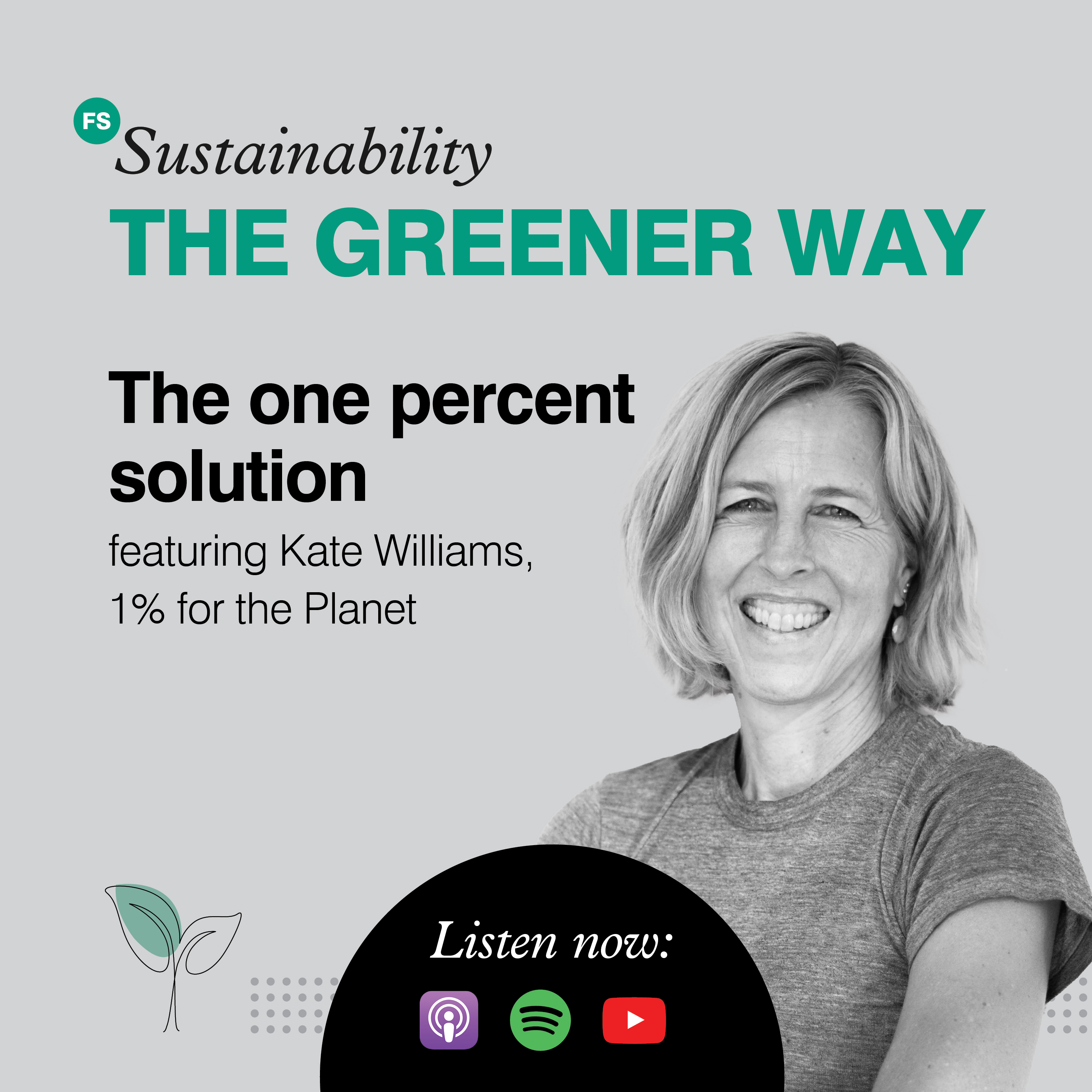 The 1% solution 21.07.2026 19min🌿 Can committing just 1% of revenue help businesses drive meaningful environmental impact?❓ Question: Can a relatively small commitment of 1% of annual revenue create measurable environmental outcomes, strengthen business performance and help companies embed sustainability into their long-term strategy?✅ Answer: According to Kate Williams, chief executive officer of 1% for the Planet, the answer is yes – provided businesses treat environmental giving as a core operational expense rather than a discretionary donation. The organisation encourages members to commit at least 1% of annual revenue, not profits, to vetted environmental causes every year, regardless of business conditions. This approach is designed to integrate environmental responsibility directly into corporate strategy, planning and financial decision-making.Founded in 2002, 1% for the Planet connects businesses with environmental partners across four key impact areas: just economies, resilient communities, rights to nature, and conservation and restoration. Member companies can direct their contributions according to their own sustainability priorities, while the organisation verifies and certifies their commitments.🌟 One of the key insights from the discussion is why the 1% figure has endured for almost 25 years. Williams explains that 1% is both psychologically accessible and financially meaningful. It feels achievable for most organisations, yet when applied to annual revenue rather than profit, it becomes a substantial long-term commitment that can fund significant environmental initiatives.🌟 The strongest area of support among members is resilient communities, which accounts for roughly 40% of certified contributions. Williams says this reflects growing recognition that environmental issues are fundamentally linked to people and communities. Businesses increasingly want their sustainability efforts to deliver both environmental and social outcomes, particularly as climate impacts become more visible.🌟 Climate-related causes are receiving increasing attention. Climate adaptation attracted approximately $25 million in certified giving during 2025, representing around 22% of all contributions certified by the organisation. Renewable energy funding also experienced significant year-on-year growth, highlighting the increasing focus companies are placing on climate solutions.🚩 One challenge is maintaining sustainability commitments during periods of economic pressure. Businesses globally are dealing with cost-of-living pressures, margin compression and uncertain economic conditions. In these environments, environmental spending can be perceived as an additional cost rather than a strategic investment.🚩 Another challenge is demonstrating commercial value. Williams notes that organisations must be able to link environmental commitments to tangible business outcomes such as customer loyalty, brand differentiation, talent attraction and employee retention. Without a compelling business case, sustainability initiatives may struggle to gain long-term support from leadership teams and stakeholders.🌟 To address these concerns, 1% for the Planet emphasises flexibility. Companies can contribute through cash donations, products or professional services. For example, a marketing agency may provide pro bono services to a non-profit partner, allowing businesses to maintain commitments even in years when cash budgets are constrained.🌟 Williams also highlights the long-term strategic view. She argues that business viability ultimately depends on a healthy environment and functioning communities. Framing sustainability investments through this lens helps organisations move beyond short-term financial pressures and focus on long-term resilience and value creation.⚠️ Looking ahead, one area of opportunity is the technology sector. Despite technology companies often generating significant revenues and strong margins, Williams says the sector remains underrepresented within the organisation's membership. She sees substantial potential for technology firms to play a larger role in funding environmental initiatives as stakeholder expectations continue to evolve.⚠️ The organisation is also continuing to invest in its global community of members. Through events, peer networks and ongoing support, businesses can share ideas, refine their giving strategies and learn from others facing similar sustainability challenges. According to Williams, participation is designed to be an evolving journey rather than a one-off commitment.💡 Why it matters:As sustainability expectations expand beyond emissions reductions and reporting requirements, businesses are increasingly being asked what direct contribution they are making to environmental and social outcomes. Models such as 1% for the Planet aim to move environmental responsibility from the margins of corporate strategy into core business operations. By linking environmental giving to revenue rather than profits, organisations can create more predictable and accountable funding streams while potentially strengthening customer relationships, employee engagement and long-term business resilience.🎙️ Sources:• Kate Williams, chief executive officer, 1% for the Planet• Michelle Baltazar, host, The Greener Way ⏱️ Timestamps:00:00 – Why 1% of revenue became the benchmark01:30 – How 1% for the Planet works03:10 – The rationale behind revenue-based giving05:00 – Trends in environmental funding and impact areas06:00 – Why resilient communities receive the most support07:00 – Climate adaptation and renewable energy funding growth09:00 – Maintaining commitments during economic pressure10:00 – The business case for environmental giving12:00 – Flexible contribution models and in-kind giving13:00 – Opportunities in the technology sector15:20 – How businesses can join 1% for the Planet16:20 – Community-building and member supportLink: https://www.onepercentfortheplanet.org/🌿 We record on Gadigal Land and pay our respects to the traditional custodians of country and elders past and present.This podcast uses the following third-party services for analysis: OP3 - https://op3.dev/privacy
 -
 Investor pathway to decarbonise 14.07.2026 16min🌿 Can carbon recycling turn industrial emissions into profitable products?❓ Question:Can captured carbon dioxide be transformed into valuable commercial products, and could this help heavy industries such as cement, steel and mining accelerate their path to net zero while creating new business opportunities?✅ Answer:According to Sophia Hamblin Wang, co-founder and chief operating officer of MCi Carbon, carbon dioxide should no longer be viewed as a waste product. Instead, it can become a feedstock for new industrial materials, creating a commercial incentive for companies to capture emissions rather than release them into the atmosphere.MCi Carbon was founded in 2013 to commercialise a process known as mineral carbonation, which permanently locks CO₂ into mineral products that can be used across industries including cement, plasterboard, refractories, paper and construction materials. The company's vision emerged from research highlighting mineral carbonation as a viable long-term carbon storage solution, but at the time there were few examples of the technology being deployed at scale.🌟 A major milestone was recently achieved with the opening of what MCi Carbon describes as the world's first fully integrated carbon refinery in Newcastle. The demonstration facility can permanently store approximately 2,500 tonnes of CO₂ each year while producing around 10,000 tonnes of low-carbon materials for industrial use.🚩 One challenge highlighted in the discussion is the ongoing uncertainty around climate policy frameworks. While governments and corporations have broadly committed to net zero by 2050, many of the regulatory mechanisms needed to support large-scale decarbonisation are still evolving. Carbon markets, emissions trading schemes and standards continue to develop across different jurisdictions, creating uncertainty for climate technology companies seeking to scale globally.🚩 Another challenge is convincing industrial companies to adopt new technologies at scale. Heavy industries have traditionally faced limited commercially viable options for reducing emissions, particularly in sectors such as steel, cement and chemicals where emissions are difficult to eliminate. Success depends not only on environmental performance, but also on economics, operational integration and customer demand for lower-carbon materials.🌟 One of MCi Carbon's differentiators is that its business model does not rely solely on carbon credits or emissions trading schemes. The company has designed its technology to generate revenue through the sale of valuable products created from captured CO₂. In some cases, customers are interested purely in removing emissions from their operations, leading to what Sophia describes as "carbon removal as a service".🌟 The technology is also designed as a "bolt-on" solution that can be installed alongside existing industrial facilities. By locating operations close to major emitters, MCi Carbon can take captured CO₂ and convert it directly into useful materials, lowering barriers to adoption for industrial customers.⚠️ Looking ahead, Sophia believes the next 18 months could be a pivotal period for industrial decarbonisation technologies. As pressure grows for heavy industries to reduce emissions and more governments establish climate transition frameworks, demand for commercially viable carbon utilisation technologies is expected to increase significantly. The company is also exploring opportunities linked to sustainable finance, including green bonds and infrastructure-style investment models.💡 Why it matters:Heavy industries account for a significant share of global greenhouse gas emissions, yet they remain among the hardest sectors to decarbonise. Technologies that can transform captured carbon into commercially valuable products offer a potentially powerful alternative to treating emissions solely as a compliance or waste-management problem. If successful, carbon recycling could help industries reduce emissions, unlock new revenue streams and accelerate progress towards net zero while creating entirely new markets for low-carbon materials.🎙️ Sources:• Sophia Hamblin Wang, co-founder and chief operating officer, MCi Carbon• Michelle Baltazar, host, The Greener Way podcast ⏱️ Timestamps:00:00 – Introduction to carbon recycling and industrial decarbonisation01:30 – Why MCi Carbon was founded04:15 – Building a carbon refinery in Australia07:10 – Global investors and strategic partners10:15 – Europe and Japan expansion plans11:45 – Regulatory uncertainty and net-zero frameworks13:00 – Carbon removal as a service explained14:10 – Opportunities in steel, cement and heavy industry15:15 – Future growth, green bonds and scaling commercial plants16:00 – Why the next 18 months will be critical🌿 We record on Gadigal Land and pay our respects to the traditional custodians of country and elders past and present.This podcast uses the following third-party services for analysis: OP3 - https://op3.dev/privacy
 -
 Red flags in AI governance 07.07.2026 23min🤖 Can good AI governance help companies become long-term winners?❓ Question:How are Australian company boards approaching artificial intelligence, and can strong AI governance help companies create long-term value while managing emerging risks?✅ Answer:Artificial intelligence is rapidly becoming an investment issue rather than simply a technology issue. According to Sue Lyn Stubbs, associate director in sustainable investing at Fidelity International, investors are increasingly assessing not only whether companies are adopting AI, but how effectively boards are governing its implementation.To better understand the state of AI governance in Australia, Fidelity engaged with 31 ASX-listed companies across sectors including financials, healthcare, technology and real estate. The research focused on five areas: strategy and value creation, board oversight and skills, risk and controls, governance and ethical AI, and workforce impacts.One of the key findings was that many companies remain in the early stages of AI adoption. Fidelity's assessment framework, based on Microsoft's AI maturity model, required an additional category "Stage Zero" to classify companies that were not yet actively implementing AI. Most organisations currently sit between experimentation, pilot programs and early operational use.🚩 One of the key governance red flags was a disconnect between executives and boards. In some cases, CEOs described ambitious AI strategies and extensive use cases, while boards appeared significantly more conservative in their understanding of AI opportunities. This mismatch raised questions about strategic alignment and whether AI investments were being directed effectively across the organisation.🚩 Another concern was the absence of clearly defined "no-go" areas for AI. While many boards acknowledged potential risks, few could clearly articulate where AI should not be used, particularly in sensitive areas such as workforce surveillance or customer decision-making that could create biased outcomes. As AI becomes more embedded across organisations, investors are likely to expect stronger guardrails and clearer accountability.🌟 Despite these challenges, the research highlighted several examples of emerging best practice. Leading companies are investing in AI talent, building internal capability, expanding workforce training and, in some cases, incorporating AI-related measures into employee incentive programs. Some companies are also engaging directly with regulators and policymakers on the future development of AI governance frameworks.From an investment perspective, Stubbs believes strong AI governance could become an important indicator of long-term success. Drawing comparisons with previous technology disruptions, she argues that companies that can adapt their business models, embrace change and govern emerging technologies effectively may be better positioned to create sustainable shareholder value.⚠️ The report also challenges the common assumption that "human in the loop" oversight is enough to manage AI risks. While human review remains important, there is a growing risk that employees become overly reliant on AI-generated outputs. Boards may eventually need additional layers of monitoring and control to manage potential errors, compliance issues and unintended consequences. Meanwhile, the growing use of unauthorised AI tools by employees, sometimes referred to as "shadow AI", presents another governance challenge for organisations seeking to protect intellectual property and manage operational risk.Ultimately, the research suggests that investors should view AI governance as more than a compliance exercise. A board's ability to oversee AI effectively may provide valuable insights into whether a company can adapt, compete and thrive in a rapidly changing business environment.💡 Why it matters:Artificial intelligence is reshaping industries, workforces and business models at an unprecedented pace. While much of the public discussion focuses on productivity gains and innovation, investors are increasingly concerned with governance, accountability and risk management. Companies that can successfully balance AI opportunity with strong oversight may be better positioned to create long-term value, while those that fail to establish appropriate guardrails risk operational, reputational and strategic setbacks.🎙️ Sources:• Sue Lyn Stubbs, associate director, sustainable investing, Fidelity International• Michelle Baltazar, executive director of media, FS Sustainability ⏱️ Timestamps:00:00 – Why AI governance matters for investors02:05 – Researching AI adoption across 31 ASX companies04:59 – Understanding AI maturity and Stage Zero07:33 – Red flags and governance gaps11:39 – Examples of emerging best practice15:25 – Linking AI governance to long-term value creation17:51 – Why "human in the loop" may not be enough19:50 – The risks of shadow AI21:25 – What boards should focus on nextLink: Insights from Fidelity International’s 2025 Australian AGM season AI governance survey🌿 We record on Gadigal Land and we pay our respects to the traditional custodians of country and elders past and present.This podcast uses the following third-party services for analysis: OP3 - https://op3.dev/privacy
 -
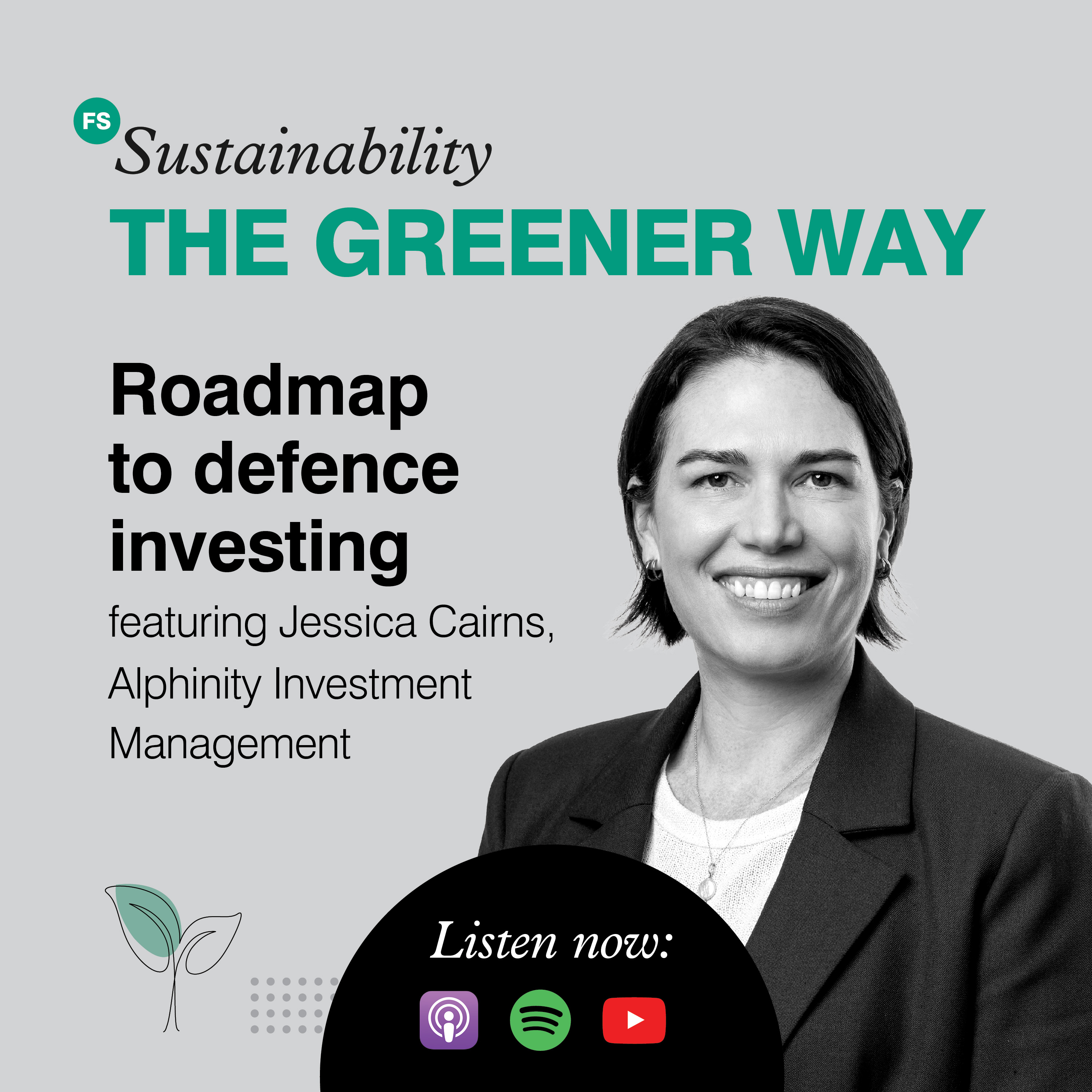 Roadmap to defence investing 30.06.2026 21minCan responsible investors justify defence exposure?Question:Can investors responsibly invest in defence companies while managing ESG risks, and where should they draw the line?Answer:Defence investing has become increasingly relevant as global conflict and government spending rise, but it remains complex for ESG-focused investors. According to Jess Cairns, head of responsible investment at Alphinity, the key is not blanket avoidance but having a clear, practical framework that balances responsible investing with investment opportunity.Most investors already apply strict exclusions to controversial weapons (such as nuclear or banned weapons), often at a zero-revenue threshold. However, beyond that, there is significant variation across the industry, especially when it comes to conventional weapons and indirect exposure.A major challenge is “dual-use” companies. Many industrial and technology firms produce components that can be used in both civilian and military applications, making it difficult to clearly classify exposure. Cairns notes that even small, generic components can end up in weapons systems, making traditional dual-use vs single-use distinctions unreliable in practice.Instead, Alphinity’s approach is to:• Apply a hard exclusion to companies directly manufacturing weapons.• Allow some indirect exposure (e.g. components or services), but with strict limits.• Use enhanced due diligence to assess how products are used, who they are sold to, and whether there are risks linked to conflict zones or human rights issues.This due diligence includes analysing end markets, government contracts, sanctions compliance, and any controversies linked to misuse. For example, a company with a small portion of revenue tied indirectly to defence (around 5% in one case discussed) may still be investable if risks are well understood and managed.However, the hardest decisions arise when companies are linked to active conflicts. Even minimal revenue exposure can create significant ethical and reputational concerns. In some cases, companies have limited control over how their products are ultimately used, forcing investors to weigh financial materiality against potential human rights implications.Ultimately, responsible defence investing is about clarity and consistency, not perfection. Investors can participate in the sector, but only if they set clear boundaries, apply rigorous analysis, and remain accountable to stakeholders.Why it matters:Defence is no longer a niche or easily excluded sector, it’s becoming a meaningful driver of returns in global markets. At the same time, it carries significant ESG risks, particularly around human rights and conflict exposure. Investors who fail to define their approach may either miss opportunities or take unintended risks. A clear framework helps balance performance with responsibility and builds trust with clients and stakeholders.Sources:• Jess Cairns, head of responsible investment, Alphinity• Michelle Baltazar, executive director of media, FS SustainabilityTimestamps:00:00 – Why defence investing is back on the agenda01:19 – How investors began reassessing the sector02:45 – Mapping exposure and company disclosures04:50 – Why dual-use classifications break down07:14 – Building a practical investment framework11:44 – Balancing risk and return14:34 – Real-world ethical dilemmas and case studies18:30 – Key insights from the responsible investment reportWe record on Gadigal Land and we pay our respects to the traditional custodians of country and elders past and present.https://www.fssustainability.com.au/This podcast uses the following third-party services for analysis: OP3 - https://op3.dev/privacy
 -
 Catching human rights risks early 23.06.2026 23minPortfolio poison: How ignoring modern slavery risks your returnsQuestion:Why does modern slavery persist despite Australia’s Modern Slavery Act, and what practical steps can investors and fund managers take to drive real change beyond compliance?Answer:Modern slavery remains a global issue, with an estimated 50 million people affected. Australia’s Modern Slavery Act has increased awareness but hasn’t yet reduced incidents. According to Måns Carlsson, OAM, head of ESG at Ausbil Active Sustainable Equity, the key is moving beyond a “compliance mindset” to genuine leadership. This means harmonising laws internationally, adopting human rights due diligence (not just reporting), and using investor influence for practical engagement with companies.Investors can’t guarantee portfolios are free from modern slavery risk, but they can:• Incentivise suppliers to meet responsible sourcing standards, focusing on deeper supply chain tiers (not just tier one).• Use tools like worker voice technology for real-time feedback, rather than relying solely on annual audits.• Collaborate with other investors and advocate for stronger, harmonised laws (e.g., import bans on goods made with forced labour).• Support companies to improve, rewarding progress rather than demanding perfection.The real power lies in ongoing, practical engagement and policy advocacy, not just risk assessments or box-ticking.Why it matters:Modern slavery is not just a legal or ethical issue—it’s a material risk for companies and investors. Reputational damage (as seen with Boohoo in the UK) can hit share prices hard and fast. As global regulation tightens, companies that fail to act may find their goods blocked from key markets. For investors, supporting companies to improve standards helps reduce risk, avoid negative surprises, and contribute to positive change.Sources:• Måns Carlsson, head of ESG, Ausbil Active Sustainable Equity• Michelle Baltazar, executive director of media, FS Sustainability• RIAA Human Rights Working Group toolkitsTimestamps:00:00 – Why modern slavery persists; need for global collaboration02:01 – Investor relevance: reputational risk, earnings sustainability05:51 – Harmonisation, human rights due diligence, import bans08:40 – Practical steps: engagement, worker voice tools, supplier incentives13:19 – Responsible purchasing and unintended consequences16:40 – Monitoring deeper supply chain tiers18:32 – Accountability and ongoing engagement20:54 – ESG, risk management, and performanceWe record on Gadigal Land and we pay our respects to the traditional custodians of country and elders past and present.https://www.fssustainability.com.au/This podcast uses the following third-party services for analysis: OP3 - https://op3.dev/privacy
 -
 Green Bonds: From niche to mainstream 16.06.2026 18minIs Your Portfolio Missing Out? The Green Bond Boom ExplainedQuestion:How have green bonds evolved, what risks and opportunities do they present for investors, and what are the biggest misconceptions about this asset class?Answer:Green bonds have grown into a US $2 trillion global market, with Europe leading but APAC and emerging markets catching up. According to Johann Ple, senior portfolio manager at BNP Paribas Asset Management, green bonds now offer broad sector diversification and transparency, making them a credible alternative to conventional bonds. Risks are similar to traditional bonds (interest rates, credit spreads), but greenwashing and sector concentration require careful due diligence. Misconceptions about lower returns (“greenium”) are fading, and green bonds are increasingly viable for all investors, not just those focused on sustainability. Australian super funds and institutional investors can now build custom strategies, aligning portfolios with net zero ambitions without sacrificing performance.Why it matters:For investors, green bonds represent a way to combine positive environmental impact with competitive returns and transparency. The asset class is mature enough for custom strategies, with over 800 issuers and broad sector representation. Understanding the risks and debunking myths is crucial for informed allocation, especially as demand grows in Australia and globally.Sources:• Johann Ple, senior portfolio manager, BNP Paribas Asset Management• Michelle Baltazar, executive director of media, FS Sustainability• Responsible Investing Association Australia• EU Green Bond Standards, APAC market dataTimestamps:00:00 US as a missed opportunity for green bonds02:07 Market size: $2 trillion, Europe dominates, APAC and emerging markets rising03:50 Sector diversification: utilities, banks, real estate, transport, telecom06:54 Risks: conventional bond risks, greenwashing, sector concentration09:00 Greenwashing: issuer and project due diligence11:25 Australia’s role: investor and issuer, custom strategies for super funds13:03 Misconceptions: returns, “greenium”, ESG backlash16:54 Growth drivers: APAC, emerging markets, not just EuropeWe record on Gadigal land and pay our respects to the traditional custodians of country and elders past and present.https://www.fssustainability.com.au/This podcast uses the following third-party services for analysis: OP3 - https://op3.dev/privacy
 -
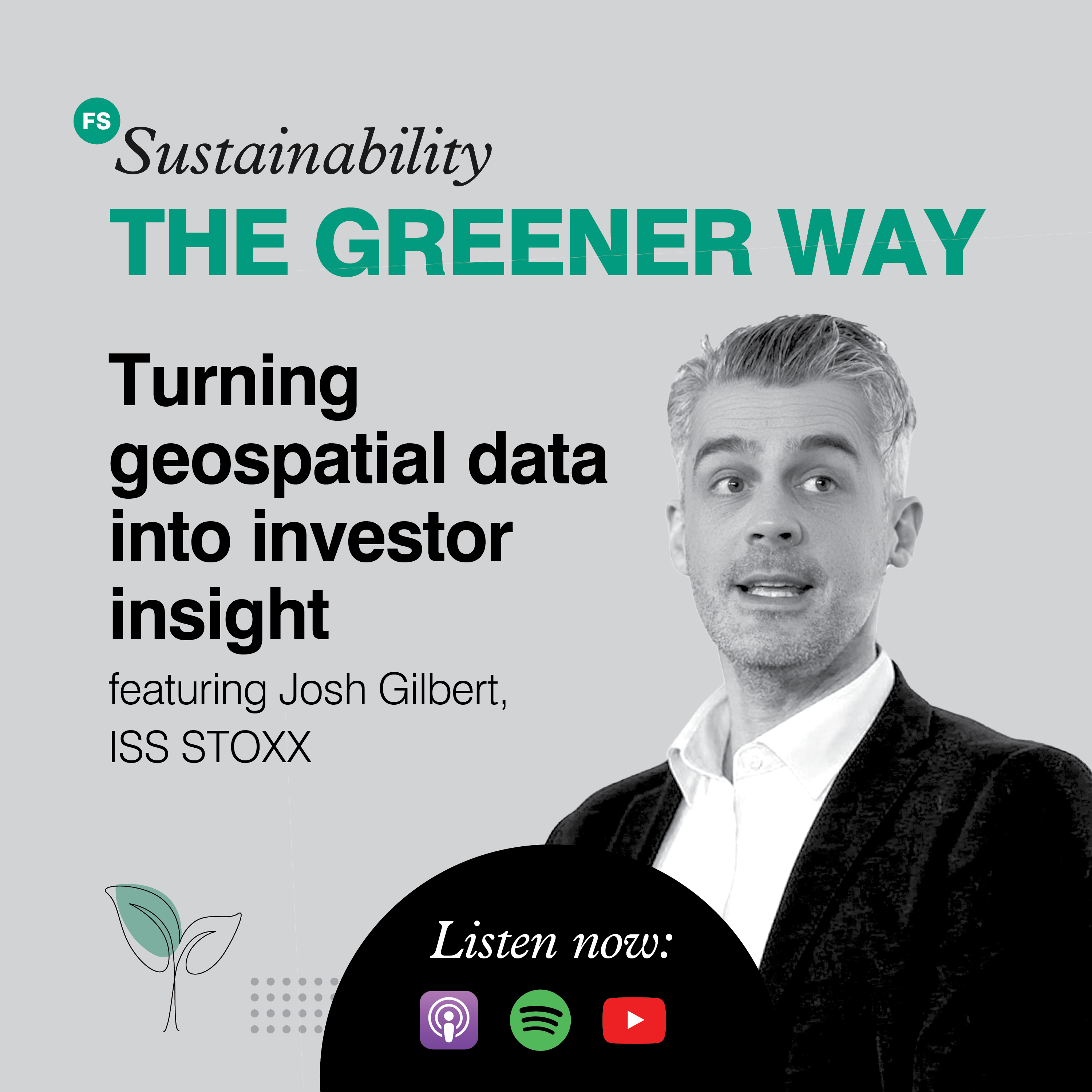 Turning geospatial data into investor insight 09.06.2026 17minA conversation with Josh Gilbert, head of geospatial strategy, ISS STOXX Sustainability, on how geospatial intelligence is reshaping climate and nature risk analysis for investors.Data overload or data goldmine? Investors race to decode nature’s signalsQuestion:How can geospatial tools help investors move from climate risk mapping to nature risk management, and what does this mean for investment decisions?Answer:Geospatial data, like satellite imagery and sensor data, has moved from being a reporting tool to a strategic asset for investors. According to Josh Gilbert, head of geospatial strategy, ISS STOXX Sustainability, the challenge is no longer data starvation but “data digestion”: translating abundant, complex environmental data into clear, actionable financial insights. Sectors with tangible assets (like mining, real estate, and infrastructure) are most directly impacted, but as supply chains and nature risks become more visible, all asset classes are affected. The investors who learn to integrate geospatial and nature data into their decision-making will gain a competitive edge.Why it matters:For investors, this shift means that understanding climate and nature risks is no longer optional or just a compliance exercise. The ability to interpret and act on geospatial data will increasingly drive portfolio resilience, risk management, and even alpha generation. Those who treat nature and climate data as core investment signals, not just pretty dashboards, will be better positioned in a volatile, changing world.Sources:• Josh Gilbert, head of geospatial strategy, ISS Stoxx Sustainability• Michelle Baltazar, executive director of media, FS Sustainability• European Space Agency, SustGlobal, Responsible Investing Association Australia• Industry frameworks: TCFD, IFRS, SASBTimestamps:00:00 Data digestion vs data starvation01:15 Guest background: from economics to geospatial strategy03:22 Why investors struggle with climate and nature risk04:59 How geospatial data moves from reporting to real investment insight06:22 Sectors most impacted by climate and nature risk08:44 Misconceptions: dashboards vs actionable metrics10:53 Nature risk management: real-world examples12:32 The next decade: AI, numeric models, and financial integration15:32 Competitive edge for early adopters16:56 Final thoughts and wrap-upWe record on Gadigal land and we pay our respects to the traditional custodians of country and elders past and present.https://www.fssustainability.com.au/*Both FS Sustainability and ISS STOXX Sustainability are owned by ISS STOXX.This podcast uses the following third-party services for analysis: OP3 - https://op3.dev/privacy
 -
 The appeal of the HALO trade 02.06.2026 22minHALO trade: Why hard assets are the new gold for sustainable investorsQuestion:What is the HALO trade, and why are asset-heavy companies suddenly attracting investor attention in the age of AI and decarbonisation?Short answer:The HALO trade (Hard Assets, Low Obsolescence) is reshaping investment strategies. According to Dierdre Cooper, companies tied to physical infrastructure (like grids, pipelines, and industrial equipment) are seeing renewed growth as AI drives demand for electricity and hard assets. Unlike asset-light sectors threatened by automation, these companies are essential for electrification and climate solutions. Investors who focus on this theme may benefit from attractive valuations and strong growth, especially as decarbonisation and electrification accelerate globally.Why it matters:For sustainable investors, the HALO trade highlights a shift from tech and asset-light stocks to companies with tangible, enduring value. Understanding this trend means recognising the importance of infrastructure, energy storage, and electrification in a world increasingly powered by AI and climate technology. Missing this shift could mean missing out on the next wave of growth and resilience in global portfolios.Sources:• Michelle Baltazar, executive director of media, FS Sustainability• Dierdre Cooper, head of sustainable equity, Ninety One• Ninety One Global Environment strategy• Companies: Contemporary Amperex Technology Co., Limited (CATL), Hongfa Technology, Shaman Electric Co., Limited, Infineon Technologies, TE Connectivity• Industry context: MSCI All Country World Index, decarbonisation trendsTimestamps:00:00 Asset-heavy companies and electrification00:29 HALO trade explained01:24 Ninety One’s sustainable investing approach03:15 Global environment strategy vs traditional equity06:11 AI, asset-light vs asset-heavy sectors08:32 Data centres and electricity demand11:30 PE multiples and growth outlook13:13 Market cycles and investor sentiment14:28 Electricity as “all of the above” solution17:25 Exciting trends for the next decade19:52 Autonomous robots and electrification20:42 Risks and selectivity in thematic investing21:33 Wrap-up and final thoughtsWe record on Gadigal Land and we pay our respects to the traditional custodians of country and elders past and present.https://www.fssustainability.com.au/This podcast uses the following third-party services for analysis: OP3 - https://op3.dev/privacy
 -
 AI and the human capital paradox 26.05.2026 21minAI, Workplace Culture and Labor Rights: Why human capital risk is financially material This week on The Greener Way, host Michelle Baltazar speaks with Emily DeMasi, regional team lead - North America EOS at Federated Hermes, about why human capital risks, such as workplace culture, harassment and violence, labour rights, and supply chain conditions, are financially material for investors through impacts on productivity, reputation, and long-term returns.DeMasi explains how stewardship engagement assesses human capital using employee surveys, whistleblower mechanisms, and core disclosure metrics such as workforce size (including gig and contract workers), turnover, demographics, and total workforce cost.They discuss AI’s double-edged impact, from efficiencies and training needs to job displacement anxiety and potential worker surveillance.00:39 Why human capital matters02:45 Workplace harassment as material risk04:29 Do employee surveys work?05:50 Investor engagement metrics07:55 AI workforce disruption11:13 Case studies13:43 Best practice supply chain frameworks16:18 Why stewardship is crucial17:42 Looking ahead on AI and governanceWe record on Gadigal land and we pay our respects to the traditional custodians of country and elders past and present.https://www.fssustainability.com.au/This podcast uses the following third-party services for analysis: OP3 - https://op3.dev/privacy
 -
 The next clean energy hotspot 19.05.2026 17minWhy Australia Is a Clean Energy Investment Hotspot: Solar, Wind, Batteries & Energy Security | Joost BergsmaOn The Greener Way, host Michelle Baltazar speaks with Joost Bergsma, global head of energy at Nuveen Infrastructure, about clean energy investing, energy security, and why Australia is attractive for large-scale renewables.Bergsma reflects on his the last two decades in the sector and describes how capital raising has evolved from needing to explain basic technologies to today’s dedicated institutional infrastructure teams, alongside greater competition.He explains clean energy investments across solar, onshore/offshore wind and battery storage that appeal to Nuveen’s institutional clients.He also highlights what’s new in the battery storage sector and Australia’s land-driven scale advantages versus Europe.For investors just entering the clean energy sector, he explains the need to address China-concentrated supply chains and Australia’s grid buildout needs.01:02 A career milestone in clean energy02:13 Capital raising outlook03:09 Nuveen infrastructure strategy04:43 Geopolitics and energy security06:47 Data centres and demand surge08:41 Risk return spectrum explained09:45 Australian investor appetite10:54 Nuveen’s local pipeline12:04 Ten-year outlook on batteries14:40 What could go wrong?We record on Gadigal land and we pay our respects to the traditional custodians of country and elders past and present.https://www.fssustainability.com.au/This podcast uses the following third-party services for analysis: OP3 - https://op3.dev/privacy
 -
 The real cost of tariffs 12.05.2026 17minWho Really pays tariffs? Stanford economist breaks down the hidden consumer costIn this episode of The Greener Way, host Michelle Baltazar speaks with Stanford University economist Luke Heeney about the often-overlooked social impacts of industrial policy, focusing on the 2025 US tariffs and their effects on the automotive sector.Heeney explains why accounting for tariffs on intermediate inputs is crucial, finding that many US producers lose billions when parts are included, with only one company coming out ahead due to greater domestic sourcing.He also finds the largest percentage of financial losses fall on the lowest-income households, costing billions of dollars.00:00 Who pays tariffs?00:58 Industrial policy focus03:11 Tariffs study setup04:30 Key findings explained06:27 Lessons for Australia07:37 Why impacts are overlooked09:37 Staggering consumer costs12:04 Building better toolkits14:27 What the government can doWe record on Gadigal land and we pay our respects to the traditional custodians of country and elders past and present.https://www.fssustainability.com.au/This podcast uses the following third-party services for analysis: OP3 - https://op3.dev/privacy
 -
 The supply chain bottleneck 05.05.2026 16minCritical Minerals Supercycle? How AI, Clean Energy & Geopolitics Are Reshaping Supply ChainsIn this episode of The Greener Way, host Michelle Baltazar chats with Vinnay Cchoda, responsible investment manager at BetaShares, about the predicted shortage of some critical minerals in the next couple of decades and how that could force a resetting of investment expectations and strategies.Cchoda says the convergence of electrification, AI-driven data center buildout, and unstable geopolitics is causing supply chain issues.He argues that the supercycle of critical minerals is directionally right but too simplistic, with uneven outcomes across the different types of minerals. For example, lithium and nickel are seeing faster supply responses and price corrections, while copper has hit new highs.The discussion highlights why investors need to look at their diversification strategies and how to respond to the cycles within the supercycle impacting investment outcomes.Read: Critical minerals in the age of AI and tariffs (Link: https://www.fssustainability.com.au/article/critical-minerals-in-the-age-of-ai-and-tariffs)01:08 Three forces converge04:17 Supercycle creates uneven outcomes07:27 When AI meets clean energy09:06 Predicted 40% supply shortage10:52 Supply chain bottlenecks13:05 Investor playbookWe record on Gadigal land and we pay our respects to the traditional custodians of country and elders, past and present.https://www.fssustainability.com.au/This podcast uses the following third-party services for analysis: OP3 - https://op3.dev/privacy
Podkaste të ngjashme


I/E popullarizuar në
Ky podkast shfaqet edhe në listat e podkasteve të këtyre shteteve.
