
Women in Wildlife
Eliza Stott
0
Women in Wildlife is a podcast that amplifies and connects women and non-binary people working in the wildlife industry. Co-hosts Eliza and Maddy explore topics related to women, wildlife, and gender equality in STEM. The show provides a platform for conversations about careers, experiences, and challenges in conservation and related fields. It aims to build community and visibility for underrepresented voices in wildlife work.
Episodet
-
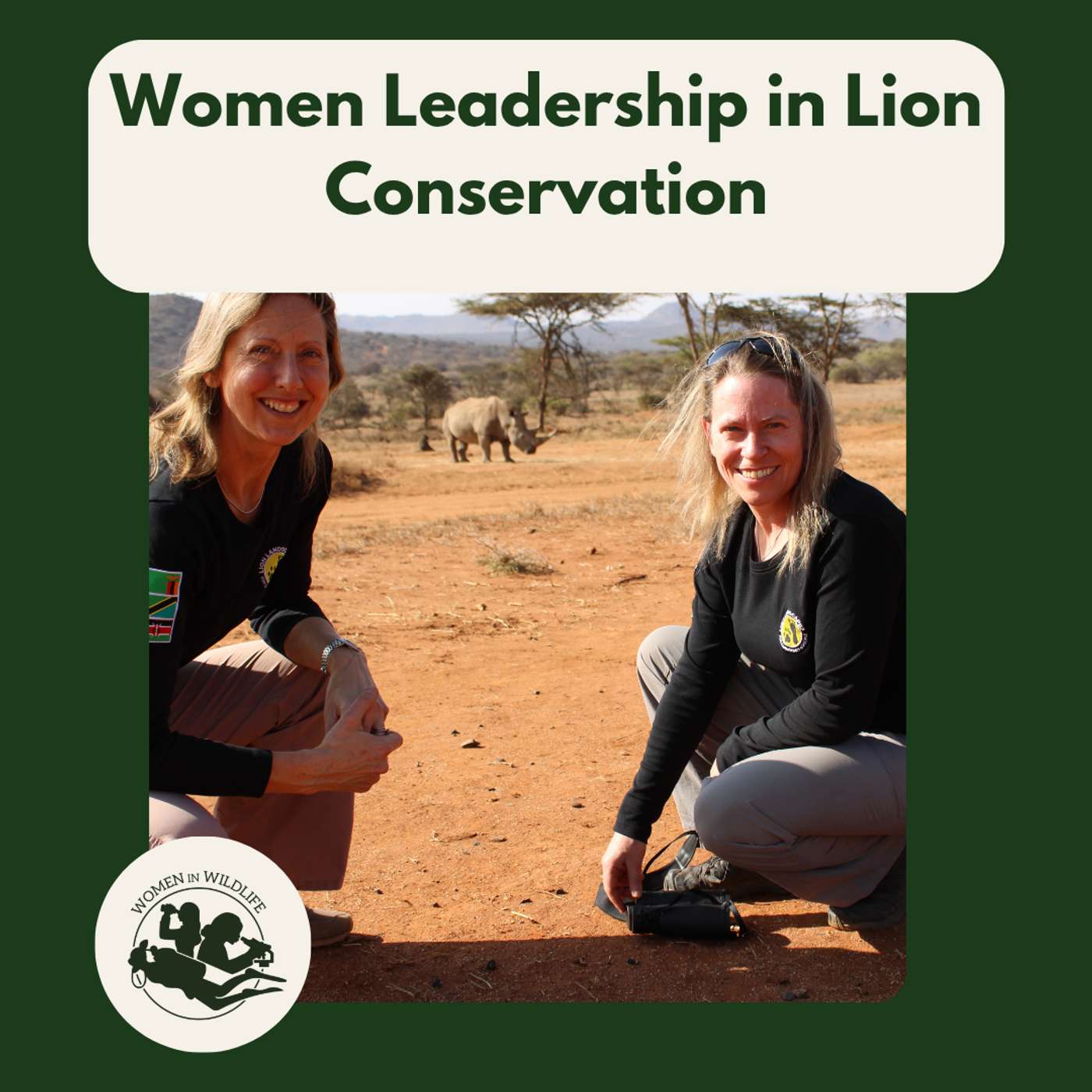 Two Women, One Vision: Challenging Expectations in Conservation Leadership 14.08.2026 34minIn this episode, joint CEOs of Lion Landscapes Amy Dickman and Alayne Cotterill open up about what it really takes to lead together as women in conservation. They share how Lion Landscapes was built not just on a shared passion for wildlife, but on a deliberate decision to work differently; more collaboratively, more openly, and with a leadership model that reflects their strengths. The conversation explores how that partnership came together, why shared leadership felt natural to them, and how it has allowed them to build something stronger than either could have done alone. They also speak honestly about the pressures women face in conservation leadership, including the expectation to be excellent at everything at once. From pregnancy and motherhood to fieldwork and international careers, Amy and Alayne reflect on the real compromises and support systems that have shaped their paths. What stands out most is their belief that leadership doesn’t have to look a certain way to be effective- and that women bringing vulnerability, honesty, and collaboration into leadership can be a real strength. For women navigating wildlife careers, their message is clear: you do not have to do it all alone, and you do not have to do it all at once.If you're inspired by their work, consider supporting Lion Landscapes or sharing their approach to community-led conservation: https://www.lionlandscapes.org/Any questions or queries contact [email protected] to our resources:Website: https://www.womeninwildlife.com.au/Instagram: https://www.instagram.com/women.in.wildlife/Facebook: https://www.facebook.com/profile.php?id=100077369770841Linked in: https://www.linkedin.com/company/womeninwildlife
 -
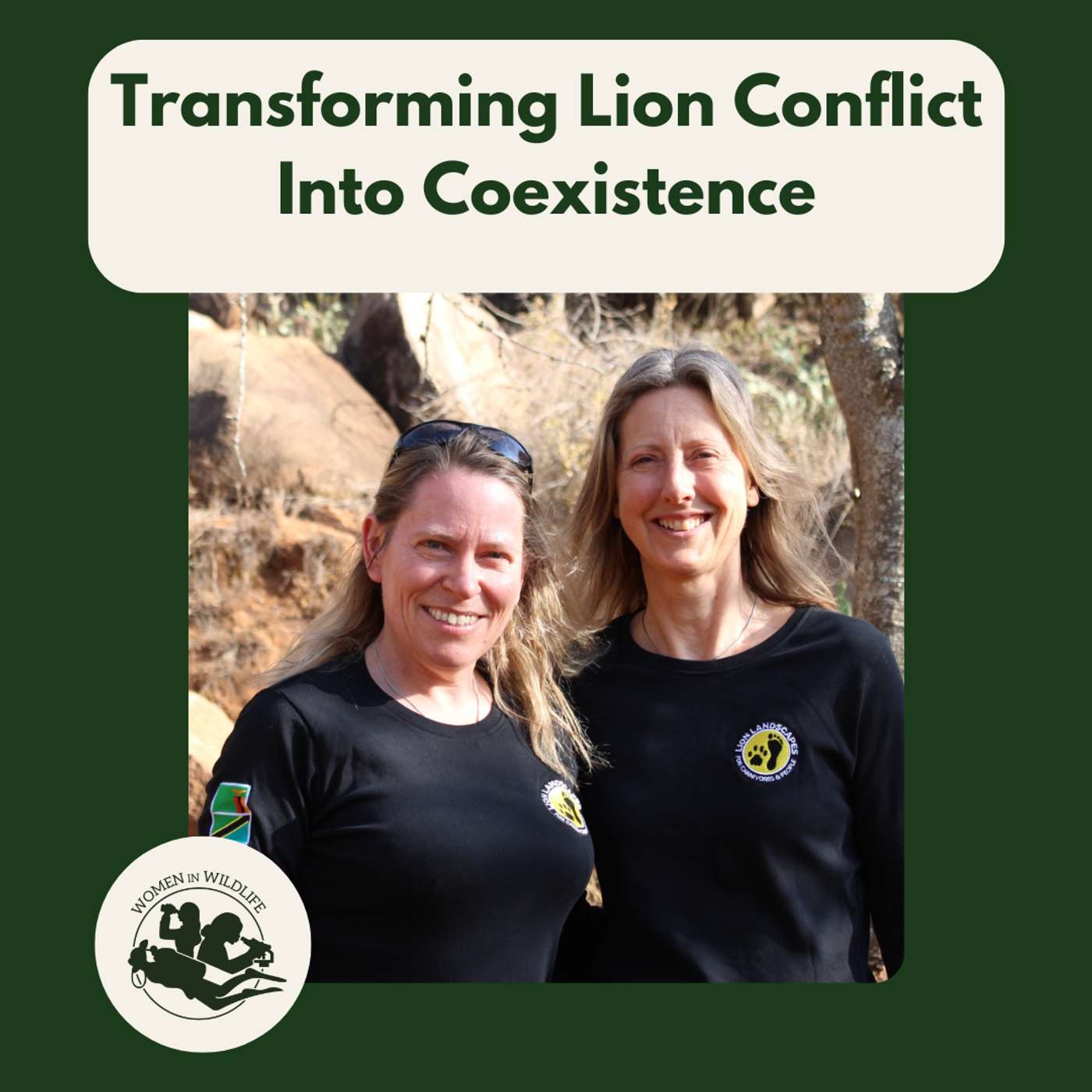 Transforming Lion Conflict Into Coexistence with Amy Dickman and Alayne Cotterill 19.07.2026 38minWelcome back to the Women in Wildlife Podcast! In this episode, joint-CEOs Alayne and Amy share how their charity 'Lion Landscapes' came to life and why their work goes far beyond protecting lions alone. These two powerhouses of conservationists talk about building conservation models that respond to human-wildlife conflict in East Africa, and how the real starting point is understanding the needs of local communities. Rather than approaching conservation as something imposed from the outside, they explain how trust, collaboration, and patience are what make long-term coexistence possible. A major theme in the conversation is the cost of living with wildlife and how Lion Landscapes works to change that balance so communities can see real benefit from conservation. Across the episode, what stands out most is their belief that conservation works best when people are put at the center of it. If you're inspired by their work, consider supporting Lion Landscapes or sharing their approach to community-led conservation: https://www.lionlandscapes.org/There is a part 2 episode with Alayne and Amy which focuses on their experiences as joint-CEOs in the wildlife sector, so stay tuned for that!Any questions or queries contact [email protected] to our resources:Website: https://www.womeninwildlife.com.au/Instagram: https://www.instagram.com/women.in.wildlife/Facebook: https://www.facebook.com/profile.php?id=100077369770841Linked in: https://www.linkedin.com/company/womeninwildlife
 -
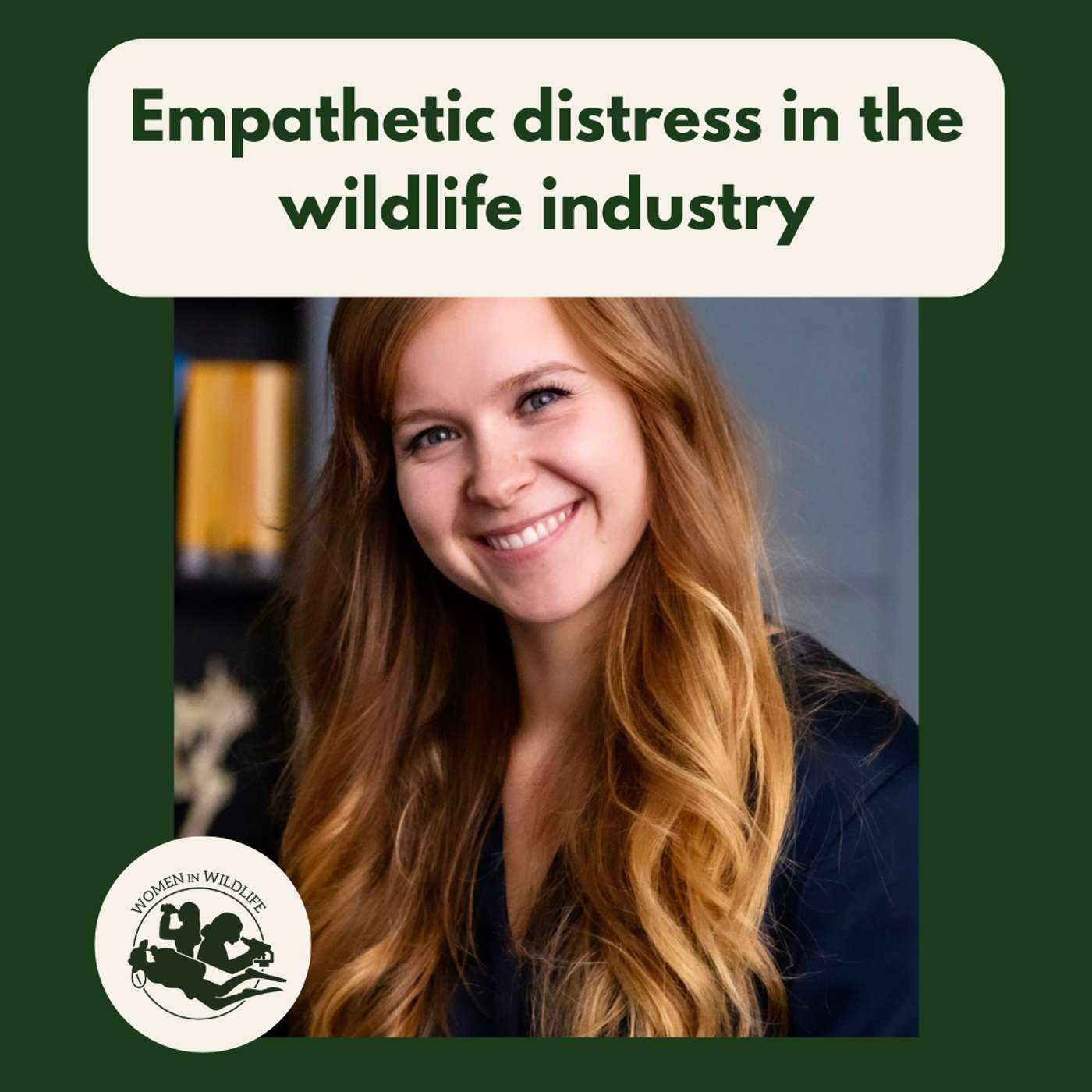 How to cope with empathetic distress in the wildlife industry with Olivia Oginska 03.07.2026 33minThis episode explores the idea of empathetic distress and why it can be so draining for people who work in caring, high-emotion roles, including those within the wildlife industry. We have emotional intelligence Olivia Oginska as our guest on this episode, who explains the difference between compassion and the kind of emotional exhaustion that comes from taking on the suffering of others, and why the term “compassion fatigue” is often misunderstood. The conversation looks at how empathy, values, and workplace pressures can combine to leave people feeling overwhelmed, especially when they care deeply but don’t feel able to change what they are seeing. Olivia also shares how self-awareness is the foundation for managing these feelings, and why it matters to understand what specifically is triggering the emotional response. She talks about the role of support systems, reframing, and knowing what is within your control, especially in environments where repeated exposure to distress can make hopelessness feel normal. The episode offers practical encouragement for anyone who wants to keep caring without becoming consumed by the emotional weight of the work, and reminds listeners that strong passion can be sustained with the right mindset, support, and boundaries.Unfortunately, due to technological difficulties, we won't be releasing the part 2 mentioned throughout this episode. You can learn more about Olivia's work at the Human Savvy here: https://behumansavvy.com/ or follow her on instagram at @vetgonerealAny questions or queries contact [email protected] to our resources:Website: https://women-in-wildlife.com/Instagram: https://www.instagram.com/women.in.wildlife/Facebook: https://www.facebook.com/profile.php?id=100077369770841Linked in: https://www.linkedin.com/company/womeninwildlife
 -
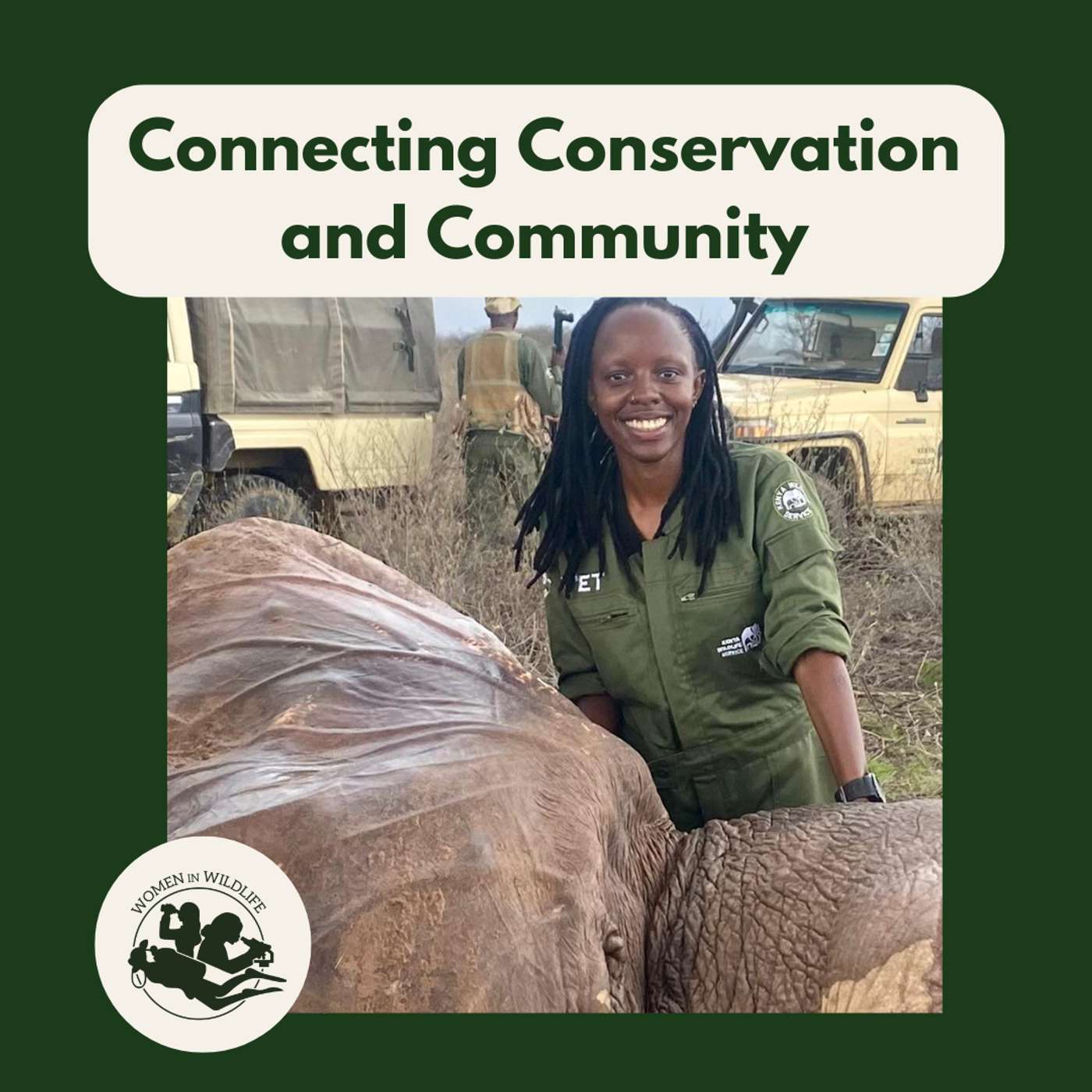 Community, one health, and leading the path for women wildlife vets with Dr. Sharon Mulindi 04.06.2026 45minIn this month's episode of the WIW podcast we explore the journey of Dr. Sharon Mulindi, a dedicated wildlife veterinarian from Kenya. She shares her experiences working in remote areas, facing challenges as a woman in the field, and engaging local communities in conservation efforts. Dr. Mulindi's story highlights the importance of representation, community involvement, and a holistic One Health approach in wildlife conservation.The episode begins with Sharon's childhood inspiration from Nairobi National Park, which sparked her early interest in wildlife medicine. She discusses her journey through vet school and her specialization at Kenya Wildlife Service (KWS). Sharon provides insights into the realities of working as a wildlife vet in remote and sometimes dangerous areas, emphasizing the vital role of local communities and traditional knowledge in conservation. Sharon shares strategies for building relationships, safety, and trust in challenging environments, whilst also emphasising the importance of representation for women, especially African women, in wildlife careers. We also chat about how having a One Health approach links wildlife, human, and ecosystem health, with Sharon recounting memorable cases, including elephant rescues and translocations. The episode concludes with practical advice for young women aspiring to enter conservation and veterinary fields, offering inspiration and guidance for the next generation. You can follow Dr Sharon on Instagram @sha.ron_mulindiAny questions or queries contact [email protected] to our resources:Website: https://women-in-wildlife.com/Instagram: https://www.instagram.com/women.in.wildlife/Facebook: https://www.facebook.com/profile.php?id=100077369770841Linked in: https://www.linkedin.com/company/womeninwildlifeMusic by Thomas Hagen from SLAUX
 -
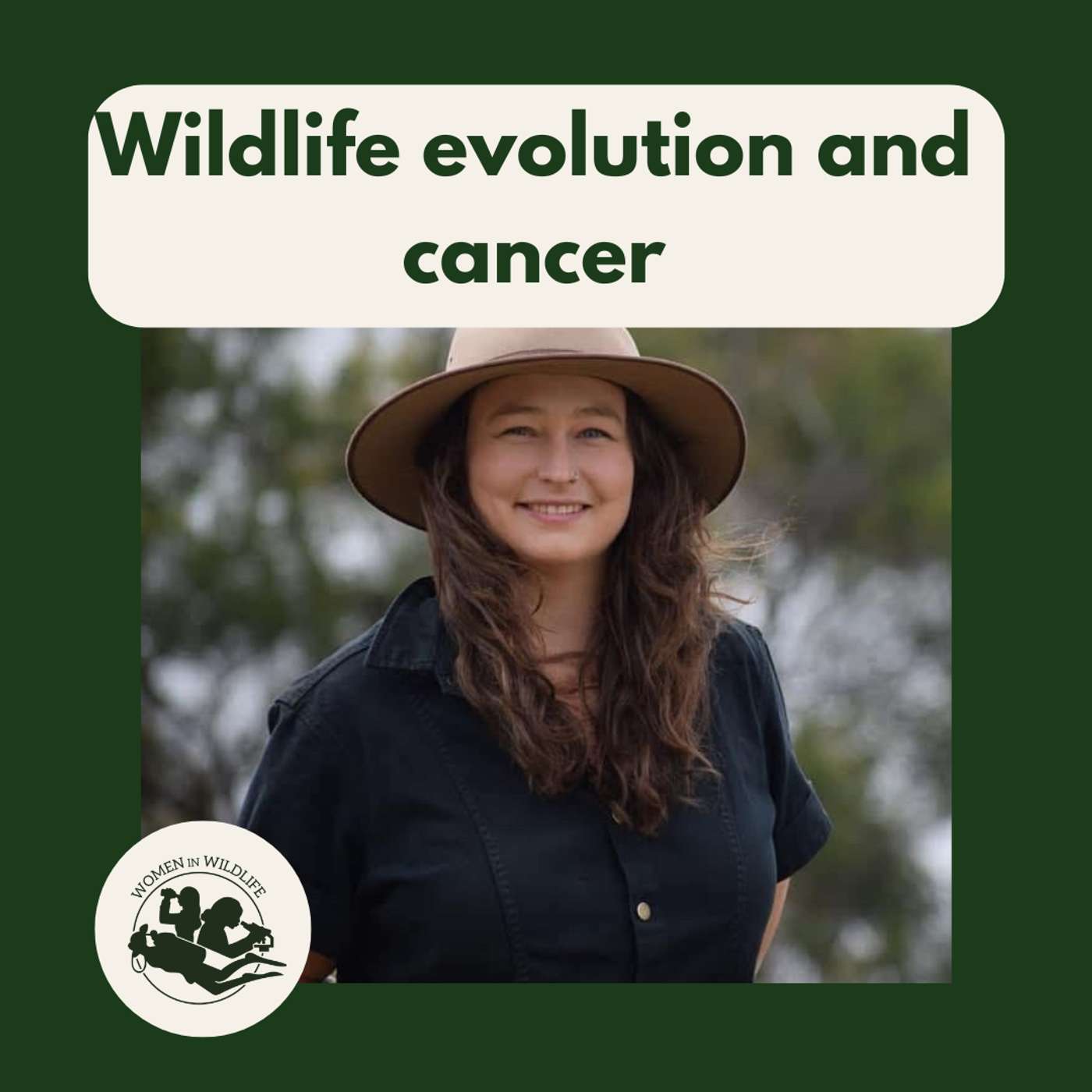 What can wildlife evolution teach us about human cancer? 28.04.2026 49minIn this month's topic-focused episode, science communication expert and author Zoe Kean shares insights from her book "Why We Like This", delving into the fascinating parallels between wildlife health and human diseases, particularly cancer. She explores the paradoxes of evolutionary biology related to aging, sex, and cancer, and how cancer is an ancient and universal phenomenon in multicellular life. We learn about transmissible cancers in Tasmanian devils, the role of genetic diversity and evolution in cancer resistance among species like elephants, whales, and naked mole rats, and the application of ecological and evolutionary theories to cancer treatment strategies. Zoe also highlights the impact of inbreeding and genetic bottlenecks on endangered species’ health and vulnerability, and the potential for cross-disciplinary research in conservation and medicine. By understanding cancer through evolution, innovative therapies and prevention methods may emerge, offering hope for both human health and wildlife conservation. This episode was a very unique one, offering a fresh perspective on disease and conservation, highlighting the importance of cross-disciplinary thinking in tackling complex biological challenges.Any questions or queries contact [email protected] to our resources:Website: https://women-in-wildlife.com/Instagram: https://www.instagram.com/women.in.wildlife/Facebook: https://www.facebook.com/profile.php?id=100077369770841Linked in: https://www.linkedin.com/company/womeninwildlifeMusic by Thomas Hagen from SLAUX
 -
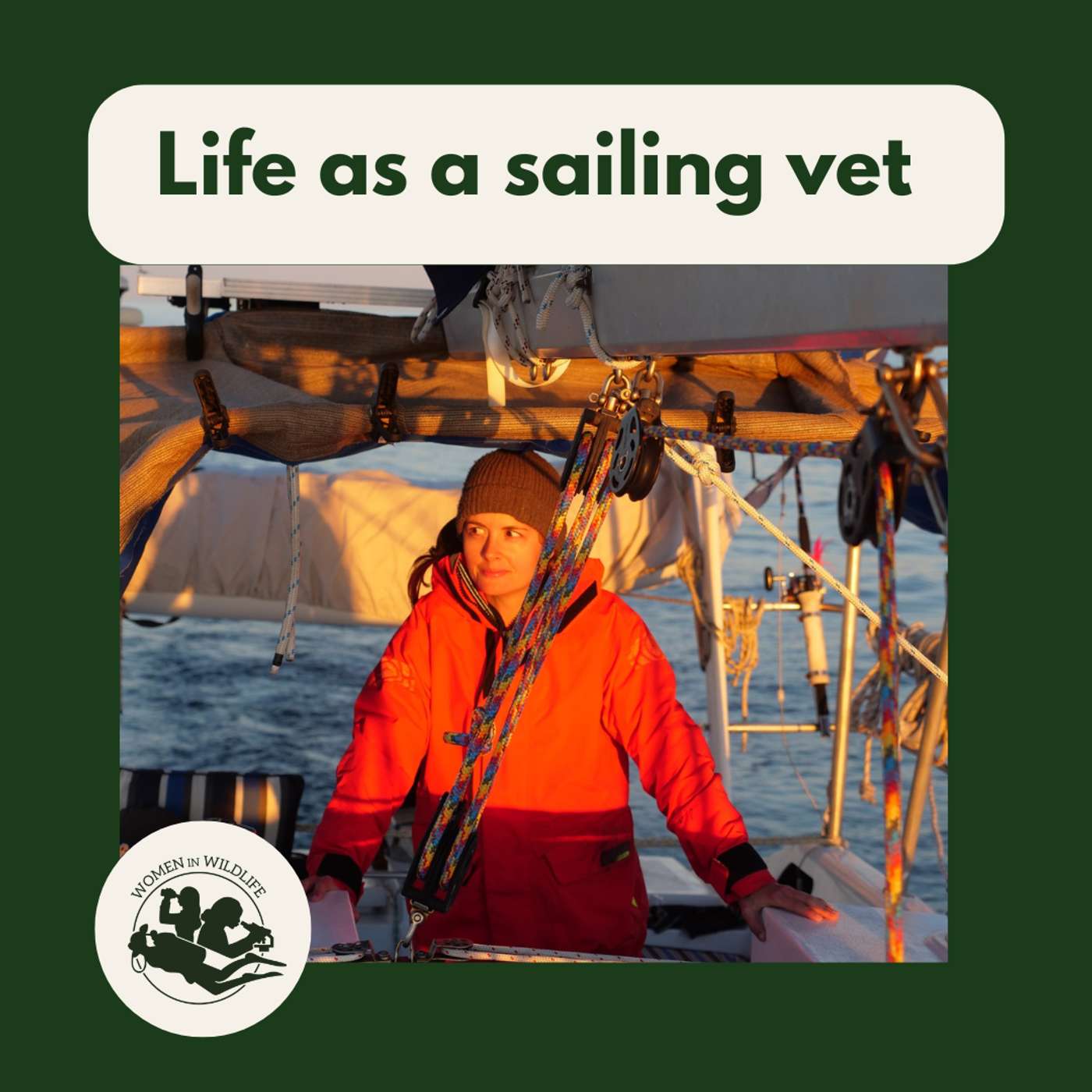 A vet without borders-insight into life as a sailing vet with Dr Sheddy 07.04.2026 53minThis month's episode is adventure packed, with the very inspiring Dr Sheddy, a veterinary professional redefining conservation and animal care through innovative projects through sea and land. From working in Australia to sailing across Central America and Asia, Sheddy is making a tangible difference in animal welfare and community health. The main topics of this episode include the transition from traditional vet roles to international wildlife work, launching and running a veterinary clinic from a sailboat, and the importance of vet wellness and burnout prevention. Dr Sheddy emphasizes community engagement and sustainable animal care, while also discussing the challenges of funding and growing a mobile veterinary practice via YouTube. She shares cross-cultural insights on pet and wildlife care and highlights the importance of building local partnerships for long-term impact. She discusses the challenges of working in rural Australia and becoming a wildlife vet, and her transition from clinical work to charity and outreach. The episode delves into the challenges and learnings from sailing and maintaining a mobile clinic, the impact of preventative care and community health outreach, and the importance of building trust in remote communities. Dr Sheddy shares strategies for growing support and community donations, collaborations with local vets, and cultural perceptions of animals across regions. She also addresses the importance of education and resource provision to promote change, and the development of vet wellness retreats to combat burnout. Looking ahead, Dr Sheddy discusses future plans for training programs, wildlife volunteering, and expanding her impact, while maintaining work-life balance and the longevity of her projects. Her final words offer advice for vets exploring new pathways.Resources & Links:Vet Tails Websites: vettails.com/aboutYoutube: https://www.youtube.com/channel/UCcDSkw35FYqsFgMqoZjt7zQ/about Sheddy's instragram: https://www.instagram.com/dr.sheddy_the.sailing.vet/Any questions or queries contact [email protected] to our resources:Website: https://women-in-wildlife.com/Instagram: https://www.instagram.com/women.in.wildlife/Facebook: https://www.facebook.com/profile.php?id=100077369770841Linked in: https://www.linkedin.com/company/womeninwildlifeMusic by Thomas Hagen from SLAUX
 -
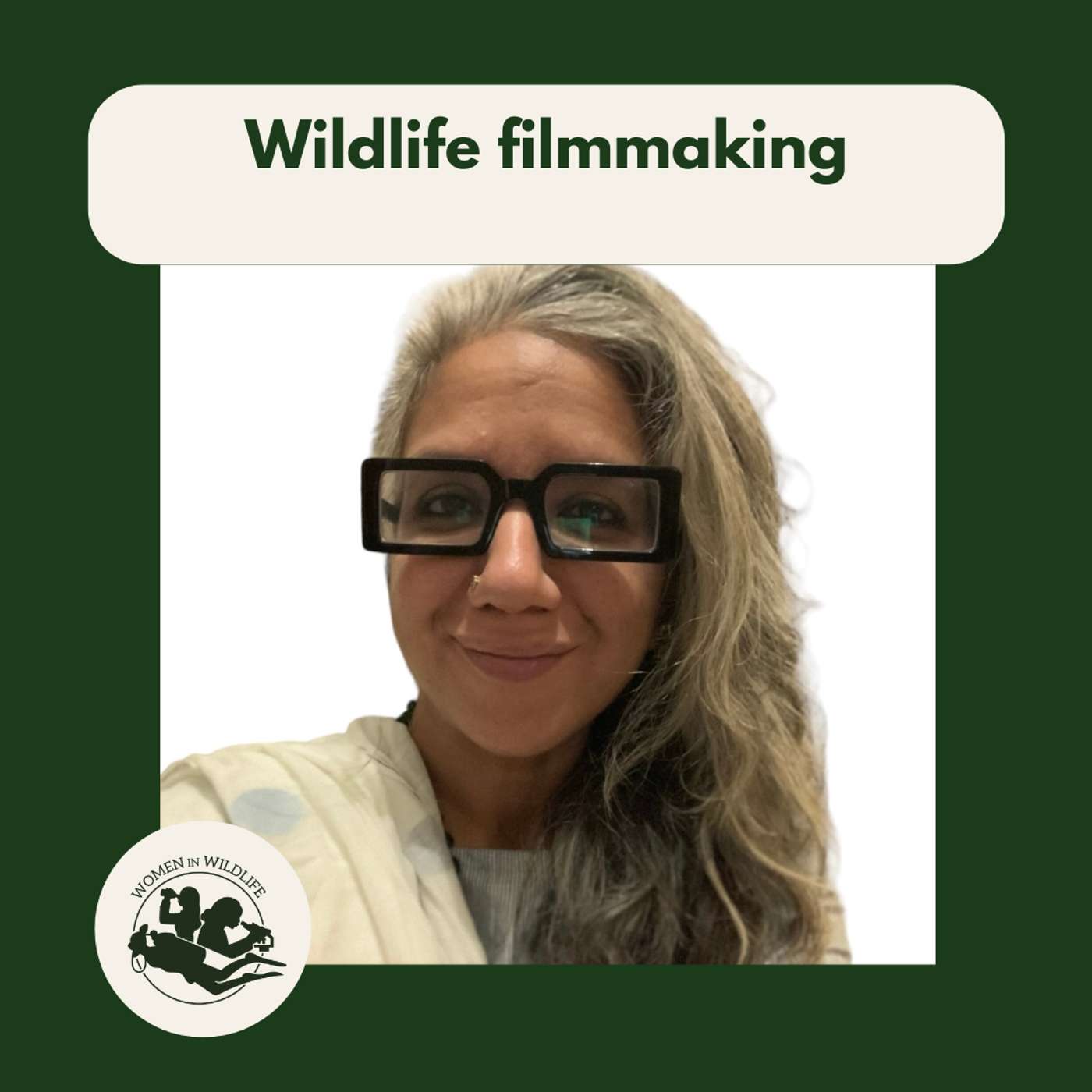 Turning wildlife stories into conservation impact With Akanksha Sood Singh 20.03.2026 50minIn this episode we’re delighted to be joined by Akanksha Sood Singh, a natural history filmmaker from India who has spent over 25 years telling powerful stories about lesser-known species and underrepresented voices in conservation.We explore Akanksha’s journey into wildlife filmmaking, from her beginnings in science to building a career in natural history filmmaking. Akanksha shares the challenges of navigating a Western-dominated conservation space, and how these experiences have shaped her approach to storytelling, with a strong focus on authenticity, ethics, and amplifying local voices.Throughout the conversation, we discuss the evolution of conservation storytelling, including the balance between visual impact and meaningful narratives, and how emerging technologies and short-form media are changing the way stories are told. Akanksha also reflects on the importance of telling stories rooted in local places, and the role that filmmakers, scientists, and communities all play in shaping more inclusive and representative narratives.A key part of this work is her role as the founder of The Gaia People, a platform dedicated to supporting local storytellers, amplifying diverse voices, and creating more equitable opportunities within conservation and filmmaking. Through this work, she is actively challenging traditional power structures in the industry and helping to build a more inclusive and representative future for conservation storytelling.We also talk about her incredible work founding Women of the Wild, an initiative supporting underrepresented women in conservation, and the importance of creating space and opportunities for diverse voices in the field. Akanksha shares honest insights into the systemic challenges that still exist, as well as practical advice for young women wanting to pursue careers in conservation and filmmaking, particularly in marginalised regions.Any questions or queries contact [email protected] to our resources:Website: https://women-in-wildlife.com/Instagram: https://www.instagram.com/women.in.wildlife/Facebook: https://www.facebook.com/profile.php?id=100077369770841Linked in: https://www.linkedin.com/company/womeninwildlifeMusic by Thomas Hagen from SLAUX
 -
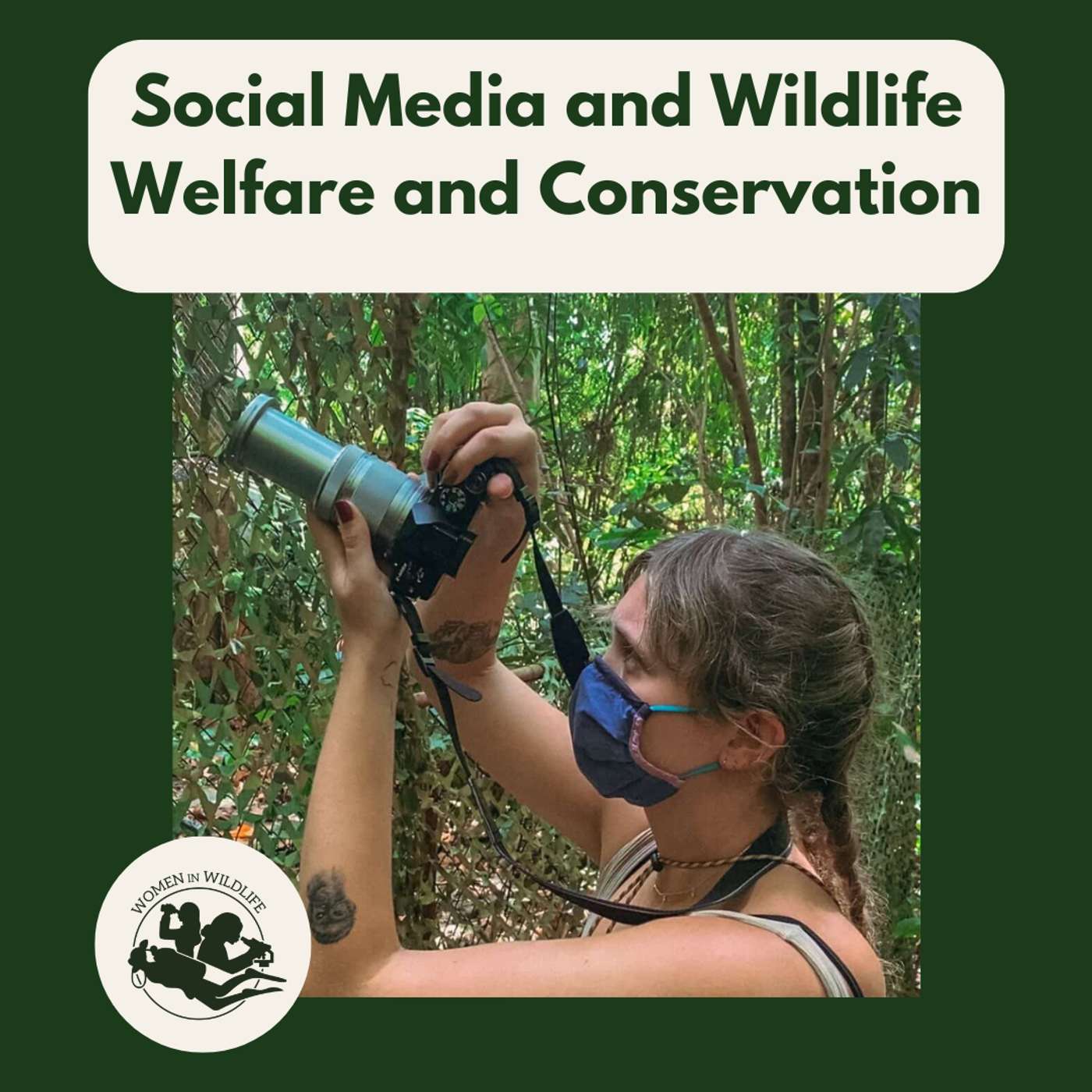 The real impact of close contact wildlife photos on welfare and conservation with Connie Needham 27.02.2026 36minWho can post, and who can't? Welcome back for part 2 of our conversation with Connie Needham, which is a topic-based episode where we delve into the profound effects of social media on wildlife welfare and conservation. While social media can be a fantastic tool for bringing awareness and support for wildlife conservation, we openly discuss how close contact photos and sensationalized content can cause serious short and long term wildlife welfare concerns, unethical wildlife tourist choices, as well as fueling illegal pet pet trade. Connie explains how these images often normalize unsafe interactions with wild animals, contributing to misconceptions about their behavior and habitat needs. The conversation highlights the growing influence of social media as a primary source of information, shaping public perceptions and expectations of wildlife. Connie explores the unintended consequences of portraying wild animals in human environments, which can fuel illegal pet trades and unethical tourism practices. Connie emphasises the importance of shifting the narrative from seeking the perfect shot to promoting respect and understanding for animals' natural behaviors and autonomy. Listeners are encouraged to reflect on their own social media practices and consider how they can contribute to a more ethical portrayal of wildlife. This episode serves as a call to action for all people- tourists and wildlife professionals alike to prioritise education and conservation in their online presence. Connie's Instagram: connie.needhamConnie's Youtube: youtube.com/@connie.needham?si=IQilIILIqGhc6Nh3&fbclid=PAZXh0bgNhZW0CMTEAc3J0YwZhcHBfaWQMMjU2MjgxMDQwNTU4AAGnNAyL33mETLXKKmD-NOSJDx2NRMkSLD9fCuChTjAm-BWbU4jJopAR2bkePPY_aem_0z6MARvM0GI-vyKicEB4xAProject Wild: https://www.projectwild.uk/about Any questions or queries contact [email protected] to our resources:Website: https://women-in-wildlife.com/Instagram: https://www.instagram.com/women.in.wildlife/Facebook: https://www.facebook.com/profile.php?id=100077369770841Linked in: https://www.linkedin.com/company/womeninwildlifeMusic by Thomas Hagen from SLAUX
 -
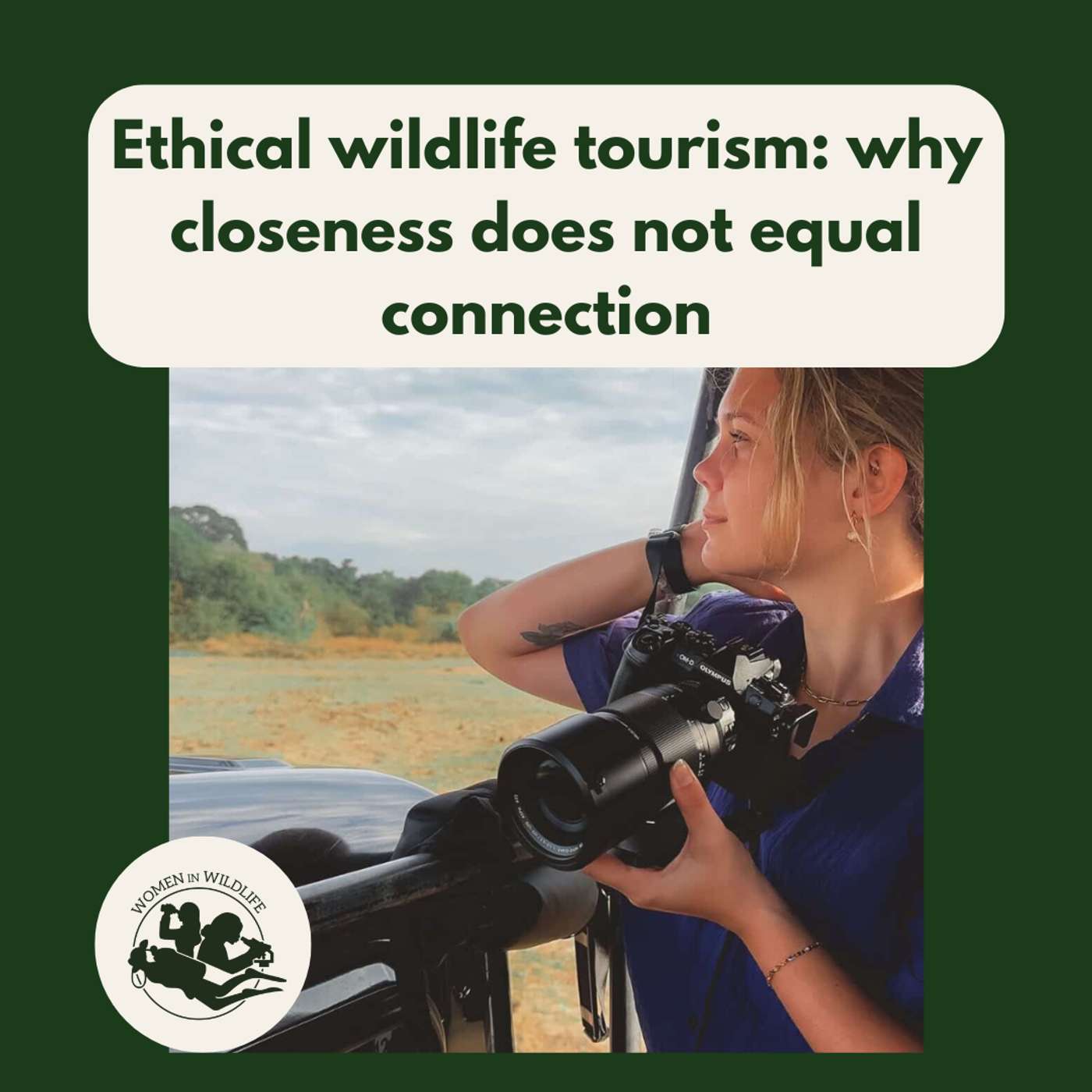 Ethical wildlife tourism: why closeness does not equal connection with Connie Needham 22.02.2026 39minWe are so thrilled to have Connie Needham on the podcast for a two part series! Connie is a passionate wildlife storyteller shares her journey from the Scottish countryside to becoming a dedicated advocate for ethical wildlife tourism. Connie discusses her journey from studying philosophy to her work in wildlife advocacy. She emphasises the importance of recognizing red flags in wildlife tourism and the critical role local communities play in conservation efforts. Connie also explores the significance of transparency and accreditation in wildlife facilities, offering practical advice for tourists who wish to engage ethically with wildlife. Her experiences underscore the need for a shift in focus from close encounters to meaningful experiences that support conservation efforts. By sharing her insights, Connie aims to inspire listeners to make informed choices that respect the natural behaviors and habitats of wildlife. This episode highlights the importance of ethical considerations in wildlife tourism and the role of education and transparency in promoting responsible interactions with wildlife.Resources & LinksConnie's Instagram: connie.needhamConnie's Youtube: youtube.com/@connie.needham?si=IQilIILIqGhc6Nh3&fbclid=PAZXh0bgNhZW0CMTEAc3J0YwZhcHBfaWQMMjU2MjgxMDQwNTU4AAGnNAyL33mETLXKKmD-NOSJDx2NRMkSLD9fCuChTjAm-BWbU4jJopAR2bkePPY_aem_0z6MARvM0GI-vyKicEB4xAProject Wild: https://www.projectwild.uk/about Global Federation of Animal SanctuariesPan-African Sanctuary AllianceEuropean Alliance of Rescue Centres and Sanctuaries (EARAZA)Any questions or queries contact [email protected] to our resources:Website: https://women-in-wildlife.com/Instagram: https://www.instagram.com/women.in.wildlife/Facebook: https://www.facebook.com/profile.php?id=100077369770841Linked in: https://www.linkedin.com/company/womeninwildlifeMusic by Thomas Hagen from SLAUX
 -
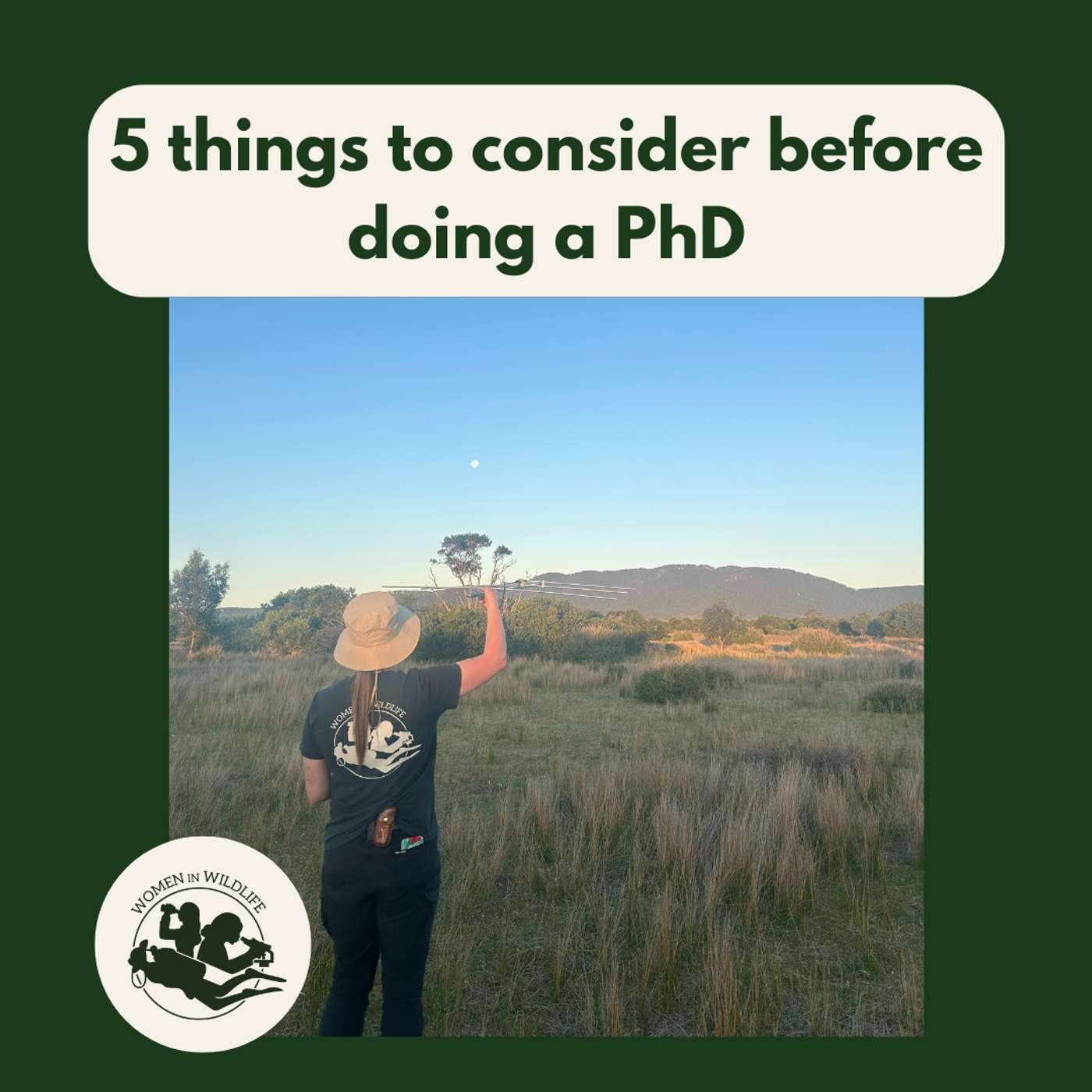 5 things to consider before doing a PhD 05.02.2026 55minThis episode dives into the realities of doing a PhD in Australia. Co-host Eliza, now in the final year of her PhD, reflects on the best and worst parts of the journey so far, while co-host Maddy opens up about her decision to walk away from her PhD in 2022, and how she feels about that choice four years later.We unpack the constant uphill learning curve of a PhD, toxic academic culture, and the wide range of skills you can gain along the way. Eliza also shares five key things to consider before starting a PhD. This episode also marks the launch of our new segments, Wildlife Wins and Field Fails, featuring listener-submitted stories and podcast-specific questions from our community. Want to be involved? You can submit a story via our website for future episodes!Any questions or queries contact [email protected] to our resources:Website: https://women-in-wildlife.com/Instagram: https://www.instagram.com/women.in.wildlife/Facebook: https://www.facebook.com/profile.php?id=100077369770841Linked in: https://www.linkedin.com/company/womeninwildlifeMusic by Thomas Hagen from SLAUX
 -
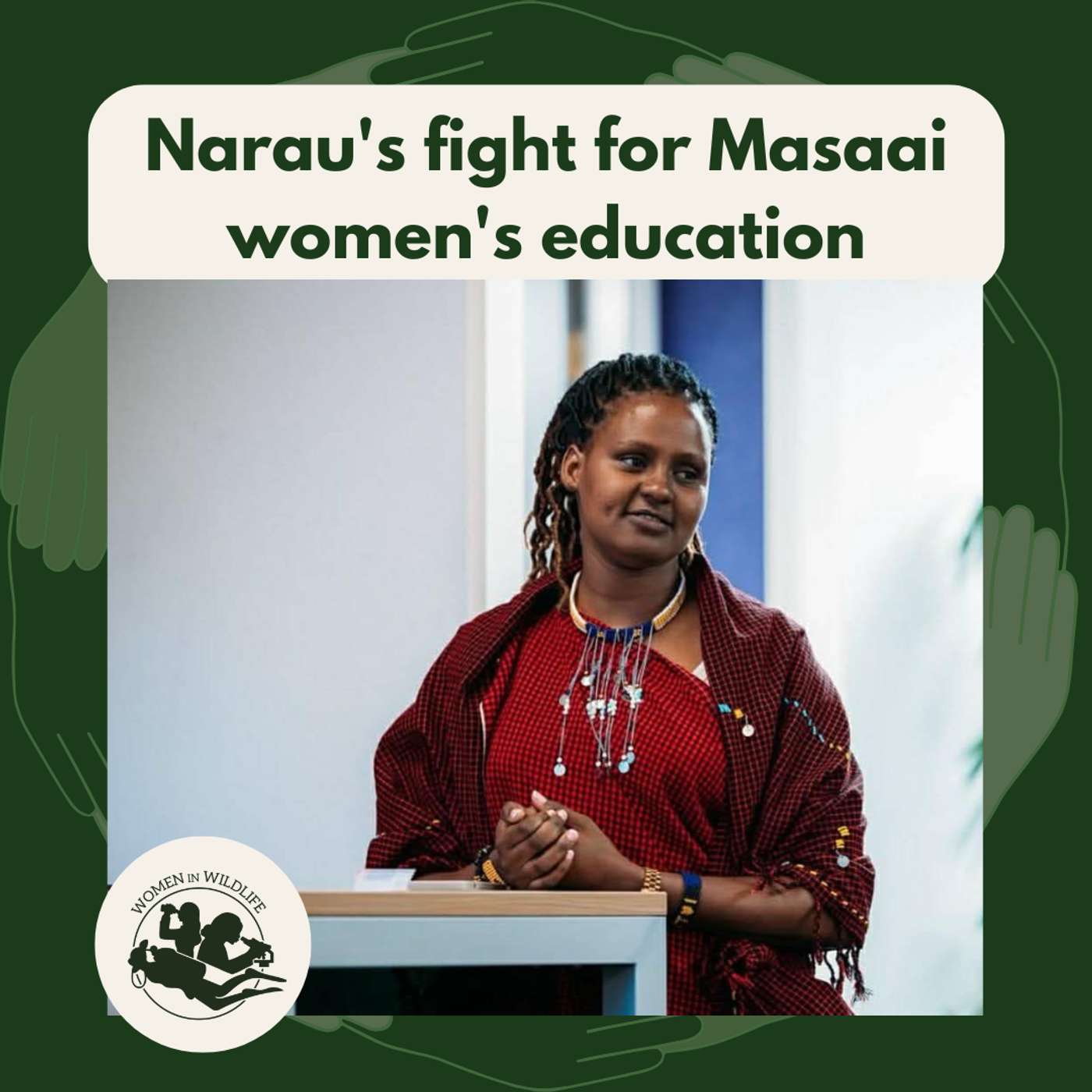 Narau's fight for Masaai women's education 09.01.2026 1h 6minIn our (slightly belated) December episode, we delve into the remarkable journey of Narau Kimani Laizer, a Maasai woman from Tanzania who defied cultural expectations to pursue education and empowerment. Growing up in a community where education for girls was not prioritized, Nara bravely escaped an arranged marriage at the age of 12 to seek a different life. With the support of a compassionate teacher and a nonprofit organization, she pursued her education in wildlife conservation. Today, Nara is the co-founder of the Enduata Community Initiative Organization (ECIO), dedicated to improving the lives of women and girls in her community. Through ECIO, Nara empowers women with education and economic opportunities, challenging traditional roles and fostering a new generation of leaders. Her work extends to wildlife conservation, where she educates her community on the importance of preserving nature, demonstrating how conservation and community development can go hand in hand. Her story is a testament to resilience and the transformative power of education and conservation.You can follow the work of ECIO here: https://ecio.or.tz/Any questions or queries contact [email protected] to our resources:Website: https://women-in-wildlife.com/Instagram: https://www.instagram.com/women.in.wildlife/Facebook: https://www.facebook.com/profile.php?id=100077369770841Linked in: https://www.linkedin.com/company/womeninwildlifeMusic by Thomas Hagen from SLAUX
 -
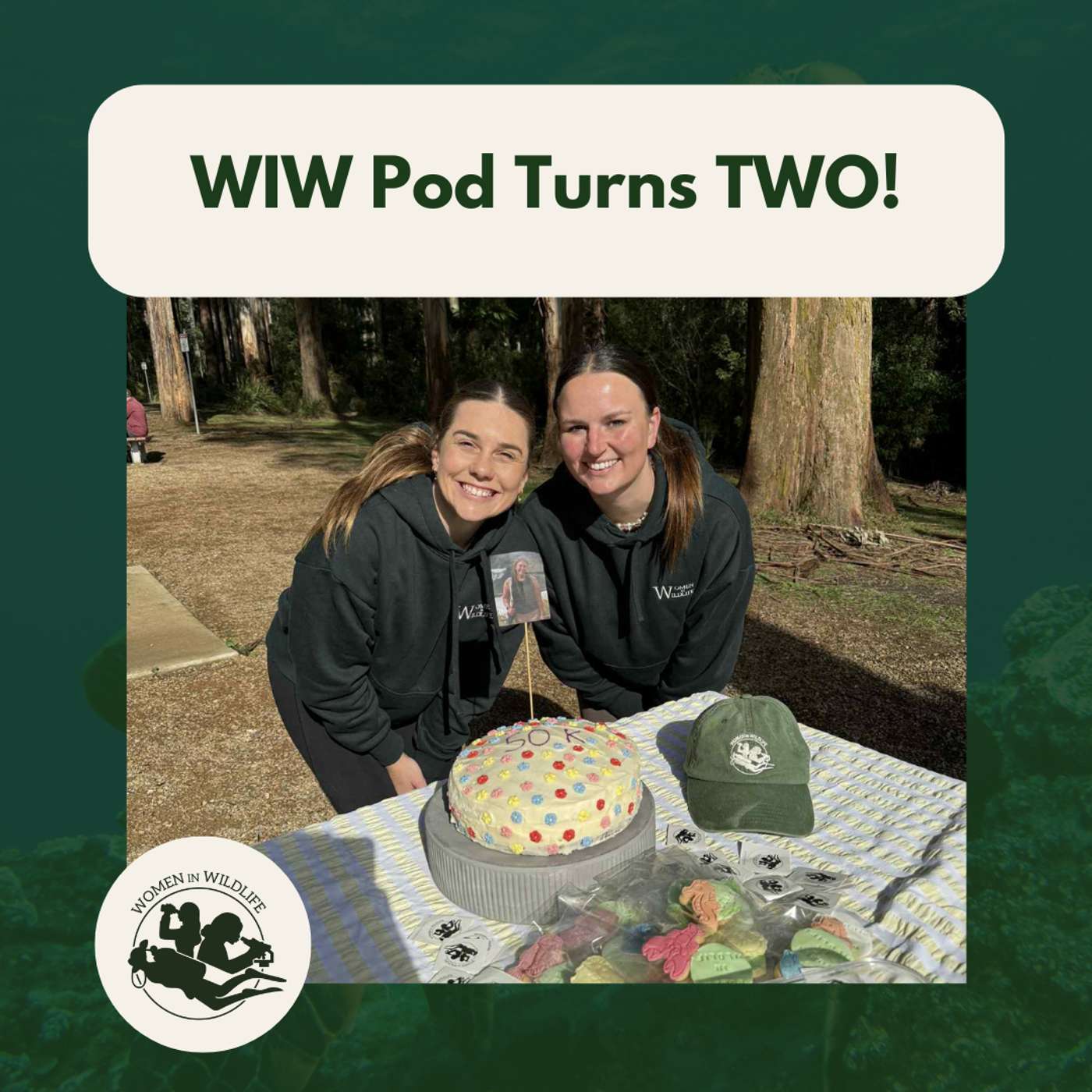 WIW Pod Turns TWO!! A look back with Maddy, Eliza, and producer Taylor 24.11.2025 43minFor our November episode, we celebrated our two year podcast birthday! We combined this celebration and look back of two years of trailblazing guests, with our yearly wrap-up (a tad early). We finally introduced our amazing producer, Taylor, and got to hear about her extensive background in communications and incredible new job at Free The Bears. We chatted about the ways in which our guests and the conversations we have had on the podcast has changed the way we look at wildlife and conservation, and the impact we hope that it has had on our listeners. We each looked back at a message from guests that really stood out to us this year, and changes that we made in our lives/careers as a result. Finally, we each chose a women-led conservation success story from this year, from anywhere in the world, and shared how the empowerment of women has led to a successful wildlife outcome. We haven't quite wrapped up for the year though- we will be back in your ears in December! You can follow producer Taylor at @taylor.jamii Any questions or queries contact [email protected] to our resources:Website: https://women-in-wildlife.com/Instagram: https://www.instagram.com/women.in.wildlife/Facebook: https://www.facebook.com/profile.php?id=100077369770841Linked in: https://www.linkedin.com/company/womeninwildlifeMusic by Thomas Hagen from SLAUX
 -
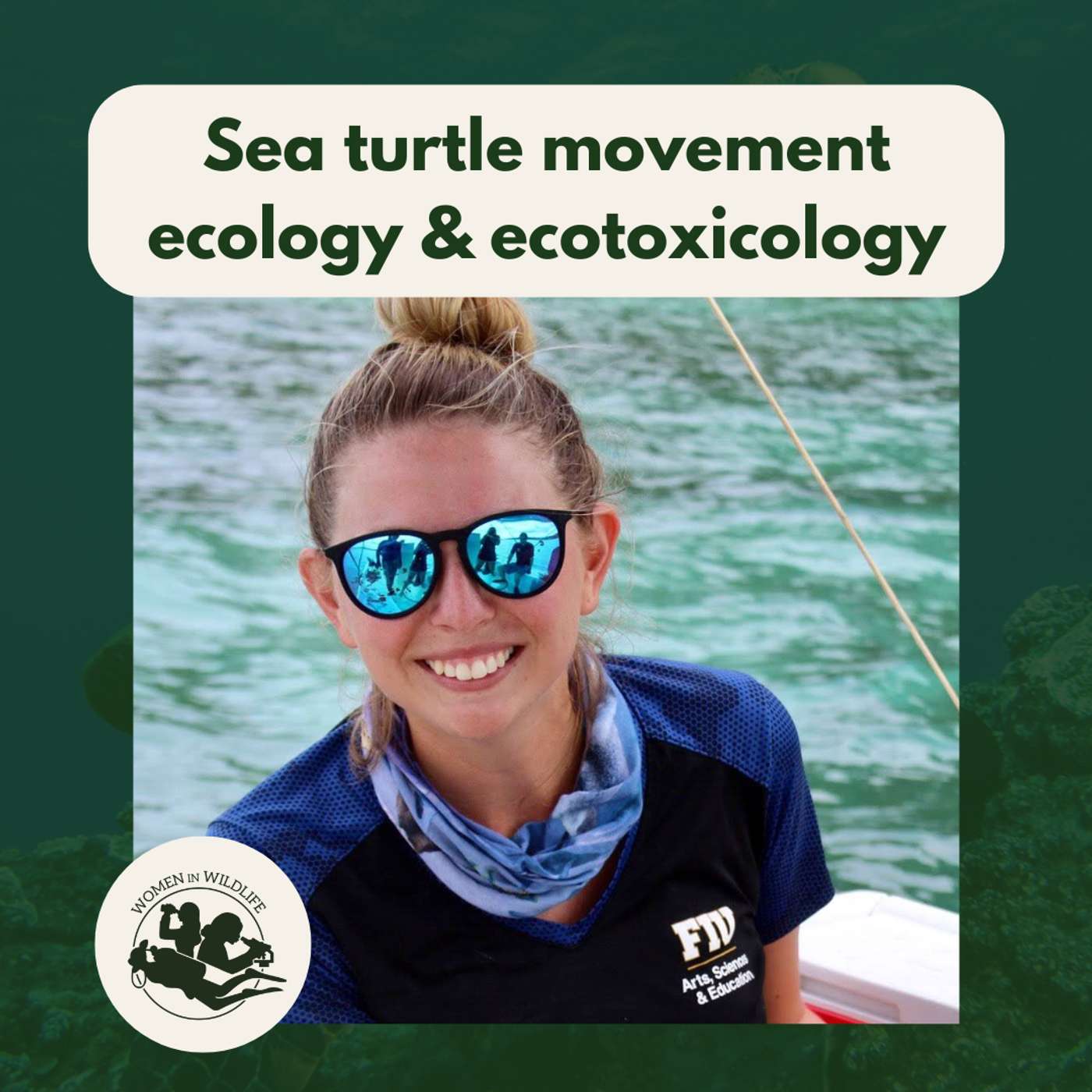 Sea turtle movement ecology and ecotoxicology research with Dr Liberty Boyd 10.10.2025 57minFor our October episode we were joined by the delightful Dr Liberty Boyd. Liberty is a marine biologist, science communicator, and educator. With a PhD in marine biology, her work bridges academic research, wildlife conservation, and storytelling to drive meaningful change for coastal ecosystems and the communities that rely on them. Dr. Boyd currently runs the social media page Libertyology — a platform dedicated to ocean advocacy, youth empowerment, and innovative marine conservation. As a current postdoctoral researcher at Florida Atlantic University Harbor Branch, she is working on a sea turtle ecotoxicology study related to loggerhead exposure to harmful algal bloom biotoxins in the Indian River Lagoon. Dr. Boyd also works closely with a non-profit organization, the National Save The Sea Turtle Foundation, as an affiliate researcher, conducting hawksbill sea turtle research in South Florida. Between research, teaching, and science communications, her efforts aim to make the marine science fields more inclusive, creative, and impactful.In this episode we delved into all things sea turtle research- from sea turtle movement ecology to ecotoxicology. We spoke about the importance of being a responsible tourist, and some of the red flags to look out for in 'eco-tourism'. Liberty shared her passion of science communication, and the importance of scientists being able to communicate their work to the public. Liberty was such a pleasure to have on the podcast, you can continute following her work on her Instagram channel @libertyologyAny questions or queries contact [email protected] to our resources:Website: https://women-in-wildlife.com/Instagram: https://www.instagram.com/women.in.wildlife/Facebook: https://www.facebook.com/profile.php?id=100077369770841Linked in: https://www.linkedin.com/company/womeninwildlifeMusic by Thomas Hagen from SLAUX
 -
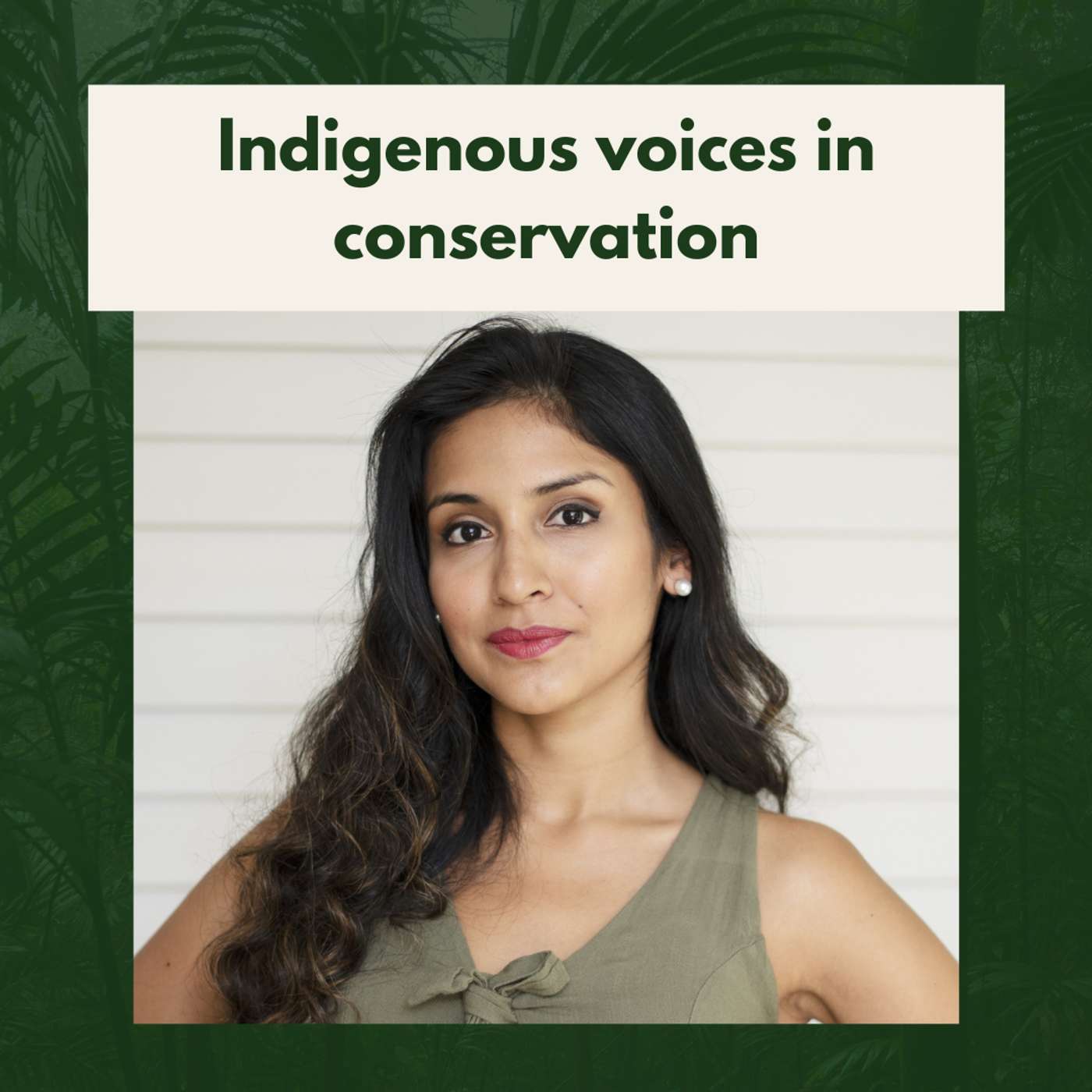 The critical importance of indigenous voices in conservation with Dr Rosa Vásquez Espinoza 20.09.2025 55minFor our September episode, we were beyond thrilled to have Dr. Rosa Vásquez Espinoza as our podcast guest. Rosa is a Peruvian chemical, National Geographic Explorer, and award-winning artist whose work bridges indigenous knowledge and modern science to protect the Amazon rainforest and its communities Rosa was awarded Peru’s Order of Merit (2025)—the country’s highest state recognition for environmental protection. She has also been named one of the BBC’s 100 Women (2024), received the American Chemical Society CAS Leadership Award, and was recognized as one of "50 People Changing the World" and a recipient of the “New Explorer Award” (The Explorers Club).In this chat we learnt about Rosa's journey in becoming a chemical biologist, from discovering her passion for the environment, to becoming a global advocate for our natural world. Much of Rosa's work now focuses on bridging indigenous knowledge and modern science, and we delved deeply into this topic, and were left with advice the changes that need to be made at all levels of conservation to bring indigenous people into conservation conversations and action. We also heard about Rosa's incredible research organisation "Amazon Research Internacional”, and the important work that it covers. Finally, we hear about Rosa's impressive book, "The Spirit of the Rainforest". We were only really able to scratch the surface of Rosa and her exceptional career in this episode, so I don't think this will be the last you will be seeing of her on the WIW podcast!You can follow Rosa on instagram: @rosavespinozaAny questions or queries contact [email protected] to our resources:Website: https://women-in-wildlife.com/Instagram: https://www.instagram.com/women.in.wildlife/Facebook: https://www.facebook.com/profile.php?id=100077369770841Linked in: https://www.linkedin.com/company/womeninwildlifeMusic by Thomas Hagen from SLAUX
 -
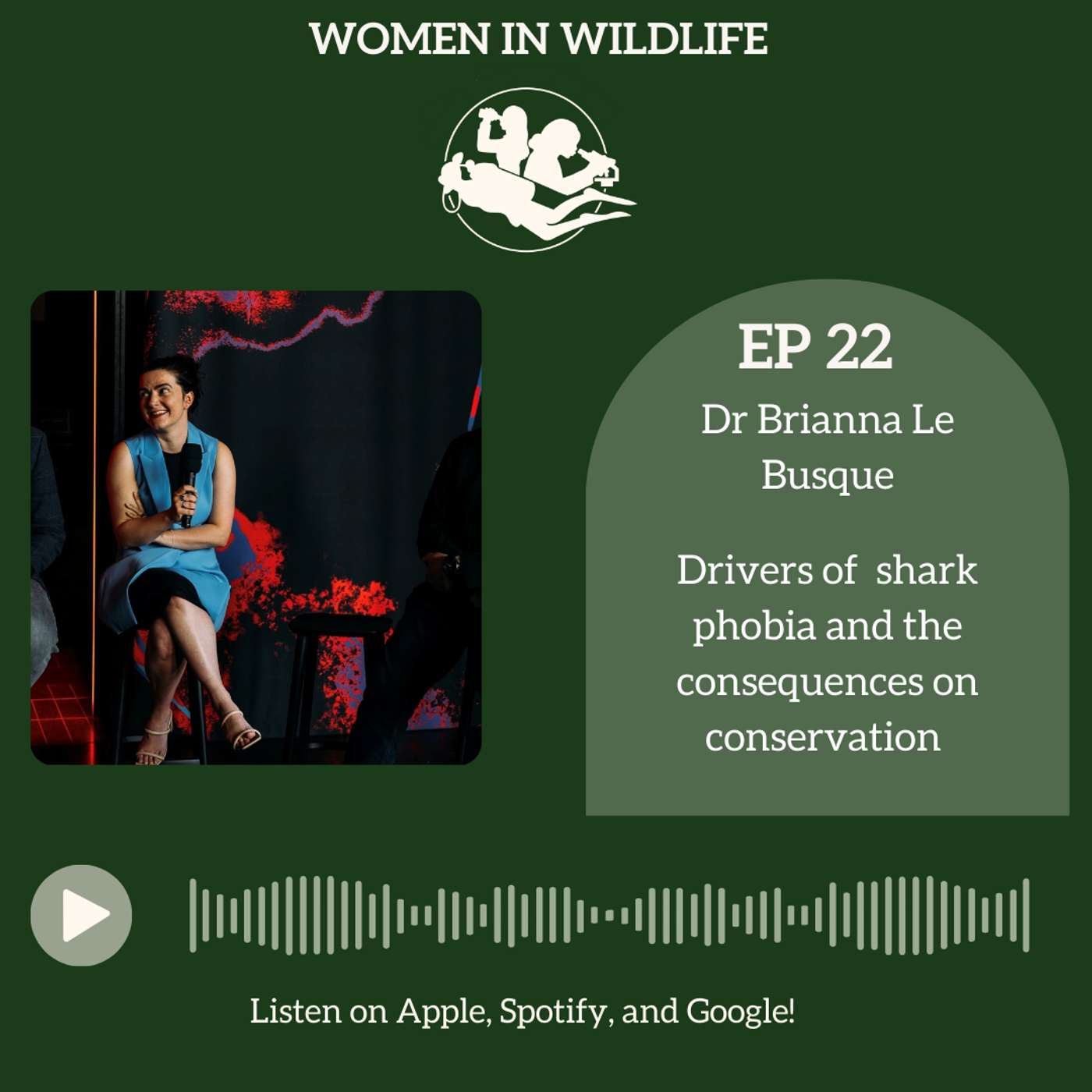 Drivers of shark phobia and the consequences on conservation with environmental psychology scientist Dr Brianna Le Busque 21.08.2025 54minFor our August episode we were joined by environmental psychology scientist Dr Brianna Le Busque. Bri is the program director of environmental sciences at The University of South Australia, along with being science and technology Australia Superstar of STEM. Her research focuses on biophilia (connections to nature) and biophobia (fear/dislike of nature), especially in the marine context. Her main area of research is understanding fear of sharks- including children’s fear, the media representations of sharks and tourism experiences of sharks. Bri is also involved in work exploring health benefits of nature connection for students, whale tourism experiences, impacts of the algal bloom in South Australia. We heard all about Bri's research in biophilia/biophobia, where human's fear of sharks tend to stem from, and how this in turn affects marine conservation. We learnt about Bri's pathway into getting into environmental psychology, and heard about Bri's passion for advocating that you don't need to wear a white lab coat to work in STEM. Bri also spoke about the algal bloom crisis in her home state of South Australia, and the effects it is having on both the ocean, but also the community. Maddy and Eliza were absolutely enthralled in this chat- we hope you love it as much as we did! You can follow Bri on instagram @drbriannalebusque_ Any questions or queries contact [email protected] to our resources:Website: https://women-in-wildlife.com/Instagram: https://www.instagram.com/women.in.wildlife/Facebook: https://www.facebook.com/profile.php?id=100077369770841Linked in: https://www.linkedin.com/company/womeninwildlifeMusic by Thomas Hagen from SLAUX
 -
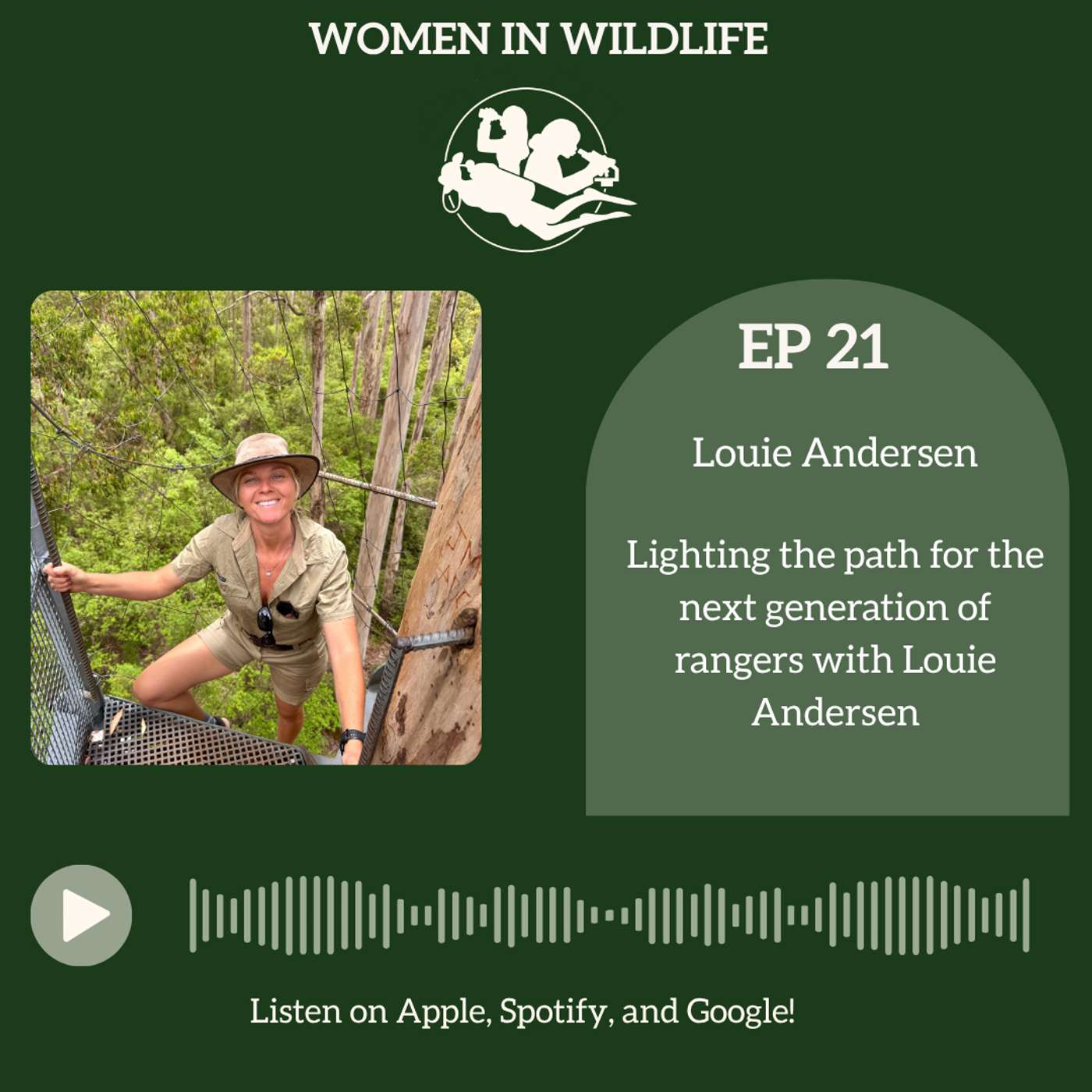 Lighting the path for the next generation of rangers with Louie Andersen 27.07.2025 35minWe were thrilled to have Ranger Louie on for our July podcast episode, in celebration of world ranger day (July 31st) and all the incredible women rangers on the front line of conservation! Louie is an absolute firecracker- currently working as a ranger in Western Australia, and bringing us on her adventures through her Youtube and Instagram channels. From starting studying paramedicine, to firefighting in her role as a ranger, we heard all about Louie's journey in getting to where she is today. We gained insight into the extremely diverse role that is being a ranger, and what a typical (well, as learn there is no such thing) day as a ranger entails. Louie talks us through what it is like being a woman in the ranger field, which is still largely dominated by men, and how she aims to bring light to this important role and inspire future Ranger Louie's through her Youtube channel. You can find Louie on Instagram @ranger_louie and on Youtube https://www.youtube.com/@ranger_louieAny questions or queries contact [email protected] to our resources:Website: https://women-in-wildlife.com/Instagram: https://www.instagram.com/women.in.wildlife/Facebook: https://www.facebook.com/profile.php?id=100077369770841Linked in: https://www.linkedin.com/company/womeninwildlifeMusic by Thomas Hagen from SLAUX
 -
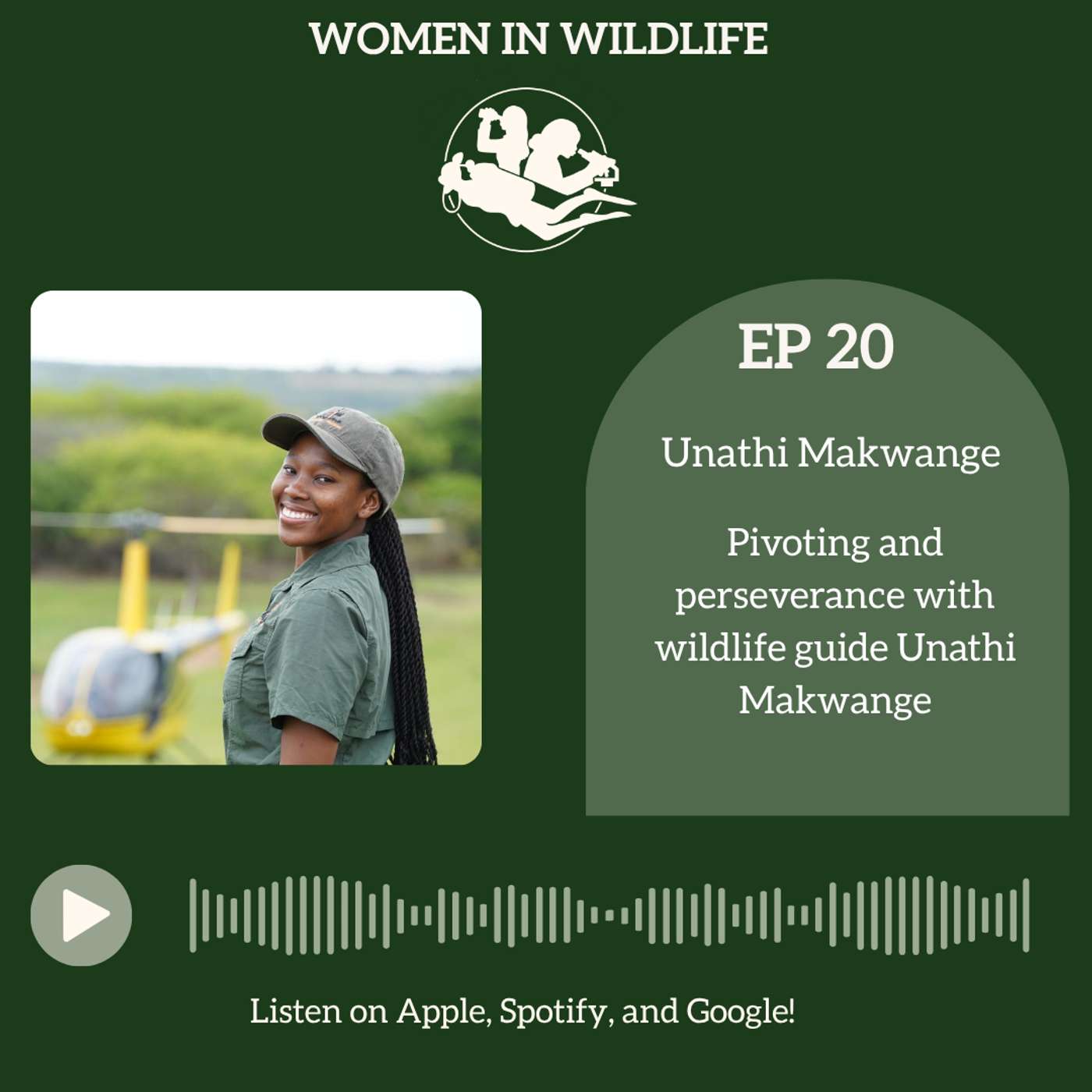 Pivoting and perseverance with wildlife guide Unathi Makwange 28.06.2025 44minWe were fortunate enough to have Unathi Makwange join us for our June episode! Unathi is a wildlife projects coordinator in training from Pretoria, South Africa, with a deep-rooted passion for nature, storytelling, and making a difference in the conservation space. We learn all about Unathi's journey in getting to this role at the age of 20 years old, including rejection, pivoting, and ultimately finding her calling in the South African bush. In this chat Unathi was wise beyond her years, and provides listeners with insights into life as a young woman in wildlife in South Africa, along with offering some very important pieces of advice for those wanting to pursue a similar path. You can find Unathi on instagram at @shivagonewildAny questions or queries contact [email protected] to our resources:Website: https://women-in-wildlife.com/Instagram: https://www.instagram.com/women.in.wildlife/Facebook: https://www.facebook.com/profile.php?id=100077369770841Linked in: https://www.linkedin.com/company/womeninwildlifeMusic by Thomas Hagen from SLAUX
 -
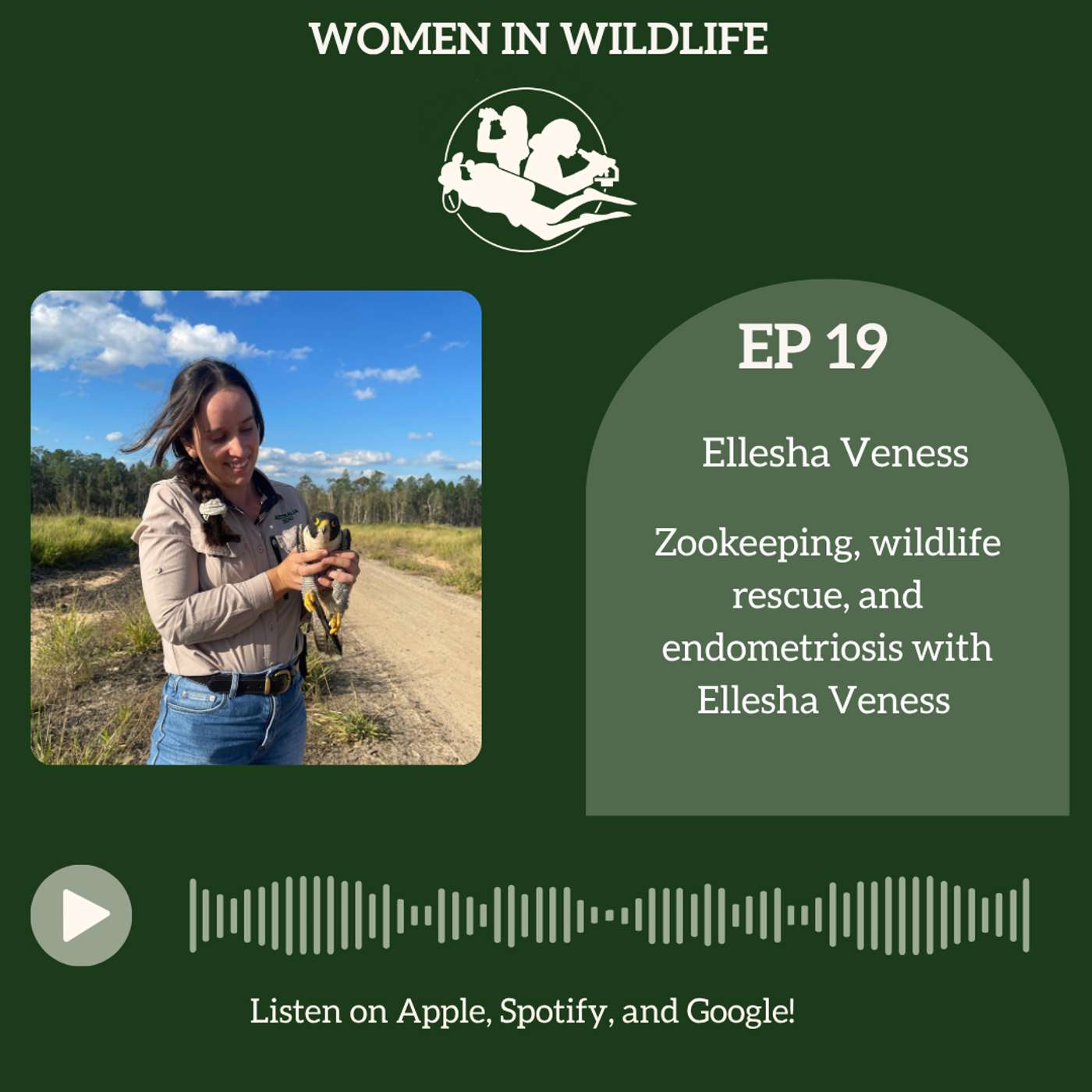 Zookeeping, wildlife rescue, and endometriosis with Ellesha Veness 30.05.2025 45minWelcome back with the WIW podcast listeners!For our May episode we were joined by Ellesha Veness, who is an experienced zookeeper and professional wildlife rescuer. Ellesha shared her career journey with us from breaking into the industry, to working as a zookeeper in some of Australia's most iconic zoos; The Australian Reptile Park and Australia Zoo, to her role as a wildlife rescuer at the Australia Zoo Wildlife Hospital. In the latter role, Ellesha undertook some seriously unique and exciting wildlife rescues of our native animals, and we were lucky enough to gain insight into a few of these rescues. Ellesha was also generous enough to talk us through her long battle with endometriosis. We heard about the hurdles she has been faced with dealing with menstrual health within the wildlife industry, as well as what changes she would like to see to better accommodate other women working in the industry. This episode is not only for women dealing with menstrual health issues, but anyone dealing with chronic health problems, and further to all people in the workplace (particularly leaders) who can help support the large percentage of women who are battling these often invisible diseases. Our listeners were left with some fantastic advice from Ellesha- we cannot wait for you all to hear!You can follow Ellesha on instagram at @elleshaveness, and access her blog post about endometriosis here:https://lifeofellesha.wordpress.com/2025/03/09/another-endometriosis-story/?fbclid=IwY2xjawKmWDJleHRuA2FlbQIxMQBicmlkETFySVYzSzJqMHVEaXhvbFVrAR56ib0ouE3_327ICU-kZ6HeRRIkvsvwqV8VkvNpfiRStwZKfSr3XGU97fF8QQ_aem_HmAA1vK5GkYtw-A2ETzYbg Any questions or queries contact [email protected] to our resources:Website: https://women-in-wildlife.com/Instagram: https://www.instagram.com/women.in.wildlife/Facebook: https://www.facebook.com/profile.php?id=100077369770841Linked in: https://www.linkedin.com/company/womeninwildlifeMusic by Thomas Hagen from SLAUX
 -
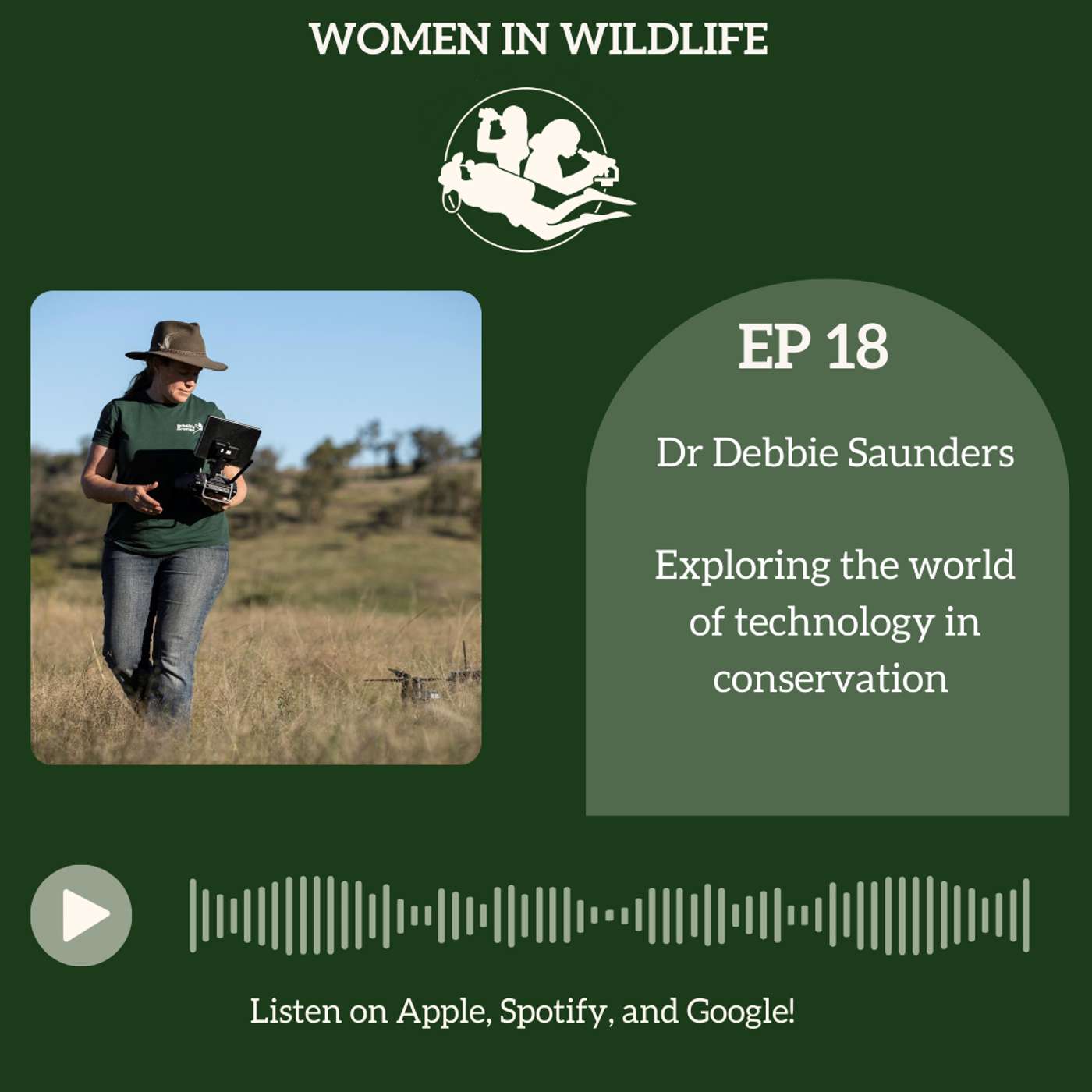 Exploring the world of technology in conservation with Dr Debbie Saunders 24.04.2025 1h 4minApril's episode of the WIW podcast is with Dr Debbie Saunders, who is the Founder, CEO & Chief Remote Pilot, as well as the resident Conservation Ecologist at Wildlife Drones. We chatted through Debbie's journey, including founding Wildlife Drones (building radio-telemetry sensors for use on drones), which was inspired after work she did in her early career with the migratory bird 'Swift Parrot', which extended into her PhD. She found a lack of technology in the area of tracking these smaller, migratory species, which implored her to look further into technology development, which is where Wildlife Drones was born.Debbie has also founded the organisation 'NatureHelm' (a biodiversity data platform for corporations and their supply chains) which has been an evolution of her work in wildlife conservation. We delved into the barriers that Debbie has faced being in the male-dominated technology space, as being a boss and founder of two successful organisations. Debbie was so open in sharing her wide-ranging experiences, we hope you enjoy this episode!You can learn more about Wildlife Drones here: https://wildlifedrones.net/Any questions or queries contact [email protected] to our resources:Website: https://women-in-wildlife.com/Instagram: https://www.instagram.com/women.in.wildlife/Facebook: https://www.facebook.com/profile.php?id=100077369770841Linked in: https://www.linkedin.com/company/womeninwildlifeMusic by Thomas Hagen from SLAUX
 -
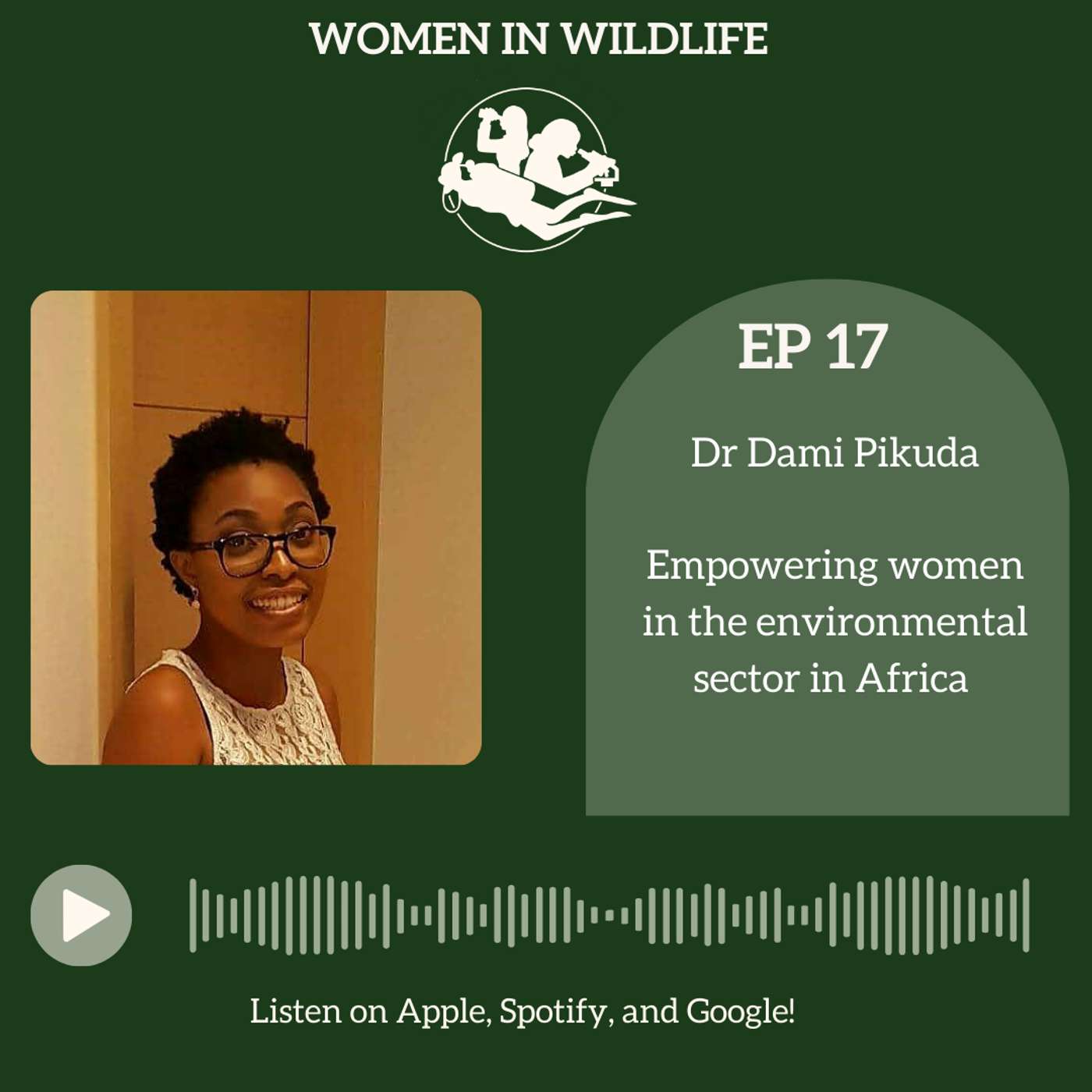 Empowering women in the environmental sector in Africa with Dr Dami Pikuda 18.03.2025 43minFor March's podcast episode, we were privileged enough to chat to Dr Dami Pikuda, a seasoned researcher and program evaluator with extensive experience in designing, executing, and managing environment-related projects and programs. Dami fuses qualitative and quantitative work to propel meaningful action. Fittingly, Dami is part of the delivery team at Women for the Environment (WE) Africa; an organisation that sparks a movement of women leaders in Africa and beyond, who are role modelling a more effective way to do conservation. WE Africa puts women at the heart of transforming Africa’s environmental movement, and are an integral part of transforming women's experiences within the industry. We learnt about all the amazing work that WE Africa does, and Dami outlines the changes that she would like to see for women working within the space. We are currently running a fundraiser for WE Africa- you will hear all about the incredible work that they do, and would love for you to consider donating: https://www.gofundme.com/manage/iwgs-day-fundraiser-for-we-africa. You can learn more about WE Africa here: https://womenforenvironment.org/Any questions or queries contact [email protected] to our resources:Website: https://women-in-wildlife.com/Instagram: https://www.instagram.com/women.in.wildlife/Facebook: https://www.facebook.com/profile.php?id=100077369770841Linked in: https://www.linkedin.com/company/womeninwildlifeMusic by Thomas Hagen from SLAUX
Podkaste të ngjashme


I/E popullarizuar në
Ky podkast shfaqet edhe në listat e podkasteve të këtyre shteteve.
