
Unfinished Business
Unfinished Business
0
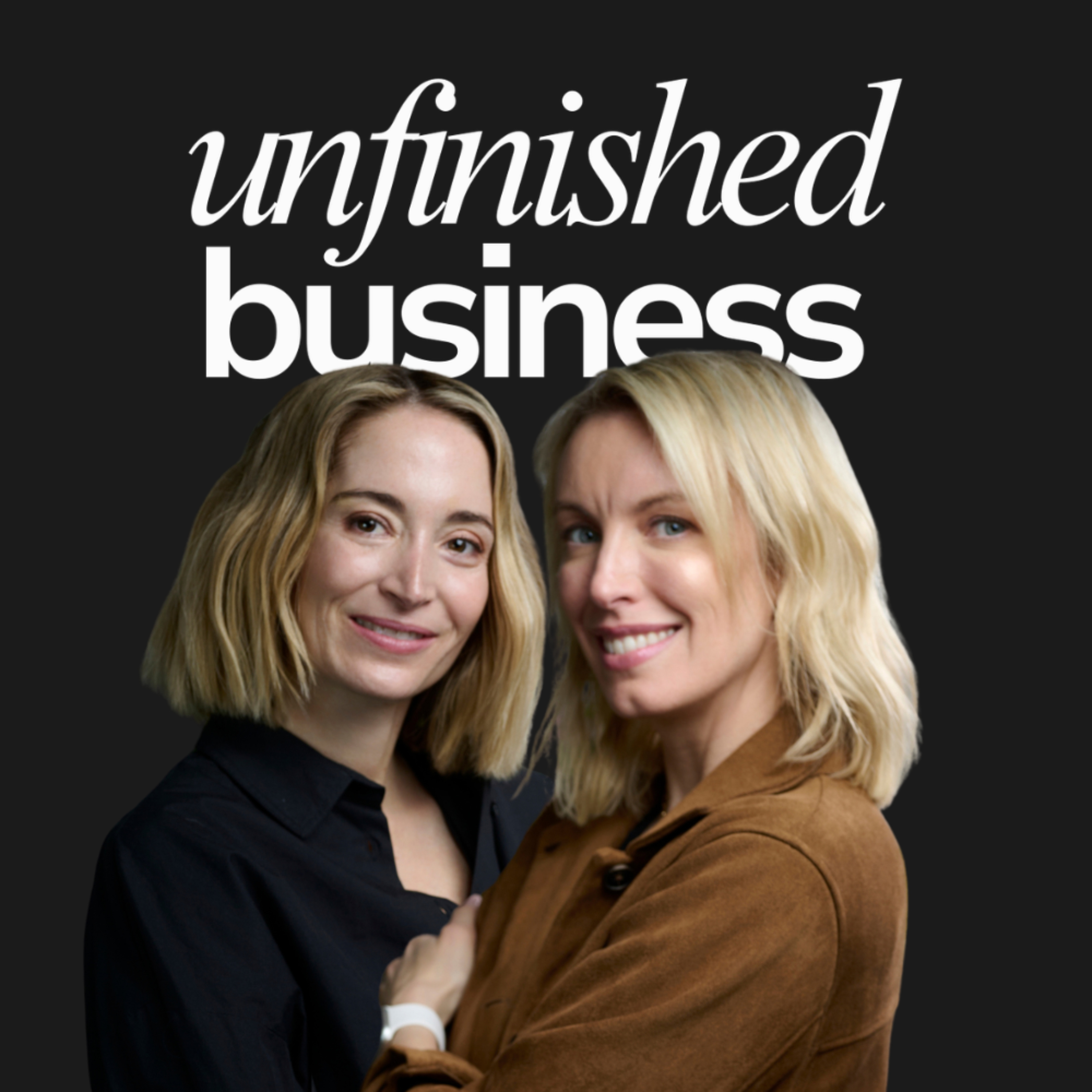
Unfinished Business is a podcast hosted by Alex Schinasi and Lee Rotenberg, the operators behind Hulken, a consumer brand that reached over $100 million in sales with a seven-person team and no venture capital. Drawing on their experience building and exiting software companies, they discuss the realities of scaling a consumer brand. Episodes cover topics like inventory tradeoffs, retail margins, collaboration terms, and how AI has changed their operations. It is presented by Structured Agency and Horatio, both used by Hulken to scale.
Episodet
-
 How to Go Viral Repeatedly with $0 Marketing | Hot Girl Pickles’ Co-Founders 30.09.2026 47minLeah Marcus and Yasaman Bakhtiar posted about a pickle company every day for months before they had a single jar to sell. The first videos were trends, and the trends flopped in the way that matters: views came in, followers didn't.So they changed the format to two women documenting the build, and people started tuning in like it was a TV show. That series became Good Girl Snacks, the brand behind Hot Girl Pickles. Erewhon, Whole Foods nationwide, Forbes 30 Under 30, a $3M seed, and zero dollars of paid media until a few weeks ago.Alex and Lee go past the founding story and into the machine. What posting every day actually buys you, how a comment section and a packaging breakdown built the community, why Whole Foods made them redesign the jar, how three weeks of retail data closed a funding round in a week, and how two best friends split a company between them without a real fight.In this episode:- Why trends get views and never get you followers- The hook that turned a pickle company into a daily show people watched- What $0 customer acquisition really costs, and when it stops working- The three different jobs your feed, reels, and stories should each be doing- Why Instagram outperformed TikTok for a brand built on raw video- How organic cucumbers and a single growing season forced a fundraise- Why they keep every hate comment instead of deleting itThis episode is brought to you by:Structured Agency: Where strategic guidance meets strong execution. Structured is a growth agency for DTC e-commerce brands, bringing paid media, lifecycle marketing, creative strategy, and CRO together into one integrated system built for profitable growth. Learn more and request a free audit at structured.agency/unfinishedbusinessHoratio: Horatio builds dedicated, AI-enabled customer support and back-office teams for fast-growing e-commerce, fintech, and healthtech brands. Every team is trained on your brand's voice and workflows, so you can scale support without sacrificing quality. Unfinished Business listeners get $2,000 in launch credits at hirehoratio.com/unfinishedbusinessSubscribe for new episodes every week.Follow Good Girl Snacks on all platforms: @goodgirlsnacks, goodgirlsnacks.comChapter Timestamps00:00 Cold open02:30 Posting before there was a product04:17 Splitting a company between best friends08:22 The first hire and the outside help13:15 The marketing stack, and Instagram vs TikTok16:11 $0 CAC and moving product off real shelves17:29 Designing a jar for the shelf22:54 Why posting every day sells product25:10 The hook that broke them out30:02 The Forbes comments33:08 Turning cucumber disasters into content35:06 Marketing to Gen Z36:30 Buy into a world, not a product37:35 Why they raised, and closing a round in a week42:04 The weekly social plan47:02 The scariest part is starting
 -
The Minimum Viable Company: How We Run a $50M Brand With Just 7 People 28.07.2026 25minFor most of their careers, Alex and Lee believed a bigger team meant a stronger company. Now they believe the opposite, and they've got the receipts: $50M in revenue last year with seven full-time employees and payroll running at just 4%. In this solo episode, they make the case that in the AI era, headcount has flipped from a status symbol into a warning sign.They break down what they call the "minimum viable company," where maximum revenue per employee beats a swollen org chart every time. The model runs on three layers: lean in-house leadership, a network of agencies for specialized work, and an AI layer where every team member has their own assistant handling the project management that used to go to junior hires and interns. The engine underneath it all is a company "brain" built in Notion that their agents plug into.In this episode:- Why Alex and Lee now read "I have 30 employees" as a sign a company is doing it wrong- The exact numbers behind their claim: $50M, seven people, 4% payroll- How the AI layer replaced the junior hires and interns they used to rely on- Why they built their company "brain" in Notion, and how their AI agents plug into it- The hiring rule they live by: wait until you literally can't, then demand a clear ROI- Why speed, not headcount, is the real driver of winning (and losing)- The honest downsides of a tiny team, from taking out the trash to dropped ballsSubscribe to Unfinished Business for candid conversations with founders who've actually done it.🎧 Watch on YouTube, listen on Spotify and Apple Podcasts.
-
How This CPG Founder Went From a Kitchen Experiment to 7,000 Stores 14.07.2026 31minKatie Lefkowitz was a lifelong Snickers fanatic when a colon cancer scare and a doctor's orders to cut sugar should have ended that relationship. Instead, she went home and started experimenting with date-based caramel in her own kitchen.Katie is the founder of Harken, the better-for-you candy brand now in nearly 7,000 stores including Walmart, Costco, Sprouts, and Kroger, with Whole Foods launching this fall. Before Harken, she was COO at CAULIPOWER, the original cauliflower-crust pizza brand, and that food-world network is how a printed-out prototype with stickers on it turned into Harken's first national retail deal.In this episode of Unfinished Business, she walks through how that deal happened (including a calendar invite with no explanation attached), why she skipped the usual direct-to-consumer playbook entirely, and what she's learned running a five-person team through a Costco launch.Our biggest takeaways:- How a colon cancer scare turned into a national candy brand- The unmarked calendar invite that got Harken into Walmart- Why she walked into her first retail pitch with fake, printed-out packaging- The case for skipping DTC and going straight to retail- Running investor relationships through a monthly two-hour office hours block- Why Harken is overhauling its packaging in Q3, and what drove the change- The fiber stat she says is moving more product than any adSubscribe to Unfinished Business for more unfiltered founder stories. New episodes weekly on YouTube, Spotify, and Apple Podcasts.
-
The Hidden Cost of Scaling Our DTC Brand Without VC Money 30.06.2026 18minEvery episode, Alex and Lee talk about how fast Hulken is growing. This one is about what that growth actually costs.For the first time, they get candid about the messy middle of scaling a bootstrapped, vertically integrated brand: chronically out of stock on their bestsellers, rerouting inventory away from their own website to protect retail relationships, and discovering that the model that built them is now the thing holding them back. They get into why being sold out can be both a brand asset and a real liability, why their lowest reviews have nothing to do with the product, and how they're testing new products outside their own factories to keep the core team focused.It's an honest, mid-sprint debrief on omnichannel growing pains, told from inside the company, with no VC safety net and a Q4 they can't fully announce yet.What you'll take away:- Why "we're always sold out" is a harder problem than it sounds- How they decide which channel gets limited inventory when there isn't enough to go around- Why retail partners now come before their own DTC customers- The real reason great products still get three-star reviews- How tariffs and shipping costs reshaped their inventory decisions- Why they're launching new products with outside manufacturers- How they're planning 2027 while fighting to stay in stock this yearNew episodes of Unfinished Business drop weekly. Follow on YouTube, Spotify, and Apple Podcasts so you don't miss the next one.
-
How TUSHY Turned a Taboo Category Into One of DTC's Strongest Brands with Justin Allen 16.06.2026 33minJustin Allen co-founded TUSHY a decade ago to solve a problem most Americans didn't know they had. No roadmap, no comparable brand, no playbook… just a bet that if you made toileting joyful enough, people would come around. They did.Now, ten years in, Justin is asking harder questions: What does brand even mean when the media landscape has completely fractured? How do you build creative at scale without losing what makes you you? And when do you trust the data, and when do you just flip the table and build?In this episode:- How TUSHY created a category from scratch and what the "toothpaste out of the tube moment" actually means for retention- Why Justin went "kicking and screaming" into founder content and what made him change his mind- The performance creative orchestra: what it is, why volume isn't enough, and what strategic diversity in creative actually looks like- What brand meant in 2015 vs. what it means today and why Justin has stopped pretending he knows- Learning velocity vs. just "moving fast"- When failure is an option, and when (with plumbing under pressure 24/7) it absolutely isn't- His take on retail, TikTok Shop, and how to innovate for a channel instead of force-feeding itSubscribe to Unfinished Business on YouTube, Spotify, and Apple Podcasts. New episodes every week.
-
Going From $50M to $100M: How We Use Partnerships As Our Biggest Growth Levers at Hulken 02.06.2026 18minTwo things have been true at Hulken since year one: no dropshipping, and only say yes to collabs that actually earn it. On the eve of launching their most complex product development yet (a full pattern collab with Posh Peanut), Alex and Lee sit down to work out, on camera, what they actually think now.This is a solo episode. No guest filter, no rehearsed takes. At $50M, the playbook isn't finished. The most honest thing you can say is that we’re still breaking rules we set when we were smaller.If you're building a product brand somewhere between "we're figuring this out" and "we've figured this out," this is the real version of that conversation.What's in this episode:- The reason Alex and Lee said no to dropshipping for years (and the exact conditions that finally changed their minds)- Alex's 3 non-negotiables for every brand collab- Why Lee won't say yes to any retailer that won't buy inventory upfront- How the Beautyblender collab landed Hulken backstage at the Grammys and the Oscars (the bag, not them)- The "position of power" test that tells you when your brand is actually ready to dropshipSubscribe to Unfinished Business on YouTube, Spotify, and Apple Podcasts.
-
The DTC Trap That Built Juliet Wine's Retail Empire | Allison Luvera 26.05.2026 28minMost founders building consumer brands think DTC is the goal. Allison Luvera knew from day one it was just the testing ground. Getting into Whole Foods, Costco, Safeway, and Total Wine with five employees and a patented box wine format was a three-year plan built on intentional price testing, customer research, and unit economics priced for retail before she ever walked into a retailer.Allison is the co-founder and CEO of Juliet Wine, one of the fastest growing wine brands for women in the US. She came up running luxury marketing for some of the biggest names in spirits, and took everything she learned about how big brands operate to build something they couldn't easily copy, a patented cylindrical format that creates a brand moat in an industry that's notoriously hard to protect.This conversation covers the full journey: why beverage alcohol never had a DTC golden age, how she navigated the skepticism from distributors even after proving DTC traction, the copycat wine brand that literally used her co-founder's hand in their marketing photos, and why she thinks fundraising should come with a warning label.Highlights:- Why Allison priced Juliet for retail margins on day one, even while selling DTC only- How 70% of Juliet's customers had never considered box wine before they found her- The three-tier alcohol distribution system and why it makes DTC structurally difficult at scale- The story of a major wine corporation stealing Juliet's photography and her public LinkedIn response- Why exits in alcohol happen earlier than most industries and how that shapes her fundraising strategy- What it actually takes to get into Whole Foods as a five-person team- The Sephora analogy: why women in wine have always been forced to choose between quality and brandSubscribe to Unfinished Business wherever you listen to podcasts and if you loved this episode, make sure to leave a review. Learn more about Juliet Wine at julietwine.com.
-
What Most DTC Founders Get Wrong About Entering a Crowded Category | Greta Meyer 19.05.2026 33minGreta Meyer started Sequel in a college classroom. She and her co-founder identified a physics flaw in the tampon that nobody had fixed in almost 100 years, and spent years navigating FDA clearance, manufacturing partnerships, and a medical device regulatory process most founders would have quit on. They launched DTC, spent almost nothing on ads, and built their brand through partnerships instead. Yankee Stadium reached out to them. So did the Indiana Fever.The thing that makes Sequel work is also the thing that makes it hard to copy: radical focus. They're not trying to reinvent the whole menstrual experience. They fixed one fluid mechanics problem and built everything around that.In this episode of Unfinished Business, Alex and Lee sit down with Greta to talk about what it actually takes to break into a commoditized, legacy-dominated category when you can't out-spend the incumbents and the product itself is invisible to the consumer.In this episode:- Why "we're not trying to solve everything for everyone" is the strategy, not just a line- How Sequel redesigned a class two medical device on a retrofit of existing machinery, and why that constraint was actually the unlock- Building brand in a taboo category without making it feel taboo- Why Yankee Stadium and the Indiana Fever came to them, and what that taught Greta about how to find partners worth having- The zero-ad growth playbook: organic social, affiliates, and stadium-as-acquisition-channel- Why going DTC first, before retail, gives you the customer data and the brand credibility you need to walk into a retailer from a position of strength- What she'd tell a founder who's about to do outreach to a partner they want: wait- The team structure behind a 6-person operation running a medical device startup- How Sequel is thinking about Amazon, and why TikTok Shop was the right test before itGreta is the kind of founder who knows exactly what she's building and exactly what she isn't. If you're entering a crowded market and wondering whether you need a huge ad budget to compete, this one will reframe that question entirely.
-
The DTC math most founders refuse to do (until it's too late) | Suze Dowling @ Pattern Brands 12.05.2026 36minSuze Dowling has seen the inside of more DTC brands than almost anyone. As co-founder of Pattern Brands, a multi-brand home goods portfolio she's been building since 2018, she doesn't just run one brand. She runs five at once on a shared services team, which means she watches the same mistakes play out across categories, price points, and growth stages, over and over again.The biggest one: founders who scale before the math works.In this episode of Unfinished Business, Alex and Lee sit down with Suze for one of the most honest DTC conversations they've had. She talks about what she actually looks for when acquiring a brand, why she's shut down companies that were still profitable, and why the DTC equation most founders ignore is the thing that determines whether your brand survives.In this episode:- The DTC math equation Suze uses to diagnose any brand: revenue = AOV x conversion x sessions, and why most founders try to scale before all three are working- Why profitability was Pattern's non-negotiable when the rest of the industry was chasing growth at all costs- How she decided to shut down profitable brands, and why she calls it opportunity cost, not failure- The thing founders lie to themselves about most: product-market fit- What running five brands simultaneously teaches you that one brand never could- Why she still calls five customers herself every week, by phone- How tariffs forced the hard calls she already knew she had to make- Pattern's global team structure and how she got lean before lean was the obvious move- Where she stands on AI right now, and why not using it is "truly petrifying" to herSuze is the kind of operator who has made the expensive mistakes, learned from them, and built a system around never making them again. If you're building a DTC brand right now and you're not sure whether your math is actually working, this one is for you.
-
Inside Hulken: How Our CBO Built a $50M Community-Led Luxury Brand 14.04.2026 31minWe turned the mic around. For the first time on Unfinished Business, Alex and Lee are interviewing someone from inside Hulken, their own Chief Brand Officer.Tara Seruya has been working with Alex and Lee for over a decade. They first met at Ivy, their first company together. When Hulken came along, Tara came with it. She's the person behind every brand decision that resonates: the Supreme collab, the Oscars, the community of makeup artists, hairstylists, and set designers who carry Hulken everywhere and post about it without being asked.In this episode, Alex and Lee ask her everything. The things that worked. The things that surprised them. The expensive editorial shoots that didn't land. The authentic, messy UGC that outperforms everything.We covered:→ What luxury actually means: Hulken is "conceptually not luxurious." But it makes you feel unstoppable.→ The organic-first paid strategy: Hulken never runs content on paid until it proves itself organically.→ Obsession over content skills: Hulken find superfans who were already carrying the bag every single day and ask them to tell their story. Tara explains why that distinction changes everything→ The creative community told us where to go: Makeup artists, hairstylists, prop stylists, and set designers were using Hulken organically before there was a brand strategy around it.→ Solving a real problem: Alex on why none of the brand, the collabs, or the cultural moments would have mattered if the product wasn't genuinely solving a daily problem for real people.→ Brand content vs. paid content: How Hulken keeps these lanes intentionally separate→ Branding advice. In ASMR. Lee asked. Tara delivered.If you want to understand how a product goes from utilitarian rolling bag to cultural icon (without losing itself along the way) this is the blueprint.Listen and subscribe everywhere you get your podcasts!
-
How We Built a $50M Consumer Brand with 7 People 07.04.2026 21minSeven people. $50 million in annual revenue. One brand that somehow manages to feel like it's everywhere.If you've ever wondered how Hulken actually works (the operating model, the org chart, the tools, the strategy), this is the episode.This week on Unfinished Business, there's no guest. It's just Alex Schinasi and Lee Rotenberg, co-founders of Hulken and co-hosts of this show, getting into the questions they get asked most often: How do you run a brand this size with a team this small? How do you think about brand vs. growth? What does AI actually look like in your day-to-day? And what's actually coming next?Alex and Lee built Hulken from scratch into one of the most recognizable product brands in the DTC space: a rolling bag that started as a practical solution and became a cult object. They did it with a lean team, a very deliberate agency model, and a relentless focus on what actually moves the needle.In this episode:→ The $50M with 7 people model: Why Hulken runs on a lean in-house team and a carefully chosen agency network→ Alex's recent aha moment: growth and brand have completely different north stars, and treating them as the same function quietly dilutes both. Here's what changes when you split them.→ Building AI systems at Hulken: The first AI agent they're building internally→ The Claude Cowork morning routine: Alex's exact setup→ Why the fact that Hulken isn't a Hermès bag is one of its biggest brand advantages→ Hiring AI agents instead of humans: Why the question isn't just "should we hire?" but "should this role be a human?"→ What's coming next: Collabs, new products, and a few things they can barely talk about yetThis is the most behind-the-scenes episode they've done. If you're a founder, a builder, or someone who's been following Hulken and wondered how the machine runs, this one is for you.New episodes of Unfinished Business drop every week. Subscribe wherever you get your podcasts, and follow along at @unfinishedbizpodcast.
-
How Dylan Munro Invented a New $130M DTC Category and Built a Factory to Protect It 31.03.2026 33minThey cooked dog food in a rented kitchen in Queens. Their friends thought they were insane. That was 2018.Today, Spot & Tango is a 100% direct-to-consumer, subscription dog food company doing $120-130M in revenue and growing 60% year over year. This is all with zero retail shelves, 95% subscription, and a $35M factory they built themselves to protect a category they invented.Dylan Munro is the co-founder and COO of Spot & Tango. Before this, he was at McKinsey, diligencing DTC brands for private equity firms. He grew up in Canada in an entrepreneurial family and always knew he wanted to build something of his own. When his co-founder Russell was cooking human-grade dog food in a studio apartment on the Upper East Side and neighbors kept asking to buy it, Dylan was introduced at exactly the right moment. They quit their jobs, rented an incubator kitchen in Queens, and started making dog food by hand.In 2020, they launched UnKibble: a freeze-dried, human-grade dog food that was genuinely unlike anything on the market. They called the category "fresh dry." No one else was doing it. They sold through four months of inventory in four days.That was the signal. They raised money, built a $35M factory in Allentown, Pennsylvania, brought manufacturing in-house, added over 20 points of margin, and went profitable in late 2023. They've been growing double-digits every year since.On this episode of Unfinished Business, Alex and Lee sit down with Dylan for one of the most practically dense DTC conversations they've had, covering the real mechanics of how Spot & Tango actually scaled.In this episode:- The website quiz that added 10-15 questions between a visitor and checkout and doubled conversion while cutting CAC in half (yes, more friction = better results)- How they scaled creative throughput 10-20x: hundreds of pieces a month, 70% UGC, a systematic outreach process to source creators, and a full AB testing operation on Meta- Why Dylan calls himself and his co-founder "golden retrievers" and how the discipline of saying no built a $130M business- The decision to spend $35M on a factory (and exactly why it was the right call)- The "fresh dry" category: what it is, why nobody else was doing it, and why owning the manufacturing was the only way to own the category- How Spot & Tango uses TikTok- The D2C vs retail debate they have all the time and where that conversation is right now- Pop Gum: the dental chew they launched 7 months ago that's already at $10M+ ARRDylan is the kind of operator who does the unsexy work, thinks clearly about the fundamentals, and has the receipts. If you're building a DTC brand and trying to figure out how to actually scale efficiently, this episode is for you.
-
The Bootstrapped DTC Founder's Playbook with Ben Cogan of Beanstalk 24.03.2026 30minThe DTC era of "raise money first, ask questions later" is over. And Ben Cogan saw it coming.Ben is the co-founder of Hubble Contacts, one of the original DTC brands, which grew to $100M+ in revenue and earned him a spot on Forbes 30 Under 30. He then founded Mockingbird Strollers (now in Target), Agora (a DTC acquisition firm with $120M raised and $200M+ across its portfolio), and Beanstalk, the invite-only DTC conference that's become one of the most sought-after gatherings in the space. Before all of that, he was at Boston Consulting Group and got his first taste of early-stage DTC at Harry's in 2014.In this episode, Ben gives Alex and Lee a candid masterclass on what it actually takes to build (and keep building) a profitable DTC brand. He's seen the boom. He's seen the bust. And the thread running through every brand that's made it? Profitability from day one.We covered:→ The VC-backed DTC reckoning: Companies that went public in 2021 are down 80–90%. Meanwhile, the bootstrapped brands that grew on profitability and cash flow are the ones getting acquired at the best multiples. The playbook has flipped and founders need to know it.→ Why 80% of retail is still offline: Even outside of grocery. Ben breaks down why meeting your customers in stores isn't just a revenue play… it makes your existing digital spend more efficient by giving buyers one more touchpoint to actually convert.→ The $20–25M omnichannel threshold: Ben's rule of thumb for when going online-only stops working and what happens to your incremental Meta spend when you cross it without a retail presence.→ Attribution in an omnichannel world: Triple Whale and Northbeam are useful, but Ben's most impactful attribution strategy is also the simplest: geo tests. Pull your Meta spend in specific states and watch how your offline (Target) numbers respond.→ Bootstrapped = the best acquirable business: Why Agora specifically looks for profitable, bootstrapped companies and why "you can't hide if you're bootstrapped" is the ultimate test of product-market fit.→ How to think about an exit: When does it make sense to sell? What do strategic acquirers actually want? Ben breaks down what the best acquisitions have in common and what role scale, omnichannel presence, and founder involvement play in making a deal work.→ Playing defense on dupes: Alex and Lee get real about the copycats coming for Hulken and Ben explains the only answer that actually works: keep building the brand the dupes literally cannot replicate.→ Beanstalk: What Ben built, why it's invite-only, and what he hopes the DTC community gets out of showing up.This is the episode for founders who are building profitable businesses the hard way without a safety net, without VC subsidies, and without anywhere to hide. And who want to know exactly where that path leads.
-
Why Most DTC Brands Get Retail Wrong (and How to Fix It) with Nate Rosen @ Express Checkout 17.03.2026 37minHe's seen the balance sheets behind the brands your feed tells you are crushing it. And what he's found? The gap between the press release and the spreadsheet is bigger than you think.Nate Rosen is the co-founder of Express Checkout: the media company covering CPG, consumer brands, and retail with the kind of depth and honesty the industry doesn't always love. With a twice-weekly Substack newsletter, a weekly podcast, and an Instagram account he grew to 36k followers in under three months, Nate has built one of the most trusted independent voices in the consumer brand world.Before Express Checkout, he spent years inside CPG. He was watching founders navigate cash flow crises while posting glossy Erewhon launch announcements, watching brands land major retailers without the sell-through infrastructure to support it, and learning what actually separates the brands that compound from the ones that flame out quietly.On this episode of Unfinished Business, Alex and Lee sit down with Nate for one of the most grounded, practical conversations we've had yet.In this episode:- Why you cannot compare yourself to other brands and why doing so is holding you back (the RXBAR lesson is one you'll remember)- D2C vs. retail packaging: why your best-converting DTC packaging will probably fail on shelf- The "three-second rule" that separates retail-winning brands from the ones that get passed by- When a DTC brand is actually ready to go retail and the specific signals Nate looks for before recommending the jump- Why your influencer strategy needs to match your distribution strategy (and the expensive mistake brands keep making)- How Siete, Liquid Death, and OLLY built brand + distribution strategies that compound and what you can take from each- How he grew @expresscheckout to 36,000 Instagram followers in three monthsNate is the kind of person who will give you the real answer even when it's not the one you were hoping for. And in a world where so much of the CPG conversation is performative, that's exactly what this industry needs more of.If you're a founder building a consumer brand, whether you're DTC-only, thinking about retail, or already in stores, this episode is for you.
-
How to Build a DTC Brand That Actually Lasts with Brooke Yoakam 10.03.2026 40minMost marketing decisions aren't driven by strategy. They're driven by ego.That's the honest (and slightly uncomfortable) truth that Brooke Yoakam, founder of AvidAI and the brand analyst behind @thebrandblueprint_, dropped on this week's Unfinished Business. And she's not wrong.Brooke has been an entrepreneur since she was 13. She built GiftPocket, a customer acquisition platform with 300+ brand partnerships (including Chipotle, ASOS, and Nasty Gal). She then founded AvidAI, an AI-powered platform that helps Shopify brands unlock retention insights and streamline acquisition. She went through Techstars Boulder in 2022. And somewhere along the way, she started an Instagram account @thebrandblueprint_ just as a creative outlet. Now she has 100,000+ followers who tune in to watch her break down the why behind every brand move.In this episode, Brooke gives Alex and Lee a masterclass in how to think about brand building from the inside out, the ego-driven marketing decisions that quietly kill brands, the real meaning of ROI (and why most people get the timing wrong), and the framework she uses to help brands stop guessing and start measuring.We covered:→ Making your product habitual: How to position your product as a need, not a want, and use data to time your retargeting perfectly (hint: if you're hitting someone at the 30-day mark and they still have half a bottle, you're just burning money)→ The "why" behind great brand decisions: What the BEIS car wash pop-up actually revealed about crisis management and brand narrative control→ Super Bowl ads & opportunity cost: Why a $10M Super Bowl commercial might be your worst $10M investment, and what you could do instead→ ROI needs time: The Ole Henriksen/Sunni Lee story, Nello at Coachella, and why the brands that pull the plug too early never see the return→ Collabs done right (and very wrong): Why "Target collabs is where brands go to die," and how to find the right brand partner without diluting your equity→ Data-driven content: The 30-day/30-idea testing framework, A-B hook testing, and how to use ManyChat UTM links to actually track sales back to specific posts→ Going viral ≠ making sales: The brand that got 40M views and zero sales, and what went wrong→ What actually makes a brand premium: Hint: it's not the price tag. It's whether your customers pay full price every time.→ TikTok Shop: Why it works for some brands and quietly damages others (and what Hulken should think about before jumping in)→ Live shopping, packaging, guerrilla marketing: Brooke's live consultation on what she'd do for Hulken if she were on the teamThis is one of those episodes you're going to want to send to your whole team if you want to learn the best tactics and strategies for brand building in 2026.
-
Why the Best DTC Brands Build Slow (with Steph Hon @ Cadence) 03.03.2026 45minShe spent two years building one product. Went through 207 prototypes. Filed 4 patents. Heard 2,500 nos from investors. And now has 200 of them.That's Steph Hon, founder and CEO of Cadence: the modular, magnetic, TSA-compliant capsule system that's redefining how people carry their routines on the go. Made with recycled ocean plastics. Built with a philosophy that hasn't wavered since day one: don't rush. Don't compromise. Get it right.Before building one of the most innovative product brands in the DTC space, Steph was a ballet dancer, then a film director, then a sports marketer. None of which is a traditional path to founding a CPG company. But every chapter built something she'd eventually use: a heightened physical awareness of how people interact with their products, where friction lives, and how design can make everyday life genuinely easier.On this episode of Unfinished Business, Alex and Lee sit down with Steph for a conversation about what it actually takes to invent a new category.In this episode:- Why "we don't rush product" is the most controversial thing about Cadence and why they don't care- How Steph went from cold-messaging angel investors on LinkedIn to 200 investors (after 2,500 nos)- What it means to build a product that only truly "clicks" once it's in your hands and how you sell that DTC- How her background as a ballet dancer and filmmaker shaped how she designs product- The kombucha meeting that changed how she thought about fundraising entirely- How she's thinking about retail expansion, DTC growth, and Amazon strategy in 2025- Building a loyal, long-term team when you can't afford to pay anyone yetSteph is the kind of founder who doesn't take shortcuts when no one's looking.If you're a founder building something genuinely new, or fighting the urge to ship before it's ready, this episode is for you.
-
Season 2 of Unfinished Business: The Truth About Scaling a Profitable DTC Brand from $0 → $50M 24.02.2026 24minSeason 2 of Unfinished Business is officially here and a lot has changed since we wrapped Season 1.When we first started this podcast, we were still at Clay. Hulken was growing, but it wasn’t our full focus. Over the last year, we left venture-backed SaaS, went all in on Hulken, hit $50M in revenue, launched nationwide in Target with an end cap, expanded across Asia, opened our first office in New York, and built a small but senior team around us.This season is about what happens after the early momentum. When growth is real. When retail calls. When international demand shows up. When profitability matters. When you start asking how to go from 50 to 100 without losing control.We’ll be building in public. We’re sharing how we’re thinking about intentional growth, breaking the Meta ceiling, retail strategy, international expansion, and what it actually takes to scale a profitable DTC brand today.If you’re a DTC founder, operator, or aspiring builder, Season 2 is about learning in real time. And if there’s a brand you think we should be studying this season, tell us. We’re just getting started.
-
From Side Hustle to Swimwear Empire: The Andie Swim Story with Founder Melanie Travis 15.07.2025 29minMelanie Travis didn’t go to fashion school. She didn’t work at a legacy brand. She didn’t have a co-founder, a warehouse, or a team.What she did have was a miserable experience swimsuit shopping for a company retreat and a hunch that other women felt the same.In this episode of Unfinished Business, Melanie joins Alex and Lee to share how she turned a universal frustration into Andie Swim, a nationally recognized brand that’s sold millions of swimsuits and recently expanded into new categories through strategic acquisition.We talk about:– The origin story: from BarkBox employee to Kickstarter campaign to CEO– How she taught herself the fashion supply chain using an Airbnb “fashion tour”– Why she believes the classic DTC playbook no longer works– The truth about raising $30M and still struggling to reach profitability– Her approach to omnichannel growth, from Nordstrom to private label deals– What she looks for in brand acquisitions (and how she bought her first)– How she’s building a multi-brand portfolio while juggling two young kidsMelanie keeps it brutally honest about fundraising, scaling, hiring, and growth. This episode is a masterclass for consumer founders and a reality check for anyone chasing the DTC dream.
-
Relationships, Intimacy, and Keeping it Together: An Unfiltered Chat with Alex and Lee 08.07.2025 14minNo guests. No prep. Just us.In this episode, we sat down together — two co-founders, two moms, two longtime partners in life and business — to talk about what’s really keeping our relationships strong. And what’s absolutely not.We covered:– Why Alex has never farted in front of her husband in 10 years (yes, really)– Why French kissing still matters (even after a decade)– How to maintain attraction without pretending it’s 2014– What our moms taught us about effort and appearance– The one yearly trip that saves our sanity and our spark– Why mystery is underrated and boundaries still matterThis is the stuff that doesn’t always make it into podcast interviews.But it’s real, it’s funny, and we think it’s worth saying out loud.If you’ve ever wondered how to balance love, motherhood, marriage, and not totally losing yourself… this one’s for you.Watch the full episode now and don’t forget to subscribe.
-
How Liz Teich Turned Her Side Hustle Into a Full-Fledged NYC Styling Empire 01.07.2025 31minLiz Teich and her brand The New York Stylist is the real deal. A New York fashion stylist with nearly 20 years of experience, a loyal online following, and a sustainable wardrobe philosophy that actually makes sense.In this episode, Liz sits down with Alex and Lee to talk about how she built her business, her brand, and her confidence… without chasing trends or cutting corners.We cover:The personal story behind The New York StylistWhat it’s really like to style celebrities (including Mike Tyson)Her best advice for anyone starting a creative businessWhy she prioritizes sustainability and “shopping your closet”What pieces actually belong in your wardrobeThe connection between style, confidence, and showing up for yourselfPlus: why Lee needs to clean her sneakers, how Liz fakes the perfect tuck, and the psychological power of getting dressed (even if it’s just for your mailman).If you’ve ever felt overwhelmed by fashion, disconnected from your closet, or unsure how to show up with confidence—this episode will make you feel seen, smarter, and a little more stylish.
Podkaste të ngjashme


I/E popullarizuar në
Ky podkast shfaqet edhe në listat e podkasteve të këtyre shteteve.
