
The Connected Leadership Podcast
Evergreen Podcasts
0
The Connected Leadership Podcast is hosted by Andy Lopata, a speaker and author who focuses on professional relationships. Each episode features conversations with experts and high achievers from around the world. The show explores how strong connections can drive leadership, career growth, and personal success. Listeners get practical insights into networking, relationship-building, and the value of a connected approach to work and life.
Episodet
-
 The Human Truth About Sales Relationships With John Maguire 28.09.2026 20minMost salespeople shudder at the mention of CRM software. Why? Because too many platforms are implemented as administrative surveillance rather than tools that empower human connection.In this practical archive episode of Connected Leadership Bytes, Andy Lopata sits down with John Maguire, Regional VP of Sales at SugarCRM. John demystifies the real purpose of Customer Relationship Management, comparing great technology to a local butcher who greets you by name, anticipates your order, and spots when something is amiss.Addressing the staggering 37% global customer churn rate, John explores why disjointed systems alienate once-loyal buyers and how leaders can drive genuine software adoption by embedding data capture into the natural "flow of work." From the critical distinction between fear of missing out (FOMO) and the "fear of messing up" (FOMU) to the principles of ethical selling, John explains how technology should support human intimacy rather than automate it away.What You will Learn From This EpisodeThe Butcher Shop Test: What a small local business can teach multi-million-pound enterprises about customer intimacy and CRM value.The 37% Churn Leak: Why failing to connect customer service platforms with sales data leads to invisible customer losses.The "Single Truth" Mandate: Why senior leadership must live and breathe the rule that "there is only one truth, and that is in the CRM."FOMO vs. Fear of Messing Up: What recent sales research reveals about why buyers freeze, and why human rapport is the only antidote. Actionable InsightsIntegrate Data into the "Flow of Work": Stop forcing your team to do manual admin at the end of the day. Equip them with mobile tools, card scanners, and automatic logging so capturing meeting notes is seamless. Show sales reps the direct personal value of the data (such as automated daily priority lists) rather than framing it as executive oversight.Anchor Urgency to the Client’s Timeline: Never push artificial sales deadlines based on internal quotas. Ask deep, empathetic questions to tease out the client’s real timeline (e.g., contract end-of-life dates, system launches) and work backward to create a shared implementation schedule that serves their business outcomes.Start the Relationship After the Signature: Shift your organisational mindset so that contract signing is the beginning of the relationship, not the finish line. Schedule regular, value-driven check-ins throughout multi-year contracts so renewals and referrals happen naturally as a matter of course.Connect withAndy LopataJohn MaguireSugar CRM
 -
 Creativity, Chemistry & Collaboration with an Emmy-Winning Comedy Writer Beth Sherman 21.09.2026 21minEver wondered what it takes to write comedy for Hollywood’s biggest stars five nights a week?In this lively archive episode of Connected Leadership Bytes, Andy Lopata sits down with seven-time Emmy Award-winning comedy writer and stand-up comedian Beth Sherman (The Tonight Show with Jay Leno, Ellen, The Late Show with David Letterman, The Oscars).Beth pulls back the curtain on late-night television's relentless creative engine, where writers churn out 70 to 100 jokes every single morning just to produce a single 20-joke monologue. She reveals the art of writing authentically in someone else’s voice—explaining how the exact same comedic premise must be tailored to fit the distinct speech patterns and personas of different performers.Beyond comedy, Beth shares profound leadership lessons on creative collaboration under tight deadlines, the professional boundaries needed when working directly with celebrity "CEOs," and why the best writers' rooms deliberately recruit opposing political voices to challenge their own echo chambers.What You Will Learn In This EpisodeThe 100-Joke Daily Grind: Why top monologue writers must produce up to 100 jokes a day just to get two minutes of airtime—and what that teaches us about creative volume.The Voice-Mimic Technique: How skilled writers take one single idea and adapt its tone, cadence, and style to fit completely different personalities.The "Boss" Boundary: Why working closely with top-tier talent requires mutual professional respect and deference, rather than trying to become their best friend.The "Half-Baked" Brainstorm: How elite writers' rooms use unfinished, imperfect ideas as springboards for collaborative breakthroughs.The Echo Chamber Antidote: Why top comedy shows intentionally hire writers across the political spectrum to play devil's advocate and uncover the truth.Actionable InsightsAdopt the "Half-Baked Idea" Mindset in Brainstorming: In team ideation sessions, remove the pressure for everyone to pitch fully formed, perfect solutions. Encourage people to throw raw, half-baked concepts into the room so colleagues can catch, build upon, and refine them into winning ideas.Master the "Ear" for Other People's Voices: When communicating on behalf of an executive, client, or brand, study their existing body of work. Pay attention to their speech rhythm, vocabulary, and core values so you can adapt your core message into their authentic communication style.Bring Intellectual Opposites into the Room: Avoid groupthink by deliberately including people who hold different perspectives when developing strategies or key communications. Having a constructive devil's advocate in the room sharpens your arguments and prevents embarrassing blind spots.SELECTED LINKS FROM THE EPISODEConnect with Andy Lopata: Website | Instagram | LinkedIn | X/Twitter | YouTubeConnect with Beth Sherman: Website |LinkedIn |The Financial Times Guide to MentoringEpisode 189 Featuring Beth Sherman
 -
 Why "Winging It" Is Killing Your Leadership with Neil Mullarkey 14.09.2026 21minThink great leaders have every conversation and presentation scripted to perfection? Think again. In this dynamic archive episode of Connected Leadership Bytes, Andy Lopata welcomes back comedy legend and author Neil Mullarkey (In The Moment). Neil dismantles the dangerous myth of "winging it"—revealing that panicking in the wings because you haven't prepared is the exact opposite of true improvisation. Real improv means preparing meticulously, and then having the emotional agility to let go of your agenda when reality shifts. Drawing on decades of performance with The Comedy Store Players, Neil explains why the modern workplace requires leaders to step away from the "mask of perfection." Learn why high-stakes client pitches fall apart when presenters cling rigidly to slide decks, and discover the creative trick used in the Friends writers' room to unlock breakthrough ideas. This episode is an essential guide to psychological safety, radical listening, and the art of leading without a script. What You Will Learn In This Episode: The "Winging It" Illusion: Why panicking in the wings is rooted in fear, and how true improvisation allows you to comfortably step into the "not knowing." The Slide Deck Trap: Why an elite consulting firm lost a massive deal by refusing to put down their prepared presentation, and how the "Yes, And" mindset prevents this disaster. The Friends Writers' Room Tactic: Why pitching a deliberately terrible idea during a meeting gives your team the psychological safety to innovate. The Lawyer's Revelation: Why 15 years of technical expertise proved that client retention has almost nothing to do with the advice, and everything to do with the relationship. Actionable Insights: Treat Objections as "Offers": When a client or team member rejects your proposal or interrupts your agenda, do not become defensive. In improv terms, treat their pushback as an "offer." Acknowledge their point immediately and pivot into curiosity: "That’s interesting—tell me more about why that approach won't work for you." Take the "Oxygen Pause": When caught off-guard by a challenging question, do not waffle. Take a deliberate, two-second breath. To you, the silence feels like an eternity; to the audience, it signals confidence, composure, and gravitas while giving your brain the oxygen it needs to formulate a thoughtful response. Role-Model Vulnerability in Brainstorming: If you want your team to speak up and offer unconventional solutions, you must lower the stakes. Intentionally float a rough, imperfect, or left-field idea early in the meeting. By showing that you don't fear being wrong, you remove the pressure of perfection from everyone else. SELECTED LINKS FROM THE EPISODE Connect with Andy Lopata: Website | Instagram | LinkedIn | X/Twitter | YouTube Connect with Neil Mullarkey: Website |Instagram | The Financial Times Guide to Mentoring Episode 188 Featuring Neil Mullarkey
 -
 Courage Over Confidence with Charlie Whyman 07.09.2026 53minHow do you successfully transition into leading a highly regulated, technical industry like aviation with zero sector experience? In this wide-ranging and deeply personal episode, host Andy Lopata is joined by Charlie Whyman, Managing Director of aviation consultancy TGIS Aviation, to explore the reality of non-traditional leadership. Charlie shares how she used pure curiosity and relationship-building to navigate the complex world of engine asset management and convinced her co-owners to pivot their entire business strategy. She opens up about the realities of being a female leader in a male-dominated field, her late discovery of neurodivergence, and the "courage to be disliked." Charlie also shares a vulnerable, firsthand account of a professional character assassination, revealing how a call to a trusted friend in her personal network helped her identify her core values of fairness and justice. From workplace "love languages" to managing the balance of "Rock Stars" and "Superstars," this episode is a true masterclass in relational leadership. About Our Guest:Charlie Whyman helps highly capable people close the gap between knowing and doing by getting honest about the fear that keeps them stuck. An engineer by background, a sales and marketing expert by accident, and a Managing Director by invitation, Charlie has spent nearly two decades conducting live experiments in what fear actually does to capable people, and what it takes to move forward anyway. As one of the few female MDs in the aviation sector, Charlie’s frameworks—including Clear the AIR™ (Avoid, Ignore, React) and the OTTER Framework™—help technical specialists, engineers, founders, and leaders build momentum and challenge the core myth of personal development: that you need confidence before you can act. What we Discussed In This Episode: The Zero-Experience Jump: How Charlie approached her transition into managing an aviation business by securing dedicated time with the owners and using networking events to listen, learn, and ask questions. The Curiosity Approach to Sales: Why natural curiosity and a desire to learn, build deeper trust and generate more business than traditional, aggressive sales tactics. Code-Switching and Embracing Difference: Charlie’s 25-year history in male-dominated fields and how she stopped trying to blend in and started using her differences as a memorable asset. Leveraging Your Personal Network: The vital role that personal relationships play in professional life. The User Guide to Leadership: Charlie’s practical tool for her team—How to Work with Charlie Without Losing Your Mind—and how she navigates difficult conversations. Workplace Love Languages: Understanding how different team members psychologically give and receive praise, and why leaders must match those individual needs. Rock Stars vs. Superstars: Applying Kim Scott's framework to manage the balance between stable, execution-focused "Rock Stars" (who do not want promotions) and high-ambition, opportunity-seeking "Superstars." Resources Mentioned in this Episode: Charlie’s Frameworks: Clear the AIR™ (Avoiding, Ignoring, Reacting) and the OTTER Framework™ Book Mentioned: Nobody Believes You: Become a Leader People Will Follow by Jenny Field (Referencing the concept of being "likable, not liked") Book Mentioned: Radical Candor by Kim Scott (Referencing "Rock Stars" vs. "Superstars") Connect with Andy Lopata: Website | Instagram | LinkedIn | X/Twitter | YouTube Connect with Charlie Whyman: Website |LinkedIn | The Financial Times Guide to Mentoring
 -
 The Influence Gap: How to Get On with Anyone with Catherine Stothart 31.08.2026 21minWhy do our best intentions so often backfire in communication? You enter a meeting with a positive goal, yet leave colleagues feeling micromanaged, disempowered, or completely misunderstood. In this episode from the archive, Andy Lopata has a conversation with leadership coach and author Catherine Stothart (How to Get On with Anyone). Catherine breaks down why personality models shouldn't be used for clumsy conversational tricks, but to bridge the "influence gap" between our intentions and our actual impact. From the everyday friction between "Directing" and "Informing" communication habits to the four core interaction styles—Mobiliser, Energiser, Navigator, and Synthesiser—Catherine reveals how teams at companies like Airbus and Google navigate interpersonal differences. Discover how understanding your instinctive behavioural drivers can immediately reduce workplace tension, prevent unnecessary conflict, and build deeper, more authentic professional relationships. What You Will Learn In This Episode: The Influence Gap: Why positive intentions often lead to negative reactions, and how to consciously align your impact with your intent. Directing vs. Informing: The subtle phrasing difference in how you ask questions that makes others feel either clear or manipulated. The 4 Interaction Archetypes: How Mobilisers, Energisers, Navigators, and Synthesisers operate—and why putting them in a room together without self-awareness causes instant friction. Actionable Insights: Identify and Flex Your Communication Style (Directing vs. Informing): Recognise whether you instinctively give instructions directly ("Please have this done by 2:00") or provide context hoping others take the hint ("How long will that task take you?"). When speaking to direct communicators, be clear and explicit; when speaking to informing communicators, provide information and allow them the autonomy to determine their action. Set Clear Check-In Agreements When Delegating: If you have an action-oriented "Mobiliser" drive, resist the urge to chase people down 30 minutes after assigning a task. Agree on a specific completion time or update milestones upfront, and do not follow up until that agreed-upon moment arrives. Design Meetings for Multiple Processing Styles: Recognise that extroverted styles (Mobilisers/Energisers) want to talk through ideas immediately, while introverted styles (Navigators/Synthesisers) need space to analyse data and consult. Send agendas in advance to give reflective thinkers time to process, ensuring you get the best contributions from the whole team. SELECTED LINKS FROM THE EPISODE Connect with Andy Lopata: Website | Instagram | LinkedIn | X/Twitter | YouTube Connect with Catherine Stothart: Website |LinkedIn | Episode 187 Featuring Catherine Storthart
 -
 Beyond Rank: Why Connection Beats Hierarchy with Neil Jurd OBE 24.08.2026 22minThink military leadership is all about barking orders and rigid command structures? Think again. In this archive episode of Connected Leadership Bytes, Andy Lopata sits down with former British Army officer and Sandhurst instructor Neil Jurd OBE. Neil dismantles the myth of the authoritarian leader, explaining why positional power is actually the most fragile form of influence you can have. Drawing on his extensive frontline experience, Neil explains why a leader’s job is never to be the smartest person in the room, but rather to "harness and allow" the brilliance of everyone around them. He describes why effective leadership should look more like a dynamic "disturbed bees' nest" than a Victorian top-down org chart. From the subtle power dynamics of summoning someone to your office to the simple leadership rule of "never turning down a cup of tea," this conversation offers a practical, human-centric blueprint for building trust, breaking down silos, and eliminating the friction that kills high performance. What You Will Learn In This Episode: The Fragility of Rank: Why relying on your job title or position is the weakest, most precarious way to influence people. The "Disturbed Bees' Nest" Model: Why high-performing teams ditch traditional hierarchical flowcharts in favor of decentralised, purpose-driven action. The Office Power Play: How calling someone to your desk immediately distorts communication, and why great leaders meet people on their own turf. The "Cup of Tea" Principle: Why building trust in "peacetime" over informal, non-work conversations is essential for surviving high-pressure crises. The Performance Equation: How internal friction, ego, and status-consciousness actively drain your team's true potential. Actionable Insights: Never Turn Down an Informal Invitation: When a team member offers a cup of tea, coffee, or a quick chat, accept it. Use low-stakes, non-work conversations to build genuine relationships so that honest feedback flows effortlessly when the pressure is on. Communicate the "Two-Up" Intent: Clearly articulate not just your immediate goals, but the organisation’s wider purpose and the "boss’s boss’s intent." When team members truly understand the big picture, they can use their own initiative to lead and solve problems autonomously. Diagnose Friction Over Errors: When mistakes happen, don’t default to pulling rank or micromanaging. Step back and investigate the root cause: Is there misaligned purpose, personal competition, or cultural friction getting in the way of performance? Fix the environment, not just the symptom. SELECTED LINKS FROM THE EPISODE Connect with Andy Lopata: Website | Instagram | LinkedIn | X/Twitter | YouTube Connect with Neil Jurd OBE: Website |LinkedIn | The Financial Times Guide to Mentoring Episode 187 Featuring Neil Jurd OBE
 -
 Networking Mastery with Gil Petersil 17.08.2026 27minWe all know networking is important, but how often do you use "I don't have time" as an excuse for failing to build your professional relationships? In this archive episode of Connected Leadership Bytes, Andy Lopata sits down with global entrepreneur and networking expert Gil Petersil. Gil challenges the traditional, polite rules of networking, offering a blunt and radical approach to managing your time, your energy, and your connections. If you are serious about growth, Gil argues, you must be willing to do the uncomfortable work: conducting a brutal audit of your current relationships and making the difficult decision to cut ties with people who no longer serve your life's destiny—even if you've been friends for 30 years. Discover the concept of "co-elevation," the "Networking Angel," and why the most successful people treat their networks like a carefully cultivated garden. What you will learn from this episode: The "No Time" Myth: Why telling yourself you don't have time to network is an excuse, and how to instantly reclaim hours in your week by auditing your solo activities. The Networking Angel: How busy executives use their assistants not just for scheduling, but as trained "Networking Angels" who manage and nurture crucial relationships on their behalf. The Necessity of Cutting Ties: The uncomfortable truth about why holding onto old friends who do not inspire or "co-elevate" you is holding back your career and depleting your energy. The Mastermind Meeting Protocol: How to transform wasteful 90-minute meetings into 45-minute masterclasses by enforcing strict presentation rules and cutting out aimless discussion. The Permaculture of People: What a bamboo plant can teach you about the absolute necessity of building a diverse network outside of your own industry bubble. Actionable Insights: Conduct a 7-Day Networking Audit: Look back at your calendar for the last seven days. Who did you give your time to? How much time did you spend alone (driving, scrolling)? Identify areas where you are wasting energy on low-priority relationships or solo tasks, and redirect that time toward high-value connections. Evaluate for "Co-Elevation": Write down the 5 to 10 people you spend the most time with. Are you helping them grow, and are they helping you grow? If the relationship lacks harmony and mutual inspiration, you need to create space and distance yourself to make room for new, more aligned connections. Train Your "Networking Angel": If you have an assistant or a team, stop using them just for admin. Train them to take over the initial stages of relationship building: managing your inbox, handling basic follow-ups, and organising themed dinners or group meetings so you can connect with multiple key people at once without burning through your calendar. SELECTED LINKS FROM THE EPISODE Connect with Andy Lopata: Website | Instagram | LinkedIn | X/Twitter | YouTube Connect with Gil Petersil: Website |LinkedIn | The Financial Times Guide to Mentoring Episode Featuring Gil Petersil
 -
 Reverse Engineering Education with Zafra Lerman 10.08.2026 22minHow do you teach the structure of an atom to inner-city kids who have been told science is harmful? And how do you smuggle scientific journals to dissidents in the Soviet Union without getting caught? In this extraordinary episode from the archive, Andy Lopata has a conversation with the legendary Dr. Zafra Lerman—chemist, human rights activist, and five-time Nobel Peace Prize nominee. Zafra shares her incredible journey of turning the traditional educational model upside down, proving that science is a basic human right that belongs to everyone. Listen as Zafra explains how she used everything from Bloody Marys in a local bar to Romeo and Juliet-inspired dance routines to teach chemistry to underprivileged students in Chicago. We also hear about her harrowing, secret missions to the Soviet Union in the 1980s, where she held midnight seminars for blacklisted scientists in dark attics. This is a story of profound courage, radical innovation, and the power of treating people with dignity. What you will learn in this episode: Reverse Engineering Education: Why teaching from the "abstract to the concrete" (like starting with the atom) fails, and how teaching from the "concrete to the abstract" (starting with a nuclear power plant) engages reluctant learners. The Multiple-Choice Trap: Why Zafra abolished standardised testing in her classes and allowed students to prove their knowledge through dance, rap, poetry, and drama. The Midnight Seminars: The gripping story of how Zafra smuggled illegal scientific journals to blacklisted "refusenik" scientists in the Soviet Union and held secret lectures in dark attics. Actionable Insights: Meet People Where They Are: If your message isn't landing, you are likely teaching from the "abstract to the concrete." Start with what your audience already knows and cares about (the "concrete"). Zafra didn't start with the chemical formula for an ester; she started with the oil and vinegar on their salads. Assess Understanding Creatively: Stop relying on one-size-fits-all metrics to gauge your team's understanding or performance. Like Zafra allowing her students to dance a chemical reaction, allow your team to demonstrate their competence and creativity in ways that suit their unique strengths. Challenge Prejudice with Action, Not Just Words: When Zafra’s students were pushed away from an event because of their age and race, she didn't just complain. She used the incident to directly confront and educate the elite scientists in the room. When you see exclusion, use your platform to call it out and create an immediate teaching moment. SELECTED LINKS FROM THE EPISODE Connect with Andy Lopata: Website | Instagram | LinkedIn | X/Twitter | YouTube Connect with Zafra Lerman: Website |X | The Financial Times Guide to Mentoring Episode Featuring Zafra Lerman
 -
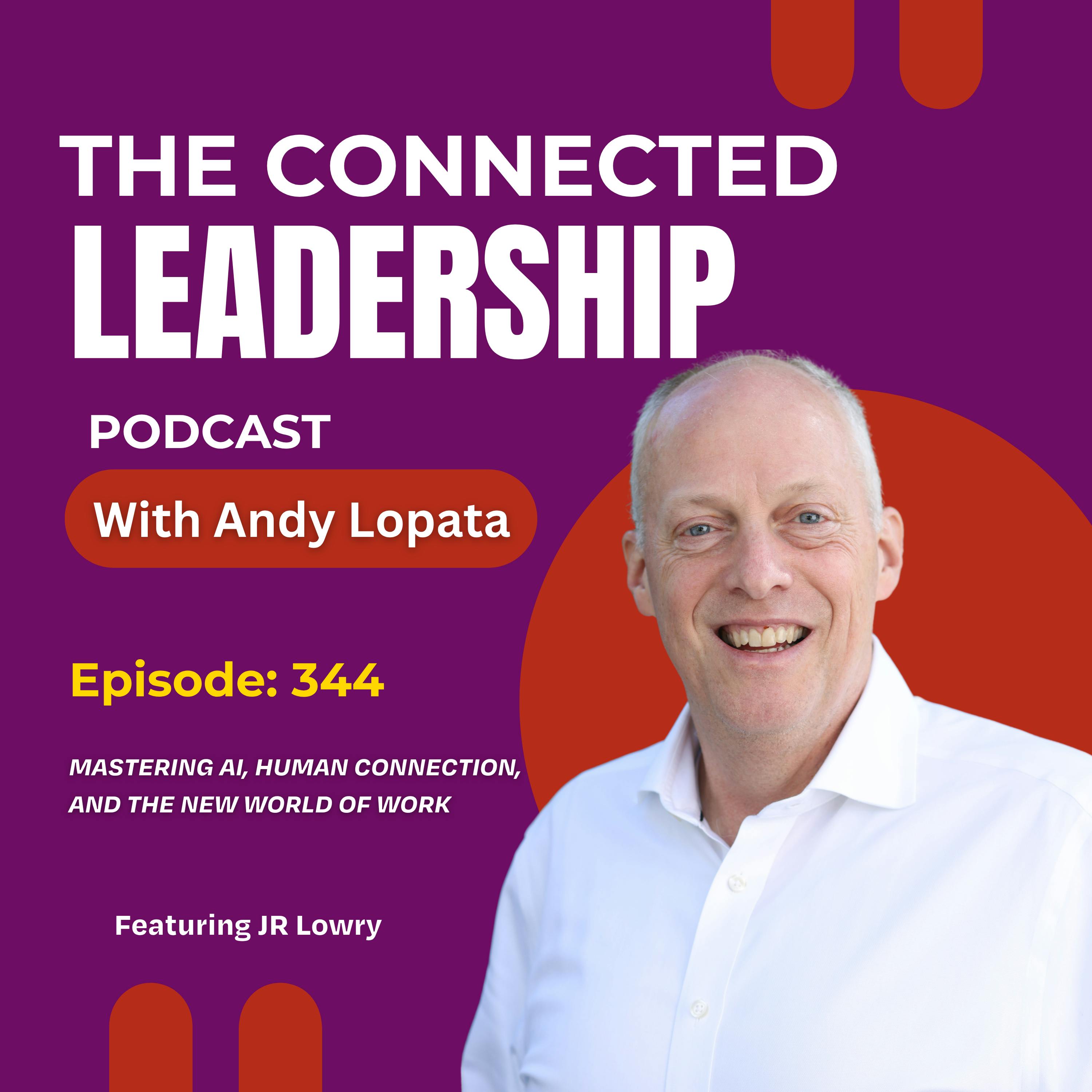 Mastering AI, Human Connection, and the New World of Work with JR Lowry 03.08.2026 44minThe traditional corporate ladder—with its promise of a "job for life" and a gold watch at retirement—is fundamentally broken. Andy Lopata is joined by JR Lowry, founder of PathWise, to discuss how professionals can successfully navigate a career landscape defined by restructuring, layoffs, and rapid change. Drawing from his own multi-faceted career journey (now on "Version 4.0"), JR shares practical strategies for taking active ownership of your professional path. Andy and JR unpack the limits of passive career planning, the rise of AI and why it must be balanced with Human Interaction (HI). They also examine the sociology of job hunting and the growing phenomenon of side gigs and polyworking among Gen Z and seasoned professionals alike. About Our Guest:JR Lowry is the founder of PathWise and a seasoned C-level executive in the financial services industry. Most recently, he served as the Global COO of Janus Henderson Investors, following leadership roles at State Street and Fidelity Investments. Prior to his financial services career, JR was a partner at McKinsey & Company and an officer in the US Air Force. JR holds an MBA from Harvard Business School, a Master of Science in electrical engineering from Northeastern University, and a Bachelor of Science in engineering from Duke University. Now living in London with his wife, Suzanne, JR is a father of three and grandfather of one. In his free time, he is an avid traveler (visiting nearly 60 countries across 6 continents), runner (having completed all original 6 Abbott World Major Marathons and triathlons), and hiker. What we discussed in this episode: Are you being too passive about your own career survival? Learn the critical indicators that suggest you may be ill-prepared for corporate restructuring, and discover the immediate steps you can take to build professional resilience. What is Andy’s "BBC Outplacement Test"? Discover a simple, three-step exercise that strips away your current job title to unlock unexpected career paths and opportunities through your network. Could the secret to your next job offer lie in someone you barely know? Explore the sociology behind Mark Granovetter's "Theory of Weak Ties" and learn why loose acquaintances are statistically superior to close friends when searching for a new role. How can AI actually make us more human at work? Discover how to leverage artificial intelligence to buy back time for "HI" (Human Interaction), critical thinking, and strategic relationship building. Is "polyworking" the future of work, or is it too difficult for most people to manage? Uncover the stark realities and practical challenges of leaving the traditional full-time structure to build a multi-income portfolio career. Download the full episode to learn how to adapt, rebuild, and successfully lead your own career journey! Resources Mentioned in this Episode: The Thinkers50 Community (Where Andy and JR originally met) Mark Granovetter's Study: The Theory of Weak Ties Dorie Clark’s Work (On multiple income streams) Andy's Psychology Today Blog (Research on conversations with strangers on public transport) Connect with Andy Lopata: Website | Instagram | LinkedIn | X/Twitter | YouTube The Financial Times Guide to Mentoring
 -
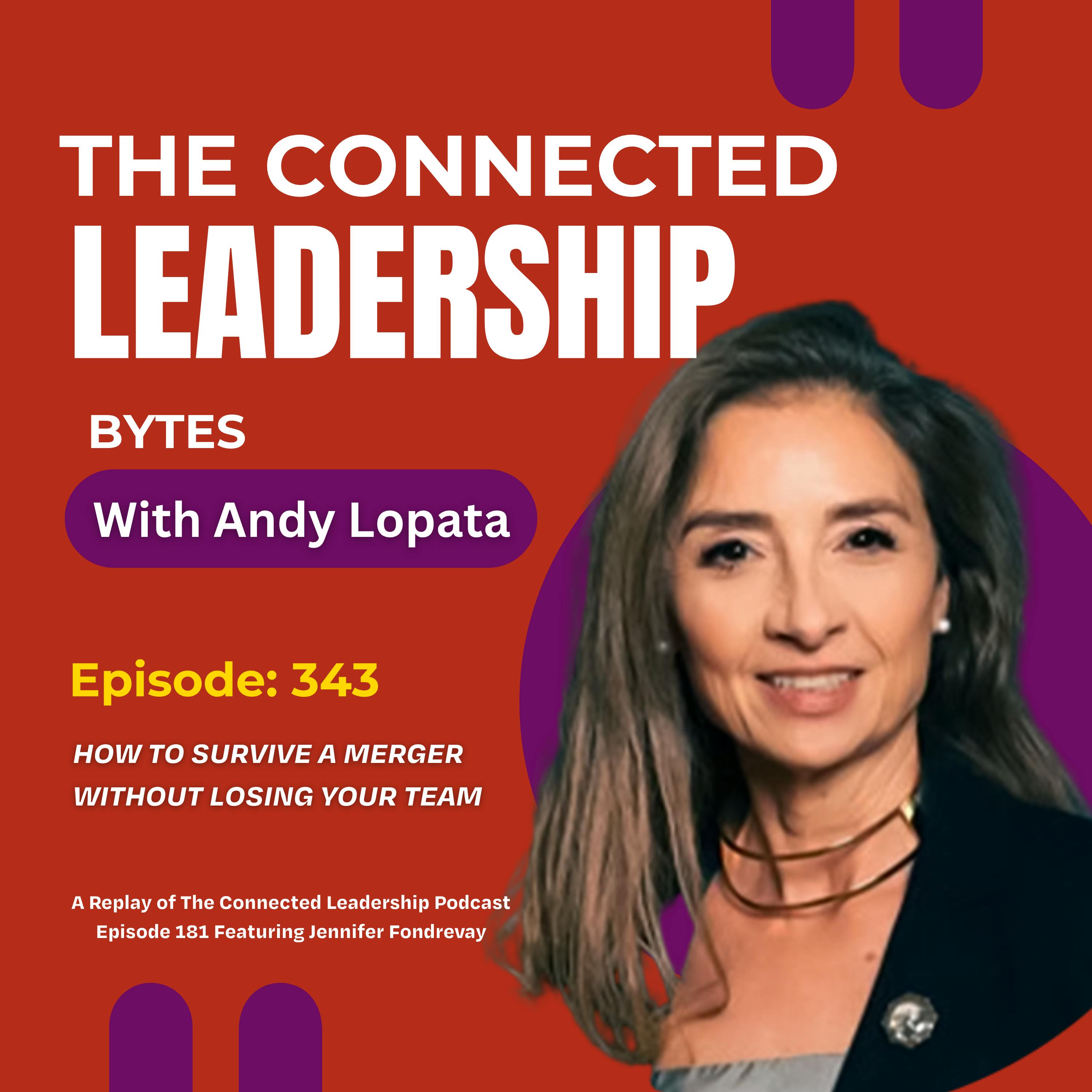 How to Survive a Merger Without Losing Your Team with Jennifer Fondrevay 27.07.2026 22minMergers and acquisitions look great on a spreadsheet, but they are often disastrous for the people involved. The moment a deal is announced, the corporate culture you’ve built can vanish, replaced by tribalism, fear, and a fierce battle over "turf." In this insightful episode from the archive, Andy Lopata sits down with Jennifer Fondrevay, known as the "M&A Whisperer." Having navigated three multi-billion dollar mergers as a C-suite executive (and advised countless others), Jennifer shares the raw truth about what really happens to teams during a corporate takeover. From the five stages of grief in the workplace to the dangerous "us vs. them" mentality, this episode explores the intense psychological toll of M&A. Discover why the "pre-mortem" is your most vital communication tool, why frontline leaders must own the narrative, and how shifting the focus back to the customer is the ultimate way of ending corporate turf wars. If your company is facing a merger, acquisition, or any major reorganisation, this is your survival guide. What you will learn in this episode The Corporate Stages of Grief: Why the immediate reaction to a merger isn't excitement, but denial, anger, and bargaining—and how leaders often fail to recognise these normal human emotions. The "Turf War" Antidote: How a junior product manager ended a massive fight between B2B and B2C teams by shifting the entire focus away from "who does it best." The Pre-Mortem Strategy: What is a pre-mortem, and why is it the most effective way to prepare for the inevitable negativity of a merger announcement. The Frontline Failure: Why a merger communication strategy is doomed to fail if it relies solely on the CEO and the HR department. The "Tribalism" Problem: Why the loyalty you want your employees to feel for your brand is the very thing that makes merging with a competitor so painful. Actionable Insights Shift the Focus to the "North Star": When merging teams fight over whose process, software, or approach is "right," intervene immediately. Stop the turf war by asking: "What is best for the customer?" Forcing both sides to work backward from the customer's needs eliminates ego and allows the best solution to emerge naturally. Run an M&A "Pre-Mortem": Before announcing a major change to your company, gather your leadership team and brainstorm every piece of negative baggage and fear the employees will have. This allows you to prepare transparent, genuine answers, rather than defaulting to "I'll get back to you offline." Empower the Frontline Leaders: The people executing the merger were likely not in the room when the deal was made. If you want buy-in, you must bring these frontline managers into the narrative immediately. Give them the information and the platform to communicate the vision, because employees will trust their direct manager more than they trust a CEO who just got a massive payout. SELECTED LINKS FROM THE EPISODE Connect with Andy Lopata: Website | Instagram | LinkedIn | X/Twitter | YouTube Connect with Jennifer Fondrevay: Website |LinkedIn | The Financial Times Guide to Mentoring Episode 181 Featuring Jennifer Fondrevay
 -
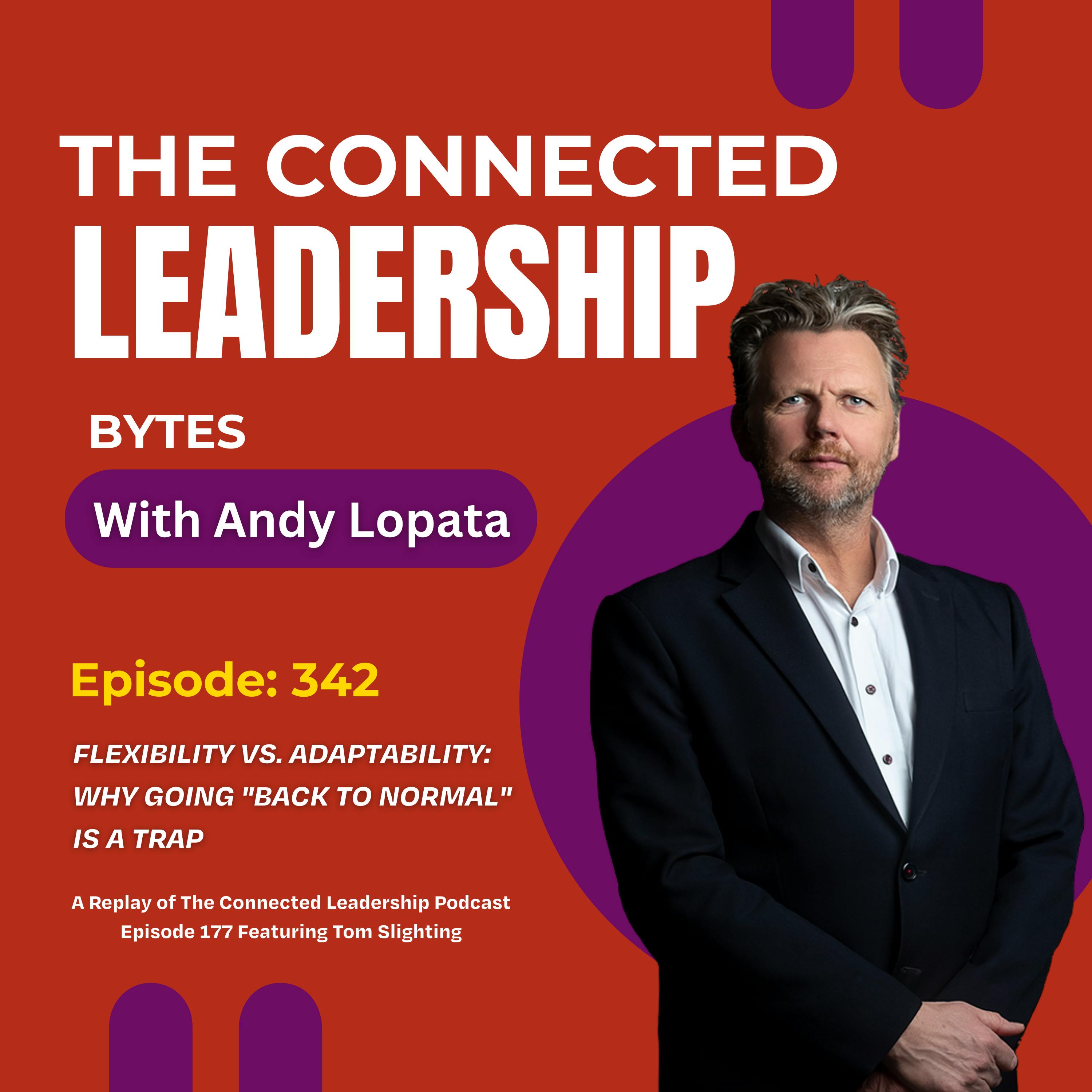 Flexibility vs. Adaptability: Why Going "Back to Normal" is a Trap with Tom Sligting 20.07.2026 21minOver the last few years, we've all patted ourselves on the back for being incredibly "flexible" during times of change. During the pandemic we worked from home, mastered Zoom, and kept the lights on. But are we actually adaptable? In this archive episode of Connected Leadership Bytes, Andy Lopata sits down with global speaker and comedian Tom Sligting to explore the critical difference between flexibility and true adaptability. Tom argues that the desire to go "back to normal" proves that while we may be flexible in the short term, we are struggling with the long-term mindset shifts required to be truly adaptable. Using the brilliant analogy of the 2006 smartphone, Tom explains why sweeping changes fail and why adaptability requires us to embrace discomfort. Discover why your brain's autopilot is your biggest enemy, how to identify your weakest "power skills," and why bringing a 21-year-old onto a veteran team isn't enough to future-proof your business if the mindset doesn't change. Key Takeaways The iPhone Metaphor: Why handing a 2006 professional a modern smartphone with all its current demands would have caused a total rejection of the technology—and what that teaches us about organisational change. Flexibility is Reactive, Adaptability is Proactive: Understand the fundamental difference between making a short-term adjustment to survive a crisis versus making a long-term, life-changing shift in direction. The Autopilot Trap: Why 95% of our daily decisions are made on autopilot, and why you literally have to force yourself to feel "unsafe" and uncomfortable to become adaptable. "Power Skills" over "Soft Skills": Why we need to rebrand skills like mental flexibility, grit, and emotional range, and how measuring them can reveal hidden weaknesses in your leadership team. The Danger of the "Back to Normal" Mindset: Why the most common phrase heard post-COVID is actually a massive red flag for businesses that want to survive the next decade. Actionable Insights Audit Your "Power Skills": Stop guessing how adaptable you are. Seek out assessments or feedback that measure specific power skills. Identify the one or two areas where you score lowest and create a targeted plan (a book, a course, a mentor) to improve them. Embrace the Uncomfortable: True adaptability requires moving out of your comfort zone. When you face a change, resist the urge to rely on your "autopilot" reactions. Stop, reflect, and consciously accept that feeling uncomfortable is the first necessary step toward long-term growth. Leverage Your Network for Validation: When you make a major, adaptable shift in your career or business model, you will experience doubt. Lean on a trusted network of peers who can reflect back to you, validate your new direction, and provide the energy needed to keep you from retreating to your old, comfortable habits. SELECTED LINKS FROM THE EPISODE Connect with Andy Lopata: Website | Instagram | LinkedIn | X/Twitter | YouTube Connect with Tom Sligting : Website |LinkedIn | The Financial Times Guide to Mentoring Episode 177 Featuring Tom Sligting
 -
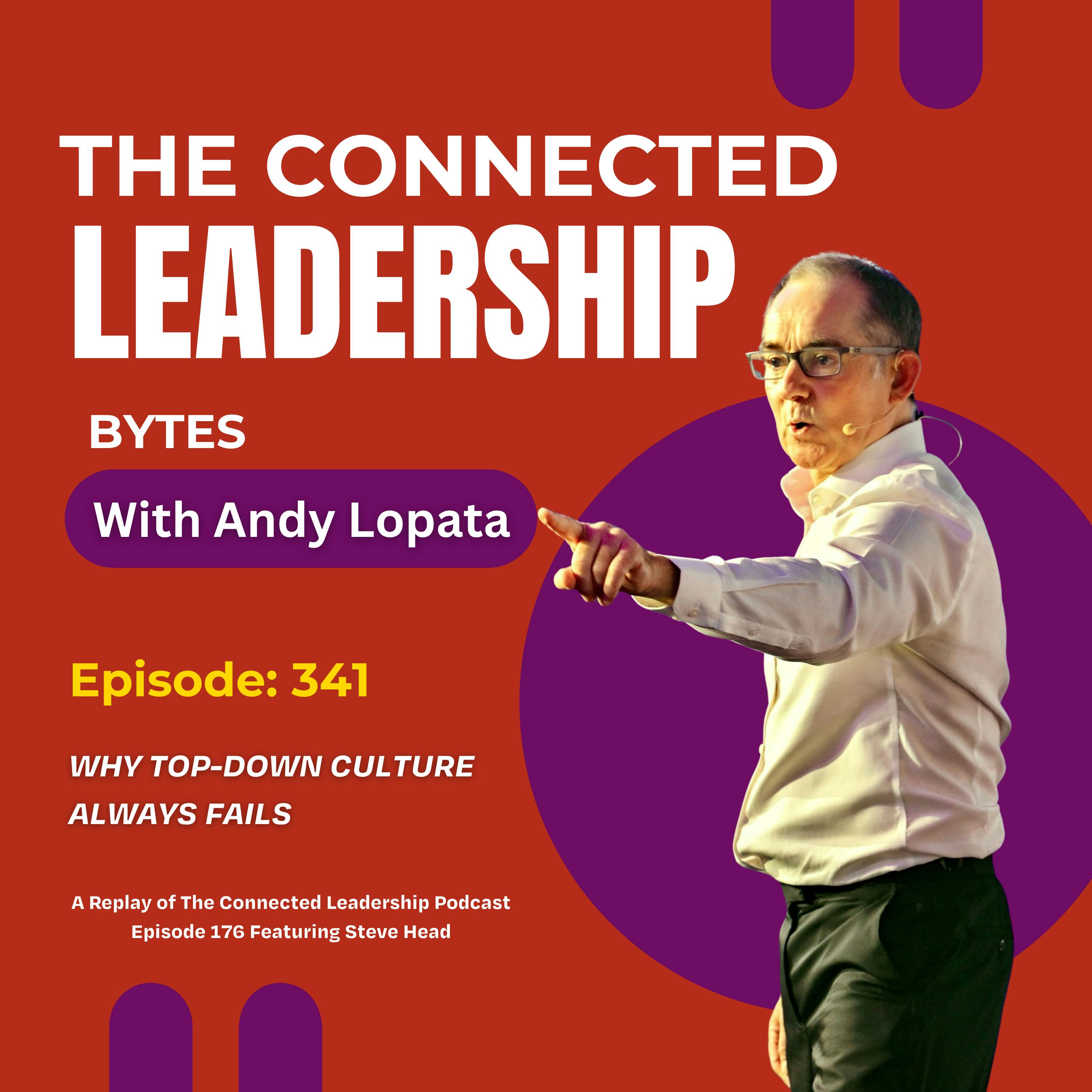 Why Top-Down Culture Always Fails with Steve Head 13.07.2026 25minHow do you unite a team of elite athletes who all have full-time day jobs, zero financial incentive, and have just endured a pandemic-delayed tournament cycle? And more importantly, how do you do it in a way that actually wins a World Cup? In this inspiring archive episode of Connected Leadership Bytes, Andy Lopata sits down with inspirational speaker and performance coach Steve Head. Steve was the "1%" mindset coach behind the England Wheelchair Rugby League team’s stunning 2022 World Cup victory. Steve reveals the counter-intuitive truth about motivating elite performers (hint: they don't need motivation) and shares the exact, grassroots process he used to help the team define their core values. This is a masterclass in ditching the "eye-roll" of corporate buzzwords. Discover why the most powerful values are written in messy Sharpie on a flip chart, launched by the team rather than the boss, and sustained by a culture of absolute selflessness and sacrifice. What You Will Learn In This Episode The Motivation Myth: Why you cannot "motivate" elite performers who have already overcome immense adversity (like losing limbs in combat), and what they actually need from a coach instead. The 20% Rule: Why losing focus for just 60 seconds in a fast-paced game (or business environment) can completely derail your entire operation. The "Eye Roll" of Corporate Values: Why top-down, management-dictated values always fail, and how to facilitate a process where the team builds their own. The Power of the "Quiet Voice": Why identifying and empowering the highly respected, quiet leaders in your team is the key to launching a successful culture shift. The "Messy Sharpie" Commitment: Why authenticity—like signing a raw, messy flip chart—is far more effective at securing team buy-in than a polished, multi-million-pound corporate rollout. Actionable Insights Ditch the Top-Down Rollout: If you want your team to adopt new values or standards of behavior, do not present them as a finished product. Facilitate a session where a small, highly respected group of team members brainstorm and refine the values themselves. Let the Team Launch the Culture: When introducing new values or strategies to the wider organisation, step back. Have the respected team members who helped create the values present them. Peer-to-peer communication carries far more credibility and eliminates the "boss's new initiative" cynicism. Create a Physical Symbol of Commitment: Make buy-in tangible. Just as the England team signed an A1 flip chart with a Sharpie, find a simple, unpolished way for your team to physically signal "I'm in." Carry that symbol with you as a constant, authentic reminder of the behaviors that drive everything you do. SELECTED LINKS FROM THE EPISODE Connect with Andy Lopata: Website | Instagram | LinkedIn | X/Twitter | YouTube Connect with Steve Head: Website |LinkedIn | The Financial Times Guide to Mentoring Episode 176 Featuring Steve Head
 -
 The Fourth Bottom Line with Paul Hargreaves 06.07.2026 43minWhat happens when you strip away the assumption that success is measured solely by profit? In this deeply authentic conversation, Andy Lopata is joined by Paul Hargreaves to explore how commercial businesses can thrive by putting people and the planet at the centre of their operations. Paul opens up about his non-traditional path to business—from spending over a decade doing inner-city charity work in Deptford, South London, to starting Cotswold Fayre from the back of his car. He shares the painful reality of a massive warehouse management system failure in 2014 that nearly collapsed the business, explaining why the resulting team restructuring was a vital "pruning process" that paved the way for B Corp certification. Andy and Paul discuss the practicalities of leading with values, why Cotswold Fayre uses "heart and soul" questions to recruit for character over skills, the underutilised power of intuition in decision-making, and how Paul addresses executive loneliness. Finally, Paul defines "The Fourth Bottom Line," explaining why global change must start with the personal, internal transformation of the leader. Why might a catastrophic IT failure be the best thing that ever happens to your company culture? Discover how a business crisis can act as a natural filter, stripping away toxic patterns and misaligned team members. What are "heart and soul" questions, and how can they revolutionise your hiring process? Explore how to move past CV skills and interview candidates purely for character, deep motivation, and cultural fit. Is your workplace community crossing the line from supportive to destructive? Learn the subtle difference between healthy team friendships and negative, external relationships that can actively drag an organisation down. What is "The Fourth Bottom Line"? Find out why trying to solve massive global problems like climate change will fail unless leaders undergo a profound personal and internal transformation first. Download the full episode to discover how to align your personal growth with your business success! SELECTED LINKS FROM THE EPISODE Connect with Andy Lopata: Website | Instagram | LinkedIn | X/Twitter | YouTube Connect with Paul Hargreaves: Website |LinkedIn | YouTube Paul Hargreaves' Books: Forces for Good and The Fourth Bottom Line Paul's Podcast: 4th Bottom Line People Mentioned: Giles Hutchins (Sussex Woods), Ben Brabin (Walking platform), Luke Ambler (Andy's Man Club). The Financial Times Guide to Mentoring What we discussed in this episode:
 -
 The Toxic Positivity Trap with Paul McGee 29.06.2026 20minDoes your pursuit of happiness actually make you miserable? In a world obsessed with Instagram-perfect lives and self-help gurus promising a "magic bullet," it's easy to feel like you are failing if you aren't constantly happy. In this refreshing and deeply honest archive episode, Andy Lopata speaks with Paul McGee (aka "The SUMO Guy"), author of The Happiness Revolution. Bringing his trademark "Mancunian, no-bull" perspective to personal development, Paul dismantles the myth of toxic positivity and the dangerous belief that negative emotions are something to be "fixed." Discover the liberating concept of "Hippo Time," why capitalism thrives on making you feel inadequate, and how the insidious nature of social media comparison is impacting our mental health. This is a vital conversation for anyone who wants to stop faking it and start living a more grounded, authentic, and emotionally agile life. What You Will Learn In This Episode The Instagram Illusion: How the ability to compare our unedited lives with the edited highlight reels of billions of other people is fueling modern unhappiness. The Capitalism of Inadequacy: Why consumer culture relies on the myth that "you are never quite enough" to keep you endlessly searching for happiness in the next purchase. The "Hippo Time" Philosophy: Why giving yourself permission to wallow, feel sad, and digest your disappointment is crucial for long-term emotional resilience. The Danger of the Magic Bullet: Why the self-help industry's promise of a single, easy "fix" for your life is a destructive lie that prevents genuine growth. The Hidden Signs of Struggle: Why we must stop assuming that people who are struggling will ask for help or show obvious warning signs Actionable Insights Audit Your "Mental Diet": Be as conscious of what you feed your mind as what you feed your body. When scrolling through social media (especially the comment sections), actively ask yourself: "Is reading this making me angry or anxious?" If the answer is yes, log off. Protect your mental bandwidth. Embrace "Hippo Time": Stop forcing positivity. When you experience a setback or a low mood, grant yourself a specific, boundaried amount of "Hippo Time" to simply wallow and feel the negative emotion without guilt. Acknowledging the emotion is the first step to processing it and eventually moving on. Ditch the "I'm Fine" Default: If you are struggling, resist the urge to put on a brave face and spout toxic positivity (e.g., "I'm awesome!"). Practice authentic vulnerability with a trusted friend or colleague by admitting when things are tough. You don't have to be broken to ask for support; you just have to be human. SELECTED LINKS FROM THE EPISODE Connect with Andy Lopata: Website | Instagram | LinkedIn | X/Twitter | YouTube Connect with Paul McGee: Website |LinkedIn | The Financial Times Guide to Mentoring Episode 172 Featuring Paul McGee
 -
 The Mentor, The Coach, and The Sponsor with Vanessa Vallely OBE & Kerrie Dorman 22.06.2026 22minAre you trying to advance your career, but unsure who to ask for help? Have you ever wondered if you need a mentor, a coach, or a sponsor—and what the difference actually is? In this episode from the archive, Andy Lopata sits down with two giants of the mentoring world: Vanessa Vallely OBE (founder of WeAreTheCity) and Kerrie Dorman (founder of the Association of Business Mentors). Together, they dismantle the confusion surrounding these crucial professional relationships. Discover the "CCM" approach to support, learn the golden rule that separates a mentor from a sponsor, and find out the exact formula for asking a busy executive to mentor you (without getting a "no"). If you've ever felt stuck in your career, this episode provides the ultimate roadmap for building a "personal boardroom" that will propel you forward. What You Will Learn in This Episode: The "Been There, Done That" Rule: What is the fundamental difference between a coach (who asks questions) and a mentor (who shares scars and experience)? The Talk To vs. Talk About Rule: How to instantly distinguish between a mentor who gives you advice and a sponsor who puts their reputation on the line to get you promoted. The Myth of Age and Rank: Why you don't need to reach a specific level of seniority to deserve a mentor—and why you are actually never too old to have one. The Perfect "Ask": The specific, structured formula you must use when asking someone to be your mentor to guarantee they say "yes." The "Personal Boardroom": Why having just one mentor is a mistake, and how to build an "agile" formula of mentors, coaches, and accountability partners. Actionable Insights Structure Your "Ask": Stop asking people, "Will you be my mentor?" It's too vague and demanding. Instead, use Vanessa’s formula: State why you chose them (flattery helps!), define the specific skill you want to learn, set a clear timeline (e.g., three 30-minute sessions over three months), and define what success looks like. Make it easy for them to say yes. Turn Mentors into Sponsors: A mentor talks to you; a sponsor talks about you in rooms you aren't in. To turn a mentor into a sponsor, you must demonstrate your capability so they feel confident putting their integrity on the line for you. Audit Your "Personal Boardroom": Do not rely on one person for all your professional support. Map out your current network. Do you have an accountability partner who pushes you? Do you have an industry expert who shares their scars? Do you have a coach who asks hard questions? Build a diverse "formula" of mentors to cover your blind spots. SELECTED LINKS FROM THE EPISODE Connect with Andy Lopata: Website | Instagram | LinkedIn | X/Twitter | YouTube Connect with Vanessa Vallely OBE: Website |LinkedIn | Connect with Kerrie Dorman: Website |LinkedIn | The Financial Times Guide to Mentoring Episode Featuring Vanessa & Kerrie
 -
 A Hand Up, Not a Hand Out with Nigel Kershaw OBE 15.06.2026 20minWhen The Big Issue launched in 1991, it didn't just introduce a new publication; it fundamentally changed the face of homelessness. By offering a "hand up, not a hand out," it turned vulnerable individuals into micro-entrepreneurs and challenged the traditional charity model. In this inspiring episode from the archive, Andy Lopata speaks with Nigel Kershaw, Chairman of The Big Issue Group, about the incredible 30-year journey of this iconic social enterprise. Nigel shares the origin story—sparked by an encounter on the streets of New York—and the initial pushback they faced from both the homeless community and established charities. Discover how The Big Issue built a powerful, interdependent relationship with its vendors, the critical pivot they made overnight during the pandemic lockdown, and how a "mad idea" to start a social merchant bank led to managing £300 million in impact funds. This is a masterclass in leading with purpose, scaling impact, and proving that business solutions can solve social crises. What you will learn in this episode: The Origin Story: How a chance encounter with a "two-time loser from upstate New York" inspired the creation of one of the world's most successful social enterprises. The Business of Prevention: Why The Big Issue was strictly structured as a business, not a charity, and the initial resistance they faced from both charities and homeless individuals. The Interdependent Relationship: How the dynamic between The Big Issue and its vendors differs entirely from the traditional "giver and receiver" charity model. Actionable Insights: Build Interdependent Relationships: Move away from purely transactional or paternalistic relationships with your stakeholders. The Big Issue succeeds because the business needs the vendors to sell, and the vendors need the business for stock. Create structures where your success is directly tied to the success of your partners. Incubate Radical Ideas Separately: When you have a disruptive or highly innovative idea, don't force it onto a core team that is already busy managing day-to-day operations. Like The Big Issue did with their investment arm, incubate these ideas outside the main structure to allow them space to grow without facing immediate resistance or resource constraints. Use Crises to Force Digital Transformation: When the pandemic wiped out their street sales overnight, The Big Issue didn't just ask for donations; they accelerated a planned digital pivot, introducing cashless sales and digital wallets. Use major disruptions as a catalyst to push through necessary innovations that might otherwise take years to implement. SELECTED LINKS FROM THE EPISODE Connect with Andy Lopata: Website | Instagram | LinkedIn | X/Twitter | YouTube Connect with Nigel Kershaw OBE: Website |LinkedIn | The Financial Times Guide to Mentoring Episode 173 Featuring Nigel Kershaw OBE
 -
 How to Lead When the Rules Keep Changing with Nikki Bush 08.06.2026 19minWhen the pandemic hit, the instruction was simple: "Go home." But returning to a hybrid model? That's a complex, messy experiment full of grey areas. In this episode from the archive, Andy Lopata chats to human potential expert Nikki Bush, dialing in from Johannesburg. They explore why the return to hybrid work is causing so much stress for both leaders and teams, and why standardising rules across an entire organisation often leads to disaster. Nikki shares practical strategies for navigating this new autonomy, emphasising the need for employees to act as "intrapreneurs." Discover why the number one hybrid trap is "meeting-itis," how to ensure your virtual one-on-ones aren't just tick-box exercises, and the profound difference a leader can make by truly seeing the essence of their team members beyond their job descriptions. If you're struggling to balance flexibility with productivity, this episode offers a roadmap for connection. What you will learn in this episode The Autonomy Shift: Why hybrid work requires employees to stop acting like traditional staff and start thinking like "intrapreneurs" who are solely responsible for their output. The Illusion of Choice: Why giving employees too much choice in a hybrid model actually increases stress, and how to find the right balance of structure. The "Meeting-itis" Trap: Why over-scheduling meetings is the biggest mistake hybrid leaders make, and how it actively prevents real work from getting done. Beyond the Job Description: How to uncover the hidden "essence" of your team members. The Power of Intentional Listening: Why the success of your one-on-ones depends entirely on your intent, and how to prove you are listening with your "whole being." Actionable Insights Decentralise Hybrid Mandates: Do not try to mandate a single hybrid schedule (e.g., "everyone is in on Tuesdays") for an entire organisation. Empower individual team leaders to create their own bespoke hybrid mandates based on the specific operational needs and cross-departmental requirements of their group. Visibly Protect "Sacred Time": When conducting a one-on-one (especially virtually), explicitly state that you are turning off your devices to be fully present. If you must leave your phone on for an emergency, set that expectation at the very beginning of the meeting. This verbal boundary demonstrates profound respect. Conduct an "Essence Audit": Look past your team's job titles. Identify their innate strengths—who is the nurturer? Who brings levity during a crisis? Actively share these observations with them. Reflecting these strengths back to your team not only builds confidence but allows you to deploy them more effectively when unforeseen challenges arise. SELECTED LINKS FROM THE EPISODE Connect with Andy Lopata: Website | Instagram | LinkedIn | X/Twitter | YouTube Connect with Nikki Bush: Website |Instagram | The Financial Times Guide to Mentoring Episode 172 Featuring Nikki Bush
 -
 Mastering Your Emotional Responses with Vicky O'Farrell 01.06.2026 46minHave you ever let a bad commute ruin a crucial meeting? Or sent a hasty, frustrated reply to a message you misunderstood? In this highly relatable episode, Andy Lopata sits down with Vicky O'Farrell, known as the "Queen of Behaviours," to unpack how the minor inconveniences of our day can hijack our brains, alter our moods, and ultimately sabotage our professional relationships. Andy and Vicky dive deep into the psychology of our daily triggers—from the "limbic" fight-or-flight response of getting cut off in traffic, to the toxic nature of instant-reply culture on WhatsApp and social media. Vicky shares a powerful personal story of how her own traffic-induced bad mood infected an entire construction site, highlighting the contagious nature of our emotions. Together, they explore practical tools to reset your emotional temperature and how pausing to consider another person's perspective can save your most valuable connections. About Our Guest:Vicky O'Farrell is an expert in human behavior and communication, widely known as the "Queen of Behaviours." With 25 years of corporate experience, from charming Sales rep to Boardroom boss, Vicky founded Queen of Behaviours in 2013 after her own behaviour had a tiny impact on her corporate trajectory. Splitting her time between delivering high-level corporate workshops in London and helping run her husband’s construction business, Vicky has a unique, boots-on-the-ground understanding of how to adapt communication styles, read the room, and manage emotional energy across vastly different workplace cultures. What we discussed in this episode: The Traffic Jam Trigger: Why getting cut off in traffic immediately triggers our "chimp" limbic system, and how the stories we tell ourselves about why the other person did it dictate our mood for the rest of the day. The PAUSE Model: Vicky introduces the concept of PAUSE—starting with "P" for Perspective—and how assuming a positive intent (e.g., they are rushing to the hospital) can instantly lower your dangerous cortisol levels. Code-Switching and Authenticity: How to adapt your communication style and energy when moving between entirely different environments (like a corporate boardroom vs. a construction site) without losing your authentic self. The 0 to 10 Energy Scale: Why striving to be a "10 out of 10" every day is actually a mistake, and why finding your grounded "5" is often the best way to match your audience's emotional needs. The Doorway Reset: Practical tools—like curating a specific Spotify playlist, checking your "mirror," and Box Breathing (4 in, 4 hold, 4 out)—to reset your mood before you walk into a room. Resources Mentioned in this Episode: Paul McGee’s Book: S.U.M.O (Shut Up, Move On) Breathing Technique: Box Breathing (Inhale for 4 seconds, hold for 4 seconds, exhale for 4 seconds). Download the full episode to learn how to master your mood and protect your professional relationships! SELECTED LINKS FROM THE EPISODE Connect with Andy Lopata: Website | Instagram | LinkedIn | X/Twitter | YouTube Connect with Vicky O’Farrell: YouTube |LinkedIn |Facebook The Financial Times Guide to Mentoring Box Breathing Relaxation Technique
 -
 The Secret to Leading Under Pressure with Martin Laschkolnig 26.05.2026 20minInflation, recession, global conflict, and post-pandemic exhaustion. Leaders today are operating under unprecedented levels of pressure, and many are finding that their own—and their team's—"fuses are getting shorter and shorter." In this archive episode of Connected Leadership Bytes, Andy Lopata sits down with international speaker and serenity expert Martin Laschkolnig to discuss how leaders can maintain their composure when surrounded by crisis. Drawing on decades of business experience, Buddhist philosophy, and energy psychology, Martin explains why trying to "fix" a traumatised team member is the worst thing a leader can do, and why serenity is a muscle that must be trained before the crisis hits. If you want to stop reacting on autopilot and start leading with profound inner peace, this episode provides the practical tools you need to widen the space between event and reaction. 5 Key Takeaways: The Crisis Intervention Rule of 3: Discover the three essential steps leaders must take when a team member is in a crisis (and why "offering a solution" isn't one of them). The Limits of the "Fixer": Why jumping straight to "fix-it mode" can alienate your team, and why people need to feel "seen in their misery" before they can accept a solution. The Monkey Mind vs. The Sphere of Influence: How the "monkey mind's" desire to control everything causes burnout, and how to reclaim your power by focusing only on what you can actually influence. The "NATO" Mindset: How adopting the "Not Attached to the Outcome" philosophy can instantly reduce leadership stress in target-driven corporate environments. The Separation of Self and Problem: The profound psychological shift of realising "I have a problem, but I am not the problem," and why self-compassion is crucial for crisis management. 3 Actionable Insights Stop Giving Verbal Instructions in a Crisis: When an employee is overwhelmed or traumatised, always provide the next steps (e.g., "Go see HR") in writing or via a simple checklist to ensure they actually get the support they need. Defuse the Stress Hormones Daily: Do not wait for the weekend or a crisis to relax. Build a daily "micro-routine", whether it's five minutes of conscious breathing, digging in the garden, or taking a walk. Consistent, small steps build the foundation of resilience you will need when a storm hits. Widen the Space Between Event and Reaction: When you feel a strong emotion (like fear or anger) rising, do not react on autopilot. Step away. Take a few deep breaths. Create space to evaluate whether acting on that emotion will benefit you, or if it is better to let it pass. Your reaction determines the outcome; make sure it is a conscious choice. SELECTED LINKS FROM THE EPISODE Connect with Andy Lopata: Website | Instagram | LinkedIn | X/Twitter | YouTube Connect with Martin Laschkolnig: Website |LinkedIn | The Financial Times Guide to Mentoring Episode 171 Featuring Martin Laschkolnig
 -
 Connecting With Authenticity with Roxanne Derhodge 18.05.2026 22minConnecting With Authenticity With Roxanne Derhodge We hear the word "authenticity" constantly in leadership circles, but what does it actually mean beyond just "removing the mask"? In this thought-provoking episode from the archive, Andy Lopata explores a radically different definition of authenticity with psychotherapist and author Roxanne Derhodge. Roxanne reveals that true authenticity doesn’t start with how you interact with others; it starts with how well you know yourself when no one else is looking. She argues that the ability to handle conflict, disagree agreeably, and navigate "hot button" topics without losing your cool is actually the highest form of authentic leadership. Discover why being authentic isn't an excuse for oversharing, how to strike the crucial balance between professional decorum and human connection and why the most powerful leadership test is how you treat people when nobody is watching. What You Will Learn From This Episode The Pillow Test: The ultimate test of authenticity isn't how you behave on a stage, but whether you are "good on the inside" when you lay your head on the pillow at night. The Hidden Source of Conflict: Why your visceral reaction to a difficult colleague often has more to do with your own unresolved internal triggers than with their actual behavior. The "Verbal Diarrhea" Trap: Why bringing your "whole self" to work does not mean oversharing, and how to maintain the vital filter of professional appropriateness. The Consistency Check: How to spot an inauthentic leader by watching for a disparity between their "networking persona" and their true social behavior. The Power of Small Disclosures: How sharing small, tactical "bits and bytes" of your personal life can destratify a team and make you a more approachable leader during times of crisis. Actionable Insights Audit Your Inner Triggers: Before you can authentically connect with someone who holds an opposing view, you must understand your own reactions. The next time a conversation triggers a fight-or-flight response, calm yourself so you can listen to understand, not just to respond. Share the "Micro-Personal": You don't have to share every failure or crisis to be vulnerable. By sharing small, appropriate glimpses of your life outside of work—a story about a hobby or a weekend challenge with a child, reminds your team that you are human, making you more approachable when real business problems arise. The "Off-Record" Balance: To be an authentic leader, you must balance holding your team accountable with being a safe harbor. Ensure you hold their feet to the fire for performance metrics, but intentionally create a separate, off-the-record space where they can connect with you as a person when they need support. SELECTED LINKS FROM THE EPISODE Connect with Andy Lopata: Website | Instagram | LinkedIn | X/Twitter | YouTube Connect with Roxanne Derhodge : Website |LinkedIn | The Financial Times Guide to Mentoring Episode 170 Featuring Roxanne Derhodge
Stacion radio

Podkaste të ngjashme


I/E popullarizuar në
Ky podkast shfaqet edhe në listat e podkasteve të këtyre shteteve.
