
Speak Italian Like A Local
Italian with Lucy
0
Speak Italian Like A Local is a language-learning podcast hosted by Lucy, a native Italian tutor behind italialikealocal.com. Each episode presents everyday Italian in context through dialogues or short texts, with free transcripts and translations. Paid subscribers receive detailed explanations of expressions, practice activities, and access to a private community. Lessons follow CEFR levels from A1 upward, making Italian accessible to English-speaking learners. It combines practical language study with travel storytelling about Italy.
Episodet
-
 Le Tegole e la Valle d'Aosta 06.05.2026 1minThis is a free preview of a paid episode. To hear more, visit speakitalianlikealocal.substack.comQuesta settimana in Story Club leggiamo un testo sulla Valle d’Aosta. Una regione piccola. Molto piccola. La più piccola d’Italia, in realtà, incastrata tra le Alpi al confine con Francia e Svizzera.Eppure appena ci entri, ti accorgi subito che ha qualcosa che le regioni più grandi non hanno: quella sensazione di essere arrivata in un posto che esiste d…
 -
 Weekly Italian Coffee Break #38: Copione - The Copycat 11.12.2025 7minI’ll be honest with you, today I’m feeling a bit deflated. Actually, deflated and annoyed. The kind of annoyed that makes you want to vent to a friend over coffee, you know?So here’s what happened. A couple of days ago, I got a notification from Substack about a creator I follow who had just published a newsletter. I opened it and... well, let’s just say it felt familiar. Very familiar. Like looking-in-a-mirror familiar.It was my Weekly Italian Coffee Break format, down to the structure, the teaching style, the whole thing. And look, I get it, we both teach languages, we both teach Italian, I understand all that. But there wasn’t even a small mention, not even a “hey, this format inspired me” or a quick thank you. Nothing.And that’s when something clicked inside me. Or maybe snapped is a better word.Speak Italian Like A Local is a reader-supported publication. To receive new posts and support my work, consider becoming a free or paid subscriber.Not the first time, purtroppoThis isn’t my first rodeo with copycats. Back in 2018, I watched a couple of creators launch something that was, how do I put this... suspiciously similar to Italia Like A Local.Same concept, same angle. Nothing revolutionary, sure, I wasn’t inventing the wheel. I was just following my passion for sharing Italy through local eyes.Italia Like A Local was born in 2015, right after I came back from the States where everyone constantly asked me “where should I eat in Rome?” and “what should I really see in Florence?” I had just finished a course on sustainable and experiential tourism, and I thought, why not combine these two things?In 2017, I created the Italia Like A Local Instagram account. A social media marketer convinced me to join these like-and-comment exchange groups. They were all the rage among “influencers” back then, you’d share your post, everyone would like and comment to trick the algorithm into thinking it was engaging content.It was in one of these groups that I met the creator couple. They had an account similar to mine, also sharing Italy through Italian eyes. I was actually happy to meet them, to compare notes on our journey.A few weeks later, I left those groups. They felt dishonest to me, also kind of demoralizing and pathetic if I’m being totally honest.Then a creator who was still in those groups informed me that the couple had created a format on their page called... wait for it... Italia Like A Local.I was crushed. But I decided to let it go. They were young, “inexperienced” in tourism, and probably not very creative if they had to copy my name verbatim. I didn’t even own the domain yet, I bought that later.I had pretty much forgotten about the whole thing until the other day’s notification brought it all back.Ma basta con i copioni!Here’s the thing. I do my research, I take inspiration from other creators. We all do. But then I try to improve it, add my own spin, make it unique. Otherwise, it’s just another copy-paste job in the age of social media, right?Someone has an idea, shares it, it goes viral... and everyone copies the exact same thing.Fine. That works for social media, for fleeting content, the stuff that’s viral today and forgotten tomorrow.But when you apply this practice to more substantial content, the kind where a creator pours their soul and life’s passion, getting copied feels different. It stings. Especially when the copycat doesn’t even bother to give you a mention, not even just to say thanks.So today’s coffee break is about how we say “copycat” in Italian. Because if we’re going to deal with them, we might as well learn the vocabulary.Il Copione - The CopycatThe word copione (masculine noun, plural: copioni) literally comes from “copy” but in everyday Italian, it specifically means someone who copies others, a copycat.Il copione literally translates to “the script” when you’re talking about theater or film, but when you’re talking about people, it means copycat. It’s pronounced “co-PYO-neh” with the stress on the second syllable.You might hear Italians say:“Sei un copione!” - You’re a copycat!“Non fare il copione!” - Don’t be a copycat!“Che copione!” - What a copycat!There’s also the verb copiare (to copy), which works just like the English version but with more feeling when you’re complaining about someone stealing your ideas:“Mi ha copiato l’idea!” - He/she copied my idea!“Smettila di copiare!” - Stop copying!Thanks for reading Speak Italian Like A Local! This post is public so feel free to share it.Why it mattersIn Italian culture, being called a copione is quite the insult. Italy is a country that values creativity, originality, and individual style, from fashion to food to art. Being known as someone who just copies others? That’s not the reputation you want.There’s even a saying: “Copiare è rubare” - To copy is to steal. Pretty direct, no?A word on inspiration vs. imitationLook, I believe in inspiration. I think we all stand on the shoulders of those who came before us. But there’s a difference between:Inspiration: “I love how this creator structures their content. Let me think about how I can apply that framework in my own unique way, with my own voice and perspective.”Imitation: “I’m going to do exactly what they do, down to the format and structure, without adding anything of my own or acknowledging where I got the idea.”The line between the two? It’s called creativity and acknowledgment.So what now?If you’re someone who takes inspiration from others (and honestly, who doesn’t?), here’s my suggestion: add your own twist. Make it yours. And if someone’s format or idea really helped you, give them a shout-out. A simple “inspired by” or “grazie to” goes a long way.And if you’re someone whose work has been copied? I guess we both know how it feels now. It’s frustrating, it’s demoralizing, and it makes you question why you put yourself out there in the first place.But here’s what I’m trying to remember today: the copioni can copy the format, but they can’t copy the passion, the years of experience, the authentic voice that comes from actually living what you’re teaching.They can copy the script, but they can’t copy the soul.Your turn: Have you ever dealt with a copione online or in real life? How did you handle it? Hit reply and tell me your story, I’d genuinely love to hear how others navigate this frustrating situation.And if today’s newsletter inspired you to create something similar (wink), at least now you know how to say it in Italian.Un abbraccio (and a slightly irritated one today),LucyP.S. - If you create content and you’ve found inspiration in someone else’s work, consider this your gentle nudge to send them a quick message of thanks. Trust me, it means more than you know. This is a public episode. If you'd like to discuss this with other subscribers or get access to bonus episodes, visit speakitalianlikealocal.substack.com/subscribe
 -
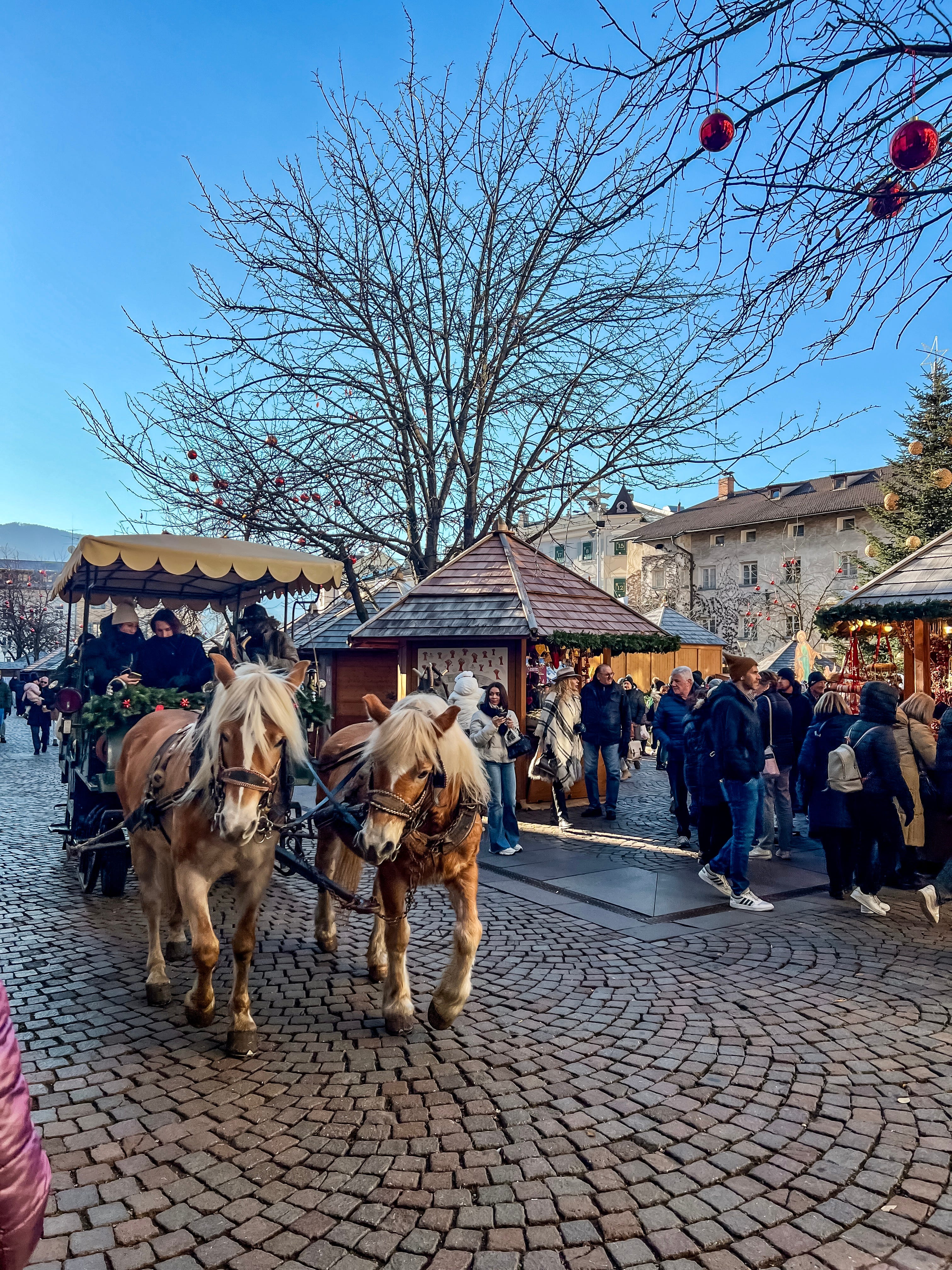 Weekly Italian Coffee Break #37: Bressanone Christmas Markets - When reality doesn’t live up to the hype 04.12.2025 8minLast weekend, I loaded the family into the car and drove to Bressanone to see what everyone calls “one of the most magical Christmas markets in Italy.”You know how it goes, right? You see the photos on the internet, read the glowing reviews, hear the locals and tourists talking about it with glistening eyes. And you think: “Okay, this is the place. This is going to be special.”Speak Italian Like A Local is a reader-supported publication. To receive new posts and support my work, consider becoming a free or paid subscriber.Spoiler: we were a bit disappointed when we came home.But here’s the interesting part for Italian learners: this whole experience taught me something about the gap between the fame and the reality - and about how we Italians talk about disappointment without sounding harsh.Let me explain.Bressanone or Brixen? Both, ActuallyFirst thing you notice in Alto Adige: every city has two names.Bressanone is the Italian name.Brixen is the German name.And when locals say “Brixen”, you immediately know they’re South Tyroleans who speak German - or that they’ve lived there long enough that they adopted the local way of speaking. It’s not about language; it’s about identity.This bilingualism is everywhere: on the street signs, on menus, on announcements. You’ll see:* Piazza Duomo / Domplatz - Duomo Square / Cathedral Square* Mercatino di Natale / Weihnachtsmarkt - Christmas MarketFor language geeks, it is fascinating. For visitors? A little confusing at first. Are you in Italy or Austria?Answer: technically in Italy, culturally somewhere in the middle.The popular Christmas MarketsSo back to the market itself.The Christmas Markets of Bressanone take place in Piazza Duomo, right in front of the stunning cathedral. The location? Absolutely beautiful. Historic buildings, Alpine architecture, mountains in the background. On paper, it’s perfect.Running from late November until January 6th (Epiphany), the market is supposed to be one of the most authentic markets in the region.But here’s what we found:* What we expected: Magical atmosphere, unique handcraft products, products from local artisans, traditional South Tyrolean food.* What we found: A lot of the same stalls you find at every other Christmas market. Mass-produced decorations. The usual mulled wine stands. Overpriced tourist souvenires.Don’t get me wrong - it wasn’t awful. The Duomo is gorgeous. The lights were cute. The kids loved their hot chocolate.But magical? Not quite.Thanks for reading Speak Italian Like A Local! This post is public so feel free to share it.How Italians show disappointment and don’t be rudeThis is where Italian is subtle.When you want to say you’re disappointed in Italian, there are some options depending on how diplomatic you want to be:* Siamo rimasti un po’ delusi. - We were a bit disappointed.Gentle. You’re not blaming anyone. Rimasti (from rimanere) implies something happened to you (passive).* Non era quello che ci aspettavamo. - It wasn’t what we expected.Neutral. Just stating a fact.* Troppo turistico. - Too touristy.Very common. In Italy turistico is almost an insult when a place feels commercial and inauthentic.* Ci aspettavamo di più. - We expected more.Honest, mild, not dramatic.In our case?* Troppo turistico - Too touristy sums it up perfectly.Despite all the fame, it smacked of genericism.Here is a phrase you need to know:Like the Latin saying “La fama non sempre corrisponde alla realtà” (Fame is not always the reality).Or more colloquially:Non è tutto oro quel che luccica. - All that glitters is not gold.Italians use this when something looks great on the surface but disappoints in real life. And honestly? It suited our experience in Bressanone/Brixen perfectly.Great reputation, average experience.Useful vocabulary related to a disappointing trip* Sopravvalutato/a - Overrated* Affollato/a - Crowded, full of people* Commerciale - Commercial (negative connotation)* Deludente - Disappointing* Non ne vale la pena - It is not worth it* Ci sono posti migliori - There are better placesIf someone asks you this question: “Com’era il mercatino?” - “How was the market?”You could say:* Carino, ma niente di speciale. - Cute, but nothing special.* Onestamente? Un po’ sopravvalutato. - Honestly? A bit overrated.* Bello da vedere, ma troppo commerciale. - Nice to look at but too commercial.Try this weekNext time you visit a famous place and feel disappointed, try to express your disappointment in Italian:* “Era bello, ma mi aspettavo di piu.”* “Troppa gente, troppo commerciale.”* “Preferisco i posti meno turistici.”The Final LessonThe Christmas Markets of Bressanone aren’t bad. They’re just... normal. And that’s okay.And I learned this: sometimes the most famous places (i posti più famosi) aren’t necessarily the best (i migliori).Next time? We’ll try the smaller ones - lesser known markets - maybe Vipiteno/Sterzing or Chiusa/Klausen.Sometimes we need these little disappointments to remind us that expectation too high brings disappointment, that there are places that aren’t famous that deserve more attention, and that there isn’t always magic where everyone goes looking.And you know what? It was still a good family day. We chatted and laughed, took a walk, drank hot chocolate together. The kids looked at the lights with big eyes.Or maybe the magic wasn’t in the market. Maybe it was in the journey itself.Until next time,LucyP.S. If you’ve been to Bressanone or other Italian Christmas Markets I’d love to know your thoughts. Did they meet expectations or not? Or were you a little disappointed too? And if you have suggestions for smaller, more genuine markets in South Tyrol, share them. I might try them next weekend! This is a public episode. If you'd like to discuss this with other subscribers or get access to bonus episodes, visit speakitalianlikealocal.substack.com/subscribe
 -
 Italian Grammar Hack: Learn 3 Verbs to Speak Italian Without Memorizing Conjugations 03.09.2025 7minStruggling with Italian verb conjugations?Discover the "Modal Verb Hack" that lets you speak Italian confidently without memorizing endless grammar tables! In this episode we'll reveal how mastering just 3 powerful Italian verbs (potere, volere, dovere) can unlock hundreds of natural sentences instantly.Perfect for Italian beginners who want to start speaking faster! Skip the overwhelming grammar books and learn the smart way to build Italian sentences from day one.Get the full transcript on Lucy's Substack - here the link! This is a public episode. If you'd like to discuss this with other subscribers or get access to bonus episodes, visit speakitalianlikealocal.substack.com/subscribe
 -
 Italian irregular verbs: Essere, Avere, and Fare 27.08.2025 6minLearn Italian most used verbs: essere, avere & fare.Unlock the foundation of Italian grammar with this comprehensive guide to the three most important irregular verbs every Italian learner must know.In this episode, you'll discover why these verbs are irregular, how they've evolved from Latin, and most importantly, how to use them like a native speaker. We'll cover everything from basic conjugations to advanced idiomatic expressions, including tricky concepts like using "avere" for age and "fare" for weather.Click here for the transcript! This is a public episode. If you'd like to discuss this with other subscribers or get access to bonus episodes, visit speakitalianlikealocal.substack.com/subscribe
 -
 Italian verbs: present tense -ERE and -IRE conjugations 05.08.2025 6minIn this episode, we'll dive deeper into Italian verb conjugations, tackling the second and third verb families that every Italian learner needs to know.You'll learn practical examples, memory tricks that actually work, and get plenty of practice with real sentences you can use immediately.This lesson is part of the "Italian grammar made easy" series - your go-to place for friendly, no-stress Italian lessons that actually stick.Find the complete transcript, conjugation tables, and detailed lesson notes here! This is a public episode. If you'd like to discuss this with other subscribers or get access to bonus episodes, visit speakitalianlikealocal.substack.com/subscribe
 -
 Learn Italian most common verbs with present tense 29.07.2025 6minIn this episode, we walk you through the most common Italian verb family: -ARE verbs.You'll learn the simple two-step method to conjugate any regular -ARE verb, discover memory tricks that actually work, and practice with real-life examples you can use immediately.This lesson is part of the Italian grammar made easy series from Speak Italian Like a Loca Substack, your go-to place for friendly, no-stress Italian lessons that actually stick.#LearnItalian #ItalianVerbs #LanguageLearning #ItalianPodcast #BeginnerItalian This is a public episode. If you'd like to discuss this with other subscribers or get access to bonus episodes, visit speakitalianlikealocal.substack.com/subscribe
 -
 Italian verbs made easy: -ARE, -ERE & -IRE explained 22.07.2025 5minI’m so excited to kick off this brand-new grammar series with you.In this first episode, we'll dive into one of the biggest challenges Italian learners face: verbs.Yep, the conjugation tables, the endless endings, the dreaded irregularities… I get it. But don’t worry, we’re breaking it all down together, step by step.In this episode, I walk you through the three main Italian verb families:-ARE (like parlare, mangiare, studiare)-ERE (like leggere, scrivere)-IRE (like dormire, partire, and capire) — with a little twist for those tricky -isc- verbs like finire and capire!This lesson is part of the Italian grammar made easy series from Speak Italian Like a Local Substack, your go-to place for friendly, no-stress Italian lessons that actually stick.#SpeakItalianLikeALocal #LearnItalian #ItalianVerbs #ItalianGrammar #LanguageLearning #ItalianPodcast #ItalianForBeginners This is a public episode. If you'd like to discuss this with other subscribers or get access to bonus episodes, visit speakitalianlikealocal.substack.com/subscribe
 -
 Weekly Italian Coffee Break (Italian version): Le Ferie Italiane 21.07.2025 5minCiao e benvenuti al Weekly Italian Coffee Break, il podcast che ti accompagna a scoprire la lingua e la cultura italiana, una tazza di caffè alla volta.Io sono Lucia, per gli amici Lucy, e oggi voglio parlarti di un fenomeno tutto italiano: le ferie d'agosto.Ieri sera ho chiamato un'amica per invitarla a cena. La sua risposta?"Impossibile, sono già in ferie fino al 20 agosto.”Benvenuti nel mondo delle ferie italiane: l'unica nazione al mondo in cui l'intero Paese decide di andare in vacanza nello stesso momento, creando il fenomeno più affascinante e caotico dell'estate europea.Non si tratta solo di vacanze. È un esodo di massa di 60 milioni di italiani, che trasforma le città in deserti urbani e le località balneari in formicai umani.È il momento in cui l'Italia si divide in due: chi parte e chi resta, chi va al mare e chi va in montagna, chi fugge all'estero e chi scopre l'Italia.Agosto in Italia non è un mese. È uno stato mentale, una filosofia di vita, un momento di sospensione della realtà quotidiana.Devi sapere che le ferie italiane si dividono in cinque categorie precise:* Abbiamo le ferie sacre che vanno dal 1 al 15 agosto.Il Ferragosto è intoccabile. Chi lavora il 15 di agosto in Italia viene guardato con pietà, come se avesse commesso un crimine contro l'umanità. È il giorno in cui anche i semafori decidono di prendersi una pausa.* Poi abbiamo le ferie strategiche che vanno dal 16 al 31 agosto.La seconda metà di agosto è per gli intelligenti: meno caos, prezzi più bassi, ma ancora tutto chiuso. È il momento perfetto per chi ha capito il sistema.* Poi abbiamo le ferie ribelli che sono per chi va in vacanza a luglio.E chi va in vacanza a luglio è un rivoluzionario. Trova parcheggi liberi, ristoranti aperti, ma deve sopportare lo sguardo di commiserazione di chi "le vere ferie si fanno ad agosto".* Poi abbiamo le ferie disperate che sono quelle che si fanno a settembre.Settembre è il mese per chi non ha avuto scelta. I bambini sono a scuola, i prezzi normali, tempo incerto. Ma anche scoperte incredibili: l’Italia di settembre è un paese segreto, autentico, e libero dal turismo di massa.* E infine abbiamo le ferie impossibili che sono quelle fatte a giugno.Giugno è un mese traditore. Sembra perfetto, ma poi piove, fa freddo, le strutture turistiche non sono ancora pronte. È il mese dei pionieri e dei disperati.Ma quali sono le destinazioni scelte dagli italiani?Prima fra tutte c’è Rimini, che è la capitale delle ferie italiane. Qui si viene per vedere ed essere visti, per ballare in discoteca, per vivere la movida adriatica. È l’Italia che non si nasconde, che celebra l’estate senza vergogna.Poi c’è Forte dei Marmi che è l’aristocrazia balneare. Qui le ferie costano un rene, ma si respira l'eleganza toscana con vista sul mare.La Sicilia, che è la scoperta degli ultimi vent’anni. Mare incredibile, cultura millenaria, cucina da urlo. Le ferie siciliane sono un viaggio nell’anima del Mediterraneo.E poi abbiamo la Sardegna, che è l'isola che ha fatto innamorare il mondo. La Costa Smeralda è per i ricchi, il resto per chi cerca l'autenticità di un'isola che sembra un continente.Per chi ama la montagna c’è il Trentino, che è la montagna che non ti aspetti. Qui le ferie sono active: trekking, bicicletta, aria pura. È l’Italia che guarda verso l’Europa.Adesso ti starai chiedendo: ma perché gli italiani sono così ossessionati dalle ferie? La risposta è nella nostra storia.Siamo un popolo che per secoli ha lavorato nei campi, sotto il sole, con ritmi stagionali. Agosto era davvero il momento di pausa dalla fatica.Oggi lavoriamo negli uffici, ma quella memoria genetica rimane. Agosto è il mese in cui ritorniamo alle nostre origini: vita all’aria aperta, ritmi lenti, piaceri semplici.Però non tutto è perfetto nel regno delle ferie italiane.C’è il turismo di massa che distrugge i luoghi più belli.C’è l’aumento dei prezzi che rende agosto un mese per ricchi.C’è la solitudine di chi resta in città.E c’è il traffico infernale del controesodo, quando 30 milioni di italiani tornano a casa tutti insieme, creando code che durano giorni.E poi c’è la tristezza di settembre, quando l’Italia deve fare i conti con la realtà dopo un mese di sogni.Oggi però le ferie italiane stanno anche cambiando.Perché lo smart working permette di lavorare da ovunque.I voli low cost aprono mete impensabili.Le nuove generazioni scoprono il turismo sostenibile.Però ecco, l’essenza rimane: per gli italiani, andare in vacanza non è un lusso, è un diritto.Non è solo riposo, è ricarica dell’anima.Bene per adesso è tutto, buone ferie a tutti, e ci sentiamo la prossima settimana per un altro Italian Coffee Break, ciao!Speak Italian Like A Local is a reader-supported publication. To receive new posts and support my work, consider becoming a free or paid subscriber.Learning SectionLearning Tips:* Listen first without reading the text* Listen again while following the written text* Repeat difficult words out loud* Take notes of new expressions during listeningEssential Vocabulary:Basic Words:Ferie = vacation from work, holidaysFerragosto = August 15th, Italian national holidayEsodo = mass departure, movement of many peopleLocalità balneari = seaside vacation spotsControesodo = return from vacationSmart working = Italian for “remote working” or “working from home”Descriptive Adjectives:Intoccabile = untouchable, sacred, unchangeableStrategico = strategic, done with intelligence and planningRibelle = rebel, not following traditional rulesAutentico = authentic, genuine, originalTraditore = traitor, deceiving, not keeping promisesCultural Terms:Movida = nightlife, entertainment (from Spanish)Aristocrazia = aristocracy, high social class, luxurySostenibile = sustainable, environmentally friendlyDiritto = right, something that belongs to us by natureItalian Idiomatic Expressions:"Andare in vacanza" = to go on vacation"Cucina da urlo" = amazing cuisine, fantastic food"Traffico infernale" = hellish traffic, terrible traffic"Ricarica dell'anima" = recharging of the soul, spiritual renewal"Vedere ed essere visti" = to see and be seen, social participation"Fare i conti con la realtà" = to face reality, return to normalityThanks for reading Speak Italian Like A Local! This post is public so feel free to share it.Difficult Pronunciation:Af-fa-sci-nan-te [af-fa-shi-'nan-te] = fascinatingCha-o-ti-co [ka-'o-ti-ko] = chaoticStra-te-gi-che [stra-'te-ji-ke] = strategicAu-ten-ti-co [au-'ten-ti-ko] = authenticA-ri-sto-cra-zi-a [a-ri-sto-kra-'tsi-a] = aristocracyIn-fer-na-le [in-fer-'na-le] = hellishUseful Grammar Structures:"Chi... chi..." = expression to divide into categories"Non si tratta di... ma di..." = structure to correct/specify"È il momento in cui..." = to describe a particular period"Siamo un popolo che..." = to describe cultural characteristics This is a public episode. If you'd like to discuss this with other subscribers or get access to bonus episodes, visit speakitalianlikealocal.substack.com/subscribe
 -
 Italian Indefinite Articles (un, uno, una, un’) 08.07.2025 4minReady to make sense of Italian indefinite articles?In this quick, practical episode, I'll teach you how to confidently use "un, uno, una, and un’ " with real-life examples, pronunciation tips, and cultural notes to help you speak Italian like a local.This lesson is part of the Italian Grammar Made Easy series from Speak Italian Like A Local on Substack, your go-to place for friendly, no-stress Italian lessons that actually stick. This is a public episode. If you'd like to discuss this with other subscribers or get access to bonus episodes, visit speakitalianlikealocal.substack.com/subscribe
 -
 Stories of Italy: Il Palio Di Siena 16.05.2025 1minThis is a free preview of a paid episode. To hear more, visit speakitalianlikealocal.substack.comThis is the first episode of “Stories of Italy: your listening gym to learn Italian!”Every week I will upload a new story related to Italian culture and traditions to help you learn Italian through these short tales.The stories are completely in Italian, but don't worry if you don't catch every word at first. Focus on the rhythm, repeat tricky phrases, …
 -
 Italian greetings: How to say hello in Italian beyond "ciao" 21.02.2025 10minIn today's episode, we'll be exploring how to greet in Italian.But, before we dive into the most common Italian greetings, there is one thing you may need to know, and is that in Italy, we have two different ways of addressing people, a formal and an informal way.We use the formal address with people that we are meeting for the first time, or that we already know, but we want to show some respect to, such as your boss or an older person.We use the informal address with friends, relatives, children, and all the people that we know well.But really, these are just general rules.When speaking about Italian greetings, there are always exceptions, because all depends on the situation and the person you're speaking to. It may happen that you hear younger generation being informal among themselves, even if they're meeting for the first time. And on the other hand, you may hear older generation being formal among themselves, even if they have known each other for years.So really, there isn't a hard and fast rule.It all depends on the context, but mainly on the person you're speaking to.So today, we're going to go through the most common Italian greetings, and I'll provide useful examples and explanations, so you know exactly when and how to use them.Here’re the Italian greetings we’ll see today:* Ciao (“Hello / goodbye” informal)* Buongiorno (“Good morning,” for arrival)* Buonasera (“Good evening,” used after four o’clock pm for arrival)* Buon pomeriggio (“Good afternoon,” not largely used, you may hear it on TV shows)* Buona giornata (“Have a nice day,” used only in the morning for departure)* Buona serata (“Have a nice evening,” used after four o’clock pm for departure)* Buona notte (“Good night,” used for departure when you’re going to bed)* Salve (“Hello,” general, for arrival)* Arrivederci (“Goodbye,” for departure)* Arrivederla (“Goodbye” for departure to greet one person)* A presto (“See you soon”)* A dopo (“See you later”)* Ci vediamo presto (See you soon)* Ci sentiamo presto (Talk to you later)* Alla prossima (“See you next time”)Subscribe for free to receive new posts and support my work. This is a public episode. If you'd like to discuss this with other subscribers or get access to bonus episodes, visit speakitalianlikealocal.substack.com/subscribe
 -
 10 Italian Idiomatic expressions 16.05.2024 10minLearn fun Italian idiomatic expressions to sound like a local.Transcripts will be uploaded on my blog: https://speakitalianlikealocal.substack.com/p/10-italian-idiomatic-expressions This is a public episode. If you'd like to discuss this with other subscribers or get access to bonus episodes, visit speakitalianlikealocal.substack.com/subscribe
 -
 How to say "Thank you" in Italian 02.05.2024 5minIn this episode we'll see the various ways to say thank you in Italian. We'll cover common phrases such as "grazie," "grazie mille," and "grazie tante," as well as more heartfelt expressions like "grazie di cuore."Transcript on the blog: https://www.italialikealocal.com/category/learn-italian/Follow on Instagram: @explorewith_lucy Join our community on Facebook: https://www.facebook.com/groups/italialikealocal This is a public episode. If you'd like to discuss this with other subscribers or get access to bonus episodes, visit speakitalianlikealocal.substack.com/subscribe
 -
 How to ask what time is it in Italian 18.04.2024 10minLearn how to talk about the time in Italian and enhance your language skills for your next trip to Italy.Transcripts and more Italian related content at: https://www.italialikealocal.com/learnitalian This is a public episode. If you'd like to discuss this with other subscribers or get access to bonus episodes, visit speakitalianlikealocal.substack.com/subscribe
 -
 Months and seasons in Italian 09.04.2024 6minIn this episode of "Speak Italian like a Local" podcast we'll learn how to say months and seasons in Italian.We'll discover how to discuss travel dates and future adventures like a native Italian speaker.My blog: Italia Like A LocalJoin me on Instagram: @Explorewith_lucy Facebook group: Italia like a local | Travel tips & Language learning This is a public episode. If you'd like to discuss this with other subscribers or get access to bonus episodes, visit speakitalianlikealocal.substack.com/subscribe
 -
 Days of the week in Italian 21.03.2024 5minVisit our blog for transcript: Italian with LucyMeet me on Instagram: @Explorewith_lucyGet in touch with me on Telegram: Italian with LucyJoin our Facebook group to learn Italian: Italian with LucyIn this episode we learn the days of the week in Italian, and will discover how to ask what day it is and use time words like yesterday, today, and tomorrow. This is a public episode. If you'd like to discuss this with other subscribers or get access to bonus episodes, visit speakitalianlikealocal.substack.com/subscribe
 -
 Talk about your Family in Italian 14.03.2024 8minMeet me on Instagram: @Explorewith_lucyJoin our facebook group: Italia like a localIn this episode we’re gonna discuss the topic of "la famiglia" (the family) in Italian.We will learn the vocabulary of various member of the family such as parents, siblings, grandparents and so on. As well, I am going to come up with conversational sentences that deal with family relations and some tips on sentence building too. This is a public episode. If you'd like to discuss this with other subscribers or get access to bonus episodes, visit speakitalianlikealocal.substack.com/subscribe
 -
 How to say Please in Italian 07.03.2024 8minIn this episode, you'll learn the different ways to say "please" in Italian and discover how important context is when using these expressions appropriately.Get the written version of the episode and more materials: Italialikealocal.com! This is a public episode. If you'd like to discuss this with other subscribers or get access to bonus episodes, visit speakitalianlikealocal.substack.com/subscribe
 -
 How to talk about age in Italian 29.02.2024 6minJoin me on Patreon to practice Conversational Italian!In this episode you'll learn how to talk about age in Italian.You'll discover how to ask someone's age, reply with your own age, and even discuss how old someone is turning on their birthday. This is a public episode. If you'd like to discuss this with other subscribers or get access to bonus episodes, visit speakitalianlikealocal.substack.com/subscribe
Podkaste të ngjashme


I/E popullarizuar në
Ky podkast shfaqet edhe në listat e podkasteve të këtyre shteteve.
