
The Wall Street Skinny
Kristen and Jen
0
Join Kristen and Jen, two former Morgan Stanley and Lehman Brothers investment bankers, as they break down complex financial deals, market moves, and stories into what actually matters. Featuring conversations with top investors and deep dives that people can't stop sharing, this is the show Wall Street is obsessed with.
Епизоде
-
 Why Stocks Could Drop 10% Before Year-End: feat. Wellington Macro Strategist Mike Medeiros 18.09.2026 36минGo to www.groundnews.com/skinny for a better way to stay informed. Subscribe through our link for 40% off unlimited access to world-wide coverage. The first Fed rate hike since the summer of 2023 hit today, and we went LIVE from New York City to cover it. Minutes after Chairman Warsh wrapped his press conference, we brought on Wellington's macro strategist Mike Medeiros to make sense of the 25bp hike, the unanimous vote, and a statement that leaned unmistakably hawkish. We asked Mike everything we've been dying to know: Was this hike a nod to the political pressure campaign coming from President Trump, or would cutting in this environment have been, in his words, "clinically insane"? Are Warsh and Treasury Secretary Bessent working together or against each other, with the Fed pushing financial conditions tighter while Treasury intervenes in the long end? How does Treasury actually fund those interventions next year — bills, buybacks, or the TGA — and does the debt ceiling take one of those off the table? We also dug into what the hike means for the coming wave of corporate issuance financing the AI buildout, whether the midterms change the policy calculus, where positioning is most offsides, his S&P target for year-end, and what the death of forward guidance means for volatility in the front end of the curve. Plus: what nickname does Trump give "No Cut Kevin" now? Thank you to our sponsor, Ground News — our go-to news aggregator for getting all the headlines moving markets in real time, gauging bias across the political spectrum, and seeing what's factually accurate reporting and what isn't. Go to https://groundnews.com/skinny to subscribe for 40% off their unlimited access Vantage subscription — whether you subscribe yourself or send it as a gift — and use our link so they know we sent you.
 -
 I got to ask Scott Bessent ONE QUESTION. His answer shocked me. 06.09.2026 57минEveryone in the financial media is telling you the same story: Scott Bessent's surprise Treasury buyback announcement is a thumb on the scale of the bond market, and it's making Kevin Warsh's job at the Fed harder. But what if the headlines have it exactly backwards? What if the Treasury Secretary is actually running interference for the one thing the Fed Chair can't do himself? Fresh off asking Bessent this question face-to-face at the Charlotte Economic Club, Jen breaks down why she thinks there's a stealth rate hike hiding inside what looks like yield suppression, and why the best way to understand it is a three-act magic trick straight out of The Prestige. To get there, we have to answer the questions most coverage skips entirely. What actually happens at a quarterly refunding, and why does the Treasury auction schedule matter more than almost anyone realizes? What's the difference between an on-the-run and off-the-run bond, and why are aged long bonds from the COVID era trading below 50 cents on the dollar? When the Treasury buys back 30-year paper and funds it with T-bills and short-dated notes, is that QE, or is it something closer to the opposite? And why would Bessent make this move right before the AI hyperscalers flood the corporate bond market in September? Then things get weirder. Why did the US just participate in the biggest coordinated yen intervention in decades, and what does it have to do with Japan's Treasury holdings? How do stablecoins, a resurgent crypto market, and a shaky dollar all fit into the same trade? And what do Bessent and Warsh, supposedly at war, have in common through their shared mentor Stan Druckenmiller, whose AI-generated op-ed became its own scandal?
 -
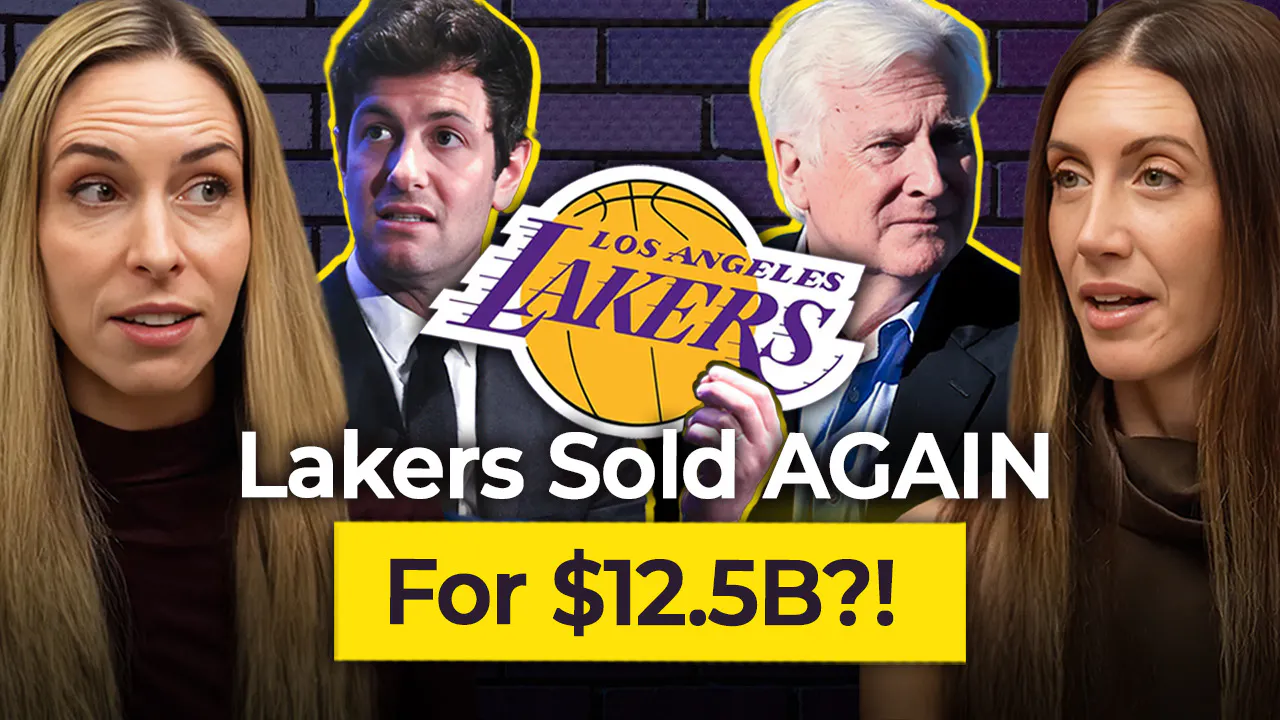 Is a Private Credit scandal brewing behind the LA Lakers Sale? 19.08.2026 36минThe LA Lakers --- a prestigious basketball franchise that didn't change hands for 46 years --- just sold twice in ten months, the second time for $2.5 billion more than the first. The seller is Mark Walter, CEO of Guggenheim, owner of the Dodgers and part of Chelsea FC, and the man whose laptop and phone the FBI seized off his private jet just as the Lakers deal was coming together. Since then, one of the insurance companies in his orbit has revised its reported related-party investments from $1.4 billion to $17 billion. Quite the rounding error. In this episode, we get into the questions everyone on the Street is suddenly asking. Why would anyone sell the crown jewel of American sports a year after fighting to buy it? What do a bunch of boring life insurance companies most people have never heard of have to do with the trophy assets of the billionaire class? Why do private equity and private credit firms keep buying insurers in the first place — and what happens to that entire model when the disclosures around "related parties" turn out to be, let's say, incomplete? And why did Josh Kushner and Bob Iger, who spent months chasing a Las Vegas expansion team, pivot to the Lakers over a single weekend? The bigger question hanging over all of it: this structure — asset managers selling their own loans to insurance companies they control — underpins a massive share of the boom in private credit. If regulators start pulling on this thread, how many other portfolios look like this one? By way of disclaimer, no charges have been filed and no wrongdoing has been established nor is implied here; our research merely summarizes reporting from Bloomberg, the FT, the WSJ, and the LA Times.
 -
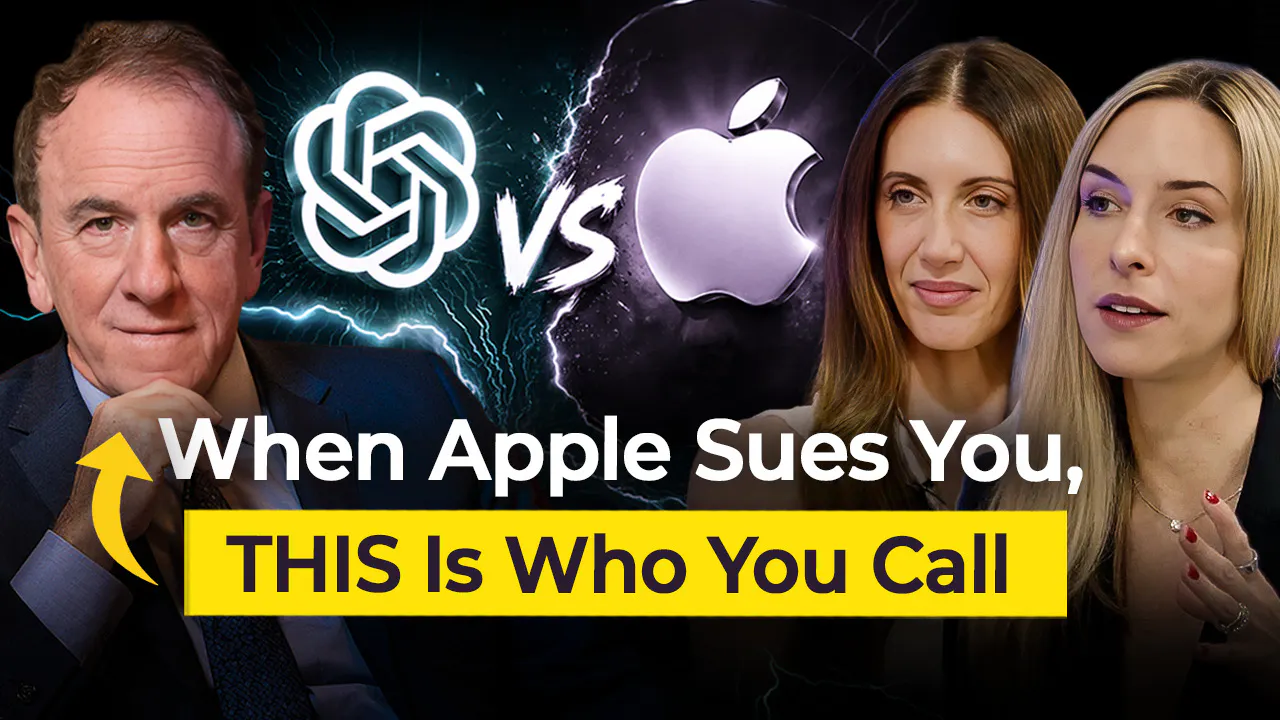 OpenAI's Lawyer: How Big Tech is Winning the AI Race in the Courts 12.08.2026 51минWe got to sit down with John Quinn — the "Quinn" of Quinn Emanuel — one of the most powerful litigators in the world, and the man whose firm is defending OpenAI right now. What does someone at the very top of the legal food chain see coming that the rest of us don't? And why does he think one of the oldest concepts in law is about to become the most valuable weapon in tech? Here's what pulled us down this rabbit hole. The most valuable companies on earth are pouring hundreds of billions into inventions almost none of them can legally protect. So how do you build a moat around something you're not allowed to own? Why are Apple and OpenAI trying to destroy each other in one courtroom and sitting on the same side in another? And what does any of this have to do with a viral park bench kiss that blew up one of the big law talent poaching deals? We get into all of it: why the patent wars fell by the wayside, what actually replaced them, and why every giant pay package in tech, finance, and now law is really a fight over the one thing no company can lock in a vault. Then John tells us where he thinks this is all headed — for the AI giants, for the lawyers, and for anyone thinking about the profession at all.
 -
 SpaceX: Revisiting the IPO and What Comes Next 05.08.2026 29минAfter the largest IPO in history, only about 5% of SpaceX — roughly $83 billion of the $1.75 trillion — is actually free to trade. Insiders are locked up, the banks that underwrote the deal can't lend shares to short sellers, and index funds are being forced to buy as SpaceX joins the Nasdaq-100 and the Russel. In this episode, Jen and Kristen, both former Morgan Stanley investment bankers, break down how the IPO was engineered — and the question every SpaceX investor should be asking: what happens when all that locked-up stock can finally sell? First, we cover what is normal in an IPO so you can see what isn't. We cover price talk vs. the $135 take-it-or-leave-it pricing, the green shoe, perpetual futures, and the fast-track Nasdaq-100 inclusion pulling in billions of passive buying. We lay out the risks, meaning the the wall of supply coming. Unlike the standard 180-day lockup, SpaceX is staggering its release: the first ~$240-500+ billion of stock unlocks after the first earnings report around September, with more tranches every few weeks after that — over $1 trillion freely tradeable by December, on the way to a ~$2 trillion overhang once Elon Musk's one-year lockup rolls off. But we also lay out why the passive buying actually helps dampen that supply PLUS why many institutional investors are NOT bearish on the stock despite the insane valuation.
 -
 The Biggest Hedge Fund Blow-Up of 2026 EXPLAINED: Situational Awareness 31.07.2026 29минWhat took Situational Awareness from a $45bn hedge fund down to a $10bn hedge fund in less than a month? Two years ago Leopold Aschenbrenner was a researcher at OpenAI who wrote a 165-page essay about superintelligence. Since then, he raised $225 million seed funding from Stripe co-founders, Jane Street, and GitHub's CEO, which he proceeded to turn into an AI hedge fund called Situational Awareness worth about $45bn as of the beginning of July. He did this with no prior trading experience, 4-5x leverage on a concentrated bet in AI names. By Thursday the fund was down to about $10 billion. Neither Millennium nor Jane Street were willing to step in to catch a falling knife. Ultimately Citadel stepped in to buy the flagging portfolio. Here is the crazy part though: Aschenbrenner wasn't wrong. He is reportedly still up around 80% on the year and "he only sold enough to cover his losses". But what caused a massive drop in the global markets was that a prime broker does not care what happens in 2030. And because half the market was crowded into the exact same names, his exit was everyone else's problem. SK Hynix and CoreWeave cratered. Korea's Kospi tripped circuit breakers. Over a million retail accounts got margin called. All of July's violence, the moves that had traders questioning their own sanity, was one book being taken apart in public. So the question this episode actually asks is whether this was one overlevered fund or the first crack in the AI trade itself. Because the market's answer this week was a shrug. Microsoft just posted the largest single-day market cap gain in history and credit spreads snapped back tighter, as if the whole thing was somebody else's accident. Kristen and Jen have both traded through cycles that ended this way, and they have seen exactly how comforting that shrug feels right before it stops being true.
 -
 What Just Happened to AI Stocks?? 30.07.2026 1ч*Note: This episode was recorded before news broke of Situational Awareness' unwind, which gives us much better insight into the pace and magnitude of the move in the Korean markets specifically.* Chips, China, and credit. The three forces tearing through the AI trade right now, and we called it last week. In this episode we break down why the bond market cracked first, what widening credit spreads on Nvidia, Meta, and Oracle are actually telling you about default risk, and why the Nasdaq is bleeding while the S&P barely flinches. We walk through Alphabet's first negative free cash flow after twenty years of printing money, the CapEx numbers that keep getting revised upward, and the moment the market stopped rewarding spending and started punishing it. If you have ever wondered how to read a credit spread, we show you the math live. Then we get into the China story that moved markets this week. CXMT went public in the largest mainland Chinese semiconductor IPO on record, oversubscribed 212 times, and the Korean stock exchange took the hit because the KOSPI is essentially a memory-chip index wearing a trench coat. We explain why memory matters in an AI data center, why Samsung, SK Hynix, and Micron controlling 90 percent of the market was the whole moat, and what reports of domestically produced DUV lithography machines would mean for US export controls. We also unpack Nvidia guaranteeing borrowing for a 10-gigawatt OpenAI data center in Ohio, and whether circular financing between chipmakers and model labs is clever structuring or an accounting Ouroboros. Finally, the philosophical hangover. We react to Elon Musk's Economist interview and his claim that money stops mattering within a decade, pressure-test his deflationary argument against MV equals PQ, and ask why every science fiction author who ever imagined artificial superintelligence wrote a horror story. Plus Anthropic's positioning ahead of a possible IPO, the distillation and copyright fight with publishers, the rare books being unbound and shredded to feed training data, and where value actually accrues if models commoditize. Energy and molecules, or something else entirely. Subscribe for weekly deep dives on AI infrastructure, credit markets, semiconductors, and the money moving underneath the entire AI build-out.
 -
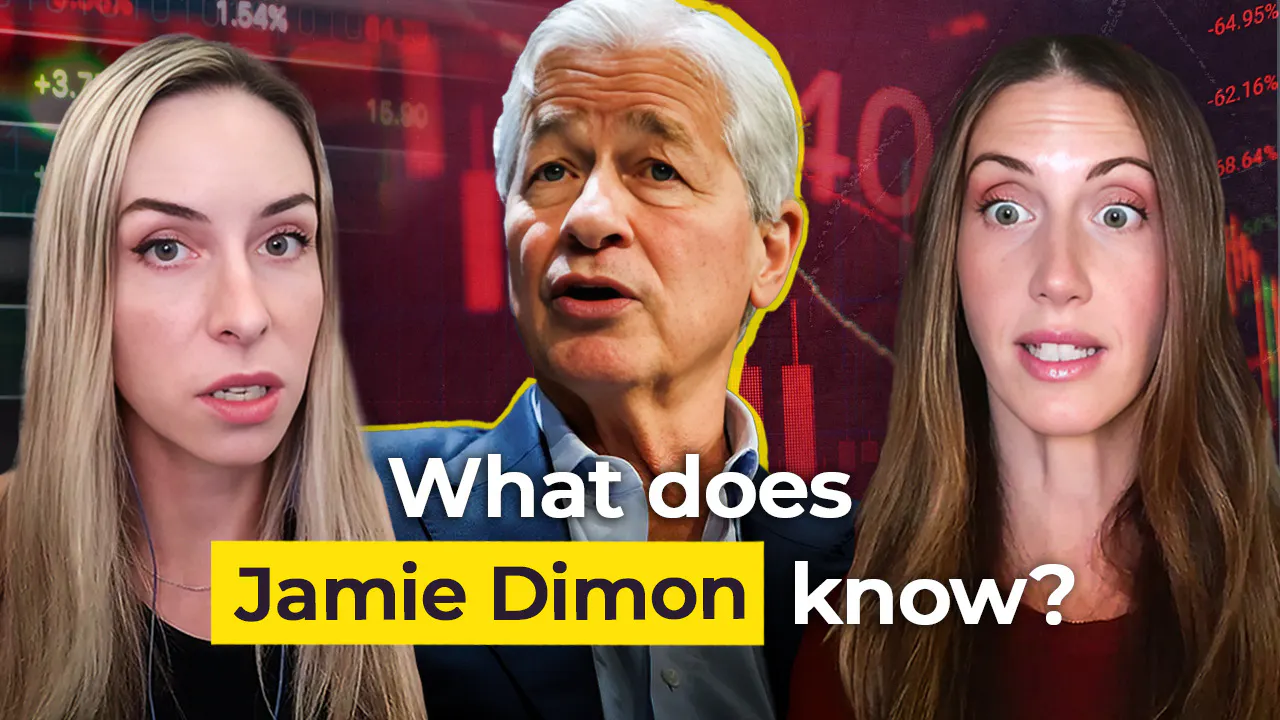 Why Jamie Dimon Won't Buy Stocks OR Bonds Right Now 24.07.2026 16минShort interest in the S&P 500 is sitting near its highest level since 2010, Jamie Dimon says he won't touch US stocks or Treasuries at these prices, and SpaceX is the ninth-most-shorted stock in the market ahead of its very first earnings report. So this week we're asking: why is everyone so bearish when the market is up more than 15% from the March lows? What did Alphabet's first-ever negative free cash flow quarter reveal about the real cost of the AI buildout? And when the five biggest hyperscalers are planning to spend nearly as much as the US military in a single year, who's actually going to fund it — and at what price? That last question took us straight to the bond market, where things look even scarier. Why are Meta, Oracle, and SpaceX's 30-year bonds trading 40-60 basis points wider just weeks after issuance? Why have 30-year Treasury yields held above 5.00% for the longest stretch in two decades — and is 5.00% the new floor instead of the ceiling? With a Fed meeting days away and Chairman Warsh's hawkish instincts colliding with the biggest negative CPI print since 2020, we dig into what the rates market is telling us about risk premiums across every asset class... and whether anyone wants to own anything right now.
 -
 Ex-Morgan Stanley Bankers' "Yesteryear" HOT TAKES: Trad Wives vs. Career Women 18.07.2026 1ч 14минWe're talking about the buzziest --- and most controversial --- book of the summer: "Yesteryear" by Caro Claire Burke. It poses a question no one's brave enough to answer: are trad wives and career women fundamentally at odds? Or are they two sides of the same coin, minted by a bigger system that profits from their fight? As two Wall Street veterans recently profiled in Bloomberg for our new career as "finance influencers", we HAD to talk about the novel everyone is calling "rage bait", and we've got quite a lot to say. Fair warning: we spoil everything, INCLUDING the plot twist that has readers and critics alike up in arms. Why is a finance show covering a book about a trad wife influencer? The biggest names in this space, like Ballerina Farms and Nara Smith, are pulling in millions every year. The raw milk industry is a multi-billion dollar megalith expected to double in the next few years. And all of this is fueling a vertical of the creator economy that is growing in size (and scandals). What happens when a woman builds an empire by performing traditional acts of subservient domesticity on the most modern machine ever invented? We also turn the lens on ourselves, as moms, influencers, and educators --- where's the line between education and performance, and what responsibilities come along with influence? Whether you loved this book, hated it, or refuse to read it on principle, we want to know what you think! Let us know in the comments...
 -
 How AI is Repeating the Exact Mistake that Bankrupted Enron | 50-Year Power Insider 16.07.2026 47минWith hyperscalers like Meta, Google, Amazon and SpaceXAI burning through cash, we decided to answer the question underneath all of it: what is this money actually buying? In this episode we start high level with a primer on the AI ecosystem or what Nvidia's CEO Jensen Huang calls the "five-layer cake" of AI — energy, chips, infrastructure, models, applications. We get into the vocabulary everyone uses and nobody defines: what a hyperscaler actually is, how it differs from a frontier model company like OpenAI or Anthropic, why Oracle only plays in one layer while Google plays in all five, and what a NeoCloud like CoreWeave is really doing when it borrows against its own chips. Then we get into the grid — all three of them — including how power prices get set, the difference between regulated and deregulated states, why Meta's $200 billion Project Hyperion campus in Louisiana needs enough electricity to power half of Manhattan in the summer, and why the new rule for data centers is essentially "bring your own electrons." We also dig into the tax incentives driving the timing of all this spend, and why states are competing so ferociously for projects that employ almost no one once the construction crews go home. Then we bring on an extra special guest: power expert. Ron Kelly, who spent 50 years in power and energy — as an engineer, at Calpine, and developing natural gas-fired power plants and solar plants all over the United States the country. He also happens to be Kristen's dad. His take is bracing: he's seen this movie before. Between 1995 and 2005, roughly 300 gigawatts of power projects were announced on the promise of the internet. 168 got built, 130 were canceled, the rest died, and Enron, Mirant, NRG, and Calpine all ended up in Chapter 11. Today's data center pipeline is about the same 300 gigawatts. Ron explains risks that could complicate the build out necessary to get all the needed power infrastructure online: the interconnection studies, transformer backlogs — plus what he really thinks about the security of the largest machine humans have ever built. Connect with Ron at / ronald-kelly-pe-mba-3587a718
 -
Mindy Kaling's "Not Suitable for Work": Our Hot Takes on the Show About Investment Banking in NYC We've Been Waiting For 14.06.2026 1ч 12минSend us Fan Mail Mindy Kaling's new sitcom "Not Suitable for Work" just dropped, and we have thoughts. We are two Wall Street veterans breaking down everything the show gets right — and wrong — about what it actually looks like to show up as a first-year analyst at a bulge bracket investment bank, navigate office politics (and romance!), and try to build a life in New York City on a salary that sounds impressive until you see the rent. But this episode goes way beyond the finance. We're digging into the bigger questions the show raises: Is the Gen Z "lazy" narrative fair, or are young people today actually working harder than any generation before them for a fraction of the opportunity? What does the clash between generations reveal about the tension between hustle culture and the new workplace? And when a show in 2025 depicts five young people meeting, dating, and falling for each other entirely without apps, is that wish fulfillment or an active campaign for something we've lost? We're also getting into the male-female dynamics, the nepo baby problem, the intergenerational clash between millennials and Gen Z, and what it means that the most cutthroat character in the entire friend group is a woman. Plus — what does it say that the show's most pointed commentary on AI lands not in the banking storyline, but through a struggling med-student-turned-actor being asked to dig the grave of his own profession? We LOVE reviewing books, movies, tv shows, and everything in pop culture from a finance aspect --- send us your ideas for what you want us to review next! Shop our Self Paced Courses: Investment Banking & Private Equity Fundamentals HEREFixed Income Sales & Trading HERE Subscribe to our Substack: https://substack.com/@thewallstreetskinny
-
How Google Front-Ran SpaceX with a Record Breaking $85 Billion Equity Raise 11.06.2026 23минSend us Fan Mail While everyone's been fixated on the SpaceX IPO, Google quietly pulled off the largest equity offering in history—roughly $85 billion—and basically front-ran the entire market to do it. In this episode of The Skinny on Wall Street, Kristen and Jen break down why a cash-printing machine like Alphabet would raise money at all, and why they did it in the most fascinating way possible: a Berkshire Hathaway private placement at a discount, a common stock offering across Google's quirky three share classes, a $40 billion at-the-market program, and the structure that confuses almost everyone—the mandatory convertible.If you've ever nodded along to "convertible debt" but secretly wondered what the hell stock that converts into stock actually is, this one's for you. Kristen (the First Lady of Valuation herself) walks through exactly how a mandatory convert works—why the number of shares you receive is a moving target tied to the share price, how the conversion math plays out from zero to a 25% premium and beyond, and why Google layered on a capped call to claw back even more upside. Along the way, they get into book-runner drama, IPO fee structures, why Tesla loved these trades, and what it really signals when sophisticated issuers are dumping rich equity, rich volatility, and rich call skew onto a market full of bullish retail buyers.The bigger picture? This is the AI build-out narrative wearing a new outfit. With 100% CapEx deductibility on the table and a talent war driving nine-figure pay packages, the smart money is raising as much as it can, as fast as it can—and using the hype to do it on favorable terms. Tune in for a clear, no-jargon breakdown of one of the most interesting capital markets moves of the year. Want to go deeper? Check out our Investment Banking & Private Equity Fundamentals course taught by Kristen Kelley—20 years of Wall Street knowledge, yours for two years. Shop our Self Paced Courses: Investment Banking & Private Equity Fundamentals HEREFixed Income Sales & Trading HERE Subscribe to our Substack: https://substack.com/@thewallstreetskinny
-
Spotify Executive: How to Become a $100B Company When Everyone Expects Your Product Free 10.06.2026 41минSend us Fan Mail We've done the finance of Industry, the finance of Succession, the finance of Belle Burden's Strangers — but we've never done the finance of CREATORS. So when Spotify invited us to their Investor Day, we knew we had to sit down and ask the question every aspiring musician, podcaster, and Instagram creator is obsessing over: in a world where everyone wants to be a creator, how does anyone actually get paid?In this episode, we talk with Gustav Gyllenhammar, SVP of Markets and Subscriptions at Spotify, about the surprisingly complicated machinery behind every stream you play. Where does your $12.99 a month really go? How much does a million downloads of a song actually pay out? And how did a company born out of a piracy-ravaged Sweden convince an entire generation to start paying for something they'd grown up expecting for free? We get into the labels-versus-songwriters split, the rise of the independent artist, and the one number that explains why Spotify thinks it's playing a completely different game than the AI companies scraping the internet for content.Which brings us to the real tension underneath it all: as LLMs hoover up the work of writers, musicians, and creators everywhere, who's building a model to actually compensate them — and is Spotify offering a better blueprint? We dig into Spotify's philosophy on AI, why they waited so long to touch it on the music side, what "Time Well Spent" means when every other platform is optimizing for your attention, and whether the creators who power these platforms are about to get boxed out of their own economy. Plus: the new Universal Music partnership, the audiobook feature Jen has been praying for, and why a direct listing might be the most underrated way to go public. Shop our Self Paced Courses: Investment Banking & Private Equity Fundamentals HEREFixed Income Sales & Trading HERE Subscribe to our Substack: https://substack.com/@thewallstreetskinny
-
SpaceX Just Rewrote the Rules of the Stock Market (And Most People Had No Idea) 06.06.2026 31минSend us Fan Mail In this episode, we dig into one of the biggest market questions hiding behind the hype around mega IPOs: what happens to passive index investors when companies like SpaceX, Anthropic, and OpenAI go public? We ask why the VIX and major indices like the S&P 500 and Nasdaq look calm, while single-name stocks like Tesla are showing much higher implied volatility, and why the spread between index volatility and individual stock volatility has reached extreme levels. Along the way, we break down the dispersion trade, implied versus realized volatility, and whether upcoming IPOs could force investors to rotate out of existing AI, tech, and “Elon trade” names to fund new allocations.We also explore how changing index rules could reshape the market structure itself. Should a massive company like SpaceX be included quickly in the Nasdaq or S&P 500? How do float requirements, seasoning periods, profitability screens, and liquidity constraints affect ETF investors and passive funds that have to buy the underlying shares? We debate whether excluding these mega-cap IPOs would distort benchmarks, whether including them could create liquidity pressure, and how SpaceX, Anthropic, and OpenAI could change the relationship between passive investing, active stock picking, and index volatility.Finally, we ask whether today’s market setup is starting to echo the dot-com bubble, with bullish sentiment, a low put/call ratio, AI enthusiasm, and a wave of high-profile IPOs creating both opportunity and risk. Are investors buying call options like lottery tickets? Could the arrival of new public AI and space stocks drain capital from the Mag Seven, Tesla, software, and private markets? And as AI infrastructure companies become publicly investable, we question whether the real winners will be the foundational LLM providers, the tech giants, or the next generation of startups built on top of them. Shop our Self Paced Courses: Investment Banking & Private Equity Fundamentals HEREFixed Income Sales & Trading HERE Subscribe to our Substack: https://substack.com/@thewallstreetskinny
-
Ex-Morgan Stanley Bankers: "Strangers" How Much Belle Burden's Husband Was Actually Earning 03.06.2026 42минSend us Fan Mail No one is talking about the insane thing that's happened to Big Law partner compensation over the past decade — and how it stacks up against Wall Street. In this deep dive we broke down EXACTLY what's going on. What started as an attempt to quantify how much Belle Burden's husband — from the cultural phenomenon Strangers — was actually earning during their marriage, after he left Davis Polk and landed at an equity long/short hedge fund, turned into a full-blown investigation: how Big Law and hedge funds really make money, what the compensation structures look like, and who actually comes out ahead. We were positive we knew the answer. We were wrong. Here's what we're not going to spoil — but here's what's on the table: One firm reportedly offered $80 million over three years to poach a single partner. That's not a typo. That's hedge fund money… for a lawyer. The top firms are clearing eight figures per partner — and we name them. The Financial Times has reported some hedge fund traders are being offered 9 figures comp packages but how does it vary roles by role, firm by firm and year by year, We get into the lockstep model, the eat-what-you-kill brutality of the buy side, "two and twenty," and the math of who's really ahead at 25, at 35, at 45 — plus the quiet shift that flipped the entire game while almost nobody outside the industry was watching. 📩 The FULL breakdown, complete with financial model if you want to see play with key assumptions lives on our Substack: https://substack.com/@thewallstreetskinny 🎧 Our original breakdown of Strangers: https://youtu.be/3fbWStK44P0?si=N5Qif1UhVxz06i7l 🏛️ For the deal nerds — our Caesars Palace coup series: https://youtu.be/VKROBLck-RA?si=oF8tiwyuwvthXM26 Shop our Self Paced Courses: Investment Banking & Private Equity Fundamentals HEREFixed Income Sales & Trading HERE Subscribe to our Substack: https://substack.com/@thewallstreetskinny
-
Ex-Morgan Stanley Bankers: "Strangers" by Belle Burden Part 1 | Our Initial HOT TAKES 27.05.2026 51минSend us Fan Mail Two weeks ago, one of the most powerful women on Wall Street asked us to weigh in on Belle Burden's bombshell memoir: "Strangers". As two women who've lived and worked in every world this book touches — from raising three kids in New York City to working on Wall Street to growing up in Massachusetts and spending summers on Martha's Vineyard — we're uniquely positioned to read between the lines of a story that's been everywhere from Oprah to every video in your feed. In this episode, we break down the full financial picture most coverage glosses over: the prenup that may have been the original sin of the marriage, the real numbers behind a Davis Polk associate's salary vs. a fund-of-funds partner's take, how much Belle's husband likely earned at Arden and Select Equity, the math on a $4M Tribeca apartment and a $5.4M Martha's Vineyard estate, and why "running up quicksand" is the only way to describe trying to build wealth on a W-2 in Manhattan if you don't have a wife who's heiress to a Vanderbilt fortune. We also dig into the power dynamics — the resentment baked into the prenup negotiation, the "make me a sandwich" moment, the affair with a sell-side banker, and why the cheating partner in these stories is almost never really about the other person. But here's where their take diverges sharply from Belle's own messaging: the real lesson isn't "know your finances" — it's something much harder. We argue that no amount of financial literacy would have changed Belle's story. Shop our Self Paced Courses: Investment Banking & Private Equity Fundamentals HEREFixed Income Sales & Trading HERE Subscribe to our Substack: https://substack.com/@thewallstreetskinny
-
Hedge Funds Want the Equity in Your Home, feat. Tacora Capital Founder Keri Findley 26.05.2026 40минSend us Fan Mail In this episode we dig into the state of the American consumer's balance sheet, which on paper isn't broke but is increasingly "boxed in." We walk through eye-opening Federal Reserve data: total household debt hit an all-time high of $18.8 trillion in Q1 2026 (up $4.6 trillion since pre-COVID), credit card balances peaked at $1.25 trillion with rates north of 20%, and while headline wages are up roughly 32% since 2020, real inflation-adjusted earnings have grown just 2-3% against housing, insurance, and grocery costs that have surged 60-80%. The result is a deepening K-shaped economy where homeowners are sitting on a record $17.8 trillion in equity, including roughly $11.6 trillion that's "tappable," but can't realistically refinance out of their 2-3% pandemic-era mortgages.That sets up a fascinating conversation with Kerry Finley, founder of Tacora Capital, about Home Equity Investment options (HEIs), a product profiled in a recent Bloomberg piece. Unlike a HELOC, an HEI isn't debt: an originator like Point Digital buys a percentage of the equity in your home for cash today (with a volatility haircut), takes no monthly payments, and settles up when you sell or refinance. Kerry breaks down a clean example using a million-dollar home with a $600K mortgage, explains why this product fits borrowers who can't clear the 750+ FICO bar for a HELOC (including 1099 and K-1 earners), and why the average returns on these instruments have been around 17% since 2015.We also explore why this isn't a 2008 redux, where HEIs fit in residential real estate's hyper-local landscape, and how the product might actually serve as a credit-curing tool for consumers carrying expensive card debt. Shop our Self Paced Courses: Investment Banking & Private Equity Fundamentals HEREFixed Income Sales & Trading HERE Subscribe to our Substack: https://substack.com/@thewallstreetskinny
-
$53 Billion Hedge Fund Chief Strategist: The Next Market Shock Is Hiding in Plain Sight 14.05.2026 55минSend us Fan Mail We sat down with Elizabeth Burton, the new Chief Strategist at Fortress, one of the world’s biggest and most respected hedge funds, to ask what actually matters most in this market — and her answer might surprise you.This is the same Elizabeth Burton who, back in 2020, made the call that inflation would be sticky, not transitory — while much of the market, and even the Fed, was still arguing the opposite. Now she’s back with another uncomfortable view: the market may be focusing on the wrong risks again. In this episode, we ask why the bond market matters so much, whether investors are too eager to believe we’re going back to a 2018-style world of low rates and easy returns, whether the panic over private credit is missing a bigger problem in private equity, and what happens if AI disruption doesn’t stop at software.We also get into the next sector that could be blindsided by AI, why the allocator world may become increasingly K-shaped, how the biggest institutions could fall behind if they can’t move fast enough, and what market risks keep investors up at night even more than private credit. Plus, Elizabeth tells us how she almost became a New York City beat cop, why Fortress is not the private equity shop some people think it is, and how she almost got denied insurance coverage after being accused of climbing Mount Everest. You do not want to miss this episode!! Shop our Self Paced Courses: Investment Banking & Private Equity Fundamentals HEREFixed Income Sales & Trading HERE Subscribe to our Substack: https://substack.com/@thewallstreetskinny
-
Burry Left in a Hurry! The Loophole GameStop Could Use to Pull Off Buying eBay (10x its Size) 08.05.2026 24минSend us Fan Mail Michael Burry just dumped all his GameStop shares. eBay reportedly deactivated Ryan Cohen's account. And the $56 billion "takeover" GameStop pitched on CNBC? It would actually have eBay shareholders paying for most of it themselves. We're back to break down the latest twists in the GameStop–eBay drama — and why this deal is structured unlike almost any takeover Wall Street has seen. In this episode, Kristen walks Jen (and you) through the rollover equity mechanics that make this look less like an LBO and more like a SPAC, the precedent Bill Ackman set when he paid $10 million to get the SEC to approve his SPARC, and why levering eBay up at 7–10x puts the combined company at material bankruptcy risk over the next few years. We also get into why eBay might actually want a version of this deal (just not this version), and whether a private equity firm could step in with a cleaner bid, Shop our Self Paced Courses: Investment Banking & Private Equity Fundamentals HEREFixed Income Sales & Trading HERE Subscribe to our Substack: https://substack.com/@thewallstreetskinny
-
GameStop Just Bid $56 Billion for eBay. What is ACTUALLY Going On???? 05.05.2026 17минSend us Fan Mail 🚨 EMERGENCY EPISODE: GameStop just made an unsolicited $56 billion bid for eBay, and the math is NOT mathing. After watching CEO Ryan Cohen's bizarre live CNBC interview with Andrew Ross Sorkin (where he kept deflecting questions with answers like "it's on the website"), we hit *record* immediately to break this down.Kristen, our resident investment banking, PE, and M&A expert, walks through why this deal defies the laws of physics:The offer: $125/share, half cash, half stock — roughly $56bn totalGameStop's market cap: under $11bnCash needed: $28bn (GameStop has $9bn on hand + a "up to $20bn" TD Bank commitment letter)Combined company leverage: ~10x EBITDA (a massive LBO is typically 7x — banks don't do 10x)The $17bn equity hole: where is it actually coming from?We compare this to the Paramount/Warner Bros deal (spoiler: that one works because Larry Ellison is bankrolling it), unpack GameStop's curious 5% derivative stake in eBay, and explore the theories floating around — CEO comp package triggers, a possible "uno reverse" play to get eBay to bid for GameStop instead, and echoes of the Porsche/Volkswagen hostile takeover.Plus: Ryan Cohen's background, the dismissed Bed Bath & Beyond pump-and-dump lawsuit, and why no sovereign wealth fund has a strategic reason to write the check.Got a theory on what's really going on? Drop it in the comments.Want to learn how to actually run accretion/dilution analyses and tear deals apart like this? Check out our 35+ hour self-paced Investment Banking & Private Equity Fundamentals course, taught by Kristen.https://thewallstreetskinny.com/premium-self-study/ Shop our Self Paced Courses: Investment Banking & Private Equity Fundamentals HEREFixed Income Sales & Trading HERE Subscribe to our Substack: https://substack.com/@thewallstreetskinny
Слични подкасти


Популаран у
Овај подкаст се појављује и у подкаст листама ових земаља.


