
The Science of Happiness
PRX and Greater Good Science Center
0
This podcast explores research-backed strategies for cultivating happiness, compassion, gratitude, mindfulness, and awe. Hosted by psychologist Dacher Keltner, it features insights from scientific studies and practical exercises. Co-produced by PRX and UC Berkeley's Greater Good Science Center.
Епизоде
-
 Happiness Break: A Meditation on the Uniqueness of Your Voice 17.09.2026 8минIn celebration of Latinx Heritage Month, embrace the beauty of your accent in this self-compassion meditation. Mindfulness and meditation teacher Criss Cuervo invites you to reflect on your history, heritage, and connection to your ancestors. How To Do This Practice: Find a Comfortable Position: Sit in a relaxed yet alert posture, either on a cushion or chair. Gently lower your gaze or close your eyes if that feels comfortable. Focus on Your Breath: Take a deep breath in and slowly exhale. Allow yourself to transition from your daily activities into this moment of reflection. Acknowledge Your Accent: Bring awareness to the way you speak, recognizing that your voice carries your history, culture, and personal journey. Repeat Self-Compassion Phrases: Silently or aloud, repeat affirmations such as, “my accent makes me unique,” “my accent carries my story,” “my accent connects me to my ancestors.” Place a Hand on Your Heart: If it feels right, gently place a hand on your heart, offering yourself warmth and kindness as you continue to breathe deeply. Close with Gratitude: Take a final deep breath, sending appreciation to yourself, your ancestors, and the uniqueness of your voice before gently opening your eyes. Today’s Happiness Break host: CRISS CUERVO is a mindfulness and meditation teacher, Bridging Differences Coordinator at the Greater Good Science Center, and author of PERTENÆCER: Eight-Week Mindfulness and Meditation Training and Practices for Latinx Immigrants in the United. Learn more about Criss Cuervo here: https://tinyurl.com/4npjwn6m Read her book here: https://tinyurl.com/3byby84b Related Happiness Break episodes: A Meditation on Original Love: https://tinyurl.com/5u298cv4 Loving Kindness Meditation: https://tinyurl.com/2kr4fjz5 Where Did You Come From: https://tinyurl.com/2y9uyjj6 Related Science of Happiness episodes: How to Show Up For Yourself: https://tinyurl.com/56ktb9xc How to Tune Out The Noise: https://tinyurl.com/4hhekjuh How to Feel Better About Yourself: https://tinyurl.com/42fn62a2 Follow us on Instagram: @ScienceOfHappinessPod We’d love to hear about your experience with this practice! Share your thoughts at [email protected] or use the hashtag #happinesspod. Find us on Apple Podcasts: https://tinyurl.com/2p9h5aap Help us share Happiness Break! Leave a 5-star review and share this link: https://tinyurl.com/2p9h5aap Transcription: https://tinyurl.com/5fdce47a
 -
 How to Protect Your Brain as You Age 10.09.2026 25минWhat if getting older doesn’t have to mean losing your memory? Learn how neuroplasticity, healthy habits, and simple memory exercises can help keep your brain strong at any age. Summary: We often assume that getting older means our memory and brain function will inevitably decline—but emerging science tells a more hopeful story. On this episode of The Science of Happiness, we’ll explore how neuroplasticity, along with practices like memory exercises, stress reduction, sleep, exercise, and finding a sense of purpose, can support brain health as we age. How to Remember Where You Parked: Pause before you walk away: Take a moment to look at your car and notice your surroundings. Identify your location: Pay attention to the floor, row, section, level, or nearby landmarks. Create a funny image: Turn the location into a memorable mental picture. For example, if you’re parked in section 4B, imagine four bears sitting inside your car. Make it vivid: The sillier, stranger, or more ridiculous the image, the better. Let yourself have fun with it. Take a mental snapshot: As you walk away, look back at your car and surroundings and imagine the funny scene there. Use the image to find your car: When it’s time to leave, bring the funny image back to mind and use it to recall your section, floor, or location. Scroll down for a transcription of this episode. Today’s Guests: CRYSTAL LEWIS works with high school students in Washington State, supporting them both in and out of the classroom. DR. MAJID FOTUHI is a neuroscientist, author, and professor at the Johns Hopkins Mind Brain Institute. Learn more about Dr. Majid Fotuhi: https://drfotuhi.com/ Related Science of Happiness episodes: What To Do When Stress Takes Over: https://tinyurl.com/yxf3jawn Are You Remembering the Good Times: https://tinyurl.com/ysbwrnr4 The Contagious Power of Compassion: https://tinyurl.com/y6bpvbv5 Related Happiness Break episodes: The Healing Power of Your Own Touch: https://tinyurl.com/rrtpje2x A Meditation on the Uniqueness of Your Own Voice: https://tinyurl.com/36x3fbk7 The Unexpected Joy of Slow Looking: https://tinyurl.com/4uudwwc2 Message us or leave a comment on Instagram @scienceofhappinesspod. E-mail us at [email protected] or use the hashtag #happinesspod. Help us share The Science of Happiness! Leave us a 5-star review on Apple Podcasts or share this link with someone who might like the show: https://tinyurl.com/2p9h5aap Transcription: https://tinyurl.com/547b3ax4
 -
 Happiness Break: Tap into the Joy That Surrounds You 03.09.2026 4минBuddhist meditation teacher, Anushka Fernandopulle, guides us through a practice of Mudita, or appreciative joy, to help us share in the happiness of others. How To Do This Practice: Get comfortable and ground yourself: Sit comfortably, close your eyes if you’d like, and take a few deep breaths. Relax your body: As you exhale, release tension in your face, jaw, shoulders, and anywhere else you feel it. Think of someone whose happiness is easy to celebrate: Bring to mind a friend, child, pet, or anyone who is experiencing joy. Connect with their happiness: Imagine their joy and allow yourself to feel uplifted by their happiness. Offer them joyful wishes: Silently repeat: “May you always be happy. May your happiness increase. May your happiness continue. I’m happy for your happiness.” Expand your joy outward: Think of a group of people experiencing happiness, and practice sharing in their joy. Carry this mindset with you, noticing others’ happiness throughout your day instead of comparing or feeling jealous. Scroll down for a transcription of this episode. Today’s Happiness Break Guide: Anushka Fernandopulle is a Buddhist meditation teacher and leadership coach. Learn More about Anushka: https://www.anushkaf.org Related Happiness Break episodes: How to Awaken Joy, with Spring Washam: https://tinyurl.com/ybpuvuj6 The Unexpected Joy of Slow Looking: https://tinyurl.com/4uudwwc2 The Healing Power of Your Own Touch: https://tinyurl.com/rrtpje2x Related Science of Happiness episodes: How Joy Helps Save the Planet: https://tinyurl.com/2d5hjz9s Are You Remembering the Good Times: https://tinyurl.com/ysbwrnr4 The Contagious Power of Compassion: https://tinyurl.com/y6bpvbv5 We’d love to hear about your experience with this practice! Share your thoughts at [email protected] or use the hashtag #happinesspod. Find us on Apple Podcasts: https://tinyurl.com/2p9h5aap Help us share Happiness Break! Leave a 5-star review and share this link: https://tinyurl.com/2p9h5aap Transcription: https://tinyurl.com/mu72mna9
 -
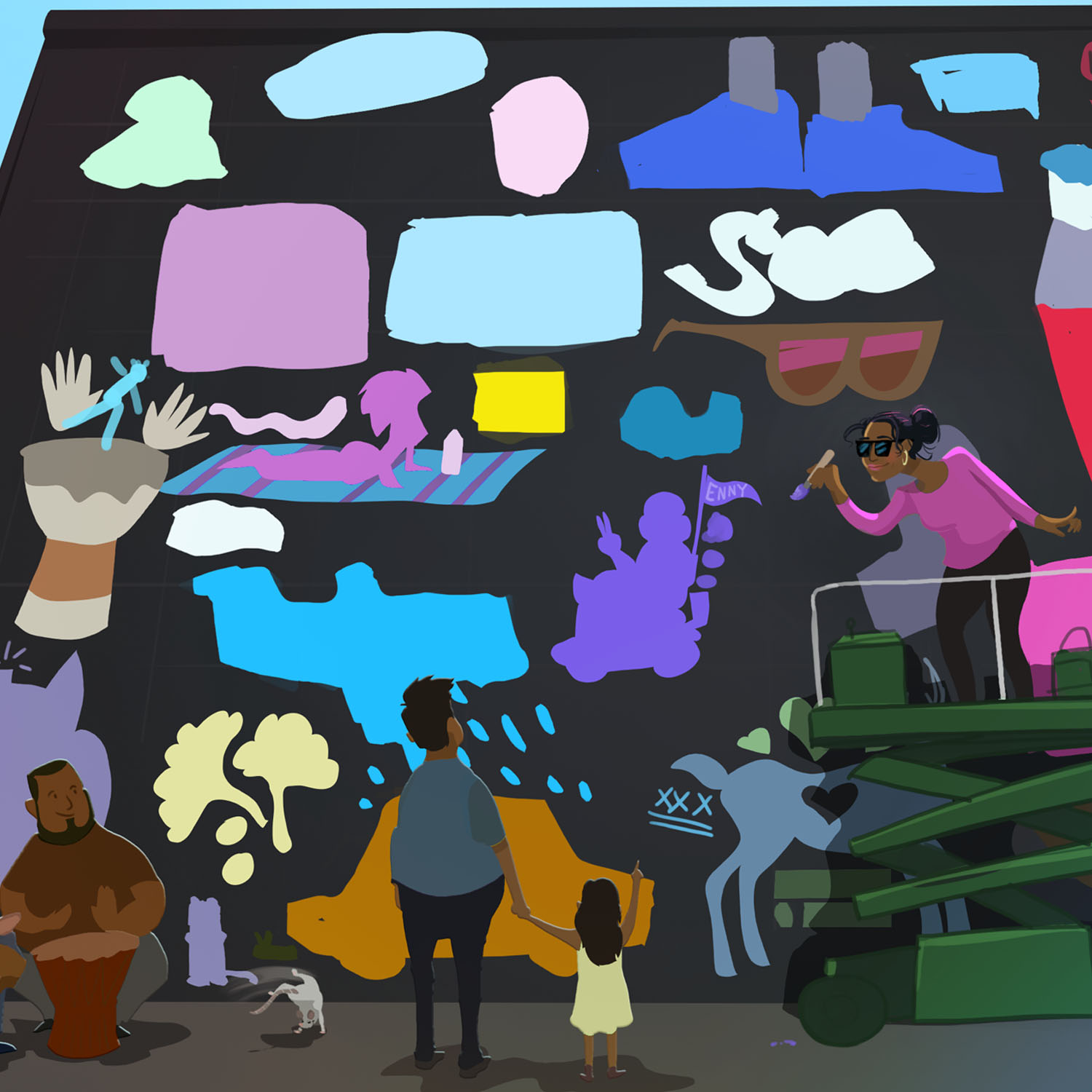 Sidedoor: Writing on the Wall 02.09.2026 37минScroll down for a transcription of this episode. From the time we are old enough to hold a crayon, it feels instinctive to draw on the wall. But for MISS CHELOVE—also known as Cita Sadeli—this instinct became a calling. Through bold color and layered symbolism, she transforms everyday public spaces into deeply personal statements, inspiring some passers-by to wonder: what is the role of the public artist? And how can public art both reflect and shape a community's identity? Transcription: https://tinyurl.com/yn8pfnve
 -
 Talk To A Stranger—It’s Good For You 27.08.2026 24минWe often underestimate how much small talk can impact our wellbeing. Research shows that even brief conversations with strangers can boost our happiness and sense of connection, but fear and anxiety often keep us from reaching out. Summary: We often avoid talking to strangers because we assume they’d rather be left alone, or worry the interaction will be awkward. But research shows that our expectations about these interactions are often wrong. Even brief conversations can make us happier and more connected. On this episode of The Science of Happiness, learn how small choices like saying hello, asking a question, or offering a compliment can help us overcome our hesitation and create meaningful moments of connection. How To Do This Practice: Notice an opportunity: Throughout your day, look for moments when you’re near someone you don’t know—a person on public transit, in line at a coffee shop, or walking through your neighborhood. Put away your phone: Create a little more space for connection by taking out your earbuds or putting your phone away, rather than using it to avoid interacting with the people around you. Take the first step: When you notice an opportunity, say hello, introduce yourself, or ask a simple question. You don’t need the perfect opening—just get the conversation started. Ask a follow-up question: Show genuine curiosity about the other person. Ask about something they’ve mentioned and let the conversation unfold naturally. Share something about yourself: Connection goes both ways. Offer a little about your own experiences, interests, or perspective so the conversation becomes a two-way exchange. Try it again: Pay attention to how you feel afterward, then look for another opportunity to connect. Treat it as an experiment and practice making small choices that bring you closer to the people around you. Scroll down for a transcription of this episode. Today’s Guests: CHRIS FUJINAKA HEIN is a community organizer in the Bay Area and a coordinator at a Japanese cultural senior center. NICHOLAS EPLEY is the John Templeton Keller Distinguished Service Professor of Behavioral Science and Faculty Director of the Roman Family Center for Decision Research at the University of Chicago Booth School of Business. Learn more about Nicholas Epley here: https://www.nicholasepley.com/ Related Science of Happiness episodes: Why Compassion Requires Vulnerability: https://tinyurl.com/mrxsad33 When It's Hard To Connect, Try Being Curious: https://tinyurl.com/mr32nwtv Related Happiness Break episodes: A Meditation on Original Love and Interconnectedness:https://tinyurl.com/mu2uzs2c Our Deep Interconnectedness: https://tinyurl.com/y2epxyxn Message us or leave a comment on Instagram @scienceofhappinesspod. E-mail us at [email protected] or use the hashtag #happinesspod. Help us share The Science of Happiness! Leave us a 5-star review on Apple Podcasts or share this link with someone who might like the show: https://tinyurl.com/2p9h5aap Transcription: https://tinyurl.com/2z8ftstd
 -
 Happiness Break: A Practice In Moving Through Stress 20.08.2026 8минJoin yoga and meditation teacher Jonathan Relucio for a trauma-informed practice combining mindful movement and breathing to reduce tension and build resilience to stress. How To Do This Practice: Get comfortable: Sit or lie down and notice the support beneath your body, keeping your eyes open or closed—whichever feels comfortable. Connect with your body: Bring your attention inward and notice how your body, mind, and heart feel in the present moment. Release tension: Inhale as you gently shrug your shoulders toward your ears, then exhale as you relax and release them. Move with your breath: Inhale as you reach your arms overhead, then exhale as you gently bend from side to side, noticing the sensations in your body. Breathe into your belly: Place one hand on your belly and notice it expand as you inhale and relax as you exhale, following the natural rhythm of your breath. Pause and notice: Return to your natural breathing and take a moment to notice how your body and mind feel before continuing with your day. Scroll down for a transcription of this episode. Today’s Happiness Break Guide: JONATHAN RELUCIO is a trauma-informed yoga and meditation teacher with 20 years of experience in community organizing, social services, training, and leadership development. Learn more about Jonathan here: https://www.jonathanrelucio.com/ Related Happiness Break episodes: Embodying Resilience: https://tinyurl.com/3d2ma8tw Visualizing Your Purpose: https://tinyurl.com/mwze59jx The Healing Power of Your Own Touch: https://tinyurl.com/rrtpje2x Related Science of Happiness episodes: How To Feel Better About Yourself: https://tinyurl.com/3jave7h2 What To Do When Stress Takes Over: https://tinyurl.com/yxf3jawn The Contagious Power of Compassion: https://tinyurl.com/y6bpvbv5 We’d love to hear about your experience with this practice! Share your thoughts at [email protected] or use the hashtag #happinesspod. Find us on Apple Podcasts: https://tinyurl.com/2p9h5aap Help us share Happiness Break! Leave a 5-star review and share this link: https://tinyurl.com/2p9h5aap Transcription: https://tinyurl.com/3v9rapra
 -
 Where To Look For Joy 13.08.2026 15минHow can we feel more moments of joy? Explore how joy is rooted in connection, gratitude, and paying attention to the people and moments that bring meaning to our lives. Summary: Did you know that joy isn’t just something we feel, but something we practice? On this episode of The Science of Happiness, poet Ross Gay shares how connection and attention can help us cultivate more joy, while psychologist Philip Watkins explains how gratitude can amplify that feeling. Learn how hanging out, noticing moments of connection, and reflecting on joyful experiences can help bring more joy into your life. How To Do This Practice: Notice connection: Pay attention to the people, places, animals, and natural world that make you feel connected. Make time to be together: Look for opportunities to hang out, share experiences, and spend time with others without an agenda. Pay attention to the small moments: Notice everyday interactions and moments of goodness that you might otherwise overlook. Share your joy: Tell someone about something that delights you, celebrate good moments together, or help someone else carry their joy. Savor what feels good: When you experience joy, pause and let yourself fully appreciate and celebrate the moment. Reflect with gratitude: Think or write about a joyful experience and what it meant to you or how it made you feel connected. Scroll down for a transcription of this episode. Today’s Guests: ROSS GAY is an award-winning American poet and author. His latest book explores the complexities of joy and its connection to feelings like gratitude and sorrow. Learn more about Ross: https://www.rossgay.net/about PHILIP WATKINS is a psychology professor at Eastern Washington University. He conducts research on different aspects of well-being including gratitude, happiness, and joy. Learn more about Philip and his work: https://greatergood.berkeley.edu/profile/phil_watkins Related Science of Happiness episodes: How Joy Helps Save the Planet: https://tinyurl.com/2d5hjz9s Are You Remembering the Good Times: https://tinyurl.com/ysbwrnr4 The Contagious Power of Compassion: https://tinyurl.com/y6bpvbv5 Related Happiness Break episodes: Tap Into the Joy That Surrounds You: https://tinyurl.com/ykuz28za How to Awaken Joy, with Spring Washam: https://tinyurl.com/ybpuvuj6 The Unexpected Joy of Slow Looking: https://tinyurl.com/4uudwwc2 Message us or leave a comment on Instagram @scienceofhappinesspod. E-mail us at [email protected] or use the hashtag #happinesspod. Help us share The Science of Happiness! Leave us a 5-star review on Apple Podcasts or share this link with someone who might like the show: https://tinyurl.com/2p9h5aap Transcription: https://tinyurl.com/2aext75x
 -
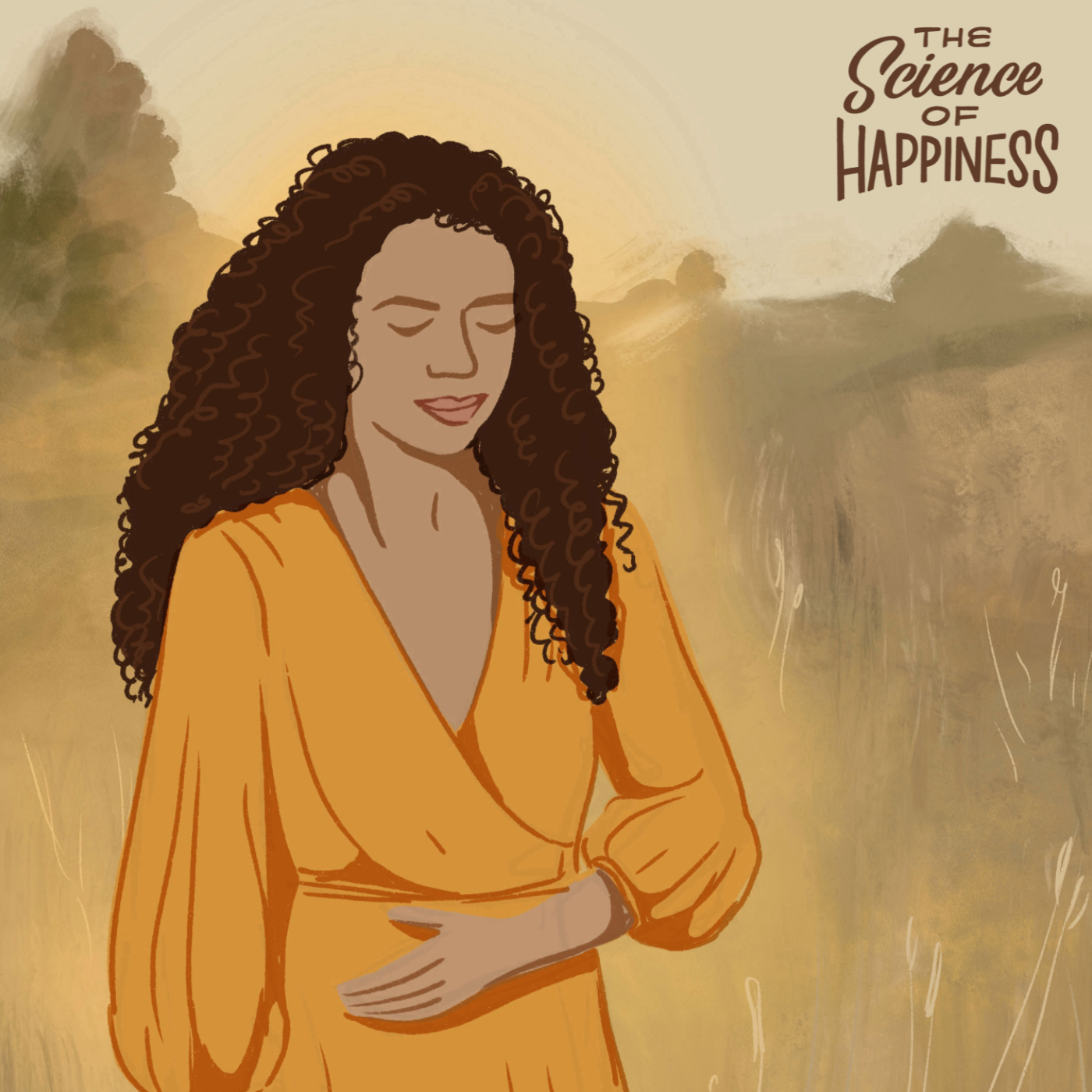 Happiness Break: A Body Scan for Calm and Ease 06.08.2026 10минMeditation teacher Spring Washam guides us in a practice of embodied awareness, helping us use the body as an anchor during stressful or overwhelming moments. How To Do This Practice: Find a comfortable position: Sit upright in a relaxed position where you can comfortably notice the flow of your breath. Begin at the top of your body: Close your eyes and bring your attention to your head, neck, face, and jaw. Notice any tightness and allow those areas to soften. Move your awareness downward: Slowly scan through your shoulders, arms, hands, chest, and belly, noticing any sensations, emotions, or areas where you may be holding tension. Breathe into your belly: Place a hand below your belly button if it feels comfortable. Let your belly expand with each in-breath, and imagine releasing tension with every out-breath. Feel your connection to the ground: Bring your attention to your sitting bones, legs, knees, and feet. Notice where your body makes contact with the chair, floor, or other surface, using those sensations to anchor yourself in the present moment. Take in your whole body: Become aware of your body as a whole, returning to the breath whenever your mind wanders. To close, place a hand on your heart and offer yourself a wish for peace, happiness, and ease. Scroll down for a transcription of this episode. Today’s Happiness Break Guide: SPRING WASHAM is a meditation teacher based in Oakland, California. She is also the author of the book, The Spirit of Harriet Tubman: Awakening from the Underground. Learn more about Spring Washam here: https://www.springwasham.com/ Related Happiness Break episodes: A Meditation to Find Grounding in the New Year, With Spring Washam: https://tinyurl.com/3tpasst9 How to Awaken Joy, with Spring Washam: https://tinyurl.com/ybpuvuj6 The Healing Power of Your Own Touch: https://tinyurl.com/rrtpje2x Related Science of Happiness episodes: How To Feel Better About Yourself: https://tinyurl.com/3jave7h2 What To Do When Stress Takes Over: https://tinyurl.com/yxf3jawn The Contagious Power of Compassion: https://tinyurl.com/y6bpvbv5 We’d love to hear about your experience with this practice! Share your thoughts at [email protected] or use the hashtag #happinesspod. Find us on Apple Podcasts: https://tinyurl.com/2p9h5aap Help us share Happiness Break! Leave a 5-star review and share this link: https://tinyurl.com/2p9h5aap Transcription: https://tinyurl.com/2223k9b7
 -
 Why You Can’t Do It Alone 30.07.2026 20минCan anyone truly succeed alone? We explore how role models, mentors, and strong social support make upward mobility far more possible than grit alone. Summary: What role do the people around us play in shaping our success? Brothers Danny and Gilbert Murillo share how education, mentorship, and their evolving relationship helped them overcome incarceration and systemic barriers to build lives of purpose. Then, Social Mobility Lab founder Bob McKinnon explains why success is never a solo journey and how recognizing our own "dream team" can expand what's possible for ourselves and others. How To Do This Practice: Reflect on your journey: Think about where you are today and the moments that shaped your path. Consider both the opportunities you had and the challenges you overcame. Identify your dream team: Write down the people who have encouraged, protected, guided, or inspired you throughout your life. They might be family members, teachers, friends, mentors, coaches, or colleagues. Recognize their impact: For each person, note one way they helped you grow or see new possibilities. Notice how your achievements are connected not only to your own efforts, but also to the support you received. Look ahead with intention: Ask yourself what kind of support you need right now. Is there someone you could learn from, ask for advice, or build a stronger relationship with as you work toward your next goal? Move forward with self-compassion: As you pursue your goals, remember that success and setbacks are never yours alone. Focus on what you can control, ask for help when you need it, and offer yourself the same grace you'd extend to someone you care about. Scroll down for a transcription of this episode. DANNY MURILLO is the co-founder of Underground Scholars, a program that creates pathways to higher education for incarcerated, formerly incarcerated, and system-impacted people. Learn more about Danny here: https://undergroundscholars.berkeley.edu/members GILBERT MURILLO is a policy advocate and researcher who draws on his own experience with incarceration to reform California's criminal justice system. Learn more about Gilbert here: https://capolicylab.org/staff/gilbert-murillo/ BOB MCKINNON is an author, teacher, and Director of the Social Mobility Lab at the Colin Powell School for Civic and Global Leadership at The City College of New York Learn more about Bob here: https://greatergood.berkeley.edu/profile/bob_mckinnon Related Science of Happiness episodes: Why Compassion Requires Vulnerability: https://tinyurl.com/mrxsad33 Related Happiness Break episodes: A Science-Backed Path to Self-Forgiveness: https://tinyurl.com/2js59anm Message us or leave a comment on Instagram @scienceofhappinesspod. E-mail us at [email protected] or use the hashtag #happinesspod. Help us share The Science of Happiness! Leave us a 5-star review on Apple Podcasts or share this link with someone who might like the show: https://tinyurl.com/2p9h5aap Transcription: https://tinyurl.com/3j352txy
 -
 Happiness Break: Holding Truth With Compassion 23.07.2026 10минTake a moment to connect with your body and make space for difficult emotions with compassion and care. This embodiment practice is guided by Lyla June Johnston, a Diné musician, scholar of Indigenous land management, and community organizer. How To Do This Practice: Ground yourself in the present: Find a comfortable seated position and take four slow, deep breaths. Notice the feeling of your body supported by the chair or the floor, bringing your attention fully into the present moment. Reflect on a difficult truth: Gently bring to mind a challenging truth—such as the lasting impacts of colonization or another painful reality. Approach it with curiosity rather than judgment, allowing yourself to stay present instead of becoming overwhelmed. Notice where your emotions live in your body: As you reflect, pay attention to your physical sensations. You might notice tightness in your chest, heaviness in your stomach, warmth in your heart, or another sensation. Simply observe where your emotions show up. Hold your feelings with compassion: Rather than pushing difficult emotions away or getting lost in them, imagine holding them with the same care you would offer a crying child. Let each feeling be seen, heard, and acknowledged without trying to fix it. Replace shame with love and solidarity: If guilt or shame arises, gently set it down. Instead, invite feelings of compassion, hope, and connection. Consider one way you can move toward repair, understanding, or solidarity—even if it's simply bearing witness with an open heart. Return to the present with intention: Bring your awareness back to your breath, your body, and your surroundings. Relax your shoulders, soften your muscles, and take four more deep breaths. As you finish, carry forward an intention to meet difficult truths with courage, love, and compassionate action. Scroll down for a transcription of this episode. Today’s Happiness Break Guide: LYLA JUNE JOHNSTON is the founder and Dean of Instruction at The Rehuman School. Learn about Lyla June Johnston's work: https://www.lylajune.com/ Related The Science of Happiness episodes: How to Feel Less Lonely and More Connected: https://tinyurl.com/2s3tbchd When It's Hard To Connect, Try Being Curious: https://tinyurl.com/mr32nwtv An Awe Walk Through History and Possibility: https://tinyurl.com/mr3arrbc Related Happiness Breaks: A Meditation on the Uniqueness of Your Own Voice: https://tinyurl.com/36x3fbk7 A Meditation on Original Love and Interconnectedness:https://tinyurl.com/mu2uzs2c Our Deep Interconnectedness: https://tinyurl.com/y2epxyxn We’d love to hear about your experience with this practice! Share your thoughts at [email protected] or use the hashtag #happinesspod. Find us on Apple Podcasts: https://tinyurl.com/2p9h5aap Help us share Happiness Break! Leave a 5-star review and share this link: https://tinyurl.com/2p9h5aap Transcription: https://tinyurl.com/3v76jcs8
 -
 Why Revenge Feels So Good—and Why It Hurts Us 16.07.2026 23минNeuroscience reveals revenge can become a powerful habit—and that forgiveness may be one of the most effective ways to break the cycle. Summary: After years of bullying led him to almost committing an act of violence, James Kimmel Jr., an assistant clinical professor at the Yale School of Medicine, set out to understand why revenge can be so compelling—and how forgiveness can interrupt that cycle, easing emotional pain and strengthening self-control. On this episode of The Science of Happiness, we explore what science can teach us about healing ourselves and creating a less violent world. How To Do This Practice: Think of a Grievance: Bring to mind a person or situation that still causes you hurt or resentment. Notice How It Feels: Take a moment to observe any tension, anger, or pain that arises without judging it. Imagine Forgiveness: Without forcing yourself to forgive, simply imagine what it would feel like to let go of the hurt. Notice the Shift: Pay attention to any sense of relief, ease, or softening—even if it's subtle. Return to the Feeling: When the grievance comes back, revisit that imagined sense of forgiveness as a way of caring for yourself. Practice Often: Repeat this exercise whenever resentment resurfaces, allowing forgiveness to become a habit that supports your own healing. Scroll down for a transcription of this episode. JAMES KIMMEL JR. is a lawyer, lecturer in psychiatry at the Yale School of Medicine, and co-founder and co-director of the Yale Collaborative for Motive Control Studies. Learn more about James Kimmel Jr. here: https://www.jameskimmeljr.com/ Related Science of Happiness episodes: Why Compassion Requires Vulnerability: https://tinyurl.com/mrxsad33 Nine Steps to Forgiveness: https://tinyurl.com/5xwztnsx The Science of Letting Go: https://tinyurl.com/ykc2uex4 Related Happiness Break episodes: A Science-Backed Path to Self-Forgiveness: https://tinyurl.com/2js59anm A Note to Self on Forgiveness: https://tinyurl.com/ycymxh3h A Breathing Technique To Help You Relax: https://tinyurl.com/59y4sf5y This episode was supported by a generous grant from the Templeton World Charity Foundation as part of a Greater Good Science Center project on "Putting the Science of Forgiveness into Practice." Message us or leave a comment on Instagram @scienceofhappinesspod. E-mail us at [email protected] or use the hashtag #happinesspod. Help us share The Science of Happiness! Leave us a 5-star review on Apple Podcasts or share this link with someone who might like the show: https://tinyurl.com/2p9h5aap Transcription: https://tinyurl.com/4ubmrwyr
 -
 Happiness Break: A Meditation to Move Through Anger 09.07.2026 7минTry a practice in accepting difficult feelings like anger or irritation to help keep your cool, feel better overall, and find calm with contemplative social scientist Eve Ekman. How To Do This Practice: Settle with your breath: Take a few slow, deep breaths, lengthening your spine as you inhale and relaxing your face and body as you exhale. Notice your body: Scan your body with curiosity and observe any sensations without trying to change them. Recall a mild frustration: Bring to mind a recent situation that made you feel slightly irritated or frustrated. Release the story: Let go of the memory and focus only on where you feel the emotion in your body. Give the emotion space: Allow the sensations to exist without judging or resisting them, noticing how they naturally shift over time. Close with kindness: Take one final breath and remind yourself to meet future moments of anger with curiosity, acceptance, and compassion. Scroll down for a transcription of this episode. Today’s Happiness Break Guide: EVE EKMAN is a contemplative social scientist and meditation teacher from San Francisco, California. Learn more about Eve’s work: https://tinyurl.com/2vhuarh8 More Happiness Breaks like this one: A Self-Compassion Meditation For Burnout: https://tinyurl.com/ye24rz4k The Healing Power of Your Own Touch: https://tinyurl.com/rrtpje2x A Breathing Technique To Help You Relax: https://tinyurl.com/59y4sf5y Related Science of Happiness episodes: Why Compassion Requires Vulnerability: https://tinyurl.com/mrxsad33 How To Feel Better About Yourself: https://tinyurl.com/3jave7h2 What To Do When Stress Takes Over: https://tinyurl.com/yxf3jawn We’d love to hear about your experience with this practice! Share your thoughts at [email protected] or use the hashtag #happinesspod. Find us on Apple Podcasts: https://tinyurl.com/2p9h5aap Help us share Happiness Break! Leave a 5-star review and share this link: https://tinyurl.com/2p9h5aap Transcription: https://tinyurl.com/2zh8uewh
 -
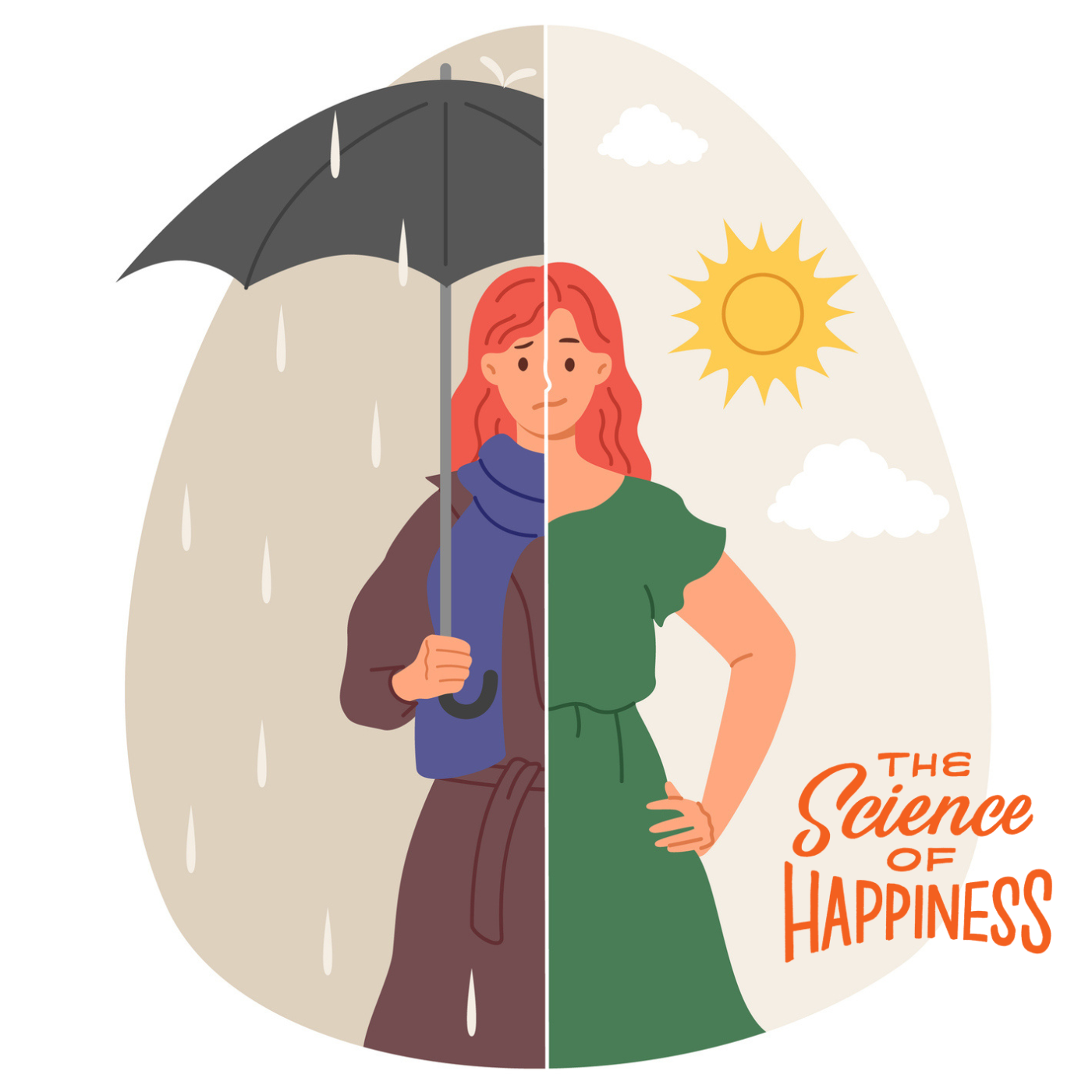 How Joy Helps Save the Planet 02.07.2026 22минChoosing joy over guilt and shame can make climate-friendly habits easier to sustain while improving your own well-being along the way. Summary: Fear may grab our attention, but research suggests joy is what helps us make meaningful, sustainable climate choices. On this episode of The Science of Happiness, discover how small shifts can have a big impact. Scientists Elizabeth Dunn and Jiaying Zhao share how reframing climate action around happiness instead of guilt can help us build healthier habits, strengthen our communities, and care for the Earth. How To Do This Practice: Choose one everyday habit: Pick a part of your routine like eating, commuting, shopping, or reducing food waste where you'd like to make a climate-friendly change. Focus on what you can add: Instead of thinking about what to give up, ask yourself what you can enjoy more, such as eating more seasonal produce, walking outdoors, or spending time tending a garden. Notice how it feels: As you try your new habit, pay attention to moments of enjoyment, connection, pride, or calm. Positive emotions help make new behaviors stick. Make it easy: Remove small barriers that get in your way. For example, keep fresh fruits and vegetables where you’ll see them first so they don’t go bad, and pack light when you fly to avoid the extra carbon emissions from checked bags. Share it with someone else: Invite a friend or family member to join you or tell them about a climate-friendly habit you've enjoyed. Positive experiences are more likely to spread than guilt. Reflect on the impact: Consider how your small change affected both your well-being and the planet, and choose one joyful habit you'd like to continue. Scroll down for a transcription of this episode. Today’s Guests: DR. ELIZABETH DUNN is a professor in the Department of Psychology at the University of British Columbia, who studies the ways that time, money and technology affect our wellbeing. Learn more about Dr. Elizabeth Dunn here: https://dunn.psych.ubc.ca/ DR. JIAYING ZHAO is a Professor in the Department of Psychology and the Institute for Resources, Environment and Sustainability at UBC, Canada Research Chair in Behavioural Sustainability, and UBC Sauder Distinguished Scholar. Learn more about Dr. Jiaying Zhao here: https://psych.ubc.ca/profile/jiaying-zhao/ Related Science of Happiness episodes: Climate, Hope, & Science Series: https://tinyurl.com/pb27rep The Case for Hope, with Rebecca Solnit: https://tinyurl.com/4cj3umbz Related Happiness Break episodes: How To Ground Yourself in Nature: https://tinyurl.com/25ftdxpm How to Be in Harmony in Nature—Wherever You Are, With Yuria Celidwen: https://tinyurl.com/5n6pfsn2 Message us or leave a comment on Instagram @scienceofhappinesspod. E-mail us at [email protected] or use the hashtag #happinesspod. Help us share The Science of Happiness! Leave us a 5-star review on Apple Podcasts or share this link with someone who might like the show: https://tinyurl.com/2p9h5aap Transcription: https://tinyurl.com/2s4ft9fc
 -
 Happiness Break: Where Did You Come From? A Guided Reflection Practice 25.06.2026 9минIndigenous artist Dr. Lyla June Johnston leads a 5-minute freewriting exercise about our personal journeys. Autobiographical writing has been shown to help do better in relationships and feel more satisfied in life. How to Do This Practice: Ground yourself: Sit in a comfortable position and take a few slow breaths. Notice the inhale and exhale without trying to change anything. Let your attention settle into your body and the present moment. Set a simple intention: Bring to mind the idea of observing your story with curiosity rather than judgment. You’re not trying to write something “good,” just something honest. Write the sentence: “I come from a place where…” and pause briefly before continuing. Let the words that follow come from memory, feeling, or imagery—whatever shows up first. Free-write without stopping: Keep your pen moving for several minutes (around 3–5 minutes, or longer if you like). Don’t edit, filter, or worry about grammar or meaning. If you get stuck, repeat the prompt and continue. Notice what emerged: When time is up, read what you wrote slowly. Notice any themes, emotions, memories, or insights that stand out—without trying to fix or interpret them immediately. Reflect and return: Take a moment to acknowledge your experience of the exercise. You might ask: What surprised me? What feels important? Revisit this practice every few weeks or months to notice how your sense of origin and story evolves Scroll down for a transcription of this episode. Today’s Happiness Break Guide: DR. LYLA JUNE JOHNSTON is an Indigenous artist and scholar from the Diné Nation. Learn about Dr. Lyla June Johnston's work: https://www.lylajune.com/ More Happiness Breaks like this one: A Compassionate Letter to Yourself: https://tinyurl.com/3j6vtwh3 Finding Yourself in Silence: https://tinyurl.com/3w76t94a An Affirmation Practice for the New Year: https://tinyurl.com/4f9epzbw Related Science of Happiness episodes: How To Tap Your Way to Calm and Clarity: https://tinyurl.com/vtfrt8b7 The Science of Letting Go: https://tinyurl.com/34u2fu48 How Art Heals Us: https://tinyurl.com/88y5r4vr We’d love to hear about your experience with this practice! Share your thoughts at [email protected] or use the hashtag #happinesspod. Find us on Apple Podcasts: https://tinyurl.com/2p9h5aap Help us share Happiness Break! Leave a 5-star review and share this link: https://tinyurl.com/2p9h5aap Transcription: https://tinyurl.com/36m7wn3m
 -
 How To Find the Wow In Life 18.06.2026 23минWhat can a singing bird, a neighborhood walk, and a pair of puppet adventurers teach us about awe? Sit down with Wowsabout! creators Dorien Davies and Halle Stanford to discuss helping kids—and grownups—find wonder wherever they are. Summary: Kids may be natural wonder-seekers, but how do we help them hold onto that sense of awe as they grow up? On this episode of The Science of Happiness, we talk with Wowsabout! creators Dorien Davies and Halle Stanford about creating a PBS Kids special inspired by awe, the science behind wonder, and why small moments—a bird singing at dawn, a blooming jasmine vine, or a walk around the block—can help us feel more connected to ourselves and the world around us. Together, they explore how cultivating awe can foster curiosity, resilience, creativity, and belonging for children and adults alike. How To Do This Practice: Slow down and set an intention: Pause your usual routine and decide to look for something that inspires wonder. Notice what you feel: Tune into physical sensations, like the warmth of the sun, a cool breeze, or your feet touching the ground. Look closely at your surroundings: Pay attention to colors, shapes, textures, or movement that you might normally overlook. Listen with curiosity: Notice the sounds around you—the birds, the wind, distant voices, or the hum of your neighborhood. Follow what captures your attention: If something sparks your interest or amazement, spend a moment with it instead of rushing on. Reflect on your experience: At the end of your walk, consider what surprised you and how it made you feel more connected to the world around you. Try the full practice here: https://ggia.berkeley.edu/practice/awe_walk Scroll down for a transcription of this episode. Today’s Guests: HALLE STANFORD is the creator and writer of Wowsabout!, founder of 7 Crow Stories, Emmy® Award-winning, and twelve-time Emmy®-nominated executive producer of Fraggle Rock: Back to the Rock and The Dark Crystal: Age of Resistance. DORIEN DAVIES is an Executive Producer, Co-Creator, Co-Writer and Principal Puppeteer on Wowsabout!, Word Party, and Julie’s Greenroom. Watch Wowsabout! here: https://pbskids.org/videos/wowsabout Related Science of Happiness episodes: Cities of Awe Series: https://tinyurl.com/2vyhxvny How to Find Calm Through Walking: https://tinyurl.com/43dr26re Related Happiness Break episodes: How To Ground Yourself in Nature: https://tinyurl.com/25ftdxpm Pause to Look at the Sky: https://tinyurl.com/4jttkbw3 Message us or leave a comment on Instagram @scienceofhappinesspod. E-mail us at [email protected] or use the hashtag #happinesspod. Help us share The Science of Happiness! Leave us a 5-star review on Apple Podcasts or share this link with someone who might like the show: https://tinyurl.com/2p9h5aap Transcription: https://tinyurl.com/bdsn3n9e
 -
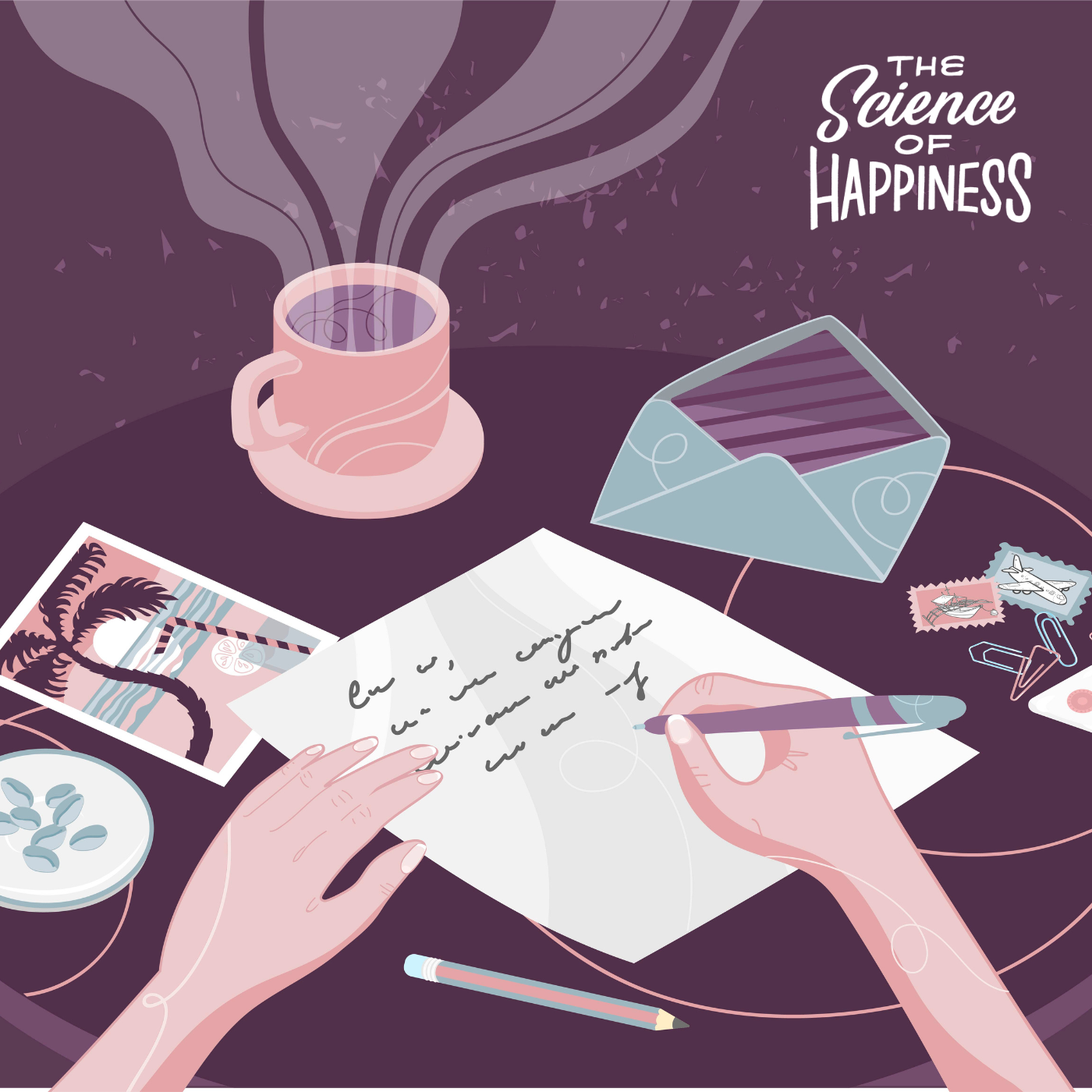 Happiness Break: A Compassionate Letter to Yourself 11.06.2026 9минTake less than 10 minutes to write yourself a letter of care, compassion, and encouragement with psychologist Kristin Neff in this research-backed practice. How To Do This Practice: Choose an area of self-judgment: Think of one aspect of yourself that makes you feel inadequate, stressed, or not quite good enough. Name what you're feeling: Write a few sentences about the situation and the emotions it brings up, such as sadness, fear, frustration, shame, or loneliness. Imagine an unconditionally compassionate friend: Picture someone who is wise, accepting, and deeply caring—someone who sees both your strengths and your struggles without judgment. Write a letter from their perspective: Let this compassionate friend respond to your situation with understanding, kindness, and acceptance, recognizing that imperfection is part of being human. Include gentle wisdom and encouragement: If it feels helpful, have your compassionate friend offer caring suggestions for growth or change—not because you need fixing, but because they want you to thrive. Read the letter back to yourself: Set the letter aside for a while, then return to it and read it slowly, allowing the words of compassion and support to sink in. Scroll down for a transcription of this episode. Listen to the Full Practice Here: https://self-compassion.org/practices/noting-practice-2/ Today’s Happiness Break Guide: Dr. Kristin Neff is an associate professor in the University of Texas at Austin's department of educational psychology. She's also the co-author of 'Mindful Self-Compassion for Burnout,' which offers tools to help individuals heal and recharge from burnout. More Happiness Breaks like this one: A Self-Compassion Meditation For Burnout: https://tinyurl.com/ye24rz4k The Healing Power of Your Own Touch: https://tinyurl.com/rrtpje2x Take a Break With Our Loving-Kindness Meditation: https://tinyurl.com/3vn9t4jv Related Science of Happiness episodes: Why Compassion Requires Vulnerability: https://tinyurl.com/mrxsad33 The Science of Letting Go: https://tinyurl.com/34u2fu48 The Contagious Power of Compassion: https://tinyurl.com/y6bpvbv5 We’d love to hear about your experience with this practice! Share your thoughts at [email protected] or use the hashtag #happinesspod. Find us on Apple Podcasts: https://tinyurl.com/2p9h5aap Help us share Happiness Break! Leave a 5-star review and share this link: https://tinyurl.com/2p9h5aap This episode was supported by a grant from the John Templeton Foundation on "Spreading Love Through the Media." Transcription: https://tinyurl.com/4rcnm6s5
 -
 Finding Common Ground in Uncomfortable Times 04.06.2026 23минAcross school campuses and communities, students and educators are discovering how listening, curiosity, and everyday conversations can open pathways across differences and help restore a sense of shared humanity. Summary: How do we learn to truly communicate with people who are deeply different than us? In this episode of The Science of Happiness, we follow students and educators practicing the skills of empathy and courageous listening in classrooms and on the road. Their experiences reveal how intentional conversations can open unexpected pathways toward understanding and shared humanity. How To Do This Practice: Observe Before You Interpret: Spend a few minutes noticing the environment around you and ask yourself: What do people here see, hear, say, think, and need? Approach with Curiosity: Start with simple human connection—small talk, a question about their day, or genuine interest in their community. Signal That You're There to Listen: Make it clear your goal is understanding, not persuading, debating, or changing anyone's mind. Practice Democratic Listening: Give your full attention through eye contact, nodding, and brief acknowledgments, while resisting the urge to agree, disagree, or jump in with your own views. Stay Relaxed Through Discomfort: When differences emerge, maintain "relaxed awareness"—remaining open, attentive, and calm rather than defensive or reactive. Reflect and Learn: Afterward, ask yourself: What helped create connection? What got in the way? What might I try differently next time? Scroll down for a transcript of this episode. Today’s Guests: JESSE KELLY is a McNair and MacArthur fellow and a recent graduate of Bowie State University, Maryland's oldest historically black university. Learn more about Jesse Kelly here: https://www.linkedin.com/in/jessekellyjr/ LIA HOWARD is the director of the Political Empathy Lab at the University of Pennsylvania. Learn more about Lia Howards here: https://snfpaideia.upenn.edu/people/lia-howard/ Related The Science of Happiness episodes: How to Feel Less Lonely and More Connected: https://tinyurl.com/2s3tbchd When It's Hard To Connect, Try Being Curious: https://tinyurl.com/mr32nwtv An Awe Walk Through History and Possibility: https://tinyurl.com/mr3arrbc Related Happiness Breaks: A Meditation on Original Love and Interconnectedness:https://tinyurl.com/mu2uzs2c Our Deep Interconnectedness: https://tinyurl.com/y2epxyxn Message us or leave a comment on Instagram @scienceofhappinesspod. E-mail us at [email protected] or use the hashtag #happinesspod. Help us share The Science of Happiness! Leave us a 5-star review on Apple Podcasts or share this link with someone who might like the show: https://tinyurl.com/2p9h5aap Transcription: https://tinyurl.com/3bt8fpdj
 -
 Happiness Break: A Walking Meditation With Dan Harris of 10% Happier 28.05.2026 7минTrouble sitting still? Learn to practice meditating by simply walking in this practice guided by 10% Happier host Dan Harris. How To Do This Practice: Start walking at a comfortable pace in a place where you can move without rushing. Notice your body moving by paying attention to your feet, legs, and arms as you walk. Tune into your senses by observing sounds, sights, temperature, and other details around you. Notice when your mind wanders into planning, worrying, or distractions. Gently return your attention to the sensations of walking and your surroundings each time you drift away. Keep walking with curiosity and allow yourself to stay present without needing to do it perfectly. Scroll down for a transcription of this episode. Today’s Happiness Break Guide: DAN HARRIS the host of 10% Happier, a podcast about mindfulness and other practices and thoughts that can support our well-being. Check out Dan’s podcast, 10% Happier: https://tinyurl.com/324xtuut Related Happiness Break Episodes: Moving Through Space, With Dacher Keltner: https://tinyurl.com/5f58jp42 Walk Your Way to Calm, with Dacher: https://tinyurl.com/y8md2759 Making Space For You: https://tinyurl.com/yc42s6mv Related Science of Happiness Episodes: How To Focus Under Pressure: https://tinyurl.com/3hpah4ss How to Find Calm Through Walking: https://tinyurl.com/43dr26re How To Do Good For The Environment (And Yourself): https://tinyurl.com/26msewb8 We love hearing from you! Tell us about your experiences with mindful walking. Email us at [email protected] or use the hashtag #happinesspod. Find us on Spotify: https://tinyurl.com/6s39rzus Help us share Happiness Break! Rate us and copy and share this link: https://tinyurl.com/6s39rzus Transcription: https://tinyurl.com/9n5xu96e
 -
 How To Step Away from Anxiety 21.05.2026 21минDo you have a hard time calming your nerves? Author Raina Telgemeier tries a practice to get out of her head, one step at a time. Summary: In this episode of The Science of Happiness, bestselling graphic novelist Raina Telgemeier reflects on growing up with anxiety, panic attacks, and emetophobia—the fear of throwing up—and shares how transforming those experiences into stories helped her feel less alone and inspired young readers to seek support. Through a week-long walking meditation practice, Raina explores what it means to slow down, reconnect with her body, and face discomfort with curiosity rather than avoidance. How To Do This Practice: Choose a small, quiet space: Find a place where you can walk slowly back and forth for about 10–15 steps without interruption. This could be a hallway, living room, backyard, or even a hotel room. Set a timer for 10 minutes: Giving yourself a set amount of time helps you stop checking the clock and allows you to settle more fully into the practice. Begin walking slowly and naturally: Walk at a comfortable pace, paying attention to the sensation of each step—your heel touching the ground, the shift of your weight, and the movement of your body. Focus on your breath: As you walk, gently notice your breathing. You might take a slow breath before turning around at the end of each pass, letting your breath help anchor your attention. When your mind wanders, return to the movement: Thoughts, worries, memories, or distractions will come up. Rather than judging yourself, simply guide your attention back to your steps and breathing. Notice how you feel afterward: When the timer ends, pause for a moment before moving on with your day. Take note of any shifts in your body, mood, or pace of mind, even subtle ones can matter. Try the full practice here: https://ggia.berkeley.edu/practice/walking_meditation Scroll down for a transcription of this episode. Today’s Guests: RAINA TELGEMEIER is an American cartoonist and New York Times bestselling author. Her books have received many awards, including multiple Eisner Awards, a Boston Globe-Horn Book Honor and a Stonewall Honor. Learn more about Raina Telgemeier here: https://goraina.com/ RICHARD DAVIDSON is the founder and director of the Center for Healthy Minds at the University of Wisconsin, Madison. Learn more about Richard Davidson here: https://www.richardjdavidson.com/ Related The Science of Happiness episodes: How to Find Calm Through Walking: https://tinyurl.com/43dr26re Related Happiness Breaks: Walk Your Way to Calm, with Dacher: https://tinyurl.com/y8md2759 Message us or leave a comment on Instagram @scienceofhappinesspod. E-mail us at [email protected] or use the hashtag #happinesspod. Help us share The Science of Happiness! Leave us a 5-star review on Apple Podcasts or share this link with someone who might like the show: https://tinyurl.com/2p9h5aap Transcription: https://tinyurl.com/mrxkfvkj
 -
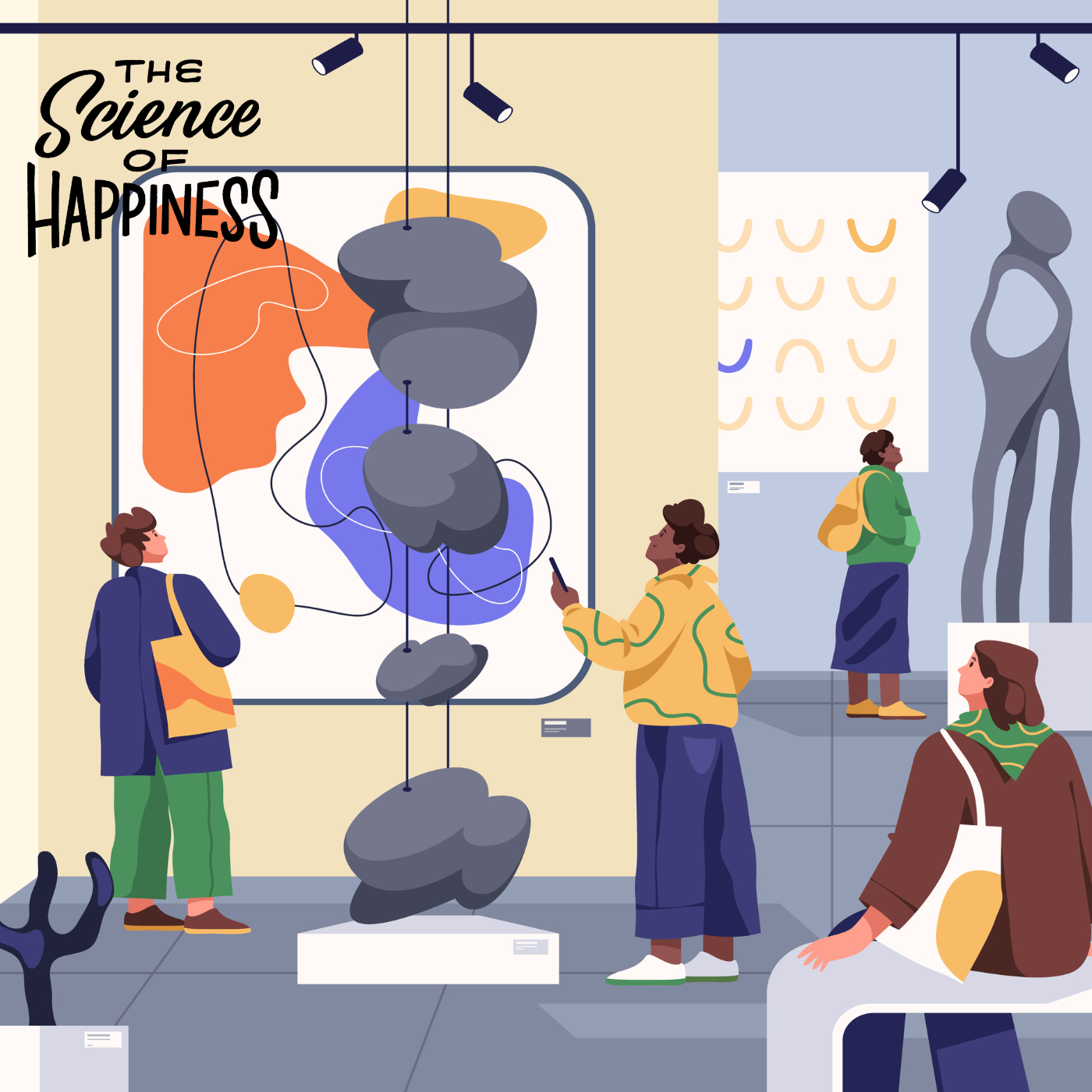 Happiness Break: The Unexpected Joy of Slow Looking 14.05.2026 8минWhat happens when you linger and look closely at a piece of art? Nathalie Ryan, an educator from the National Gallery of Art in Washington D.C., guides us through a slow looking practice shown to help deepen your sense of awe, presence, and connection. How To Do This Practice: Choose an image to focus on: Pick a piece of art, photograph, postcard, or even a recent photo from your phone that captures a natural or urban scene. Don’t overthink it—choose something that draws your attention. Begin with a few slow breaths: Take a moment to settle into the present. Deepen your inhale, lengthen your exhale, and allow your breathing to slow the pace of your day. Let your eyes wander slowly: Scan the image without rushing. Notice the light, colors, shapes, patterns, textures, and details that begin to emerge as you spend more time looking. Imagine yourself inside the scene: Engage all of your senses. What might you hear, smell, feel, or taste in this place? Allow yourself to step into the environment with your imagination. Notice how the scene changes: Picture the image at different times of day and throughout the seasons. Reflect on how the light, colors, atmosphere, and activity might shift over time. Reflect on what arises: Pause to notice any emotions, memories, thoughts, or sensations that surfaced during the practice. Consider what changed when you gave yourself permission to look more slowly. Scroll down for a transcription of this episode. Today’s Happiness Break Guide: NATHALIE A. RYAN is a Senior Educator at the National Gallery of Art, Washington, where she has led programs for educators, families, teens, and the adult public since 2002. Related Happiness Break episodes: How To Ground Yourself in Nature: https://tinyurl.com/25ftdxpm Pause to Look at the Sky: https://tinyurl.com/4jttkbw3 Experience Nature Wherever You Are, with Dacher: https://tinyurl.com/mrutudeh Related Science of Happiness episodes: Cities of Awe Series: https://tinyurl.com/2vyhxvny How Cities Can Make Space for Awe: https://tinyurl.com/yr7m2zb5 What Humans Can Learn From Trees: https://tinyurl.com/48te84ps Follow us on Instagram: @ScienceOfHappinessPod We’d love to hear about your experience with this practice! Share your thoughts at [email protected] or use the hashtag #happinesspod. Find us on Apple Podcasts: https://tinyurl.com/2p9h5aap Help us share Happiness Break! Leave a 5-star review and share this link: https://tinyurl.com/2p9h5aap Transcription: https://tinyurl.com/mt4mcw3m
Радио станица

Слични подкасти


Популаран у
Овај подкаст се појављује и у подкаст листама ових земаља.
-
 Малта
Малта
-
 Јамајка
-
 Аргентина
-
 Јордан
-
 Србија
-
 Катар
Катар
-
 Гвајана
-
 Шри Ланка
-
 Кајманска Острва
-
 Маурицијус
-
 Уругвај
-
 Доминиканска Република
-
 Словенија
-
 Црна Гора
-
 Сијера Леоне
-
 Тринидад и Тобаго
-
 Бахами
-
 Камбоџа
-
 Костарика
-
 Намибија
-
 Исланд
-
 Брунеј
-
 Непал
Непал
-
 Луксембург
-
 Грчка
Грчка
-
 Гренада
-
 Мјанмар
-
 Оман
Оман
-
 Филипини
-
 Еквадор
-
 Кенија
-
 Малдиви
-
 Перу
Перу