
The Human Element | CHRO & HR Leadership Podcast
Barb Bidan | CHRO & AI in Human Resources Expert
0
AI is reshaping leadership, strategy, and the very role of HR. In each episode, host Barb Bidan explores how AI drives innovation and leadership in HR with actionable insights for the future of work. The podcast is brought to you by Harper, Wisq's always-on AI HR Generalist.
Епизоде
-
 How Illumio got its whole people team using AI 15.09.2026 40минSummary What actually changes when AI arrives in HR, and what stays exactly the same? In this episode of The Human Element, host Barb Bidan talks with L. David Kingsley, Chief People Officer at Illumio, whose career began implementing PeopleSoft from CD-ROMs at Accenture before leading people functions at MuleSoft, Alteryx, Intercom, and Salesforce. David explains why there has never been a time of no change, why 300,000 years of human brain development did not shift in the last nine months, and how he got his entire people team to adopt AI by making everyone build and name their own agent (meet LL Coolpay). He shares the workforce planning win that took HRBPs from a blank page to 70 percent of a solution, draws the line between what a chatbot should handle and what a human must, and names the half-solved problem of AI work nobody owns: if it took five minutes to produce, it should not take 30 minutes to read. A conversation for CHROs and people leaders who want to move fast with AI without losing the human element.Chapters 00:00 Welcome and introduction 02:45 There has never been a time of no change 07:45 The human brain has not changed in 300,000 years 09:45 What stays human and what gets automated 11:45 Name your agent: how Illumio's people team started with AI 14:45 Workforce planning at 70 percent before the first meeting 17:45 The five minute deliverable problem 22:30 Define success before you start 26:30 What vendors are underestimating about adoption 28:45 What HR looks like in five years 33:45 Lightning round and fill your own cupTakeaways-There has never been a time of no change. HR has lived through mainframes, the internet, cloud, and every ERP migration, and this AI wave is faster but not fundamentally different.-Human beings have not changed in the last nine months. Automate the transactional moments, like a shipment status, and protect the human moments, like a maternity leave conversation.-Make AI adoption personal and fun. Illumio's people team each built and named their own agent, which forced clear scopes and made it obvious the tools work for the people, not the other way around.-If it took five minutes to produce and 30 minutes to read, you are being disrespectful to your audience. Use AI to start, QA, and accelerate the work, but own every word you publish.-Define success before you start. Spending 20 minutes of the hour on what success looks like makes the other 40 valuable, and it keeps you from ending up in Dubuque when you were headed to Chicago.Connect with the Guest LinkedIn: https://www.linkedin.com/in/ldavidkingsley/ Website: https://www.illumio.comSponsorWisq is the AI platform for HR. We built Harper, the world's first AI HR teammate — designed to handle the judgment-heavy work that has historically consumed HR teams: job changes, performance concerns, leaves of absence, onboarding, and employee relations issues. Where HCM bolt-ons and chatbots deflect the easiest questions, Harper resolves full cases, end-to-end. The result is an HR function with the capacity and strategic bandwidth to focus on the work that moves the business.Companies get Harper live in weeks, not quarters, with implementation support built on deep HR domain expertise. Wisq serves HR leaders at leading companies across industries, helping them raise the bar on employee experience and expand what their teams are capable of.For more information, visit https://www.wisq.com
 -
 Why Sweetwater treats AI like an Iron Man suit, not a replacement 08.09.2026 33минSummary How does a company whose entire business model is built on human relationships decide what to do with AI? In this episode of The Human Element, host Barb Bidan sits down with Jeff Ostermann, Chief People and Culture Officer at Sweetwater, the largest online musical instrument and audio equipment retailer in the US. Jeff shares how Sweetwater drew an uncompromising line around the human element before adopting AI, why they treat technology like an Iron Man suit that gives their 600 sales engineers superpowers, why every customer keeps one dedicated relationship with zero handoffs, and how the company's five imperatives extend the definition of customer to candidates and colleagues. A conversation for HR leaders deciding what stays human as AI reshapes the workplace.Chapters00:00 Introducing Jeff Ostermann and the Sweetwater story02:30 From finance to people leadership05:15 Art and science: bringing data into HR07:05 The founding story behind 600 sales engineers08:55 Treating AI like an Iron Man suit10:30 Where AI fits into the customer relationship14:15 One relationship, zero handoffs17:35 Everybody is our customer: AI inside HR20:45 Balancing optimization with culture24:30 Lightning round: AI tools and human decisionsTakeaways-AI should work like an Iron Man suit: wrap it around your people to give them superpowers, but keep a human in the middle steering every decision with heart.-Every handoff you add to a process is a new place for cracks to form; one trusted expert relationship builds more loyalty than a chain of specialists.-Everybody is your customer, including the candidates you recruit and the colleagues down the hall, so the care you promise externally has to show up internally too.-Use AI to clear away routine questions and administrative work so your HR team can focus on the situations that truly require a human touch.-Some decisions should never be automated: a human must own the final hiring call and be prepared to develop and coach the person they bring onto the team.Connect with the Guest LinkedIn: https://www.linkedin.com/in/jeffostermann/ Website: https://www.sweetwater.comSponsorWisq is the AI platform for HR. We built Harper, the world's first AI HR teammate — designed to handle the judgment-heavy work that has historically consumed HR teams: job changes, performance concerns, leaves of absence, onboarding, and employee relations issues. Where HCM bolt-ons and chatbots deflect the easiest questions, Harper resolves full cases, end-to-end. The result is an HR function with the capacity and strategic bandwidth to focus on the work that moves the business.Companies get Harper live in weeks, not quarters, with implementation support built on deep HR domain expertise. Wisq serves HR leaders at leading companies across industries, helping them raise the bar on employee experience and expand what their teams are capable of.For more information, visit https://www.wisq.com
 -
 Data and Humanity Were Never in Tension 01.09.2026 32минSummaryHow do you build a culture with both high psychological safety and high accountability? In this episode of The Human Element, host Barb Bidan talks with Maura Stevenson, Chief Human Resources Officer at MedVet, about her 20-year case that data and humanity were never in tension. Maura built Starbucks' people analytics function from scratch in 2004, connected people data to restaurant performance at Wendy's, and now leads HR for 3,500 team members across MedVet's 45 veterinary hospitals. She explains why the data people and the OD people are twins separated at birth, how a simple grid resolves the "too much psychological safety" debate, why clear is kind and nice is just conflict avoidance, and how ambient listening AI is saving MedVet's ER doctors up to two hours of charting a day. A conversation for CHROs and HR leaders who want technology and data to make their organizations more human, not less.Chapters00:00 Welcome and introduction02:45 Building Partner Insights at Starbucks in 200405:15 Turn the page: simple data storytelling07:45 The data people and the OD people10:45 AI and qualitative data at scale17:15 Caring and accountability belong together19:45 The psychological safety and accountability grid21:45 Clear is kind24:45 Systems that give caregivers time back29:15 Lightning roundTakeaways-People analytics and organizational development are the same discipline. Both follow a research path to understand human behavior individually and at scale.-You cannot have too much psychological safety, but high safety with no accountability creates a culture of complacency.-Clear is kind. Nice avoids conflict, while kindness pairs psychological safety with honest feedback and accountability.-Data does not have to be fancy to be powerful. Simple storytelling that illuminates what leaders sense but cannot prove is what drives action.-AI earns its place when it gives people time back, like ambient listening software saving MedVet's ER doctors up to two hours of charting a day.Connect with the GuestLinkedIn: https://www.linkedin.com/in/maurastevenson/Website: https://www.medvet.comSponsorWisq is the AI platform for HR. We built Harper, the world's first AI HR teammate — designed to handle the judgment-heavy work that has historically consumed HR teams: job changes, performance concerns, leaves of absence, onboarding, and employee relations issues. Where HCM bolt-ons and chatbots deflect the easiest questions, Harper resolves full cases, end-to-end. The result is an HR function with the capacity and strategic bandwidth to focus on the work that moves the business.Companies get Harper live in weeks, not quarters, with implementation support built on deep HR domain expertise. Wisq serves HR leaders at leading companies across industries, helping them raise the bar on employee experience and expand what their teams are capable of.For more information, visit https://www.wisq.com
 -
 AI Readiness Is a Culture Problem Before It's a Skill Problem 27.08.2026 27минSummaryWhat does it actually take to make a workforce AI ready? In this episode of The Human Element, host Barb Bidan sits down with Miki Virtue, VP of Human Resources, to unpack why AI readiness is a culture problem before it is a skill problem (Miki's views and opinions are not associated with the company she works for, this episode represents herself alone). Miki shares why AI rewards curiosity and punishes certainty, why a workforce trained to never be wrong is a culture gap rather than a skill gap, what prompt fluency is and why it mirrors great interviewing, how she uses AI to make workforce data predictive, and the one-decision-at-a-time playbook any HR leader can start on Monday morning. For HR leaders, CHROs, and people teams navigating AI adoption.Chapters00:00 Introducing Miki Virtue02:40 You can't teach someone to be curious04:35 Leading workforce strategy for AI adoption05:30 Why AI punishes the comfortable with wrong08:00 Making workforce data predictive with AI10:15 Prompt fluency, the missing HR skill11:50 Stop naming the gap, start closing it16:10 Data literacy plus intellectual courage18:55 Same problem, different costume across industries23:10 Lightning round and final wordTakeaways-AI rewards curiosity and punishes certainty. The first thing to assess in AI readiness is not tools or skills but whether people are curious enough to question confident answers.-A workforce trained for 20 years that being wrong is a career risk has a culture gap, not a skill gap. Psychological safety, rich feedback, and honest coaching come before any upskilling program.-Prompt fluency, knowing how to push back on an AI's output and ask better questions, is the same skill as great interviewing, and almost nobody in HR is developing it deliberately.-Stop naming the gap and start closing it. Pick one weekly decision, ask what data would make you less wrong, and repeat. Monday morning is permission.-Your gut is a hypothesis and data is how you test it. Data literacy plus the intellectual courage to say "I was wrong" is what lets HR walk into the CFO's office with a number instead of a feeling.Connect with the GuestLinkedIn: https://www.linkedin.com/in/miki-v/SponsorWisq is the AI platform for HR. We built Harper, the world's first AI HR teammate — designed to handle the judgment-heavy work that has historically consumed HR teams: job changes, performance concerns, leaves of absence, onboarding, and employee relations issues. Where HCM bolt-ons and chatbots deflect the easiest questions, Harper resolves full cases, end-to-end. The result is an HR function with the capacity and strategic bandwidth to focus on the work that moves the business.Companies get Harper live in weeks, not quarters, with implementation support built on deep HR domain expertise. Wisq serves HR leaders at leading companies across industries, helping them raise the bar on employee experience and expand what their teams are capable of.For more information, visit https://www.wisq.com
 -
 Where the Hard Line Sits Between AI and Human Judgment 25.08.2026 31минSummaryWhere exactly should the line sit between AI and human judgment? Emilie Schmitz, Chief Human Resources Officer at Ryze Claim Solutions, joins host Barb Bidan to answer that question inside a business built entirely on judgment calls. Ryze handles claims across auto, trucking, construction, and catastrophe response, and it holds one hard line: AI can support documentation, data gathering, and communication, but it never makes a decision, in claims or in HR. Emilie shares the training module her team built with an intentional AI mistake inside to keep critical thinking alive, the compensation analysis that consolidated sixty five job titles with AI building the structure and humans placing the people, and the light bulb moment when Claude reproduced her hand-built turnover analysis in minutes. A practical conversation for HR leaders deciding what stays human in an AI-forward organization.Chapters00:00 Introduction and meet Emilie Schmitz02:40 Change management as the career through line05:00 Supporting adjusters on roofs and on the road07:40 One voice for a desk, field, and 1099 workforce09:35 The hard line: AI never makes the decision11:15 Sixty five job titles and the comp analysis13:45 The turnover spreadsheet light bulb moment17:55 The training module with a mistake built in20:45 AI readiness, fear, and testing the waters24:45 Lightning round: payroll, trust, and empathyTakeaways-AI is encouraged for documentation, information gathering, and communication at Ryze, but decisions in claims and HR are always made by a human-An intentional AI mistake built into Ryze's training module teaches employees that AI wants to please and must be double-checked with critical thinking-AI built Ryze's job level structure and compa ratio research, but placing each employee in a level took hour-long conversations with every manager-Automating administrative work, like cutting health bill reconciliation from four hours to four minutes, frees small HR teams to focus on developing people-Leaders rolling out change should remember that not everyone shares their enthusiasm, and over-communicating in multiple formats is the safest defaultConnect with the GuestLinkedIn: https://www.linkedin.com/in/emilie-schmitz/Website: https://www.ryzeclaims.comSponsorWisq is the AI platform for HR. We built Harper, the world's first AI HR teammate — designed to handle the judgment-heavy work that has historically consumed HR teams: job changes, performance concerns, leaves of absence, onboarding, and employee relations issues. Where HCM bolt-ons and chatbots deflect the easiest questions, Harper resolves full cases, end-to-end. The result is an HR function with the capacity and strategic bandwidth to focus on the work that moves the business.Companies get Harper live in weeks, not quarters, with implementation support built on deep HR domain expertise. Wisq serves HR leaders at leading companies across industries, helping them raise the bar on employee experience and expand what their teams are capable of.For more information, visit https://www.wisq.com
 -
 The Two Monday-Morning Conversations That Make HR Matter 18.08.2026 34минSummaryWhat if the biggest thing holding HR back is the profession itself? In this episode of The Human Element, host Barb Bidan sits down with David Alsop, Chief Human Resources Officer at Ultradent Products and co-author of Making HR Matter, to talk about building HR that actually drives the business. David shares how 13 years in sales at Kraft Heinz shaped his business first approach to people strategy, why every company starts with "irrelevant HR" and how to grow past it, the fallacy of best practices, how Ultradent tucks in behind the "lawsuit generation" of AI while still building remarkable tools, and the two conversations any HR leader can start on Monday morning to finally make HR matter. For HR leaders, CHROs, and CEOs who want people strategy to converge with business strategy.Chapters00:00 Introducing David Alsop01:58 From selling Kraft products to leading HR03:09 Betting on Ultradent and owning the strategy05:17 Why he wrote Making HR Matter06:45 Partnering with AI instead of fearing it09:00 Why HR gets stuck at the startup floor13:30 The skills gap: listening over indoctrination18:55 AI readiness and the lawsuit generation23:45 The Monday morning playbook27:05 Lightning round: brain science, compliance, and convergenceTakeaways-Start every HR decision with the business. Understand the strategy and how people drive it before building a single program.-The startup basics of HR (legal terminations, policies, benefits, parties) are the floor, not the house. Plant seeds over time to grow the function into strategic relevance.-HR is a listening function, not an academic one. What leaders, employees, and the culture actually need beats what the textbook says.-Best practices are what the herd is doing. Adapt them to your culture, validate them with data, or skip them entirely rather than following the herd off a cliff.-Relevance starts with two conversations: ask leaders to educate you on the business and its gaps, and ask HR's biggest internal critic to mentor you.Connect with the GuestLinkedIn: https://www.linkedin.com/in/davidalsop/Website: https://www.ultradent.comSponsorWisq is the AI platform for HR. We built Harper, the world's first AI HR teammate — designed to handle the judgment-heavy work that has historically consumed HR teams: job changes, performance concerns, leaves of absence, onboarding, and employee relations issues. Where HCM bolt-ons and chatbots deflect the easiest questions, Harper resolves full cases, end-to-end. The result is an HR function with the capacity and strategic bandwidth to focus on the work that moves the business.Companies get Harper live in weeks, not quarters, with implementation support built on deep HR domain expertise. Wisq serves HR leaders at leading companies across industries, helping them raise the bar on employee experience and expand what their teams are capable of.For more information, visit https://www.wisq.com
 -
 If You Can Write a Job Description, You Can Build an AI Agent 11.08.2026 33минSummaryWhat if the skill set for building AI agents is one HR has had all along? Kyle Roed, CHRO at CPM Holdings, joins host Barb Bidan to make the case that agentic AI is an HR function, not an IT project. Kyle shares the hackathon moment that convinced him instructing an AI agent is the same discipline as writing a job description, why "AI is the next email" and the tech-belongs-to-IT argument falls apart, and the two path playbook he uses at a global manufacturer: AI-generated SOPs that multiply team capacity, and a role-redesign question asked at every backfill. He also breaks down how to build an AI governance team with one senior champion and one deliberately recruited naysayer. For CHROs and senior HR leaders who want to lead the future of work instead of watching it happen.Chapters00:00 Introduction and meet Kyle Roed02:45 From IT and bartending to HR leadership04:45 Why HR must know the business06:55 The hackathon light bulb: AI as an HR function09:00 AI is the next email11:45 Disrupting HR and the HR renaissance14:00 Compliance without fear17:05 The two path playbook: SOPs and backfills20:00 One champion, one naysayer: AI governance27:15 Lightning round: the compliance GPTTakeaways-Building an AI agent is the same discipline as writing a job description, which is why agentic AI belongs in HR's domain-AI is the next email: everyone will use it, so IT should advise on capability and safety while the business defines what needs to get done-Start with work bottlenecks, like AI-generated SOPs that free people from documentation and multiply what existing teams deliver-Treat every backfill as a chance to redesign the role by asking what aspects of it AI could take on before rehiring-AI governance works best with one senior champion and one deliberately recruited naysayer who keeps the committee honestConnect with the GuestLinkedIn: https://www.linkedin.com/in/kyle-roed/Website: https://onecpm.comSponsorWisq is the AI platform for HR. We built Harper, the world's first AI HR teammate — designed to handle the judgment-heavy work that has historically consumed HR teams: job changes, performance concerns, leaves of absence, onboarding, and employee relations issues. Where HCM bolt-ons and chatbots deflect the easiest questions, Harper resolves full cases, end-to-end. The result is an HR function with the capacity and strategic bandwidth to focus on the work that moves the business.Companies get Harper live in weeks, not quarters, with implementation support built on deep HR domain expertise. Wisq serves HR leaders at leading companies across industries, helping them raise the bar on employee experience and expand what their teams are capable of.For more information, visit https://www.wisq.com
 -
 The More AI Evolves, the More Your Humanity Matters 14.07.2026 36минSummaryWhat happens when a compliance-minded HR veteran who has seen the inside of more than 50 companies takes on workforce planning for an almost entirely frontline, cross-border workforce right as AI rewrites the rules? In this episode of The Human Element, host Barb Bidan sits down with Dawn Stastny, Chief Human Resources Officer at BelPak, the packaging company formed when Coregistics, Proven Partners Group, and Belvika combined into one organization with more than two dozen facilities across the US and Canada. Dawn shares why she refuses to call them soft skills, how AI screening unlocked a pool of candidates her recruiters could never reach, the governance guardrails she applies to every AI decision, and why she has a calendar reminder set for the middle management crisis she predicts in 2031. This conversation is for HR and people leaders navigating AI adoption with frontline and deskless teams.Chapters00:00 Introduction02:30 From consultant to operator at BelPak05:45 There's nothing soft about humanity skills07:30 Merging three legacy companies into One BelPak11:15 AI recruiting and the third shift problem15:30 AI governance and compliance guardrails18:30 Give the time back to your people24:00 The 2031 middle management crisis28:30 Developing talent through community partnerships32:00 Lightning round and final adviceTakeaways-Humanity skills like empathy, judgment, and discernment become more valuable as AI advances, not less.-AI screening lets recruiting reach candidates the traditional process never could, like third shift mechanics, while removing unintentional bias from the first pass.-AI gives you information; humans are still responsible for verifying it and making the final decision.-Entry level jobs cut by AI in 2026 and 2027 could create a middle management shortage by 2031, so leaders need to protect their pipeline now.-Instead of consuming talent, develop it: community college partnerships can build the skilled workforce you cannot hire off the market.Connect with the GuestLinkedIn: https://www.linkedin.com/in/dawn-stastny-sphr-shrm-scp-/Website: https://belpak.comSponsorWisq is the AI platform for HR. We built Harper, the world's first AI HR teammate — designed to handle the judgment-heavy work that has historically consumed HR teams: job changes, performance concerns, leaves of absence, onboarding, and employee relations issues. Where HCM bolt-ons and chatbots deflect the easiest questions, Harper resolves full cases, end-to-end. The result is an HR function with the capacity and strategic bandwidth to focus on the work that moves the business.Companies get Harper live in weeks, not quarters, with implementation support built on deep HR domain expertise. Wisq serves HR leaders at leading companies across industries, helping them raise the bar on employee experience and expand what their teams are capable of.For more information, visit https://www.wisq.com
 -
 HR in the age of AI: Eliminate, then elevate 07.07.2026 37минSummaryJens Hovgaard Jensen, Vice President of People and Culture at ECCO Americas, joins host Barb Bidan on The Human Element for a candid conversation about HR's future in the age of AI. Drawing on a career built from turnarounds and carve-outs at Maersk, Girteka Logistics, and ECCO, plus ten years as an officer in the Royal Danish Life Guards, Jens makes a provocative case: HR should actively eliminate its own transactional work with AI before someone else does it, treat restructuring as a chance to lead with humanity, and stop over-planning the workforce in favor of higher-value analytics. It is a practical, occasionally uncomfortable listen for HR and people leaders who want to move from administrative function to true business partner.Chapters00:00 Welcome and Jens's path from the Royal Danish Life Guards02:35 The military through line: plan, then pivot06:35 Closing 75 stores across three countries07:45 Why ECCO gave people notice in November10:45 HR sawing the branch it sits on16:15 From transactional HR to true business peer19:55 Where AI is already quietly removing HR work23:00 Plan less, elevate the workforce analytics29:25 The broken benefits model and vendor AI roadmaps32:35 Lightning round and the final wordTakeawaysTreating people with dignity during a restructuring is also good business. ECCO told staff in November about January store closures and saw low turnover, not a wave of early exits."Working yourself out of a job" is a career accelerator, not a risk. Eliminating your own repetitive work tends to get you promoted into bigger problems, not pushed out.HR should drive its own AI adoption before someone else does. The transactional, administrative identity is exactly the work AI should absorb.Never spend more than 20 to 30 percent of your time planning. You need the other 70 percent for execution, and over-granular workforce plans rarely survive contact with reality.The real AI prize in HR is the analytics humans could never do well before, from predicting attrition to running M&A due diligence to challenging your own assumptions.Connect with the GuestLinkedIn: https://www.linkedin.com/in/jensjensen42/ Website: https://us.ecco.comSponsorWisq is the AI platform for HR. We built Harper, the world's first AI HR teammate — designed to handle the judgment-heavy work that has historically consumed HR teams: job changes, performance concerns, leaves of absence, onboarding, and employee relations issues. Where HCM bolt-ons and chatbots deflect the easiest questions, Harper resolves full cases, end-to-end. The result is an HR function with the capacity and strategic bandwidth to focus on the work that moves the business.Companies get Harper live in weeks, not quarters, with implementation support built on deep HR domain expertise. Wisq serves HR leaders at leading companies across industries, helping them raise the bar on employee experience and expand what their teams are capable of. For more information, visit wisq.com.
 -
 AI is an accelerant, not destination 30.06.2026 37минSummaryRJ Jadhav, Vice President of Human Resources at Lumen Technologies, joins host Barb Bidan to reframe how HR leaders should think about AI, transformation, and the role of their function. RJ has spent his career inside the most transformative companies in tech — fifteen years at Microsoft, the hypergrowth years at Google Cloud, and now at Lumen, where he's helping rewire a legacy network company into a digital services company built for the AI economy. In this conversation he unpacks why AI is 70% culture and 30% tools, why business impact has to be the goal long before AI, and why HR has earned the right to lead the AI charter inside the enterprise.TakeawaysTransformation needs three things at once — leadership behaviors, designed systems instead of interventions, and a real business anchor. Pull one lever in isolation and the other two drift.AI is not the destination. Business impact is. Start with where the business is going, then let AI accelerate moonshots you'd otherwise rule out as too slow or too expensive.AI is 70% culture and 30% tools. AI amplifies whatever culture already exists — good or bad. Treat it as a tool rollout and it will surface every cultural weakness you have.The most underestimated AI metric in the C-suite is protected leadership capacity — the space to think, reflect, and produce ideas muscle memory cannot.Stop using AI as a productivity hack. Start using it as a leadership system that coaches your judgment in real time.Chapters00:00 Cold open and welcome00:55 Meet RJ Jadhav, VP of HR at Lumen Technologies02:00 The through-line across Microsoft, Google Cloud, and Lumen04:30 Microsoft's established engine vs Lumen's existential rewire05:50 One year in — moments that prove the transformation is real08:30 AI as accelerant, not destination09:10 Lumen's three-year people strategy and the business-first sequence11:00 The most underestimated AI unlock — protecting leadership capacity13:00 From productivity hack to leadership system15:30 AI as a 24/7 coach16:30 AI fluency as the only new HR skill18:00 Why HR should lead the AI charter20:30 The Chief AI Enablement Officer role21:30 Three focus areas — redesign, talent, culture22:30 The work-design framework — automate, agentify, human24:00 Skills for the next generation of HR leaders26:00 AI is 70% culture and 30% tools27:00 Goal Pro — 70,000 goals aligned to the North Star31:00 Barb's recap of the conversation32:00 Lightning round34:00 Top takeaways36:00 RJ's parting words — the judgment testConnect with the GuestLinkedIn: https://www.linkedin.com/in/rj-jadhav/Website: https://www.lumen.com/en-us/home.html SponsorWisq is the AI platform for HR. We built Harper, the world's first AI HR teammate — designed to handle the judgment-heavy work that has historically consumed HR teams: job changes, performance concerns, leaves of absence, onboarding, and employee relations issues. Where HCM bolt-ons and chatbots deflect the easiest questions, Harper resolves full cases, end-to-end. The result is an HR function with the capacity and strategic bandwidth to focus on the work that moves the business.Companies get Harper live in weeks, not quarters, with implementation support built on deep HR domain expertise. Wisq serves HR leaders at leading companies across industries, helping them raise the bar on employee experience and expand what their teams are capable of.For more information, visit https://www.wisq.com
 -
 Teach a man to fish: HR AI adoption strategy that sticks 26.06.2026 30минSummaryOn The Human Element, Barb Bidan talks with Jennifer Erfurth, Global Head of HR at the cybersecurity company OPSWAT, about what it actually takes to run an AI-first people function rather than just talk about one. Jennifer canceled a planned Workday rollout, built AI agents on top of BambooHR, rewrote her employer value proposition to lead with AI, and kept her human HR team in place as the safety net. She breaks down the three bets behind the approach: what to build, who to hire, and how to drive adoption without forcing it. She is also candid about the parts that are still messy, including a chatbot that hallucinates an HR contact named "Aaron," and why 25 years of experience is the thing that keeps AI honest. The throughline: going AI-first is not about replacing the human function, it is about deciding what AI handles and what stays human. Built for CHROs, VPs of People, and anyone leading AI adoption in HR.Chapters00:00 Meet Jennifer Erfurth and OPSWAT 02:30 Building an AI-first people function from scratch 04:30 Change management and what's in it for me 07:30 Running HR like a product, launch at 80% and iterate 08:00 The AI-first EVP and screening for AI fluency 12:30 Why they scrapped Workday and built on BambooHR 15:30 Tier zero AI and tier one human HR 17:00 The skills-inventory app built in an hour 21:00 Bringing an existing team along, learn, organize, recognize 23:30 The future of the CHRO role 25:00 Lightning round 27:30 Barb's takeaways and the last wordTakeawaysBuild the knowledge base before the agents; OPSWAT spent six months on its before turning on a single agent.Build can beat buy. An engineer built a skills-inventory app in under an hour, replacing tools like Eightfold and Fuel50.An AI-first EVP attracts the talent you want and filters out the talent you don't.Drive adoption by teaching people to self-serve rather than forcing the tool on them.Keep a human in the loop; the AI can be right five times and wrong the sixth, and experience is what keeps it honest.Connect with the GuestLinkedIn: https://www.linkedin.com/in/globalhrexecutive/Website: https://www.opswat.com/SponsorWisq is the AI platform for HR. We built Harper, the world's first AI HR teammate — designed to handle the judgment-heavy work that has historically consumed HR teams: job changes, performance concerns, leaves of absence, onboarding, and employee relations issues. Where HCM bolt-ons and chatbots deflect the easiest questions, Harper resolves full cases, end-to-end. The result is an HR function with the capacity and strategic bandwidth to focus on the work that moves the business.Companies get Harper live in weeks, not quarters, with implementation support built on deep HR domain expertise. Wisq serves HR leaders at leading companies across industries, helping them raise the bar on employee experience and expand what their teams are capable of.For more information, visit wisq.com.
 -
 AI Governance is a relationship, not a document 23.06.2026 32минSummaryOn The Human Element, Barb Bidan sits down with Joshua Horenstein, who runs both the HR and legal functions at Innophos. Joshua argues that AI governance fails on the org chart, not in the policy document. He walks through his manufacturing-pilot mindset for rolling out AI, names the two reasonable worst cases most HR leaders aren't watching for, and explains why the friction between the CHRO and the GC is the engine of good policy, not a problem to fix. For HR leaders, CHROs, and the chief legal officers who work alongside them.Chapters00:00 Introduction00:45 Joshua's dual hat: CHRO and chief legal officer at Innophos03:15 The first governance question, what type of AI are you deploying04:45 The pilot-to-policy mindset from manufacturing05:45 AI governance as the rules of the road07:30 Two reasonable worst cases: productivity backfire and dormant data leak10:45 Sandboxing AI in an industrial company13:45 The CHRO and CLO tension as the policy engine16:45 Curiosity beats the playbook in HR leadership23:15 AI as your shadow partner, the two-year forecast26:15 The biggest flaw in current AI governance modelsTakeawaysAI governance is the rules of the road, not a 50-subpart document. Flexible top-level rules outlast rigid policies that age before they're signed.The internal AI data leak (a dormant folder permission surfaced by an AI tool) is almost as dangerous as the external one, and almost nobody is auditing for it.The friction between CHRO and CLO is the engine of good AI policy. Siloed functions produce one-sided answers.Sandbox the AI like a chemical pilot. Cordon off the data, open the spigots gradually, watch for leaks.Never let AI make a termination, promotion, or compensation decision. Humans own the outcome.Connect with the GuestLinkedIn: https://www.linkedin.com/in/joshhorenstein/Website: https://innophos.comSponsorWisq is the AI platform for HR. We built Harper, the world's first AI HR teammate, designed to handle the judgment-heavy work that has historically consumed HR teams: job changes, performance concerns, leaves of absence, onboarding, and employee relations issues. Where HCM bolt-ons and chatbots deflect the easiest questions, Harper resolves full cases, end-to-end. The result is an HR function with the capacity and strategic bandwidth to focus on the work that moves the business.Companies get Harper live in weeks, not quarters, with implementation support built on deep HR domain expertise. Wisq serves HR leaders at leading companies across industries, helping them raise the bar on employee experience and expand what their teams are capable of.For more information, visit https://www.wisq.com
 -
 AI Can Fake Identity. It Can't Fake Humanity 18.06.2026 33минDescriptionIn December 2024, Christine Aldrich's recruiting team caught their first deepfake candidate. Twelve months later, nearly 1 in 6 applicants at Pindrop shows signs of data manipulation — and every HR leader Christine knows has a story.In this episode of The Human Element, host Barb Bidan sits down with Christine Aldrich, Chief People Officer at Pindrop (the company building identity verification and deepfake detection technology), to talk about what hiring really looks like when you can no longer assume the person on the other end of the camera is who they say they are.They cover the velocity of the deepfake hiring problem, why the two reflex responses (ban AI / go back in-person) are both wrong, the lightweight tactic any recruiting team can deploy on Monday morning, and why the future of recruiting belongs to the people who let technology verify identity so humans can focus on what only humans can do.TakeawaysWhy December 2024 was the inflection point for deepfake candidates in hiringThe Pindrop data behind the "1 in 6" stat — and what it really means for your funnelWhy banning AI in your application process filters out your best candidates while letting fraudsters throughHow recruiter bias training collides with deepfake detection — and how to resolve the conflictThe three-minute consistency check any recruiter can start using on MondayHow to run identity verification in the background so candidate experience doesn't sufferWhy "AI fluency" is now a behavioral attribute at PindropThe most overrated tool in fighting candidate fraud (hint: you've been on it today)What recruiting looks like when AI takes the bottom of the skill stackChristine's closing reframe for every HR leader on the drive homeChapters(00:00) Cold open and intro(01:15) Christine's path: Michigan, Ford, Dunkin' Brands, and four startups(04:00) The first fraudulent candidate (December 2024) and the velocity of the problem(05:45) The 1-in-6 stat and what data manipulation actually looks like(06:30) What a deepfake candidate looks like in a real interview(09:00) AI usage vs. AI fabrication — where Pindrop draws the line(11:00) Why this isn't just a tech industry problem(12:30) The collision between recruiter bias training and fraud detection(16:00) The lightweight tactics any team can start using Monday morning(18:00) Verification in the background — preserving candidate experience(21:30) AI as both threat and defense — and why treating it as only one is the mistake(23:30) How Pindrop's own team uses AI in the recruiting process(25:30) The candidate side of the verification conversation(28:00) Lightning round: first red flag, the recruiter tactic, the most overrated tool(29:30) "AI can fake identity. It can't fake humanity."(31:00) Barb's takeaways and Christine's final wordConnect with the GuestLinkedIn: https://www.linkedin.com/in/chriskaszubski/Pindrop: https://www.pindrop.comSponsorWisq is the AI platform for HR. We built Harper, the world's first AI HR teammate — designed to handle the judgment-heavy work that has historically consumed HR teams: job changes, performance concerns, leaves of absence, onboarding, and employee relations issues. Where HCM bolt-ons and chatbots deflect the easiest questions, Harper resolves full cases, end-to-end. The result is an HR function with the capacity and strategic bandwidth to focus on the work that moves the business.Companies get Harper live in weeks, not quarters, with implementation support built on deep HR domain expertise. Wisq serves HR leaders at leading companies across industries, helping them raise the bar on employee experience and expand what their teams are capable of.For more information, visit https://www.wisq.com
 -
 How to Onboard Your AI the Right Way 09.06.2026 35минSummaryOn The Human Element, Barb Bidan talks with Q Hamirani, Chief People Officer at HighLevel, about treating AI as a teammate you onboard rather than a tool you install. Q draws on building people functions at Airbnb, Paper, and now a 2,000-person fully remote AI company to argue that the real constraint on AI adoption is human cognitive capacity, not technology. He shares how he trained an AI compensation model to stop and validate at three checkpoints so a human always owns the outcome. The throughline: the people leader's job is not to implement AI, it is to decide what stays human. Built for CHROs, VPs of People, and anyone leading AI adoption in HR.Chapters00:00 Meet Q Hamirani, CPO at HighLevel02:20 Backing into HR from an engineering mindset06:10 AI as a teammate, not a tool11:00 Defining what a digital teammate owns13:05 The real bottleneck is human capacity16:40 Multi-modality: surveys, songs, and websites21:00 Three stops that keep AI out of the black box24:40 Accountability as culture, not compliance27:30 Bolting AI onto broken work30:40 Lightning round and the last wordTakeaways- Onboard AI like a teammate with a loose job description and a clear owner, not a tool you install.- The binding constraint on AI adoption is human cognitive capacity, not budget or technology.- Break AI processes into blocks with human validation stops so nothing runs as an end-to-end black box.- Accountability does not change in an AI world; a human still owns the outcome.- The people leader's job is to decide what stays human.Connect with the GuestLinkedIn: https://www.linkedin.com/in/hamirani/Website: https://www.gohighlevel.com/SponsorWisq is the AI platform for HR. We built Harper, the world's first AI HR teammate — designed to handle the judgment-heavy work that has historically consumed HR teams: job changes, performance concerns, leaves of absence, onboarding, and employee relations issues. Where HCM bolt-ons and chatbots deflect the easiest questions, Harper resolves full cases, end-to-end. The result is an HR function with the capacity and strategic bandwidth to focus on the work that moves the business.Companies get Harper live in weeks, not quarters, with implementation support built on deep HR domain expertise. Wisq serves HR leaders at leading companies across industries, helping them raise the bar on employee experience and expand what their teams are capable of.For more information, visit wisq.com.
 -
 When Doing Great HR Work Isn't Enough 02.06.2026 32минSummaryIn this episode of The Human Element, Chief People Officer John Foster (Tala) makes the case that the biggest risk for HR leaders isn't doing bad work — it's doing great work that the organization isn't ready to receive. John shares the framework he calls scratch OD, his argument for why AI won't fix performance management but will replace it, and the career moment when a boss told him to take his foot off his throat. Essential listening for people leaders who want to use the AI era to redesign, not just optimize.Chapters00:00 Introduction: John Foster, Tala, and the Gamut framework02:30 AI as restructuring work, not optimizing it05:30 Organization market fit: the Cambrian explosion analogy09:30 Applying AI at Tala: rethinking software development and workflows11:30 Performance management's 10-second reinvention15:30 Using AI as a thinking partner for organizational rethinking19:00 Scratch OD: the chef framework for HR design23:00 The change agent's trap: empathy for overwhelmed leaders26:30 When HR is correct but not effective28:00 The winning organization in 2026: customer-centric and modular30:00 Lightning round: Trader Joe's, Ford, and what HR most often skipsTakeawaysBeing entirely right about the work does not make you effective at changing the organization.Scratch OD starts with the ingredients — what people actually need from work — not with which best practice to borrow.AI makes individual performance clarity at scale possible for the first time, shifting the model from top-down judgment to individual empowerment.The organizations that thrive in the AI era will be customer-centric and modular, not defined by their product or technology.If you can imagine what you want to build and describe it in detail, you already have an entry point into using AI to construct it.Connect with the GuestLinkedIn: https://www.linkedin.com/in/johnfoster-gamut/Website: https://tala.co/careers/SponsorWisq is the AI platform for HR. We built Harper, the world's first AI HR teammate — designed to handle the judgment-heavy work that has historically consumed HR teams: job changes, performance concerns, leaves of absence, onboarding, and employee relations issues. Where HCM bolt-ons and chatbots deflect the easiest questions, Harper resolves full cases, end-to-end. The result is an HR function with the capacity and strategic bandwidth to focus on the work that moves the business.Companies get Harper live in weeks, not quarters, with implementation support built on deep HR domain expertise. Wisq serves HR leaders at leading companies across industries, helping them raise the bar on employee experience and expand what their teams are capable of. For more information, visit wisq.com.
 -
 The Moments That Make or Break Your HR Function 26.05.2026 28минSummaryIn this episode of The Human Element, Barb talks with Heather Oxley, CHRO at Perficient, about what it looks like to run HR for a firm whose entire business is helping other companies transform. Heather walks through three areas where she's deploying AI across the talent life cycle: project staffing, learning and development, and recruiting. Her central argument is that the value of AI in HR isn't primarily about cost reduction — it's about bringing clarity to the decisions that define the function. She also names the one thing AI should never touch.Chapters00:00 Host Intro: HR at a Firm Built on Transformation01:30 Heather's Role at Perficient and the AI-First Mandate03:30 AI in Project Staffing: Beyond Skills and Availability09:00 The Leapfrog Moment for Smaller Teams12:30 Learning as Career Navigation, Not Content Delivery17:00 90% Voluntary Adoption in Two Weeks19:30 AI in Recruiting: Where the Legal Stakes Are Highest22:30 Closing the Candidate Black Hole and Debiasing Panels24:30 The Fork in the Road: Cost Reduction vs. Decision Clarity26:00 Lightning Round: The Line AI Should Never CrossTakeawaysAI in recruiting should augment human judgment, not replace it, especially as legislation in New York, California, and Colorado continues to evolve.Using agents to close the loop with every candidate who doesn't advance is one of the highest-value, lowest-risk uses of AI in HR.The fork facing HR leaders today is cost reduction vs. decision clarity, and most organizations are defaulting to cost.Moments that matter (offers, terminations, promotions, hard conversations) should always involve a person, not an agent.The HR leaders who matter in this era are the ones who prove the function can be as agentic as any other part of the business.Connect with the GuestLinkedIn: https://www.linkedin.com/in/heatheroxley/Website: https://www.perficient.com/SponsorWisq is the AI platform for HR. We built Harper, the world’s first AI HR teammate — designed to handle the judgment-heavy work that has historically consumed HR teams: job changes, performance concerns, leaves of absence, onboarding, and employee relations issues. Where HCM bolt-ons and chatbots deflect the easiest questions, Harper resolves full cases, end-to-end. The result is an HR function with the capacity and strategic bandwidth to focus on the work that moves the business.Companies get Harper live in weeks, not quarters, with implementation support built on deep HR domain expertise. Wisq serves HR leaders at leading companies across industries, helping them raise the bar on employee experience and expand what their teams are capable of.For more information, visit https://www.wisq.com.
 -
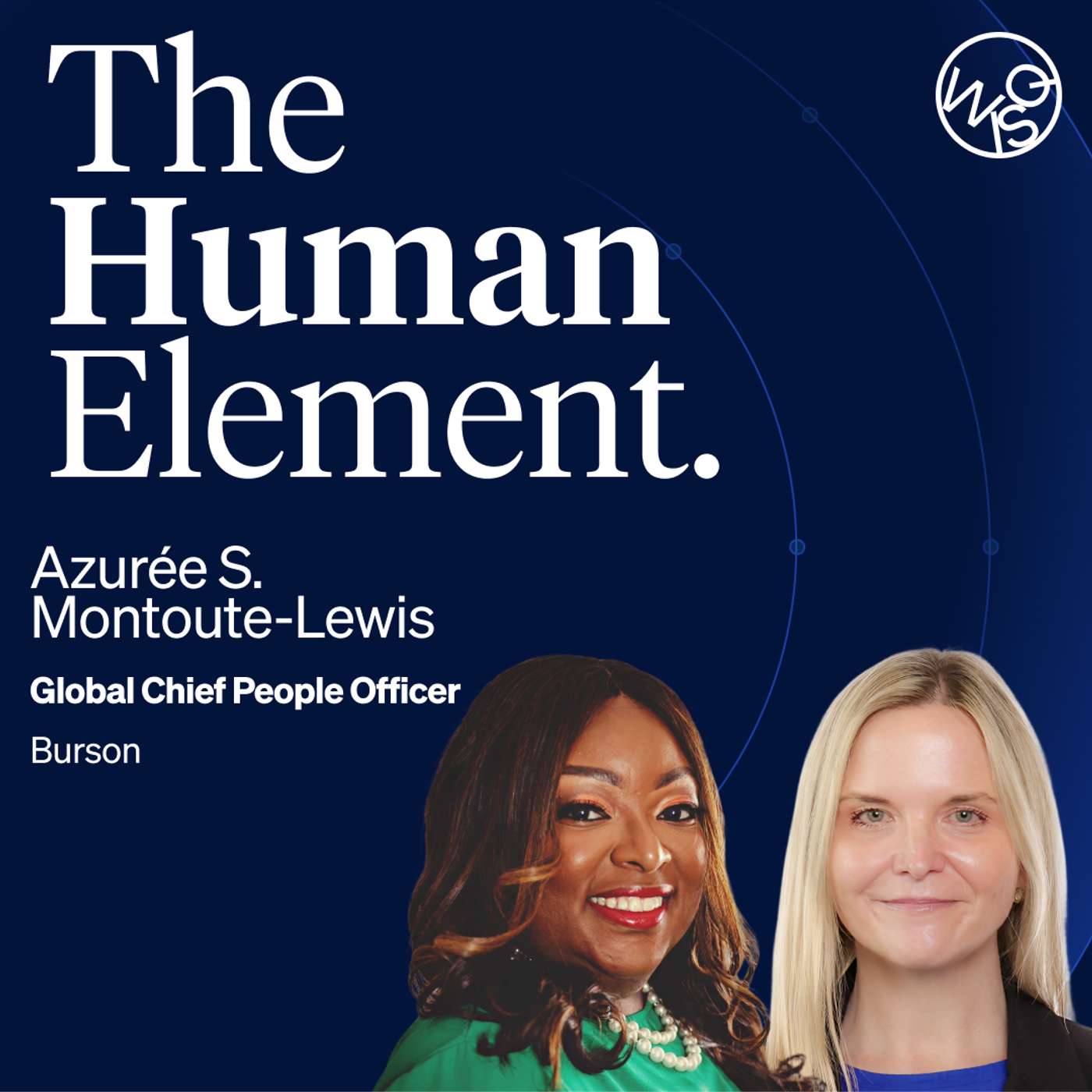 Why AI Adoption Stalls When Trust Runs Out 21.05.2026 32минSummaryIn this episode of The Human Element, Barb Bidan sits down with Azurée S. Montoute-Lewis, Global Chief People Officer at Burson, to discuss what it actually takes to move AI from pilot programs to organization-wide adoption. Azurée argues that the organizations succeeding at AI adoption aren't moving the fastest. They're the ones who built a foundation of trust before deploying tools, designed metrics around decision quality rather than usage, and drew clear lines between where AI assists human work and where humans must still make the call. With 5,000 employees and 9,000 internal AI agents, Burson is a working example of what that approach produces.Chapters00:00 Azurée's role at Burson and what makes it unique03:10 AI forces an operating model change, not just a technology change07:30 Why scaling AI breaks down: ownership, data gaps, change fatigue11:45 Bringing along early adopters, skeptics, and global audiences14:00 The right way to measure AI impact (not usage)17:20 When Burson's data came back inconclusive and what they did next20:15 Agentic AI: from AI that assists to AI that acts23:50 The feedback coaching agent and where Burson draws the line27:00 Trust, fear response, and psychological safety in an AI workplace29:30 Lightning round: one metric, one governance mistake, one line AI won't crossTakeawaysMeasuring AI adoption by usage is the wrong metric — decision quality and output quality are the signals that matter.Organizations that deploy AI without a transparent trust conversation trigger a predictable fear response; building trust first makes adoption easier and more durable.The strongest HR AI use cases augment human capability rather than replace human judgment — Burson's feedback coaching agent is a working example.Calibration, succession, and leadership assessments should stay with humans; AI can aggregate inputs but cannot supply the nuance of real leadership observation.HR's core job in the AI era is designing the human architecture around the technology: the measurement frame, the trust foundation, and the human/AI boundary.Guest linksAzurée S. Montoute-Lewis on LinkedIn: https://www.linkedin.com/in/azureesmontoutelewis/Company Website: https://www.bursonglobal.com/SponsorWisq is the AI platform for HR. We built Harper, the world’s first AI HR teammate — designed to handle the judgment-heavy work that has historically consumed HR teams: job changes, performance concerns, leaves of absence, onboarding, and employee relations issues. Where HCM bolt-ons and chatbots deflect the easiest questions, Harper resolves full cases, end-to-end. The result is an HR function with the capacity and strategic bandwidth to focus on the work that moves the business.Companies get Harper live in weeks, not quarters, with implementation support built on deep HR domain expertise. Wisq serves HR leaders at leading companies across industries, helping them raise the bar on employee experience and expand what their teams are capable of.For more information, visit https://www.wisq.com.
 -
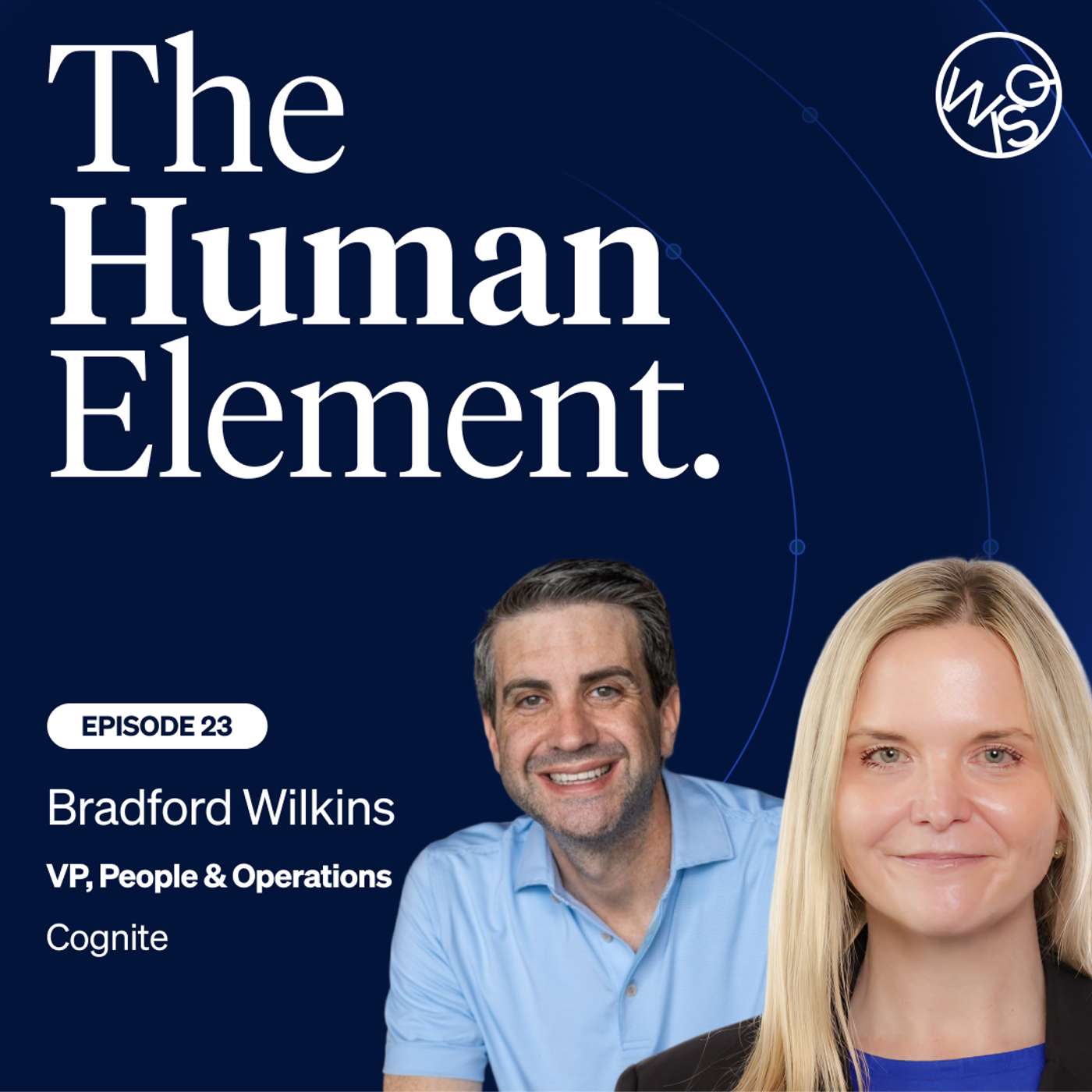 How One Survey Fixed Three Issues in a Single Week Using AI 19.05.2026 32минSummaryA new hire fills out their 90-day survey and says they're not getting meaningful time with their manager. Instead of filing it away for a quarterly review, Bradford Wilkins pulls the data—and within ten seconds, AI shows him that the manager is spending nearly 50% of their time on pre-sales activities that aren't even part of their job. Within a week, the team is redesigning job responsibilities, reallocating time, and building a fix that will accelerate ramp for every future hire in that department. In this episode of The Human Element, host Barb Bidan sits down with Bradford Wilkins, VP of People and Organization at Cognite, an industrial AI company, for a fast-moving conversation about what happens when you stop looking at people data in silos and start connecting it the same way you'd connect sensors in an oil refinery. Bradford walks through how Cognite is building knowledge graphs that layer engagement data on top of performance data on top of Salesforce data to surface correlations no one was seeing before, why he says 50% of his job is already gone (and why that's exciting, not scary), and his "cheesecloth" framework for AI-first thinking: push everything through AI first, and whatever's left on the other side is the human work. He and Barb also get into why entry-level hires who grew up on AI may be more valuable right now than your mid-career employees, how org charts are starting to include agent boxes alongside human ones, and why the best time to start was twenty years ago—but the second best time is now.Timestamps00:39 How Cognite connects people data the same way it connects industrial sensors04:30 The 90-day survey that triggered three fixes in a single week09:54 Where the biggest HR automation opportunities are right now12:59 "50% of my job is gone"—and why that's the exciting part14:12 What still requires the human touch: team composition, empathy, judgment19:42 Building trust by helping employees visualize where their jobs are headed23:51 Managing agents as direct reports: the new org chart26:35 Learning labs, AI champions, and building capability through show and tellTakeawaysPush every process through the "cheesecloth" of AI first—what's left on the other side is the genuinely human workConnect your people data across silos (engagement, performance, time tracking, CRM) instead of analyzing each in isolationDon't add AI on top of a bad process; you're just compounding the problem fasterBuild trust by helping employees visualize what their jobs will look like after AI, not just telling them not to worryCreate learning labs and AI champion roles to drive adoption intentionally instead of hoping it happens organicallyRecognize that entry-level hires who grew up on AI may be your most valuable asset right now for accelerating adoptionGuest LinkedIn: https://www.linkedin.com/in/bradfordwilkins/Company website: https://www.cognite.comSponsorWisq is the AI platform for HR. We built Harper, the world’s first AI HR teammate — designed to handle the judgment-heavy work that has historically consumed HR teams: job changes, performance concerns, leaves of absence, onboarding, and employee relations issues. Where HCM bolt-ons and chatbots deflect the easiest questions, Harper resolves full cases, end-to-end. The result is an HR function with the capacity and strategic bandwidth to focus on the work that moves the business.Companies get Harper live in weeks, not quarters, with implementation support built on deep HR domain expertise. Wisq serves HR leaders at leading companies across industries, helping them raise the bar on employee experience and expand what their teams are capable of.For more information, visit https://www.wisq.com.
 -
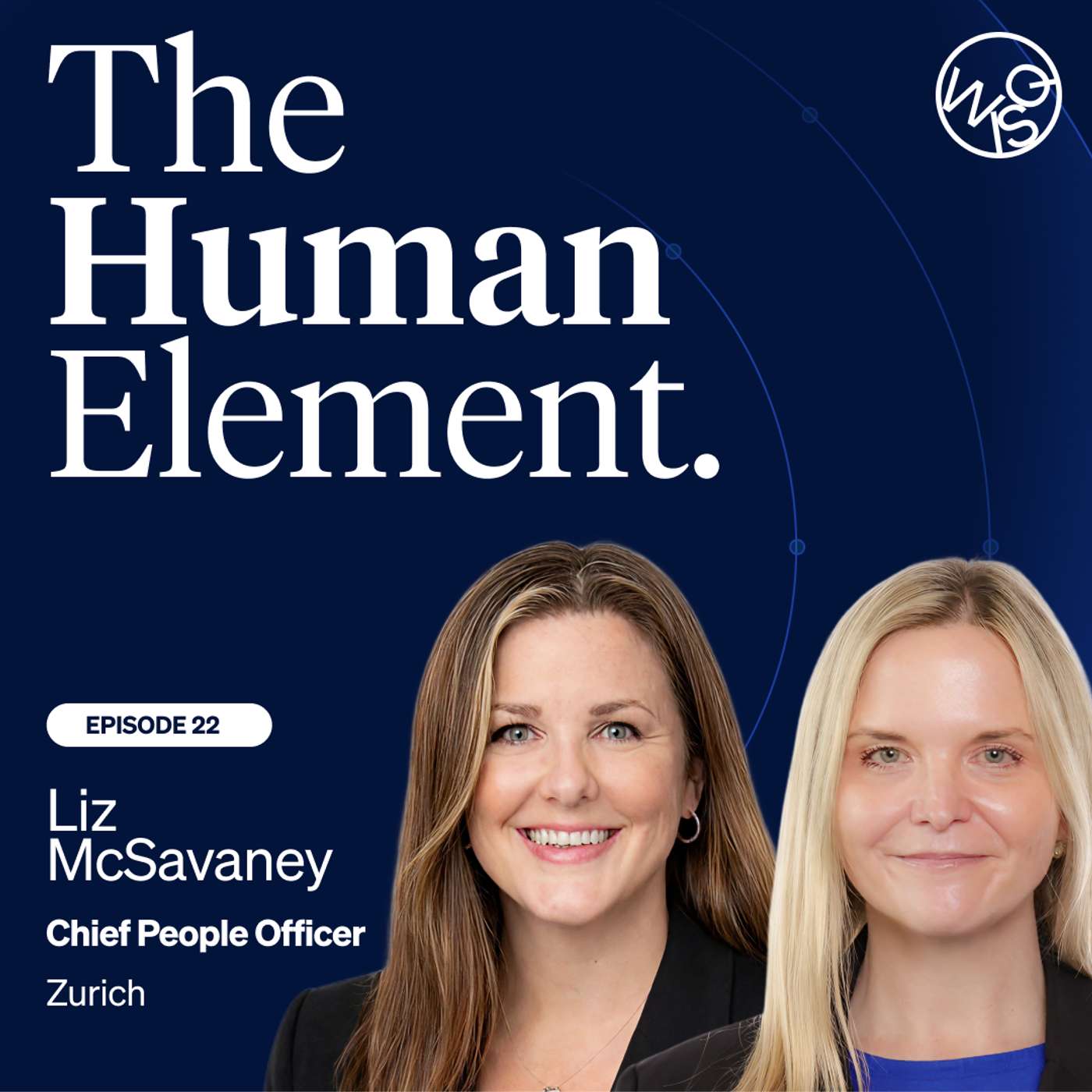 How to Drive AI Adoption Inside a Global Company 05.05.2026 29минSummaryIn a regulated, data-rich industry like insurance, speed isn't the goal—credibility is. In this episode of The Human Element, host Barb Bidan sits down with Elizabeth McSaveny, Chief People Officer at Zurich Canada, for a grounded conversation about what it actually looks like to drive AI adoption at scale inside a global enterprise. Liz leads people strategy for a company that already runs on data across underwriting, claims, and risk, which gives her a unique vantage point on how HR should show up in the AI conversation: not as the owner of the technology, but as the orchestrator of trust, clarity, and responsible use. She shares how Zurich built ZuriChat—a GPT-based tool with enterprise guardrails—rolled out mandatory Copilot training with annual recertification, and why the gap between access and adoption is almost always a leadership problem, not a technology problem. Barb and Liz also get into the distinction between artificial intelligence and augmented intelligence, why 70% of AI transformations fail due to leadership rather than tech, and what Liz is looking for in a new L&D hire tasked with building AI capability across the organization. She closes with practical advice for every HR leader: get comfortable with the tools yourself first, because your team is watching whether you actually use what you're asking them to adopt. If you lead people in a regulated industry or are trying to build AI adoption that sticks, this conversation will ground your approach.Timestamps01:06 Liz's intro and what leading people strategy means at a global insurer02:10 Why credibility matters more than speed in regulated environments05:26 Advice for HR leaders stepping into global or regulated roles for the first time07:39 How Zurich uses AI in underwriting, claims, and HR10:57 Building ZuriChat with enterprise guardrails and mandatory recertification16:57 Hiring an L&D leader focused on building AI capability23:27 What HR leaders are getting wrong: focusing on the tool instead of the mindset26:02 One action HR leaders can take this weekTakeawaysLead with clarity and trust, not speed—credibility is how you earn the right to move fast laterClose the gap between AI access and adoption by investing in leadership capability, not more toolsRequire training and recertification for AI tools so employees understand both the power and the boundariesSell AI internally as an enabler of your day to day, not a separate initiative layered on top of existing workModel AI use yourself before asking your team to adopt—they're watching whether you practice what you promoteDefine what good innovation looks like before telling your team to "be innovative"Guest LinkedIn: https://www.linkedin.com/in/elizabeth-McSavaney-chrl-bsc-371377/Company website: https://www.zurichcanada.com/en-caSponsorWisq is the AI platform for HR. We built Harper, the world’s first AI HR teammate — designed to handle the judgment-heavy work that has historically consumed HR teams: job changes, performance concerns, leaves of absence, onboarding, and employee relations issues. Where HCM bolt-ons and chatbots deflect the easiest questions, Harper resolves full cases, end-to-end. The result is an HR function with the capacity and strategic bandwidth to focus on the work that moves the business.Companies get Harper live in weeks, not quarters, with implementation support built on deep HR domain expertise. Wisq serves HR leaders at leading companies across industries, helping them raise the bar on employee experience and expand what their teams are capable of.For more information, visit https://www.wisq.com.
 -
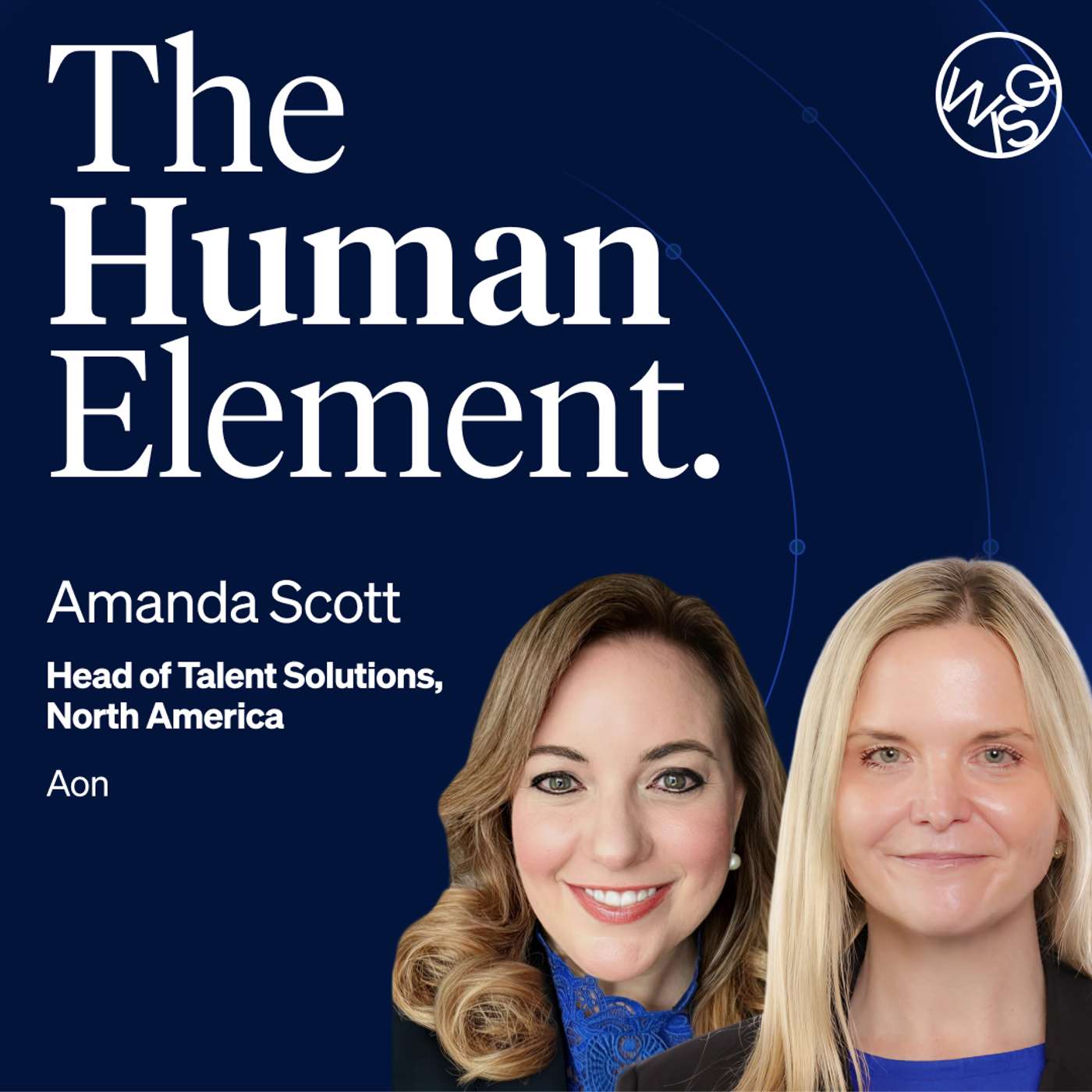 Why Humans Are the Real Bottleneck to Workforce Transformation — Not AI 28.04.2026 34минSummaryAI is already inside 75% of companies—and 100% of people are using it—but only 10% actually know how. So what's really standing between organizations and meaningful AI transformation? According to Amanda Scott, it's not the technology. It's us. In this episode, Barb Bidan sits down with Amanda Scott, CEO of North America Talent Solutions at AON and a PhD candidate researching AI's impact on the workforce, for a deep, data-driven conversation on what's real versus hype in the AI era. Amanda leads a team of 500+ advisors across rewards, career, executive compensation, and assessment, giving her a rare dual lens: practical client work by day, academic research by night. Together, Barb and Amanda unpack AI sensitivity heat maps, the widening gender pay gap hiding inside AI adoption, why junior and senior roles are most exposed, and how the "middle" of the workforce may be the most important group to get right. If you lead people, design jobs, or set pay strategy, this one's essential listening.Timestamps00:54 Amanda's global background and why she's pursuing a PhD on AI03:56 The biggest limiting factor in AI adoption (hint: it's humans)06:41 Building AI heat maps and reshaping jobs around them12:50 What CHROs and C-suite leaders need to do right now15:38 Amanda's research: how AI is widening the gender pay gap18:48 The future for early-career workers entering the workforce22:17 Why the middle of the organization may matter most26:50 Lightning round and final takeawaysTakeawaysMap where AI will hit your workforce before deploying tools—start with a sensitivity heat map of roles and tasksRethink compensation alongside job design, because evolving roles change pay structuresPrioritize reskilling as an inclusion strategy, not just a retention oneBreak down silos between HR, technology, finance, and the board—this conversation requires all of themRedesign processes from scratch instead of just speeding up old ones with AILead with curiosity; it's the one skill that compounds through every wave of changeGuest LinkedIn: https://www.linkedin.com/in/amandabscott/Company website: https://www.AON.comSponsorWisq is the AI platform for HR. We built Harper, the world’s first AI HR teammate — designed to handle the judgment-heavy work that has historically consumed HR teams: job changes, performance concerns, leaves of absence, onboarding, and employee relations issues. Where HCM bolt-ons and chatbots deflect the easiest questions, Harper resolves full cases, end-to-end. The result is an HR function with the capacity and strategic bandwidth to focus on the work that moves the business.Companies get Harper live in weeks, not quarters, with implementation support built on deep HR domain expertise. Wisq serves HR leaders at leading companies across industries, helping them raise the bar on employee experience and expand what their teams are capable of.For more information, visit https://www.wisq.com. (00:54) - Amanda's global background and why she's pursuing a PhD on AI (03:56) - The biggest limiting factor in AI adoption (hint: it's humans) (06:41) - Building AI heat maps and reshaping jobs around them (12:50) - What CHROs and C-suite leaders need to do right now (15:38) - Amanda's research: how AI is widening the gender pay gap (18:48) - The future for early-career workers entering the workforce (22:17) - Why the middle of the organization may matter most (26:50) - Lightning round and final takeaways
Слични подкасти


Популаран у
Овај подкаст се појављује и у подкаст листама ових земаља.


