
Real Spanish. Real Connection.
SpanishBlackbelt Language School
0
Este podcast no solo trata de aprender español, sino de aprender a conectar. Explora situaciones reales como relaciones, familia, cultura y comunicación para que te sientas más cómodo, seguro y natural al interactuar en español. Los episodios cuentan con narración asistida por IA para garantizar claridad y ritmo para estudiantes de nivel intermedio y avanzado. Las clases de SpanishBlackbelt son impartidas exclusivamente por tutores nativos humanos.
Епизоде
-
 Ep. 35 - Aprender español: el regalo más poderoso que puedes dar — y recibir 01.07.2026 12минAprender español no es solo adquirir una habilidad. Es uno de los actos más generosos que puedes ofrecer a alguien que amas. En este episodio exploramos qué ocurre cuando cruzas hacia el mundo de otra persona en su propio idioma — con tu cuñado latino con quien siempre hubo una distancia invisible, con el paciente que lleva años dependiendo de intérpretes, con el colega bilingüe que nunca ha podido simplemente ser. Y exploramos algo que no se menciona suficiente: lo que ese regalo te hace a ti. La ciencia es clara — dar de forma genuina es una de las fuentes más profundas de felicidad humana. Aprender español por alguien específico no es solo una inversión en esa relación. Es una inversión en ti mismo.Visita https://spanishblackbelt.com para conocer más sobre nuestro programa.Los episodios de este podcast son producidos con narración asistida por inteligencia artificial para garantizar claridad, ritmo y accesibilidad. Las clases de SpanishBlackbelt son impartidas exclusivamente por tutores nativos humanos.====Learning Spanish isn't just acquiring a skill. It's one of the most generous acts you can offer someone you love. In this episode we explore what happens when you cross into someone else's world in their own language — with the Latino brother-in-law you've never quite been able to reach, with the patient who has spent years depending on interpreters, with the bilingual colleague who has spent a lifetime adapting to everyone else. And we explore something that doesn't get talked about enough: what that gift does to you. The science is clear — giving genuinely is one of the deepest sources of human happiness. Learning Spanish for a specific person isn't just an investment in that relationship. It's an investment in yourself.Visit https://spanishblackbelt.com to learn more about our program.Episodes of this podcast are produced with AI-assisted narration to ensure clarity, rhythm, and accessibility. All SpanishBlackbelt classes are taught exclusively by human native-speaking tutors.
 -
 Ep. 34 - Cómo decir lo que quieres y esperas en español - How to say what you want and expect in Spanish 25.06.2026 18мин¿Hay algo que quieres decirle a alguien importante en tu vida — pero en español las palabras no llegan como tú quieres?En este episodio exploramos uno de los territorios más poderosos del español: la diferencia entre describir lo que es y expresar lo que quieres que sea. A través de escenas reales — una pareja en una conversación honesta, un yerno buscando palabras para su suegro, una directora conectando con su equipo en su propio idioma — descubrimos cómo el español te da herramientas precisas para expresar deseos, esperanzas y expectativas en las relaciones que más importan.El español que conecta no es el español perfecto. Es el español honesto.Say it in Spanish.¿Listo para dar el siguiente paso? Visítanos en https://spanishblackbelt.comLos episodios de este podcast son producidos con narración asistida por inteligencia artificial para garantizar claridad, ritmo y accesibilidad. Las clases de SpanishBlackbelt son impartidas exclusivamente por tutores nativos humanos. Los nombres y situaciones mencionados en este episodio pueden haber sido adaptados por razones de privacidad y didácticas.====Is there something you want to say to someone important in your life — but in Spanish, the words don't come the way you want them to?In this episode we explore one of the most powerful territories in Spanish: the difference between describing what is and expressing what you want to be. Through real scenes — a couple having an honest conversation, a son-in-law finding the right words for his father-in-law, a manager reaching her team in their own language — we discover how Spanish gives you precise tools to express desires, hopes, and expectations in the relationships that matter most.The Spanish that connects isn't perfect Spanish. It's honest Spanish.Say it in Spanish.Ready to take the next step? Visit us at https://spanishblackbelt.comEpisodes of this podcast are produced with AI-assisted narration to ensure clarity, rhythm, and accessibility. SpanishBlackbelt classes are taught exclusively by human native-speaking instructors. Names and situations mentioned in this episode may have been adapted for privacy and didactic reasons.
 -
 Ep. 33 - Cenas de negocios en Latinoamérica - Business dinners in Latin America 17.06.2026 20минUna cena de negocios en Latinoamérica no es una extensión del día de trabajo. Es el lugar donde se toman las decisiones reales — antes de que nadie firme nada, antes de que nadie diga que sí.En este episodio aprendes a leer esa cena desde adentro. Qué significa que te inviten, por qué el restaurante es un mensaje, cómo funciona el tiempo, de qué se habla y cuándo, y por qué la persona que sabe navegar esa mesa tiene una ventaja que ninguna presentación puede reemplazar.Lima es el escenario. Pero lo que aprendes aquí funciona en Ciudad de México, en Bogotá, en Buenos Aires — en cualquier mesa donde la confianza se construye antes de que lleguen los contratos.Construye el español y la inteligencia cultural para navegar estos momentos con confianza en https://SpanishBlackbelt.comLos episodios de este podcast son producidos con narración asistida por inteligencia artificial para garantizar claridad, ritmo y accesibilidad. Las clases de SpanishBlackbelt son impartidas exclusivamente por tutores nativos humanos.A business dinner in Latin America is not an extension of the workday. It's where the real decisions get made — before anyone signs anything, before anyone says yes.In this episode you learn to read that dinner from the inside. What it means when you get the invitation, why the restaurant choice is itself a message, how time works, what gets talked about and when, and why the person who knows how to navigate that table has an advantage no presentation can replace.Lima is the setting. But what you learn here works in Mexico City, in Bogotá, in Buenos Aires — at any table where trust is built before the contracts arrive.Build the Spanish and cultural intelligence to navigate these moments with confidence at https://SpanishBlackbelt.com Episodes of this podcast are produced with AI-assisted narration to ensure clarity, rhythm, and accessibility. All SpanishBlackbelt classes are taught exclusively by human native-speaking tutors.
 -
 Ep. 32 - La hora latina — qué quiere decir 'a las siete' y otros misterios del tiempo 10.06.2026 25минHay un secreto que casi nadie te explica sobre la hora latina: no es una sola. Son tres. Y cada una funciona con reglas completamente distintas.En este episodio exploramos los tres contextos donde "a las siete" significa cosas radicalmente diferentes: la puntualidad estricta del mundo profesional, la hora social relajada de los cumpleaños en casa donde llegar puntual es prácticamente grosero, y la hora elástica de las reuniones grandes donde palabras como "ahorita," "al ratito," "ya casi" y "ya voy saliendo" se vuelven filosóficas. Y descubrimos juntos que ese tercer contexto, que de afuera parece desorden, en realidad es generosidad — una forma de cuidar a la gente que el reloj no entiende.Estos códigos no se aprenden en una aplicación. No los enseña ninguna inteligencia artificial. Se aprenden conversando con personas latinas reales que pueden detenerse a explicarte el matiz exacto de un "ahorita" según el tono y el momento. Por eso en SpanishBlackbelt todas las clases son con tutores humanos hispanohablantes nativos — latinos reales que crecieron escuchando estas palabras en la boca de sus mamás y sus abuelas, y que pueden enseñarte no solo qué significan, sino cuándo, cómo y por qué.Aprende más en SpanishBlackbelt.comReal Spanish. Real Connection. — The SpanishBlackbelt Podcast---Los episodios de este podcast son producidos con narración asistida por inteligencia artificial para garantizar claridad, ritmo y accesibilidad. Las clases de SpanishBlackbelt son impartidas exclusivamente por tutores nativos humanos.====There's a secret about Latino time that almost no one explains: it isn't one time — it's three. And each one runs by completely different rules.In this episode, we explore the three contexts where "at seven" means radically different things: the strict punctuality of the professional world, the relaxed social time of birthdays at home where arriving on the dot is practically rude, and the elastic time of large gatherings where words like "ahorita," "al ratito," "ya casi" and "ya voy saliendo" become almost philosophical. And we discover together that this third context — which from the outside can look like disorder — is actually generosity. A way of caring for people that the clock simply doesn't understand.These codes can't be learned in an app. No artificial intelligence can teach them. They're learned by talking with real Latino people who can stop and explain the exact nuance of an "ahorita" depending on the tone and the moment. That's why at SpanishBlackbelt every class is taught by a human native Spanish-speaking tutor — real Latinos who grew up hearing these words from their mothers and grandmothers, and who can teach you not only what they mean, but when, how, and why.Episode in Spanish, designed for intermediate and upper-intermediate adult learners.Learn more at SpanishBlackbelt.comReal Spanish. Real Connection. — The SpanishBlackbelt Podcast---The episodes of this podcast are produced with AI-assisted narration to ensure clarity, pacing, and accessibility. SpanishBlackbelt classes are taught exclusively by human native-speaking tutors.
 -
 Ep. 31 - La parte de ella que vive en español 03.06.2026 13минHay momentos en una pareja mixta —cotidianos, pequeños, nada dramáticos— donde algo está pasando y se nos escapa. Una canción que ella se sabe entera. Una historia de su infancia que en español suena diferente. Una frase heredada que dice sin pensar.En este episodio hablamos de tres momentos muy concretos que probablemente ya estás viviendo con tu pareja latina sin notarlos. Y de cómo, cuando empiezas a entenderlos, no estás aprendiendo un idioma — estás entrando, despacito, a una vida que siempre ha estado al lado tuyo.Una conversación cálida, práctica y profundamente humana sobre el español como puente entre dos personas que se aman.Real Spanish. Real Connection. — The SpanishBlackbelt PodcastLos episodios de este podcast son producidos con narración asistida por inteligencia artificial para garantizar claridad, ritmo y accesibilidad. Las clases de SpanishBlackbelt son impartidas exclusivamente por tutores nativos humanos.=====There are moments in a mixed relationship — everyday, small, undramatic — when something is happening and you're missing it. A song she knows by heart. A childhood story that sounds different in Spanish. An inherited phrase she says without thinking.In this episode we explore three very concrete moments you're probably already living with your Latina partner — without noticing. And how, when you start to understand them, you're not learning a language. You're stepping, gently, into a life that has always been beside you.A warm, practical, deeply human conversation about Spanish as a bridge between two people who love each other.Episode in Spanish, designed for intermediate and upper-intermediate adult learners.Real Spanish. Real Connection. — The SpanishBlackbelt PodcastThe episodes of this podcast are produced with AI-assisted narration to ensure clarity, pacing, and accessibility. SpanishBlackbelt classes are taught exclusively by human native-speaking tutors.
 -
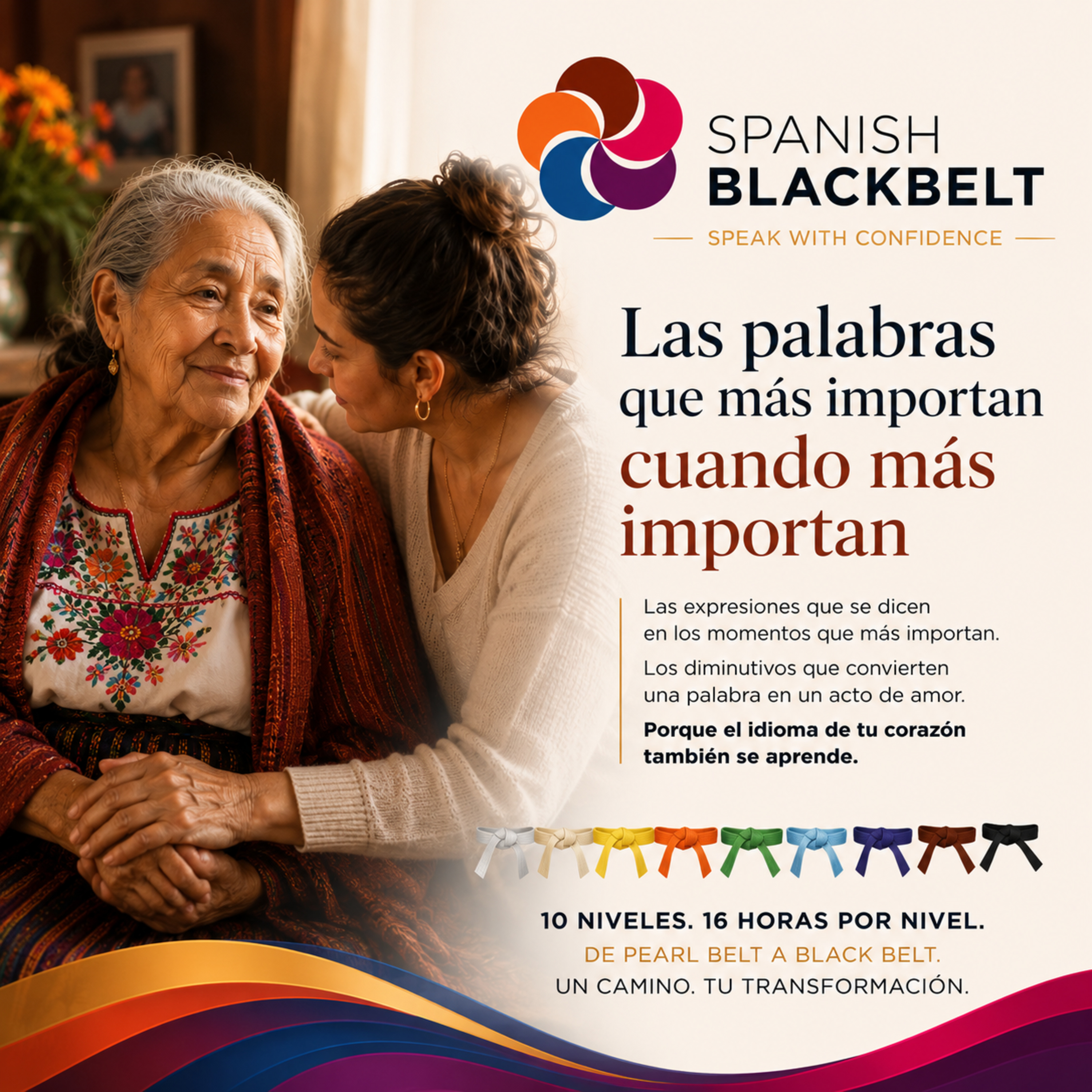 Ep. 30 - Las palabras que más importan cuando más importan 27.05.2026 23минHay momentos en la vida de una familia latina donde el idioma lo es todo. No el español de los libros de texto. No el español de las aplicaciones. El español que se habla cuando alguien mayor está enfermo. Cuando la familia está asustada. Cuando lo único que importa es que esa persona sepa que no está sola.En este episodio exploramos las palabras y expresiones que habitan esos momentos — frases como "ya estoy aquí", "no te preocupes", "te lo prometo" — y el mundo fascinante de los diminutivos latinos, esas pequeñas terminaciones en "ito" e "ita" que convierten una palabra ordinaria en un acto de amor.Porque aprender español no es solo aprender a comunicarse. Es aprender a estar presente en los momentos que más importan.SpanishBlackbelt.comThere are moments in a Latino family's life where language is everything. Not textbook Spanish. Not app Spanish. The Spanish that gets spoken when an elderly family member is sick. When the family is scared. When the only thing that matters is making sure that person knows they are not alone.In this episode we explore the words and expressions that live in those moments — phrases like "ya estoy aquí", "no te preocupes", "te lo prometo" — and the fascinating world of Latino diminutives, those small endings in "ito" and "ita" that turn an ordinary word into an act of love.Because learning Spanish is not just about learning to communicate. It is about learning to be present in the moments that matter most.SpanishBlackbelt.com
 -
 Ep. 29 - El doble sentido en español: el deporte nacional que nadie te enseñó 20.05.2026 18минYou're in a conversation with native Spanish speakers. Everyone's relaxed, the chat feels normal — and suddenly someone says something perfectly ordinary, and the whole room laughs. You understood every word. You still have no idea what just happened.Welcome to doble sentido — the double meaning — one of the most playful, slippery, and culturally loaded features of how Spanish actually works between native speakers. It's not slang. It's not vulgarity. It's a way of relating, a kind of wink built into the language itself.In this episode, we slow down and give the topic the depth it deserves. You'll hear concrete examples of phrases that carry two readings at the same time — the kind you've almost certainly heard at family dinners, office hallways, or social gatherings without quite catching what was going on. We talk about why English speakers tend to miss these moments (it's not your vocabulary — it's the listening habits the language trained into you), and how to start developing the "second ear" that lets you catch them in real time.And just as importantly, we get practical about when doble sentido is welcome and when it isn't. Among close colleagues at your level? Often, yes. With your boss, a client, or someone you just met? Almost never. We break down the social rules so you know exactly how to navigate them — and we share the one rule every adult learner should follow before producing their own double meanings in Spanish.If you've ever felt the smile creep across a Latino friend's face and wondered what you just missed, this episode is for you.🎙️ Listen in Spanish. Grow culturally, not just linguistically.🌐 SpanishBlackbelt.com — premium Spanish coaching for serious adults who want to truly belong, not just communicate.====Estás en una conversación con hispanohablantes. Todo va tranquilo, la charla fluye normal — y de repente alguien dice algo perfectamente común, y todo el grupo se ríe. Tú entendiste cada palabra. Y aún así, no tienes idea de qué acaba de pasar.Bienvenido al doble sentido. Una de las características más juguetonas, resbalosas y culturalmente cargadas de cómo realmente funciona el español entre nativos. No es jerga. No es grosería. Es una forma de relacionarse, un pequeño guiño construido dentro del idioma mismo.En este episodio nos detenemos y le damos al tema la profundidad que merece. Vas a escuchar ejemplos concretos de frases que cargan dos lecturas al mismo tiempo — de esas que con toda seguridad has escuchado en cenas familiares, pasillos de oficina, o reuniones sociales sin terminar de captar qué estaba pasando. Hablamos de por qué a los estudiantes que vienen del inglés se les escapan estos momentos (no es tu vocabulario — son los hábitos de escucha que el inglés te entrenó a tener), y de cómo empezar a desarrollar ese "segundo oído" que te permite captarlos en tiempo real.Y, igual de importante, nos ponemos prácticos sobre cuándo el doble sentido es bienvenido y cuándo no. ¿Entre colegas cercanos de tu mismo nivel? Muchas veces sí. ¿Con tu jefe, con un cliente, con alguien que acabas de conocer? Casi nunca. Te explicamos las reglas sociales para que sepas exactamente cómo moverte — y te compartimos la regla de oro que todo adulto debería seguir antes de empezar a producir sus propios dobles sentidos en español.Si alguna vez has visto la sonrisa pequeña aparecer en la cara de un amigo latino y te has preguntado qué se te acaba de escapar, este episodio es para ti.🎙️ Escucha en español. Crece culturalmente, no solo lingüísticamente.🌐 SpanishBlackbelt.com — coaching premium de español para adultos serios que quieren verdaderamente pertenecer, no solo comunicarse.
 -
 Ep. 28 - Vence a la IA con Confianza Latina 12.05.2026 18мин¿Sabías que en el mundo profesional latino, la confianza no se gana con un título ni con un puesto? Se gana con autenticidad. Con presencia. Con el esfuerzo genuino de comunicarte en el idioma de la otra persona.En este episodio exploramos una de las ventajas competitivas más subestimadas del mercado laboral de hoy — el español — y por qué dominarlo puede significar más oportunidades, mejores relaciones profesionales, y una carrera más sólida en un mundo donde la inteligencia artificial está cambiando las reglas del juego.Te contamos la historia real de una ingeniera de audio que multiplicó sus oportunidades profesionales al llevar su español a Hollywood — y lo que su experiencia nos enseña sobre cómo construir una carrera que ninguna máquina puede reemplazar.SpanishBlackbelt.com===In the Latino professional world, trust is not given because of your title or your position. It is earned through authenticity, presence, and the genuine effort to communicate in someone else's language.In this episode we explore one of the most underestimated competitive advantages in today's job market — Spanish — and why mastering it can mean more opportunities, stronger professional relationships, and a more resilient career in a world where artificial intelligence is changing everything.We share the real story of an audio engineer who multiplied her professional opportunities by bringing her Spanish skills to Hollywood — and what her experience teaches us about building a career that no machine can replace.SpanishBlackbelt.com
 -
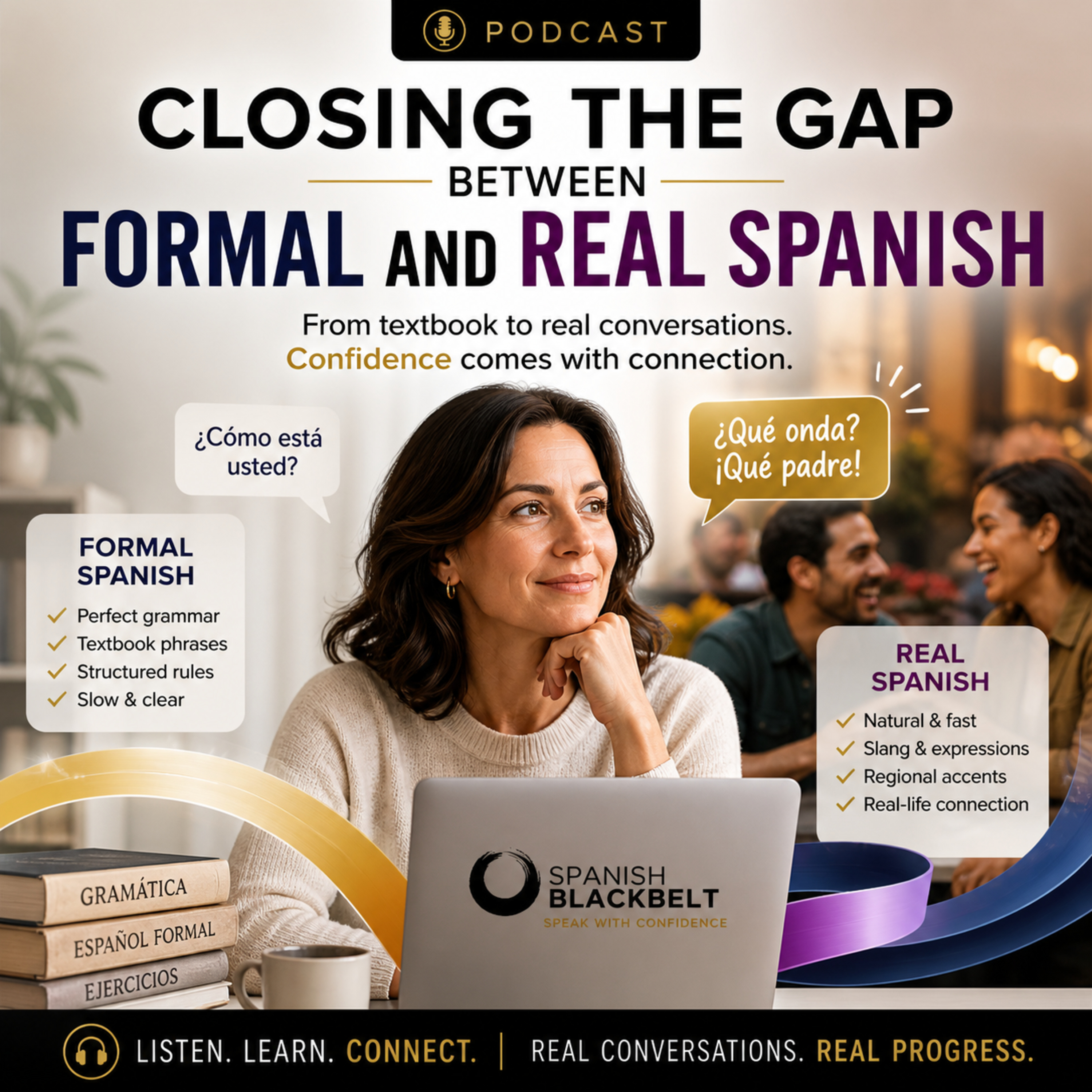 Ep. 27 - Por qué el español real te bloquea — y cómo cruzar esa brecha 05.05.2026 18мин¿Alguna vez estudiaste español, te preparaste, te esforzaste — y aun así te quedaste paralizado cuando alguien habló de verdad? No es porque seas mal estudiante. Es porque nadie te explicó la diferencia entre el español que se enseña y el español que se vive.En este episodio hablamos de esa brecha — por qué existe, qué la causa, y qué significa realmente cuando no entiendes a un hablante nativo. Exploramos el ritmo del español cotidiano, la variación regional, y la diferencia entre entender y hablar. Y más importante — te damos una forma diferente de interpretar esos momentos de confusión que te van a cambiar la experiencia por completo.Este episodio es para ti si ya tienes una base en español y sientes que el idioma real todavía se te escapa. Estás más cerca de lo que crees.SpanishBlackbelt.comHave you ever studied Spanish, prepared yourself, put in the work — and still frozen the moment a native speaker started talking? It's not because you're a bad student. It's because nobody explained the difference between the Spanish that gets taught and the Spanish that actually gets spoken.In this episode we talk about that gap — why it exists, what causes it, and what it really means when you can't follow a native speaker. We explore the rhythm of everyday Spanish, regional variation, and the difference between understanding and speaking. And more importantly — we give you a completely different way to interpret those moments of confusion that will change your entire experience of learning Spanish.This episode is for you if you already have a foundation in Spanish and still feel like the real language is just out of reach. You're closer than you think.
 -
 Ep. 26 - Presente en cuerpo, ausente en alma: cómo el español cambia tu lugar en la familia 01.05.2026 14мин¿Alguna vez has estado en una reunión familiar… y aun así te has sentido fuera de lugar? En este episodio exploramos las tres dimensiones de la pertenencia familiar que el español puede transformar — y por qué el idioma es mucho más que comunicación. Es humanización.Este podcast es producido por SpanishBlackbelt, escuela de español fundada en 2004, y está diseñado para estudiantes de nivel intermedio a avanzado que buscan inmersión real en el idioma.La narración de este podcast es generada con tecnología de voz IA para garantizar claridad, ritmo y accesibilidad óptima para el aprendizaje. Las clases de SpanishBlackbelt son impartidas exclusivamente por tutores nativos humanos altamente calificados.📚 Aprende más en spanishblackbelt.com
 -
 #25. Practice with words that end in “mente” in Spanish 30.12.2024 4минAdverbs are words that tell us how an action is done. For example, in the sentence "The person walks slowly," "slowly" is the adverb that tells us how the person walks. In Spanish, many adverbs are formed by adding "-mente" to the end of feminine adjectives that we already know. For example, "lento" becomes "lentamente." It's similar to when in English we add "-ly" to the end of some words, like "slow" which becomes "slowly." After listening, answer these questions: 1. What does Andrés usually order at the cafeteria? 2. How did Andrés greet Elena at the cafeteria? 3. How often does Elena prepare her coffee at the office? 4. How did they both leave the coffee shop? 5. How was their day going? 6. How did Andrés and Elena talk about their plans and challenges at work? 7. How often does Elena come to the coffee shop before going to the office? 8. How did Andrés and Elena plan their day? Los adverbios son palabras que nos dicen cómo se hace una acción. Por ejemplo, en la frase "La persona camina lentamente", "lentamente" es el adverbio que nos dice cómo camina la persona. En español, muchos adverbios se forman agregando "-mente" al final de adjetivos femeninos que ya conocemos. Por ejemplo, "lento" se convierte en "lentamente". Es parecido a cuando en inglés agregamos "-ly" al final de algunas palabras, como "slow" que se convierte en "slowly". Luego de escuchar responde a estas preguntas: 1. ¿Qué pide Andrés generalmente en la cafetería? 2. ¿Cómo saludó Andrés a Elena en la cafetería? 3. ¿Qué tan a menudo Elena prepara su café en la oficina? 4. ¿Cómo salieron ambos de la cafetería? 5. ¿Cómo avanzaba el día para ellos? 6. ¿Cómo hablaban Andrés y Elena sobre sus planes y retos en el trabajo? 7. ¿Con qué frecuencia Elena viene a la cafetería antes de ir a la oficina? 8. ¿Cómo planificaron su día Andrés y Elena? 👥 Learn more about our conversational Spanish classes https://spanishblackbelt.com/spanish_courses/conversational_spanish.php?area=Zoom&stateID=44
 -
 #24. Situations where you need to know how to use formal commands in Spanish 01.12.2024 2минIn this podcast, we explore "formal commands" in Spanish, those commands that we use with respect and professionalism in various situations. 🧑🏫 Join us on a journey full of everyday examples so you can see when and how to use these commands in real life. 👨🏫 What will you learn? This podcast teaches you the benefits of using formal commands, especially in professional contexts. Learning to give instructions formally is key to conveying respect and authority, from the office to the coffee shop. 🔎 How are formal commands formed? Very simple: • If a present tense verb for "you (usted(es)" ends in -A(n), the formal form changes to -E(n)! Example: hablar ➡️habla(n)➡️ hable(n) (to speak) • If it ends in -E(n), it goes to -A(n). Example: comer ➡️come(n)➡️ coma(n) (to eat) • Remember, there are some irregular verbs! So we'll wait for you in class to review them all (intermediate level of Spanish at SpanishBlackbelt!). 😎 Benefits of mastering formal commands: With them, your Spanish sounds more professional and respectful, something essential in the work world or when interacting with clients and bosses. 👥 Learn more about our conversational Spanish classes https://spanishblackbelt.com/spanish_courses/conversational_spanish.php?area=Zoom&stateID=44 ================== CREDITS: https://www.pexels.com/video/a-man-training-his-dog-5740001/ https://www.pexels.com/video/a-woman-presenting-using-laptop-5311280/ https://www.pexels.com/video/mechanic-checking-under-the-car-8987301/ https://www.pexels.com/video/person-watering-plants-7655139/ https://www.pexels.com/video/close-up-video-of-a-person-wiping-a-cabinet-9462940/
 -
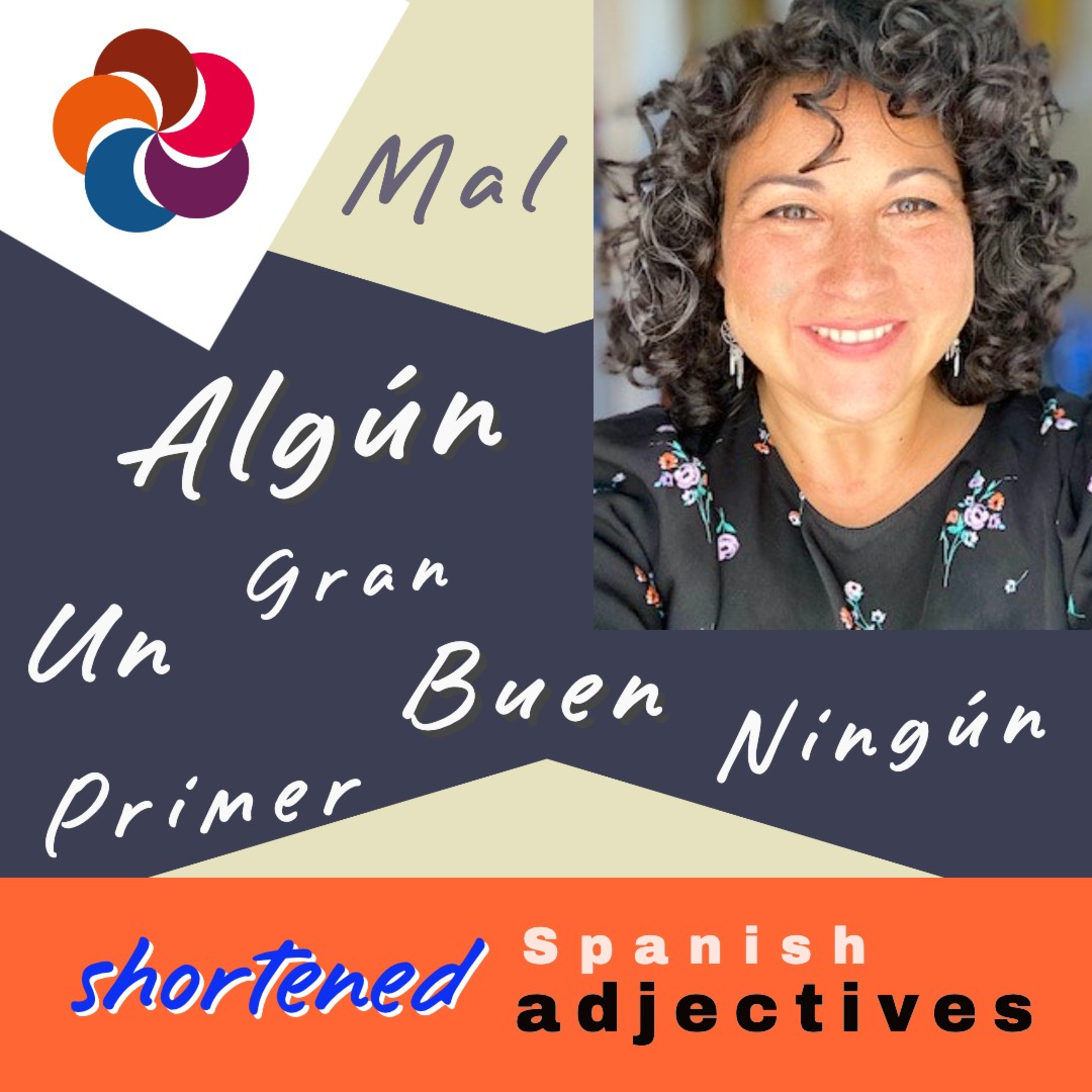 #23. Spanish adjectives that are shortened in front of singular masculine nouns 19.11.2024 8минToday, Carolina will show us 10 cases in which adjectives change shape when they are in front of masculine nouns in Spanish, and will give us fun tips to remember why it happens. We will use simple sentences. The important thing is to know how to differentiate and recognize when it comes to adjectives in front of masculine nouns. You will learn to differentiate when to use "cualquier" instead of "cualquiera" (any), "gran" instead of "grande" (great/big). And many other words! Ready to try it? Tune in to improve your understanding and use of Spanish, and take your Spanish skills to the next level! ================== 👥 Learn more about our conversational Spanish classes https://spanishblackbelt.com/spanish_courses/conversational_spanish.php?area=Zoom&stateID=4 CREDITS: https://www.pexels.com/video/busy-texting-856405/ https://www.pexels.com/video/jewish-man-writing-on-a-notepadd-6037421/ https://www.pexels.com/video/artist-painting-a-flower-vase-7857985/ https://www.pexels.com/video/aerial-view-of-a-luxurious-house-with-pool-2253719/ https://www.pexels.com/video/a-cab-driver-on-his-way-5834804/ https://www.pexels.com/video/a-teacher-teaching-her-students-via-video-calling-5183279/ https://www.pexels.com/video/a-man-in-santa-suit-reading-request-letters-3195297/ https://www.pexels.com/video/turning-a-page-in-the-book-7809632/ https://www.pexels.com/video/an-elderly-woman-reading-a-book-4058252/ https://www.pexels.com/video/people-running-on-the-sidewalk-3943397/ https://www.pexels.com/video/a-woman-wearing-a-happy-face-3971923/ https://www.pexels.com/video/a-woman-feeling-fatigue-at-the-back-of-a-car-5717609/ https://www.pexels.com/video/a-girl-raising-her-hands-8342934/ https://www.pexels.com/video/teacher-having-a-lecture-5198156/ https://www.pexels.com/video/man-checking-the-time-in-his-watch-7868441/ https://www.pexels.com/video/elderly-woman-having-a-hard-time-6872628/ https://www.pexels.com/video/a-young-teenage-boy-using-a-laptop-4874628/ https://www.pexels.com/video/a-woman-studying-and-writing-while-using-her-smartphone-5535983/ https://www.pexels.com/video/woman-doing-thumbs-up-while-looking-at-the-camera-10149023/ https://www.pexels.com/video/penguins-at-the-zoo-1528489/ https://www.pexels.com/video/video-of-people-talking-on-side-street-4625295/ https://www.pexels.com/video/interior-design-of-a-modern-house-3770033/
 -
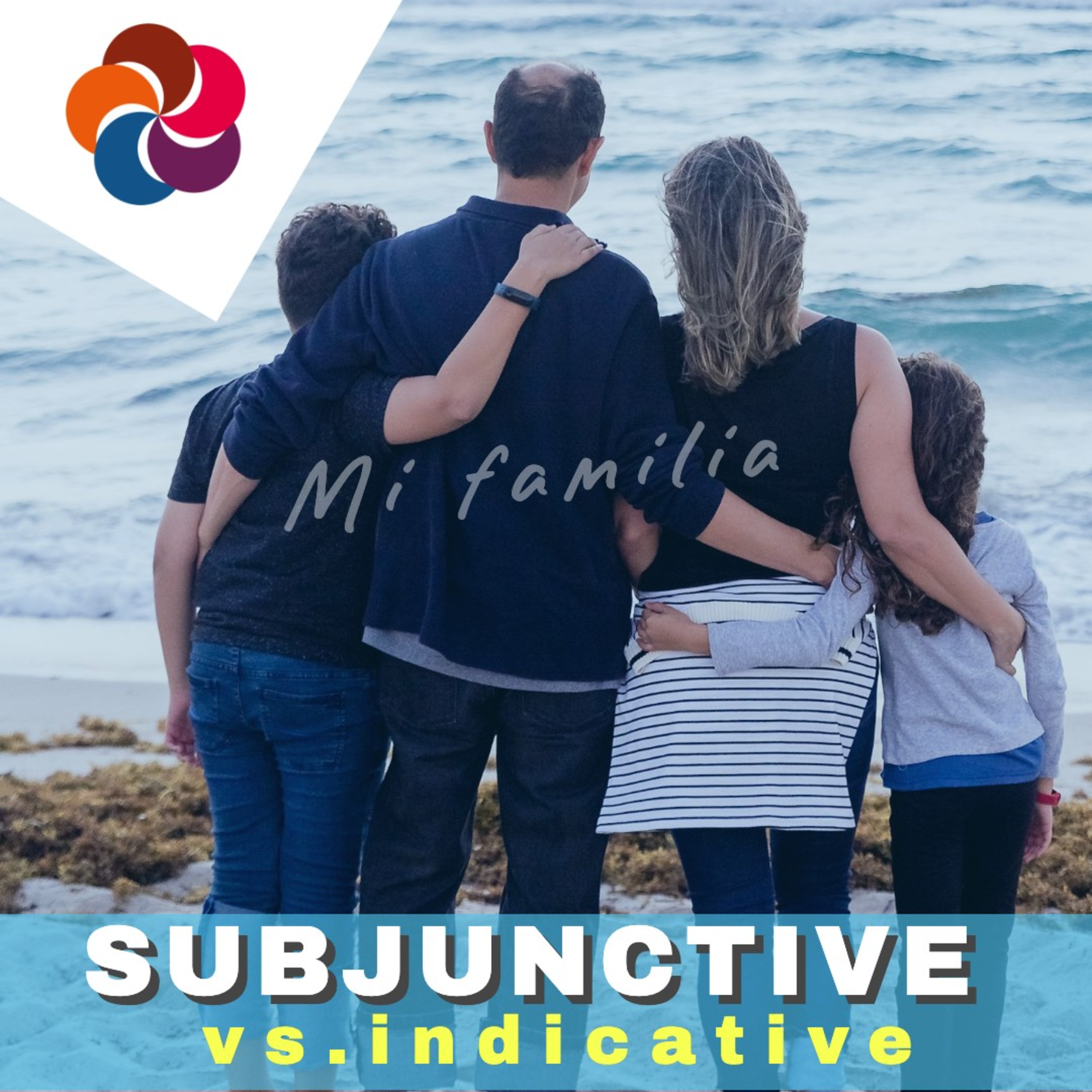 #22. When to use the indicative or the subjunctive in Spanish - Cuándo usar el indicativo o el subjuntivo en español 11.11.2024 6минIn this episode we will review a characterization about a family, observing when to use the verb in the indicative mood, and when to use the verb in the subjunctive mood. We will use simple sentences. The important thing is to know how to differentiate when we are talking about concrete facts, or when we are talking about subjective things, such as doubts, feelings and emotions. You will learn to say phrases like “dudo que mis hijos vean televisión hasta tarde” (I doubt my children watch TV until late), "creo que mi hijo juega video juegos en las noches" (I think my son plays video games at night”, "espero que mi hija no pase mucho tiempo frente a la pantalla" (I hope my daughter doesn't spend too much time in front of the screen”, and many more phrases. Ready to try it? Tune in to improve your understanding of accurate or subjective actions and take your Spanish skills to the next level! 👥 Learn more about our conversational Spanish classes https://spanishblackbelt.com/ ====== 👥 Obtén más información sobre nuestras clases de español conversacional https://spanishblackbelt.com/ CREDITS https://www.pexels.com/video/a-family-eating-together-outdoors-8769416/ https://www.pexels.com/video/family-members-hugging-each-other-5616686/ https://www.pexels.com/video/man-preparing-to-grill-8768890/ https://www.pexels.com/video/food-on-a-table-6958099/ https://www.pexels.com/video/people-eating-together-5791517/ https://www.pexels.com/video/group-of-people-eating-together-3245641/ https://www.pexels.com/video/group-of-friends-celebrating-6949096/ https://www.pexels.com/video/family-getting-together-for-christmas-5738135/ https://www.pexels.com/video/game-online-console-playstation-4247319/ https://www.pexels.com/video/a-person-on-a-bike-rides-down-a-path-26964867/ https://www.pexels.com/video/girl-writing-on-her-notebook-2086113/ https://www.pexels.com/video/personal-belongings-of-a-traveler-in-a-luggage-8197681/ https://www.pexels.com/video/people-surfing-in-the-beach-5287655/ https://www.pexels.com/video/mother-and-daughter-petting-a-dog-7515864/ https://www.pexels.com/video/close-up-video-of-a-cat-7691959/ https://www.pexels.com/video/writing-viewpoint-outdoors-thinking-4596337/
 -
 #21. Past routines in Spanish, a conversational practice - Rutinas pasadas en español, una práctica conversacional 13.08.2024 10минWelcome to our exciting podcast on past routines in Spanish! Today, we're diving into how to talk about the things we used to do regularly in the past. We’ll kick things off with simple sentences, using different people (like you, we, they, and you-formal) performing various actions. Then, we’ll step it up by practicing these past routines in a fun short story. You’ll learn to say sentences like “We used to study together before exams,” “They used to eat hamburgers every Saturday,” and “Did you use to arrive late to class every day?” Remember, when describing past routines in Spanish, verbs typically end in -ABA or -ÍA. Ready to give it a try? Tune in to enhance your understanding of past actions and take your Spanish skills to the next level! 👥 Learn more about our conversational Spanish classes https://spanishblackbelt.com/ ====== ¡Bienvenidos a nuestro emocionante podcast sobre rutinas pasadas en español! Hoy, nos sumergiremos en cómo hablar sobre las cosas que solíamos hacer regularmente en el pasado. Comenzaremos con oraciones simples, utilizando diferentes personas (como tú, nosotros, ellos y tú-formal) realizando varias acciones. Luego, lo intensificaremos practicando estas rutinas pasadas en una historia corta y divertida. Aprenderás a decir oraciones como "Solíamos estudiar juntos antes de los exámenes", "Solían comer hamburguesas todos los sábados" y "¿Solías llegar tarde a clase todos los días?". Recuerda, al describir rutinas pasadas en español, los verbos generalmente terminan en -ABA o -ÍA. ¿Listo para intentarlo? ¡Sintonízalo para mejorar tu comprensión de las acciones pasadas y llevar tus habilidades en español al siguiente nivel! 👥 Obtén más información sobre nuestras clases de español conversacional https://spanishblackbelt.com/
 -
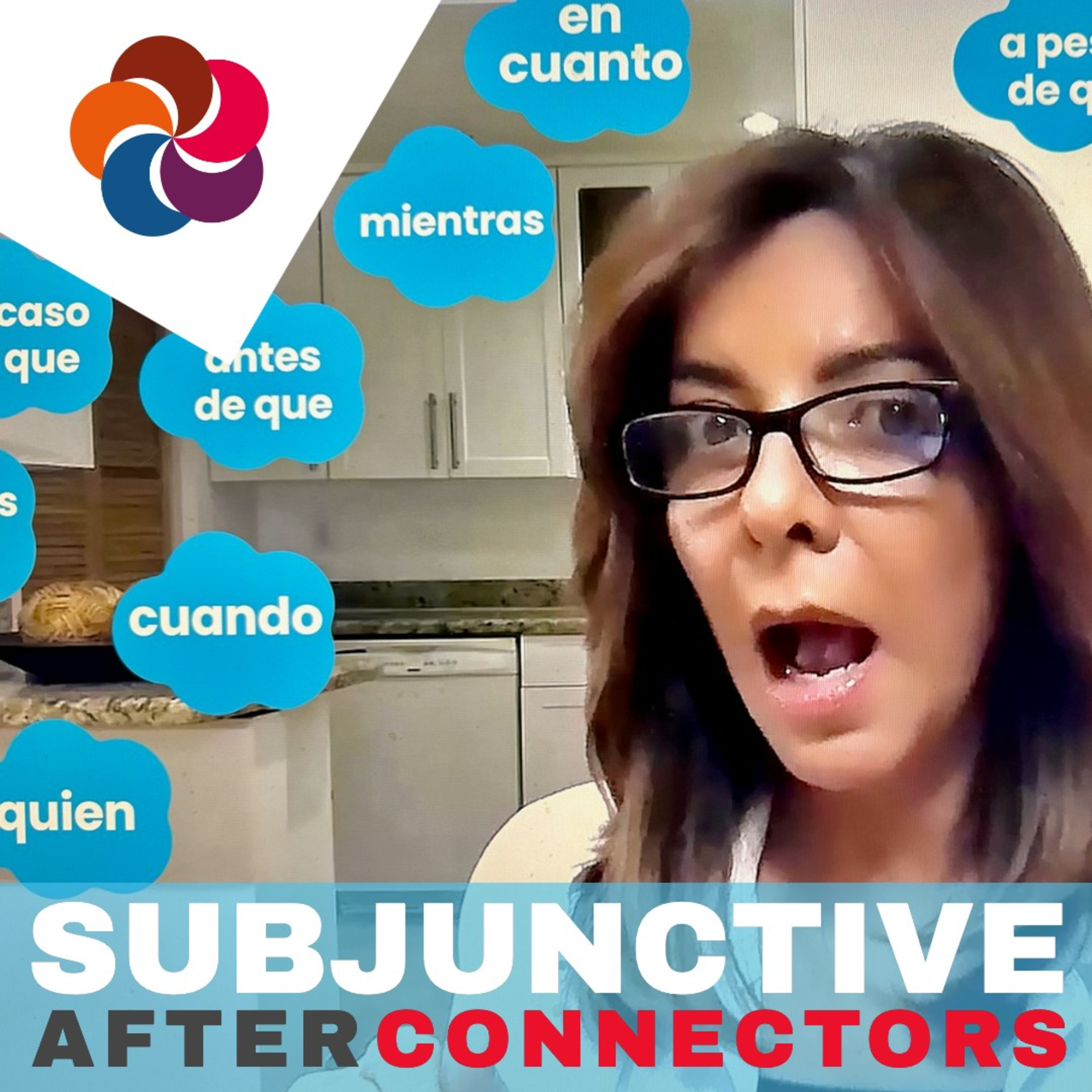 #20. Subjunctive used after connectors in Spanish - Subjuntivo usado después de conectores en español 26.07.2024 12минWelcome to our episode on mastering the subjunctive in Spanish! Today, we’ll dive into exercises that help you use the subjunctive in sentences describing actions or things. We start with two key examples: Buscaré un trabajo donde valoren mi experiencia. Necesito un coche que tenga un buen rendimiento. Notice the three common characteristics in these sentences: They use phrases with actions to describe something, rather than single words They include connectors like "where/donde" or "that/que" The action after the connector is in the subjunctive form, as there's no certainty that the described job or car exists. We'll explore how phrases like "where they value my experience" or "that has a good performance" replace simpler descriptors like "good." Plus, we'll cover other connectors in Spanish, such as quien, cuando, tan pronto como, hasta que, después de que, antes de que, mientras, con tal de que, a pesar de que, a menos que, en caso de que, sin que, aunque, tan pronto como, and luego que. Tune in to enhance your understanding of the subjunctive and elevate your Spanish skills! ===== Consider take one of our conversational Spanish classes live online at SpanishBlackbelt.com . Have extensive opportunity to talk in Spanish and receive feedback and guidance from a competent native Spanish speaker.
 -
 #19. Talking about my routine using the present tense of irregular verbs in Spanish - Hablando de mi rutina usando el tiempo presente de verbos irregulares en español 01.07.2024 6минJoin me in this video as I walk you through my daily routine, using the present tense of irregular verbs in Spanish! Perfect for Spanish students looking to get more exposure to commonly used irregular verbs, I will cover verbs like 'ir' (to go), 'tener' (to have), 'hacer' (to do/make), and many more. Follow along and practice as I describe activities such as going to work, having breakfast, and doing exercises, all while helping you improve your Spanish fluency. Let's make learning fun and practical! Consider take one of our conversational Spanish classes live online at SpanishBlackbelt.com . Have extensive opportunity to talk in Spanish and receive feedback and guidance from a competent native Spanish speaker. ---- ¡Únase a mí en este video mientras lo guío a través de mi rutina diaria, usando el tiempo presente de los verbos irregulares en español! Perfecto para estudiantes de español que buscan una mayor exposición a los verbos irregulares de uso común, cubriré verbos como 'ir' (ir), 'tener' (tener), 'hacer' (hacer) y muchos más. Sigue y practica mientras describo actividades como ir a trabajar, desayunar y hacer ejercicios, todo mientras te ayudo a mejorar tu fluidez en español. ¡Hagamos que el aprendizaje sea divertido y práctico! Considere tomar una de nuestras clases de español conversacional en vivo en línea en SpanishBlackbelt.com. Tener una amplia oportunidad de hablar en español y recibir comentarios y orientación de un hablante nativo de español competente.
 -
 #18. Exercises to practice with the irregular present perfect tense in Spanish - Ejercicios para practicar con el presente perfecto irregular en español 21.06.2024 12минCorrect these questions and answers as you read aloud. These 15 dialogues are useful for learning more about a person you just met, particularly about the things they have already done and the things they have not done yet. Also practices with the irregular Present Perfect in Spanish. --- Corrije estas preguntas y respuestas mientras lee en voz alta. Estos 15 diálogos son útiles para aprender más sobre una persona que acabas de conocer, particularmente sobre las cosas que ya ha hecho y las que aún no ha hecho. También practica con el Presente Perfecto irregular en español. ----- Consider take one of our conversational Spanish classes live online at SpanishBlackbelt.com . Have extensive opportunity to talk in Spanish and receive feedback and guidance from a competent native Spanish speaker.
 -
 #17. Diálogo para practicar vocabulario y gramática en español. Una señora entra a una tienda a comprar ropa. - Dialogue to practice vocabulary and grammar in Spanish. 15.06.2024 6минDiálogo para practicar vocabulario y gramática. Una señora entra a una tienda a comprar ropa. ¿Qué significan las palabras pequeñas LE, SE, ME, LO, LA que tanto la compradora como la vendedora usan en este contexto? ¿Por qué se usan estas palabras resaltadas en cada caso? ¿Son todas estas palabras resaltadas usadas correctamente? ¿Por qué? Recuerdas… LE, SE, ME, LO y LA son pronombres en español utilizados para reemplazar a sustantivos y evitar su repetición. "ME" se usa como objeto indirecto de la primera persona singular ("Me dieron un regalo"). "LE" es el pronombre de objeto indirecto de tercera persona para ambos géneros ("Le di el libro"). "SE" puede ser un pronombre reflexivo o un pronombre de objeto indirecto que reemplaza "le" o "les" cuando está junto a un pronombre de objeto directo ("Se lo di"). "LO" y "LA" son pronombres de objeto directo; "LO" se usa para sustantivos masculinos ("Lo vi"), y "LA" para sustantivos femeninos ("La vi").
 -
 #16. Exercises to practice with the irregular past tense in Spanish 03.06.2024 7минThis dialogue is useful for practicing asking questions of someone you haven't seen in a while, particularly about things they did on a recent trip. Also practices with the irregular Past tense in Spanish (Preterite). Este diálogo es útil para practicar cómo hacerle preguntas a alguien que no has visto en mucho tiempo, particularmente sobre cosas que hizo en un viaje reciente. También practica con el tiempo pasado irregular en español (pretérito).
Слични подкасти


Популаран у
Овај подкаст се појављује и у подкаст листама ових земаља.
