
Life of Flow
Lucas Ferrer and Miguel Montero-Baker
0
Life of Flow is a podcast hosted by two vascular surgeons, Miguel-Montero Baker and Lucas Ferrer Cardona. They share their thoughts, insights, and expertise each week, discussing topics related to vascular surgery and beyond. The hosts also share personal anecdotes and stories, providing a unique perspective on the challenges and lessons of their profession.
Епизоде
-
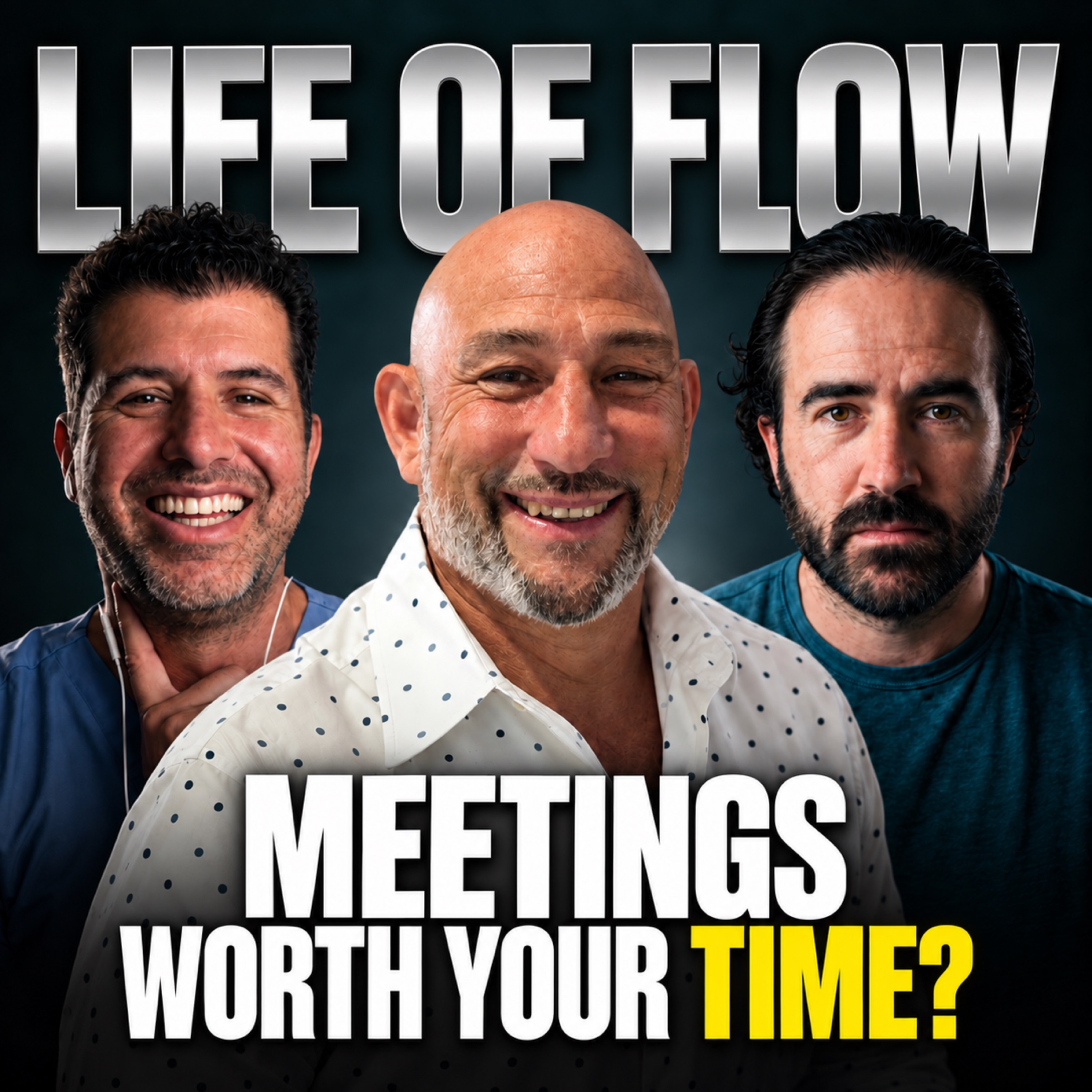 Vascular Hunger Games: What Makes a Medical Meeting Worth Your Time? | LOF #135 16.09.2026 49минWhat makes a medical meeting worth leaving your practice for?Another flight. Another familiar slide deck. Your staff and overhead keep running while you are away. If information is already in your pocket, what should a conference offer that you cannot get from your phone?Rich Dubin, founder and publisher of Lower Extremity Review and the organizer behind lerEXPO, joins Dr. Lucas Ferrer and Dr. Miguel Montero-Baker to examine that question.This conversation moves from the economics of the exhibit hall to the kind of learning that changes a physician's thinking. The details behind a difficult case. A question you would not ask from the back of an auditorium. A colleague who has done the work but never gets the microphone. And the relationships that a screen cannot entirely replace.Together, they explore:• Why access to information does not settle the question of a meeting's value.• What time away really costs a physician whose practice still has to run.• How faculty access can turn a presentation into a useful conversation.• Why Miguel would rather learn in a circle than speak from a stage.• How online education could lead into focused, hands-on learning.• What an independent-practice mastermind might offer beyond clinical lectures.• Why an audience-voted case tournament inspires the name “Vascular Hunger Games.”Rich is not arguing that relationships have become obsolete. He values the handshake, the hug, and the unexpected introduction. The challenge is to give each format a purpose: online access, real discussion, and practical sessions for people who want to go deeper.For independent physicians, the discussion becomes especially practical. Lucas imagines learning from people who have built successful practices. Miguel names the problems that deserve attention: cash flow, revenue-cycle management, a failing phone tree, and the business systems behind patient care. Their proposed gatherings remain ideas discussed in the episode, not announced courses or events.TIMESTAMPS00:00 The cold open00:58 Life of Flow intro01:13 Welcome, Rich Dubin02:16 From publishing to medical education06:56 What being in the room still offers11:27 What physicians and sponsors each need16:52 What makes a conference worth attending?21:23 Access to faculty and the cost of hierarchy23:06 Why Miguel stepped back from conference travel29:39 Practical judgment that does not fit on a slide33:03 Case tournaments and hands-on learning34:51 What it takes to build an event40:34 A meeting designed around limb preservation43:33 Cases, mentorship, and independent practice48:14 Imagining a vascular case tournament49:12 Closing reflectionsMEET THE GUESTRich Dubin and the lerEXPO team: About RichMedical education and current events: lerEXPOThe discussion references Lower Extremity Review and lerEXPO. Attendance, budget and business examples are the speakers' reported experiences, not independently audited benchmarks. Check event details with the organizer.LIFE OF FLOWTwo vascular surgeons. Medicine, entrepreneurship, and the choices that shape a physician's life.Hosts: Dr. Lucas Ferrer and Dr. Miguel Montero-Baker.Episodes and listening options: Life of Flow episodesInstagram: @lifeofflowpodcast | X: @vascularpodcastEducational conversation and personal perspectives; discussion of a learning format does not establish better clinical outcomes.Music: “Funkorama” — Kevin MacLeod (incompetech.com). CC BY 4.0: License . Excerpted and carefully mixed under dialogue.What was the last meeting that changed how you work—and what made it useful?
 -
 Before You Buy Into an ASC: Ownership, Partners, and Control | LOF #134 10.09.2026 1чBefore you buy into an ASC, ask what you actually own—and who controls the decisions.Dan Lieberman, MD joins Dr. Lucas Ferrer and Dr. Miguel Montero-Baker to unpack ambulatory surgery center ownership, the partners you choose and the agreements that shape your independence.Dan trained in neurosurgery at UCSF, spent nearly two decades in solo practice and chaired the governing board of a physician-owned hospital. After essential tremor ended his operating career, his experience building ASCs became a new way to help physicians shape where and how they work.Miguel brings the question many independent physicians hesitate to ask: after building a practice you control, why put your future in other people's hands? Dan's answer moves from the cost of taking a vacation to the financial model, exit arrangements and decisions physicians need to understand before signing.In this conversation, Dan reveals:⬛ Why owning a hospital made him rethink the environment in which he wanted to practice⬛ How OBLs, ASCs and hospitals can serve different needs—and why patient selection comes first⬛ Why owning your practice does not necessarily mean owning your time⬛ What to ask about leaving a partnership before you agree to enter it⬛ How to challenge a pro forma instead of treating its assumptions as promises⬛ Why your ownership percentage does not tell the whole story about control⬛ How the wrong partner can undermine an otherwise attractive businessThe conversation ends with a practical checklist: understand the entity you would own, question the model, assess management, read the operating agreement and know your partners.Which question would you insist on answering before buying into an ASC? Tell us in the comments.TIMESTAMPS00:00 Ownership, partners and control00:57 Life of Flow intro01:12 Welcome Dan Lieberman02:10 From neurosurgery to ASC development05:59 The microhospital question21:00 OBLs, ASCs and choosing the setting24:49 Medical necessity comes first33:58 The trust question37:02 Independence and the cost of time away40:53 Ask how the partnership ends45:56 Challenging the financial model52:20 Governance and physician control53:38 Pitfalls and choosing partners55:58 Choosing an operator: the next conversation1:00:16 Closing thoughts and farewellFOLLOW DAN LIEBERMANLinkedIn: https://www.linkedin.com/in/dan-lieberman-md/BestPracticeHealth / Phoenix Spine & Joint: https://bestpracticehealth.tv/about-us/RESOURCES DISCUSSED• Ambulatory surgery centers (ASCs), office-based labs (OBLs) and physician-owned hospitals• Medicare reimbursement, ASC safe-harbor considerations and physician participation• Project financial models, operating agreements, exit provisions and supermajority voting• Essential tremor and the transition away from an operating careerLIFE OF FLOWHosted by Dr. Lucas Ferrer & Dr. Miguel Montero-Baker.Website: https://lifeofflowpodcast.comYouTube: https://www.youtube.com/@LifeofFlowPodcastSpotify: https://open.spotify.com/show/5GMv47SJ0ePxbjtIb1GZ5UApple: https://podcasts.apple.com/us/podcast/life-of-flow/id1705596604Partner with the show: [email protected] with the hosts:Lucas: https://www.linkedin.com/in/lucasferrermd/Miguel: https://www.linkedin.com/in/miguel-montero-baker-a44354214/Follow the show:Instagram: https://www.instagram.com/lifeofflowpodcast/X: https://x.com/vascularpodcastLinkedIn: https://www.linkedin.com/company/lifeofflowCold-open music: “Funkorama” by Kevin MacLeod (incompetech.com), licensed under CC BY 4.0: https://creativecommons.org/licenses/by/4.0/Source: https://incompetech.com/music/royalty-free/index.html?isrc=USUAN1100474Excerpt edited, faded and mixed beneath dialogue.Educational discussion, not individualized medical, legal or financial advice. The speakers describe their experiences and views; consult appropriate professionals about your own circumstances.
 -
Leaving Surgery & Reimagining Grafts 02.09.2026 54минA child should not need another open operation because an implanted blood vessel cannot grow—and a vascular graft should not become a surface where clot and infection win.Dr. Arush Kalra is a physician, biomedical engineer, co-founder and chief scientific officer of PECA Labs. He left pediatric-urology training after an attending told him, “Don’t play the game; make the game.” At Carnegie Mellon, he turned toward biomedical engineering and a strict rule: better technology should preserve a surgeon’s familiar craft instead of forcing the surgeon to relearn it.The origin was personal. Kalra’s mother has Marfan syndrome and a bicuspid aortic valve. Her progressive aortic disease pushed him toward cardiovascular materials. PECA began with expandable ePTFE conduits intended to accommodate growth in children, then asked an adult-vascular question: can a familiar graft be redesigned to resist thrombosis, reduce hyperplasia, retain antibiotics and still feel intuitive?Kalra describes the graft as a sandwich: the surfaces govern how the body responds, while the center supplies strength, flexibility and compliance. His team changes the microstructure of a material surgeons already know and inspects every graft with scanning electron microscopy. He discusses encouraging preclinical comparisons, but these remain investigational results—not clinical promises.In this conversation, Dr. Arush Kalra reveals:⬛ Why he walked away from the identity his family and training had built for him⬛ How his mother’s cardiovascular disease redirected his career toward devices that can grow⬛ Why the best invention may preserve a surgeon’s technique while changing the material underneath it⬛ How microstructure, elasticity and compliance influence thrombosis and anastomotic hyperplasia⬛ Why PECA is exploring antibiotic retention rather than a drug layer that disappears quickly⬛ Why patient safety demands imagining the worst outcome, not merely the most likely oneTimestamps:05:24 Growing up above a neonatal hospital06:46 His mother’s Marfan syndrome and aortic disease07:43 “Don’t play the game—make the game”11:54 Searching for a cardiovascular solution12:22 The design rule: do not make surgeons relearn their craft14:07 A graft designed to grow with a child16:28 The origin of PECA Labs17:28 The obsession with clot formation19:41 Engineering the layers of ePTFE23:21 Why Arush praises the FDA process28:19 Scanning every graft with electron microscopy45:22 Why mistakes are the fastest education46:58 Starting with peripheral vascular disease48:23 Patient safety before commercial focus52:37 Anti-thrombogenic and antibiotic development paths53:24 Designing for repeated large-needle puncture55:21 The antibiotic strategy discussed with regulators56:59 The inventor as artist, scientist and surgeonFollow Dr. Arush Kalra:LinkedIn: https://www.linkedin.com/in/arush-kalra-b4aa4750/PECA Labs: https://www.pecalabs.com/Resources mentioned in this episode:🏢 PECA Labs — expandable, radiopaque, anti-thrombogenic and valved polymer platforms🧪 ePTFE, scanning electron microscopy and microstructured vascular graft design🏛 FDA 510(k) and De Novo pathways as discussed in the recordingLife of Flow is hosted by Dr. Lucas Ferrer & Dr. Miguel Montero-Baker.🌐 Website: https://lifeofflowpodcast.com▶ YouTube: https://www.youtube.com/@LifeofFlowPodcast🎧 Listen: Spotify https://open.spotify.com/show/5GMv47SJ0ePxbjtIb1GZ5U · Apple https://podcasts.apple.com/us/podcast/life-of-flow/id1705596604📩 Partner with the show: [email protected] with the hosts:Dr. Lucas Ferrer — [Lucas LinkedIn]Dr. Miguel Montero-Baker — https://www.linkedin.com/in/miguel-montero-baker-a44354214/Follow the show: Instagram https://www.instagram.com/lifeofflowpodcast/ · X https://x.com/vascularpodcast · LinkedIn https://www.linkedin.com/company/lifeofflowEducational only; never medical advice. Confirm product and regulatory timelines with PECA Labs.
-
10-Day Jungle Crucible | LOF #132 27.08.2026 55минYour title, schedule and reputation disappear in the jungle. What remains may be the first honest version of you that you have met in years.David Villanueva is the founder of Sukia Travel, a wildlife guide, adventure specialist and wilderness operator in Costa Rica’s Osa Peninsula. Michel Reijnen is a Dutch vascular surgeon who entered the expedition looking for a deeper experience of the jungle and returned with a different relationship to attention, identity and time.The Crucible is not a luxury retreat. Participants fly into Drake Bay, surrender familiar status, turn off their phones and travel roughly 100 kilometers through humidity, mud, rivers and steep terrain. They carry equipment, sleep in hammocks, journal, meditate and learn from indigenous guides, survival specialists, silence and the forest itself. David calls the underlying structure the FORGE protocol: leave the familiar frontier, meet a real ordeal, reflect and reframe the experience, cross a symbolic gateway, then return with a personal code.In this conversation, David and Michel reveal:⬛ Why a doctor, lawyer and executive become equals once everyone is exhausted and covered in mud⬛ How an ordeal can become empty adventure tourism unless reflection turns discomfort into meaning⬛ Why constant planning and replaying the past can quietly remove you from the life happening now⬛ What Michel discovered when he gave up his phone, camera and every connection to his ordinary identity⬛ How a 30-kilometer jungle day, river crossings and the “Witch Hill” expose the stories people use to survive⬛ Why fear should be recognized and processed rather than denied or muscled through⬛ How shared leadership, community and kincentricity challenge the Western obsession with the individualDo high performers need a place they cannot control to see what controls them?Timestamps:00:00 Pre-recording setup03:45 Welcome to Life of Flow07:22 David’s path into wildlife and adventure guiding08:48 Why the jungle strips away status09:46 The FORGE protocol for transformation12:36 Reflection, symbolism and the gateway16:09 What transformation actually means18:50 Inside the 10-Day Jungle Crucible23:02 The 30-kilometer day and the Witch Hill24:42 Roughly 100 kilometers through the jungle26:10 Kincentricity and the technology of cooperation43:34 The happiest and most frightening moments45:47 Getting lost without clean water48:29 Purpose, fear and leadership under pressure52:16 Michel’s edge in the jungle56:08 Who may need an experience like this58:07 How to find the Jungle Crucible60:28 Why David limits the number of expeditions61:32 Closing thoughts...Follow the guests:David Villanueva and the Jungle Crucible: https://sukiatravel.com/the-jungle-crucible/Michel Reijnen: https://www.linkedin.com/in/michel-reijnen-060991aa/Resources mentioned in this episode:🏢 Sukia Travel: https://sukiatravel.com/🌿 Costa Rica’s Osa Peninsula and Corcovado National Park📚 Carl Jung’s work on archetypes and the collective unconscious🧭 The FORGE protocol, journaling, meditation and symbolic rites of passage🤝 Kincentricity, community, shared leadership and reintegrationLife of Flow is hosted by Dr. Lucas Ferrer & Dr. Miguel Montero-Baker.🌐 Website: https://lifeofflowpodcast.com▶ YouTube: https://www.youtube.com/@LifeofFlowPodcast🎧 Listen: Spotify https://open.spotify.com/show/5GMv47SJ0ePxbjtIb1GZ5U · Apple https://podcasts.apple.com/us/podcast/life-of-flow/id1705596604📩 Partner with the show: [email protected] with the hosts:Dr. Lucas Ferrer — [Lucas LinkedIn]Dr. Miguel Montero-Baker — https://www.linkedin.com/in/miguel-montero-baker-a44354214/Follow the show: Instagram https://www.instagram.com/lifeofflowpodcast/ · X https://x.com/vascularpodcast · LinkedIn https://www.linkedin.com/company/lifeofflowEducational discussion only. The Jungle Crucible is physically and psychologically demanding, uses screening, and is not medical care or therapy.
-
The Dialysis Unit Black Hole | LOF #131 12.08.2026 59минSurgeons measure fistulas with precision—then send them into a dialysis-unit “black hole” where the same injury cycle starts again.Dr. Erin Moore is a Jacksonville vascular surgeon and former Navy physician who left roughly 15 years of military medicine for private-practice independence. There he owned high-volume dialysis access—about two to three hundred fistulas and grafts a year—and later became VP of clinical affairs around chair-side access-mapping software he names Veristra.This is not a war-story sequel. It is the systems problem behind failing dialysis access: thin tech training, on-the-job habits, high turnover, missing longitudinal stick history, area puncture as default, and a field that overbuilt stents and balloons while underbuilding the moment the needle hits the arm. Moore softens the old “micrometer vs ax” joke—staff are not trying to wreck access; they often lack tools, time, and information. His fix is mundane on purpose: photo + QR scale, mark arterial and venous sticks, color-age recent marks, and heat-map hotspots so the chair regains memory.In this conversation, Dr. Aaron Moore reveals:⬛ Why the unit becomes an information black hole after a surgical create⬛ How same-site puncture wears access toward pseudoaneurysm and failure⬛ Why rope-ladder is known to work—and still fails to become habit⬛ What a photo, QR scale, color-aged marks, and a fistula heat map change at the chair⬛ How pilot staff who only recorded points said they were still flying blind⬛ Why treating ~50% annual fistula patency as “OK” is a systems indictment⬛ What a 1973 patient-engineer already plotted on graph paper that centers still lackEducational discussion of workflow and systems—not individualized treatment advice. Early pilot signals are not universal outcome proof.The Dialysis Unit Is a Black Hole: Why Fistulas Keep Failing | Aaron MooreTimestamps:00:00 The dialysis access black hole00:45 Life of Flow intro00:59 Welcome back: entrepreneurship, not war stories01:47 Navy medicine to Jacksonville independence05:02 Owning dialysis access in private practice05:34 Micrometer surgery, missing chair-side tools09:31 Same cannulation paradigm since 196509:55 Why the dialysis unit feels like a black hole10:31 Overbuilt rescue tech, underbuilt point of care12:29 Area puncture vs rope-ladder reality13:44 Photograph, QR scale, mark every stick15:25 Heat maps that show where you’ve been18:26 From curious investor to operator25:24 Pilot lesson: recording without history is still blind32:33 Stop predicting pseudoaneurysms—prevent the pattern34:22 A 50% annual fistula patency bar37:28 The 1973 engineer who mapped every poke50:04 Pilot size, clustering trend, what to prove nextFollow the guest:LinkedIn: https://www.linkedin.com/in/vascularmdjaxProduct named in-episode: Veristra (dialysis access management software; spelling normalized from transcript variants)Resources mentioned:Rope-ladder vs area-puncture cannulation (discussed as established literature; no single paper titled on-air)Guest-stated CMS-scale U.S. dialysis burden and annual intervention needFDA breakthrough device pathway as narrated for their concept1973 dialysis reimbursement moment and the patient-engineer access logIf you operate or cannulate access, watch the black-hole segment, then the heat-map workflow, and ask where your system is still flying blind.Life of Flow is hosted by Dr. Lucas Ferrer & Dr. Miguel Montero-Baker.🌐 Website: https://lifeofflowpodcast.com▶ YouTube: https://www.youtube.com/@LifeofFlowPodcast🎧 Listen: Spotify https://open.spotify.com/show/5GMv47SJ0ePxbjtIb1GZ5U · Apple https://podcasts.apple.com/us/podcast/life-of-flow/id1705596604📩 Partner with the show: [email protected] with the hosts:Prepared for Life of Flow publication. Educational discussion only; not individualized medical advice. The core question is whether better chair-side memory can reduce repeated injury
-
Stop using RVUs | LOF # 130 05.08.2026 54минWARNING: RVUs may measure a physician's activity, but they can keep doctors from seeing the real money their work creates. Hospitals know the value of every procedure. Most physicians never see the numbers.Dr. Eric Smuclovisky is an interventional radiologist, former academic physician and independent physician-entrepreneur. After opening an OBL/ASC, he watched reimbursement cuts and negative media pressure threaten the model. He then found another route to autonomy: negotiating professional service agreements that allow physicians to work with hospitals without surrendering their independence as W-2 employees.In this conversation, Dr. Eric Smuclovisky reveals:⬛ Why physician fees collapsed while hospital facility fees expanded—and how that changed who controls American medicine⬛ Why he calls RVUs “monopoly money,” and how doctors can begin discovering what is actually billed under their names⬛ How the No Surprises Act, charge lists, payer contracts, and IDR expose the hidden economics behind a medical bill⬛ Why the physician shortage may finally give doctors enough leverage to negotiate from strengthEric explains why a hospital's charge list is its “dirty little black book.” Hospitals set prices then negotiate discounts with commercial payers; those deals are not simple multiples of Medicare. A summary of benefits might show an $80,000 charge, roughly $20,000 paid, and $1,000 owed by the patient. The gaps reveal the private contracts behind the bill. It matters.Follow Dr. Eric Smuclovisky:LinkedIn: https://www.linkedin.com/in/eric-smuclovisky-58206927b/Resources mentioned in this episode:🏢 Outpatient Endovascular and Interventional Society (OEIS): https://oeisweb.com/🔗 Stark Law, CMS: https://www.cms.gov/medicare/regulations-guidance/physician-self-referral🔗 No Surprises Act and independent dispute resolution, CMS: https://www.cms.gov/nosurprises🔗 CMS Physician Fee Schedule and CPT reimbursement lookups👤 Ross Perot, referenced during the discussion of RVU historyLife of Flow is hosted by Dr. Lucas Ferrer and Dr. Miguel Montero-Baker.🌐 Website: https://lifeofflowpodcast.com▶ YouTube: https://www.youtube.com/@LifeofFlowPodcast🎧 Listen: Spotify https://open.spotify.com/show/5GMv47SJ0ePxbjtIb1GZ5U · Apple https://podcasts.apple.com/us/podcast/life-of-flow/id1705596604📩 Partner with the show: [email protected] with the hosts:Dr. Lucas Ferrer — [Lucas LinkedIn]Dr. Miguel Montero-Baker — https://www.linkedin.com/in/miguel-montero-baker-a44354214/Follow Life of Flow:Instagram: https://www.instagram.com/lifeofflowpodcast/X: https://x.com/vascularpodcastLinkedIn: https://www.linkedin.com/company/lifeofflow
-
The Limb They Gave Up On 29.07.2026 55минA 72-year-old man was sent for a major amputation. One angiogram exposed the anatomy everyone else had missed—and a path to save his limb.Dr. Mariano Palena is an interventional radiologist and vascular specialist focused on complex endovascular limb salvage and chronic limb-threatening ischemia. In this Case Cast, he joins Dr. Lucas Ferrer and Dr. Miguel Montero-Baker to reconstruct a rescue that began after failed surgical revascularization and ended with a healed foot.The patient had diabetes, ischemic heart disease, bilateral CLTI, a previous left transmetatarsal amputation, and extensive gangrene of the right forefoot. A prior team explored possible bypass targets and concluded that nothing more could be done. Mariano’s team challenged that conclusion with a rule every limb-salvage program should confront: no major amputation without angiography.In this conversation, Dr. Mariano Palena reveals:⬛ Why a foot that looks like a vascular “desert” may still contain hibernating vessels—and the clues that reveal them.⬛ How an anatomical variation in the plantar circulation can make a reasonable bypass strategy fail before the true target is recognized.⬛ Why telling patients that bypass is “one and done” creates the wrong expectations for a chronic disease that may require repeat maintenance.⬛ What changes when clinicians describe limb salvage as remission rather than cure—and why another intervention may still be a successful outcome.⬛ How Mariano follows angiographic “breadcrumbs,” crosses long chronic total occlusions, re-enters plantar vessels, and rebuilds flow through the foot.⬛ Why the team debated opening one tibial pathway versus two—and whether extra flow justified more time, contrast, radiation, and devices.⬛ What happened after the final angiographic “wow” moment: reconstruction, complete healing at three months, and a return to work.This is not a promise that every threatened limb can be saved. It is a close look at the reasoning, imaging, technical persistence, and honest patient counseling required before an irreversible decision is safely made.Timestamps:00:00 — The Life of Flow Case Cast returns01:20 — A limb referred for major amputation03:12 — Gangrene, failed bypass exploration, and WIfI05:31 — Limb salvage as remission, not cure07:24 — Why bypass is not “one and done”09:36 — Mariano on repeat interventions and expectations12:04 — “No amputation without angiography”16:11 — CO₂ angiography and severe below-knee disease20:19 — The “desert foot” appears21:44 — The anatomical variation that changed the case26:29 — Following the angiographic breadcrumbs30:07 — Crossing strategy for a long CTO35:53 — Recanalizing the peroneal pathway38:41 — Re-entry into the lateral plantar artery and arch43:58 — One-vessel versus two-vessel revascularization50:36 — The final angiographic “wow” moment53:59 — Why a limb-salvage second opinion matters54:56 — Fully healed at three months56:18 — Closing perspectiveFollow Dr. Mariano Palena:LinkedIn: https://it.linkedin.com/in/mariano-palena-35b62259Website: https://marianopalena.com/Resources mentioned in this episode:• WIfI classification and the Global Vascular Guidelines• BEST-CLI trial• CO₂ angiography• Navicross and Bernstein catheters• Terumo and Asahi guidewiresLife of Flow is hosted by Dr. Lucas Ferrer & Dr. Miguel Montero-Baker.🌐 Website: https://lifeofflowpodcast.com▶ YouTube: https://www.youtube.com/@LifeofFlowPodcast🎧 Listen: Spotify https://open.spotify.com/show/5GMv47SJ0ePxbjtIb1GZ5U · Apple https://podcasts.apple.com/us/podcast/life-of-flow/id1705596604📩 Partner with the show: [email protected] with the hosts: Dr. Lucas Ferrer — [Lucas LinkedIn] Dr. Miguel Montero-Baker — https://www.linkedin.com/in/miguel-montero-baker-a44354214/Follow the show: Instagram https://www.instagram.com/lifeofflowpodcast/ · X https://x.com/vascularpodcast · LinkedIn https://www.linkedin.com/company/lifeofflow
-
The Microhospital Playbook with Dr. Adriano Goffi | LOF #128 22.07.2026 1ч 4минThe Microhospital Playbook with Dr. Adriano GoffiA physician can own 100 freestanding ERs—but direct ownership of one microhospital creates a completely different legal and financial reality. Dr. Adriano Goffi explains the economics, operating model, and ownership structures behind a more physician-led alternative.Dr. Adriano Goffi, MD, MPH, is a board-certified family medicine physician. He is the Director at East Houston Medical Center. He brings an operator’s view of how clinical care, reimbursement, staffing, physician autonomy, and ownership collide.In this conversation, Dr. Goffi reveals:Why he believes a well-run microhospital can complete in eight hours what might otherwise require five to nine separate medical visitsHow physician-ownership restrictions shape the use of land companies, nonprofit structures, trusts, and other arrangements that require expert legal reviewHow reserving equity keeps clinicians invested Meet Dr. Adriano Goffi05:14Why locums gave Adriano control of his time08:59Learning medicine “backwards” through DRGs and medical decision-making12:18Why sending chest-pain patients home felt incomplete14:13The economics of eight ER patients per day15:00Turning a freestanding ER into a microhospital21:19The 24-hour-shift tradeoff and physician quality of life22:39Why doctors can own ERs but face restrictions on hospital ownership24:08Delivering five to nine visits’ worth of care under one roof28:13What a microhospital actually is33:34Staffing and equipping a standalone emergency room36:52Why inpatient beds open the door to Medicare participation39:11Capital raises, land, debt, and the opening-day clock40:26EBITDA multiples and why attached clinics matter41:32Why physician ownership changes culture and patient experience42:20Is the freestanding emergency-room boom ending?45:36The single screening question that generated 50 colonoscopies47:07Hypothetical: building a physician-led microhospital in Houston47:34Land ownership, trusts, and the need for specialized counsel49:46Site selection: traffic patterns, income, and the Walmart heuristic51:50What a $20 million state-of-the-art build could include53:14Why growth is shifting from standalone ERs to microhospitals53:54Building a hospital in six months with modular pods55:32Why 10 to 20 beds is Adriano’s sweet spot57:16Would you sell to a health system—or keep physician ownership?59:44 Reserving equity for the clinicians doing the work61:21 Could an office-based vascular model live inside a microhospital?LinkedIn: https://www.linkedin.com/in/adriano-goffi-md-mph-81b399a2/CMS guidance on physician-owned hospitals: https://www.cms.gov/medicare/regulations-guidance/physician-self-referral/physician-owned-hospitalsCMS independent dispute resolution under the No Surprises Act: https://www.cms.gov/nosurprises/help-resolve-payment-disputes/payment-disputes-between-providers-and-health-plansU.S. Small Business Administration loan programs: https://www.sba.gov/funding-programs/loansLife of Flow is hosted by Dr. Lucas Ferrer and Dr. Miguel Montero-Baker.Website: https://lifeofflowpodcast.com/▶ YouTube: https://www.youtube.com/@LifeofFlowPodcast/🎧 Spotify: https://open.spotify.com/show/5GMv47SJ0ePxbjtIb1GZ5U🎧 Apple Podcasts: https://podcasts.apple.com/us/podcast/life-of-flow/id1705596604📩 Partner with the show: [email protected] with the hosts:Dr. Lucas Ferrer: https://www.linkedin.com/in/lucasferrermd/Dr. Miguel Montero-Baker: https://www.linkedin.com/in/miguel-montero-baker-a44354214/Instagram: https://www.instagram.com/lifeofflowpodcast/X: https://x.com/vascularpodcastLinkedIn: https://www.linkedin.com/company/lifeofflow#Microhospital #PhysicianEntrepreneurship #EmergencyMedicine #HealthcareBusiness #LifeOfFlowPodcastThis episode is for educational and informational purposes only and does not constitute medical, legal, tax, investment, or financial advice.
-
Magnetic Robot Overlord 15.07.2026 55минDr. Christoff Heunis is a biomedical and mechatronics engineer (PhD, University of Twente) and the founder & CEO of Flux Robotics, a University of Twente spin-off building a magnetically guided robotic system that steers a guidewire through the body from outside the patient. It started with a single phone call while he was an engineering student in South Africa — a best friend's mother had a stroke, and there were only a handful of surgeons on an entire continent who could treat it.In this conversation, Dr. Christoff Heunis reveals:⬛ Why one phone call — a friend's mother's stroke, with "three neurovascular surgeons" for the whole African continent — set the course of his life⬛ How an external robotic magnet can pull a guidewire around the tightest, most complex angles a surgeon's hands can't reach⬛ Why surgeons say they don't want to be replaced — yet "do want to press a button and then leave, and when I come back, the surgery is over"⬛ The first real-world use case: misaligned fenestrations, CTOs and the angles no combination of guide catheters can make⬛ How Flux got the FDA to confirm a 510(k) pathway — and why the predicate they found changes everything⬛ What Stereotaxis acquiring Robocath signals about the commercial future of magnetic surgery⬛ How he raised €3.2M in non-dilutive funding before giving up a single point of equityTimestamps:00:00 Intro — the "Afrikaans Slim Shady"04:58 The stroke that started it all06:29 Why a PhD in surgical robotics at Twente11:17 The surgeon's real bottleneck: navigation & radiation15:42 How the magnetic guidewire actually works20:02 "Press a button and the surgery is over"24:58 The first use case: misaligned fenestrations30:49 A carotid crossing, step by step34:37 The surgeon's new role: "PAD coach"36:00 Company update & new CMO Dr. Rob Beasley37:15 The 510(k) pathway, explained40:31 Stereotaxis buys Robocath50:04 Raising €3.2M non-dilutive59:24 Live: the Afrikaans rap "Soms"Follow Dr. Christoff Heunis:LinkedIn — https://www.linkedin.com/in/christoff-heunis/Flux Robotics — https://fluxrobots.comResources mentioned in this episode:🏢 Flux Robotics — https://fluxrobots.com🏢 Stereotaxis — https://www.stereotaxis.com🔗 Stereotaxis acquires Robocath (announcement) — https://ir.stereotaxis.com/news-releases/news-release-details/stereotaxis-announces-definitive-agreement-acquire-robocath🏢 Robocath — https://www.robocath.com/🏢 Intuitive / da Vinci Surgical System — https://www.intuitive.com🎓 University of Twente — https://www.utwente.nl/en/🎓 Stellenbosch University — https://www.sun.ac.za/english🏛 RVO — Netherlands Enterprise Agency — https://www.rvo.nl🏛 NWO — Dutch Research Council — https://www.nwo.nl/en🏛 Interreg (EU cross-border funding) — https://www.interreg.eu💸 NextGen Ventures — https://www.nextgenventures.nl💸 Future Tech Ventures — https://futuretechventures.nl👤 Dr. Rob Beasley — CMO, Flux Robotics — https://www.linkedin.com/in/robert-beasley-138124145/👤 David Fischel — Chairman & CEO, Stereotaxis — https://www.linkedin.com/in/davidfischel/🎵 Eminem — "Lose Yourself" — https://open.spotify.com/track/5Z01UMMf7V1o0MzF86s6WJ🎵 "Soms" — Christoff's Afrikaans rap single, with his brother Daniel (name only)Life of Flow is hosted by Dr. Lucas Ferrer & Dr. Miguel Montero-Baker.🌐 Website: https://lifeofflowpodcast.com▶ YouTube: https://www.youtube.com/@LifeofFlowPodcast🎧 Listen: Spotify https://open.spotify.com/show/5GMv47SJ0ePxbjtIb1GZ5U · Apple https://podcasts.apple.com/us/podcast/life-of-flow/id1705596604📩 Partner with the show: [email protected] with the hosts: Dr. Lucas Ferrer — https://www.linkedin.com/in/lucasferrermd/ Dr. Miguel Montero-Baker — https://www.linkedin.com/in/miguel-montero-baker-a44354214/Follow the show: Instagram https://www.instagram.com/lifeofflowpodcast/ · X https://x.com/vascularpodcast · LinkedIn https://www.linkedin.com/company/lifeofflow
-
126. What Happens When Physicians Take Back Control Of Their Careers 08.07.2026 54минIn this episode, we sit down with Dr. Shahla Moghbel, D.O., a board-certified neurologist based in California who works as an independent contractor, and Dr. Santoshi Billakota, M.D., a board-certified neurologist and epileptologist based in New York City who works full-time in locum tenens.They share why they stepped away from traditional physician employment, how they prepared financially for the change, and what doctors need to understand about credentialing, contracts, taxes, benefits, and retirement before going independent.They also speak candidly about the identity shift that can come with leaving academic medicine or another traditional institutional path, and learning to separate professional value from institutional affiliation.04:54 The shame and identity shift that can come with leaving a traditional career path11:34 The random Wednesday that changed Lucas’s definition of freedom17:10 Santoshi’s one-year plan for researching and preparing to leave her job21:26 Shahla’s strategy of reducing her hours and calculating her minimum financial needs27:32 Using locums as a bridge and learning how to negotiate better opportunities30:24 The difference between hospital privileges and insurance credentialing37:08 Why medical training leaves out contracts and the business side of medicine39:47 Moving from W2 employment to 1099 work with support from a lawyer and CPA44:10 Solo 401(k) plans, health benefits, and outsourcing financial planningWho Should ListenThis episode is for physicians considering locums, independent contract work, or a move away from academic or employed medicine. It is especially relevant for doctors who want more autonomy but need a practical view of the financial, administrative, and personal decisions involved.About Shahla Moghbel, D.O.Dr. Shahla Moghbel is a board-certified neurologist based in Walnut Creek, California. She completed her neurology residency at Georgetown University, an administrative and business fellowship at Vituity Stanford, and a clinical neurophysiology fellowship at Stanford Medicine. After working in a partnership, she moved into independent contract work across neurology and also does nonclinical work. She co-hosts the Be Empowered podcast, where she and Santoshi speak with physicians about burnout, career changes, and work outside the traditional path.Connect with Shahla Moghbel, D.O.💼 LinkedIn: Shahla Moghbel D.O.About Santoshi Billakota, MDDr. Santoshi Billakota is a board-certified neurologist and epileptologist based in Brooklyn. After completing residency at Duke, fellowship at Columbia, and an academic appointment at NYU, she left academic medicine and now works full-time as a locums physician while also taking on nonclinical work. She co-hosts the Be Empowered podcast, which focuses on healthcare issues, including topics concerning women.Connect with Santoshi Billakota, M.D.💼 LinkedIn: Santoshi Billakota M.D.🎙️Connect with Be Empowered: The PodcastSpotify: Be Empowered: The PodcastApple: Be Empowered: The PodcastYouTube: Be Empowered: The PodcastInstagram: @EmpowermedlifeAbout LocumstoryLocumstory is a free, unbiased educational resource about locum tenens to answer your questions about the how-tos of locums on their website, podcast, webinars, videos, and a locums 101 crash course.Visit locumstory.com to find out if locum tenens makes sense for you and your career goals. Follow Life of Flow📲 Instagram: @LifeofFlowPodcast👍 Facebook: Life of Flow Podcast💼 LinkedIn: Life of Flow Podcast🐦 X: @VascularPodcastIf this conversation changed how you think about physician independence, locums, and what it takes to step away from traditional employment without leaving the financial side to chance, share it with a colleague who’s considering a different path in medicine. And if you’re enjoying Life of Flow, a quick review helps more physicians and healthcare leaders find conversations like this.
-
125. How Physicians Can Stay Independent In Modern Healthcare 01.07.2026 1ч 6минIn this episode of Life of Flow, we sit down with Dr. Eric Smuclovisky, M.D., an interventional radiologist in Indianapolis, Indiana, affiliated with Elkhart General Hospital. Eric joins us for a direct conversation about physician independence, why the old private practice model became harder to sustain, what changed for OBLs, and how independent physicians can think about hospital service agreements without becoming hospital employees.04:30 What changed when OBL revenue took a hit07:56 How physician fees shaped the old private practice model13:04 Why hospital privileges once gave physicians more control15:40 The history behind physician lounges and hospital incentives31:28 Why physicians need to understand how the money moves40:17 Why OBLs may still matter, even as the model gets harder43:39 Why RVUs keep physicians disconnected from real revenue46:01 Charge lists, commercial payers, and understanding what hospitals bill56:28 Selling a service line to a hospital and negotiating a fixed rateWho Should ListenThis episode is for vascular surgeons, interventional radiologists, cardiologists, independent physicians, and early career physicians who want to understand the business side of medicine. It is especially relevant for anyone thinking about OBLs, hospital relationships, service agreements, or how to maintain more autonomy without working fully outside the system.About Dr. Eric Smuclovisky, M.D.Dr. Eric Smuclovisky is an interventional radiology doctor in Indianapolis, Indiana and is affiliated with Elkhart General Hospital. He received his medical degree from Ponce Health Sciences University and has been in practice between 11 and 20 years. In the episode, Eric shares that he started out in academics, later left, opened an OBL and ASC with a partner, and now works through a professional service agreement with a hospital alongside his partner Brian.Connect with Dr. Smuclovisky💼 LinkedIn: Eric SmucloviskyAbout LocumstoryLocumstory is a free, unbiased educational resource about locum tenens to answer your questions about the how-tos of locums on their website, podcast, webinars, videos, and a locums 101 crash course.Visit locumstory.com to find out if locum tenens makes sense for you and your career goals. Follow Life of Flow📲 Instagram: @LifeofFlowPodcast👍 Facebook: Life of Flow Podcast💼 LinkedIn: Life of Flow Podcast🐦 X: @VascularPodcastIf this conversation changed how you think about physician independence, hospital service agreements, and what it takes to build leverage without becoming employed by the system, share it with a colleague who’s thinking about the business side of medicine. And if you’re enjoying Life of Flow, a quick review helps more physicians and healthcare leaders find conversations like this.
-
124. How AI Could Prevent Millions Of Medical Complications 24.06.2026 55минIn this episode of Life of Flow, we sit down with Dr. Robert Pearl, M.D., former CEO of The Permanente Medical Group, author of ChatGPT, MD, and a leading voice on how generative AI could change American medicine.The conversation moves between physician-led systems, private practice, capitation, chronic disease control, and what happens when AI begins working inside the daily gaps between patient visits. Dr. Pearl makes the case that AI is not just an administrative tool, but a way to improve quality, lower costs, and give physicians more time for the patients who need them most.05:35 Writing ChatGPT, MD, and the malpractice question around AI08:47 Patient trust, human presence, and vulnerable moments in care11:14 AI-assisted diagnosis, malpractice premiums, and physician autonomy18:19 Administrative AI and the bigger shift inside care delivery25:58 What AI means for physicians entering medicine now33:42 Why generative AI has to be discussed in the context of capitation38:33 The tools physicians have today that did not exist three years ago45:17 Bringing the capitation conversation back to AI48:10 AI agents and the future of patient follow-up51:32 Where to find Dr. Pearl’s book and ongoing workWho Should ListenThis episode is for physicians, private practice owners, healthcare operators, and anyone thinking seriously about how generative AI, capitation, and physician-led care could change the economics and delivery of medicine. It is especially relevant for clinicians trying to understand where independence, technology, and patient trust fit into the next phase of healthcare.About Dr. Robert Pearl, M.D.Dr. Robert Pearl, M.D., served as CEO of The Permanente Medical Group, where he was responsible for physicians across the East Coast and West Coast, and describes Permanente as the physician side of Kaiser Permanente. In the episode, he explains that Permanente was physician-owned and physician-run, with its own board of directors, and that the organization established standards of care across settings, including the OR, cath labs, and ERs.Dr. Pearl is also the author of ChatGPT, MD, a book focused on how AI empowered patients and physicians can take back control of American medicine. He writes for Forbes, posts articles on LinkedIn, hosts the Fixing Healthcare podcast, and continues to speak and write about generative AI, healthcare strategy, capitation, and the future of physician-led care.Connect with Dr. Pearl💼 LinkedIn: Robert Pearl, M.D.🗞️ Website: robertpearlmd.comAbout LocumstoryLocumstory is a free, unbiased educational resource about locum tenens to answer your questions about the how-tos of locums on their website, podcast, webinars, videos, and a locums 101 crash course.Visit locumstory.com to find out if locum tenens makes sense for you and your career goals. Follow Life of Flow📲 Instagram: @LifeofFlowPodcast👍 Facebook: Life of Flow Podcast💼 LinkedIn: Life of Flow Podcast🐦 X: @VascularPodcastIf this conversation changed how you think about generative AI, physician-led care, and what it could take to improve outcomes without losing the human side of medicine, share it with a colleague who’s thinking about where healthcare is heading. And if you’re enjoying Life of Flow, a quick review helps more physicians and healthcare leaders find conversations like this.
-
123. The Financial Mistakes Destroying Medical Practices 17.06.2026 1ч 2минIn this episode of Life of Flow, we sit down with Preston Alexander, co-founder of Forward Slash Health, for a practical conversation about the business side of private practice. Preston shares how he went from medical device product management to healthcare startups, consulting, revenue cycle work, and building a financial management platform for independent practices.We talk through the financial blind spots many physicians face when they leave employed medicine, including revenue cycle, cash flow, accounts receivable, accounts payable, outsourcing, staffing, and why understanding the numbers matters if you want to build a sustainable practice.07:30 Preston’s path from MBA to medical devices and healthcare business09:01 Using LinkedIn to learn how healthcare really works11:02 How Forward Slash Health started from private practice pain points18:27 Why Miguel keeps his revenue cycle team close to the practice24:04 Cash flow, seasonality, and why big checks can be misleading35:00 Where private practices commonly leak money42:40 Why “doctors are bad at business” misses the point54:30 What to know before outsourcing revenue cycle management57:35 How to connect with Preston and Forward Slash HealthWho Should ListenThis episode is for physicians, surgeons, private practice owners, and doctors thinking about leaving the hospital system to build something independent. It’s also useful for anyone in healthcare operations who wants a clearer understanding of how revenue cycle, staffing, vendor relationships, and cash flow affect a practice.About Preston AlexanderPreston Alexander is the CEO and co-founder of Forward Slash Health and Chief Operating Officer at Underscore Law. His background spans healthcare business, medical device product management, digital health, revenue cycle work, and private practice financial management.In the episode, he shares how his path from earning an MBA to working inside healthcare companies, launching and selling a medical device company, and helping build independent practices led him to focus on the financial systems physicians need to understand when running a practice.Connect with Preston💼 LinkedIn: Preston Alexander🗞️ Substack: The Healthcare BreakdownAbout LocumstoryLocumstory is a free, unbiased educational resource about locum tenens to answer your questions about the how-tos of locums on their website, podcast, webinars, videos, and a locums 101 crash course.Visit locumstory.com to find out if locum tenens makes sense for you and your career goals. Follow Life of Flow📲 Instagram: @LifeofFlowPodcast👍 Facebook: Life of Flow Podcast💼 LinkedIn: Life of Flow Podcast🐦 X: @VascularPodcastIf this conversation made you think differently about the business side of medicine, share it with a colleague who’s building, running, or considering an independent practice. And if you’re enjoying Life of Flow, a quick review helps more physicians and healthcare leaders find conversations like this.
-
122. How Physicians Are Building Their Own AI Systems Without Coding 10.06.2026 52минAndrew Sponsler, founder of Axiom, joins us this week to talk about agentic AI, personal operating systems, and why physicians should start experimenting before the tools become fully packaged for everyone else. Andrew builds AI operating systems for businesses, and in this episode, he breaks down what agentic AI means, how founders are using it now, and where it could start removing real operational pain from medical practices, from case logging to revenue cycle management.03:04 What agentic AI is and why it matters04:10 Andrew’s four-layer framework for understanding AI tools07:00 How agentic AI acts beyond a single prompt08:41 Why most people still have not engaged with AI10:37 Should people start building now or wait for easier tools?14:32 Why surgeons are wired to spot problems worth solving17:44 Lucas’ case logging and billing workflow idea22:39 Where beginners can start with Claude Code30:29 Hardware, security, model routing, and basic setup34:34 How Andrew helps businesses map and automate workflows43:35 Why revenue cycle management may be the highest ROI use caseWho Should ListenThis episode is for physicians, surgeons, founders, operators, and medical practice owners who are curious about using AI to reduce operational friction without losing control of the work. It will especially resonate with anyone thinking about case logs, billing workflows, dashboards, communication overload, or the practical first steps of building with AI.About Andrew SponslerAndrew Sponsler is the founder of Axiom, where he builds AI operating systems for businesses. His background is in continuous improvement and process mapping, and in the episode, he describes working with small and midsize businesses to create AI native workflows, streamline operations, and automate processes that create bottlenecks for founders and teams. He also runs Builder Weekend in Austin, a hands-on event for people building with AI at different stages.Connect with Andrew📲 Instagram: @andrewsponsler💼 LinkedIn: @andrewsponsler Follow Life of Flow📲 Instagram: @LifeofFlowPodcast👍 Facebook: Life of Flow Podcast💼 LinkedIn: Life of Flow Podcast🐦 X: @VascularPodcastIf this conversation changed how you think about agentic AI, physician-built tools, and what it could look like to automate the parts of medical practice that slow people down, share it with a colleague who’s curious about where this is all heading. And if you’re enjoying Life of Flow, a quick review helps more physicians and builders find conversations like this.
-
La Técnica Regenerativa Que Está Cambiando El Salvamento De Extremidades | LOF En Español 05.06.2026 41минEl Dr. Michael Theodoulou, DPM, FACFAS, trabaja en uno de los entornos más complejos del salvamento de extremidades: pacientes diabéticos con heridas neuroisquémicas graves, infecciones extensas y pocas alternativas reales antes de una amputación mayor. En esta conversación explica cómo comenzó a utilizar la angiogénesis por distracción como complemento regenerativo en casos donde la revascularización por sí sola no era suficiente, y detalla paso a paso cómo realiza la técnica, qué resultados ha observado y por qué cree que puede cambiar la forma en que se aborda la cicatrización en pacientes sin opciones tradicionales de salvamento. El episodio también profundiza en las limitaciones reales de preservar una extremidad si esa extremidad deja de ser funcional, la importancia del trabajo multidisciplinario y un caso clínico complejo que muestra todo el proceso de toma de decisiones.02:26 Trabajo multidisciplinario con cirugía vascular y pacientes complejos08:18 El origen del concepto y la experiencia de la comunidad ortopédica china12:04 Cómo realiza la corticotomía tibial y el proceso completo de distracción18:44 Resultados iniciales, cicatrización y preservación de extremidades20:33 Desarrollo de un dispositivo para simplificar la técnica22:09 Debate sobre amputaciones tipo guillotina y respuesta regenerativa27:24 Caso clínico complejo con herida neuroisquémica del talón30:56 Calcanectomía parcial, control de infección y manejo de la herida35:26 Aplicación de angiogénesis por distracción en el caso presentado37:44 Uso de monorail y evolución final del paciente¿Quién debería escuchar este episodio?Cirujanos vasculares, podólogos, especialistas en salvamento de extremidades y profesionales que trabajan con pacientes diabéticos complejos encontrarán especialmente valiosa esta conversación. También puede resultar útil para médicos interesados en nuevas estrategias regenerativas y en enfoques multidisciplinarios para heridas complejas y preservación funcional de extremidades.Sobre Dr. Michael Theodoulou, DPM, FACFASDr. Michael H. Theodoulou es jefe de cirugía podiátrica en Cambridge Health Alliance y profesor adjunto de cirugía en Harvard Medical School. Se especializa en cirugía de extremidad inferior, preservación de extremidades, corrección de deformidades y manejo de pacientes diabéticos complejos. Obtuvo su formación en Kalamazoo College y en Dr. William M. Scholl College of Podiatric Medicine, y completó su residencia en cirugía podiátrica en Baptist Memorial Hospital en Memphis.💼 LinkedIn: Michael Theodoulou, DPM, FACFASSigue a Life of Flow📲 Instagram: @LifeofFlowPodcast👍 Facebook: Life of Flow Podcast💼 LinkedIn: Life of Flow Podcast🐦 X: @VascularPodcastSi esta conversación cambió cómo piensas sobre nuevas alternativas para el salvamento de extremidades, los procesos regenerativos en pacientes sin opciones tradicionales y el potencial de la angiogénesis por distracción en heridas complejas, compártela con alguien que esté explorando ese camino. Una reseña rápida también ayuda a que más médicos y especialistas encuentren conversaciones como esta.
-
121. Why Independent Medicine Is Growing Among Burned Out Surgeons 03.06.2026 53минDr. Jacqueline Majors, MD has built her practice around one central idea: surgeons should have more control over how they care for patients, structure their lives, and build sustainable careers. In this week's episode, she talks openly about leaving high-volume practice models, building an independent multidisciplinary center in Memphis, and why she believes outpatient vascular care is changing the future of the specialty. The conversation moves far beyond business strategy into surgeon burnout, team culture, limb salvage, physician autonomy, and the realities of trying to create a practice that supports both high-level performance and a real life outside the hospital.The episode also dives into what it takes to create a physician centered system from the ground up. 04:43 Why physicians should understand the business side of medicine09:25 Leaving high-volume practice models and protecting long-term health11:02 How Dr. Majors met her business partner and built Zenith Vascular & Fibroid Center21:42 Why multidisciplinary outpatient models are becoming more important27:05 Narrowing procedural focus and building community-based vascular centers31:08 Why hyper-specialized limb salvage centers are needed35:02 Surgeon burnout, grind culture, and changing the future of surgical practice41:48 Female surgeons, leadership dynamics, and evaluating practice culture47:40 Peptides, wound healing, and innovation in independent practice Who Should ListenThis episode is for vascular surgeons, interventional specialists, physicians considering independent practice, and early-career surgeons thinking about how they want to structure their careers long term. It’s also highly relevant for physicians interested in outpatient care models, limb salvage programs, team culture, and practice ownership.About Dr. Jacqueline Majors, MDDr. Jacqueline Majors is a board-certified vascular surgeon and the owner and director of the Limb Salvage Program at Zenith Vascular & Fibroid Center in Memphis, Tennessee. She specializes in advanced limb salvage and endovascular interventions focused on restoring blood flow, wound healing, and preventing amputations. Dr. Majors co-founded a multidisciplinary outpatient vascular practice alongside an interventional radiologist partner and remains actively involved in physician advocacy, education, and private practice development. She is also the creator of Anatomy Pad, a patient education platform designed for vascular surgeons. Her background includes Division I athletics, competitive soccer coaching, and more than 25 years of surgical experience.Connect with Dr. Jacqueline Majors, MD💼 LinkedIn: Jacqueline Majors, MD Follow Life of Flow📲 Instagram: @LifeofFlowPodcast👍 Facebook: Life of Flow Podcast💼 LinkedIn: Life of Flow Podcast🐦 X: @VascularPodcastIf this conversation changed how you think about independent practice, surgeon burnout, limb salvage, and what it actually takes to build a sustainable career in medicine, share it with a colleague who’s navigating those same questions. And if you’re enjoying Life of Flow, a quick review helps more physicians find conversations like this.
-
El Caso Simple De Claudicación Que Se Convirtió En Un Problema Real | LOF En Español 29.05.2026 40минUn caso que parecía simple terminó revelando algo completamente inesperado. En este episodio, recorremos paso a paso una intervención en una lesión corta de la arteria femoral superficial en un paciente que había sufrido una isquemia aguda relacionada con COVID-19 años antes. Lo que empieza como una conversación técnica sobre reducción de masa, IVUS y estrategia endovascular, termina convirtiéndose en una discusión muy honesta sobre decisiones intraoperatorias, dispositivos, entrenamiento y esos hallazgos que aparecen cuando creías que el caso ya estaba resuelto.01:16 Claudicación, dolor crónico y hallazgo de estenosis severa03:49 Debate sobre ejercicio supervisado y limitaciones reales de acceso05:33 Posible origen de la lesión tras la trombectomía con Fogarty07:33 Discusión sobre Láser, Rotarex y manejo de material blando10:40 IVUS muestra una lesión organizada y dudas sobre hiperplasia intimal15:00 Miguel explica por qué usa Rotarex y cómo aprende a utilizarlo18:43 Debate sobre aterectomía y falta de entrenamiento formal26:26 El IVUS final revela un hallazgo inesperado dentro de la SFA¿Quién debería escuchar este episodio?Cirujanos vasculares, fellows, especialistas endovasculares y médicos interesados en toma de decisiones intraoperatorias reales. También resulta especialmente útil para quienes trabajan con enfermedad arterial periférica y quieren escuchar conversaciones honestas sobre técnica, complicaciones y aprendizaje práctico dentro de la sala.Sigue a Life of Flow📲 Instagram: @LifeofFlowPodcast👍 Facebook: Life of Flow Podcast💼 LinkedIn: Life of Flow Podcast🐦 X: @VascularPodcastSi esta conversación cambió cómo piensas sobre las lesiones que parecen simples, las decisiones que se toman dentro de la sala y la importancia de interpretar cada hallazgo en tiempo real, compártela con un colega que la aproveche. Una reseña rápida también ayuda a que más médicos e intervencionistas encuentren conversaciones como esta.
-
120. What Aviation Taught Me About Surgery 27.05.2026 1ч 1минWhat can surgery learn from aviation, team dynamics, and building systems that actually function under pressure?In this episode, Dr. Kristofer M. Charlton-Ouw, MD, talks about building a vascular program inside a smaller hospital system, creating specialized OR teams, and why consistency, culture, and workflow matter so much in complex surgical care. The conversation also explores the realities of balancing patient care with administrative systems, how different incentives shape hospital operations, and why communication across teams can completely change outcomes for both patients and physicians.The second half of the episode shifts into aviation, where Dr. Kristofer M. Charlton-Ouw explains how studying aviation safety and crew resource management changed the way he thinks about surgery, complications, leadership, and high-performance teams.02:38 Building a physician-centered vascular program08:17 Creating specialized vascular OR teams14:36 Why consistency matters in vascular care19:46 The vision behind building a new system24:46 Understanding how hospital systems operate30:33 The billing code story that changed staffing34:54 Balancing physician priorities and administration42:16 How large organizations change over time49:58 What aviation taught him about surgery53:09 Crew resource management in medicineWho Should ListenThis episode is for vascular surgeons, physicians working inside large health systems, healthcare administrators, and anyone trying to build better systems of care without losing autonomy or quality of life. It is especially relevant for earlytheAbout Kristofer M. Charlton-Ouw, MDKristofer Charlton-Ouw graduated from Vassar College with a B.A. in History before earning his M.D. from Harvard Medical School. He completed his general surgery residency at NewYork-Presbyterian Hospital. He later completed his vascular surgery fellowship at Memorial Hermann Hospital and the University of Texas Health Science Center at Houston.Dr. Charlton Ouw served as Program Director for the UT Vascular Surgery Fellowship and Integrated Residency and was Director of the Memorial Hermann Heart and Vascular Institute’s Vascular Ultrasound Laboratory. His clinical and research interests include aortic aneurysm and dissection, prosthetic graft infection, hemodialysis access, peripheral arterial disease, and postoperative pain control. In 2020, he joined HCA Houston Healthcare and helped found Gulf Coast Vascular.Connect with Kristofer M. Charlton-Ouw, MD💼 LinkedIn: Kristofer Charlton-OuwAbout LocumstoryLocumstory is a free, unbiased educational resource about locum tenens to answer your questions about the how-tos of locums on their website, podcast, webinars, videos, and a locums 101 crash course.Visit locumstory.com to find out if locum tenens makes sense for you and your career goals. Follow Life of Flow📲 Instagram: @LifeofFlowPodcast👍 Facebook: Life of Flow Podcast💼 LinkedIn: Life of Flow Podcast🐦 X: @VascularPodcastIf this episode changed how you think about hospital systems, physician autonomy, and the incentives shaping modern medicine, share it with a colleague who’s navigating the same realities. And if you’re enjoying Life of Flow, a quick review helps more physicians and healthcare professionals find conversations like this.
-
La Nueva Tecnología Que Podría Revolucionar El Acceso Vascular | LOF En Español 22.05.2026 42минEn este episodio de Life of Flow, conversamos con Sean Morris sobre el recorrido que lo llevó desde las ventas y el desarrollo comercial hasta la creación y el liderazgo de empresas de tecnología médica enfocadas en problemas vasculares complejos. La conversación se centra especialmente en Amplifi Vascular y en una nueva tecnología diseñada para acelerar la maduración venosa en pacientes que necesitan acceso para hemodiálisis, utilizando una bomba centrífuga portátil para dilatar venas pequeñas en cuestión de horas en lugar de semanas.A lo largo del episodio, hablamos sobre el detrás de escena de construir startups médicas, las dificultades regulatorias, la relación con la FDA, la importancia de los datos clínicos y el rol que cumplen los médicos al momento de validar tecnologías nuevas antes de llevarlas al mercado. Sean comparte cómo evalúa oportunidades, por qué le atraen las tecnologías complejas y qué significa realmente comprometer años de trabajo a una empresa que todavía no tiene garantías de éxito.02:33 Cómo llegó al mundo de la tecnología médica04:21 Sus primeros años en AngioDynamics y la evolución de la angiografía12:08 La creación de Veniti y la venta a Boston Scientific14:08 Nanopartículas, campos magnéticos y estudios en isquemia crítica18:33 Qué hace falta para construir una startup de dispositivos médicos22:04 Regulación, FDA y por qué llevar tecnología al mercado es tan difícil25:04 Cuánto tarda realmente una startup médica en llegar al mercado27:46 El origen de Amplifi Vascular y la idea detrás del sistema30:57 Relación con la FDA y el desarrollo clínico de Amplifi32:11 Los primeros resultados clínicos en pacientes con venas pequeñas36:07 El desafío de llevar esta tecnología fuera del hospital38:59 Cómo esta tecnología podría cambiar el acceso vascular para hemodiálisis¿Quién debería escuchar este episodio?Este episodio es especialmente relevante para cirujanos vasculares, nefrólogos, especialistas en acceso vascular, profesionales de la industria MedTech y emprendedores interesados en desarrollo de dispositivos médicos y procesos regulatorios. También puede resultar valioso para médicos que estén considerando involucrarse en innovación o startups dentro del sector salud.Sobre Sean MorrisSean Morris cuenta con más de 25 años de experiencia en dispositivos médicos, incluyendo desarrollo, manufactura, testing, regulación, reembolso y lanzamiento comercial en distintos roles de liderazgo. Fue Senior Vice President y General Manager de la división Peripheral Vascular en AngioDynamics, además de fundador y CEO de Veniti Medical, empresa adquirida por Boston Scientific en 2018. También fue President y CEO de Euphrates Vascular, enfocada en tecnologías basadas en nanopartículas y campos magnéticos aplicadas a enfermedad vascular, stroke y STEMI. Actualmente es President y CEO de Artio Medical y Amplifi Vascular, además de participar activamente como inversor y asesor de startups médicas en etapas tempranas.💼 LinkedIn: Sean MorrisSigue a Life of Flow📲 Instagram: @LifeofFlowPodcast👍 Facebook: Life of Flow Podcast💼 LinkedIn: Life of Flow Podcast🐦 X: @VascularPodcastSi esta conversación cambió cómo piensas sobre el desarrollo de tecnología médica, el desafío de llevar innovación vascular al mundo real y todo lo que ocurre detrás de una startup de dispositivos médicos, compártela con alguien que esté construyendo o explorando ese camino. Una reseña rápida también ayuda a que más médicos y profesionales de la industria encuentren conversaciones como esta.
-
119. What It’s Really Like Operating In A War Zone 20.05.2026 1ч 1минIn this week’s episode of the Life of Flow podcast, a conversation about vascular surgery and entrepreneurship quickly turns into something far heavier: combat trauma, operating on wounded Marines in Iraq, life-or-death decisions made in minutes, and the emotional weight that follows surgeons long after the operating room goes quiet. Dr. Erin M. Moore, MD, shares the defining moments that shaped his career, from discovering surgery at Parkland Hospital to performing damage control operations during the surge in Al Anbar under conditions most physicians will never experience firsthand. The episode also explores military culture, mentorship, surgical training before endovascular therapy, life aboard aircraft carriers, and the moments that pushed him toward vascular surgery and eventually entrepreneurship.04:05 Growing up in Dallas, early interest in science, and working through college10:53 Miguel reflects on his own path into medicine and surgery16:46 Navy training, officer indoctrination school, and early lessons in discipline18:18 Life aboard the USS Kitty Hawk and seeing the world through military service21:00 9/11, the USS Constellation, and returning to San Diego under completely different circumstances37:55 Trauma surgery stories and the PTSD that can follow surgeons home45:59 The emotional reality of treating wounded Marines in Iraq58:10 Dr. Moore’s final reflection on conflict, culture, and understanding the long gameWho Should ListenThis episode is especially relevant for vascular surgeons, trauma surgeons, military physicians, surgical trainees, and anyone interested in the realities of combat medicine and leadership under pressure. It will also resonate with physicians exploring nontraditional career paths and the psychological side of practicing medicine in extreme environments.About Dr. Erin M. Moore, MDErin Moore is a vascular surgeon in Jacksonville, Florida, affiliated with Ascension St. Vincent’s Riverside Hospital and Ascension St. Vincent’s Southside Hospital. He received his medical degree from the University of Texas Southwestern Medical School and has been in practice for more than 20 years. During the episode, he reflects on his path through military medicine, service in the United States Navy, deployments aboard aircraft carriers, trauma surgery during the Iraq War, and the experiences that shaped his career in vascular surgery.Connect with Erin💼 LinkedIn: Erin Moore Follow Life of Flow📲 Instagram: @LifeofFlowPodcast👍 Facebook: Life of Flow Podcast💼 LinkedIn: Life of Flow Podcast🐦 X: @VascularPodcastIf this episode changed how you think about military medicine, trauma surgery, and the emotional realities that come with caring for patients in combat, share it with a colleague who would value the conversation. And if you’re enjoying Life of Flow, a quick review helps more physicians find conversations like this.
Слични подкасти


Популаран у
Овај подкаст се појављује и у подкаст листама ових земаља.
