
Web3 with Sam Kamani
Sam Kamani
0
Web3 with Sam Kamani is a podcast that explores Web 3.0 and its potential to transform the world. Host Sam Kamani discusses the technologies driving the fourth industrial revolution, including blockchain, decentralization, and more. The show aims to uncover both the opportunities and risks associated with the new version of the web. It is designed for anyone interested in learning about how Web 3 will affect industries, businesses, governments, and individuals.
Епизоде
-
 423: Tokenizing Everything: Guest speaker Todd Ault on the $700T Revolution in Real World Assets 15.09.2026 36минEPISODE DESCRIPTION I sat down with Todd Ault III, founder of Ault.com, a man with 37 years in traditional finance who has seen the future , and it is fully tokenized. Todd walks me through how Ault Markets is being built as a Bloomberg-style platform for Web3, why he borrowed $50 million in DeFi in 20 minutes on Morpho, and why he believes every stock, bond, piece of real estate, and commodity will eventually trade on Web3 rails. We get into stable coins, the dominance of the US dollar, why AI is creating jobs not killing them, and what founders can do right now to tokenize their assets on Ault's platform. If you want to understand where institutional finance meets blockchain, this episode is for you. DISCLAIMERNothing mentioned in this podcast is investment advice and please do your own research. It would mean a lot if you can leave a review of this podcast on Apple Podcasts or Spotify and share this podcast with a friend. Be a guest on the podcast or contact us - https://www.web3pod.xyz/ CONNECT Ault Website: https://ault.com/Todd Ault Twitter/X: https://x.com/ToddAultIII?lang=enTodd Ault LinkedIn: https://www.linkedin.com/in/miltontoddault/Web3 with Sam Kamani: https://www.web3pod.xyz KEY POINTS WITH TIMESTAMPS • [00:00] Sam introduces Todd Ault III and frames the episode around tokenization and the RWA space• [00:56] Todd shares his 37-year background in traditional finance and how he discovered Bitcoin around 2011• [02:35] Why TradFi won't disappear overnight , Todd compares the shift to a generational standard-of-care change in healthcare• [03:34] Ault Markets explained: a Bloomberg-style Web3 platform with a DEX, lending, staking, tokenized stocks, commodities, and more• [05:28] How Ault integrates with DeFi Capital Markets, Universal Mint tokenization platform, and the Only Bulls wallet via Privy• [06:50] Why stablecoins are still massively underutilized and what gets tokenized next , stocks, commodities, and eventually real estate• [10:00] Todd's real-world DeFi story: borrowing $50 million against Bitcoin on Morpho in 20 minutes• [12:25] Why Todd built Ault's own blockchain after being debanked 10 times in the US for Bitcoin mining• [13:33] Bitcoin Max explained: trading Bitcoin down to the Satoshi level, denominated via a Swiss-based trust• [14:06] The 98% US dollar dominance in stablecoins vs 55% in fiat , and why Todd sees dollar dominance continuing• [17:25] How Ault uses AI for financial modeling, market making, staff accountability, and an integrated AI layer in Ault Markets• [20:10] Sam shares how AI is actually increasing workloads for lawyers and why history shows tech creates more jobs than it destroys• [23:38] Todd's goal to tokenize 100,000 assets over 10 years and grow TVL to $100 billion• [26:28] How founders can use Ault right now to tokenize securities, raise capital, and list on the DEX• [28:28] North Star metric: growing TVL, with 97–99% of all protocol revenue used to buy back the Ault token daily on a TWAP• [29:50] Todd's key asks: traders, founders wanting to tokenize, and hiring in tokenization , contact [email protected]• [33:15] Todd highlights Holiday as a standout payments innovation backed by Andreessen Horowitz• [34:36] Ault's hybrid private equity arm: owning and planning to tokenize hotels, a crane company, and other hard assets
 -
 422: The Bridge Between Web2 and Web3 Payments: Inside DCS Group with Guest speaker Jia Hang 11.09.2026 44минEPISODE DESCRIPTION I sat down with Jia Hang from DCS Group, a payments veteran with over two decades of experience at China UnionPay and Alipay, to explore how stablecoins are quietly revolutionising the way the world pays. Jia walks me through why the traditional card and mobile payment waves are giving way to a stablecoin-powered third wave, how DCS is acting as a Web 2.5 bridge so consumers can spend stablecoins at any merchant without the merchant needing to change a thing, and what it really takes to build trust on both sides of that equation. We also dig into the macro battle for stablecoin dominance, whether the US dollar will tighten its grip or lose ground to other currencies, and what the developing world's rapid adoption of stablecoins means for financial sovereignty. If you work in fintech, payments, or crypto infrastructure, this episode is packed with hard-won insights from someone who has built global payment networks from the ground up. DISCLAIMERNothing mentioned in this podcast is investment advice and please do your own research. It would mean a lot if you can leave a review of this podcast on Apple Podcasts or Spotify and share this podcast with a friend. Be a guest on the podcast or contact us - https://www.web3pod.xyz/ CONNECT DCS Website: https://www.dcsfintech.com/ DCS LinkedIn: linkedin.com/company/dcsccJia LinkedIn: https://www.linkedin.com/in/hang-jia-81a83a234/Web3 with Sam Kamani: https://www.web3pod.xyz/ KEY POINTS WITH TIMESTAMPS • [00:00] Sam introduces Jia Hang from DCS Group and his background spanning UnionPay and Alipay• [01:27] Jia's journey: from computer engineer to 9 years at China UnionPay building the Americas market• [03:05] Why Jia left Alipay after 10 years and stepped into the stablecoin payments world• [04:43] Why the global south leads on payment innovation , infrastructure gaps drove QR code adoption• [10:43] The three waves of payments: card, mobile, and now stablecoins , and why stablecoins merge information flow and fund flow• [14:23] How DCS focuses on C2B (consumer-to-merchant) stablecoin payments, not just B2B cross-border• [17:02] How the merchant experience stays unchanged , they still receive local fiat, DCS handles the stablecoin conversion• [20:39] DCS as a Web 2.5 bridge: connected to Web3 on the consumer side, Web2 on the merchant side• [22:27] The chicken-and-egg challenge , and why merchant-side adoption is harder than consumer-side• [25:44] DCS's Visa-backed stablecoin card: live in 9 countries, expanding to 70+• [28:10] What sets the DCS card apart: banking licence in Singapore, physical and metal cards, credit functionality, and Visa rewards• [33:12] The macro stablecoin currency war: will USD dominance in stablecoins exceed its fiat dominance?• [35:32] Jia's belief that all currencies will eventually become stablecoins , and what that means for smaller nations• [39:03] DCS's roadmap: auto-debit, subscription payments, smart contract-powered UX that feels like Web2• [42:07] Closing thoughts and preview of Token2049
 -
 421: Hyper-Financialization, Gen Z, and the Everything Trading App with guest speaker Smit Vachhani from Cronos Labs 02.09.2026 32минEPISODE DESCRIPTION I sat down with Smit Vachhani from Cronos Labs, a fascinating builder who has worked across NVIDIA, LinkedIn, and Optimism before landing at the intersection of crypto, stocks, prediction markets, and AI. We dig into why Gen Z is financially nihilistic right now and why that actually creates a massive opportunity. Smit breaks down the concept of hyper-financialization, explains why retaining Gen Z users is far harder than acquiring them, and shares the raw growth lessons he picked up at big tech and in the trenches of a Layer 2 ecosystem. We also talk about what most Web3 founders get wrong, why bad UX has been the industry's dirty secret for too long, and how Cronos is building an everything trading app for eight tier one markets around the world. If you are building in Web3 or crypto and want a no-BS growth perspective from someone who has seen it all, this one is for you. DISCLAIMERNothing mentioned in this podcast is investment advice and please do your own research. It would mean a lot if you can leave a review of this podcast on Apple Podcasts or Spotify and share this podcast with a friend. Be a guest on the podcast or contact us - https://www.web3pod.xyz/ CONNECT Cronos Website: https://cronos.com/Cronos App on X/Twitter: https://x.com/CronosAppCronos Instagram: https://www.instagram.com/getcronos/Web3 with Sam Kamani Podcast: https://www.web3pod.xyz KEY POINTS WITH TIMESTAMPS • [00:00] Sam introduces Smit Vachhani from Cronos Labs and previews the episode themes• [01:55] Smit's background: growing up in the Bay Area, engineering at Cal, early Bitcoin experience selling video game gold• [03:30] Working at Optimism, building blockchain infrastructure for Coinbase, Kraken, Sony and others• [04:17] Why bear markets are the best time to build and how to filter signal from noise• [04:43] Introducing the concept of hyper-financialization and what it means for the next generation• [06:10] Why Cronos is not just an everything app for everyone , eight tier one markets and the Gen Z focus• [08:13] Why Gen Z is financially nihilistic and how that shapes product thinking• [11:25] Prediction markets as exhibit A of hyper-financialization, and a nod to Kalshi and Polymarket• [14:02] Onboarding is easy for Gen Z , retention is the real challenge• [15:53] Growth lessons from NVIDIA, LinkedIn, and Optimism applied to Cronos• [18:07] The single most important lesson for early-stage Web3 founders• [21:28] How to retain users and why being unopinionated about your own product is a superpower• [24:40] September 17th launch date for the Cronos app V1 , sports, stocks, perps, crypto, and more• [27:25] Products Smit admires: FOMO, Polymarket, and Tempo• [29:00] Partnerships with Polymarket, Hyperliquid, Morpho, and Chainlink• [30:39] The one ask: download the app, give feedback, and follow @CronosApp on X
 -
 420: From Spreadsheets to Smart Tax Reports: The CoinTracking Story with guest speaker Berken Menges 28.08.2026 44минEPISODE DESCRIPTION I sit down with Berken, CMO of CoinTracking, the world's first crypto tax platform founded all the way back in 2012 when Bitcoin was under $100. We dig into how they bootstrapped their way to 2.2 million users, why authentic education beats paid placements every time, and how they're navigating AI in a space where a single wrong number could land you in trouble with the IRS. Berken shares what channels are actually moving the needle, why they turned down the idea of launching their own token, and what their upcoming MCP integration means for connecting your Claude or ChatGPT directly to your tax data. Whether you're a crypto trader trying to avoid overpaying taxes, a founder looking for growth lessons, or someone curious about how a SaaS company stays relevant in a fast-moving space, this episode is packed with practical insights. DISCLAIMERNothing mentioned in this podcast is investment advice and please do your own research. It would mean a lot if you can leave a review of this podcast on Apple Podcasts or Spotify and share this podcast with a friend. Be a guest on the podcast or contact us - https://www.web3pod.xyz/ CONNECT CoinTracking Website: https://cointracking.info/ CoinTracking Twitter/X:https://x.com/Coin_Tracking Berken LinkedIn: https://www.linkedin.com/in/berken-mengesWeb3 with Sam Kamani: https://www.web3pod.xyz/ KEY POINTS WITH TIMESTAMPS • [00:01] Sam introduces Berken, CMO of CoinTracking, and frames the episode around crypto taxes, AI, and startup growth• [02:12] Berken shares his journey from personal crypto investor in 2019 to CMO, starting as an affiliate marketing manager• [03:56] CoinTracking overview: 2.2 million users, 400+ exchange integrations, portfolio tracking and one-click tax reports• [06:32] CoinTracking was the world's first crypto tax tool, founded in 2012 by Dario Kachel who built it for himself• [08:00] The bootstrapped, organic growth story: users gave feedback, helped translate, and shaped the product over 13 years• [10:20] Sam and Berken discuss how fragmented the crypto landscape is across DeFi wallets, CEXs, and blockchains• [13:11] Why CoinTracking is a SaaS and not a crypto asset service provider, and how that makes compliance and partnerships simpler• [14:58] How CoinTracking is approaching AI: an MCP integration coming soon to connect Claude or ChatGPT to your tax data• [17:27] Why they are not allowing AI to edit tax data yet , reproducibility and accuracy are non-negotiable for tax filings• [21:43] Berken's biggest CMO challenge: navigating daily shifts in regulation, exchange strategies, and market conditions• [23:07] Business model breakdown: mostly B2C, but growing B2B with CPAs, funds, and a new white-label solution for exchanges• [24:18] North star metrics: user growth and retention, with a focus on making CoinTracking a daily portfolio tool, not just a tax tool• [26:08] The most common mistake people make: filing taxes with missing wallets or transactions, which can result in overpaying• [29:08] What marketing channel works best: long-form YouTube content, authentic KOL partnerships, and connecting KOLs with CPAs• [34:58] CoinTracking has been profitable since day one and is not looking for funding, but actively seeking exchange partnerships• [36:09] Why they decided against launching their own token: sentiment risk, distraction, and wrong-type user acquisition• [39:00] Sam draws a parallel to Xero's accountant-led growth strategy and how CoinTracking could follow a similar path
 -
 419: Why One On-Ramp Is Never Enough , OnRamper's Rick Thomas Explains 20.08.2026 40минEPISODE DESCRIPTION I sat down with Rick Thomas, co-CEO of OnRamper, to dig into a problem most crypto projects hit eventually: on-ramping is way more complicated than it looks. OnRamper aggregates over 30 on-ramping services into a single API and widget, giving wallets, exchanges, neo banks, and trading apps full global coverage without the headache of managing dozens of integrations. Rick breaks down why the on-ramp market is so fragmented, how their AI-powered routing algorithm maximises success rates across countries and payment methods, why KYC is still the biggest bottleneck in the space, and where the whole fiat-to-crypto journey is heading as TradFi and on-chain finance continue to merge. We also get into their identity layer product, the no-KYC card world and its risks, where we are in the current market cycle, and what OnRamper is building next. DISCLAIMERNothing mentioned in this podcast is investment advice and please do your own research. It would mean a lot if you can leave a review of this podcast on Apple Podcasts or Spotify and share this podcast with a friend. Be a guest on the podcast or contact us - https://www.web3pod.xyz/ CONNECT OnRamper Website: https://onramper.com/OnRamper LinkedIn: https://www.linkedin.com/company/onramper/Rick Thomas LinkedIn: https://www.linkedin.com/in/rick-thomas/OnRamper Twitter/X: https://x.com/getonramper?s=21&t=GgYr5F_q7Jm-R2MfE-A6xAOnRamper Telegram: https://t.me/onramperstandardRick Thomas Twitter/X: https://x.com/RickTho16000125Web3 with Sam Kamani: https://www.web3pod.xyz KEY POINTS WITH TIMESTAMPS • [00:00] Introduction to Rick Thomas and OnRamper , aggregating 30+ on-ramps into one API and widget• [01:33] How Rick got into crypto in 2015 via a Moscow office full of Bitcoin mining rigs strapped to the ceiling• [04:19] The origin story of OnRamper , founder Thijs Maas was building a wallet, kept hitting on-ramp dead ends, and decided to build the aggregator instead• [06:24] Why the on-ramp market is so fragmented , licensing, regional requirements, fraud engines, KYC layers, and low barriers to entry• [08:09] OnRamper's B2B2C model , clients include TrustWallet, Exodus, Coinbase Wallet, Axiom, Pump.fun, gate.io, and more• [09:18] The rise of neo banks and card programs, and why aggregating card issuers is OnRamper's next big move• [13:44] KYC as the biggest unsolved bottleneck , and OnRamper's identity layer built in partnership with Sumsub• [15:10] The biggest mistake projects make when adding on-ramps , assuming one or two providers will be enough• [17:19] Customer success story: closing Solflare at a pizza-and-ping-pong side event at Breakpoint 2023• [19:18] How OnRamper's dual AI routing algorithm works , real-time routing across payment methods, countries, pricing, and historical success rates• [22:05] Why end-to-end success rates are the North Star metric , and how rates can plummet in markets like Indonesia without local payment methods• [24:21] Where fiat on-ramps are heading , consolidation, bank crypto integrations, virtual accounts, stablecoin rails, and card programs• [28:29] The no-KYC card world explained , how they work, the risks involved, and why compliance exposure falls entirely on the user• [32:49] OnRamper is still breaking volume and revenue records despite a broader bear market• [35:02] Biggest current challenge: an aggressive product roadmap and a need for more engineers• [37:27] Key asks , engineers near or open to Amsterdam, and projects still running single on-ramp integrations looking to upgrade
 -
 418: The Bitcoin Redo: TEXITcoin, NectarPay, and the Fight for Real Money with guest speaker Bobby Gray from TEXITcoin 13.08.2026 46минEPISODE DESCRIPTION I sat down with Bobby from TEXITcoin, a man who has been manufacturing gold and silver coins since 2008, created the original physical Bitcoin coin in 2012, and testified before US Congress on crypto before most people had ever heard of it. In this episode, Bobby shares why he believes Bitcoin lost its original mission as peer-to-peer digital cash and became digital gold instead, and what he is doing about it. We dig into how he crowdfunded a community mining operation in his Texas garage, how TEXITcoin became the tenth largest Litecoin and Doge miner on the planet through merge mining, and why he is now building NectarPay, a zero-fee payment terminal network to get crypto accepted at real businesses. We also get into the big picture: the US dollar at 40 trillion in debt, Keynesian versus Austrian economics, Bitcoin retail adoption at a nine-year low, and what a Texas state securities case means for the future of TEXITcoin. This is one of the most grounded, no-nonsense conversations I have had about where honest money stands today and what it will take to get it into everyday hands. DISCLAIMERNothing mentioned in this podcast is investment advice and please do your own research. It would mean a lot if you can leave a review of this podcast on Apple Podcasts or Spotify and share this podcast with a friend. Be a guest on the podcast or contact us - https://www.web3pod.xyz/ CONNECT TEXITcoin Website: https://texitcoin.org/NectarPay: https://www.paymentsjournal.com/nectarpay-tests-demand-for-crypto-payments-among-texas-retailers/Twitter/X: https://x.com/texitcoinTEXITcoin news: https://www.fidelity.com/news/article/technology/202607291027PRIMZONEFULLFEED1001255026Mining network statistics: https://pool.honest.money/Legal case updates: https://texitcoin.org/legalWeb3 with Sam Kamani: https://www.web3pod.xyz KEY POINTS WITH TIMESTAMPS • [00:00] Sam introduces Bobby from TEXITcoin and the mission to build the next generation of Bitcoin• [01:46] Bobby explains TEXITcoin as a Bitcoin redo, returning to Satoshi's original vision of fast, cheap, peer-to-peer digital cash• [02:47] Why TEXITcoin chose proof-of-work and layer one: Bobby's background in gold and silver coins and the value of physical, tangible infrastructure• [06:29] Bitcoin has become digital gold, not money , and that gap is exactly why TEXITcoin exists• [08:15] The difference between scarcity and utility: why a coin only has value when people can trade it for things• [11:04] Keynesian versus Austrian economics and the deflationary money debate: why saving can drive a healthy economy• [15:40] How banks and institutions took over Bitcoin conferences by 2017 and what was lost along the way• [19:25] The community-funded mining network in Texas: how Bobby went from a garage in McKinney to becoming the tenth largest Litecoin and Doge miner on the planet• [24:22] What merge mining is and how TEXITcoin mines Doge and Litecoin simultaneously to pay its electric bill• [29:49] NectarPay explained: a zero-fee crypto payment terminal targeting small businesses across Texas and beyond• [33:39] Why physical terminals matter more than QR codes: profit incentive, merchant simplicity, and NFC wearable compatibility• [36:35] The US dollar at 40 trillion in debt, where it is heading, and what history tells us about currency transitions• [39:52] Bitcoin retail adoption is at a nine-year low and why that is the core reason TEXITcoin exists• [42:47] The Texas State Securities Board case: why TEXITcoin is fighting back and what the outcome could mean for crypto regulation• [40:26] Bobby's ask: support crypto-friendly businesses, grab TXC on the open market, and follow the court case outcome in September
 -
 417: Oil, Blockchain & the Future of Money with guest speaker Baron Lamarre 10.08.2026 44минEPISODE DESCRIPTION In this episode, I sit down with Baron, a 20-year veteran of the oil and gas industry who started his career as a trader at Petronas and has spent decades working across crude oil, fuel oil, refined petroleum products, and derivatives. Baron is writing a book called The Litro Standard, and his thesis is fascinating: instead of anchoring money to gold or the US dollar, we should be anchoring digital finance to verified energy. We dig into how the current commodity settlement system is broken , why it takes 90 days to get paid for oil you sold today, why buyers never actually know the price they'll pay, and how tokenizing energy could compress that into an instant. We also get into the real-world oil market dynamics most people miss: why the Brent crude price hasn't exploded despite the Strait of Hormuz crisis, why China is the single biggest factor keeping oil below $100, and what would actually need to happen for oil to hit $130. This is one of those conversations where I genuinely felt like I was downloading years of insider knowledge in under an hour. DISCLAIMERNothing mentioned in this podcast is investment advice and please do your own research. It would mean a lot if you can leave a review of this podcast on Apple Podcasts or Spotify and share this podcast with a friend. Be a guest on the podcast or contact us - https://www.web3pod.xyz/ CONNECT Baron LinkedIn: https://www.linkedin.com/in/baron-idriss-lamarre-00a390169/Baron Twitter/X: https://x.com/Baron_LamarreWeb3 with Sam Kamani: https://www.web3pod.xyz/ KEY POINTS WITH TIMESTAMPS • [00:00] Sam introduces Baron and the Litro Standard , the idea of pegging digital money to verified energy instead of gold or the dollar• [02:00] Baron shares his background: 20 years in oil and gas, starting at Petronas in 2003 as an oil trader, covering crude, fuel oil, refined products, and derivatives• [03:53] What is the Litro Standard? Linking digital money to verified, audited energy , crude oil, natural gas, electricity , as collateral for settlement and trade• [05:17] Key benefits: energy-producing nations can anchor their currency to an asset they control, reducing dependence on the dollar• [08:20] How tokenizing oil in the ground works , buyers get direct access to producers, cutting out intermediaries• [10:13] The 90-day settlement problem: sell oil today, get paid in October , and the invoice price is not the price you agreed on• [13:52] The Strait of Hormuz problem and how the Litro Standard's location swap mechanism could reroute cargo through pooled reserves• [16:38] What is broken in today's financial system: trust is slow, costly, and politically fragile; Swift and correspondent banking have become geopolitical chokepoints• [20:20] The historical lesson people miss , monetary systems follow infrastructure revolutions, not the other way around• [25:35] Who really controls the oil price today: 80% is determined by financial markets and speculators, not producers• [27:01] Common misconceptions about the oil market , it is not as opaque or elite as people think, and refineries sometimes run at a loss just to keep operating• [30:43] Why Brent crude is still around $80 despite the Strait of Hormuz crisis , China's strategic reserve, alternative routes, and the $100 demand destruction threshold• [33:04] China as the buyer of last resort and how ADNOC leaving OPEC and joining the Shanghai Energy Exchange is reshaping price benchmarks• [38:33] Baron's boldest prediction: the next monetary revolution will not begin in central banks , it will begin in commodity markets, transaction by transaction• [40:27] Baron's ask: read the book, question assumptions, and join the conversation about the convergence of energy, technology, and money
 -
 416: Bitcoin-Only, Non-Custodial, and Dead Simple: The Kute Wallet Story with guest speaker Joao Lobo from Kute Wallet 07.08.2026 48минEPISODE DESCRIPTION In this episode, I sit down with Joao Lobo, founder of Kute Wallet , a Bitcoin-only, non-custodial wallet built for the next generation of crypto users. Joao walks me through his journey from discovering Bitcoin on 4chan forums in 2013, to building a PIX-integrated wallet for Brazil, to now targeting the European market with a product designed to feel as simple as a banking app. We dig into what makes Kute different , from Lightning-powered Polymarket integration to upcoming Hyperliquid stock exposure and Morpho lending features , and why he believes the future of finance is a seamless blend of non-custodial crypto and traditional banking. We also get into the brutal reality of customer acquisition costs, why MetaMask and Phantom overwhelm new users, and the advice Joao has for any founder building in this space right now. DISCLAIMERNothing mentioned in this podcast is investment advice and please do your own research. It would mean a lot if you can leave a review of this podcast on Apple Podcasts or Spotify and share this podcast with a friend. Be a guest on the podcast or contact us - https://www.web3pod.xyz/ CONNECT Kute Wallet Website: https://kutewallet.com/Twitter/X: https://x.com/kutewalletInstagram: https://www.instagram.com/kutewallet?igsh=azVtbmc5NDQ5b3Zx&utm_source=qrJoao Lobo LinkedIn: https://www.linkedin.com/in/joao-pedro-miranda-0ba478a7/?locale=enWeb3 with Sam Kamani: https://www.web3pod.xyz KEY POINTS WITH TIMESTAMPS • [00:00] Sam introduces the episode and guest Joao Lobo, founder of Kute Wallet• [01:36] Joao's origin story: first hearing about Bitcoin on 4chan in 2013, buying in 2019, and eventually committing his career to crypto• [04:21] How Joao went from working at a gambling company to founding a Bitcoin wallet for Brazil (SAT Sales), then pivoting to Kute Wallet for Europe• [05:11] Why Joao integrated Polymarket directly into Kute via Lightning rather than building a competing prediction market• [08:06] What makes Kute Wallet different: Bitcoin-only, Lightning-powered, clean UI, and cross-chain swaps via Sideshift and Orchestra• [11:24] Upcoming features: Hyperliquid integration for ETFs and stocks, Morpho for USDC yield and Bitcoin-backed loans, and an in-app AI assistant called Sal• [13:40] The long-term vision: combining a non-custodial crypto wallet with a fiat bank account to close the full financial loop• [14:11] Target demographic: 18 to 30 year olds open to new financial technology and risk• [18:18] How Kute tackles complexity , using plain language instead of crypto jargon and an AI mascot to explain features in context• [22:18] The biggest challenge: customer acquisition costs rising rapidly across all software, and how founder-led community building is the counter-strategy• [26:18] The biggest misconception about crypto wallets: most people outside the space don't understand custodial versus non-custodial• [29:27] How stablecoins and blockchain rails are already powering global trade and payments, especially in emerging markets• [37:23] Technical architecture of Kute: BDK, Breeze for Lightning, Sideshift, Orchestra, and direct Polymarket and Hyperliquid integrations via private key• [40:08] Current stage: Android live, iOS App Store approval imminent, part of Antidot Bitcoin incubator in London, seed round targeting September close• [42:53] Joao's advice for founders: use AI tools aggressively now while they are subsidised, iterate fast, build a social presence, and make human connection your moat
 -
 415: The Market Maker's Playbook: What Token Projects Get Wrong with Guest Speaker Martin Pokorski from Skynet Trading 03.08.2026 42минEPISODE DESCRIPTION I sit down with Martin Pokorski from Skynet Trading , one of the earliest market makers in the space, operating since 2019 , to pull back the curtain on what's really happening inside token markets. Martin breaks down what founders consistently get wrong about liquidity, why checking CoinGecko every day is not a liquidity strategy, and what a proper liquidity audit actually reveals that surface-level metrics will never show you. We talk about the infamous "Houdini liquidity" trick, why some billion-dollar market cap projects have no product, and why thinking liquidity-first before your listing strategy could be the most important decision you make as a founder. If you're a VC, an investor, or a builder with a token live or in the pipeline, this conversation gives you the framework to understand what healthy markets actually look like , and how to get there. DISCLAIMERNothing mentioned in this podcast is investment advice and please do your own research. It would mean a lot if you can leave a review of this podcast on Apple Podcasts or Spotify and share this podcast with a friend. Be a guest on the podcast or contact us - https://www.web3pod.xyz/ CONNECT Skynet Trading Website: https://skynettrading.com/Skynet Trading Twitter/X: https://x.com/SkynetTrading_Skynet Trading LinkedIn: https://www.linkedin.com/company/skynet-trading/Martin Pokorski on LinkedIn: https://www.linkedin.com/in/martinpokorski/Web3 with Sam Kamani: https://www.web3pod.xyz/ KEY POINTS WITH TIMESTAMPS • [00:00] Introduction to Martin Pokorski and Skynet Trading , what they do and why liquidity matters for token projects• [01:42] Martin's origin story , how a university LAN party in Australia in 2014 sparked his crypto career• [03:48] Running one of the first Bitcoin OTC desks in Australia with over 6,000 clients• [04:45] What Skynet Trading does: market making for token issuers and designated market making for exchanges• [06:26] What Martin is seeing on the ground , token launches are still happening, and the current market is actually an advantage for serious projects• [07:39] The RWA narrative and why sovereign funds and traditional finance firms are quietly exploring tokenization• [09:21] The first question Martin asks every founder: do you actually need a token?• [10:49] Why the GameFi opportunity is still real but requires patience , and lessons from the AAA gaming world• [15:52] What Skynet's liquidity audit reports cover , spread, depth, consistency across venues, and price dislocations• [17:41] Why checking CoinGecko is not a liquidity strategy and what the data actually reveals• [19:43] The biggest misconception founders have about liquidity• [22:00] Key warning signs in token markets , pulled liquidity, blown spreads, and "Houdini liquidity" explained• [24:23] The questions Martin asks early-stage founders and what the liquidity masterclass covers• [26:27] How Skynet Trading grew almost entirely through word of mouth and referrals• [28:02] Where the industry is in the current cycle and why Martin is optimistic for the next few years• [32:05] The single most important piece of advice for founders with a live token: think liquidity-first• [34:30] Why your token price becomes a daily public proxy for how your entire business is perceived• [37:04] What's being built quietly during the current crypto winter , and why the next bull run could feature far stronger products• [40:26] Martin's offer to run a free liquidity audit report for any founder who heard him on this podcast
 -
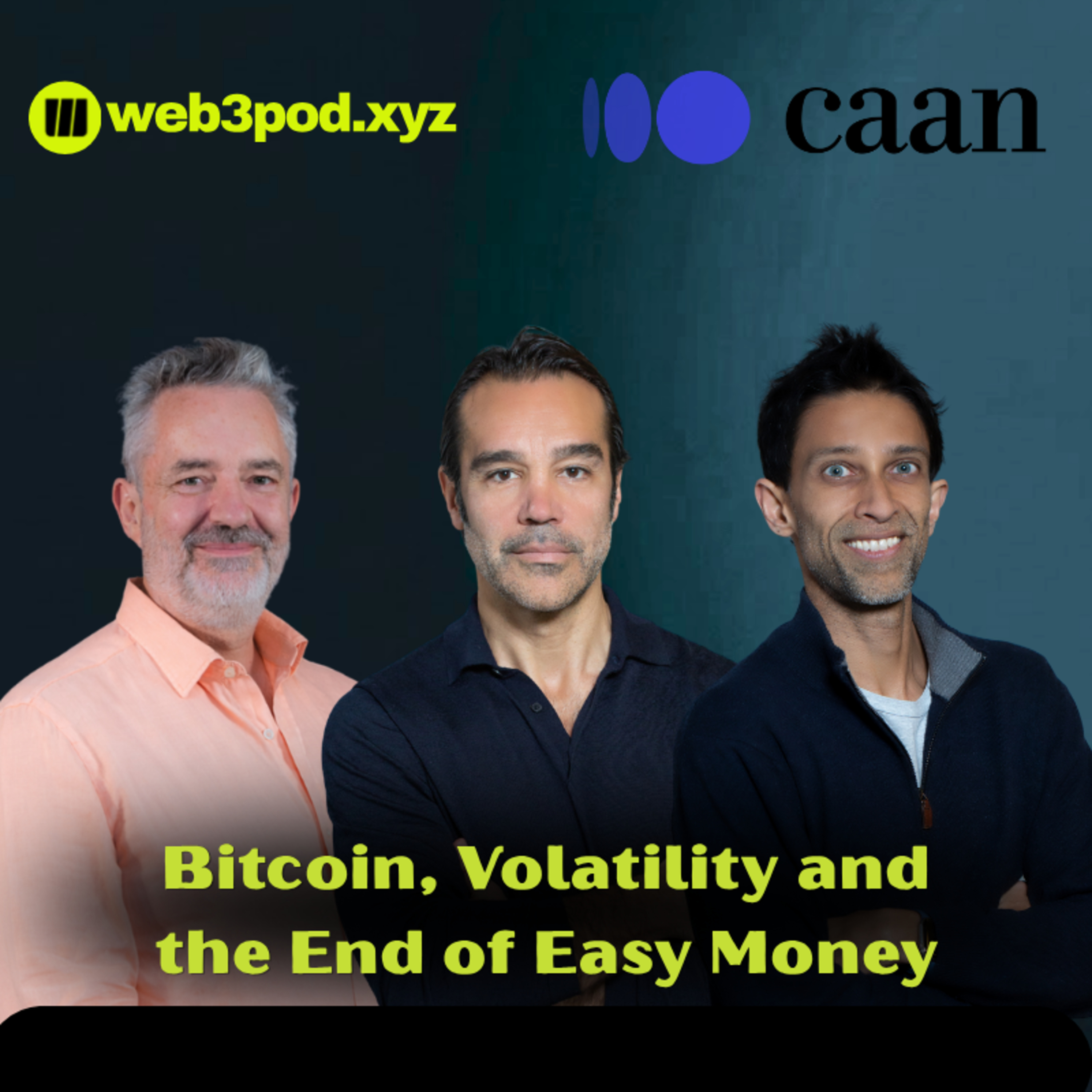 414: Bitcoin, Volatility, and the End of Easy Money with guest speakers Carlos Flores, Rohit Gadkar and Richard Hodges from CAAN 01.08.2026 59минEPISODE DESCRIPTIONI sat down with Rohit, Richard, and Carlos from CAAN , three veterans with decades of experience across Goldman Sachs, Bear Stearns, BlackRock, and Deutsche Bank , to break down what is really happening in markets right now. We get into why Bitcoin has gone quiet, where all the volatility has migrated to, and what the bond market breaking down could mean for everyone. More importantly, we dig into what CAAN is building: liquid alternative strategies that give everyday investors access to the kind of sophisticated, uncorrelated returns that were previously locked behind institutional walls. Richard also shares a raw and refreshingly honest take on wealth, happiness, and why borrowing money to impress people is a trap. This one covers a lot of ground , macro, crypto, derivatives, and life advice , and I think you will find it genuinely useful. DISCLAIMERNothing mentioned in this podcast is investment advice and please do your own research. It would mean a lot if you can leave a review of this podcast on Apple Podcasts or Spotify and share this podcast with a friend. Be a guest on the podcast or contact us - https://www.web3pod.xyz/CONNECTCAAN Website: https://caanam.com/CAAN LinkedIn: https://www.linkedin.com/company/caan-alternative-asset-management/Rohit LinkedIn: https://www.linkedin.com/in/rohit-gadkar-070172/Carlos LinkedIn: https://www.linkedin.com/in/carlos-flores-otero-083280/KEY POINTS WITH TIMESTAMPS• [00:00] Rohit, Richard, and Carlos share their backgrounds • [02:13] Richard explains how he moved from building trading systems at investment banks to crypto options in 2017• [03:04] Carlos describes how CAAN was born from a career in liquid alternative strategies and a gap he saw in the market• [05:10] Rohit shares his journey from early BlackRock employee to co-founding CAAN• [08:00] The team explains why they focus on liquid alternatives over the saturated private equity and private credit space• [10:26] Carlos makes the case for decorrelatio• [15:18] CAAN's gold-standard approach to regulatory compliance and institutional-grade infrastructure• [16:01] How CAAN structures products to lower minimum entry tickets and democratize access• [18:52] Richard breaks down the three types of Bitcoin holders• [23:22] Why Bitcoin volatility has compressed and where that volatility has gone , meme stocks, AI names, and prediction markets• [25:39] Richard on why periods of low Bitcoin volatility have always preceded explosive moves• [28:04] Richard's blunt take on hyperfinancialization, inequality, and why markets are structurally inefficient• [30:27] Carlos draws parallels between today's market psychology and the run-up to the 1929 crash• [31:40] Richard on the dot-com bubble, infinite money printing, and why the next crash might be the real one• [33:22] Rohit explains why the bond market is the only real check on government spending , and what happens if it breaks• [35:11] The Bitcoin bull case: hyperinflation, a monetary reset, and growing mistrust of the dollar• [39:12] Richard explains why he sees volatility as a more reliable asset class than any other• [40:54] How CAAN's Digital Assets Absolute Return strategy trades volatility rather than direction to generate smoother returns• [43:34] Carlos breaks down how combining a volatility sub-strategy with a momentum sub-strategy creates resilience• [46:57] Richard on the biggest misconception retail investors have about digital assets• [48:43] Richard's single most important chart or metric for understanding Bitcoin over time• [50:09] Final advice from all three: start early, diversify, stay invested, do not time the market, and find uncorrelated strategies• [54:39] Richard's unconventional life advice , stop borrowing, stop chasing status, become happy first and then figure out money• [56:40] CAAN's current ask: raising capital, scaling distribution, and building partnerships across jurisdictions
 -
 413: Why Boring Is the New Alpha in Crypto with Guest Speaker John O'Connor from RealFi 29.07.2026 37минEPISODE DESCRIPTION I sat down with John O'Connor from RealFi to dig into one of the most overlooked problems in crypto , the fact that the $350 billion sitting in stablecoins is doing almost nothing for the people who hold it. Tether and Circle pocket the yield while you hold a digital dollar that just sits there. John walks me through exactly how RealFi flips that model, channeling your stable coins directly into real world credit markets and passing the returns back to you. We talk about USDR and sUSDR, how they manage liquidity risk and redemptions, why DeFi security is an existential threat right now, and why John actually wants RealFi to be called boring. We also get into the future of decentralised neo-banking in emerging markets, what lessons he carried over from his time as the first hire at Cardano, and why product market fit today matters more than a promised roadmap. DISCLAIMERNothing mentioned in this podcast is investment advice and please do your own research. It would mean a lot if you can leave a review of this podcast on Apple Podcasts or Spotify and share this podcast with a friend. Be a guest on the podcast or contact us - https://www.web3pod.xyz/ CONNECT Website: https://realfi.coRealFi LinkedIn: https://www.linkedin.com/company/real-fi/Twitter/X: https://x.com/realfi_coRealFi Youtube: https://www.youtube.com/@Real_FiJohn O'Connor LinkedIn: https://www.linkedin.com/in/jjtoconnor/John O'Connor Twitter/X: https://x.com/jjtoconnor?lang=enWeb3 with Sam Kamani: https://www.web3pod.xyz/ KEY POINTS WITH TIMESTAMPS • [00:00] Sam introduces John O'Connor from RealFi and the topic of productive stablecoins• [01:02] John shares his origin story , from Eve Online in-game currencies to Bitcoin to Cardano as its first hire• [02:54] The core problem: $350 billion in stablecoins sitting idle while Tether and Circle keep all the yield• [04:21] Who the primary users are , institutional allocators, trading collateral, and protocol treasuries• [07:05] Explaining USDR and sUSDR , the base stablecoin versus the staked, yield-accruing version• [08:28] How RealFi manages liquidity risk and redemption mismatches across two separate books• [11:27] Why RealFi is not competing with Tether and USDC but playing in a different and faster-growing lane• [13:24] The hardest challenge , bridging TradFi asset management with the crypto world and navigating global regulation• [15:32] Why DeFi security is an existential question right now and how AI is changing the exploit landscape• [17:40] Exploring smart contract insurance and the challenge of underwriting in a fast-moving risk environment• [21:59] North Star metrics , TVL growth, stickiness of capital, and being proud to be called boring• [25:54] Lessons from Cardano applied to RealFi , focus on product market fit today, not five years from now• [28:05] Companies John admires , Athena for tokenising the funding rate trade and neo-banking startups going after idle corporate balances• [31:37] What needs to happen for productive stablecoins to go mainstream , regulation, decentralised account recovery, and a full neo-banking stack• [35:59] The ask , RealFi is launching on Cardano and EVM Mainnet imminently and wants partners, users, and testers
 -
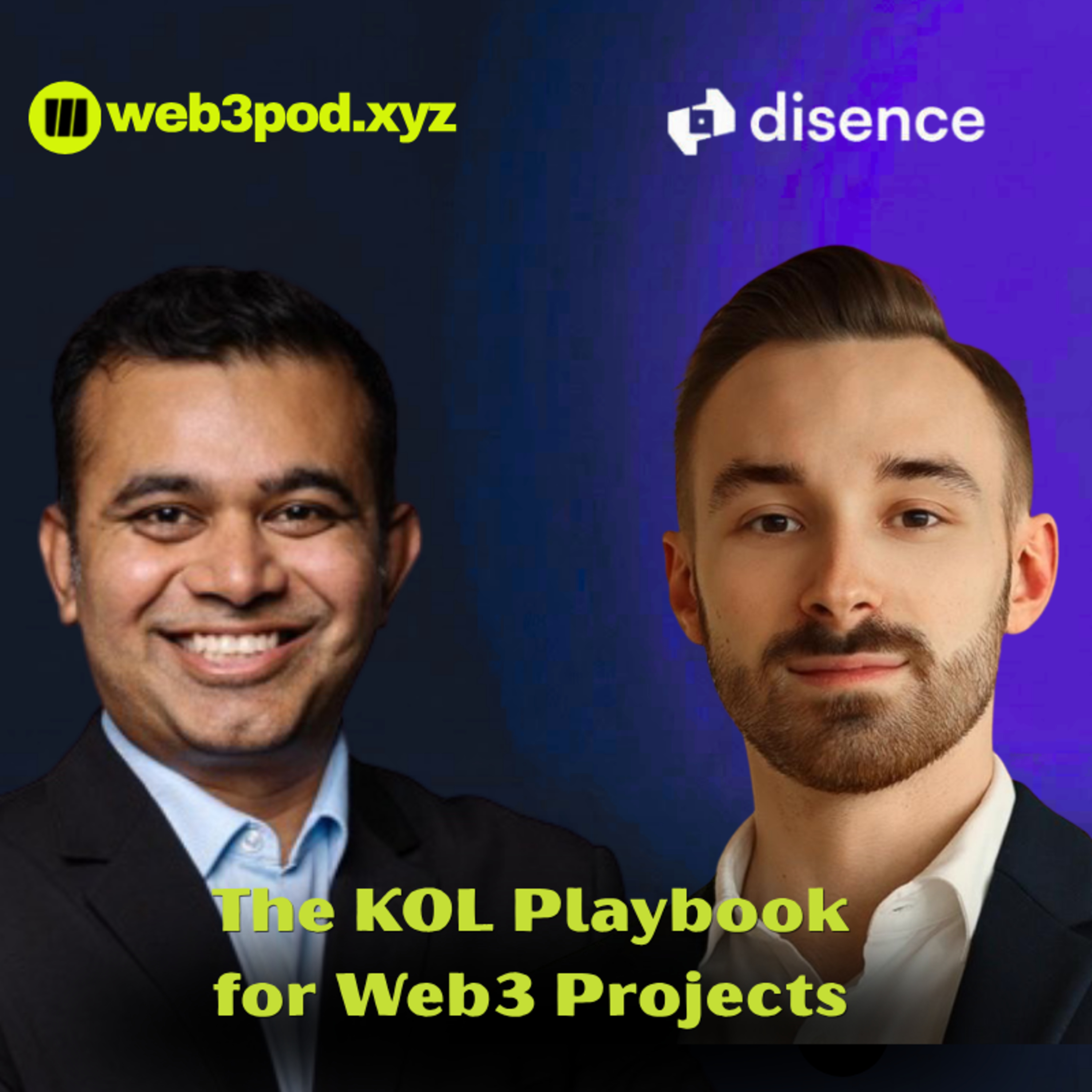 412: From Bots to Real ROI: The KOL Playbook for Web3 Projects with Guest Speaker Evgeny Gourbanov from Disence 24.07.2026 44минEPISODE DESCRIPTION In this episode, I sit down with Evgeny from Disence, one of the leading KOL and Web3 marketing firms in the space. Evgeny has worked with over 500 campaigns and 1,200+ KOLs, and he pulls back the curtain on what projects are getting badly wrong when it comes to influencer marketing. We get into why impressions are a vanity metric, why macro KOLs are largely a waste of budget, how to actually vet a KOL in today's market, and why the best micro KOLs are paradoxically the hardest ones to reach. Evgeny also shares how his team helped one client close nearly $800,000 in B2B sales, and why building credibility before launching any campaign is non-negotiable. If you run a Web3 project or are thinking about KOL marketing, this one will save you a lot of money. DISCLAIMERNothing mentioned in this podcast is investment advice and please do your own research. It would mean a lot if you can leave a review of this podcast on Apple Podcasts or Spotify and share this podcast with a friend. Be a guest on the podcast or contact us - https://www.web3pod.xyz/ CONNECT Disence Website: https://disence.com/Disence Twitter/X: https://x.com/DisenceOfficialEvgeny on LinkedIn: https://www.linkedin.com/in/evgenii-gorbunov/Web3 with Sam Kamani: https://www.web3pod.xyz/ KEY POINTS WITH TIMESTAMPS • [00:00] Sam introduces Evgeny from Disence and the focus on KOL marketing and Web3 branding• [01:36] Evgeny shares his background , from receiving ETH at $400 in 2017 to writing a published academic thesis on crypto perception• [04:30] How a spreadsheet of 500 KOL performance metrics led to the founding of Disence• [07:35] Overview of Disence and C-Leads: from B2C KOL campaigns to closing $800K in B2B sales in three months• [10:26] The story of a KOL who publicly trashed a client's project , and what it reveals about relationships over incentives• [13:13] Why commission-only KOL deals don't work and how referral mechanics should be used as leverage, not payment• [14:45] The full campaign process: auditing a project's foundation, building credibility, selecting KOLs, writing briefs, and tracking results• [18:38] Why impressions are the most misleading metric in crypto and why 95% of channels have botted engagement• [20:25] Clipping and podcast distribution explained , why it's a conversion amplifier, not a user acquisition tool• [22:02] How to vet a real audience from a botted one and why recent results (last two months) are the only data that matters• [25:20] Why the crypto narrative shifts every six to eight months and what that means for KOL longevity• [27:31] What campaigns are dominating right now , the battle for trading volume across CEXs and perp DEXes• [31:49] Why AI has removed the technical moat and made marketing the real differentiator for Web3 projects• [33:12] Contrarian take: why micro KOLs outperform macro ones but are paradoxically harder to reach and convert• [40:51] Evgeny's ask , hiring across marketing, sales, and content, and a call for micro KOLs to reach out
 -
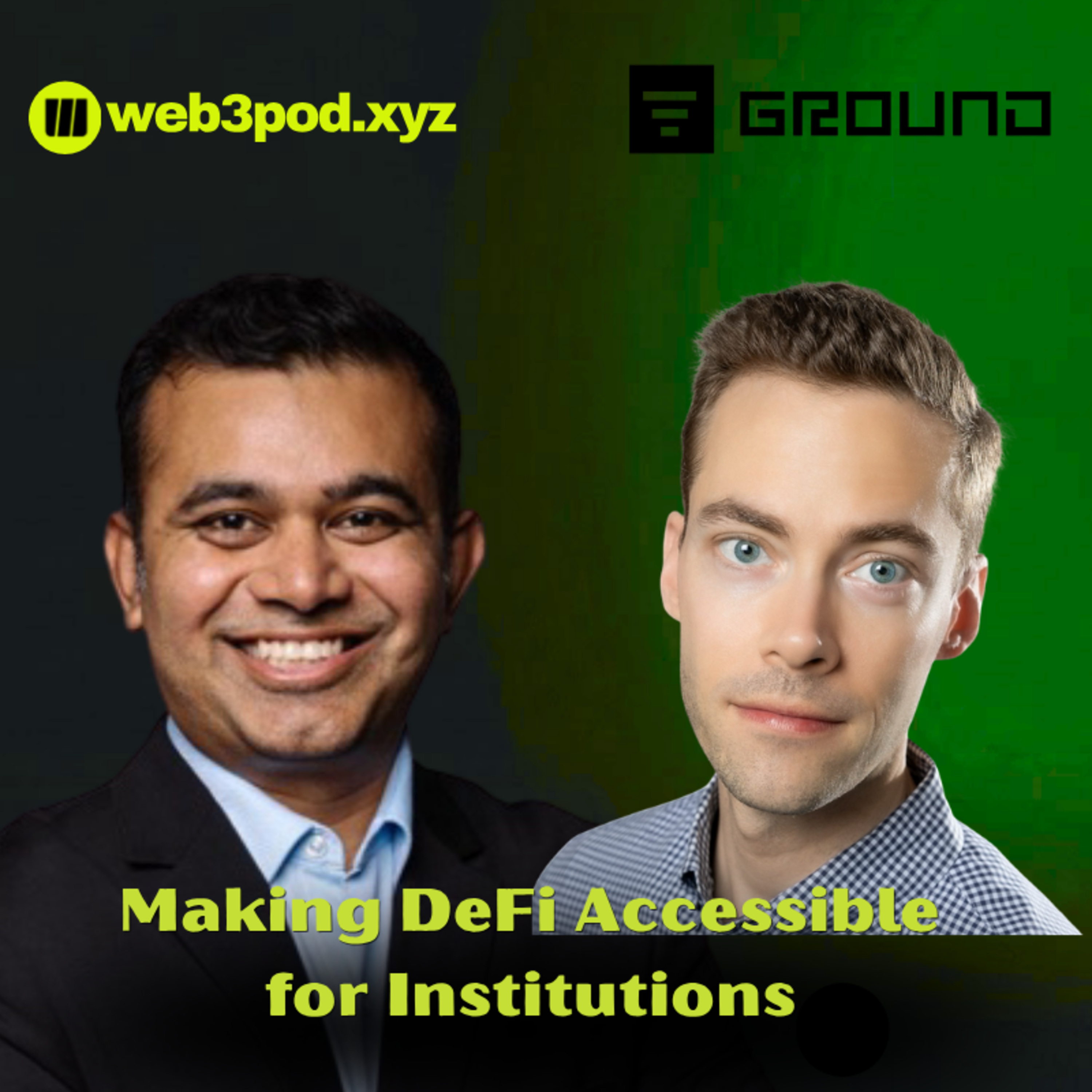 411: How Ground Is Making DeFi Accessible for Banks and Institutions with Guest Speaker Reid Cuming 21.07.2026 37минEPISODE DESCRIPTION I sat down with Reid, co-founder of Ground, to explore what it actually takes to bring on-chain finance to institutions. Ground is building a non-custodial API platform, think Stripe, but for DeFi, so that banks, neobanks, and financial companies can access yield, lending, liquid staking, and real-world assets without rebuilding their entire stack. Reid shares his journey from Square to Stripe to Chime to founding Superstate and ultimately Ground. We dig into why large institutions move slowly, why the "just build it with AI" objection misses the point, and what the future looks like when blockchains are quietly powering the back end of your Robin Hood or JPMorgan account. DISCLAIMERNothing mentioned in this podcast is investment advice and please do your own research. It would mean a lot if you can leave a review of this podcast on Apple Podcasts or Spotify and share this podcast with a friend. Be a guest on the podcast or contact us - https://www.web3pod.xyz/ CONNECT Ground Website: https://www.groundtech.co/Ground LinkedIn: https://www.linkedin.com/company/ground-global/Ground Twitter/X: https://x.com/ground_onchainReid Twitter/X: https://x.com/rmcumingWeb3 with Sam Kamani: https://www.web3pod.xyz/ KEY POINTS WITH TIMESTAMPS • [00:00] Sam introduces Reid and Ground, a platform helping institutions access on-chain finance• [01:20] Reid's nonlinear path from consulting to Silicon Valley to fintech at Square, Stripe, and Chime• [02:00] How Reid joined Compound Labs, built Compound Treasury, then co-founded Superstate before incubating Ground• [03:04] The core problem Ground solves: abstracting blockchain complexity into a Stripe-like API experience• [04:26] What on-chain finance functions look like: stablecoins, lending protocols, LP pools, liquid staking, and RWAs• [05:34] Why institutions are eager but slow, regulatory uncertainty, internal change management, and calcified tech stacks• [08:08] How Reid navigates complex enterprise sales cycles versus faster-moving startup clients• [10:40] Building during a market downturn: why Reid sees it as the best time to build with high signal• [14:15] Ground as a non-custodial API: clients retain full control while Ground handles orchestration and security• [17:26] Addressing the "we'll just build it ourselves with AI" objection, and why real clients never actually say this• [21:30] Current institutional client conversations: time savings, security, compliance, and avoiding cannibalization of existing business• [23:31] The Innovator's Dilemma in crypto: why incumbents like Stripe struggle to self-disrupt on fees• [25:32] Key challenges bridging TradFi and DeFi: compliance, on/off ramps, RWA liquidity, and security insurance• [27:33] The hardest role to hire for: go-to-market talent that bridges crypto-native and institutional worlds• [30:54] What's next in crypto: tokenization plus DeFi becoming invisible infrastructure powering mainstream finance apps• [33:26] Reid's advice for founders and investors: keep turning the crank, stay curious, never get complacent• [34:56] Ground's asks: hiring engineers and a BD lead, onboarding corporate treasury clients, and building yield or investment products
 -
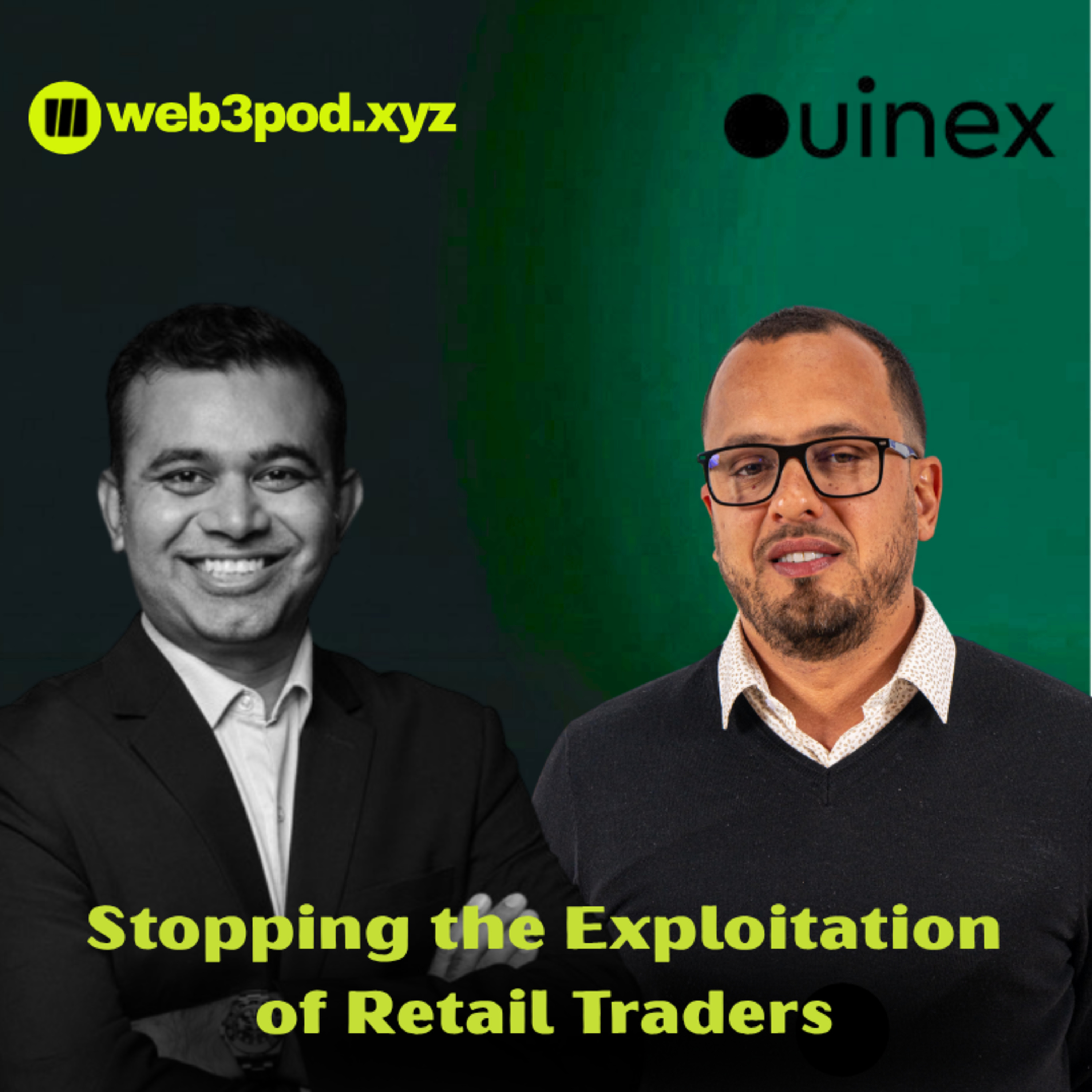 410: The Hidden Way Exchanges Exploit Retail Traders (And How We're Fixing It) with Guest Speaker Ilies Larbi from Ouinex 17.07.2026 39минEPISODE DESCRIPTION I sat down with Ilies, CEO of Ouinex, a crypto exchange that launched earlier this year with one clear mission: stop retail traders from getting crushed by institutions on unfair playing fields. Ilies breaks down exactly how traditional crypto exchanges are structured in a way that lets market makers and financial institutions exploit everyday traders, and explains the specific model Ouinex uses to fix that. We also dig into why TradeFi instruments on most crypto exchanges cost retail traders five to seven times more than they should, how AI copilots could change the way traders manage positions, and where the market is headed as institutional money continues flowing into digital assets. If you have ever wondered why your trades seem to always go against you, this episode will open your eyes.DISCLAIMERNothing mentioned in this podcast is investment advice and please do your own research. It would mean a lot if you can leave a review of this podcast on Apple Podcasts or Spotify and share this podcast with a friend. Be a guest on the podcast or contact us - https://www.web3pod.xyz/ CONNECT Ouinex Website: https://ouinex.com/enTwitter/X: https://x.com/OuinexTelegram: https://t.me/+g8twTjE3_wUxY2E0Web3 with Sam Kamani: https://www.web3pod.xyz/ KEY POINTS WITH TIMESTAMPS • [00:54] Ilies shares his background, starting at FXCM 25 years ago and building his way into crypto and founding Ouinex in 2022• [03:24] He explains the central limit order book problem: retail traders are competing in the same order book as well-funded institutions with co-location and full trading teams• [07:26] Ouinex introduces the no-taker execution model, where market makers can only make markets, not take orders, and have no visibility into retail client orders• [08:19] TradeFi instruments on Ouinex tap into decades-old bank liquidity from Goldman, Citi, and Deutsche, making Ouinex around 20x more liquid than competitors on those instruments• [10:23] Ilies compares spreads: a normal TradeFi broker offers around one point on gold, while major crypto exchanges charge around seven points for the same product• [15:37] He describes how thin crypto liquidity lets institutions move markets with small capital, keeping retail as what he calls exit liquidity• [20:00] Ouinex is a multi-asset platform, so when crypto is flat, users can access oil, gold, Nasdaq, and equity markets all from one interface• [21:28] On regulation, Ouinex is actively working with a local partner to obtain a MiCA-aligned license in Europe• [26:24] Discussion on AI in trading: Ilies is skeptical of predictive AI signals but excited about an AI copilot feature that would call traders when their positions hit key levels• [30:30] Ilies and Sam discuss the growing wave of institutional interest in digital assets, with family offices and hedge funds expanding into crypto• [34:30] North Star metrics for Ouinex are trade volume and retention, and currently almost no users are leaving once they join• [37:48] Ouinex is preparing for a seed or Series A round, targeting documentation ready by end of August, and is inviting traders to try the platform
 -
 409: How Coins.ph is Turning Stablecoins into Financial Infrastructure for the Philippines and Beyond with Guest Speaker Wei Zhou from Coins.ph 15.07.2026 45минEPISODE DESCRIPTION I sat down with Wei Zhou, CEO of Coins.ph, to dig into how they're building stablecoin infrastructure that's genuinely changing lives in the Philippines and beyond. Wei walked me through his journey from Goldman Sachs to Binance CFO to buying Coins.ph from Gojek in 2022 and rebuilding it from scratch. We talked about why the Philippines has become a global leader in stablecoin adoption, how they slashed payment fees from 4-8% down to near-zero for Filipino freelancers, and why Wei believes every country needs its own blockchain currency , not just a blockchain dollar. We also got into the Genius Act, the Clarity Act, the upcoming wave of tokenized assets, and what it will take for stablecoins to go truly global. This one is packed with real-world insight from someone actually in the trenches of building payments infrastructure at the intersection of crypto and emerging markets. DISCLAIMERNothing mentioned in this podcast is investment advice and please do your own research. It would mean a lot if you can leave a review of this podcast on Apple Podcasts or Spotify and share this podcast with a friend. Be a guest on the podcast or contact us - https://www.web3pod.xyz/ CONNECT Coins.ph Website: https://www.coins.ph/en-phCoins.ph Twitter/X: https://x.com/coinsphLinkedIn: https://www.linkedin.com/company/coins-ph/TikTok: https://www.tiktok.com/@coinsph_officialWeb3 with Sam Kamani: https://www.web3pod.xyz/ KEY POINTS WITH TIMESTAMPS • [00:01] Introduction to Wei Zhou and Coins.ph, building stablecoin infrastructure for the Philippines• [01:11] Wei's journey: Goldman Sachs, Binance CFO, buying Coins.ph from Gojek in 2022 and rebuilding it from scratch• [04:49] Why the Philippines is a natural fit for stablecoin adoption , the gig economy, English fluency, and the unbanked• [06:22] How Coins.ph cut payment fees from 4-8% (PayPal) to under 0.2% using USDC and USDT rails• [09:36] New feature: users can now spend USDT and USDC directly without converting to pesos, protecting against FX losses• [10:47] Financial literacy over crypto education , why Coins.ph focuses on helping people avoid scams first• [15:44] The importance of being a licensed VASP and e-money issuer , stacking regulatory 'Lego blocks'• [18:50] Institutional adoption in the US vs retail/payment adoption in emerging markets , why they differ• [19:49] The Genius Act's impact on stablecoin growth and why the Clarity Act could unlock the next wave of token issuance• [26:39] Why USD will remain dominant in stablecoins , mirroring the traditional FX market structure• [33:47] Tokenization wave: NASDAQ, SWIFT, DTCC, and the SEC all moving toward blockchain-based assets• [36:26] Coins.ph super app redesign , crypto payments via QR at local merchants with near-zero fees• [36:58] PHP-C: a Philippine peso-backed stablecoin already in BSP sandbox, waiting for regulatory sign-off• [38:03] Why every country needs 'blockchain pesos' to match blockchain dollars , currency sovereignty on-chain• [39:56] Vision for Coins.ph: evolving into an all-in-one fintech with trading, payments, savings, investing, and lending• [43:29] Expansion into Brazil and other regions, plus ongoing fundraising conversations
 -
 408: Sleeping Your Way to Better Health: How Sleepagotchi Is Gamifying Wellness with guest speaker Kenny Wood from Sleepagotchi 13.07.2026 28минEPISODE DESCRIPTION I sat down with Kenny Wood, CEO of Sleepagotchi, to talk about one of the most underrated pillars of health , sleep. Kenny brings over 20 years of games industry experience, from building Barbie titles in Yorkshire to shipping serious simulations for the Dutch government, and now he's channelling all of that into a product that sits at the crossroads of gaming, AI agents, and wellness. We dig into how Sleepagotchi works, why sleep is the root of everything from longevity to job performance, how they have engaged over 2 million users, what is coming next with multiple AI agents covering sleep coaching, meal planning, and even a shopping agent, and why health data regulation is one of the trickiest challenges in the space. If you have ever bragged about running on four hours of sleep, this episode is for you. DISCLAIMERNothing mentioned in this podcast is investment advice and please do your own research. It would mean a lot if you can leave a review of this podcast on Apple Podcasts or Spotify and share this podcast with a friend. Be a guest on the podcast or contact us - https://www.web3pod.xyz/ CONNECT Sleepagotchi Website:https://www.sleepagotchi.com/Telegram: https://t.me/sleepagotchiLITE_botWeb3 with Sam Kamani Website: https://www.web3pod.xyz KEY POINTS WITH TIMESTAMPS • [00:00] Sam introduces Sleepagotchi and Kenny Wood, highlighting 2 million users at the crossroads of wellness, AI, and gaming• [01:11] Kenny shares his 20+ year journey in games , from Barbie titles and Transformers to serious simulations for the Dutch government• [02:11] Kenny's role as CTO of Moonlander, building AI-generated scene generation sold to Alpha 3D, before joining Sleepagotchi as CEO• [03:50] How Sleepagotchi works , pulling data from wearables via Apple Health Kit and Android Health Connect, processed by AI agents• [05:25] The unique feature coming soon: asking the AI direct questions about your own sleep data• [06:54] Why sleep-to-earn is different from step-to-earn , habit formation over token emissions• [08:54] Why sleep is culturally undervalued and how fixing sleep improves everything from longevity to job performance• [11:42] How habit and motivation are the key to long-term user retention beyond early incentives• [13:02] The GDPR and health data regulation challenge , and why all Sleepagotchi data stays on-device and anonymous• [15:24] The case for anonymous health data cohorts accelerating medical research at population scale• [17:09] Sleepagotchi's numbers: 2 million Telegram lite app users and 200,000 iOS and Android users• [21:23] What is next , four AI agents: sleep coach, wellness coach, meal planner, and a shopping agent with a health marketplace• [23:18] The biggest challenge: delivering something genuinely useful and novel while navigating health and wellness regulations• [25:30] The future of AI personal assistants and how the film Her might be a blueprint for where health AI is heading• [27:28] Kenny's biggest ask , try the app and follow Sleepagotchi on their official channels
 -
 407: The Hidden Risks of Stablecoins , And How to Protect Yourself with guest speaker Marco Zelman 08.07.2026 46минIn this episode, I sit down with Marko, Co-founder of Tapir Protocol, to break down one of the most underappreciated risks in DeFi , depegging. We dig into how stablecoins and yield-bearing assets can lose their peg, what the real financial damage looks like (spoiler: up to $3.3 billion in losses between 2020 and 2025), and how Tapir is building a smarter, fully automatic, non-custodial solution to protect investors without sacrificing yield or capital efficiency. Marko walks me through how Tapir splits a single asset into a depeg-protected version and a yield-boosted version, letting the market price the risk rather than a committee deciding your claim. Whether you manage a treasury, run a fund, or just want safer DeFi yields, this conversation is packed with practical insight. DisclaimerNothing mentioned in this podcast is investment advice and please do your own research. It would mean a lot if you can leave a review of this podcast on Apple Podcasts or Spotify and share this podcast with a friend. Be a guest on the podcast or contact us - https://www.web3pod.xyz/--- CONNECT ---Tapir Protocol Website: https://tapir.money/ Marko on Twitter/X: https://x.com/markoinether Tapir X/twitter: https://x.com/Tapir_Protocol--- KEY POINTS WITH TIMESTAMPS ---• [00:00] Sam introduces Marko from Tapir Protocol and the focus on safer DeFi for institutional and retail investors• [01:19] Marko shares his background , from e-commerce to crypto in 2015, winning ETH Global hackathons in 2020 and 2021, building Marinate Finance (first liquid staking on Solana), and leading developer ecosystems at SSV Network• [04:15] Discussion on the explosive growth of stablecoins and why stablecoin yield products are the focus for Tapir• [07:02] Deep dive into what a depeg is and a live case study of APX USD trading at 80 cents on the dollar• [08:48] How Tapir splits one asset into three: a base version, a depeg-protected version, and a yield-boosted version , all 100% capital efficient• [13:02] Tapir's business model , a marketplace that earns a small fee on minting and redeeming assets• [13:59] Where Tapir is in its lifecycle , live on mainnet, running with internal funds, opening to launch partners and private mainnet users very soon• [16:05] Who Tapir is built for , DAO treasuries, fund managers, and any DeFi investor who understands that risk is real• [19:07] Sam and Marko discuss the drop in DeFi TVL from $180B to ~$69B and how AI-assisted bug finding is increasing vulnerability concerns• [21:23] Tapir has completed two independent audits and keeps its entire codebase under 1,000 lines of code to minimise attack surface• [24:36] Marko's take on algorithmic stablecoins , most fail because of positive feedback loops that collapse under stress• [26:22] Breakdown of Tapir's depeg analysis: long-term depeg losses estimated at $1.5B to $3.3B between 2020 and 2025• [30:46] How Tapir differentiates from Nexus Mutual, Y2K Finance, and other risk protection protocols , fully automatic resolution, no claims committees, and no capital inefficiency• [39:48] Will USD-denominated stablecoins keep dominating? Marko shares his view and gives a shoutout to Vifi (Virtual Finance) building for smaller currencies• [44:00] What's next for Tapir , opening to external users, launching higher-yield pools targeting ~15%, and looking for feedback from funds on which assets to list next
 -
 406: Igra Labs Is Making DeFi Front-Run Resistant and Agent-Ready with Guest Speaker Pavel Emdin 29.06.2026 29минEPISODE DESCRIPTION I sat down with Pasha from Igra Labs in Berlin to dig into one of the most contrarian bets in Web3 right now , EVM on proof of work. Pasha walks me through why he left the Ethereum ecosystem, what drew him to Kaspa's BlockDAG architecture, and why he believes proof of work offers something proof of stake simply cannot: real fairness. We get into MEV resilience, censorship resistance, and why 10 blocks per second with no centralized sequencer changes everything for DeFi builders. We also cover Multitude, their brand new sovereign execution zones product, and why AI agents might finally be the user experience layer that makes Web3 click for everyone. If you're a founder, a builder, or just someone curious about where the next wave of adoption is coming from, this one is packed. CONNECT Igra Labs Website: https://igralabs.com/heroDeploy your sovereign finance chain infrastructure https://igralabs.com/multitude Igra Labs Twitter/X: https://x.com/Igra_LabsPavel LinkedIn: https://www.linkedin.com/in/emdin/Web3 with Sam Kamani Podcast: https://www.web3pod.xyz/ KEY POINTS WITH TIMESTAMPS • [00:30] Introduction to Pasha from Igra Labs and what the episode covers• [01:51] Pasha's backstory , from Delivery Hero and Auto One to falling into crypto in 2017• [03:24] The core problem Igra Labs is solving: bringing EVM to proof of work via the Kaspa BlockDAG• [05:53] Why proof of work still makes sense , decentralization, security, and hardware commitment• [07:47] MEV resilience and front-run resistance as the killer property of EVM on proof of work• [09:44] Real use cases: stablecoins, DeFi, RWAs, and AI agentic settlement on Igra• [12:39] How EVM makes it easy for developers , Solidity tooling, SDKs, and AI coding agents• [14:26] Developer onboarding in minutes using a single GitBook link and an AI agent• [16:26] Introducing Multitude , sovereign execution zones allowing teams to launch their own Igra• [18:52] How Multitude differs from parachains, appchains, and L2 models like OpStack• [21:25] Where Web3 goes next , AI agents as the UX layer that finally unlocks mass adoption• [24:48] An agentic marketplace being built on Igra , like Upwork, but for AI agents• [27:02] What Pasha would do differently if starting Igra Labs today• [27:52] Current asks: design partners for Multitude, a small strategic round, and ambitious buildersDISCLAIMERNothing mentioned in this podcast is investment advice and please do your own research. It would mean a lot if you can leave a review of this podcast on Apple Podcasts or Spotify and share this podcast with a friend. Be a guest on the podcast or contact us - https://www.web3pod.xyz/
 -
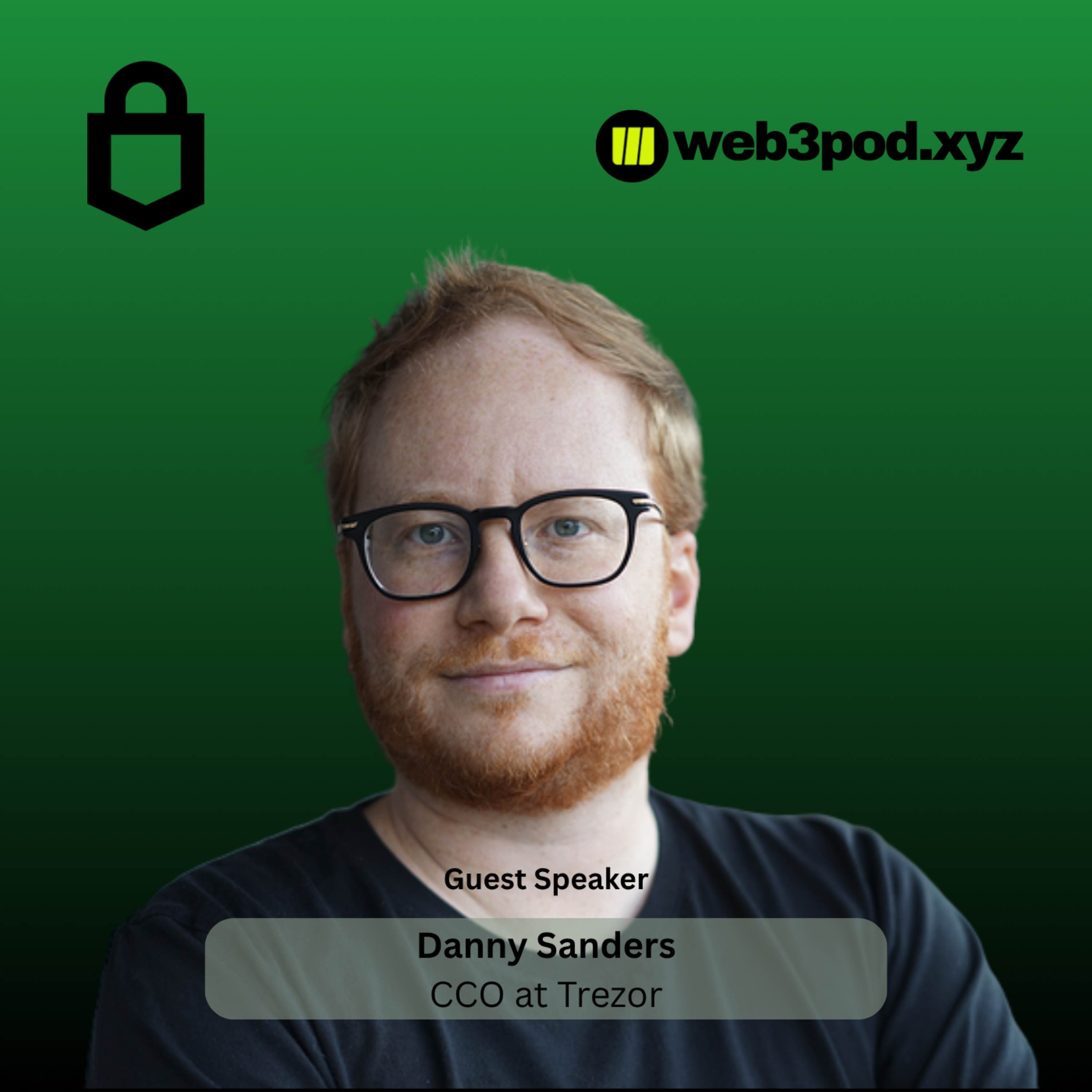 405: No VC, No Compromise: How Trezor Built a Crypto Hardware Empire on Its Own Terms with Guest Speaker Danny Sanders from Trezor 26.06.2026 33минEPISODE DESCRIPTION I sat down with Danny from Trezor at BTC Prague to dig into everything they've built over the last 12 years , from pioneering the hardware wallet industry to shipping over 2 million devices without ever taking a cent of venture capital. We talked about the growing tension between Bitcoin institutionalisation and self-custody, why AI agents are actually the strongest argument yet for owning a hardware wallet, and what makes the Trezor Safe 7 a genuinely different product. Danny also opened up about the brutal realities of running a hardware startup through crypto's wild bull and bear cycles, and where Trezor is headed next , from inheritance solutions to everyday Bitcoin spending. If you care about truly owning your crypto, this one is for you. DISCLAIMERNothing mentioned in this podcast is investment advice and please do your own research. It would mean a lot if you can leave a review of this podcast on Apple Podcasts or Spotify and share this podcast with a friend. Be a guest on the podcast or contact us - https://www.web3pod.xyz/ CONNECT Trezor Website: https://trezor.io/Trezor Twitter/X: https://x.com/TrezorDanny Twitter/X: https://x.com/DantoshiTrezor LinkedIn: https://www.linkedin.com/company/trezor Danny LinkedIn: https://www.linkedin.com/in/dsand/Trezor YouTube: https://www.youtube.com/@TrezorWallet Web3 with Sam Kamani: https://www.web3pod.xyz/ KEY POINTS WITH TIMESTAMPS • [00:00] Trezor pioneered the hardware wallet industry in 2014 and has never taken venture capital money• [01:59] Overview of the hardware wallet landscape and how Trezor balances security with usability• [04:24] Only about 50 million people are in self-custody out of 500-600 million in crypto , education is key• [06:48] Why Trezor is based in Prague and how Czech culture shaped the Bitcoin-native mindset behind it• [08:58] Danny's honest take on Bitcoin's institutionalization and why peer-to-peer self-custody still matters• [11:23] What drove Trezor to 2 million users , open source, transparency, and community trust• [13:49] A breakdown of the Trezor Safe 5 and what makes it the most premium hardware wallet they've built• [16:01] Why hardware is harder than software and how Trezor manages supply chain in a cyclical market• [18:30] How Trezor manages cash flow , stacking Bitcoin instead of chasing VC and staying conservative• [19:40] Trezor's revenue model: hardware, accessories, and software services like swapping and staking• [20:52] Inheritance planning, SLIP39 Shamir backup, and why multi-share is a game changer for security• [23:19] Why Trezor's 2 million users are some of the most valuable people in crypto and the responsibility that comes with it• [25:23] Why the AI agent wave is the biggest argument yet for owning a hardware wallet• [27:44] Could the Trezor become a general-purpose security device beyond crypto , 2FA, digital identity, and more• [30:09] Trezor's vision for the next two to five years and what partnerships they are looking for
 -
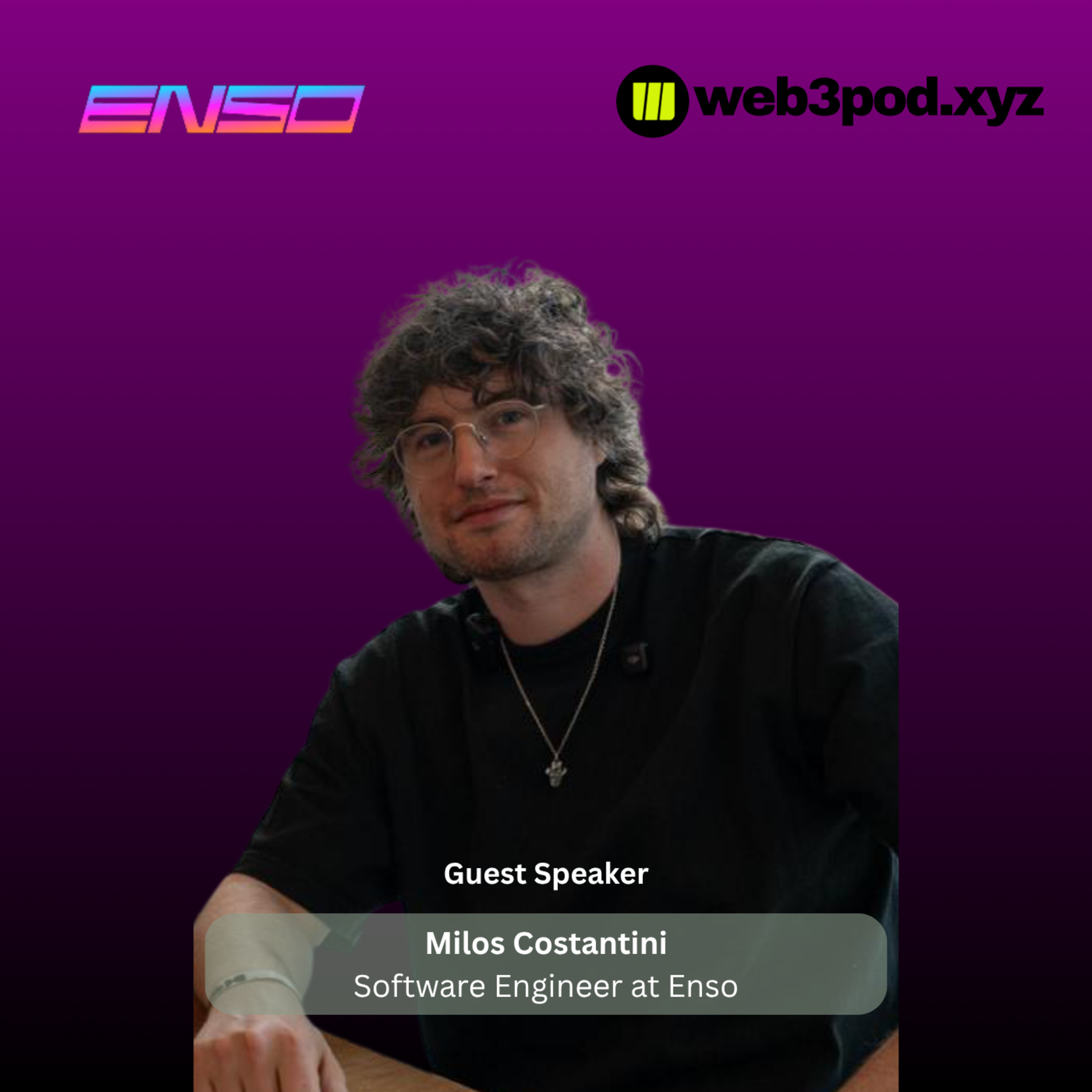 404: How Enso Is Removing the Complexity Barrier in DeFi with Guest Speaker Milos Costantini from ENSO 23.06.2026 23минEPISODE DESCRIPTION In this episode, I sit down with Milos, Lead Engineer at Enso, live at Berlin Blockchain Week. We dig into the real problem holding back DeFi builders, complexity. Audits cost hundreds of thousands of dollars, bridges are a nightmare, and integrating protocols is a full-time job on its own. Enso is tackling all of that with a single API that handles routing, security, and DeFi actions across 100-plus protocols, so developers and agents can just build. We also get into the RWA boom, the current state of AI agents in Web3, and why Milos thinks we should never forget where DeFi came from. DISCLAIMERNothing mentioned in this podcast is investment advice and please do your own research. It would mean a lot if you can leave a review of this podcast on Apple Podcasts or Spotify and share this podcast with a friend. Be a guest on the podcast or contact us - https://www.web3pod.xyz/ CONNECT Enso Website:https://www.enso.build/Enso Twitter/X: https://x.com/EnsoBuildEnso LinkedIn: https://www.linkedin.com/company/enso-build/Milos LinkedIn: https://www.linkedin.com/in/miloscostantini/Web3 with Sam Kamani: https://www.web3pod.xyz/ KEY POINTS WITH TIMESTAMPS • [00:00] Milos explains the core problem Enso solves: complexity for DeFi developers• [01:33] Milos's personal journey from mining Bitcoin as a student in 2016 to writing his thesis on Ethereum• [03:13] How smart contract development has and hasn't changed over the years• [06:00] How Enso's API removes the need for developers to deploy integration contracts or manage bridges• [07:00] Built-in security defaults, like MEV protection on DEX swaps, that come with Enso• [07:53] Why using Enso means you don't need your own smart contract audit• [09:36] The biggest trend Enso is seeing: RWA and tokenized stocks• [10:43] How Enso lets users buy tokenized stocks using any token from any chain• [11:40] Flash loan aggregator and looping positions, what's coming next• [12:05] How Enso makes money through fee-split partnerships with integrators• [13:00] The long-term vision: becoming the most composable orchestration layer in DeFi• [14:29] Milos's take on the current hardening era for DeFi and the rise of hacks• [16:38] His most contrarian view: don't forget Web3's roots in permissionless experimentation and values• [18:23] Notable projects built on Enso including Yearn, EtherFi, and the Boiko Layer 0 migration• [20:44] Advice for builders: don't give up, explore on-chain options protocols• [22:28] Enso is profitable and actively hiring
Слични подкасти


Популаран у
Овај подкаст се појављује и у подкаст листама ових земаља.
