
Change Starts Here
Franklin Covey Education
0
Change Starts Here, presented by FranklinCovey Education, is a podcast for K-12 school and district leaders. It explores building leadership, fostering high-trust school cultures, and achieving breakthrough results through interviews with educators and research-backed insights. The podcast offers practical ideas and bold thinking to create lasting impact in school communities.
Епизоде
-
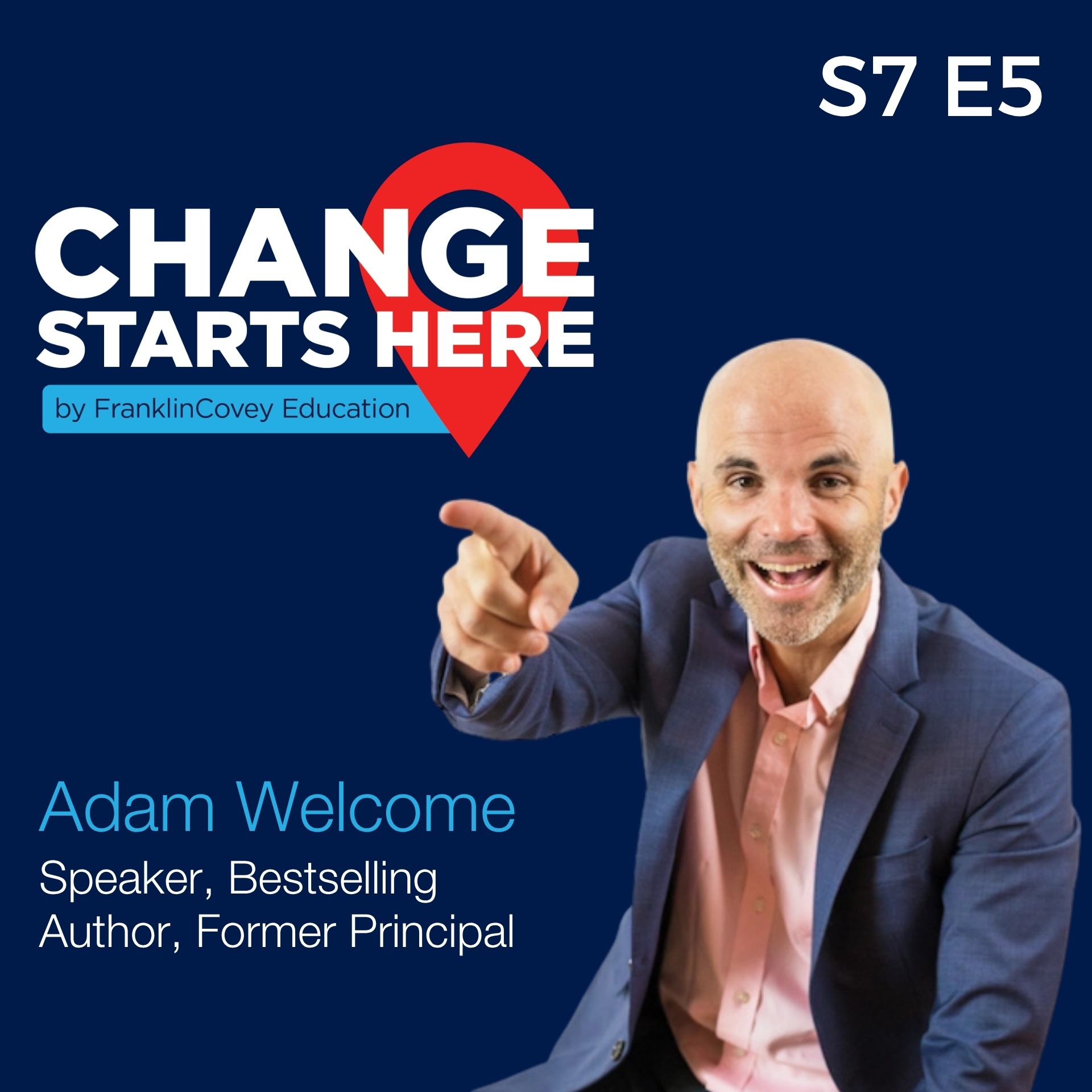 Are You Getting In The Way of Student Leadership? 15.09.2026 47минIn this episode, Dustin sits down with Adam Welcome, a former teacher, principal, and district leader who has spent his career challenging educators to rethink what kids are actually capable of. Adam has worked with over 500 school districts in 49 states, and he brings that same high energy into a conversation about the gap between the world schools are preparing kids for and the world they're actually walking into.Adam and Dustin dig into why adults do too much for kids instead of with them, what it actually takes to let go of control in a classroom or at home, and how small shifts like starting a student podcast or a coding club can build real ownership without adding another initiative to an already full plate.Learn more about Adam and his work:https://www.adamwelcome.comSymposium: https://www.leaderinme.org/symposiums/?utm_source=shownotes Host: Dustin OdhamGuest: Adam Welcome, Speaker, Bestselling Author, Former PrincipalTimestamps: 00:00 Cold open: everything is contagious00:32 Meet Adam Welcome02:34 Welcome to the show03:30 Who are you and what do you love05:12 What's changed for kids in five years07:50 The skills schools aren't teaching09:10 What adults hold onto for comfort12:54 Get kids ready for the world they're growing up in14:41 Letting go and giving it to students17:00 Learning through trying, failing, and following curiosity22:41 Getting over the fear of trusting kids25:21 What changes when kids stop just complying29:25 All kids can achieve30:13 One small shift, and what principals should stop doing36:14 Everything is contagious39:08 What to make contagious in kids40:21 Closing message, where to find Adam, and final thoughts
 -
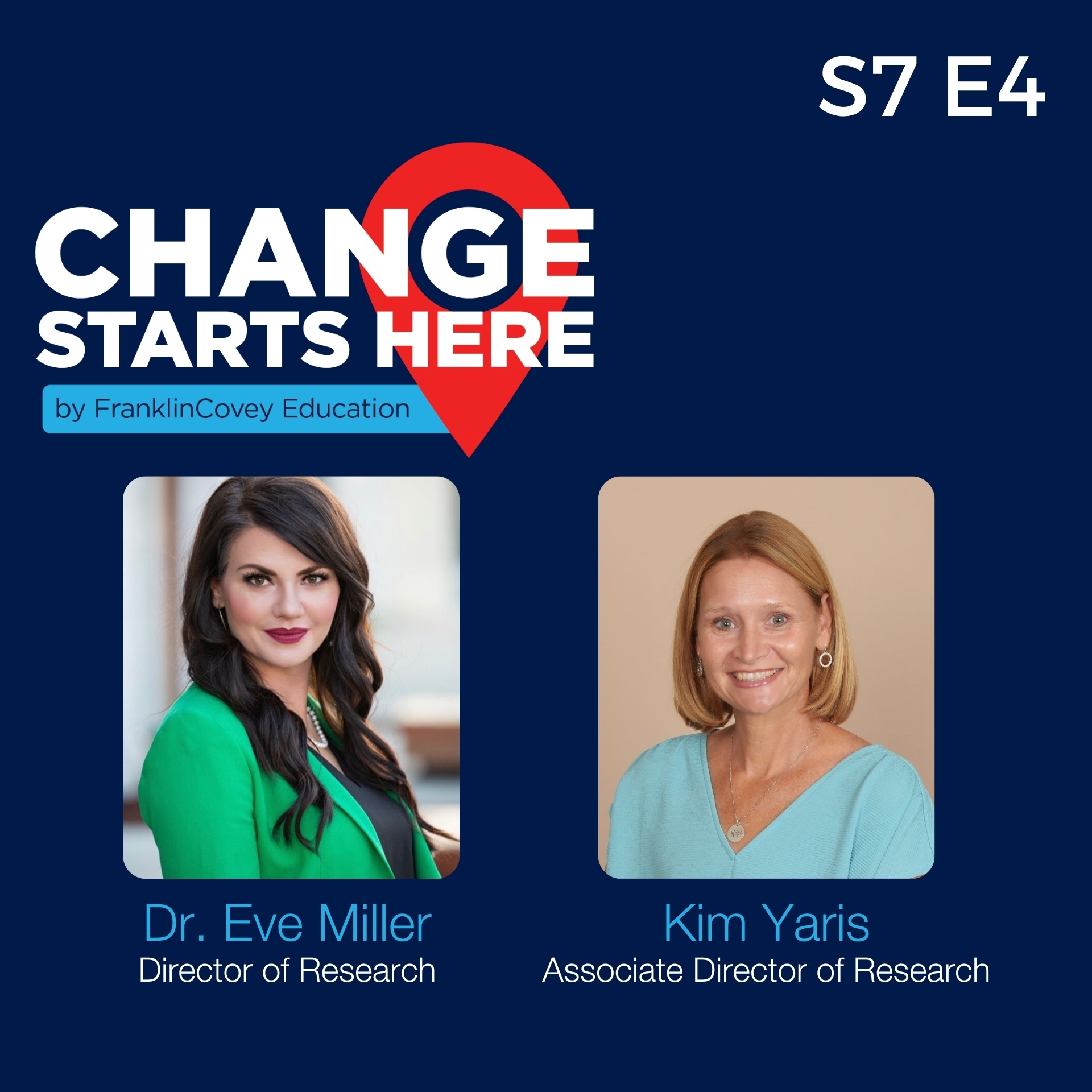 Working Within Your Circle of Influence 08.09.2026 19минIn this episode of Change Starts Here, Kim Yaris and Dr. Eve Miller dig into what happens in the first few weeks of school, when attention quietly starts to slide toward the schedule, the mandate, or the situation you have no say over. They unpack Stephen Covey's Circle of Influence and revisit decades of research on learned helplessness, including newer work from psychologists Steven Maier and Martin Seligman that offers a different way of thinking about control and agency.Kim and Eve also explore the Whitehall studies on job control and health, why repeated venting can sometimes keep us stuck in frustration, and what all of this means for leaders working in the real-world pressures of schools and districts.Most importantly, they turn the research into three practical moves you can use when your attention starts drifting toward what you can’t change: catch the drift, find the edge, and act.Listen now & download the episode handout for a deeper look at the research and practical ways to use Catch the Drift, Find the Edge, and Act with yourself or your team:https://resources.franklincovey.com/c/csh_s7e4_handout?x=aD_z_A&utm_source=show-notes Hosts: Kim Yaris, M.Ed. (Associate Director of Research with FranklinCovey Education)Dr. Eve Miller (Director of Research with FranklinCovey Education)Timestamps: 00:00 Podcast intro00:15 Welcome back and the September feeling02:21 The circle of influence03:38 Download the handout04:29 The research on learned helplessness06:14 From learned helplessness to learned agency08:25 Our natural response to what we can't control09:36 When there's just too much to do10:40 A Monday morning example11:54 The trouble with venting14:59 Three practical moves: catch the drift, find the edge, act17:54 Closing thoughts
 -
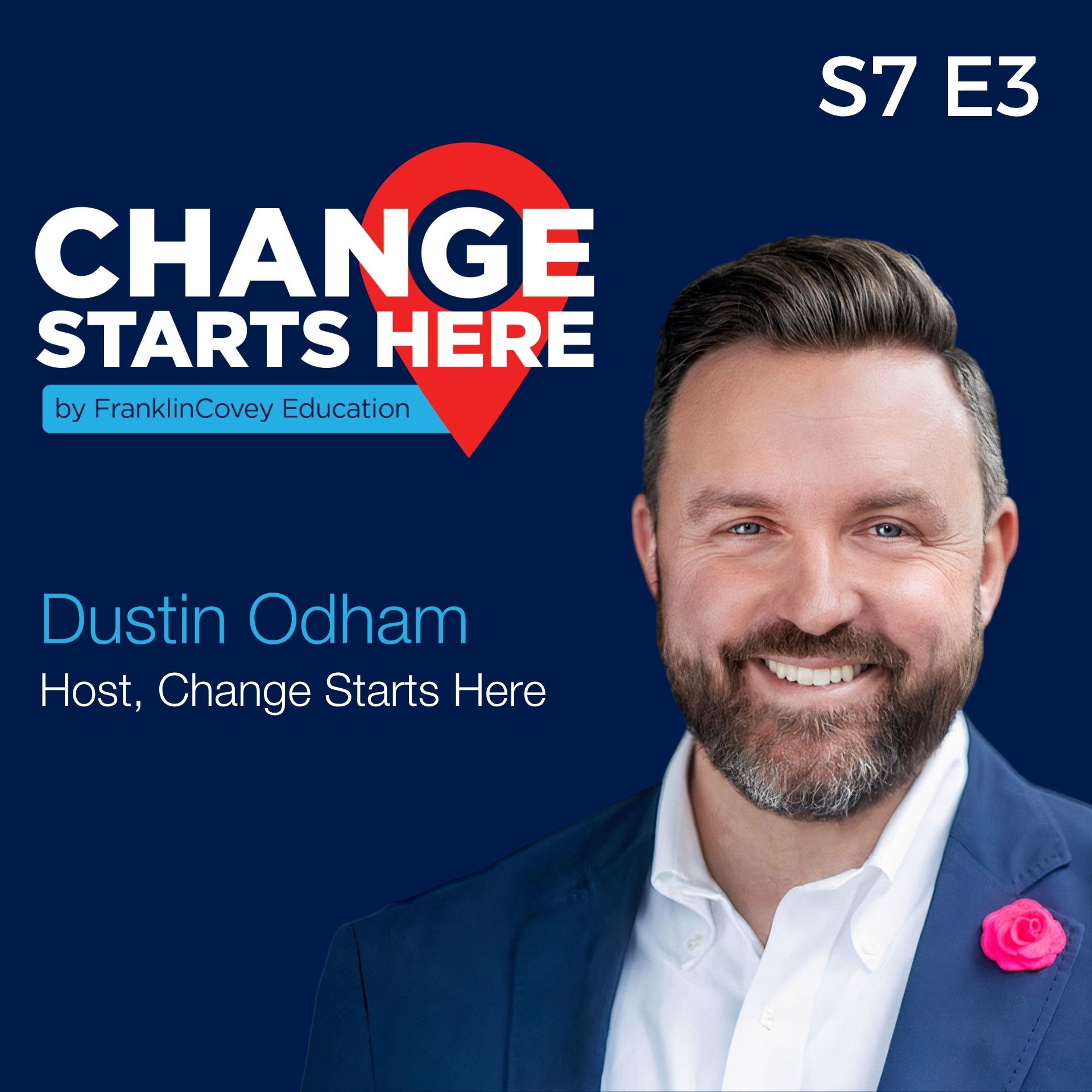 Your Culture Is What You Repeat 02.09.2026 19минCulture isn't built in a kickoff meeting or a mission statement, it's built in what leaders repeat when nobody's watching. In this solo episode, host Dustin Odham explores how the small behaviors leaders notice, encourage, or allow each day ultimately shape the culture their people experience. Drawing on the story of a broken thread on a 19th-century weaving loom, Dustin explores why excitement fades but repetition sticks.Dustin shares new research connecting school leadership to teacher retention, breaks down See, Do, Get through the lens of Leader in Me, and leaves school and district leaders with three questions to bring back to their own teams this month.Read the research Dustin references: Teacher Turnover in the United States: Who Moves, Who Leaves, and Why (Learning Policy Institute, 2026):https://learningpolicyinstitute.org/product/teacher-turnover-united-states-reportHost: Dustin OdhamTimestamps: 00:00 The thing you've stopped noticing02:16 Good intentions and matching t-shirts03:31 Where culture actually gets built04:29 What culture really is06:00 The story of a loom07:17 Every school has broken threads08:55 What the research says about leadership09:58 See, do, get12:49 Model it, notice it, repeat it15:29 Three questions for your team16:49 To the exhausted leader listening18:59 What are we repeating
 -
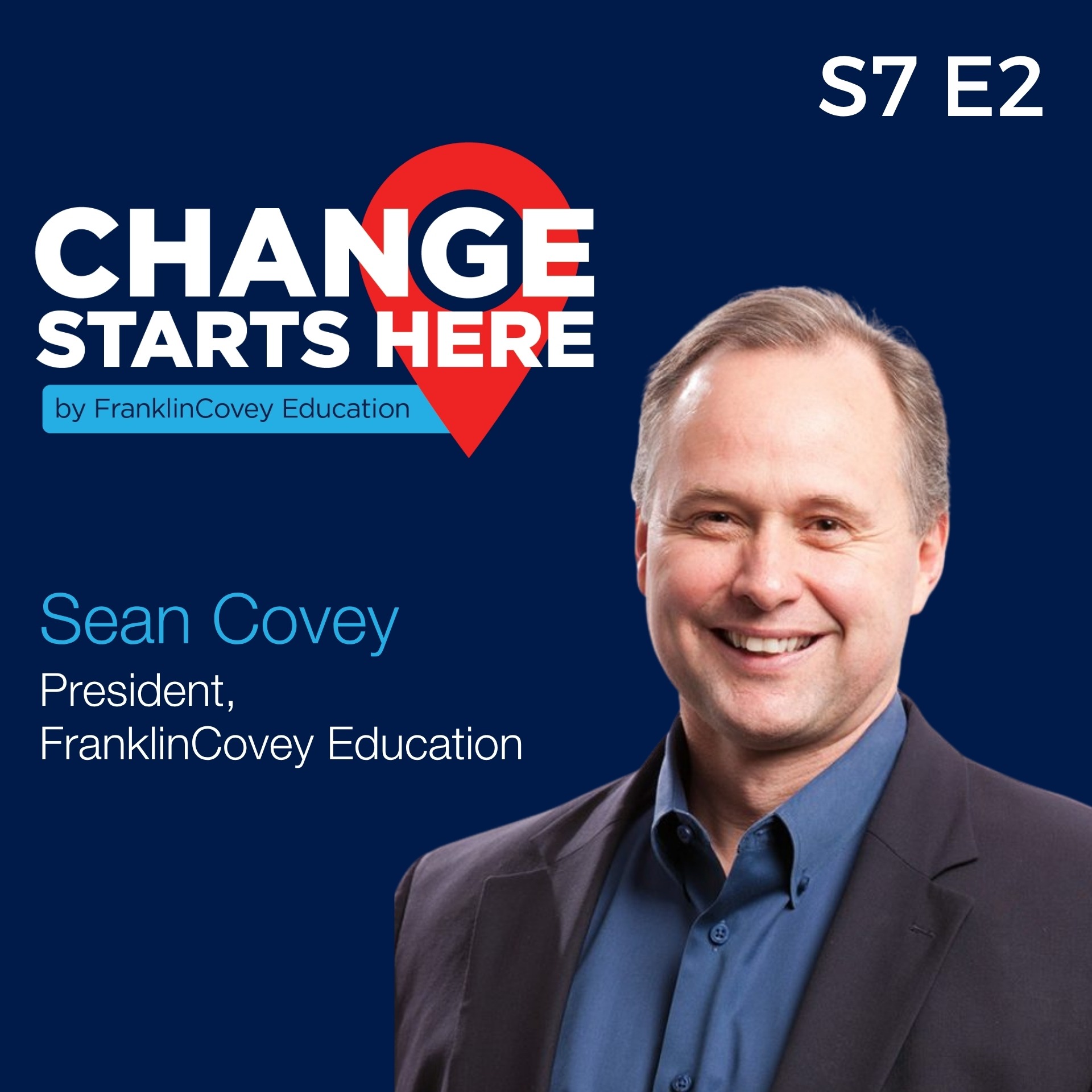 Reaching Today's Teens Beyond the Screen 25.08.2026 52минToday’s teens are growing up in a world that looks dramatically different than it did even a decade ago—but have the principles they need to thrive really changed?In this episode of Change Starts Here, Dustin sits down with Sean Covey, President of FranklinCovey Education and bestselling author of The 7 Habits of Highly Effective Teens, for a candid conversation about what today’s young people need most from the adults in their lives.Drawing from his experience raising eight children, Sean shares hard-won lessons about connection, confidence, and knowing when to step back and let kids find their own way. He also takes us behind the scenes of The 7 Habits of Highly Effective Teens: A Graphic Novel, sharing how his own family experiences shaped the story, why timeless principles still resonate with today’s teens, and why the way we deliver those principles needs to evolve.Whether you’re a parent, educator, or school leader, this is a conversation you won’t want to miss.Get Sean’s newest book, The 7 Habits of Highly Effective Teens: A Graphic Novel:https://www.amazon.com/Habits-Highly-Effective-Teens-Graphic/dp/1668024926/ref=tmm_hrd_swatch_0Host: Dustin OdhamGuest: Sean Covey, President of FranklinCovey EducationTimestamps: 00:00 Cold open: hope for teens00:34 Welcome to Change Starts Here03:40 What humbled Sean as a parent06:47 Trust, discipline, and apology09:34 Why love is spelled time11:20 Making time for one-on-one moments15:48 Sharpening the saw in Moab18:06 Modeling honesty over teaching it21:07 How today's teens are different24:11 Screen time, comparison, and mental health26:09 What teens need most29:26 Bringing the habits to life in a graphic novel34:11 Victoria's story and the hope behind the habits39:21 Using the book with your family43:33 Raising free range chickens46:03 The Leader in Me and the power of affirmation48:26 Closing thoughts
 -
 The Greatest Threat to Your Leadership 18.08.2026 15минIn the season seven premiere of Change Starts Here, Dustin Odham asks a critical question: "What is the greatest threat to our leadership?" While it’s easy to point to external factors like budgets, teacher shortages, or politics, Dustin argues that the real danger lies within the internal conversations leaders have with themselves. Drawing on his own experiences, including a moment of deep reflection in a hospital bed, Dustin explores how leaders often mistake performance for identity, carrying the weight of unnecessary pressure.Listeners will be challenged to evaluate their internal dialogue and consider whether they would allow someone to speak to their team the way they speak to themselves. This episode sets the tone for the upcoming season, emphasizing that healthy leadership begins from the inside out. By focusing on who they are becoming rather than just what they are accomplishing, leaders can build healthier cultures, achieve extraordinary results, and truly transform the lives of their students.Host: Dustin Odham (FranklinCovey Education)Timestamps: 00:00 Podcast intro 01:15 Building a community of leaders 02:10 Leadership is a privilege 03:38 The greatest threat to leadership 05:03 The inner critic 06:23 Carrying unnecessary pressure 07:21 The hypocrisy of educational leaders 08:21 Stephen Covey's Private Victory 09:26 Why Dustin wears black 11:34 A life-changing hospital stay 12:32 Performance vs identity 14:05 How do you speak to yourself? 15:01 Change starts inside
 -
 Return With Clarity: A Summer Leadership Challenge 02.06.2026 11минIn the season 6 finale of Change Starts Here, Dustin Odham invites educators and leaders to rethink their summer break. While taking time off is crucial for physical recovery, Dustin challenges listeners to aim for true renewal and clarity. By applying Dr. Covey's 7th Habit, "Sharpen the Saw," leaders can intentionally renew themselves mentally, physically, emotionally, and spiritually.Listeners are challenged to take one uninterrupted day alone this summer to pause and reflect. Dustin guides leaders through a powerful internal process: starting with gratitude rather than problem-solving, identifying personal "genius" to avoid disconnecting from their true selves, and defining a lasting leadership legacy. By crafting or refining a personal mission statement, educators can ensure they return in the fall not just rested, but deeply intentional.Download the Handout, Reflection and Mission Statement Guide: https://resources.franklincovey.com/c/csh_summer-reflectio?x=bfYNCNHosts:Dustin Odham (FranklinCovey Education)Timestamps:00:00 Podcast intro01:06 Wrapping up the season02:28 The weight educators carry03:20 Habit 7 Sharpen the saw04:54 Start with gratitude05:51 Reflect on your genius06:52 Define your legacy08:11 Your personal mission statement09:19 Rest deeply and reflect10:39 Closing the season
 -
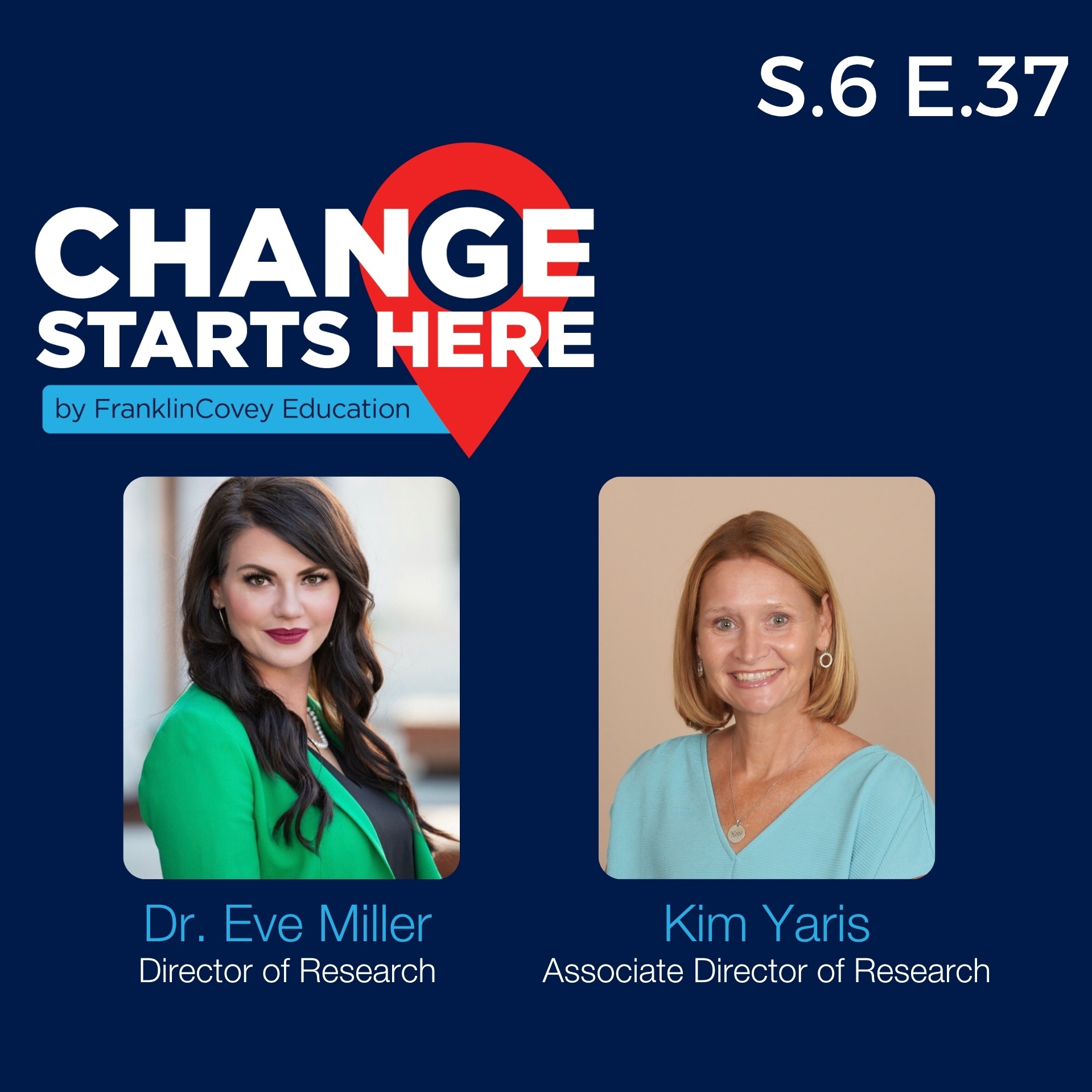 What To Do With The Year You Just Had 27.05.2026 22минIn this episode of Change Starts Here, Kim Yaris and Dr. Eve Miller explore how educators and leaders can effectively transition out of a demanding school year. Drawing on a Yale study, they discuss how a leader's ability to manage their own emotions directly impacts the well-being of their staff. Because of "emotion contagion theory," the emotional residue leaders carry out of the spring can set the tone for the entire school environment in the fall.Listeners will discover why end-of-year recovery is an essential part of leadership, rather than optional self-care. The conversation highlights three research-backed practices: savoring positive moments to combat exhaustion , using narrative identity to make meaning of difficult experiences rather than ruminating on them , and engaging in the challenging but necessary practice of mentally disengaging from work. By leaning into self-compassion, educators can process the year, recover fully, and prepare a healthier emotional climate for the future.Download the Handout:https://resources.franklincovey.com/c/podcast_handout_s6e37?x=Z0wt6jHosts: Kim Yaris, M.Ed. Associate Director of Research with FranklinCovey EducationDr. Eve Miller (Director of Research with FranklinCovey Education)Timestamps:00:00 Podcast intro00:42 Transitions for adults01:30 The reality of exhaustion03:00 Yale wellbeing study03:47 Emotion contagion theory05:08 Recovery is leadership06:06 Practice one savoring08:52 When savoring matters most09:58 The savoring prompt11:06 Practice two narrative identity13:58 Meaning making versus rumination15:01 Three reflection questions16:51 Practice three mental disengagement18:36 Nervous system discomfort19:38 The power of self-compassion20:56 Closing thoughts
 -
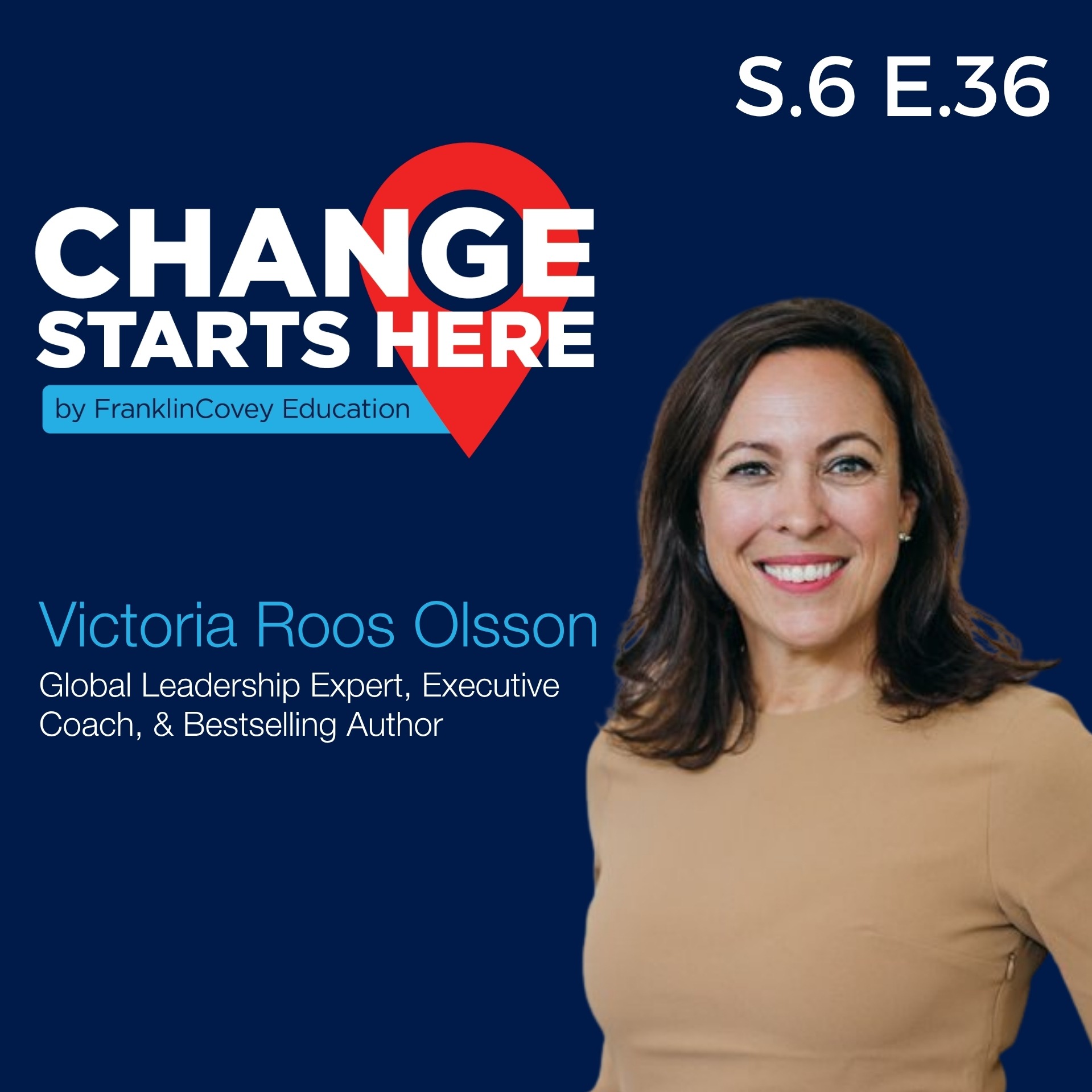 The Gift of Pause When Leading What’s Next 19.05.2026 43минIn this episode of Change Starts Here, Dustin Odham sits down with global leadership expert and executive coach Victoria Roos Olsson to discuss the importance of pausing at the end of a busy school year. While exhausted leaders often want to rush to the finish line or immediately tackle the next challenge, Victoria explains why using the end of a season for reflection is vital for sustainable success.Listeners will discover how to ask more effective questions and evaluate the past year through creative exercises, such as having their team draw their experiences. Victoria also shares practical strategies for re-energizing staff, from conducting walking meetings to providing reflective summer assignments. Ultimately, this conversation serves as a powerful reminder that leadership is a human endeavor, and slowing down is often the key to moving forward effectively.Get your copy of The 6 Critical Practices for Leading a Team:https://www.amazon.com/Everyone-Deserves-Great-Manager-Practices/dp/1982112077 Hosts:Dustin Odham (Host)Victoria Roos-Olssen. Global Leadership Expert, Executive Coach, & Bestselling Author Timestamps:00:00 Podcast intro02:46 Victoria's leadership journey04:34 The power of reflection08:16 Finishing the race strong12:38 Questions as power tools14:21 Drawing the school year17:22 Re-energizing your team21:16 The extended mind24:44 Craving our own imbalances29:16 Creating leadership habits35:35 A healthy summer reset38:37 Human side of leadership42:03 Closing thoughts
 -
 Endings That Stick 12.05.2026 15минIn this episode of Change Starts Here, Kim Yaris and Dr. Eve Miller discuss the final weeks of the school year, a time typically filled with tying up loose ends, cleaning up, and the temptation to just pop in a movie. However, research shows that how a year ends disproportionately shapes how students will remember the entire experience.Drawing on Daniel Kahneman's famous "peak-end rule" and Crystal Park's research on meaning-making, the hosts explain that it isn't enough for an ending to just be positive; it has to feel meaningful. Students who can articulate what they learned from turning points show higher well-being years later. To help educators end the year with intention, Kim and Eve offer two practical, research-backed moves: planning the last week backward from a final shared moment, and providing a structured reflection for students to make sense of their year.Download the HandoutHandout: https://resources.franklincovey.com/c/podcast_handout_epis-35?x=whj9VQHosts: Kim Yaris, M.Ed. (Associate Director of Research with FranklinCovey Education) Dr. Eve Miller (Director of Research with FranklinCovey Education)Timestamps: 00:00 Podcast intro 00:15 The end of year 01:22 Temptation to coast 02:29 Why endings matter 03:54 The peak end rule 06:02 Remembering school years 08:06 Meaning making research 09:26 Practice one plan backward 11:24 Practice two structured reflection 13:21 The impact of reflection 14:21 Closing thoughts
 -
 3 Practices to Make the Last 30 Days Count 05.05.2026 9минIn this episode of Change Starts Here, Dustin Odham challenges the "spring fever" mentality that sweeps through schools during the final stretch of the year. Rather than just counting down the days and winding down expectations, Dustin urges leaders and educators to finish with intention. Sharing a powerful story about "legacy projects" at Mechanics Grove Elementary, he illustrates how giving students ownership and purpose can completely transform the energy of a building.Reflect on what your students will truly remember about the school year and learn three simple, actionable moves to maximize the final 30 days: naming the moment to elevate its significance, creating ownership through contribution, and celebrating impact and effort over mere compliance. Make sure the end of the year feels meaningful, not just survived.Host: Dustin Odham (FranklinCovey Education)Timestamps:00:00 The final stretch00:37 The spring fever mindset01:27 Legacy projects in action01:59 What changed?03:14 Making the end meaningful03:45 What will they remember?05:01 The year in review06:12 Three actionable moves07:15 Change how the story ends08:42 Closing
 -
 What's Really Happening With AI in Schools? 28.04.2026 22минIn this episode of Change Starts Here, Kim Yaris and Dr. Eve Miller tackle a topic that leaves many educators feeling overwhelmed: Artificial Intelligence in schools. Looking past the sensational headlines, they dive deep into recent survey data from organizations like RAND, Pew, and Brookings to uncover the reality of how AI is actually showing up in classrooms.The research reveals a startling truth, ignoring AI or instituting complete bans doesn't stop students from using these tools, it simply removes adult guidance. Kim and Eve discuss the phenomenon of "covert AI use," where both teachers and students are utilizing AI in secret due to a lack of clear policies and training. To help leaders navigate this massive shift, the hosts share three practical strategies that require no district mandate to implement: starting with student thinking before introducing the tool, visibly modeling imperfect AI use, and fiercely protecting the irreplaceable human skills of relationships and coaching.Download the Handouts:Handout: https://resources.franklincovey.com/c/podcast_handout_ep33?x=Dw_9TFStaff Booster: https://resources.franklincovey.com/c/fy26_csh-rc_lim_staff-e33?x=Dw_9TF Hosts: Kim Yaris, M.Ed. (Associate Director of Research with FranklinCovey Education) Dr. Eve Miller (Director of Research with FranklinCovey Education)Timestamps: (00:00 - 01:15) The AI conversation (01:15 - 02:53) Looking at the data (02:53 - 04:56) The AI policy landscape (04:56 - 07:37) Climbing student usage (07:37 - 10:27) Why schools stay silent (10:27 - 13:44) Covert AI use (13:44 - 15:53) The stakes of inaction (15:53 - 18:38) Practice 1: Thinking first (18:38 - 20:33) Practice 2: Visible use (20:33 - 21:53) Practice 3: Human skills (21:53 - 23:08) Closing thoughts
 -
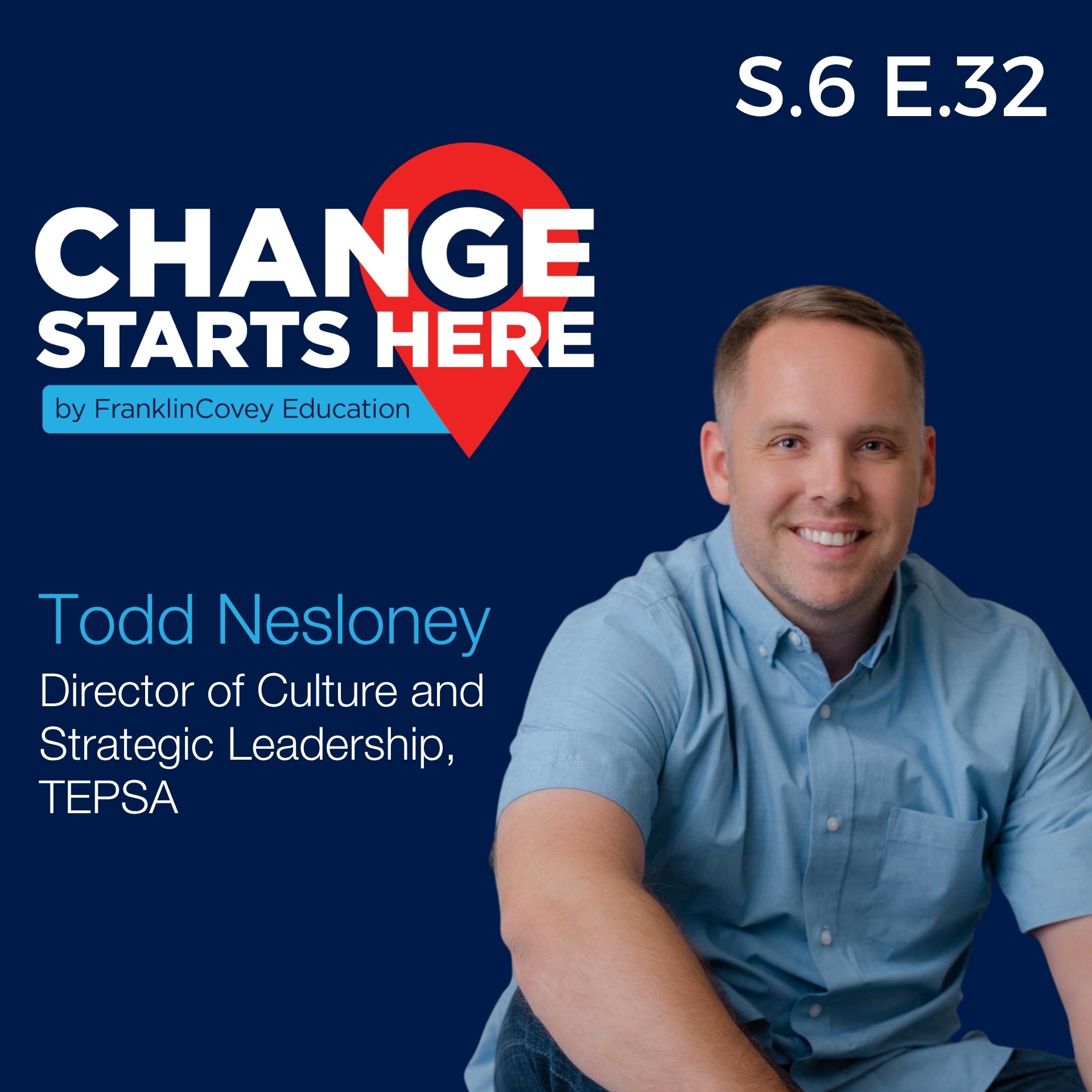 The Truth About School Culture 21.04.2026 54минIn this episode of Change Starts Here, Dustin Odham sits down with Todd Nesloney, Director of Culture and Strategic Leadership for the Texas Elementary Principals and Supervisors Association (TEPSA). Todd shares his insights on what a thriving school culture actually looks and feels like, going beyond test scores and bulletin boards to the fundamental human experiences of feeling seen, heard, and valued.Todd gets real about his own transition from the classroom to school administration, challenging the "martyr complex" that leads so many passionate educators to burnout. He encourages leaders to embrace their authentic selves, treat adults with the same grace and connection they offer students, and to stop overcomplicating their roles. Listeners will walk away with practical advice on how to empower their teams, the importance of expanding their professional networks outside their own district, and the courage to take risks—and own the failures that follow.Interested in the TEPSA Summer Conference? Learn more & register:https://www.tepsa.org/summer-conference/summer-conference/ Connect with Todd: https://www.toddnesloney.com/ Host: Dustin Odham (FranklinCovey Education)Guest: Todd Nesloney (Director of Culture and Strategic Leadership, TEPSA)Timestamps: (00:00 - 02:46) Intro and welcome (02:46 - 05:01) Meet Todd Nesloney (05:01 - 08:16) Assessing school culture (08:16 - 12:45) Seen, heard, and valued (12:45 - 18:04) Finding the time for connection (18:04 - 23:14) The educator martyr complex (23:14 - 27:36) Redefining leadership meetings (27:36 - 32:29) Patterns of high performance (32:29 - 36:55) Teaching adults like kids (36:55 - 44:06) Empowering your team (44:06 - 47:35) Expand your network (47:35 - 51:56) Walk up songs (51:56 - 54:42) You are meant to be here
 -
 Are We Asking the Wrong Questions About Student Well-Being? 14.04.2026 19минIn this episode of Change Starts Here, Kim Yaris and Dr. Eve Miller dive into the critical topic of student well-being, especially relevant as climate survey data rolls in for the end of the year. While most schools measure happiness and meaningfulness, Dr. Miller highlights groundbreaking research by Erin Westgate and Shigehiro Oishi that introduces a third, often overlooked dimension: "psychological richness".Listeners will discover what psychological richness is, experiences that fundamentally shift how you see the world, and why it is distinct from both happiness and meaning. The hosts explain how a school might score perfectly on happiness metrics while still leaving students feeling like they're just going through the motions. They offer three highly practical ways for educators to build psychological richness into their daily routines: asking the right reflective questions, making perspective shifts visible, and actively seeking out unfamiliar viewpoints.Handout: https://resources.franklincovey.com/c/podcast_handout_epis-31?x=mRNVAO Staff Booster: https://resources.franklincovey.com/c/lim_staffbooster_epi31?x=mRNVAOHosts: Kim Yaris, M.Ed. (Associate Director of Research with FranklinCovey Education) Dr. Eve Miller (Director of Research with FranklinCovey Education)Timestamps:(00:00 - 01:42) School Climate surveys(01:42 - 03:35) Psychological richness(03:35 - 05:04) Richness vs rigor(05:04 - 06:31) Tracking perspective change(06:31 - 08:31) Why richness matters(08:31 - 10:24) Missing wellbeing metrics(10:24 - 11:48) Purpose and richness(11:48 - 13:58) Practice 1: Add the third question(13:58 - 16:01) Practice 2: Make the shift visible(16:01 - 18:09) Practice 3: Unfamiliar perspectives(18:09 - 19:49) Designing deliberately
 -
 Finishing the School Year Strong 07.04.2026 11минIn this episode of Change Starts Here, Dustin Odham addresses the unique challenge of the final stretch of the school year. When testing season arrives and the finish line is in sight, there's a natural temptation for educators to coast. But Dustin explains why the most critical moments for leadership, culture, and student impact happen right now, when everyone is tired.Drawing inspiration from sports psychology and the first modern Olympic marathon, Dustin challenges leaders and teachers to lean into the fatigue rather than drift through it. He re-frames testing not as a punishment, but as a responsibility to ensure every student is learning. This episode is a powerful reminder that people rarely remember how something started; they remember how it finished. Listeners will walk away inspired to recommit to their expectations and remind their teams that the work they are doing right now still matters.Host: Dustin Odham (FranklinCovey Education)Timestamps: (00:00 - 01:26) The quiet temptation (01:26 - 02:01) The hardest part (02:01 - 03:20) The 1896 Olympic marathon (03:20 - 04:20) The final stretch (04:20 - 05:07) Reframing state testing(05:07 - 05:58) The lie of April (05:58 - 07:22) Fatigue exposes character (07:22 - 08:06) Competitive greatness (08:06 - 09:39) A challenge for educators (09:39 - 11:10) Finish strong
 -
 Planting S.E.E.D.S. to Grow Leaders Who Build Leaders 31.03.2026 45минIn this episode, Dr. Duzy breaks down her powerful "SEEDS" philosophy—Serve, Empower, Embrace, Develop, Steer—and explains why securing "buy-in" is no longer enough. She shares the messy but rewarding reality of shifting your team toward true ownership, how to establish the right conditions for new initiatives to thrive, and the importance of aligning district-wide systems like evaluations and strategic plans to a singular vision.If you’re a K-12 leader looking to build a culture of continuous improvement and empowerment, this episode provides a masterclass in developing the people who support the students.Be sure to like, subscribe, and leave a comment!Learn more about how you can build leaders who build leaders: https://franklincovey.com/show-greatschoolleadersLearn more about C&D:https://www.leaderinme.org/district/ 00:00 Intro 02:29 Meet Dr. Bridget Duzy 04:00 Moral Imperative: Do the Most Good 06:38 Building Leaders Who Lead 07:48 The SEEDS Leadership Philosophy 10:21 Transitioning from Teacher to Administrator 13:39 Scaling District-Wide Initiatives 16:25 Setting the Conditions for Success 21:36 Changing the Conversation Around Change 24:00 Buy-In vs. Ownership 28:03 Aligning Evaluation Systems 36:09 First Steps for District Leaders 38:42 Keeping the Leadership Fire Lit 43:42 Closing
 -
 Permission to Play: Why Joy is a Leadership Skill 24.03.2026 24минIn this episode of Change Starts Here, Kim Yaris and Dr. Eve Miller challenge the way we view joy and play in education, especially during the heavy, high-stress stretch of testing season. Too often, joy is treated as a "garnish" in schools—a funny video at a staff meeting or a smoothie bar during Teacher Appreciation Week—and categorized as a mood rather than a vital capacity. However, Dr. Miller shares that joy actually has a biological architecture that fundamentally changes what the brain can do.Drawing on Barbara Fredrickson’s "broaden-and-build theory" and Dr. Stuart Brown's research on play histories, the hosts reveal that play is not a reward for finished work; it is a biological drive as essential as sleep and nutrition. The conversation unpacks how the demands of leadership train the brain to constantly scan for problems, which can trigger "foreboding joy" and shut down our access to playfulness. Listeners will walk away with three highly intentional, small practices to rebuild this capacity: training your "delight muscle," going first with vulnerability, and protecting one entirely unproductive ritual.Download the free episode assets:Handout: https://resources.franklincovey.com/c/CSH-handout-e27?x=D1cEjaStaff Booster: https://resources.franklincovey.com/c/csh_staffbooster_ep27?x=D1cEjaHost:Kim Yaris, M.Ed. (Associate Director of Research with FranklinCovey Education) Dr. Eve Miller (Director of Research with FranklinCovey Education)Timestamps: (00:00 - 01:15) Podcast intro(01:15 - 03:28) The delight muscle(03:28 - 06:30) Joy as a capacity(06:30 - 08:34) Broaden and build theory(08:34 - 10:14) Play is a biological drive(10:14 - 12:39) Brain mechanisms of play(12:39 - 15:46) Foreboding joy in leadership(15:46 - 17:40) Realistic, adaptable leadership(17:40 - 19:56) Practice 1: Delight muscle(19:56 - 21:34) Practice 2: Go real(21:34 - 24:43) Practice 3: Unproductive ritual
 -
 How Educators Can Help Students Rewrite Their “Broken Soundtracks” | Lessons on Mindset With Jon Acuff 17.03.2026 37минIn this episode of Change Starts Here, Dustin Odham sits down with New York Times bestselling author Jon Acuff to explore the profound impact of mindset on both students and educators. Jon unpacks his concept of "broken soundtracks"—the negative, repetitive thoughts that hold us back—and explains why issues like procrastination, perfectionism, and imposter syndrome are not physical hurdles, but mindset challenges.Jon shares practical strategies for identifying and replacing these broken soundtracks, starting with a simple two-step exercise that educators can use in the classroom to uncover limiting beliefs. He also challenges adults to lead by example, arguing that we must be as brave as we ask our students to be. Whether you are an educator trying to inspire a classroom or a leader trying to silence your own inner critic, this conversation offers actionable advice on how to practice positivity and turn overthinking into a superpower.Visit Jon’s Website to learn more: https://store.jonacuff.com/ Purchase your copy of Jon’s best-selling book, Soundtracks: The Surprising Solution to Overthinkinghttps://store.jonacuff.com/soundtracks Host: Dustin Odham (FranklinCovey Education)Guest: Jon Acuff (New York Times Bestselling Author)Timestamps: (00:00 - 02:37) Intro(02:37 - 07:10) Solving the overthinking problem(07:10 - 09:46) Mindset as a multiplier(09:46 - 12:43) The lifecycle of a broken soundtrack(12:43 - 15:16) A classroom mindset exercise(15:16 - 18:49) Leading by example(18:49 - 23:39) Practicing positivity(23:39 - 28:53) Betting on yourself(28:53 - 30:47) Idea bankruptcy(30:47 - 33:17) Empowering the next generation(33:17 - 35:01) Lean into your one verse(35:01 - 37:42) Closing
 -
 How Curiosity Drives Deeper Learning 10.03.2026 12минIn this episode of Change Starts Here, Kim Yaris explores a pressing question in education: are students and adults less curious than they used to be? In a fast-paced world, the space for wondering is often crowded out by the demand for immediate answers. Yet, workforce research continuously identifies curiosity as a critical, durable skill essential for problem-solving, adaptability, and long-term learning.Kim dismantles the conventional myth that curiosity is simply a fixed personality trait. Instead, she shares five research insights proving it is highly responsive to its environment. Listeners will learn the neuroscience behind why curiosity emerges when uncertainty feels manageable, and how true engagement often looks more like productive struggle than cheerful exploration. Finally, Kim offers three practical moves for leaders to nurture curiosity in their teams and classrooms: building tiny moments of prediction, normalizing uncertainty, and ensuring questions don't hit a dead end.Download the Handout: https://resources.franklincovey.com/c/podcast_handout_ep25?x=I8LeICHosts: Kim Yaris, M.Ed. (Associate Director of Research with FranklinCovey Education)Timestamps: (00:00 - 01:29) The curiosity question (01:29 - 02:58) A durable, essential skill (02:58 - 04:19) The conventional curiosity(04:19 - 06:19) Five research insights (06:19 - 08:13) The neuroscience of uncertainty (08:13 - 09:30) Practice 1: Tiny predictions (09:30 - 10:28) Practice 2: Normalize uncertainty (10:28 - 11:20) Practice 3: Avoid dead ends(11:20 - 12:27) Outro
 -
 Break the Burnout Cycle. Reclaim Your Agency 03.03.2026 11минIn this episode of Change Starts Here, Dustin Odham addresses the subtle burnout that often creeps into schools during the spring semester. He explains that burnout often stems not from the workload itself, but from the negative stories and expectations we attach to that workload.Through a personal story of a chaotic morning, Dustin illustrates how shifting our internal question to "What does leadership require of me right now?" can change our entire posture and response. Listeners will learn three practical shifts to reclaim their agency: separating fatigue from frustration, reclaiming their circle of control, and upgrading the meaning assigned to their challenges. By moving from victim language to ownership language, educators can transform an exhausting season into a refining one.Host: Dustin Odham (FranklinCovey Education)Timestamps: (00:00 - 01:08) Intro (01:08 - 01:38) Subtle burnout (01:38 - 03:18) A chaotic morning (03:18 - 04:46) What leadership requires now (04:46 - 06:26) Interpretation drives your energy (06:26 - 07:48) Circumstance versus your identity (07:48 - 08:00) Separate fatigue from frustration (08:00 - 08:30) Reclaim circle of control (08:30 - 09:03) Upgrade your assigned meaning (09:03 - 09:39) Choose ownership and growth (09:39 - 10:59) Challenge yourself (10:59 - 11:40) Outro
 -
 High Expectations: Belief, Behavior, or Both? 24.02.2026 23минIn this episode of Change Starts Here, Kim Yaris and Dr. Eve Miller dive into the pervasive and often misunderstood topic of "high expectations." While most leaders strive to raise the bar, they often see the same patterns repeat: the same students doing the thinking and the same staff carrying the load. Kim and Eve explore the research behind why this happens, revealing that high expectations are not just a mindset, but a visible environment created by thousands of micro-decisions.Listeners will be guided through a visualization exercise to understand how belief shifts behavior, from the feedback we give to the opportunities we offer. The hosts unpack four research-backed practices to disrupt low-expectation cycles: conducting an "Opportunity Audit," separating a student's "snapshot" from their potential "pathway," utilizing "Wise Feedback," and pairing challenge with structural support. This episode challenges educators to examine their default settings and intentionally design cultures where growth is the norm, not the exception.Our Staff Booster: https://resources.franklincovey.com/c/lim_staffbooster_episode23?x=63yTZlDownload the Handout: https://resources.franklincovey.com/c/podcast_handout_epis-23?x=63yTZlHosts: Kim Yaris, M.Ed. Associate Director of Research with FranklinCovey EducationDr. Eve Miller, Director of Research with FranklinCovey EducationTimestamps:(00:00 - 00:42) Podcast intro (00:42 - 01:49) The expectation gap (01:49 - 04:24) Visualizing belief versus doubt (04:24 - 06:28) Expectations as environments (06:28 - 08:46) How expectations leak out (08:46 - 10:45) Cycles of expectations (10:45 - 13:21) Balancing efficiency and expectation (13:21 - 16:21) Labels and self-perception(16:21 - 18:24) Practice 1: Opportunity Audit (18:24 - 19:35) Practice 2: Snapshot vs Pathway (19:35 - 20:30) Practice 3: Wise Feedback (20:30 - 21:54) Practice 4: Challenge and Support (21:54 - 23:00) Closing thoughts
Слични подкасти


Популаран у
Овај подкаст се појављује и у подкаст листама ових земаља.
