
Catholic Saints & Feasts
Fr. Michael Black
0
This podcast offers a dramatic reflection on each saint and feast day of the General Calendar of the Catholic Church. The reflections are drawn from the four-volume book series 'Saints & Feasts of the Catholic Calendar' by Fr. Michael Black. Each episode profiles figures from the liturgical calendar, described vividly as theological bone breakers, verbal flame throwers, ocean crossers, heart-melters, and sweet-chanting virgin-martyrs. It presents the lives and significance of Catholic saints throughout the year.
Епизоде
-
 September 19: Saint Januarius, Bishop and Martyr 18.09.2026 5минSeptember 19: Saint Januarius, Bishop and Martyrc. 300Optional Memorial; Liturgical Color: RedPatron Saint of NaplesAn early bishop martyr is honored due to an enduring miracle of bloodIn every lost corner and hidden valley of the Catholic world is a painting of the Virgin Mary that cries watery tears, a crucifix whose growing hair must be cut with scissors, a white host oozing drops of red blood, or a sacred pool whose baths make the blind see and the lame walk. Of all the miracles, wonders, and theological rarities that leave God’s family in awe, the miracle of today’s saint is one of the most astounding. Three times a year—on his day of martyrdom, September 19; on the day of his commemoration as Patron of Naples, December 16; and on the Saturday before the first Sunday of May, recalling the gathering together of his various relics—the blood of Saint Januarius liquefies.Since at least the 1300s, a small glass vial holding a deep-red, stable substance has been removed from a safe location and brought before the faithful in the Cathedral of Naples by a priest or bishop. The vial is placed near the other relics of Saint Januarius which rest under the altar. And then the drumbeat of prayers start. They sometimes continue for hours and sometimes for minutes. God is bidden, fuel is poured on the fire of faith, and the mysterious moment arrives. Spontaneously, the stable, solid, red substance is transformed into a liquid that splashes around the inside walls of the vial for all to see. The blood of Saint Januarius has come to life. The city of Naples fires a twenty-one-gun salute from a nearby castle to signal that the transformation has occurred.There is no explanation for how this happens. But it happens, happens often, and has happened consistently for many centuries. The proof is the outcome itself. That a solid substance liquifies cannot be debated. The liquified blood must be the starting point for speculation, not a presumption of magic or sleight of hand. That some things of God cannot be explained without the informed trust of faith is simply to state that believers did not make God up. He is not understandable. If He were, then He would fit conveniently into our tiny brains and thus not be God. But no faith is needed to accept this miracle. What happens is a fact.Little is known about the life of Saint Januarius. An extant letter from 432 mentions him as if he were already well known. It states that a nearby bishop, a friend of Saint Augustine named Saint Paulinus of Nola, had a vision of Januarius just before Paulinus died, and that Januarius was a bishop and martyr and a well-known member of the Church of Naples. It is believed that our saint was beheaded during a persecution under the reign of Diocletian, in the decade before Christianity was legalized in the early 300s. Perhaps the most interesting thing about the liquifying of Saint Januarius’ blood is that it occurs for no specific purpose. No sick person is healed, no sacrament is celebrated, no bishop is elected. It is a divine folly. It occurs to edify, to entertain, and to inspire, as if religion were a theological sport, with God simply putting His talents on display for all to behold the spectacle from the pews, to gaze, mouth agape, at a wonder that can neither be explained nor be resisted.Saint Januarius, you died for the faith of the Church just as the Christian era dawned. May we follow your example of generous witness and stand astonished at the mysterious miracle that puts your name on so many lips so many centuries after you perished for Christ.
 -
 September 17: Saint Robert Bellarmine, Bishop and Doctor 17.09.2026 5минSeptember 17: Saint Robert Bellarmine, Bishop and Doctor1542–1621Optional Memorial; Liturgical Color: WhitePatron Saint of catechists and catechumensA learned scholar with a warm personality drives the Counter-Reformation forwardA massive, multi-volume work of Christian theology was published in the 1580s refuting Protestant errors. The volumes were of such encyclopedic and commanding erudition that readers assumed that the name on the books’ spines, “Bellarmine,” referred to an entire faculty of scholars. But the volumes were the work of just one incredible man, today’s saint, Robert Bellarmine. He was a one-man university. The Bellarmines had a pope in the family and gave their son a broad education from his youth. Young Robert mastered numerous subjects, including the art of playing the violin. He joined the Jesuits in 1560 and taught the classics while simultaneously studying theology on his path to the Priesthood. After his ordination in 1570, he became a professor at the University of Louvain, in modern-day Belgium, and then at the Jesuit College in Rome.During his long career as a professor, Father Bellarmine never stopped learning. He was rigorous in his intellectual approach, read everything, and was particularly focused on refuting, with nuance, Protestant errors. He even learned Hebrew and wrote a Hebrew grammar to counter the thesis of a then popular Protestant history book. The times demanded that Bellarmine develop an expertise in apologetics, to be totally engaged with the red-hot controversies of his day. This was not the age for theological speculation or philosophical rumination, as the medieval scholastics could indulge in. This was the age to master first principles, to delve into the ancient sources, to root out error, and to express the perennial truths of Catholicism with renewed vigor surrounded by new art, architecture, and sacred music. It was a total mind-body approach. It was the Baroque exploding before your eyes. It was the onslaught of the Counter-Reformation, and Robert Bellarmine was the tip of the spear.Bellarmine’s long list of accomplishments is astonishing. He helped produce a new edition of Saint Jerome’s Vulgate Bible, participated in the revision of the Julian calendar, and contributed to the authoritative Catechism which the Church published for over three hundred years. He served on a papal commission that arbitrated a major conflict over the Kingship of France, became a regional superior for the Jesuits, and was ordained a bishop and consecrated a Cardinal. He was a trusted adviser to successive popes, was tasked with resolving a bitter dispute over the theology of grace between Dominicans and Jesuits, and escaped being elected Pope himself by the narrowest of margins in 1605. After this near miss with destiny, he was appointed to serve on various Roman Congregations and as prefect of the Vatican library, so he resigned from his diocesan responsibilities and returned to Rome for the rest of his life, where he became the Holy See’s indispensable man. His long and faithful service at the highest levels of the Church culminated in his playing a role in the famous process against Galileo, who was Bellarmine’s personal friend. Our saint’s last years were spent writing devotional works on prayer and dying well.Robert Bellarmine accepted the trappings of his office—robes, servants, and a carriage—but he lived austerely and expected all priests to do the same. His virtues equaled his achievements. He had an attractive blend of warmth, intelligence, and big-heartedness that earned him a huge circle of friends. He knew the truth like few others but listened carefully and respectfully to all who challenged it. Robert Bellarmine was canonized in 1930 and declared a Doctor of the Church in 1931. He is buried in the Jesuit Church of Saint Ignatius in Rome.Saint Robert Bellarmine, we see in your life a...
 -
 September 17: Saint Hildegard of Bingen, Virgin and Doctor 17.09.2026 6минSeptember 17: Saint Hildegard of Bingen, Virgin and Doctor1098-1179Optional Memorial; Liturgical Color: White Patroness of philologistsA one-woman magisterium orchestrates a life in tune with the CreatorIn the high Middle-Ages, she was New-Age. Before farm-to-table was a term, she lived organically. Before alternative medicine was de rigueur, she catalogued the medicinal benefits of herbs, plants, minerals, and potions. And before anyone ever “went green” to save planet earth, she talked about the “viriditas,” or greenness, of God, meaning how His graces watered a desiccated soul until it flowered with fresh, green, life. Hildegard of Bingen was far, far, ahead of her time even though, from an external perspective, she lived the austere, rigorous, cloistered life common to the female religious of her era.Hildegard was born in the Rhineland, the very western region of modern Germany, to a minor noble family. Her mother and father placed her in the care of a well-known local abbess for her education at the tender age of eight, where she learned Latin and the teachings of the Catholic religion. Her world deepened and broadened inside the four walls of her simple Benedictine convent. When her mentor died, Hildegard became the abbess and soon moved the convent, generating some tension in the process, to a new location where it could better flourish as her fame attracted more and more notice and vocations.Hildegard was unusual for her time. She was unusual, in fact, for any time. She was a polymath with eclectic interests in numerous fields of study. She was a sophisticated and prolific composer of sacred music whose voluminous works surpass the output of almost any other Mediaeval musician. She had an advanced understanding of medicine and the human body, including an almost complete knowledge of how blood circulated in the body - four centuries before such knowledge was verified through post-mortem studies. Hildegard also had detailed knowledge of animal and plant life, of rocks, reptiles, fish, and the natural sciences in general. Yet if she must be known for one thing above all, it must be for her pyrotechnic visions of God and the cosmos. Hildegard’s colorful visions are difficult to classify. She described them as a wide-awake spiritual awareness of the “reflection of the living light.” From childhood, she felt her entire body – bones, nerves, veins, senses – all rising ever higher into the vault of heaven where she experienced all of creation in its particularity and in its oneness. These were not ecstasies or physical transportations, but an eyes-wide-open, all-sensory experience of sermons, virtues, writings, and other human actions as if they were shimmering like the sun on the mirror-like surface of a lake. The over-arching theme of these visions was the mystical marriage between God and His creation through the incarnation of Jesus Christ, a union consummated on the cross, where Christ makes his Bride, the Church, fertile for humanity. As Hildegard’s writings became more well-known, the Pope was asked for his appreciation of their theological orthodoxy or heterodoxy. Pope Eugene III approved of Hildegarde’s description of her visions, with a prudent warning for Hildegard to avoid any pride in being so blessed. The great St. Bernard of Clairvaux, a famous contemporary of Hildegard, was also asked his opinions about her writings and the two exchanged letters. In fact, many people, both humble and exalted, corresponded with Hildegard, leaving behind one of the most massive caches of extant letters from mediaeval times.In the last years of her life, despite worsening health, Hildegarde’s prestige was such that she was given permission to leave her convent in order to preach in town squares and Churches, something almost unheard of for a woman of her era. She died in the odor of sanctity on September 17, 1179, the day on...
 -
 September 16: Saint Cyprian, Bishop, Martyr 15.09.2026 6минSeptember 16: Saint Cyprian, Bishop, Martyrc.200–258Memorial; Liturgical Color: RedPatron Saint of Algeria and North AfricaThe faithful soak up the blood of their beheaded bishopThe elegantly named Thaschus Caecilius Cyprianus was born in an uncertain year in that buzzing beehive of early Christianity known as Roman North Africa. His biography epitomizes that of many greats of his era: a classically educated Roman citizen of renown finds Christ as an adult, leaves behind his exalted civic status, trades Empire for Church, and places his gifts and reputation at the service of the people as a bishop of consequence. But because he lived in times of hot persecution, Cyprian’s life did not come to a peaceful end like others with similar biographies, such as Saints Hilary, Ambrose, Augustine, or Paulinus of Nola. The mighty Bishop Cyprian was sentenced to death by a local bureaucrat. On the fateful day, he knelt in the burning sand and waited for the heavy Roman sword to lop off his head. Cyprian’s cult of martyrdom sprang up instantly, even as the faithful, carrying white cloths, soaked up the holy blood that dripped from his torso. His name was soon placed in the Roman Canon, where it remains today, spoken from the altar and heard by the faithful at Mass in Eucharistic Prayer I.Cyprian was a big-hearted, well-educated “man about town” when, in his mid-forties, he was converted by the example and words of an old priest. He redirected his life, made a vow of chastity that astonished his friends, and even abstained from his greatest pleasure—the works of pagan authors. In all of Cyprian’s Christian writings, there is not one single citation of these pagans whose style and thought Cyprian had so admired. Once converted, Cyprian’s mind focused on Scripture and the growing canon of Christian theology, mostly that of his fellow North African Tertullian. Soon after his baptism, Cyprian was ordained a priest, and in 248, after first resisting the appointment, he was made the bishop of his home city of Carthage. His impressive bearing and refined education earned him deep respect among the faithful. His biographer, a deacon named Pontus, wrote about Cyprian precisely so that the great man would be known for the example of his entire life, not just his last few heroic moments. Under the persecution of the Emperor Decius (249–252), which so marked the life of the third-century Church, many Christians lined up at the office of their local Roman official to offer token worship to pagan gods and to receive a libellus, or small sheet, documenting their apostasy. Cyprian lost all his possessions in this persecution but avoided capture by going into hiding. He governed his diocese remotely through letters. He was also compelled to defend his flight against criticism levelled by bishops in both Rome and North Africa that he was avoiding martyrdom. Once the tide of persecution subsided, Cyprian returned to Carthage and was lenient but clear, like his contemporary Pope Cornelius, in reintegrating the lapsi back into the Church once they had performed a suitable penance.The roiling debate over how to pastorally respond to the lapsi divided the Church in North Africa, with some priests arguing no forgiveness was possible for idolaters, and others demanding that the lapsi perform onerous penances before they were received again into the fold. Cyprian responded to these divisions by writing a treatise on Church unity, arguing that the Pope’s teaching on this matter must be obeyed: “There is one God, one Christ, and but one episcopal chair, originally founded on Peter, by the Lord’s authority. There cannot be set up another altar or another priesthood.” Cyprian later clashed with Pope Stephen I over the validity of the sacraments performed by priests who had apostatized, a matter resolved after both mens’ death in favor of the Roman position of leniency.Cyprian’s...
 -
 September 16: Saint Cornelius, Pope, Martyr 15.09.2026 5минSeptember 16: Saint Cornelius, Pope, Martyrc. Late Second, or Early Third, Century–253Memorial; Liturgical Color: RedPatron Saint of cattle, domestic animals, and earache sufferersA Pope reigns for two years, excommunicates a schismatic, and dies in exileThe twenty-first pope of the Church, Saint Cornelius, succeeded no one. After the death of Pope Saint Fabian, martyred in January 250, persecutions prohibited the clergy of Rome from electing a successor, so the Chair of Saint Peter was vacant for over a year. Finally, when the cruel Emperor Decius departed Rome on military campaign, the clergy chose Cornelius as Bishop of Rome. Not everyone was happy with the choice, especially the former future pope Novatian, who had led the Roman clergy during the vacancy and had convinced himself that he was going to be elected. Novatian’s supporters consecrated him bishop and refused to acknowledge Cornelius. Sides were taken, letters were written, and tensions heightened. After consolidating support from the esteemed Saint Cyprian, Bishop of Carthage, and others, Cornelius resolved the dispute by convening a synod of bishops which excommunicated the schismatic Novatian and his followers.Pope Cornelius reigned for a little over two years, from March 251 to June 253. Even though his time in office was brief, he made some important decisions and left an interesting legacy. Decius’ persecution gave rise to the greatest pastoral dilemma of the third century—how, and whether, to reintegrate Christians who had offered pagan sacrifice, regretted it, and desired to enter again into the embrace of Mother Church. The related question of whether bishops, priests, and deacons who had apostosized could perform valid sacraments would vex Cornelius’s successors. There were two camps on this issue. Novatian held that lapsed Christians were idolaters, and idolatry was, in the Old Testament especially, unforgivable. The Church could not absolve such apostates. They were to be judged by God alone at death. Cornelius, Saint Cyprian, and other bishops occupied a more moderate position. They taught that the lapsi could be reintegrated into the Church through repentance and an appropriate penance. Cornelius’ position won the day, forever and always, establishing an important theological precedent: There is no sin that cannot be forgiven.Pope Cornelius also left, in his letters, an important record of the size, state, and organization of the Church of Rome, hard facts so obvious to those inside of a culture that they often go unreported in historical documents. Decius’ successor as Emperor was named Gallus, and he was no friend of Christians either. He banished Cornelius to a city not far from Rome where the Pope died of physical hardship. Saint Cornelius was buried near the papal crypt in the Catacombs of Saint Callixtus. One day in 1849, an amateur archeologist, a layman who worked in the Vatican library, found a small marble shard that read NELIUS MARTYR in a field on the outskirts of Rome. But there was no martyr named Nelius. He then found another shard that read COR. The inscription is still visible today in the Catacombs of Callixtus: Cornelius Martyr.The Romans unsheathed their long knives in the 250s. Pope after pope was martyred by various means. But the Church did not run and hide, it stayed and grew. The blood of Cornelius and other pope-martyrs wet the soil, and the seeds of faith moistened, grew, and sprouted into the vast garden of Catholicism that slowly, and imperceptibly, took deep root in the ground of Europe. Saint Cornelius’ name is read at Mass in Eucharistic Prayer I even today, next to Saint Cyprian’s. He was staunch in his defense of the Church, yet appropriately lenient to his fellow Christians who did not possess his same fortitude. In this respect, he was as wise a pastor as he was brave a martyr.Saint Cornelius, our Lord said that it profits...
 -
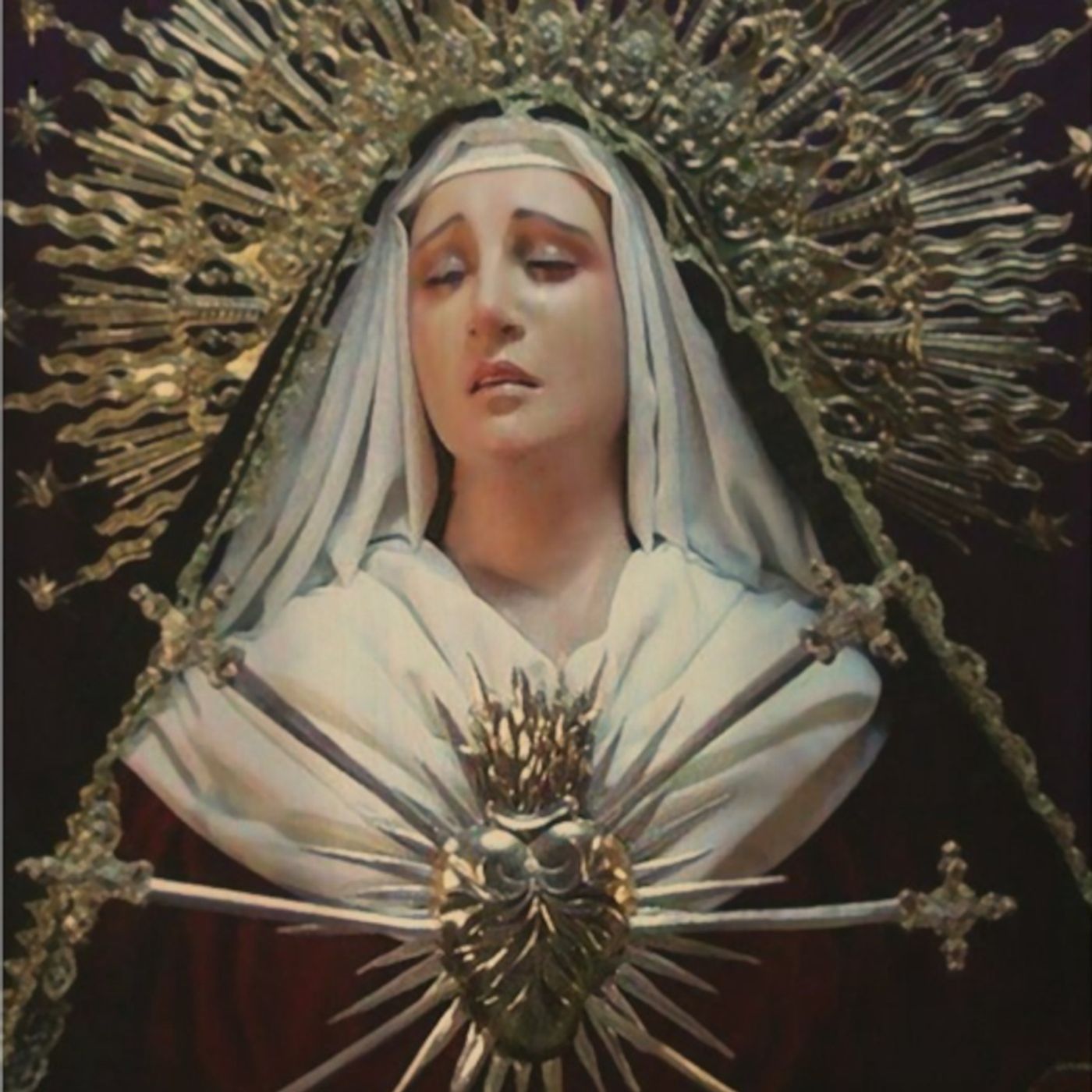 September 15: Our Lady of Sorrows 15.09.2026 5минSeptember 15: Our Lady of SorrowsMemorial; Liturgical Color: WhitePatroness of SlovakiaA mother is only as happy as her saddest childEvery life climbs its Calvary. Every soul has its quiet sorrow which cannot be shared in full with any other soul. This concealed pain is the very real drama that plays out behind the curtain of the duties and distractions of everyday life. Jesus Christ, fully God and fully man, shared in all things human, save sin, including pain and sorrow. So He wept at the death of Lazarus, and He balanced the heavy cross on His sore bones and trudged up a hill to His own execution. Thoughts and ideas can be shared in their totality. Emotions and experiences only partially so. Suffering is intensely private in that it is a personal, lived experience. The intense sufferings of Jesus Christ were intensified by His perfection. It was more unjust, more cruel, that one so perfect should suffer at the hands of creatures of His own making. Only a perfect being similar to Jesus could enter into His sorrow, could experience it somewhat as He did. That person was Mary. She was not a Goddess, of course, but the New Eve, the perfect person God intended that every person should be from the start. Because she was perfect, she most understood, and felt, the pain of her perfect Son. Shared perfection led to shared sorrow.Today’s feast commemorates the sorrows of Mary, most especially those lived during Jesus’ passion and death. Devotional images of Mary show her heart pierced by seven swords, symbolic of seven sorrows: the prophecy of Simeon; the flight into Egypt; Jesus being lost in the temple; meeting Jesus on His way to Calvary; standing at the foot of the Cross; being present when Jesus was removed from the Cross; and her presence at His burial. Mary was perfect, but her life wasn’t perfect. She was squeezed by the same wine press of pain, humiliation, and sorrow that squeezes every life. She was unmarried and pregnant and must have heard the neighbors’ whispers as she walked the dusty streets of her town. She and her family had to flee to a far-off land to escape the murderous King Herod the Great. She lived a real life stuffed with real human drama. But her most intense sorrows were felt when she was in her late forties, when her one and only child died a public death, leaving her, already a widow, totally alone, her middle-aged face stretched with sorrow.When our fingers and thumb walk up and down the chain of God’s mercy, we ruminate over things glorious, joyful, luminous, and sorrowful. We recall historical events like Christ’s Baptism and the Last Supper, and theological events like the Assumption and the Coronation. The Sorrowful Mysteries are historical. Mary hovers just off center stage. She stands nearby, amidst the crowd on the path to Calvary, upright and brave at the foot of the Cross, weeping as her dead boy is wrapped in a sheet and delicately placed on a cold slab in a rock-cut tomb. She is Our Lady of Sorrows because she, and the Church, are mothers. They give and nurture life. They feel more than men. They respond to suffering with co-suffering, not so much through actions and solutions. On today’s feast, we recall Mary’s sorrow and share in it. But our sorrow is not that of a godless Viking, a pagan Roman, or a modern secularist. Christian grief is not godless grief. Our grief, like Mary’s grief, is ameliorated by the sure and certain hope that the last word in our book is not death and despair but hope and life. Mary’s sorrow is temporary, as all of our sorrows one day will be. There is nothing that does not have a context, except for God. And the context for Christian sorrow is the Resurrection.Mary of Sorrows, you shared the pain and sorrow of your perfect Son but were never forlorn. Help all who turn to you to unite our sorrows to yours and His so that we may co-suffer in His death and co-share in His Resurrection.
 -
 September 14: Exaltation of the Holy Cross 14.09.2026 6минSeptember 14: Exaltation of the Holy CrossFeast; Liturgical Color: RedPatronal Feast of Cortona, ItalyA torture device is transformed into a universal symbol of hope and peaceIf the Romans had hung criminals from a gibbet, then Catholic churches would display a noose in their sanctuaries instead of a cross. Or a statue of Jesus’ lifeless body would be hanging in the sanctuary from a sturdy branch with a rope wrapped tightly around His neck. If the Romans had practiced stoning as their chosen form of capital punishment, then there would be a pile of rocks for the congregation to gaze at in hope, with Jesus’ body, bruised and broken, lying lifeless nearby. We are accustomed to the cross. We wear it around our necks, chisel it onto our tombstones, tattoo it onto our arms, and anchor it into rocky mountain peaks. We even top our steeples with the cross and illuminate it at night. The Church has been so spectacularly successful in communicating its truths about suffering and death, about resurrection and life, that we perhaps don’t notice that, over long centuries, a device of torture and death has been reinterpreted as the world’s greatest symbol of life and peace.This is the paradox of the cross. Today’s feast commemorates the Cross because in spiritual combat with life, the cross lost. A conqueror might plant the head of his decapitated opponent on a spike, a soldier might return from a far-away war with an enemies’ flag captured in the heat of battle, or an American Indian might tuck the scalps of his poor victims under his saddle. Trophies of war take many forms. The Cross is Christ’s war trophy. The Church exalts the Cross on this liturgical feast because this enemy of life was felled like timber by the Son of God. The Cross was brought low and humbled. It was mocked when Jesus rose from the dead. The Church holds up the Cross to say “Behold what the cross did not do. Behold that life conquers even a cruel and public death.”God’s self-emptying started at the incarnation. He humbled himself to walk among us when He restricted Himself to the limitations of His own creatures. God continued to pour Himself out until He climbed onto the wood of the Cross, completing the total self-gift that was His life. Our God is not like a general who sends a subordinate to carry out a dangerous mission, like an absent parent who pays someone else to raise his children, or like a physician who coldly touches his patient’s body and then washes in antiseptic. No, our God is like a surgeon who, before he cuts, points to his side and says to the patient with empathy, “I had the same—see my scars.” Our God points to the wound in His open side and says, “I too was the victim of evil and death.” God bore the Cross and its cruel death so that He could drink from the same bitter cup as man, so that He could enter more fully into the world’s sorrow.Death on the Cross was not preordained. God could have freely chosen other ways to redeem the human race—through intelligence, wisdom, charm, money, or education. But then, to participate in His redemption, we would have to study for a PhD, attend etiquette school, get a good job, earn an excellent wage, or receive good grades. Not everyone can do these things. But everyone can die. Death is egalitarian. Everyone does it, eventually. So God did it and “so made the grave a sign of hope that promises resurrection even as it claims our mortal bodies,” as the graveside prayer states. The Cross, then, is everyone’s trophy, raised high with one arm, head cocked to the side. It is in this sense that the Cross is a sign of hope. Because the Cross lost the fight with Christ, death is not the final answer. The Cross says that our God does not answer the question of suffering and death in a partial academic way. He responds in a total human way. He responds with His life. He doesn’t explain; He shares. He responds with empathy by taking up His...
 -
 September 13: Saint John Chrysostom, Bishop and Doctor 13.09.2026 5минSeptember 13: Saint John Chrysostom, Bishop and Doctorc. 347–407Memorial; Liturgical Color: WhitePatron Saint of preachers and speakersA great preacher, writer, and intellectual suffers for the faithIn the tug and pull of the theological disputes of the fourth and fifth centuries, today’s saint was a seminal figure. Along with other luminaries such as Saints Ambrose, Athanasius, Hilary, Basil and many others, he tunneled deep into Scripture and the existing Christian tradition to carve out what is today known as the deposit of faith. Saint John Chrysostom was from Antioch, that “Metropolis of heresy” in Saint John Henry Newman’s words, where Arianism was bred, incubated, thrived, and died in the period between the Council of Nicea in 325 and the Council of Constantinople in 381.John received an excellent education in the liberal arts and was baptized at the age of eighteen, in keeping with the custom of adult baptism common to his era. He joined a rustic group of hermits in the hills outside of his hometown in his mid-twenties. The conditions were so physically and psychologically brutal, though, that he left after seven years. Living always isolated and mortified would not be his path. He was ordained a priest in 386. His bishop recognized his gifts and put him in charge of the physical and pastoral care of the poor of Antioch, a ministry in which he honed his natural gifts as a preacher. He was so skillful in preaching that he was given, a century after his death, the title of chrysostom or “golden mouth.” John’s theological acumen was no less impressive. His sermons and letters display a refined understanding of the intricacies of the Holy Trinity and of the Gospels. His beautiful theological and spiritual reflections are referenced numerous times in the modern Catechism of the Catholic Church.In 398 Saint John was consecrated the Archbishop of Constantinople, the New Rome, provoking jealousy among some contemporaries. John did himself no favors by his overaggressive reforms as Archbishop. He bluntly criticized women for wearing make-up, Christians for attending races and games on holy days, the imperial court for its extravagances, and the clergy for their laxity and wealth-seeking. Recriminations soon followed. He was falsely charged with treason and other crimes and was exiled in 402. He was reinstated after an earthquake in Constantinople was interpreted as divine punishment for his banishment. But John was exiled a second time shortly thereafter. Like other saints, his time of exile proved fruitful. He wrote numerous letters, specifically to bishops in the Western Empire, including the pope. But also like other exiled popes and bishops, assertions of support were only as sturdy as the paper on which they were written. Practical help never materialized. John died in exile in 407, a victim of cold, rain, a forced march and lack of food. Within a decade after his death, his reputation was restored by the pope, and his remains were transferred for burial in Constantinople. He was recognized as a Father of the Church at the Council of Chalcedon in 451 and declared a Doctor of the Church in 1568.Saint John suffered for his zeal. He was exiled by civil power in an age when correct theology was understood as a form of patriotism, and heresy as treason. He crossed the civil powers of his age, did not back down, and paid a severe price for his fidelity. When Crusaders sacked Constantinople in 1204, they stole John’s relics and carried them back to Rome. In 2004 Pope Saint John Paul II authorized the return of some of John’s remains to the seat of the Orthodox Patriarch in Saint George Church in present-day Istanbul, John’s own episcopal city.Saint John Chrysostom, the heat of your words burned so hot that you were persecuted for your ardor. Inspire all Christian preachers to light a fire of faith in their congregations, without...
 -
 September 12: The Holy Name of the Blessed Virgin Mary 11.09.2026 5минSeptember 12: The Holy Name of the Blessed Virgin MaryOptional Memorial; Liturgical Color: WhiteEvery name begins a relationshipA name doesn’t imply that you know everything about someone, but it does make a person “invocable.” To know that there is a “someone” standing before you is not to know too much. When that “someone” has a name, however, he or she is placed in relationship with you, and relationships are what matter most. By means of a name, we go beyond a mere concept, beyond a mere thing. A name includes another in our circle of shared existence. No one wants to be a mere number, or to be just a “Nigerian,” just an “athlete,”or just an “accountant.” Titles and monikers flatten people. They reduce someone to where they came from, what they excel at, their profession, their hair color, their language, and on and on. A name opens a door to the more complex reality that is every human soul.The God of Christianity is not a mere concept who “does” but a being who “Is.” He has a name. He is “Abba” or “Father.” He is Jesus Christ. He is the Holy Spirit. It’s hard to imagine truly knowing, or loving, a nameless entity whose identity is its function. We don’t, after all, love “country.” We love Poland, or the Philippines, or Bolivia. And we don’t love “husband” or “wife,” we love the concrete, specific, named person to whom we are married. Our love of God begins in the same way our love of people does—by asking His name.Jesus Himself called out “Mary!”in the garden on the morning of His resurrection, and her spoken name elicited a beautiful response: “Rabboni!” In Chapter Three of the Book of Exodus, God calls Moses by name to approach Him in the burning bush. God first states that He is the God of Abraham, Isaac, and Jacob. But Moses is not completely satisfied with knowing that God is, or for whom He is. So Moses asks the question everyone asks when they want to deepen a relationship: “What’s your name?” God then pulls the curtains aside and invites Moses into His inner life, into relationship with Him. He reveals something more intimate. He tells Moses His name—“Yahweh” or “I am Who I Am.” God hands over part of Himself to man. He can now be called upon. He is invocable. No one can force you to reveal your name. It’s personal, because to reveal your name is to become vulnerable.Today the Church commemorates a name as much as the person who bears it. The holiness of the name of God, which the Second Commandment forbids man to take in vain, is reflected in the holy names of all the saints and holy things and holy places dedicated to Him. The name of the Mother of God, the Holy or Blessed Virgin Mary, should be safe in our mouths. This feast falls during the Octave of the Birthday of the Virgin Mary and was inserted into the Church’s universal calendar just after the triumph of the Christian army over the Turks at the Battle of Vienna in 1683. The feast was suppressed after Vatican II but once again placed in the calendar by Pope Saint John Paul II in 2002.Mary’s name evokes tenderness and maternity. All Christians should call upon the blessed name of the Mother of God as the most powerful intercessor before the throne of Her Son in heaven. Her name puts us in relationship with her. She is not far away. She is close to us, as a mother should be, and she wants to be called upon by her children who are so in need of her.Saint Mary, may your holy name be always respected and honored, because you are closer to God than we are, because you know Him more intimately than we do, and because we trust that you will be with us now and at the hour of our death. Amen.
 -
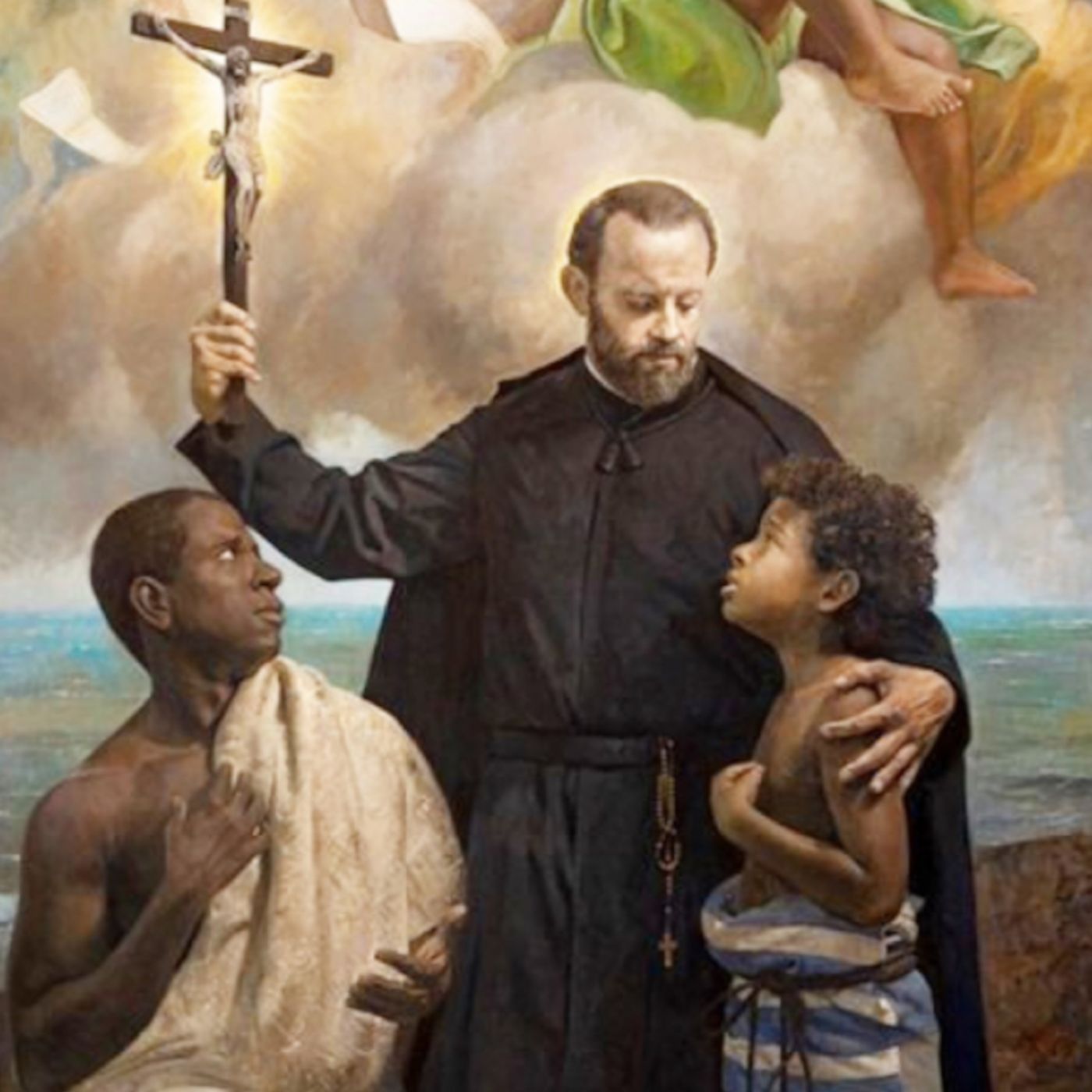 September 9: Saint Peter Claver, Priest (U.S.A.) 08.09.2026 5минSeptember 9: Saint Peter Claver, Priest (U.S.A.)1580–1654Memorial; Liturgical Color: WhitePatron Saint of slaves, Colombia, seafarers, and missionaries to AfricaA builder of the Spanish Bridge, he personified respect for human rightsIt is commonly taught that human rights were born in the Anglo-Saxon Enlightenment of the seventeenth and eighteenth centuries. This thesis holds that non-Catholic, nominally Christian intellectuals, including the founders of the United States, were the first generation of thinkers to philosophically articulate, and legally protect, man’s inherent, universal human rights. And, this train of thought concludes, these steps forward were possible only after the heavy chains of traditional Christianity fell to the ground. In other words, human rights were the obverse of Catholicism. As the shadow of the Church and its archaic teachings receded, the theory goes, the inherent dignity of individual man moved into the light. The problem with this thesis is twofold: first, it ignores one thousand seven hundred years of history; second, most Enlightenment thinkers owned other human beings just like they owned cows, or at least depended on the services of slaves or took advantage of slave women.Today’s saint was among numerous Spanish priests, nuns, and lay men and women who built the Spanish Bridge from the Old World to the New. They knew what Jesus taught. They internalized the content of the papal encyclicals condemning the indignity and immorality of slavery. They battled over human rights in royal courts, they risked life and limb confronting their own unscrupulous countrymen in the fields and ports of New Spain, and they sacrificed their personal health to care for slaves. Their intellectual advocacy for, and practical living out of, human rights is the true source of the Western world’s embrace of human rights, not those few Anglo-Saxon intellectuals whose culture raised them to despise a broader tradition of which they were ignorant. A converted former slave owner and fellow Spanish priest named Bartolomé de las Casas laid the intellectual groundwork for people like Peter Claver, today’s saint. Claver practiced, in flesh and blood, what Las Casas had taught a few generations before him. Peter Claver lived human rights. He cared for actual persons at great cost to his own health. He did not write books like Las Casas or just give lip service to human dignity like many colonists. He implemented Catholic social teaching for over forty years, universalizing the concept of neighbor to include everyone, because everyone is made in God’s image and likeness. He epitomized the sweet and sacrificial love of the Gospel of Jesus Christ.Saint Peter Claver was from the region around Barcelona, Spain. He joined the Jesuits and requested to serve in the American missions. Like so many saints, when he left for God, he left for good. He never returned to friends and family in Spain. He was ordained a priest in the port city of Cartagena, Colombia, in 1615, and immediately and from then on dedicated himself to the physical and spiritual care of African slaves. But he didn’t just care for them in the fields or plantations of Colombia. He met every slave ship he possibly could as soon as it dropped anchor in port. Using interpreters, he greeted the traumatized chained men and women with fresh water, ripe fruit, bandages, perfumes, food, medicine, lemons, a broad smile and charitable caresses. When weather prohibited seafaring and he didn’t have to be in port, Peter instructed and baptized whatever slaves were open to it. He baptized more than forty thousand souls.It is said that Saint Peter Claver lost his senses of taste and smell due to his long years of breathing obnoxious odors. He called himself the slave of the slaves. He also labored among the Spanish slave traders, attempting to convert them from their evil ways. When...
 -
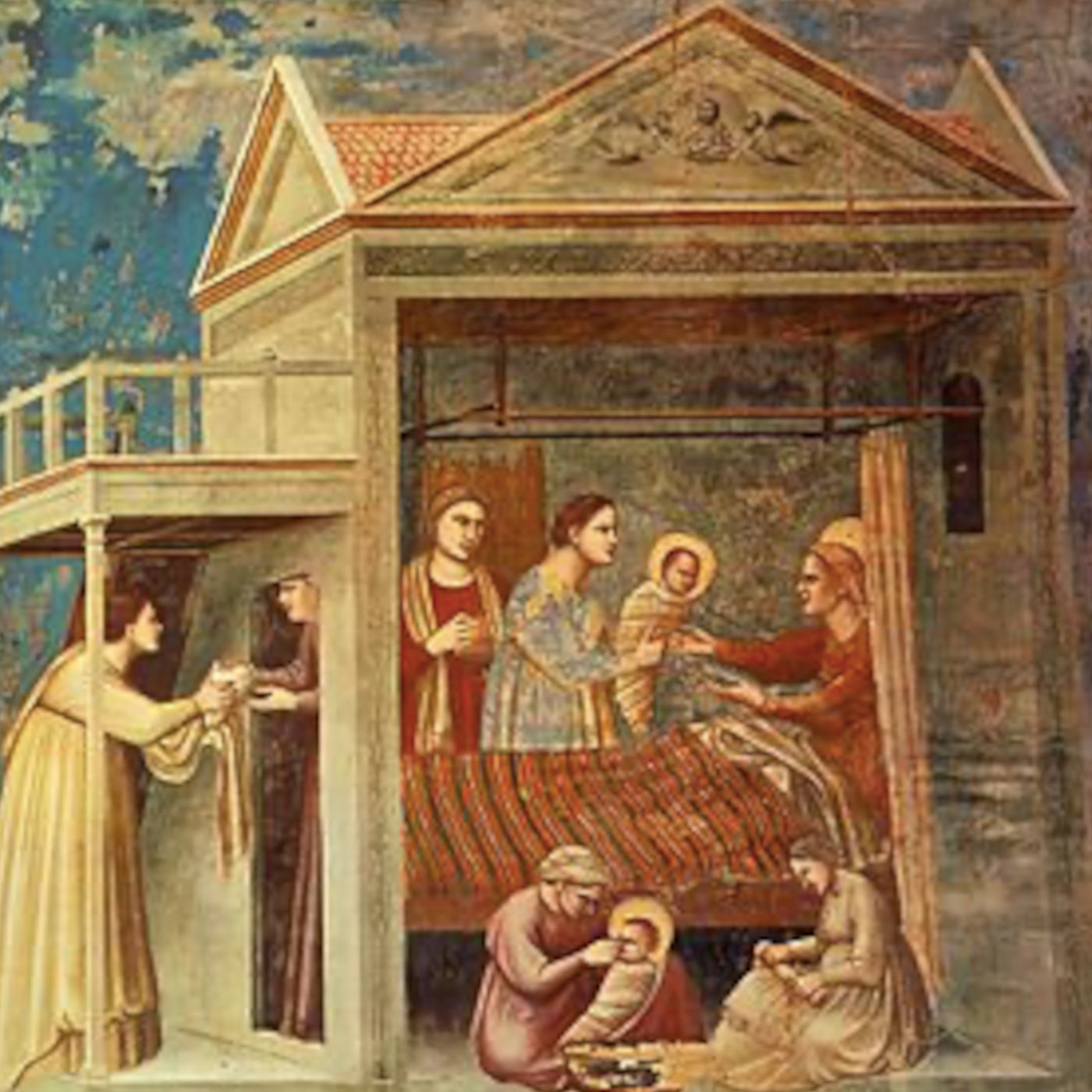 September 8: Birth of the Blessed Virgin Mary 07.09.2026 5минSeptember 8: Birth of the Blessed Virgin MaryLate First Century B.C.Feast; Liturgical Color: WhitePatroness of silversmiths, potters, and chefsThe last and greatest figure of the B.C. era causes its endThe birthdates of great men and women are remembered for posterity. The presidents of the United States are commemorated near the February birthday of George Washington. Many nations celebrate their birthday on the date they gained their independence. The Church celebrates its birthday, so to speak, on the Feast of Pentecost. However, the Church typically commemorates its saints on their date of death, ordination, or other significant milestone. Only Christ Himself, Saint John the Baptist, and the Virgin Mary have feasts commemorating their births, because only they were holy from the start. They were sanctified by God in the womb, not made holy through grace and long trial during their earthly lives.Nowhere in Scripture is the place and date of birth of the Virgin Mary recorded. Nor are the names of her parents found in Scripture, although tradition tells us they were Joachim and Anne. It is not until the sixth century that there is certain knowledge of a liturgical commemoration of Mary’s birth. This is not unusual. Mary lived a largely hidden life, and her theological and historical significance remained somewhat veiled until the Council of Ephesus in 431 formally declared her the Mother of God. Since that definition, every aspect of her life has become the source of a rich spiritual and theological heritage.The Word of God, for the Catholic, is more than its written form. We are a people of the Word, not a people of the Book. Scripture is just one expression of the Word made flesh, the Word spoken by the Father from all ages. This means that a richer, more layered meaning of the events of the New Testament perpetually unfolds in the Church. The written Word of God in the Bible is limited by the fixed nature of all written words. Once put on paper, they don’t change. The Living Word is something more, and it is the Living Word that the Church teaches, preaches, and lives. Just like a person, the Body of Christ expresses itself through both formal language and through body language. The words of the Catechism, prayers, and Magisterial documents use formal language. But the liturgy, sacraments, music, architecture, pious devotions, processions, etc., are more like body language. They communicate the same written truths as the Catechism and Scripture yet in a different, more corporeal, more lived way.The silence of Mary, the hiddenness of so much of her life, is intriguing. It is an invitation to prayer and spiritual reflection. Her silence, and the silence of Scripture on so many events which must have occurred but are not referenced, means that there is, and will always be, more for the Church to reveal about Her greatest truths. It is not just Scripture that is inspired but the Church as well. She pulls from Her storehouse things old and new, polishes them off, and offers them to the faithful in culturally compelling language to deepen the content of faith and the faithful’s response to it.But even more than offering old things in new ways, even more than preserving past truths, the Church is a generator of revelation. She is the Living Word in the world of today, the vibrant Magisterium who absorbs the world’s questions and challenges in every age and gives them compelling answers. Tradition for the Church, then, is not just a jewel to be guarded. Tradition is forward-looking, dynamic, and active. And this positive tradition continues to celebrate the birth of the Virgin Mary because it was she, the last great figure of the B.C. era, whose birth itself gave birth to a new world. No Mary, no Christ. Her birth was the start of the future we all now inhabit.Saint Mary, we celebrate your holy birth in the land your Son made...
 -
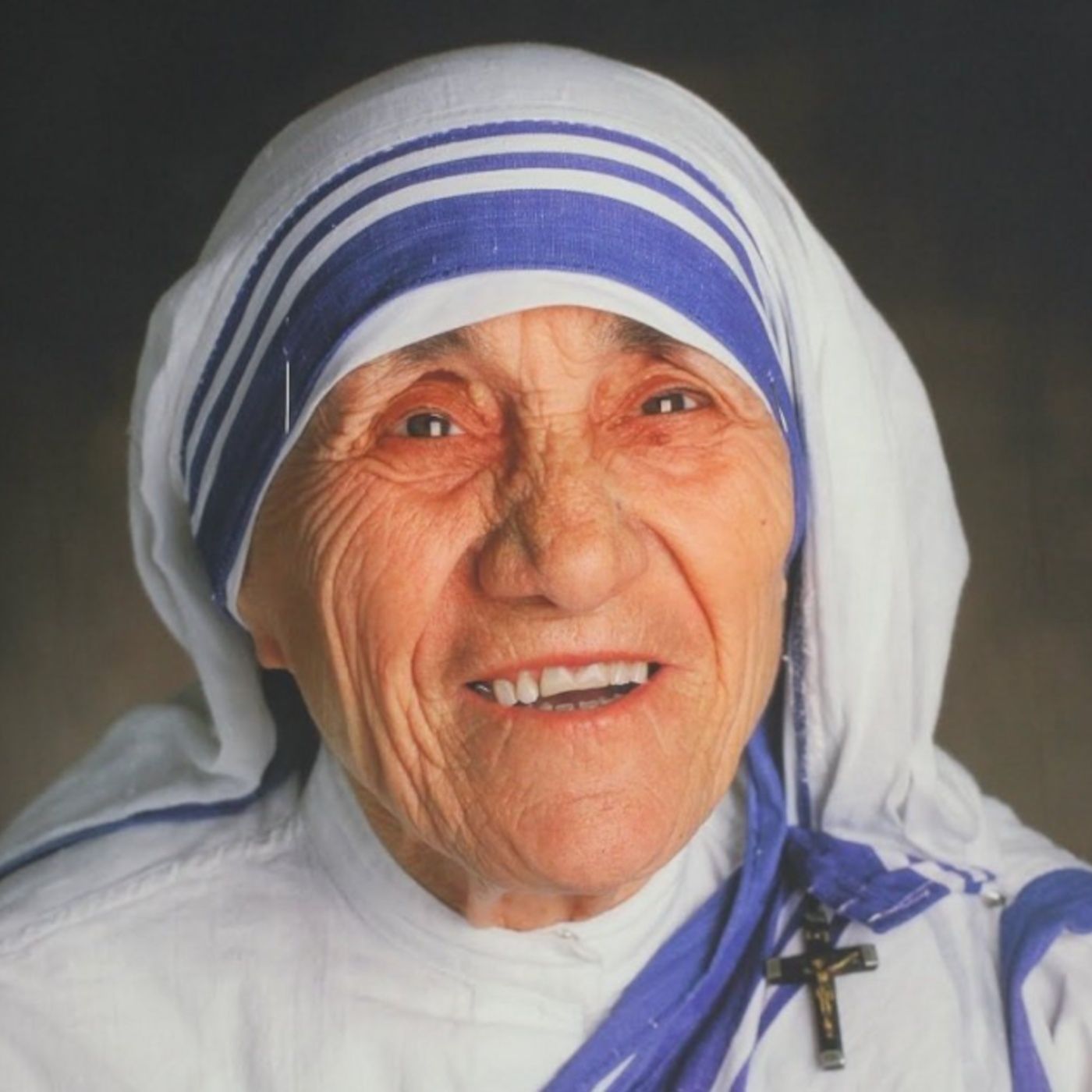 September 5: Saint Teresa of Calcutta, Religious 04.09.2026 6минSeptember 5: Saint Teresa of Calcutta, Religious1910–1997Optional Memorial; Liturgical Color: White (Mother Teresa is not on the Church’s universal calendar but is included here due to her renown)Patron Saint of the Archdiocese of Calcutta, IndiaShe equals in generosity the great ‘Teresas’ she emulatedAnjezë (Agnes) Gonxha Bojaxhiu was a tiny Albanian woman whose strong-as-iron faith served as a fulcrum to budge the world closer to God. She was born into a devout family in Skopje, in present day Macedonia. Her parent’s marriage had been arranged, according to custom, and was happy and fruitful. The family was prosperous and regularly helped the poor and abandoned. There was seldom not a destitute person sharing the family table at lunchtime. Little Agnes benefited from the then recent reforms of Pope Saint Pius X lowering the age of First Holy Communion and thus received the Eucharist for the first time at the very young age of five and a half. After her father died young, Agnes’ firm, loving, and religious mother had the greatest influence on her. The vibrant life of her local parish also impacted her faith. The priests there talked about the missionary work of the Church in far away lands, and Agnes internalized every word they spoke.Feeling the call to serve Christ and the Church, Agnes decided to become a nun with the Loretto Sisters who were based in Dublin, Ireland. So when she was eighteen, a large procession of family, classmates, and parishioners accompanied her to Skopje’s train station. After tender farewells, everyone wept and waved handkerchiefs as the train slowly pulled out of the station, and Agnes leaned out the window and wept and waved her handkerchief back at them until the train disappeared around a bend. Agnes would never see her beloved mother again. In the convent, Agnes chose the name Thérèse in honor of the Saint of Lisieux. But another nun had already chosen that name, so Agnes became Teresa, spelling the name in the Spanish style. After learning the Rule of her Order and basic English, she sailed on the long voyage to India, arriving in Calcutta in January 1929. India would be her home for the rest of her life. Sister Teresa taught at a girls’ primary school in Calcutta, taking final vows in 1937, and was known warmly as Mother Teresa. Due to her open personality, self-discipline, deep prayer life, organizational abilities, and native intelligence, she became the school principal in 1944. Everyone loved her, especially her students, and Mother Teresa was a contented nun doing important work for the Church. Her youthful zeal had been fulfilled. But then something happened to alter her life’s course, something entirely unexpected. In 1946, while riding on a train to her annual retreat, Mother Teresa received her “call within a call.” Jesus told her, by mysterious means, that He desired her to serve Him in the poorest of the poor, who were so ignorant of Him and of His love. She must start a religious order.Two years of organizing passed until, in August 1948, Mother Teresa donned her famous white and blue sari for the first time. She left the comfort and predictability of the Loretto convent school for a hard life on the street among the slums of the poorest, hungriest, and dirtiest people in Calcutta. Her order, the Missionaries of Charity, was formally established in 1950 and drew its first sisters from among Mother Teresa’s former students. The order soon exploded with growth and expanded internationally. Missionaries of Charity sisters worked with AIDS patients, the dying, the starving, in soup kitchens, orphanages, and directly with the poor lying in filthy gutters. By the time of her death in 1997, the Missionaries of Charity had over four thousand sisters serving in about one hundred and twenty countries. Mother Teresa became internationally famous, an icon of charity and peace, for all the right...
 -
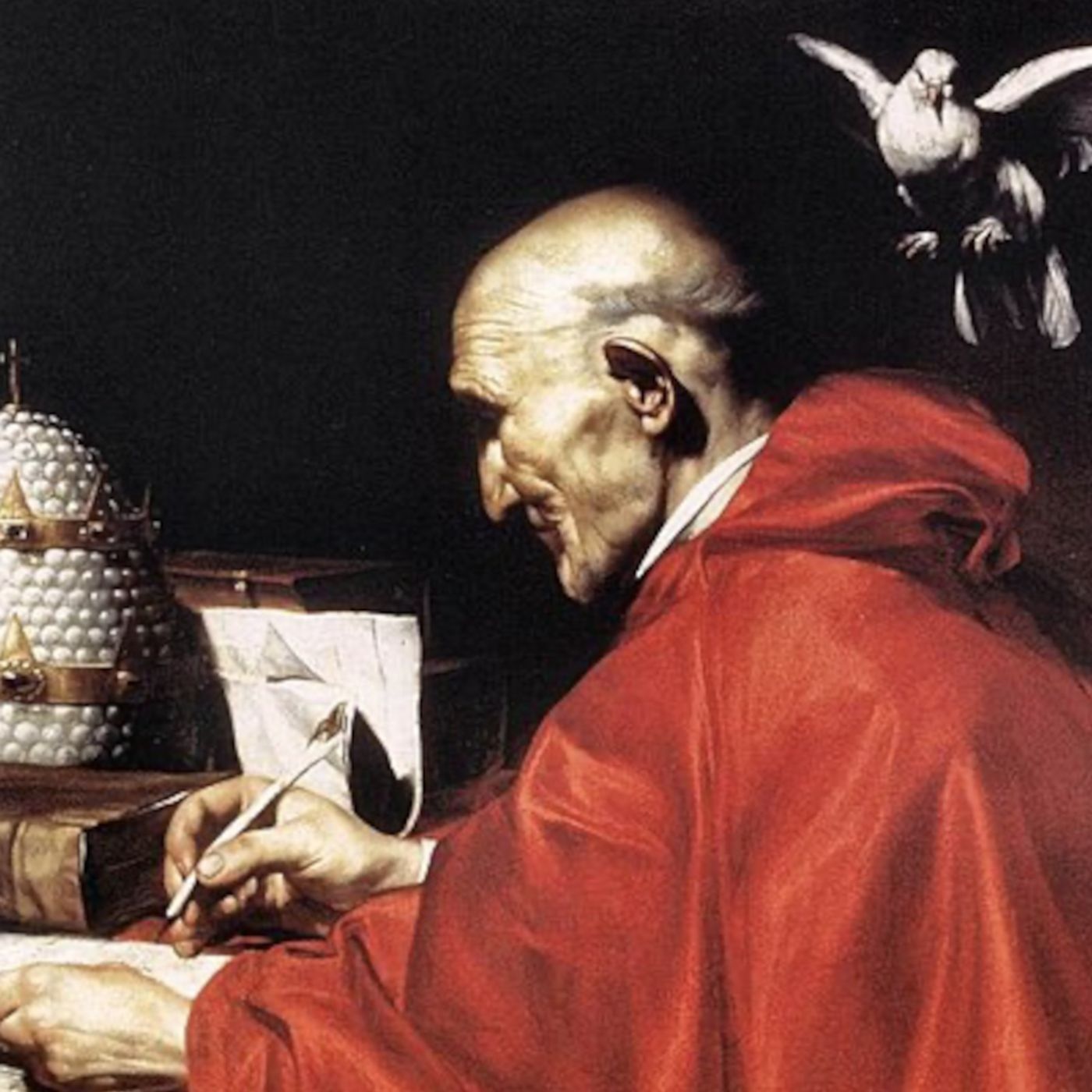 September 3: Saint Gregory the Great, Pope and Doctor 02.09.2026 5минSeptember 3: Saint Gregory the Great, Pope and Doctorc. 540–604Memorial; Liturgical Color: WhitePatron Saint of musicians, singers, students, and teachersA gifted nobleman serves Rome, becomes a monk, and then a consequential popeWhen your salad is awesome, your car amazing, and your internet connection is great, there’s a problem. Overused superlatives diminish their own meaning and crowd the linguistic space reserved for things which are truly awesome, amazing, and great. Today’s saint sent the large missionary party that trekked across Europe and converted Saxon England to Catholicism, establishing a culture that endured for almost a millennium. That’s awesome! He wrote a theological work that was used for centuries by thousands of bishops to help them become more fatherly pastors. That’s amazing! Gregorian chant is named after him; he is one of the four Latin Fathers of the Church; he was the first pope to use “Servant of the Servants of God” as a papal title; he alone preserved the memory of Saint Benedict with a biography; he made revisions to the content and structure of the Mass which are part of the liturgy until today; and he was the most impactful pope of the long span of centuries from the 500s to the 1000s. That’s great! These accomplishments thus truly merit the title Great with which Saint Gregory has been justly crowned by history.Pope Saint Gregory the Great was born into a noble Roman family with a history of service to Church and empire. The family home was perched on one of Rome’s seven ancient hills, the Caelian, which Via San Gregorio still cuts through today. His father was a Roman senator, although at a time when Italy was in decline and the imperial government was based in Constantinople. Gregory received an education in keeping with his class and became the Prefect of Rome, its highest civil position, in his early thirties. In 579 he was chosen by the pope as his emissary to the emperor’s court in Constantinople, primarily to seek the emperor’s assistance in protecting Italy from the Lombard tribes that had long ago overrun her.Gregory was elected the bishop of his home city in 590 and was thus obligated to abandon the quiet life of a monk, which he had been living with some friends for a few years in a small monastery near his family home. In numerous letters which have fortunately been preserved, Pope Gregory, soon after his election, bemoans the loss of his monastic solitude, peaceful recollection, and life of prayer. But he had only been a monk for a few short years. Gregory’s skills as an administrator, honed in his long years of prior civil and church leadership, proved valuable when he sat on the Chair of Saint Peter. He drew into the orbit of papal authority the bishops of France and Spain who had, until then, been operating somewhat autonomously. He secured the allegiance of Italy’s northern tribes to orthodox Catholicism, compelling them to abandon the counterfeit Arian Christianity they had held for centuries. And Gregory made the fateful decision to personally organize and promote the great, and highly successful, missionary journey of Saint Augustine of Canterbury to the Kingdom of Kent in England.Pope Saint Gregory the Great’s legacy in liturgy, pastoral doctrine, and miracles left a deep mark on medieval Europe and beyond. The Council of Trent in 1562 mandated the suppression of votive Mass cycles for the dead or for any other need. But the Council Fathers made one exception: The Mass of Saint Gregory, a cycle of thirty Masses on thirty consecutive days for the release of a soul from purgatory, was not suppressed. Almost a thousand years after his death, Gregory’s memory was too venerable to suppress. Gregory was an encourager of the encouragers, a bishop who modeled, strengthened, and explained how and why his fellow bishops should be fathers first and lords second.Pope Saint...
 -
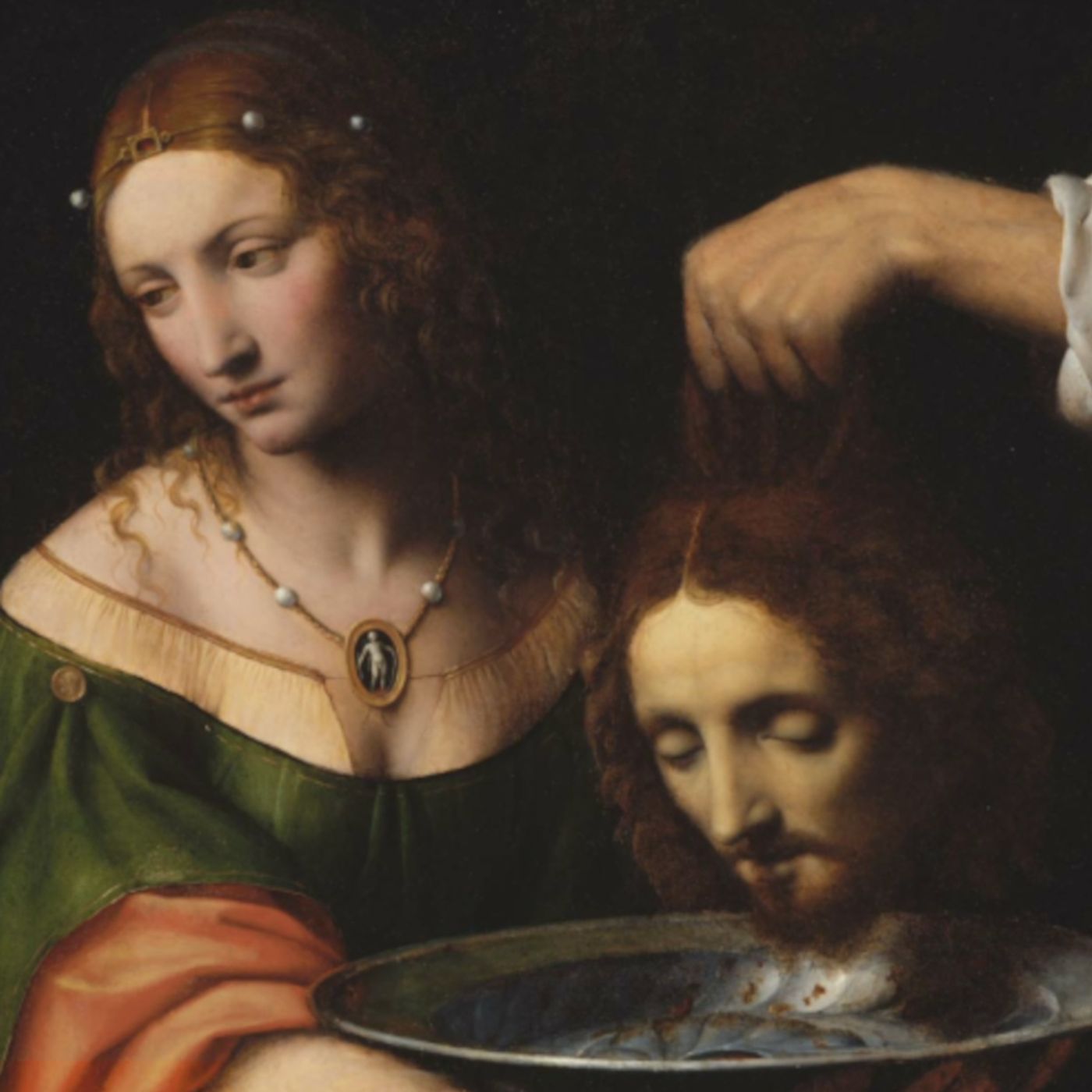 August 29: The Passion of Saint John the Baptist, Martyr 29.08.2026 5минAugust 29: The Passion of Saint John the Baptist, Martyr c. 29 A.D.Memorial; Liturgical Color: RedA desert-dwelling, locust-eating, weed-wearing, celibate ascetic dies for marriageSaint John Vianney was so opposed to the dances held routinely in his small town of Ars that he dedicated a small chapel in his parish church to Saint John the Baptist. At its entrance was painted, perhaps somewhat tongue in cheek, a warning of the evil effects produced by lust and drink: "His head was the price of a dance." Saint John the Baptist’s head was, indeed, the wage rendered by an older man for the satisfaction of watching a young girl dance at his birthday party. More remotely, however, John’s beheading was not caused by a suggestive dance. He paid with his head for poking the bear. John denounced King Herod Antipas, to his face, for divorcing his lawful wife and taking as his own Herodias, his sister-in-law, the wife of his still living half-brother Philip. (Convoluted family blood lines also made Herodias Herod’s niece.) John the Baptist died a martyr for marriage.Herod Antipas was a tetrarch—one of four rulers who co-governed ancient Palestine as client kings under the oversight of a Roman governor. Herod Antipas learned cruelty at home on his father’s knee. His father, Herod the Great, had two of his own sons strangled to death, murdered his favorite wife, and ordered the slaughter of all the male babies of Bethlehem. Herod Antipas’ imprisonment and execution of John was more aggressive than his restrained interaction, a few years later, with John’s cousin. Jesus had called Herod a “fox” when some pharisees told Jesus that Herod was plotting His death. Pontius Pilate later sent Jesus to Herod for interrogation after Pilate determined that the Jew’s complaints about Jesus fell more under Herod’s jurisdiction than Pilate’s own. At this strange audience in Jerusalem between Herod and Jesus on Good Friday, Herod wanted Jesus to perform a miracle for him, as if Jesus were a mere magician who pulled rabbits out of hats. But Jesus said not a word to the man who killed His beloved cousin. Jesus, after all, did not come to provide bread and circuses to the curious. He performed miracles to elicit and to reward faith. So the fox sent Jesus back to Pilate for what always happened next.Herod is to John the Baptist what Pilate is to Jesus. Neither Herod’s nor Pilate’s first choice was to order an execution. But cowardice and fear coalesced until commanding the death of an innocent man was more expedient than braving the ridicule and threats of subordinates. According to Saint Mark, “Herod feared John, knowing that he was a righteous and holy man…When he heard him, he was greatly perplexed; and yet he liked to listen to him” (Mk 6: 20). “[Herod] was deeply grieved” (Mk 6: 26) that he had to order John’s death. But he didn’t actually have to order John’s death. If he were truly grieved, he could have stood up in the midst of the happy crowd, said “I made a stupid promise which I now regret,” and granted Salome (her name is not found in the Bible) some other handsome gift instead of a blood-splattered plate. Herod beheaded a man to save face, to avoid embarrassment, and to avoid having to say “I made a mistake.”The Passion, or Beheading, of Saint John the Baptist is one of the very oldest liturgical feasts on the Church’s calendar. John’s birth may be the oldest feast. Along with the feasts of Holy Week, the original event of John’s death is right there on the surface of Holy Scripture, and so likely was commemorated as soon as the Church started commemorating anything. John the Baptist’s colorful life on the edge of respectability came to an abrupt end due to the weakness of a weak man, Herod, and due to the revenge sought by the troubled conscience of Herodias, who despised John for mentioning the obvious. Saint Jerome writes that Herodias’s rage was not satiated by the...
 -
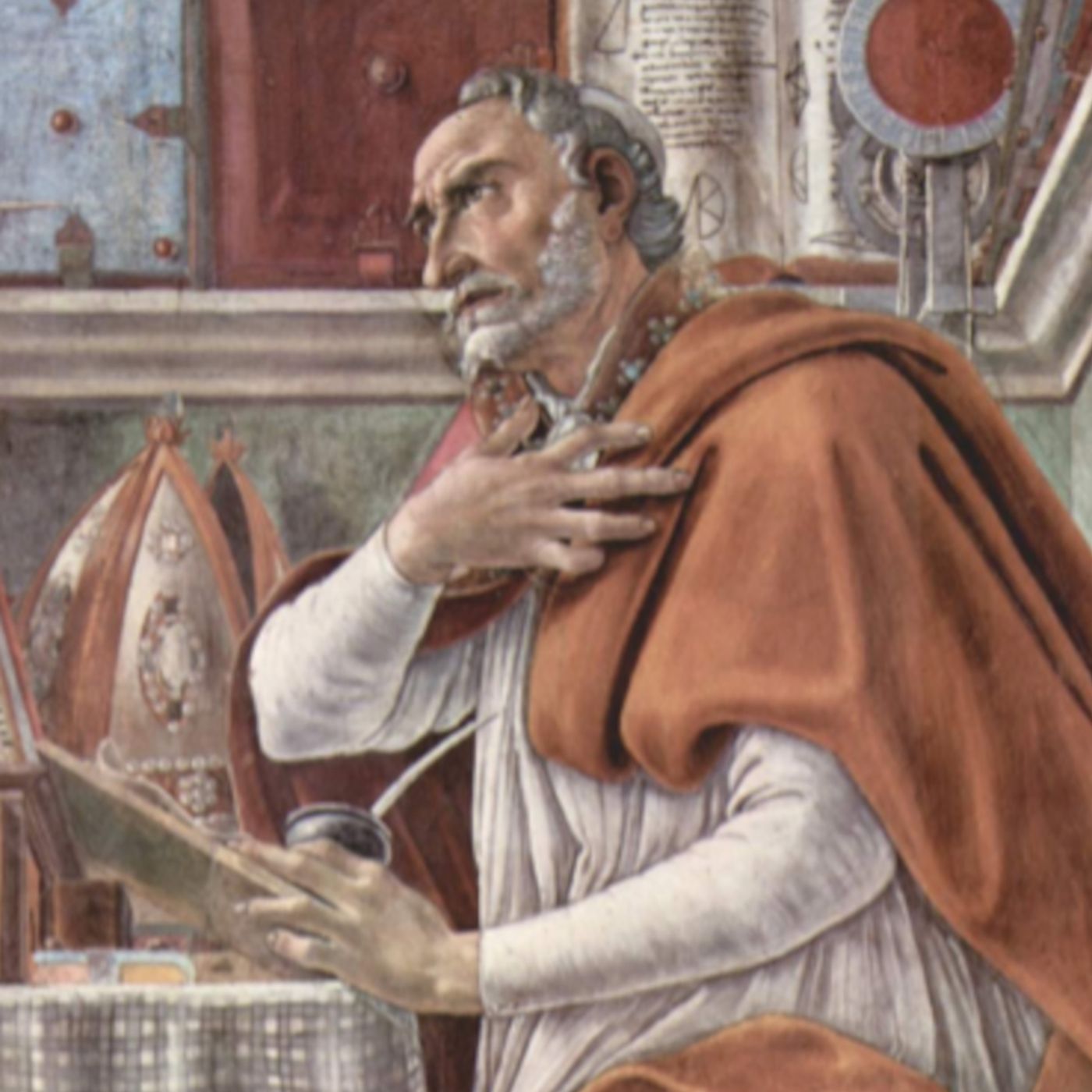 August 28: Saint Augustine, Bishop and Doctor 28.08.2026 6минAugust 28: Saint Augustine, Bishop and Doctor354–430Memorial; Liturgical Color: WhitePatron Saint of theologians and printersA psychologist, theologian, and working bishop is the greatest convert after Saint PaulThe mighty African Saint Augustine climbed the heights of thought, stood upright on their peaks, and turned toward Rome, and thus spread his long, deep shadow over the entire globe. As a Christian thinker, he has few equals. He is the saint of the first millennium. Augustine was born in the small Roman village of Tagaste, in Northern Africa, to a minor civil official and a pious, head-strong mother. Tagaste had no swagger. Its simple people were bent over from working the land since time immemorial. The great African cities hugged the Mediterranean coast, far from Tagaste, which was cut off, two hundred miles inland. When he was a boy, Augustine imagined what the far-off waves of the sea were like by peering into a glass of water. When he was twenty-eight, he descended from his native hills and sailed for Rome to find himself, God, and holy fame. When he returned to Africa many years later, it was for good. The hot-tempered young African had matured into a cool-headed spiritual father. He was now their bishop, lovingly and tirelessly serving the open, forthright townsmen that were his natural kin.It is challenging to categorize someone who is the founder of an entire genre or school of thought. No one knew what an autobiography was until Augustine wrote his Confessions. There was Caesar’s Gallic War before, and there would be Jean-Jacques Rousseau’s Confessions later. And there is volume after volume now. All pale. Augustine wrote the Confessions as the Bishop of Hippo when he was about forty-three, covering his early life up to the age of thirty-three. It is not a great book due to its density of historical detail. The reader hungers for facts and is left unsatisfied. Whereas autobiographies are normally stuffed with people, places, and things, Augustine says almost nothing about his father, only mentioning his death in passing. He does not clarify how many siblings he has. It is often not clear when, or where, events occur. Augustine is clearly not concerned, in short, with his outward journey. It is the inner drama, the drama of the soul, that he wants to recount. The Confessions changes the answer to the perennial question “What really happened?” from the outside to the inside. Augustine is the author of the first “Story of a Soul.”Augustine is the world’s first great psychologist. He does self-reflection and analyses ages before Saint Ignatius and perceives unconscious motivations centuries before Freud. The painfully self-aware, tell-you-everything, what-are-you-hiding, hyper-modern psyche of today is deformed Augustinianism. It took a long time for the future to catch up to him. Augustine does so many things first, does them better, and does them as a Catholic. With the historical details left to the side, he self-investigates his early childhood, his unsatisfied father-hunger, the emotional darkness caused by the death of friends, his enduring guilt for stealing some pears, his complex love for his mother, and how hard it is…how hard…to leave the woman he has loved for fifteen years. They have a child together after all. But Augustine must let her go. He must move on, and he does. She is the Confessions’ mysterious character. He never even gives her name.Reading other great theologians, one knows almost nothing about them, their friends, or their personal thoughts or desires. Reading Augustine, you get the man in full. He is concerned with relationships, that of his to God and to his mother, and that of others to himself. He would start his personal letters with Dulcissimus concivis—My dearest friend. And he meant it. He was a highly educated scholar, a great letter writer who worked in the close orbit of the Roman imperial court,...
 -
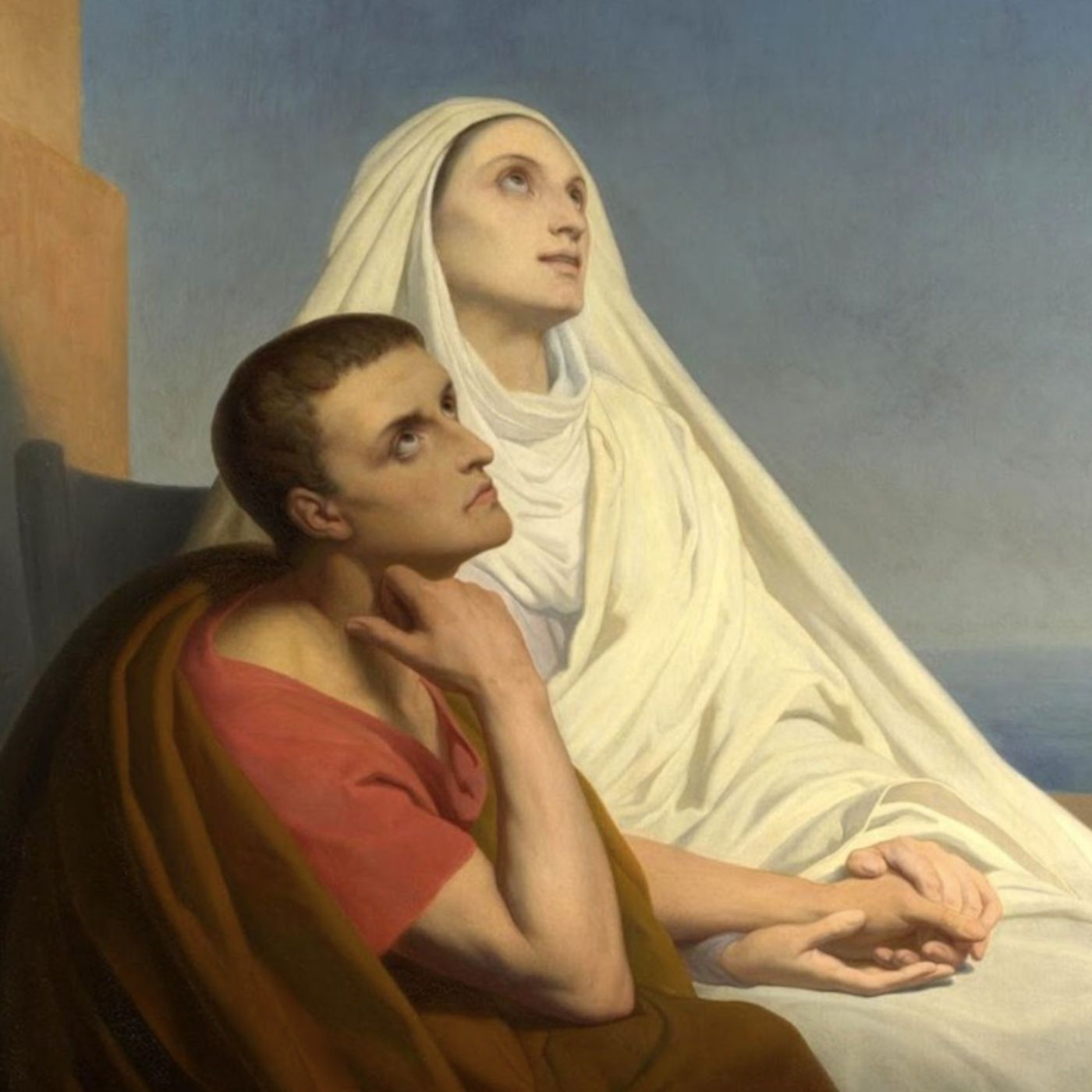 August 27: Saint Monica 26.08.2026 5минAugust 27: Saint Monicac. 331–387Memorial; Liturgical Color: WhitePatron Saint of difficult marriages, homemakers, and mothersWithout her example of persevering prayer, her gifted son would not have convertedMost of the female saints of the first few centuries of the Church are virgins, martyrs, or both. Most of the medieval and modern female saints are nuns, especially foundresses of religious orders. Married female saints are relatively rare. With some few contemporary exceptions, they are the mothers of kings, of emperors, or of other canonized saints. Saint Monica is the mother of Saint Augustine. She was raised in a Catholic family in long extinct Christian North Africa, probably in the small town of Tagaste in modern day Algeria. Tagaste had been Christian for over two hundred and fifty years by the time Monica was born. So although from a present-day perspective she was born in ancient times, just after the Council of Nicea, her family’s faith likely dated to the first waves of African Christianity, long before Nicea.Monica had at least three children: Navigius, Perpetua, and her oldest and dearest son, Augustine. No mother can be reduced just to what they mean to their children, yet it is due exclusively to her son Augustine that so much is known about the life of Monica. Augustine seemed to never stop writing, and after God and Augustine himself, Monica is the central character in his autobiography, the Confessions. Monica is ever concerned about, and ever present to, Augustine. She won’t let him out of her sight. When Augustine is preparing to sail for Italy from the port at Carthage, he is surprised to learn that his mother intends to travel with him. So he deceives her about the ship’s departure time and escapes without her. But she is persistent. She later follows him to Rome only to find that he has moved on. So she follows him to Milan, finds him, and moves in with him and his friends. It is no wonder that Augustine wrote: “She liked to have me with her, as mothers do, but far more than most mothers.”Monica married a man named Patricius and converted him, at least superficially. He was a difficult man whose early death left her a widow at forty. Monica and her husband wanted their gifted son Augustine to receive the best education possible, so they sent him away for schooling. And there Augustine fell into the serious and enduring moral and theological errors which would form the central drama of Monica’s life. It is said that all of the plots in the world can be reduced to just five or six. One of those is “Get back home.” Saint Monica’s life was dedicated to getting her son back to his home, the Church. She wept, she prayed, she fasted. Nothing seemed to work for fifteen years while her son strayed far from the Catholic path, seemingly without remorse.In the midst of her spiritual trials and sufferings over Augustine, Monica had a vision. She was standing on a wooden beam. A bright, fluorescent being told her to dry her eyes, for “your son is with you.” Monica told Augustine about the vision. He responded that yes, they could indeed be together if she would just abandon her faith. Monica immediately retorted: “He didn’t say that I was with you. He said that you were with me.” Augustine never forgot her quick and insightful answer. In Milan, Monica befriended the great Saint Ambrose, who played such a key role in Augustine’s conversion. The seed of her prayers bore fruit when Augustine abandoned his sinful life, was baptized, and decided to return to North Africa as a Christian leader. Her son had come home to the Church and was returning to his native land. Her life’s mission accomplished, Saint Monica died in her late fifties in the Roman port of Ostia, while waiting to board the ship to cross over to Africa. In her final hours, Augustine asked if he should transport her body to Tagaste for burial next to...
 -
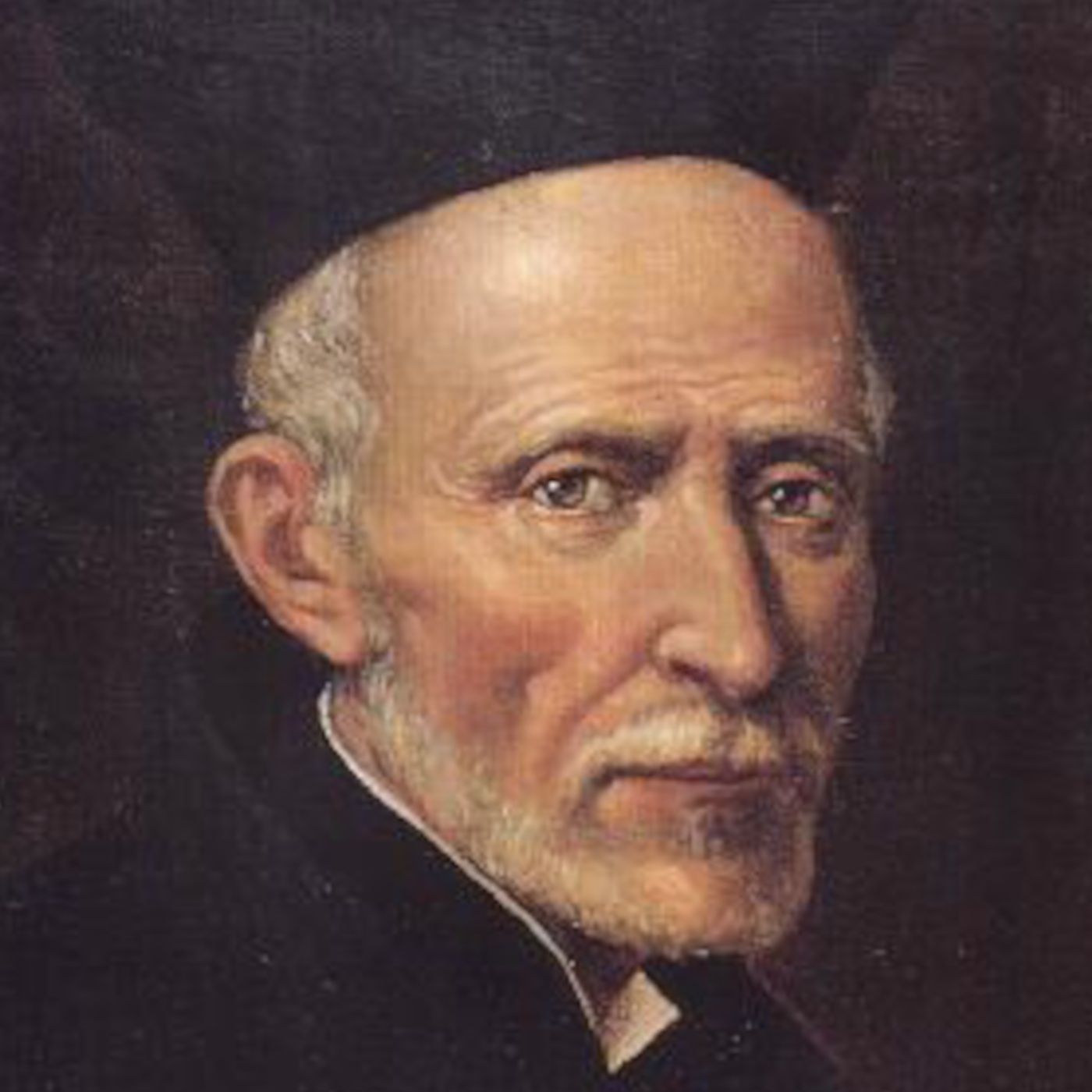 August 25: Saint Joseph Calasanz, Priest 25.08.2026 5минAugust 25: Saint Joseph Calasanz, Priest1556–1648Optional Memorial; Liturgical Color: WhitePatron Saint of Catholic schools and school childrenA visionary implements his plan, is defamed, and forgivesThe star of today’s saint burns less brightly than others in the great constellation of counter-reformation saints. But the educational vision of Saint Joseph Calasanz and the ultimate spread and triumph of his order after his death have had an enduring impact far exceeding his humble reputation. Calasanz was born into a minor noble family in Spain, the youngest of eight children. His parents valued education and sent their boy to religious schools to receive a fine training in the classics. While a teenager, he decided that God was calling him to be a priest. After finishing his university studies with distinction, he was ordained in 1583. He carried out several sensitive and important pastoral and administrative duties for his local bishop and then made a life-altering decision. In 1592 he resigned his appointments, gave away his inheritance to his sisters, funded some worthy projects for the needy, and departed for Rome. He would live there for the next fifty-six years of his long life.Like his Roman contemporary Saint Philip Neri, Joseph saw the pressing need to educate the great mass of poor children who spent their days doing everything except going to school. With the assistance of highly placed connections in the Church and Roman nobility, Joseph was given rent-free space in a parish where he offered free classes to poor children. The only schools in existence at the time were tuition based. Without knowing it, Joseph had done something revolutionary. He had started the first free school in modern Europe, although similar initiatives were quick to follow. Joseph’s free school for the poor immediately exploded in size to over a thousand students. He and his co-workers quickly founded similar schools in other regions of Italy, became more disciplined in their approach, and sought, and received, official status in the Church. In 1622 the pope approved the Order of Poor Clerks Regular of the Mother of God of the Pious Schools, or the Piarists, as they were commonly known. They were the first order of priests dedicated to primary school education.While his successful educational vision was being implemented, Joseph’s work provoked envy among the upper classes, clerics included, who resented educating, for free, the lower echelon of society. Joseph also aroused suspicion for his personal friendship with Galileo Galilei, who was under investigation by Church authorities for his theory that the earth moved around the sun. Crises internal to the Piarists concerning the sin that dare not speak its name caused even greater alarm. All of these pressures and intrigues led to Joseph’s arrest and humiliation by the Inquisition for a brief period in 1642. Two of his own Piarist priests were his most bitter enemies, and, in their attempts to cover up their own sins and incompetence, they pulled every lever of influence they could put their hands on to remove Joseph as the head of his own order. Joseph was not bitter, said it was the Lord’s will, and forgave them. Due to its internal problems, however, the order was suppressed in 1646. When Joseph died in 1648 at the age of ninety, his life-work had been obliterated. But the Piarists were resurrected in the following decades, thrived, and opened schools in various countries. Piarist fathers helped stem the Protestant tide in Poland, educated luminaries such as Mozart, Haydn, Schubert, and Goya, and provided the model for free public schools later adopted by Saint Jean-Baptiste de La Salle and Saint John Bosco. Joseph Calasanz was canonized in 1767 “a perpetual miracle of fortitude and another Job” in the words of a pope.Saint Joseph Calasanz, you were disgraced, defamed, maligned and...
 -
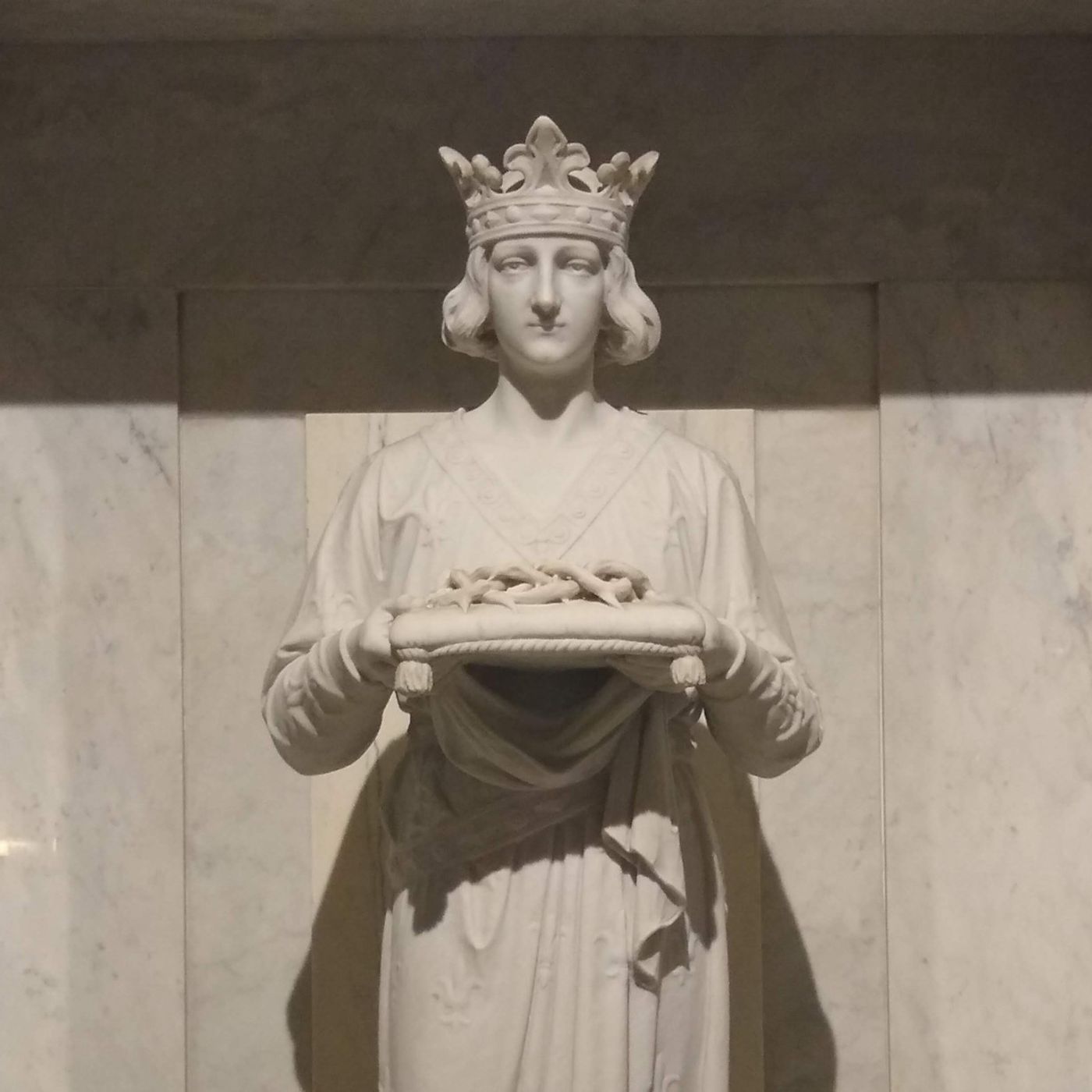 August 25: Saint Louis 25.08.2026 4минAugust 25: Saint Louis1214–1270Optional Memorial; Liturgical Color: WhitePatron Saint of barbers, grooms, and Saint Louis, MissouriA king leads in piety, mortification, and faith, and dies crusading for the King of allJesus said, “If any want to become my followers, let them deny themselves and take up their cross and follow me” (Mt 16:24). Today’s saint fulfilled Christ’s commandment in two ways. First and most obviously, King Louis IX of France, or Saint Louis, took up his cross by practicing serious physical mortifications his entire life. He wore a hair shirt, fasted, never took God’s name in vain, and would not tell jokes or even laugh on Fridays. Secondly, he had a cloth cross woven onto his tunic and thus became a knight crusader. Louis and countless other medieval knights understood the commandment to “take up their cross” to be fulfilled not merely through physical mortification but by wading into battle with the sign of Christ on their chests. That visible cloth cross boldly proclaimed a man’s commitment to liberating the Holy Land from Muslim control through hard battle.When Louis was a child his mother told him, “I would rather see you dead at my feet than that you should ever commit a mortal sin.” He never forgot her words. After his father’s early death, Louis was crowned, or anointed, king in the quasi-liturgical ceremony whose main elements can still be seen at modern coronations. He married at twenty, and he and his wife had eleven children. He was totally devoted to Christ and the Church. He prayed the breviary every day, attended daily Mass, and constructed stunning churches, including Paris’ Saint Chapelle to house his collection of relics, including the true Cross of Christ. He was so disturbed by the sin of blasphemy that he promulgated a law that all blasphemers be branded on the lips. He waged war against the Cathars of Southern France and, together with the Dominicans and the Inquisition, vanquished their heretical movement.Louis possessed an elusive charisma that made people not only want to be in his presence but also to touch his person. He was well educated, friendly, curious, and truly humble. Every man was his friend. He invited the quiet Saint Thomas Aquinas, who was studying in Paris at the time, over to dinner for the joy of theological conversation. He promulgated laws respecting the presumption of innocence and due process for everyone. He was, in short, a model Christian king who reigned over a golden century in which France was the largest, most unified, and wealthiest kingdom in Europe.Despite his fame and the creature comforts of home, Louis made the courageous, if reckless, decision to personally lead two crusades. The first was initially successful but ended disastrously with Louis’s capture and his army being crushed in battle. Only a king’s ransom secured his release. The second crusade he embarked on was even more disastrous. King Louis died of typhus, along with many men in his camp, on the shores of modern Tunisia, having just begun their journey. One of his last acts was to kneel by his bed to receive Holy Communion. He had wanted to die a martyr, or a confessor, for the faith. His desire was not technically fulfilled. But he did give his life sacrificially in the noble, centuries-long, quixotic quest to reconquer Jerusalem and the Holy Land for Christian pilgrimage. He was canonized in 1297. Saint Louis of France, you were intrepid in your love for Christ and the Church. Impart from heaven to all modern Catholics some of your same daring spirit—to be courageous in living and spreading the faith, to give and not count the cost.
 -
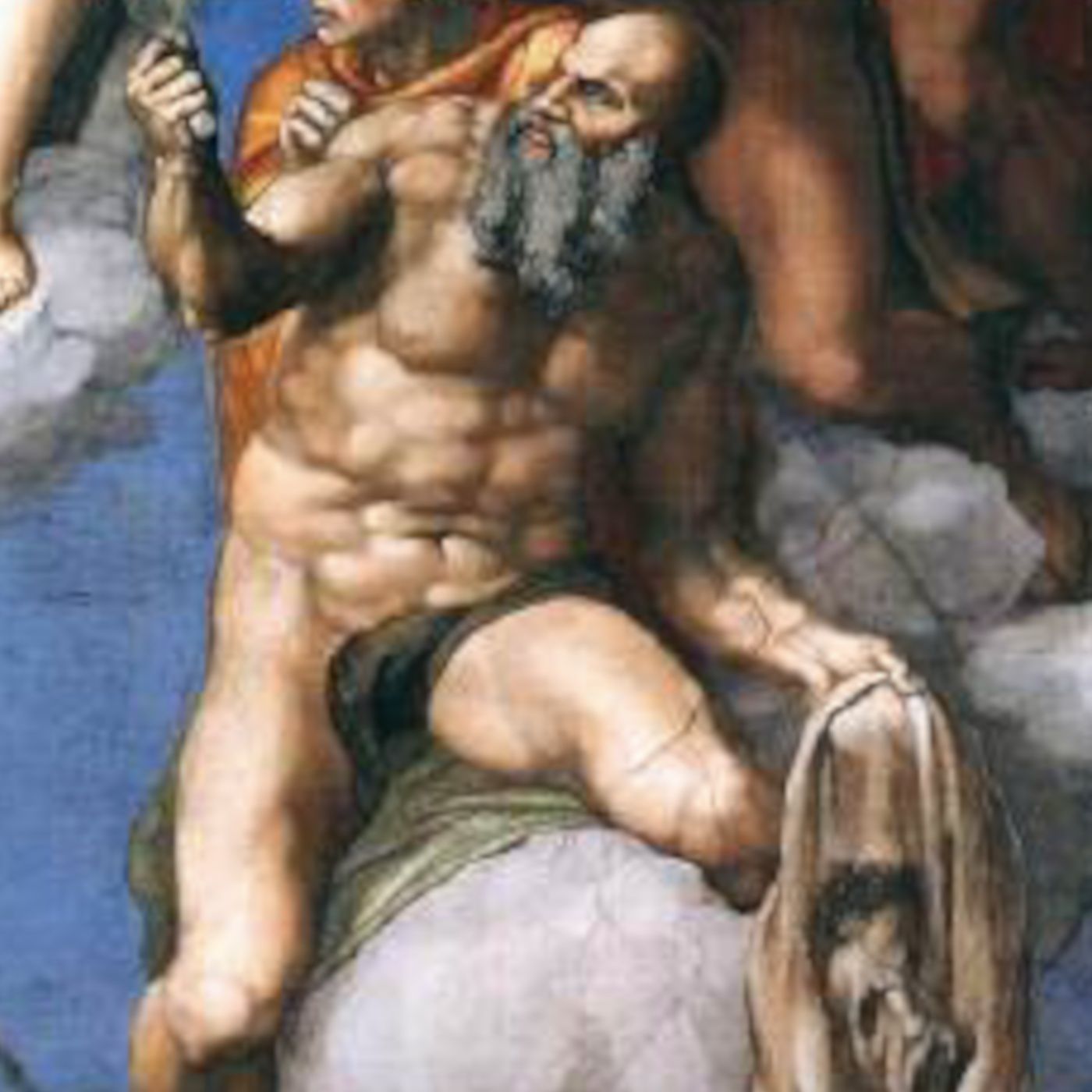 August 24: Saint Bartholomew, Apostle 24.08.2026 5минAugust 24: Saint Bartholomew, ApostleFirst CenturyFeast; Liturgical Color: RedPatron Saint of bookbinders, butchers, and leather workersThe Church conquered an imperfect world due to the heroic witness of the ApostlesLittle is known with certainty about today’s Apostle, and perhaps Saint Bartholomew is just fine with that. If he were like Saint John the Baptist, he would want Christ to increase and himself to decrease. It is possible, although not certain, that Bartholomew is the same Apostle as Nathaniel. Bartholomew means “Son of Tolmai” and is not a name, technically, but a patronymic, like the Scandinavian “son” found in “Anderson” or “Erikson.” The Bartholomew of Matthew, Mark, and Luke may describe the man known in the Gospel of John more correctly as Nathaniel. Bartholomew is paired with Philip in some Gospel lists, which corresponds, interestingly, with Philip being an old friend of Nathaniel in John’s Gospel. But so little is known with certainty about the Apostles that these conjectures will likely never be resolved.After his appearance in the Gospels, Bartholomew first resurfaces almost three hundred years later in the works of Eusebius, a bishop and church historian who wrote around 300 A.D. Eusebius relates a story about a Christian teacher traveling in India who is told that an Apostle, presumably Bartholomew, had preached there long before him and had brought a Hebrew Gospel with him. Equally vague traditions have Bartholomew evangelizing in Persia, Armenia, Mesopotamia, and Egypt. The details of his death likewise dissipated in the fog of ancient history. One tradition holds that he was flayed alive, a story reflected in Michelangelo's Last Judgment in the Sistine Chapel, which depicts Bartholomew holding his own skin. Because of this tradition, Bartholomew is the patron saint of tanners. History holds that Bartholomew’s relics are in the church named after him on an island in Rome’s Tiber River.The Nicene Creed states that we believe in One, Holy, Catholic, and Apostolic Church. The Church, then, is an object of faith in the same way that God is an object of faith. She is not the end result of a world-wide community of believers or merely a forum for belief. She gathers. She is not gathered. The Church is the mother of Christians, not their offspring. The Church is more than a carrier of faith, more than a train whose cargo barrels through the centuries transporting the heavy freight of the Gospels and tradition to diverse cultures. The Church not only bears a message, then, She is the message.Unfortunately, the Church’s sins and failings are, for many, the primary obstacle to belief in Christ. It is not just that the Church’s holiness is not apparent. It is that Her unity is questioned due to deep theological divisions. And Her members’ struggles for power, wealth, and prestige also obscure a more pristine Christian faith which She should project. But to think that the Church could be sublimely holy, totally unified, and pristinely sinless is to dream. The Church exists in the world, reflects the world’s dramas, and suffers from Her same sins. We do not believe in the Church because She is perfect, but because there is nothing else like Her. She is unique. She is better than any alternative. If we expect from the Church the Sacraments, we will never be disappointed.Today’s saint lived and evangelized in the era of the dreamy early church, when the fire of Christ’s love burned hottest, when the Gospel was as fresh as baked bread, and when gusts of the Holy Spirit blew through the Apostles’ hair. And yet…Bartholomew still had his skin slowly peeled from his body by a sharp knife, or was crucified, or both. The world was wicked in the first century too, and so the Church had problems in that era as well. Just read the letters of Saint Paul. The Church was born into a rough pagan world and still exists in a rough, though...
 -
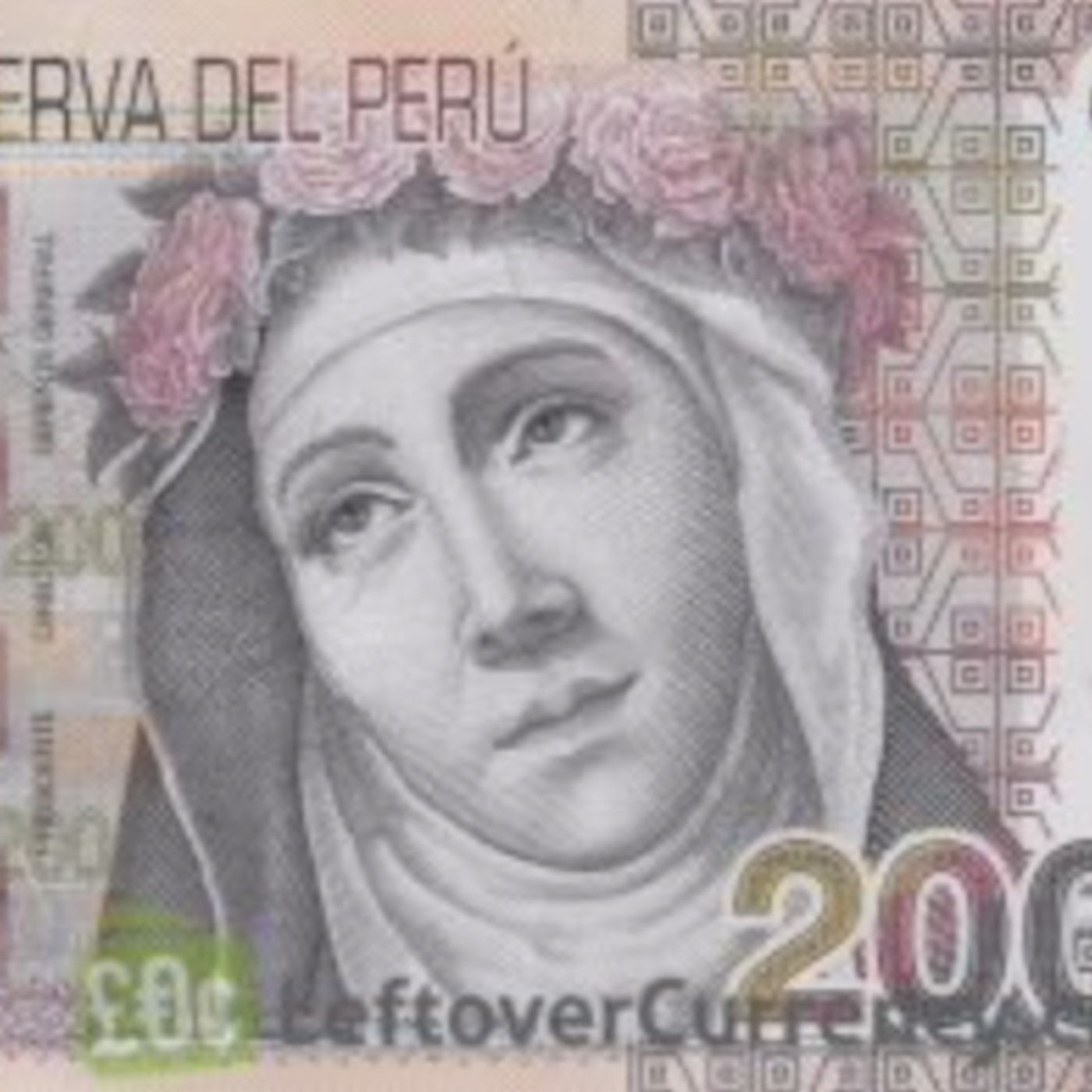 August 23: Saint Rose of Lima, Virgin 23.08.2026 5минAugust 23: Saint Rose of Lima, Virgin1586–1617Optional Memorial; Liturgical Color: WhitePatron Saint of Peru, florists, and gardenersAmerica’s first saint, she conquered herself by direct attackToday’s saint was born Isabel Flores de Oliva in colonial Spain, today’s Peru, to a middle-class Catholic family. She took the name “Rose” when she was confirmed by Lima’s bishop, the future Saint Turibius of Mogrovejo. “Rose” had been her nickname since infancy after a servant said that she was as beautiful as a rose. Young Rose was indeed beautiful and attracted the attention of various suitors. But she had decided from a young age to give herself to Christ alone, so she actively deterred male interest by cutting off her hair, rubbing pepper into her pure skin to blister her face, and by damaging her feminine hands with the acidic juice of limes.Her natural affinity for the things of God was not reciprocated by her father, who blocked her desire to enter a Dominican convent as a nun. Instead, Rose became a Third Order Dominican, a lay woman dedicated to living Catholicism in accord with Dominican spiritual ideals outside of the cloister. But Rose pushed her Third Order spirituality beyond its natural limits. She lived poverty, chastity, obedience and numerous other virtues far more rigorously than most professed nuns. Bending somewhat to his daughter’s desires, Rose’s father allowed her to live apart from the family in a small hut on his property. From that hut, and from a room in the family home where she cared for the sick and the poor, Rose became famous throughout Lima. Rose’s fame was due to her generous care for the sick and, perhaps most of all, due to her extraordinary austerities and some related miraculous events. Rose’s spiritual model was Saint Catherine of Siena, the fourteenth-century Italian mystic who was also a Dominican tertiary. Saint Catherine also lived at home, was from a large family like Rose, and had a high, a very high, threshold for physical pain and suffering, just like Rose. Rose did not fast merely on certain days or at certain times. She fasted from life itself. She seemingly ate only Holy Communion. What little she did consume she would often force herself to vomit up afterward. She ate no meat, slept on a bed of tile shards, and wore a crown, disguised with flowers, equipped with small spikes which pierced the thin, taut skin wrapped over her skull. Saint Rose’s short life was, on one hand, the full, ripened fruit of sixteenth-century Spanish mysticism—pious, mortifying, Christocentric, and theologically orthodox. From a different perspective, Rose’s sustained and extreme mortifications were on the far margins of psychologically healthy. Her self-attacks would today be considered expressions of bulimia, mental instability, and self-hating to the point of illness. But Rose is not here to be interviewed on the Freudian couch, and to describe her personality, in any case, is not to judge it. Saint Rose lived a model life for her era, was clearly motivated by love of God, and expressed such control over her natural, corporeal needs that sanctifying grace as her hidden strength cannot be discounted.Rose died in the perfume of holiness at the age of thirty-one. Her funeral was held in Lima’s Cathedral with all local dignitaries in attendance. She was beatified in 1667 and canonized in 1671. She is interred in the same church as Saint Martin de Porres in central Lima. Her pre-Vatican II feast day of August 30 is a national holiday in Peru, and her image graces that country’s highest denomination currency. She is known as a powerful miracle worker credited with numerous physical healings unto today.Saint Rose of Lima, you were young and holy. You dedicated your body and soul to God while still a child. Through your example and through your heavenly intercession, help all Catholics, especially the young, to...
Слични подкасти


Популаран у
Овај подкаст се појављује и у подкаст листама ових земаља.
