
Beyond Barbarossa: The Eastern Front of World War 2
Beyond Barbarossa: The Eastern Front of World War 2
0
This podcast offers a comprehensive look at the Eastern Front of World War 2, often overshadowed by other theaters of the conflict. It delves into well-known events like the Battle of Stalingrad, the Siege of Leningrad, and the Battle of Kursk, while also exploring lesser-known aspects of the brutal struggle between Hitler's Germany and Stalin's Soviet Union. Through detailed episodes, listeners gain a deeper understanding of the largest and bloodiest front in the European theater of the war.
Епизоде
-
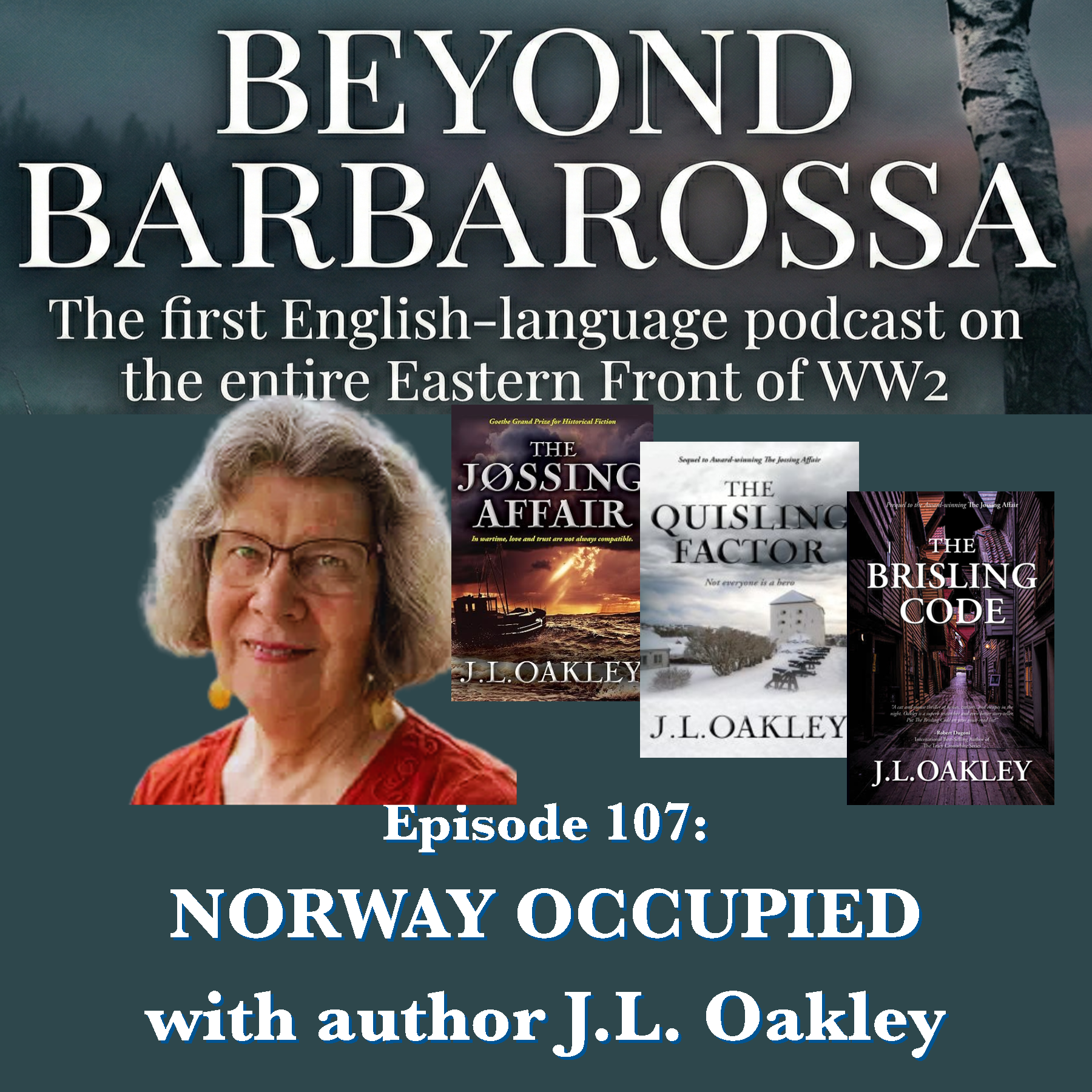 S5 Ep107: World War 2 in Norway: A conversation with author J.L. Oakley—Episode 107 21.09.2026 37минLike the Eastern Front, Norway’s experience during the Second World War is not well known in the English-speaking world. Author Janet Oakley is helping correct that.
 -
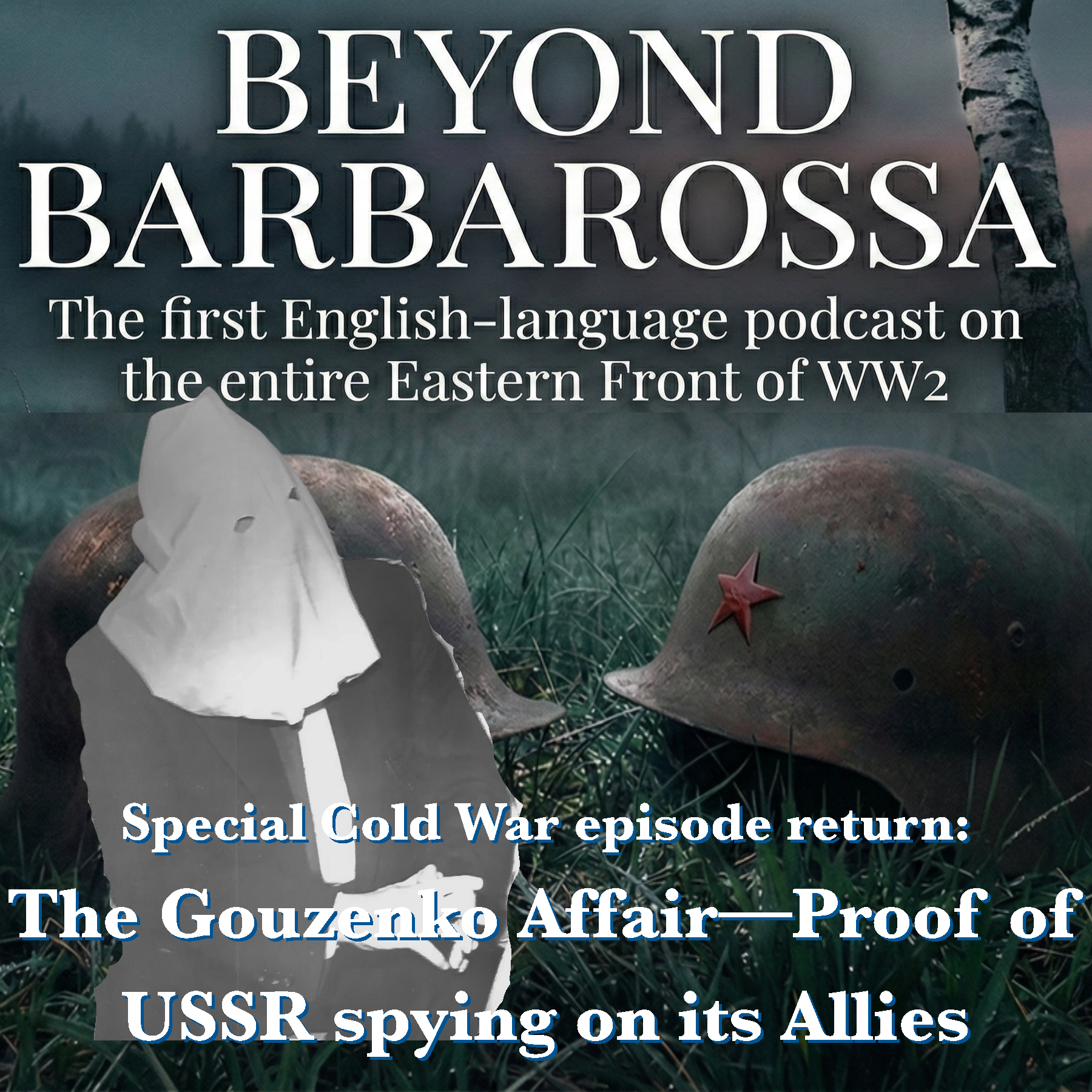 S5 Ep107: Special episode: The Cold War anniversary 07.09.2026 41минIn this special episode of the podcast on the Eastern Front of World War Two, we go beyond Beyond Barbarossa and beyond the end of the Second World War.80 years ago to the day of this publication a handsome young man approached Canadian media and officials with proof that the Soviet Union was spying on its allies. The Cold War was on.Former Soviet cypher clerk Igor Gouzenko, hooded to protect his identity, being interviewed by Associated Press reporter Saul Pett in Montreal in 1954. The Gouzenkos’ apartment building on Somerset Street in central Ottawa. There is no plaque commemorating Igor Gouzenko. (Photo by Scott Bury, 2025.) Igor Gouzenko in Canada, 1946.SourcesWinston Churchill, “The Sinews of Peace,” speech given at Westminster College, Fulton, Missouri, U.S.A., 5 March 1946. https://www.americanrhetoric.com/speeches/winstonchurchillsinewsofpeace.htmJ.L. Granatstein and David Stafford, Spy Wars: Espionage and Canada from Gouzenko to Glasnost. Toronto: Key Porter Books, 1990.John Sawatsky, Gouzenko: The Untold Story. Toronto: Macmillan of Canada, 1984Wikipedia, Gouzenko Affair. https://en.wikipedia.org/wiki/Gouzenko_AffairWondery Podcasts, “The Spy Who, Season 7: The Spy Who Started the Cold War” https://wondery.com/shows/the-spy-who/season/7/
 -
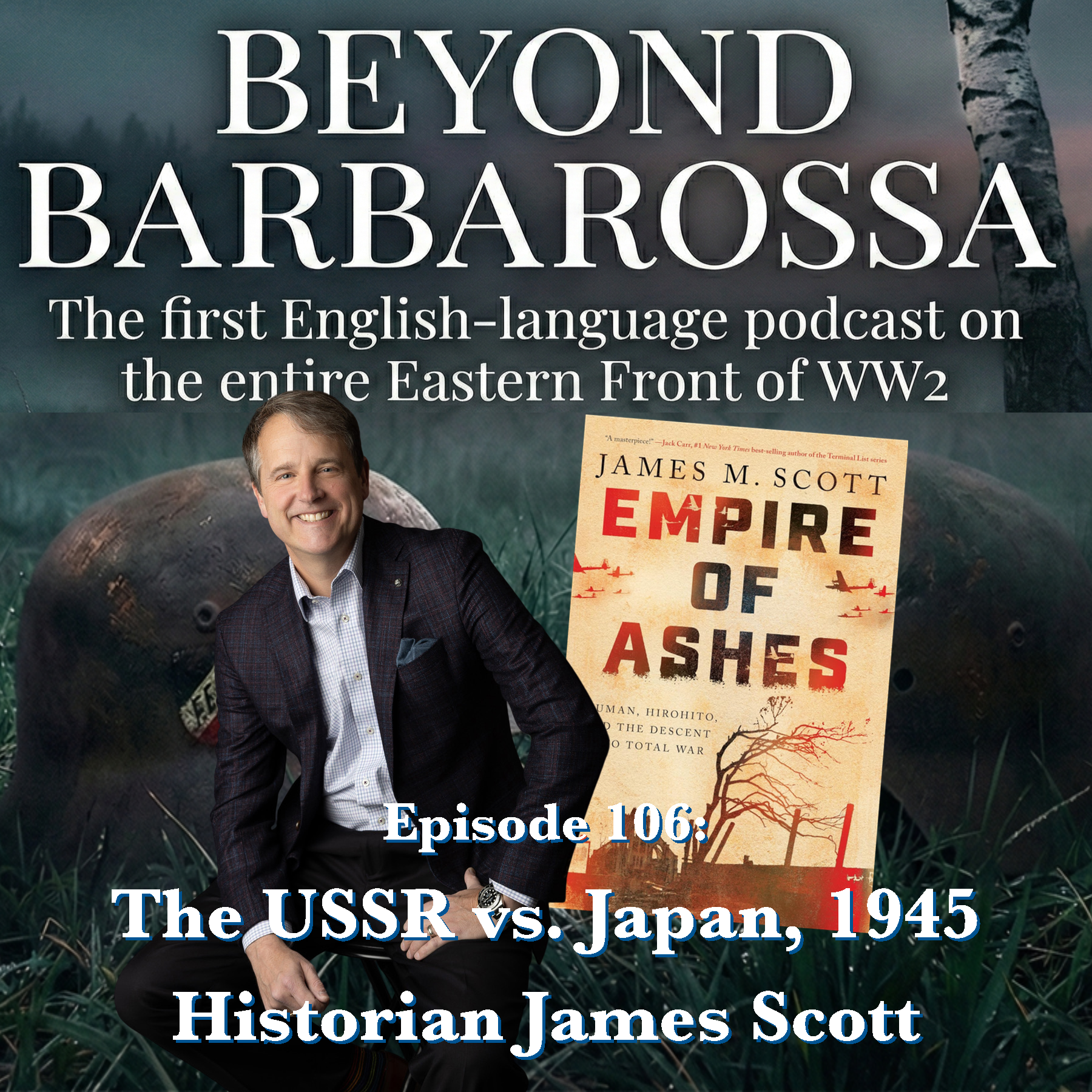 S5 Ep106: The USSR vs. Japan, 1945: A conversation with James Scott 24.08.2026 59минHistorian and author of Empire of Ashes: Truman, Hirohito and the Descent into Total WarJames Scott’s latest book, Empire of Ashes, describes in detail the flights that brought nuclear bombs to Japan in August 1945. It also draws intimate portraits of the two leading antagonists on those days, U.S. President Harry Truman and Japanese Emperor Hirohito, from their earliest days through the personal transformations that ushered in a new era of warfare.
 -
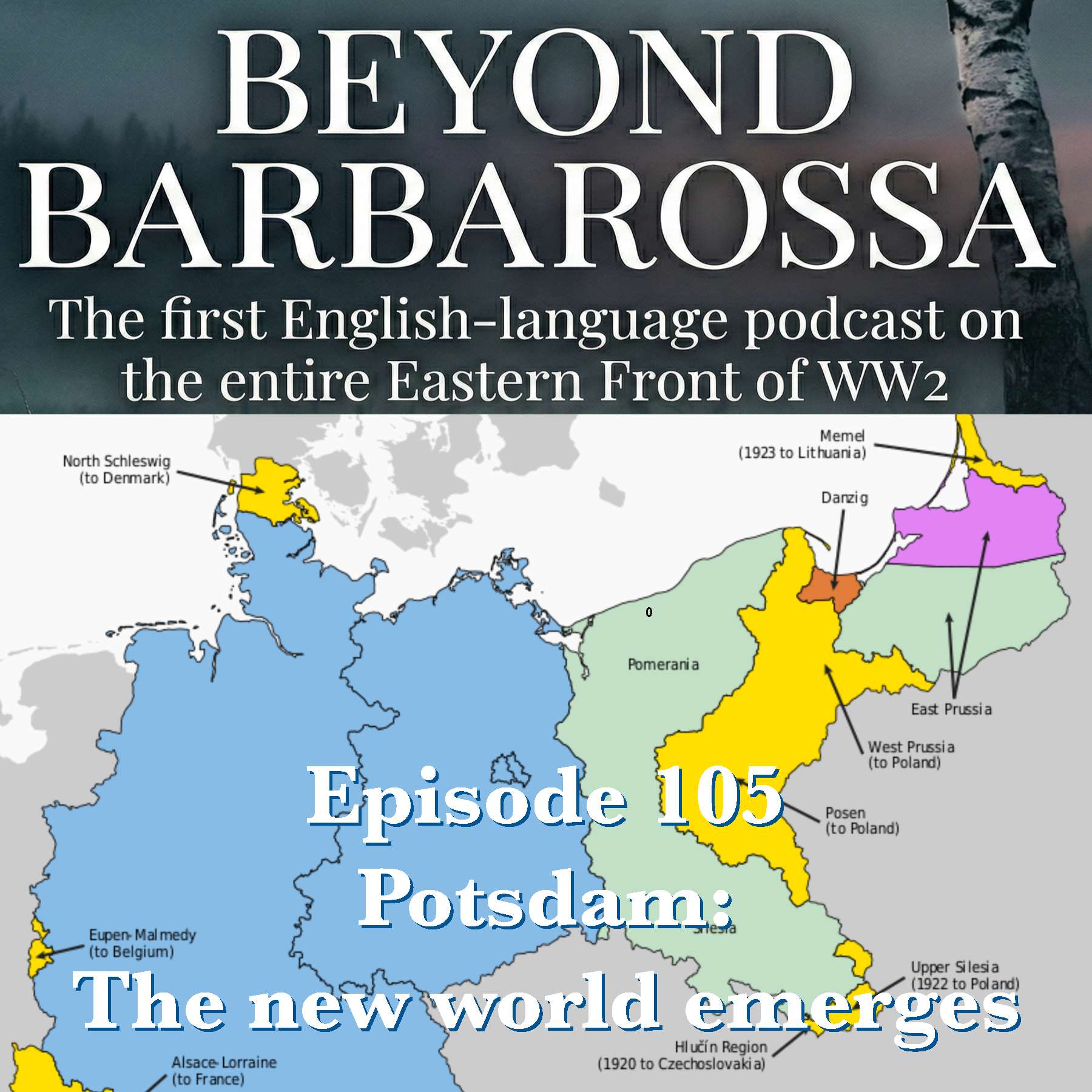 S5 Ep2: Potsdam: The Big Three decide the new world order—Episode 105 10.08.2026 36минIn July and August, the leaders and delegations from the “Big Three” victors of the Second World War reshape the borders of Europe and set up a new world order.
 -
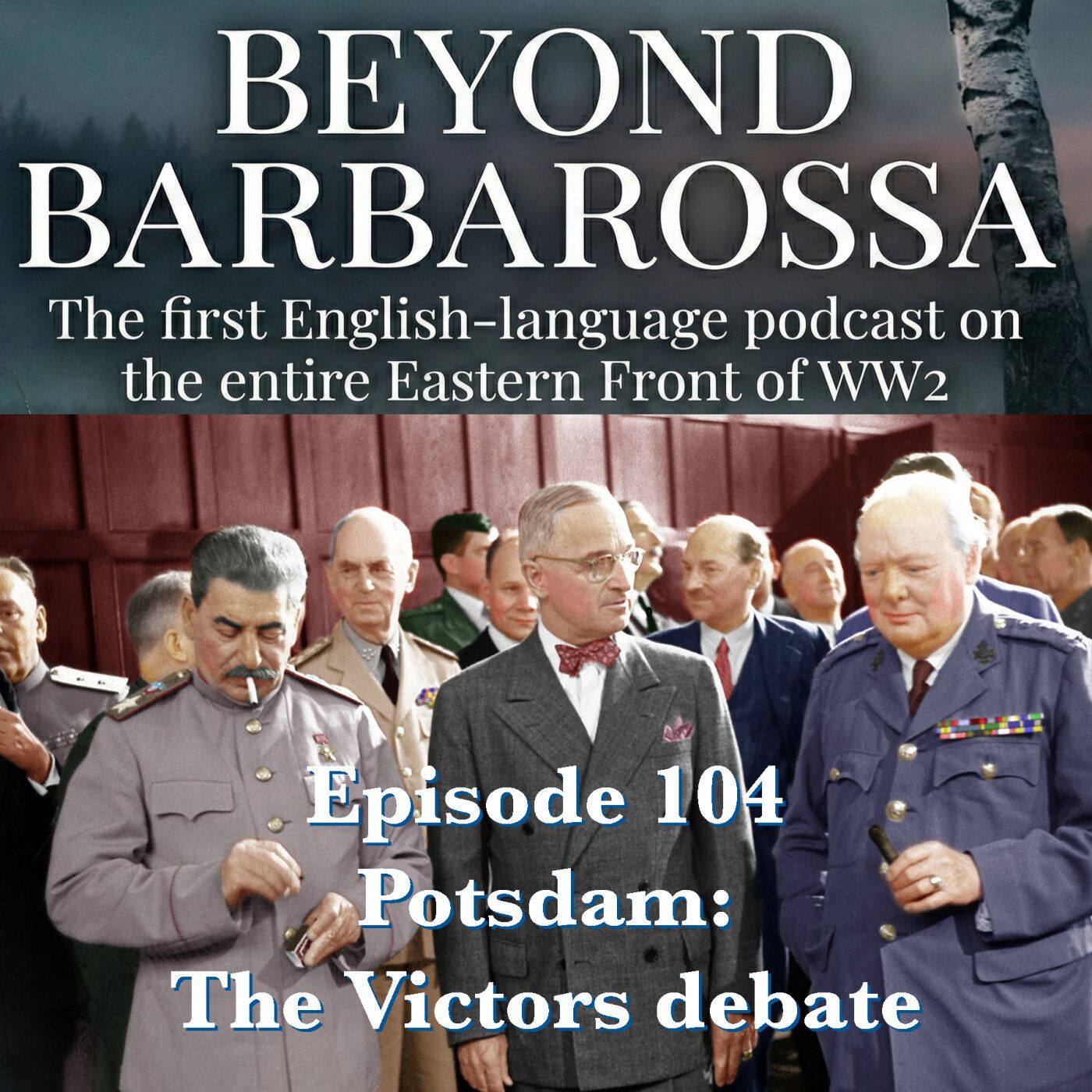 S5 Ep1: Potsdam: The Victors debate—Episode 104 27.07.2026 33минThe USA, UK and USSR have defeated nazi Germany. The Allies control Europe. In July 1945, the leaders Harry Truman, Winston Churchill and Josef Stalin meet outside Berlin to decide what to do with it.Go toHosted on Audioboom. See Beyond Barbarossa’s privacy policy for more information.
 -
 S4 Ep7: Barbarossa returns—episode 103 22.06.2026 27минFor the 85th anniversary of the launch of the Eastern Front of World War 2, a replay of the first episode of Beyond Barbarossa. Video, graphics and maps now available to all! https://youtu.be/rrnoEgVcRvEHosted on Ausha. See ausha.co/privacy-policy for more information.
 -
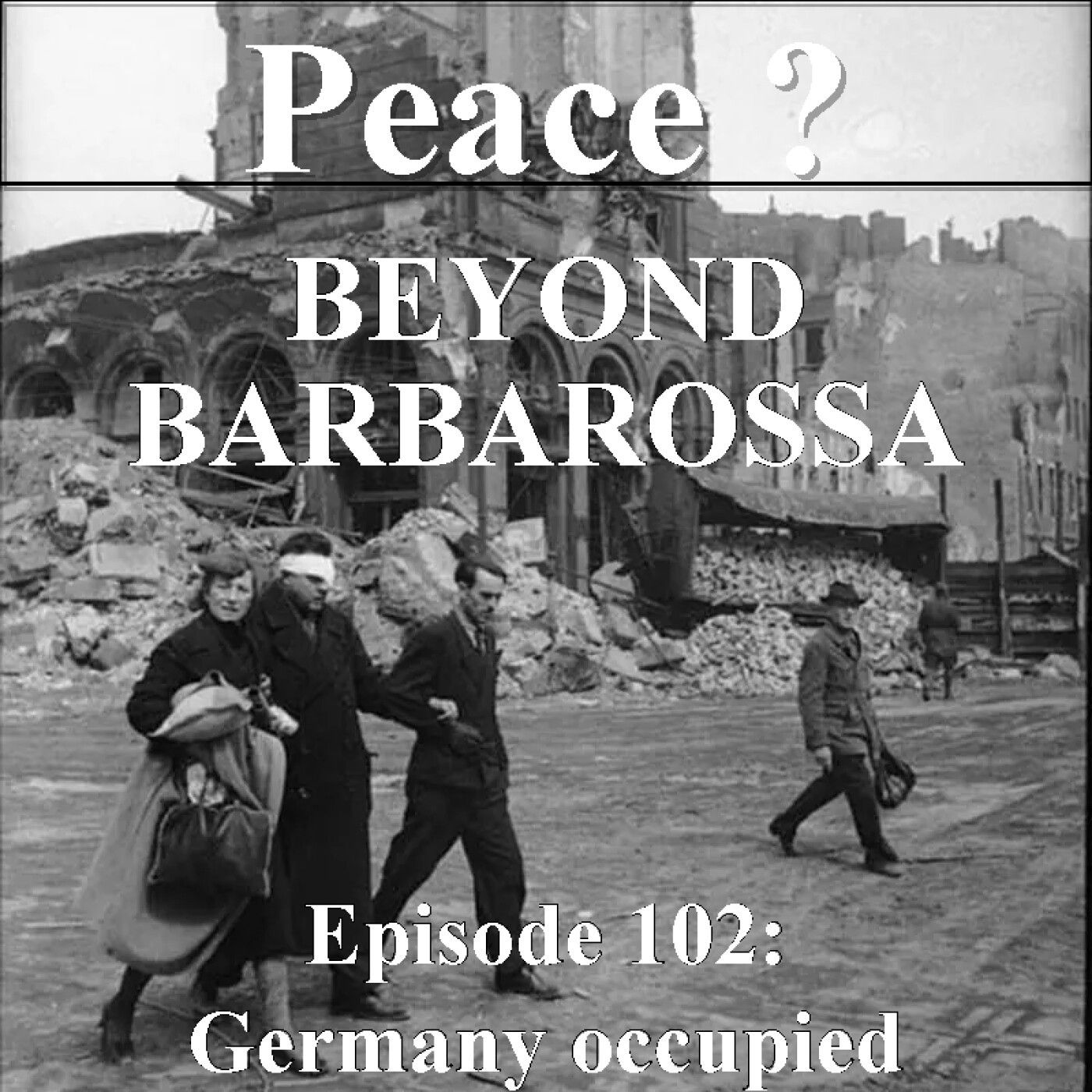 S4 Ep6: Peace in Europe? Episode 102 08.06.2026 44минThe fighting has ended in Europe—but with millions of displaced people surging in all directions across Europe, it cannot be called peace. While millions of POWs look forward to going home, forced labourers and people of eastern Europe know they have no home to return to. And try to escape the communist yoke. Hosted on Ausha. See Beyond Barbarossa’s privacy policy for more information.
 -
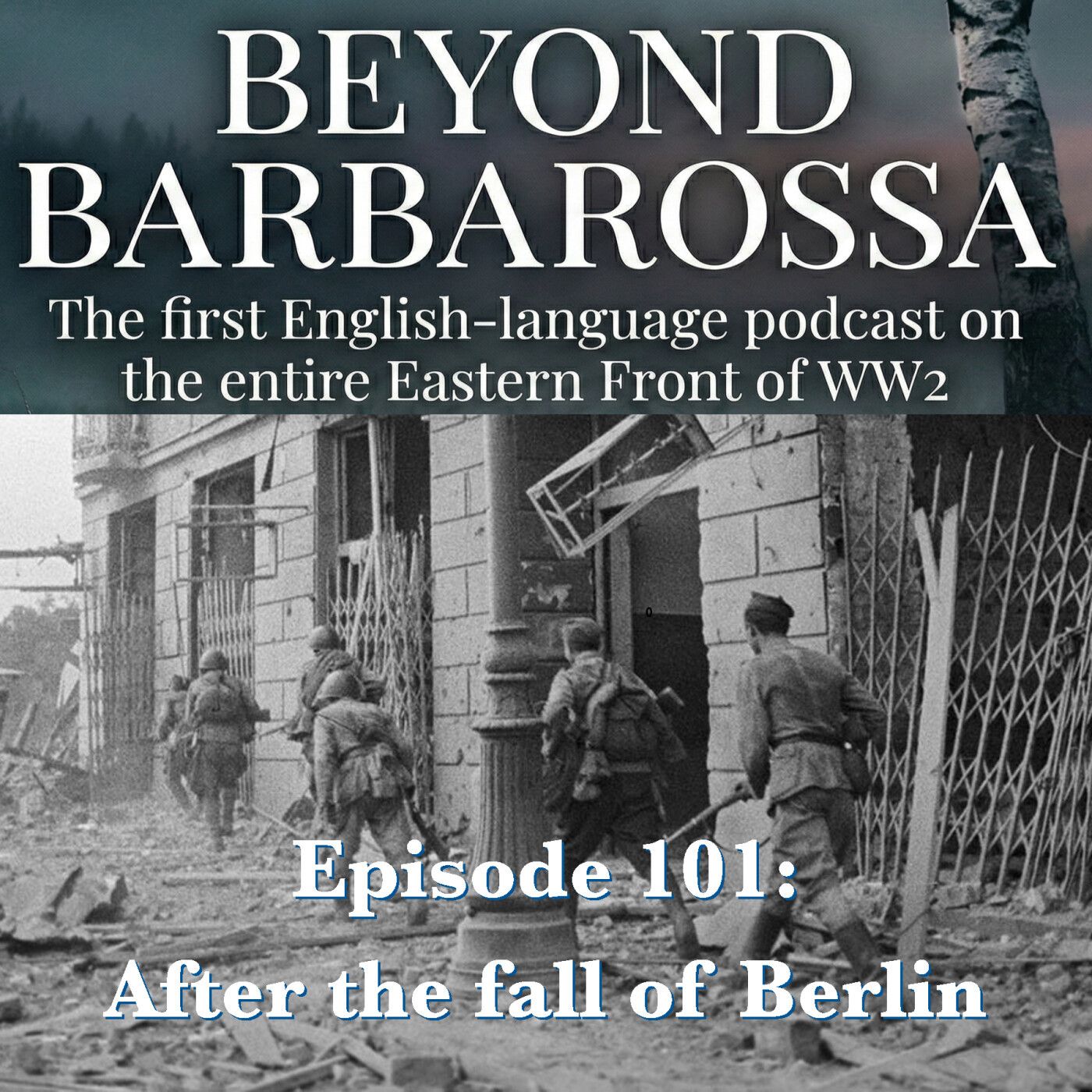 S4 Ep5: After the Fall of Berlin: Episode 101 25.05.2026 33минWhen Berlin surrendered, the war in Europe continued for another week—in Czechoslovakia and its capital, Prague.SourcesAntony Beevor, The Fall of Berlin 1945. New York, NY, USA: Penguin Random House, 2002.Antony Beevor, The Second World War. New York, NY, USA: Little, Brown and Company, 2012. Evan Mawdsley, Thunder in the East: The Nazi-Soviet War, 1941–1945. London: Bloomsbury Academic, 2016. Morse code by Thane BrownMusic composed and recorded by Nicolas BuryHosted on Ausha. See ausha.co/privacy-policy for more information.
 -
 S4 Ep2: The Fall of Berlin 08.05.2026 1ч 2минDavid Sumner of the Europe at War podcast joins to provide deeper insight into the last major battle in the European Theatre of the Second World War.Two huge Red Army fronts, the 1st Belorussian and the 1st Ukrainian, crush the nazi capital between them, and bring an end to the Second World War in Europe.Hosted on Audioboom. See our privacy policy for more information.
 -
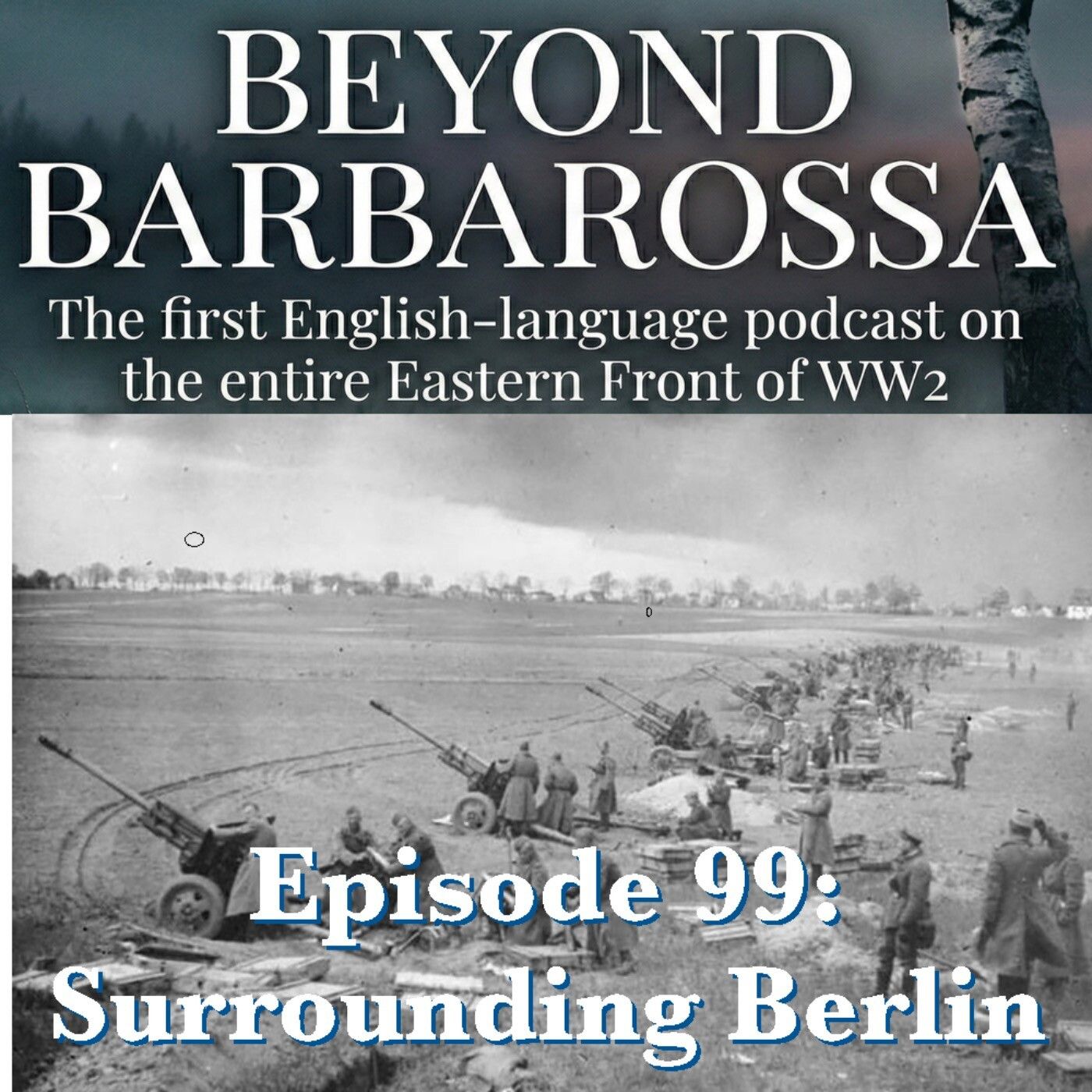 S4 Ep13: Surrounding Berlin: Episode 99 20.04.2026 39минIn the 99th episode of the first English-language podcast that focuses on the full story of the Eastern Front of World War 2, Stalin’s top Marshals, Georgy Zhukov and Ivan Konev, race to be the first to raise the Red Banner over the Reichstag. Who will get there first?MapsMap 1: The Red Army’s Vistula to Oder operationHosted on Acast. See acast.com/privacy for more information.Hosted on Ausha. See ausha.co/privacy-policy for more information.
 -
 S4 Ep12: The Great Race Begins 06.04.2026 31мин"From the moment Stalin heard that the Americans were across the Rhine, he knew that the race for Berlin was on.”—Antony Beevor. WIth the Allies on the Elbe, and the Red Army on the Oder, nazi Germany was being terminally squeezed by April 1945. But before they can drive on the prize, Berlin, the Red Army must take Vienna. Map 1: The Red Army’s advance, 1944–1945 Map 2: The Red Army on the Oder and Niesse Map 3: Advance into ViennaMap 4a: European front line, 1 April 1945Map 4b: European front line, 15 April 1945Historical photosGeorgy Zhukov, Marshal of 1st Belorussian Front Ivan Konev, Marshal, 1st Ukrainian Front Rodion Malinovsky, Marshal, 2nd Ukrainian Front Fyodor Tolbukhin, Marshal, 3rd Ukrainian Front Hosted on Acast. See acast.com/privacy for more information.Hosted on Ausha. See ausha.co/privacy-policy for more information.
 -
S4 Ep11: Spring Awakening and Upper Silesia: Episode 97 23.03.2026 41минThe #6 Top World War 2 podcast continues following the Red Army’s advance into Hungary and Germany—and the expensive failure of the German Operation Spring Awakening. Map 1: Front lines in Europe, 1 March 1945 Map 2: Operation Southwind/Sudwind Map 3a: German plans for Operation Spring Awakening Map 4: The Soviet counter-attack, The Lake Balaton counter-offensive Map 5: Following Operation Spring Awakening Map 6: Upper Silesian locations in 2026 Map 7: The front lines, Europe, 1 April 1945 PeopleRodion Malinovsky Fyodor Tolbukhin Heinz Guderian Friedrich Schorner Walther Nehring (right) Hosted on Acast. See acast.com/privacy for more information.Hosted on Ausha. See ausha.co/privacy-policy for more information.
-
 S4 Ep10: Silesia, Part 1—Episode 96 09.03.2026 36минThe Red Army penetrates deep into Germany, leading to the redrawing of eastern European borders after. Map 1: The Oder offensive–March 1945 Map 2: The Lower Silesian Offensive Map 3: The East Pomeranian Offensive Map 4a: European fronts, 15 February 1945 Map 4b: European fronts, 15 March 1945 PhotosMarshal Ivan Konev, Commander of the 1st Ukrainian Front General Walther Wencke, chief of staff, Army Group Vistula, February 1945 Child soldiers in the wehrmacht: Hitler Youth in Breslau (Wroclaw), February 1945 Breslau (Wroclaw) in fighting, 1945 Hosted on Acast. See acast.com/privacy for more information.Hosted on Ausha. See ausha.co/privacy-policy for more information.
 -
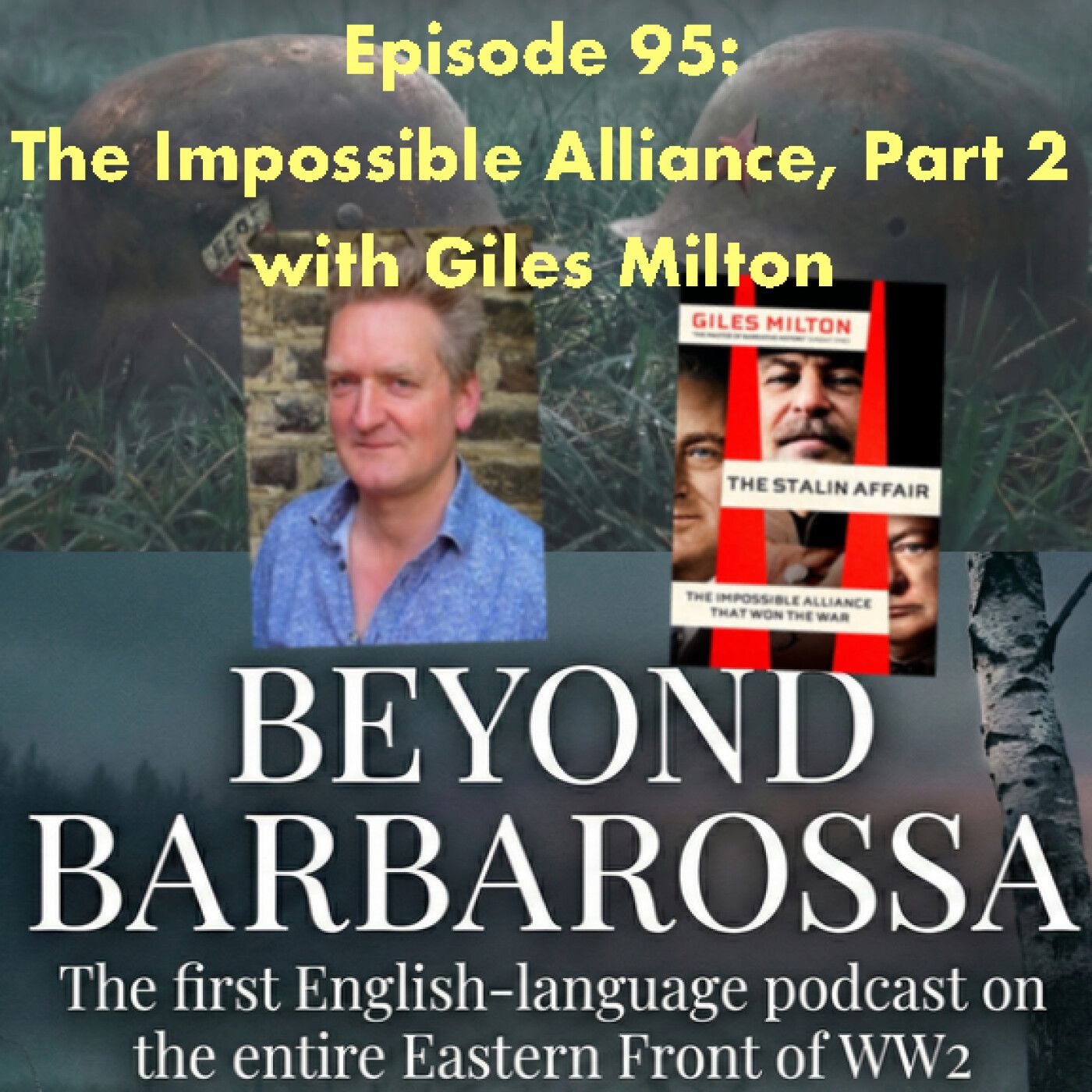 S4 Ep9: The Impossible Alliance, Part 2: Episode 95 23.02.2026 42минWhy did the Yalta Conference end the way it did? Why did Churchill try an end-run around Roosevelt? Why did Roosevelt try to curry Stalin’s favour? What would this mean to post-war history?Author Giles Milton joins to discuss some of the Second World War’s most perplexing questions. PeopleAuthor Giles MiltonHis latest book, The Stalin Affair: The impossible alliance that won the war The Big Three: Soviet Premier Josef Stalin, U.S. President Franklin Delano Roosevelt, and U.K. Prime Minister Winston Churchill Kathleen “Kathy” or “Puff” Harriman, daughter of Roosevelt’s right hand and Ambassador to the USSR in 1945, Averell Harriman Averell Harriman Pamela Churchill, WInston Churchill’s daughter-in-law in 1945, and later, Mrs. Averell Harriman Stalin and Churchill at the Moscow Conference, 1944 Franklin Roosevelt in 1945Map 1: The division of Germany after May 1945 Map 2: Invasion of Poland, 1939Map 3: Poland moves 100 km west SourcesGiles Milton, author: https://www.gilesmilton.com/ Books podcast: Ministry of Secrets Hosted on Acast. See acast.com/privacy for more information.Hosted on Ausha. See ausha.co/privacy-policy for more information.
 -
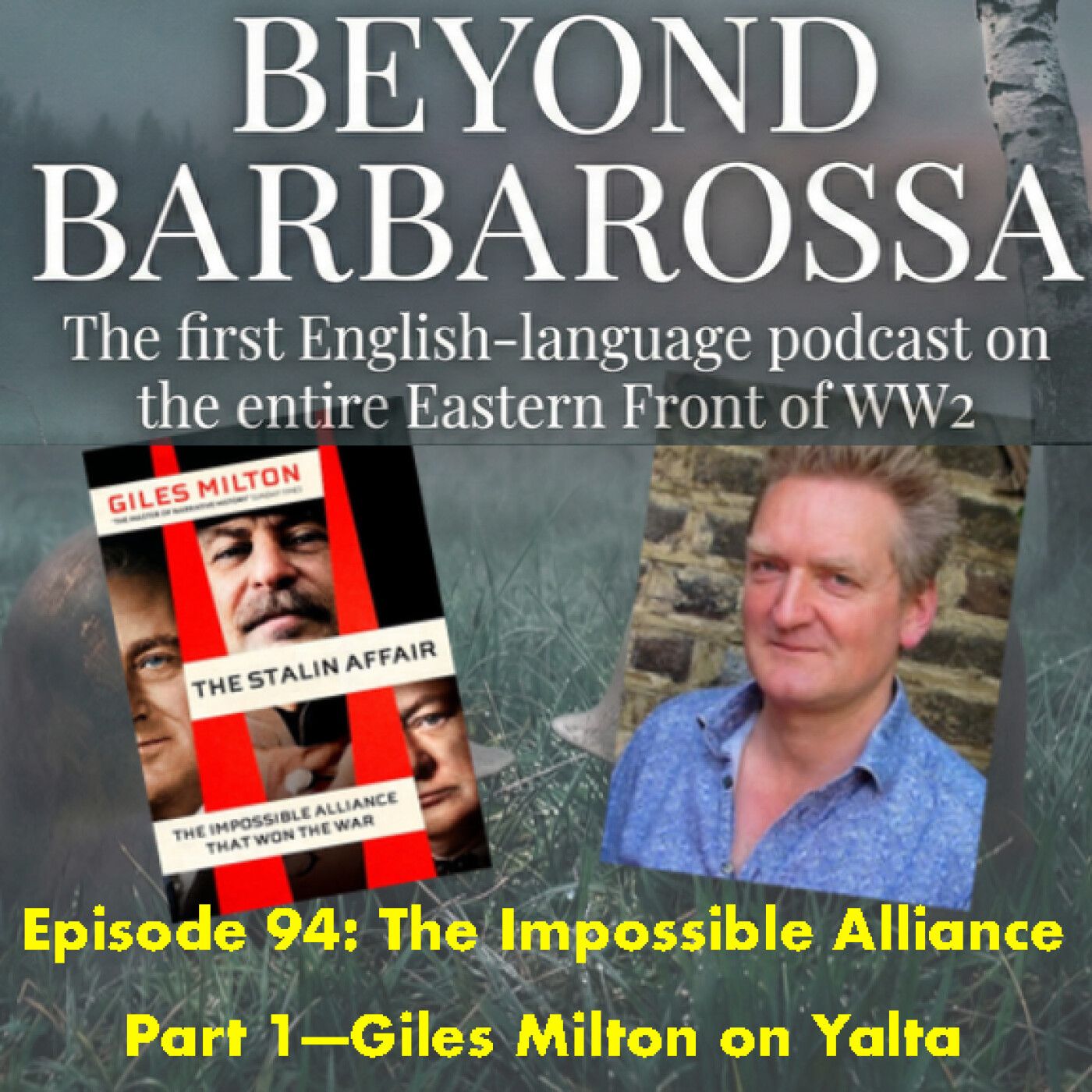 S4 Ep8: The Impossible Alliance, Part 1: Episode 94 16.02.2026 33минWhy were the Yalta Conference’s decisions so vague? Why did Stalin get everything he wanted? And why did Roosevelt act so naively? Giles Milton, bestselling author of The Stalin Affair: The Impossible Alliance that Won the War, joins the podcast today to help understand the relationships that had the greatest impact on the second meeting of the Big Three of the Second World War.PhotosAuthor Giles Milton The Stalin Affair: The Impossible Alliance that Won the War by Giles Milton The Big Three at Yalta, February 1945. Roosevelt would be dead in two months. Map 1: Yalta in Crimea, on the Black Sea, site of the 1945 Yalta Conference of the Big Three Map 2: The tortured road from Saky Airfield to YaltaSourcesGiles Milton, author: https://www.gilesmilton.com/ Books podcast: Ministry of Secrets Hosted on Acast. See acast.com/privacy for more information.Hosted on Ausha. See ausha.co/privacy-policy for more information.
 -
S4 Ep7: From Malta to Yalta—Episode 93 02.02.2026 42минWinston Churchill and Franklin Roosevelt meet in Malta in the Mediterranean in February 1945, to prepare to meet Josef Stalin in the second Big Three conference on Soviet territory—Yalta. It was a meeting that shaped the world for decades. Map 1: Malta to Yalta Map 2: The Western Front, 1 February 1945 Map 3: The Pacific Theatre, 1 February 1945Map 4: Poland’s shift west, 1945Photos Left: Franklin Roosevelt in 1944. Right: Roosevelt and Churchill at Malta, 2 February 1945. Averell Harriman and daughter Kathleen The Vorontsov Palace, quarters for the British delegation The Livadia Palace, quarters for the American delegation The Yusupov Palace, housing the Soviet delegationHosted on Acast. See acast.com/privacy for more information.Hosted on Ausha. See ausha.co/privacy-policy for more information.
-
S4 Ep6: Into Germany—Episode 92 of the first podcast to focus on the full story of the Eastern Front of World War 2 19.01.2026 44минThe Red Army continues its continual advance onto German soil—and the flight of German civilians and military. Map 1: The siege of Kongisberg Map 2: SamlandThe Samland Peninsula in 1905, showing city and town names still present in 1945. Map 3: The (second) East Prussian Offensive Map 4: The advance across Poland Historical photos Franklin Roosevelt meets Winston Churchill in Malta, 2 February 1945 Civilians from Konigsberg walk across frozen Vistula Lagoon, January 1945 CIvilians flee Lodz, Poland, January 1945 Red Army arrives in Lodz, Poland, January 1945 Hitler shakes hands with Col. Claus von Stauffenberg at the “Wolf’s Lair," July 1944. Ruins of the Wolfsschanze, “Wolf’s Lair,” Hitler’s headquarters in East PrussiaSourcesAntony Beevor, The Second World War. New York, NY, USA: Little, Brown and Company, 2012. Scott Bury, Walking Out of War: Volume 3 of the Eastern Front Trilogy. Ottawa, Canada: The Written Word, 2017.Evan Mawdsley, Thunder in the East: The Nazi-Soviet War, 1941–1945. London: Bloomsbury Academic, 2016. Anthony Tucker-Jones, Slaughter on the Eastern Front: Hitler and Stalin’s War, 1941–1945. Stroud, Gloucestershire, UK: The History Press, 2017.David Sumner, Europe at War: A podcast about lesser-known battles of the Second World War. https://podcasts.apple.com/ca/podcast/europe-at-war-a-ww2-podcast/id1788043665 Larysa Zariczniak, Wandering the Edge: Ukrainian history and culture https://podcasts.apple.com/ca/podcast/wandering-the-edge/id1547149262David Sumner, Europe at War: A WW2 podcast https://podcasts.apple.com/ca/podcast/europe-at-war-a-ww2-podcast/id1788043665Morse code by Thane BrownMusic composed and recorded by Nicolas BuryHosted on Acast. See acast.com/privacy for more information.Hosted on Ausha. See ausha.co/privacy-policy for more information.
-
 S4 Ep5: The Vise Closes: the Eastern Front, episode 91 05.01.2026 36минAfter 10 shattering blows on the Eastern Front in 1944, the Western Allies and the USSR continue to compress nazi Germany in January 1945. Map 1: The compressing front 1a: 1 January 1944 1b: 1 January 1945 1c: 15 January 1945 Map 2: The siege of Budapest, January 1945 Map 3: The Vistula-Oder campaign, January 1945 Map 4: The East Prussia offensivePhotosThe Budapest Chain Bridge destroyed, January 1945 Ruins of Warsaw, even in 1947 Source: New York photographer Henry N. Cobb, taken in 1947, via Rare Historical Photos. Hosted on Acast. See acast.com/privacy for more information.Hosted on Ausha. See ausha.co/privacy-policy for more information.
 -
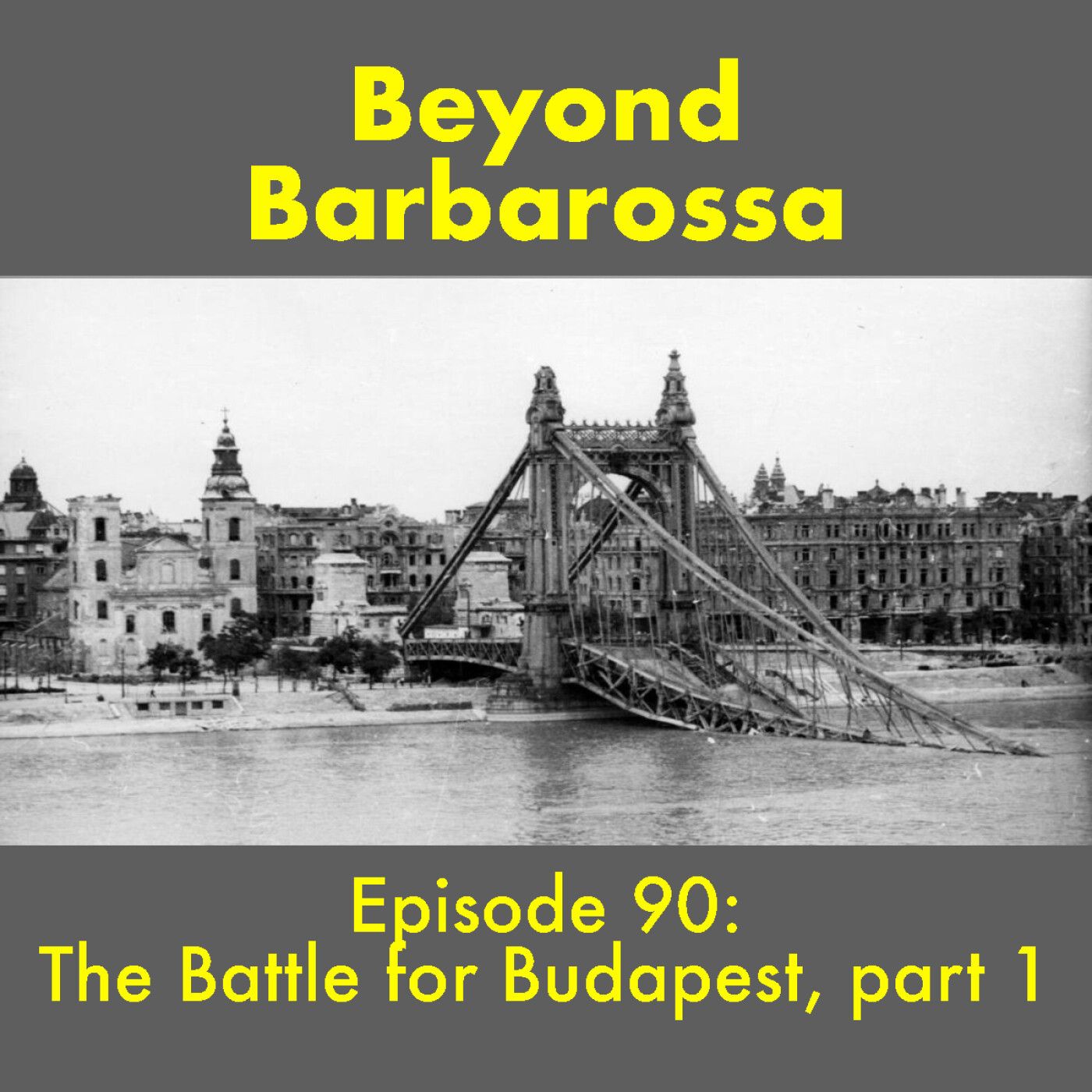 S4 Ep4: The Battle for Budapest, Part 1—Episode 90 22.12.2025 38мин"Budapest lay athwart the main entry route to Austria and Bohemia. It was the main railway hub of the region and also the largest Danubian port. The Red Army could not bypass it. This was the first time in the war that the Red Army had to lay siege to a major city." The Red Army assaults the capital of nazi Germany’s final remaining partner in the Second World War. The war appears to be almost lost—but that’s seen through hindsight. No one at the time knew that.Map 1: The Eastern Front, December 1944Map 2: Germany’s eastern and western fronts, 1 December 1944Map 3: The Petsamo-Kirkenes operation in northern FinlandMap 4: The Red Army attacks BudapestOperation Konrad IIPeople Mihai I, King of Romania, 1944–1947 Miklos Horthy, Regent of Hungary Miklos Horthy Jr. Ference Szalasi, nazi dictator of Hungary, 1944–1945 Edmund Veesenmayer, Hitler’s “Special Envoy” to Hungary, 1944–1945 SS-Obergruppenführer Karl Pfeffer-Wildenbruch, commander of IX SS Mountain CorpsHistorical photos: Fighting in Budapest SourcesAntony Beevor, The Second World War. New York, NY, USA: Little, Brown and Company, 2012. Evan Mawdsley, Thunder in the East: The Nazi-Soviet War, 1941–1945. London: Bloomsbury Academic, 2016. Anthony Tucker-Jones, Slaughter on the Eastern Front: Hitler and Stalin’s War, 1941–1945. Stroud, Gloucestershire, UK: The History Press, 2017.Morse code by Thane BrownMusic composed and recorded by Nicolas BuryHosted on Acast. See acast.com/privacy for more information.Hosted on Ausha. See ausha.co/privacy-policy for more information.
 -
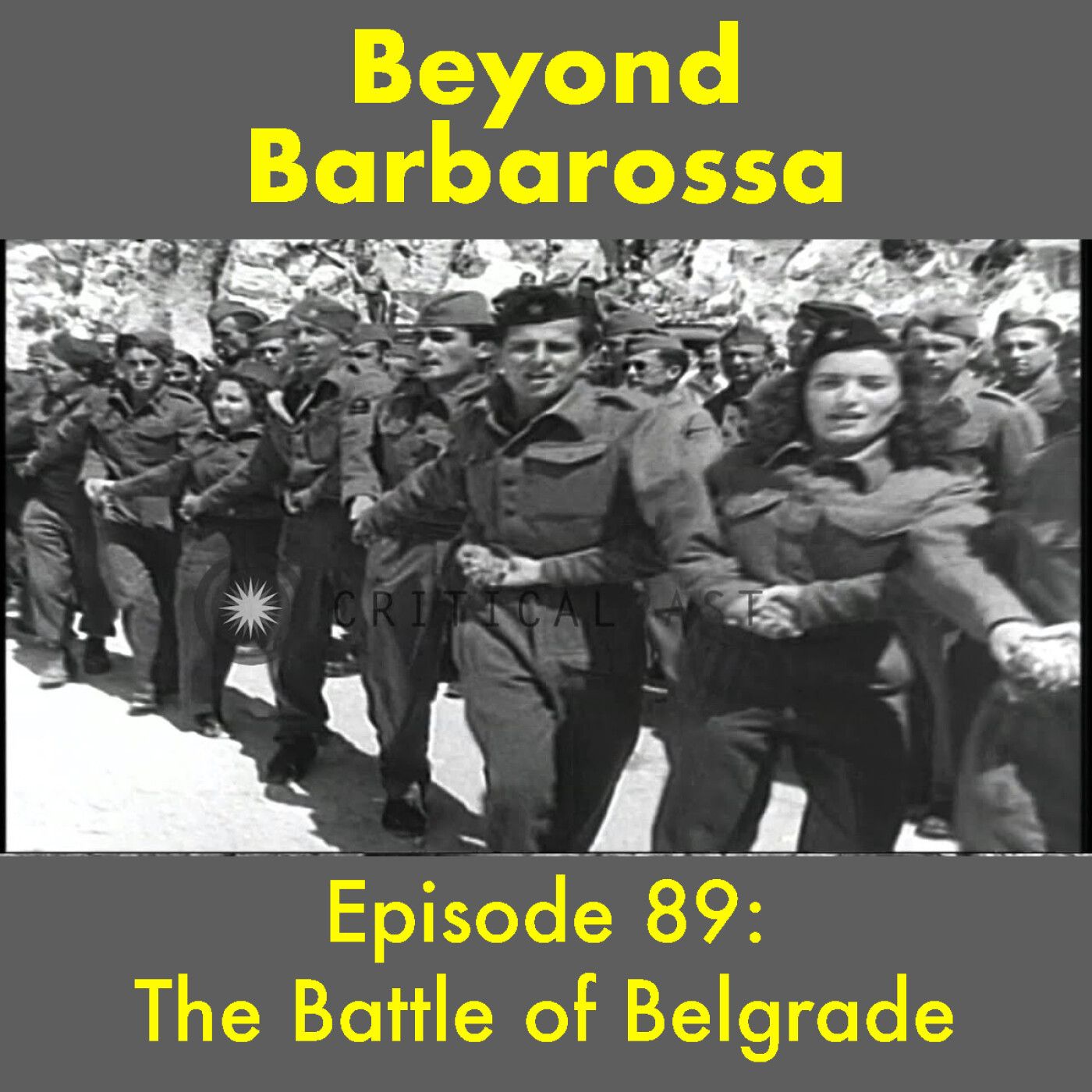 S4 Ep4: The Battle of Belgrade—Episode 89 08.12.2025 40минThere was a lot of action on the Eastern Front in the autumn of 1944. In late September, the Red Army and its new allies enter Yugoslavia and connect with communist Partisans led by a man called Tito. The results will echo across the decades. Map 1: The Balkan military theatre, September 1944–January 1945Map 2: The Bulgarian incursionMap 3: The Battle of BelgradePhotos The Lockheed P-38 Lightning and the Focke-Wulf fw189 The Yakovlev Yak-9 in flight The Yakovlev Yak-9 in the Russian military museum Josip Broz, a.k.a. Tito, far right, with his staff.SourcesAntony Beevor, The Second World War. New York, NY, USA: Little, Brown and Company, 2012. Evan Mawdsley, Thunder in the East: The Nazi-Soviet War, 1941–1945. London: Bloomsbury Academic, 2016. Giles Milton, The Stalin Affair: The impossible alliance that won the war. New York, NY, USA: Henry Holt and Company, 2022.Anthony Tucker-Jones, Slaughter on the Eastern Front: Hitler and Stalin’s War, 1941–1945. Stroud, Gloucestershire, UK: The History Press, 2017.Morse code by Thane BrownMusic composed and recorded by Nicolas Bury Hosted on Acast. See acast.com/privacy for more information.Hosted on Ausha. See ausha.co/privacy-policy for more information.
Слични подкасти


Популаран у
Овај подкаст се појављује и у подкаст листама ових земаља.
