
Chip Stock Investor Podcast
Nicholas Rossolillo; Kasey Rossolillo
0
Semiconductors are at the heart of the modern economy, powering everything from PCs and smartphones to cars and manufacturing. The industry is at an inflection point of renewed growth, driven by trends like generative AI and electric vehicles. The Chip Stock Investor Podcast explores how semiconductors work and the business of chips. Hosts Nicholas and Kasey Rossolillo help listeners understand chip technology and how to invest in its growth.
Епизоде
-
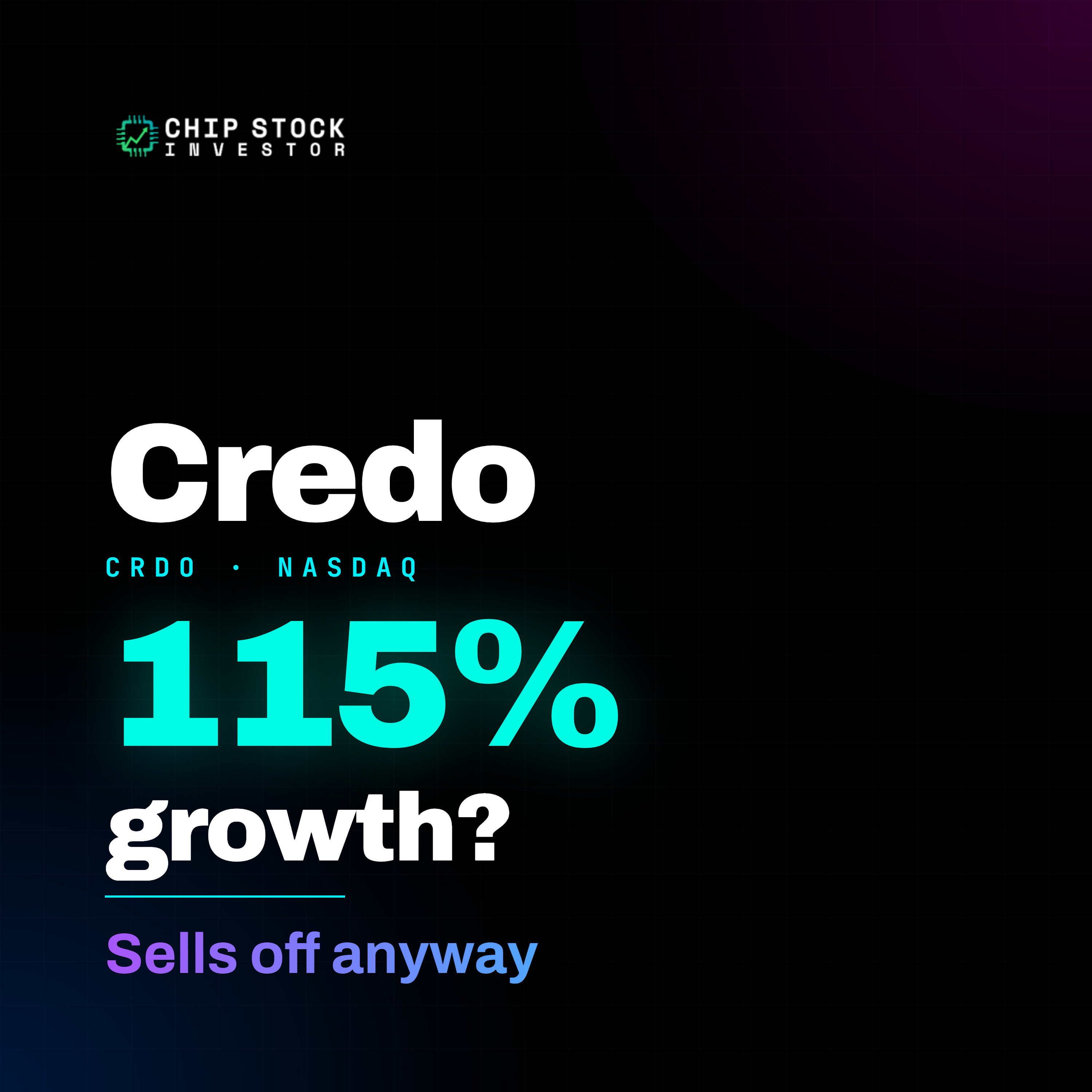 The Fastest-Growing Chip Stock Is Also the Most Hated 15.09.2026 13минWe compare Credo (CRDO) against Broadcom (AVGO), Marvell (MRVL), and Astera Labs (ALAB) on revenue growth, gross margin, operating margin, and free cash flow margin — four fabless companies selling into the same AI networking build-out with very different economics underneath.Then we run Credo through our full Investment Thesis Checklist: industry classification, secular growth validation, sales cycle risk, financial health, and a simplified DCF to back out what growth rate is priced into the stock at $171.The side-by-side numbers come from the Compare Companies tool we just launched on the Semiconductor Insider dashboard. https://linktr.ee/chipstockinvestorSemiconductor Insider includes all our research, weekly live Q&A, and the dashboard tools: https://www.chipstockinvestor.comWhy Chip Stock Investor is becoming a software business: https://chipstockinvestor.com/why-chip-stock-investor-is-becoming-a-software-business/Chapters0:00 Why the fastest-growing chip stock sold off0:45 The Compare Companies tool2:00 Broadcom, Marvell, Astera Labs and Credo side by side3:00 Why allocation matters more late in a bull market3:40 Revenue growth: Credo leads at 115%4:05 Gross margin: four different business models5:00 Operating margin and free cash flow6:10 Inside Credo: fabless design and active electrical cables7:30 Thesis checklist: secular growth and cycle risk9:00 Financial validation: growth, margins, balance sheet10:00 DCF: what growth rate is priced in at $17112:00 Verdict: watchlist, buy, or passSome links in these show notes are affiliate links. If you buy something through one, we may earn a small commission at no cost to you.This podcast is for general information and entertainment only and is not individual investment advice. Forecasts and information presented may not develop as predicted, and there is no guarantee any strategy discussed will be successful. All investing involves risk, and you could lose some or all of your principal. CSI owns shares of Credo Technology.
 -
 AI Data Center Spending Means Good Times For Semiconductors Continue -- Oracle ORCL Stock Analysis 14.09.2026 12минWe break down the takeaways from Oracle's (ORCL) Q1 fiscal 2027 earnings call — what to expect through 2026 and into 2027–2028 as hyperscaler CapEx stays high but is set to slow in growth by 2027, and more in 2028.Oracle posted $19.3B in revenue (sequentially flat) with seasonality fading, while balance sheet concerns persist: $125B in debt against $37B in cash. Management cut debt for a second straight quarter and completed a $20B at-the-market equity program. But CapEx surged to $28.5B — though operating cash flow rose to $23.1B, and management said new data center capacity is getting booked quickly and generating positive cash flow.Nick closes by connecting ongoing AI infrastructure spending to broader semiconductor stock volatility — and why our positive market outlook through the end of 2026 stays unchanged.TIMESTAMPS0:00 - Oracle Earnings Setup0:51 - Revenue Growth Snapshot1:35 - Balance Sheet and Debt2:49 - CapEx Surge Explained4:01 - Free Cash Flow Outlook5:06 - CapEx Ratios Peak5:50 - Cloud Growth Drivers8:40 - Portfolio View on Oracle9:32 - Market Theme and CapEx12:04 - Wrap Up and Next Steps—Get 15% off any paid fiscal.ai plan: https://fiscal.ai/csiIf you want the reasoning behind more names like this one, Semiconductor Insider covers the process in more depth. Get access to all our research, weekly live Q&A events, and a growing set of tools to build your process: https://www.chipstockinvestor.comAll our socials: https://linktr.ee/chipstockinvestorIf you're getting value from the show, follow so you don't miss the next one.—Disclosure: Some links above are affiliate links. If you buy something through them, we might earn a little coffee money — thanks for helping us (Kasey) fuel our caffeine addiction.Content in this episode is for general information or entertainment only and is not specific or individual investment advice. Forecasts and information presented may not develop as predicted, and there is no guarantee any strategies presented will be successful. All investing involves risk, and you could lose some or all of your principal. CSI owns shares of Oracle.
 -
 Nvidia's Biggest Acquisition Ever: $12.9B for Hugging Face (Can It Survive Regulators?) 10.09.2026 15минNvidia just proposed its largest acquisition ever — $12.9 billion for Hugging Face. But regulators in the US, EU, and China may have other plans.Nvidia has announced plans to acquire Hugging Face, the leading open-source repository for AI and machine learning code, in a deal valued at $12.9 billion — technically the largest acquisition in Nvidia's history. In this episode, we break down what Hugging Face actually does, why it matters to Nvidia's broader ecosystem strategy, and how this move fits into Nvidia's history of vertical and horizontal acquisitions, from Mellanox to the failed Arm Holdings bid.We also examine the growing trend of "acquihires" (Enfabrica, Groq, Poolside) and what regulatory scrutiny could mean for this deal specifically, given Hugging Face's large presence in the EU. We draw a direct comparison to Microsoft's 2018 acquisition of GitHub — and how that deal quietly became a distribution funnel for Azure and OpenAI — then ask whether Hugging Face could play a similar role for Nvidia's AI infrastructure business. Finally, we cover Nvidia's revenue segmentation shift, its position versus Broadcom, and why this remains our top semiconductor holding heading into the rest of 2026.TIMESTAMPS0:00 - Nvidia's $12.9B Hugging Face Bombshell1:00 - What Hugging Face Actually Does2:30 - Why Nvidia Wants Developer Distribution4:00 - Nvidia's Acquisition Track Record: Mellanox to Arm5:30 - The Rise of the "Acquihire" (Enfabrica, Groq, Poolside)6:30 - Regulatory Risk: Why This Deal Could Get Blocked8:00 - The Microsoft-GitHub Playbook Comparison11:00 - Nvidia's Revenue Segmentation Shift13:00 - Nvidia vs. Broadcom: Growth Comparison14:00 - Valuation and Final Take for 2026—If you want the reasoning behind more names like this one, Semiconductor Insider covers the process in more depth. Get access to all our research, weekly live Q&A events, and a growing set of tools to build your process: https://www.chipstockinvestor.comAll our socials: https://linktr.ee/chipstockinvestorIf you're getting value from the show, follow so you don't miss the next one.—Disclosure: Some links above are affiliate links. If you buy something through them, we might earn a little coffee money — thanks for helping us (Kasey) fuel our caffeine addiction.Content in this episode is for general information or entertainment only and is not specific or individual investment advice. Forecasts and information presented may not develop as predicted, and there is no guarantee any strategies presented will be successful. All investing involves risk, and you could lose some or all of your principal. CSI owns shares of Nvidia.
 -
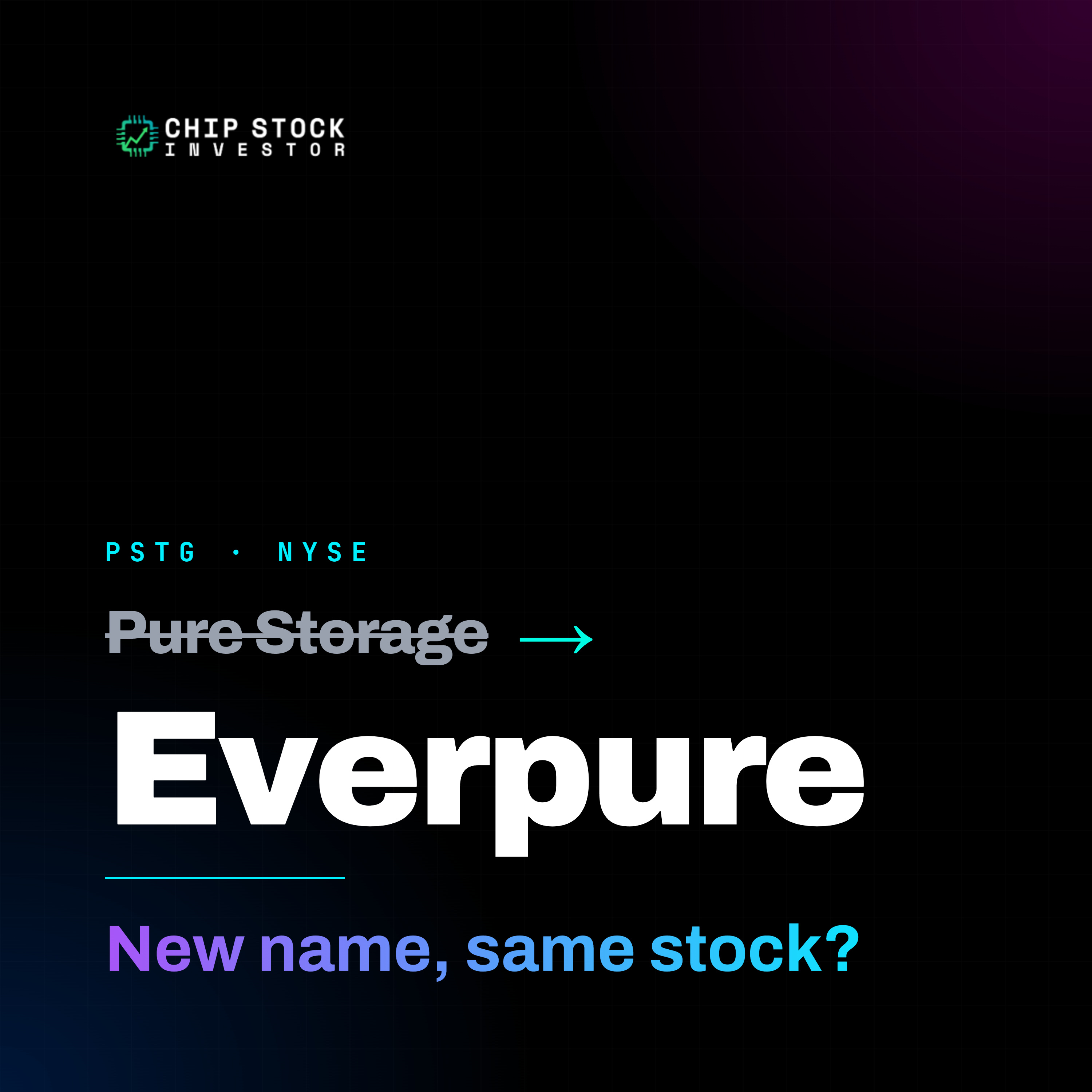 Pure Storage Is Now Everpure — and Free Cash Flow Just Went Negative (P Stock) 10.09.2026 19минPure Storage just rebranded to Everpure — and in the same stretch, free cash flow went negative 20% in a single quarter. Here's what's really going on.Pure Storage has officially rebranded as Everpure (P), reflecting its shift from a storage-hardware company into a broader enterprise data management platform. In this episode, we break down what the rebrand actually signals about the business, then dig into the numbers behind a rough quarter: free cash flow swung negative as the company prepaid roughly $500 million for NAND flash and memory components amid a broader memory shortage.We map where Everpure sits in the semiconductor and data center supply chain, its suppliers (Micron, Kioxia), and its closest public peer, NetApp — comparing revenue growth, gross margin, and free cash flow margin side by side. We also unpack Everpure's growing hyperscaler relationships, including its Meta partnership and a newly disclosed second hyperscaler customer, and what that means for growth heading into fiscal 2028. Finally, we run a reverse DCF at current prices to show exactly what growth and margin assumptions the market is pricing in — and whether this could be a durable, long-term compounder.TIMESTAMPS0:00 - Pure Storage Is Now Everpure — Why the Rebrand Happened1:15 - Where Everpure Fits in the Semiconductor Supply Chain5:00 - Suppliers, Competitors, and the Rise of Vast Data7:00 - The Meta Deal and Second Hyperscaler Explained9:00 - Everpure vs. NetApp: Margins and Growth Compared11:30 - Why Free Cash Flow Went Negative 20% This Quarter14:00 - Product Revenue vs. Subscription Revenue Breakdown16:30 - Reverse DCF: What the Market Is Pricing Into Everpure18:00 - Is Everpure Stock a Buy? Our Long-Term Thesis—If you want the reasoning behind more names like this one, Semiconductor Insider covers the process in more depth. Get access to all our research, weekly live Q&A events, and a growing set of tools to build your process: https://www.chipstockinvestor.comAll our socials: https://linktr.ee/chipstockinvestorIf you're getting value from the show, follow so you don't miss the next one.—Disclosure: Some links above are affiliate links. If you buy something through them, we might earn a little coffee money — thanks for helping us (Kasey) fuel our caffeine addiction.Content in this episode is for general information or entertainment only and is not specific or individual investment advice. Forecasts and information presented may not develop as predicted, and there is no guarantee any strategies presented will be successful. All investing involves risk, and you could lose some or all of your principal. CSI owns shares of Everpure.
 -
 Procept Is Down 80% and the Tech Works — So Why Won't We Buy PRCT? 10.09.2026 28минProcept BioRobotics is down roughly 80% from its 2025 highs but the technology behind its Aquablation system genuinely works. So why won't we put PRCT in our portfolio?Procept (PRCT) has one of the more interesting razor-and-blade models in medtech: sell the Hydros or Aquabeam system, then earn recurring revenue from single-use handpieces used in every Aquablation procedure for benign prostatic hyperplasia (BPH). Gross margins run around 65%, Medicare covers the procedure in all 50 states, and the addressable market is roughly 40 million U.S. men — yet the company has never generated positive free cash flow and has cut guidance multiple times over the past year.In this episode, we size the real addressable market bottom-up using system counts and procedure volume, walk through the handpiece-to-procedure ratio that triggered a class-action lawsuit, compare Aquablation to competing BPH therapies like UroLift, Rezum, GreenLight, and traditional TURP, and dig into a foundational IP licensing structure that means Procept doesn't fully own the technology its business is built on. We also run a reverse DCF to see what growth rate the market is actually pricing in — and whether "cheap" is the right word for it.This is a preview of the research format inside Semiconductor Insider, including our new investment thesis checklist dashboard.TIMESTAMPS0:00 - Why PRCT Is Down 80% Despite Working Technology1:30 - How Aquablation Treats an Enlarged Prostate3:00 - Sizing the Real Market: 40 Million Men vs. Bottom-Up Math6:30 - The Business Model: Consumables, Margins, and Recurring Revenue8:00 - The Handpiece-to-Procedure Ratio and the Class Action Lawsuit10:00 - Competitive Landscape: UroLift, GreenLight, TURP, and da Vinci12:30 - Who Actually Pays? Medicare, CMS Codes, and Reimbursement Risk17:00 - The IP Problem: Why Procept Doesn't Own Its Core Patents19:00 - Guidance Cuts and Margin Trends Through Q2 202622:00 - Reverse DCF: What Growth Rate Is Priced In?26:00 - Investment Thesis Checklist and Final Verdict—If you want the reasoning behind more names like this one, Semiconductor Insider covers the process in more depth. Get access to all our research, weekly live Q&A events, and a growing set of tools to build your process: https://www.chipstockinvestor.comAll our socials: https://linktr.ee/chipstockinvestorIf you're getting value from the show, follow so you don't miss the next one.—Disclosure: Some links above are affiliate links. If you buy something through them, we might earn a little coffee money — thanks for helping us (Kasey) fuel our caffeine addiction.Content in this episode is for general information or entertainment only and is not specific or individual investment advice. Forecasts and information presented may not develop as predicted, and there is no guarantee any strategies presented will be successful. All investing involves risk, and you could lose some or all of your principal. CSI doesn't own shares of Procept BioRobotics.
 -
 Why Oscar Health's 'Great Quarter' Isn't What It Looks Like 10.09.2026 11минOscar Health looks like a screaming buy — growing revenue, growing members, positive free cash flow. So why does the market keep discounting it? We ran the numbers.Oscar Health (OSCR) just posted strong headline numbers: member growth accelerating past 3 million, revenue climbing, free cash flow positive. Health insurers don't get valued like typical growth stocks — and free cash flow is one of the most misleading metrics you can use here.In this episode, we break down why insurance float — not free cash flow — is the real driver of Oscar's balance sheet, how the medical loss ratio (MLR) caps profitability by regulation, and why receivables and payables to CMS matter more than most investors realize. We also walk through two reverse DCF scenarios on GAAP earnings per share — a 10-year model and a more aggressive 3-year model — to see what growth rate the market is actually pricing into OSCR today.Think of it as a masterclass in valuing any financials-driven business — insurance, banks, specialty finance — differently than you'd value a software or semiconductor company. We also give a first look at the new investment thesis checklist tool and segment/KPI dashboard inside Semiconductor Insider.TIMESTAMPS0:00 - Why Oscar Health Looks Cheap (And Why That's Misleading)1:04 - Revenue, Member Growth & Free Cash Flow Overview2:00 - The Problem: Free Cash Flow Isn't Real Cash Flow Here2:40 - Medical Loss Ratio Explained: The 80% Rule3:03 - Insurance Float 101 (The Berkshire Hathaway Playbook)4:38 - Reading the Balance Sheet: Premiums, Payouts & SG&A5:24 - CMS Receivables & Payables: The Hidden ACA Liability7:00 - Reverse DCF: 10-Year vs. 3-Year Growth Scenarios9:07 - Building a Custom Investment Thesis Checklist10:40 - Final Takeaway: How to Actually Value Oscar Health—If you want the reasoning behind more names like this one, Semiconductor Insider covers the process in more depth. Get access to all our research, weekly live Q&A events, and a growing set of tools to build your process: https://www.chipstockinvestor.comAll our socials: https://linktr.ee/chipstockinvestorIf you're getting value from the show, follow so you don't miss the next one.—Disclosure: Some links above are affiliate links. If you buy something through them, we might earn a little coffee money — thanks for helping us (Kasey) fuel our caffeine addiction.Content in this episode is for general information or entertainment only and is not specific or individual investment advice. Forecasts and information presented may not develop as predicted, and there is no guarantee any strategies presented will be successful. All investing involves risk, and you could lose some or all of your principal. CSI doesn't own shares of Oscar Health.
 -
 Palo Alto Is Up 1,400% in a Decade — What Comes Next? (PANW FY2026) 02.09.2026 14минPalo Alto Networks (PANW) has been flying high into the end of FY2026. After a decade-long 1,400% run — capped by a broader cybersecurity rally following the Anthropic "Mythos moment" in early 2026 — what comes next?Nick breaks down how Palo Alto expanded from network security into cloud security through acquisitions, including the completed CyberArk deal (identity and access management), plus newer moves into AI agent security (Console) and observability (Embrace, complementing Chronosphere).On the financials: FY2026 revenue rose 24% to nearly $11.5B, with growth accelerating after CyberArk, while GAAP net income fell on stock-based compensation and amortization. Free cash flow came in just over $4.1B. We close with the next-12-months outlook for PANW as cybersecurity needs intensify for companies adopting more AI.—Access the fiscal.ai research terminal and get 15% off your membership with our link: https://fiscal.ai/csiLive event — new research platform sneak peek: join us Monday, September 7, 2026 at 7:00 AM Pacific for a live look at the new Chip Stock Investor research platform. Zoom: https://chipstockinvestor.zoom.us/j/98264538517?pwd=Hu3DuPQooFYZa7tYujMzUQcrAOIk6L.1 — or catch it live and on replay on our YouTube livestream.All our socials: https://linktr.ee/chipstockinvestorIf you're getting value from the show, follow so you don't miss the next one.—Disclosure: Some links above are affiliate links. If you buy something through them, we might earn a little coffee money — thanks for helping us (Kasey) fuel our caffeine addiction.Content in this episode is for general information or entertainment only and is not specific or individual investment advice. Forecasts and information presented may not develop as predicted, and there is no guarantee any strategies presented will be successful. All investing involves risk, and you could lose some or all of your principal. CSI owns shares of Palo Alto Networks, CrowdStrike, and Fortinet.
 -
Nokia Surged on Nvidia's Investment — Then Gave It Back. Buy the Dip? (NOK Q2 2026) 01.09.2026 16минNokia stock surged on Nvidia's investment and AI RAN hype — then gave much of it back. We ran the numbers on NOK's Q2 2026 earnings to see if the sell-off is a buying opportunity or a warning sign.Nokia (NOK) has become one of 2026's most talked-about telecom equipment names after Nvidia's strategic investment and growing buzz around 6G and AI RAN (Radio Access Network) infrastructure. In this episode, we break down Nokia's Q2 2026 earnings, including the misleading telecom revenue chart, the real growth driver (AI and cloud products, up 105% year-over-year vs. just 4% for legacy telecom), and how the Infinera and Fenix Group acquisitions are repositioning Nokia as a vertically integrated optical communications and data center supplier.We also compare Nokia's free cash flow margin against internet infrastructure peers Cloudflare, Akamai, and Fastly, then run a reverse DCF to see what profit growth rate is already priced into the stock at a $55–56 billion market cap. With shares down significantly from 2026 highs, we explain why we're staying on the sidelines for now — and the price level where Nokia would become interesting again.TIMESTAMPS0:00 - New Research Platform & Live Event Announcement1:15 - CDN Series Wrap-Up: Why We're Holding Cloudflare2:00 - Nokia's Acquisition Spree: Fenix, Rapid, Infinera4:00 - Selling Fixed Wireless Access to Inseego5:00 - Q2 2026 Slide Deck: The Nvidia Investment Effect6:15 - The Misleading Telecom Revenue Chart7:30 - Real Growth Driver: AI and Cloud Up 105% YoY9:00 - Guidance, Margins, and Peer Comparison (CDN Stocks)11:20 - Reverse DCF: What Growth Rate Is Priced In?14:00 - Verdict: Why We're Passing (For Now) and Our Watch Price—Live event — new research platform sneak peek: join us Monday, September 7, 2026 at 7:00 AM Pacific for a live look at the new Chip Stock Investor research platform. Zoom: https://chipstockinvestor.zoom.us/j/98264538517?pwd=Hu3DuPQooFYZa7tYujMzUQcrAOIk6L.1 — or catch it live and on replay on our YouTube livestream.If you want the reasoning behind more names like this one, Semiconductor Insider covers the process in more depth. Get access to all our research, weekly live Q&A events, and a growing set of tools to build your process: https://www.chipstockinvestor.comAll our socials: https://linktr.ee/chipstockinvestorIf you're getting value from the show, follow so you don't miss the next one.—Disclosure: Some links above are affiliate links. If you buy something through them, we might earn a little coffee money — thanks for helping us (Kasey) fuel our caffeine addiction.Content in this episode is for general information or entertainment only and is not specific or individual investment advice. Forecasts and information presented may not develop as predicted, and there is no guarantee any strategies presented will be successful. All investing involves risk, and you could lose some or all of your principal. CSI doesn't own shares of Nokia.
-
AppLovin Fell 38% — Broken Thesis or Buying Opportunity? (APP Stock Deep Dive) 27.08.2026 25минAppLovin (APP) stock fell 38% after earnings — but is the digital advertising thesis actually broken, or is this a buying opportunity? Shares dropped roughly 38% after AppLovin's latest report, and investors are asking whether the mobile-ad-turned-AI-advertising company can keep growing into its valuation. In this episode, we map the entire digital ad supply chain, from the walled gardens (Google, Meta, Amazon) that control roughly two-thirds of digital ad spend, down to the demand-side and supply-side platforms competing around them.We trace AppLovin's path from a 2012 mobile-game user-acquisition tool into one of the largest software companies in digital advertising, powered by its Axon 2.0 AI algorithm. We cover the sale of its game studios to Tripledot, its push into e-commerce through a Shopify integration, and why the market is worried about decelerating revenue growth alongside historically high operating and free cash flow margins. Using our new Custom Supply Chain tool, we compare AppLovin against Omnicom, The Trade Desk, Google, and Magnite to show where value actually accrues and share our own take as long-time shareholders.If you're deciding whether AppLovin is a buy after this sell-off, this is the fundamentals-first framework to make that call yourself.If you want the reasoning behind more names like this one, Semiconductor Insider covers the process in more depth. Get access to all our research, weekly live Q&A events, and a growing set of tools to build your process: https://www.chipstockinvestor.comAll our socials: https://linktr.ee/chipstockinvestorIf you're getting value from the show, follow so you don't miss the next one.—Disclosure: Some links above are affiliate links. If you buy something through them, we might earn a little coffee money — thanks for helping us (Kasey) fuel our caffeine addiction.Content in this episode is for general information or entertainment only and is not specific or individual investment advice. Forecasts and information presented may not develop as predicted, and there is no guarantee any strategies presented will be successful. All investing involves risk, and you could lose some or all of your principal. CSI owns shares of AppLovin.
-
ENVX Stock: CEO Quits Days After Q2 Earnings Miss 25.08.2026 12минEnovix stock just hit an all-time low — and then the CEO abruptly resigned. We break down the Q2 2026 earnings, the cash runway, and whether this small bet is still worth holding.Enovix (ENVX) stock cratered to an all-time low following its Q2 2026 earnings update, and just days later, CEO Dr. Raj Talluri announced his departure — poached by Kulicke & Soffa, a fast-growing advanced packaging and semiconductor equipment company.In this episode, we break down what's really happening with Enovix's silicon-anode lithium-ion battery technology, including the jump from silicon to silicon oxide to silicon-carbon composite chemistry that pushed cycle life from as few as 10 charges to over 1,000. We cover the company's smartphone qualification progress (including a leading Chinese OEM), its commercial smart glasses order, and why revenue guidance of roughly $9.5 million against higher capital expenditures spooked the market.We also dig into the balance sheet: $476 million in cash and equivalents, $74 million in longer-term investments, over $520 million in debt, and a cash burn rate that raises real questions about future capital raises. Is this pre-revenue R&D story finally turning the corner into commercialization — or is production hell just getting started? We share why this remains a small, high-risk position in our portfolio and what we're watching heading into 2027.—If you want the reasoning behind more names like this one, Semiconductor Insider covers the process in more depth. Get access to all our research, weekly live Q&A events, and a growing set of tools to build your process: https://www.chipstockinvestor.comAll our socials: https://linktr.ee/chipstockinvestorIf you're getting value from the show, follow so you don't miss the next one.—Disclosure: Some links above are affiliate links. If you buy something through them, we might earn a little coffee money — thanks for helping us (Kasey) fuel our caffeine addiction.Content in this episode is for general information or entertainment only and is not specific or individual investment advice. Forecasts and information presented may not develop as predicted, and there is no guarantee any strategies presented will be successful. All investing involves risk, and you could lose some or all of your principal. CSI owns shares of Enovix.
-
Why We're NOT Buying Fastly (Even at 22% Growth) 25.08.2026 11минFastly's revenue just re-accelerated into the mid-20% range — but our reverse DCF says the stock still needs 22%+ FCF growth for a decade to justify $26. Here's why that's a hard pass for now.Part 3 of our CDN series puts Fastly under the microscope after comparing it against Cloudflare and Akamai. We walk through our full investment thesis checklist — supply chain position, technology stickiness, revenue model, and capital structure — before running a reverse DCF on Fastly's free cash flow per share.Revenue growth has re-accelerated, and operating margins are improving, but GAAP profitability still lags Cloudflare, stock-based compensation remains elevated relative to revenue, and share dilution is running well above our target threshold. We also look at customer stickiness — including the loss of a major account to Cloudflare — as a proxy for platform depth and competitive moat.The result: Fastly lands on our watchlist rather than our buy list, with a price level flagged for renewed interest if shares pull back meaningfully. We close the series by connecting CDN infrastructure to the broader AI infrastructure buildout, and how a small CDN/cybersecurity basket — anchored by Cloudflare — fits inside a semiconductor and infrastructure-focused portfolio.Research-backed analysis, not a stock tip. Always do your own due diligence.—Members of Semiconductor Insider get our complete company-by-company research, valuation models, and portfolio allocation notes on Cloudflare, Akamai, and Fastly, plus weekly live Q&A and a growing set of tools to build your process: https://www.chipstockinvestor.comAll our socials: https://linktr.ee/chipstockinvestorIf you're getting value from the show, follow so you don't miss the next one.—Disclosure: Some links above are affiliate links. If you buy something through them, we might earn a little coffee money — thanks for helping us (Kasey) fuel our caffeine addiction.Content in this episode is for general information or entertainment only and is not specific or individual investment advice. Forecasts and information presented may not develop as predicted, and there is no guarantee any strategies presented will be successful. All investing involves risk, and you could lose some or all of your principal. CSI doesn't own shares of Fastly.
-
What Is Cloudflare's Biggest Risk? Hyperscaler Vertical Integration -- CSI Supply / Value Chain Demo 20.08.2026 15минCloudflare is growing 30%+ a year — but our supply chain mapping shows a warning sign most investors are missing.In this deep dive, we map the entire CDN supply chain — from hyperscaler and neocloud infrastructure down to enterprise software and e-commerce end markets — using our new Custom Supply Chain research tool. We break down where Cloudflare, Akamai, and Fastly actually sit relative to vertically integrated competitors like AWS, Microsoft, and Google, all of whom now run in-house CDNs.We cover how neoclouds like CoreWeave and Nebius fit into the AI infrastructure picture, why DigitalOcean's CDN relationship with Cloudflare matters, and which enterprise software names (Salesforce, ServiceNow, SAP, Palo Alto Networks) rely on which providers. Then we use the mapping to evaluate competitive positioning, pricing power, and where profit is actually accruing in the data center and cloud infrastructure ecosystem.If you're researching Cloudflare, Akamai's turnaround potential, or Fastly's multi-CDN diversification thesis, this framework will change how you evaluate these names.Members of Semiconductor Insider get our complete company-by-company research, valuation models, and portfolio allocation notes on Cloudflare, Akamai, and Fastly, plus weekly live Q&A and a growing set of tools to build your process: https://www.chipstockinvestor.comAll our socials: https://linktr.ee/chipstockinvestorIf you're getting value from the show, follow so you don't miss the next one.—Disclosure: Some links above are affiliate links. If you buy something through them, we might earn a little coffee money — thanks for helping us (Kasey) fuel our caffeine addiction.Content in this episode is for general information or entertainment only and is not specific or individual investment advice. Forecasts and information presented may not develop as predicted, and there is no guarantee any strategies presented will be successful. All investing involves risk, and you could lose some or all of your principal. CSI owns shares of Cloudflare.
-
The CDN Stocks Compared: Cloudflare vs. Akamai vs. Fastly | New Dashboard Preview 18.08.2026 9минCDNs have quietly become one of the most important layers of internet and AI infrastructure, moving everything from website traffic to large-scale AI data transfer. In this episode we compare the three public leaders — Cloudflare (NET), Akamai (AKAM), and Fastly (FSLY) — on revenue growth, gross margin, operating margin, free cash flow margin, and balance sheet strength.We also give you a first look at the new Chip Stock Investor research dashboard, launching in September at chipstockinvestor.com. The CDN comparison is the demo: everything you hear us pull up, you'll be able to run yourself.A few things that stood out:Cloudflare, another 30%+ quarter (33.5% growth) with net cash, but trading near 40x sales at a $110B+ market cap. Akamai is larger by revenue, but carrying $4.2B in net debt after an acquisition-led push into cloud infrastructure.Fastly, growth re-accelerated past 20%, putting the smallest of the three back in the value conversation.Full company-by-company research, valuation models, and portfolio allocation notes go live for Semiconductor Insider members in September: https://www.chipstockinvestor.comAll our socials: https://linktr.ee/chipstockinvestorChapters:(0:00) Why the CDN market matters for AI infrastructure(1:00) What a CDN actually does(3:00) How each company differentiates: security, compute, observability(3:45) Live dashboard: market cap and revenue(4:00) Revenue growth: Cloudflare's 33.5% vs. Akamai's slowdown(5:00) Margins that matter: gross, operating, free cash flow(6:00) Balance sheet: net cash vs. Akamai's $4.2B net debt(6:30) Long-term revenue trajectory(7:00) Cloudflare valuation: is 40x sales too rich?(8:00) Portfolio moves: trimming Cloudflare, Akamai's turnaround, Fastly's upsideCSI owns shares of Cloudflare. Content is for general information or entertainment only and is not individual investment advice. All investing involves risk, and you could lose some or all of your principal.
-
SMCI: Everyone's Bullish Again — The Numbers Say Otherwise 17.08.2026 8минSuper Micro Computer is trending on social media again. Before you follow the hype, here's what the actual numbers say.CSI breaks down SMCI's most recent quarter using fiscal.ai data — gross profit margin below 11% and guided to stay near the trough, rising revenue with stagnant operating profit, and free cash flow that has been negative for most of the company's history. We also unpack the $7 billion equity and equity-linked financing raise from June 2026, the new SMCIP preferred stock paying a 7% dividend, and what that means for where common shareholders sit in the pecking order for future cash flows.We dig into the accounts payable and receivable dynamics behind SMCI's competitive pricing strategy, and why the lack of an in-house financing arm — unlike Dell, HPE, and Lenovo — remains a structural headwind that the headlines are not talking about.Affiliate links that are sprinkled in throughout this video. If something catches your eye and you decide to buy it, we might earn a little coffee money. Thanks for helping us (Kasey) fuel our caffeine addiction!Content in this video is for general information or entertainment only and is not specific or individual investment advice. Forecasts and information presented may not develop as predicted and there is no guarantee any strategies presented will be successful. All investing involves risk, and you could lose some or all of your principal.CSI doesn't own shares of Supermicro
-
Applied Materials (AMAT): Record Quarter, China Recovery & the Selloff Explained 17.08.2026 12минApplied Materials just guided toward its first ever quarter exceeding ten billion dollars in revenue, with year-over-year growth above fifty percent at the midpoint. Nick breaks down the full AMAT update for August 2026 — results, guidance, the China recovery, and whether the stock still belongs in a portfolio after the selloff.Q3 fiscal year 2026 came in at nine point one billion in revenue with gross margins at fifty percent and operating margins above thirty percent. China is back in growth mode at roughly two point three billion in revenue. The ICAPS segment covering power, optical, and automotive is recovering. Applied is doubling manufacturing capacity by 2028. A reverse DCF suggests the stock is pricing in twenty-four percent annual earnings per share growth — not cheap, but CSI remains long.For in-depth research and the Semiconductor Insider membership, visit chipstockinvestor.com. Use fiscal.ai/csi for 15% off any paid plan.---Content in this video is for general information or entertainment only and is not specific or individual investment advice. Forecasts and information presented may not develop as predicted and there is no guarantee any strategies presented will be successful. All investing involves risk, and you could lose some or all of your principal. CSI owns shares of AMAT.
-
DigitalOcean Sold Off After Earnings — Buy the Dip? 14.08.2026 8минDigitalOcean just raised its 2026 growth guidance to 30–31%, and the stock sold off anyway.In this episode we work through what DigitalOcean's (DOCN) Q2 update actually changed. Management lifted full-year 2026 revenue guidance from 25–27% to 30–31% and pointed to a possible 50%+ growth rate exiting fiscal 2027. The driver is a scaling cohort of large enterprise and developer customers landing in a supply-constrained compute market — the same capacity bottleneck hyperscalers like Microsoft have flagged around data center construction.We cover the shift from an SMB cloud provider toward a developer and enterprise-scaler platform, why the co-location approach gives it an edge over hyperscalers building from the ground up, and how management reworked the balance sheet by retiring convertible debt, raising cash, and continuing buybacks. We also run a DCF scenario assuming a 36% five-year per-share profit CAGR, and talk through why the move from small-cap to midcap matters for a fundamentals-first thesis.For the reasoning behind more names like this one, Semiconductor Insider covers the process in more depth. Get access to all our research, weekly live Q&A events, and a growing set of tools to build your process: https://www.chipstockinvestor.comAll our socials: https://linktr.ee/chipstockinvestorIf this was useful, follow the show so new episodes land in your feed.Disclaimer: Content is for general information or entertainment only and is not specific or individual investment advice. Forecasts and information presented may not develop as predicted, and there is no guarantee any strategies presented will be successful. All investing involves risk, and you could lose some or all of your principal. CSI owns shares of DigitalOcean.
-
The Healthcare Bubble No One's Talking About (with Dr. Bradley Gibson) 12.08.2026 36минA practicing pathologist explains why DaVita, UnitedHealth, and Natera are playing fundamentally different games — and why one of them could break first.Investing in healthcare stocks requires a different framework than semiconductor investing. In this excerpt from a CSI live Q&A, we sit down with Dr. Brad Gibson — a practicing pathologist and private-practice partner — to break down how the US healthcare system actually gets paid, and what that means for stock picking.Brad walks through four investable buckets: medical service providers (DaVita, Natera, TransMedics), health insurers (UnitedHealth, CVS, Cigna, Elevance), pharmaceutical companies (Eli Lilly, Vertex), and healthcare hardware/software providers (Stryker, Veeva, Intuitive Surgical).The conversation covers Medicaid and Medicare reimbursement mechanics, CPT codes and RVU conversion factors, why private practices are being pushed into hospital consolidation, how pharmacy benefit managers generate profit through rebates, and why UnitedHealthcare's vertical integration has drawn regulatory scrutiny. Brad also gives his take on AI in pathology and drug discovery, and explains why he's more concerned about a healthcare cost bubble than an AI bubble.If you're building a healthcare investing thesis for 2026, this is where to start.If you want the reasoning behind more names like this one, Semiconductor Insider covers the process in more depth: https://www.chipstockinvestor.comAll our socials: https://linktr.ee/chipstockinvestorContent in this episode is for general information or entertainment only and is not specific or individual investment advice. Forecasts and information presented may not develop as predicted, and there is no guarantee any strategies presented will be successful. All investing involves risk, and you could lose some or all of your principal.
-
SanDisk (SNDK) Crashed 40% — Buy the Dip or Falling Knife? 10.08.2026 14минSanDisk (SNDK) fell from $2,000 to $1,200 as memory stocks sold off hard — but is the panic justified? In this episode, Chip Stock Investor breaks down what the fundamentals actually say before you react to the crash.We cover SanDisk's Q1 fiscal 2027 guidance — still 300–400% year-over-year revenue growth, but decelerating — the guide to roughly $45 in adjusted EPS, and why a debt-free balance sheet plus $4.5 billion in buybacks points to a healthy pivot toward shareholder returns. Then we dig into the technology roadmap: High Bandwidth Flash (HBF) and the new SanDisk/SK hynix spec for Google and Tenstorrent. We also unpack SanDisk's equity investment in Nanya Technology and the strategy behind bringing DRAM supply in-house, away from NAND competitors.Finally, we get into the real reasons memory stocks are crashing — institutional rebalancing, leveraged unwinds, the semiconductor cycle, and rising competition from Yangtze Memory and Solidigm — and whether SNDK is a falling knife or a long-term opportunity.Semi Insider members get access to CSI's research platform and tools plus deeper research as it happens. Join at chipstockinvestor.comContent in this video is for general information or entertainment only and is not specific or individual investment advice. Forecasts and information presented may not develop as predicted and there is no guarantee any strategies presented will be successful. All investing involves risk, and you could lose some or all of your principal.CSI owns shares of Sandisk
-
Palantir Q2 2026: What's Really Driving 149% Growth 09.08.2026 7минPalantir just reported Q2 2026 earnings, and the headline number, revenue nearly doubling year over year, only tells part of the story. We go beyond the standard quarterly earnings review to unpack what's actually driving Palantir's acceleration: AIP, its AI platform built to help enterprises deploy AI without handing proprietary data to the large AI labs. We look at the data behind the deployment phase of the AI cycle, why US commercial customer revenue jumped 149 percent even as customer count grew far more slowly, and what nearly 220 million dollar-plus deals signal about enterprise demand. We also run a reverse discounted cash flow on Palantir's current valuation, walk through management's own eighteen month growth targets, and revisit the ethical and government contract concerns we flagged when we first covered this stock two years ago. This is a research-backed look at whether Palantir's AIP business justifies its valuation, and whether it belongs in a long-term semiconductor and AI-adjacent portfolio. Semi Insider members get access to Chip Stock Investor's research platform and tools plus deeper research as it happens. Join at chipstockinvestor.com.Content in this video is for general information or entertainment only and is not specific or individual investment advice. Forecasts and information presented may not develop as predicted, and there is no guarantee any strategies presented will be successful. All investing involves risk, and you could lose some or all of your principal. Chip Stock Investor does not own shares of Palantir.
-
Rocket Lab's 8 Billion Dollar Bid for Iridium 07.08.2026 21минRocket Lab has proposed acquiring Iridium Communications in an eight billion dollar deal combining new stock issuance and cash. We break down why this move pushes Rocket Lab toward becoming a fully vertically integrated space economy company, spanning satellite components, spacecraft manufacturing, launch services through Electron and the upcoming Neutron rocket, and now satellite-based communications through Iridium's L-band constellation. We walk through our updated investment thesis checklist, Q1 2026 earnings showing revenue up 63 percent year over year, and the combined pro forma financials: roughly one point six billion dollars in trailing twelve month revenue, a swing from negative to near breakeven EBITDA, and Iridium's 288 million dollars in free cash flow offsetting Rocket Lab's cash burn. We also cover the balance sheet impact of Rocket Lab moving from net cash to net debt, and run a reverse discounted cash flow to solve for the growth rate the market is currently pricing in at roughly a 50 billion dollar enterprise value. Is Rocket Lab stock a buy after the sell-off, or still priced for perfection? We share where we stand. Semi Insider members get access to Chip Stock Investor's research platform and tools plus deeper research as it happens. Join at chipstockinvestor.com.Content in this video is for general information or entertainment only and is not specific or individual investment advice. Forecasts and information presented may not develop as predicted, and there is no guarantee any strategies presented will be successful. All investing involves risk, and you could lose some or all of your principal. Chip Stock Investor does not own shares of Rocket Lab.
Слични подкасти


Популаран у
Овај подкаст се појављује и у подкаст листама ових земаља.
