
Restorative Works
IIRP
0
Restorative Works, hosted by Claire de Mézerville López, focuses on restorative practices—the study of building relationships and community. Through conversations with global guests, the podcast shares transformational stories from restorative practitioners, community leaders, and researchers. Listeners can learn practical solutions for addressing harm and trauma while increasing a sense of belonging in schools, communities, and homes. The show also explores methods for facilitating meaningful conversations that foster understanding and positive impact.
Епизоде
-
 Literacy and Wellness: Reading as a Restorative Practice with Stephanie Affinito 17.09.2026 22минWhat if reading could do more than build literacy skills? What if books could help us regulate stress, strengthen empathy, foster connection, and support our overall well-being? In this episode of Restorative Works!, host Dr. Claire de Mézerville López speaks with literacy and teacher educator Stephanie Affinito about the connection between literacy, wellness, relationships, and restorative practices Stephanie invites us to explore what happens when educators expand their understanding of literacy beyond academic skills. She discusses how books and stories can help children and adults explore identity, develop empathy, and see experiences through different perspectives. When educators make reading social and invite students to share their reading lives, books can become a pathway to stronger relationships and a greater sense of community. The conversation also considers how this approach can support teacher wellness, particularly at a time when educators face significant stress and burnout. Rather than treating reading as another obligation, they discuss the importance of rediscovering reading as a source of pleasure, wellness, inspiration, and connection. Stephanie is a book-loving, notebook-hoarding literacy educator on a mission to change lives one book and one notebook at a time. She podcasts weekly on books and reading, writing, notebooks, and everything in between on Restorative Reading & Writing for Wellness. She also chats with a new children's literature author every week on her KidLit Love podcast. Tune in to discover how reading can become part of a restorative practices culture in schools and communities, not just something we teach, but something we live.
 -
 Leading with Belonging: Restorative Practices in New York City Parks 10.09.2026 22минFrom personal and communal grief to creating a workplace that works for everybody. In this episode of Restorative Works!, host Claire de Mezerville López welcomes Assistant Commissioner for Diversity, Equity, Inclusion, and Belonging at the New York City Department of Parks & Recreation, Dr. Iyana Titus, to explore how restorative practices can transform workplace culture and strengthen communities in the largest municipal park system in the nation. Dr. Titus shares the deeply personal story that led her to restorative practices during the COVID-19 pandemic. While grieving the loss of her father and supporting employees through unprecedented challenges, she experienced her first restorative circle. That moment helped her process grief, reconnect with others, and discover the power of authentic dialogue. Listen to discover how restorative circles became an essential tool for supporting employees across the Parks Department, from Parks Enforcement Patrol Officers responding to overdose emergencies to supervisors navigating the pressures of seasonal operations. Dr. Titus explains how circles created opportunities for staff to share personal experiences, process difficult emotions, and build stronger relationships across every level of the organization. As interest grew, the department expanded its efforts by training a cohort of circle keepers, embedding restorative practices into leadership development, team retreats, and employee support initiatives. In her role, Dr. Titus is responsible for creating and implementing the agency's diversity and inclusion strategies, policies, and practices, conducting EEO investigations, and ensuring that the agency complies with all federal, state, and local anti-discrimination laws. As an assistant commissioner, she has also been instrumental in facilitating difficult conversations on race relations, religion, international issues, mental health, and a host of other topics. She has created and implemented her agency's first alternative dispute resolution program, which includes mediating employment-related disputes. Recently, she wrote an article entitled "Using Restorative Practices to Create Restorative Park Systems," which was published in the Parks & Recreation Magazine of the National Recreation and Parks Association.
 -
 The Human Side of Change Management with Dr. Doug Judge 03.09.2026 27минWhat does it take to move restorative practices from an idea into sustainable, meaningful change? In this episode of Restorative Works!, host Dr. Claire de Mézerville López welcomes back IIRP Associate Professor Dr. Doug Judge for a conversation about the structural, cultural, and emotional dimensions of implementing restorative practices in schools and other organizations, as outlined in his recent Presidential Paper Addressing the challenges of change through evidence-based implementation and chapter of the same title in Restorative Practices in Education: Research and Applications. Dr. Judge joins us to explore why knowing what works is only the beginning. He introduces key insights from implementation science, including the importance of understanding what works, where it works, and under what conditions. Rather than assuming that evidence-based practices will automatically translate into effective change, he emphasizes the relationships, readiness, culture, and conditions that help initiatives take root and thrive. The conversation examines how restorative practices can strengthen change management, reviewing how fair process, including engagement, explanation, and expectation clarity creates agency and builds trust among the people affected by change. Dr. Judge explores the value of proactive, relationship-centered support and explains why organizations should invest heavily in prevention, community building, and relationship development rather than relying primarily on responsive approaches. Dr. Judge has more than 25 years of experience in education, administration, large-scale implementation in schools, social work, and youth services. His career has focused on addressing systemic inequities in influential public institutions. He served as a special education teacher in a variety of public and institutional school settings, and as a school administrator at a large public alternative high school in Seattle, focused on providing restorative and healing-centered wraparound supports. As the Director of Social and Emotional Learning for Highline Public Schools, Doug led the districtwide implementation of restorative practices, positive behavior supports, and Social Emotional Learning (SEL).
 -
 Joy as Resistance, Community as Practice with Dr. Tahirah J. Walker 27.08.2026 22минIn this episode of Restorative Works!, host Dr. Claire de Mezerville López speaks with Dr. Tahirah J. Walker, Chair of the Department of Community Engagement and Leadership at Point Park University, about the connections among restorative justice, community, education, writing, and joy. A writer, teacher, restorative justice practitioner, and scholar, Dr. Walker challenges the idea that writing and learning must happen in isolation. She shares how she has come to understand writing as a community practice and reflects on the writers, artists, and thinkers who have influenced her approach to community engagement. She also explores the role of humor and joy in helping people recognize their shared humanity, particularly when addressing difficult or complex issues. Drawing on poet Toi Derricotte's idea that joy can be an act of resistance, Dr. Walker considers how intentional joy can become part of restorative practices. Dr. Walker also discusses her experiences applying restorative practices in public defense and K-12 education. Her work with public defenders showed her how approaches centered on restorative practices can emerge, such as developing mitigation stories for people facing sentencing. She contrasts that experience with her work alongside educators, where she encountered more resistance to restorative practices and gained a deeper appreciation for the complexity of creating change within school communities. Dr. Walker is a writer and teacher whose work explores the intersections of Black womanhood, community, and expression. She holds a doctorate in rhetorical studies, and her work is influenced by the brilliance and insight of Yona Harvey, Brian Broome, Deesha Philyaw, Damon Young, Tony Norman, Kendra Ross, and INEZ. Tahirah endeavors to reflect the vibrant and unapologetic voices that make Pittsburgh feel like home.
 -
 The Garden of Joy: Empowering Students Through Culinary Skills and Restorative Practices 20.08.2026 20минFood has the power to nourish more than our bodies; it can also strengthen relationships, build community, and create opportunities for healing. In this episode of Restorative Works, host Claire de Mezerville López speaks with Ali Rizvi, LSW, volunteer executive director of Garden of Joy Culinary Academy and school social worker with Cincinnati Public Schools, about how restorative practices, shared meals, and life skills education are transforming the lives of young people in Cincinnati. Ali shares how his introduction to restorative practices through IIRP shaped both his work in schools and the creation of Garden of Joy, a free culinary, gardening, and youth development program rooted in nonviolence, food justice, and restorative practices. Rather than excluding students who struggle with behavior, the program creates opportunities for accountability, relationship building, and growth through daily circles, cooking together, and conversation. Ali reflects on the community response that led to Garden of Joy's creation following youth gun violence in Cincinnati and describes how volunteers, families, educators, and community members have united around a shared commitment to providing safe, supportive spaces for young people. Ali's work is rooted in restorative practices, nonviolence, youth development, food justice, and creating spaces where young people feel safe, valued, and connected. Ali believes food can be a powerful doorway into relationship, accountability, healing, and joy. In addition to his work at Garden of Joy, Ali serves students and families as a social worker at Hays-Porter School. He is passionate about building community-centered programs that help young people learn nonviolence and essential life skills. Tune in for a powerful reminder that building stronger communities often begins with simple acts of connection. Whether through a family dinner, a classroom circle, or a shared conversation, Ali demonstrates how food, relationships, and restorative practices can create lasting change.
 -
 Creating the Conditions for Change: Restorative Practices and Collective Care 13.08.2026 25минHow can schools move beyond reacting to harm and instead create the conditions that help prevent it? A continuation of the conversation started in the episode, The Sustainability Myth: What Schools Get Wrong About Restorative Practices, host Claire de Mézerville López welcomes back Lan Nguyen and Jennifer Vermillion of the San Diego County Office of Education to explore how restorative practices can interrupt the school-to-prison nexus through systems change, collaboration, and relationship-centered leadership. Together, they challenge traditional approaches to discipline and examine why keeping young people out of the justice system requires more than school-based interventions. From engaging families and community organizations to ensuring restorative processes are accessible to all students, the conversation highlights the importance of expanding who has a voice and who has a seat at the table. Lan and Jennifer also discuss one of the greatest barriers to sustainable implementation: expecting educators to lead change without first creating the conditions for their own well-being. They argue that lasting transformation begins by investing in adults, fostering belonging, and moving beyond one-time training toward leadership that embodies restorative practices. Jennifer is a project specialist with the San Diego County Office of Education, providing professional learning and coaching on restorative practices implementation. Before working with the County Office, Jennifer spent 5 years with a non-profit, supporting schools in San Diego with their restorative practices implementation, training, and student leadership initiatives. She provided direct services in addressing conflict issues between students, families, and school staff through a restorative justice model that kept youth out of the justice system. She received her bachelor's degree in psychology and her master's degree in peace and justice studies. Lan is a futurist, educator, and leader who is passionate about designing and implementing more liberatory ways of engaging, teaching, and leading in schools. In her work, she critiques and examines systems of power, applies participatory and humanizing approaches to systems change, and uses a decolonial lens to understand issues of educational and social inequity. Lan has held diverse roles in K-12 education, supporting local, statewide, and national projects on community engagement and school climate. She currently supports restorative justice practices implementation across San Diego County at the San Diego County Office of Education. Tune in to hear more practical wisdom for restorative practitioners navigating current social challenges, with more patience, trust, and humility.
 -
 Beyond Behavior: Restorative Practices for Every Student 06.08.2026 22минIn this episode of Restorative Works!, host Claire de Mezerville Lopez welcomes Dr. Layla Dehaiman, assistant professor of special education at the University of New Mexico, to explore how school communities can become more equitable, inclusive, and transformative. Fresh from defending her doctoral dissertation with distinction, Dr. Dehaiman shares insights from her research examining how educators experience and make sense of restorative practices, offering a powerful counter-narrative to traditional implementation studies. As a seasoned restorative practitioner, Dr. Dehaiman explains why restorative work is more than a collection of strategies: it's a philosophical shift that challenges educators to rethink discipline, relationships, and community. She discusses her research on school discipline, the school-to-prison pipeline, and the importance of centering educator voices as schools strive to build more just learning environments. The conversation also explores the role of mindfulness, co-regulation, and educator wellness. Dr. Dehaiman introduces practices like "Warm-Hearted Wednesdays" and explains why helping educators regulate their own nervous systems is essential for supporting students through challenging moments. Dr. Dehaiman earned her doctorate in Special Education from Syracuse University, where her scholarship focused on restorative practices, equity in school discipline, and inclusive education. In her professional career in education, she has collaborated extensively with school districts, state education agencies, and institutions of higher education to design, implement, and evaluate comprehensive teacher preparation and induction programs. She has mentored and coached pre-service and early-career teachers and developed curriculum for teacher residency and certification pathways. Her work has centered on the implementation of restorative practices, social-emotional learning, mindfulness, and other holistic approaches to behavioral support, with an emphasis on fostering equitable and sustainable school environments. She was named a recipient of the 2026 Career Achievement Award, part of the Paul Bartlett Ré Peace Prize, for her work supporting students with restorative practices. Administered through the UNM Foundation, the prize honors individuals whose work advances harmony, healing, and nonviolent approaches within their communities. Tune in for more practical insights to create more inclusive schools and remind us that investing time in relationships today creates stronger communities tomorrow.
 -
 From Conflict to Community: Intentional Connection in Academic Environments 30.07.2026 20минIn this episode of Restorative Works!, host Claire de Mezerville Lopez welcomes guest Melkam Tesfaye for a grounded conversation on restorative practices in higher education and student affairs. Tesfaye draws on her background in law, mediation, and conflict resolution to explore how approaches that are rooted in restorative practices take shape inside complex university systems, particularly within the context of Gonzaga University. Tesfaye emphasizes that restorative practices is more than just an initiative, it is culture-building, relational leadership, and sustained engagement. She highlights a common challenge across both K–12 and higher education settings: not resistance to restorative practices, but the ongoing difficulty of finding time to implement and sustain them. From onboarding conversations to cohort-based training models, she illustrates how institutions can move beyond one-off workshops toward long-term relational learning. Melkam is the assistant director of student conduct and conflict at Gonzaga University, where she works with resident directors on student conduct cases and manages conflict resolution services, such as educational conversations, mediation, and restorative justice conferencing. She is a trained restorative practices facilitator and serves on a divisional task force implementing restorative practices within Student Affairs. With a background in law, Melkam brings extensive expertise in mediation, adaptable dispute resolution, and restorative practices, along with a multidisciplinary perspective to conflict resolution. Melkam is a member of the Restorative Justice Network of Catholic Campuses (RJNCC) national planning team. She has led trainings on de-escalation and restorative practices in the workplace and is an active community mediator. Tune in for stories and examples of everyday practices that are foundational to building trust, compassion, and shared accountability in academic environments.
 -
 Beyond the Stage: Joy, Imagination, and Restorative Practices 23.07.2026 20минIn this episode of Restorative Works!, host Claire de Mezerville López welcomes Assistant Director of Learning and Community Engagement at Manhattan Theatre Club, Gabbie Ballesteros. Together, they explore the powerful intersection of art, advocacy, and restorative practices, revealing how creative expression can strengthen relationships, amplify voices, and inspire meaningful social change. Drawing from her work in classrooms, community organizations, and theaters across New York City and around the world, Gabbie shares how theaters create spaces where people feel seen, heard, and valued. She discusses the parallels between restorative practices and theater, explaining how both rely on trust, vulnerability, dialogue, and shared accountability to build stronger communities. The conversation also highlights Punch, the Broadway production inspired by a real restorative justice story, and the innovative post-show dialogue circles that invited audiences to move beyond passive viewing into authentic community conversation. Gabbie reflects on how storytelling encourages empathy, sparks curiosity, and creates opportunities for lasting transformation both on and off the stage. Gabbie is a multi-disciplinary administrator, teaching artist, and performer who believes deeply in universal access to and engagement with the arts. In her role at the Manhattan Theatre Club, she collaborates on programs spanning classrooms and community spaces throughout New York City, across the US, and around the world that empower learners to engage joyfully and authentically with theater. Gabbie has led a session on community partnerships with the American Alliance for Theatre and Education, moderated special panel events and audience discussions, and was selected for the 2026 Emerging Leaders Program with the New York Foundation for the Arts. She has proudly served as an educator in the New York and Washington, D.C., areas and her home country of the Philippines. She strives to uplift the intersection of art and advocacy across all avenues of her work. Tune in to hear about Manhattan Theatre Club's educational initiatives, including international playwriting programs, partnerships with community organizations, and free theater resources that make storytelling accessible to educators and learners worldwide.
 -
 Building Bridges: Leading in Higher Ed with Restorative Practices 16.07.2026 23минIn this episode of Restorative Works!, host Claire de Mezerville López welcomes Dr. Alex Boesch, educator, higher education administrator, and organizational culture expert, for a thoughtful conversation about how restorative practices can bridge intercultural competence and social justice in higher education. Drawing on more than 15 years of experience implementing restorative practices on college campuses, Dr. Boesch explores how circles create space for meaningful dialogue across differences. He shares real-world examples from his work at Wayne State University, including facilitating listening circles following moments of community trauma and creating spaces where students, faculty, and staff can process difficult events with care and dignity. He discusses the importance of intentional facilitation and how structures rooted in restorative practices provide emotional safety, ensuring every voice has the opportunity to be heard. In his current role at Wayne State University, Dr. Alex Boesch leads strategic initiatives that support a positive and healthy organizational culture. He regularly designs and facilitates workshops, retreats, and learning experiences for employees. He is skilled at leading working groups to improve organizational culture. Dr. Boesch has infused restorative practices in his higher education and consulting work for 15 years. He has presented at conferences on the intersection between restorative practices, intercultural competence, and social justice. Dr. Boesch holds a doctorate in educational leadership from Eastern Michigan University. Tune in to discover how intentional dialogue and restorative practices can transform how we lead higher education.
 -
 The Teacher's Sphere Collaborative Episode: The Role of Teacher Leaders in Civil Discourse 09.07.2026 29минIn this special collaborative episode of Restorative Works and The Teacher's Sphere Podcast, hosts Dr. Claire de Mezerville Lopez, Dr. Kobi Nelson, and Sarah Lane explore how educators can cultivate stronger school communities through civil discourse, restorative practices, and meaningful dialogue. Our hosts invite us to examine the role teacher leaders play in fostering civil discourse among colleagues, emphasizing the importance of listening, intellectual humility, and curiosity. Sarah introduces Sphere's AWARE framework (Assert, Wonder, Accept, Respect, and Establish) as a practical tool for guiding productive conversations and building understanding across differing viewpoints. Explore how teachers, administrators, families, and staff can move beyond adversarial thinking and focus on shared goals that support student success. We dive into cognitive biases and their impact on decision-making, relationships, and school culture. Our hosts examine how self-awareness, restorative practices-rooted dialogue, and intentional engagement with diverse perspectives can help educators recognize and navigate these biases more effectively. Kobi is the content development specialist for Sphere Education Initiatives. She hosts Sphere's podcast, The Teacher's Sphere, and creates curricular resources in collaboration with K-12 teachers and content scholars. Kobi has two decades of experience teaching reading, writing, and literature in middle schools, high schools, and colleges. Kobi holds a bachelor's and master's in English as well as a master's in Curriculum and Instruction. She earned her doctorate in Education and Human Development from the University of Colorado. Sarah is a manager of alumni and educator engagement for Sphere Education Initiatives. She also supports hosting Sphere's podcast, The Teacher's Sphere. She leads professional development across the country to partner with educators and administrators to foster spaces of civil discourse and community. She has K-12 experience as a teacher, instructional facilitator, and curriculum writer. Sarah has a Master of Science in Curriculum and Instruction, principal certification, and is a National Board Certified Teacher. Tune in to discover more practical insights and valuable resources for anyone committed to creating educational environments where dialogue, empathy, and diverse perspectives can thrive. Resources from Sphere Education Discussed in Today's Episode: The Civil Discourse Primer Bias Bites Sphere's Leadership Toolkit for Civil Discourse (full of tools for leaders to use to cultivate the culture of civil discourse discussed in the episode)
 -
 Consistency, Voice, and Change: What Students Teach Us About Discipline with Saundra Hensel 02.07.2026 21минIn this second part of our conversation with Saundra Hensel, alongside co-hosts Dr. Michael Washington and Dr. Doug Judge, we continue exploring the long-term, system-wide implementation of restorative practices in a large school district. With over a decade of experience, Saundra shares how integrating restorative practices with social-emotional learning, trauma-informed care, and behavior supports can strengthen school culture and climate. Revisit the first part of our conversation here. The conversation highlights how students often have strong opinions about discipline but many fail to receive the space to share them. Engaging students, "catching them doing the right thing" and using student voice to move the conversation towards a deep reflection about what it means to build an intergenerational community. Through practical examples, Saundra illustrates how small relational shifts, like listening, adapting, and showing vulnerability, can transform challenging dynamics between students and educators. This conversation also reflects on sustainability, leadership commitment, and the structures needed to support lasting change, offering valuable insights for anyone engaged in system-wide restorative practices implementation. Saundra Hensel has been an educator in various roles for over 35 years. She left a career in higher education administration to teach high school in Chicago Public Schools, then moved to Jefferson County Public Schools in Louisville, KY, in 2009. In fall 2016, Saundra was asked to join a team at the district level that was to begin implementing restorative practices. She is currently the behavior systems manager, supporting schools in implementing restorative practices and Positive Behavior Interventions and Supports. Saundra is a National Board Certified Teacher in English, with a bachelor's degree in interpersonal and small group communication and a master's degree in education and school administration. Tune in to learn more about Saundra's insights and discover, along Claire and co-hosts Mike and Doug, some major take aways regarding restorative practices implementation!
 -
 Building Belonging for Stronger Campus Communities with Heather Gardley 25.06.2026 22минIn this episode of Restorative Works!, we are joined by Heather Gardley, a leader deeply committed to advancing community-centered approaches through restorative practices in higher education. Heather shares insights from her work supporting schools and organizations in building cultures rooted in trust, belonging, and accountability. Heather invites us to consider how we can implement restorative practices on campuses to build community, whether that be during new student orientation, student employee training, problem solving spaces, or when conflicts occur. Through moving stories of real-world impact, this episode offers a thoughtful look at how restorative practices can help transform not only institutions, but also the ways we show up for one another in our daily work. Heather Gardley serves as the Director of Student Conduct, Rights & Responsibilities at California State University, East Bay. With over 20 years of experience in higher education, she is recognized as a strategic and thoughtful leader committed to fostering ethical development, student advocacy, and retention. Her work is grounded in a student-centered approach, with a strong emphasis on care, accountability, and growth. A dedicated restorative practitioner, Heather brings a balanced perspective to student conduct work, prioritizing both responsibility and support. Heather earned her bachelor's degree from San José State University and a master's degree in organizational communication from CSU East Bay. She is also a proud member of Sigma Gamma Rho Sorority, Inc., reflecting her ongoing commitment to service, leadership, and community engagement. Tune in to discover how restorative practices can transform educational higher ed spaces and support the work of joining students and strengthening campus community.
 -
 The Web of Rights: Centering Student Voice in Schools with Dr. Cameron McCuaig 18.06.2026 22минIn this episode of Restorative Works!, host Claire de Mezerville Lopez is joined by educator and researcher Dr. Cameron McCuaig to explore what it truly means to center student voice and reimagine schools as spaces of service, dignity, and community. Cam challenges traditional models of education by contrasting compliance-driven systems with a more relational, student-centered approach. Using real classroom experiences, he invites listeners to reconsider the role of educators: not as directors of learning, but as guides who walk alongside students, helping them navigate barriers and pursue meaningful engagement. Through powerful stories from his work with young children, Cam illustrates how even the youngest learners can understand complex ideas like rights, responsibility, and mutual care. At the heart of this episode is a compelling reminder: restorative practices are not simply reactive tools, but proactive, preventative ways of being that prioritize relationships and belonging. Dr. Cameron McCuaig is a Canadian French Immersion principal, educator, speaker, and creator of the Web of Rights, a practical framework that helps schools move from compliance-driven discipline toward structured, rights-informed learning communities grounded in dignity, student voice, and shared responsibility. He holds a Doctor of Education from Northeastern University, where his research examined democratic school models in Ontario public elementary schools. With more than two decades of experience in schools and professional learning spaces, he supports educators and school communities through workshops, webinars, consultation, and practical implementation tools. Through Student Rights Education, he shares strategies for rethinking classroom management, conflict, and school culture with greater dignity, clarity, and accountability. Follow him at @dr.cammccuaig and tune in to discover how centering rights, voice, and relationships can transform not only classrooms, but the future of education itself.
 -
 Building Inclusive Practice: The Restorative Rainbow Alliance and LGBTQ+ Affirmation in Restorative Justice 11.06.2026 34минIn this special roundtable episode of Restorative Works!, host Claire de Mezerville López brings together a powerful group of restorative justice practitioners, educators, and leaders to explore the creation and impact of the Restorative Rainbow Alliance's Facilitator Code of Conduct. Guests Ames Stenson and Rami El Gharib, co-founders of the Restorative Rainbow Alliance, join Lindsey Pointer and Kathleen McGoey, co-authors of The Little Book of Restorative Teaching Tools, to share the story behind this groundbreaking initiative. Together, they reflect on the urgent need for LGBTQ+ affirming practices within restorative justice, drawing from lived experiences, community dialogue, and the gaps that led to harm when identity and power were not fully considered in restorative conferences. The conversation explores how the Alliance's Code of Conduct, now adopted as a foundational document in Colorado, offers both guidance and a call to reflection for practitioners seeking to move beyond cis-heteronormative frameworks and toward truly inclusive, equitable practice. The group also highlights a collaborative effort to bring the code to life through an engaging, experiential learning activity: Inclusive Facilitation: Increasing LGBTQ+ Awareness in Restorative Justice. Designed as a companion tool, this resource supports practitioners in navigating discomfort, building empathy, and applying inclusive principles to real-life scenarios through dialogue, play, and reflection. Throughout the episode, listeners are invited into a rich and honest conversation about harm, accountability, identity, and growth. The guests emphasize the importance of curiosity, compassion, and the willingness to sit with complexity as essential elements of restorative practices, especially when working toward belonging for LGBTQ+ communities. This episode offers both inspiration and practical pathways for anyone committed to deepening fostering spaces where all identities are affirmed and valued. Tune in to learn from these wonderful guests, and we invite you to explore the Restorative Teaching Tool activity for the Facilitator Code of Conduct here.
 -
 Carrying Stories with Care: The Power of Embodied Connection and Compassionate Witnessing 04.06.2026 23минIn this episode of Restorative Works, host Claire de Mezerville Lopez is joined by Deanna Zilske, school leader, theater director, and restorative practitioner, to explore the powerful intersection of restorative and embodied theater practices. Drawing from her work with a community of educators, artists, and practitioners, Deanna shares how integrating narrative practices, such as compassionate witnessing and reauthoring maps, with movement, voice, and improvisation can deepen storytelling, empathy, and connection. When words are not enough, the body becomes a powerful tool for expression, allowing individuals to explore lived experiences, trauma, and preferred futures in ways that feel both accessible and transformative. Deanna also shares moving examples from the group's experience, illustrating how embodied storytelling can support healing, release, and reconnection, both with oneself and with others. As one participant reflected, the process created an opportunity to listen differently and to carry others' stories with greater care and empathy. Deanna Zilske currently serves as the Principal at Jaffrey Grade School in Southwestern New Hampshire. Before that, Deanna served as Principal at Keene Middle School and as a Principal and Instructional Coach at Harrisville-Wells Memorial School. In addition to her work in education, Deanna currently directs the Lions Club Foundation's annual Summer and Winter Musicals. Before moving into administration, Deanna built her foundation with ten years of classroom teaching experience and a background in theatre and arts education. She holds a Master of Science in Restorative Practices, alongside Graduate Certificates in Relational Facilitation for Healing Trauma and Change Implementation in Organizations and Social Systems from the International Institute for Restorative Practices. In addition, she holds a CAGS in Education Administration, an MTA in Elementary Education, and a BA in Theatre Arts. Tune in to discover how embodied theater practices can expand restorative work, opening new pathways for expression, understanding, and collective transformation.
 -
 The Win-Win Workplace: Why the Strongest Companies Start with Worker Voice 28.05.2026 22минWe are joined by Harvard researcher, author of The Win-Win Workplace, and founder of Future Forward Strategies, Dr. Angela Jackson, to discuss how organizations can redesign work to strengthen both employee well-being and business performance. Backed by research across more than 1,700 companies, Dr. Jackson makes a clear, data-driven case for human-centered leadership. She reveals how organizations that invest in employees through practices such as centering worker voice, reimagining benefits, and fostering inclusive innovation see improvements not only in employee morale but also in performance. These strategies directly impact retention, engagement, and long-term financial success, reframing well-being as business-critical, not optional. Dr. Jackson shares how understanding employees' lived realities, such as caregiving responsibilities and access to childcare, directly impacts retention and performance. She offers a concrete example of a company that introduced on-site childcare after identifying it as a key barrier for employees, resulting in a 98% retention rate among women during the pandemic. Dr. Angela Jackson is a leading voice on the future of work and CEO of Future Forward Strategies, a labor market intelligence firm focused on helping organizations grow through continuous learning and innovation. A lecturer and researcher at Harvard University, she equips executives with practical strategies to build high-performing workplaces that strengthen engagement, productivity, and long-term growth. Her work has appeared in Harvard Business Review and Stanford Social Innovation Review, and she is frequently featured in The New York Times, Forbes, The Wall Street Journal, Fortune, BBC, and The Economist. She has spoken at TED, South by Southwest, and ASU GSV. Previously, Dr. Jackson was managing partner at New Profit, where she launched the Future of Work Grand Challenge, reskilling 25,000 workers into living-wage jobs. She began her career in global leadership roles at Viacom and Nokia. Her debut book, The Win-Win Workplace, is a New York Times bestseller. Tune in for real-world examples that shift toward more inclusive, responsive, and adaptive workplace cultures where well-being, performance, and innovation are mutually reinforced.
 -
 Human-Centered Higher Ed: How SNHU Scales Restorative Practices System-Wide 21.05.2026 20минWe are joined by Program Manager in the Office of Diversity and Inclusion at Southern New Hampshire University (SNHU) Jen Torres, to explore what sustainable, system-wide implementation of restorative practices in higher education really looks like. Jen brings a practitioner's lens to a challenge many institutions face: how to move from reactive, discipline-focused approaches toward proactive, relationship-centered campus communities. She walks us through SNHU's three-year restorative practices implementation process that brings theory to life through real-life examples. From using AI tools to audit communication for relational language to tracking real-time shifts in restorative practices approaches with students, these stories demonstrate how innovation and human-centered practice can coexist and thrive. On the topic of the use of AI, Jen reminds us that technology can enhance efficiency, but it cannot replace human connection. In an era of eroding trust, restorative practices become essential to rebuilding and maintaining strong relationships. Jen M. Torres serves as program manager, social justice advocate, and liberatory learning designer for SNHU's Office of Diversity and Inclusion. With over 16 years of experience across education, nonprofit, and corporate sectors, Jen founded SimplyLead, LLC, and specializes in antiracist practice, conflict transformation, restorative practices, and liberatory approaches to leadership and culture repair. Her work centers on dismantling systemic inequities while helping teams and institutions move through conflict with honesty, accountability, and care. Known for blending deep relational practice with clear strategy, Jen designs and facilitates spaces that are brave, grounded, and action-oriented. Through workshops, leadership development, and collaborative learning experiences, she helps teams build cultures rooted in belonging, shared responsibility, and lasting change, where conflict is engaged as an opportunity for growth, learning, and collective transformation. Tune in to discover what it takes to truly weave restorative practices into the fabric of higher education.
 -
 Youth Reintegration and Restorative Justice in Belize with Dr. Aveka Mano 14.05.2026 20минWe are joined by criminologist, researcher, and educator at the University of Belize, Dr. Aveka Mano, to hear about the impact of restorative practices on the lived realities behind complex issues like gang involvement, human trafficking, and youth reintegration, and its connection to higher education. Dr. Mano challenges traditional approaches to justice by emphasizing long-term reintegration over short-term punishment. She highlights how stigma, lack of opportunity, and systemic gaps often push individuals back into cycles of harm, and how restorative practices can interrupt that pattern. She asks us to consider what it would be like if we prepared individuals leaving institutional systems with the same intentionality we bring to higher education. Dr. Avekadavie Parasramsingh Mano is an assistant professor and distinguished researcher at the University of Belize within the Faculty of Management and Social Sciences. Trained at the University of the West Indies, she specializes in Criminology and Criminal Justice, with a focus on Belize's socio-legal landscape. Dr. Mano is widely recognized for her fieldwork on gang culture, human trafficking, and sex worker migration. Her scholarship engages with complex issues at the intersection of crime, human rights, and social inequality. Beyond academia, Dr. Mano collaborates with the Forensics Department, the Leadership Intervention Unit, and other organizations working with at-risk youth. Her work is grounded in a commitment to bridging theory and practice to advance sustainable approaches to crime prevention and community development in Belize. Tune in to discover Dr. Mano's roadmap for sustainable crime prevention rooted in early intervention, community collaboration, and restorative practices.
 -
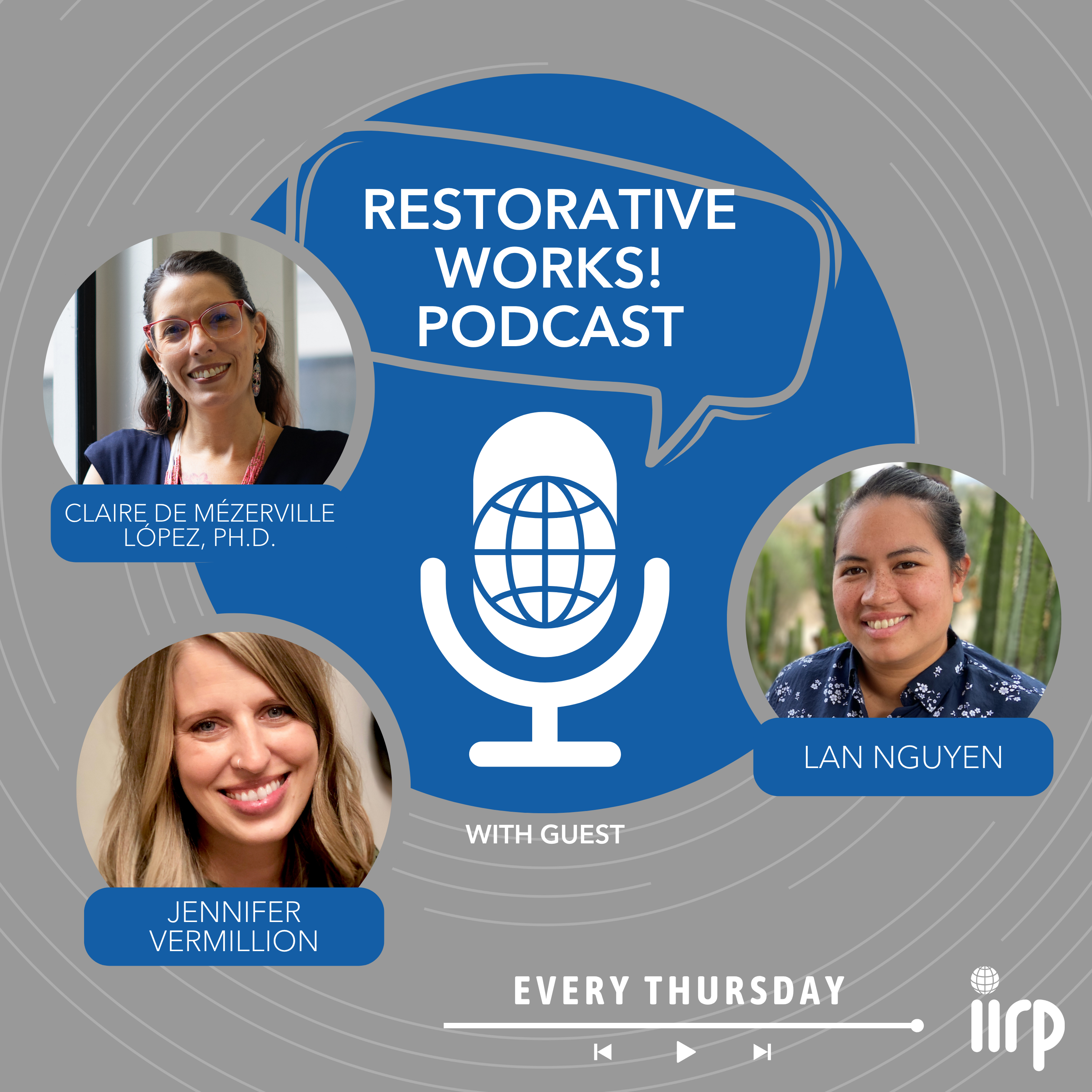 The Sustainability Myth: What Schools Get Wrong About Restorative Practices 07.05.2026 23минWe are joined by Lan Nguyen and Jennifer Vermillion, two restorative justice leaders who take us beyond surface-level change to discover what it truly takes to sustain restorative practices in schools and communities across complex educational systems. Together, they unpack a critical tension facing educators and administrators today: why restorative practices are widely embraced, yet so difficult to sustain. Lan challenges the urgency-driven culture that dominates schools, calling for a strategic shift that asks school leadership to do less, go deeper, and prioritize meaningful transformation over constant initiative overload. Jennifer builds on this foundation, emphasizing embodiment over checkbox implementation. She highlights that educators are often expected to practice restoration without ever experiencing it. The result? Burnout, skepticism, and initiatives that fade fast. She argues that real change begins when individuals and systems align and when restorative practices are lived, not just learned. Jennifer is a project specialist with the San Diego County Office of Education, providing professional learning and coaching on restorative practices and implementation. Before working with the County Office, Jennifer spent 5 years with a non-profit, supporting schools in San Diego with their restorative practices implementation, training, and student leadership initiatives. She provided direct services in addressing conflict issues between students, families, and school staff through a restorative justice model that kept youth out of the justice system. She received her bachelor's degree in psychology and her master's degree in peace and justice studies. Lan is a futurist, educator, and leader who is passionate about designing and implementing more liberatory ways of engaging, teaching, and leading in schools. In her work, she critiques and examines systems of power, applies participatory and humanizing approaches to systems change, and uses a decolonial lens to understand issues of educational and social inequity. Lan has held diverse roles in K-12 education, supporting local, statewide, and national projects on community engagement and school climate. She currently supports restorative justice practice implementation across San Diego County at the San Diego County Office of Education. Tune in to walk away with actionable insights on implementing restorative justice with fidelity, building educator buy-in, and creating conditions for sustainable change.
Слични подкасти


Популаран у
Овај подкаст се појављује и у подкаст листама ових земаља.
