
Everyone Is Right
Integral Life
0
Everyone Is Right is a podcast about life, the universe, and everything, offering cutting-edge perspectives and practices to help listeners thrive in a rapidly changing world. Produced by Integral Life, it draws on integral philosophy to explore personal development, culture, and spirituality. The show's premise is that no one is smart enough to be wrong all the time, so it gives serious airtime to a wide range of viewpoints. Episodes typically feature conversations with thinkers, teachers, and practitioners working at the edges of consciousness and culture.
Епизоде
-
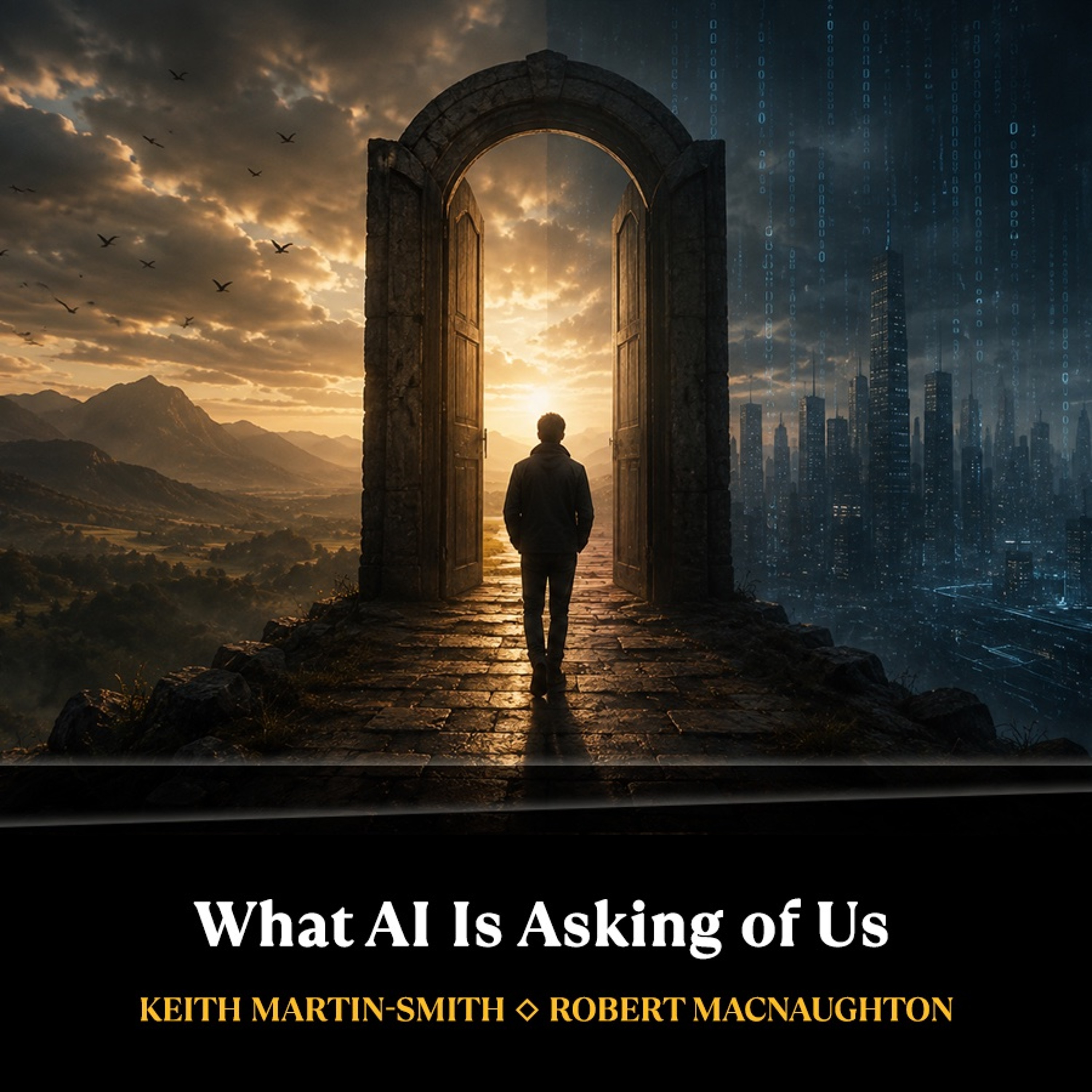 What AI Is Asking of Us (Keith Martin-Smith and Robert MacNaughton) 21.08.2026 1ч 21минRobert McNaughton is an engineer by training who went to Naropa for music and contemplative psychology, and has followed AI for more than twenty years from two seats at once — cognitive science and contemplative practice. He and Keith Martin-Smith work through what right relationship with a technology nobody designed actually asks of us: the risks worth naming precisely, the ones we invent when we are frightened, and the human capacities that just became the scarce resource. Watch the full discussion here: https://integrallife.com/experience/what-ai-wants-from-us/
 -
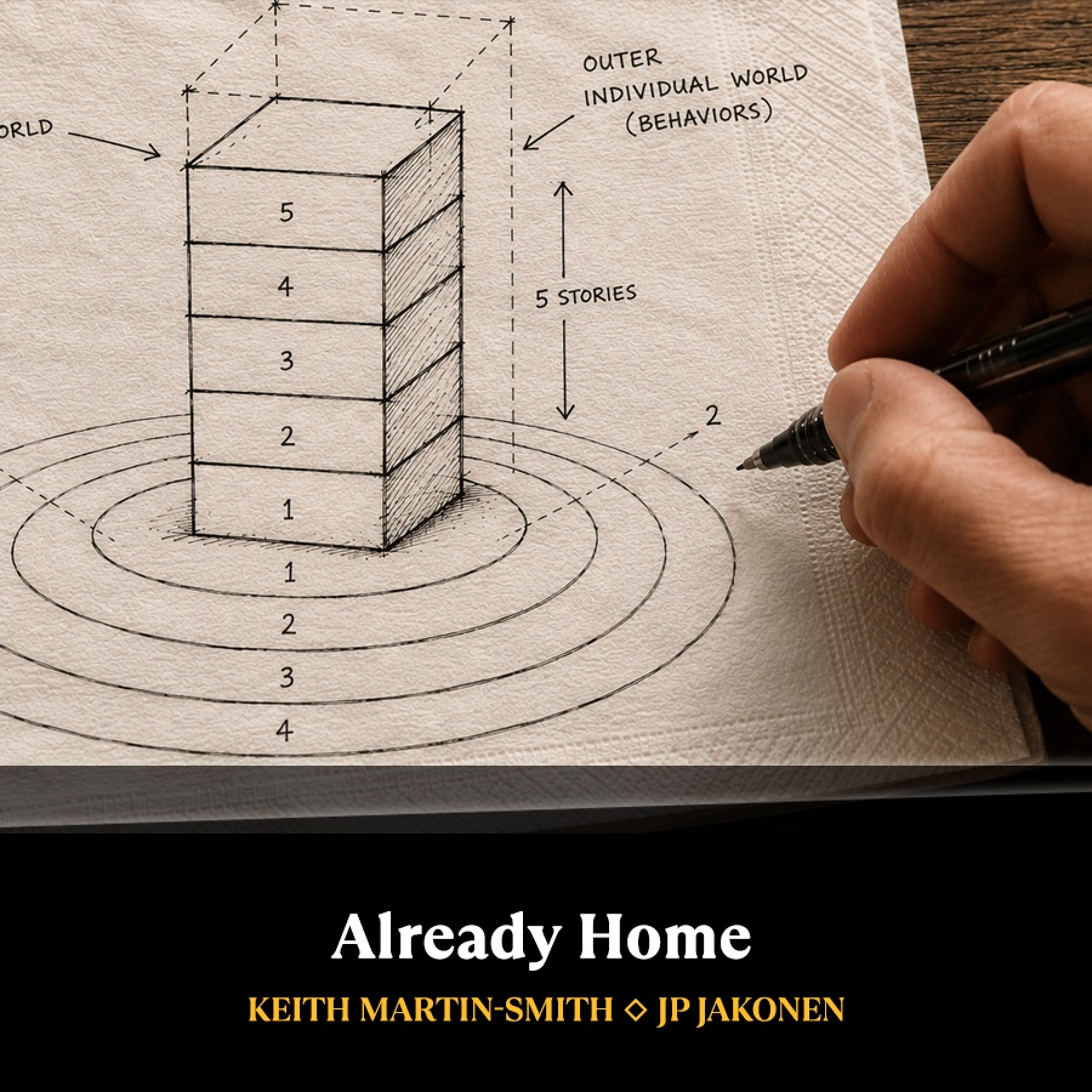 Already Home: What Happens After Awakening? 22.07.2026 1ч 16минDevelopmental coach Keith Martin-Smith and integral scholar JP Jakonen trade awakening stories — a satori in a sauna, a breakdown in a kitchen — and land on what actually matters once the self is seen through: cleaning up your shadow, and remembering to enjoy the joke. This is a conversation for anyone who has tasted awakening and asked, "…now what?" Waking up isn't the finish line — it leaves the conditioned self, with all its traumas and blind spots, fully intact. Keith and JP map the work that remains: waking up, cleaning up, and the part most teachers skip — joying up. Drawing on Ken Wilber's Integral model, Zen koans, and the Fourth Way, they explore why suffering is mostly the conviction that "someone's home," how nonduality meets shadow work, and JP's teacher Junpo's charge: "Do not fail to awaken — and do not fail to live."
 -
 Is AI Stealing Your Imagination? 02.07.2026 30минKeith Martin-Smith opens a new run of AI talks by wrestling with Abby Awomosu's provocative essay "Your Imagination Was Always Empire's Last Frontier," which argues the empires of AI aren't after your work or your reasoning — they're after the part of you that dreams. Keith takes the argument seriously, praises what's true in it, then maps exactly where it overreaches, using an integral lens that refuses both the doomer and the evangelist. Along the way: why a faculty left idle goes quiet, the delicious irony of an anti-AI essay written by AI, the case for modernity's gifts alongside its harms, the shadow hidden inside a righteous critique, and what "conscious participation" with AI actually looks like. AI is our child — carrying our brilliance and our greed in equal measure, a tool whose worth reflects the skill of the hand that wields it. Whether you're an AI skeptic, an enthusiast, or somewhere in the confused middle, this talk offers a way to hold the whole picture without collapsing into fear or hype.
 -
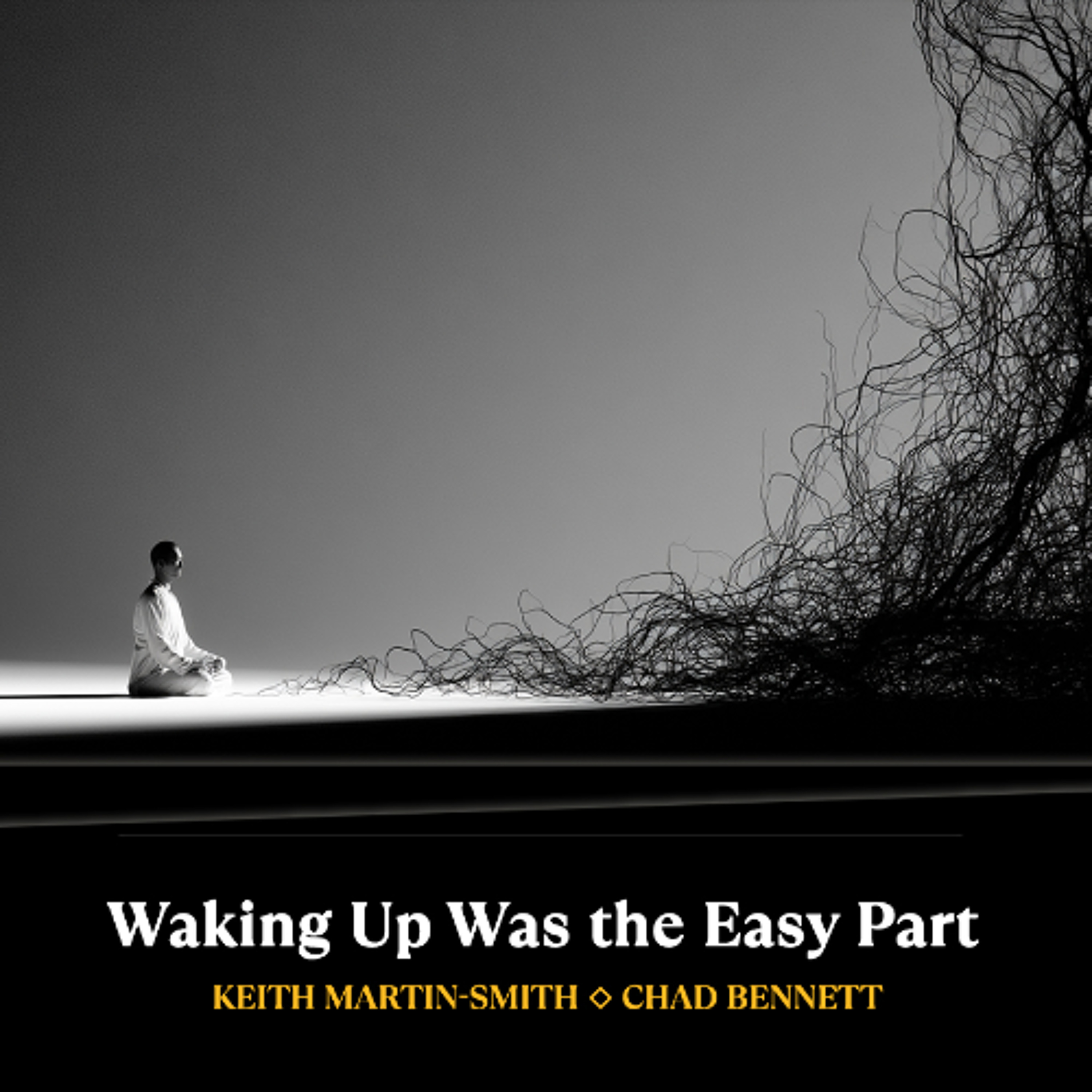 Waking Up Was the Easy Part (Chad Bennett & Keith Martin-Smith) 29.05.2026 1ч 15минWhat happens when two old Dharma brothers — both Zen priests, both former solitary practitioners, both veterans of decades on the cushion — sit down with no script and simply follow what's alive between them? This conversation is the answer. Keith Martin-Smith welcomes Chad Bennett, a Zen priest, former psychotherapist, and founder of Mitra, a practice community built around spiritual friendship and what he calls transformative companionship. Chad left the title "psychotherapist" behind for a pointed reason: he grew weary of the Western habit of turning everything — especially ourselves — into objects to be diagnosed and fixed. Mitra is his attempt to begin from wholeness rather than brokenness, though he's quick to warn that telling someone they're whole when they feel shattered only deepens the wound. The art is opening the field so wide that the broken feeling is fully allowed — because that permission is itself the medicine. At the heart of the episode is Chad's conviction that waking up, growing up, and cleaning up are not three separate projects to complete in sequence, but a single braided unfoldment that arrives all at once, in the same ordinary breath. To show rather than tell, he guides Keith and the live audience through a two-part inquiry meditation — first dissolving the boundary between body and earth, then sitting with 13.8 billion years of cosmic history at your back and an unformed future ahead, until you feel yourself less as a fixed noun and more as Whitehead's "creative advance into novelty," surfing the front edge of now. From there the conversation ranges widely and goes deep: the difference between including experience and merely indulging it; why parts work risks freezing us into permanent fragmentation, and how a "frozen node of consciousness" can come to recognize itself as the whole; and the hard truth that awakening which skips the shadow will eventually collapse, no matter how complete it feels. Keith offers two unforgettable first-person stories — a sudden flood of divine love before a statue of Christ, and a roadside moment when a lifelong inner voice de-fused into awareness, surfacing a buried memory — to illustrate that without direct experience, the teachings are just philosophy. Along the way: the "right kind of heart" and why most people don't try hard enough; self-healing, self-awakening systems; how genuine peer friendship dissolves the projection that haunts most teacher-student relationships; and what it means to befriend — as a verb — in a culture Chad calls a "desert of objectification." Equal parts teaching, practice, and the easy warmth of true Kalyana Mitra, this is a conversation about meeting the whole messy braid of being human — and discovering there was never anywhere else to go.
 -
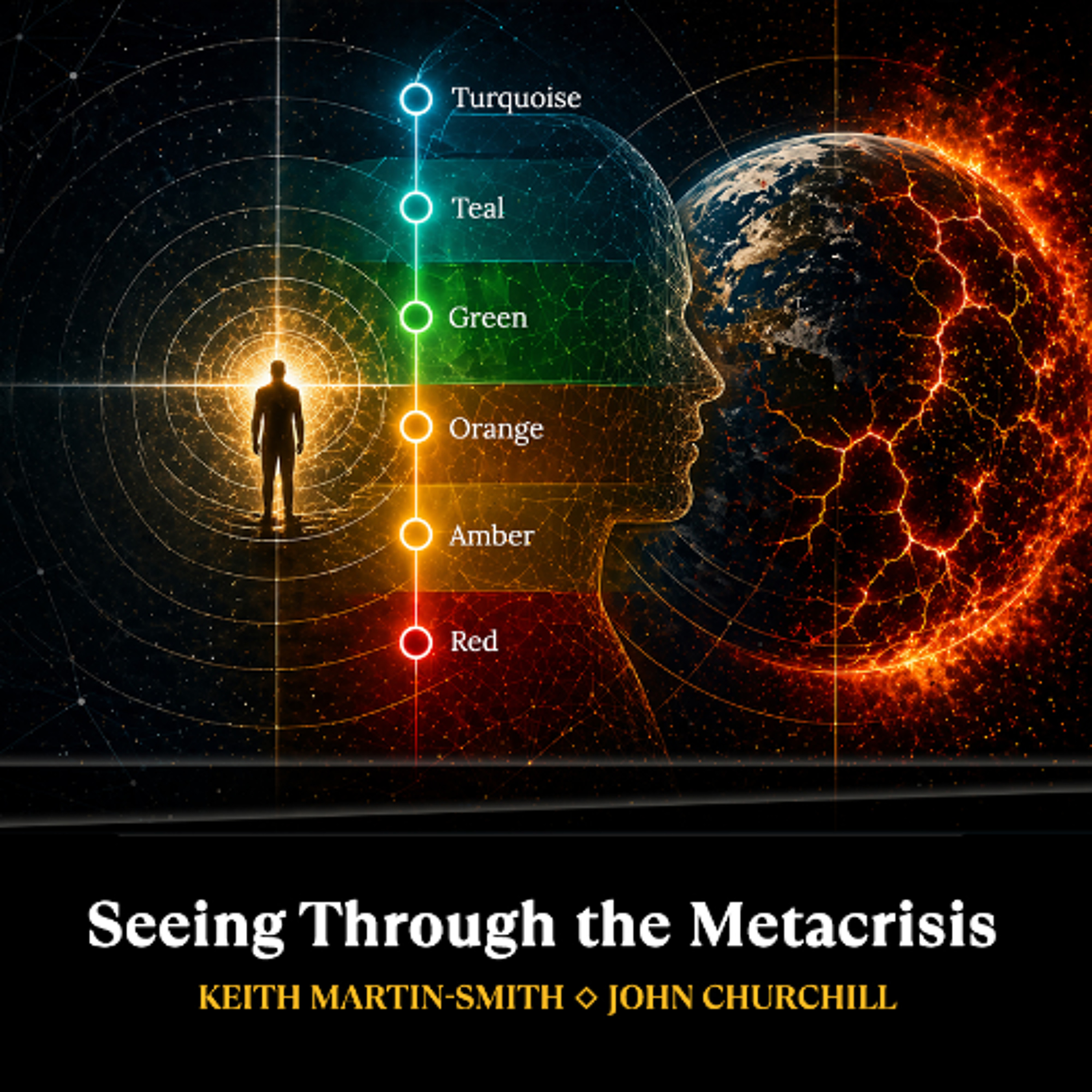 Seeing Through the Metacrisis 24.04.2026 1ч 18минSeeing Through the Metacrisis by Integral Life
 -
 Part 1: Origins: — The Day It All Came Together 07.04.2026 33минPart 1: Origins: — The Day It All Came Together by Integral Life
 -
 Immigration and the Dangers of Political Tribalism 07.04.2026 38минImmigration and the Dangers of Political Tribalism by Integral Life
 -
 Five Reasons You're Not Enlightened (Ken Wilber) 07.04.2026 56минFive Reasons You're Not Enlightened (Ken Wilber) by Integral Life
 -
 Part 1: Gross State Dysfunctions 07.04.2026 11минPart 1: Gross State Dysfunctions by Integral Life
 -
 Part 1: How the Hierarchy Within Can Heal the Hierarchy Without 07.04.2026 27минPart 1: How the Hierarchy Within Can Heal the Hierarchy Without by Integral Life
 -
 Part 1: The Timeless Love of Ken and Treya 07.04.2026 57минPart 1: The Timeless Love of Ken and Treya by Integral Life
 -
 Part 1: The Race Between Consciousness and Catastrophe 07.04.2026 20минPart 1: The Race Between Consciousness and Catastrophe by Integral Life
 -
 Part 1: Integrating Unity and Diversity 07.04.2026 31минPart 1: Integrating Unity and Diversity by Integral Life
 -
 Part 1: Awakening Shakti 07.04.2026 22минPart 1: Awakening Shakti by Integral Life
 -
 Introducing Keith Witt 07.04.2026 14минIntroducing Keith Witt by Integral Life
 -
 Awakening Through the Body 20.03.2026 1ч 25минAwakening Through the Body by Integral Life
 -
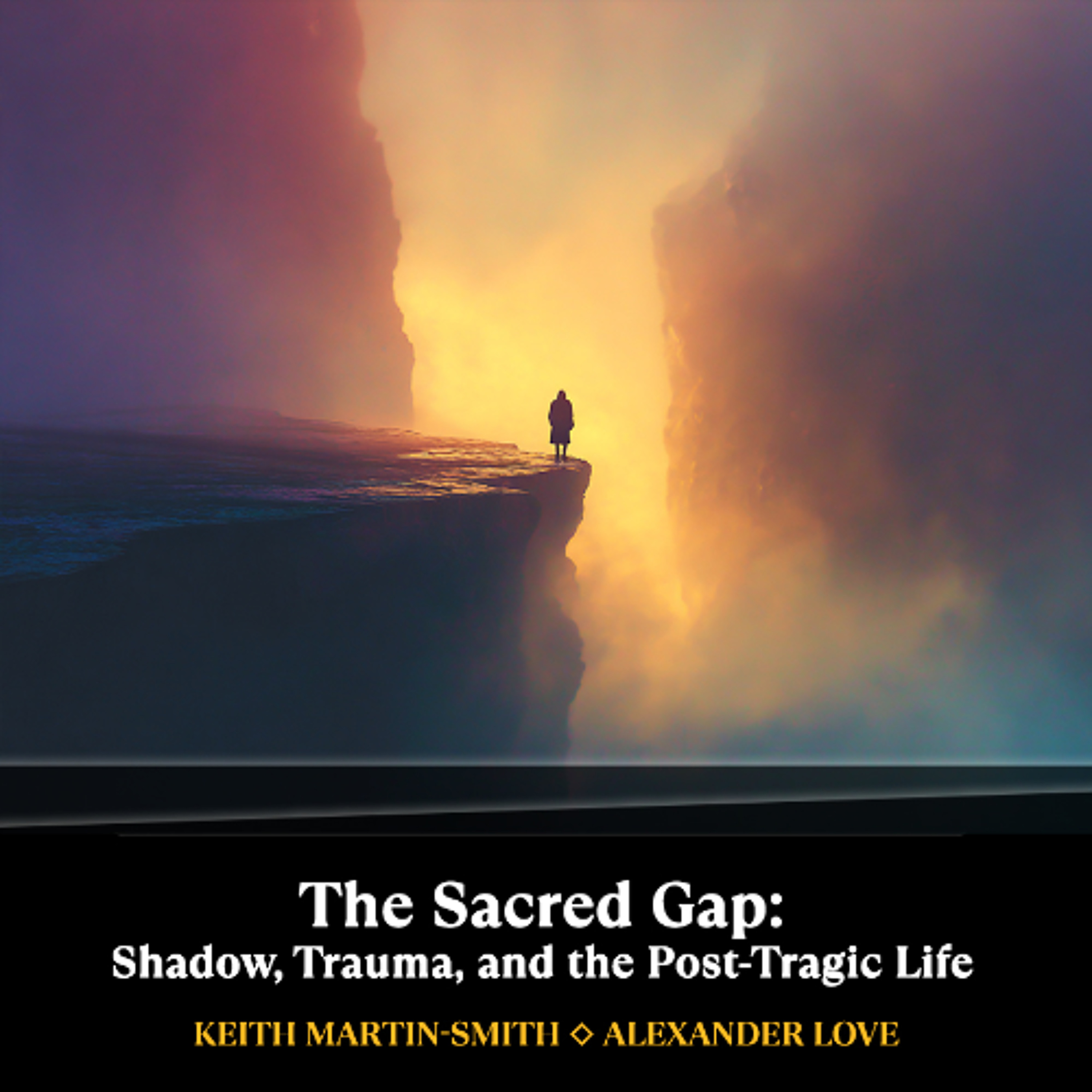 The Sacred Gap: Shadow, Trauma, and the Post-Tragic Life 19.02.2026 1ч 27минWhat makes human suffering so different from anything else in the animal kingdom? And what makes it so potentially transformative? In this deeply moving episode, Keith Martin-Smith sits down with developmental coach, acupuncturist, and shadow work facilitator Alexander Love to explore the foundational architecture of the human psyche — how shadow is formed, why it has to be, and what becomes possible when we learn to work with it rather than around it. Learn more about Alexander's Lumina Process here: https://newfield-learning-collective.teachable.com/p/lumina-level-one26?affcode=49153_yewd1dbc
 -
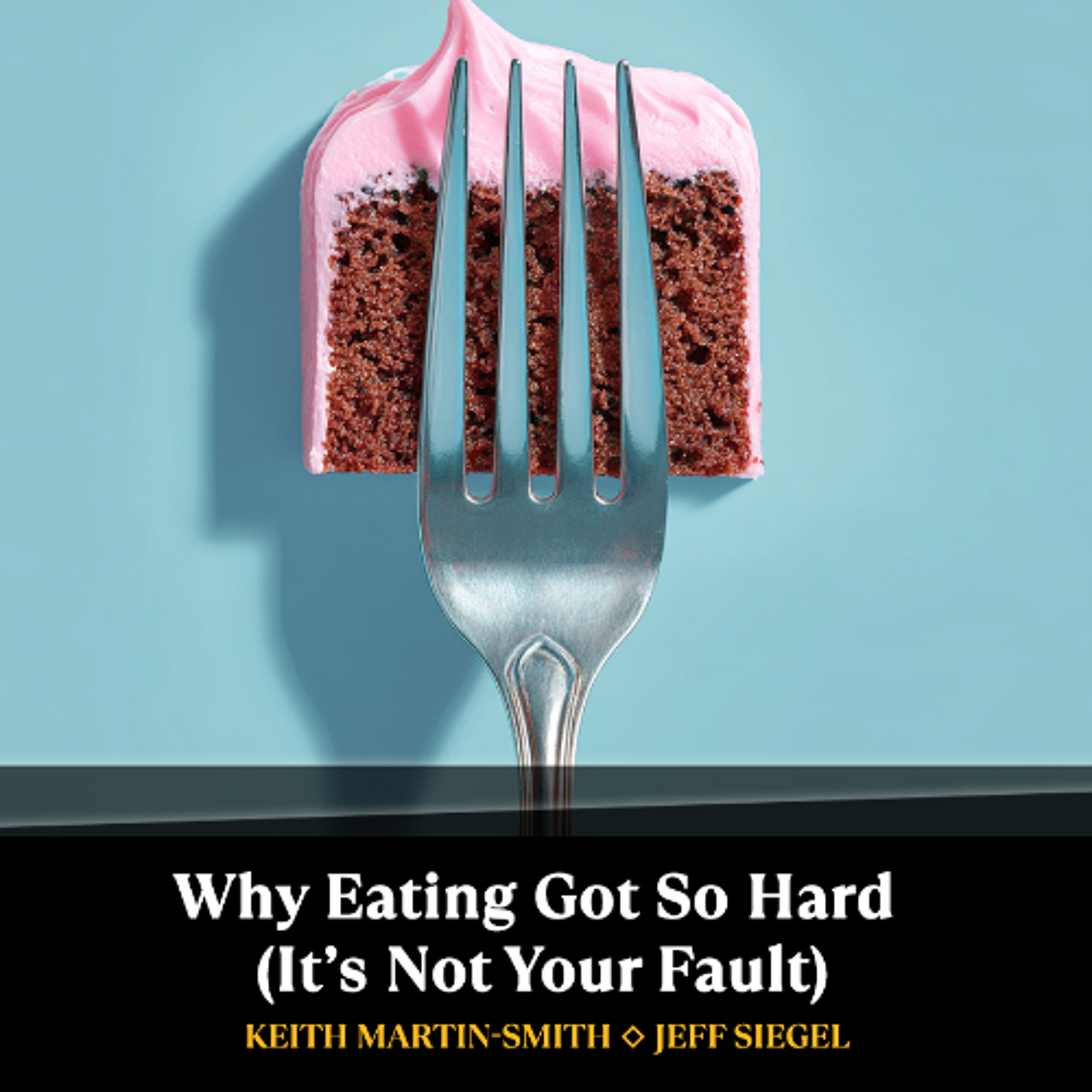 Why Eating Got So Hard (It’s Not Your Fault) 30.01.2026 1ч 14минThis episode explores what it means to eat sanely and joyfully in an age of ultra-processed food, GLP-1 drugs, and endless conflicting nutrition advice — through the lens of Jeff Siegel’s “Eating 2.0” and Integral theory. Jeff begins with his own origin story: as a teenager he developed severe anorexia, dropping to a dangerously low weight while locked in a “civil war” between his mind and body. That crisis sent him on a long journey through neuroscience, behavioral biology, Eastern philosophy, and eventually Integral theory as he tried to understand what had gone so wrong in his relationship with food—and how to help others avoid the same fate. Out of this comes a view of eating that is biological and psychological, personal and cultural, individual and systemic all at once. Using the four-quadrant map (inner/outer, individual/collective), Jeff and Keith reframe eating as a fundamentally integral affair. There’s the chemistry of food and metabolism (UR), our inner stories and emotions around eating and body image (UL), the cultures and microcultures that tell us what’s “normal” or desirable (LL), and the wider food system of industrial agriculture, subsidies, marketing, and access (LR). Any real change, they argue, has to acknowledge all four, rather than reducing the problem to “just your macros,” “just diet culture,” or “just Big Food.” At the heart of the conversation is Jeff’s “inner eaters” model: a cast of five parts—Survival, Pleasure, Social, Strategic, and Ecological eaters—each corresponding to different developmental needs and values. The survival eater wants basic nourishment and regulation; the pleasure eater craves enjoyment and immediacy; the social eater longs for belonging and ritual; the strategic eater optimizes for performance and control; and the ecological eater cares about ethics, animals, and the planet. Most of us over-identify with one or two of these and pathologize the rest, which leads to predictable distortions—rigidity, bingeing, moralizing, or burnout. Integral eating means recognizing who’s “holding the fork” in any given moment and learning to coordinate these voices under a wiser inner leadership. The episode then locates these inner dynamics inside what Jeff calls “Food 2.0”: a radically novel, engineered food environment built to be irresistible, effortless, and endless. Ultra-processed products, omnipresent snacking, and algorithmic food media are not neutral—they are designed to capture our pleasure eater and overwhelm our survival eater’s signals. Against this backdrop, the usual moralizing about “willpower” looks naïve. Instead, Jeff emphasizes designing environments, habits, and inner agreements that make it easier to stay centered in a world of superabundance. GLP-1 drugs (Ozempic, Wegovy, etc.) enter as both a genuine breakthrough and a test of our maturity. For some, these medications finally quiet a lifetime of intrusive food noise; for others, they risk becoming another one-dimensional fix that ignores deeper psychological, cultural, and systemic factors. Jeff walks through how GLP-1s interact with each inner eater, and argues that the real opportunity is to use the pharmacological breathing room to re-educate taste, renegotiate social patterns, and embed tech within a broader upgrade in sleep, stress, movement, and meaning—rather than outsourcing the entire project of eating to pharma.
 -
 How to Build a Life Worth Living 18.12.2025 40минHow to Build a Life Worth Living by Integral Life
 -
 From Attainment to Attunement 07.11.2025 1ч 27минClick here to learn more: https://integrallife.com/attunement Keith Martin-Smith and David Arrell diagnose the core pathology of contemporary life: we're living in an attainment culture that measures worth through accumulation—more status, more recognition, more stuff—while starving the qualities that actually make life worth living. The result? Epidemic levels of anxiety, polarization, narcissism, and a quiet desperation that no amount of productivity hacks or self-optimization can touch. The alternative isn't another framework to add to your collection. It's a fundamental reorientation toward attunement culture—a shift from quantity to quality, from getting to becoming, from conquest to meaning. David lays out the architecture of this shift across three temporal dimensions: HEALTH (The Past): Most of us are operating from developmental anchors—unconscious wounds and reactive patterns that keep us stuck at earlier stages of maturity. When you criticize, control, or comply automatically, you're not responding to what's in front of you; you're responding from an old script. The work is to turn toward these patterns with curiosity, reclaim the energy locked there, and stop letting the past hijack your present. DEPTH (The Present): Your attention is under siege. Billions of dollars have been spent engineering super-normal stimuli to keep you distracted, metabolically aroused, and scrolling. But presence—the capacity to remain grounded when life gets turbulent—is the foundation of wisdom. Character and virtue aren't abstractions; they're your ability to tolerate weather without capsizing. The fruits of the spirit (love, joy, peace, patience, kindness, goodness, faithfulness, gentleness, self-control) emerge spontaneously when you create the conditions, like apples from a healthy tree. GROWTH (The Future): Beyond your current capacities are your leading edges—the places where you're stretching into new territory. Growth means tolerating the unknown, throwing aspirational grappling hooks into territory you can't yet see clearly, and expanding your container of authenticity. It's not about becoming someone else; it's about becoming more fully who you already are. Throughout the conversation, Keith and David return to a revolutionary foundation: dignity culture. Unlike respect (which must be earned), dignity simply is—every human being has equal claim to worth by virtue of being human. This creates common ground from which we can build toward higher ground. It dissolves the false choice between dominator hierarchies and victim narratives, between attainment Olympics and oppression Olympics. --- Ideas don't transform lives — lived practice does. You can understand everything David and Keith discussed intellectually and still show up tomorrow exactly as you did today: distracted, reactive, caught in the same patterns, serving the same attainment culture that's been grinding you down. Click here to learn more: https://integrallife.com/attunement
Слични подкасти


Популаран у
Овај подкаст се појављује и у подкаст листама ових земаља.
