
Africa Climate Conversations.
Sophie Mbugua
0
Africa Climate Conversations is a podcast that shares climate and environmental stories from an African perspective. Hosted by Kenyan environmental journalist Sophie Mbugua, it features in-depth conversations with experts and human-interest reports from the field. Launched in 2022, the show aims to fill gaps in African climate reporting and amplify African narratives. Listeners can also watch related content on the Africa Climate Conversations YouTube channel.
Епизоде
-
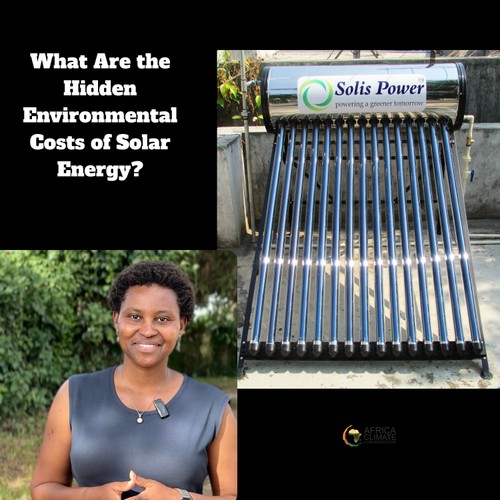 What Are the Hidden Environmental Costs of Solar Energy? 18.12.2025 13минWind, solar, hydro, geothermal, and biofuels are some of the renewable energy resources. They are said to be green because they come from natural sources, are constantly replenished, and produce fewer greenhouse gas emissions compared to coal, oil, and gas. But, if these technologies end up in open landfills after their life, with the minerals thy are made of polluting water, and soils, are they truly green?On this episode, let's explore the renewable energy hidden environmental costs of Solar Energy
 -
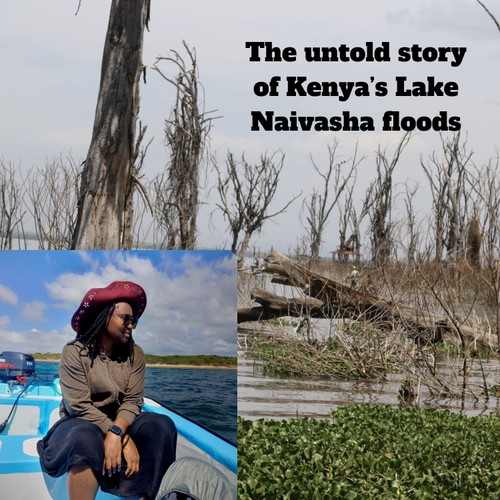 The untold story of Kenya's Lake Naivasha floods. 02.12.2025 18минThe area around Kenya's Lake Naivasha, including Kihoto, is considered part of the broader Lake Naivasha wetland ecosystem, as it is within its riparian land. On this episode we look into the history of flooding in Lake Naivasha and how settlements like Kihoto came about, as well as why this wetland is of huge importance. But first, what are wetlands, and why are they important?
 -
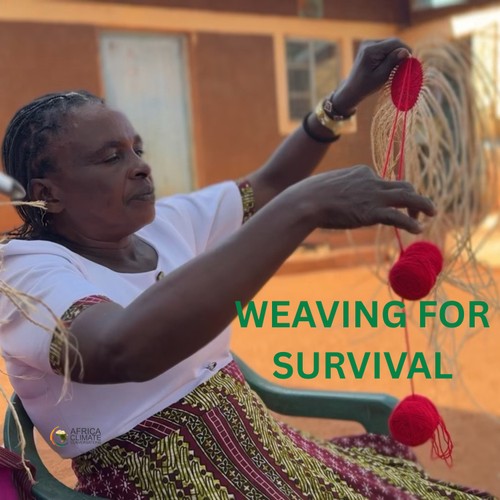 Weaving for Survival. 10.07.2025 20минAs the climate crisis continues, come with me to Syethe village, southeast of Kenya's capital, Nairobi where we meet a group of women earning a living by weaving and selling handbags in addition to farming. With these easily accessible skills, materials and capitalising on technologies such as WhatsApp how are they helping breed a new culture of #resilience in times of changing agricultural fortunes? Let's find out together!
 -
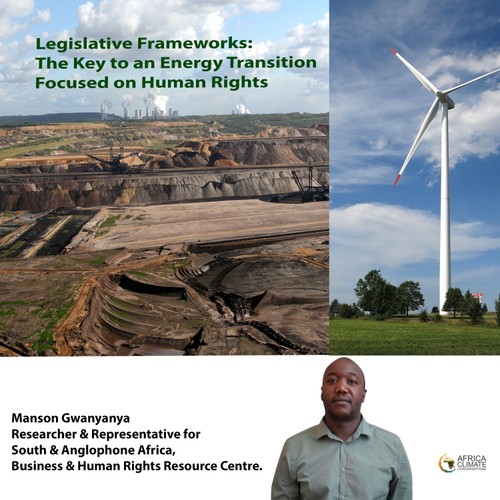 Legislative Frameworks: The Key to an Energy Transition Focused on Human Rights 20.08.2024 36минClear frameworks for community benefit sharing in the mining and renewable energy sectors are essential.However, Manson Gwanyanya, the researcher and representative for South and Anglophone Africa at the Business & Human Rights Resource Centre, told the African Climate Conversations podcast that implementing these existing frameworks is key to delivering a shared prosperity for the communities whose land and resources are crucial for the energy transition in Africa.".Demand for critical minerals is set to grow by three and a half times by 2030 as the world transitions from fossil fuels to renewable energy in order to reduce global carbon dioxide emissions to net zero by 2050. The African continent is home to massive transition mineral resource bases and enormous renewable energy potential, given its vast tracts of open land and favourable solar and wind conditions. But how well prepared is the continent for the critical mineral and renewable investment boom?
 -
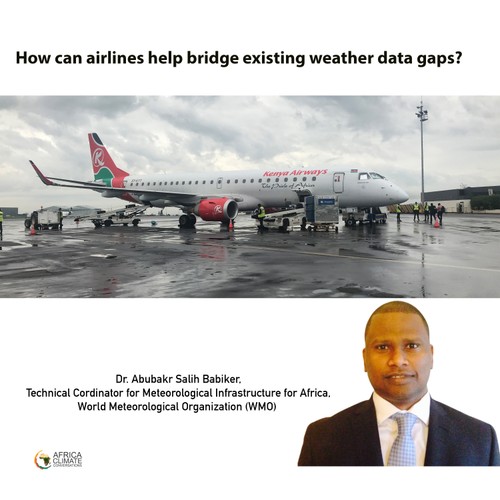 How can airlines help bridge existing weather data gaps? 06.08.2024 29минSensors on aeroplanes measure wind speed, humidity, and temperature, which is crucial for weather forecasting. As climate-related extreme events increase in frequency and intensity, effective weather-related infrastructure is critical not just for the agriculture sector but also development sectors such as agriculture, industries, and communities, which require timely, accurate data to adapt to the changing climate and mitigate future losses. On today's episode, Dr. Abubakr Salih Babiker, a Technical Coordinator for Meteorological Infrastructure for Africa at the World Meteorological Organisation (WMO), explains the role airlines can play in bridging the current gaps in weather and climate data.
 -
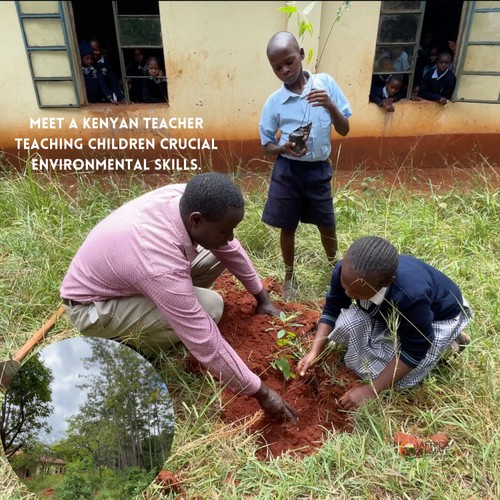 Meet a Kenyan teacher teaching children crucial environmental skills. 11.06.2024 18минOur children are the next generation. We, as humans, pass on our legacy to them, whether good or bad. The environment underpins humans' survival today and tomorrow. As the world warms, it's important to remember the vital role the environment's natural resources, such as forests, play in balancing human activities such as the burning of coal and other fossil fuels and reducing the amount of carbon dioxide released into the atmosphere.Hence, teaching our children about the environment and the need to protect it at an early age is critical. Environmental education helps children understand the importance of preserving our natural resources and provides them with the tools to become responsible environmental stewards.Teacher Nzuu Boniface, the environmental club leader at the Msoa SDA primary school in Makueni County, Kenya has been teaching pupils to protect the environment by planting trees and handling waste materials. What are the benefits?
 -
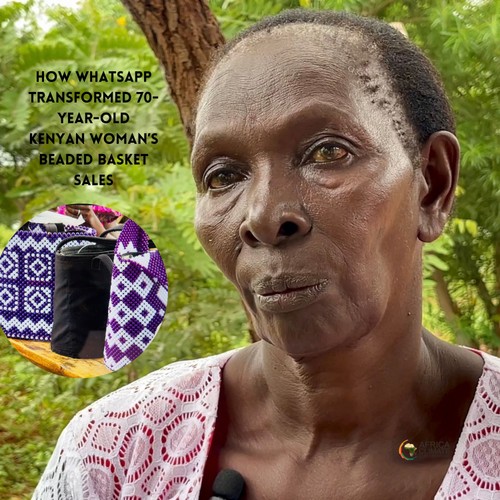 How WhatsApp transformed 70-year-old Kenyan woman's beaded basket sales 28.05.2024 15минThis week, I was visiting a town in Makueni County, located in the southeastern part of Kenya. About an hour's drive from Makueni's capital town Wote, I met a 70-year-old lady who, after a severe three-year drought hit the village, learned how to weave beaded baskets. She is relying on WhatsApp, her family, and Facebook to make sales. Have a listen to our conversation.
 -
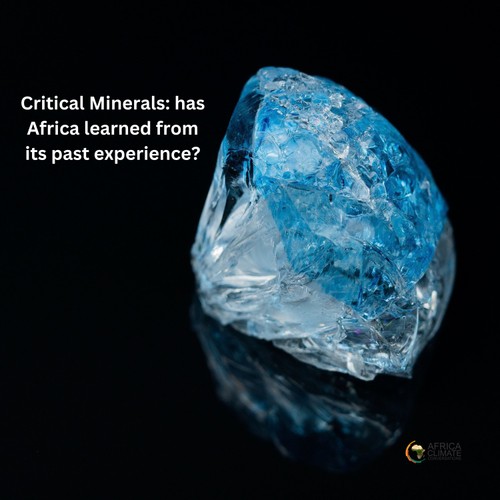 Critical Minerals: has Africa learned from its past experience? 14.05.2024 18минAfrican nations are blessed with 30% of the world's critical minerals. Mineral that the world needs to develop solar panels, wind turbines, renewable energy storage, electric vehicles, defence infrastructures, communication infrastructure, digital economy and many more.However, past mining activities since colonial era has taught Africa taught lessons. Minerals, particularly diamonds, are widely believed to have been the main factor at the root of Sierra Leone's decade-long civil war in the 1990s. In addition to the Sierra Leone conflict diamond drive civil war in Angola, and the Democratic republic of Congo led to the UN definition of blood diamonds in the 1990's. In 2020, the World Bank estimated the production of minerals such as graphite, lithium, nickel and cobalt, could increase by nearly 500% by 2050 to meet the growing demand for clean energy technologies. Therefore, a world rush to acquiring critical minerals required for these green energy technologies is inevitable.But, has Africa learned from its past experiences? Should Africa move at the same pace as the rest of the world, or should it pace itself?
 -
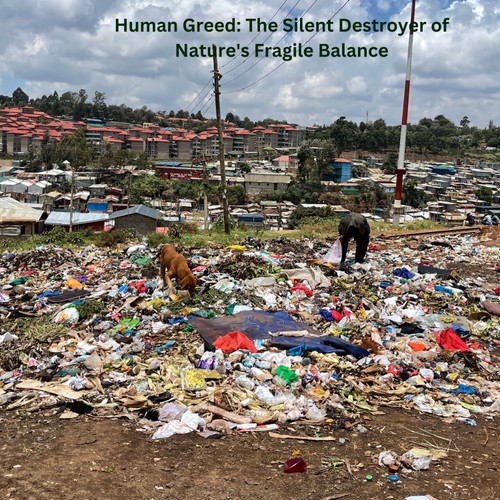 Human Greed: The Silent Destroyer of Nature's Fragile Balance 23.04.2024 23минHumanly speaking, forests, minerals, oceans, water bodies, and other natural resources are seen as infinite by the human eye. Infinite in the sense that there are more resources to be mined or prospected for, more land to be utilized, a vast ocean and waterbodies that can handle enormous levels of pollution, vast underground water resources that can never be drained, and billions of fish to be caught.This attitude that the earth has an unlimited capacity and the insatiable human nature to get as much as we can out of the earth for ourselves regardless of the harm we are causing the ecosystem is what I term as greed, and as the late professor Wangari Maathai once mentioned that, "this human greed have created so many of the deep ecological wounds visible across the world today."Can we restore balance?
 -
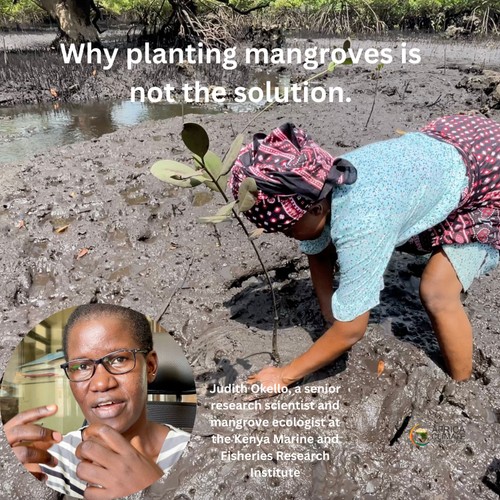 Why planting mangroves is not the solution. 09.04.2024 42минMangroves are versatile and flexible forests that can cope with enormous disturbances. Dr. Judith Okello, a senior research scientist and mangrove ecologist at the Kenya Marine and Fisheries Research Institute, says that when sedimentation occurs, the mangroves can form a new cable rooting system and migrate when there is space on land. However, due to human influence, global temperatures continue to rise, causing frequent and sporadic weather-related events. When such events occur, they lead to sudden and frequent sedimentation, and the mangroves can get fatigued, resulting in massive diebacks.To help the mangroves cope, communities have been encouraged to plant. Instead of planting these mangroves, Dr. Okello advocates for a holistic ecological approach that solves the challenges facing mangrove forests. But how did we get here? Why is planting mangroves not the solution to restoring the degraded ecosystems?
 -
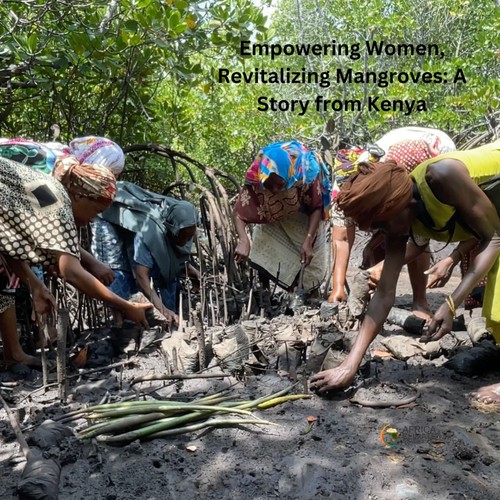 Empowering Women, Revitalizing Mangroves: A Story from Kenya 26.03.2024 21минFeatured today are a group of ladies who are establishing a livelihood by planting mangroves. About sixty kilometres south of Mombasa in Kwale County, in the small fishing town of Msambweni, a group of fifteen women from the Munje village joined together during the COVID-19 outbreak. A community-based organisation with 30 members has developed out of them after around four years. They are planting mangrove propagules along the southern coast of Kenya, around Vanga-Funzi Bay, to preserve a portion of mangrove forest. Additionally, the women are enhancing their livelihoods through activities such as beekeeping, eco-tourism, waste management, conservation education, and basket weaving. Approximately 400,000 propagules had been planted in nurseries by the end of last year by the women.
 -
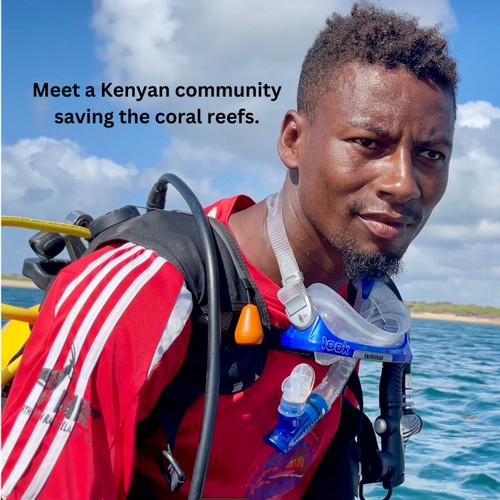 Meet a Kenyan community saving the coral reefs. 05.03.2024 34минToday we meet a Kenyan community saving the coral reefs along the Kenyan coast. Coral reefs along the Lamu-Kiunga area in Lamu County, a small archipelago north of Mombasa in Kenya, have degraded over the years. Pate Island, the largest island in the Lamu Archipelago, lies between the towns of Lamu and Kiunga, which depend on fishing. However, fishery productivity depends on healthy corals. How did the coral degradation impact these communities' livelihoods? What degraded these corals? What are these communities doing about it?
 -
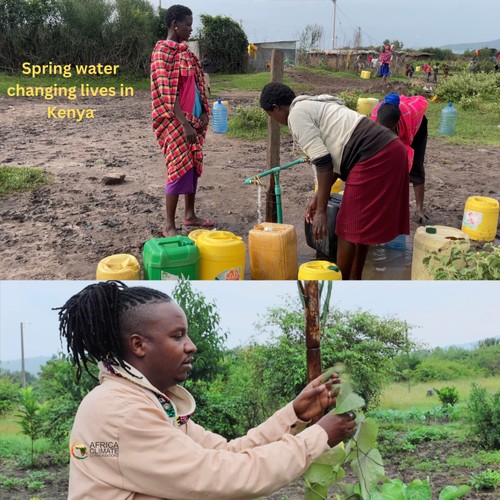 Spring water changing lives in Kenya. 13.02.2024 18минWomen in Olailamutia, a town in Kenya's Narok County, have had problems with diarrhoea, stomachaches, and skin rashes for many years. Having access to clean drinking water from a spring is helping to get rid of these problems. Families here got water to drink from a river where they also took baths. The river in question has been contaminated due to chemical use, upstream intensive irrigation, and the discharge of untreated sewage into which they bathed their children. In a town that only gets its food from outside sources, having access to water also makes it possible to grow food.Narok County is one of 21 dry or semi-arid counties in Kenya. It is home to the beautiful Masai Mara. Extreme weather events like storms and droughts have also become more common and stronger.
 -
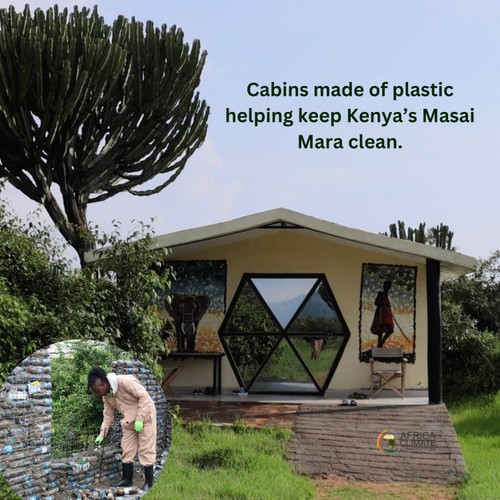 Cabins made of plastic helping keep Kenya's Masai Mara clean. 30.01.2024 20минIn today's episode, we meet Isaac Macharia, a Kenyan social entrepreneur who makes cabins out of plastic to keep Kenya's Masai Mara clean. In 2015, Macharia was on his usual tour-guiding routine at the Masai Mara in Kenya. It bothered him. He decided to construct cabins using not only plastic bottles, but also stashing and hiding every non-biodegradable waste you can think of—straws, broken glass bottles, clothes, beer cans, to name just a few—right in there during construction. To harden and convert the plastic bottle into a smaller brick, they add dry sand. The contractors used plastic to make the cabin roof. Contracted local women collect these bottles and fill them with sand or paper.
 -
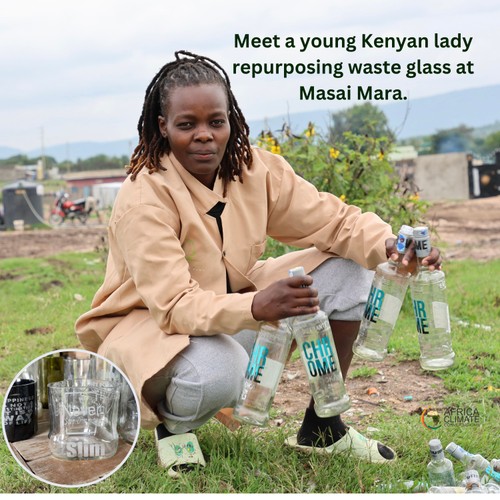 Meet a young Kenyan lady repurposing waste glass at Masai Mara. 17.01.2024 15минPicture this. It's a lovely evening. You and your loved one are seated somewhere, enjoying some juice or beer from a glass made out of liquor bottles collected from a dumping site.How does that sound? On today's episode, meet a young Kenyan lady – Mary Njoki, repurposing waste glass at Masai Mara.
 -
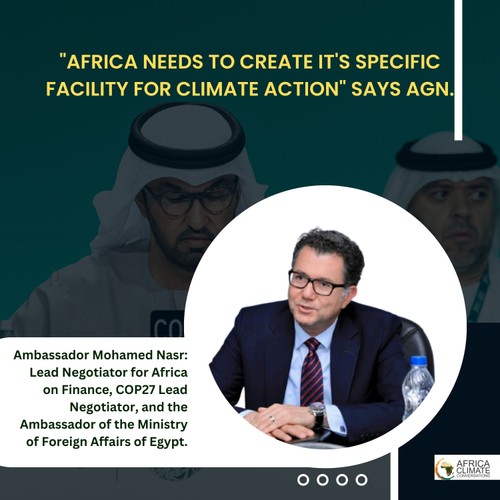 "Africa needs to create It's specific facility for climate action" says AGN. 14.12.2023 22минFor effective climate action in Africa to take shape, the African Group of negotiators lead negotiator on finance, Ambassador Mohamed Nasr, told the Africa Climate Conversations that the continent must self-assess and work on its own modalities to achieve climate action. Among the things the continent should work on is creating an Africa-specific platform outlining specific projects and programs for climate action that will collect and present all climate projects from the continent as a package.Nasr says specific projects and programs with clear needs presented to the negotiators will be easily supported "compared to what we have now which is more generic," he added.At COP28, nations embarked on the Global Stocktake (GST) to assess collective progress towards achieving the long-term goals set under the Paris agreement. The GST is assessing mitigation, adaptation, and means of implementation, considering equity and the best available science as well as loss and damage. With the GST being party-driven, there is a need for the continent to be specific on their needs and strategic to push for that means of implementation critical for climate action nationally and locally.
 -
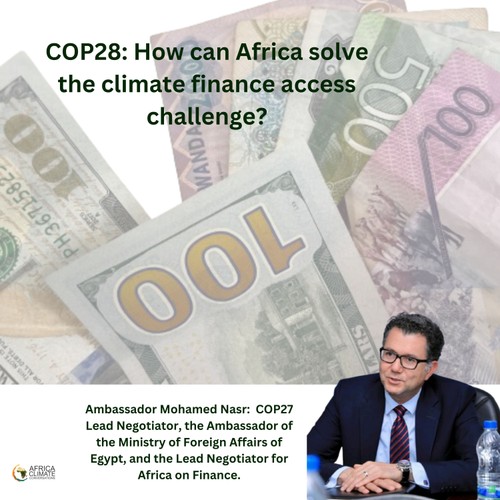 COP28: How can Africa solve the climate finance access challenge? 04.12.2023 31минThe climate finance needs of developing countries have risen way beyond the 100 billion USD promised by developed countries 15 years ago. The recent UN 2023 adaptation gap report estimates the cost of adaptation at US$215 billion per year this decade.Access to finance, including means of implementation that are technology and capacity, is a catalyst not just for development but also for adapting to climate change, averting loss and damage, mitigating further climate impacts, and building trust among developed and developing countries. But finance under the climate negotiation process had had a long process. So, on this episode with Ambassador Mohamed Nasr, who is the Africa lead negotiator on finance and COP27 lead negotiator, as the globe embarks on negotiating a New Collective Quantified Goal on Finance, we discuss how Africa can solve the climate finance access challenge, among other key issues such as global taxation and political impacts on negotiation outcomes.
 -
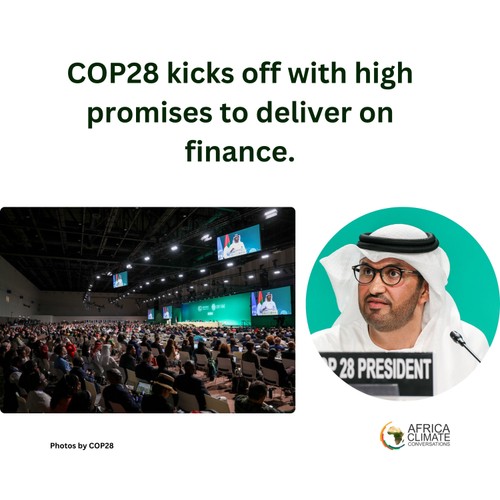 COP28 kicks off with high promises to deliver on finance. 30.11.2023 14минCOP28 takes place against the backdrop of increased financial needs to address climate change adaptation, mitigation, as well as loss and damage.Just to mention, the 2023 UNEP adaptation gap report estimates the cost of adaptation in developing countries at US$215 billion per year this decade. For Africa, the continent requires at least $56 billion annually for adaptation alone by 2030. Between 2020 and 2030, African countries will require an estimated $2.8 trillion in funding to fund the continent's conditional climate plans, or NDCs. In his speech, COP28 president Sultan Al Jaber committed to doing his part to ensure COP28 unlocks climate finance for developing nations. On loss and damage, the Presidency gave the first major milestone of COP28, delivering a historic agreement to operationalize the Fund—though the World Bank is yet to review and agree to the technical commitment conditionalities—with the UAE announcing it would commit $100 million to the Fund.
 -
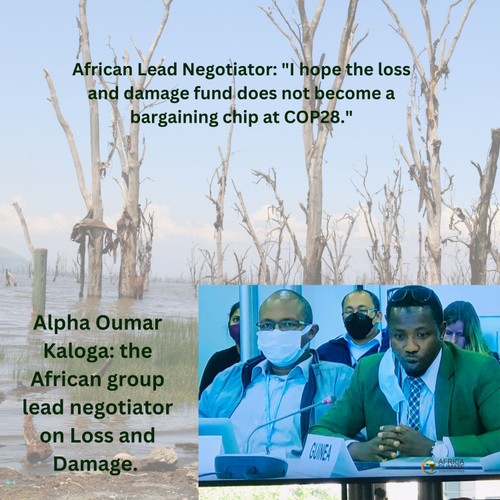 African Lead Negotiator: "I hope the loss and damage fund does not become a bargaining chip at COP28." 20.11.2023 31минA 24-member transitional committee on loss and damage issued a proposal for a new loss and damage fund ahead of the 28th UN Climate Summit (COP28) taking place in Dubai this November.According to Alpha Oumar Kaloga, the African group's lead negotiator on loss and damage, the final decision was made in a tense atmosphere; thus, there is a need to understand the status of the final decision, as the United States had objected at the last moment.Kaloga told the Africa Climate Conversations podcast that developing countries have made compromises because "we cannot abandon our people. We cannot wait any longer, and we recognise that we are in a multilateral process and must make compromises. We accepted the World Bank (a red line) as the financial intermediary fund, but only under conditions."Developing countries have been pushing for a loss and damage fund since 1991, when the Alliance of Small Island States proposed creating an international insurance pool to compensate for loss and damage.The fund is intended to help developing nations recover from losses and harm caused by climate change. It is anchored on the UNFCCC's principle of common but differentiated responsibilities and respective capabilities, which underlines that the global challenge of tackling climate change should be met in a fair and equitable manner."We want justice; we want loans to safeguard our progress, but it only takes one dramatic occurrence to undermine what has taken decades to establish." Says Kaloga.However, according to Kaloga, as part of the Paris agreement package, the world community agreed during COP21 in Paris that there would be no compensation and no culpability for loss or damage."The devil is in the details; people only see the Paris agreement, but the operational decisions, and particularly paragraph 54, speak about no liability, no compensation".However, though Article 8 of the Paris Agreement does not provide a basis for any liability or compensation, it specifies some areas of cooperation and facilitation to enhance understanding of and action to address loss and damage, such as irreversible loss and damage, slow onset processes, early warning systems, and risk management.Will the transitional committee proposal sail through at COP28, or is it likely to be a bomb? Have a listen.
 -
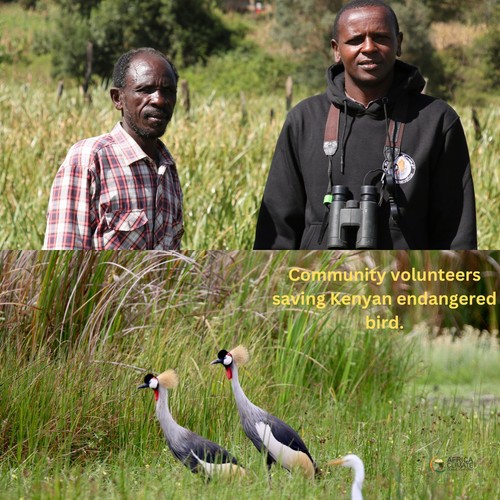 Lake Ol' Bolossat community volunteers saving Kenyan endangered bird. 31.10.2023 26минLake Ol' Bolossat is the only lake in the Kenyan highlands, situated in Nyandarua County, about a three and a half-hour drive from Kenya's capital, Nairobi. The lake is situated in the valley between the northwestern slopes of the AberdareRange of Mountains and Dundori Ridge.The lake forms the head waters of the Ewaso Ngiro North Basin, Kenya's largest basin, offering a variety of habitats ranging from open water through floating marsh and swamps to open grasslands and riverine forests along rivers and springs that feed the lake.One of the unique things about Lake Ol'Bolossat is that it has both fresh and saline waters that never mix at any given time. It's also an internationally recognised wetland as a Key Biodiversity Area. It's Kenya's 61st Important Bird Area, with over 300 bird species. It is a breeding site for endemic and endangered birds and an international flight corridor for migratory birds.Among the birds nesting here are the Grew-crowned cranes. The grey-crowned crane is classified as endangered on the IUCN Red List. These birds are non-migratory; however, they undertake local and seasonal movements and are most abundant in Uganda, Kenya, and Tanzania, according to the International Crane Foundation.On my recent trip to Nyandarua County, I caught up with George Ndungu, the Cranes Conversation Volunteer's founder. Ndungu tells us more about their work with local communities to protect these beautiful birds and benefit the locals.
Слични подкасти


Популаран у
Овај подкаст се појављује и у подкаст листама ових земаља.
