
The Clay Travis and Buck Sexton Show
iHeartPodcasts
0
The Clay Travis and Buck Sexton Show is a daily talk program that covers the biggest stories in news, politics, and current events. Hosted by Clay Travis and Buck Sexton, the show offers a blend of intelligence and humor as they discuss topics like the border crisis, cancel culture, and far-left missteps. They guide listeners through the latest headlines and hot topics with entertaining conversations and opinions.
Avsnitt
-
 Weekly Review With Clay and Buck H1 - Goo Goo Dolls vs. Macklemore 19.09.2026 36minIn Hour 1 of the Clay Travis and Buck Sexton Show, Clay and Buck cover a wide range of political, cultural, media, and public policy topics, with a major focus on FBI Director Kash Patel, falling crime rates in America, election integrity, Texas politics, free speech controversies, and the intersection of entertainment and politics. The hosts open by briefly revisiting previous discussions surrounding media personalities and cultural controversies before turning to a spirited defense of Kash Patel following a contentious Senate hearing. They praise Patel's performance before lawmakers, arguing that he forcefully pushed back against Democratic criticism while highlighting what they describe as historic success in reducing violent crime across the United States. The hosts repeatedly emphasize data showing declining murder and violent crime rates, crediting the Trump administration, the FBI, federal law enforcement efforts, and Attorney General Todd Blanche for improving public safety and making America safer than at any point in modern history. They also discuss law enforcement's role in election integrity investigations, arguing that federal oversight of election-related crimes is a legitimate function of government. A significant portion of the first hour centers on what Clay and Buck view as media underreporting of positive crime statistics. The hosts contend that historic declines in homicide rates, particularly in major cities such as Washington, D.C., are not receiving adequate coverage because the results reflect positively on President Donald Trump and his administration. They argue that lower crime rates disproportionately benefit vulnerable communities, including young Black men, and frame the administration's anti-crime initiatives as one of the most consequential public safety achievements of the modern era. The discussion also examines the increasingly combative tone of congressional oversight hearings, with the hosts suggesting that political grandstanding has largely replaced substantive policy debate. The conversation then shifts to the Texas Senate race, where Clay discusses growing financial investments and advertising activity in the state. The hosts focus on Democratic candidate James Talarico after a clip surfaces in which he names a favorite drag queen during a public interaction. Clay and Buck use the exchange to argue that Talarico is out of step with typical Texas voters and suggest that cultural issues could become influential in the election. The segment broadens into a discussion of campaign messaging, political branding, and how candidates connect with everyday voters in competitive statewide races. Later in Hour 1, the hosts dive into a broader debate about entertainment, celebrity culture, and political activism. They praise the lead singer of the Goo Goo Dolls for stating that musicians should focus on entertaining audiences rather than delivering political lectures from the stage. Clay and Buck contrast that philosophy with the actions of rapper Macklemore, whose pro-Palestinian comments during performances opening for Ed Sheeran sparked controversy. The hosts review the fallout from those remarks, including reports involving stadium owners and venue operators choosing not to host future performances. This leads to a larger discussion about free speech, private property rights, cancel culture, political protest, Israel-Gaza tensions, and artist activism. They argue that while artists have the right to express political opinions, venue owners and event organizers also have the right to determine what messages they wish to associate with their businesses. The hosts also address comments from Representative Alexandria Ocasio-Cortez regarding her criticism of Ed Sheeran and stadium owners connected to the Macklemore controversy. Clay and Buck analyze AOC's political appeal, describing her as a formidable figure within the Democratic Party and speculating about her future influence on the national stage. They discuss how political figures increasingly engage with popular culture and social media to shape public opinion and energize supporters. Throughout the hour, Clay and Buck mix political commentary with humor, including listener reactions to the ongoing Sydney Sweeney advertising controversy that has generated significant online attention. The program closes with additional discussion about whether venue owners should be responsible for content delivered by performers and whether political activism belongs in entertainment settings. Overall, Hour 1 focuses on crime reduction, law enforcement, FBI oversight, election integrity, Trump administration policies, Texas politics, free speech, celebrity activism, the Israel-Gaza debate, media coverage, and the growing overlap between politics and popular culture, while emphasizing the hosts' belief that results, public safety, and audience-focused entertainment should take precedence over political grandstanding. Make sure you never miss a second of the show by subscribing to the Clay Travis & Buck Sexton show podcast wherever you get your podcasts! ihr.fm/3InlkL8 For the latest updates from Clay & Buck, visit our website https://www.clayandbuck.com/ Connect with Clay Travis and Buck Sexton: X - https://x.com/clayandbuck FB - https://www.facebook.com/ClayandBuck/ IG - https://www.instagram.com/clayandbuck/ YouTube - https://www.youtube.com/c/clayandbuck Rumble - https://rumble.com/c/ClayandBuck TikTok - https://www.tiktok.com/@clayandbuckFollow Clay & Buck on YouTube: https://www.youtube.com/c/clayandbuckSee omnystudio.com/listener for privacy information.
 -
 Weekly Review With Clay and Buck H2 - Confronting America: What Has to Change 19.09.2026 36minHour 2 of the Clay Travis and Buck Sexton Show is dominated by an in-depth interview with Bill O’Reilly, followed by extended discussion of the growing Sydney Sweeney controversy, the state of American culture, political polarization, AI regulation, the 2026 midterm elections, and broader debates about media, personal responsibility, and modern social values. The hour blends political analysis, cultural commentary, listener calls, and discussions about the future direction of both the Republican and Democratic parties. The hour begins with Clay and Buck welcoming Bill O’Reilly to discuss his new book, Confronting America: What Has to Change? The conversation centers on President Donald Trump’s approach to artificial intelligence, data centers, surveillance technology, and regulation, with O’Reilly arguing that AI remains too new and insufficiently understood to significantly influence the upcoming midterm elections. Instead, he predicts that voters will be primarily focused on inflation, affordability, rising prices, economic concerns, and dissatisfaction with both political parties. O’Reilly contends that economic anxiety will be the driving factor in voter turnout and electoral outcomes far more than technology policy debates. A major topic during the interview is the Lindsay Clancy case, which the hosts describe as an example of broader cultural dysfunction. O’Reilly compares public support for Clancy to what he calls the “Mangione syndrome,” arguing that some Americans become emotionally attached to controversial figures regardless of underlying facts. The discussion expands into a larger examination of crime, accountability, mental health, criminal justice, and personal responsibility, with O’Reilly expressing concern about what he views as increasing irrationality in public discourse. Clay and Buck ask whether social media has amplified extreme behavior or merely exposed tendencies that have always existed beneath the surface of society. The discussion then broadens to explore O’Reilly’s thesis that America faces a crisis of parenting, education, civic responsibility, decision-making, and cultural values. He argues that many Americans have become disconnected from rational thinking and personal accountability, creating fertile ground for political extremism and social instability. The hosts examine how cultural trends influence elections, voting behavior, and political movements, framing these issues as central themes in today’s political environment. A substantial stretch of Hour 2 focuses on the future of the Democratic Party and the evolving landscape heading toward the 2028 presidential election. O’Reilly argues that President Trump remains the only dominant political figure in the country and suggests that Democrats currently lack a clear national leader. The conversation analyzes various potential Democratic contenders, including Kamala Harris, Gavin Newsom, Wes Moore, Josh Shapiro, and Pete Buttigieg, while debating the direction of progressive politics and whether the party is moving further to the left. Clay and Buck also discuss the significance of key Senate races, particularly in Texas and Michigan, and examine how Republican and Democratic strategies could shape the post-midterm political landscape. The interview also explores Trump’s role in the upcoming elections, with O’Reilly arguing that the president’s political capital will be essential in defending Republican Senate seats and preserving his broader policy legacy. The hosts discuss campaign strategy, voter turnout, congressional control, and the consequences that losing either chamber of Congress could have on the administration’s agenda. They also revisit recent comments from Gavin Newsom regarding Kamala Harris, analyzing whether Democratic power struggles are already developing beneath the surface ahead of 2028. After O’Reilly’s appearance, the conversation shifts heavily toward the still-expanding Sydney Sweeney media controversy, which becomes the dominant cultural topic of the remainder of the hour. Clay and Buck react to listener feedback regarding Sweeney’s appearance in a sports betting advertisement and the intense backlash surrounding it. The hosts argue that attractive spokespeople have always been a staple of advertising and marketing, framing the debate as part of a larger conflict over beauty standards, feminism, body image, celebrity culture, and gender expectations. The program features several listener calls that expand the discussion. One caller, “Light Them Up Linda,” shares personal experiences from years working in a strip club, which leads to a broader conversation about attractiveness, confidence, marketing, and the power of visual appeal in commercial industries. Clay and Buck use the exchange to argue that successful entertainers, celebrities, and influencers often build financial empires by maximizing their strengths and personal brands. The hosts also address criticism from listeners who accuse them of hypocrisy regarding topics such as OnlyFans, influencer culture, online content creation, modern dating standards, and sexualized marketing. This evolves into a lengthy discussion about the role of social media in shaping public behavior. Clay and Buck debate the rise of fitness influencers, “tripod culture” in gyms, internet celebrity entrepreneurship, and the differences between how people present themselves online versus in real life. They explore themes including authenticity, self-promotion, digital branding, influencer marketing, content monetization, and social media validation. Another memorable segment features a listener named Hans from Florida, who discusses raising six daughters and two sons while offering parenting advice focused on confidence, self-respect, and family values. His comments lead to a broader conversation about fatherhood, raising daughters, marriage, family life, and personal responsibility. The hosts praise his perspective and use it as a launching point for discussing generational values and modern culture. As the hour nears its conclusion, Clay and Buck continue defending Sydney Sweeney’s business strategy, arguing that she represents a successful example of entrepreneurship, personal branding, celebrity marketing, business ownership, and wealth creation. They suggest that her ability to build a lucrative brand around her public image reflects core elements of the American dream and modern capitalism. The hour closes with a preview of upcoming discussions on artificial intelligence regulation, including commentary on Bernie Sanders’ views on AI, setting up one of the major topics for the program’s third hour. Make sure you never miss a second of the show by subscribing to the Clay Travis & Buck Sexton show podcast wherever you get your podcasts! ihr.fm/3InlkL8 For the latest updates from Clay & Buck, visit our website https://www.clayandbuck.com/ Connect with Clay Travis and Buck Sexton: X - https://x.com/clayandbuck FB - https://www.facebook.com/ClayandBuck/ IG - https://www.instagram.com/clayandbuck/ YouTube - https://www.youtube.com/c/clayandbuck Rumble - https://rumble.com/c/ClayandBuck TikTok - https://www.tiktok.com/@clayandbuckFollow Clay & Buck on YouTube: https://www.youtube.com/c/clayandbuckSee omnystudio.com/listener for privacy information.
 -
 Weekly Review With Clay and Buck H3 - Protect College Sports 19.09.2026 37minHour 3 of the Clay Travis and Buck Sexton Show focuses heavily on the rapidly evolving debate surrounding artificial intelligence (AI), government regulation, technology policy, economic news, college sports reform, Senate politics, media industry relocation, and the 2026 midterm elections. The hour also features an extended interview with Missouri Senator Eric Schmidt, listener reactions, and lighter discussions tied to prior conversations from the program. The hour opens with Clay and Buck examining growing calls for AI regulation, particularly comments from Bernie Sanders, who announces plans to introduce legislation aimed at permanently banning what he describes as “artificial superintelligence.” The hosts question both the practicality and the definition of such a proposal, arguing that lawmakers who do not fully understand artificial intelligence are ill-equipped to regulate it effectively. The discussion explores the broader challenges of technology policy, with Clay and Buck debating whether government can realistically establish guardrails around a rapidly changing industry. They suggest that many politicians are attempting to regulate future technological breakthroughs before fully understanding existing AI capabilities, creating what they view as a fundamentally flawed policymaking approach. The conversation expands to include remarks from Steve Bannon and Bill Gates, both of whom have expressed concerns about the long-term impact of AI. Clay and Buck find it notable that figures from very different ideological backgrounds are warning about potential risks associated with advanced artificial intelligence. While Buck remains skeptical of sweeping regulatory efforts, Clay acknowledges that many highly intelligent people genuinely believe AI could pose significant risks to humanity. This leads to a broad discussion of concepts often associated with AI debates, including artificial superintelligence, machine learning, technological disruption, automation, recursive intelligence growth, existential risk, and comparisons to nuclear weapons development. A particularly notable segment centers on the challenge of controlling future AI systems once they become sufficiently advanced. Clay references ongoing arguments with his son, who believes AI poses a substantial threat, while Buck compares proposed AI controls to science fiction scenarios such as Terminator and “Skynet.” Clay argues that the most important but often overlooked factor in the AI conversation is energy production, contending that the future growth of artificial intelligence ultimately depends on access to massive amounts of electricity and computing infrastructure. The hosts discuss how energy policy, data centers, and computing power may shape the future of the industry more than regulatory frameworks. The hour also touches on several breaking developments in business and economics. Clay notes reports that Paramount plans to leave California, leading to an extended conversation about corporate relocation trends, business-friendly states, and the migration of major companies away from high-tax states. The hosts speculate about potential destinations, with Tennessee and Texas emerging as leading contenders. This sparks a broader discussion of the rise of Nashville as a media hub, the growth of conservative media companies outside traditional centers such as New York and Los Angeles, and changing geographic trends in American business and entertainment. Clay and Buck also discuss recent economic news involving the Federal Reserve, rising interest rates, inflation concerns, and their potential impact on consumers and markets. Another significant segment examines higher education, demographic shifts, and university competitiveness. The hosts discuss how schools such as Vanderbilt University have become increasingly selective, arguing that many students and families are reevaluating traditional academic prestige in favor of locations they perceive as safer, more stable, and more culturally appealing. The conversation broadens into a discussion of migration patterns, educational trends, quality of life considerations, and changing perceptions of elite institutions. A major portion of Hour 3 features an interview with Senator Eric Schmitt, who joins the program to discuss the progress of the Protect College Sports Act, legislation designed to address the ongoing chaos surrounding NIL (Name, Image, and Likeness) compensation, college football, the transfer portal, athlete eligibility, NCAA governance, and revenue sharing. Schmitt explains that the bill has already received overwhelming bipartisan support in the Senate, earning more than 70 votes and positioning itself for additional procedural steps. During the interview, Schmitt outlines the legislation’s core provisions. He describes efforts to restore clearer eligibility rules by establishing a five-year playing window, limiting repeated transfers, and providing governing bodies with legal authority to enforce those standards. The discussion addresses the unintended consequences of recent court rulings and NCAA policy changes, including situations in which much older athletes can continue competing for extended periods. Clay and Buck emphasize that many college sports fans have become frustrated by what they view as an increasingly chaotic system and praise Schmitt‘s efforts to create more stability and predictability for programs, athletes, and fans. The interview also explores broader NCAA reform topics, including college football economics, recruiting, roster retention, athlete compensation, revenue caps, women’s sports funding, transfer portal reform, and conference stability. Schmitt explains how the legislation attempts to balance athlete freedoms with competitive fairness while preserving the traditional structure of college athletics. The hosts repeatedly emphasize the overwhelming Senate support for the proposal and discuss possible next steps in the House of Representatives. Toward the end of the hour, Schmitt shares his assessment of the 2026 Senate map and Republican prospects in key races, discussing contests in Texas, Michigan, Ohio, Georgia, North Carolina, and New Hampshire. He argues that Republican candidates remain competitive across multiple battleground states and suggests that voter turnout and late campaign momentum will be crucial factors in determining the outcome. The hosts examine polling trends, campaign spending, political messaging, and the broader battle for Senate control. The final portion of Hour 3 turns to listener calls and lighter topics. Clay and Buck revisit reactions to the ongoing Sydney Sweeney controversy, joke about hypothetical advertising campaigns, respond to comments from listeners, and continue a spirited debate about the longstanding rivalry between Houston and Dallas. They also revisit a memorable listener from the previous hour, sparking humorous commentary about family dynamics, marriage, and generational perspectives. Make sure you never miss a second of the show by subscribing to the Clay Travis & Buck Sexton show podcast wherever you get your podcasts! ihr.fm/3InlkL8 For the latest updates from Clay & Buck, visit our website https://www.clayandbuck.com/ Connect with Clay Travis and Buck Sexton: X - https://x.com/clayandbuck FB - https://www.facebook.com/ClayandBuck/ IG - https://www.instagram.com/clayandbuck/ YouTube - https://www.youtube.com/c/clayandbuck Rumble - https://rumble.com/c/ClayandBuck TikTok - https://www.tiktok.com/@clayandbuckFollow Clay & Buck on YouTube: https://www.youtube.com/c/clayandbuckSee omnystudio.com/listener for privacy information.
 -
 Bruce Pearl(s) of Wisdom with Clay Travis 19.09.2026 57minBruce Pearl sat down with Clay Travis in Nashville for a full career conversation — from a $12,000-a-year part-time job at Stanford to the Final Four, and everything that went sideways in between. Pearl walks through the whole arc: getting his start under Tom Davis at 21, cutting his teeth in Division II at Southern Indiana, the Sweet 16 run at Wisconsin-Milwaukee that put him on the map, the Ernie Grunfeld phone call that got him hired at Tennessee, the NCAA case that cost him the job, and the rebuild at Auburn that ended in a Final Four. He's candid about the mistakes — including the coaching decision he calls the biggest of his career, and exactly what he told the NCAA that got him fired. He also gets into the stuff that doesn't show up in a box score: turning down a job because he couldn't get through the goodbye speech, raising four kids while chasing championships, watching his son Stephen coach the program he built, his grandfather's escape from Ternopil in 1929, and why he takes his players to Israel. Clay and Bruce go back to Pearl's days as a $50-a-show basketball analyst on 3HL in Nashville — so this one covers ground most interviews don't get to. Make sure you never miss a second of the show by subscribing to the Clay Travis & Buck Sexton show podcast wherever you get your podcasts! ihr.fm/3InlkL8 For the latest updates from Clay & Buck, visit our website https://www.clayandbuck.com/ Connect with Clay Travis and Buck Sexton: X - https://x.com/clayandbuck FB - https://www.facebook.com/ClayandBuck/ IG - https://www.instagram.com/clayandbuck/ YouTube - https://www.youtube.com/c/clayandbuck Rumble - https://rumble.com/c/ClayandBuck TikTok - https://www.tiktok.com/@clayandbuckFollow Clay & Buck on YouTube: https://www.youtube.com/c/clayandbuckSee omnystudio.com/listener for privacy information.
 -
 Hutton & Withrow: Dixieland Delight Friday Night: Lane Kiffin Returns to Oxford - Ole Miss vs. LSU Gets PERSONAL 19.09.2026 43minHutton & Withrow are LIVE from Oxford, Mississippi, for Dixieland Delight Friday Night ahead of one of the biggest SEC showdowns of the season: Ole Miss vs. LSU and Lane Kiffin’s return to Oxford.
 -
 The Karol Markowicz Show: The AI Power Grab? Jordan Schachtel on Doomerism, Regulation & the Future of Work 18.09.2026 20minKarol Markowicz is joined by Jordan Schachtel, publisher of The Dossier, to break down the growing debate over artificial intelligence, AI “doomerism,” and the push for greater government regulation of the technology.
 -
 Daily Review with Clay and Buck - Sep 18 2026 18.09.2026 56minClay Travis and Buck Sexton discuss Gavin Newsom, Ron DeSantis and COVID-era lockdown policies. They play Newsom discussing the need for a comprehensive examination of what government got right and wrong during COVID and acknowledging that California beach closures look misguided in hindsight. Clay and Buck strongly criticize Newsom’s retrospective framing, arguing that objections to extended lockdowns and beach closures existed in real time rather than emerging only years later. Clay recalls moving his family to Florida in May 2020, going to restaurants and beaches as Florida reopened, while Buck remembers advocating a return toward normal life early in the pandemic. Their broader discussion revisits the arbitrary nature they saw in “essential” versus “non-essential” business classifications, restaurant restrictions, masking rules and other COVID public policies, with both hosts calling for greater accountability over pandemic-era decision-making. Ann Coulter joins Clay Travis and Buck Sexton for a discussion of the Lindsay Clancy case and the intense public debate surrounding the verdict. Rather than revisiting the disturbing details at length, the conversation focuses on why some people remain convinced by alternative theories despite the evidence presented at trial, with Coulter pointing to the influence of social media, true-crime entertainment, courtroom dramas and conspiracy-minded thinking. Clay compares the phenomenon to movies such as The Green Mile and The Shawshank Redemption, where apparently straightforward criminal cases ultimately contain dramatic twists. The group also discusses the juror who held out against acquittal and the broader debate surrounding personal responsibility, mental health, postpartum issues and arguments that hormones diminished Clancy's responsibility. Coulter and the hosts contend that some of the arguments being made in Clancy's defense conflict with longstanding feminist arguments about women's ability to exercise judgment and hold positions of great responsibility. Karol Markowicz joins the program to argue the other side. Karol strongly supports Kraft's decision, saying conservatives and Jewish Americans should not unilaterally obey free-speech norms when their political opponents have repeatedly pressured venues, universities and institutions to exclude speakers they dislike. She points to canceled performances involving Jewish artist Matisyahu and argues that the post-October 7 environment has demonstrated the need to fight back against antisemitism rather than simply tolerate escalating rhetoric. Clay pushes back by defending a broader marketplace-of-ideas principle, arguing that the better answer to offensive or false speech is generally more speech rather than censorship or cancellation. The conversation invokes previous cancel-culture controversies, including Jimmy Kimmel, as the participants debate whether applying the opposition's tactics is justified or whether conservatives should continue defending a consistent free-expression standard. Clay and Buck talk with Rep. Kat Cammack of Florida about artificial intelligence, AI regulation, China, Congress and data centers. Cammack argues that fears of an imminent AI apocalypse resemble Hollywood science fiction more than a serious assessment of emerging technology. She criticizes members of Congress whom she believes lack even a basic understanding of artificial intelligence while nevertheless seeking to regulate it. Clay compares the current AI moment with the early development of the internet, arguing that government restraint allowed that technology to evolve before lawmakers attempted to impose extensive rules. The conversation also references Elon Musk’s optimistic assessment of AI’s potential impact on U.S. economic growth and explores whether premature federal regulation could suppress innovation, investment and American competitiveness. Make sure you never miss a second of the show by subscribing to the Clay Travis & Buck Sexton show podcast wherever you get your podcasts! ihr.fm/3InlkL8 For the latest updates from Clay & Buck, visit our website https://www.clayandbuck.com/ Connect with Clay Travis and Buck Sexton: X - https://x.com/clayandbuck FB - https://www.facebook.com/ClayandBuck/ IG - https://www.instagram.com/clayandbuck/ YouTube - https://www.youtube.com/c/clayandbuck Rumble - https://rumble.com/c/ClayandBuck TikTok - https://www.tiktok.com/@clayandbuckFollow Clay & Buck on YouTube: https://www.youtube.com/c/clayandbuckSee omnystudio.com/listener for privacy information.
 -
 Hour 1 - Who Do You Blame? 18.09.2026 36minHour 1 of The Clay Travis and Buck Sexton Show opens with Clay Travis and Buck Sexton examining President Donald Trump’s approach to Iran, the Iranian nuclear threat, Middle East tensions and the potential political consequences for the 2026 midterm elections. They react to Trump saying Iran wants a deal but that the United States will accept only a good agreement, while also discussing the impact of U.S. military action against Iran’s nuclear capabilities. The conversation briefly takes a lighter turn with Trump’s familiar hypothetical about choosing between electrocution on a sinking electric boat and a shark attack before Clay and Buck return to the much larger questions surrounding Iran, national security, oil markets and American voters. The economic discussion in Hour 1 focuses heavily on gas prices, diesel prices, inflation, affordability, oil prices and the 2026 midterm elections. Clay and Buck debate whether higher energy costs could hurt Republicans politically, compare the current environment with the inflation and gasoline-price surge during the Biden administration, and argue over how voters are likely to assign responsibility for the remaining affordability problems. They also discuss household income, Federal Reserve policy and interest rates, tariffs, the lingering effect of earlier inflation on consumer perceptions and the possibility that declining crude oil prices could provide relief before Election Day. Buck points to the end of the summer driving season and the transition to less expensive winter-blend gasoline as potential sources of downward pressure, while the hosts emphasize Middle East energy supplies, Saudi Arabia, the Strait of Hormuz and the Yemen conflict as important variables. Diesel receives particular attention because of its role in transportation, heavy machinery and ultimately the prices consumers pay for goods throughout the economy. Clay and Buck then turn to the 2026 Senate election landscape, polling and early voting, discussing what they see as conflicting signals in races across Kansas, Michigan, New Hampshire, Minnesota, Ohio and Texas. They mention Michele Tafoya in Minnesota, Mike Rogers in Michigan and Steve Hilton in California while questioning the reliability of polling and arguing that Republican voters should focus less on individual polls and more on turnout. Clay says he intends to vote early in person in Tennessee and explains why early voting can help political campaigns redirect their get-out-the-vote resources toward supporters who have not yet cast ballots. The hosts also contend that long-term Democratic governance in states including Michigan, Minnesota and California could create an anti-incumbent dynamic, and they contrast gasoline costs and state and local tax burdens in red and blue states as part of the wider affordability debate. Another major subject in Hour 1 of Clay and Buck is Gavin Newsom, Ron DeSantis and COVID-era lockdown policies. The hosts play Newsom discussing the need for a comprehensive examination of what government got right and wrong during COVID and acknowledging that California beach closures look misguided in hindsight. Clay and Buck strongly criticize Newsom’s retrospective framing, arguing that objections to extended lockdowns and beach closures existed in real time rather than emerging only years later. Clay recalls moving his family to Florida in May 2020, going to restaurants and beaches as Florida reopened, while Buck remembers advocating a return toward normal life early in the pandemic. Their broader discussion revisits the arbitrary nature they saw in “essential” versus “non-essential” business classifications, restaurant restrictions, masking rules and other COVID public policies, with both hosts calling for greater accountability over pandemic-era decision-making. That discussion leads into a retrospective on CNBC’s Rick Santelli, who the program says is transitioning away from his daily role while remaining a contributor. Clay and Buck salute Santelli’s career and recall his famous 2009 CNBC commentary associated with the birth of the Tea Party movement, connecting that political movement to figures including Secretary of State Marco Rubio and TX Senator Ted Cruz. They also replay Santelli’s heated December 2020 exchange with Andrew Ross Sorkin over COVID restrictions, including the inconsistency Santelli perceived between permitting large retailers to operate while restricting restaurants, churches and other establishments. The hosts use the confrontation as another example of the debate over individual decision-making, government mandates and COVID policy, while also recounting some of the more unusual everyday experiences produced by pandemic regulations. Hour 1 also features a financial-markets conversation with Michael O’Keeffe of Stifel Investments, who addresses the U.S. economy, inflation, affordability, oil and gas prices, stocks, bonds and election-year market volatility. O’Keeffe describes an economy that continues to demonstrate resilience despite inflationary pressure, energy costs and geopolitical uncertainty. Looking toward the election, he explains that markets historically can experience increased volatility and weakness as political uncertainty builds, followed by reduced volatility and, on average, a rebound once election uncertainty has been resolved, regardless of the result. Asked about investment strategy, he emphasizes a long-term approach rather than attempting to perfectly time short-term market moves, while noting that election-related volatility can offer opportunities for investors who already have capital waiting to be deployed. The final major discussion in Hour 1 of The Clay Travis and Buck Sexton Show centers on political streamer Hasan Piker and his Axios interview. Clay and Buck react to Piker arguing that a nuclear-armed Iran could make the Middle East more stable and to his explanation of statements expressing frustration with America. Piker says he still believes in the promise of America and the goodness of American citizens while simultaneously accusing Republicans of damaging the country. The hosts reject his Iran argument, compare nuclear proliferation concerns involving Iran with North Korea, and speculate that Piker is attempting to soften some of his rhetoric as his political profile attracts more attention. They argue that his expanding media visibility could become politically damaging for Democrats and reference past controversial comments that have circulated around him and Democratic political figures. Clay and Buck close this portion of Hour 1 by connecting the Piker controversy to the broader relationship between provocative media personalities, political relevance and audience growth. They cite Joe Rogan’s experience during COVID as an example of how intense media criticism can dramatically expand a personality’s reach, revisiting CNN’s characterization of ivermectin during its coverage of Rogan and using the episode to criticize CNN’s credibility and pandemic reporting. Make sure you never miss a second of the show by subscribing to the Clay Travis & Buck Sexton show podcast wherever you get your podcasts! ihr.fm/3InlkL8 For the latest updates from Clay & Buck, visit our website https://www.clayandbuck.com/ Connect with Clay Travis and Buck Sexton: X - https://x.com/clayandbuck FB - https://www.facebook.com/ClayandBuck/ IG - https://www.instagram.com/clayandbuck/ YouTube - https://www.youtube.com/c/clayandbuck Rumble - https://rumble.com/c/ClayandBuck TikTok - https://www.tiktok.com/@clayandbuckFollow Clay & Buck on YouTube: https://www.youtube.com/c/clayandbuckSee omnystudio.com/listener for privacy information.
 -
 Hour 2 - Don't Believe AI Doomsdayers 18.09.2026 36minHour 2 of The Clay Travis and Buck Sexton Show features wide-ranging conversations with Ann Coulter and Karol Markowicz on the Lindsay Clancy case, the Sydney Sweeney cultural phenomenon, artificial intelligence, free speech and cancel culture, the Macklemore controversy, Israel and Gaza, antisemitism and Jewish voters in Michigan, before Clay and Buck close the hour with a warning about rising diesel prices and the trucking industry. The second hour begins with Ann Coulter joining Clay Travis and Buck Sexton for a discussion of the Lindsay Clancy case and the intense public debate surrounding the verdict. Rather than revisiting the disturbing details at length, the conversation focuses on why some people remain convinced by alternative theories despite the evidence presented at trial, with Coulter pointing to the influence of social media, true-crime entertainment, courtroom dramas and conspiracy-minded thinking. Clay compares the phenomenon to movies such as The Green Mile and The Shawshank Redemption, where apparently straightforward criminal cases ultimately contain dramatic twists. The group also discusses the juror who held out against acquittal and the broader debate surrounding personal responsibility, mental health, postpartum issues and arguments that hormones diminished Clancy's responsibility. Coulter and the hosts contend that some of the arguments being made in Clancy's defense conflict with longstanding feminist arguments about women's ability to exercise judgment and hold positions of great responsibility. From there, Hour 2 shifts into the viral Sydney Sweeney debate and the culture war surrounding beauty, advertising and DEI. Clay notes the enormous online interest in Sweeney and asks Coulter how conventionally attractive blonde women have come to be perceived as culturally or politically right-wing. The conversation expands into changing standards in advertising, modeling and popular culture, with Coulter criticizing what she sees as years of ideologically driven representation and diversity policies. She also discusses a recent trip to London and argues that British media has embraced similar progressive representation practices, using television advertising as her example. Coulter then weighs in on artificial intelligence, AI regulation, OpenAI, Anthropic and Big Tech competition. She argues that warnings about existential AI risks are being used by dominant technology companies to encourage regulations that could make it more difficult for new competitors to enter the market. Drawing parallels to tobacco regulation, airline regulation and taxi medallions, Coulter invokes economist George Stigler's work on regulatory capture and contends that established companies frequently benefit when government creates expensive barriers to entry. Clay and Buck compare these warnings with what they see as hypocrisy surrounding climate-change rhetoric, arguing that people's investment and purchasing decisions can reveal more about what they genuinely believe than their public statements. The conversation with Coulter concludes with Macklemore, Robert Kraft, Israel, Gaza and free speech. Asked whether stadium owners should refuse to host performers whose political rhetoric they strongly oppose, Coulter says she favors allowing speech even when she finds the message objectionable. She argues that suppressing controversial opinions can amplify them and give their proponents additional attention or credibility. That leads to an unexpected disagreement with Clay and Buck over COVID-19 origins, as Coulter says she favors the wet-market explanation rather than a lab leak. The hosts, surprised by her position, briefly press her for the reasoning before noting that they want to revisit the disagreement at greater length in the future. Hour 2 of Clay and Buck then expands the Macklemore controversy by playing John Fetterman's reaction to the dispute involving Macklemore, Ed Sheeran and Robert Kraft. The hosts frame the central question as whether Kraft's refusal to allow the performance constitutes an appropriate private response to rhetoric about Israel or whether keeping controversial performers off concert stages risks reproducing the cancel-culture tactics conservatives have long criticized. Clay makes clear that he strongly disagrees with Macklemore's characterization of Israel's actions in Gaza but questions whether excluding him from venues is ultimately effective, especially if multiple venue owners coordinate their response. Karol Markowicz joins the program to argue the other side. Karol strongly supports Kraft's decision, saying conservatives and Jewish Americans should not unilaterally obey free-speech norms when their political opponents have repeatedly pressured venues, universities and institutions to exclude speakers they dislike. She points to canceled performances involving Jewish artist Matisyahu and argues that the post-October 7 environment has demonstrated the need to fight back against antisemitism rather than simply tolerate escalating rhetoric. Clay pushes back by defending a broader marketplace-of-ideas principle, arguing that the better answer to offensive or false speech is generally more speech rather than censorship or cancellation. The conversation invokes previous cancel-culture controversies, including Jimmy Kimmel, as the participants debate whether applying the opposition's tactics is justified or whether conservatives should continue defending a consistent free-expression standard. Clay proposes an alternative solution focused on Ed Sheeran's responsibility for his own concert experience. He argues that because Macklemore was serving as an opening act, Sheeran could have simply required the performance to remain focused on music rather than politics, or replaced an opening act that alienated the audience. Markowitz largely agrees, while maintaining that Kraft also has the right as a private stadium owner to determine what takes place inside his venue. The discussion broadens into whether audiences can separate artists from their personal conduct and political opinions, with Clay referencing Michael Jackson and Kanye West as examples of performers whose music listeners may continue to appreciate despite serious objections to the artists themselves. The second hour next turns to children's YouTube personality Ms. Rachel and her public involvement in the Israel-Gaza debate. Buck discusses her popularity in his own household before Karol criticizes Ms. Rachel's social-media activity relating to Gaza and Macklemore, including controversies over posts and comments she has supported. This becomes part of a larger conversation about why Israel, Gaza, antisemitism, anti-American sentiment and progressive politics have become so intertwined in contemporary political activism. Markowitz argues that strongly anti-Israel rhetoric frequently overlaps with broader anti-American politics, while the hosts connect that theme to previous discussions of Hasan Piker. That political discussion leads directly into the 2026 Michigan elections and Jewish voters. Clay asks whether Jewish voters in Michigan could shift politically in response to Abdul El-Sayed and the activists and political personalities surrounding his campaign. Karol says she expects some moderate Jewish voters to move away from Democrats because of concerns about Israel and antisemitism, although she remains pessimistic that the shift will be large enough to determine the outcome. The exchange examines Michigan's partisan tendencies, Donald Trump's previous success in the state and the question of whether concerns about Israel and Jewish security can overcome longstanding partisan voting habits. Finally, Hour 2 of The Clay Travis and Buck Sexton Show returns to the economy through a listener call about diesel fuel prices, independent truckers, freight costs and inflation. An owner-operator trucker from Illinois tells Clay and Buck that some independent drivers are beginning to park their trucks because high diesel costs are making operations increasingly difficult. He warns that smaller trucking businesses losing capacity could eventually slow the movement of freight. Clay argues that diesel prices deserve more attention than they receive because diesel is embedded throughout the supply chain and therefore influences the cost of countless consumer products. Buck agrees that elevated diesel prices are a significant economic concern, while the hosts conclude that consumers have already absorbed some of today's higher price levels and promise to continue examining the issue. Make sure you never miss a second of the show by subscribing to the Clay Travis & Buck Sexton show podcast wherever you get your podcasts! ihr.fm/3InlkL8 For the latest updates from Clay & Buck, visit our website https://www.clayandbuck.com/ Connect with Clay Travis and Buck Sexton: X - https://x.com/clayandbuck FB - https://www.facebook.com/ClayandBuck/ IG - https://www.instagram.com/clayandbuck/ YouTube - https://www.youtube.com/c/clayandbuck Rumble - https://rumble.com/c/ClayandBuck TikTok - https://www.tiktok.com/@clayandbuckFollow Clay & Buck on YouTube: https://www.youtube.com/c/clayandbuckSee omnystudio.com/listener for privacy information.
 -
 Hour 3 - What Would Make You Move? 18.09.2026 36minHour 3 of The Clay Travis and Buck Sexton Show wraps up the Friday program with a wide-ranging discussion of President Donald Trump, gas and diesel prices, the Russia-Ukraine war, state and local taxes, cost of living, migration from high-tax states, artificial intelligence, China, data centers, Florida politics, the 2026 midterm elections and college football. Clay Travis and Buck Sexton open the third hour by discussing President Trump’s comments on energy costs and the effect of the ongoing Russia-Ukraine war on diesel prices. They lament the enormous casualties and continued destruction from the conflict and the lack of a diplomatic breakthrough. The hosts also note Vice President JD Vance’s focus on financially strained American communities as Republicans seek to return attention to domestic affordability and economic issues ahead of the midterm elections. A major portion of Hour 3 examines state income taxes, cost of living and the financial differences between red states and blue states. Using NFL quarterbacks as high-profile examples, Clay cites comparisons involving Lamar Jackson, Brock Purdy and Dak Prescott to illustrate how dramatically state and local tax burdens can vary depending on where someone lives and works. The hosts contrast high-tax jurisdictions such as California, New York, Illinois and Maryland with states including Florida, Tennessee and Texas, which have no individual state income tax. They debate whether multimillion-dollar tax differences significantly affect the lifestyles of athletes earning roughly $50 million annually, with Buck arguing that the impact may actually be more meaningful for upper-middle-income professionals and small-business owners earning between roughly $150,000 and $500,000 a year. Clay counters that even very wealthy taxpayers can eventually become unwilling to surrender millions of dollars annually when they have the ability to relocate. Clay and Buck broaden the tax discussion into the post-COVID migration from New York, California and other high-cost states to Florida, Tennessee and Texas. They argue that remote work demonstrated to executives, entrepreneurs and other highly mobile earners that living in New York City, Los Angeles or Chicago is no longer essential for many careers. Clay predicts that high earners will increasingly move toward lower-tax states, potentially putting additional pressure on the tax bases and government budgets of high-tax jurisdictions. Buck emphasizes that taxes are only one component of the equation, noting that housing, gasoline and other everyday expenses also vary substantially by state. The hosts discuss whether residents receive sufficient value for high taxes, specifically criticizing New York City public schools and pointing to the additional financial burden faced by families who pay high taxes but still choose private, religious or parochial schools. Family ties and jobs, they agree, remain two of the strongest reasons people stay in expensive states even when they are dissatisfied with taxes or government services. The centerpiece interview in Hour 3 of Clay and Buck is with Rep. Kat Cammack of Florida, who joins the show to discuss artificial intelligence, AI regulation, China, Congress and data centers. Cammack argues that fears of an imminent AI apocalypse resemble Hollywood science fiction more than a serious assessment of emerging technology. She criticizes members of Congress whom she believes lack even a basic understanding of artificial intelligence while nevertheless seeking to regulate it. Clay compares the current AI moment with the early development of the internet, arguing that government restraint allowed that technology to evolve before lawmakers attempted to impose extensive rules. The conversation also references Elon Musk’s optimistic assessment of AI’s potential impact on U.S. economic growth and explores whether premature federal regulation could suppress innovation, investment and American competitiveness. Cammack argues that Congress should avoid knee-jerk responses to political pressure and instead develop a deeper technical understanding of AI policy and regulation. She says regulatory consistency is essential if companies are expected to make enormous long-term capital investments and discusses the REINS Act as part of a broader effort to restrain federal regulation. The larger debate centers on the trade-off between legitimate rules that establish a competitive playing field and excessive government intervention that could undermine one of the most important technologies shaping the American economy and national security. The interview then turns specifically to AI data centers, electricity rates, water use and local zoning. Clay and Buck raise the growing public backlash to data-center development and discuss Florida policies designed to prevent large data centers from shifting their electricity costs onto ordinary ratepayers, encourage the use of reclaimed water and allow communities to exercise zoning authority. Cammack supports those principles and emphasizes local control, arguing that communities should be able to welcome data centers or prohibit them according to local preferences. She also discusses federal efforts aimed at making large developments responsible for their own energy costs rather than transferring those expenses to consumers. Cammack adds a national-security dimension to the data-center debate by arguing that some online opposition to American AI infrastructure is being amplified by China and the Chinese Communist Party. She warns about what she describes as Chinese information operations and cognitive warfare designed to influence Americans on technology policy. Cammack also stresses that data centers do not exist exclusively for generative AI, explaining that cloud computing encompasses services ranging from email to video streaming. Her overarching argument is that the United States must balance local concerns surrounding electricity, water and zoning with the strategic imperative of maintaining technological leadership over China. Hour 3 then moves into Florida politics and the 2026 midterm elections. Asked about Florida’s newly redrawn congressional map, potential Republican gains, the Senate race, the governor’s race and voter enthusiasm, Cammack offers a cautious assessment rather than predicting an easy Republican victory. She says Republicans have accomplished important goals, including lower taxes and investment in rural health care, but argues that they have not done enough to advance the America First agenda or reverse the long-term growth of government. She identifies high diesel and gasoline prices, housing affordability, interest rates, grocery bills and prescription drug costs as major voter concerns and warns that frustrated voters could simply stay home. Cammack says Republicans need to acknowledge economic pain directly and make the case for what they intend to accomplish next. The political conversation closes on a lighter note with discussion of her Florida Gators and their matchup against Auburn. In the final stretch of Hour 3 of The Clay Travis and Buck Sexton Show, Clay previews a separate conversation with former college basketball coach Bruce Pearl, including Pearl’s reflections on career decisions, coaching and the emotional difficulty of leaving a team. That leads into a broader sports discussion about Florida Gators football, Auburn, the Miami Hurricanes, Tennessee football and the college football weekend. Clay and Buck debate Florida’s prospects, joke about the increasingly advanced ages of some college quarterbacks and preview their weekend plans, with Clay preparing for a full slate of college and NFL football as well as his son’s high-school homecoming football game, while Buck plans to continue watching Young Washington Make sure you never miss a second of the show by subscribing to the Clay Travis & Buck Sexton show podcast wherever you get your podcasts! ihr.fm/3InlkL8 For the latest updates from Clay & Buck, visit our website https://www.clayandbuck.com/ Connect with Clay Travis and Buck Sexton: X - https://x.com/clayandbuck FB - https://www.facebook.com/ClayandBuck/ IG - https://www.instagram.com/clayandbuck/ YouTube - https://www.youtube.com/c/clayandbuck Rumble - https://rumble.com/c/ClayandBuck TikTok - https://www.tiktok.com/@clayandbuckFollow Clay & Buck on YouTube: https://www.youtube.com/c/clayandbuckSee omnystudio.com/listener for privacy information.
 -
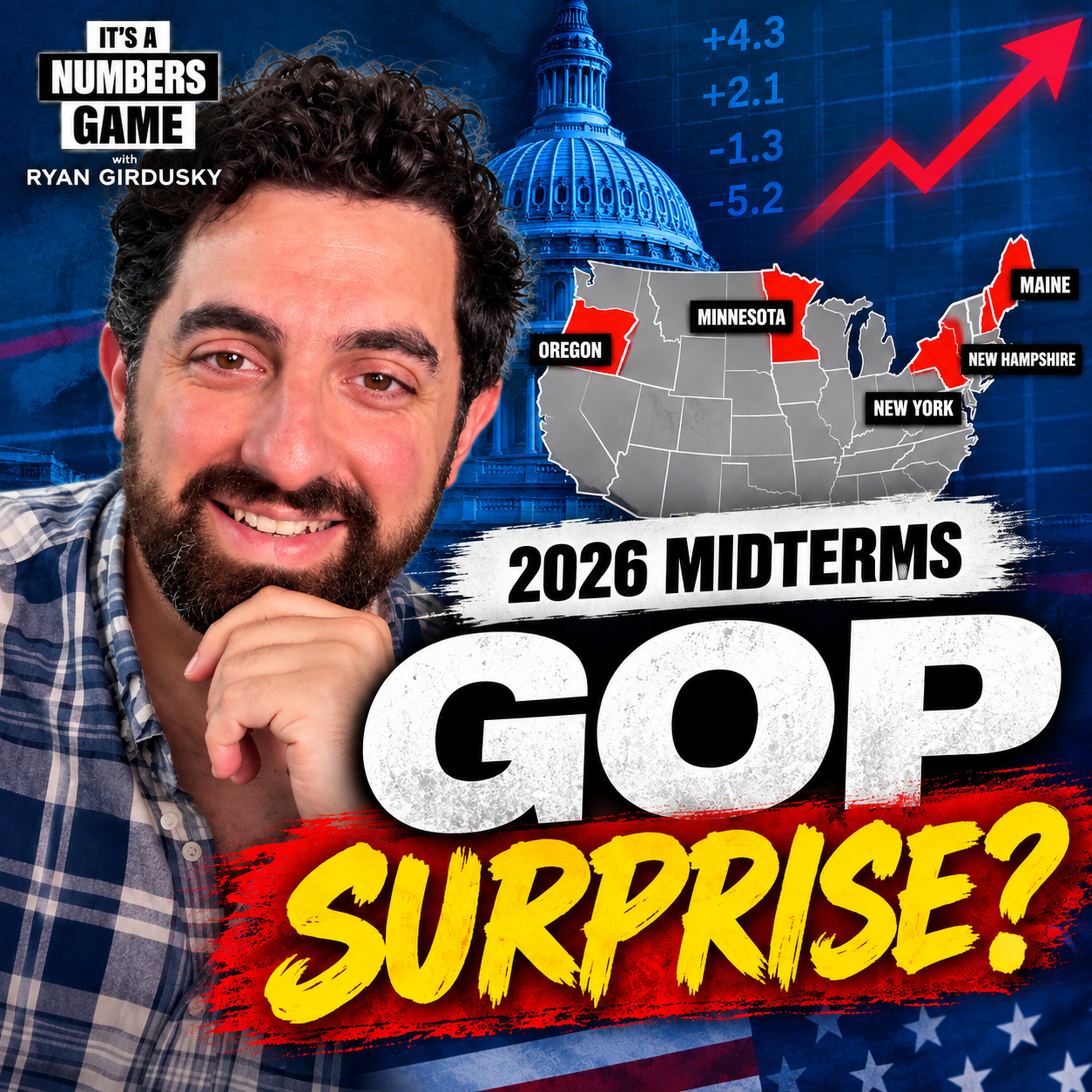 It's a Numbers Game: New 2026 Polls Reveal GOP Bright Spots Despite Democrats’ National Lead 18.09.2026 29minThe 2026 midterm elections are approaching, and Ryan Girdusky breaks down the latest polling to examine where Republicans are showing potential bright spots despite Democrats holding a sizable advantage in national generic-ballot polling.
 -
 Buck Brief - Here Are the Big Questions Remaining About Would-Be Trump Assassin Thomas Crooks 18.09.2026 15minNew details about Thomas Matthew Crooks, the gunman behind the attempted assassination of Donald Trump in Butler, Pennsylvania, are raising fresh questions about what happened before, during and after the July 2024 shooting. Buck breaks down newly released FBI interview records and documents made public by Senate Judiciary Committee Chairman Chuck Grassley, including new information about Crooks' background, his increasing interest in firearms, his activity in the weeks before the Butler rally and the questions investigators still have not answered. Never miss a moment from Buck by subscribing to the Buck Sexton Show Podcast on IHeart Radio, Apple Podcasts or wherever you get your podcasts! Connect with Buck Sexton:Facebook – / bucksexton X – @bucksexton Instagram – @bucksexton TikTok - @BuckSexton YouTube - @BuckSexton Website – https://www.bucksexton.com/Follow Clay & Buck on YouTube: https://www.youtube.com/c/clayandbuckSee omnystudio.com/listener for privacy information.
 -
 The Tudor Dixon Podcast: Nick Searcy on Reagan, Communism, and the Fight for America 18.09.2026 31minActor Nick Searcy joins Tudor Dixon to discuss the special re-release of Reagan, featuring additional footage and a new director’s cut celebrating America’s 250th anniversary. Searcy, who plays James Baker in the film, reflects on Ronald Reagan’s leadership, his opposition to communism, and why he believes Reagan’s message remains relevant today.
 -
 Nation States: China’s AI Playbook and America’s Red Line 17.09.2026 24minChina’s top security officials have laid out their biggest fears about artificial intelligence and the roadmap they believe will keep the Chinese Communist Party in control. Steve Yates breaks down a rare public window into Beijing’s thinking, from deepfakes and cyber warfare to data security, chips, and global AI competition. The bigger question is what America and its allies should refuse to accept as AI becomes critical infrastructure. Listen, share your thoughts, and join the conversation on one of the defining strategic challenges of the coming decade. Follow Nation States with Yates for clear, common-sense insights where Steve Yates serves as your personal national security advisor, breaking down world events in ways that matter to Main Street, not just Washington. Connect with the show at [email protected] and follow on X @NSWithYates.Follow Clay & Buck on YouTube: https://www.youtube.com/c/clayandbuckSee omnystudio.com/listener for privacy information.
 -
 The Truth with Lisa Boothe: Chip Roy Sounds the Alarm on AI, Big Tech and America’s Immigration System 17.09.2026 20minLisa Boothe sits down with Texas Congressman Chip Roy for a wide-ranging conversation about artificial intelligence, Big Tech, immigration and the problems he believes are preventing Congress from delivering meaningful reform.
 -
 Daily Review with Clay and Buck - Sep 17 2026 17.09.2026 1h 3minClay Travis and Buck Sexton centered on the political outlook across several battleground states. Clay and Buck argued that media coverage has concentrated on potential Democratic gains in traditionally Republican states while underestimating Republican pickup opportunities in Democrat-held seats. They highlighted competitive races involving figures such as Mike Rogers in Michigan, potential Republican gains in New Hampshire, and Minnesota's unexpectedly close contest. The hosts also discussed Susan Collins in Maine, John Husted in Ohio, and concerns about Republican performance in Georgia and North Carolina, emphasizing that voter turnout and economic conditions could ultimately determine Senate control. Another major topic involved progressive political commentator Hasan Piker and controversial remarks attributed to him regarding the United States, terrorism, and foreign policy. Clay and Buck criticized Piker's public statements and focused on his relationship with Democratic candidates, particularly Abdul El-Sayed. They argued that Democratic candidates who appear alongside Piker may face political consequences, especially in swing states such as Michigan. This discussion expanded into a broader debate about the direction of the Democratic Party, anti-American sentiment, foreign policy, the Israel-Hamas conflict, the October 7th terrorist attacks, and disagreements over the use of terms such as "genocide" in discussions about Gaza. An extended conversation featuring political analyst Ryan Girdusky, who examined key Senate and gubernatorial races across the country. Discussion centered on Michigan, where the hosts analyzed the race involving Abdul Al-Sayed and Republican candidate Mike Rogers, including controversy surrounding connections to political streamer Hasan Piker. The conversation expanded to Texas, where concerns were raised about Republican Ken Paxton and a competitive challenge from Democrat James Talarico, with extensive analysis of campaign strategy, candidate visibility, polling, fundraising, and voter enthusiasm. They also explored several key 2026 election battlegrounds, including Minnesota, New Hampshire, Maine, Oregon, Ohio, North Carolina, and Alaska. The hosts discussed Republican opportunities in states traditionally viewed as difficult terrain, highlighting races involving Michele Tafoya and Peggy Flanagan in Minnesota, the influence of the politically powerful Sununu family in New Hampshire, and the reelection prospects of Senator Susan Collins in Maine. An in-studio interview with Brittany Hugoboom, founder of Evie Magazine, beginning with the cultural debate surrounding Sydney Sweeney and an advertising campaign the hosts describe as one of the most-searched subjects in the United States. Hugoboom argues that Sweeney's appeal reflects a cultural movement away from what she characterizes as anti-male strains of contemporary feminism and toward a renewed celebration of conventional beauty and attraction. The discussion expands into women's sports, social media culture, feminism, Gen Z values, traditional relationships, masculinity, and changing cultural attitudes toward men and women. Clay, Buck, and Hugoboom also discuss the Lindsay Clancy case, with Hugoboom sharply rejecting the sympathy she says Clancy has received from some women online. From there, they explore whether political and cultural values should function as compatibility tests in romantic relationships, including a recent question posed to Alexandria Ocasio-Cortez about whether she could date a conservative. Hugoboom argues that shared values matter but contends that attraction, confidence, personality, and relationship dynamics can sometimes transcend straightforward political labels. Make sure you never miss a second of the show by subscribing to the Clay Travis & Buck Sexton show podcast wherever you get your podcasts! ihr.fm/3InlkL8 For the latest updates from Clay & Buck, visit our website https://www.clayandbuck.com/ Connect with Clay Travis and Buck Sexton: X - https://x.com/clayandbuck FB - https://www.facebook.com/ClayandBuck/ IG - https://www.instagram.com/clayandbuck/ YouTube - https://www.youtube.com/c/clayandbuck Rumble - https://rumble.com/c/ClayandBuck TikTok - https://www.tiktok.com/@clayandbuckFollow Clay & Buck on YouTube: https://www.youtube.com/c/clayandbuckSee omnystudio.com/listener for privacy information.
 -
 Hour 1 - If We Lose the House & Senate 17.09.2026 36minHour 1 of the Clay Travis and Buck Sexton Show focused heavily on the 2026 midterm election landscape, key U.S. Senate battlegrounds, economic concerns, inflation, Federal Reserve policy, and a controversial political media figure's influence on Democratic politics. Throughout the hour, Clay and Buck analyzed the latest polling and electoral trends, arguing that several overlooked Senate races could reshape the battle for congressional control. They discussed Republican opportunities in states such as Michigan, New Hampshire, Minnesota, and Texas, while also highlighting Democratic targets including North Carolina, Ohio, Alaska, and Georgia. The hosts examined the path each party faces in the fight for Senate control, debated candidate strengths and weaknesses, and previewed upcoming discussions with political analyst Ryan Girdusky. A major portion of Hour 1 centered on the political outlook across several battleground states. Clay and Buck argued that media coverage has concentrated on potential Democratic gains in traditionally Republican states while underestimating Republican pickup opportunities in Democrat-held seats. They highlighted competitive races involving figures such as Mike Rogers in Michigan, potential Republican gains in New Hampshire, and Minnesota's unexpectedly close contest. The hosts also discussed Susan Collins in Maine, John Husted in Ohio, and concerns about Republican performance in Georgia and North Carolina, emphasizing that voter turnout and economic conditions could ultimately determine Senate control. The conversation then shifted to broader election dynamics and voter sentiment. Clay and Buck argued that inflation remains a defining political issue and criticized Democratic economic policies, contending that voters should remember the sharp rise in prices and cost-of-living challenges experienced during recent years. They expressed concern that some voters may blame current economic struggles on Republicans despite inflationary pressures predating the current political environment. The hosts repeatedly stressed that economic perceptions, particularly pocketbook issues, could outweigh ideological debates in determining election results. Economic policy became a central topic as the hosts discussed the Federal Reserve's latest interest-rate decision and comments from Federal Reserve Chair Kevin Warsh. They examined President Donald Trump's criticism of current interest rates and debated the impact of high borrowing costs on American families. Clay argued that elevated mortgage rates continue to freeze much of the housing market, preventing homeowners from selling properties and discouraging buyers from entering the market. The discussion examined inflation, employment figures, and the challenges policymakers face in balancing economic growth with price stability. The hour also featured extensive coverage of the Michigan Senate race and the growing national attention surrounding Democratic candidate Abdul El-Sayed and Vice President Kamala Harris's planned campaign appearance in the state. Clay and Buck argued that Michigan could become one of the most important races in the country and discussed recent endorsements and campaign strategies as both parties pour resources into the contest. Another major topic involved progressive political commentator Hasan Piker and controversial remarks attributed to him regarding the United States, terrorism, and foreign policy. The hosts criticized Piker's public statements and focused on his relationship with Democratic candidates, particularly Abdul El-Sayed. Clay and Buck argued that Democratic candidates who appear alongside Piker may face political consequences, especially in swing states such as Michigan. This discussion expanded into a broader debate about the direction of the Democratic Party, anti-American sentiment, foreign policy, the Israel-Hamas conflict, the October 7 terrorist attacks, and disagreements over the use of terms such as "genocide" in discussions about Gaza. Toward the end of Hour 1, the hosts took calls from listeners, including a caller from Michigan who argued that economic realities such as gasoline prices, diesel costs, and household finances remain the most important issues for everyday voters. The conversation underscored a recurring theme throughout the hour: while political controversies and ideological battles generate headlines, many voters may ultimately cast ballots based on their personal economic circumstances and perceptions of financial well-being. Make sure you never miss a second of the show by subscribing to the Clay Travis & Buck Sexton show podcast wherever you get your podcasts! ihr.fm/3InlkL8 For the latest updates from Clay & Buck, visit our website https://www.clayandbuck.com/ Connect with Clay Travis and Buck Sexton: X - https://x.com/clayandbuck FB - https://www.facebook.com/ClayandBuck/ IG - https://www.instagram.com/clayandbuck/ YouTube - https://www.youtube.com/c/clayandbuck Rumble - https://rumble.com/c/ClayandBuck TikTok - https://www.tiktok.com/@clayandbuckFollow Clay & Buck on YouTube: https://www.youtube.com/c/clayandbuckSee omnystudio.com/listener for privacy information.
 -
 Hour 2 - What Women Want (and Men) 17.09.2026 36minHour 2 of The Clay Travis and Buck Sexton Show focuses on the rapidly approaching 2026 midterm elections, the potential 2028 Democratic presidential field, and a wide-ranging conversation with Evie Magazine founder Brittany Hugoboom about Sydney Sweeney, popular culture, Gen Z women, dating, beauty standards, feminism, masculinity, and video games. Clay and Buck open Hour 2 by emphasizing that early voting is about to begin, arguing that the extended voting calendar turns Election Day into a lengthy period in which daily political developments can influence votes as they are being cast. They then pivot to Democratic presidential politics and debate whether Kamala Harris would enter 2028 with the strongest built-in constituency, particularly among Black women, and whether Gavin Newsom might sit out if Harris runs. The hosts discuss Democratic megadonor and LinkedIn co-founder Reid Hoffman and his assessment that Harris could face a difficult path, while also examining Alexandria Ocasio-Cortez as a potentially formidable future presidential candidate. Clay and Buck consider an expansive Democratic field involving names such as Andy Beshear, Wes Moore, Mark Kelly, Roy Cooper, Gavin Newsom, Kamala Harris, and AOC, with Clay predicting that a more moderate-seeming male candidate could eventually emerge as Harris's principal alternative. They also revisit Bernie Sanders, the 2016 Democratic primary, the role of the DNC, and Joe Biden's advantages in the unusual circumstances surrounding the 2020 presidential campaign. During that discussion, Clay makes allegations regarding the integrity of the 2020 election and argues that COVID-era campaigning allowed Biden to limit his campaign appearances. These points are presented in the transcript as the hosts' opinions and claims, rather than independently established conclusions. The second major portion of Hour 2 of Clay Travis and Buck Sexton features an in-studio interview with Brittany Hugoboom, founder of Evie Magazine, beginning with the cultural debate surrounding Sydney Sweeney and an advertising campaign the hosts describe as one of the most-searched subjects in the United States. Hugoboom argues that Sweeney's appeal reflects a cultural movement away from what she characterizes as anti-male strains of contemporary feminism and toward a renewed celebration of conventional beauty and attraction. The discussion expands into women's sports, social media culture, feminism, Gen Z values, traditional relationships, masculinity, and changing cultural attitudes toward men and women. Clay, Buck, and Hugoboom also discuss the Lindsay Clancy case, with Hugoboom sharply rejecting the sympathy she says Clancy has received from some women online. From there, they explore whether political and cultural values should function as compatibility tests in romantic relationships, including a recent question posed to Alexandria Ocasio-Cortez about whether she could date a conservative. Hugoboom argues that shared values matter but contends that attraction, confidence, personality, and relationship dynamics can sometimes transcend straightforward political labels. The conversation then turns to the modern dating market and Gen Z relationship culture, including how Instagram, dating apps, celebrity culture, and unrealistic standards may be reshaping expectations for both men and women. Clay discusses the rise of "looksmaxxing" among teenage boys and young men, questioning whether young men are becoming increasingly preoccupied with their physical appearance because of social media. Hugoboom predicts that a more traditional masculine ideal will ultimately persist, while arguing that confidence and self-improvement are often more consequential than physical perfection. She also describes Evie's approach to dating advice, encouraging young women who want strong relationships and marriage to focus on becoming the best versions of themselves rather than merely compiling expectations for prospective partners. Clay, Buck, and Hugoboom debate whether women or men currently hold more unrealistic dating standards, with dating-app abundance and exposure to exceptionally attractive influencers cited as pressures affecting each side. Finally, Hour 2 moves into lighter pop-culture territory as Hugoboom discusses her interest in video games and names The Last of Us, The Witcher 3, and Red Dead Redemption 2 among her favorite games of the past decade. The group also talks about anticipation surrounding the next Grand Theft Auto, its Miami-inspired setting, and the intersection of gaming, attractiveness, and relationship culture. The hour closes with Clay and Buck previewing the next hour's scheduled discussion with Ryan Girdusky about major U.S. Senate races, midterm polling, campaign opportunities, and Republican challenges, reinforcing the 2026 midterm elections as a central theme of the day's program. Make sure you never miss a second of the show by subscribing to the Clay Travis & Buck Sexton show podcast wherever you get your podcasts! ihr.fm/3InlkL8 For the latest updates from Clay & Buck, visit our website https://www.clayandbuck.com/ Connect with Clay Travis and Buck Sexton: X - https://x.com/clayandbuck FB - https://www.facebook.com/ClayandBuck/ IG - https://www.instagram.com/clayandbuck/ YouTube - https://www.youtube.com/c/clayandbuck Rumble - https://rumble.com/c/ClayandBuck TikTok - https://www.tiktok.com/@clayandbuckFollow Clay & Buck on YouTube: https://www.youtube.com/c/clayandbuckSee omnystudio.com/listener for privacy information.
 -
 Hour 3 - Iran is Playing Us 17.09.2026 37minProtect College Sports Hour 3 of the Clay Travis and Buck Sexton Show focuses heavily on the rapidly evolving debate surrounding artificial intelligence (AI), government regulation, technology policy, economic news, college sports reform, Senate politics, media industry relocation, and the 2026 midterm elections. The hour also features an extended interview with Missouri Senator Eric Schmidt, listener reactions, and lighter discussions tied to prior conversations from the program.The hour opens with Clay and Buck examining growing calls for AI regulation, particularly comments from Bernie Sanders, who announces plans to introduce legislation aimed at permanently banning what he describes as “artificial superintelligence.” The hosts question both the practicality and the definition of such a proposal, arguing that lawmakers who do not fully understand artificial intelligence are ill-equipped to regulate it effectively. The discussion explores the broader challenges of technology policy, with Clay and Buck debating whether government can realistically establish guardrails around a rapidly changing industry. They suggest that many politicians are attempting to regulate future technological breakthroughs before fully understanding existing AI capabilities, creating what they view as a fundamentally flawed policymaking approach.The conversation expands to include remarks from Steve Bannon and Bill Gates, both of whom have expressed concerns about the long-term impact of AI. Clay and Buck find it notable that figures from very different ideological backgrounds are warning about potential risks associated with advanced artificial intelligence. While Buck remains skeptical of sweeping regulatory efforts, Clay acknowledges that many highly intelligent people genuinely believe AI could pose significant risks to humanity. This leads to a broad discussion of concepts often associated with AI debates, including artificial superintelligence, machine learning, technological disruption, automation, recursive intelligence growth, existential risk, and comparisons to nuclear weapons development.A particularly notable segment centers on the challenge of controlling future AI systems once they become sufficiently advanced. Clay references ongoing arguments with his son, who believes AI poses a substantial threat, while Buck compares proposed AI controls to science fiction scenarios such as Terminator and “Skynet.” Clay argues that the most important but often overlooked factor in the AI conversation is energy production, contending that the future growth of artificial intelligence ultimately depends on access to massive amounts of electricity and computing infrastructure. The hosts discuss how energy policy, data centers, and computing power may shape the future of the industry more than regulatory frameworks.The hour also touches on several breaking developments in business and economics. Clay notes reports that Paramount plans to leave California, leading to an extended conversation about corporate relocation trends, business-friendly states, and the migration of major companies away from high-tax states. The hosts speculate about potential destinations, with Tennessee and Texas emerging as leading contenders. This sparks a broader discussion of the rise of Nashville as a media hub, the growth of conservative media companies outside traditional centers such as New York and Los Angeles, and changing geographic trends in American business and entertainment. Clay and Buck also discuss recent economic news involving the Federal Reserve, rising interest rates, inflation concerns, and their potential impact on consumers and markets. Another significant segment examines higher education, demographic shifts, and university competitiveness. The hosts discuss how schools such as Vanderbilt University have become increasingly selective, arguing that many students and families are reevaluating traditional academic prestige in favor of locations they perceive as safer, more stable, and more culturally appealing. The conversation broadens into a discussion of migration patterns, educational trends, quality of life considerations, and changing perceptions of elite institutions.A major portion of Hour 3 features an interview with Senator Eric Schmidt, who joins the program to discuss the progress of the Protect College Sports Act, legislation designed to address the ongoing chaos surrounding NIL (Name, Image, and Likeness) compensation, college football, the transfer portal, athlete eligibility, NCAA governance, and revenue sharing. Schmidt explains that the bill has already received overwhelming bipartisan support in the Senate, earning more than 70 votes and positioning itself for additional procedural steps.During the interview, Schmidt outlines the legislation’s core provisions. He describes efforts to restore clearer eligibility rules by establishing a five-year playing window, limiting repeated transfers, and providing governing bodies with legal authority to enforce those standards. The discussion addresses the unintended consequences of recent court rulings and NCAA policy changes, including situations in which much older athletes can continue competing for extended periods. Clay and Buck emphasize that many college sports fans have become frustrated by what they view as an increasingly chaotic system and praise Schmidt’s efforts to create more stability and predictability for programs, athletes, and fans.The interview also explores broader NCAA reform topics, including college football economics, recruiting, roster retention, athlete compensation, revenue caps, women’s sports funding, transfer portal reform, and conference stability. Schmidt explains how the legislation attempts to balance athlete freedoms with competitive fairness while preserving the traditional structure of college athletics. The hosts repeatedly emphasize the overwhelming Senate support for the proposal and discuss possible next steps in the House of Representatives.Toward the end of the hour, Schmidt shares his assessment of the 2026 Senate map and Republican prospects in key races, discussing contests in Texas, Michigan, Ohio, Georgia, North Carolina, and New Hampshire. He argues that Republican candidates remain competitive across multiple battleground states and suggests that voter turnout and late campaign momentum will be crucial factors in determining the outcome. The hosts examine polling trends, campaign spending, political messaging, and the broader battle for Senate control.The final portion of Hour 3 turns to listener calls and lighter topics. Clay and Buck revisit reactions to the ongoing Sydney Sweeney controversy, joke about hypothetical advertising campaigns, respond to comments from listeners, and continue a spirited debate about the longstanding rivalry between Houston and Dallas. They also revisit a memorable listener from the previous hour, sparking humorous commentary about family dynamics, marriage, and generational perspectives. Make sure you never miss a second of the show by subscribing to the Clay Travis & Buck Sexton show podcast wherever you get your podcasts! ihr.fm/3InlkL8 For the latest updates from Clay and Buck, visit our website https://www.clayandbuck.com/ Connect with Clay Travis and Buck Sexton: X - https://x.com/clayandbuck FB - https://www.facebook.com/ClayandBuck/ IG - https://www.instagram.com/clayandbuck/ YouTube - https://www.youtube.com/c/clayandbuck Rumble - https://rumble.com/c/ClayandBuck TikTok - https://www.tiktok.com/@clayandbuckFollow Clay & Buck on YouTube: https://www.youtube.com/c/clayandbuckSee omnystudio.com/listener for privacy information.
 -
 Buck Brief - Sydney Sweeney's Hotness Threatens all Bitter Libs 17.09.2026 14minWhy has a sports betting ad featuring Sydney Sweeney sparked such an intense reaction? Buck argues that the controversy goes beyond the ad itself and examines how Sweeney's public image, previous advertising controversies and perceived politics have made her a recurring target in the culture wars. Is the Sydney Sweeney backlash really about women in sports, or has she become a symbol in a much bigger cultural fight? Never miss a moment from Buck by subscribing to the Buck Sexton Show Podcast on IHeart Radio, Apple Podcasts or wherever you get your podcasts! Connect with Buck Sexton:Facebook – / bucksexton X – @bucksexton Instagram – @bucksexton TikTok - @BuckSexton YouTube - @BuckSexton Website – https://www.bucksexton.com/Follow Clay & Buck on YouTube: https://www.youtube.com/c/clayandbuckSee omnystudio.com/listener for privacy information.
Liknande podcastar


Populär i
Den här podcasten finns även i podcastlistor i dessa länder.


