
Do Good To Lead Well with Craig Dowden
Craig Dowden
0
This podcast is dedicated to mastering self-leadership through evidence-based principles from positive psychology and organizational excellence. Host Craig Dowden integrates science and practice to help listeners develop real-life solutions for their greatest challenges. Each week, industry experts share world-class content on using positive leadership to build a peak performance culture.
Avsnitt
-
 Mastering Managing Up with Bestselling Author Melody Wilding 17.09.2026 51minThis week’s episode of Do Good to Lead Well opens with a lively exchange about the true essence of “managing up.” Our conversation focuses on Melody Wilding’s journey from her bestselling book Trust Yourself to her latest, Managing Up, revealing how self-leadership is the essential foundation for influencing those in power. Together, we explore why managing up isn’t “boss-pleasing,” but rather empowering yourself to build conditions for true success.Our discussion also dives deep into the psychology and realities of work and why “letting your work speak for itself” is no longer enough. Melody also highlights how to use visibility as a tool for advancing both your projects and your career. Several points were raised, including the power of proactive communication, the necessity of challenging outdated norms, and the reality that managing up is crucial for everyone, not just junior employees.This conversation is rich with actionable frameworks, memorable phrases (such as “power mapping” and “pocket updates”), and mindset shifts for anyone navigating complex teams and tough bosses. Tune in to reconsider what it actually means to lead well while doing it on your own terms.What You’ll Learn- Rethinking “Managing Up.”- Visibility is not vanity.- How to use questions and pattern interrupts to set effective boundaries.- Why you want to spend time Power Mapping- Communicating with different leadership styles.- Seeding advancement and compensation conversations.- The power of the “Pocket Update.”Podcast Timestamps(00:00) - The Origin Story of "Managing Up" (05:09) - Redefining Managing Up: Ownership vs. Boss-Pleasing(09:22) - Visibility, Self-Advocacy, and Career Progression(13:36) - Recognizing the Need for Discernment(14:10) - Managing Up as an Essential Senior Leadership Skill(17:14) - The Alignment Conversation and Power Mapping(24:26) - The Boundaries Conversation: Balancing Teamwork and Limits(29:35) - Managing Up to Different Boss Archetypes(44:35) – The Advancement and Money Conversations(49:58) - Everyday Visibility Opportunities and Final TakeawaysKEYWORDSPositive Leadership, Managing Up, Self-Leadership, Leadership Development, Career advancement, Navigating Workplace Dynamics, Setting Boundaries, Managing Office Politics, Stakeholder Management, Power Mapping, Visibility at Work, Executive Communication, Difficult Conversations, Dealing with Micromanagement, Workaholic Bosses, Fear-Based Leadership, Organizational Influence, Self-promotion, Assertive Communication, Advocating for Yourself, Negotiating Compensation, Strategic Advocacy, CEO Success
 -
 Why Data-Inspired Beats Data-Driven: Moving from Optimization to Transformation 11.09.2026 51minThis episode of Do Good to Lead Well opens with a thought-provoking challenge to the familiar refrain, “Let’s be more data-driven.” Instead, Sebastian Wernicke, a top TED speaker and globally recognized thought leader, shares the importance of being “data-inspired.” Our discussion focuses on the premise that lasting transformation requires more than dashboards and metrics. We explore the subtle yet crucial difference between optimizing the present and reimagining the future, using data as a catalyst.Listeners will discover why assumptions about objectivity and quick fixes with more data often backfire and how the real edge comes from leaders willing to be curious, challenge their own thinking, and foster environments where their employees can do the same. Key takeaways include actionable methods for reframing challenges, leveraging the “five whys,” and ensuring AI supports, rather than supplants, human judgment.Tune in for an essential guide to leading well in a landscape where data is plentiful, but wisdom and culture are what set winners apart.What You’ll Learn- Data-driven versus data-inspired? A key difference for transformational change.- Myth busting: Is data objective? Does ‘data speak for itself?”- Mindset shifts for better decisions.- Why psychological safety matters!- The importance of a “culture first, tech second” mentality.- Embracing human judgment in the AI era.- Dealing with data skeptics.- The (not-so) secret sauce: Data AND culture. Podcast Timestamps(00:00) - The Origin Story of "Data Inspired" (03:14) – What is the Difference between Data-Driven vs. Data-Inspired?(07:21) - The Myth of Data Objectivity(10:26) - Mindset Shifts for Effective Data Use(15:40) - Cultivating Curiosity and the Power of Questions(19:20) - Psychological Safety as the Bedrock of Data Inspiration(22:58) - Culture First, Tools Second: Building Data-Inspired Organizations(25:24) - Leadership Qualities for Data-Inspired Environments(31:09) - Managing Data Quality and Volume(36:57) - The Human Side of AI and Data-Inspired Judgment(42:08) - Overcoming Resistance to Data and Organizational Change(44:43) - Closing ReflectionsKEYWORDSPositive Leadership, AI, Artificial Intelligence, AI Transformation, People-First Leadership, AI Adoption, Transformational Change, Data-Driven, Data-Inspired, Organizational Culture, Psychological Safety, Curiosity, Decision-Making, Data Myths, Data Quality, Machine Learning, AI Strategy, Data Strategy, Business Transformation, Cultural Change, Big Data, Teamwork, Empathy, Storytelling with Data, Overcoming Resistance, Innovation, Problem-Solving, Root Cause Analysis, Five Whys Technique, Human Judgment, Data-Fatigue, Purpose-Driven, CEO Success
 -
 Building Collective Confidence: Lessons from Elite Teams and Fortune 100 Talent Leader Dr. Andre Martin 04.09.2026 53minWhat truly separates good teams from legendary ones? In this week’s episode, I speak with Dr. Andre Martin, author of Collective Confidence and a highly respected leader across multiple Fortune 100 companies. Our conversation debunks the quick-fix of assembling teams of pedigreed all-stars, showing instead how extraordinary outcomes come from humble, well-aligned teams rooted in trust and a sense of shared purpose.Our discussion uncovers a fresh perspective on teamwork: winning doesn’t start with a streak or a résumé, but with behind-the-scenes habits and the psychological safety that allows every member to shine. Highlights from our conversation include a closer look at onboarding, culture-building, inspirational learning, and the dangers of an unchecked ego in the age of relentless change.For leaders facing today’s continuous waves of disruption, this episode offers concrete, evidence-based practices to unlock the untapped power of true collectives. Don’t miss these insights on fostering culture, resilience, and collective brilliance when it matters most.What You’ll Learn- Lessons from Elite Sports & Beyond.- Why the ‘Best’ Team Isn't a List of Resumes.- The Power of Clarity.- Inspiration Over Engagement.- Onboarding & Behaviors: How Culture Scales.- Culture is “the average of our collective behaviors.”- Collective Learning in the Age of AI.- How to Grow Collective Confidence.Podcast Timestamps(00:00) – An Introduction to Collective Confidence(05:07) - Lessons from Sports Teams and the Prevailing Myth of Winning Streaks(07:54) - The Pitfalls of Assembling All-Star Teams(11:36) – The Importance of Role Clarity and Making Everyone the Boss of Something(16:15) - Fit, Culture, and Assembling Effective Teams(19:53) - Inspiration vs. Engagement: Borrowed Brilliance(23:57) - Scaling Culture in Fast-Growth Organizations(28:00) - Leading Collective Confidence Amidst Change(32:35) - Learning as a Collective Performance Lever(44:37) - Resilience, Trust, and Psychological Safety in Teams(48:28) - Making the System the StarKEYWORDSPositive Leadership, High-Performing Teams, Collective Confidence, Executive Team Alignment, Talent Strategy, Team Culture, Process Outcomes, Elite Teams, Role Clarity, Team Fit, Top Talent, Humility in Teams, Glue People, Onboarding, Culture Curation, Behavioral Expectations, Psychological Safety, Trust in Teams, System Thinking, Learning Organizations, Collective Learning, AI in Organizations, Inspiration versus Engagement, Adaptability, Team Resilience, Confidence-Building, CEO Success
 -
 Leading Through AI Transformation: Building a People-First Organization with Workforce Intelligence 27.08.2026 57minHow do you lead well in a world transformed by AI? This week, Do Good to Lead Well tackles this question head-on, as I speak with Mike Sullivan, co-founder and Chief Growth Officer of OneDigital, and the co-author of the timely and insightful book, Workforce Intelligence. Throughout our conversation, Mike breaks through both the hype and the fear surrounding AI in today’s workforce. As a champion of people-centered AI, he offers an inspiring roadmap for activating, not replacing, the human workforce.Listeners are invited into the story of “Ben,” a digital coworker, and how Mike and his team treat AI onboarding like hiring a real employee: with transparency, development, and high expectations. The result? A culture where humans and digital agents collaborate, learn, and continuously improve together. We also discuss how workforce intelligence is being redefined and how high-performing teams are built not on software alone, but on empathy, transparency, and courage.For leaders and organizations seeking practical strategies, this episode brims with actionable advice, from measuring workforce intelligence to ensuring HR has a seat at the AI table. It’s a compelling argument for seeing the faces behind the headcount, and for cultivating trust as the cornerstone of 21st-century leadership.What You’ll Learn- Start with honesty, not hype when it comes to AI.- Don’t treat AI as ‘software’: Treat it like a coworker.- Transparent roles & faces build trust.- What is your Workforce Intelligence (WI) score? The success metric.- Activation moments matter.- Top-down Is the only way forward.- People Always Come First.- It’s not either/or. It’s Human Intelligence (HI) + Artificial Intelligence (AI). Podcast Timestamps(00:00) – Personal Fear and the Human Side of AI(06:02) – No Code? No Problem – Mike’s Personal AI Journey(10:05) – The Human Side of AI Deployment(12:29) – Hiring AI Coworkers: Internship to Full-Time(16:33) – Managing a Blended Human-AI Workforce(21:54) – HR’s Role and Navigating Workforce Change(26:29) – Defining Workforce Intelligence and the WI Score(30:58) – Overcoming Employee Fears and Building Trust(37:43) – Leadership Activation and Empathy in the Age of AI(53:00) – Final Reflections and The Humanity TestKEYWORDSPositive Leadership, AI, Artificial Intelligence, AI Transformation, Workplace Intelligence, People-First Leadership, Human-Centric Organizations, AI Adoption, Digital Coworkers, Organizational Change, Employment Disruption, Job Automation, Human Resources (HR), Talent Management, Growth Mindset, Trust in Leadership, Empathy in Business, AI Onboarding, Blended Workforce, WI score, Transparency in AI, Disruption, Future of Work, Human-AI Collaboration, Managing AI Anxiety, CEO Success
 -
 Anchoring Leadership in Purpose and Values: Part 3 of a 3-Part Series on the Foundations of Positive Leadership (with an award-winning CEO) 21.08.2026 45minOver the past three episodes, I had a very special guest; Kevin Ford, the former CEO of Calian. Our previous conversations trace a powerful progression from self-leadership to connecting with others. In the final episode of this series, we explore how a profound sense of purpose united by a set of core values truly anchors an organization. Our discussion moves beyond corporate clichés, as we dig into how purpose statements can resonate from the C-suite to every desk and production floor, and why stories, not slogans, are the secret to unlocking commitment and pride. Listeners will also find practical insights on transforming company values from static posters into lived behaviors, using transparency, feedback, and authentic leadership. This journey ultimately challenges every leader to reflect on the following question: Are your company’s values visible in the daily experience, or just in the posters on the wall?Through the lens of firsthand leadership stories, our conversation examines the risks of focusing only on financial metrics and offers powerful reminders that true value is created when people are proud not just of their work, but of its impact. Tactics like regular storytelling, open surveys, and clear expectations set the stage for a culture where integrity, respect, and community involvement drive both performance, engagement and well-being.For leaders and teams navigating the complexity of today’s business world, this episode serves as both an inspiration and a toolkit for embedding purpose and values that last.What You’ll Learn- The Power of Purpose-Driven Organizations.- Developing and Communicating Core Values.- Storytelling as a Leadership Tool.- Metrics Matter: Move Beyond Just the Financials.- Balancing Performance and Values.- Navigating Personal and Organizational Values Misalignment.- The Ongoing Practice of Authentic Leadership.Podcast Timestamps(00:00) - Introduction to Part 3: The Road We Travelled with an Introduction to Purpose and Values(03:04) - Defining Purpose in Organizations(05:25) - Developing and Living a Purpose Statement(09:28) - The Tangible Benefits of Purpose-Driven Organizations(13:45) - Strategies for Building a Purpose-Driven Culture(18:36) - Defining and Living Core Values(23:06) - Ensuring Alignment Between Stated and Lived Values(27:05) - Balancing Performance Pressures with Values(35:06) - Navigating Personal vs. Organizational Value Misalignment(41:00) - Final Reflections on the Foundations of Positive LeadershipKEYWORDSPositive Leadership, Purpose-Driven Organization, Core Values, Empathy, Transparency, Respect, Candor, Organizational Culture, Community Involvement, Storytelling, Company Mission, Organizational Alignment, Values Drift, Employee Motivation, Behavioral Anchors, Values-Based Leadership, Organizational Trust, Accountability, Purpose and Values Integration, Lived Values, CEO Success
 -
 Leading with Candor, Respect, and Empathy: Part 2 of a 3-Part Series on the Foundations of Positive Leadership (with an award-winning CEO) 13.08.2026 58minIn this episode of our 3-part series exploring the foundations of positive leadership, I speak with Kevin Ford, the award-winning, past CEO of Calian Group, about how to effectively connect with others. In a world grappling with AI, remote work, and breakneck change, we examine explore what meaningful connection looks like in practice. Starting with candor and transparency, our discussion explores why authentic openness isn’t just a nice-to-have, but a business essential. Kevin shares some real-life examples from leading a global, publicly traded company to amplify the conversation from theory to tangible action.Our journey continues with a deep dive into respect, which is not a formality rooted in title, but rather the lived foundation of innovative, resilient culture. Empathy emerges as our final, essential ingredient, with stories illustrating how courageous listening and presence lead organizations through uncertainty and drive sustainable results. Key moments include revealing the inner workings of boardroom transparency, the contagious effects of a leader’s sincerity, and the simple yet radical act of asking, “How are you really doing?” Insights on how accountability and compassion coexist provide leaders with a nuanced blueprint for addressing hard truths without losing humanity.Listeners will come away with a wealth of practical strategies, from how to tune into team energy, to acting on feedback with genuine care. For anyone looking to elevate their leadership and transform team dynamics, this episode delivers both the why and the how.What You’ll Learn- The Importance of Candor and Transparency in Leadership.- How Transparency Builds Trust and Followership.- Cultivating a Culture of Respect.- Navigating Difficult Conversations With Respect.- Demonstrating and Developing Empathy: A Leadership Superpower.- Positive energy matters, especially in tough times.- Balancing Empathy, Accountability, and Performance. Podcast Timestamps(00:00) - Introduction to Part 2: Connecting with Others(01:59) - The Challenge of Connection in a Tech-Driven World(02:36) - Candor and Transparency in Leadership(07:36) - Transparency Across Stakeholders(13:09) - The Foundation of Respect(19:59) - (25:03) - Respect in Difficult Conversations and Layoffs(29:01) - Empathy as a Leadership Imperative(36:29) - Empathy in Action and Leading Through Crisis(47:03) - The Courage to Embrace Raw Emotions(55:07) - Reflecting on the Leadership JourneyKEYWORDSPositive Leadership, Candor, Transparency, Authenticity, Self-Leadership, Respect, Empathy, Leadership Culture, Company Values, Accountability, Performance Management, Giving Feedback, Employee Engagement, Emotional Intelligence, Human-Centered Leadership, Difficult Conversations, Building Trust, Stakeholder Communication, Navigating Change, Remote Work, CEO Success
 -
 First, Leader Yourself: A 3-Part Series on the Foundations of Positive Leadership (with an award-winning CEO) 06.08.2026 43minWhat makes great executives stand out? I’m thrilled to share Part 1 of a 3-part series that will explore the foundations of positive leadership. Throughout this special set of episodes, I will be sharing the stage with Kevin Ford, the award-winning CEO of Calian who recently stepped down. In this episode, Kevin and I start the conversation by taking an honest look at why leading yourself matters most. We unpack the critical role of self-awareness, sharing a powerful personal journey that moved Kevin from early-career overconfidence to the life-changing benefits of welcoming tough feedback.We also discuss insightful research, amplified with real-life examples that makes the case that self-awareness isn’t soft. Our discussion touches on structured approaches (like 360 reviews) and everyday, observational cues that help leaders read the room and adjust in real time. We reframe humility as a leadership strength, curiosity as the operational side of great leadership, and positivity as the superpower needed to weather today’s challenges.If you’re searching for ways to advance your leadership, build resilience, and foster authentic relationships, this episode provides an actionable roadmap to transform self-awareness from a buzzword into your most valuable asset.What You’ll Learn- Self-Awareness is foundational- Feedback is a gift: Receive it well- Embracing (tough) feedback, can be transformative.- Make time for self-reflection.- Curiosity is operationalized humility.- Positive energy matters, especially in tough times.- Legacy is about the journey. Podcast Timestamps(00:00) - Introduction to the 3-Part Series(00:42) - Guest Introduction: Kevin Ford's Leadership Journey(03:26) - The Importance of Leading Yourself(04:11) – The Role of Self-Awareness in Executive Success(06:08) - Transformative Feedback: The Value of Tough Conversations(09:46) - Processing Feedback and Humility in Leadership(12:12) - Creating Upward Feedback Culture(14:24) - Reading the Room: Observational Self-Awareness(16:43) - Internal and External Self-Awareness(17:56) - Addressing Time Constraints and Feedback Reluctance(22:18) - Curiosity as a Driver of Self-Awareness(24:21) - Humility, Curiosity, and Leadership Legacy(29:04) - Self-Awareness and Decisive Leadership(32:59) - Positive Energy and Well-being in Leadership(37:48) - Practical Steps for Sustaining Positive Energy(41:45) - Final Reflections on Self-AwarenessKEYWORDSPositive Leadership, Self-Awareness, Leadership Development, Executive Feedback, 360 Assessments, Upward Feedback, Humility in Leadership, Curiosity, Culture, Authenticity, Positive Energy, Well-Being, Mental Health, Physical Health, Energy Management, Legacy, Organizational Culture, Coaching, Empathy, Constructive Criticism, Personal Growth, Employee Engagement, Resilience, Performance Review, Self-Reflection, Emotional Intelligence, CEO Success
 -
 The Benefits of Sabbatical Leave: Lessons from DJ DiDonna 23.07.2026 48minWhat happens when you leave your routine behind to embrace uncertainty? DJ DiDonna, Harvard Business School senior lecturer and founder of the Sabbatical Project, joins Craig Dowden to unpack the real benefits of sabbatical leave, drawn from years of research into hundreds of sabbatical-takers. DiDonna explains why extended leave delivers measurable physical healing, from resolving stress conditions like eczema and ulcers to reducing what he calls functional workaholism. The conversation also covers the confidence and creativity gains people report, the three sabbatical archetypes, and why the benefits of sabbatical leave extend to employers as well as employees.DiDonna draws on interviews with hundreds of sabbatical-takers to show that the benefits of sabbatical leave aren't reserved for the wealthy or the lucky. He argues most people can plan toward a sabbatical five years out by setting aside a percentage of income and identifying a trusted example who has already taken one. The episode also explores why founders and CEOs, despite having more flexibility, often feel trapped by the businesses they built, and how stepping away can reduce key-person risk while creating growth opportunities for junior staff.Throughout, DiDonna distinguishes the benefits of sabbatical leave from those of a simple vacation: vacations swap work tasks for leisure tasks, while sabbaticals create open space for identity change, healing, and experimentation. He closes with micro-moment strategies, like disconnecting for a long weekend, that let listeners borrow some benefits of sabbatical leave without leaving their jobs.Key TakeawaysThe benefits of sabbatical leave include physical healing, with sabbatical-takers reporting resolved eczema, ulcers, and trigger fingers.Sabbatical-takers frequently describe the experience as a peak life event, comparable to a wedding or the birth of a child.Three archetypes shape how people access the benefits of sabbatical leave: the achiever, the explorer, and the seeker.Confidence and creativity gains often outlast the sabbatical itself and carry into everyday work life.Employers benefit too: sabbaticals reveal key-person risk and reduce dependence on any single employee.Emotional recovery from work identity typically takes six to eight weeks before people feel like themselves again.Micro-moments, such as fully disconnected long weekends, offer some benefits of sabbatical leave without quitting a job.Planning a sabbatical five years in advance makes accessing these benefits feel achievable rather than disruptive.Chapters00:57 Introduction and DJ DiDonna's background05:31 Defining what a sabbatical actually is07:55 Why extended time off matters14:32 Reframing sabbaticals as realistic for everyone22:20 Time vs. space: the real difference from a vacation25:19 The emotional journey of a sabbatical28:55 The three archetypes: achiever, explorer, seeker34:02 Financial and logistical planning38:45 Sabbaticals for founders and leaders42:26 Micro-moments: everyday sabbatical practices47:06 Closing thoughts and final adviceGuest ContactWebsite: https://thesabbaticalproject.orgBook page: https://djdidonna.com/big-time-off/LinkedIn: https://www.linkedin.com/in/djdidonnaFAQQ. What are the main benefits of sabbatical leave?A. DiDonna's research points to physical healing, increased confidence, renewed creativity, and stronger organizational resilience.Q. How long until the mental health benefits of sabbatical leave kick in?A. Most people need six to eight weeks before feeling like themselves again, separate from their work identity.Q. Do the benefits of sabbatical leave extend to employers?A. Yes. DiDonna argues sabbaticals reduce key-person risk and reveal overly dependent business processes.
 -
 How to Stop Having the Same Difficult Conversation: Practice C.P.R. 16.07.2026 22minThis solo episode of Do Good to Lead Well focuses on one of the most common challenges in both leadership and everyday life: continually repeating the same difficult conversation without real resolution. Drawing on the important work of Crucial Conversations and Crucial Accountability, I explore the transformative CPR model (Content, Pattern, Relationship) as a deceptively simple framework for breaking frustrating cycles.I talk about how most people stay stuck addressing immediate content rather than recognizing damaging patterns or the deeper relationship impacts underneath. I also share concrete scripts using common scenarios to bring to life how shifting the “elevation” of a conversation can untangle recurring problems and restore trust.Leaders, teammates, and anyone facing persistent roadblocks in communication will walk away with actionable tools to finally resolve stubborn issues. Share your thoughts on how you have dealt with these situations and better yet, share the episode with someone who you feel would benefit from hearing it.What You’ll Learn- What is C.P.R. in difficult conversations?- The importance of addressing issues early.- The trap of relitigating the same content without recognizing a pattern.- The risk of escalating prematurely to relationship-level concerns after a single incident.- The problem of “piling on,” or tackling content, pattern, and relationship all at once. Podcast Timestamps(00:03) - The Recurring Conversation Challenge(01:23) - Introducing the CPR Model(03:30) - Content: Addressing Issues Early(06:08) - Elevating to Pattern-Level Conversations(08:50) - Relationship: Impact on Trust and Collaboration(10:43) - Approaching Difficult Conversations from Different Roles(14:46) - Common Traps and Pitfalls in Tough Conversations(17:53) - Choosing the Right Level for Effective Dialogue(19:33) - Final Reflections and a Call to ActionKEYWORDSPositive Leadership, Difficult Conversations, Conflict Management, Crucial Conversations, Crucial Accountability, CPR model, Content Pattern Relationship, Communication Framework, Workplace Relationships, Feedback Scripts, Pattern Recognition, Escalation in Conversations, Resolving Conflict, Peer Conversations, Leadership Communication, Employee Feedback, Conversational Traps, CEO Success
 -
 Design Love Into Leadership: Unlocking the Power of Human Flourishing with Marcus Buckingham 09.07.2026 53minIn this not-to-miss episode of Do Good to Lead Well, I am joined by Marcus Buckingham—the world’s foremost expert on human strengths and engagement—for a candid, data-rich conversation about bringing love into leadership. Drawing on his latest book, Marcus redefines love for the modern workplace: not as romance, but as an intentional design for human flourishing and extraordinary results.Our conversation begins with the deeply personal, as Marcus shares the vulnerability and lessons he learned after selling his beloved company, sparking a compelling case for why “designing love in” must be at the core of modern organizations.He also directly challenges the widespread myths that love makes organizations weak or leaders soft. Instead, tough love emerges as a vital force; sometimes the most loving thing a leader can do is share hard truths or make difficult calls. This episode dives into the real-world consequences of unloving practices like inefficient handoffs or unmanageable spans of control, offering concrete strategies for leaders to build truly vibrant, trust-filled cultures.Whether you’re a CEO who wants to transform your organization a team leader wanting to create an environment where you people flourish, this episode provides an evidence-based blueprint. Discover why love is the ultimate performance driver and how you can start designing it into how you lead today.What You’ll Learn- The power of love at work.- Redefining love in organizations.- From 'OK' to 'I Love It': The J-Curve of Experience.- Tough love: The role of accountability.- What are loving and unloving practices at work?- The ABCs of leading with love (Authenticity, Beliefs, Customs)Podcast Timestamps(00:02) - Introduction and Origin Story(02:17) - Vulnerability and Lessons from Selling a Business(06:00) - The Business Case for Designing Love In(11:22) - Defining Love in Organizations(17:11) - The Critical Importance of “Fives”(23:18) - Loving and Unloving Workplace Practices(32:11) - Tough Love and Accountability(36:17) - The ABCs of Leading with Love(44:02) - Rebuilding Trust and The Five Feelings of Love(51:07) - The Future of Designing Loving ExperiencesKEYWORDSPositive Leadership, Human Performance, Gallup, StrengthsFinder, Business Case for Love, Organizational Culture, Employee Engagement, Workplace Love, Trust, Team Building, Positive Experiences, Spans of Control, Loving Handoffs in Customer Service, Customer Loyalty, Authenticity, Tough Love, Human Flourishing, Loving and Unloving Practices, CEO Success
 -
Mastering the Art of Receiving Feedback: Triggers, Reactions, and Strategies for Positive Leadership 03.07.2026 27minWhat stops talented leaders from truly hearing honest feedback? This episode tackles that question head-on, drawing from both leading research and lived experience. While most articles, books, and workshops focus on how to give feedback, this discussion targets how to receive it. I explore why so many feedback conversations break down and how leaders can do better.Core themes include the impact of our gut reactions to critical feedback, how quickly we discount advice based on source or style, and why challenges to our identity produce the fiercest resistance. Listeners will be guided through practical, evidence-informed strategies to become better feedback recipients, creating environments where candid conversations thrive.This episode offers a refreshing, evidence-based approach for anyone committed to their own growth and eager to lead with greater effectiveness and humility.What You’ll Learn- The roots of our genuine hesitation surrounding feedback conversations.- How our reactions can prevent or derail future feedback.- Although not all feedback will be delivered perfectly, you can still find value.- Don’t let your relationship with the feedback-giver cloud your judgment- Feedback stings most when it challenges our identity. Podcast Timestamps(00:02) – Setting the Stagek(01:12) – The Personal Challenge of Receiving Feedback(05:17) – Truth Triggers: Dismissing Feedback Based on Tone and Delivery(08:38) – Beware of Absolutes(10:18) – Source Triggers: Who Delivers the Feedback(12:41) – Difficult Feedback from Difficult People(13:52) – Identity Triggers: When Feedback Challenges Self-Image(17:17) – Personal Reflection: My Own Struggle with Feedback that Challenged My Identity(20:01) - Strategies for Curiosity and Constructive Engagement(23:40) - Bringing it Together: Commitment to Feedback ReceptionKEYWORDSPositive Leadership, Feedback, Receiving Feedback, Giving Feedback, Leadership Growth, Psychological Safety, Critical Feedback, Defensiveness, Feedback Triggers, Doug Stone, Sheila Heen, Zenger Folkman, 360 feedback, Radical Candor, Feedback Accuracy, Feedback Source, Identity and Feedback, Evidence-Based Leadership, Coaching, Blind Spots, Core Values, Curiosity, CEO SuccessSource: Why (Senior) Leaders Struggle to Get Feedback and How to Change That - Do Good To Lead Well with Craig Dowden | Podcast on Spotifyhttps://podcasts.apple.com/ca/podcast/why-senior-leaders-struggle-to-get-feedback-and-how/id1634491338?i=1000764642523
-
 Leadership Lessons from Philanthropy: Glen Galaich’s Insights on Letting Go to Do Real Good 18.06.2026 51minIn this spirited episode, the challenges and paradoxes of modern leadership are brought to the forefront, grounded in the world of philanthropy. My guest this week, Glen Galaich, author of the provocative book Control: Why Big Giving Falls Short and CEO of the Stupski Foundation, invites listeners to reconsider the myths surrounding control, generosity, and decision-making. He makes the compelling case about how organizational norms, incentives, and personal ego can unintentionally limit positive impact, even in the most purpose-driven organizations.During out discussion, we reflect on tough questions: What’s the real difference between intentions and measurable outcomes? How do process, relationships, and results shape lasting change? Through first-hand stories and data, this episode reveals how well-meaning leaders too often mistake intention for impact and how letting go of control, building clear processes, and inviting feedback can dramatically enhance outcomes.For executives, nonprofit leaders, and anyone invested in meaningful change, this episode offers actionable advice: embrace self-awareness, question inherited processes, and trust the people closest to the work. It’s a call to action for listeners to examine their own patterns and to move beyond good intentions to do good by leading well.What You’ll Learn- The importance of letting go of control for greater impact.- Rethinking thoughtful giving.- Process, results, relationships: The leadership triad.- The temptation of control when doing good.- The power of systems, incentives, and leadership norms.- Lead with empathy across difference.- The critical role of self-awareness: Feedback as a gift.Podcast Timestamps(00:00) – Welcome to the Show and Guest Introduction(00:03:13) - The Motivation Behind "Control"(00:10:00) - Control, Psychological Safety, and Power in Leadership(00:14:29) - Process, Results, Relationships: The Leadership Triad(00:17:38) - Misconceptions and Accountability in Leadership(00:22:04) - The Temptation of Control When Doing Good(00:30:02) - Leading with Empathy Across Differences(00:34:14) - Systems, Incentives, and Leadership Norms(00:38:16) - The Critical Role of Self-Awareness(00:42:59) - Leading Through Uncertainty(00:47:33) - Key Mindset Shifts: Moving from Intention to ImpactKEYWORDSPositive Leadership, Philanthropy, Thoughtful Giving, Community Engagement, Control Mindset, Process in Organizations, Psychological Safety, Accountability, Feedback, Ego in Leadership, Power Dynamics, Self Awareness, Organizational Culture, Social Impact, Norms and Incentives, Empathy, Letting Go, Impact versus Intention, CEO Success
 -
 What Defines a Great Leader Today? Global Insights from Allison Howell (CEO, Hogan Assessments 11.06.2026 47minHow do you bridge the divide between how leaders show up and what teams truly want? On this week’s episode of the Do Good to Lead Well podcast, I sit down with Allison Howell, CEO of Hogan Assessments, to discuss their Leadership Divide Global Report, which draws on the responses from 9,794 employees across 25 countries. The findings challenge the conventional myths about what makes a great leader, and why charisma and ambition are not enough.Allison Howell pulls back the curtain on “emergent” versus “effective” leadership, sharing why the traits that get people promoted often undermine team success. We also dive into one of the other key findings; why the attributes executives display don’t match what employees crave, with nearly zero overlap. Critical leadership qualities such as cultivating trust, integrity, and humility, build both teams and organizations up, no matter the cultural context. She also shares concrete examples of the most common derailers in Hogan’s research: behaviors that fast-track promotions but quietly undermine trust and morale. Allison also offers a candid look at strategic self-awareness, the value of global perspective, and practical ways any organization can move from bias to balanced judgment.If you’re a leader, or an aspiring one, this episode delivers the research and real-world tactics you need to inspire true followership and foster organizational excellence in an era of rapid change.What You’ll Learn- The uncomfortable truth about reputation versus identity (and which one actually runs your career).- Emergence versus effectiveness: why the leaders who get promoted aren't the ones teams need.- Why your greatest strength can also become a derailer.- The global trust crisis and the surprising place leaders are best positioned to rebuild it.- Accountability: why employees are saying "you first." - Personality is climate, behavior is weather; what that means for your ability to change.Podcast Timestamps(00:00) – What is Leadership?(03:57) - Reputation Versus Identity in Leadership Assessment(06:45) - The Leadership Divide: Key Findings and Surprises(10:49) - Leadership Emergence vs. Leadership Effectiveness(13:08) - Behaviors That Get Leaders Promoted (But Hurt Teams)(20:20) - Closing the Leadership Gap: Individual and Organizational Solutions(28:06) - Balancing Ambition, Confidence, and Humility(34:59) - Can Leadership Skills Be Developed?(38:10) - The Current Context of Leadership Expectations(45:52) - Cultural Differences in Leadership PreferencesKEYWORDSPositive Leadership, Hogan Assessments, Personality Assessment, Team Performance, Reputation vs Identity, Emergent Leadership, Leadership Gap, Charismatic Leadership, Strategic Self-Awareness, Leadership Development, Accountability, Integrity, Trust in Leadership, Communication Skills, Humility, Emotional Self-Regulation, Dark Side of Personality, 360 feedback, Global Leadership Trends, Data-Driven Selection, Cross-Cultural Leadership Differences, CEO Success
 -
 Why Empathy and Honest Communication Matter More Than Ever for AI-Driven Organizations with Joshua Gould 04.06.2026 53minWhat does great leadership look like when AI is moving faster than most organizations can keep up? To answer this important question, I spoke with Joshua Gould, the CEO of thebigword, a global language technology and services company, where he helped grow the business from $6M to over $100M in revenue. In 2021 he sold the business to a large US based PE firm and continued on as CEO, where he has led a $20m technology investment into AI and automation.This episode tackles the challenge of leading in an Ai-driven world, examining why level-headedness, prioritization, and empathy are more vital than ever. The discussion surfaces candid insights on how leaders can cut through tech-driven noise, return to first principles, and make decisions that truly serve their teams and customers.During our conversation, Joshua shares real-world examples that bring the risks and rewards of AI adoption to life, from transforming pricing and market share strategies to reshaping entire job roles. Josh does not shy away from hard truths, exploring the necessity of honest conversations even when the answers are unpredictable or uncomfortable.For leaders searching for actionable advice on how to steward organizational culture, empower employees, and future-proof their businesses, this episode offers a blueprint grounded in candor, resilience, and a commitment to doing good.What You’ll Learn- How to cultivate level-headedness amidst noise.- Prioritize ruthlessly: It’s the antidote to overwhelm.- Use technology to serve your values.- Building a culture of adaptation and co-creation.- Why the best leaders lean into transparency and courage, even when It’s scary.- Empathy remains irreplaceable in an Ai-driven world.Podcast Timestamps(00:00) – Welcome to the Podcast(03:10) - Essential Leadership Qualities in the Age of AI(06:16) - Fundamentals Versus Hype: How to Make Sound Decisions(10:27) – Effectively Leading Through AI Advancement(12:39) - AI as a Pricing Weapon Rather Than a Productivity Tool(19:20) - Navigating Job Impact and Workforce Concerns with AI(24:09) - Courageous and Transparent Leadership in Disruption(29:29) - Leading Culture Change Amidst AI Fear and Resistance(34:38) - Grounding Adoption in Mission and Strategic Participation(41:00) - Preserving Critical Thinking and Avoiding AI Overreliance(48:03) - Empathy, Humanity, and Leadership in an AI FutureKEYWORDSPositive Leadership, AI, Artificial Intelligence, Technology-Driven World, Level Headedness, Market Fundamentals, Fear-Based Decision Making, Prioritization, First Principles, Job Disruption, Upskilling, Employee Anxiety, Courageous Leadership, Transparency, Culture Change, AI adoption, Empathy, Critical Thinking, Executive Decision-Making, Value Creation, CEO Success
 -
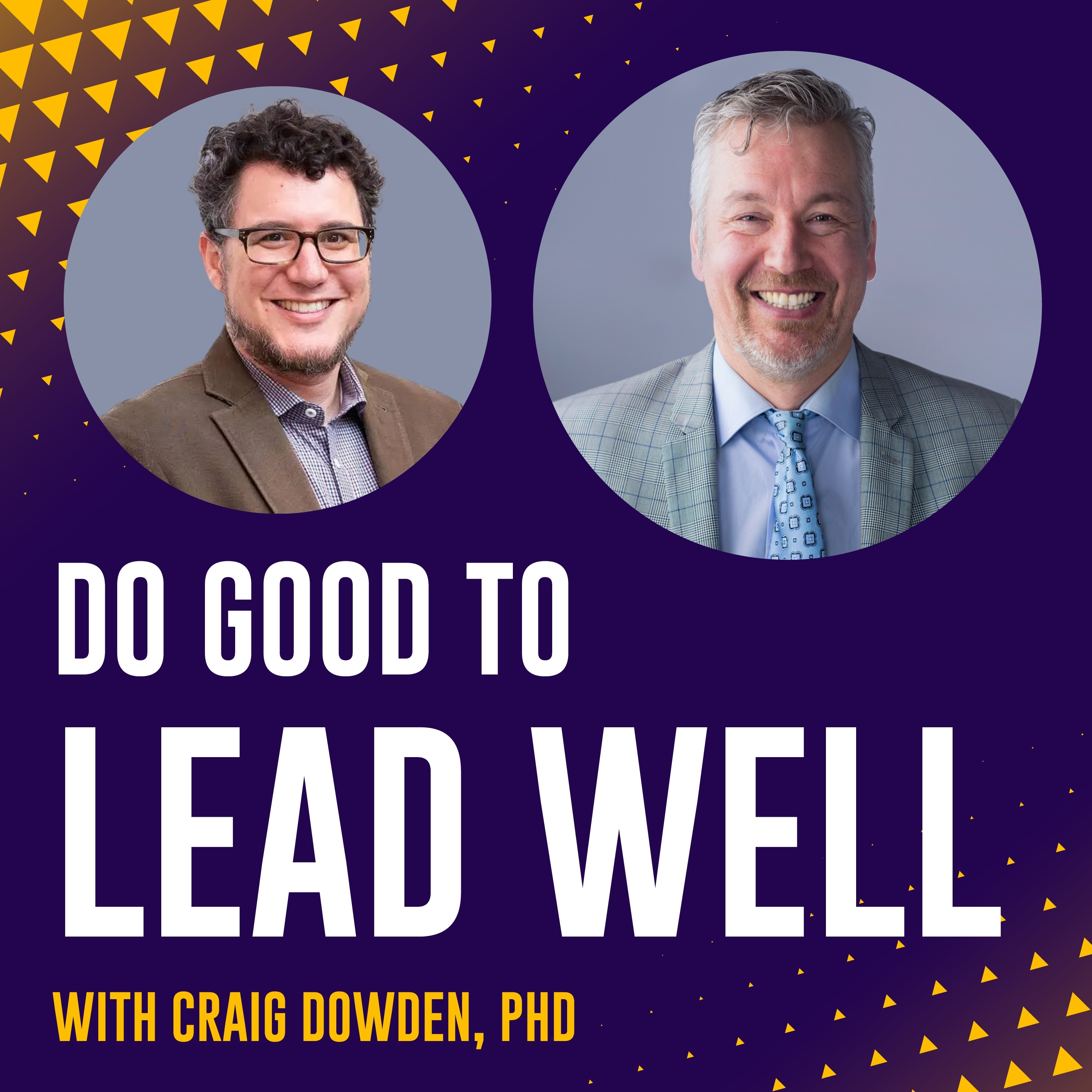 Incorruptible Leadership Lessons from Eric Ries: Why Good Companies Go Bad and How Great Companies Stay Great 28.05.2026 52minThis week on the Do Good to Lead Well podcast, I sit down with bestselling author Eric Ries for a timely and thought-provoking conversation about leadership, mission, and the growing crisis of short-term thinking in business.Eric first transformed the entrepreneurial world with The Lean Startup. In his latest book, Incorruptible, he tackles a new challenge: why so many organizations lose sight of their purpose, compromise their values, and drift away from the very mission that made them successful in the first place.Together, we explore why many traditional business “best practices” are no longer serving leaders, employees, or society — and what it takes to build organizations that can withstand the pressures of short-term performance, protect trust, and stay anchored in their values over time.Through powerful stories, real-world examples, and surprising data, listeners learn how organizations can defend their mission, outlast competitors, and resist the economic “gravity” that pulls so many companies into compromise. From redefining profit as human flourishing to making trust and love into competitive advantages, the episode offers a blueprint for building companies that not only succeed financially, but endure.Whether you’re a founder determined to preserve your mission, or an executive seeking to build a culture of integrity, this episode is packed with practical guidance and inspiration. Tune in to discover what it truly means to become an incorruptible force for the good of your business and the good of humanity.What You’ll Learn- The perils of “best practices.”- Corruption isn’t just a crime – It’s losing your purpose.- How the moral logic of capitalism has been lost.- Redefining profit: Maximizing human flourishing.- Mission (not money) makes companies endure.- Trust and love are competitive advantages.- Governance isn’t boring. It’s your organization’s DNA.- Does growth kill mission? The risk is real. The reality does not have to be.- You can build incorruptible companies: An evidence-based business case.Podcast Timestamps(00:00) - A Special Topic and Guest(01:49) - From the Lean Start-up to Incorruptible(04:07) - Defining and Diagnosing Corruption(08:32) - The Moral Logic of Capitalism and Value Creation(13:03) - Redefining Profit and Human Flourishing(19:15) - Mission Drift and Protecting Organizational Purpose(22:01) - Outliers: Exceptional Companies and New Best Practices(25:29) - Financial Gravity, Longevity, and Employee Ownership(30:00) - Trust as Organizational Currency(34:23) - The Long Term Stock Exchange and Long-Termism(35:20) - Love, People-First Leadership, and Real Competitive Advantage(41:23) - Governance, Board Dynamics, and Creating Incorruptible Organizations(44:46) - Lessons from Case Studies: Zita Cobb and Beyond(49:16) - Closing Reflections and Practical ResourcesKEYWORDSPositive Leadership, Incorruptible, Integrity, Do Good to Lead Well, Long Term Thinking, Effective Governance, Market Reform, Lean Startup Method, Company Culture, Avoiding Short Term Thinking, Corruption, Capitalism, Value Creation, Shareholder Primacy, Business Ethics, Corporate Mission, Profit Redefinition, Human Flourishing, Stakeholder Alignment, Organizational Trust, Financial Gravity, Mission Controlled Companies, Organizational Character, CEO Success
 -
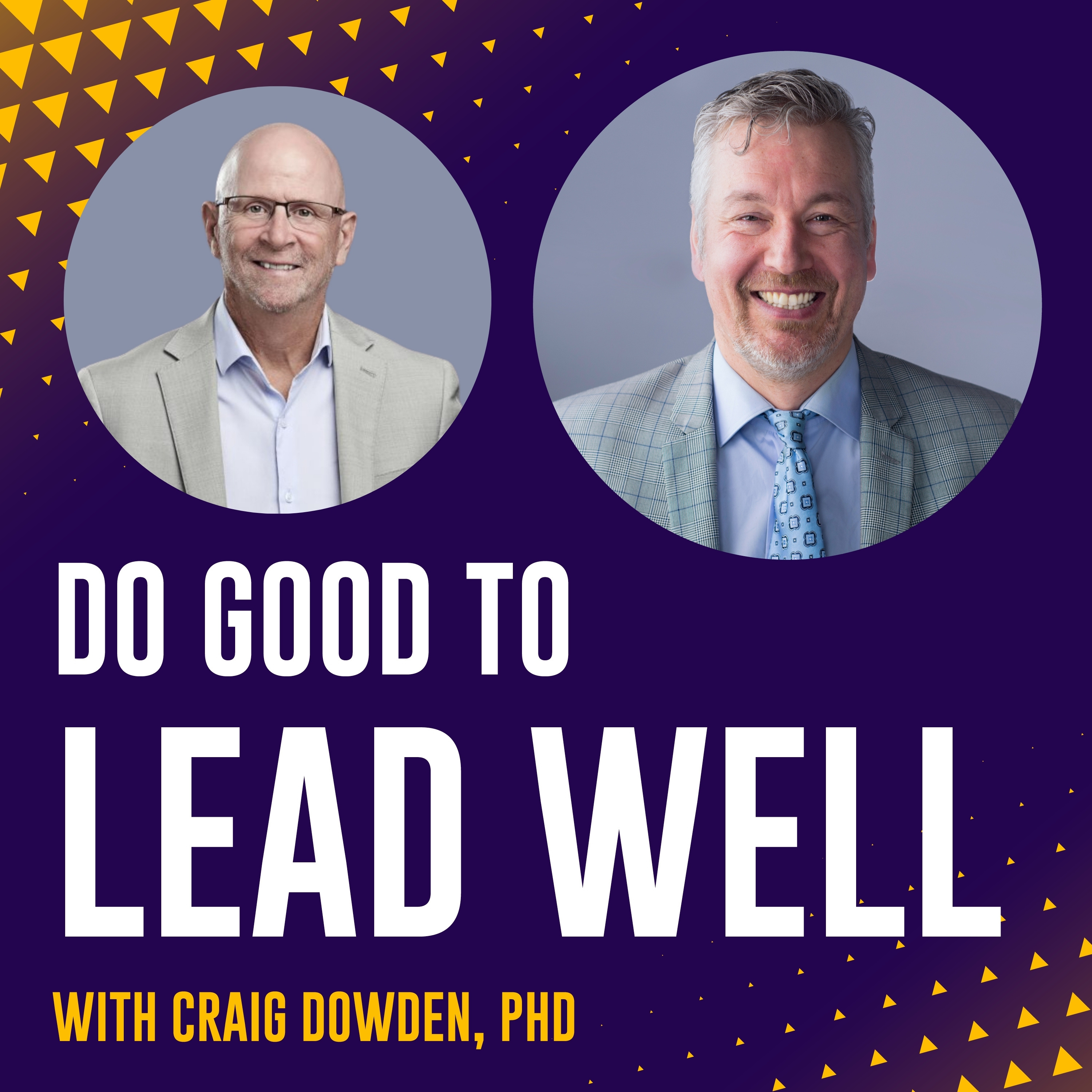 The Power of ATP (Authenticity, Transparency, Positivity) – A Conversation with an Award-Winning CEO of an $800 Million Business 21.05.2026 20minOn this week’s episode of Do Good to Lead Well, I am joined by Kevin Ford, the former CEO of Calian, whose track record as a transformational CEO sets the stage for a candid exploration of what really drives lasting personal and business success.We start by asking the question: Are authenticity and transparency more critical than ever in the age of AI? Our answer is a resounding ‘yes.’ We continue the conversation by exploring how the ATP trifecta—authenticity, transparency, and positivity—became the defining factor behind Kevin’s award-winning tenure as CEO.Our discussion moves beyond buzzwords, tackling real questions: How do you lead authentically even when you don’t have all the answers? How does transparency foster trust and spark breakthrough thinking? And why does a leader’s positive energy ripple through teams, especially in uncertain times?Packed with fresh perspectives and memorable stories, this conversation is essential listening for leaders and aspiring leaders looking to create thriving, rather than surviving, cultures. If you want to future-proof your leadership, build high-trust organizations, and learn how positivity can become your secret competitive edge, listen in to learn the tools and strategies that bring the ATP model to life for you.What You’ll Learn- The Power of Authentic Leadership.- Transparency as a Catalyst for Engagement.- Positivity as the Secret Sauce. - Building Trust in an Ai-Driven world.- Embracing Vulnerability for Growth.- Practical Ways to Become an ATP Leader.Podcast Timestamps(00:00) - Setting the Stage (02:38) - Defining ATP: Authenticity, Transparency, Positivity(03:13) - Personal Reflections on Legacy and Feedback(04:19) - Maintaining Core Values Amidst Public Company Pressures(05:16) - Exploring Authenticity: What It Means and Why It Matters(08:57) - Trust as a Foundation: Authenticity and Transparency in Practice(10:02) - Transparency: Challenges and Benefits for Modern Leaders(11:18) - The Power of ‘Thinking Out Loud’(14:16) - The Downside of Command-and-Control Leadership(15:37) - Positivity as Secret Sauce: Leading Through Uncertainty(16:58) - Controlling How You Show Up: Practical Positivity(18:06) - Avoiding Negativity: Energy and Team Dynamics(21:30) - Community Call-to-Action: Living and Leading ATPKEYWORDSPositive Leadership, Authenticity, Transparency, Positivity, Leading Through AI/Disruption, Business Growth, Engaged Culture, Acquisitions, Public Company, Building Trust, ‘Think Out Loud’ Sessions, Workplace Culture, Personal Reflection, Legacy, Growth Mindset, Reframing, Employee Feedback, Positive Mindset, Resilience, Human Connection, Psychological Safety, Self-Awareness, CEO Success
 -
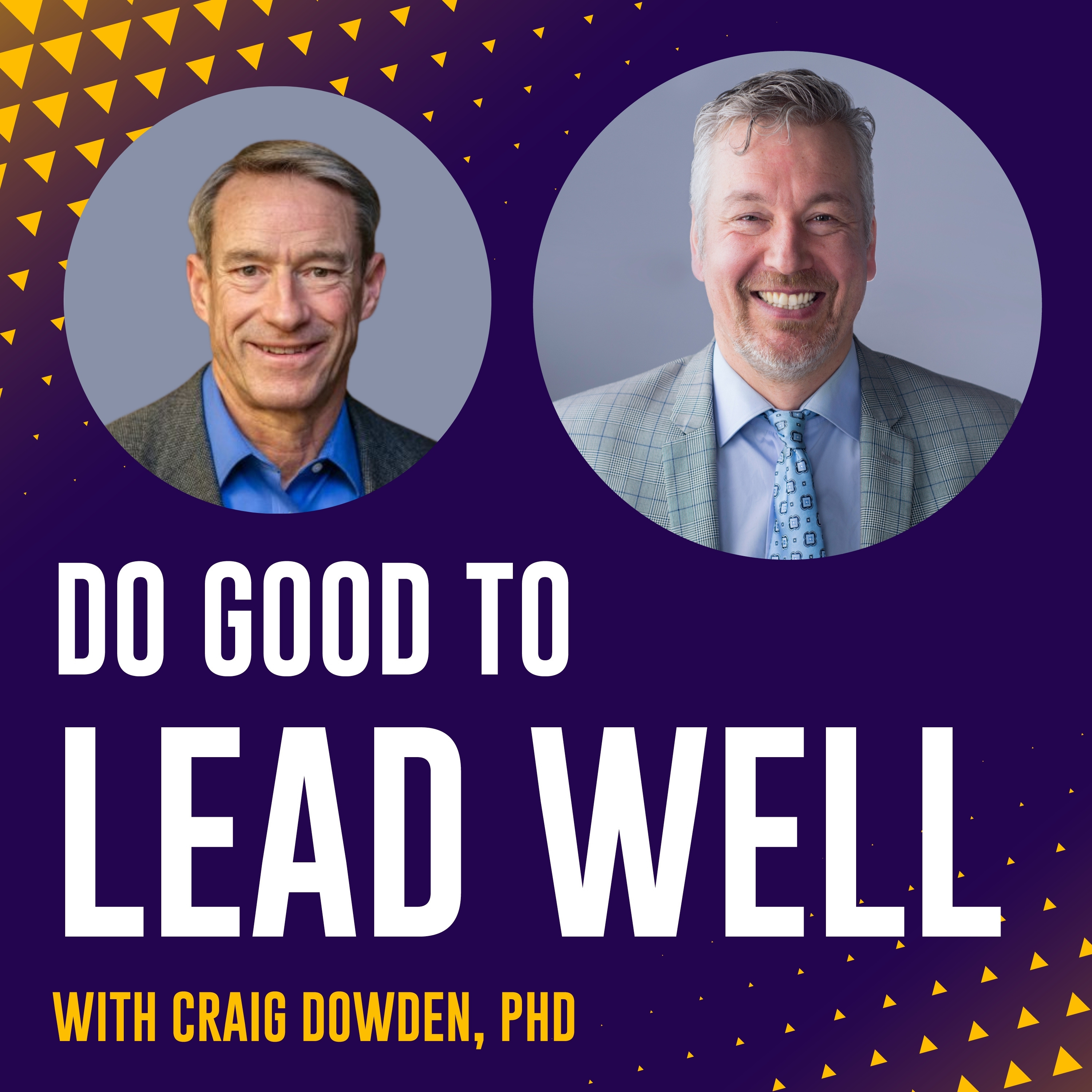 How Do I Make the Best Decisions When the Pressure Is On? Lessons From a 30-Year Senior Military Leader 07.05.2026 49minHow do leaders stay steady in the storm of tough choices? This week, I sit down with Jack Briggs, a retired major general with a 30-year career in the military who is also a highly seasoned, for a masterclass in pressure-tested decision making.The episode debunks the myth that high-stakes choices are unique to the military or boardroom. Instead, Jack argues, “pressure is pressure,” whether the risk is reputational, operational, or personal. The discussion highlights the three traits of the best decision makers: anchoring decisions in firm principles, seeking help with humility, and making the call… decisively, not reactively.Listeners will come away with four essential questions to use in any crisis and learn why reframing “crises” into a set of solvable problems is vital for calm, effective leadership. This conversation is a must for anyone seeking practical, repeatable strategies to lead well, even when the stakes—and the anxieties—are high.What You’ll Learn- Anchor your decisions in principles.- Lead with humility and build your team.- Distinguish between problems and crises.- The power of a structured decision framework.- Be decisive and own the outcome.- Focus on your sphere of influence.Podcast Timestamps03:18 Jack's origin story: from the Thunderbirds to the Air Force Academy05:37 When leadership first appeared: Boy Scouts, the leadership laboratory, and the Eagle Scout07:37 The Air Force Academy as a leadership lab: authority vs. responsibility10:42 Being the snowplow: how to delegate without abandoning accountability14:11 Leadership is a science and an art: training the recipe, then adapting it16:41 Combat to boardroom: why pressure is pressure regardless of context19:19 Defending North America: leading at continental scale21:28 The three characteristics of the best decision makers23:24 The archer analogy: principles, input, decisiveness26:45 What leaders get wrong: fighting the fight they wish they had28:06 Mob rule, Moses, and principled decision-making32:11 Crisis vs. problem: why language matters under pressure33:10 Snowstorms and problem buckets: a real-world example35:26 The four questions for high-stress decisions40:01 Checklists that work: laminate it and they will keep it43:18 Humility plus decisiveness: being disagree-able45:36 Choosing the least worst option and owning it48:35 Final thoughts: stop chasing outcomes, start leading in your three feetKEYWORDSPositive Leadership, Decision Making, Decision Making Under Pressure, Humility, Air Force Career, Military Leadership, Air Force Academy, Leadership Lab, Principles-Based Decisions, Delegating Authority, Crisis Management, Operational Risk, Financial Risk, Reputational Risk, Pressure in Leadership, Crisis vs Problem, Crisis Communication, CEO Success
 -
Why (Senior) Leaders Struggle to Get Feedback and How to Change That 30.04.2026 23minWhy do (senior) executives so rarely hear what they need to improve? I explore this critical leadership blind spot, inspired by a recent article in Fast Company by Dr. Tomas Chamorro-Premuzic and global thought leader on psychological safety, Amy Edmondson. Relying on thought-provoking research amplified by real-world case examples, this episode exposes the invisible barriers that often keep leaders in the dark and offers a toolkit for reversing the trend.From the dangers of hierarchical silence to the psychology of honest feedback, I review practical strategies we can all use including asking focused questions, acknowledging our own blind spots, and separating our immediate reactions from thoughtful reflection. The importance of acting on feedback, no matter how small, is a simple, yet frequently overlooked opportunity. I also share the powerful example of Alan Mulally, one of the most celebrated and respected CEOs of all-time, to highlight how we can transform our cultures from focusing on fear to unleashing our individual and collective potential.For leaders who are hungry to boost their impact and foster psychological safety, this episode is full of actionable advice on creating an environment where candor thrives and teams and leaders at every level can truly grow.What You’ll Learn- The benefits of feedback.- What is feedback?- Ask for specifics, not generalities - The power of specific questions. - Reward courage – It’s scary to offer someone feedback.- Act on feedback and communicate your changes.Podcast Timestamps00:00 Welcome and Episode Introduction01:37 Today's Topic: The Feedback Gap for Senior Leaders04:04 What Feedback Really Is: The Zenger Folkman Definition05:47 Why Senior Leaders Struggle to Receive Honest Feedback08:11 Strategy 1: Ask for Disconfirming Data, Not General Impressions10:31 Asking Specific, Targeted Feedback Questions12:40 Strategy 2: Separate Ingestion from Reaction14:57 Strategy 3: Focus on Patterns, Not One Data Point17:18 Strategy 4: Act on One Small Piece of Feedback First19:40 The Alan Mulally and Ford Turnaround Story22:01 Red Lights Are Gems: Closing Thoughts KEYWORDSPositive Leadership, Feedback, Psychological Safety, Amy Edmondson, 360 feedback, Self-Awareness, Hierarchy, Power Differential, Leadership Development, Constructive Feedback, Actionable Feedback, Behavioral Change, Barriers to Feedback, Receiving Feedback, Accountability, Alan Mulally, Ford Turnaround, Transparent Leadership, CEO SuccessSource: Why senior leaders get less feedback—and how to change that - Fast Company
-
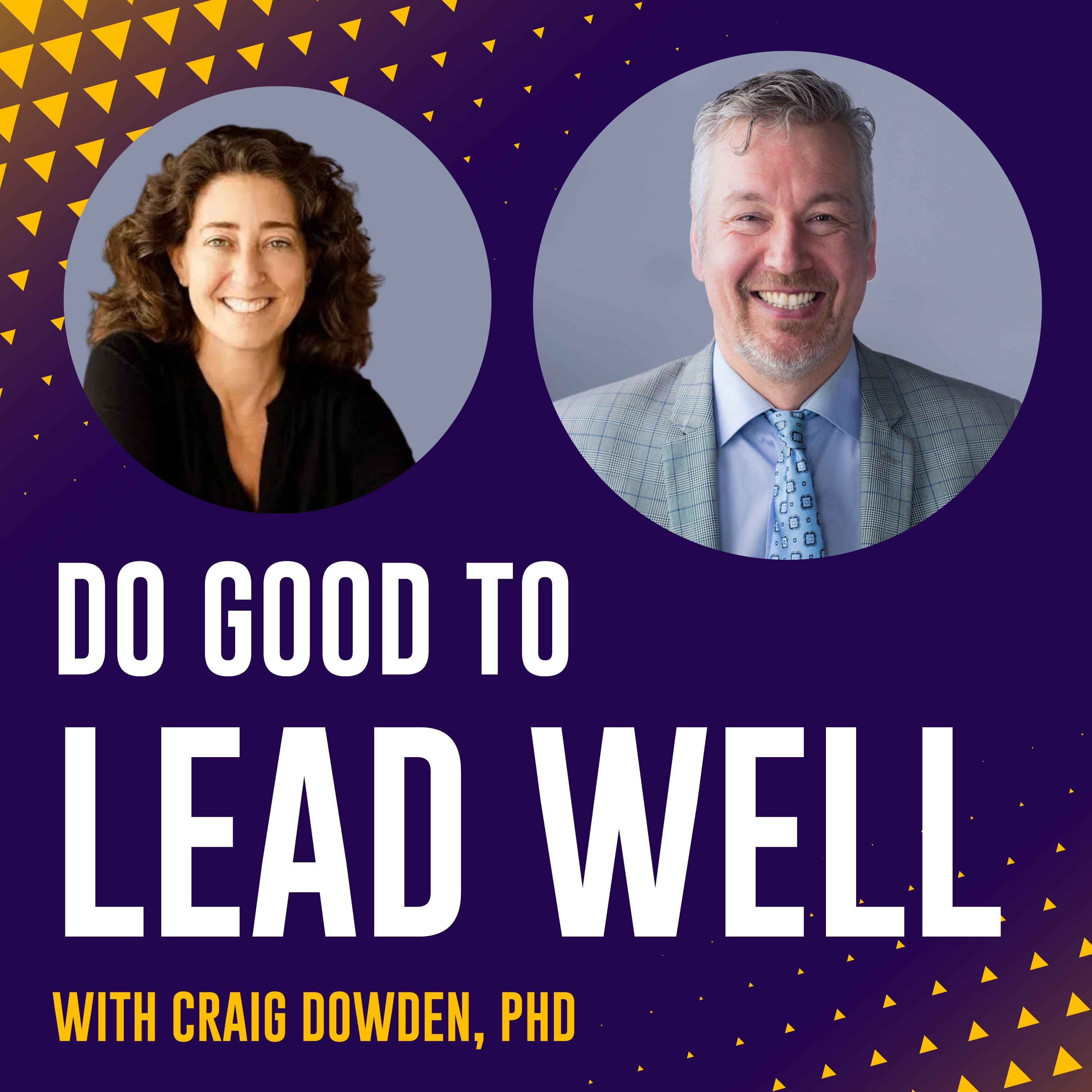 Embracing Authenticity at Work with Chief Heart Officer and Bestselling Author, Claude Silver 23.04.2026 58minWhat does authenticity at work truly mean and why is it worth the effort? On this week’s episode, I have a thought-provoking conversation with Claude Silver, the world’s first Chief Heart Officer from VaynerMedia, about the messy, courageous path to being yourself, even when it feels risky. Together, we deconstruct major myths around vulnerability in the workplace, offering evidence and stories that show how authenticity drives not just well-being, but tangible results: lower turnover, greater innovation, and a sense of collective purpose.Inspired by Claude’s honest approach, our live listeners pose powerful questions that highlight common daily struggles such as hesitating to speak up, managing boundaries, and leading authentically under pressure. Claude brings empathy and actionable insight, emphasizing that psychological safety isn’t a luxury, but the backbone of sustainable performance. She also meets tough questions about hybrid work, digital disconnection, and the demands of high expectations with practical advice for human connection, even screen-to-screen.Whether you’re looking to find your voice at work or creating an environment where others share more of themselves at the office, this conversation offers a blueprint for creating impact through authenticity, empathy, and everyday courage.What You’ll Learn- Authenticity doesn’t mean sharing everything—it means showing up as you and taking up space.- Leaders aren’t expected to have all the answers; the magic happens when we guide, listen, and connect.- Empathy and accountability are not at odds. When people feel seen and valued, results follow.- Protect your energy and set boundaries; you cannot pour from an empty cup.- In challenging times, focus on what you can impact and be gentle with yourself.Podcast Timestamps00:57 Welcome and introduction to Claude Silver03:06 Origin story: Why Claude wrote Be Yourself at Work04:48 The Chief Heart Officer role explained07:01 Authenticity at work: Dipping your toe in09:20 The cost of hiding who you are12:19 The ROI of psychological safety and human-centered culture15:42 Authenticity in high-performance transformation environments18:24 Cultivating self-awareness: Where to start21:26 Getting curious about your emotions23:44 The biggest misconception about authenticity26:06 Leaders don't need all the answers28:38 Empathy vs. accountability: They're not opposites33:17 Speaking up in meetings and overcoming imposter syndrome36:12 Having difficult conversations with courage39:41 Connection in a virtual and hybrid world44:11 Cameras on: Why it matters46:52 When your face comes across as intense48:46 Staying grounded when the world feels heavy52:41 Boundaries: The recovering codependent's guide56:09 Closing message: Text three people todayKEYWORDSPositive Leadership, Authenticity at Work, Psychological Safety, Workplace Culture, Empathy, Self-Awareness, Vulnerability, Maintaining Boundaries, People-Centered Leadership, Hybrid Work, Chief Heart Officer, Organizational Values, Imposter Syndrome, Emotional Intelligence, Collaboration, Belonging, Workplace Diversity, CEO Success
 -
 Unlocking Unforgettable Presence and Influence with Bestselling Author, Lorraine K. Lee 09.04.2026 57minThis week’s episode of Do Good to Lead Well features Lorraine K. Lee, award-winning keynote speaker, LinkedIn Top Voice, and bestselling author of Unforgettable Presence: Get Seen, Gain Influence, and Catapult Your Career. Right from the start, Lorraine challenges the myth that presence is an innate trait and persuasively argues that it is a learnable skill that anyone can develop through intention and small shifts.We explore the superpowers of introverts while also highlighting practical strategies for building credibility when you are the least experienced/youngest person in the room and how you can deliver high-impact presentations that engage an audience. Lorraine also provides her T.E.A. framework for effective communication in a virtual world. She highlights the importance of Technology, Energy, and Aesthetics to maximize our impact on video calls.This important conversation invites leaders and professionals to rethink how presence is built—in everyday moments, not just high-stakes situations. Listeners will walk away with accessible, evidence-based tools to unlock their own “superpowers” and show up with confidence, clarity, and unforgettable impact.What You’ll Learn- Reframe presence: From myth to mindset.- Presence is built in small moments, not just big ones.- Embrace and leverage your “presence superpowers”—Even as an introvert.- Turn nerves into fuel: Taming the anxiety monster.- Upgrade your virtual presence with T.E.A. (Tech, Energy, Aesthetics).- Design meetings for inclusion and impact.- How to redefine your LinkedIn presence.- Reframe imposter syndrome as growth data.Podcast Timestamps(00:00) – What is Unforgettable Presence?(04:49) – Presence as a Learnable Skill(07:24) – Developing Presence as an Introvert(10:12) - Managing Public Speaking Anxiety(13:06) – Common Misconceptions About Presence(18:22) - Presentation & Meeting Presence: Preparation and Impact(22:19) - Building Strong Virtual Presence in Remote/Hybrid Work(27:17) - Leading and Facilitating Engaging Meetings(31:12) - Power of Language: Minimizing vs. Empowering Communication(38:28) - Building LinkedIn Presence for Career Impact(42:41) - Presence as a Junior Team Member(49:15) - Maintaining Presence in High-Pressure Situations(52:00) - Overcoming Imposter SyndromeKEYWORDSPositive Leadership, Unforgettable Presence, Executive Presence, Introverts, Public Speaking, LinkedIn Strategies, Virtual Presence, Remote Work, Hybrid Meetings, Presentation Skills, Minimizing Language, Feedback Techniques, Communication, Imposter Syndrome, Psychological Safety, Meeting Facilitation, Personal Branding, Career Advancement, Storytelling, AI in Communication, Inclusive Leadership, CEO Success


