
The Occult Rejects
The Occult Rejects
0
Occultists, Rejects, and Mystics trying to educate others about magick and occultism so others can figure out who they are and the world around them.
Avsnitt
-
 The Image of The Witch: How the Stereotype Was Made 03.10.2026 53minLinks For The Occult Rejectshttps://linktr.ee/theoccultrejectsOccult Research Institutehttps://www.occultresearchinstitute.org/Substackhttps://substack.com/@theoccultrejects?r=7auau0&utm_campaign=profile&utm_medium=profile-pageCash Apphttps://cash.app/$theoccultrejectsVenmo@TheOccultRejectsPatreonhttps://www.patreon.com/TheOccultRejectsBibliographyCore Academic Scholarship- Bailey, Michael D. Battling Demons: Witchcraft, Heresy, and Reform in the Late Middle Ages. Pennsylvania State University Press, 2003. Essential for Nider and the emergence of diabolical witchcraft before the Malleus. (https://www.psupress.org/books/titles/978-0-271-02225-3.html?utm_source=chatgpt.com)- Briggs, Robin. Witches and Neighbours: The Social and Cultural Context of European Witchcraft. HarperCollins, 1996.- Clark, Stuart. Thinking with Demons: The Idea of Witchcraft in Early Modern Europe. Clarendon Press, 1997. Excellent for inversion, natural/unnatural, Christian/anti-Christian logic.- Davies, Owen. Cunning-Folk: Popular Magic in English History. Hambledon and London, 2003. Useful for distinguishing actual magical practitioners from the demonological witch stereotype. (https://academic.oup.com/ehr/article-abstract/119/482/801/499798?utm_source=chatgpt.com)- Gaskill, Malcolm. Witchfinders: A Seventeenth-Century English Tragedy. John Murray, 2005.- Hults, Linda C. The Witch as Muse: Art, Gender, and Power in Early Modern Europe. University of Pennsylvania Press, 2005. Major source for Dürer, Baldung, sexuality, gender, and visual construction.- Kors, Alan Charles, and Edward Peters, eds. Witchcraft in Europe, 400–1700: A Documentary History. 2nd ed. University of Pennsylvania Press, 2001. Excellent collection of primary documents. (https://www.pennpress.org/9780812217513/witchcraft-in-europe-400-1700/?utm_source=chatgpt.com)- Levack, Brian P. The Witch-Hunt in Early Modern Europe. 4th ed. Routledge, 2016. Best general backbone for chronology, prosecution patterns, regional variation, gender, and numbers. (https://www.routledge.com/link/link/p/book/9781138808096?utm_source=chatgpt.com)- Levack, Brian P., ed. The Witchcraft Sourcebook. 2nd ed. Routledge, 2015. Includes trial documents, demonology, sermons, literature, and visual representations. (https://www.routledge.com/The-Witchcraft-Sourcebook-Second-Edition/Levack/p/book/9781138774971?utm_source=chatgpt.com)- Purkiss, Diane. The Witch in History: Early Modern and Twentieth-Century Representations. Routledge, 1996. Particularly useful for later feminist, historical, literary, and modern witch reconstructions. (https://www.routledge.com/The-Witch-in-History-Early-Modern-and-Twentieth-Century-Representations/Purkiss/p/book/9780415087629?utm_source=chatgpt.com)- Roper, Lyndal. Witch Craze: Terror and Fantasy in Baroque Germany. Yale University Press, 2004/2006. Essential for crones, fertility, motherhood, interrogation, sexuality, cannibalism, and aging. (https://yalebooks.yale.edu/book/9780300119831/witch-craze/?utm_source=chatgpt.com)- Stephens, Walter. Demon Lovers: Witchcraft, Sex, and the Crisis of Belief. University of Chicago Press, 2002/2003. Important for demonic sex, bodily reality, flight, infanticide, and the Malleus. (https://press.uchicago.edu/ucp/books/book/chicago/D/bo3628714.html?utm_source=chatgpt.com)- Zika, Charles. The Appearance of Witchcraft: Print and Visual Culture in Sixteenth-Century Europe. Routledge, 2007. Probably the most important book for this episode’s thesis. (https://www.routledge.com/The-Appearance-of-Witchcraft-1st-Edition/Zika/p/book/9780203713921?utm_source=chatgpt.com)- Davies, Owen, ed. The Oxford History of Witchcraft and Magic. Oxford University Press, 2023. Broad updated survey from antiquity through modern popular culture....
 -
 WITCH: The Strange History of a Dangerous Word 02.10.2026 1h 7minLinks For The Occult Rejectshttps://linktr.ee/theoccultrejectsOccult Research Institutehttps://www.occultresearchinstitute.org/Substackhttps://substack.com/@theoccultrejects?r=7auau0&utm_campaign=profile&utm_medium=profile-pageCash Apphttps://cash.app/$theoccultrejectsVenmo@TheOccultRejectsPatreonhttps://www.patreon.com/TheOccultRejectsBibliographyPrimary Sources, Historical Texts, Legal Sources, and Reference WorksÆlfric of Eynsham. Ælfric’s Catholic Homilies: The First Series: Text. Edited by Peter Clemoes. Early English Text Society, Supplementary Series 17. Oxford: Oxford University Press, 1997.Ælfric of Eynsham. Ælfric’s Catholic Homilies: The Second Series: Text. Edited by Malcolm Godden. Early English Text Society, Supplementary Series 5. London: Oxford University Press for the Early English Text Society, 1979.Attenborough, F. L., ed. and trans. The Laws of the Earliest English Kings. Cambridge: Cambridge University Press, 1922.Bosworth, Joseph, and T. Northcote Toller. An Anglo-Saxon Dictionary. Oxford: Clarendon Press, 1898; Supplement, 1921. See also the revised Bosworth-Toller Anglo-Saxon Dictionary Online, especially the entries for wicca, wicce, wiccedōm, and related terms.Elliger, Karl, and Wilhelm Rudolph, eds. Biblia Hebraica Stuttgartensia. 5th corrected ed. Stuttgart: Deutsche Bibelgesellschaft, 1997.England. 33 Henry VIII c. 8. An Act concerning Witchcrafts and Sorcery (1542).England. 5 Elizabeth I c. 16. An Act against Conjurations, Enchantments and Witchcrafts (1563).England. 1 James I c. 12. An Act against Conjuration, Witchcraft and dealing with evil and wicked Spirits (1604).Great Britain. 9 George II c. 5. An Act to repeal the Statute made in the first Year of the Reign of King James the First, intituled, An Act against Conjuration, Witchcraft and dealing with evil and wicked Spirits... Commonly known as the Witchcraft Act 1735; royal assent 1736.Great Britain. Fraudulent Mediums Act 1951, 14 & 15 Geo. 6 c. 33.Forshall, Josiah, and Frederic Madden, eds. The Holy Bible, Containing the Old and New Testaments, with the Apocryphal Books, in the Earliest English Versions Made from the Latin Vulgate by John Wycliffe and His Followers. 4 vols. Oxford: Oxford University Press, 1850.Gardner, Gerald B. Witchcraft Today. London: Rider and Company, 1954.Gifford, George. A Dialogue Concerning Witches and Witchcraftes. London: John Windet for Tobie Cooke and Mihil Hart, 1593.Krapp, George Philip, ed. The Junius Manuscript. Anglo-Saxon Poetic Records 1. New York: Columbia University Press, 1931.Liebermann, Felix, ed. Die Gesetze der Angelsachsen. 3 vols. in 4. Halle: Max Niemeyer, 1903–1916.Lyly, John. Mother Bombie. London: Thomas Scarlet for Cuthbert Burby, 1594.Murray, Margaret Alice. The Witch-Cult in Western Europe: A Study in Anthropology. Oxford: Clarendon Press, 1921.Perkins, William. A Discourse of the Damned Art of Witchcraft: So Farre Forth as It Is Revealed in the Scriptures, and Manifest by True Experience. Published by Thomas Pickering. Cambridge, 1608.Rahlfs, Alfred, ed. Septuaginta. Revised by Robert Hanhart. Stuttgart: Deutsche Bibelgesellschaft, 2006.Robertson, A. J., ed. and trans. The Laws of the Kings of England from Edmund to Henry I. Cambridge: Cambridge University Press, 1925.Tyndale, William. The Pentateuch. 1530. For a modern edition, see Tyndale’s Old Testament, edited by David Daniell. New Haven: Yale University Press, 1992.Weber, Robert, and Roger Gryson, eds. Biblia Sacra iuxta Vulgatam Versionem. 5th ed. Stuttgart: Deutsche Bibelgesellschaft, 2007.Webster, Noah. An American Dictionary of the English Language. New York: S. Converse, 1828.The Holy Bible, Conteyning the Old Testament, and the New. London: Robert...
 -
 RETURN TO WILLOWS WEEP — Digging Deeper Into America’s Strangest Haunted House 30.09.2026 1h 33minLinks For The Occult Rejectshttps://linktr.ee/theoccultrejectsOccult Research Institutehttps://www.occultresearchinstitute.org/Substackhttps://substack.com/@theoccultrejects?r=7auau0&utm_campaign=profile&utm_medium=profile-pageCash Apphttps://cash.app/$theoccultrejectsVenmo@TheOccultRejectsPatreonhttps://www.patreon.com/TheOccultRejectsAlso want to remind people about the website, if you're into reading we have tons of information by multiple contributors, and we got t-shirts up on the site if you're interested. Fun fact, the art is all based on the eyeball.
 -
 Mechanics OF Magick: The Witch’s Apothecary— Herbs, Scent & the Nervous System w/ The Alchemist Lady 28.09.2026 1h 58minLinks For The Occult Rejectshttps://linktr.ee/theoccultrejectsOccult Research Institutehttps://www.occultresearchinstitute.org/Substackhttps://substack.com/@theoccultrejects?r=7auau0&utm_campaign=profile&utm_medium=profile-pageCash Apphttps://cash.app/$theoccultrejectsVenmo@TheOccultRejectsPatreonhttps://www.patreon.com/TheOccultRejectsAlso want to remind people about the website, if you're into reading we have tons of information by multiple contributors, and we got t-shirts up on the site if you're interested. Fun fact, the art is all based on the eyeball.
 -
 Fear Mongering for Clicks Can Fuck Up the Listener 27.09.2026 1h 2minLinks For The Occult Rejectshttps://linktr.ee/theoccultrejectsOccult Research Institutehttps://www.occultresearchinstitute.org/Substackhttps://substack.com/@theoccultrejects?r=7auau0&utm_campaign=profile&utm_medium=profile-pageCash Apphttps://cash.app/$theoccultrejectsVenmo@TheOccultRejectsPatreonhttps://www.patreon.com/TheOccultRejectsBIBLIOGRAPHYFear, Negativity, Attention, and StressBaumeister, Roy F., Ellen Bratslavsky, Catrin Finkenauer, and Kathleen D. Vohs. “Bad Is Stronger Than Good.” Review of General Psychology 5, no. 4 (2001): 323–370. https://doi.org/10.1037/1089-2680.5.4.323.Bar-Haim, Yair, Dominique Lamy, Lee Pergamin, Marian J. Bakermans-Kranenburg, and Marinus H. van IJzendoorn. “Threat-Related Attentional Bias in Anxious and Nonanxious Individuals: A Meta-Analytic Study.” Psychological Bulletin 133, no. 1 (2007): 1–24. https://doi.org/10.1037/0033-2909.133.1.1.Tannenbaum, Melanie B., Justin Hepler, Rick S. Zimmerman, Lindsey Saul, Samantha Jacobs, Kristina Wilson, and Dolores Albarracín. “Appealing to Fear: A Meta-Analysis of Fear Appeal Effectiveness and Theories.” Psychological Bulletin 141, no. 6 (2015): 1178–1204. https://doi.org/10.1037/a0039729.Juster, Robert-Paul, Bruce S. McEwen, and Sonia J. Lupien. “Allostatic Load Biomarkers of Chronic Stress and Impact on Health and Cognition.” Neuroscience & Biobehavioral Reviews 35, no. 1 (2010): 2–16. https://doi.org/10.1016/j.neubiorev.2009.10.002.Negative News, Trauma Coverage, and Stress ReactivityMarin, Marie-France, Julie-Katia Morin-Major, Tania E. Schramek, Annick Beaupré, Andrea Perna, Robert-Paul Juster, and Sonia J. Lupien. “There Is No News Like Bad News: Women Are More Remembering and Stress Reactive after Reading Real Negative News than Men.” PLoS ONE 7, no. 10 (2012): e47189. https://doi.org/10.1371/journal.pone.0047189.Holman, E. Alison, Dana Rose Garfin, and Roxane Cohen Silver. “Media’s Role in Broadcasting Acute Stress Following the Boston Marathon Bombings.” Proceedings of the National Academy of Sciences 111, no. 1 (2014): 93–98. https://doi.org/10.1073/pnas.1316265110.Thompson, Rebecca R., Nickolas M. Jones, E. Alison Holman, and Roxane Cohen Silver. “Media Exposure to Mass Violence Events Can Fuel a Cycle of Distress.” Science Advances 5, no. 4 (2019): eaav3502. https://doi.org/10.1126/sciadv.aav3502.Fear, Negativity, and the Attention EconomyRobertson, Claire E., Nicolas Pröllochs, Kaoru Schwarzenegger, Philip Pärnamets, Jay J. Van Bavel, and Stefan Feuerriegel. “Negativity Drives Online News Consumption.” Nature Human Behaviour 7 (2023): 812–822. https://doi.org/10.1038/s41562-023-01538-4.Shabahang, Reza, Hyeyeon Hwang, Emma F. Thomas, Mara S. Aruguete, Lynn E. McCutcheon, Gábor Orosz, Abbas Ali Hossein Khanzadeh, Benyamin Mokhtari Chirani, and Ágnes Zsila. “Doomscrolling Evokes Existential Anxiety and Fosters Pessimism about Human Nature? Evidence from Iran and the United States.” Computers in Human Behavior Reports 15 (2024): 100438. https://doi.org/10.1016/j.chbr.2024.100438.Conspiracy Exposure and Paranoid ThoughtMolenda, Zuzanna, Marta Marchlewska, Adam Karakula, Wojciech Podsiadłowski, Marta Rogoza, Paulina Bagrowska, and Dagmara Szczepańska. “Thought Contagion? Conspiracy Beliefs Boost Paranoid Thoughts.” Applied Psychology: Health and Well-Being 16, no. 4 (2024): 2065–2082. https://doi.org/10.1111/aphw.12577.Repetition and the Illusory Truth EffectYe, Steeven, David Attali, Maria Ghazi, Arnaud Cachia, Mathieu Cassotti, Grégoire Borst, et al. “Systematic Review and Meta-Analysis of the Evidence for an Illusory Truth Effect and Its Determinants.” Nature Communications 17 (2026): 3270. https://doi.org/10.1038/s41467-026-70041-x.Intolerance of Uncertainty, Worry, and AnxietyAkbari, Mehdi, Sonay Sheikhi, Mahsa Sadat Navab Safiadin, Minoo...
 -
The Secret Life of Stones with Nicholas Pearson 26.09.2026 1h 32minLinks For The Occult Rejectshttps://linktr.ee/theoccultrejectsOccult Research Institutehttps://www.occultresearchinstitute.org/Substackhttps://substack.com/@theoccultrejects?r=7auau0&utm_campaign=profile&utm_medium=profile-pageCash Apphttps://cash.app/$theoccultrejectsVenmo@TheOccultRejectsPatreonhttps://www.patreon.com/TheOccultRejectsAlso want to remind people about the website, if you're into reading we have tons of information by multiple contributors, and we got t-shirts up on the site if you're interested. Fun fact, the art is all based on the eyeball.
-
 Christian Architecture As Ritual Technology Part 5: Holy Bodies, Relics, The Holy Sepulchre & More 25.09.2026 1h 19minLinks For The Occult Rejectshttps://linktr.ee/theoccultrejectsOccult Research Institutehttps://www.occultresearchinstitute.org/Substackhttps://substack.com/@theoccultrejects?r=7auau0&utm_campaign=profile&utm_medium=profile-pageCash Apphttps://cash.app/$theoccultrejectsVenmo@TheOccultRejectsBuy Me A Coffeebuymeacoffee.com/TheOccultRejectsPatreonhttps://www.patreon.com/TheOccultRejectsBIBLIOGRAPHYBrown, Peter. The Cult of the Saints: Its Rise and Function in Latin Christianity. University of Chicago Press, 1981.Brown, Peter. The Body and Society: Men, Women, and Sexual Renunciation in Early Christianity. Columbia University Press, 1988.Brown, Peter. The Rise of Western Christendom: Triumph and Diversity, A.D. 200–1000. Wiley-Blackwell, 2013.Wiśniewski, Robert. The Beginnings of the Cult of Relics. Oxford University Press, 2019.Yasin, Ann Marie. Saints and Church Spaces in the Late Antique Mediterranean: Architecture, Cult, and Community. Cambridge University Press, 2009.Saxer, Victor. Morts, martyrs, reliques en Afrique chrétienne aux premiers siècles. Beauchesne, 1980.Trout, Dennis E. Paulinus of Nola: Life, Letters, and Poems. University of California Press, 1999.Rapp, Claudia. Holy Bishops in Late Antiquity: The Nature of Christian Leadership in an Age of Transition. University of California Press, 2005.Hahn, Cynthia. Strange Beauty: Issues in the Making and Meaning of Reliquaries, 400–circa 1204. Pennsylvania State University Press, 2012.Hahn, Cynthia. “Seeing and Believing: The Construction of Sanctity in Early-Medieval Saints’ Shrines.” Speculum, vol. 72, no. 4, 1997, pp. 1079–1106.Geary, Patrick J. Furta Sacra: Thefts of Relics in the Central Middle Ages. Princeton University Press, 1978.Vikan, Gary. Early Byzantine Pilgrimage Art. Dumbarton Oaks, 1982.Vikan, Gary. Sacred Images and Sacred Power in Byzantium. Ashgate, 2003.Bitton-Ashkelony, Brouria. Encountering the Sacred: The Debate on Christian Pilgrimage in Late Antiquity. University of California Press, 2005.Hunt, E. D. Holy Land Pilgrimage in the Later Roman Empire AD 312–460. Clarendon Press, 1982.Wilkinson, John. Jerusalem Pilgrims Before the Crusades. Aris & Phillips, 1977.Wilkinson, John. Egeria’s Travels to the Holy Land. 3rd ed., Aris & Phillips, 1999.Egeria. Egeria: Diary of a Pilgrimage. Translated by George E. Gingras. Newman Press, 1970.Egeria. The Pilgrimage of Egeria: A New Translation of the Itinerarium Egeriae with Introduction and Commentary. Translated by Anne McGowan and Paul F. Bradshaw. Liturgical Press, 2018.Sivan, Hagith. “Who Was Egeria? Piety and Pilgrimage in the Age of Gratian.” Harvard Theological Review, vol. 81, no. 1, 1988, pp. 59–72.Biddle, Martin. The Tomb of Christ. Sutton Publishing, 1999.Coüasnon, Charles. The Church of the Holy Sepulchre in Jerusalem. Oxford University Press, 1974.Gibson, Shimon, and Joan E. Taylor. Beneath the Church of the Holy Sepulchre, Jerusalem: The Archaeology and Early History of Traditional Golgotha. Palestine Exploration Fund, 1994.Ousterhout, Robert. “Architecture as Relic and the Construction of Sanctity: The Stones of the Holy Sepulchre.” Journal of the Society of Architectural Historians, vol. 62, no. 1, 2003, pp. 4–23.Krautheimer, Richard. Early Christian and Byzantine Architecture. Yale University Press, 1986.Grabar, André. Martyrium: Recherches sur le culte des reliques et l’art chrétien antique. Collège de France, 1946.Jensen, Robin M. Understanding Early Christian Art. Routledge, 2000.Jensen, Robin M. Baptismal Imagery in Early Christianity: Ritual, Visual, and Theological Dimensions. Baker Academic, 2012.Webb, Matilda. The Churches and Catacombs of Early Christian Rome: A Comprehensive Guide. Sussex Academic Press, 2001.Bowes, Kim. Private Worship, Public Values, and Religious Change in Late Antiquity. Cambridge University Press, 2008.MacCormack, Sabine. Art and Ceremony in Late...
 -
 The Buried History of America- The Awakened Podcast on Ancient Mounds & More 23.09.2026 1h 50minLinks For The Occult Rejectshttps://linktr.ee/theoccultrejectsOccult Research Institutehttps://www.occultresearchinstitute.org/Substackhttps://substack.com/@theoccultrejects?r=7auau0&utm_campaign=profile&utm_medium=profile-pageCash Apphttps://cash.app/$theoccultrejectsVenmo@TheOccultRejectsBuy Me A Coffeebuymeacoffee.com/TheOccultRejectsPatreonhttps://www.patreon.com/TheOccultRejectsAlso want to remind people about the website, if you're into reading we have tons of information by multiple contributors, and we got t-shirts up on the site if you're interested. Fun fact, the art is all based on the eyeball.
 -
 The Mechanics Of Magick: The Ecstatic Body Episode 2- The Ancient Medical Body 21.09.2026 1h 7minLinks For The Occult Rejectshttps://linktr.ee/theoccultrejectsOccult Research Institutehttps://www.occultresearchinstitute.org/Substackhttps://substack.com/@theoccultrejects?r=7auau0&utm_campaign=profile&utm_medium=profile-pageCash Apphttps://cash.app/$theoccultrejectsVenmo@TheOccultRejectsBuy Me A Coffeebuymeacoffee.com/TheOccultRejectsPatreonhttps://www.patreon.com/TheOccultRejectsGreek and Roman Primary SourcesAristotle. Generation of Animals. Translated by A. L. Peck. Loeb Classical Library 366. Cambridge, MA: Harvard University Press, 1942.Galen. On Semen. Edited and translated by Phillip De Lacy. Corpus Medicorum Graecorum V 3, 1–2. Berlin: Akademie-Verlag, 1992.Galen. On the Usefulness of the Parts of the Body. Translated by Margaret Tallmadge May. 2 vols. Ithaca, NY: Cornell University Press, 1968.Hippocrates. Generation, Nature of the Child, Diseases IV. Translated by Paul Potter. Loeb Classical Library 520. Cambridge, MA: Harvard University Press, 2012.Hippocrates. On the Seed and the Nature of the Child. In Hippocratic Writings, edited by G. E. R. Lloyd and translated by J. Chadwick and W. N. Mann. London: Penguin, 1978.Soranus. Soranus’ Gynecology. Translated by Owsei Temkin. Baltimore: Johns Hopkins University Press, 1956.Greek and Roman Medicine, Gender, and SexualityConnell, Sophia M. Aristotle on Female Animals: A Study of the Generation of Animals. Cambridge: Cambridge University Press, 2016.Dean-Jones, Lesley. Women’s Bodies in Classical Greek Science. Oxford: Clarendon Press, 1994.Flemming, Rebecca. Medicine and the Making of Roman Women: Gender, Nature, and Authority from Celsus to Galen. Oxford: Oxford University Press, 2000.King, Helen. Hippocrates’ Woman: Reading the Female Body in Ancient Greece. London: Routledge, 1998.Laqueur, Thomas. Making Sex: Body and Gender from the Greeks to Freud. Cambridge, MA: Harvard University Press, 1990.Lloyd, G. E. R. Science, Folklore and Ideology: Studies in the Life Sciences in Ancient Greece. Cambridge: Cambridge University Press, 1983.Mattern, Susan P. The Prince of Medicine: Galen in the Roman Empire. Oxford: Oxford University Press, 2013.Nutton, Vivian. Ancient Medicine. 2nd ed. London: Routledge, 2013.Ayurveda, Kāma, and South Asian Sexual TraditionsDoniger, Wendy, and Sudhir Kakar, trans. Kamasutra. Oxford: Oxford University Press, 2002.Flood, Gavin. The Tantric Body: The Secret Tradition of Hindu Religion. London: I. B. Tauris, 2006.Meulenbeld, G. Jan. A History of Indian Medical Literature. 5 vols. Groningen: Egbert Forsten, 1999–2002.Sanderson, Alexis. “The Śaiva Age: The Rise and Dominance of Śaivism during the Early Medieval Period.” In Genesis and Development of Tantrism, edited by Shingo Einoo, 41–350. Tokyo: Institute of Oriental Culture, University of Tokyo, 2009.White, David Gordon. Kiss of the Yoginī: “Tantric Sex” in Its South Asian Contexts. Chicago: University of Chicago Press, 2003.White, David Gordon. The Alchemical Body: Siddha Traditions in Medieval India. Chicago: University of Chicago Press, 1996.Wujastyk, Dominik. The Roots of Ayurveda: Selections from Sanskrit Medical Writings. 3rd ed. London: Penguin, 2003.Chinese Medicine and Daoist CultivationDespeux, Catherine. Taoism and Self Knowledge: The Chart for the Cultivation of Perfection. Leiden: Brill, 2018.Furth, Charlotte. A Flourishing Yin: Gender in China’s Medical History, 960–1665. Berkeley: University of California Press, 1999.Kohn, Livia. Daoist Body Cultivation: Traditional Models and Contemporary Practices. Magdalena, NM: Three Pines Press, 2006.Lo, Vivienne. “The Influence of Nurturing Life Culture on the Development of Western Han Acumoxa Therapy.” In Innovation in Chinese Medicine, edited by Elisabeth Hsu, 19–50....
 -
 Willows Weep: The Cursed House That Wouldn’t Die Featuring Weekly Bizarre. 20.09.2026 1h 55minLinks For The Occult Rejectshttps://linktr.ee/theoccultrejectsOccult Research Institutehttps://www.occultresearchinstitute.org/Cash Apphttps://cash.app/$theoccultrejectsVenmo@TheOccultRejectsBuy Me A Coffeebuymeacoffee.com/TheOccultRejectsPatreonhttps://www.patreon.com/TheOccuAlso want to remind people about the website, if you're into reading we have tons of information by multiple contributors, and we got t-shirts up on the site if you're interested. Fun fact, the art is all based on the eyeball.
 -
 WHO IS FINALSPARK? Inside the Company Building Computers with Living Neurons 19.09.2026 1h 14minLinks For The Occult Rejectshttps://linktr.ee/theoccultrejectsOccult Research Institutehttps://www.occultresearchinstitute.org/Substackhttps://substack.com/@theoccultrejects?r=7auau0&utm_campaign=profile&utm_medium=profile-pageCash Apphttps://cash.app/$theoccultrejectsVenmo@TheOccultRejectsPatreonhttps://www.patreon.com/TheOccultRejectsAlso want to remind people about the website, if you're into reading we have tons of information by multiple contributors, and we got t-shirts up on the site if you're interested. Fun fact, the art is all based on the eyeball.
 -
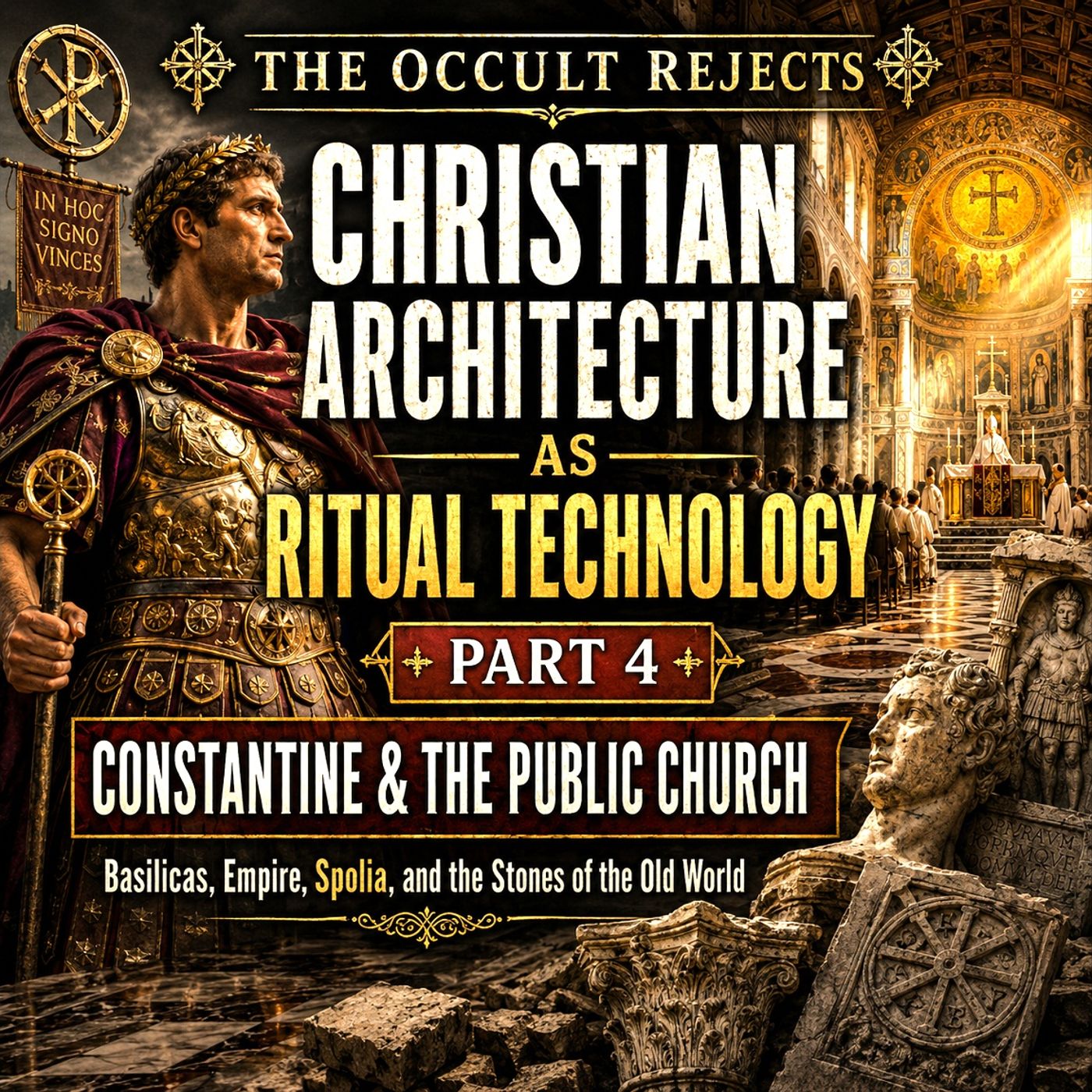 Christian Architecture As Ritual Technology Part 4-Constantine & the Public Church Basilicas, Empire, Spolia, & the Stones of the Old World 18.09.2026 59minThank you and enjoy the episode!Links For The Occult Rejectshttps://linktr.ee/theoccultrejectsOccult Research Institutehttps://www.occultresearchinstitute.org/Substackhttps://substack.com/@theoccultreject...Cash Apphttps://cash.app/$theoccultrejectsVenmo@TheOccultRejectsBuy Me A Coffeebuymeacoffee.com/TheOccultRejectsPatreon@theoccultrejects Krautheimer, Richard. Early Christian and Byzantine Architecture. 4th ed. New Haven: Yale University Press, 1986. Essential. This is the backbone source for early Christian basilicas, liturgical space, urban context, and the development of Christian architecture after Constantine. Krautheimer is especially useful for not treating churches as isolated floor plans, but as part of city, ritual, bishop, patronage, and memory.Krautheimer, Richard. Rome: Profile of a City, 312–1308. Princeton: Princeton University Press, 1980. Very useful for Rome as a layered city: imperial remains, Christian churches, papal authority, public space, and the transformation of Roman urban memory.Krautheimer, Richard, Wolfgang Frankl, and Spencer Corbett. Corpus Basilicarum Christianarum Romae: The Early Christian Basilicas of Rome. 5 vols. Vatican City: Pontificio Istituto di Archeologia Cristiana, 1937–1977. Heavy academic reference work. Best for the Lateran, Old Saint Peter’s, early Roman churches, plans, architectural evidence, and dating.Mathews, Thomas F. The Early Churches of Constantinople: Architecture and Liturgy. University Park: Pennsylvania State University Press, 1971. More focused on Constantinople, but excellent for connecting architecture and liturgical movement.White, L. Michael. Building God’s House in the Roman World: Architectural Adaptation among Pagans, Jews, and Christians. Baltimore: Johns Hopkins University Press, 1990. Great for the transition from house settings and adapted spaces into larger public Christian architecture.Brandenburg, Hugo. Ancient Churches of Rome from the Fourth to the Seventh Century: The Dawn of Christian Architecture in the West. Turnhout: Brepols, 2005. Very useful for Rome, the Lateran, Santa Maria Maggiore, Santa Sabina, and the formation of Christian public architecture.Snyder, Graydon F. Ante Pacem: Archaeological Evidence of Church Life Before Constantine. Macon: Mercer University Press, 2003. Best for the “before Constantine” contrast: house churches, burial spaces, symbols, and pre-public Christian material culture.Elsner, Jaś. Imperial Rome and Christian Triumph: The Art of the Roman Empire AD 100–450. Oxford: Oxford University Press, 1998. Excellent for the transformation from Roman imperial art and space into Christian visual culture and triumphal imagery. Elsner’s work is especially useful for your “empire becomes the bones of the church” angle.Constantine, Legal Shift, and Imperial PatronageEusebius. Life of Constantine. Translated by Averil Cameron and Stuart G. Hall. Oxford: Clarendon Press, 1999. Primary source. Use carefully because it is highly pro-Constantine and partly panegyric, but it is essential for Constantine’s Christian image, patronage, and sacred building projects. Eusebius is one of the key ancient witnesses for Constantine’s role in Christian imperial memory.Eusebius. Ecclesiastical History. Translated by Kirsopp Lake. Loeb Classical Library. Cambridge, MA: Harvard University Press, 1926–1932. Useful background for the pre-Constantinian church, persecution memory, martyr tradition, and Christian self-understanding before public imperial patronage.Barnes, Timothy D. Constantine and Eusebius. Cambridge, MA: Harvard University Press, 1981. Major scholarly source on Constantine, Eusebius, politics, Christian patronage, and imperial ideology.Drake, H. A. Constantine and the Bishops: The Politics of...
 -
 Inside the Order of the Eastern Star | With Jacqueline of Universe Unveiled 16.09.2026 2h 19minLinks For The Occult Rejectshttps://linktr.ee/theoccultrejectsOccult Research Institutehttps://www.occultresearchinstitute.org/Substackhttps://substack.com/@theoccultrejects?r=7auau0&utm_campaign=profile&utm_medium=profile-pageCash Apphttps://cash.app/$theoccultrejectsVenmo@TheOccultRejectsBuy Me A Coffeebuymeacoffee.com/TheOccultRejectsPatreonhttps://www.patreon.com/TheOccultRejectsAlso want to remind people about the website, if you're into reading we have tons of information by multiple contributors, and we got t-shirts up on the site if you're interested. Fun fact, the art is all based on the eyeball.
 -
 The Mechanics Of Magick: The Ecstatic Body Ep 1: Before the Brain Scan | How Human Beings Explained Orgasm Before Modern Neuroscience 14.09.2026 1h 1minLinks For The Occult Rejectshttps://linktr.ee/theoccultrejectsOccult Research Institutehttps://www.occultresearchinstitute.org/Substackhttps://substack.com/@theoccultrejects?r=7auau0&utm_campaign=profile&utm_medium=profile-pageCash Apphttps://cash.app/$theoccultrejectsVenmo@TheOccultRejectsBuy Me A Coffeebuymeacoffee.com/TheOccultRejectsPatreonhttps://www.patreon.com/TheOccultRejectsBIBLIOGRAPHYEpisode One: Before the Brain ScanModern Sexual Response and Neuroscientific FramingBasson, Rosemary. “Human Sex-Response Cycles.” Journal of Sex & Marital Therapy 27, no. 1 (2001): 33–43.Georgiadis, Janniko R. “Doing It… Wild? On the Role of the Cerebral Cortex in Human Sexual Activity.” Socioaffective Neuroscience & Psychology 2 (2012): 17337.Georgiadis, Janniko R., and A. A. T. Simone Reinders. “Men versus Women on Sexual Brain Function: Prominent Differences during Tactile Genital Stimulation, but Not during Orgasm.” Human Brain Mapping 30, no. 10 (2009): 3089–3101.Kaplan, Helen Singer. The New Sex Therapy: Active Treatment of Sexual Dysfunctions. New York: Brunner/Mazel, 1974.Masters, William H., and Virginia E. Johnson. Human Sexual Response. Boston: Little, Brown and Company, 1966.Stoléru, Serge, Virginie Fonteille, Christelle Cornélis, Christian Joyal, and Virginie Moulier. “Functional Neuroimaging Studies of Sexual Arousal and Orgasm in Healthy Men and Women: A Review and Meta-Analysis.” Neuroscience & Biobehavioral Reviews 36, no. 6 (2012): 1481–1509.Wise, Nan J., Eleni Frangos, and Barry R. Komisaruk. “Brain Activity Unique to Orgasm in Women: An fMRI Analysis.” Journal of Sexual Medicine 14, no. 11 (2017): 1380–1391.Ancient Egyptian Primary Sources and Textual CollectionsAllen, James P., trans. The Ancient Egyptian Pyramid Texts. Atlanta: Society of Biblical Literature, 2005.Faulkner, Raymond O., trans. The Ancient Egyptian Coffin Texts. 3 vols. Warminster, UK: Aris & Phillips, 1973–1978.Lichtheim, Miriam. Ancient Egyptian Literature. Vol. 1, The Old and Middle Kingdoms. Berkeley: University of California Press, 1973.Lichtheim, Miriam. Ancient Egyptian Literature. Vol. 2, The New Kingdom. Berkeley: University of California Press, 1976.University College London. “Kahun Medical Papyrus.” Digital Egypt for Universities. Petrie Museum of Egyptian and Sudanese Archaeology. Accessed July 21, 2026.University College London. “Healing Papyri from Lahun.” Digital Egypt for Universities. Petrie Museum of Egyptian and Sudanese Archaeology. Accessed July 21, 2026.Ancient Egyptian Religion, Sexuality, and MedicineAllen, James P. Genesis in Egypt: The Philosophy of Ancient Egyptian Creation Accounts. Yale Egyptological Studies 2. New Haven, CT: Yale Egyptological Seminar, 1988.Assmann, Jan. The Search for God in Ancient Egypt. Translated by David Lorton. Ithaca, NY: Cornell University Press, 2001.Graves-Brown, Carolyn. Dancing for Hathor: Women in Ancient Egypt. London: Continuum, 2010.Hornung, Erik. Conceptions of God in Ancient Egypt: The One and the Many. Translated by John Baines. Ithaca, NY: Cornell University Press, 1982.Manniche, Lise. Sexual Life in Ancient Egypt. London: KPI, 1987.Matić, Uroš. “Sexuality in Ancient Egypt: Pleasures, Desires, Norms, and Representations.” In The Cambridge World History of Sexualities, vol. 2, edited by Merry E. Wiesner-Hanks and Mathew Kuefler, 22–42. Cambridge: Cambridge University Press, 2024.Nunn, John F. Ancient Egyptian Medicine. London: British Museum Press, 1996.Pinch, Geraldine. Egyptian Mythology: A Guide to the Gods, Goddesses, and Traditions of Ancient Egypt. Oxford: Oxford University Press, 2004.Ritner, Robert Kriech. The Mechanics of Ancient Egyptian Magical Practice. Studies in...
 -
The Occult Rejects with Outside Minds Podcast 13.09.2026 1h 24minLinks For The Occult Rejectshttps://linktr.ee/theoccultrejectsOccult Research Institutehttps://www.occultresearchinstitute.org/Substackhttps://substack.com/@theoccultrejects?r=7auau0&utm_campaign=profile&utm_medium=profile-pageCash Apphttps://cash.app/$theoccultrejectsVenmo@TheOccultRejectsBuy Me A Coffeebuymeacoffee.com/TheOccultRejectsPatreonhttps://www.patreon.com/TheOccultRejectsAlso want to remind people about the website, if you're into reading we have tons of information by multiple contributors, and we got t-shirts up on the site if you're interested. Fun fact, the art is all based on the eyeball.
-
 The Cunning Farmer with Todd Elliot 12.09.2026 1h 48minLinks For The Occult Rejectshttps://linktr.ee/theoccultrejectsOccult Research Institutehttps://www.occultresearchinstitute.org/Substackhttps://substack.com/@theoccultrejects?r=7auau0&utm_campaign=profile&utm_medium=profile-pageCash Apphttps://cash.app/$theoccultrejectsVenmo@TheOccultRejectsBuy Me A Coffeebuymeacoffee.com/TheOccultRejectsPatreonhttps://www.patreon.com/TheOccultRejectsThe Cunning Farmer Substack:thecunningfarmer.substack.comWebsite: thecunningfarmer.comBook link:https://www.innertraditions.com/the-cunning-farmerAlso want to remind people about the website, if you're into reading we have tons of information by multiple contributors, and we got t-shirts up on the site if you're interested. Fun fact, the art is all based on the eyeball.
 -
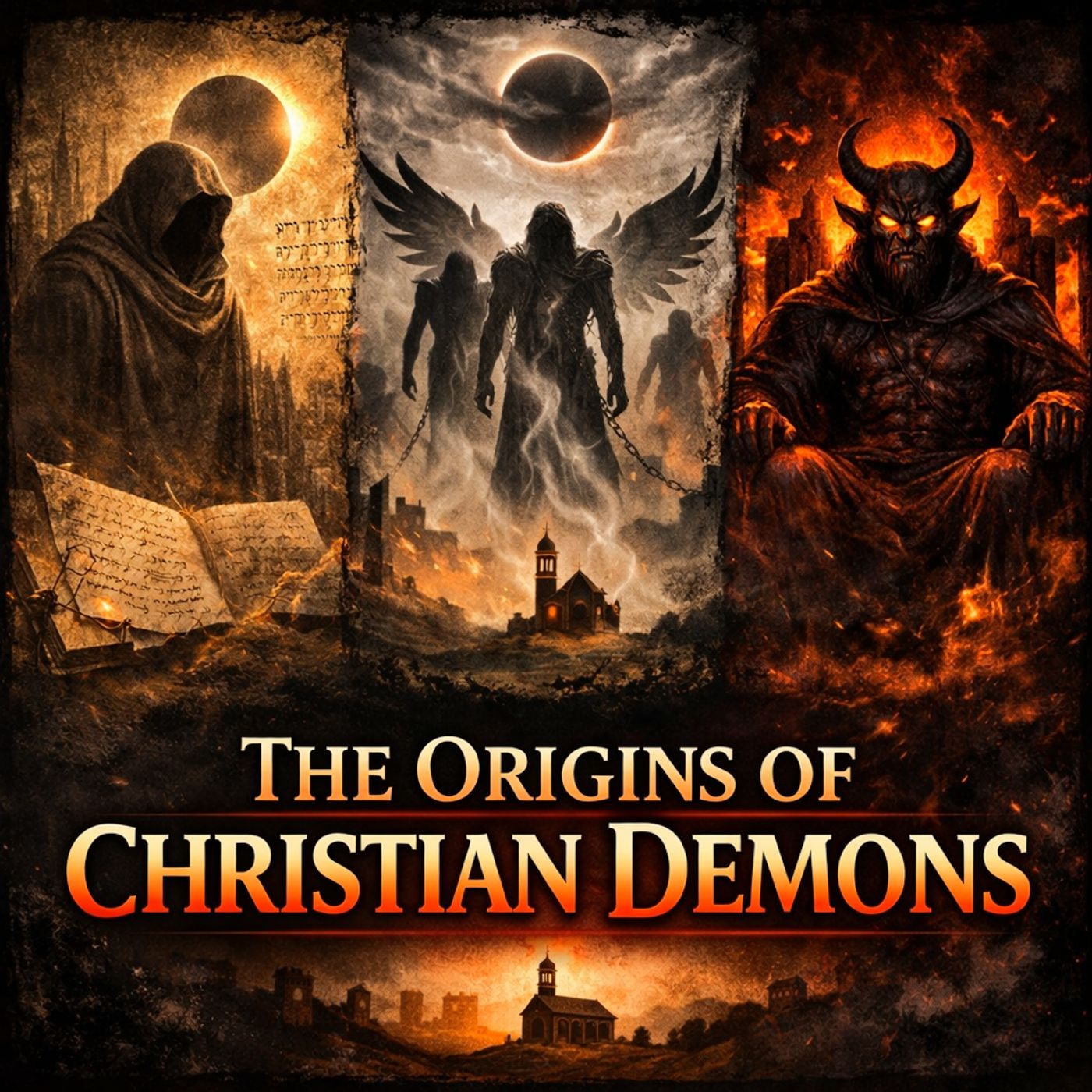 The Origins of Christian Demons 11.09.2026 55minIf you enjoy this episode, we’re sure you will enjoy more content like this on The Occult Rejects. In fact, we have curated playlists on occult topics like grimoires, esoteric concepts and phenomena, occult history, analyzing true crime and cults with an occult lens, Para politics, and occultism in music. Whether you enjoy consuming your content visually or via audio, we’ve got you covered - and it will always be provided free of charge. So, if you enjoy what we do and want to support our work of providing accessible, free content on various platforms, please consider making a donation to the links provided below. Thank you and enjoy the episode!Links For The Occult Rejectshttps://linktr.ee/theoccultrejectsOccult Research Institutehttps://www.occultresearchinstitute.org/Cash Apphttps://cash.app/$theoccultrejectsVenmo@TheOccultRejectsBuy Me A Coffeebuymeacoffee.com/TheOccultRejectsPatreonhttps://www.patreon.com/TheOccultRejectsPrimary textsHebrew Bible / Old Testament:Genesis 6:1–4Leviticus 16Deuteronomy 32:17Psalm 91Psalm 106:37Isaiah 34:14–15Job 1–2Zechariah 3Second Temple Jewish texts:Tobit1 Enoch, especially the Book of the WatchersJubileesDead Sea Scrolls / Qumran texts, especially 1QS 3–4 and the War ScrollNew Testament texts:Mark 1Mark 5Matthew 8:29Matthew 12Luke 8Luke 111 Corinthians 10:202 Corinthians 4:4Colossians 2:15Ephesians 6:12Patristic / late antique texts:Justin Martyr, First ApologyAthenagoras, Plea for the ChristiansOrigenAugustineEvagrius PonticusTestament of SolomonAramaic incantation bowlsSelected scholarshipAnnette Yoshiko Reed, “When Did Daimones Become Demons? Revisiting Septuagintal Data for Ancient Jewish Demonology,” Harvard Theological Review 116.3 (2023).Eibert J. C. Tigchelaar, “Evil Spirits in the Dead Sea Scrolls: A Brief Survey and Some Perspectives.”John J. Collins, “The Two Spirits and the Origin of Evil,” in Understanding Texts in Early Judaism (2022).James C. VanderKam, “Mastema in the Qumran Literature and the Book of Jubilees.”Graham H. Twelftree, In the Name of Jesus: Exorcism among Early Christians (Baker Academic, 2007).Ky Heinze, Origen on Demonic Executioners and the Problem of Evil (Cambridge University Press).Andrew Crislip, “The Sin of Sloth or the Illness of the Demons? The Demon of Acedia in Early Christian Monasticism,” Harvard Theological Review 98.2 (2005).Robin M. Jensen, From Idols to Icons: The Emergence of Christian Devotional Images in Late Antiquity (University of California Press, 2022).Gary B. Ferngren, Medicine and Health Care in Early Christianity (Johns Hopkins University Press).Useful bridge / reference sourcesBible Odyssey, especially the entries on Demons and Unclean Spirits, Nephilim, Satan, and Exorcism in the Gospels.Britannica, especially the entries on Tobit, Asmodeus, First Book of Enoch, Satan, the devil, and Paul. Also want to remind people about the website, if you're into reading we have tons of information by multiple contributors, and we got t-shirts up on the site if you're interested. Fun fact, the art is all based on the eyeball.
 -
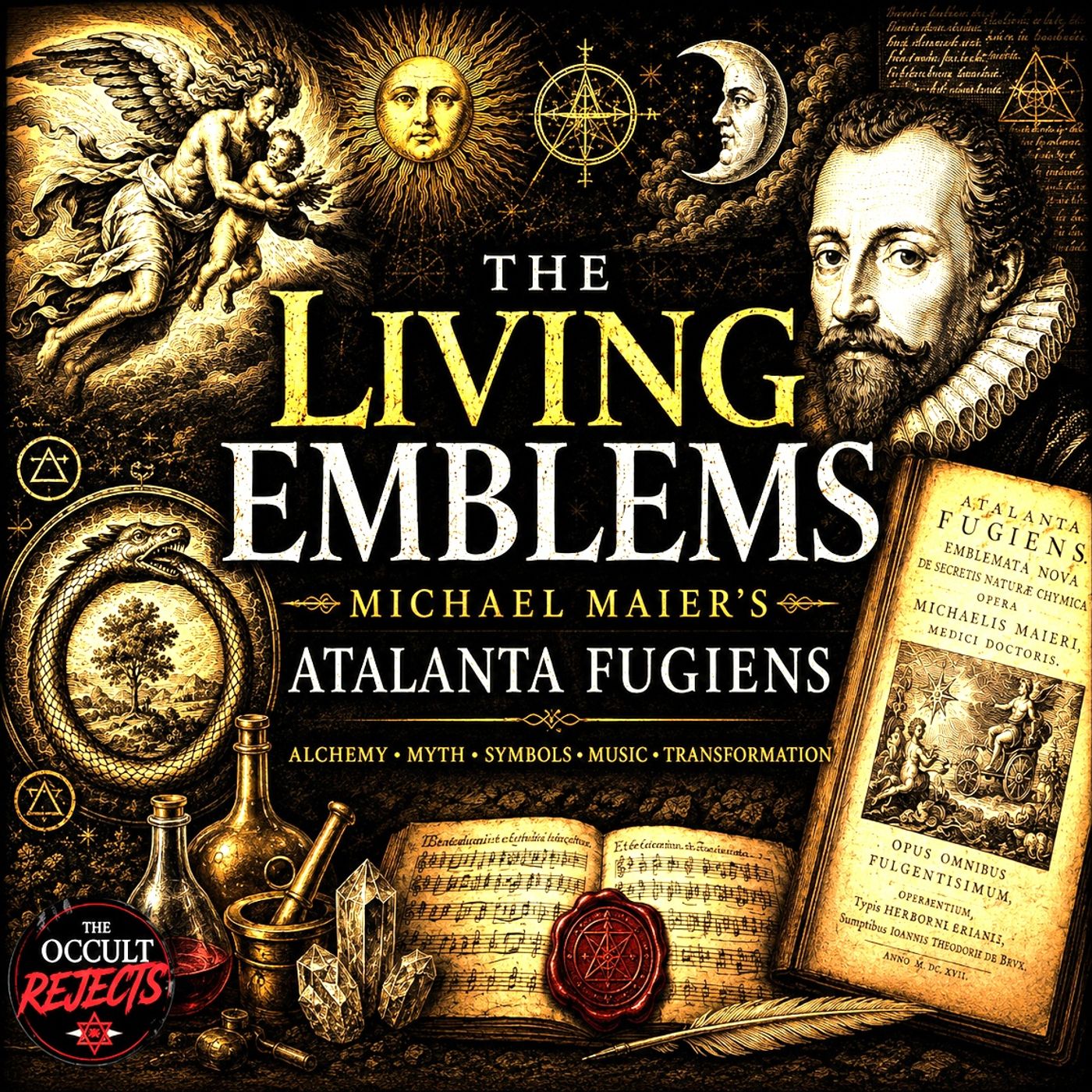 The Living Emblems Michael Maier's Atalanta Fugiens 09.09.2026 1h 57minLinks For The Occult Rejectshttps://linktr.ee/theoccultrejectsOccult Research Institutehttps://www.occultresearchinstitute.org/Substackhttps://substack.com/@theoccultrejects?r=7auau0&utm_campaign=profile&utm_medium=profile-pageCash Apphttps://cash.app/$theoccultrejectsVenmo@TheOccultRejectsBuy Me A Coffeebuymeacoffee.com/TheOccultRejectsPatreonhttps://www.patreon.com/TheOccultRejectsAlso want to remind people about the website, if you're into reading we have tons of information by multiple contributors, and we got t-shirts up on the site if you're interested. Fun fact, the art is all based on the eyeball.
 -
The Mechanics of Magick: The Spell of Repetition- Episode 4: The Slogan, the Liturgy, and the Crowd 07.09.2026 1h 7minBibliography**Advertising, Branding, and Consumer Identity**Aaker, *Managing Brand Equity* (1991); Bernays, *Biography of an Idea* (1965); Bernays, *Propaganda* (1928); Ewen, *Captains of Consciousness* (1976); Keller, *Strategic Brand Management* (1998); McCracken, “Culture and Consumption,” *JCR* 13 (1986): 71–84; Schudson, *Advertising, the Uneasy Persuasion* (1984); Tye, *The Father of Spin* (1998); Zajonc, “Attitudinal Effects of Mere Exposure,” *JPSP* 9 (1968): 1–27.**Propaganda, Language, and Ideology**Ellul, *Propaganda* (1965); Klemperer, *The Language of the Third Reich* (2000); Lasswell, *Propaganda Technique in the World War* (1927); Lifton, *Thought Reform and the Psychology of Totalism* (1989; orig. 1961); Stanley, *How Propaganda Works* (2015).**Framing, Agenda Setting, and Public Attention**Entman, “Framing,” *Journal of Communication* 43 (1993): 51–58; Iyengar, *Is Anyone Responsible?* (1991); Lippmann, *Public Opinion* (1922); McCombs, *Setting the Agenda* (2014); McCombs and Shaw, “The Agenda-Setting Function of Mass Media,” *POQ* 36 (1972): 176–87; Noelle-Neumann, *The Spiral of Silence* (1993).**Dehumanization and Moral Disengagement**Bandura, “Moral Disengagement in the Perpetration of Inhumanities,” *PSPR* 3 (1999): 193–209; Haslam, “Dehumanization,” *PSPR* 10 (2006): 252–64; Haslam and Loughnan, “Dehumanization and Infrahumanization,” *ARP* 65 (2014): 399–423; Kelman, “Violence Without Moral Restraint,” *JSI* 29 (1973): 25–61.**Repetition, Misinformation, and Online Diffusion**Bail, *Breaking the Social Media Prism* (2021); Berger and Milkman, “What Makes Online Content Viral?” *JMR* 49 (2012): 192–205; Brady et al., “Emotion Shapes the Diffusion of Moralized Content,” *PNAS* 114 (2017): 7313–18; Pennycook et al., “Prior Exposure Increases Perceived Accuracy of Fake News,” *JEP:G* 147 (2018): 1865–80; Pennycook et al., “Fighting COVID-19 Misinformation,” *Psychological Science* 31 (2020): 770–80; Vosoughi, Roy, and Aral, “The Spread of True and False News Online,” *Science* 359 (2018): 1146–51.**Availability, Consensus, and Social Silence**Kuran and Sunstein, “Availability Cascades and Risk Regulation,” *Stanford Law Review* 51 (1999): 683–768; Prentice and Miller, “Pluralistic Ignorance and Alcohol Use on Campus,” *JPSP* 64 (1993): 243–56; Sunstein, *On Rumors* (2009).**Liturgy, Civil Religion, and Collective Ritual**Bell, *Ritual Theory, Ritual Practice* (1992); Bellah, “Civil Religion in America,” *Daedalus* 96 (1967): 1–21; Durkheim, *The Elementary Forms of Religious Life* (1995; orig. 1912); Hobson et al., “The Psychology of Rituals,” *PSPR* 22 (2018): 260–84; Rappaport, *Ritual and Religion in the Making of Humanity* (1999); Whitehouse, *Modes of Religiosity* (2004); Xygalatas, *Ritual* (2022).**Crowd Psychology, Synchrony, and Collective Identity**Canetti, *Crowds and Power* (1962); Drury, “Social Identity Processes in Mass Emergency Behaviour,” *ERSP* 29 (2018): 38–81; Drury and Reicher, “Collective Action and Psychological Change,” *BJSP* 39 (2000): 579–604; Le Bon, *The Crowd* (1896); McNeill, *Keeping Together in Time* (1995); Reicher, “The St. Pauls’ Riot,” *EJSP* 14 (1984): 1–21; Reicher, Spears, and Postmes, “A Social Identity Model of Deindividuation,” *ERSP* 6 (1995): 161–98; Stott and Reicher, “How Conflict Escalates,” *Sociology* 32 (1998): 353–77; Tajfel and Turner, “An Integrative Theory of Intergroup Conflict” (1979); Turner et al., *Rediscovering the Social Group* (1987); Vickhoff et al., “Music Structure Determines Heart Rate Variability,” *Frontiers in Psychology* 4 (2013): 334; Wiltermuth and Heath, “Synchrony and Cooperation,” *Psychological Science* 20 (2009): 1–5.**Prebunking, Inoculation, and Resistance**Compton, “Inoculation Theory” (2013); Linegar et al., “Prebunking Election Rumors” (preprint, 2024);...
-
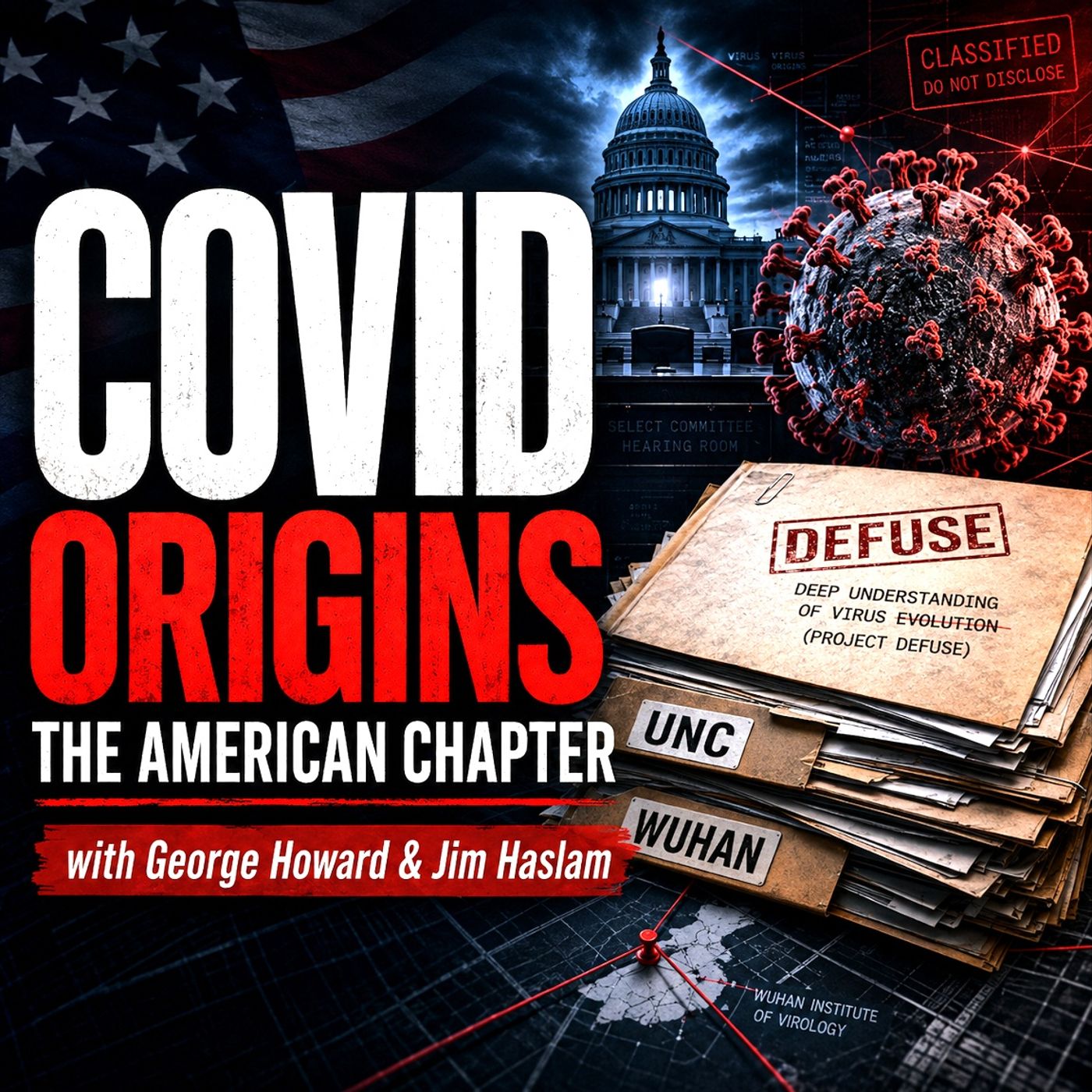 COVID Origins: The American Chapter with George Howard & Jim Haslam 06.09.2026 2hLinks For The Occult Rejectshttps://linktr.ee/theoccultrejectsOccult Research Institutehttps://www.occultresearchinstitute.org/Substackhttps://substack.com/@theoccultrejects?r=7auau0&utm_campaign=profile&utm_medium=profile-pageCash Apphttps://cash.app/$theoccultrejectsVenmo@TheOccultRejectsBuy Me A Coffeebuymeacoffee.com/TheOccultRejectsPatreonhttps://www.patreon.com/TheOccultRejectsGo sign the petition!https://carolinaflu.org/Also want to remind people about the website, if you're into reading we have tons of information by multiple contributors, and we got t-shirts up on the site if you're interested. Fun fact, the art is all based on the eyeball.
Liknande podcastar


Populär i
Den här podcasten finns även i podcastlistor i dessa länder.

