
Berkeley Talks
UC Berkeley
0
Berkeley Talks is a podcast from Berkeley News that features lectures and conversations at UC Berkeley. It covers a wide range of topics presented by university speakers and guests.
Avsnitt
-
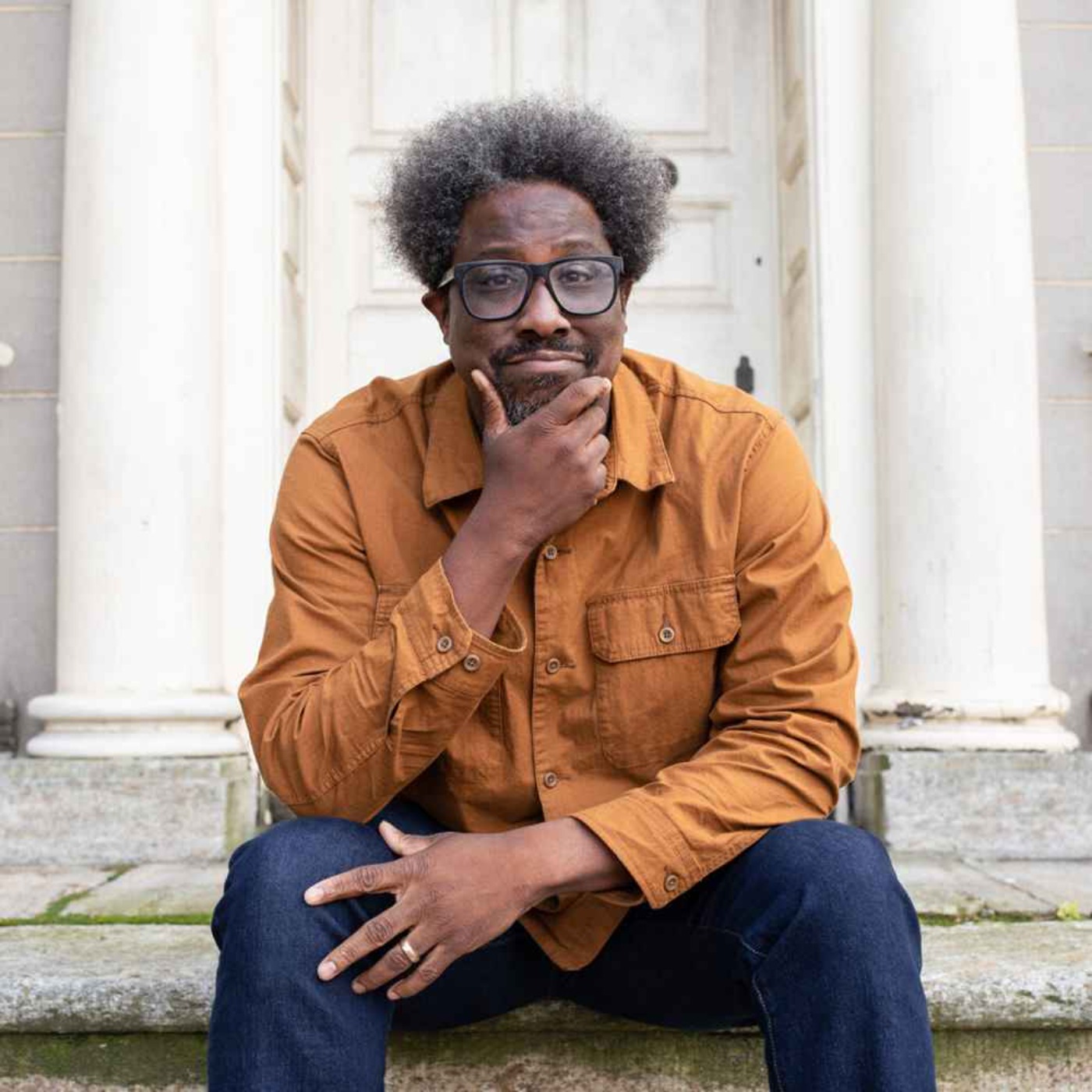 W. Kamau Bell on AI, creativity and resisting the pull of automation 18.09.2026 1h 5minWhen W. Kamau Bell was a child, his mother bought the family a Commodore VIC-20, a popular home computer of the early 1980s. He also had Pong, a ColecoVision and, later, a MiniDisc player. Today, he is still the person his family calls when the TV stops working — and the father who sees technology’s potential to connect his introverted 11-year-old with cousins over FaceTime. “I am not a technophobe,” Bell said at a recent UC Berkeley Journalism event. “If you say, ‘We’re going there, there’s no Wi-Fi,’ I’m not going there.”But Bell — a comedian, filmmaker and author known for using humor to examine race and American culture — also said technology’s growing presence does not mean people should unquestioningly hand over their language or creativity to artificial intelligence. Bell was joined by UC Berkeley Journalism Dean Michael D. Bolden on Aug. 26 for a conversation at the AI, Journalism and Public Trust Symposium, sponsored by UC Berkeley Journalism and the Pulitzer Center. During the discussion, Bell described the subtle ways that AI already shapes everyday communication, like Gmail or Google Docs suggestions that, rather than merely fixing typos, end up standardizing a person’s style. For Bell, whose comedic voice often relies on vernacular and intentionally unconventional grammar, that raises a deeper concern: “You want us all to sound like the same person.”AI, he said, should not be treated as an inevitable, neutral force. It is a tool, but one being developed and deployed within systems that prioritize corporate profit and centralized power — often at the expense of communities that are already bearing the costs of technological development. He pointed to data centers placed near Black, rural and low-income communities, as well as the danger of automated systems built from historically biased information. “Once you feed in bad information, bad outputs come out of there,” he said.Rather than trying to halt technological progress altogether, Bell urged people to maintain and invest in forms of connection and creativity that resist automation’s pull. After all, the value of art comes from wrestling with our lived experiences. “Wasn’t AI supposed to do all the work so we could make art?” Bell said, quoting comedian Stavros Halkias. “Why did we flip it?” The response to AI cannot rest solely on individual consumer choices or the assurances of technology companies, he said. It requires people to challenge the systems shaping the technology around them. “I am down for a future of AI that doesn’t exist under American capitalism,” he said.Watch the conversation, listen to the episode and read the transcript on UC Berkeley News (news.berkeley.edu/podcasts/berkeley-talks).Music by by HoliznaCC0.Photo courtesy of United Shades of America. Hosted on Acast. See acast.com/privacy for more information.
 -
 Leaping robots, AI companies and a NASA mission 21.08.2026 53minWhen Aravind Srinivas arrived at UC Berkeley in 2020 hoping to join Pieter Abbeel’s robotics lab, he encountered an immediate obstacle: The lab was already full.Undeterred, Srinivas proposed that he and Abeel work together for six months so he could prove himself. What followed was such a prolific stretch of research that Abbeel found himself repeatedly asking about his new student’s well-being.“Honestly, the only big advice I ever had to give Aravind was the question, ‘Did you sleep?’” Abbeel recalls. He says Srinivas replied, “I cannot afford to sleep until I’m officially in your lab.” After joining Abbeel’s lab and being persuaded to rest, Srinivas completed what Abbeel calls “a really amazing Ph.D.,” went on to work at OpenAI and later founded Perplexity, the AI company built around answering questions with source-grounded responses.In this Berkeley Talks episode, Srinivas’ determination is one of several stories Abbeel, a professor of electrical engineering and computer sciences at Berkeley, shares about former students and postdoctoral researchers who went on to help found AI and robotics companies, contribute to influential research advances and, in one case, become a NASA astronaut. That astronaut, Woody Hoburg, came to Berkeley from MIT in 2011. At the time, he told Abeel that he knew the likelihood of becoming an astronaut was “effectively zero,” but was determined to try: “If I can make it from 0.1 to 1 by giving it my all, that’s what I’m going to do.” Hoburg went on to earn a Ph.D. in electrical engineering and computer sciences at Berkeley, join NASA’s 2017 astronaut class and, in 2023, serve as the pilot of NASA’s SpaceX Crew-6 mission aboard the Crew Dragon spacecraft, spending 186 days in space.For Abbeel, the common thread among his former students is not only brilliance but also generosity. “All of them (are) super nice,” he says. “And what I mean with that is it’s easy to be nice to your boss, you have to be. But they’re super nice to all their peers, everybody around them, new talent that wants to join. I’m really proud.”Abbeel’s lecture took place on April 17, 2026, as part of Berkeley’s “Brilliance of Berkeley” speaker series.Listen to the episode, read the transcript and watch the lecture on UC Berkeley News (news.berkeley.edu/podcasts/berkeley-talks)Music by by HoliznaCC0.Photo by Elena Zhukova. Hosted on Acast. See acast.com/privacy for more information.
 -
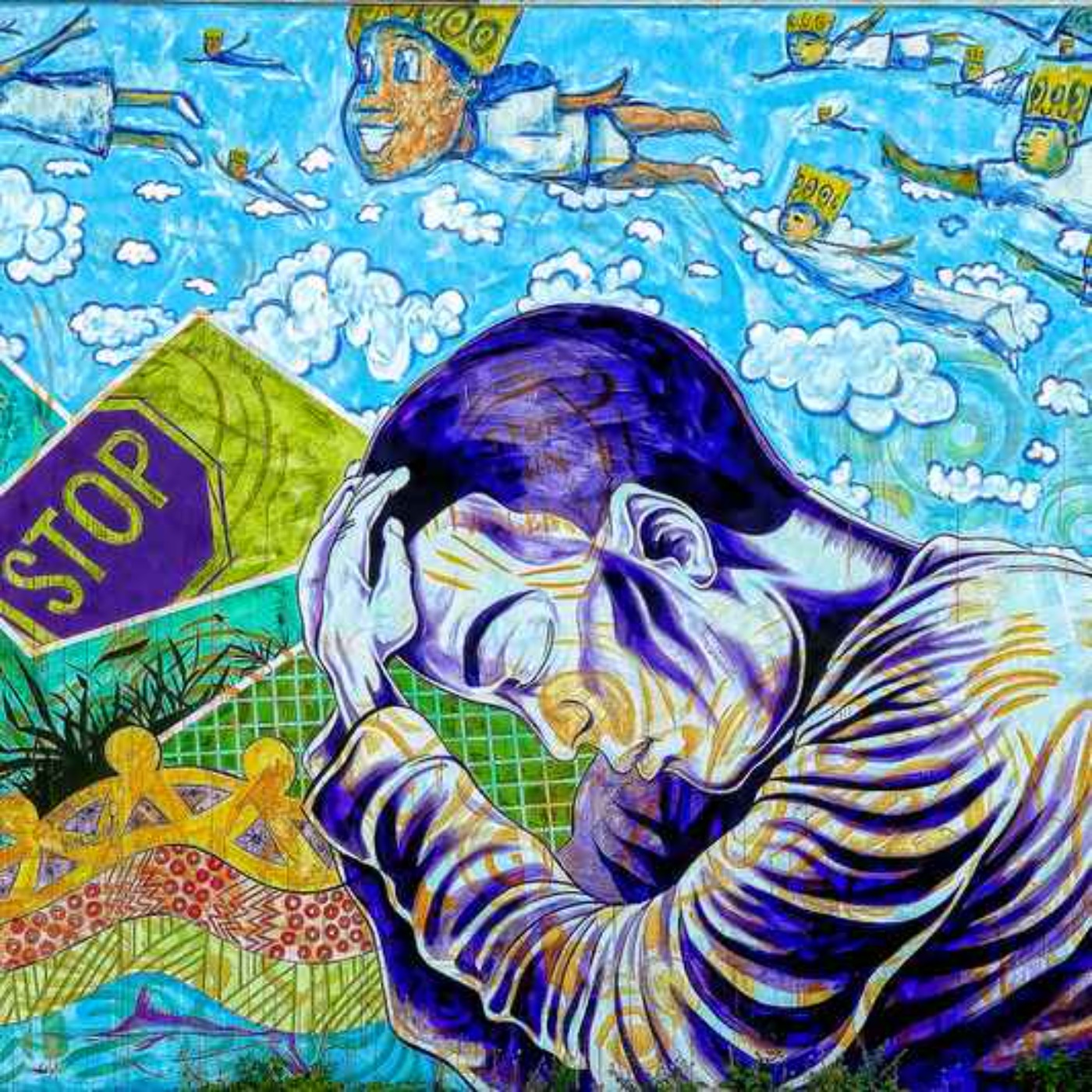 How we've long misread gun violence (and ways to prevent it) 07.08.2026 1h 28minIn the early hours of November 2007, Amadou Cisse, a 29-year-old University of Chicago chemistry graduate student, was walking home when Demetrius Warren, then 17, and Benjamin Williams, 21, approached him. According to trial testimony, Warren pointed a gun at Cisse while Williams attempted to grab his backpack. A struggle ensued, and Warren shot Cisse in the chest. Cisse died from the wound.“Behind every news headline and every statistic, there is a mom who has just lost the most important person in their life,” says Jens Ludwig, a University of Chicago economics professor and director of its Crime Lab. “And in this particular case … Warren is currently spending 150 years downstate in the Illinois Department of Corrections. So in this case, two moms lost the most important people in their lives.”Delivering the 2026 Wildavsky Lecture in Public Policy at UC Berkeley’s Goldman School of Public Policy this past April, Ludwig, author of Unforgiving Places: The Unexpected Origins of American Gun Violence, argues that both major political parties misdiagnose gun violence as a deliberate, rational choice, when in fact it’s almost always an impulsive one."Both sides of that debate implicitly think that before anybody ever pulls a trigger, they're engaging in some sort of deliberate, rational weighing of pros and cons,” he says. But in reality, he contends, roughly 80% of gun homicides stem from everyday arguments that rapidly escalate in brief, uncalculated moments. Drawing on insights from behavioral economics, Ludwig says there are several low-cost, scalable tools — from youth programs and de-escalation training for police to simple urban fixes like greening vacant lots — that deliver meaningful public-safety gains. He points to “Becoming a Man,” a school-based group counseling program that helps teenage boys slow down their thinking in high-stakes situations. Randomized research trials found that it reduced participants’ violent-crime arrests by up to 50% — evidence, he argues, that communities don’t need to wait for sweeping political overhauls to make real progress.Listen to the episode, read the transcript and watch a video of the lecture on UC Berkeley News (news.berkeley.edu/podcasts/berkeley-talks).Music by by HoliznaCC0.Detail of a mural by Kyle Holbrook and local youth in Miami, Florida. (Photo by Terence Faircloth via Flickr) Hosted on Acast. See acast.com/privacy for more information.
 -
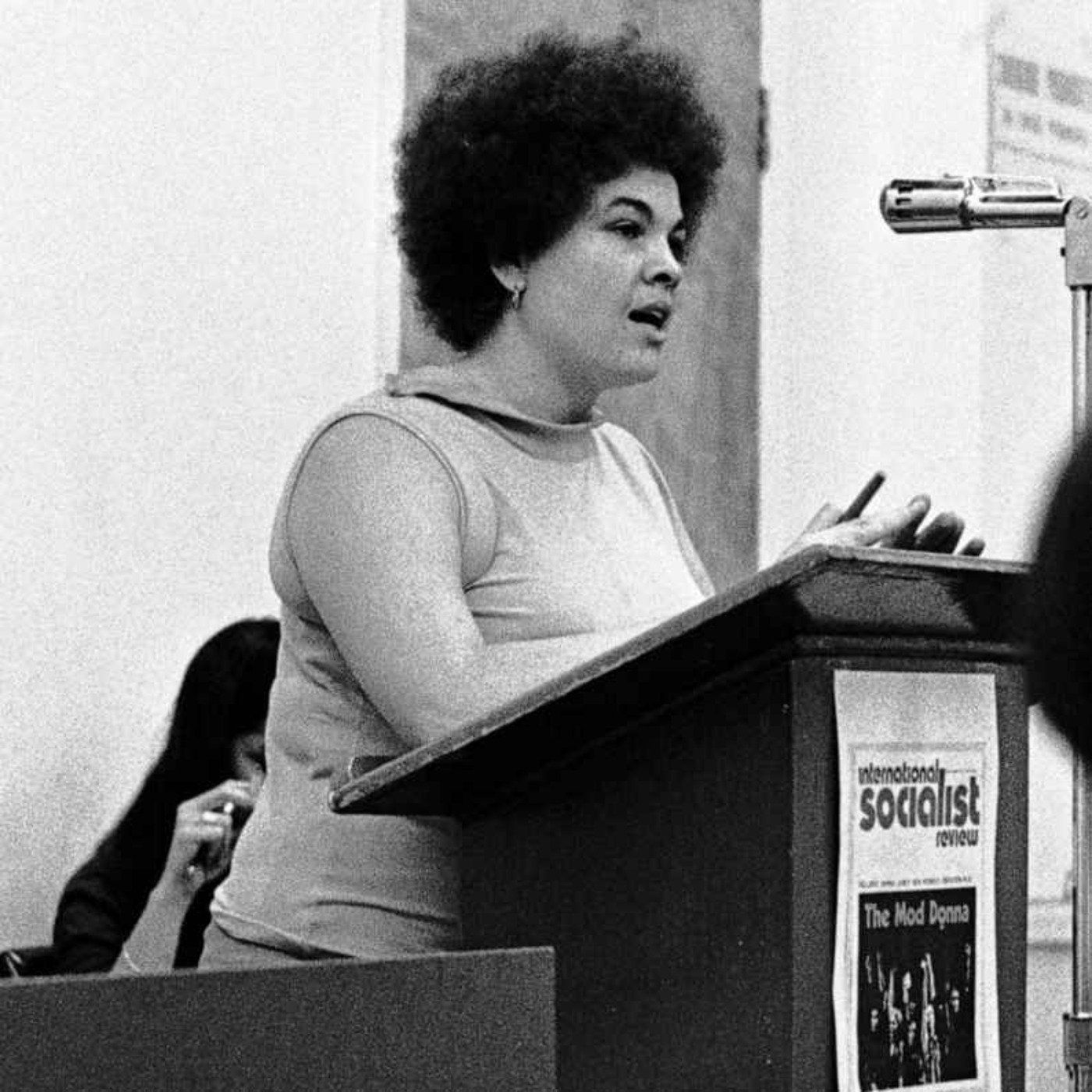 The making of pioneering Black feminist Frances M. Beal 24.07.2026 43minIn 1957, a terrified 17-year-old girl lay on a Harlem kitchen table undergoing an illegal, backstreet abortion. Nearly dying from complications, she was rushed to a hospital ward where nurses badgered her and demanded to know what she had done. That teenager was Frances M. Beal.Long before she would write the seminal 1969 manifesto "Double Jeopardy: To Be Black and Female" or co-found the Third World Women's Alliance, Beal was navigating the violent realities of being young, Black and female in America. In this episode of Berkeley Talks, Ula Taylor, a UC Berkeley professor and chair of African American studies, presents her latest book project, which reconstructs Beal’s political radicalization brick by brick. Blending first- and third-person narrative, Taylor explores how Beal’s life — from the pressures and policing of her early years to unappreciated domestic labor and single motherhood — helped shape her pioneering work in social justice feminism.“Black feminism for Fran was not a politic that came from one experience or one moment in her life,” Taylor says. “It was a culmination of the brick of girlhood frustrations, the brick of early adolescent battles, the brick of teenage gendered expectation, the brick of abortions, the brick of sexual pleasure, the brick of housework and the brick of single motherhood. All and so many other theoretical and practical life bricks informed the construction of her Black feminist house grounded in social justice feminism.” Taylor’s lecture, which took place on Feb. 19, was hosted by Berkeley’s Social Science Matrix and co-sponsored by the Department of Gender and Women's Studies and the Department of African American Studies.Watch the lecture, listen to the episode and read the transcript on UC Berkeley News (news.berkeley.edu/podcasts/berkeley-talks).Music by by HoliznaCC0.Photo by Howard Petrick/The Militant. Hosted on Acast. See acast.com/privacy for more information.
 -
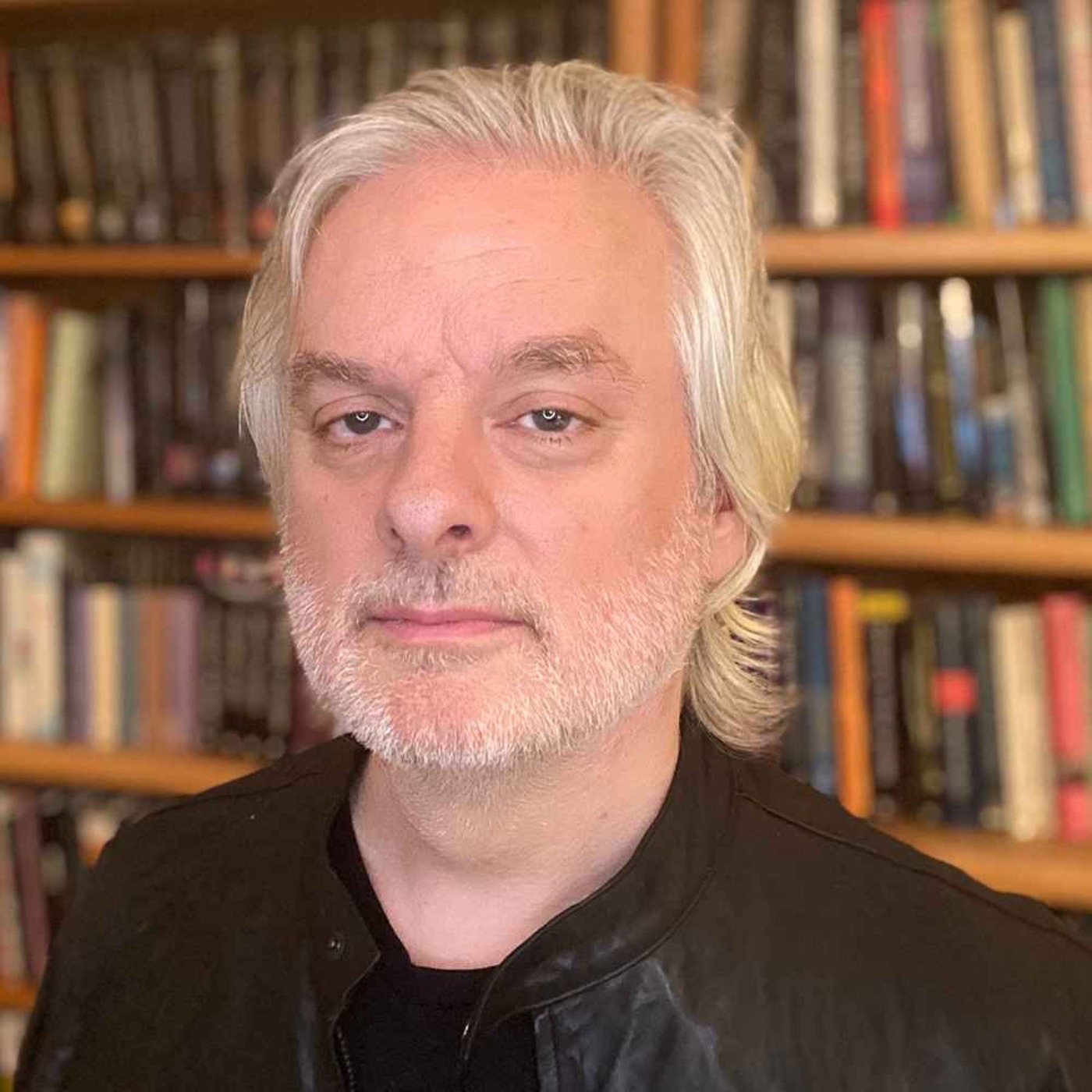 When we talk to AI, what are we talking to? 10.07.2026 1h 50minIn the early days of personal computing, people imagined artificial intelligence as a single, self-contained system — a kind of digital brain with a fixed identity. Talking to AI meant asking questions to a clearly defined machine.That picture no longer holds, says David Chalmers, a professor of philosophy and neural science at New York University. Today’s large language models, or LLMs, run on distributed cloud infrastructure, so they don’t behave like a single fixed machine with one clear physical boundary.While LLMs likely lack consciousness, he says, they are not merely passive tools. Instead, they’re “quasi-agents” that exhibit goal-directed behavior shaped by context. Each back-and-forth between the user and the agent holds together as a coherent exchange, but it only exists for the duration of that interaction. If this thread is the real unit of interaction, he says, then agency isn’t something the system permanently processes. Rather, it emerges during use.In this Berkeley Talks episode, Chalmers asks: When we’re interacting with AI, what exactly are we interacting with? If these short-lived “selves” exhibit beliefs and goals within a conversation, do they warrant any ethical consideration?Chalmers’ talk took place at UC Berkeley’s International House on May 7. It was the inaugural Sarah Douglas Lecture on Philosophy and Artificial Intelligence, sponsored by Berkeley’s Department of Philosophy.Watch the lecture, listen to the episode and read the transcript on UC Berkeley News (news.berkeley.edu/podcasts/berkeley-talks).Music by by HoliznaCC0.New York University photo. Hosted on Acast. See acast.com/privacy for more information.
 -
 Philosopher Mark Johnston asks, 'Is this our only life?' 26.06.2026 1h 27minWhen Princeton University Professor Mark Johnston's daughter was 18 months old, she stood on a beach with what he describes as a "quizzical philosophical look on her face, as if she was thinking, 'Is this my only life?'"That question is the heart of Johnston’s talk at UC Berkeley this past March, where he revisits a topic he wrote about two decades ago. Back then, he believed that the hope for an afterlife was impossible. But now, he has changed his mind. "Today, I want to show why I was wrong," says Johnston, author of the 2010 book Surviving Death. "That decent and comprehensible hope is not dashed by such ontological considerations. Even if we are essentially embodied somehow or other, our present embodiments may not be our only embodiments.”In this Berkeley Talks episode, Johnston explores through a secular lens how near-death experiences fail to provide decisive proof of a detached soul, how reductive materialism — the view that everything about the mind can ultimately be explained in physical terms — creates absurd ethical contradictions, and how viewing ourselves as "embodied wills" leaves open the possibility of a life to come.This talk took place on March 11, and was part of the Foerster Lectures on the Immortality of the Soul sponsored by Berkeley Graduate Lectures. Watch a video of the lecture.Listen to the episode and read the transcript on UC Berkeley News (news.berkeley.edu/podcasts/berkeley-talks).Music by by HoliznaCC0.Photo by Frank van Hulst via Unsplash. [Image of a person in a patterned sweater sits looking out at the ocean during sunset] Hosted on Acast. See acast.com/privacy for more information.
 -
 Why kids need awe — and how puppets can help 12.06.2026 57minAs Halle Stanford drove through Topanga Canyon in Southern California, with Dolly Parton blasting from the car speakers, she was struck by a moment of inspiration. “I had this vision of a little hedgehog on the side of the road in her little pink hiking boots, with her guitar in her bag, out to find the wows of the world,” says Stanford, an independent television producer. A few days later, she came across research from UC Berkeley’s Greater Good Science Center showing that awe — the emotion we experience when we encounter vast mysteries that we don’t understand — inspires us to care for the planet and one another. “And I was like, ‘Bingo, that's it.’”That connection became the basis for Wowsabout, a new Jim Henson Company puppet preschool special on PBS designed to bring awe to young audiences. Created by Stanford and puppeteer Dorien Davies, the 30-minute special maps the journeys of Roxy, a free-spirited hedgehog, and Ronald, a fastidious city pig, as they explore Sequoia National Park. Together, they experience moments of awe, like when standing beneath towering Sequoias and watching migrating California tortoiseshell butterflies. And they meet others along the way, including Pekan, a puppet representing the endangered southern Sierra Nevada fisher who guides them to see historic pictographs carved into the park's rock formations. Awe isn’t a luxury emotion, but an evolutionary necessity, says Dacher Keltner, a Berkeley psychology professor and the founding director of the Greater Good Science Center. “It makes kids kinder, it makes kids more creative. … Awe really helps kids stay curious, and be in love with big ideas.”Keltner has studied the science of awe for more than a decade, and in 2023 published the book Awe: The New Science of Everyday Wonder and How It Can Transform Your Life. He served as a science consultant and co-executive producer for Wowsabout. In this episode of Berkeley Talks, Stanford and Davies join Keltner and others from the Greater Good Science Center — education director Vicki Zakrzewski and parenting program director Maryam Abdullah — in a talk moderated by Sarah Bracken, education outreach and school partnerships manager at the center. The group discusses the logistical hurdles of translating wonder into film and why cultivating everyday curiosity has become an essential antidote to modern social disconnection. The conversation took place on May 13 and was hosted by the Greater Good Science Center. Watch a video of the panel discussion. (The screening of Wowsabout was removed from the recording for copyright reasons.) Audiences can watch the full Wowsabout special for free on PBS Kids.Listen to the episode and read the transcript on UC Berkeley News (news.berkeley.edu/podcasts/berkeley-talks).Music by by HoliznaCC0.Photo courtesy of The Jim Henson Company. It's a screenshot from Wowsabout that shows Ronald, the pig puppet, sitting on a mossy log in a forest campsite, smiling happily while holding a park booklet. Hosted on Acast. See acast.com/privacy for more information.
 -
 What punk subcultures can teach us about resisting hate 29.05.2026 1h 12minAcross the American West Coast in the 1980s, the burgeoning punk rock and skinhead scenes were much more than just raw music and counterculture fashion — they quickly became contested ground in an ideological battle against white supremacy. Neo-Nazi groups actively targeted these subcultures to recruit alienated kids, and anti-racist punks were forced to step up in response, organizing grassroots community defense networks, confronting extremist infiltration and building alternative spaces rooted in inclusion.Those strategies — forged in clubs, at shows and within tight-knit local scenes — offer a vital, real-world blueprint for confronting today’s mainstream political crises, according to a recent panel discussion at UC Berkeley.The May 3 event, which headlined the second annual Jewish Arts and Book Fest hosted by the Magnes Collection of Jewish Art and Life, began with a screening of We've Been Here Before, a 2023 documentary short chronicling these subcultural struggles. Following the film, the program brought together the film's director, Jacob Kornbluth, and anti-racist activists Eric Ward, who's featured in the film, and Dion Garcia to explore how lessons from that fringe resistance can help heal a fractured modern society.For Ward and Garcia, the history of that resistance is deeply personal. In their youth, protecting music scenes from infiltration meant building solidarity and making sure marginalized voices were not pushed out. Yet Garcia said that looking back on the intensity of that era, he also remembers its emotional toll.“Hate is a horrible word and it's a horrible thing to carry,” Garcia said. “I don't like carrying that.”The speakers argued that the same divisive tactics that targeted 1980s youth have now mutated into mainstream public discourse. Ward, a leading expert on organized hate, explained that modern antisemitism functions on the far right as a "racialized other,” scapegoating Jewish communities as “puppet masters” of social grievances. Today, Ward warned, society is trapped in a dangerous "sectarian moment" where nuance is erased in favor of absolute polarization, particularly surrounding global conflicts."No one wants nuance," Ward said, critiquing how people today build political identities out of distant tragedies. He noted that such political theater often comes "at the expense of the most actual vulnerable, Israelis and Palestinians, who still have to live in the real world each and every day."Ultimately, the talk underscored that the path forward requires looking past ideological purity and reclaiming the cultural spaces where lonely or alienated individuals seek community. True resistance to racism and antisemitism, the speakers concluded, lies in a shared commitment to contesting these complicated spaces, finding "strange allies" across different backgrounds and strengthening the foundation of an inclusive democracy."I would argue this alliance between those of us who identify in the mainstream and empathy for people who are existing in these kind of fringe subcultures is something that I think we could all work on," said Kornbluth. "I think it's something new to a lot of folks who are thinking about where and how to fight back ... but I think it's a little piece to how we can heal ourselves." This event was sponsored by the Magnes Collection of Jewish Art and Life at Berkeley.Listen to the episode and read the transcript on UC Berkeley News (news.berkeley.edu/podcasts/berkeley-talks).Music by by HoliznaCC0.Image courtesy of Reboot Studios/7th Art Releasing. Hosted on Acast. See acast.com/privacy for more information.
 -
 Musician Lara Downes celebrates the sound of America 15.05.2026 29minIt was the morning after the 2016 U.S. presidential election, and pianist Lara Downes was catching a flight from California to Kentucky, where she was set to perform later in the evening. “It was a very weird day to be anywhere,” she recalls.That night, she performed songs from her album America Again in Louisville, a city that mirrored the country's own jagged political divide. Coming from California, Downes expected Louisville to feel tense after the election.Instead, she found that the music — curated to explore the “American Dream” through the lens of diverse composers like Florence Price and Morton Gould — created a shared space of mourning and hope that transcended the maps on the news. As she played pieces like Price’s “Fantasie Nègre” and Gould's “American Caprice,” Downes had a profound realization."I think I learned in that moment how much all of the emotions that we feel about being American — the affection and the nostalgia and the confusion and the sadness and the anger — all of it really is expressed in the music,” she says. That idea — music as a shared emotional language — continues to shape Downes’ work today. In May, she brought an all-star cast of musicians to UC Berkeley’s Zellerbach Hall to join her on her newest project, This Land: Reflections on America. Alongside folk icon Judy Collins, poet Tarriona "Tank" Ball, the Austin-based string and bluegrass quartet Invoke, and the Oakland Interfaith Gospel Choir, she performed songs like the traditional African American spiritual “This Little Light Of Mine,” Paul Simon’s “America” and Stephen Foster’s “Hard Times Come Again No More.”The performance reflects Downes’ ongoing effort to explore what it means to be American through music — a question that also led her to create The Declaration Project, a national initiative tied to the upcoming 250th anniversary of the United States. For the project, Downes spent two years traveling the country to ask Americans from all backgrounds what “life, liberty and the pursuit of happiness” means to them today.In this episode of Berkeley Talks, Downes joins NPR’s Chloe Veltman in a pre-concert talk to discuss how music isn’t just a performance, but a common language to explore the American experience.The May 9 performance and pre-concert talk were part of Cal Performances’ Illuminations: Exile and Sanctuary series and marked the final performance of the season. Learn more about Cal Performances’ upcoming 2026-27 programming.The musical selections featured in this episode are from This Land: Reflections on America, performed by Lara Downes and guest artists. All music was used with permission. Listen to the episode and read the transcript on UC Berkeley News (news.berkeley.edu/podcasts/berkeley-talks).Photo by Brittany Hosea-Small.Intro music by by HoliznaCC0. Hosted on Acast. See acast.com/privacy for more information.
 -
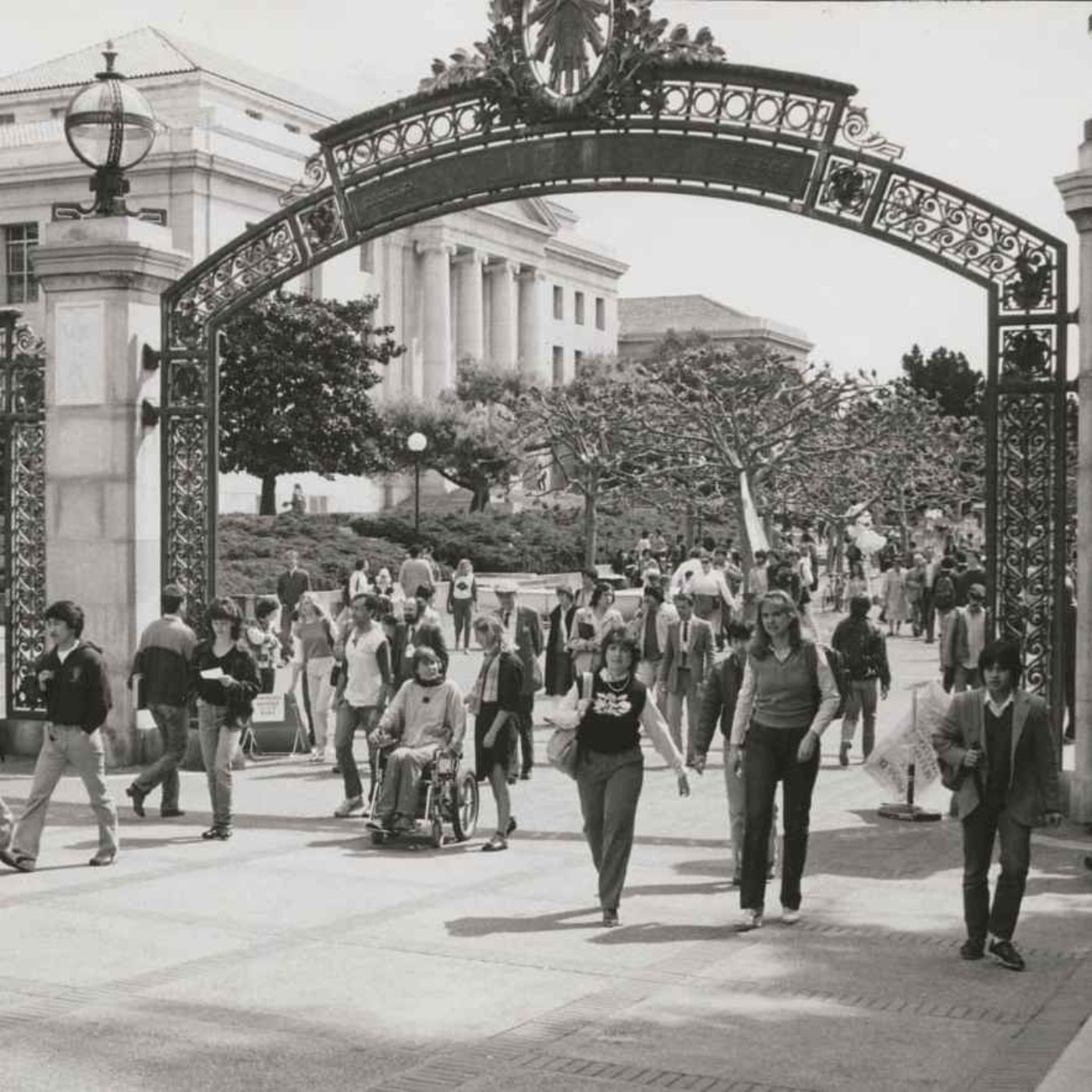 How the American university’s success led to its modern challenges 01.05.2026 1h 4minWhile preparing his lectures for UC Berkeley, Princeton University President Christopher Eisgruber spent hours poring over the memoirs and writings of former University of California President Clark Kerr, seeking wisdom from the architect of California’s 1960 Master Plan for Higher Education.Reflecting on this research, Eisgruber notes that he found more than just strategy; he found a personal connection. "I have been impressed by Kerr's wit, wisdom and decency,” he says, “and I have come to feel not only admiration but affection for him.”In his first of two lectures at Berkeley in February, Eisgruber draws on Kerr’s 1963 “hinge of history” idea to explain why American research universities are especially vulnerable to political and social attacks today.Kerr believed there was a turning point in the mid-20th century where the role of universities shifted from the periphery of society to its center as primary engines of economic and social growth. Eisgruber contends that this newfound prominence made them higher-stakes targets for public and political frustration. He points to three post-1960s shifts — rising student debt, accelerating competition and universities’ high profile in national debates over racial justice — as forces that have "compromised the political base that can help to protect higher education in moments of crisis.”Still, Eisgruber remains optimistic about the resilience of the American research university. He highlights the sector's ability to drive global recovery during the pandemic and its success in broadening its reach to include talent from all walks of life as proof of its enduring strength. While its shift to the center of national life has invited new pressures, he argues that the intense public focus on these institutions confirms their role as vital spaces for a diverse democracy to do its most important thinking.He suggests that the path forward lies in universities embracing this central, if contested, role by sustaining the vision Kerr championed: "a truly American university, an institution unique in world history, an institution not looking to other models but serving as a model for universities in other parts of the globe.”This talk was one of two lectures that Eisgruber gave on Feb. 24 and Feb. 26 as part of the Clark Kerr Lecture Series, co-sponsored by the Center for Studies in Higher Education, the Goldman School of Public Policy and Berkeley Law.Watch videos of both of Eisgruber’s lectures.Listen to the episode and read the transcript on UC Berkeley News (news.berkeley.edu/podcasts/berkeley-talks).Music by HoliznaCC0.Photo via The Bancroft Library archive. Hosted on Acast. See acast.com/privacy for more information.
 -
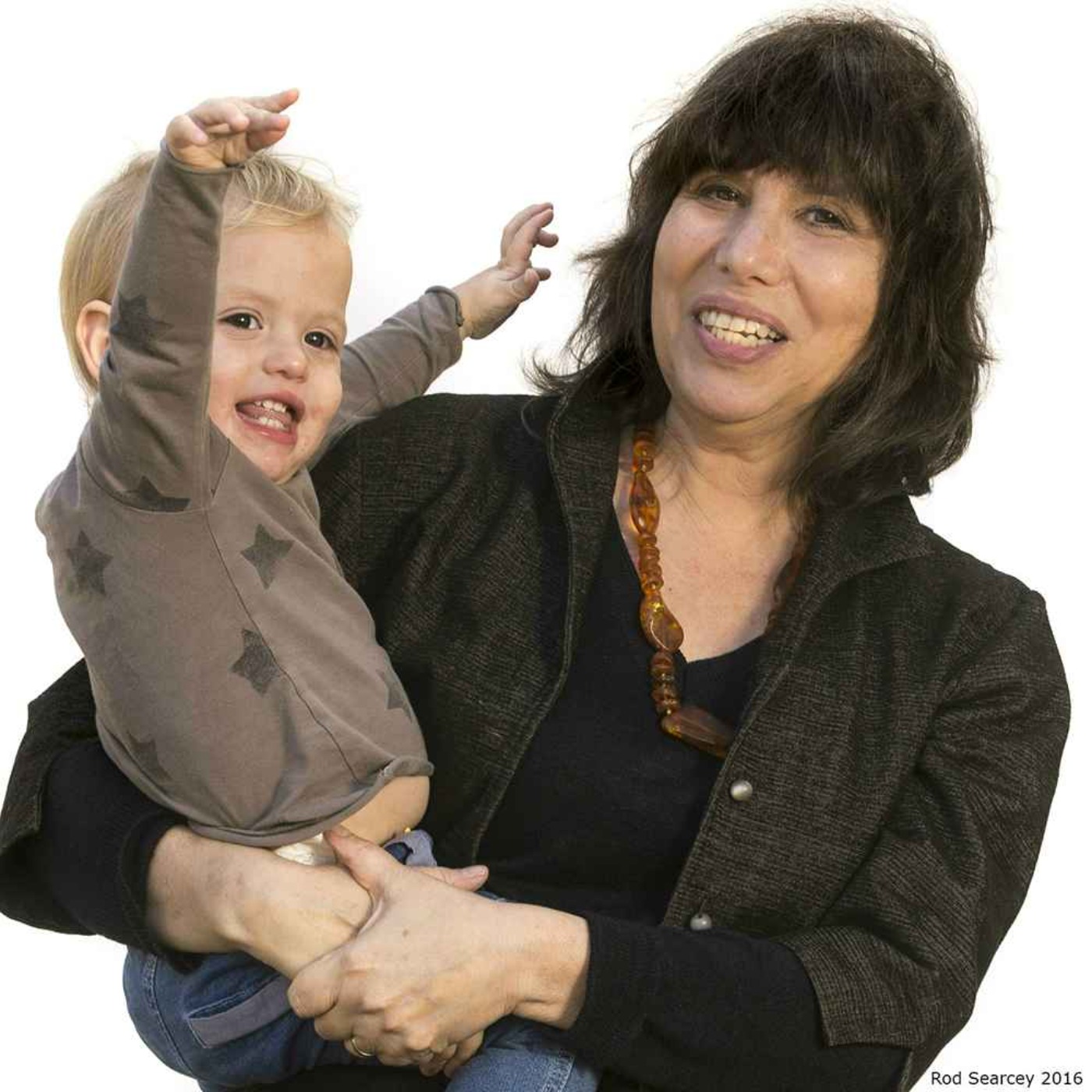 Alison Gopnik on why AI is no match for a 4-year-old 17.04.2026 1h 24minOver her decadeslong career as a developmental psychologist, Alison Gopnik has observed a striking phenomenon: When children are given a new toy without an obvious use, they often outperform high‑achieving college students in figuring out how it works. While adults tend to test the most likely possibilities and quickly get stuck, children respond with playful experimentation. "What children are doing is exactly the kind of open-ended, non-utilitarian, exploratory learning that allows you to find out things about the world that you would never find out any other way,” says Gopnik, a UC Berkeley professor of psychology. In this Berkeley Talks episode, Gopnik argues that human intelligence is not a single, general capacity, but a collection of distinct cognitive modes — exploration, exploitation and care — that are distributed across different stages of a person’s life. Childhood, she says, is evolution’s way of creating a dedicated “explorer” phase, made possible by a specialized care system provided by adults."The reason why we can have these big brains," she explains, "is because we have this period of childhood where we're protected ... and we have those older people who are there to provide the resources.” Gopnik contrasts this biological model with current artificial intelligence, noting that while large language models excel at using existing data to predict patterns, it lacks the embodied, curiosity‑driven learning of a child. To create truly intelligent systems, she suggests that we need to focus on the “intelligence of care.”“A system that develops, that changes over time, and in particular, a system that's cared for by humans or cared for by other intelligent agents — that's the secret of human intelligence,” she says. “That's the kind of system you'd need if you wanted a system that had the same kind of intelligence as humans.” This lecture took place on Nov. 5, 2025, as part of the Berkeley Distinguished Faculty Lectures in the Social Sciences.Listen to the episode and read the transcript on UC Berkeley News (news.berkeley.edu/podcasts/berkeley-talks).Music by HoliznaCC0.UC Berkeley photo. Hosted on Acast. See acast.com/privacy for more information.
 -
 Hany Farid on the erosion of shared reality in the age of deepfakes 06.04.2026 51minTwo decades ago, when Hany Farid first began studying digital misinformation and manipulated media, fake content was easier to detect. Today, that landscape has shifted with a speed that he describes as “breathtaking.” In just the last year or two, he says, we’ve moved from an era where a computer takes seconds or minutes to produce a static file to "full-blown interactive deepfakes" that can hold a live conversation in real time.In this Berkeley Talks episode, Farid, a digital forensics expert and professor at UC Berkeley’s School of Information, discusses the rapidly accelerating landscape of generative AI and the unique threat it poses to our collective understanding of the world.Farid notes that tools once reserved for governments or well-funded organizations are now freely available, radically expanding the threat landscape. “We have taken a mechanism that was in the hands of state-sponsored actors and bad actors and given it to 8 billion people in the world," he says. This democratization of powerful technology makes it much easier to create convincing false images, audio and video — and much harder to trust what we see online.And he explains that human perception is no longer a reliable defense, as his research shows people are only slightly better than chance at identifying AI-generated content.To reduce the damage to our shared sense of reality, Farid suggests solutions should focus on the systems that profit from harmful content, including platforms and ad networks that help it spread. He also gives a warning about news consumption: “Stop getting your news from social media. That’s not what it was designed for.Despite the rise of deepfakes and online deception, Farid says he rejects the idea that there is no truth or fact. He believes that, although it takes effort, people can still work together to understand what is happening in the world.This lecture, which took place on March 13, was part of LNS 110: Brilliance of Berkeley, a course featuring distinguished researchers working on the world’s most pressing issues.Watch Farid's lecture (with slides) on YouTube.Listen to the episode and read the transcript on UC Berkeley News (news.berkeley.edu/podcasts/berkeley-talks).Music by HoliznaCC0.Screenshot from lecture. Hosted on Acast. See acast.com/privacy for more information.
 -
 First a plague, then a fire: How a changing city rebuilt the modern stage 20.03.2026 44minWhen William Shakespeare wrote Hamlet around 1600, the power of London’s theater lived almost entirely in language. The stage was mostly bare and the scenery imagined. To mark a shift in setting, an actor might simply declare, “This is the Forest of Arden.”But by the mid-17th century, this mode of performance began to change. Following decades of civil war and Puritan rule, King Charles II’s 1660 restoration of the monarchy reopened public theaters that had been closed for nearly two decades. It marked the beginning of the Restoration era, when movable scenery debuted — massive painted flats slid along wooden grooves, transforming the stage in seconds — and women, immigrants, servants and enslaved people first moved across it as performers and stagehands. The English stage became a space of motion, a vivid counterpart to a London rebuilt after the 1665 plague and the Great Fire of 1666.In this Berkeley Talks episode, UC Berkeley Professor Julia Fawcett discusses her 2025 book Moveable Londons: Performance and the Modern City, which traces how this mechanical innovation echoed a deeper cultural one. It was, she says, a “revolution in English performance” that redefined movement, agency and belonging in a rapidly changing city.And that revolution, she contends, provided the template not only for modern theater’s moving sets, star actresses and illusionistic stages, but also for ways of moving through — and belonging in — the modern city.Fawcett’s talk, which took place on Feb. 11, 2025, was part of a Berkeley Book Chats event hosted by the Townsend Center for the Humanities. She was in conversation with Joshua Gang, an associate professor of English at Berkeley.Listen to the episode and read the transcript on UC Berkeley News (news.berkeley.edu/podcasts/berkeley-talks).Music by HoliznaCC0.Image from Moveable Londons book cover. Hosted on Acast. See acast.com/privacy for more information.
 -
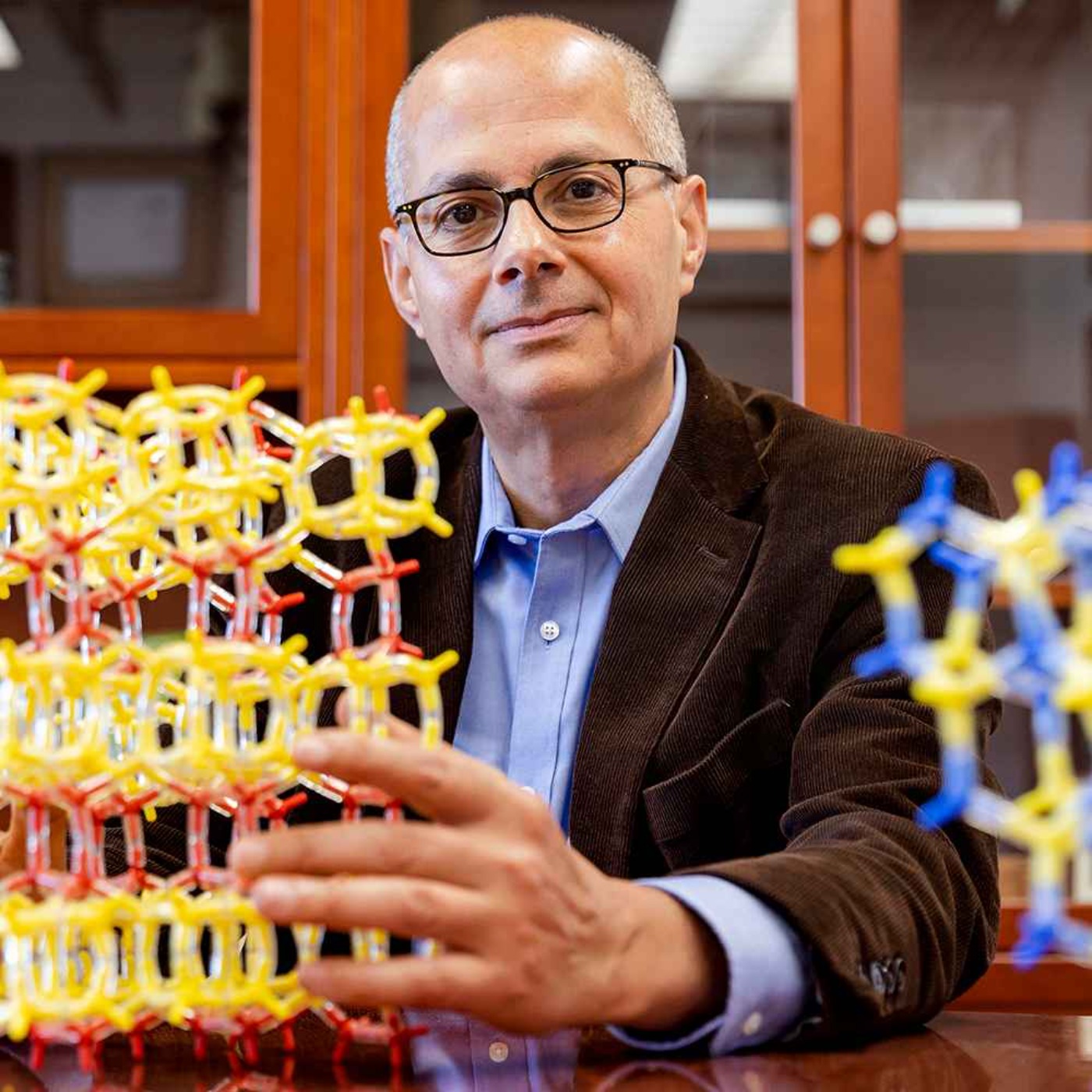 Nobel laureate Omar Yaghi on turning air into water for all 06.03.2026 55minAt age 10, Omar Yaghi walked into a school library in Amman, Jordan, and opened a book that changed his life. He saw molecular drawings — complex structures he didn’t yet understand, but which immediately captivated him. "I thought I discovered something that nobody had ever seen before," Yaghi recalls. Yaghi, now a professor of chemistry at UC Berkeley, shared this story during a recent Brilliance of Berkeley lecture to illustrate how a life defined by scarcity can be transformed through the pursuit of science. Growing up in a family of 10 children, Yaghi lived in a single room that lacked electricity and running water. The family shared their living quarters with cattle, separated from the animals only by sacks of feed. Education was the family's singular priority; his parents spent everything they earned to keep their children in school to ensure they had a path toward a different future.In 2025, Yaghi was awarded the Nobel Prize in Chemistry for the development of metal-organic frameworks, or MOFs — porous materials that act like "molecular sponges" capable of capturing carbon dioxide from the air and harvesting water from desert humidity.In this Berkeley Talks episode, Yaghi describes how his childhood as a refugee and his early days as an immigrant in the U.S. shaped his relentless work ethic. He recounts the "failure" of a yearlong graduate school experiment that actually resulted in his first major discovery: a ball-shaped molecule that paved the way for his career. Today, his research on reticular chemistry continues to push toward real-world solutions to the climate crisis.For Yaghi, science is not only about discovery, but about transforming access to life’s most basic resource. “My dream,” he says, is “for everyone to have water independence — where your water is yours, independent of everything else.”This lecture, which took place on Jan. 23, was part of LNS 110: Brilliance of Berkeley, a course featuring distinguished researchers working on the world’s most pressing issues.Listen to the episode and read the transcript on UC Berkeley News (news.berkeley.edu/podcasts/berkeley-talks).Music by HoliznaCC0.Photo by Brittany Hosea-Small for UC Berkeley. Hosted on Acast. See acast.com/privacy for more information.
 -
 The rule of law depends on the courage of judges 20.02.2026 58minIn 1957, 6-year-old Bernice Bouie Donald started first grade in rural DeSoto County, Mississippi. Although the U.S. Supreme Court had struck down school segregation three years earlier in Brown v. Board of Education, the young girl’s educational reality remained unchanged: Her all-Black school was a two-room cinderblock building with no indoor plumbing, and her books were hand-me-downs discarded by white students.Donald went on to have a decadeslong career as a federal judge, and at a recent UC Berkeley Law event, she shared her personal memories to highlight a sobering truth: The rule of law is not self-executing. For the promise of Brown to reach her classroom, Donald explained, it required "extreme moral courage" from judges who faced bombings, social ostracization and death threats to enforce the law. Without that bravery, she warned, the law is "simply words on a piece of paper."This ongoing challenge was at the heart of a Dec. 5, 2025, panel discussion featuring Donald and a group of legal experts. Together, the panelists discussed the rising tide of personal and political threats facing the judiciary, exploring how modern pressures — from social media harassment to political tribalism — threaten the independence necessary for a fair society.The event was part of “Conversations in Civil Justice,” a webinar series presented by UC Berkeley Law’s Civil Justice Research Initiative and co-sponsored by the Berkeley Judicial Institute. The series is supported by a gift from the American Association for Justice’s Robert L. Habush Endowment.The panelists include:Bernice Bouie Donald, a retired judge from the U.S. Court of Appeals for the Sixth Circuit. Philip Pro, a retired federal judge from the District of Nevada.Amrit Singh, a professor of professional practice and faculty director of the Rule of Law Lab at New York University School of Law. Jeremy Fogel (moderator), executive director of the Berkeley Judicial Institute and a retired federal judge from the Northern District of California.Richard Jolly (moderator), professor at Southwestern Law School and senior fellow at the Civil Justice Research Initiative.Watch a video of the discussion.Listen to the episode and read the transcript on UC Berkeley News (news.berkeley.edu/podcasts/berkeley-talks).Music by HoliznaCC0.Photo via Unsplash. Hosted on Acast. See acast.com/privacy for more information.
 -
 An evolutionary biologist makes the case for pausing AI 06.02.2026 51minIn the early 20th century, factory workers — later known as the “Radium Girls” — were hired to paint watch and instrument dials with radium‑based luminous paint. They were instructed to keep their brushes sharp by shaping them with their lips. In the following years, many of these workers developed devastating illnesses, including severe bone and jaw damage, anemia and cancer, that were ultimately traced to chronic radium exposure.For Holly Elmore, an evolutionary biologist and executive director of PauseAI US — an organization that seeks a global pause to advanced AI development — this tragedy is a stark warning for our current era. In a talk she gave Dec. 9 for the Berkeley AI Risk Speaker Series, Elmore argues that we’re repeating this mistake with artificial intelligence by assuming we can safely play with a technology we don't fully understand. “The expectation of many people in AI safety, for many years, has been that when we got to this point, the AI, once it was aligned, would figure out the answers for us,” she says. But Elmore warns that this approach is like clearing a minefield by walking through it. As AI capabilities grow, she says, the probability of accidents increases — and unlike minor software glitches, these could be "one-shot" events that we cannot recover from. She points to risks ranging from the automated assembly of bioweapons to the unpredictable disruption of the social and environmental systems we depend on for survival. Instead of waiting for a machine to solve its own safety problems, she contends that experiments with such high-stakes technology are too costly to continue without a pause.“The scale of the danger really could cripple civilization or cause extinction,” she says, “and the possibility of this alone is reason enough to pursue pausing frontier AI development.”Watch a video of Elmore’s talk.Listen to the episode and read the transcript on UC Berkeley News (news.berkeley.edu/podcasts/berkeley-talks).Music by HoliznaCC0.Photo courtesy of PauseAI. Hosted on Acast. See acast.com/privacy for more information.
 -
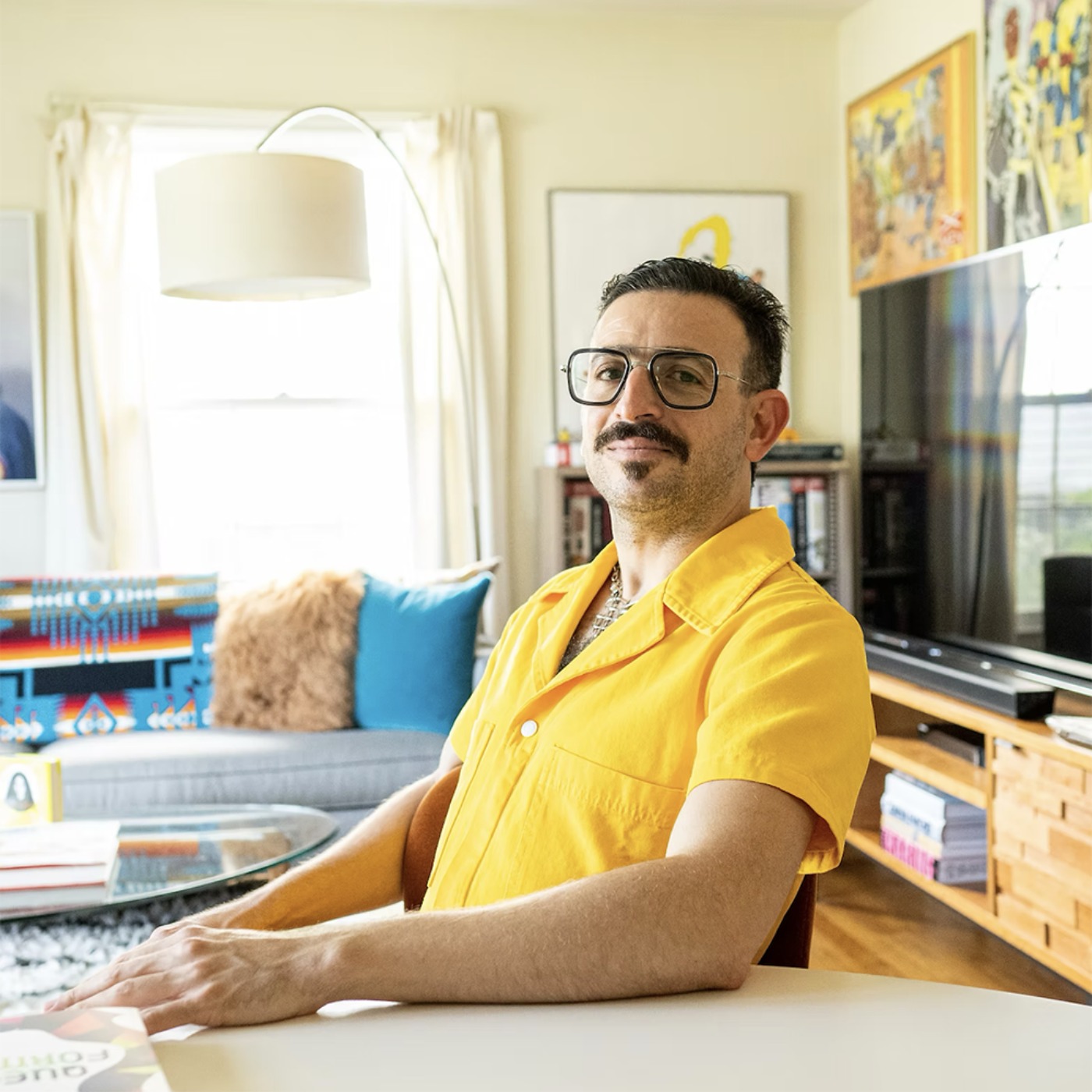 Ramzi Fawaz on the psychedelic power of the humanities 23.01.2026 1h 19minIn this Berkeley Talks episode, Ramzi Fawaz, a professor of English at the University of Wisconsin–Madison, explores why the humanities and psychedelics might have more in common than you’d think, and how literature, much like psychedelics, can help open one’s mind to the world.Fawaz, who spoke at UC Berkeley in September, argues that the humanities classroom functions as a vital space for shared sense-making, where deep engagement with art and literature can rewire the brain much like a psychedelic experience — helping students heal from the rigid constraints of competitive individualism.During the talk, Fawaz recalls reading bestselling author and Berkeley Professor Emeritus Michael Pollan’s How to Change Your Mind. “I am sort of mind-boggled by the specific chapter where he talks about the neuroscience of psychedelics,” Fawaz tells Ramsey McGlazer, an associate professor in Berkeley’s Department of Comparative Literature, with whom he joined in conversation. “As I was reading it, I was like, ‘He’s just describing humanities education ... except we don’t use drugs, we use art and literature to invoke these transformative effects.’"Fawaz points out a divide in academia: While scientists look for "magic bullets" to treat mental health — with a specific pill or clinical treatment — humanities scholars often shy away from discussing the intense, emotional ways that art allows us to lose ourselves. He argues that by avoiding these deep sensory experiences, the humanities fail to use their full power to help people heal and grow.By bridging these fields, he suggests that the study of film and literature can pull us out of our narrow perspectives, enabling us to embrace diversity and multiplicity rather than feel threatened by it. “This is an extraordinary value of the humanities classroom that we don't talk about,” he says. “It literally has the potential to not only make people critical thinkers, but to actually heal them in a way.” The event, which took place on Sept. 25, 2025, was organized by the Center for Interdisciplinary Critical Inquiry and co-sponsored by the Berkeley Center for the Science of Psychedelics as part of the Psychedelics in Society and Culture programming.Fawaz is the author of two books — The New Mutants: Superheroes and the Radical Imagination of American Comics (2016) and Queer Forms (2022) — and is at work on a book titled How to Think Like a Multiverse: Psychedelic Pathways to Embracing a Diverse World. He recently launched his podcast Nerd from the Future, where he engages in conversations with the nation’s leading humanities professors about the state of higher education today. Listen to the episode and read the transcript on UC Berkeley News (news.berkeley.edu/podcasts/berkeley-talks).Music by HoliznaCC0.Photo by Bryce Richter/University of Wisconsin–Madison. Hosted on Acast. See acast.com/privacy for more information.
 -
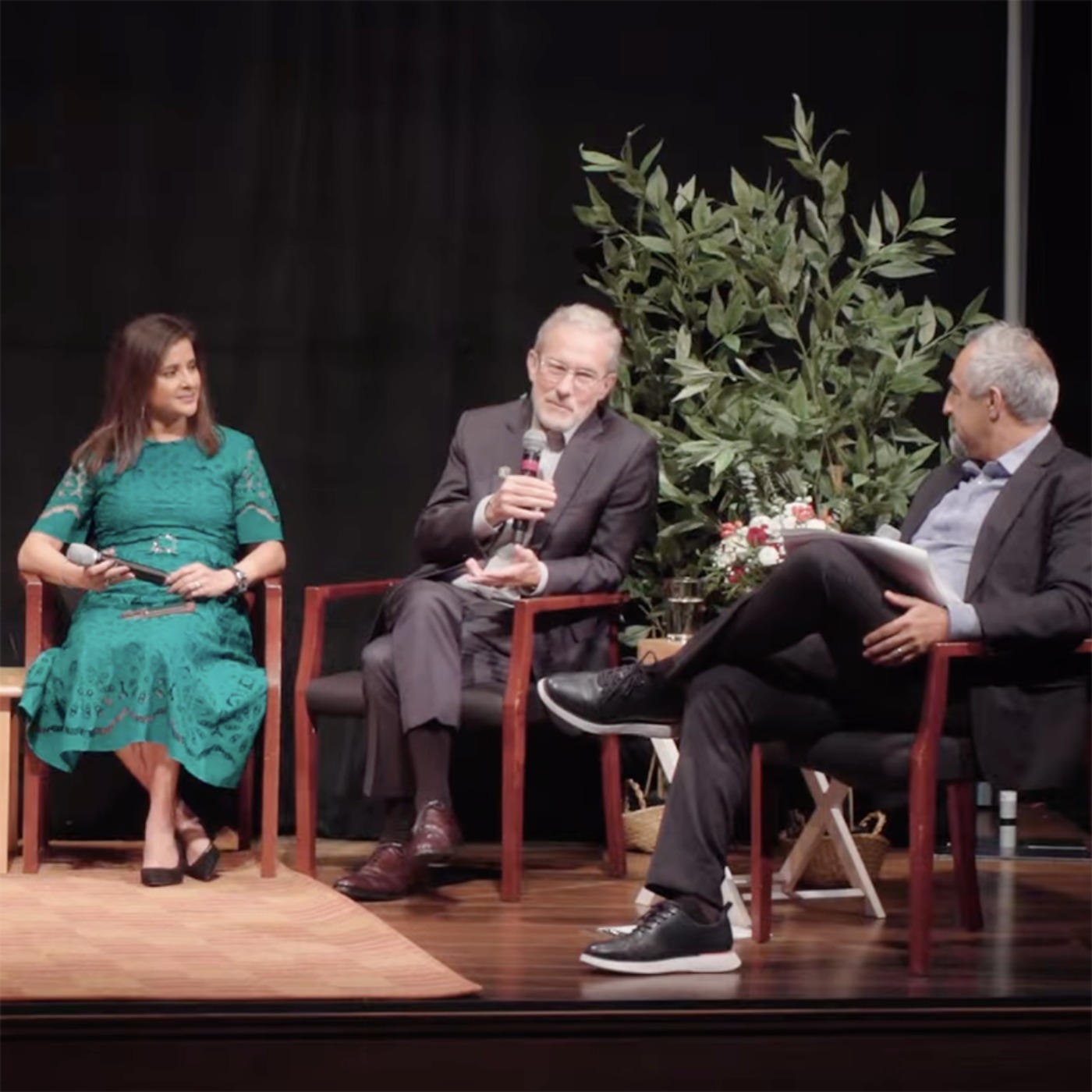 Why kind leaders finish first (according to science) 09.01.2026 1h 38minA broad group of leaders from academia and the private sector — including UC Berkeley Chancellor Rich Lyons and neuroscientist Emiliana Simon-Thomas of the Greater Good Science Center — discuss how kindness is a strategic asset rather than a professional weakness, and why the traditional “jerk” model of leadership is scientifically flawed.This shift toward evidence-based management, the panelists point out, is backed by massive datasets. “When companies perform very well, we find that prosocial CEOs are more likely to share credit with others,” explains Weili Ge, a professor at the University of Washington’s Foster School of Business, drawing on data from a decadelong analysis of 3,500 corporate leaders. “And when firms don't do well,” she continues, “they're less likely to shift the blame, they're more likely to take responsibility. This is quite different from self-centered CEOs, who are more likely to take credit when things go well and shift the blame when things don't go well."The panelists include: Rich Lyons: 12th chancellor of UC Berkeley Emiliana Simon-Thomas: Science director at UC Berkeley’s Greater Good Science CenterWeili Ge: Professor of accounting at the University of Washington’s Foster School of BusinessYamini Rangan: CEO of HubSpot, Berkeley alumKeyAnna Schmiedl: Chief human experience officer at WorkhumanDenis Ring: Former CEO of Ocho Chocolates, creator of the Whole Foods 365 brandKia Afcari (moderator): Director of Greater Good Workplaces at the Greater Good Science CenterThe event, which took place on Dec. 1, 2025, was hosted by the Greater Good Science Center in partnership with the Berkeley Center for Workplace Culture and Innovation.Listen to the episode and read the transcript on UC Berkeley News (news.berkeley.edu/podcasts/berkeley-talks).Music by HoliznaCC0.Video screenshot. Hosted on Acast. See acast.com/privacy for more information.
 -
 How do we make better decisions? (revisiting) 26.12.2025 1h 5minToday we are revisiting a Berkeley Talks episode in which a cross-disciplinary panel of UC Berkeley professors, whose expertise ranges from political science to philosophy, discuss how they view decision-making from their respective fields, and how we can use these approaches to make better, more informed choices. Panelists include: Wes Holliday, professor of philosophy. Holliday studies group decision-making, including the best methods of voting, especially in the democratic context. Marika Landau-Wells, assistant professor of political science. Landau-Wells studies the effect that threat perception has on national security decision-making, and how some decisions we make to protect ourselves can endanger many others.Saul Perlmutter, Franklin W. and Karen Weber Dabby Professor of Physics and 2011 Nobel laureate. Perlmutter co-teaches a Big Ideas course, called Sense and Sensibility and Science, designed to equip students with basic tools to be better thinkers by exploring key aspects of scientific thinking.Linda Wilbrecht, professor of neuroscience and psychology. An adolescent scientist, Wilbrecht studies how adolescent learning and decision-making changes from ages 8 to 18, and how it compares to that of adults and children. Jennifer Johnson-Hanks, executive dean of the College of Letters and Science (moderator).The campus event was held on Oct. 9, 2024, as part of the College of Letters and Science’s Salon Series, which brings together faculty and students from a swath of disciplines to interrogate and explore universal questions or ideas from disparate perspectives.Watch a video of the discussion.Listen to the episode and read the transcript on UC Berkeley News (news.berkeley.edu/podcasts/berkeley-talks).Music by HoliznaCC0.Photo by Vladislav Babienko via Unsplash. Hosted on Acast. See acast.com/privacy for more information.
 -
 The making of racialized US immigration control 12.12.2025 1h 27minBefore there was the Chinese Exclusion Act, there was the Page Act. Passed in 1875 amid growing anti-Chinese sentiment in the 19th century, the Page Act was one of the first national immigration laws in the United States. It targeted several categories of people, including contract laborers from Asia, women brought in for sex work and certain convicted criminals. In practice, however, it functioned mainly to restrict Chinese and other Asian women from entering the country.“It had enormous implications for the issues of race, gender and labor in U.S. immigration history and Asian American history,” says UC Berkeley history professor Hidetaka Hirota, who moderated a campus discussion in April to mark the Page Act’s 150th anniversary.In this Berkeley Talks episode, a panel of Berkeley scholars unpack how the Page Act helped institutionalize racially targeted exclusion and gendered surveillance at the border, and how it laid the groundwork for the 1882 Chinese Exclusion Act and later immigration laws. They also challenge the enduring myth of the “white bootstrapping ethnic,” supposedly living “the right way” without state support, showing instead how immigration and welfare regimes were structured to advantage European newcomers while systematically excluding Asians and other people of color.Panelists include Catherine Ceniza Choy, professor of ethnic studies; Cybelle Fox, professor of sociology; Leti Volpp, professor of law; and Hidetaka Hirota, associate professor of history, who moderated the conversation. The event, which took place on April 23, was hosted by Berkeley’s Social Science Matrix and was co-sponsored by the Berkeley Interdisciplinary Migration Initiative, the Department of Sociology, the Department of History, the Department of Ethnic Studies, the Asian American Research Center and the Center for Race and Gender.Watch a video of the discussion.Listen to the episode and read the transcript on UC Berkeley News (news.berkeley.edu/podcasts/berkeley-talks).Music by HoliznaCC0.Photo from the National Archives. Hosted on Acast. See acast.com/privacy for more information.
Radiostation

Liknande podcastar


Populär i
Den här podcasten finns även i podcastlistor i dessa länder.


