
Book Takeaways for Professional Growth with Actionable Insights for Busy Global Professionals
Book Takeaways for Professional Growth
0
This podcast distills key insights from top books on decision-making, leadership, and focus into actionable takeaways for busy professionals. Each episode provides practical frameworks and strategies that can be applied immediately in a professional context. The show aims to help listeners become better leaders and decision-makers without having to read entire books. It is designed for global professionals who want to grow but have limited time.
Avsnitt
-
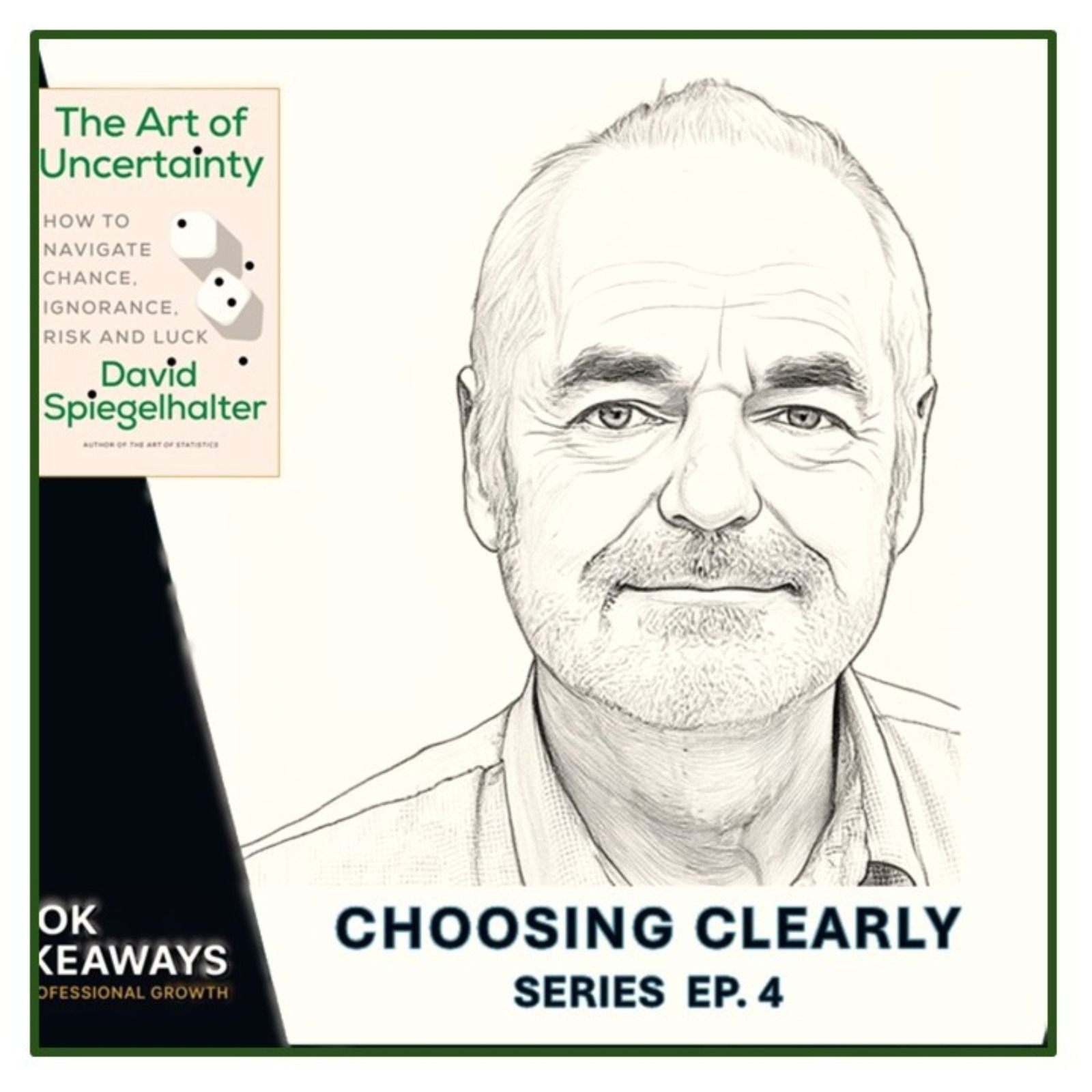 Think in Scenarios, not Predictions | David Spiegelhalter's The Art of Uncertainty | Choosing Clearly Series Part 4/7 05.09.2026 8minDo you ever wish someone would just give you a straight yes or no answer about a big life decision? In Episode 4 of Choosing Clearly, we continue our journey from overwhelm to wisdom by tackling one of the hardest parts of decision-making: not knowing what happens next. This episode is built around David Spiegelhalter's The Art of Uncertainty. His central message is a relief once you hear it: living with uncertainty isn't a personal failure — it's simply how reality works, for everyone, all the time. Marcus opens up about a real promotion offer on the table, with a return-to-office mandate that could affect his family and marriage, and no clear answer in sight. Together, Sophia and Marcus explore risk and uncertainty in decision making, drawing a key distinction: risk is something we can estimate with numbers, while deep uncertainty — like how a teenager will feel about a move in ten years — is genuinely unknowable in advance. The fix isn't more research. It's learning to think in scenarios: naming your best case, worst case, and most likely case instead of demanding a guarantee that was never coming. Whether you're a parent switching daycares or a professional weighing a career move, this episode gives you a practical tool to stop feeling frozen and start moving forward, even without certainty. Chapters: 0:00 - Introduction: The Promotion With No Clear Answer 1:17 - Today's Question: Why We Demand Certainty 2:17 - Risk vs. Deep Uncertainty Explained 3:20 - Applying It: The Daycare Switch Example 3:49 - Tool: Think in Scenarios, Not Predictions 4:15 - Building Best Case, Worst Case, Most Likely Case 4:56 - The Goal Is Reduced Paralysis, Not Zero Uncertainty 6:50 - Your Action Plan for This Week 7:54 - Closing & What's Next in Episode 5 Here's the Playlist of available episodes of the Choosing Clearly Series https://youtube.com/playlist?list=PLWHCeMtwwvKE&si=xPjntxe0SNDulcCh Subscribe for more tools on choosing clearly and turning uncertainty into confident, clear-eyed decisions!
 -
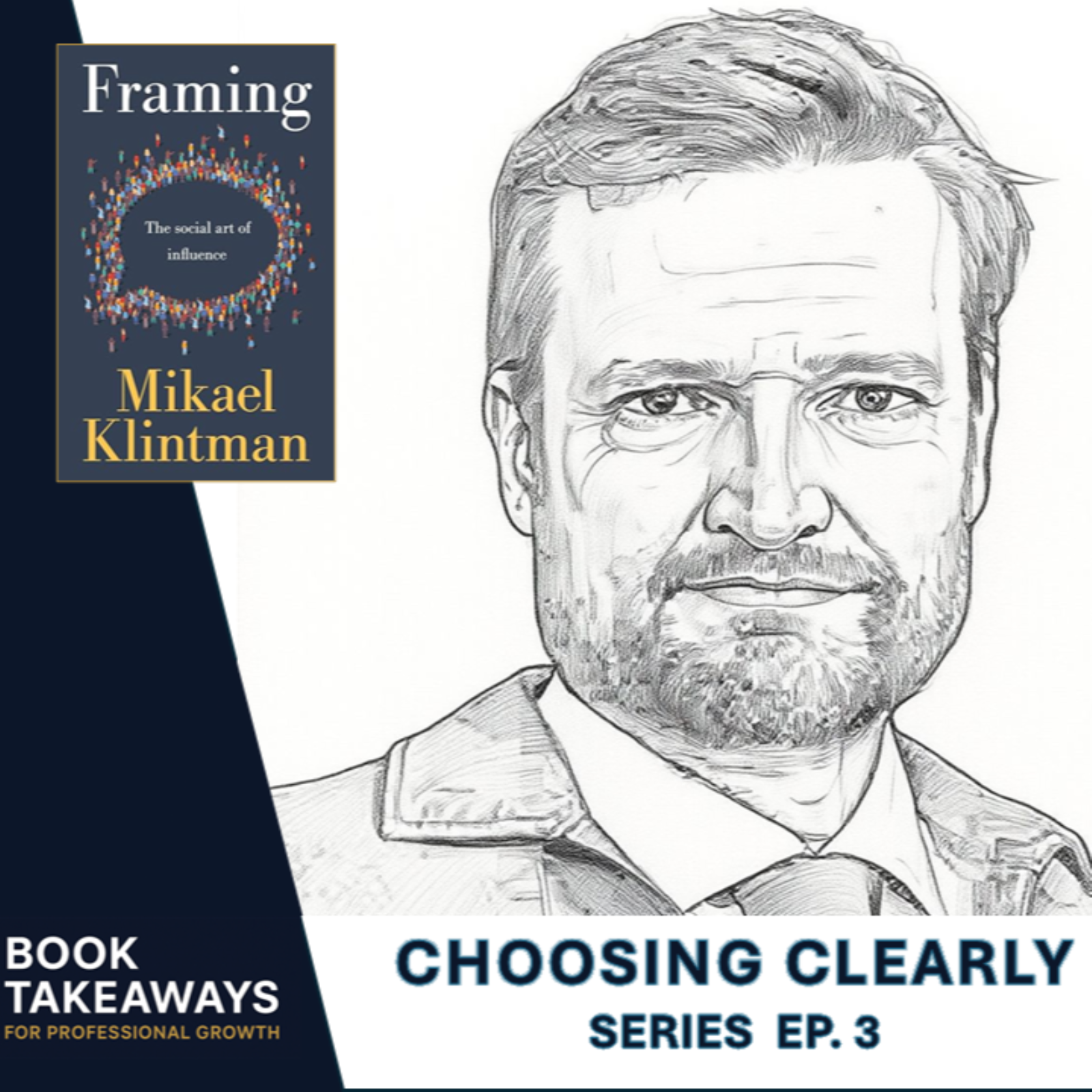 Framing Effect in Decision Making: Social Art of Influence Book by Mikael Klintman's Framing | Choosing Clearly Part 3/7 28.08.2026 9minHave you ever felt a wave of panic from a short text or email, only to realize later the situation wasn't actually that serious? In this book takeaways in 10 minutes, Episode 3 of Choosing Clearly, we continue our journey from overwhelm to wisdom by exploring how words secretly shape our decisions. This episode is built around Mikael Klintman's social art of influence book, Framing. His core idea is simple but eye-opening: the same facts, described in different words, can produce completely different feelings and completely different choices. Sophia shares how a two-word school note — "falling behind" — sent her into a four-day panic spiral, while Marcus admits a one-line work message nearly convinced him he was being managed out of his job. Together, they unpack the framing effect in decision making, breaking it into four practical tools: texture (does it sound normal or alarming?), temperature (was it delivered calmly or urgently?), position (behind what, exactly, and compared to whom?), and size (is this small and temporary, or made to sound permanent?). You'll learn why these frames appear everywhere — in parenting advice, social media, and workplace feedback — and why noticing them, not avoiding them, is the real skill. Whether you're a parent reading a teacher's note or a professional decoding your manager's email, this episode gives you a simple habit: check the frame before you trust the feeling it gives you. Chapters: 0:00 - Introduction: The Two Words That Caused a Panic 1:51 - Facts vs. How They're Described: Klintman's Framing Theory Explained 3:03 - Tool 1: Texture — Smooth vs. Rough 3:54 - Tool 2: Temperature — Calm vs. Urgent 4:26 - Tool 3: Position — Behind What, Exactly? 5:24 - Tool 4: Size — Small Issue or Life-Defining? 6:34 - Your Action Plan for This Week 8:01 - Closing & What's Next in Episode 4 Subscribe for more tools on Choosing Clearly and turning everyday confusion into calm, confident decisions!
 -
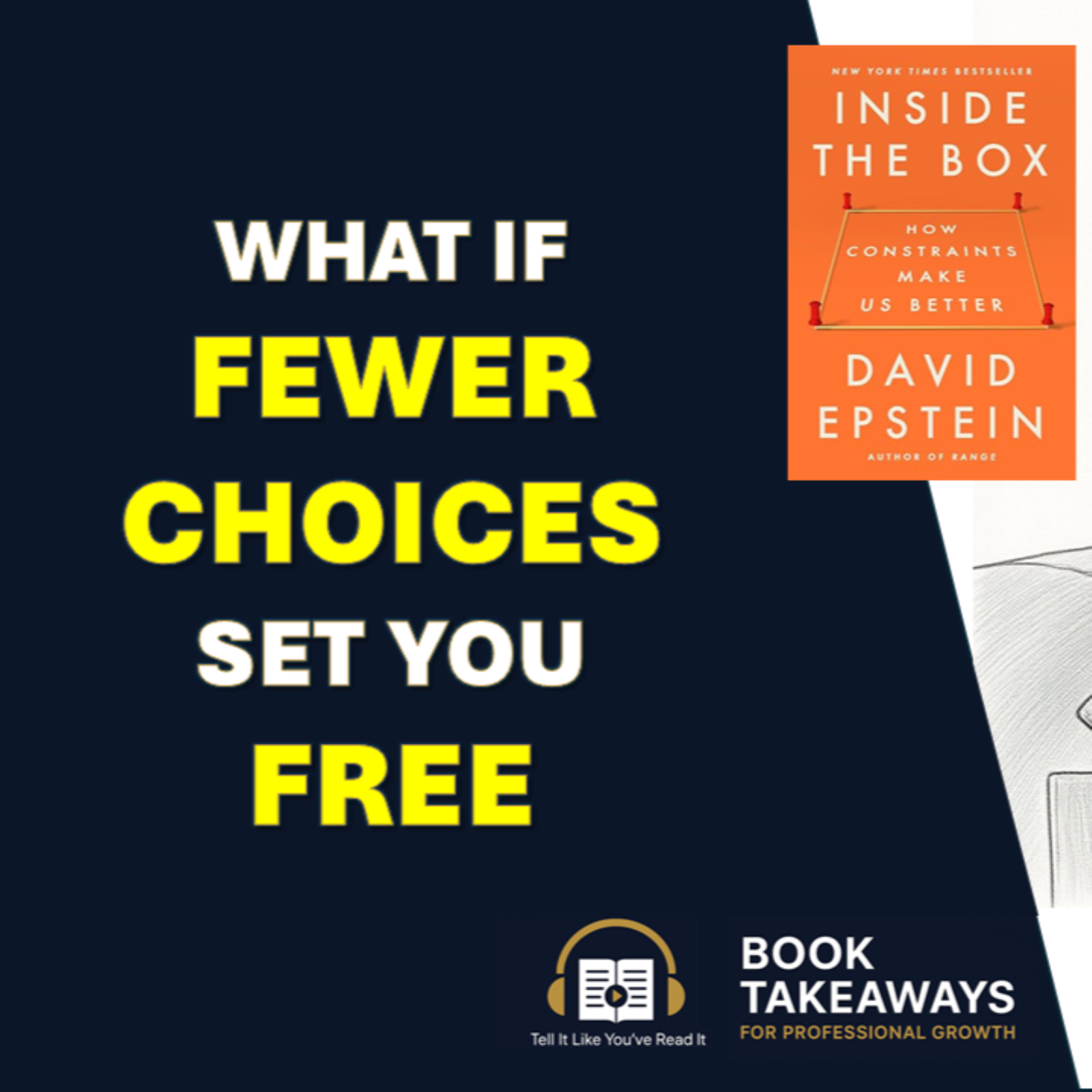 Limits are Good for You | Choosing Clearly Series Ep 2 Inside the Box David Epstein book 21.08.2026 9minDo you feel like every day brings too many choices — from bedtime routines to meal planning to work decisions? In Episode 2 of Choosing Clearly, we continue our journey from overwhelm to wisdom by exploring a surprising idea: fewer choices can actually set you free. This episode dives into the David Epstein book, Inside the Box, where he argues that limits are good for you. Most of us believe more freedom and more options make life better, but Epstein shows the opposite is often true. Unlimited choice can overwhelm us — think about standing in front of a streaming app for twenty minutes and choosing nothing at all. Hosts Sophia and Marcus share real stories from their own lives: a nightly bedtime negotiation that drains all her energy, and a family calendar app that keeps adding features nobody uses. Together, they unpack why we tend to add more instead of simplifying, even when less would clearly work better. You'll learn the difference between a cage (a limit forced on you) and a guardrail (a limit you choose calmly, in advance, to protect your future self). Whether you're a busy parent managing school mornings or a professional juggling too many meetings, this episode gives you a simple, practical tool: set one clear rule now, so you don't have to negotiate everything later, when you're tired and stressed. Chapters: 0:00 - Introduction: The Bedtime Negotiation 1:28 - Why More Freedom Can Feel Worse 2:45 - The Curse of Abundance 3:13 - Real Story: General Magic and Too Many Features 4:35 - Designing for Real, Tired Humans 6:51 - Your Action Plan for This Week 8:31 - Closing & What's Next in Episode 3 Subscribe for more tools on choosing clearly and turning overwhelm into calm, confident decisions!
 -
 How to Move from Overwhelm to Wisdom | Decision Making for Professionals & Parents | Choosing Clearly Series 1/7 14.08.2026 9minAre you tired of feeling stressed over simple choices like what to make for breakfast or how to answer a quick work email? Welcome to Episode 1 of Choosing Clearly, a new 7-part series designed to help you move from overwhelm to wisdom. In this episode, hosts Sophia and Marcus dive into why modern life makes every small choice feel so heavy. Whether you are figuring out family schedules or managing return-to-office demands, decision making for parents and decision making for professionals has never been more exhausting. Did you know the average adult makes about 35,000 decisions a day? We explain why this mental overload is not your fault and how the structure of our modern world sets us up for decision fatigue. This episode introduces the roadmap for our entire series. We will use powerful, practical ideas from four great books to help you navigate life's endless options. You don't need more information; you need a better filter. Join us as we explore how to find balance, reduce anxiety, and feel confident in a busy world. Chapters: 0:00 - Introduction: The Panic of Small Choices 1:51 - Why Do Choices Feel So Heavy Today? 2:30 - The 35,000 Decisions a Day Problem 4:33 - It’s Not Your Fault: How the World Changed 5:54 - Series Roadmap: What to Expect in 7 Episodes 7:01 - Your Action Plan for This Week 8:15 - Closing & What’s Next in Episode 2 Subscribe for more tips on choosing clearly and transforming your daily routines. Let’s make your next choice your best one!
 -
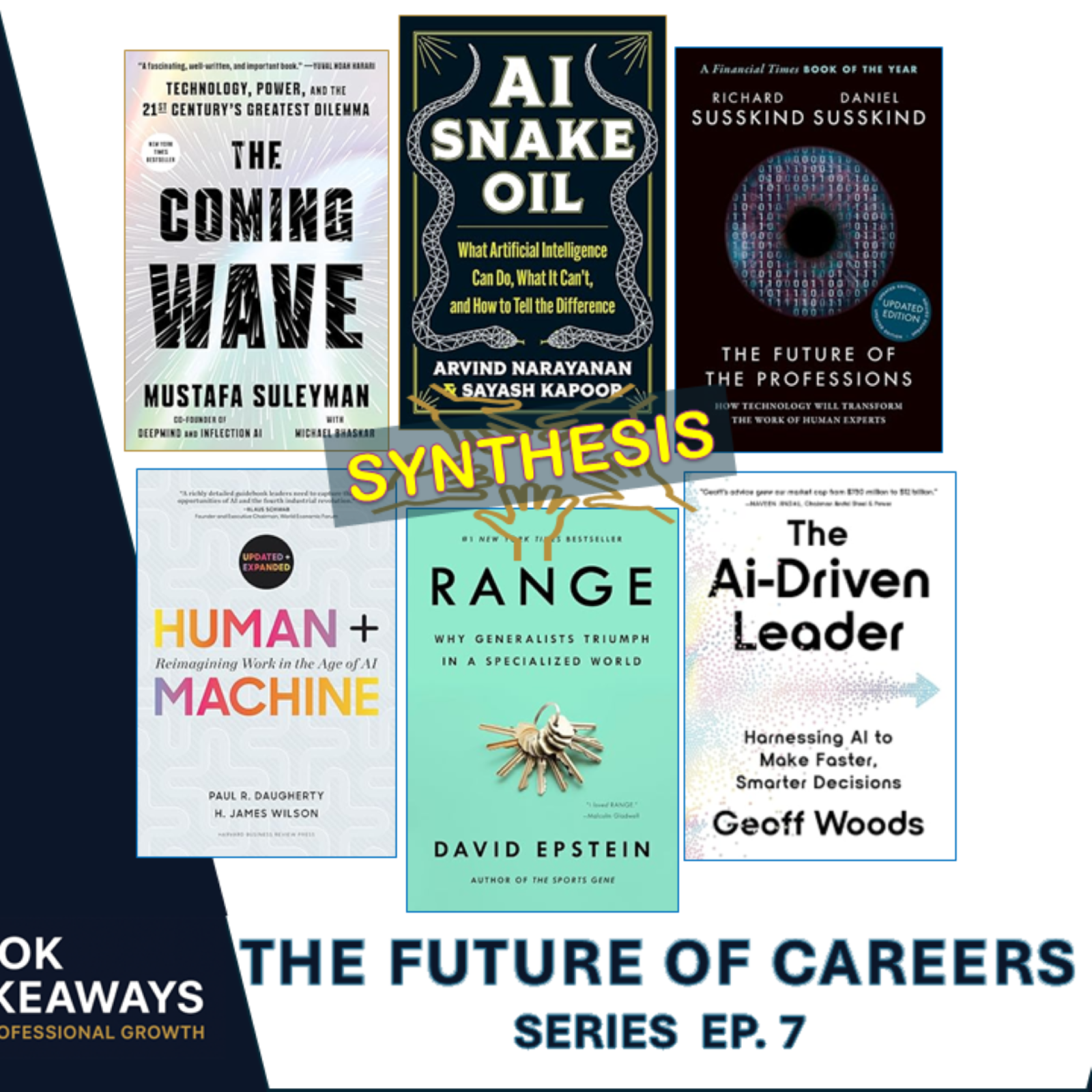 How to navigate the age of AI? A Roadmap in the Age of AI | Series Finale of AI and the Future of Careers Part 7/7 05.08.2026 13minSix books. Seven episodes. One question underneath all of it: how do you prepare yourself and your children for a world moving faster than you can fully see? This is the bonus finale of our 7-part series on AI and the future of careers — and it is not a summary. It is the complete roadmap in the age of AI, built by connecting all six books and resolving the tensions between them. Does The Coming Wave contradict AI Snake Oil? Does Range conflict with Human + Machine? Your hosts Marcus and Sophia walk through each apparent disagreement and show how the six books actually form one coherent picture of technology and work — from accepting the wave is real, to thinking critically, to understanding how professions are being redesigned, to raising children with the right foundations, to leading yourself with AI as a thinking partner. This episode answers the question so many listeners have been asking: what to do in the age of AI, starting today. ⏱️ Chapters - 0:00 – What actually changed for the hosts during this series - 2:41 – The real question underneath all six books - 3:30 – Episode 1 revisited: The Coming Wave as the foundation - 4:17 – Episode 2 revisited: Resolving the first tension with AI Snake Oil - 5:13 – Episodes 3 & 4 revisited: Structural clarity meets the Missing Middle - 7:00 – Episode 5 revisited: Why Range and depth are not opposites - 7:55 – Episode 6 revisited: The final tension resolved - 8:40 – The full map: what six books say together - 10:04 – 2 actions this week — one for your career, one for your family - 11:18 – Closing: Navigation, not safety The people who move through this period with the most confidence are not the ones who found the safest path — they are the ones who understood the terrain well enough to navigate any path. 🎧 If any book in this series spoke to you, go back and read it in full. Share this series with someone carrying the same questions. AI and the Future of Careers Series features the following books: Ep 1 The Coming Wave https://youtu.be/eVukQPqiLOM Ep 2 AI Snake Oil https://youtu.be/fWyaGuNcuMA Ep 3 The Future of the Professions https://youtu.be/1e9sO9ATi3U Ep 4 Human + Machine: Reimagining Work in the Age of AI https://youtu.be/FNZs59kG0ao Ep 5 Range: Why Generalists Triumph in a Specialized World https://youtu.be/3Kc1YgO8_PA Ep 6 The AI-Driven Leader https://youtu.be/jcXqI3JpgWA Ep 7 Synthesis and Season Finale (YOU ARE HERE)
 -
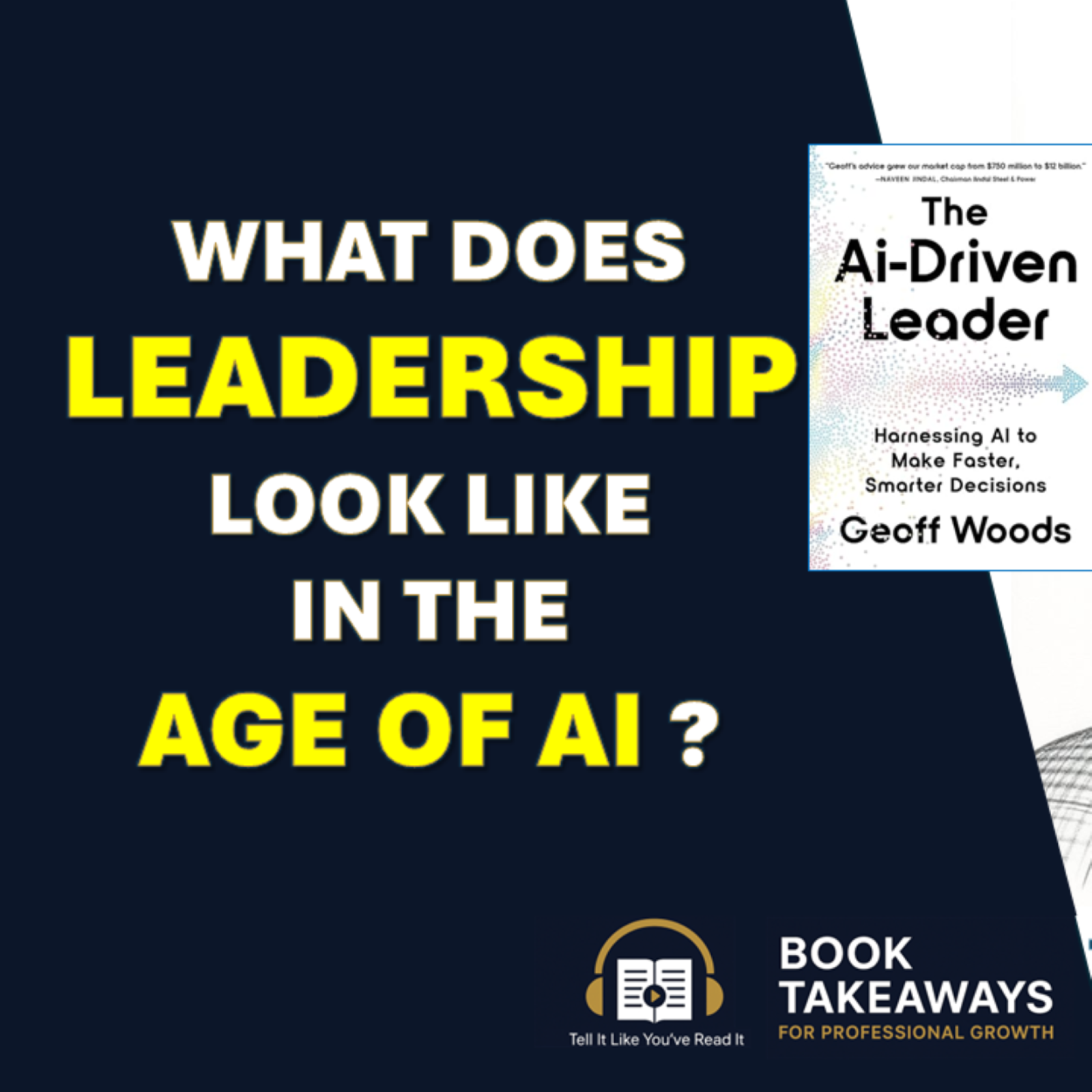 What does leadership look like in the Age of AI | Book Takeaways series on AI and the Future of Careers Part 6/7 | AI-Driven Leader by Geoff Woods 30.07.2026 13minYou understand AI is changing everything. You've done the reading. But last Sunday, you told your kids "ten more minutes" and forty-five minutes later, you were still buried in email. Sound familiar? This is Episode 6 of our 7-part series on AI and the Future of Careers — the practical playbook after five episodes of building the big picture. Today's AI-Driven Leader book summary covers Geoff Woods's book on AI and leadership, drawn from his work helping grow a company's market value from 750 million to over 12 billion dollars. This is not about technology and work in the abstract — it's AI for managers and leaders who need something concrete to change starting this week. In this episode, your hosts Marcus and Sophia break down 4 ideas that turn understanding into a real weekly practice. ⏱️ Chapters - 0:00 – The Sunday laptop moment and the "AI readiness" gap nobody can explain - 3:01 – Operational overwhelm — why "later" never comes - 5:20 – Takeaway 1: You are the Thought Leader. AI is your Thought Partner. - 6:57 – Takeaway 2: Use AI for decisions, not just tasks - 8:11 – Takeaway 3: The AI Empowerment Flywheel — why the learning curve is normal - 9:37 – Takeaway 4: The conductor model — what leadership looks like now - 10:58 – 3 actions this week — including one question that starts the flywheel - 12:24 – What's coming in Episode 7: The bonus finale The rule is simple enough to remember on a busy Tuesday morning: you are always the Thought Leader, AI is always the Thought Partner. Practising it consistently is enough to change how you lead. 🎧 Subscribe for the full 7-part series. Share this with a manager or leader navigating AI at work. AI and the Future of Careers Series features the following books: Ep 1 The Coming Wave https://youtu.be/eVukQPqiLOM Ep 2 AI Snake Oil https://youtu.be/fWyaGuNcuMA Ep 3 The Future of the Professions https://youtu.be/1e9sO9ATi3U Ep 4 Human + Machine: Reimagining Work in the Age of AI https://youtu.be/FNZs59kG0ao Ep 5 Range: Why Generalists Triumph in a Specialized World https://youtu.be/3Kc1YgO8_PA Ep 6 The AI-Driven Leader (YOU ARE HERE)
 -
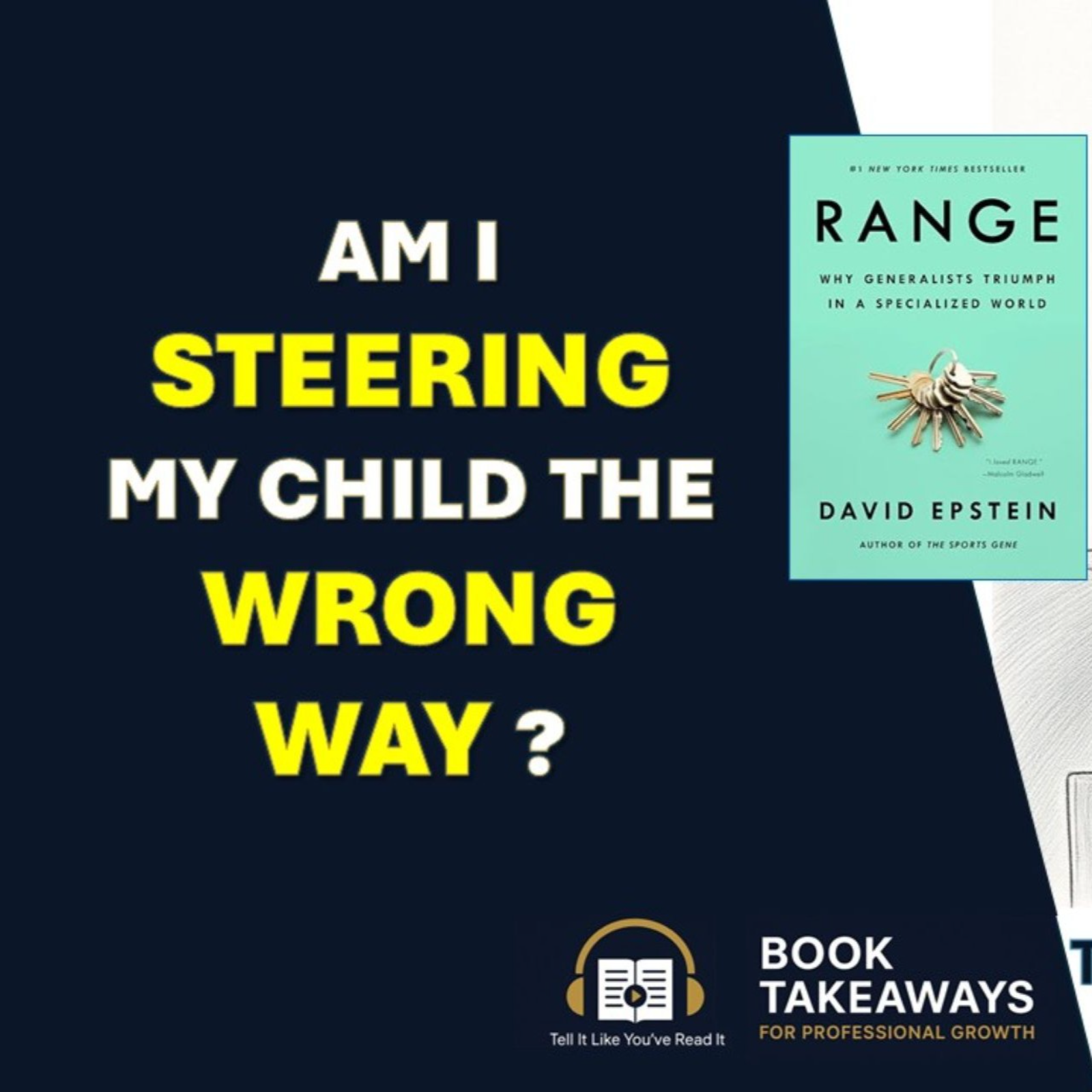 Should I advise my child to specialize in the Age of AI? David Epstein's Range | Book Takeaways Series on AI and the Future of Careers Part 5/7 22.07.2026 14minYour child tries football, then swimming, then drama club, then coding — and you worry they will never "find their thing." What if that worry is exactly backwards? This is Episode 5 of our 7-part series on AI and the Future of Careers. Today's Range summary covers David Epstein's research-packed book, Range: Why Generalists Triumph in a Specialized World — and it offers real relief for parents and professionals thinking about technology and work in the age of AI. Epstein compares Tiger Woods, who specialised in golf before age one, with Roger Federer, who played six sports before committing to tennis at sixteen. The research is clear: in "wicked" environments — where rules are unclear and patterns don't repeat, which describes most real careers — broad experience beats early specialization. In this episode, your hosts Marcus and Sophia break down 4 ideas connecting Epstein's research directly to the future of professions and the Missing Middle from Episode 4. ⏱️ Chapters - 0:00 – The guilt of letting your child quit — and why it may be misplaced - 2:54 – Why "pick a lane early" is exactly the wrong advice - 5:10 – Takeaway 1: The sampling period is preparation, not delay - 6:24 – Takeaway 2: Match quality — why trying things is never wasted time - 7:40 – Takeaway 3: Analogical thinking — the skill the Missing Middle actually needs - 9:29 – Takeaway 4: Your own career detours are range, not failure - 10:43 – 3 actions this week — including one question to stop asking your child - 12:09 – What's coming in Episode 6: The AI-Driven Leader Nobel laureates in science are 22 times more likely than average scientists to have a serious creative hobby. Breadth builds the flexible thinking that thrives in the age of AI — and this episode shows exactly why. 🎧 Subscribe for the full 7-part series. Share this with a parent who needs to hear it today. AI and the Future of Careers Series features the following books: Ep 1 The Coming Wave https://youtu.be/eVukQPqiLOM Ep 2 AI Snake Oil https://youtu.be/fWyaGuNcuMA Ep 3 The Future of the Professions https://youtu.be/1e9sO9ATi3U Ep 4 Human + Machine: Reimagining Work in the Age of AI https://youtu.be/FNZs59kG0ao Ep 5 Range: Why Generalists Triumph in a Specialized World (YOU ARE HERE)
 -
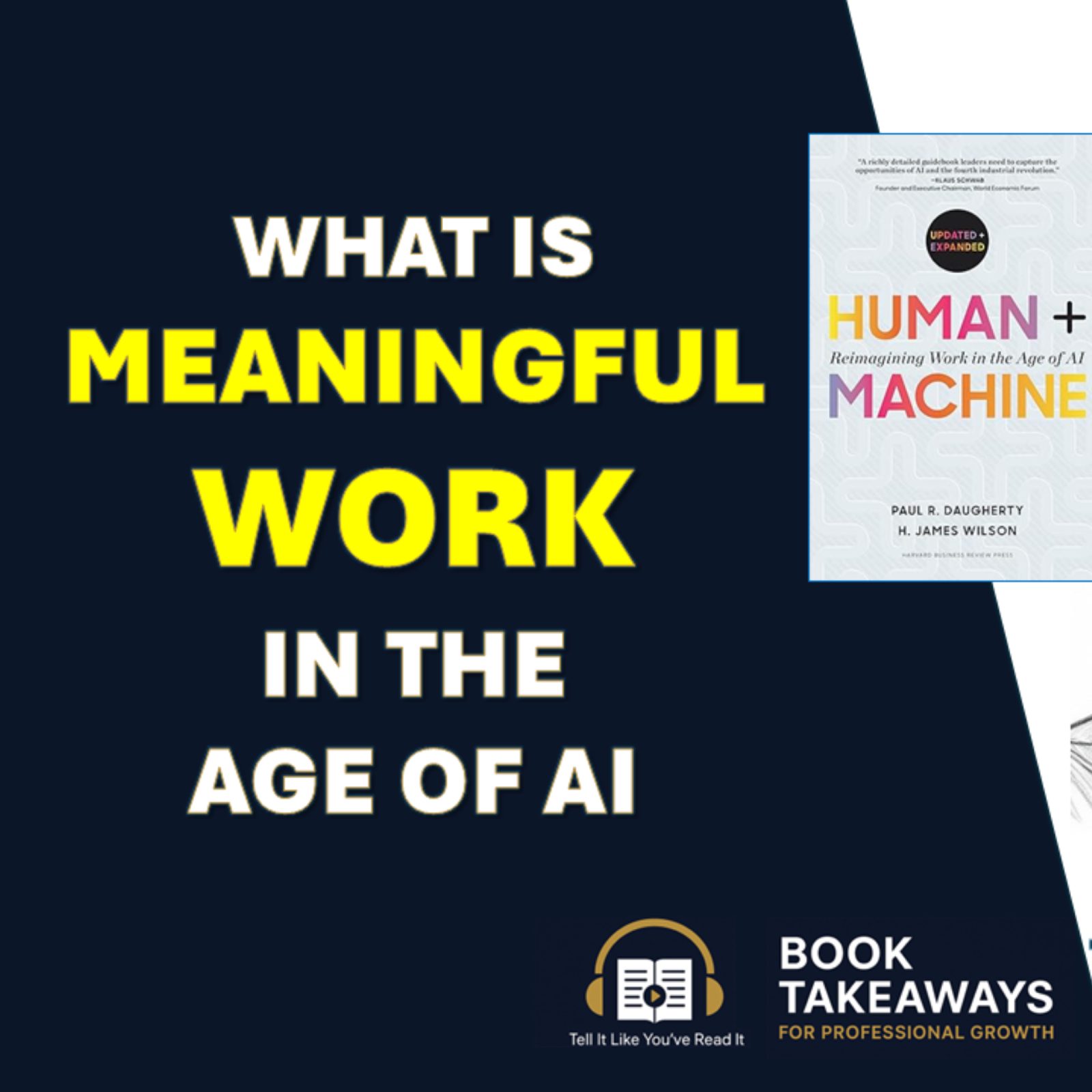 What is Meaningful Work in the Age of AI | Human + Machine | AI and the Future of Careers series 4/7 15.07.2026 17minYour child asks: "Mum, are robots going to take people's jobs?" Your company rolls out an AI strategy. The word "efficiency" appears forty times. The word "people" appears twice. What do you say? What do you do? This is Episode 4 of our 7-part series on AI and the future of careers — and it is the most hopeful episode in the series. Today we cover Human + Machine by Paul Daugherty and H. James Wilson from Accenture, based on research across 1,500 organizations. Their finding cuts through all the fear: the companies getting the most from AI are not replacing people. They are redesigning how people and machines work together. That space — where human judgment meets machine capability — is what they call the Missing Middle. And it is where the most valuable work in the age of AI happens. In this episode, your hosts Marcus and Sophia break down 4 ideas that give you a concrete picture of the future — not just the problem. ⏱️ Chapters 0:00 – The AI town hall nobody talked about — and a 10-year-old's honest question 3:15 – Why "AI takes jobs" is the wrong frame — and what the real fear actually is 5:28 – Takeaway 1: The Missing Middle — where the most valuable work happens 7:16 – Takeaway 2: Six hybrid roles — what human-machine collaboration looks like in practice 9:57 – Takeaway 3: The three skills that make this collaboration work 12:01 – Takeaway 4: Augmentation is a choice, not an automatic outcome 13:19 – 3 actions this week — including a real answer for your child 14:45 – What's coming in Episode 5: Range by David Epstein The future of the professions is not humans versus machines. It is humans and machines — and knowing how to work that combination well is the most durable career skill your child can build. 🎧 Subscribe for the full 7-part series. Share this with a colleague navigating AI at work. AI and the Future of Careers Series features the following books: Ep 1 The Coming Wave https://youtu.be/eVukQPqiLOM Ep 2 AI Snake Oil https://youtu.be/fWyaGuNcuMA Ep 3 The Future of the Professions https://youtu.be/1e9sO9ATi3U Ep 4 Human + Machine: Reimagining Work in the Age of AI (YOU ARE HERE)
 -
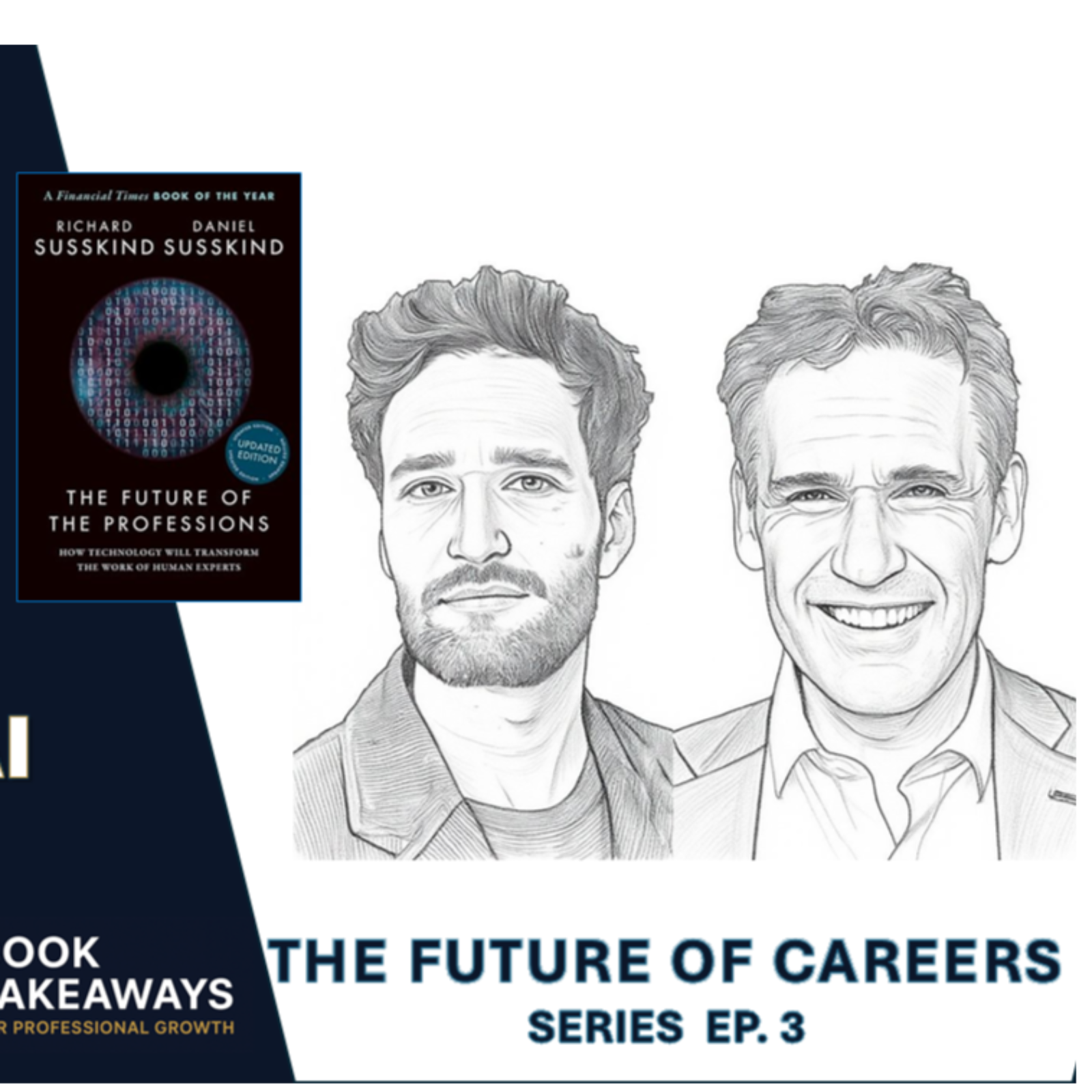 What Do I Tell My Kids to Study? | The Future of the Professions by Richard and Daniel Susskind | Book Takeaways Series on AI and the Future of Careers Part 3/7 08.07.2026 13minYour parents told you: "Get into medicine. Study law. Learn accounting. You'll always have work." They were right — for their generation. But what do you tell your children today? That is the question at the heart of this episode. This is Episode 3 of our 7-part series on AI and the future of careers. Today we cover The Future of the Professions by Richard Susskind and Daniel Susskind — a legal technology expert and an Oxford economist — who spent years researching exactly what technology and work are doing to the careers families have trusted for generations. This is not a story about professions disappearing. It is a story about how they are changing from the inside — task by task — and what that means for you and your children right now. In this episode, your hosts Marcus and Sophia break down 4 ideas every professional needs to understand. ⏱️ Chapters 0:00 – The career advice our parents gave us — and whether it still works 2:42 – The fear of giving your child the wrong advice 4:47 – Takeaway 1: Decomposition — what AI actually replaces inside a profession 6:46 – Takeaway 2: Three new human roles emerging in every field 8:27 – Takeaway 3: What actually protects you is not your job title 9:33 – Takeaway 4: The better question to ask for your children's future 10:47 – 3 actions to take this week — including one question that changes everything 12:19 – What's coming in Episode 4: Human + Machine The routine tasks AI replaces first are often how young professionals build their early careers. So what does the future actually need from humans — and how do we prepare our children for it? 🎧 Subscribe for the full 7-part series. Share this with a parent or professional asking the same question. AI and the Future of Careers Series features the following books: Ep 1 The Coming Wave https://youtu.be/eVukQPqiLOM Ep 2 AI Snake Oil https://youtu.be/fWyaGuNcuMA Ep 3 The Future of the Careers (YOU ARE HERE)
 -
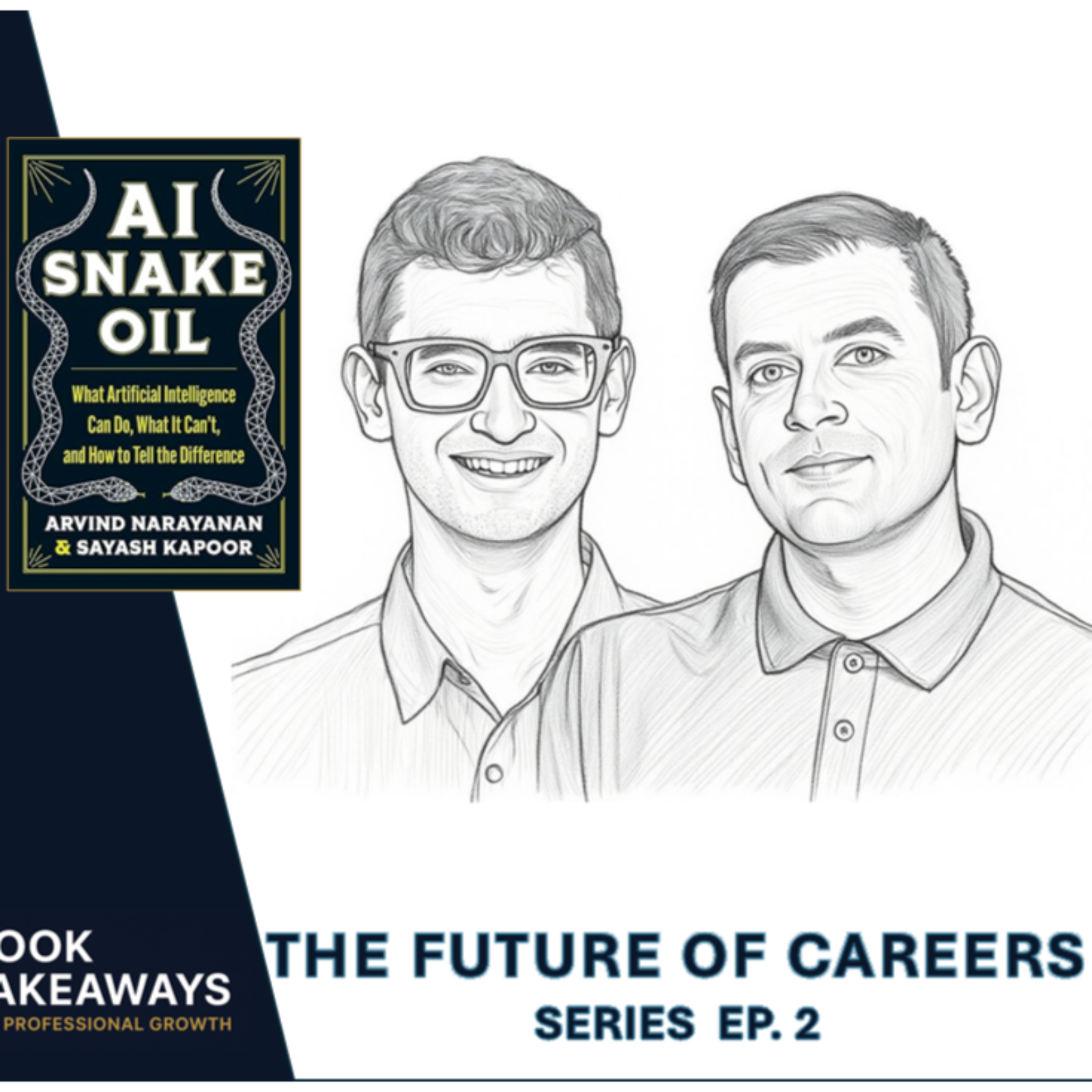 What AI Can Do and What It Can't | Book Takeaways 7-part series on AI and the Future of Careers: Part 2/7 01.07.2026 13minYour company just rolled out an AI hiring tool. Your child's teacher flagged their essay as AI-generated. And nobody around you can clearly explain how any of it works. That confusion is real — and it is exactly what this episode is for. This is Episode 2 of our 7-part series on AI and the future of careers. Today we break down the AI Snake Oil book summary by Arvind Narayanan and Sayash Kapoor — two Princeton computer scientists on TIME's 100 Most Influential People in AI list. Their message? AI hype vs reality is not just a debate — it is a skill you need right now. In this episode, your hosts Marcus and Sophia break down 4 ideas that will sharpen how you evaluate every AI claim you hear — at work, at home, and in your child's school. ⏱️ Chapters 0:00 – When AI makes career decisions — and nobody can explain how 3:09 – The confusion most professionals and parents carry right now 5:08 – Takeaway 1: Two very different kinds of AI — and they are not equal 6:39 – Takeaway 2: Confidence is not accuracy — the ELIZA effect 8:01 – Takeaway 3: Where AI is already causing real harm to real people 9:14 – Takeaway 4: Why the authors are actually optimistic 10:07 – 3 actions to protect your thinking (and your child's) this week 11:36 – What's coming in Episode 3: The Future of the Professions Not all AI is the same. Not all AI claims are true. This episode gives you the critical lens to tell the difference -- generative AI versus predictive AI. 🎧 Subscribe for the full 7-part series. Share this with a colleague navigating AI at work.
 -
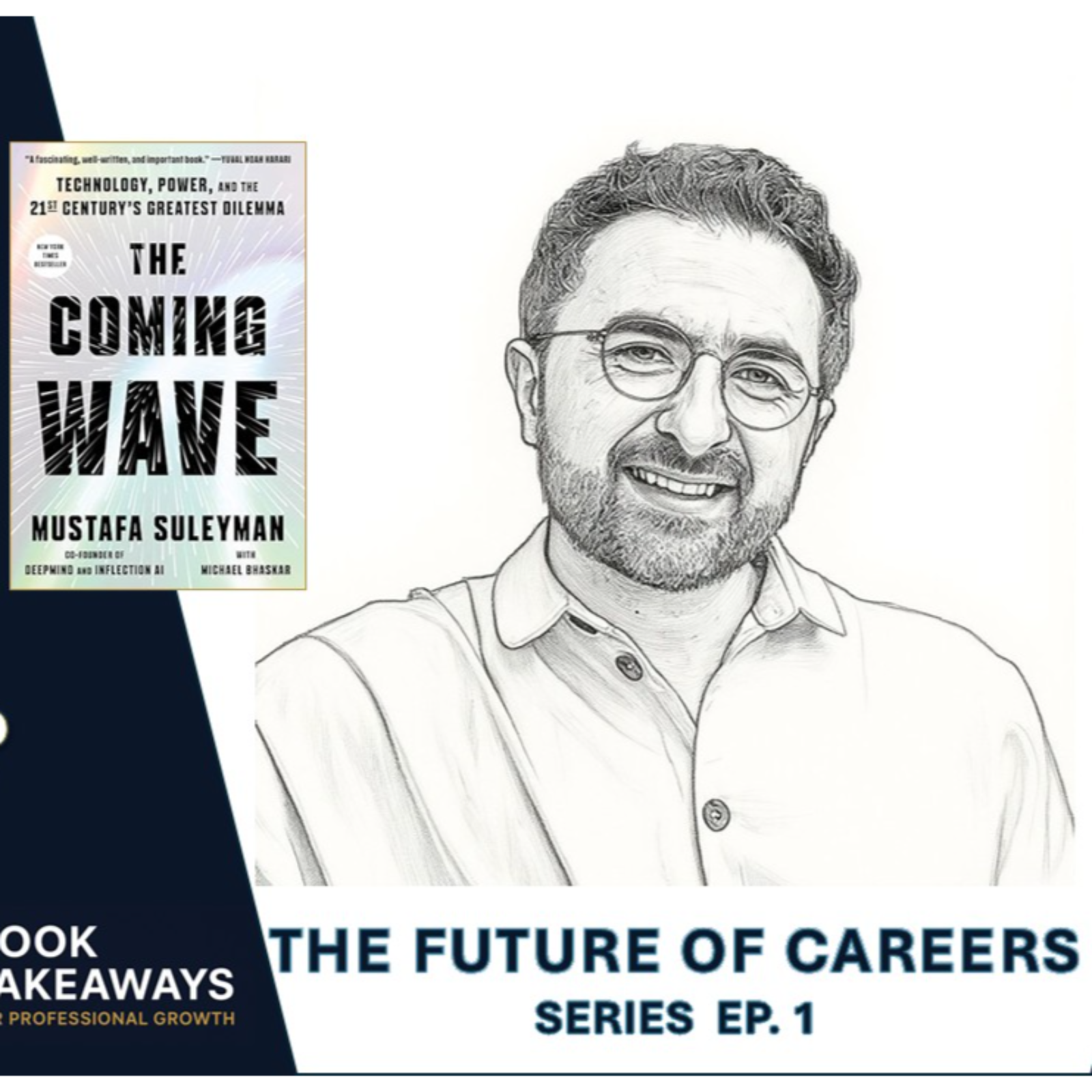 Prepare for The Coming Wave | Book Takeaways 7-part series on AI and the Future of Careers: Part 1/7 24.06.2026 13minHas a child ever asked you: "Will there be jobs when I grow up?" — and you had nothing honest to say? You are not alone. This is Episode 1 of a 7-part series on AI and the future of careers, and we start with the book that changes how you see everything else: The Coming Wave by Mustafa Suleyman — co-founder of DeepMind and former CEO of Microsoft AI. This is your Coming Wave book summary for busy professionals and parents. No panic. No empty promises. Just a clear picture of what is actually happening — and what to do about it. In this episode, your hosts Marcus and Sophia break down 4 ideas from the book that every professional needs to understand right now. --- ⏱️ Chapters - 0:00 – The dinner conversation that started this series - 3:00 – Why so many of us are quietly worried about AI and work - 5:26 – Takeaway 1: The wave is already here — not approaching - 6:36 – Takeaway 2: The containment problem — why this wave is different - 7:53 – Takeaway 3: Human skills are becoming more valuable, not less - 9:02 – Takeaway 4: The narrow path — responsibility starts at home - 10:05 – 3 actions you can take this week (each under 15 minutes) - 11:33 – What's coming in Episode 2: AI Snake Oil --- Will AI save humanity or end it? Mustafa Suleyman does not give you a simple answer — and that is exactly why this book matters. 🎧 Subscribe for the full 7-part series. Share this with someone asking the same questions about AI and their future.
 -
 Daily Intentional Living: from busy to intentional | Intentional by Chris Bailey Book Series 18.06.2026 10minYou end the day exhausted. But when you ask yourself what you actually moved forward — you're not sure. This is the quiet frustration of modern professional life. AI tools promise to save us time, yet our calendars fill faster than ever. We're always reacting — to emails, messages, other people's urgencies — while our own most important goals sit untouched at the bottom of the list. In this final episode of our series on Chris Bailey's Intentional (2026), we tackle the biggest shift of all: moving from busy to intentional. Not by doing less, but by doing the right things — on purpose, every day. Bailey's answer is a simple one-page system he calls the Annual Command Center. It brings together everything we explored in Episodes 1 and 2 — aligning with values, building intention stacks, handling resistance — and turns them into a daily intentional living practice that fits real, messy, overloaded schedules. We cover how to choose just three yearly priorities (and why fewer is genuinely more powerful), how to translate them into a weekly plan, and how a five-minute daily check-in can quietly transform the way a whole year feels. This isn't about perfection. It's about conscious choice. 🎙️ Part 3 of 3 — Book Takeaways Series on Intentional by Chris Bailey 📌 CHAPTERS 00:00 — The exhausted-but-unproductive feeling explained 01:09 — Reaction mode: how busyness steals your real work 02:37 — The Annual Command Center: three priorities, one clear map 04:15 — The five-minute daily intention review 05:34 -- Conscious choice, not perfect execution 06:08 — This week's action: build your personal command center 08:07 — Full series recap + final thoughts 📖 Intentional: How to Finish What You Start by Chris Bailey (2026) 🔗 Episodes 1 https://www.youtube.com/watch?v=8p5uxn54l7Q Episode 2 https://www.youtube.com/watch?v=7-GLC0fzOCg Episode 3: YOU ARE HERE
 -
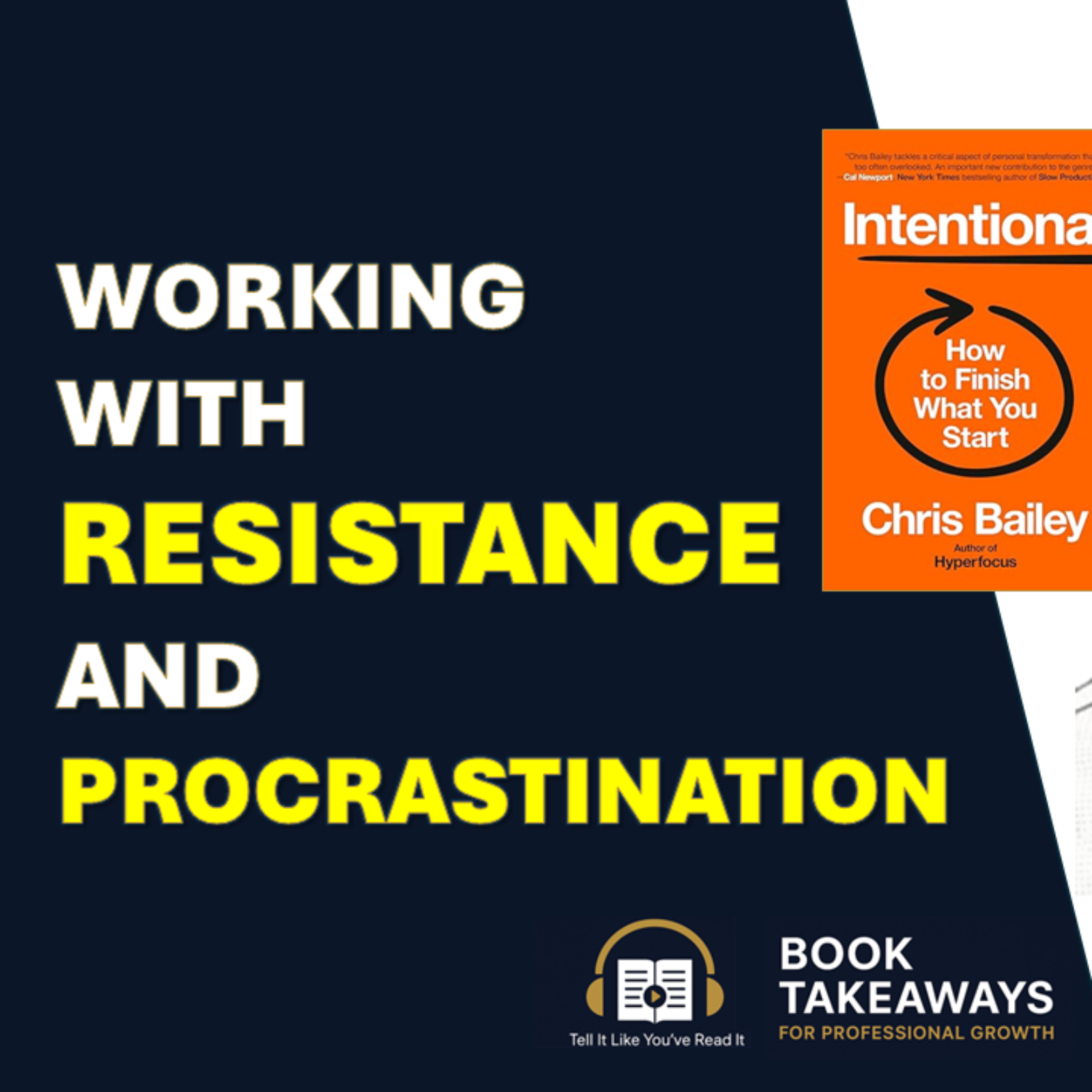 Working with Resistance and Procrastination | Intentional: How to Finish What You Start by Chris Bailey 10.06.2026 10minThat task has been on your list for two weeks. You know it matters. You still can't start. In a world of AI-generated distractions, constant pings, and overloaded schedules, procrastination isn't a character flaw — it's an almost inevitable response to how modern work is designed. But what if the solution isn't pushing harder through the resistance? What if the resistance itself is telling you something useful? In this episode, we dig into one of the most honest chapters of Chris Bailey's Intentional (2026): working with resistance instead of fighting it. Bailey offers a completely different approach to stop procrastination — one built on curiosity, not self-punishment. We cover two practical tools that busy professionals can use immediately. The first is shrinking your resistance level — a surprisingly simple negotiation with yourself that makes even the most avoided task feel startable. The second is mental contrasting — a psychology-backed technique that pairs positive visualization with honest obstacle planning, so you're ready when resistance shows up. If you've tried discipline and guilt and they haven't worked long-term, this episode is your next step. 🎙️ Part 2 of 3 — Book Takeaways Series on Intentional by Chris Bailey 📌 CHAPTERS 00:00 — The task you keep moving to tomorrow 01:13 — Why resistance isn't laziness — it's a signal 02:42 — Shrinking your resistance level: negotiate, don't force 04:28 — Mental contrasting: plan for obstacles before they hit 06:20 — This week's action: one avoided task, two tools 08:12 — What's coming in Episode 3 📖 Intentional: How to Finish What You Start by Chris Bailey (2026) 🔗 Episode 1: https://youtu.be/8p5uxn54l7Q Episode 2: YOU ARE HERE Episode 3:
 -
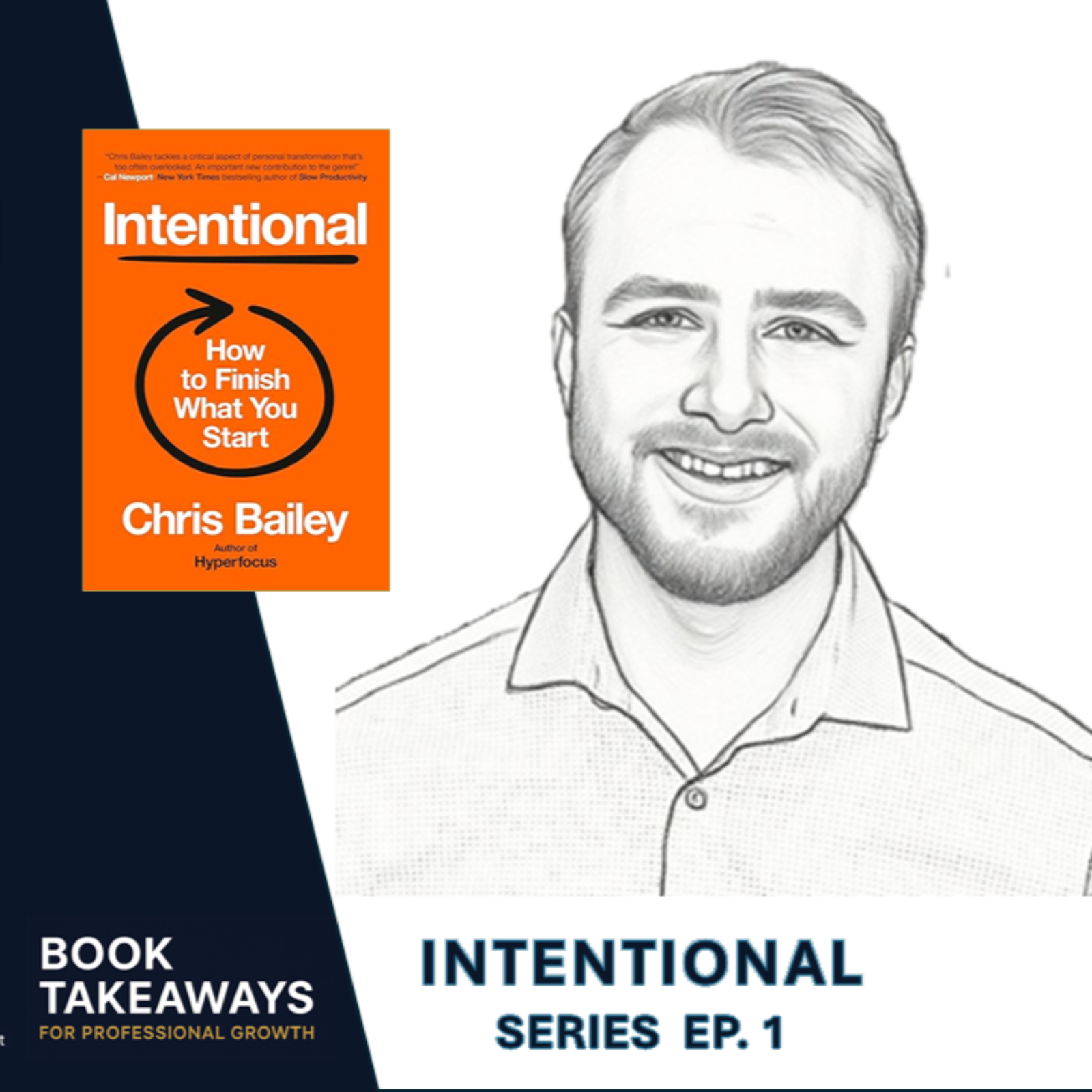 Why don't I finish what I start? | Intentional: How to Finish What You Start by Chris Bailey 03.06.2026 9minYou started it full of energy. Then life happened. Sound familiar? In the age of AI tools, endless notifications, and back-to-back meetings, finishing what you start has never felt harder — or more important. Yet most productivity advice tells you to work harder, wake up earlier, or build more discipline. Chris Bailey's Intentional (2026) says the real problem is something else entirely. In this episode, we explore why busy professionals around the world struggle to follow through — and what to actually do about it. The answer isn't more willpower. It's aligning with values you may have never clearly named. We break down Bailey's most powerful concept: intention stacks — a simple ladder that connects what you do today to what truly matters to you. When your goals are rooted in your real values, finishing becomes natural, not forced. Whether you're juggling a demanding career, a creative project, or a personal goal that keeps getting pushed to next week — this episode gives you one clear, practical step to become the finisher you want to be. 🎙️ Part 1 of 3 — Book Takeaways Series on Intentional Book by Chris Bailey 📌 CHAPTERS 00:00 — Why we start strong and lose steam 00:59 — The real reason you don't finish (it's not laziness) 02:29 — What are intention stacks? The core idea explained 03:54 — How aligning with values changes your motivation 05:12 -- Why you can drop goals 05:48 — This week's action: build your own intention stack in 15 minutes 07:36 — What's coming in Episodes 2 & 3 📖 Intentional by Chris Bailey (2026)
 -
 How Do I Build a Decision System I Can Use for Every Big Choice in the Age of AI? | Decisive Book Takeaways 29.05.2026 10minAI changed your industry. Then it changed again. And it will change next year too. You can't predict the future — but you can build a system that keeps you calm, clear, and confident no matter what comes next.This is the finale. Episode 6 of our Decisive series brings together everything from the past five episodes into one complete decision making system you can use for every major professional choice — for the rest of your career.Drawing from Chip Heath and Dan Heath's Decisive, we walk through the full WRAP framework in real time using one scenario thousands of global professionals are navigating right now: a new AI leadership role, a possible relocation, two weeks to decide, and a lot riding on getting it right. You'll see exactly how to make better choices in life and work by applying all four steps — widening your options, reality-testing your assumptions, attaining emotional distance, and preparing to be wrong — to a single, high-stakes decision.Plus: three rules for turning WRAP into a decision system that becomes instinct, not just a checklist. Whether you're in Nairobi, Kuala Lumpur, Buenos Aires, or Berlin — if you want a reliable thinking process for the age of AI, this is it.📖 The Decisive series finale. The Chip Heath and Dan Heath framework — fully applied.Episode 1 https://youtu.be/vISk-o0H5GkEpisode 2 https://youtu.be/bfww4BTraJMEpisode 3 https://youtu.be/s3NjDbnT73EEpisode 4 https://youtu.be/wWFfiJgSpM4Episode 5 https://youtu.be/jUQigBNVnUMEpisode 6 (YOU ARE HERE)🔔 Subscribers: check your email for the four decision templates — WRAP worksheet, 10-10-10 reflection page, pre-mortem guide, and tripwire planner.Subscribe to the Book Takeaways Newsletter here https://booktakeaways.beehiiv.com/?modal=signup⏱ Chapters0:00 – Welcome & full series recap 1:48 – The problem: Making dozens of AI decisions, not just one 2:56 – The scenario: AI leadership role + relocation, 2 weeks to decide 3:36 – Step 1: Widen your options (Episode 2 in action) 4:29 – Step 2: Reality-test your assumptions (Episode 3 in action) 5:12 – Step 3: Attain distance — 10-10-10 + values check (Episode 4 in action) 5:53 – Step 4: Prepare to be wrong — pre-mortem + tripwire (Episode 5 in action) 6:52 – 3 rules for your personal decision system 8:10 – Your action + subscriber templates 9:24 – Series close: Decide well. Keep growing.
 -
 How to be both Bold and Smart at the same time | Book Takeaways from Decisive Book by Chip Heath and Dan Heath Series Episode 5 22.05.2026 13minHow Can I Bet on Myself in an Uncertain AI Future Without Being Reckless? | Book Takeaways for Professional Growth Podcast | Decisive Series Episode 5 You know you need to move. But one wrong bet could cost you months — or years. So you wait. And wait. For certainty that never comes. What if bold action and a smart safety net weren't opposites? In Episode 5 of our Decisive series, we tackle the fourth and final villain of decision-making: overconfidence — the feeling that looks like confidence but quietly destroys your plans. Drawing from Chip Heath and Dan Heath's Decisive, this episode is for every professional who wants to know how to be both bold and smart at the same time in a world that keeps changing the rules. Whether you're weighing a career pivot, an expensive certification, a new country, or a business bet — this episode gives you three tools to move forward without reckless risk. You'll learn exactly how to make better choices in life and work under uncertainty: - The pre-mortem — imagine failure in advance to prevent it (backed by Gary Klein's research) - The pre-parade — clarify what success actually looks like before you start - Tripwires — how to protect yourself from the trap of escalation of commitment If making difficult career decisions in the age of AI has ever left you paralyzed, stuck, or burned — this is the episode that changes the pattern. 📖 The final villain. The final tool. Part of our complete Decisive series on the Chip Heath and Dan Heath framework for smarter decisions. Episode 1 https://youtu.be/vISk-o0H5Gk Episode 2 https://youtu.be/bfww4BTraJM Episode 3 https://youtu.be/s3NjDbnT73E Episode 4 https://youtu.be/wWFfiJgSpM4 Episode 5 (YOU ARE HERE) ⏱ Chapters 0:00 – Hook: Bold action vs. reckless risk 1:00 – Series recap & today's villain: Overconfidence 2:15 – The planning fallacy — why confident plans fail 3:30 – The emotional cost of being wrong 5:00 – The fourth step of WRAP: Prepare to be wrong 5:30 – Tool 1: The pre-mortem (+ Gary Klein's research) 7:30 – Tool 2: The pre-parade 8:30 – Tool 3: Tripwires & escalation of commitment 11:00 – Your 3-part action for this week 12:00 – Preview of Episode 6: Your complete decision system
 -
 I’m Anxious and Exhausted by AI News — How Do I Stop Making Decisions I Regret? | Book Takeaways from Decisive Book by Chip Heath and Dan Heath Series Episode 4 15.05.2026 11minHow to stop making decisions based on emotions | Book Takeaways from Decisive book by Chip Heath and Dan Heath (Episode 4) Monday: you panic-buy a course. Wednesday: you almost quit your job. Friday: you're paralyzed and do nothing. Sound familiar? In the age of AI anxiety, our emotions are making career decisions before our brains even catch up. In Episode 4 of our Decisive series, we tackle the third villain of decision-making: short-term emotion — and the science behind why it's so hard to resist. Drawing from Chip Heath and Dan Heath's Decisive, we unpack the hot-cold empathy gap: why professionals everywhere are trapped in a near-permanent emotional hot state, and exactly how to stop making decisions based on emotions you'll regret. Whether you're in Lagos, London, Manila, or Montreal — if AI headlines are driving your career moves instead of your actual goals, this episode is for you. You'll learn three tools for how to make better choices in life and work: - The 10-10-10 rule — see past the panic to what actually matters - The values check — are you deciding from clarity or just reducing anxiety? - The friend test — the psychology trick that instantly improves your judgment If you've ever wondered how to make difficult career decisions without regret, this is the episode to share. 📖 Part of our ongoing Decisive book series — the Chip Heath and Dan Heath framework for smarter decisions in an overwhelming world. Episode 1 https://youtu.be/vISk-o0H5Gk Episode 2 https://youtu.be/bfww4BTraJM Episode 3 https://youtu.be/s3NjDbnT73E Episode 4 (YOU ARE HERE) ⏱ Chapters 0:00 – The emotional decision cycle 0:42 – Episode recap & today's question 1:32 – The villain: Short-term emotion explained 2:13 – The hot-cold empathy gap & why AI made it worse 4:47 – Tool 1: The 10-10-10 rule 6:25 – Tool 2: The values check 7:14 – Marcus Aurelius on decision-making [https://youtu.be/Ul8pPyGHX6s] 7:50 – Tool 3: The friend test & self-distancing research 9:51 – Your action for this week 10:26 – Preview of Episode 5: Overconfidence
 -
 Making Difficult Career Decisions: Are you struggling to know what to trust? | Book Takeaways from Decisive Book by Chip Heath and Dan Heath Series Episode 3 08.05.2026 10minAre you drowning in AI noise — and struggling to know what to actually trust? | Decisive Book Series Episode 3 Every day brings new tools, new warnings, new "experts." You research, you ask ChatGPT, you feel informed. But what if your confidence is a trap? In Episode 3 of our Decisive series, we break down one of the most dangerous forces shaping professional decisions right now: confirmation bias in the age of AI. Whether you're navigating a career pivot, evaluating a certification, or figuring out where to focus your energy — this episode will change how you think. Drawing from Chip Heath and Dan Heath's bestselling book Decisive, we unpack three practical tools for making difficult career decisions with clarity: - How to stress-test your assumptions before you commit - The "ooch" method: why small experiments beat big predictions - The outside view: the uncomfortable data that protects you from wishful thinking If you're a professional anywhere in the world trying to make smarter choices in an overwhelming information environment, this one's for you. 📖 Part of our ongoing series on Decisive — how to make better choices in life and work. Episode 1 https://youtu.be/vISk-o0H5Gk Episode 2 https://youtu.be/bfww4BTraJM Episode 3 (YOU ARE HERE) ⏱ Chapters 0:00 – The AI information trap 1:08 – The Pain: Confirmation bias meets AI anxiety 4:55 – The Takeaways: 3 tools from Decisive book 5:18 – Tool 1: Seek disconfirming evidence 6:15 – Tool 2: Ooching (small experiments) 7:25 – Tool 3: The outside view / base rate 8:31 – Your action for this week 9:34 – Preview of Episode 4
 -
 Stay in job that AI might replace or quit and start over? Making Difficult Career Decisions | Book Takeaways from Decisive Book by Chip Heath and Dan Heath Series Episode 2 01.05.2026 7minHow to Make Better Choices in Life and Work in the Age of AI | Book Takeaways from Decisive Book by Chip Heath and Dan Heath Series Episode 2 If your career decision feels like a trap with no exit, this episode will change how you see it entirely. In Episode 2 of our Decisive series, we tackle the first and most common villain of decision-making: narrow framing — the moment your brain turns a complex situation into a false "this or that" choice. Drawing from Chip Heath and Dan Heath's Decisive book, we unpack why seeing only two options is itself a thinking error, and how to break out of it. Professionals everywhere face this right now — in Asia, Africa, Latin America, Europe. Should I learn AI or double down on what I know? Accept the new role or stay where it's safe? These questions feel impossible. But they don't have to. You'll learn two tools for making difficult career decisions with a wider lens: -Multi-tracking: how to explore multiple paths at the same time — and why it actually makes you decide faster - The vanishing options test: the one question that instantly unlocks possibilities your brain was hiding from you If you want to know how to make better choices in life and work — especially when everything feels uncertain — this is your next step. 📖 Part of our ongoing Decisive series on the Chip Heath and Dan Heath framework for smarter decision-making. Episode 1 https://youtu.be/vISk-o0H5Gk Episode 2 (YOU ARE HERE) ⏱ Chapters 0:00 – The two-option trap 0:33 – Welcome & Episode 1 recap 1:37 – The problem: Narrow framing explained 2:32 – Why 71% of decisions never consider more than one option 3:18 – Tool 1: Multi-tracking — explore paths in parallel 4:29 – Tool 2: The vanishing options test 5:42 – Your action for this week 6:18 – Preview of Episode 3: Confirmation bias in the age of AI
 -
 How do I make big decisions when AI is changing everything so fast? Book Takeaways from Decisive Book by Chip Heath and Dan Heath Series Episode 1 24.04.2026 11minDecisive Book Series Episode 1: Making Difficult Career Decisions in the Age of AI Are you making career decisions in the middle of a storm? New AI tools. New headlines. New pressure to act fast — but no clarity on which direction to move. What if the problem isn't your options… it's the way you're making decisions? In this first episode of our Decisive book series, we introduce the framework that will change how you think about every professional decision you face. Drawing from Chip Heath and Dan Heath's bestselling book Decisive: How to Make Better Choices in Life and Work, we break down the four hidden villains sabotaging your judgment — and the four-step WRAP framework designed to defeat them. Whether you're weighing a job change, evaluating a new skill, or trying to figure out your next move in the age of AI — this episode gives you the foundation for making difficult career decisions with real confidence. This series is built for professionals around the world who want to know how to make better choices in life and at work — especially when everything feels uncertain and the stakes are high. 📖 Decisive by Chip Heath and Dan Heath — one book, six episodes, one decision you'll see in a completely new way. ⏱ Chapters 0:00 – Making decisions in the age of AI 1:57 – Why our natural decision-making process is broken 2:25 – The 4 villains of decision-making 3:30 – The WRAP framework: your 4-step solution 4:13 – W: Widen your options 5:22 – R: Reality-test your assumptions 6:24 – A: Attain distance before deciding 7:31 – P: Prepare to be wrong 9:19 – What's coming in the series 10:20 – Your action before Episode 2
Liknande podcastar


Populär i
Den här podcasten finns även i podcastlistor i dessa länder.
