
Steve Keogh: Murder Unpacked
Exploring how murders are investigated.
0
Steve Keogh, a former Scotland Yard homicide detective, hosts this true-crime podcast. Each episode unpacks real murder investigations to reveal how detectives think, make decisions, and solve cases. The show offers insight into the methods and psychology behind criminal investigations.
Avsnitt
-
 Meet the Murder Team: Family Liaison Officer 15.09.2026 14minAs I sat there on the sofa, sitting across from me was what I could only describe as a broken family.Two parents who moments before had their whole world come crashing down around them.It was the message no parent ever expects to hear.I’m so sorry to tell you this but your son has died as the result of an assault.Murdered.Not even out of his teenage years.Less than an hour after he left the house saying he would see them later.Then my fellow murder detective and I rock up, telling them he wouldn’t be coming home.Ever.No matter how many times you deliver that message, it never gets easier. In fact, it probably gets harder because you know the impact those words are going to have. You’ve seen the devastation they cause.And there was no doubt those words had caused complete devastation.As a detective I had developed ways of dealing with most of what I saw in my career. The side that I found most difficult was witnessing the trauma of parents who have lost a child through murder.It was probably from being a parent myself. Some part of me wondering how I would cope in that situation (I’m not sure I could).It was that empathy I put down to what happened next.As I sat there, looking at this distraught couple, caught up in their emotions, I said something I had no place in saying.Out of nowhere I told them we would get them. That we would catch the people responsible for killing their son.You see, the thing is, how could I possibly promise that? How could I guarantee that would happen. Yes, we solve most murders, but there are those we don’t.I knew as soon as I said the words I shouldn’t have, and I regretted it straight away.If one of my detectives had said that I’d have had a go at them. You can’t promise something that isn’t in their gift.Thankfully, we did go on to catch his killers. And convict them. But at that time, I had no way of knowing that would happen.It was the only time I ever did that. But it was proof to me what I always knew.Being a family liaison officer wasn’t for me.It’s an unfortunate fact that some of the most important advances in policing come from the mistakes of the past.It often takes high-profile failings to adopt a better way of working. Which is how family liaison officers, or FLOs, came about.In 1992, one of the Metropolitan Police’s darkest moments occurred when 18-year-old Stephen Lawrence was murdered in a racist attack in Eltham, South-East London.The subsequent investigation into Stephen’s murder came under immense criticism, resulting in a public inquiry, chaired by Sir William Macpherson, that shone a light on numerous failings.One of those was the way in which investigators treated Stephen’s family.Up until then, how detectives engaged with bereaved relatives was far less structured than it is today.The Stephen Lawrence Inquiry became a catalyst for change.The Macpherson report made a number of recommendations about how police should work with bereaved families, including the use of designated and trained family liaison officers.Family liaison developed significantly in the years that followed and has since become a central part of murder investigations.So, that’s how the role developed, but what do they actually do?Well, let me dispel one myth straight away. A myth not only held by people outside of the police, but also many on the inside.They’re not there to look after the family.They’re most definitely not counsellors.They’re investigators.Detectives from the investigation team, whose role is to gather information that can assist the investigation.And for me, that’s at the heart of what makes this such an incredibly difficult role.But rather than me explain why, I want to try and put you in their place.Imagine you’re a detective on a murder team that has just taken on a new investigation.The victim is a 15-year-old who was stabbed and killed less than two hours ago.You have been allocated the role of lead family liaison officer. You will be assisted by a deputy, but the overall responsibility for that strand of the investigation is yours.The rest of the team have convened for their first meeting, where they will receive a briefing from the detectives who first attended the crime scene, but your initial meeting with the boy’s family is too important to wait for that briefing to conclude.As you make your way to their family home, you’re running through in your mind what will be required of you when you arrive.You know that you’re there to get what information you can that will help the investigation. You will want to build as good a picture as is possible of the boy’s life. Which school he went to. Who his friends were. Where he hung around. Had he had any issues recently. Was he involved in any criminality or gangs. What was his phone number. How did he normally travel around. And as far as they know, where had he been prior to the murder.If they’re open to it, you would like to look in his bedroom for anything that may give answers as to what happened to him. To seize his electronic devices such as a laptop, tablet, phones or games console, to understand who he may have been in recent contact with.Sometimes, the families know before the police what the murder stemmed from. Who was involved. Why it happened.You know your colleagues are relying on you to get as much as you can to help drive the investigation forward.But you also know this family lost a son, a brother, less than two hours ago.They are likely to be in some kind of shock.You know from experience that families can react in a number of ways.They may be in denial, refusing to believe it’s their son unless they see him with their own eyes.They may be angry. Absolutely enraged that this has happened. Feelings they could well direct at you.They may be blaming themselves. What if we hadn’t let him out? Would he still be alive?They may completely shut down, unable to engage with anyone, including you.Or they may be none of these and be at a stage where they have accepted the reality of what has happened.Between the members of the family, they might be some or even all of these.The truth is, you have no way of knowing until you walk through that door.You knock.The door opens.And now you have to work out how to get the information the investigation desperately needs from a family whose world has just fallen apart.Where do you even start?How do you ask a mother whether her 15-year-old son was involved in a gang?How soon is too soon to ask if you can search his bedroom?How do you ask for his laptop?But while you’re trying to work out how to ask your questions, they have questions of their own.Where is he?Can we see him?What happened to him?Why did it happen?Did he suffer?Do you know who did it?Have you arrested anyone?When can we have him back?And there will be questions you simply don’t know the answer to.Others you may know the answer to, but can’t tell them.All while you still need them to trust you enough to answer yours.Because you’re an investigator and that’s your job.But it isn’t your only job.Up until now I’ve painted this role as if it’s a one-way street, but that’s not strictly true.To that family, the moment you walk through that door, you may become the one person they look to for answers.Not because you can change what happened, but because you can help them make sense of it.And that’s your job too.To help them understand. Not just what has happened, but the process to come.To let them know what the investigation team is doing. Where their son is now and what procedures will take place. When they can see him, and when they are likely to have his body released for a funeral.On some occasions the family may become the focus of media attention. The FLO is there to help them through that.As I said earlier, they are not there as counsellors but by the very nature of the role, they can become a pillar of support for the family.But there’s another complication I haven’t mentioned.What if the person responsible for the murder is sitting in that family home?It’s not as common as some people think, but it happens.And that creates a very different challenge for the FLO.Suddenly every conversation they have, every word they use, could become relevant at any future trial.And what if they’re innocent?The trust between the family and investigators is so important. But if you wrongly accuse one of them of the murder, that trust won’t last long.And in those early stages, you may simply not know.Which means the FLO has to navigate that relationship incredibly carefully.They still need to gather information. They still need to keep the family informed. They still need to provide the support I’ve just described.All while knowing that one of the people sitting opposite them may eventually become the focus of the investigation.But, thankfully, that scenario is rare.What I’ve described here in that first meeting is just the beginning of a journey.If you take on the role of FLO, you could now be alongside that family throughout the entire investigation.Through the identification of their son and the postmortem.Through arrests, charges and court appearances.Keeping them updated as the investigation progresses and helping them understand what is happening and why.And if someone is charged, that relationship may continue all the way through to the trial.And for families, that is one of the hardest stages of the whole process.My experience of what happens in court has left me feeling angry with our criminal justice system too many times.The reason for that is the added pain it causes bereaved relatives.Having had to endure pain no family should go through, they then find themselves watching the trial for whoever is accused of killing their loved one.And during the trial, there’s a good chance something I witnessed many times will happen.The character of the victim comes under attack.In an effort to remove sympathy for them from the jury, they can be painted in the worst possible light.When I’ve been the case officer for an investigation, I was present for the whole of the court proceeding, and I’ve often sat there wondering who it is who is actually on trial, the defendant or the victim.It can even reach the stage where it almost becomes the victim’s own fault.Like they deserved to be killed.Imagine being the family in that situation. Listening to all this being said, without being able to say a single word to defend them.Sat next to them throughout all this will be the FLO. And so many times I’ve seen that family’s upset and anger being directed towards them.The family know there’s nothing the FLO can do about it. In fact, they would have warned them it was coming. But they need to vent their frustrations on someone.But there will then come a time when the evidence has finished, speeches delivered and the judge’s summing up has been given.There may have been hours, days, sometimes even weeks of jury deliberation, and then it’s time for the verdict.As I sat there, eagerly waiting the result, more often than not I’d see the FLO holding the hand of the victim’s mum or other family member. Which always felt symbolic, as in many ways they’d been holding their hand throughout the whole journey.When the verdict was guilty, it would be the FLO who the family first turned to thank, often with a hug of relief.When the result went the other way, it would be the FLO who would be the first to comfort them in their disappointment.Either way, that journey they were on would likely soon come to an end.This is formally known as an exit strategy.But I know from close colleagues who performed this role, walking away wasn’t always that easy.And I can understand why.It takes a particular kind of detective to do this job well.I always knew it wasn’t for me.Thanks for reading or listening to Murder Unpacked. If you’d like more insights into murder investigation and the chance to join the conversation, subscribe below.Take CareYou’re the DetectiveDo you think you could perfom the role of the FLO?I’d love to hear your thoughts in the comments below. This is a public episode. If you would like to discuss this with other subscribers or get access to bonus episodes, visit www.murderunpacked.com
 -
 The Idaho Murders: Why? 08.09.2026 31minI can’t begin to imagine how many broken families I’ve sat opposite.People whose world has just been shattered by the news a loved one was murdered.If you hear me speak often enough, you will know I found this one of the hardest parts of being a murder detective.We all lose loved ones at some point in our lives. The pain is awful.But if that person has been taken by the actions of someone else, I can’t begin to imagine how much harder that must be.And that’s the thing. No matter how many times I witnessed that trauma, I could never truly know what they were going through.Unless it’s your loved one that’s been taken in that way, how can you possibly pretend to understand?But there was one thing I did learn to expect.One question I heard families ask time and time again.Why?The University of Idaho sits in the small town of Moscow, Idaho, about 300 miles east of Seattle.It’s the sort of university town you find all over the world. Thousands of young people living away from home for the first time, many living in shared student houses.One such house was at 1122 King Road, a three-storey house occupied by female students.On the night of 12th November 2022, those living at the house had been doing what most students do on a Saturday night, they were out socialising with friends.The first to arrive back were Dylan Mortensen (20) and Bethany Funke (20), who had been out separately that night. They each returned to their respective rooms.At around 1.45 a.m. on the Sunday morning, Xana Kernodle (20) came back to the house with her boyfriend, Ethan Chapin (20). The couple had been together for several months and Ethan was staying over for the night. They then went up to Xana’s room on the middle floor.At just before 2 a.m., best friends Madison “Maddie” Mogen (21) and Kaylee Goncalves (21) were dropped back to 1122 King Road by a cab after stopping at a late-night food truck. Kaylee was due to start a new job in Texas and had returned to Moscow to spend time with friends before she moved. That night she was staying with Maddie in her room on the top floor.But what had been a normal Saturday night changed when an intruder entered the house.According to the court records, shortly after 4 a.m. he entered through the rear sliding doors which, because the house was built into a slope, opened directly onto the middle floor.The suspect went to the top floor where he attacked and killed Maddie and Kaylee.The court records then say the suspect came back downstairs, where he encountered Xana before killing her and Ethan, who they say was asleep in Xana’s room.The suspect then left the house before leaving the area in a white car.It wasn’t until much later that the murders were discovered. Emergency services were called shortly before noon.Police arrived and established that they were dealing with a multiple murder, and the investigation began.WitnessesInvestigators needed to understand from the surviving housemates what they may have seen or heard that night. These were the accounts given to police:Dylan MortensenHaving returned home from her night out she went to her room on the middle floor and went to sleep.At around 4 a.m. Dylan was woken by noises from the floor above. She thought this was Kaylee playing with her dog. She also described hearing a female voice saying, “There’s someone here.”Dylan opened her bedroom door but saw nothing.She then heard what she described as sobbing coming from the direction of Xana’s room.Then she heard an unfamiliar male voice say “You’re going to be OK. I’m going to help you.” Dylan told investigators the tone wasn’t reassuring and was said in what she described as a weird way.She tried calling out to her housemates and contacting them by phone but had no response.Dylan then opened her bedroom door again. This time she saw a man dressed in dark clothing with his face partially covered. What stood out to her were his bushy eyebrows.The man continued past her and towards the sliding doors leading from the kitchen.Dylan went back into her room and began messaging Bethany. She told her that no one was answering and that she was confused and frightened. She said the man she had seen was wearing what looked like a ski mask.Bethany told Dylan to come downstairs to her room, telling her it would be better than being alone. Dylan did so, and the pair continued trying to contact their housemates without success.Later that morning, they contacted friends who came to the house. One of them discovered Xana’s body and at 11.58 a.m. a call was made to 911.Bethany FunkeBethany was in her bedroom on the bottom floor of the house.She told investigators that she didn’t recall anything particularly unusual that night, other than hearing what she thought was a firework and seeing what appeared to be a spark underneath her bedroom door.At around 4.22 a.m. she began receiving messages from Dylan, who told her that no one was answering and that she had seen a man in the house.Bethany was also frightened and told Dylan to come downstairs to her room rather than remain alone.Dylan joined her and the pair continued trying to contact their housemates without success.Examination of the SceneThe house was subjected to a full forensic examination, which established a number of significant findings.On the top floor, the bodies of Maddie and Kaylee were found on Maddie’s bed.On the bed, investigators also found a Ka-Bar knife sheath.There was extensive blood staining throughout the room.On the middle floor, Xana’s body was on her bedroom floor, whilst Ethan’s was on the bed.Again, there was extensive blood staining.The murder weapon itself was not found in the house.Forensic PostmortemsForensic postmortem examinations were carried out on the victims to establish the cause of their deaths and the circumstances around them.The cause of death for all four was given as multiple sharp-force injuries.Maddie sustained at least 28 wounds, which were concentrated on her head, neck and chest. She also had defensive injuries.Kaylee received at least 38 wounds, the majority of which were to her scalp, face and neck. In addition to these, she had suffered blunt-force injuries to her head. She also had defensive injuries.Xana had the most extensive injuries, having received at least 67 wounds to her upper body and neck. She had severe defensive injuries, indicating that she had fought back during the attack.Ethan had the fewest injuries, with 17 wounds.CCTVInvestigators began examining CCTV from the area around the house.The footage showed a white car passing 1122 King Road several times in the period leading up to the murders.At around 4.04 a.m. the car returned to the area for a final time. It was seen manoeuvring close to the house before disappearing from view.At around 4.20 a.m., the car was captured again, this time leaving the area at speed.An FBI vehicle examiner reviewed the footage and identified the car as a white Hyundai Elantra.Further CCTV showed a similar car travelling from the neighbouring town of Pullman towards Moscow before the murders and returning to Pullman afterwards.Identifying the SuspectThe knife sheath found next to Maddie provided investigators with a potentially important line of enquiry.A DNA profile recovered from the sheath was found to belong to an unknown male.The profile was checked against the national DNA database, but no match was found.Investigators were being assisted by the FBI, who used a technique known as investigative genetic genealogy. This involves comparing a DNA profile with information contained within public genealogy databases in an attempt to identify relatives of the person who left it.The results were passed to investigators on 19th December and pointed them towards a 28-year-old man named Bryan Kohberger. This information was considered as intelligence, not evidence. At this stage he was only a potential source of the DNA.This was the first time Kohberger had come onto the radar of the detectives investigating the murders.Kohberger lived in Pullman, around ten miles from Moscow, where he was studying for a PhD in criminology at Washington State University.Importantly, he also owned a white Hyundai Elantra, the same type of car investigators were looking for.In fact, his car had already been identified by an officer at Washington State University several weeks earlier. But at that stage, the information hadn’t led investigators to Kohberger as a suspect.Now they had his name, detectives could begin looking more closely at him.His driving licence showed that his height and build were broadly consistent with the description given by Dylan. His photograph also showed that he had bushy eyebrows.Investigators then obtained records for Kohberger’s mobile phone.They showed that during the early hours of the murders his phone had been travelling in the Pullman area before it stopped connecting to the mobile phone network at around 2.47 a.m.It didn’t reconnect until around 4.48 a.m., by which time it was south of Moscow and moving back towards Pullman.The phone records therefore couldn’t place Kohberger at 1122 King Road at the time of the murders. But its movements before it went offline and after it reconnected were consistent with the route investigators believed the white Elantra had taken.By this time Kohberger had left Washington and driven across the country with his father to his family home in Pennsylvania.Investigators began watching the house.Rubbish recovered from outside the property provided another DNA sample. Testing showed that the person who it belonged to it was overwhelmingly likely to be the father of the unknown male whose DNA had been found on the knife sheath.On 30th December 2022, Bryan Kohberger was arrested at his parents’ home.After his arrest, investigators obtained a DNA sample directly from Kohberger.It matched the male DNA profile recovered from the knife sheath.An extensive forensic examination was made of Kohberger’s car, but no trace was found of any blood or DNA linking him to the crime scene.Kohberger was then charged with the murders of Maddie, Kaylee, Xana and Ethan.Investigators believed they had identified who had carried out these murders.But there was one question they still couldn’t answer.Why?When it comes to motive, I call it the most important of the least important things in a murder investigation.Why is it among the least important things?Because, when it comes to proving murder against someone, you don’t have to prove why they did it.You have to prove they carried out the act.That the act led to the victim’s death.And their intention was to either kill or cause really serious harm.Their motive for doing so isn’t something you need to prove against them.But to say it isn’t important couldn’t be further from the truth, and for three main reasons.The first is from an investigative aspect. If detectives can establish motive, it can go a long way to identify whoever is responsible.The next is at trial.The bar for guilt is high, and rightly so. For a jury to convict someone they have to be sure of their guilt.From my experience of murder trials, I strongly believe that the presence or absence of a motive can affect how jurors feel about reaching that verdict.Which I think makes sense.If you’re being asked to judge whether someone committed murder, it’s only natural to want to understand why they would have done it.That’s not to say juries don’t convict without a motive. They do. But I believe answering that question can make the evidence easier to understand.Thirdly, and in my view most importantly, there are the bereaved families.As I said at the beginning, one of the questions I heard more than any other was:Why?Understanding why their loved one was murdered can be incredibly important to them.So, how do detectives go about establishing motive?To identify motive, I believe you first need to understand motive.But there are so many types of motive, that’s impossible, right?Not for me.Through my experience of investigating murders, I believe there are three categories of motive that all murders fall under (except one which I’ll cover later).How do I come up with three?Well, when you break murders down to the mechanics of what is happening, there are only three drivers of why someone chooses to kill someone.Let me explain each of those.Firstly, let’s look at murders that are committed because of things like jealousy, anger, revenge, or disrespect.From an investigative point of view, those descriptive words all come down to the same thing.They are emotions that have been triggered by an event.All of them.Something has caused the person to feel that way, which has then driven them to kill.What then happens we try to label that emotion.He killed her out of jealousy.He killed him out of revenge.But to me, that is an exercise in semantics. It’s almost as if it makes us feel better by labelling it.If someone came home and found their partner in bed with a lover, then in a rage they killed them both, what is that a rage of? Anger? Jealousy? Disrespect?What if we asked the killer themselves? Could they label it? They could try, but how accurate could they be? I mean, what is the difference between those emotions in reality?What actually happened was that they saw their partner in that situation that triggered an intense emotion. Does it really matter what that emotion is called?Murders that are the result of this I call the Push of Emotion.The next category relates to emotions, but rather than those that are triggered, it’s those that are sought.Some murders occur due to a killer’s need to experience feelings such as power, control, sexual gratification or sheer enjoyment.The mechanics of these crimes are all the same: I want to feel (insert emotion), and to do so I need to hurt you.As with the Push of Emotion, how those emotions are labelled, I believe, are irrelevant.Again. Let’s look at it from the perspective of the killer. Imagine, purely hypothetically, we were able to have a conversation with Jack the Ripper about why he killed his victims. What is he likely to say?“I enjoyed the sense of power over my victims.”“You enjoyed it? So, was it enjoyment or power?”“Well, both.”“Did you get something out of it sexually?”“Well, yeah I did.”“So, it was enjoyment, power and sexual gratification?“Um, yeah.”What we would be trying to do is get him to label the emotion he’s chasing, which is clumsy and comes back to semantics.The point comes back to the killing is carried out to experience emotion.I call that the Pull of Emotion.The third category is different again.Here, the killing isn’t driven by an emotion that has been triggered, or the need to experience one.The killing is a means to an end.Someone wants money. To avoid being arrested. To prevent a witness giving evidence. To further a cause. Or perhaps they’re being paid to kill someone.Whatever the particular reason, the principle is the same.I want to achieve or obtain something, and killing you allows me to do it.I call that Gain.So, however a motive might be described, I believe it will fall into one of these three drivers.Of course, a murder doesn’t have to fit neatly into just one. More than one of these drivers can be at play at the same time.I didn’t call them Push, Pull and Gain when I was investigating murders. Those terms came later, when I looked back at how I approached motive and recognised what it was I was actually looking for.There is one exception to this.Mental illness.There are murders where a person’s actions are driven directly by serious mental illness.Someone experiencing psychosis, for example, may kill because of a delusional belief that makes complete sense to them but bears no relation to reality.Trying to fit that into Push, Pull or Gain doesn’t work, because the decision to kill isn’t being driven by the same mechanics.That’s why I separate those murders from the three categories.There are, of course, other factors that can influence a person’s behaviour.Substance misuse or intoxication can affect judgement and lower inhibitions. Personality disorders or traits such as psychopathy may affect things like empathy and remorse. Childhood trauma can also influence how somebody behaves.These factors may make someone more likely to act on a motive, but they don’t change the motive itself.So, how does understanding these drivers help a murder detective?To me it’s straightforward: if you know what you’re looking for, you’re more likely to find it.In other words, if you know what drives a person to kill, you stand a better chance of spotting the clues.Let’s start with the Push of Emotion, where a person kills as the result of a triggered emotion.If you identify the trigger and who was affected by it, you get much closer to identifying the killer.The way you do that is to build a picture of the victim’s life, a process known as victimology.By talking to the victim’s friends and family, examining their phone usage, social media, police intelligence and other sources, you can get an understanding of the events leading up to their murder.As an investigator I would be looking for any potential trigger that could lead to someone experiencing a negative emotion.But there’s one thing I learned in my years of carrying out this exercise, the trigger doesn’t always make sense when you understand the resulting action. Not to somebody looking at it in the cold light of day.The reason for that is this all centres on emotions, and when they are at play, it can be difficult to judge how somebody may react. An event that most of us would brush off, or maybe even get upset over but eventually move on, could lead someone to commit the ultimate violent crime.One of the earliest lessons I learned about this in my murder career involved an arson attack on a family home. In the early hours, petrol was poured through the letter box.That family consisted of a mum, her two sons aged 24 and 18, and her two daughters aged 21 and 15.Tragically, both daughters died.For days we struggled to identify the motive. These were good people. They weren’t involved in crime and they had no disputes with anybody. Our victimology found no obvious motive.The only thing we found involved the 15-year-old daughter. A 14-year-old boy at her school had wanted to go out with her, but she’d turned him down. Surely that wouldn’t be enough of a trigger to end in a double murder?With little else to go on, we decided to treat him as a suspect.I went to his home and arrested him. As I delivered the words, I looked him in the eye but there was nothing in his reaction that made me think he’d definitely done it.It was only when we examined his computer and found a Google search the day before the attack of how to burn someone’s house down, that we knew we had the right person.To burn down a house whilst the occupants were asleep, all because a girl wouldn’t go out with you, was the moment I realised my own ideas of a trigger could be very much different to a killer’s.In very basic terms, the Pull of Emotion is completely opposite to the driver I’ve just explained. The murder doesn’t result from a triggered emotion; it’s the act needed in the pursuit of emotion.That therefore points to a very different mindset for a killer, and a very different investigative approach.With the Push of Emotion, I’m looking for a trigger.With the Pull of Emotion, I’m looking for a pattern of behaviour.If I’m trying to identify whether a murder was committed because of this, my investigation centres more on the people who show up either in victimology or who may have been at or near the crime scene.What am I looking for specifically in relation to those people?Any evidence that they have exhibited signs of this type of behaviour in the past.To understand why, we need to start by recognising what is being investigated.A murder.It’s extremely unlikely that someone is just suddenly going to decide to commit a murder because of how they think it will make them feel. It doesn’t really work like that.To reach the stage where that happens, I would expect that person to have been on some kind of journey.What that journey looks like will differ from killer to killer, and it won’t always be obvious.And the best way to understand that journey is to forget about the end result for a moment and concentrate on what is actually happening.A person is seeking to experience an intense emotion by doing something extreme.Who else can that sentence be relevant to?An adrenaline junkie.Just picture one of those people, stood at the edge of the Grand Canyon wearing a wingsuit, about to throw themselves into the abyss.They didn’t just wake up one morning and think that would be a good idea. They’d been on a journey to get them to that point.They could have started out on a skateboard, progressed to snowboarding, to throwing themselves out of a plane and then, eventually, standing there with nothing but a bit of cloth preventing them hitting the canyon floor.And the reason for that progression is simple. They had to keep chasing the next high from the adrenaline release they no longer got from the less extreme activity.When we think about serial killers, I believe we should be looking for that journey too.Rather than pursuits that involve gravity, theirs may involve pornography, fantasies, voyeurism, sexual offending, controlling behaviour or escalating violence.Ted Bundy, for example, was known to engage in voyeurism before he began killing and later described his own violent sexual fantasies as something that escalated gradually before he acted on them.But the Pull of Emotion isn’t only relevant to serial killers.A murder arising from a pattern of domestic abuse and coercive control, for example, may also fit this category because of the offender’s need for power and control.So, as an investigator, I would be looking for evidence of this type of behaviour amongst people who had, or may have had, contact with the victim.And if a suspect was identified, I would do a deep dive into their life, in much the same way we carry out victimology, looking for any evidence of that journey.With the Push of Emotion, I’m looking for the trigger.With the Pull of Emotion, I’m looking for the journey.Which then brings us to Gain.I’d imagine that of the three drivers I’ve spoken about, this is the most familiar.The fact people kill because they benefit from their victim’s death is no revelation.However, as an investigator, there are some things that are important to understand.In order to identify whether this was the motive, I would ask the question: what could somebody gain from the victim’s death?The follow-up question is: who would benefit from that?If you can answer those two questions, you get a lot closer to identifying the killer.But there’s something else my murder career taught me. What a person is prepared to kill for is hugely subjective.Think of it like this. If I asked you if you would kill over a cheese sandwich, you’d probably look at me like I’d lost the plot.But if I asked whether you would kill for that same cheese sandwich if it meant someone you loved most in the world didn’t starve to death, you may think differently.The benefit hasn’t changed. What it means to the person has.And that’s why, as an investigator, I can’t decide what is or isn’t worth killing for based on what would motivate me.On 2nd July 2025, Kohberger pleaded guilty to the murders of Maddie, Kaylee, Xana and Ethan. He also pleaded guilty to burglary.He was later sentenced to four consecutive life sentences without the chance of parole, plus 10 years for burglary.Despite admitting he committed these murders, Kohberger gave no indication as to why.Investigators had, however, spent considerable time trying to answer that question.Court records show that detectives looked for a link between Kohberger and any of the victims.They investigated whether he knew, contacted, followed or had in any way encountered them, including social media. But there was no evidence he knew any of the victims.Detectives also considered why Kohberger chose this particular house and whether any one of the victims was his intended target. They were unable to establish the answer to either question.Kohberger’s phone records showed that his phone had connected to cell towers covering the King Road area on approximately 23 occasions, all between 10 p.m. and 4 a.m. However, those towers covered a wide area, so it isn’t possible to say whether he had been at or close to 1122 King Road on those occasions.The prosecutor in the case later said that when police examined Kohberger’s digital devices, there was evidence that he had deleted content. This meant that the police were unable to establish whether anything relevant to motive had been removed.As part of the investigation into Kohberger, detectives looked at his academic background. Included in this was some research he had done for his criminology studies. In one project he surveyed people who had committed crimes to ask questions about their thoughts, feelings and decision-making before, during and after the offence. Some questions concerned how they selected their target and prepared for the crime.They established that he’d bought a Ka-Bar style knife, sheath and sharpener online in March 2022, roughly eight months before the murders.Investigators couldn’t identify any obvious financial or material gain from the murders. Kohberger’s conviction for burglary stemmed from entering the house with the intention of committing murder, rather than theft.They also attempted to question Kohberger after his arrest. He initially spoke to them, but when they began asking about the murders, he exercised his right to a lawyer and the interview ended. He has never publicly explained his motive.The investigators for these murders did all they could to establish what made Kohberger choose this house.What made him choose these victims.What drove him to kill them.Ultimately, they couldn’t.That really isn’t unusual.I’ve been there more times than I care to remember.Despite those unanswered questions, the investigation resulted in Kohberger pleading guilty to all four murders.That is success.It’s justice for those victims and their families.But I know from experience, it feels incomplete.Because despite all your efforts.You’re unable to answer the question those families will carry with them for the rest of their lives.Why?Thanks for reading or listening to Murder Unpacked. If you’d like more insights into murder investigation and the chance to join the conversation, subscribe below.Take CareYou’re the DetectiveWhat would you be looking for to understand why these four young people were killed?I’d live to hear your views in the comments below. This is a public episode. If you would like to discuss this with other subscribers or get access to bonus episodes, visit www.murderunpacked.com
 -
 Meet the Murder Team: The Senior Investigating Officer 01.09.2026 9minAs I was running, I could feel my lungs burning and the lactic acid was starting to make my legs scream with pain. But there was no way he was getting away.For the last five minutes I’d been gaining on him, but each shot he fired back at me made me duck for cover.Then came my chance.As he sprinted across the next road, he failed to see the oncoming car.I saw him spin in the air like a cartwheel, landing in a heap on the floor. Although, somehow, he still had hold of the 9mm handgun, almost certainly the same one he’d used to dispatch his victim.I had no time to stop and think. I launched myself at him, kicking the gun from his hand. Then I threw all my weight into a right-hand cross that connected as sweet as a nut with his chin.He was knocked out cold.Before he had a chance to come to, I slapped the cuffs on him.Another killer caught, another case solved.Then I woke up.If the TV is to be believed, that would be just another day for me as a senior investigating officer. Thankfully, that couldn’t be further from the truth (which is lucky as I can’t run and I’m no fighter).So, if they aren’t chasing down killers and throwing themselves across car bonnets, what do they do?Well, a truer reflection of their role isn’t an action hero, it’s the conductor of an orchestra.The Senior Investigating Officer (SIO) plays a strategic role in an investigation. They don’t interview witnesses or interrogate suspects, in fact, they don’t do any of what we might think of as traditional detective work. So, yeah, pretty dull really.But, despite the lack of excitement, it’s one of the most important roles in any murder investigation, and they have the most influence on how successful the murder team is likely to be (or not).During these Meet the Murder Team articles I will introduce you to the various people who make up a murder investigation, and there are quite a few.In the UK murders aren’t investigated by individual detectives, it’s a team of anything from 20 to 100 officers, depending on the specific murder (although most will be at the lower end of that scale.)Each investigator will have a specific area that they’re responsible for. For instance, CCTV, phones, forensics or witnesses. They will be looking to gather the information and evidence from their area that, when brought together, can help solve the crime and convict those responsible.And this is where the SIO plays several very important roles.The first is making sure each of those officers knows what’s being asked of them.The CCTV officer has to know where to look for footage, what time parameters they need to cover and what on there they’re trying to find.The phones officer needs to know whose phone data to secure, how long back they should apply for it, which phone handsets to analyse and what it is they’re trying to prove.And that level of direction is required for every strand of evidence. If not, it would result in everyone running off in different directions, all doing whatever they think is best, not what’s best for the investigation.How do they get those instructions across? The answer is a written strategy.Every area of enquiry has its own document that outlines what is required from it. Where to look for evidence, how to look for it and what they’re trying to prove.If done properly, each of those strategy documents will take hours to complete. So, if you multiply that by each area of enquiry, it doesn’t leave much time for chasing down the killer.When I made the transition from detective sergeant to detective inspector, it was those hours sitting behind my desk I found the hardest. As a DS I’d be out there doing all the good stuff. One of the most rewarding times for me was arresting the suspects and getting to look them in the eye. As DI the closest I got was seeing the photo taken of them in custody.And of all the things I see in crime dramas, it’s that misrepresentation that annoys me the most.Now, don’t get me wrong, I get that it’s entertainment. If they did portray the truth, watching someone like Luther sat in an office for hours, banging away at his keyboard, is probably gonna damage their viewing figures.In fact, when I’ve been interviewed in the past, I often get asked what’s the worst crime drama on TV and, I will usually come back to Luther. Not because it’s badly acted, I actually really like Idris Elba, but because it’s just so blinking far-fetched. One national newspaper that interviewed me even used that as a headline “Murder Detective Names Worst Show on TV.”It did make me worry slightly if I ever were to cross paths with Mr Elba, that he may have got wind of me dissing his show. But we mix in very different circles, so that’s not likely to happen.Well, that’s what I thought, until I was invited to a production company to talk over some ideas for TV. Little did I know before I agreed that it was actually owned by the big man himself. To say I felt sheepish when I walked into their offices would be an understatement. Thankfully, other than a few pictures on the wall, I didn’t bump into him. I wasn’t worried about being star struck, more being struck by a star.Anyway, I’ve gone off at a real tangent there.Back to the role of the SIO.So, I’ve covered their first important role, that of the direction of the investigation, the second is decision-making.A murder investigation is, essentially, an exercise in decision-making.Every aspect involves a choice of how you carry it out.Who you interview.Where you look for CCTV.What items you submit to the lab.Who you treat as a suspect, how you arrest them….I could go on but I’m sure you get the picture.For the SIO, who will be responsible for the majority of those decisions, it’s important that they record not only that they made that decision, but also why.And the reason why that’s so important?Well, as with every part of an investigation, it is open to scrutiny. Primarily from the defence lawyers of anyone who is prosecuted.Those criminal defence lawyers, who will be the best in the country, will be testing not only your evidence, but how you came to secure it. They will want to know exactly why you took the actions you did, and why you chose not to take others.It’s impossible to remember why you made a certain decision several months or even several years later. So, every important decision is recorded in a book known as a decision log. Each entry is dated, timed and signed, and available to the defence to later examine.Yet more paperwork.Yet more hours sitting in your office.So, when people ask me about my time as a senior murder detective, I have to prepare myself for the disappointed look in their faces, when I burst their bubble about what it really entails.But, and it’s a big but, there is one time when it’s important for the SIO not to be in the office.A point of the investigation that, for me, could influence how I understand the murder happened and how we moved forward.The crime scene.All crime scenes are photographed. Many are videoed.But in my experience, you can’t get a true feel for a scene from those.For me it was crucial to walk around a scene to get a true feel for what had happened.To live it. To breathe it.One of the last murders I investigated involved a man who attacked and killed his grandad.By the time I came on duty, the scene had already been imaged, all of which I had access to.But, as I always did, I went to the scene myself, put on a paper suit, latex gloves and overshoes, to see it with my own eyes.When I did, I found blood spatter that had been completely missed by the photography.The forensic scientist had made the decision to use the images to make their interpretations of the scene. After finding that blood I insisted they visited the scene and do the work there, not from photographs.Now, I’m not saying that one discovery changed the whole investigation, it probably didn’t. But it could have been vital and highlighted the importance of not taking for granted that the imagery captures all you need to know.And it was that aspect of the SIO role that was one of the most satisfying for me.Probably because it felt like proper detective work.The sort of work Luther finds himself doing.Until Next time, take care.What role would you like to hear about?Let me know in the comments. This is a public episode. If you would like to discuss this with other subscribers or get access to bonus episodes, visit www.murderunpacked.com
 -
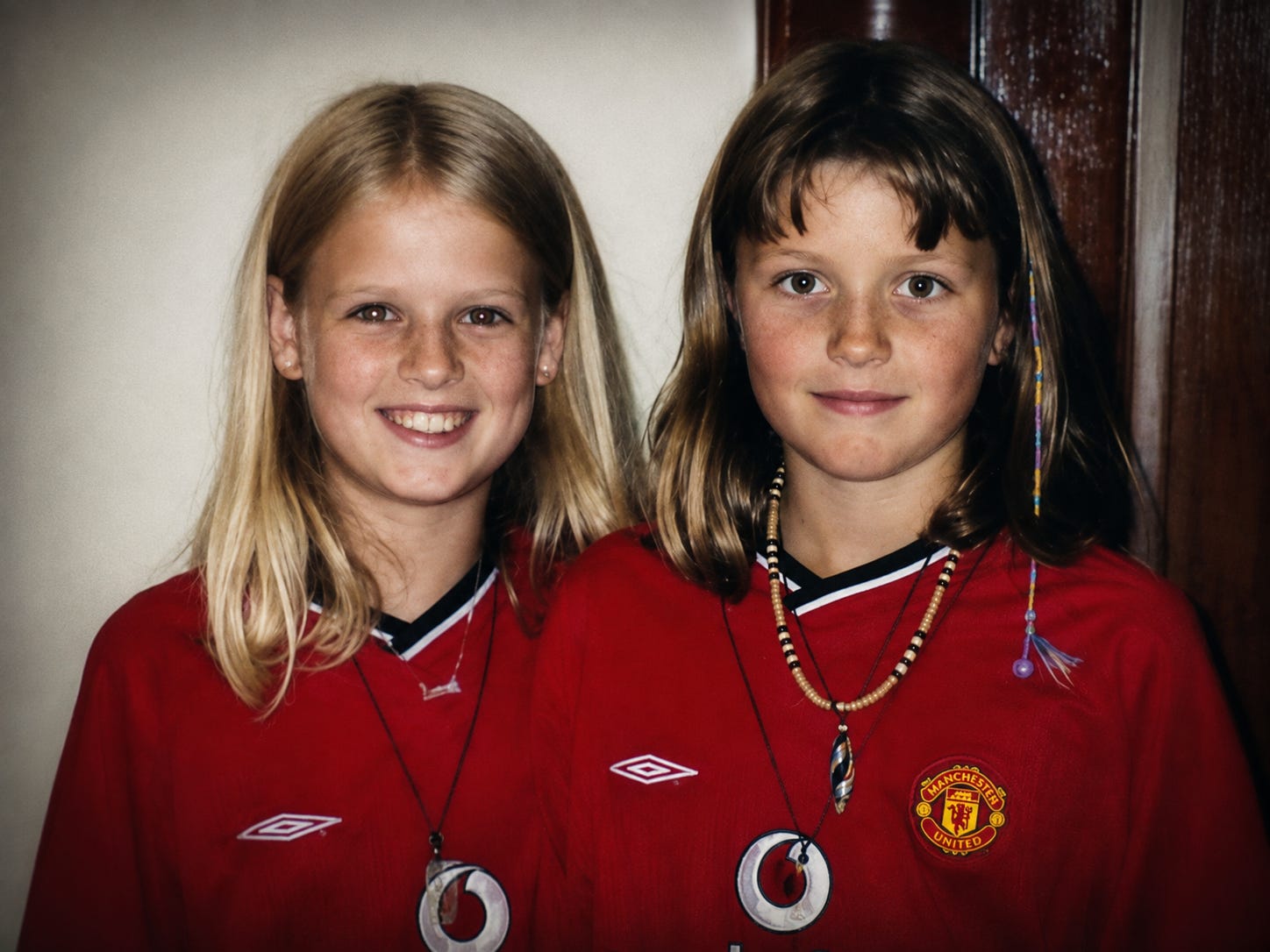 The Soham Murders: The Ones You Carry 24.08.2026 21minAs we made our way through Great Ormond Street Hospital, it took a while to find the place we were looking for.It always did.No matter which hospital I visited, the mortuary always seemed hidden away.And for good reason.It’s the last department anyone wants to think about.Especially here.As many times as I’d walked similar corridors, this felt different.It was different.When I entered the room, the sights and smells were the same as every other mortuary I’d entered before.But not like this.Then I saw him.Three years old. Not much bigger than a baby.If I close my eyes now, I can still see his body lying on that metal table.None of my training had prepared me for this.Yet here I was.Ten-year-old best friends Holly Wells and Jessica Chapman lived just a few streets apart in Soham, a small Cambridgeshire market town surrounded by open countryside.On Sunday 4 August 2002, Jessica went to Holly’s house and spent the afternoon there. Holly’s family were having a barbecue and had guests over.The girls played on the computer in Holly’s bedroom before coming downstairs to eat with the rest of the family.Just after 5pm, Holly’s mum, Nicola, took a photograph of them wearing matching Manchester United shirts.After eating, the girls went back upstairs and continued playing on the computer.Later that evening, Nicola called upstairs for them to come down and say goodbye to the guests who were leaving.There was no reply.She called again.Still nothing.Nicola went upstairs expecting to find them in Holly’s bedroom.The room was empty.The girls had left the house, but nobody knew when they had gone or where they had gone.Jessica’s parents were contacted, but the girls weren’t there either.Family and friends began looking for them, searching around the house before checking places they thought the girls might have gone.As the evening wore on, their concern grew and, at around 10pm, the police were called.Local uniformed officers attended and began a missing person enquiry.They needed to establish when and where the girls had last been seen, obtain their descriptions, identify places they might have gone and understand whether their disappearance was out of character.It was.Officers began searching Soham and the surrounding countryside.A police helicopter was deployed, along with a dog handler, traffic officers and four-wheel-drive police vehicles.Local residents also came out to help.But despite their efforts, Holly and Jessica were not found that night.The following day, the search expanded beyond a local enquiry. Officers began arriving from surrounding forces to help.Public appeals increased, bringing in a significant amount of information. This included several potential sightings of the girls, each of which needed to be followed up urgently.One local resident reported seeing Holly and Jessica between 6.30pm and 6.40pm on Sunday evening. He said the girls had stopped outside his house to ask whether his partner, a teaching assistant from their primary school was at home. After telling them she was away, he watched them walk away towards St Andrew’s Church.As news of the case spread, more members of the public came to Soham to help with the searches until there were hundreds of people there offering their support.As part of the investigation, Family Liaison Officers (FLOs) were assigned to the Wells and Chapman families.After a couple of days, the enquiry developed into a major investigation, with resources reflecting the growing concern for the girls’ welfare.An incident room was established to provide a central point for information coming in from the public.A dedicated intelligence cell was set up to assess the growing amount of information and build a picture of the girls’ lives, people of potential interest and any links between them.The investigation now included house-to-house enquiries, examination of CCTV, vehicle checks, tracing witnesses and assessing every potential sighting of the girls.Specialist advisers coordinated searches of homes, gardens, business premises, waterways and open ground using police dogs, divers, aerial support and specially trained search officers.The photograph Nicola Wells had taken just before the girls disappeared became the image used in national appeals, showing exactly what they looked like and the clothing they had been wearing.Among the information coming into the police was a report from a taxi driver who said he had seen the driver of a dark green saloon car travelling erratically along the A142 from Soham towards Newmarket. He described the driver repeatedly turning towards the back seats and appearing to struggle with two children inside the car. The sighting became a major line of enquiry.Investigators were working to several theories of what may have happened to the girls.One was that harm had come to them. Detectives began identifying and checking known sex offenders in the area, as well as anyone who might pose a risk to children.Another line of enquiry centred on the girls having used Holly’s computer before leaving the house. Had they met someone via the internet?They also considered that the girls might be being held against their will. Detectives made a direct appeal, urging whoever was responsible to release them.The parents of both Holly and Jessica also appeared on national television, appealing for the safe return of their daughters.Among the many reports received by police were numerous potential sightings. One led detectives to the local sports centre, where CCTV confirmed Holly and Jessica had been there at around 6.17pm on the evening they disappeared. It gave investigators a fixed point from which they could begin plotting the girls’ movements using CCTV and witness accounts.About a week after the girls disappeared, investigators filmed a reconstruction using two girls of similar age and appearance, dressed in similar clothing, to walk the route Holly and Jessica were known to have taken. They hoped it would prompt the memories of anyone who had been in the area that evening.By now, the appeals were generating thousands of calls.There was a huge response to appeals relating to the dark green car and the two girls reportedly seen inside. One report appeared particularly significant.A jogger near Newmarket, the town the car had been seen heading towards, told police he had heard screaming on the night the girls went missing and had since noticed two areas of disturbed ground.The area was cordoned off and a systematic search began, including excavation of the soil.However, it was established that the disturbed ground was unconnected to the girls and had most likely been caused by animals.The sighting by the taxi driver was also ruled out when phone analysis showed he had been travelling earlier than the girls had been seen on CCTV at the sports centre.Examination of Holly’s computer also enabled detectives to rule out the possibility that the girls had arranged to meet someone via the internet.Whilst detectives continued working through thousands of reports, eliminating one line of enquiry after another, two names began appearing with increasing frequency.Ian Huntley.Maxine Carr.Earlier on I spoke about a local resident who said he had spoken with Holly and Jessica. That was Ian Huntley.The teaching assistant the girls were said to have been asking after was Maxine Carr.As the last known person to have spoken with Holly and Jessica, Huntley became central to the investigation.Included in the information about Huntley was a report that he had previously been investigated in Grimsby in connection with allegations involving underage girls. Detectives then began liaising with Humberside Police to establish the circumstances surrounding those enquiries.Huntley had also become a familiar face in the media, giving several television and newspaper interviews about the girls’ disappearance. It was those appearances that prompted people to contact police with information about his background.The fact Huntley was the last known person to have spoken with the girls, together with information about his background and his repeated media appearances, made him a person of increasing interest to the investigation. However, there was not enough evidence at this stage to treat him as a suspect.As with all the potential theories police were investigating, detectives would also have been looking to establish whether he could be eliminated from the enquiry. However, unlike the green car and the internet theory, there was nothing that could exclude him as being linked to the girls’ disappearance. To the contrary, as more information came into the enquiry, his name kept cropping up.Careful consideration was given to how detectives should proceed. The decision was made to invite Huntley and Carr to attend separate police stations to provide formal witness statements. They also consented to searches of their home and Huntley’s car.During those searches, detectives discovered the burnt remains of Holly and Jessica’s Manchester United shirts, along with other items of clothing, concealed in a wheelie bin at Soham Village College, where Huntley worked as caretaker.That discovery completely changed the direction of the investigation.During the early hours of 17th August, Huntley and Carr were arrested.The discovery of the girls’ clothing dramatically increased detectives’ fears that Holly and Jessica had come to serious harm. Their priority now was to locate them.They focused on the home of Huntley and Carr, places they had access to and built a picture of their movements over the previous two weeks, particularly in the period after the girls disappeared.They examined call data, financial transactions and movements of Huntley’s car.Within around eight hours of the arrests the breakthrough discovery was made. However, it wasn’t made by the police.Roughly seventeen miles east of Soham, close to RAF Lakenheath, a gamekeeper discovered the bodies of two girls in an irrigation ditch.These were quickly identified as Holly Wells and Jessica Chapman.Attention now turned to establishing how and when the girls died, while examining the scene and the bodies for forensic opportunities.Urgent forensic post-mortems were carried out.The post-mortem I attended at Great Ormond Street wasn’t for Holly and Jessica.It was for a three-year-old boy whose injuries were described by the paediatric pathologist as the worst he had seen in his career.He described them as the equivalent of being hit by a car travelling at thirty miles per hour.Those injuries had been inflicted by his uncle, who had been looking after him for the night.Why?Because his nephew had wet the bed.As I say those words years later, I still get a churn in my stomach.At the time, as I stood looking his broken body, those emotions were even stronger. A mixture of sadness, anger and an absolute determination that this little boy and his mother would get the justice they deserved.When I returned to the office and briefed the team, I could see those same emotions reflected back at me. From the Family Liaison Officers who would now be spending time with his mother, those who would be speaking with witnesses, and those who would be interviewing the man responsible.The most important thing was this. No matter how we were feeling, it couldn’t affect the job we had to do.If we allowed our emotions to take over, mistakes were more likely to happen. And when you investigate murders, you can’t afford those mistakes. Not when the best defence barristers in the country will later dissect every decision you made, looking for lapses in standards or breaches of procedure.So how do you stop emotion getting in the way?For me, I don’t think there’s any magic answer. You acknowledge those feelings exist, then you push them down. You compartmentalise. Then you focus entirely on the job in front of you.People often ask whether detectives receive counselling. The answer is yes, it’s available if officers want or need it. In truth, though, I only knew a couple of detectives who took up the offer. Most of us just got on with the job and didn’t spend much time talking about what we’d seen. Looking back, I’m not sure that was always healthy.I only realised recently that the things you bury are still there.On the first episode of my TV series, Secrets of a Murder Detective, we featured the murders of Sian Blake and her two sons Zachary and Amon, which our team investigated. They had gone missing and later found murdered.As part of the episode, a colleague and I talked through the investigation, step by step. When I started to recount receiving the phone call from the scene telling us all three had been found dead, I suddenly became emotional and had to stop.That response shocked me, as I never reacted like that in my career. On reflection, I believe it’s because at the time of doing the job I was focused on the outcome. I didn’t give myself time to fully feel the impact of that news. I was in work mode. But when talking on camera, I was completely open to that emotion.I thought I’d dealt with those emotions, but I’d really just buried them. It made me realise talking about those experiences is probably healthier than burying them.I can’t speak for every detective. We all deal with these things differently. But I do know this. Those emotions never stopped me doing the job. If anything, they gave me even greater determination to get justice for the victims.Having spoken to colleagues over the years, I know many of them felt the same.I have no doubt many of the detectives investigating Holly and Jessica’s disappearance were going through exactly those same emotions.For two weeks they worked every waking hour, trying every avenue, using every investigative technique and putting everything they had into bringing those girls home safely.But as the days passed, those hopes would have started to fade.I’ve been there. Missing children. Hoping they’re alive, while gradually coming to the realisation that the longer they remain missing, the less likely that becomes.Then came the call.Two bodies had been found.Even before the formal identifications were made, I suspect many of the detectives already knew in their hearts the bodies were Holly and Jessica. The official confirmation would simply have confirmed what they had already begun to accept.What would have made it even harder was the thought of their parents. Many of the detectives would have been parents themselves. I know that whenever I dealt with cases involving children, I couldn’t help thinking about my own. Again, those feelings had to be pushed aside so the investigation could continue.One aspect that often gets overlooked is how that news would have been broken to the families.It would almost certainly have been the Family Liaison Officers.First and foremost, they are investigators whose role is to gather information that can assist the enquiry. But they are also there for the family, keeping them informed, explaining each stage of the investigation and helping them through processes no parent ever imagines facing.Of all the detectives involved in a murder enquiry, theirs is undoubtedly one of the hardest roles. They build a relationship with the family. They share their hopes. Then, in cases like this, they are the ones who have to take that hope away.I think you can probably imagine just how difficult that is.But apart from the obvious emotional impact child murders have on an investigation team, what else makes them different?In many respects, they don’t.Detectives are still looking for the same things. Witnesses. CCTV. Forensic opportunities. Anything that helps establish what happened and who was responsible.One area that is different, though, is the post-mortem examination.In adult murders, these are carried out by Home Office approved forensic pathologists. In the case of children, they’re carried out by specialist paediatric forensic pathologists.The reason is simple. Children aren’t just smaller adults. Their bodies are still developing, and injuries have to be interpreted differently. Understanding how a child’s body grows, develops and responds to injury requires specialist knowledge. That expertise can make a huge difference, not only in establishing how a child died, but also in identifying injuries that might easily be misunderstood by someone without that experience.Another difference is the wider impact of the investigation.The murder of a child sends shockwaves through a community in a way few other crimes do. As part of our enquiries, we would often visit the child’s school and speak to pupils, sometimes in a classroom, sometimes in an assembly. We were looking for information, but we also had a responsibility to provide reassurance.If children do come forward as witnesses, they have to be treated with great care. The way information is obtained from them is very different to an adult witness. Detectives use specially trained officers, working at a much slower pace and always mindful of the lasting impact the process can have on them.The pressure on the investigation is different too.If a child is missing, it has to be assumed from the outset they are vulnerable. Every hour counts and, the longer they remain missing, the greater the risk of harm. That urgency is felt by everyone involved in the investigation. It drives decisions, resources and the pace of the enquiry from the very beginning.People often think detectives investigate child murders differently. In truth, once it’s established that they’re dealing with a murder, the investigative principles are much the same.It’s the emotional impact, the vulnerability of the victim and a handful of specialist areas that make them different.Huntley was charged with the murders of Holly Wells and Jessica Chapman.Following a trial at the Old Bailey, he was convicted and sentenced to life imprisonment, with a minimum term of forty years.Maxine Carr was convicted of perverting the course of justice after providing Huntley with a false alibi and was sentenced to three and a half years’ imprisonment.The investigation also exposed serious failures in the way police forces shared information about people who posed a risk to children.The Bichard inquiry led to significant changes to police intelligence sharing and vetting procedures.When I look back at my career as a murder detective, one of the things I’m most proud of is the dedication I saw in my colleagues and the sacrifices they made in the pursuit of justice.That was never more evident than in child murders, which were undoubtedly the hardest investigations of my career.You learn to compartmentalise. You have to. Otherwise, you couldn’t do the job.The thing is, those emotions never really leave you.The investigation may end. The trial may end. But some cases stay with you for the rest of your life.Thanks for reading or listening to Murder Unpacked. If you’d like more insights into murder investigation and the chance to join the conversation, subscribe below. Until next time, take care.You’re the DetectiveCould you put your emotions to one side and still do the job?I’d love to hear your thoughts in the comments. This is a public episode. If you would like to discuss this with other subscribers or get access to bonus episodes, visit www.murderunpacked.com
 -
 Rachel Nickell: The Detective's Trap 24.08.2026 17minIf I look back over the murders that have shaped modern Britain, few victims are as immediately recognisable as Rachel Nickell.As I write this, I immediately picture that image of a happy, loving mother.More than three decades have passed since Rachel was murdered. In that time, tens of thousands of other people have lost their lives to homicide in the UK. Yet Rachel’s case remains one of the few almost everyone remembers.So, what is it about Rachel and her murder that has made it remain such a part of our nation’s psyche?Part of the answer is undoubtedly that familiar image of Rachel smiling into the camera. But I suspect an even bigger reason lies in what happened after her death.On the morning of her murder, 23-year-old Rachel was walking the family golden retriever, Molly, on Wimbledon Common with her two-year-old son, Alex. A route they regularly took to exercise the dog.What should have been nothing more than a routine walk in the park became one of Britain’s most notorious murders.Rachel was subjected to a sustained and frenzied knife attack, suffering 49 stab wounds to her upper body and neck. She was also sexually assaulted.Perhaps the most heartbreaking aspect of the case was that Alex witnessed the attack. When he was found, he was still clinging to his mother’s body, pleading with her to wake up.When the police arrived, it would have been immediately obvious they were dealing with an exceptionally unusual murder scene. I doubt many, if any, of those officers had witnessed anything like it.This wasn’t the sort of place where you expected to find such a brutal attack. Wimbledon Common was somewhere people went to walk their dogs, take their children or go for a run. An attack of this nature was almost unimaginable.That all of this happened in front of a young child would also have made the scene emotionally difficult for those first responders. I mean, what do they say to Alex in those circumstances? How do they comfort him? Even if those officers were parents themselves, that would have been incredibly tough.In fact, this would have been emotionally challenging for all involved, even the detectives, many of whom would have witnessed sights most people can’t comprehend.But there’s something about crimes involving children, that can affect the most hardened of us.Having seen the injuries sustained by Rachel and knowing what was witnessed by Alex, I have no doubt they were resolved to do everything they could to catch and convict her killer.When those detectives first arrived, they would have realised how difficult that task was going to be. This had happened in a huge park, with countless ways in and out.In 1992, CCTV was far less prevalent than it is today. In an area such as this? It would have been almost non-existent.DNA profiling was still in its early years and nowhere near as sensitive as it is today. I vividly remember how limited it was compared with the end of my career, when simply touching someone could leave an identifiable trace.At that early stage, the only apparent witness to the attack was a traumatised two-year-old boy. It would be incredibly unlikely that he would be able to identify whoever was responsible.For the detectives leading the enquiry, the immediate question wasn’t, “How are we going to solve this murder?” It was simply, “Where do we begin?”Something I see regularly is people misunderstanding how murder investigations work. Now, that probably stems from how they’re portrayed on screen, which is nearly always wrong.Contrary to what television dramas would have you believe, they don’t simply tell officers to go out and solve the murder. That would be chaos. Every line of enquiry needs to have a purpose.To give the enquiry direction, detectives begin by asking what is most likely to have happened. Those scenarios could revolve around a suspect, a motive or both. How detailed they are will depend on how much information you have at the time.The best way to demonstrate that principle is to apply it to Rachel’s murder.In those initial stages there was little evidence available to detectives or clear motive for the attack.It was the responsibility of the senior investigating officer to formulate hypotheses, which is police jargon for what I think of as working scenarios.At that early stage, there simply wasn’t enough information to form detailed hypotheses, so I would expect them to have looked something like this:1. Rachel was killed by someone known to her2. Rachel was killed by someone unknown to herWhatever the circumstances of her murder, the offender had to fall into one of those two broad categories. Conducting the investigation in this way would avoid focusing too narrowly on one explanation at such an early stage.It also gives every detective a clear purpose. Instead of carrying out random enquiries, each officer knows exactly what they’re trying to establish or eliminate.For the hypothesis that Rachel was killed by someone she knew, police would look closely at her life. Was there someone, or something, that might explain why she was murdered? This would include examining her relationships, family, work and any potential disputes.For the hypothesis that Rachel was killed by someone she didn’t know, detectives would focus more on the area. Who used the Common? Were there known offenders nearby? Had there been previous offences or similar attacks?The purpose of hypotheses isn’t to select one scenario and then set out to prove it.Instead, an investigation will have multiple hypotheses, each of which can be developed, eliminated or new ones added as more information comes in.As evidence begins to emerge, some hypotheses become less likely while others become stronger. Eventually one may stand out above the rest. That’s when detectives adopt what’s known as a working hypothesis.From that point on, every significant decision is likely to be influenced by it. That’s perfectly normal. In fact, it’s essential.The danger comes when detectives stop asking themselves one simple question: “What if we’re wrong?”And that’s where the detective’s trap begins.Whenever a female is murdered, police will look at her relationships, and for very good reason. It’s a sad truth that in the UK, if a woman is the victim of homicide, there is a 50% chance it will be at the hands of their partner or ex-partner.Therefore, Rachel’s relationship with her boyfriend Andre would have become a line of investigation for the detectives. That isn’t an indication that they suspected he was responsible. But they needed to eliminate him as a possible suspect, which they were quickly able to do.Having looked closely at Rachel’s life and the people in it, investigators found no evidence that she was killed by someone known to her. So, their attention had to focus on the Common itself and, as I said earlier, by the very nature of that area, it was going to be challenging to identify their suspect.They needed to know what was happening in the park. Were there previous incidents? There can often be precursors to attacks like this, instances of incident exposure or less serious sexual assaults. Were there any concerning individuals around at the time or any that regularly frequented the Common? In the residential areas close by, were there known offenders or intelligence on potential perpetrators?This resulted in a substantial number of men being interviewed or investigated. But they were getting no closer to identifying Rachel’s killer.They then turned to an investigative tool often used in particularly difficult cases. They sought the help of a forensic psychologist, Paul Britton, who produced a criminal profile of the type of person he believed the killer to be.His profile included characteristics such as a male in his 20s or 30s who lived close to the Common. A loner with poor or unsuccessful relationships with women. Someone who fantasised about sexual violence and was obsessed with knives or the occult. He was likely to be sexually dysfunctional or inexperienced and likely to present as awkward rather than overtly dangerous.So, how useful is that to an investigation?Criminal profiles can help prioritise enquiries or generate leads.However, they should never be used to directly identify a suspect.They’re not evidence of who the killer is. They’re a suggestion of where to look first.One of the potential suspects police had been looking at was Colin Stagg, a 29-year-old man, who lived close to the common. He regularly walked his dog there and, after public appeals, witnesses said they saw him or someone like him, on the common around the time of Rachel’s murder.In terms of grounds to arrest on suspicion of murder, what I’ve just said there is more than enough. For an arrest to be made police must suspect two things. The first is that a crime has been committed, one clearly had. The second is to suspect that person of being guilty. Now, the bar for suspicion is low. You don’t have to know or even believe a person is guilty. Suspicion is enough.So, Stagg was arrested and his home searched. There, police found some material relating to paganism.The picture their investigation built of him was of a loner, socially isolated, unsuccessful with women and they identified that he had shared sexual fantasies with a woman he’d met via a lonely-hearts column.If you’re thinking that sounds familiar, you’re not alone.It sounded familiar to the detectives too.Here we have a local man, who regularly frequents the common. He may have been at or near the scene of Rachel’s murder and he shows many of the characteristics of the profile.I can genuinely see why detectives became increasingly interested in Stagg. The more they learned about him, the more he appeared to resemble the type of offender Paul Britton had described.The problem was, if he was Rachel’s killer, they had no direct evidence to link him to the crime.If they were going to prove the case against him, they would need to try something a bit different. So, they took the unusual step of introducing an undercover female officer, whose task was to gain Stagg’s trust and get him to confess to the crime.I say unusual step because it is just that. In my 30 years in the police, I was involved in very few operations where ‘UCs’ were used. They are such an intrusion into people’s lives that police must have strong grounds for using them.The UC, known as Lizzie James, began corresponding with Stagg, they spoke on the phone and she met up with him. Their communications included Lizzie sharing increasingly extreme sexual fantasies. The hope being Stagg would do the same, which he did.By Lizzie becoming more explicit in what she was sharing, the hope was Stagg would let his guard down. He may even use the killing to impress her. That it’s not just fantasy, that he’s acted this out.However, throughout their relationship, he never once admitted to Rachel’s murder, even when asked about it directly. In fact, he told Lizzie he hadn’t done it.Despite his lack of an admission and no evidence directly linking him to the crime, Stagg was charged with Rachel’s murder. But before the case had a chance to be put to a jury, the judge dismissed it. He was highly critical of how the investigation was conducted, particularly the undercover operation.The prosecution then offered no further evidence against Stagg.So, how could an investigation conducted by experienced, motivated detectives end up here?From my perspective it’s quite clear what happened.They were convinced Stagg was guilty, so went looking for information to prove that.The criminal profile contained elements of Stagg’s character.When they searched his home, they found pagan materialThe undercover operation then set out to get Stagg to confess.What I’m describing there is confirmation bias. Where you go looking for information to prove you’re right, and ignore information that says otherwise, such as Stagg’s denial.When it comes to detective work, that is the trap you must avoid. In fact, it’s an investigator’s worst enemy.That’s why, when you form hypotheses, and especially when you identify one as the most likely, you need to be careful.Having a working hypothesis isn’t wrong. In fact, it’s a fundamental part of a murder investigation.Confirmation bias doesn’t come from forming one, it happens when you fail to properly test it.The best way to do that is to keep asking that question, “what if we’re wrong?”And the repercussions for not doing so, can be dire.As we saw with Colin Stagg, people can end up being prosecuted and even convicted, for crimes they didn’t do.And there can be even worse consequences for looking in the wrong direction. Whilst you are chasing after an innocent person, the real killer remains at large.About 18 months after Rachel was murdered, a young mother, Samantha Bissett and her four-year-old daughter, Jazmine, were both murdered in their home in Plumstead, South-East London. Samantha received a significant number of stab wounds to her body and neck, as well as other, post-mortem injuries. Jazmine was sexually assaulted and smothered to death.The man identified and convicted of those murders was Robert Napper.In 2006, 24 years after Rachel’s murder, Napper was linked to her killing using DNA techniques not available at the time of the initial investigation.Napper was subsequently charged and convicted of killing Rachel. Although, this was manslaughter by diminished responsibility, rather than murder. Essentially meaning he accepted he carried out the act, but at the time was suffering from what is known as defect of the mind which affected his ability to make decisions.In terms of the consequences for falling into the trap of confirmation bias.For not asking yourself if you’re wrong.I don’t think there could be a more extreme example.That’s why the Rachel Nickell investigation remains so important.Because it reminds us that the most dangerous moment in any investigation isn’t when you don’t know who did it.It’s when you think you do.Thanks for reading or listening to Murder Unpacked. If you’d like more insights into murder investigation and the chance to join the conversation, subscribe below. Until next time, take care.You’re the DetectiveWhat would you have done to test whether Colin Stagg really was your killer?I’d love to hear your thoughts in the comments. This is a public episode. If you would like to discuss this with other subscribers or get access to bonus episodes, visit www.murderunpacked.com
 -
 Harold Shipman: Something Not Quite Right 24.08.2026 18minHarold Shipman: Can We Rule It Out?Every six weeks, we became the on-call murder team for South London.For seven days, twenty-four hours a day, we would respond to all murders in our area.That didn’t mean we were sat in a car, ready to put the lights and sirens on.We’d be getting on with our existing investigations.Gathering evidence, preparing for court, doing whatever was needed to progress our cases.For the duration of that week, we had a mobile phone. If we were needed, that’s where the call would come.It was known as The Phone.It might be that The Phone didn’t go off at all during your shift. It might go off in the first hour.When it did, the hairs on the back of my neck would stand up.Even after years of doing this, I still got that same reaction because I had no idea what was about to come my way.Whenever I answered, I could feel the tension growing in my stomach.Was it a shooting? A stabbing?Or was it the call I dreaded the most?“I’ve got a death…. And there’s something not quite right about it.”Harold Shipman was born in Nottingham in 1946.He was considered bright academically and was close to his mother.However, when he was 17, she died of lung cancer, after receiving morphine injections for pain.In 1970 he qualified as a doctor from the Leeds School of Medicine and initially worked in hospitals.In 1974, he became a GP in Todmorden, West Yorkshire.Around this time, he had developed an addiction to the powerful opioid painkiller pethidine, and between 1975 and 1976, he took to forging prescriptions to feed that addiction.This was discovered and led to him being convicted of obtaining pethidine by deception, forging NHS prescriptions and unlawfully possessing pethidine. The General Medical Council issued a formal warning but took no further disciplinary action.In 1977, the year after his conviction, he took up a GP position at Donneybrook Medical Centre in Hyde, Cheshire.Shipman began to build himself a reputation as a respected doctor. He was seen as particularly good with elderly patients and would frequently visit them in their homes. He became a trusted and popular figure in the Hyde community.To his patients he was known as Dr Shipman. To his friends and colleagues, he was simply known by his middle name, Fred. What none of them knew was that he was murdering his patients, nearly all of them elderly women.He would inject them with diamorphine, another powerful opioid painkiller, then certify their deaths as by natural causes. He would also encourage relatives that their bodies be cremated. A practice that continued unchecked for years.That was until 1998, when another Hyde GP, Dr Linda Reynolds, became concerned. There appeared to be an unusually high number of deaths among Shipman’s patients, along with the number of cremation forms he was asking Dr Reynolds’ practice to countersign.Dr Reynolds raised her concerns with the local coroner, who then asked Greater Manchester Police to conduct a confidential enquiry. They in turn appointed a detective inspector to lead an investigation into the suspicions surrounding Shipman.Detectives examined several recent deaths certified by Shipman, reviewed medical records, spoke to funeral directors and staff at the local crematorium, and interviewed Dr Linda Reynolds about the concerns she had raised. They also sought advice from a Home Office forensic pathologist, who concluded there was insufficient evidence to justify exhuming any of the bodies.Shipman was also interviewed by detectives. He denied any wrongdoing, explaining that he cared for an older, sicker patient population than neighbouring practices. He also said he frequently treated patients at home rather than admitting them to hospital, so was more likely to be present when they died.Detectives identified no evidence of criminality, and the investigation was closed in April 1998.Over the following ten weeks, Shipman went on to kill three more of his patients.The third of those was Kathleen Grundy, an 81-year-old widow, former Mayoress of Hyde and well known in the local community. Despite her age, she remained active and independent.On 24 June 1998, she was found dead in her home after Shipman had visited earlier that day. He certified the cause of death as old age.Several weeks later, her daughter, Angela Woodruff, a solicitor, was contacted by another solicitor acting on behalf of Shipman. He explained that a new will had been discovered.The will, apparently prepared shortly before Kathleen’s death, left almost her entire estate, worth around £386,000, to Dr Harold Shipman. Angela was left nothing apart from a small amount of jewellery.Angela immediately believed the will was a forgery. She knew her mother had intended her estate to pass to her family and was also suspicious that the will had been typed, even though Kathleen did not own a typewriter.She reported her concerns to the police.As detectives investigated the will, they also began to question the circumstances of Kathleen’s death. Her body was exhumed and a post-mortem examination found lethal levels of diamorphine.Further enquiries revealed that Shipman had altered her medical records after her death to suggest her health had been declining.Over the following months, detectives exhumed a total of twelve bodies as they re-examined deaths previously certified as natural.The findings revealed a pattern consistent with murder and provided detectives with evidence that Shipman had caused the deaths of his patients.Shipman was charged with fifteen counts of murder, plus the forgery of Kathleen Grundy’s will.In January 2000 he was convicted of all offences and sentenced to life imprisonment.Now the enquiry into the true extent of his murders would begin.“I’ve got a death…. And there’s something not quite right about it.”I lost count of the times I heard variations of that sentence. In my twelve years investigating murders, it ran into the hundreds. And every single time I knew exactly why I was being asked it.In the UK, when someone dies unexpectedly, the police will often need to attend. Their role is to establish the circumstances of the death and determine whether there is anything to suggest that somebody else was responsible.The officers initially tasked with making that assessment are usually local uniform, as it’s them who deal with the calls that come into the police. So, they’ll turn up to the scene of the death and, essentially, begin an investigation.They will ask questions of whoever is present. Establish the circumstances of the death itself, the timeline and whether there may be an obvious cause. They will seek to understand their medical history, lifestyle, habits and relationships. They will assess the scene itself, to see if there’s anything out of place that may suggest a crime has occurred.What they are looking to do is rule out third party involvement. To be able to satisfy themselves and, ultimately, the coroner, that nobody is culpable for the death.But what if they can’t reach that point? What if there’s something that stops them being able to make that call? Well, in those circumstances, a detective would be called to the scene, so they can make their own assessment.Detectives tend to have more experience in investigations. They are trained to ask questions, assess scenes and make decisions, often with limited information.And they will be asking themselves the same question: can we rule out third party involvement?The first thing they will do is to ask the previous officers what they’ve done. Who have they spoken to? What did they say? What have you found out about the deceased’s history? Then they will begin making their own assessments.But what if they can’t be sure? What if there’s something about the circumstances of the death that just doesn’t sit right with them?That’s the point they declare this a suspicious death and a call would come into us.And why did I dread these calls?Well, with a shooting or a stabbing, it’s clear a crime has been committed. At that point, my instincts kick into gear. I know exactly what needs to be done, and I get on with doing it.But when I was called to a scene where nobody was quite sure, I knew the pressure would be on me. If I made the wrong call, it literally meant someone getting away with murder.As an experienced homicide detective, I knew that murders aren’t always obvious.It may be that the method used to kill didn’t leave behind obvious signs: poisoning, suffocation, internal injuries.Alternatively, the scene could be staged to hide a murder. To make it look accidental or even suicide. Did they fall, did they jump or were they pushed?But here’s the thing. My job wasn’t to decide whether it was a murder. It was to treat it as if it was until it can be proven one way or the other. In many ways that makes things much simpler.The problem with deaths like these is that there may be no obvious signs of violence. No forced entry. No weapon. No witnesses. Just someone who has died unexpectedly. If you decide too quickly that nothing is wrong, you may miss a murder.So, how would I approach a scene like this?For me, there is no secret ingredient to being an effective murder detective. It’s about being methodical. Taking your time to think things through logically. In my mind, it would look something like this.I’d always start with the deceased. Is there anything I can work out from physically looking at them that might give an indication of not only how they died, but the circumstances around it?There were countless different situationa I found myself in but, in general, if a suspicious death wasn’t obviously homicide, there were four scenarios I was potentially presented with: natural causes, accident, suicide or unknown.Whichever it was, I would be looking for signs that either supported or contradicted that conclusion.For instance, if it was a fall where injuries had been received, were they all consistent with the circumstances? Somebody may fall from a height, but if they show signs of defensive injuries to their arms, that may tell a different story.Likewise, if natural causes seemed the likeliest explanation, but they had injuries such as bruising or a head wound, what could that indicate?There are far too many scenarios to list them all, but I’m sure you get the picture.As well as what I could physically see, I’d want to know their medical history. Is there anything there that could point to a cause of death and, if so, does what I can see align with that?Then I’d be taking in what the scene itself might tell me. Are there signs of a disturbance, forced entry, a clean-up or unnatural tidiness?Then what do witnesses say? Are their accounts credible? Are they consistent? Can they be corroborated?The timeline is important too. When you regularly see dead bodies, you begin to recognise signs that can indicate how long someone may have been dead.For instance, there’s a process called lividity, which is essentially gravity acting on the blood after death. If that process is well established, it may suggest the body has been lying in that position for a number of hours. Does that fit with what I’m being told?And probably the most important area, and one that might not be immediately obvious to others, is the history of the victim.Are they in a relationship? If so, what do we know about it? The three biggest signs for me would be suggestions of a coercive relationship, a history of violence or a major change in circumstances, such as separation or pregnancy. If any of those existed, it would make me dig deeper.As I go through this thought process, I’m essentially working towards one of three outcomes.The first is that his death is non-suspicious, meaning responsibility for reporting it to the coroner, remains with local police.The next is that I’m satisfied this is most likely a murder, in which case it would then become a homicide investigation.The third is where I can’t be sure one way of the other. In that instance, we carry on treating it as suspicious death and arrange for a special post-mortem examination to be carried out by a forensic pathologist. In my experience, it would be at that stage that most deaths could be called one way of the other.One thing, though. There can sometimes be a difference between what you suspect, and what you can confidently show. You’d sometimes get a gut feeling. Maybe from something you’ve seen. Maybe from something you haven’t seen. But as with many aspects of detective work, you can’t make definitive calls on hunches, mostly because they can be wrong.I was called to a suspicious death in Woolwich, South-East London. When I arrived I was presented with a scene in an old bike shed. It was a place the homeless used for shelter when the weather wasn’t so good.Inside was a deceased man, who was a known local drinker.As a suspicious death, the shed was treated as a crime scene with cordon tape around it. I went inside wearing overshoes, a paper suit and gloves. The shed was absolutely littered with rubbish and empty bottles and cans of alcohol, and the man was laying on a rotten old mattress. The smell was awful, and made me slightly gag (no I never got used to it). The man looked like he could’ve been asleep. There were no obvious injuries on him.He’d recently been arrested and the records showed he wasn’t in good health.The person that found him was another drunk sleeping in there, and when he woke up he couldn’t rouse his mate and realised he was dead. There was nothing to contradict what he was saying.Intelligence checks on both the deceased man and the witness raised no concerns.All-in-all, it very much pointed to natural causes, likely linked to heavy drinking.But as I couldn’t be sure, I wasn’t happy to call it as such. So, a special post-mortem was arranged. I went along, completely prepared for a quick confirmation of what I thought had happened.I couldn’t have been more wrong.The man had severe internal injuries consistent with having been stamped to death.His mate had failed to tell us about the other drinker who’d been there that night and had killed him after an alcohol-fuelled argument.I was very glad the evidence-based process we followed meant I didn’t declare that death non-suspicious. Had I done so, a dangerous criminal could have remained free.Shipman’s conviction for fifteen murders made him Britain’s most prolific convicted serial killer.But those deaths really were the tip of the iceberg.The enquiry that investigated his working history revealed the true scale of his offending.The number of patients he murdered was likely to be around 250.Every one of those deaths left a family behind.It meant hundreds lost the last years with their mum or dad.Probably thousands of grandchildren never got to know their nan or granddad.And many of those will ask the question, how could this be allowed to happen?The system I worked to was one designed to identify murders that might not seem immediately obvious.But no system is perfect.The deaths of most of Shipman’s victims would never have been brought to the attention of the police, prior to the intervention of Dr Reynolds.Those that were would immediately have appeared to be non-suspicious.Whether by chance or design, his method of killing avoided the very system designed to detect murder.But in the end, it wasn’t the murders that brought him down.It was his greed.Thanks for reading or listening to Murder Unpacked. If you'd like more insights into murder investigation and the chance to join the conversation, subscribe below. Until next time, take care.You’re the DetectiveAt what point would you have started to suspect these deaths weren’t natural?I’d love to hear your thoughts in the comments. This is a public episode. If you would like to discuss this with other subscribers or get access to bonus episodes, visit www.murderunpacked.com
 -
 Murder Unpacked: The Learning Curve 22.08.2026 3minEverywhere you look today, there’s murder.I don’t mean literal crimes taking place, I mean some kind of media.Be it documentaries, crime fiction, books, podcasts, even Substack.So, we must know all there is to know, right?That’s definitely how I felt about murders.Until I started investigating them.I’d been a police officer for eighteen years, most of that time as a detective, investigating virtually every crime imaginable, but not murder.Looking back now, when I joined the murder teams as a Detective Sergeant in 2009, I think I was a bit naïve about what I was signing up for. I’d investigated shootings, stabbings and other serious assaults. I thought the investigative skills would be the same.Very quickly I realised I couldn’t have been more wrong.It wasn’t just the crime itself that was different.It was everything.The law.Forensics.Digital investigation.Human behaviour.Investigative strategy.The pressure.I realised murder investigation wasn’t simply another type of investigation.It was something unique.In total I spent twelve years on the murder teams, and every day taught me something new.Literally right up until my last day.I wish I’d had that knowledge when I first started investigating murders.When I retired from the police, all that knowledge left with me.But that never sat right with me.That journey I went on.The successes I had.The mistakes I made.I didn’t want all of that to be forgotten.That’s a big reason for what came afterwards.First the books.Then television.And now Murder Unpacked.And that is what will sit at the centre of every article I write and every podcast I record.Each will look at a well-known case, and occasionally a lesser-known one.But not simply to recount what happened.Each will unpack one aspect of murder investigation.Sometimes we’ll look at the techniques detectives use to solve cases.Sometimes we’ll explore why investigations go wrong.Sometimes we’ll examine the difficult decisions detectives face.Sometimes we’ll look at mistakes. Mine included.Because if we’re going to understand murder investigation properly, we have to be honest enough to talk about both the successes and the failures.No single article can explain murder investigation.But my hope is that, over time, they build into something much bigger.The goal for every article is simple.I want you to finish it understanding something you didn’t know before.If that happens, then Murder Unpacked has done exactly what I set out to do.I also hope this becomes more than just a place to read or listen.At the end of every written article you’ll find You’re the Detective.It’s your opportunity to ask questions, challenge ideas, share your thoughts and discuss the investigation with others who are just as curious about how murders are investigated.Over time, I hope that community will also help shape where Murder Unpacked goes next.Because although I spent twelve years investigating murder, I never reached the end of my own learning curve.Hopefully, each article becomes part of yours.Let’s begin. This is a public episode. If you would like to discuss this with other subscribers or get access to bonus episodes, visit www.murderunpacked.com
Liknande podcastar


Populär i
Den här podcasten finns även i podcastlistor i dessa länder.
