
ADHD reWired
Eric Tivers, LCSW, ADHD-CCSP
0
The podcast for adults with ADHD. Hear stories, learn strategies, and get great productivity tips as we talk about the real-life struggles and what it takes to achieve success. Host, Eric Tivers, LCSW, is a psychotherapist, coach and entrepreneur (with ADHD) in private practice. Eric interviews a variety of guests, including people just like yourself, as well as professionals, entrepreneurs, and ADHD experts.
Avsnitt
-
 Mend or Move On? Navigating Toxic Relationships with Kate King (567) 17.09.2026 54minEpisode Summary What makes a relationship truly toxic, and how do you know whether it can be repaired or whether it's time to walk away? In this episode, Eric is joined by licensed professional counselor, board-certified art therapist, and Radiant Life Project founder Kate King, author of Mend or Move On: A Guide to Healing or Leaving Toxic Relationships. Together, they explore toxic dynamics in romantic relationships, families, friendships, and workplaces, including why ADHDers and other neurodivergent people may be especially vulnerable to people-pleasing, fawning, conflict avoidance, and staying too long in painful situations. Kate shares her framework for the seven traps that can keep us stuck, along with practical ways to recognize patterns, communicate needs, build tolerance for difficult conversations, and decide whether a relationship has the mutual willingness needed to mend. Show Notes In this episode, you'll learn: How to distinguish a truly toxic relationship from a relationship that is simply struggling Why your body may recognize a toxic dynamic before your brain fully accepts it How familiar dysfunction can feel safer than unfamiliar change The difference between healthy interdependence and codependency Why people-pleasing, fawning, and conflict avoidance are often rooted in nervous-system safety patterns How to begin practicing "easier hard things" to build tolerance for difficult conversations How to assess whether a relationship, family dynamic, or workplace can be repaired Why mutual willingness is essential if a relationship is going to mend Kate's seven traps of toxic relationships: Buy-in Comfort Powerlessness False ownership Unhealed trauma Avoidance Codependency Guest Kate King is a former licensed professional counselor, board-certified art therapist, award-winning author, radiant life coach, and founder of The Radiant Life Project. She is the author of The Radiant Life Project and Mend or Move On: A Guide to Healing or Leaving Toxic Relationships. Learn more about Kate, her books, and her work at theradiantlifeproject.com. Resources Mentioned The Radiant Life Project: theradiantlifeproject.com ADHD reWired Coaching & Accountability Groups: coachingrewired.com One-on-one ADHD coaching worldwide and therapy in Illinois: adhdrewired.com Adult Study Hall: adhdrewired.com Support ADHD reWired on Patreon: patreon.com/adhdrewired Patreon Update The monthly Patreon Coaching Call, available to Patreon supporters at the $25/month level and above, is held on the last Tuesday of each month. The call has moved from 4:00 p.m. Eastern to 2:00 p.m. Eastern. Chapters 6:01 — Introduction and Guest Bio 7:10 — Kate's ADHD Connection: Growing Up with an ADHD Parent 11:31 — Identifying a Toxic Workplace 15:44 — Mend or Move On: Where to Start 20:54 — Personal and Family Relationships 21:59 — Three Signs of a Truly Toxic Relationship 23:24 — The One Requirement to Mend a Relationship 30:46 — Building the Courage to Leave 33:26 — The Seven Traps of Toxic Relationships: Introduction and False Ownership 36:33 — Buy-in, Comfort, and Powerlessness 37:42 — Unhealed Trauma and Shadow Work 38:53 — Avoidance and Codependency 43:17 — Kate's Relationship and Healing Journey 45:48 — Spotting Gaslighting in a Partnership 48:53 — You Don't Owe Anyone Anything 51:42 — Where to Find Kate's Work
 -
 Neurodivergent Pride: Queer Identity, Masking, and Belonging (566) 30.06.2026 50minWhat does it look like to live at the intersection of neurodivergence and queerness? In this annual Neurodivergent Pride panel, a collaboration between ADHD reWired and Shimmer Coaching, host Eric Tivers and panelists Savant, Kristen, Jill, and moderator Chris share deeply personal stories about identity, masking, belonging, and the ongoing work of becoming themselves. The conversation moves through the ways masking shows up across queer and neurodivergent lives, from religious trauma and racial identity to the quiet labor of maintaining relationships while autistic. Panelists explore the overlap between coming out as queer and discovering neurodivergence later in life, noting how one process of unmasking often catalyzes another. They discuss heteronormative and neurotypical expectations, burnout, somatic awareness, the role of alcohol as a masking tool, and the power of finally believing you are inherently good. Whether you're early in your own journey or deep in the unmasking process, this episode offers honest, layered reflections from people who understand the territory. It closes with simple, powerful affirmations: your safe people are out there, there's nothing wrong with you, and being fully yourself is always worth it. Show Notes This special Neurodivergent Pride episode of ADHD reWired brings together a vibrant panel for an honest, intersectional conversation about what it means to live at the crossroads of queerness and neurodivergence. Recorded in collaboration with Shimmer Coaching, the panel features host Eric Tivers alongside Savant, Kristen, Jill, and moderator Chris, each bringing their own layered experiences of ADHD, autism, queerness, race, faith, gender, and self-discovery. The episode opens with each panelist sharing how they relate to both the queer and neurodivergent communities. What immediately emerges is that these identities are not separate tracks running in parallel. They are deeply intertwined. For many on the panel, discovering one identity illuminated the other. Kristen, recently diagnosed as autistic and agender, describes a lifelong journey of masking so thorough that her own mind kept her queerness hidden from her until age 28. Savant, who is Black, gay, semi-verbal, and autistic with Savant syndrome, reflects on the particular pressures of unmasking in Black queer communities and how identity categories can feel like cages even within LGBTQIA+ spaces. Jill connects with Nick Walker's concept of "neuroqueer," a framework for understanding how queer and neurodivergent identities together subvert normative expectations. Eric shares his own evolving journey: coming out as bisexual at 14, stepping back into the closet after a painful family response, and gradually, over the last several years, coming more fully into his queer, polyamorous, and autistic identity. A central theme is masking: the exhausting, sometimes invisible labor of performing neurotypicality and heteronormativity in order to feel safe. The panel explores how masking operates differently depending on context. Race, religion, socioeconomic status, and gender all shape how much masking is required and how dangerous unmasking can feel. Kristen speaks powerfully about growing up with an unnamed sense that something was "wrong" with her, and how evangelical Christianity offered both structure and suppression. Savant describes the specific neurological experience of unmasking, what he calls "the peanut butter feeling," and how musical theater taught him to mask with almost military precision. Jill is candid about the role alcohol and substances have played in her own mask, and how her whiteness, cisness, and socioeconomic privilege have buffered her from some of the costs other panelists face. Eric describes experiencing his first autistic meltdown after years of not recognizing the depth of his own burnout. The conversation also touches on the practical, embodied work of unmasking. Kristen shares a therapist's suggestion to draw your masking self versus your unmasked self, and talks about learning to notice somatic cues: face pain from performative smiling, shallow breathing, tense shoulders. Eric recommends Devon Price's work and describes how 145 consecutive days of meditation have been part of his recovery. Savant offers the insight that his "observer brain" was always turned outward and never inward, and that true unmasking means turning the mirror around. The panel closes with single-sentence affirmations to a younger self or to anyone earlier in their journey: Eric: "Just be completely you and don't worry about your mother." Kristen: "Your safe people are out there. Don't give up." Jill: "There's nothing wrong with you. You're not broken, and you don't need to be fixed." Savant: "Neurodivergence and divinity aren't too far away from each other. Beware." This episode is for anyone who has ever felt like they were too much, not enough, or simply inexplicably different. It's a reminder that unmasking, while messy and sometimes painful, is a path toward authenticity, connection, and a kind of pride that doesn't require anyone's permission. Produced in collaboration with Shimmer Coaching. Key Takeaways Queerness and neurodivergence are deeply intertwined. For many people, discovering one identity catalyzes the discovery of the other. Masking is a survival mechanism, not a character flaw. Unmasking can reveal which relationships are truly safe and affirming. Religious, cultural, racial, and gender expectations can intensify the pressure to mask. Burnout is often a signal that the mask is no longer sustainable. Identity labels can be both liberating and constraining. Privilege shapes the risks and costs of unmasking. Somatic awareness can help people notice where masking lives in the body. Alcohol and substances can sometimes function as masking tools. The concept of "neuroqueer" offers a powerful framework for understanding the overlap between queerness and neurodivergence. There is nothing fundamentally wrong with you. You do not need to be fixed. Keywords / Tags neurodivergent pride, queer identity, ADHD, autism, AuDHD, masking, unmasking, intersectionality, coming out, burnout, religious trauma, neuroqueer, queer community, bisexual, pansexual, non-binary, agender, Black queer experience, somatic awareness, authenticity, belonging, LGBTQIA+, polyamory, alcohol and masking, Devon Price, Nick Walker, Shimmer Coaching, ADHD reWired
 -
 Under-Supported, Under-Stimulated, or Overextended? with Alyece Smith 27.05.2026 51minIn this episode, Eric sits down with Alyece Smith, business coach, TEDx speaker, autism advocate, and founder of Socially Ausome, for a candid conversation about ADHD, masking, burnout, boundaries, and what it really takes to build systems that fit your brain. Alyece shares how her son's autism diagnosis changed the way she understood neurodivergence, her own ADHD, and the cost of trying to operate like everyone else. After leaving corporate to prioritize her son's care, she built a successful business quickly, but found herself overdelivering, people-pleasing, working late into the night, and burning out despite outward success. Together, Eric and Alyece explore why "inconsistency" is often misunderstood, especially for ADHDers. They talk about under-stimulation, energy management, spark times, decision fatigue, boundaries, and why sustainable follow-through usually requires better support, not more shame. Alyece also introduces her F.L.O.W. First Thinking framework: Find your spark times, Link boring tasks with stimulation, Organize your overflow, and Work your week around your peaks. This conversation is practical, validating, and useful for anyone who has ever felt scattered, overextended, or exhausted from trying to work against their own brain. Summary In this episode, Eric sits down with Alyece Smith — business coach, TEDx speaker, autism mom, and founder of Socially Ausome — for a candid conversation about what it really looks like to build a business with an ADHD brain. Alyece shares how her son's autism diagnosis cracked open her own understanding of neurodivergency, eventually leading her to leave corporate, launch a six-figure business, burn out spectacularly, and rebuild everything on her own terms. She introduces her F.L.O.W. First Thinking framework, breaks down why consistency advice fails ADHDers, and explains why energy management — not time management — is the real key to sustainable success. This one is raw, practical, and deeply validating for any entrepreneur who has ever felt scattered, burnt out, or like they're just not built for the traditional business model. Key Takeaways You're not scattered — you're bored. ADHD brains are chronically under-stimulated. What looks like inconsistency is really a dopamine regulation issue. Energy management beats time management. Work during your brain's natural peak times (your chronotype) — not just whenever the calendar says to. Boundaries are a business strategy. Burnout wasn't from working hard — it was from having no limits with clients or herself. "That's not in our contract, but I'm happy to invoice you" was a turning point. Masking is exhausting and expensive. Pretending to be neurotypical burns energy that could fuel your actual work. Coming out publicly as ADHD was terrifying — and completely freeing. The 48-hour rule for pivots. Before burning something down, sit with it 48 hours. Still fired up? Probably a real signal. Not? Likely boredom or fear. Systems aren't one-size-fits-all. The right system is one built around how your specific brain works — not how productivity gurus say it should. Brain dump daily. A five-minute voice memo clears mental clutter and can be run through AI tools to generate action lists. Passion is your compass. Hyperfocus kicks in hardest around genuine passion. Can't stop thinking about it? That's your signal. Women with ADHD are chronically misdiagnosed. Internalizing symptoms leads to anxiety and depression, and many women aren't diagnosed until perimenopause amplifies everything. Timestamps 0:00 — Introduction & Alyece's background 0:47 — Her son's autism diagnosis and the research rabbit hole that changed everything 3:17 — Leaving corporate in 2022 to prioritize her son's healthcare 3:56 — Going straight into entrepreneurship — and immediately masking all over again 4:16 — Hitting six figures in six months, then hitting a wall 4:35 — Working until 2–3am and the unrealistic client expectations that drove it 5:15 — People-pleasing, poor boundaries, and faking having an assistant 7:14 — What it means to deliver excellence when you're miserable doing it 8:27 — The breaking point: her husband calls her out 9:20 — Becoming a "brick wall of boundaries" and what that sounds like in practice 26:27 — Coming out publicly as ADHD on Facebook — and the flood of "me too" responses 27:47 — Why she now loves being an ADHD keynote speaker 28:20 — Reframing ADHD inconsistency: dopamine, boredom, and under-stimulation 29:37 — The fMRI study: boredom registers as pain in the ADHD brain 30:25 — Why ADHDers start strong and struggle to finish 31:56 — Decision fatigue and the power of a personal uniform 33:04 — Introducing the F.L.O.W. First Thinking framework 36:31 — Applying Flow First in a corporate setting — $300K saved in one quarter 36:54 — The book and what's inside beyond the TEDx talk 37:15 — Where people get the F (Find Your Spark Times) wrong 38:00 — Why changing your schedule feels uncomfortable — and how to push through 39:00 — Harmful advice in the ADHD space: "just be more consistent" 40:29 — How women internalize ADHD symptoms differently — and the misdiagnosis epidemic 41:17 — One small, actionable shift for overwhelmed entrepreneurs 43:14 — The Voice Pen app recommendation 46:21 — Where to find Alyece and get the book The F.L.O.W. Framework: F — Find your spark times (when your brain is most alert and focused) L — Link boring tasks with stimulating ones (temptation bundling) O — Organize your overflow (a "parking lot" system for ideas and distractions) W — Work your week around your peaks (theme your days, not your hours) Resources Mentioned Book: Flow First Thinking by Alyece Smith - Get it on Amazon Website: sociallyausome.com Nonprofit: Caden's Corner / The Awesome Family's Foundation App: Voice Pen — voice memo to AI-generated action list Tool: ManyCam — virtual camera with timer overlay for Zoom calls Connect with Alyece Website: sociallyausome.com Facebook & Instagram: @sociallyausome (Skip the TikTok DMs — she's not in there) ADHD reWired Services Coaching Groups Adult Study Hall 1:1 Therapy & Coaching Additional Resource Mentioned: Neurodivergent + LGBTQ+ Pride Month Panel
 -
 Future Coaching Group Members ONLY? 16.05.2026 10minThis is not a typical ADHD reWired episode. This is a special, time-sensitive episode for listeners who are considering joining the next season of ADHD reWired Coaching & Accountability Groups. If you've been thinking, "I need more structure," "I can't keep doing this alone," or "I know what to do, but I'm struggling to follow through," this episode is for you. In this short announcement episode, Eric explains: Who ADHD reWired Coaching & Accountability Groups are for Why structure works better when it comes with support, repetition, and accountability What makes this group different from a self-paced course or passive learning experience How pre-registration works Why completing pre-registration soon matters if you want to attend one of the final registration events ADHD reWired Coaching & Accountability Groups is an intensive 8-week coaching and accountability program for adults with ADHD. The program includes group coaching three times per week, accountability teams starting in Week 3, daily top-3 priority check-ins, practical systems, peer support, and a whole lot of "Oh thank goodness, it's not just me." Registration is time-sensitive, and pre-registration is required before attending a registration event. Start here: Learn more and begin pre-registration at coachingrewired.com Links Mentioned ADHD reWired Coaching & Accountability Groups https://www.coachingrewired.com Start Pre-Registration https://www.adhdrewired.com/registration3steps/ ADHD reWired Website https://www.adhdrewired.com Adult Study Hall Virtual Coworking Community https://www.adultstudyhall.com Support ADHD reWired on Patreon https://www.patreon.com/adhdrewired
 -
 The Desire Gap: ADHD, Sex, and Mismatched Libido with Laura Jurgens EP 563 05.05.2026 1hEpisode topic: ADHD, sex, desire discrepancy, intimacy, communication, kink, queerness, polyamory, and what happens when libido doesn't match in relationships. Content note: This episode includes candid adult conversation about sex, desire, libido, kink, dating apps, polyamory, and sexual communication. Episode Summary What happens when one partner wants sex more than the other? What if ADHD affects libido in both directions? And what if "just do it" is actually some of the worst advice out there? In this episode, Eric is joined by Laura Jurgens, a dual-certified master relationship and intimacy coach, desire and arousal specialist, and host of The Desire Gap podcast. Laura helps individuals and couples create more authentic sexual connection, including when one or both partners are neurodivergent. Eric and Laura get into a candid, shame-free conversation about ADHD, sex, mismatched libido, desire discrepancies, rejection sensitivity, sensory needs, communication, and why so many people struggle to talk openly about what they actually want. Laura explains why desire differences are incredibly common in long-term relationships, why obligation sex can create resentment and shut down libido, and how ADHD can shape both high and low desire. She also shares how people can begin reconnecting with their bodies, practicing self-attunement, and communicating more clearly with partners. The conversation also explores sex positivity, kink positivity, queer dating, bisexuality, polyamory, ethical non-monogamy, and the importance of honest, embodied consent. This episode is frank, playful, personal, and deeply human. In This Episode, You'll Hear About Why desire discrepancy is common in long-term relationships How ADHD can contribute to both high libido and low libido Why "just do it" is terrible advice for mismatched desire The difference between sex for connection and sex for nervous system regulation How obligation sex can lead to resentment, shutdown, pain, or sexual dysfunction Why a partner can start to feel like a "tool" or "medication" when sex becomes self-regulation The role of dopamine, novelty, and hyperfocus in ADHD sexuality Why some ADHDers struggle to get out of their heads and into their bodies How stress, burnout, and nervous system activation can shut down libido Why self-attunement is a key starting point for intimacy How alexithymia can complicate emotional and sexual communication What "sex positive" and "kink positive" can actually mean Why embodied consent matters more than intellectual "I guess this is fine" consent How kink communities can model explicit communication and negotiation The risks of opening a relationship when the relationship is already disconnected Why polyamory requires a high level of trust, communication, and self-awareness Dating while bisexual, queer, neurodivergent, or exploring new relational identities How to disclose needs and patterns without using ADHD as a "get out of jail free" card Why communicating about withdrawal, burnout, and alone time matters in relationships Notable Moments / Quote Pulls "Obligation sex is the worst possible advice." "If you are trying to manage your partner's feelings with your body, that is a one-way ticket to resentment town." "Sex can become the way an ADHDer gets into their body and out of their head." "Your partner starts feeling like a tool or a medication rather than a person you authentically want to connect with." "Compatibility doesn't mean there are no differences. It means there are differences you can navigate." "Do I love the sex I'm having? That's a question a lot of people aren't even asking themselves." "Practice with the kitten to play with the tiger." "Don't yuck on someone else's yum." "You don't have to be evangelically polyamorous." Guest Bio Laura Jurgens is a dual-certified master relationship and intimacy coach and host of The Desire Gap podcast. She is a desire and arousal specialist who helps individuals and couples discover authentic sexual connection, including when one or both partners are neurodivergent. Her approach helps people release shame, shed relationship anxiety, and build confidence through more effective communication. Her work is play-based, practical, inclusive, trauma-informed, and grounded in current research. Laura is a former university professor with a PhD in biological sciences, with certifications from the Somatica Institute, The Life Coach School, and the NeuroAffective Touch Institute. Learn more about Laura at laurajurgens.com and listen to The Desire Gap podcast. Resources & Links Learn more about Laura Jurgens: laurajurgens.com Listen to Laura's podcast: The Desire Gap Learn more about ADHD reWired Coaching & Accountability Groups: coachingrewired.com Learn more about ADHD reWired: adhdrewired.com Join Adult Study Hall, our virtual coworking community: adultstudyhall.com Support the show on Patreon: patreon.com/adhdrewired Sponsor / Program Mention Registration is open for the next season of ADHD reWired Coaching & Accountability Groups. This is our intensive coaching and accountability program for ADHD adults who want more structure, support, follow-through, and connection. Learn more and start pre-registration at: coachingrewired.com
 -
 ADHD reWired Live Q and A April 2026 ep 562 20.04.2026 1h 7minIn this live Q&A episode, Eric Tivers and ADHD reWired coaches Brian Entler and Kristin Marts answer listener questions about the overlap between ADHD and autism (AuDHD), and how to better understand your brain through both coaching and therapy. They explore how coaching and therapy serve different—but complementary—roles, especially when it comes to turning insight into action. You'll hear practical examples of how to use each space effectively, whether you're job searching, working through burnout, or trying to follow through on what matters. Eric also breaks down the concept of monotropism—a lesser-known but powerful way to understand autistic attention—and how it differs from ADHD hyperfocus. Later in the episode, the conversation turns to late autism diagnosis, self-identification, and the emotional impact of finally understanding yourself through a new lens. Eric shares openly about his own diagnosis and how it's shaped his relationships, self-compassion, and recovery from burnout. They also tackle questions about: Why autism is often diagnosed earlier than ADHD in children How to advocate for your child when concerns are dismissed Auditory processing challenges and sensory sensitivity The growing conversation around self-diagnosis This is a wide-ranging, honest, and deeply validating conversation about what it means to better understand how your brain works—and what to do with that understanding. KEY TAKEAWAYS Coaching helps with execution and follow-through, while therapy focuses on emotional processing Monotropism explains long-term, topic-based focus often seen in autistic individuals Late autism diagnosis can lead to increased self-compassion and clarity Self-diagnosis can be valid when grounded in thoughtful research and reflection Sensory and auditory processing challenges are often context- and stress-dependent Advocacy is essential when concerns about children are dismissed
 -
 Coaching Groups: Final Registration Events This Week (A Short Song) 10.02.2026 1minPre-registration for the ADHD reWired Coaching Groups is due Thursday. Registration events are happening Thursday and Friday. The next group starts next week. 👉 For exact dates, times, and next steps, go to: https://www.coachingrewired.com This episode includes a short, experimental song made with Suno Ai explaining the coaching groups. If you're listening after the registration window closes, future groups will be announced on the website.
 -
 Doing It the Way Your Brain Actually Works (561) 05.02.2026 42minWhat if the reason you haven't finished the thing you keep thinking about isn't motivation, discipline, or follow-through — but fit? In this episode, Eric is joined by Katherine Mutti Driscoll, PhD, an AuDHD coach, educator, and author, for a conversation that starts with writing a book and quickly becomes something much bigger: how neurodivergent adults actually get meaningful work done. They explore why so many ADHD and AuDHD adults carry "someday projects" for years, how structure (not willpower) turns intention into action, and why unmasking isn't just about identity — it's about designing systems that work with your nervous system instead of against it. Writing is the case study. Adaptation is the point. In This Episode, We Talk About Why motivation isn't the real problem for ADHD and AuDHD adults How an interest-based nervous system shapes creativity and follow-through The role of structure, deadlines, and external accountability in finishing big projects ADHD, autism, and the balance between novelty and predictability Unmasking your process and letting go of "normal" ways of working Why you don't have to love the process to do meaningful work Perfectionism, imposter syndrome, and surviving the one-star review Dictation, movement, printing drafts, and other non-traditional workflows How support, containers, and community make progress possible A Key Takeaway You don't need to become more disciplined. You need a container that fits. When the system works for your brain, the work has a chance to happen. About the Guest Katherine Mutti Driscoll, PhD is an AuDHD coach, educator, and author. She holds a PhD in education, is trained through the International ADHD Coach Training Center and Impact Parents, and is currently studying to become a mental health counselor. Katherine is the author of The ADHD Workbook for Teen Girls and is currently working on her second book focused on Rejection Sensitive Dysphoria. Website: https://catherinemuttidriscoll.com Book (The ADHD Workbook for Teen Girls, New Harbinger): https://www.newharbinger.com/9781648482809/the-adhd-workbook-for-teen-girls/ Resources & Links Mentioned ADHD reWired (podcast, resources, and programs): https://www.adhdrewired.com ADHD reWired Coaching & Accountability Groups: https://www.adhdrewired.com/arc Adult Study Hall (ADHD-friendly virtual coworking): https://www.adultstudyhall.com Internal Family Systems (IFS / parts work): https://ifs-institute.com Interest-Based Nervous System (ADDitude overview): https://www.additudemag.com/interest-based-adhd-nervous-system/
 -
 560 How to Finish Anything with Paulette Perhach 22.01.2026 41minIf you've ever had a week where your intentions were solid… and your follow-through vanished into the void, you're not alone. In this episode, Eric is joined by writer, teacher, and ADHD coach Paulette Perhach, who shares the FINISH framework: a simple, ADHD-friendly approach to actually completing projects, building consistency, and getting unstuck. Paulette's take is refreshingly honest: ADHD can feel like the superpower and the kryptonite at the same time. She talks about getting diagnosed at 38, learning to ask for accommodations without shame, and building systems that support creative work… even when your brain fights you every step of the way. This conversation is part practical strategy, part nervous-system-friendly encouragement, and very "you're not broken, you're under-supported." ✅ In This Episode, You'll Learn: Why ADHD brains often need "fake stakes" (engineered urgency) to follow through How to break big goals into small increments that create momentum The importance of nixing distractions (without relying on willpower) How to protect hyperfocus and use it intentionally instead of accidentally Why community and body doubling are so powerful for ADHD How self-compassion becomes a real strategy, not just a nice idea What to do when you're having a "bad brain day" and can't access your usual tools 🧠 The FINISH Framework (Six Elements to Finish Anything) Paulette breaks down the acronym FINISH: F — Fake Stakes ADHD motivation often needs emotional urgency. Fake stakes are "real enough" accountability: deadlines, commitments, public accountability, or putting something on the calendar that makes it harder to ghost your own goal. I — Increment Instead of "write the book," aim for 500 words a day. Small daily targets create dopamine, progress, and trust. N — Nix Distractions This is about designing your environment so you don't have to wrestle your brain all day long. Tools like app blockers (Freedom App) and external reminders can support focus. I — Immerse Make space to hyperfocus on purpose by doing the planning/admin work ahead of time. Paulette calls this a weekly "writer's refresh" to calm the nervous system and reduce background stress. S — Share Community matters. Body doubling matters. Doing things with other people (even silently) can dramatically increase follow-through. H — Hype This one is about self-talk and emotional regulation. Exercise, meditation, and kindness toward yourself aren't luxuries, they're performance tools for ADHD brains. 🔥 Standout Moments Paulette's line: "My version of consistency is that I get back up every time I fall down." The difference between luxury vs. accommodation, especially when traveling Eric's take on requesting extra time to board flights and why it can be a legitimate accommodation The idea that shame doesn't create change (it creates shutdown) Why ADHD-friendly success often looks like iteration, not perfection 🎧 ADHD-Friendly Takeaway If your brain only gives you one usable step today, let it be this: Pick the smallest thread you can hang onto to stay connected to the work. Open the document. Read one paragraph. Write one sentence. Show up for one increment. That counts. That builds trust. 👤 About Paulette Perhach Paulette Perhach is a writer, teacher, and ADHD coach who helps writers and creatives build sustainable, fulfilling creative lives. Her work has appeared in major outlets, and she leads writing and meditation sessions through her community programs. 🔗 Resources Mentioned Paulette Perhach (website): paulperhach.com Writer's Mission Control Center: thewritermissioncontrolcenter.com Freedom App (distraction blocking) ✅ Work With Eric / Join the Community Want structure that actually works for your ADHD brain? ADHD reWired Coaching & Accountability Groups: coachingrewired.com Winter 2026 Groups Forming Now! -- February 5-6 | April 2-3Registration EventsThursday, January 15, 22, 29 at 4:30 PM PT / 7:30 PM ETFriday, January 16, 23, 30 at 7:30 AM PT / 11:30 AM ET Adult Study Hall (Virtual Coworking): adultstudyhall.com Support the podcast on Patreon: patreon.com/adhdrewired
 -
 559 ADHD & AuDHD Burnout: Why Community & Accountability Still Matter Personal Updates & Listener Questions 14.01.2026 48minIn the final Q&A of 2025, Eric is joined by ADHD reWired coach Brian for a candid, intimate conversation about ADHD, AuDHD, burnout recovery, unmasking, grief, and what it looks like to rebuild momentum without torching your nervous system in the process. They answer listener questions ranging from "what I wish I knew before my autism diagnosis" to "what burnout actually looks like," and they zoom out to something simple but powerful: community and accountability aren't "nice extras," they're often the difference between knowing what helps and actually doing it. Also: a listener puts Eric in the hot seat about getting back to pickleball… and it turns into real-time accountability, immediate action, and a follow-up update that he's now going 3–4 times a week. In this episode, we cover Personal updates: burnout recovery, nervous system capacity, and Eric's autism diagnosis Why AuDHD can increase burnout risk (and why recovery can take longer than you expect) Brian's reflections on exploring autism and recognizing long-term burnout patterns Unmasking: what it really means (beyond "coming out") and how it impacts relationships The balance between honoring your needs while still caring about impact on others Grief and burnout: how loss affects the nervous system, energy, and expectations What burnout looks like in real life: apathy, feeling rudderless, skill regression, and "my usual motivators aren't working" Eric's working theme for the year: attunement (listening to self, body, and capacity) Favorite AI tools right now: thinking partner, planning support, and everyday practical use Autism assessment options in Chicago (including what worked for Eric) A playful-but-serious accountability moment that leads to real behavior change Listener Q&A highlights What are your favorite AI tools right now? Eric and Brian share how they're using ChatGPT in everyday life and personal/professional planning, including using AI to organize thoughts, support self-reflection, help with decisions, and even analyze photos for practical problem-solving. What do you wish you'd known before being diagnosed autistic? Eric talks about high-masking autism, and how repeated success can quietly raise internal expectations year after year… until the nervous system taps out. How has grief impacted your nervous system and burnout? Eric reflects on losing his dad (and grandmother), how grief shows up unexpectedly, and choosing to let grief be grief rather than trying to "bounce back" on a schedule. What does burnout look like for you? Eric describes burnout as apathy, feeling rudderless, needing far more recovery time, anxiety no longer activating last-minute productivity, and struggling to do even the helpful things (like exercise/pickleball). What's the smallest step I can take to get back into pickleball? A listener challenges Eric to take one tiny step… and it becomes immediate action, membership sign-up, and later consistency. Resources mentioned ADHD reWired (podcast, programs, and more): https://www.adhdrewired.com Learn about Coaching & Accountability Groups: https://www.coachingrewired.com Adult Study Hall (virtual coworking + community): https://www.adultstudyhall.com Support the show on Patreon: https://www.patreon.com/adhdrewired Prosper Health (online autism evaluations): https://www.prosperhealth.io Devon Price (author + clinician mentioned in the episode): https://www.drdevonprice.com Key takeaway Burnout recovery isn't linear. For AuDHD folks especially, the cycle of "I feel better → I go full throttle → I crash again" can repeat fast. This episode is a reminder that community and accountability aren't just support… they're infrastructure. Next live Q&A March 10 at 12:30 PM Central
 -
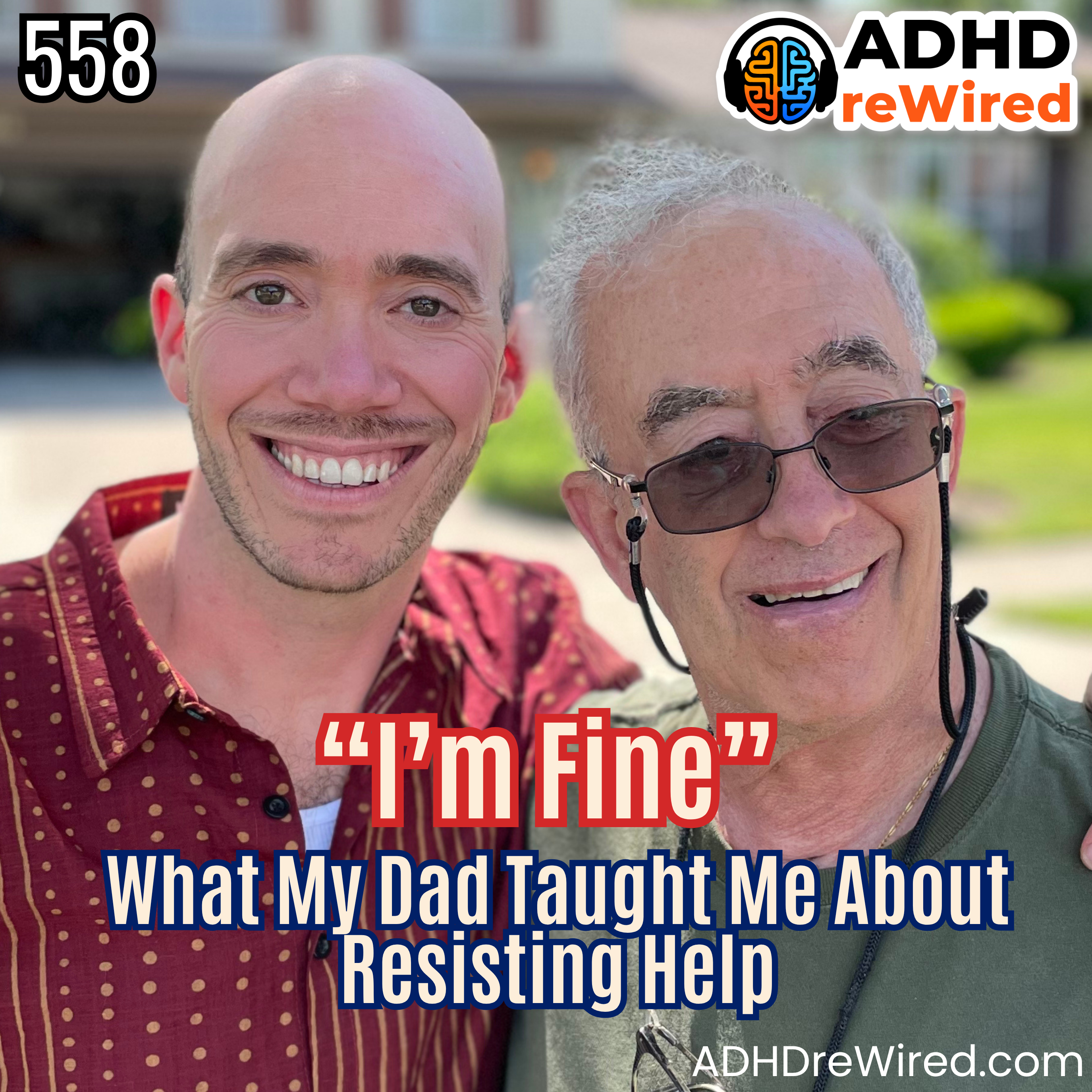 When "Fine" Keeps Us Stuck: A Reflection on My Dad, Masking, and Adapting ep 558 06.10.2025 14min"I'm Fine": What My Dad Taught Me About Resisting Help On August 14th, my dad passed away. In the weeks since, I've been reflecting on his life, his humor, his resilience — and his signature phrase: "I'm fine." He said it when he was hooked up to machines in the hospital. He said it when he was on the roof cleaning gutters, even though his balance was shot. And most of the time, he wasn't fine at all. In this episode, I share some of the lessons I learned from my dad about adapting — and about the cost of resisting it. From the adult trike he never would have bought for himself, to the senior living community he resisted but came to love, my dad's story is a mirror for the ways we all struggle with change, masking, and accepting support. I also talk about my own journey: being diagnosed with ADHD at 19, and more recently, with autism — a diagnosis that really came into focus during a season of burnout. Like my dad, I've had to learn that determination isn't enough. Saying "I'm fine" isn't enough. What matters is adapting — and allowing ourselves to receive help when we need it. If you've ever caught yourself saying "I'm fine" when you're not, this one's for you. In This Episode The phrase my dad used that wasn't always true — "I'm fine." How his resistance to adapting shaped my understanding of masking. The trike that gave him joy he wouldn't have chosen for himself. Why moving into a senior living community became one of the best decisions he never wanted to make. What his struggles taught me about ADHD, autism, burnout, and learning to adapt. Resources & Links Learn more about ADHD reWired Coaching & Accountability Groups: coachingrewired.com Join our virtual co-working community: adultstudyhall.com Support the podcast on Patreon: patreon.com/adhdrewired
 -
 Building Systems that work for you (and not the other way around) with Stephanie Blake - Ep 557 30.09.2025 41min🧠 Episode Summary: Are you building a business (or a life) that supports your life—or one that runs you into the ground? In this episode of ADHD reWired, Eric Tivers is joined by business systems coach and automation strategist Stephanie Blake. Diagnosed with ADHD later in life, Stephanie shares how simplifying her business, embracing structure, and getting honest about burnout helped her reclaim her energy and build a business that works for her, not the other way around. They talk about the unique ways ADHD brains thrive with streamlined systems, why too many tools can be a trap, and how authenticity and self-awareness fuel sustainable success. If you've ever felt overwhelmed trying to do all the things, this episode is your permission slip to do less—better. You'll also hear tips for where to start with automation, how to avoid shiny object syndrome, and why consistency matters more than complexity. ⏱️ Timestamps & Topics: 00:00 – Intro 02:02 – Stephanie's story: diagnosis, business, and burnout 06:11 – "Simplify to scale": the ADHD-friendly approach to business 11:58 – Tools and systems that actually help (and what to ditch) 18:05 – Where to start with automation (without breaking your brain) 21:42 – The myth of doing it all—and why solo doesn't mean alone 26:39 – What's behind our addiction to new tools 30:14 – The power of community and authenticity in building your brand 35:20 – Why revisiting your systems is a must, not a maybe 38:17 – Final thoughts: automate the right things, at the right time 40:36 – Learn more from Stephanie + Fall Coaching Groups are open! 👤 Guest Bio: Stephanie Blake is the founder of the Simple Business School and Simple Business Suites. She helps entrepreneurs scale to six figures and beyond by simplifying their business systems, automating strategically, and building offers that align with their values. As a mom, a CEO, and an ADHDer, Stephanie believes in doing business your way—and building something that lasts. 🌐 Learn more at: theblakecollective.com 📱 Instagram: @theblakecollective 🔧 Tools & Resources Mentioned: ClickUp – Project Management Airtable – Databases / Organizing Everything Zapier – Automation StreamYard – Live Streaming Platform 🚀 Learn More & Take Action 🧭 Fall 2025 Coaching Groups are open for registration! If you're ready to finally get support, structure, and accountability that works for your ADHD brain, then come join us. Join our next Registration Event: 📅 Friday, October 3rd at 12pm Central OR 📅 Thursday, October 9th at 10am Central October 3rd: $1699 October 9th (Late Reg): $1899 📆 3- and 6-month payment plans available! 🔗 Start your pre-registration now at www.coachingrewired.com 🌐 Learn more about: Adult Study Hall (Virtual co-working): www.adultstudyhall.com Support us on Patreon: patreon.com/adhdrewired 🎧 Listen & Share If this episode helped you feel less alone or gave you a new perspective on how to run your business or your life with ADHD, share it with a friend—or on social! Use #ADHDreWired to join the conversation.
 -
 Hustle, Flow or Let it Go? Lessons from Burnout and Grief - with Dr. Portia Preston - Ep 556 15.09.2025 51minWhat does it really mean to know when to push, when to pause, and when to let go? In this heartfelt conversation, Dr. Portia Preston returns to ADHD reWired to share insights from her book Hustle, Flow, or Let It Go? We talk about burnout, shame-free wellness, and the small practices that can help us create a more sustainable rhythm in life. This episode weaves together stories of resilience and grief, the reality of living with ADHD and autism, and Portia's SANE model (Slow down, Acknowledge, Navigate, Evaluate)—a simple framework to help you reset when overwhelm takes over. We also talk about support squads, the hidden cost of hustle culture, and what it means to choose rest without shame. If you've been running on empty, carrying grief, or just wondering if there's another way forward, this conversation is for you. 00:00 – Introduction: Shame Free Wellness and unlearning harmful beliefs 01:07 – Welcome to ADHD Rewired, host Eric Tivers introduces the show 01:31 – Eric shares personal news: loss of his father and recent illness 03:06 – Portia Preston joins: author, speaker, and executive coach 05:36 – Portia discusses the motivation behind her book and the concept of sustainable rhythm 07:54 – The SANE Cycle: a four-step process for self-reflection and growth 08:49 – Book launch experiences, balancing promotion, and authenticity 10:57 – Defining "hustle" and "flow" in the context of wellness 13:00 – Letting go: the challenge and importance of releasing what doesn't serve you 15:21 – The SANE model explained: Slow down, Acknowledge, Navigate, Evaluate 17:06 – Portia's favorite part of the book and audience reactions 17:52 – Break: Coaching and accountability group info - ADHD Rewired Coaching & Accountability Groups - ADHD Rewired Virtual Coworking Community 18:48 – Grief, burnout, and the importance of sitting with discomfort 22:00 – Building a support squad and the difference between solitude and isolation 25:00 – Neurodivergence, intersectionality, and Portia's experience as a Black woman with ADHD and autism 29:00 – Audience feedback on the book and the importance of vulnerability 33:00 – Shame Free Wellness Manifesto (read aloud) 35:44 – The importance of rest, authenticity, and self-acceptance 39:00 – Context shifting, capacity vs. discipline, and self-compassion - Dr. Raquel Martin on Instagram: @drraquelmartin 43:00 – Teaching students about shame-free wellness and legacy 46:00 – Grief, community, and turning pain into purpose 49:00 – The value of showing up authentically and embracing imperfection 52:00 – Where to find Portia's book and connect online - Book: "Hustle, Flow, or Let It Go: A Guide to Shame-Free Wellness" • PortiaPreston.com • Amazon Book Link - Instagram: @drportiapreston 54:00 – Closing thoughts: SANE model reminder and encouragement 56:00 – Outro: gratitude and next steps
 -
 People Pleasing & ADHD: When "Yes" is a Nervous-System Response and How to Stop with Anita Sandoval, LPC - EP 555 11.08.2025 45minPeople-pleasing isn't a personality flaw—often it's a nervous-system strategy. Licensed Professional Counselor and ADHD-CCSP Anita Sandoval joins Eric to unpack how the fawn response shows up with ADHD, trauma, and RSD; how it differs from masking and conflict avoidance; and what real change looks like. We cover Anita's "Empower → Resilient → Authentic" model, ADHD-friendly EMDR adaptations, and the messy-but-worth-it work of boundaries (including with narcissistic family dynamics). Resources, Anita's links, and a quick survey about a potential evening coaching group are in the full notes at ADHDreWired.com. Guest: Anita Sandoval, LPC-S, EMDR-Certified, ADHD-CCSP — therapist, supervisor, and author of Broken Chains (English & Spanish). Host of Empowering Women in Conversations and creator of Empower Her Pathways. We cover: People-pleasing as a neuro-adaptive response (fight/flight/freeze/fawn) People-pleasing vs. conflict avoidance vs. masking ADHD & RSD: why "neutral" feedback stings and how regulation shifts it Differentiating from personality disorders (dependent/BPD) Hypervigilance, ACEs, and emotional regulation circuits Boundaries with narcissistic dynamics (including the "victim narcissist" pattern) Anita's staged model (Stages of Change × grief work): Unaware → Aware → Ready → Action → Maintenance → Integration (Empowered → Resilient → Authentic) Therapies that help ADHD brains: EMDR with resourcing, IFS/parts work, polyvagal-informed regulation Eric's EMDR story: from trigger spirals to co-regulation Try this: Notice your next automatic "yes." Ask: Is this aligned with my values, or is my nervous system chasing safety? Then practice one tiny boundary this week and track before/during/after. Resources mentioned: Anita Sandoval — anitasandoval.com (course: Empower Her Pathways) Broken Chains (English/Spanish) Dr. Ramani's work on narcissism (Should I Stay or Should I Go?) Modalities: EMDR, IFS/Parts, Polyvagal-informed approaches Coaching & community: Evening Coaching Group — interest survey We're exploring a fall evening section (proposed Wed, Sept 18 • 5pm PT / 8pm ET) led by ADHD reWired Coach & LCSW Kristin Marts, at a budget-friendly rate (starting at $999) if we move forward. Deadline to weigh in: Aug 15. Take the short survey at www.coachingrewired.com. Complete the survey to enter to win 6 months free in our Alumni community ($240 value) or 1 year free of Adult Study Hall ($240 value). Adult Study Hall (ASH) — virtual co-working & body doubling. Free 1-week trial, then $19.99/mo or $150/yr at www.adultstudyhall.com. Connect with Anita: www.anitasandoval.com | Podcast: Empowering Women in Conversations
 -
 554 | OCD with ADHD: Could your anxiety be OCD? with Natalia Aíza 07.07.2025 47minWhat is OCD, really? It's far more than the stereotypes of handwashing, tapping, or lining up your pens just right. On today's episode, Eric is joined by Natalia Aíza — a therapist, parent, writer, and co-founder of Kairos Wellness Collective — who specializes in supporting individuals and families navigating OCD and anxiety. Together, they explore how OCD can show up in less obvious ways, especially for those with ADHD. You'll hear: ✅ Why OCD is often missed or misdiagnosed in ADHD brains ✅ How intense nostalgia, perfectionism, and social media checking can all be forms of OCD ✅ The difference between typical anxiety and OCD ✅ Why intrusive thoughts don't define you ✅ How exposure response prevention (ERP) and medication can help ✅ Eric's own reflections on healing unexpected layers through EMDR and discovering his autism If you've ever felt stuck in mental loops, struggled with perfectionism, or wondered whether your patterns might be more than "just" ADHD, this episode is for you. Learn more about Natalia Aiza and Kairos Wellness Collective: 👉 Instagram: @letstalk.ocd 👉 Kairos Wellness Collective: kairoswellnesscollective.com 👉 Email: [email protected] Ready to take the next step with your ADHD? Don't miss our second 2nd chance Registration Event for the summer ADHD reWired Coaching & Accountability Groups on Thrusday, July 10. Visit coachingrewired.com to learn more and secure your spot.
 -
 The ADHD Productivity Manual with Ari Tuckman, PSY.D, MBA 30.06.2025 57minSupport Comes from ADHD reWIred's Coaching and Accountability Groups. Summer Sessions are July 24 - Sept 18. Join us at our next registration event on July 10th. Learn more by going to www.coachingrewired.com Episode Overview: In this episode, Eric is joined by Ari Tuckman, PSY.D, MBA, psychologist, international presenter, and author of the new "ADHD Productivity Manual." Together, they dive deep into the realities of productivity for people with ADHD, exploring motivation, activation, self-compassion, and practical strategies for getting things done. Key Topics Discussed: The difference between motivation and activation, and why both matter for ADHD brains How perfectionism and unrealistic expectations can sabotage progress The importance of understanding your "why" for each task, not just the "what" Social aspects of productivity: people-pleasing, setting boundaries, and communicating when you can't meet a deadline Real-world strategies and creative hacks from Ari, Eric, and their clients (including timers, accountability, and engineering urgency) The value of celebrating small wins and tracking progress over time Self-compassion and letting go of impossible standards How to build systems that work for your unique brain, not just follow generic advice Guest Bio: Dr. Ari Tuckman is a leading ADHD expert, psychologist, and author of five books, including the "ADHD Productivity Manual." He brings decades of clinical experience and a practical, compassionate approach to helping people thrive with ADHD. Resources & Links: Learn more about Ari and his books: adultadhdbook.com Join ADHD reWired Coaching & Accountability Groups: coachingrewired.com Check out Adult Study Hall for virtual coworking: adultstudyhall.com Support the Show: Become a patron for bonus content and monthly coaching calls: adhdrewired.com/patreon Sign up for the newsletter and get episode resources: adhdrewired.com Takeaway: You're not broken, and you don't have to do hard things the hardest way or alone. Progress is possible—one step, one system, and one act of self-compassion at a time. Thanks for listening!
 -
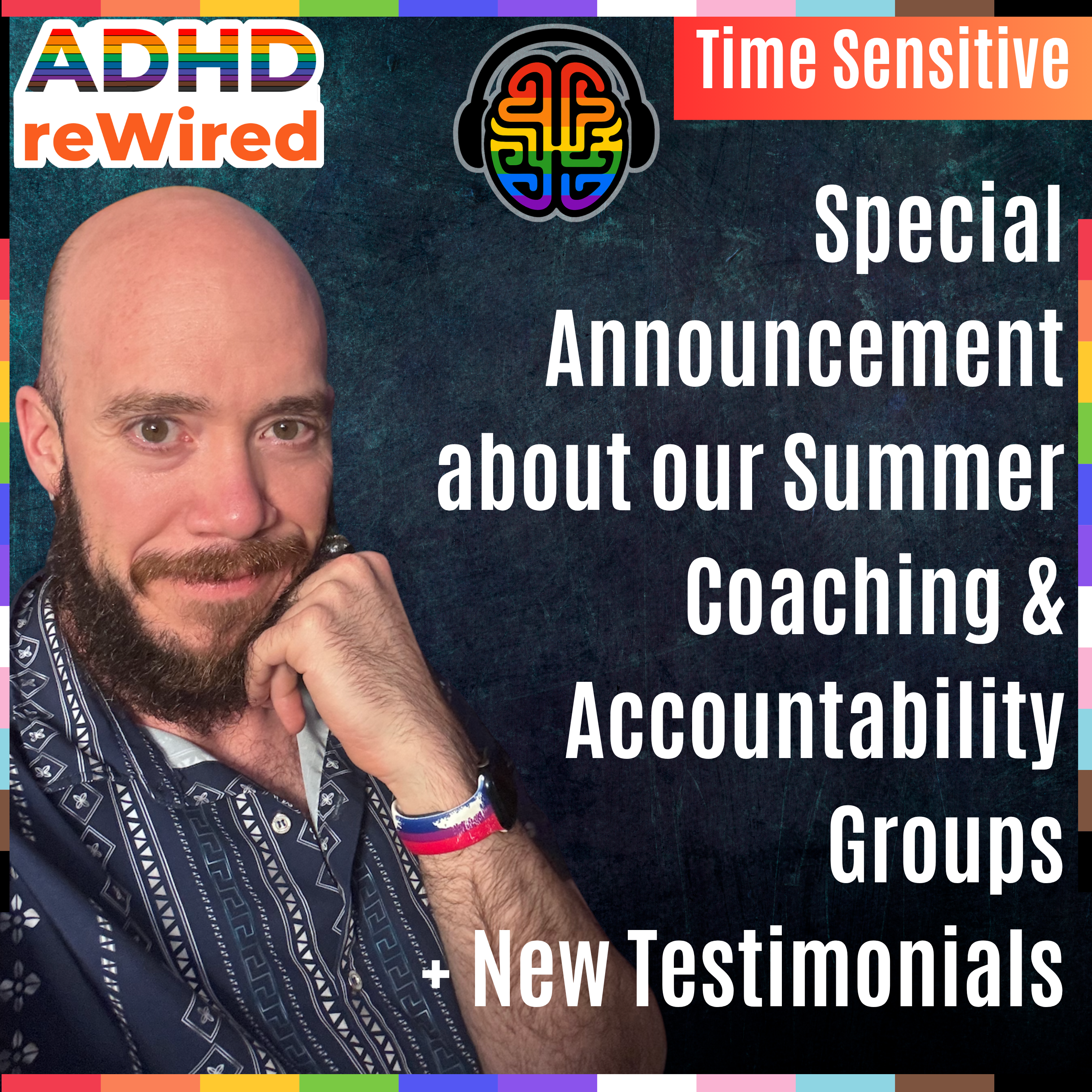 Special Episode: Alumni Stories of Change + Registration Details Inside 21.06.2025 14min🎧 Special Announcement: Alumni Voices + Your Chance to Join ADHD reWired In this special announcement episode of ADHD reWired, Eric shares something a little different: a powerful 10-minute audio montage of alumni from our most recent coaching group — voices from ADHDers just like you who finished the program not long ago. You'll hear, in their own words, why they joined, what they were struggling with, and what changed for them over 8 weeks of coaching, accountability, and connection. From burnout and overwhelm to self-doubt and shame, these stories highlight the real transformations that can happen with the right support. 👉 Our second-chance registration event is Thursday, June 26th at 10 AM Pacific / 1 PM Eastern! ✅ Pre-registration is due by Wednesday, June 25th at least 24 hours before the event. 📝 Session details: Mondays, Wednesdays, and Thursdays 10 AM Pacific / 1 PM Eastern July 24th through September 18th 💥 Ready to join us? Here's your next step: 1️⃣ Go to coachingrewired.com 2️⃣ If you're not already on our interest list, click the button to join 3️⃣ Check your email and confirm your address so you don't miss anything When you join the interest list, you'll also get: A free time tracker we use in group A letter you can share with your employer about the program 🎧 Even if joining this season isn't possible for you, we hope these alumni stories remind you: 👉 You're not alone. 👉 You can do hard things — and you don't have to do them the hardest way possible.
 -
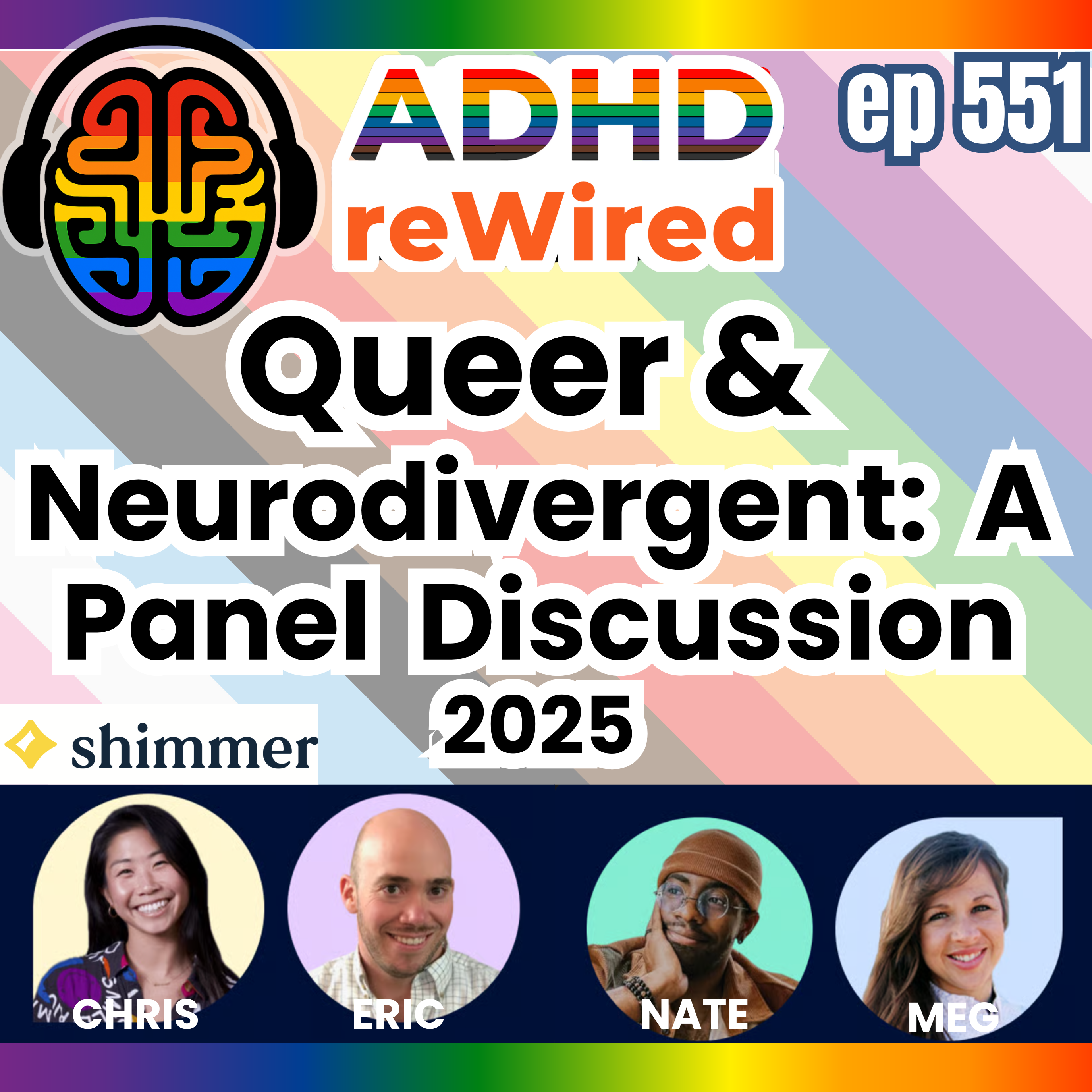 551 | Queer and Neurodivergent Pride - Panel Discussion 2025 14.06.2025 59min🎧 Episode Overview Join host Eric Tivers and three incredible panelists—Nathan James, Meg Zirger, and Christal Wang—for the second-annual Neurodivergent Queer Pride panel, organized by Shimmer. In this landmark conversation, we explore: Masking vs. Unmasking: Why hiding feels safe and how reclaiming your authentic self fuels resilience. Intersectional Identities: How ADHD, autism, and LGBTQ+ pride intersect—and why that intersection is a source of strength. Political Climate & Pride: Strategies for holding onto joy and courage when the world feels heavy. Power of Community: From isolation to solidarity—why peer support is essential for lasting change. Whether you're neurodivergent, queer, an ally, or simply curious, this panel offers actionable insights, heartfelt stories, and affirmations to help you thrive. 🎯 Key Takeaways Masking Is Exhausting Childhood "survival mode" often becomes adult burnout. Unmasking is an ongoing, courageous process of self-discovery. ADHD + Queer = Unique Superpower Both identities challenge "scripts" society hands us. Embracing difference unlocks creativity, empathy, and authenticity. Pride Under Pressure Celebrate safely: balance vigilance with joy. Collective conversation and advocacy build courage. Community as Catalyst Small cohorts and online groups reduce shame and spark accountability. Shared experiences create "me-too" moments that heal and empower. ⏱️ Timestamps 00:00 Welcome & Episode Intro 01:04 What Is Neurodivergent Queer Pride? 03:07 Panelist Introductions & Backgrounds 09:30 Personal Identity Journeys: "Scripts" & Masking 17:36 Societal Expectations: Fitting In vs. Standing Out 29:18 Deep Dive on Masking & Self-Acceptance 38:59 Holding Pride in a Difficult Political Climate 48:12 The Role of Community in Connection & Healing 54:48 Final Affirmations & Advice 57:41 Closing Thoughts & Next Steps 🔗 Resources & Links Join ADHD reWired Coaching & Accountability Groups (Season 41) ▸ Live kickoff: Wed, June 18 • 2 PM CT ▸ Pre-registration due: Tue, June 17 • 2 PM CT ▸ 👉 https://www.coachingrewired.com Shimmer (Episode organizer; online ADHD coaching platform) ▸ Co-founder & panel host: Christal Wang 👉 https://www.shimmerplatform.com Adult Study Hall (24/7 ADHD-friendly coworking) 👉 https://www.adultstudyhall.com 💡 Next Steps Subscribe to ADHD reWired so you never miss an episode. Share this episode with friends who identify as neurodivergent, queer, or allies. Explore our summer Coaching & Accountability Groups to turn these insights into real-world growth. Your whole self belongs. Let's celebrate, connect, and thrive—together.
 -
 550 | Decide Ai Tools made by and for brains like ours with Dr Shannan Palma 05.06.2025 39minIn episode 550 of ADHD reWired, Eric Tivers sits down with Dr. Shannan Palma to explore Decide—a suite of AI-powered decision-support tools built by and for neurodivergent brains. Throughout this conversation, you'll hear about: How Decide leverages AI (Gemini and large language models) to help with everyday choices and multi-step tasks. The story behind IT Assistive Technologies and the Autistic Self-Reliance Support Network. Real-world examples of "decision fatigue" and how Decide's guided and randomized features ease choice paralysis. The balance between AI assistance and human insight—and why a trusting, well-prompted tool can feel like a personal neurodivergent life coach. Pricing, privacy, and the community-focused mission: 85 percent of ITI's profits fund disability-led initiatives. Bonus segments on Pride Month, coaching groups, virtual coworking, and how to get involved with ADHD reWired's summer programs. Use these show notes to get a quick overview, find useful links, and discover why Decide might become your new go-to when you're stuck choosing dinner, figuring out a daily routine, or simply need a gentle "nudge" to move forward. Episode Summary Dr. Shannan Palma—co-founder of Decide and co-director of the Autistic Self-Reliance Support Network—joins Eric to unpack how tools designed by autistic and ADHD adults can transform decision making for all of us. Shannan shares her own late autism and ADHD diagnoses, the challenges she faced finding resources after getting "the piece of paper," and how a 48-hour hackathon sparked a project that won first prize and secured nearly $400 k in grant funding. From door-dash dilemmas to life-altering choices (like whether to adopt a foster dog), Decide offers two core modes: Randomized Choice Generator Users create custom lists (e.g., favorite restaurants, daily routines) and assign energy costs. The app selects an option based on your current energy level—no more breakfast indecision or "what to watch next" paralysis. Guided Decision Assistance A series of friendly, "affirmative" prompts mirror a real-time coach. By reflecting back your own criteria (energy, resources, priorities), Decide delivers a percentage-confidence recommendation and rationale—so you can make a defensible, informed choice without overthinking. Along the way, Shannan emphasizes the importance of privacy (your data always belongs to you), ethical AI (focusing on "do no harm"), and how Decide's freemium model avoids the "ADHD tax" by offering 10 free guided decisions per month. Premium access is available for $4.99/month, but you can cancel at any time without losing progress. Key Takeaways Why "Decision Fatigue" Matters: Neurodivergent brains often struggle with countless small choices (e.g., "What's for dinner?"). Decide's randomized generator isn't just for fun—it reduces executive-function load by factoring in your energy level and pre-ranked options. Guided Mode = Personalized Neurodivergent Coaching: Instead of writing complex prompts for ChatGPT or Claude, Decide asks you targeted yes/no/unsure questions. Once you answer, it gives a clear recommendation (with a confidence score) plus a brief "why," so you trust your decision-making process. Built by Autistic + ADHD Makers: After Shannan's late autism diagnosis, she realized few supports existed for lower-visibility autistic adults. A 48-hour hackathon (Give Back Hack Columbus) brought together autistic and ADHD engineers, designers, and researchers—leading to Decide's prototype and subsequent $400 k grant from Ohio's Department of Developmental Disabilities. Community-First Funding Model: 85 percent of any IT Assistive Technologies' profits flow back to the Autistic Self-Reliance Support Network (ASR). ASR focuses on autonomy and resources for autistic adults—rather than caregiver research—aiming to expand capacity and economic inclusion across the lifespan. Privacy & Data Rights: Decide won't train AI on your personal data, and you retain full ownership of anything you input. Future plans include an opt-in research repository for autistic/ADHD lifespan data—governed by community safeguards. Bonus: Pride Month & ADHD ReWired Community Updates: Neurodivergent Pride Panel: Friday, June 13th at 10 AM PT / 1 PM ET (free registration at adhdrewired.com/pride2025). Summer Coaching Groups kick off July 24th—save $200 by joining the registration kickoff on June 18th (more info at coachingrewired.com). Adult Study Hall: Virtual coworking with monthly "Pomodoro Dance Parties" (4th Friday, Pride-themed on June 27th). Try a 1-week free trial at adultstudyhall.com. Next Live Q&A: Tuesday, June 10th at 10:30 AM PT / 1:30 PM ET (become a Patron at patreon.com/adhdrewired for behind-the-scenes coaching calls). Resources & Links Decide AI Decision Assistant • Web: iassist.com/decide • App Store (iOS) & Google Play (Android) • Guided decisions: 10 free/month; Premium: $4.99/month (cancel anytime) Dr. Shannan Palma & IT Assistive Technologies • IT Assistive Technologies (for-profit): itassist.com • Autistic Self-Reliance Support Network (non-profit): autisticselfreliance.org • LinkedIn: Shannan Palma (mention you heard the podcast!) Neurodivergent Pride & June Events • Neurodivergent Pride Panel (June 13): adhdrewired.com/pride2025 • Adult Study Hall Pomodoro Dance Party (June 27): adultstudyhall.com ADHD ReWired Coaching & Community • Summer Coaching Groups (start July 24): coachingrewired.com • Live Q&A (June 10): RSVP details sent to interest list • Patreon: patreon.com/adhdrewired Books & References • Annie Duke, Thinking in Bets (on decision quality vs. outcome quality) • "Selling Out the Spectrum" by Ryan E. Conviction (autistic journalist on research ethics)
 -
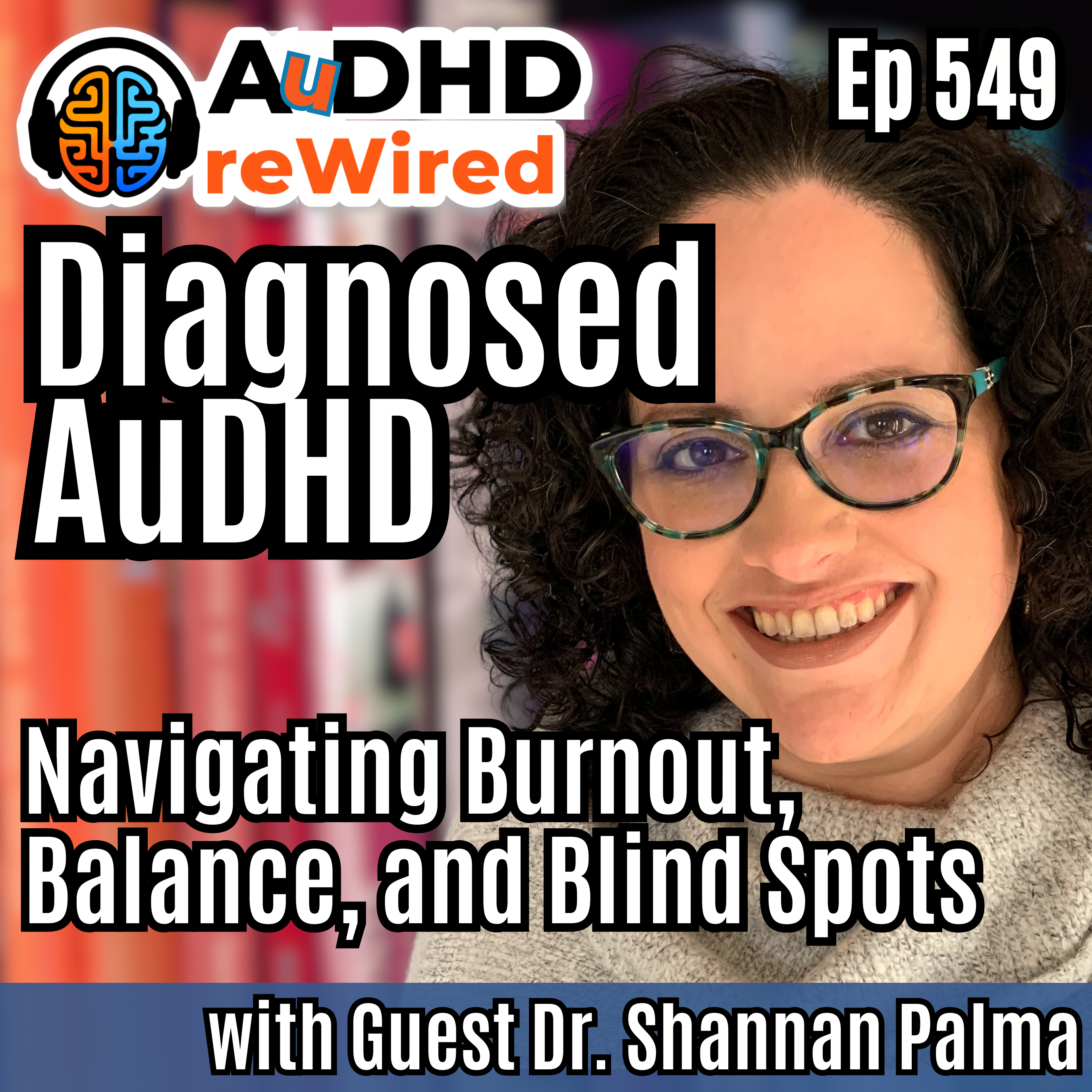 549 | Diagnosed AuDHD: Navigating Burnout, Balance, and Blind Spots with Dr. Shannan Palma 19.05.2025 56minSummer coaching groups start on July 24th. LIstners can save $200 by signing up at the registration kickoff event on June 18th. Learn more and get on the interest list at www.coachingrewired.com Eric shares updates about prioritizing sustainable energy practices and coping with recent family challenges, including the passing of his grandmother and his father's health issues. The main segment features Dr. Shannon Palma, founder and CEO of ITI Assistive Technologies, discussing her late autism and ADHD diagnoses. She shares insights into her decades-long journey with executive function challenges, her comprehensive self-diagnosis process, and the development of support tools for neurodivergent adults. Shannon and Eric delve deeply into the nuances of autistic and ADHD burnout, the differences between autistic burnout and occupational burnout, and the challenges of masking and managing sensory sensitivities. The episode also reveals the host's own recent autism diagnosis, providing a reflective and personal perspective on understanding neurodivergence. The episode wraps up with contact information and a teaser for a follow-up episode focusing more on Shannon's work and the host's continued exploration of his diagnosis. https://itiassist.com https://autisticselfreliance.org/ 00:00 Introduction and Announcements 02:30 Eric's Personal Updates and Challenges 05:12 Guest Introduction: Dr. Shannon Palma 06:32 Shannon's Diagnosis Journey 09:42 Sensory Sensitivities and Family Traits 16:56 Burnout and Neurodivergence ADS 26:56 Support and Community 28:36 Join Coaching Rewired This Summer 28:42 Introducing Adult Study Hall 30:54 Exploring Autism and ADHD 34:12 Self-Diagnosis and Professional Insights 35:29 Navigating Social Cues and Sensory Sensitivities 40:35 Understanding Neural Processing 46:56 Social Interactions and Coping Strategies 53:37 Wrapping Up and Contact Information
Liknande podcastar


Populär i
Den här podcasten finns även i podcastlistor i dessa länder.


