
Parent Confidence Lab
Hans Kullberg & Cristina Bernardo
0
Parent Confidence Lab is hosted by Hans Kullberg and Cristina Bernardo of Avocado Health. The podcast features conversations with leaders in healthcare, public health, and advocacy who work to improve outcomes for parents, children, and families. It explores what is working, what is not, and how parents can be better supported at scale. The show focuses on real conversations and practical insights about family well-being.
Avsnitt
-
 How to Raise Money-Smart Kids: Financial Literacy, Confidence & a Growth Mindset with Dr. Michele Cho Dorado 01.10.2026 45minEpisode Summary:Raising confident kids is about more than helping them succeed in school. In this episode of Parent Confidence Lab, Hans and Cristina Kullberg sit down with Dr. Michele Cho Dorado, a pediatric gastroenterologist, author, mother, and founder passionate about helping children become confident and money-smart from an early age.Michele shares why she believes financial literacy should start when kids are young, and how parents can teach money through everyday conversations, play, hands-on experiences, and modeling. From saving and investing to starting pretend businesses and learning from failure, she explains how simple activities can help children develop curiosity, confidence, decision-making skills, and a growth mindset.The conversation also explores the connection between money beliefs, family values, confidence, and the messages children absorb at home. Michele shares lessons from her own journey as a physician, investor, author, and entrepreneur, along with practical ways parents can encourage lifelong learning and help their children become thoughtful, independent decision-makers.What You'll LearnWhy financial literacy should start early in childhoodHow parents can teach money through everyday activities and playThe importance of modeling healthy money habits at homeHow curiosity and asking questions build confidenceWhy failure can be one of the best learning tools for kidsHow money beliefs and family experiences can shape childrenWays to encourage a growth mindset and independent decision-makingHow financial confidence connects to broader life skills and self-confidenceAbout Dr. Michele Cho DoradoDr. Michele Cho Dorado is a pediatric gastroenterologist, author, mother, investor, and entrepreneur passionate about raising confident, curious, and money-smart kids. Inspired by her own children, she created Reach for the Stars, a collection of children's books and educational resources designed to introduce young learners to financial concepts through engaging stories and real-life experiences.Michele believes financial education is about much more than teaching children what money means. It is about helping them develop the confidence to ask questions, make decisions, take thoughtful risks, learn from failure, and build a healthy relationship with money.Connect with Dr. Michele Cho DoradoLinkedIn: linkedin.com/in/michelecdListen & SubscribeApple PodcastsSpotifyAmazon MusicYouTubeiHeart RadioCaptivateParent Confidence Lab by Avocado Health, your parenting partner in your pocket.Enjoying the show? Subscribe to our newsletter for weekly parenting insights, episode updates, and expert parenting tips delivered straight to your inbox.Sign up here: https://avo-little-more-confidence.beehiiv.com/
 -
How to Help Kids Build Confidence: Medical Visits, Screen Time & Independence with Jessica Hardy 29.09.2026 32minEpisode Summary:How can parents help children feel more confident, capable, and empowered as they grow? In this episode of Parent Confidence Lab, Hans and Cristina sit down with Jessica Hardy, a child life specialist with more than 20 years of experience working with children and families in pediatric hospital settings, to explore how parents can support children through medical experiences, everyday decisions, screen time, and the journey toward independence.Jessica shares what inspired her to work with children and families and explains how child life specialists help children understand and cope with medical experiences. She discusses the importance of giving children developmentally appropriate information, offering choices, using coping tools, and advocating for pain management during procedures such as vaccinations and medical visits.The conversation also explores screen time, setting healthy boundaries around technology, and why giving children age-appropriate choices and responsibilities can help build confidence. Jessica shares practical parenting insights from her professional experience and her own journey raising two children, including the importance of staying connected while giving kids the space they need to become independent.What You'll LearnHow child life specialists help children cope with medical experiences and new diagnosesWays parents can prepare children for doctor visits, vaccinations, and proceduresWhy pain management and giving children choices can make medical experiences easierHow parents can build confidence by giving children age-appropriate responsibilitiesThe connection between independence, decision-making, and self-confidenceHow to set healthy boundaries around screen time and technologyWhy staying connected and available helps children develop independenceHow to support children through the natural push and pull of growing upAbout Jessica HardyJessica Hardy is a child life specialist with more than 20 years of experience working with children and families in pediatric hospital settings. She holds a bachelor's degree in child development and family and consumer studies and has built her career around helping families navigate new diagnoses, medical procedures, hospitalization, and emotional challenges.As a child life specialist, Jessica helps children understand what is happening to them, prepares them for medical experiences using age-appropriate information, and provides coping tools, distraction, play, and opportunities for children to make choices. Her approach focuses on helping children feel supported, informed, and empowered during experiences that can otherwise feel overwhelming.Jessica also brings a deep understanding of family dynamics and parenting challenges to her work. In this conversation, she shares practical wisdom on helping children develop confidence, responsibility, independence, and the ability to make decisions while maintaining a strong connection with their parents.Connect with Jessica HardyLinkedIn: linkedin.com/in/jessica-hardy-boiseListen & SubscribeApple PodcastsSpotifyAmazon MusicYouTubeiHeart RadioCaptivateParent Confidence Lab by Avocado Health, your parenting partner in your pocket.Enjoying the show? Subscribe to our newsletter for weekly parenting insights, episode updates, and expert parenting tips delivered straight to your inbox.Sign up here: https://avo-little-more-confidence.beehiiv.com/
-
How to Support Your Kids’ Mental Health: Breaking the Silence, AAPI Families & More Valuable Tips with Lily Chen 24.09.2026 41minEpisode SummaryIn this episode of Parent Confidence Lab, Hans and Cristina Kullberg sit down with Lily Chen, Founder and Executive Director of UCA Waves, to talk about supporting children’s mental health, reducing stigma, and helping parents create safe spaces for meaningful conversations.As a public health nurse, mother of five, and first-generation immigrant from China, Lily shares how her own experiences shaped her passion for mental health education and advocacy. Through UCA Waves, she works at the intersection of nursing education, research, civic engagement, and community support to advance mental health equity, particularly within underserved and immigrant communities.Lily also shares practical advice for parents, including why mental health conversations should start early, how parents can practice self-awareness and self-care, and why active listening is so important. The conversation explores the unique pressures AAPI children may experience, including academic expectations, cultural identity, racial discrimination, and the need for belonging.What You'll LearnWhy parents should start talking about mental health with children earlyHow parental mental health and emotional well-being can affect the whole familyThe importance of self-awareness, self-care, and knowing your own limits as a parentHow active listening can help children feel heard and supportedSome of the unique mental health pressures AAPI children and families may experienceHow cultural expectations, identity, discrimination, and belonging can affect childrenWays parents can create a safe, non-judgmental environment for their childrenWhy reducing stigma is an important part of improving mental health conversationsHow parents can become more involved with their children’s schools and communitiesHow community programs, education, and peer support can help families access mental health resourcesAbout Lily ChenLily Chen is a public health nurse and the Founder and Executive Director of UCA Waves, an organization focused on wellness, advocacy, voices, education, and support. Her work brings together community programs, mental health education, research, advocacy, and workforce development to support mental health equity.Lily is also a mother of five and draws from both her professional experience and personal experiences as a first-generation immigrant to help parents better understand and support their children's mental health. UCA Waves provides programs including mental health education, peer support, workforce development, and community-based initiatives.Connect with Lily ChenLinkedIn: https://linkedin.com/in/lilychen0331/UCA Waves: https://ucawaves.org/Listen & SubscribeApple PodcastsSpotifyAmazon MusicYouTubeiHeart RadioCaptivateParent Confidence Lab by Avocado Health, your parenting partner in your pocket.Enjoying the show? Subscribe to our newsletter for weekly parenting insights, episode updates, and expert parenting tips delivered straight to your inbox.Sign up here: https://avo-little-more-confidence.beehiiv.com/
-
 How to Help Kids Thrive: Nutrition, Mental Health & Whole-Child Care with Dr. Chris Magryta 22.09.2026 46minEpisode Summary:What happens when we look beyond a child's behavior and ask what might be happening underneath? In this episode of Parent Confidence Lab, Hans and Cristina sit down with Dr. Chris Magryta, an integrative pediatrician and Managing Partner at Salisbury Pediatric Associates, to explore how nutrition, mental health, prevention, parental support, and whole-child care can shape children's health and development.Drawing from his experience in pediatrics and integrative medicine, Dr. Magryta shares what led him to focus on helping children thrive while also supporting the mothers and families caring for them. He discusses the importance of prevention, the connection between stress and health, and why parents need accessible, science-based information they can actually use in everyday life. He also explains his work as Chairman of Children First of North Carolina, which focuses on creating more comprehensive care for children and families, particularly within the Medicaid population.The conversation also explores children's nutrition, school food, minimally processed foods, and the challenges families face when trying to make healthier choices. Dr. Magryta shares lessons from an asthma and immune-metabolic pilot, explains how care teams can address social and health barriers, and emphasizes the importance of human connection, consistency, and making children feel supported and loved. The discussion also covers phones, screen time, parenting boundaries, and why parents can set limits while maintaining a strong relationship with their children.What You'll LearnWhy Dr. Chris Magryta chose pediatrics and what continues to motivate his workWhy looking beyond a child's behavior can reveal important underlying needsHow nutrition, stress, and mental health can influence children's healthWhy prevention and early intervention are important parts of pediatric careHow parental stress can affect the entire familyWhy mothers need more support, time, and resources to care for themselves and their childrenHow parents can find and evaluate useful health and nutrition informationWhy science-based, prevention-focused education can help parents make informed decisionsHow minimally processed foods can become part of a family's everyday routinePractical ideas for getting children involved in grocery shopping and cookingHow school food can affect the challenges families face around nutritionWhat Dr. Magryta learned from an asthma and immune-metabolic pilotHow care management teams can provide more comprehensive support for children and familiesWhy food insecurity and other social factors need to be considered as part of children's healthcareHow face-to-face connection and consistent follow-up can make a difference in careWhy children need boundaries while still feeling loved and supportedHow parents can approach phones, social media, and screen time with greater intentionWhy saying "no" can be an important part of confident parentingHow parents can create an environment where children feel connected, supported, and cared forAbout Dr. Chris MagrytaDr. Chris Magryta, MD, is an integrative pediatrician and Managing Partner at Salisbury Pediatric Associates in Salisbury, North Carolina. His work focuses on pediatric prevention, nutrition, immunology, allergies, asthma, and whole-child health, with an emphasis on understanding the factors that can influence children's health and development.Dr. Magryta is also Chairman of Children First of North Carolina, where he is involved in developing a more comprehensive care model for children and families, particularly within the North Carolina Medicaid population. The approach brings together physicians, nurses, care coordinators, and other resources to address medical needs alongside the social and practical challenges families may face.Through his clinical and educational work, Dr. Magryta emphasizes prevention, nutrition, human connection, and accessible health education while encouraging parents to use reliable information and the best available data to make informed decisions for their families.Connect with Dr. Chris MagrytaLinkedIn: linkedin.com/in/chrismagrytaSalisbury Pediatrics: salisburypediatrics.comTouchstone Care: touchstonecare.comListen & SubscribeApple PodcastsSpotifyAmazon MusicYouTubeiHeart RadioCaptivateParent Confidence Lab by Avocado Health, your parenting partner in your pocket.Enjoying the show? Subscribe to our newsletter for weekly parenting insights, episode updates, and expert parenting tips delivered straight to your inbox.Sign up here: https://avo-little-more-confidence.beehiiv.com/
 -
 "How to have "The Talk" with Your Kids: Sex, Porn & Body Image, and more valuable tips with Nurse Netty" 15.09.2026 51minEpisode Summary:Some of the most important conversations parents have with their children can also be the hardest to start. In this episode of Parent Confidence Lab, Hans and Cristina sit down with Dr. Annette Dunn, known as Nurse Netty, to explore how parents can build open, trusting communication with their children around puberty, sex education, healthy relationships, peer pressure, social media, pornography, and other challenging topics.Drawing from her experience as a nurse, school nurse, and educator, Nurse Netty shares why these conversations shouldn't be treated as a single "talk." Instead, parents can create an ongoing environment where children feel safe asking questions, sharing mistakes, and seeking guidance without fear of judgment. She introduces her SECURE method, a practical framework that helps parents approach difficult conversations with greater calm, curiosity, understanding, relatability, and empathy.The conversation also explores how parents can approach social media, phones, screen time, and pornography without relying solely on rules and lectures. Nurse Netty encourages families to establish clear agreements, discuss family and personal values, set short- and long-term goals, and help children understand the reasons behind boundaries. Most importantly, she reminds parents that building trust early can create a relationship children can rely on throughout adolescence and into adulthood.What You'll LearnWhy difficult conversations should begin early and continue throughout childhoodHow parents' own upbringing can influence their comfort level with sensitive conversationsWhy lecturing and relying on "don't do this" can sometimes push children awayHow the SECURE method can help parents approach difficult conversationsHow curiosity and active listening can strengthen parent-child relationshipsWhy children need to feel safe sharing mistakes without fear of judgmentHow to talk with children about puberty, sex education, and healthy relationshipsPractical ways to discuss social media, body image, and peer pressureWhy family agreements can make phone and screen-time boundaries easier to manageHow parents can prepare children for potential exposure to pornographyWhy family and personal values can help children make healthier decisionsHow short- and long-term goals can help children think beyond immediate pressureWhy parents should communicate and compromise before addressing difficult issues with their childrenHow consistent, judgment-free communication can build lifelong trust and confidenceAbout Dr. Annette Dunn (Nurse Netty)Annette Dunn, known as Nurse Netty, is a nurse, school nurse, educator, and parenting communication expert who helps parents have meaningful conversations with their children about sensitive and important topics. Her work focuses on strengthening parent-child communication around puberty, sex education, healthy relationships, peer pressure, social media, pornography, and more.Through classes, digital resources, and practical tools, Nurse Netty helps parents feel more prepared and confident having these conversations while creating a safe and supportive environment where children can ask questions, share experiences, and seek guidance.Connect with Dr. Annette Dunn (Nurse Netty)Website: https://nursenetty.com/LinkedIn: linkedin.com/in/castillosensitivesolutionsListen & SubscribeApple PodcastsSpotifyAmazon MusicYouTubeiHeart RadioCaptivateParent Confidence Lab by Avocado Health, your parenting partner in your pocket.Enjoying the show? Subscribe to our newsletter for weekly parenting insights, episode updates, and expert parenting tips delivered straight to your inbox.Sign up here: https://avo-little-more-confidence.beehiiv.com/
 -
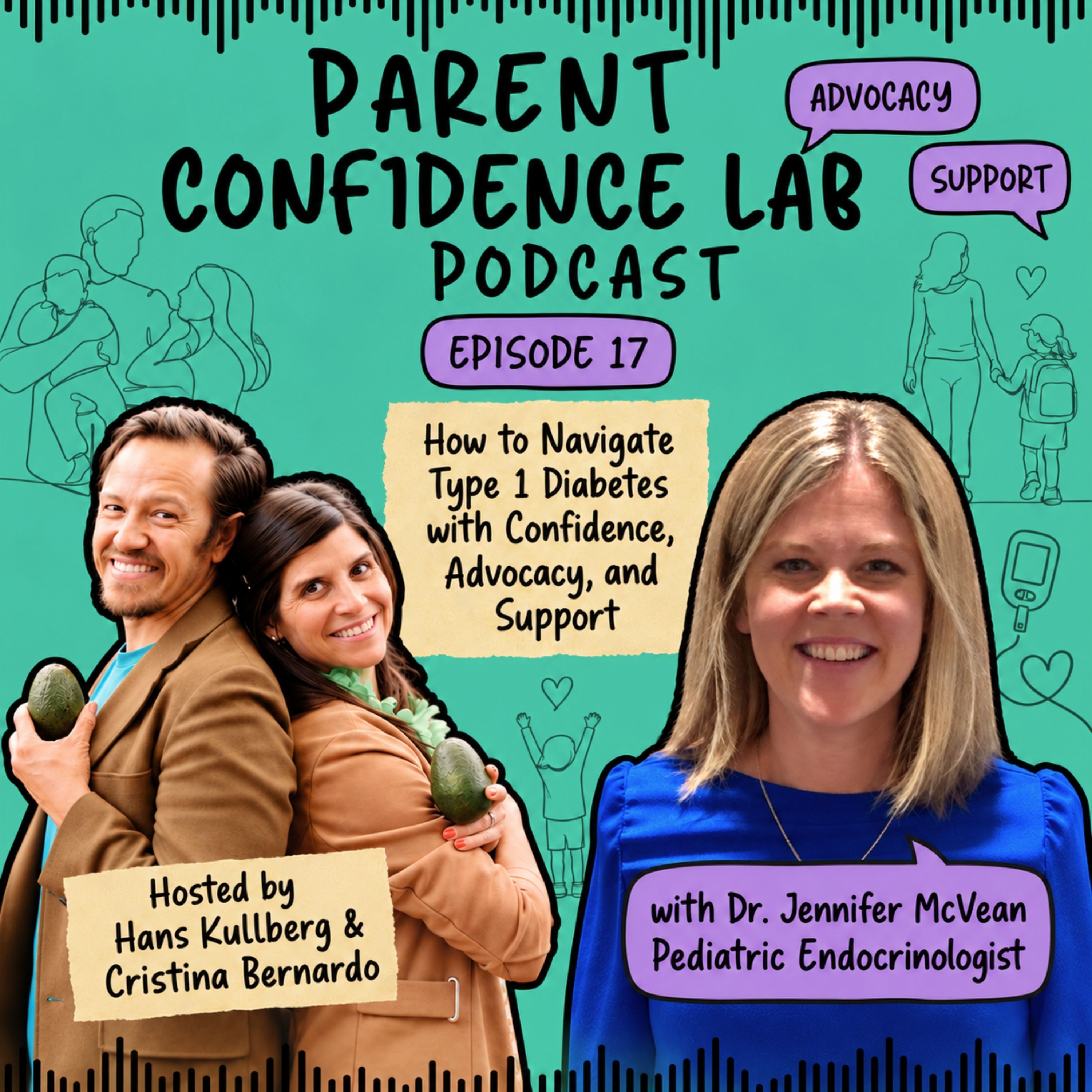 How to Navigate Type 1 Diabetes with confidence, Advocacy, and Support with Dr. Jennifer McVean 10.09.2026 46minEpisode SummaryIn this episode of Parent Confidence Lab, Hans and Christina sit down with Dr. Jennifer McVean, a board-certified pediatric endocrinologist and someone who has lived with type 1 diabetes since childhood, to discuss what families need to know when a child is diagnosed with type 1 diabetes.Dr. McVean shares her personal journey of being diagnosed at age 11 and how being excluded from activities like sleepovers and a school ski trip inspired her to become a pediatric endocrinologist. She explains the warning signs parents should watch for, the realities of managing insulin and glucose levels, and why type 1 diabetes is often an “invisible disease” because so much of the daily burden happens behind the scenes.The conversation also explores diabetes burnout, supporting children as they become more independent, reducing stigma, working with schools and coaches, and building a strong support network. Dr. McVean emphasizes that type 1 diabetes does not define a child and that, with the right support, children can continue participating in the activities and experiences they love.She also discusses advances in diabetes technology, automated insulin delivery, early detection, and the research giving families hope for the future.Key Takeaways:Parents should recognize warning signs of type 1 diabetes, including increased thirst, frequent urination, and unexplained weight loss, and seek medical care promptly.Type 1 diabetes is an autoimmune disease that requires insulin and ongoing glucose management.Much of the burden of diabetes is invisible, including the constant planning around food, exercise, school activities, and social events.Parents should advocate for their children and ask questions when something does not seem right.Children with type 1 diabetes should not be excluded from sleepovers, birthday parties, sports, school trips, or other activities.Building a village of support can help families manage the demands of diabetes and reduce parental burnout.Diabetes should be treated as a part of a child's life—not the child's identity.Mental health support can be an important part of diabetes care, particularly when children or teenagers experience stigma or diabetes burnout.Schools, teachers, coaches, grandparents, and other caregivers can become effective members of a child's support system through education and communication.Advances in continuous glucose monitoring and automated insulin delivery are helping reduce some of the daily burden of diabetes management.Dr. McVean encourages families to remain hopeful: children living with type 1 diabetes can grow up to pursue their goals, careers, relationships, and families.About Dr. Jennifer McVeanDr. Jennifer McVean is a board-certified pediatric endocrinologist who brings both professional expertise and personal experience to caring for children and families affected by type 1 diabetes. Diagnosed with type 1 diabetes herself at age 11, she went on to pursue a career in pediatric endocrinology with a particular focus on helping children live full, active lives despite their diagnosis.She earned her medical degree from the University of Minnesota Medical School, completed her pediatric residency at the University of Colorado, and completed a fellowship in pediatric endocrinology at the University of Wisconsin.Connect with Dr. Jennifer McVeanLinkedIn: linkedin.com/in/jennifer-mcvean-md-087a8313bListen & SubscribeApple PodcastsSpotifyAmazon MusicYouTubeiHeart RadioCaptivateParent Confidence Lab by Avocado Health, your parenting partner in your pocket.Enjoying the show? Subscribe to our newsletter for weekly parenting insights, episode updates, and expert parenting tips delivered straight to your inbox.Sign up here: https://avo-little-more-confidence.beehiiv.com/
 -
 Building Confidence, Belonging, and Life Skills Through Skiing and Mentorship with Seth Ehrlich 08.09.2026 43minEpisode Summary:Building confidence and meaningful relationships with children doesn't require expensive activities or elaborate adventures. In this episode of Parent Confidence Lab, Hans and Cristina sit down with Seth Ehrlich, Chief Executive Officer of SOS Outreach, to explore how shared experiences, mentorship, outdoor activities, and a strong sense of belonging can help children develop confidence, resilience, leadership skills, and a belief in their own potential.Drawing from his own lifelong connection to skiing and his work with SOS Outreach, Seth explains how shared activities create opportunities for genuine connection. SOS Outreach works with young people from fourth grade through high school graduation, using skiing and snowboarding as a foundation for mentoring, service learning, leadership development, and personal growth. The program also creates access to outdoor experiences for children who may not otherwise have the opportunity to participate.The conversation explores SOS Outreach's long-term mentorship model, including its Circle of Love, core values, service projects, and junior mentor program. Seth shares how giving young people opportunities to lead, serve their communities, and mentor others can strengthen confidence and help them recognize that they belong and are capable of pursuing opportunities they may have never imagined.Seth also offers practical advice for parents, emphasizing that meaningful connection can happen anywhere. Whether it's skiing, biking, walking, playing on the playground, or simply joining children in activities they enjoy, shared experiences can create lasting memories and strengthen family relationships. He also reflects on his own fatherhood journey and the importance of intentionally making time to connect with children while they are young.What You'll LearnWhy shared experiences can create stronger parent-child connectionsHow outdoor activities can help children build confidence and belongingWhy talent and potential may be universal while opportunity is notHow SOS Outreach gives young people access to skiing and snowboardingHow mentorship helps children develop confidence, leadership, and agencyWhy a sense of belonging is an important part of personal growthHow the Circle of Love creates connection and inclusionWhy long-term mentorship benefits both mentors and menteesHow older students can become mentors and leaders for younger childrenHow service learning helps young people make an impact in their communitiesWhy spending time outdoors can provide connection and a break from screensHow parents can connect with children through the activities they already enjoyWhy shared experiences don't have to be expensive or complicatedHow intentionally scheduled family time can create lasting memoriesWhy being present and participating with your children can matter more than simply watching themAbout Seth EhrlichSeth Ehrlich is the Chief Executive Officer of SOS Outreach, a youth development organization that uses skiing, snowboarding, mentorship, service learning, and leadership development to help young people reach their full potential.Originally from Pittsburgh, Pennsylvania, Seth developed a passion for skiing at an early age. After earning a graduate degree in nonprofit management, he and his wife moved to Colorado for hospitality work. Through a volunteer program at his hotel, Seth connected with SOS Outreach and went on to grow through multiple roles within the organization.Today, Seth focuses on building connections that enhance SOS Outreach's impact. He is also a father of two, and his own experiences skiing with his father and children have shaped his belief in the power of shared experiences, relationships, and connection.Connect with Seth EhrlichWebsite: https://sosoutreach.org/LinkedIn: linkedin.com/in/sethehrlichListen & SubscribeApple PodcastsSpotifyAmazon MusicYouTubeiHeart RadioCaptivateParent Confidence Lab by Avocado Health, your parenting partner in your pocket.Enjoying the show? Subscribe to our newsletter for weekly parenting insights, episode updates, and expert parenting tips delivered straight to your inbox.Sign up here: https://avo-little-more-confidence.beehiiv.com/
 -
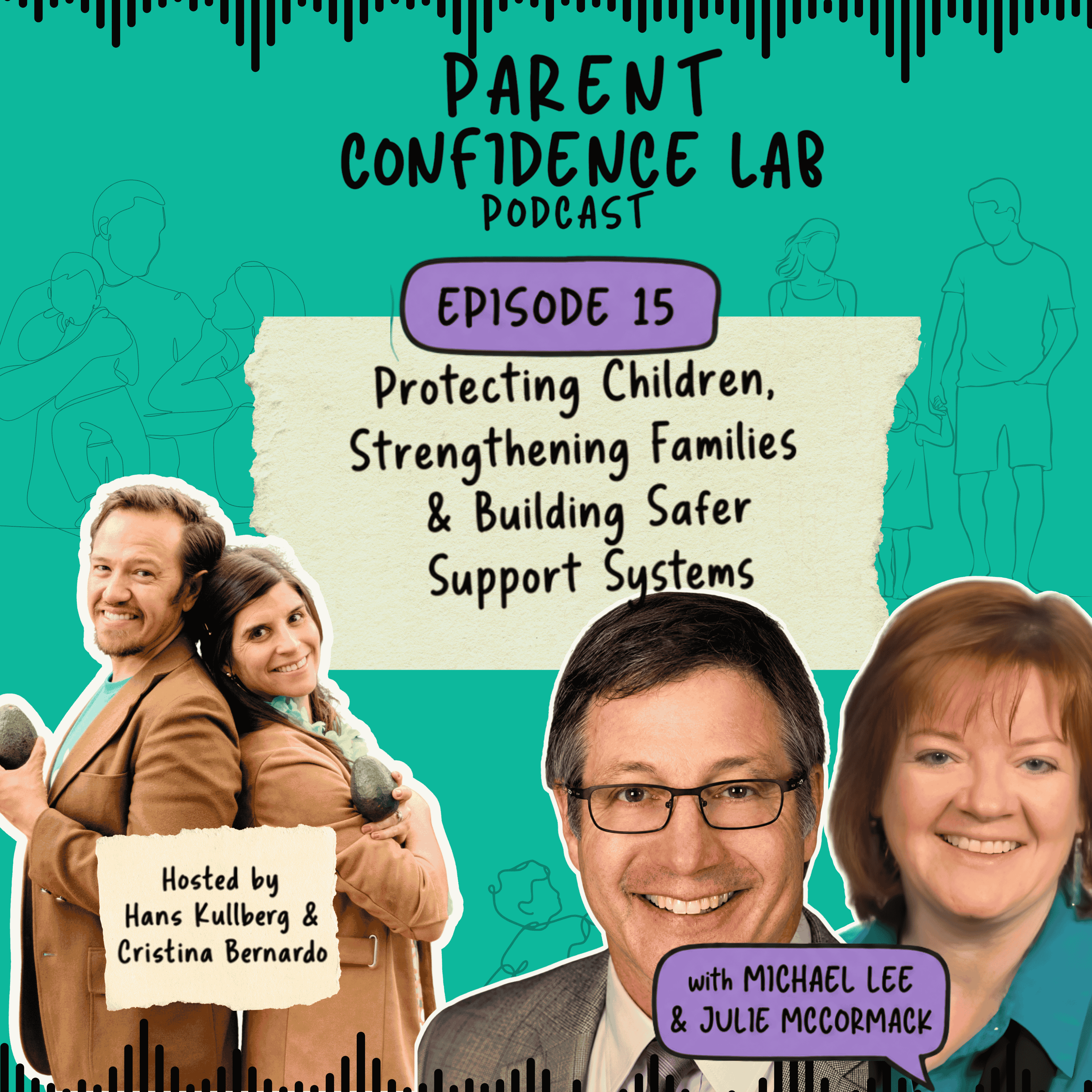 Helping Families Navigate Healthcare, Benefits, and Access to Care with Michael Lee and Julie McCormack 03.09.2026 41minEpisode Summary:Access to healthcare involves far more than what happens inside a doctor's office. In this episode of Parent Confidence Lab, Hans and Cristina sit down with Michael Lee and Julie McCormack to explore how healthcare, legal advocacy, and community partnerships can help families overcome barriers to care, public benefits, food assistance, housing, and other essential services.Michael Lee brings a healthcare perspective to the conversation, discussing how factors such as housing, food insecurity, education, employment, and access to benefits can directly affect children's health and family well-being. He explains why healthcare providers need to look beyond medical treatment and understand the broader challenges families face.Julie McCormack shares her perspective on legal advocacy and helping families navigate complicated systems and access the benefits and services available to them. Together, Michael and Julie explain how collaboration between healthcare providers, legal professionals, government agencies, and community organizations can create better outcomes for families.The conversation also explores Medicaid and MassHealth, food assistance, administrative barriers, and practical ways parents can find support. Michael and Julie emphasize that asking for help is not something families should feel ashamed of—and that knowing where to turn can make a meaningful difference.What You'll LearnWhy children's health is influenced by factors outside the doctor's officeHow housing, food insecurity, education, and employment can affect family healthHow healthcare and legal professionals can work together to support familiesWhy navigating public benefits can be challenging for parentsHow legal advocacy can help families access important servicesWhy community organizations can be valuable resources for familiesHow Medicaid and MassHealth can affect children's access to careHow administrative barriers can add stress to already challenging situationsPractical ways parents can find help with healthcare, food, and other essential needsWhy parents should not feel ashamed to ask for assistanceHow families can become stronger advocates for themselves and their childrenWhy collaboration between healthcare systems and community organizations mattersAbout Michael LeeMichael Lee is a healthcare leader whose work focuses on improving healthcare delivery, clinical integration, and access to care. His experience brings an important perspective to the conversation about how healthcare systems can better address the broader social and practical challenges affecting children and families.Connect with Michael Lee: linkedin.com/in/michael-lee-90631b10About Julie McCormackJulie McCormack works in legal advocacy and family support, helping people navigate complex systems and access benefits and services. Her work highlights the important connection between legal support, healthcare, and community resources when families face barriers to care.Connect with Julie McCormack: linkedin.com/in/juliemccormackListen & SubscribeApple PodcastsSpotifyAmazon MusicYouTubeiHeart RadioCaptivateParent Confidence Lab by Avocado Health, your parenting partner in your pocket.Enjoying the show? Subscribe to our newsletter for weekly parenting insights, episode updates, and expert parenting tips delivered straight to your inbox.Sign up here: https://avo-little-more-confidence.beehiiv.com/
 -
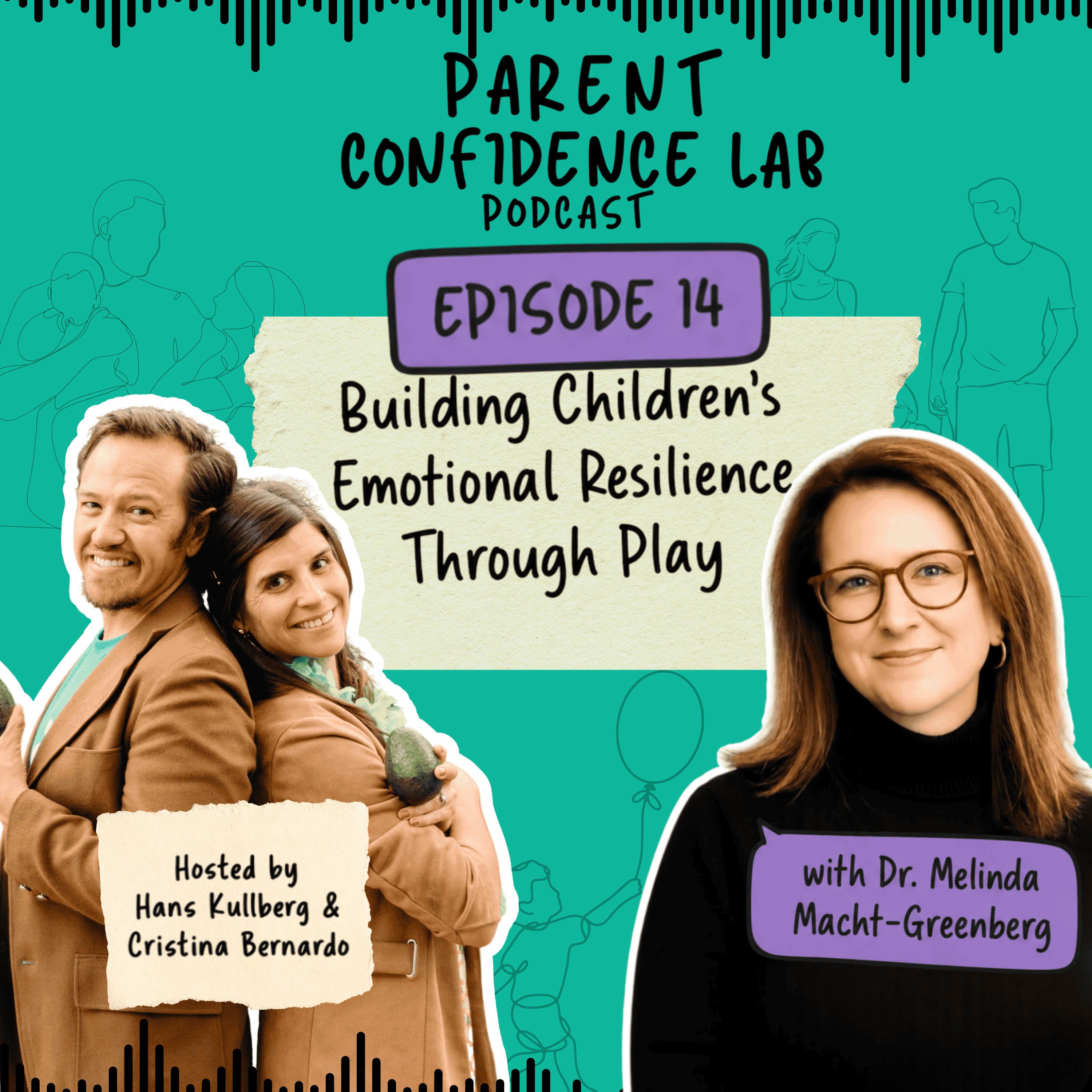 How parents Build Children's Emotional Resilience Through Play with Dr. Melinda Macht-Greenberg 01.09.2026 50minEpisode Summary:Play is more than entertainment. It is one of the most important ways children learn, communicate, manage emotions, and build relationships. In this episode of Parent Confidence Lab, Hans and Cristina sit down with Melinda Macht-Greenberg, PhD, Licensed Psychologist and Tufts University faculty member, to explore how parents can use everyday play to support children's emotional, social, and cognitive development. Melinda has more than 30 years of experience as a Clinical, Developmental, and School Psychologist, working with children, families, schools, and educators. (educationalconsultingpc.com)Melinda explains how play gives children opportunities to practice frustration tolerance, turn-taking, communication, problem-solving, creativity, and emotional regulation. She shares practical ways parents can incorporate play into everyday routines without needing expensive toys or large amounts of dedicated time—from turning laundry and cooking into playful experiences to using boxes, containers, and other household items to encourage imagination.The conversation also explores how parents can help children handle losing, disappointment, conflict, and big emotions. Melinda discusses the importance of modeling emotional regulation, previewing challenging situations, allowing children to experience frustration without immediately fixing it, and using curiosity rather than assumptions when talking about children's feelings. She also explains how play can support emotional processing and how "serve and return" interactions help build early communication, language, and social skills.What You'll LearnWhy play is essential for children's emotional, social, and cognitive developmentHow parents can use play to help children practice frustration toleranceWhy modeling your own emotional regulation teaches children how to manage theirsHow everyday activities like cooking and laundry can become playful learning opportunitiesWhy children don't need expensive or specialized toys to develop creativity and imaginationHow symbolic play supports skills children later use for reading and writingHow play can help children process emotions and prepare for major life changesWhy parents should stay curious instead of assuming they know exactly how their children feelHow to help children work through conflict and develop problem-solving skillsWhy waiting, disappointment, and frustration are important experiences for children to learn to tolerateHow previewing difficult situations can help children prepare emotionallyHow serve-and-return interactions build communication, language, and social skillsWhy parents should trust their instincts and recognize that they are experts on their own childrenAbout Melinda Macht-Greenberg, PhDMelinda Macht-Greenberg, PhD is a Licensed Psychologist and Clinical, Developmental, and School Psychologist with more than 30 years of experience supporting children, adolescents, adults, and families. She provides therapy, psychological and educational evaluations, parent-focused intervention, and educational consultation. (educationalconsultingpc.com)Melinda is a faculty member in the Eliot-Pearson Department of Child Study and Human Development at Tufts University, where she teaches and mentors students and conducts research related to child development, assessment, and special education. She also works with schools and families to support children's educational, psychological, and developmental needs. (Tufts Arts and Sciences)Through Macht-Greenberg Consulting Services, Melinda provides evaluations, therapy, parent-focused intervention, educational and school consultation, workshops, and staff training focused on improving the mental health and well-being of children, adolescents, and families. (educationalconsultingpc.com)Connect with Melinda Macht-Greenberg, PhDWebsite: educationalconsultingpc.comLinkedIn: linkedin.com/in/melinda-macht-greenberg-phd-6692a08Instagram: @Dr.MelindaMG (educationalconsultingpc.com)Listen & SubscribeApple PodcastsSpotifyAmazon MusicYouTubeiHeart RadioCaptivateParent Confidence Lab by Avocado Health, your parenting partner in your pocket.Enjoying the show? Subscribe to our newsletter for weekly parenting insights, episode updates, and expert parenting tips delivered straight to your inbox.Sign up here: https://avo-little-more-confidence.beehiiv.com/
 -
 Teaching Parents to Build Children's Coping Skills, Emotional Resilience, and Confidence with Abby Horton 25.08.2026 32minEpisode Summary:Helping children navigate big emotions is one of the greatest challenges parents face. In this episode of Parent Confidence Lab, Hans and Cristina sit down with Abby Horton, Certified Child Life Specialist and founder of Little Lighthouses Child Life Services, to explore practical ways parents can teach healthy coping skills, build emotional resilience, and confidently support children through life's everyday challenges.Drawing from more than a decade of experience helping children and families through medical procedures, trauma, and major life transitions, Abby explains why coping skills should be practiced long before stressful moments occur. She shares actionable strategies for co-regulation, creating calm-down spaces, modeling emotional expression, preparing children for transitions, and helping kids build resilience through everyday routines rather than perfection.The conversation also tackles some of parenting's toughest moments, including navigating tantrums, choosing when to hold boundaries versus offering grace, helping children process disappointment, and understanding how parents' own emotional regulation shapes their children's ability to manage stress. Abby reminds parents that resilience isn't built by avoiding difficult emotions, but by walking through them together with compassion and consistency.What You'll LearnWhy coping skills should be practiced before stressful situations occurHow parents can co-regulate their children's emotions during difficult momentsWhy crying is often a healthy form of emotional copingPractical ways to teach deep breathing, visualization, and sensory regulationHow calm-down corners and coping toolkits support emotional developmentWhy preparation and predictable routines reduce anxiety and tantrumsHow to balance boundaries with flexibility during emotional outburstsEveryday strategies for building resilience and independenceWhy modeling your own emotions helps children regulate theirsHow being present during difficult moments strengthens long-term confidence and trustAbout Abby HortonAbby Horton is a Certified Child Life Specialist with more than a decade of experience helping children and families navigate medical experiences, trauma, life transitions, and everyday parenting challenges. She is the founder of Little Lighthouses Child Life Services, where she provides practical guidance, emotional support, and evidence-based strategies that empower parents to confidently support their children's emotional well-being and development.Connect with Abby HortonWebsite: https://www.littlelighthouseschildlife.com/LinkedIn: linkedin.com/in/abigail-horton-27012b61Instagram:https://www.instagram.com/littlelighthouseschildlife/Listen & SubscribeApple PodcastsSpotifyAmazon MusicYouTubeiHeart RadioCaptivateParent Confidence Lab by Avocado Health, your parenting partner in your pocket.Enjoying the show? Subscribe to our newsletter for weekly parenting insights, episode updates, and expert parenting tips delivered straight to your inbox.Sign up here: https://avo-little-more-confidence.beehiiv.com/
 -
 Navigating the Fourth Trimester, Strengthening Relationships, and Protecting Your Mental Health with Jennifer C. Williams 18.08.2026 39minEpisode Summary:The weeks after bringing home a new baby can be some of the most joyful, and overwhelming, moments in a parent's life. In this episode of Parent Confidence Lab, Hans and Cristina welcome Jennifer C. Williams, Licensed Clinical Professional Counselor (LCPC), Certified Perinatal Mental Health (PMH-C) professional, Certified Parent Leave Coach, and founder of Pass GO! Therapy and Coaching, to discuss why the often-overlooked "fourth trimester" deserves just as much attention as pregnancy itself.Drawing from nearly two decades of clinical experience supporting individuals, couples, and families, Jennifer explains how postpartum depression, anxiety, OCD, and other perinatal mental health conditions affect both mothers and fathers. She shares practical guidance for creating a postpartum plan, preparing couples for the emotional transition into parenthood, improving communication, setting healthy expectations with family members, and recognizing when professional support is needed.The conversation also explores how parents can build stronger partnerships during one of life's biggest transitions, why giving yourself and your partner grace is essential, and how proactive mental health support can help families thrive long after the baby arrives. Jennifer also discusses her children's book, If My Depression Had a Name, and her mission to help children and parents better understand emotional wellness through compassionate storytelling. (Pass Go! Therapy and Coaching)What You'll LearnWhat the "fourth trimester" is and why it matters for every familyThe difference between baby blues and postpartum mood disordersHow postpartum depression, anxiety, OCD, and psychosis can affect new parentsWhy fathers can also experience postpartum depressionHow to build a practical postpartum plan before your baby arrivesWays couples can communicate expectations before bringing baby homeWhy giving your partner grace strengthens your relationship during postpartumHow grandparents and loved ones can provide meaningful supportWarning signs that indicate it's time to seek professional mental health careWhy early mental health support helps parents navigate major life transitions with confidenceAbout Jennifer C. WilliamsJennifer C. Williams, LCPC, PMH-C, is a Licensed Clinical Professional Counselor, Certified Perinatal Mental Health specialist, Certified Parent Leave Coach, and founder of Pass GO! Therapy and Coaching. With nearly 20 years of clinical experience, she helps individuals, couples, parents, and professionals regulate stress, strengthen relationships, and navigate life's biggest transitions through her proprietary Pass Go Regulation Method™. Jennifer is also trained in trauma treatment, the Gottman Method, Emotionally Focused Therapy (EFT), Internal Family Systems (IFS), and Intimacy From the Inside Out (IFIO) for couples. She is the author of the children's book If My Depression Had a Name, which helps children and families better understand depression and emotional wellness. (Pass Go! Therapy and Coaching).Connect with Jennifer C. WilliamsLinkedIn: linkedin.com/in/jennifercwilliamsdcWebsite: passgolife.comRelationship Quiz: quiz.passgolife.comListen & SubscribeApple PodcastsSpotifyAmazon MusicYouTubeiHeart RadioCaptivateParent Confidence Lab by Avocado Health, your parenting partner in your pocket.Enjoying the show? Subscribe to our newsletter for weekly parenting insights, episode updates, and expert parenting tips delivered straight to your inbox.Sign up here: https://avo-little-more-confidence.beehiiv.com/
 -
 Helping Parents Recognize Mental Health Early, Break Stigma, and Raise Emotionally Resilient Kids with Dr. Leena Khanzode 11.08.2026 43minEpisode Summary:Supporting children's mental health has never been more important, or more challenging. In this episode of Parent Confidence Lab, Hans and Cristina welcome Dr. Leena Khanzode, a board-certified Child, Adolescent, and Adult Psychiatrist, founder of Silicon Valley Psychiatry, founder and Executive Director of the Taarika Foundation, and Adjunct Clinical Assistant Professor at Stanford University School of Medicine, to discuss how parents can recognize mental health concerns early and confidently support their children's emotional well-being.Drawing from both her professional expertise and deeply personal experience growing up with parents affected by bipolar disorder, Dr. Khanzode shares why early identification and intervention can dramatically improve a child's quality of life. She explains how anxiety, depression, ADHD, autism spectrum disorder, and the lasting effects of the COVID-19 pandemic are affecting children at increasingly younger ages, and why education and awareness are essential for parents.The conversation also explores practical strategies for recognizing early warning signs, reducing the stigma surrounding mental illness, navigating smartphones and social media, setting healthy technology boundaries, understanding the opportunities and limitations of AI in mental healthcare, and helping children build confidence and healthy body image. Throughout the episode, Dr. Khanzode reminds parents that mental health deserves the same attention and compassion as physical health—and that informed, supportive parents are one of the greatest protective factors a child can have.What You'll LearnWhy early intervention can significantly improve children's mental health outcomesCommon warning signs of anxiety, depression, ADHD, and autism spectrum disorderHow parents can recognize when behavioral changes require professional supportWhy education helps families reduce the stigma surrounding mental illnessThe lasting impact of the COVID-19 pandemic on children's emotional developmentPractical ways to support children experiencing anxiety and depressionHealthy strategies for managing smartphones, social media, and screen timeWhy creating family technology boundaries benefits children's mental healthThe benefits and limitations of AI tools for mental health supportHow parents can foster healthy body image, confidence, and emotional resilienceAbout Dr. Leena KhanzodeDr. Leena Khanzode is a board-certified Child, Adolescent, and Adult Psychiatrist and the Founder of Silicon Valley Psychiatry. She is also the Founder and Executive Director of the Taarika Foundation, a nonprofit organization dedicated to promoting mental health awareness, reducing stigma, and providing education and early intervention resources for children, adolescents, parents, educators, and communities.In addition to her clinical practice, Dr. Khanzode serves as an Adjunct Clinical Assistant Professor in the Department of Psychiatry and Behavioral Sciences, Child & Adolescent Psychiatry and Child Development at Stanford University School of Medicine. Through her work in clinical care, education, nonprofit leadership, and public advocacy, she is committed to helping families build resilience and improve lifelong mental wellness.Connect with Dr. Leena KhanzodeLinkedIn: linkedin.com/in/leena-khanzode-5249891b4Taarika Foundation: taarika.foundationSilicon Valley Psychiatry: siliconvalleypsychiatry.comMindful, Beautiful & Thriving PodcastStanford University Faculty ProfileListen & SubscribeApple PodcastsSpotifyAmazon MusicYouTubeiHeart RadioCaptivateParent Confidence Lab by Avocado Health, your parenting partner in your pocket.Enjoying the show? Subscribe to our newsletter for weekly parenting insights, episode updates, and expert tips delivered straight to your inbox.Sign up here: https://avo-little-more-confidence.beehiiv.com/
 -
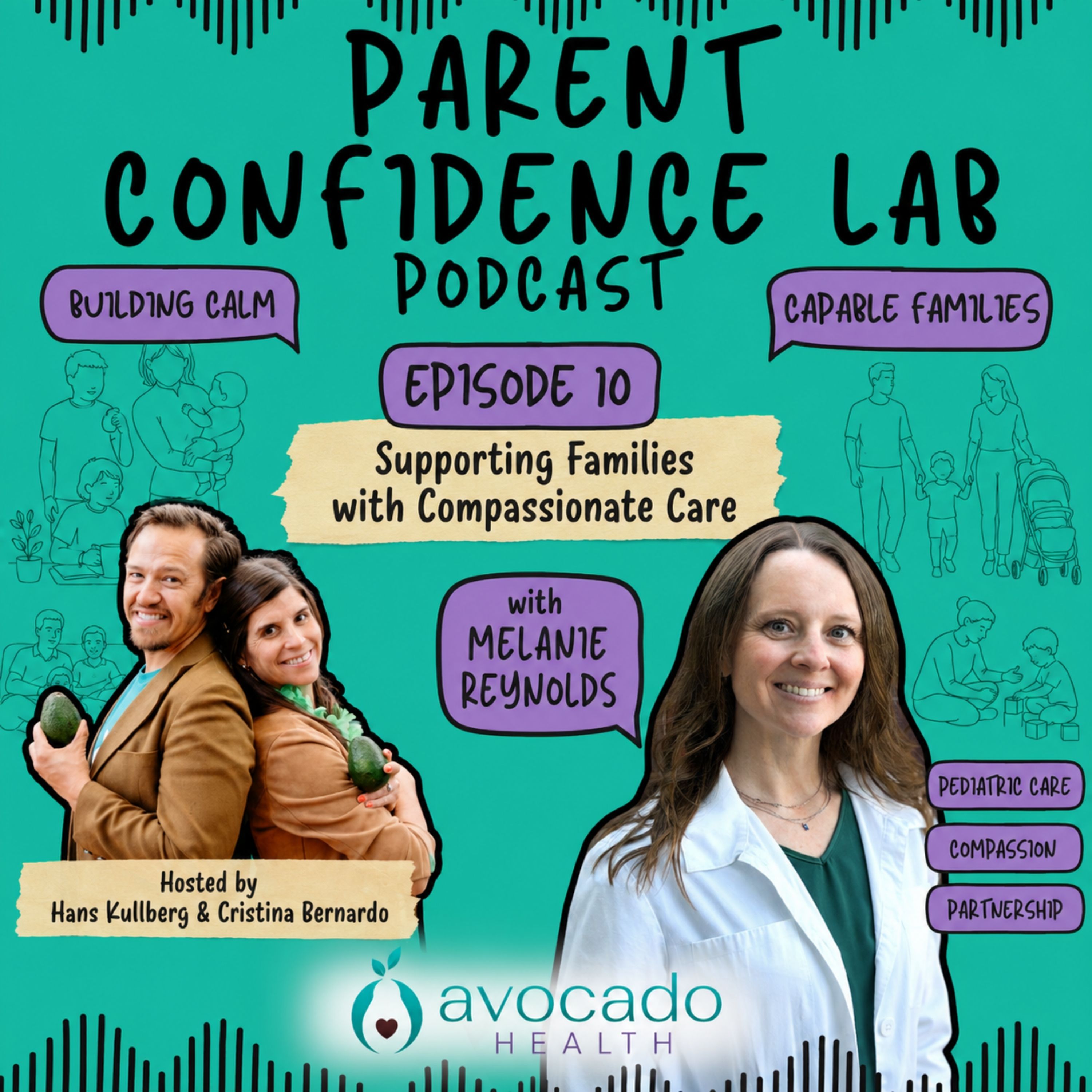 Advancing Pediatric Palliative Care, Supporting Healthcare Providers, and Helping Parents Become Stronger Advocates for Their Children with Dr. Melanie Reynolds 28.07.2026 27minEpisode Summary:Supporting a child through a serious illness is one of the greatest challenges any parent can face. In this episode of Parent Confidence Lab, Hans and Cristina welcome Melanie Reynolds, MS, APRN, NPD-BC, CPNP-AC/PC, a pediatric palliative care nurse practitioner, healthcare educator, and advanced practice leader at Children's Hospital Los Angeles, for an inspiring conversation about compassionate care, parent advocacy, and building stronger healthcare partnerships.Drawing from her years of experience in pediatric intensive care, cardiac intensive care, pain management, and pediatric palliative care, Melanie shares the personal experience that inspired her career and explains how palliative care focuses on improving quality of life—not simply end-of-life care. Through powerful patient stories, she illustrates how thoughtful pain management, creative problem-solving, and family-centered care can help children spend meaningful time with the people they love.The conversation also explores the emotional realities of caring for critically ill children, how becoming a mother changed Melanie's perspective as a clinician, and why supporting healthcare providers is essential to delivering better patient outcomes. Melanie discusses her work developing Children's Hospital Los Angeles' Advanced Practice Provider Fellowship, mentoring future nurse practitioners and physician associates, and creating psychologically safe environments that reduce burnout and improve patient care.For parents, Melanie offers practical guidance on trusting their instincts, communicating openly with medical teams, advocating confidently for their children, and embracing the moments that matter most, even during life's most difficult seasons.What You'll LearnWhat pediatric palliative care really means beyond end-of-life careWhy effective pain management can dramatically improve a child's quality of lifeHow one young patient's experience inspired Melanie's career in pediatric palliative careWhy parents are the most valuable members of their child's healthcare teamHow sharing your observations helps providers make better clinical decisionsThe importance of trusting your instincts when something feels wrongHow collaboration between families and healthcare providers improves patient outcomesWhat healthcare organizations can do to support providers and reduce burnoutWhy psychological safety and mentorship are essential for developing future healthcare leadersSimple mindfulness techniques, including the "Awe Walk," for managing stress and building resilienceHow becoming a parent transformed Melanie's approach to caring for children and familiesAbout Melanie ReynoldsMelanie Reynolds, MS, APRN, NPD-BC, CPNP-AC/PC, is a pediatric palliative care nurse practitioner and healthcare leader at Children's Hospital Los Angeles. She serves as the APP Fellowship Director and Senior Advanced Practice Professional Development Specialist, where she leads programs that support education, professional development, and provider well-being for advanced practice clinicians. Passionate about compassionate pediatric care, mentorship, and family-centered healthcare, Melanie is dedicated to helping children, families, and healthcare providers thrive together.Connect with Melanie ReynoldsLinkedIn: linkedin.com/in/melaniewreynoldsListen & SubscribeApple PodcastsSpotifyAmazon MusicYouTubeiHeart RadioCaptivateParent Confidence Lab by Avocado Health, your parenting partner in your pocket.Enjoying the show? Subscribe to our newsletter for weekly parenting insights, episode updates, and expert tips straight to your inbox.Sign up here: https://avo-little-more-confidence.beehiiv.com/
 -
 Helping Parents Build Trust, Navigate Modern Healthcare, and Raise Healthier Children with Dr. Steven Abelowitz 21.07.2026 38minEpisode Summary:Making informed healthcare decisions for children has never been more challenging. Between online information, changing medical recommendations, and the growing role of technology, parents often find themselves searching for trusted guidance. In this episode of Parent Confidence Lab, Hans and Cristina welcome Dr. Steven Abelowitz, board-certified pediatrician, physician executive, healthcare entrepreneur, founder and Medical Director of Ocean Pediatrics, and father of three, to discuss how parents can confidently navigate today's pediatric healthcare landscape while building lifelong partnerships with their child's physician.Drawing from nearly three decades of clinical experience, Dr. Abelowitz explains why continuity of care and strong relationships between pediatricians and families lead to better health outcomes. He shares practical advice on preparing for medical appointments, asking better questions, evaluating healthcare information online, making informed decisions about vaccinations, recognizing early signs of anxiety and depression, and balancing children's use of technology and social media.The conversation also explores the opportunities and challenges artificial intelligence brings to healthcare, why physician-led care remains essential despite technological advances, and how parents can create a positive home environment that fosters resilience, confidence, and emotional well-being. Reflecting on both his medical career and his own parenting journey, Dr. Abelowitz reminds parents that learning, adapting, and trusting the right resources are key to raising healthy, thriving children.What You'll LearnWhy finding a trusted pediatrician creates better long-term health outcomesHow parents can prepare for pediatric visits and ask more meaningful questionsWhy collaboration between physicians and parents improves medical decision-makingPractical ways to identify reliable medical information and avoid misinformationWhat parents should know about vaccines and evidence-based healthcare decisionsHealthy approaches to managing children's screen time and social media useHow pediatricians recognize early signs of anxiety, depression, and behavioral health concernsThe benefits and limitations of artificial intelligence in pediatric healthcareParenting strategies for handling tantrums, emotional regulation, and difficult momentsWhy creating a positive, trusting family environment helps children build lifelong confidence and resilienceAbout Dr. Steven AbelowitzDr. Steven Abelowitz, MD, FAAP, is a board-certified pediatrician, physician executive, and founder and Medical Director of Ocean Pediatrics in Orange County, California. With nearly 30 years of experience, he is passionate about providing relationship-based pediatric care and helping families make informed healthcare decisions. Dr. Abelowitz previously founded Coastal Kids Medical Group, one of Southern California's largest independent pediatric organizations, and currently serves as an Adjunct Professor at the USC Keck School of Medicine. As a husband and father of three, he combines decades of clinical expertise with firsthand parenting experience to help children and families thrive.Connect with Dr. Steven AbelowitzLinkedIn: linkedin.com/in/steven-abelowitz-md-faap-a5b0b01bOcean Pediatrics: ocean-pediatrics.comListen & SubscribeApple PodcastsSpotifyAmazon MusicYouTubeiHeart RadioCaptivateParent Confidence Lab by Avocado Health, your parenting partner in your pocket.Enjoying the show? Subscribe to our newsletter for weekly parenting insights, episode updates, and expert tips straight to your inbox.Sign up here: https://avo-little-more-confidence.beehiiv.com/
 -
 Empowering Parents to Advocate for Their Children with Better Healthcare, AI, and Confidence with Dr. Zaid Fadul 14.07.2026 30minEpisode Summary:Navigating today's healthcare system can feel overwhelming for parents, especially when they're trying to make the best decisions for their children. In this episode of Parent Confidence Lab, Hans and Cristina welcome Dr. Zaid Fadul, a Harvard-trained physician, healthcare innovator, CEO of Bespoke Concierge MD, and proud father of four, to discuss how parents can become stronger advocates for their children's health while embracing new technologies like artificial intelligence.Drawing from his experience in family medicine, addiction medicine, concierge healthcare, and military service as a U.S. Air Force Reserve flight surgeon, Dr. Fadul explains why healthcare works best when physicians and parents become collaborative partners. He shares practical advice on improving health literacy, asking better questions during medical appointments, using AI responsibly to understand diagnoses, and trusting parental instincts when something feels wrong.The conversation also dives into parenting itself—from raising emotionally resilient children and navigating technology addiction to balancing discipline with compassion. Dr. Fadul offers honest reflections on fatherhood, longevity, apologizing to your children, and why forgiving yourself as a parent is just as important as being patient with your kids.What You'll LearnWhy parents are their child's most important healthcare advocateHow trusting your instincts can lead to earlier diagnosis and better outcomesThe importance of health literacy in making informed medical decisionsHow AI can help parents understand medical information without replacing physiciansBest practices for using AI safely and responsibly for healthcare questionsWhy collaboration between doctors and parents leads to better careHow to recognize the root causes behind childhood and teenage addictionsPractical parenting strategies for discipline, communication, and emotional resilienceWhy apologizing to your children builds trust and healthy relationshipsHow self-compassion helps parents become more confident over timeAbout Dr. Zaid FadulDr. Zaid Fadul is a dual board-certified physician in Family Medicine and Addiction Medicine, a Harvard-trained healthcare leader, and CEO of Bespoke Concierge MD. He also serves as a Flight Surgeon with the U.S. Air Force Reserve and is passionate about simplifying healthcare through education, technology, and patient empowerment. As a husband and father of four, Dr. Fadul combines clinical expertise with real-world parenting experience to help families become more informed, confident advocates for their children's health.Connect with Dr. Zaid FadulLinkedIn: linkedin.com/in/drfadulYouTube: https://www.youtube.com/@drzaidfadulBecome a Patient: shop.bespokeconciergemd.comInstagram: instagram.com/drzaidfadulTikTok: tiktok.com/@drzaidfadulmdBespoke Concierge MD: bespokeconciergemd.comListen & SubscribeApple PodcastsSpotifyAmazon MusicYouTubeiHeart RadioCaptivateParent Confidence Lab by Avocado Health, your parenting partner in your pocket.Enjoying the show? Subscribe to our newsletter for weekly parenting insights, episode updates, and expert tips straight to your inbox.Sign up here: https://avo-little-more-confidence.beehiiv.com/
 -
 Supporting Your Teen's Mental Health Through Nature and Community with Dr. Nora Dennis 30.06.2026 41minEpisode Summary:Mental health challenges among young people continue to rise, leaving many parents searching for approaches that go beyond traditional treatment. In this episode of Parent Confidence Lab, Hans and Cristina sit down with Dr. Nora Dennis, psychiatrist, addiction medicine physician, and founder of Jubilee Healing Farm, to explore a new model of healing rooted in nature, community, and human connection.Drawing from her experience leading behavioral health within the healthcare system, Dr. Dennis explains why she left conventional medicine to create a healing farm where movement, sunlight, sleep, meaningful relationships, and time outdoors are integrated into mental health care. She shares how loneliness, excessive screen time, disrupted routines, and social isolation have contributed to the growing youth mental health crisis—and why rebuilding connection is essential for lasting recovery.The conversation explores practical strategies parents can use to support their children, including creating healthy routines, encouraging outdoor play, reducing screen dependence, fostering gratitude, and finding meaningful ways to reconnect with teenagers. Dr. Dennis also discusses the science behind social connection, mirror neurons, forest bathing, and why healing happens best when people experience belonging within a supportive community.What You'll LearnWhy nature plays a powerful role in mental health and emotional healingHow excessive screen time contributes to anxiety, depression, and isolationWhy routines around sleep, meals, movement, and social connection improve mental wellnessThe importance of community and shared healing in recoveryHow loneliness impacts teenagers and emerging adultsWhy gratitude, wonder, and play strengthen emotional resilienceHow parents can reconnect with teens through shared activities instead of constant conversationThe science behind mirror neurons and face-to-face human connectionWhy movement and exercise can be as effective as medication for some forms of depressionHow holistic care addresses the whole person—not just symptomsAbout Nora DennisDr. Nora Dennis is a board-certified psychiatrist and addiction medicine physician with a background in maternal and child health. She is the founder of Jubilee Healing Farm, an innovative mental health clinic in North Carolina that combines evidence-based psychiatric care with nature, community, and holistic wellness practices. Through her work, Dr. Dennis is helping young adults and families discover new pathways toward resilience, healing, and human flourishing.Connect with Nora DennisWebsite: https://www.jubileehealingfarm.org/LinkedIn: https://www.linkedin.com/in/nora-dennis/Listen & SubscribeApple PodcastsSpotifyAmazon MusicYouTubeiHeart RadioCaptivateParent Confidence Lab by Avocado Health, your parenting partner in your pocket.Enjoying the show? Subscribe to our newsletter for weekly parenting insights, episode updates, and expert tips straight to your inbox.Sign up here: https://avo-little-more-confidence.beehiiv.com/
 -
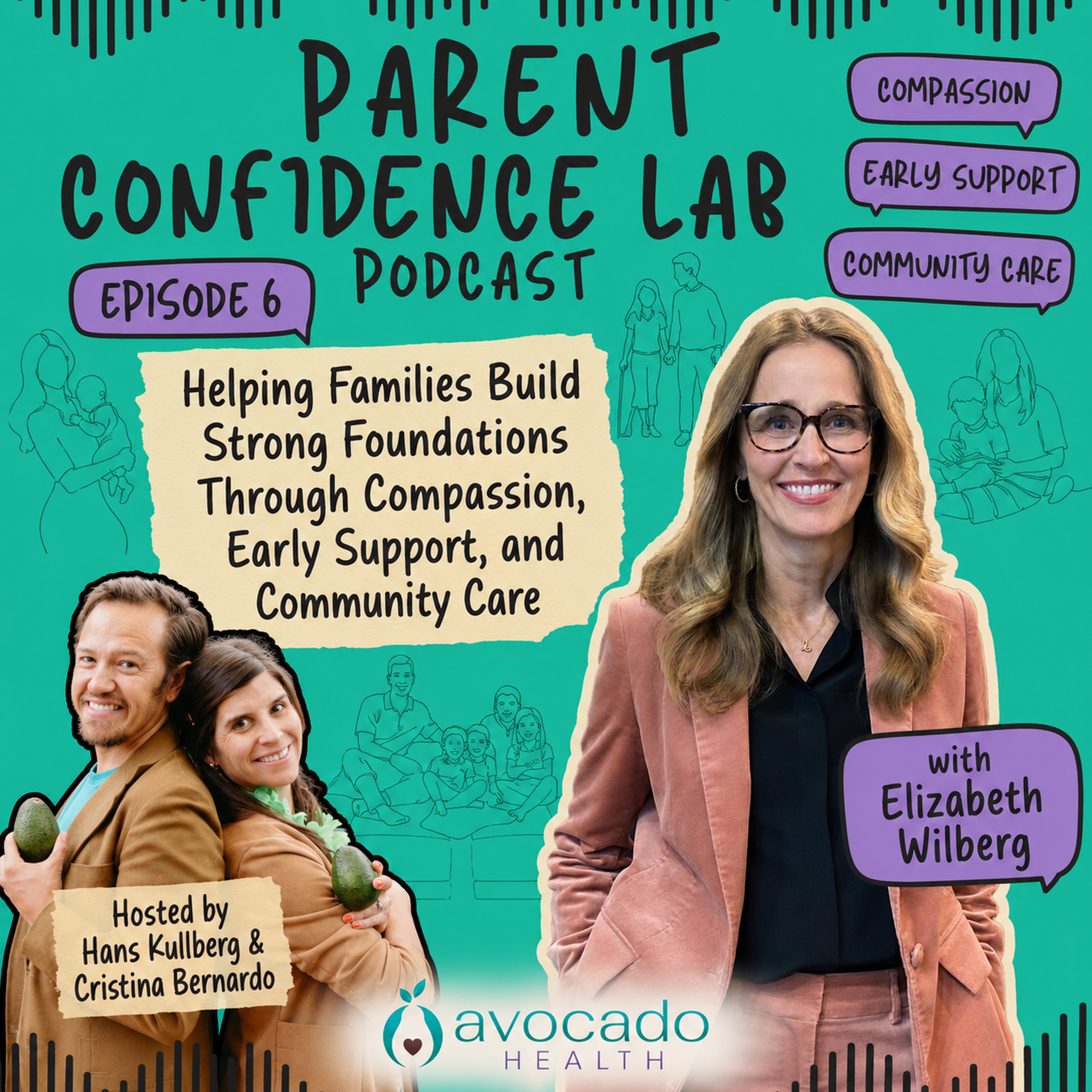 Building Strong Family Foundations Through Compassion and Community with Elizabeth Wilberg 24.06.2026 37minEpisode Summary: Parenting often requires balancing hope, resilience, and perseverance through both everyday challenges and life’s most difficult moments. Elizabeth Wilberg joins Hans and Cristina on the Parent Confidence Lab podcast to share her journey as a mother, nonprofit leader, and advocate for children and families. As Executive Director of Episcopal Community Services in San Diego, Elizabeth oversees programs that support early childhood education, children’s mental health, homelessness prevention, substance use recovery, and family stability.Elizabeth discusses how her own path to motherhood through adoption and IVF shaped her perspective on parenting, leadership, and community service. She explains why supporting children early in life can change the trajectory of entire families and how compassion, connection, and belonging are at the heart of effective family support programs. The conversation also explores grief, infertility, resilience, optimism, and the importance of showing up for people during life’s hardest seasons.What You’ll LearnWhy early childhood intervention can create lifelong positive outcomesHow strong family support helps children thriveThe role compassion plays in effective social servicesWhy optimism and an abundance mindset can strengthen resilienceHow adoption and IVF shaped Elizabeth’s parenting journeyThe importance of supporting parents alongside their childrenWhy showing up matters when loved ones are experiencing grief or lossHow Head Start programs help children develop academically and emotionallyThe value of inclusion, belonging, and community in child developmentWhy trusting your instincts is one of the most important parenting skillsAbout Elizabeth WilbergElizabeth Wilberg is a nonprofit executive, writer, mother, and community advocate. She serves as Executive Director of Episcopal Community Services in San Diego, where she leads programs that support thousands of children, adults, and families each year. Through her work and writing, Elizabeth focuses on creating opportunities for families to build stability, resilience, and brighter futures.Connect with ElizabethLinkedIn: linkedin.com/in/elizabethwilbergBlog: https://substack.com/@elizabethwilbergListen & SubscribeApple PodcastsSpotifyAmazon MusicYouTubeiHeart RadioCaptivateParent Confidence Lab by Avocado Health, your parenting partner in your pocket.Enjoying the show? Subscribe to our newsletter for weekly parenting insights, episode updates, and expert tips straight to your inbox.Sign up here: https://avo-little-more-confidence.beehiiv.com/
 -
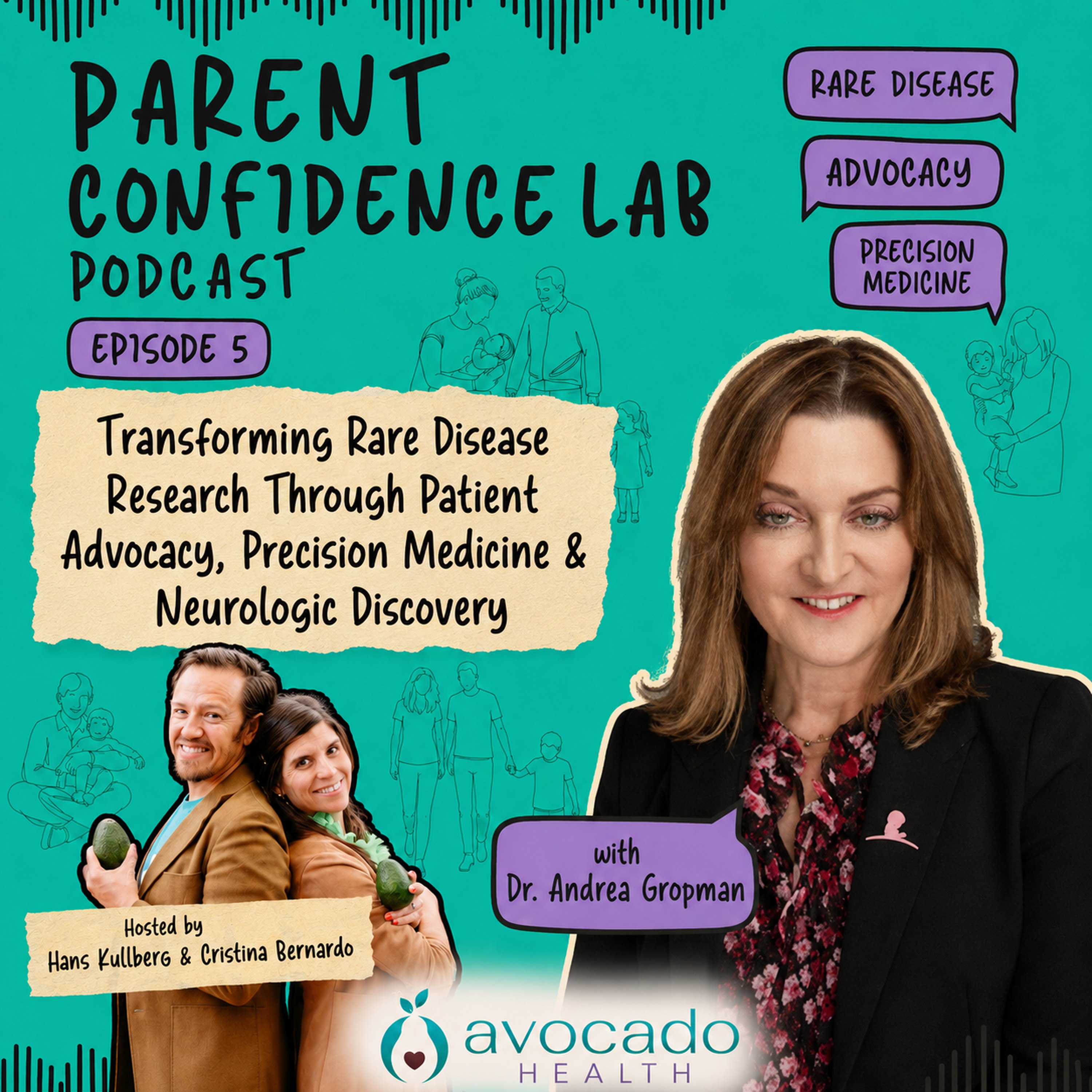 What Parents Should Know About Rare Disease Research and Advocacy with Andrea Gropman 23.06.2026 50minEpisode Summary Rare diseases often leave families searching for answers in a system that doesn’t always recognize what’s happening. On this episode of Parent Confidence Lab, Hans and Cristina sit down with Dr. Andrea Gropman, pediatric neurologist, researcher, and leader in neurometabolic medicine, to discuss how patient stories, family advocacy, and scientific innovation are changing the future of rare disease diagnosis and treatment.Drawing from more than two decades of research in urea cycle disorders and other rare metabolic conditions, Dr. Gropman explains how listening closely to families has led to groundbreaking discoveries, improved diagnostic approaches, and new therapies that are helping patients live not only longer, but better. She shares insights into genetic testing, personalized medicine, postpartum presentations of rare disorders, and why parents should trust their instincts when something feels wrong.This conversation is both an educational deep dive into rare disease medicine and a powerful reminder of the role parents play in driving medical progress.What You’ll LearnHow a single patient inspired Dr. Gropman’s career in rare disease researchWhat urea cycle disorders are and how they affect the brainWhy many rare disease symptoms are missed or misdiagnosedHow patient advocacy groups have accelerated treatment developmentThe role of MRI imaging in understanding rare neurologic disordersWhy some women previously considered “carriers” actually experience symptomsHow genetic testing and whole genome sequencing are transforming diagnosisWhy parent observations are often critical diagnostic dataThe challenges families face accessing rare disease treatments and testingHow personalized medicine and gene-editing therapies are changing the future of careWhy parents should continue advocating when they know something isn’t rightHow family stories often reveal what medical tests cannotAbout Dr. Andrea GropmanDr. Andrea Gropman is a pediatric neurologist, physician-scientist, and internationally recognized expert in neurometabolic and rare genetic disorders. She serves as Director of the Neurometabolic Translational Research Program and holds the Mark Tamer Endowed Chair for Pediatric Neurology at St. Jude Children's Research Hospital. Her research focuses on understanding how rare metabolic diseases affect the brain and developing innovative approaches to improve diagnosis, treatment, and quality of life for patients and families.For more than 20 years, Dr. Gropman has worked alongside patient advocacy organizations, researchers, and clinicians to advance therapies for rare diseases, including urea cycle disorders. Her work has helped redefine disease understanding, improve patient outcomes, and support the development of emerging precision medicine approaches.Connect with Dr. Andrea GropmanLinkedIn: Dr. Andrea GropmanListen & SubscribeApple PodcastsSpotifyAmazon MusicYouTubeiHeart RadioCaptivateParent Confidence Lab by Avocado Health, your parenting partner in your pocket.Enjoying the show? Subscribe to our newsletter for weekly parenting insights, episode updates, and expert tips straight to your inbox.Sign up here: https://avo-little-more-confidence.beehiiv.com/
 -
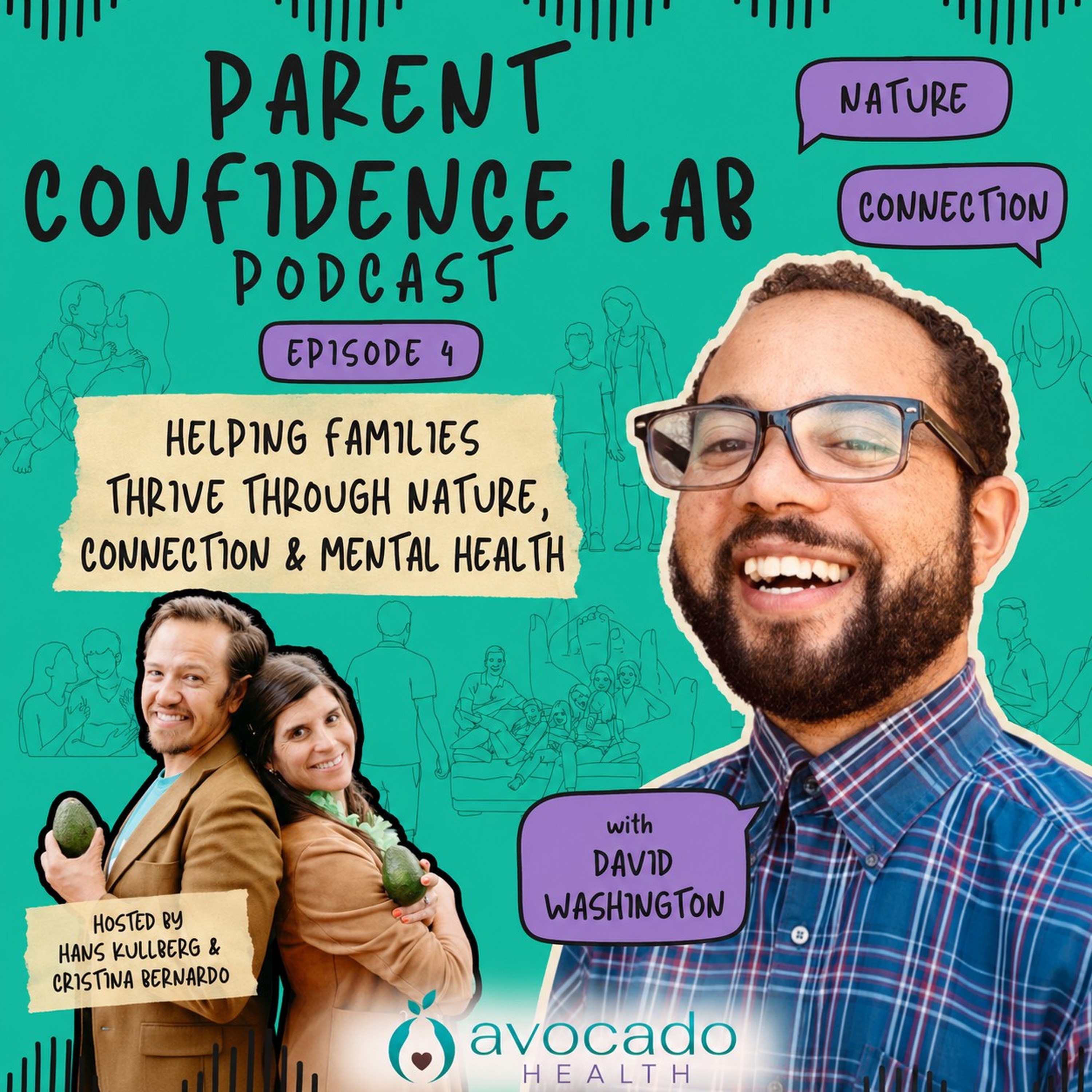 Using Nature and Connection to Help Your Family Thrive with David Washington 16.06.2026 48minEpisode SummaryParenting can be overwhelming, especially when stress, anxiety, grief, and emotional challenges affect the entire family system. David Washington joins Hans and Cristina on the Parent Confidence Lab podcast to discuss how nature, connection, and nervous system regulation can support healthier relationships between parents and children. As a licensed clinical social worker and CEO and co-founder of The Planted Brain, David combines traditional mental health practices with horticultural therapy and trauma-informed care to help individuals and families heal.From the science behind nature's impact on the nervous system to the importance of parental regulation, attachment, and fatherhood mental health, David shares practical strategies parents can use to create stronger connections with themselves, their children, and their communities. The conversation also explores postpartum depression in both mothers and fathers, the role of neuroplasticity in changing behaviors, and how simple shared experiences can strengthen family bonds.What You'll LearnHow nature and horticulture can support emotional regulation and mental healthWhy nervous system safety is essential for healing and connectionThe role of polyvagal theory in understanding stress, anxiety, and traumaHow parents' emotional states influence their children's behaviorWhat mirror neurons teach us about connection and co-regulationWhy parental self-regulation is one of the greatest gifts you can give your childHow neuroplasticity helps parents create healthier behavioral patternsThe importance of attachment and connection in early childhood developmentWhy fathers can experience postpartum depression and emotional challengesPractical ways parents can connect with children through shared experiences and everyday activitiesHow nature-based activities can strengthen family relationships and emotional well-beingWhy prioritizing self-care helps parents better support their childrenAbout David WashingtonDavid Washington is a licensed clinical social worker, therapist, and the CEO and co-founder of The Planted Brain, a 501(c)(3) nonprofit mental health organization dedicated to increasing access to culturally responsive mental health services for historically marginalized and under-resourced communities. Through a unique combination of trauma-informed care, psychotherapy, horticultural therapy, and nature-based healing practices, David helps individuals and families build resilience, strengthen relationships, and improve emotional well-being.Connect with DavidHeadway: https://care.headway.co/providers/david-washingtonThe Planted Brain: theplantedbrain.orgListen & SubscribeApple PodcastsSpotifyAmazon MusicYouTubeiHeart RadioCaptivateParent Confidence Lab by Avocado Health, your parenting partner in your pocket.Enjoying the show? Subscribe to our newsletter for weekly parenting insights, episode updates, and expert tips straight to your inbox.Sign up here: https://avo-little-more-confidence.beehiiv.com/
 -
 How to Set Boundaries as a Working Parent Without the Guilt with Sara Sweat 15.06.2026 27minEpisode SummaryBalancing work, parenting, and personal well-being can leave many parents feeling exhausted and stretched too thin. Sara Sweat joins Hans and Cristina on the Parent Confidence Lab podcast to discuss why healthy boundaries are essential for working parents and how they can be used to protect time, energy, and family connection. Drawing from her experience as a trauma-informed coach and founder of Monarch, Sara explains the difference between boundaries, expectations, standards, and rules while offering practical tools parents can use immediately.From managing emotional energy and handling tantrums to creating non-negotiable calendar priorities and communicating boundaries effectively, Sara shares actionable strategies that help parents avoid burnout while showing up as their best selves at home and at work.What You'll LearnWhat healthy boundaries actually are and why they are often misunderstoodThe difference between boundaries, expectations, standards, and rulesHow to protect your time, energy, and emotional well-being as a working parentWhy energy management matters more than time managementHow small daily habits can create meaningful emotional and mental depositsThe power of moving from "furious" to "curious" during parenting challengesWhy calendars should include personal and family priorities, not just work commitmentsHow short, repeatable phrases can help reinforce boundaries during stressful momentsThe role of rituals and visual cues in creating consistent family boundariesWhy self-care and boundary-setting allow parents to care for others more sustainablyAbout Sara SweatSara Sweat is a trauma-informed coach, founder of Monarch, and advisor to Avocado Health. With a background spanning healthcare technology, leadership, and counseling, she helps individuals and organizations apply human psychology principles to improve resilience, performance, and well-being. Her work focuses on helping high achievers create sustainable success through healthy boundaries, emotional awareness, and intentional growth.Connect with SaraLinkedIn: linkedin.com/in/sara-sweatWebsite: monarchsup.comListen & SubscribeApple PodcastsSpotifyAmazon MusicYouTubeiHeart RadioCaptivateParent Confidence Lab by Avocado Health, your parenting partner in your pocket.Enjoying the show? Subscribe to our newsletter for weekly parenting insights, episode updates, and expert tips straight to your inbox.Sign up here: https://avo-little-more-confidence.beehiiv.com/
Liknande podcastar


Populär i
Den här podcasten finns även i podcastlistor i dessa länder.
