
Way of the Hermit
Dr. David Brown & Gene Lawson
0
Way of the Hermit explores the Western Esoteric Tradition, covering topics such as Gnosticism, alchemy, Freemasonry, mysticism, and Hermetic lore. The podcast is hosted by Dr. David Brown and Gene Lawson, who delve into ancient wisdom and spiritual teachings. Listeners can expect discussions on esoteric philosophies and practices from a scholarly perspective.
ตอน
-
 S2E21: Gnosticism Epilogue 31.12.2025 37นาทีIn this Season 2 finale, David and Gene synthesize their entire journey through Gnosticism, revealing how the four texts they covered create a complete initiatory system for spiritual awakening.After exploring the Perennial Philosophy through Freemasonry's "Key to the Mysteries" in Season 1, they discovered what that key unlocks: the suppressed wisdom of Gnosticism - teachings so dangerous to institutionalized religious control that possessing these texts once meant execution. This episode traces the path from spiritual sleep to enlightened awareness through:The Secret Gospel of John's cosmic blueprint of consciousness,The Gospel of Thomas's paradoxical wisdom designed to short-circuit dualistic thinking,The Trimorphic Protennoia's first-person autobiography of the Universal Mind discovering itself, andThe Thunder, Perfect Mind's paradoxical declarations that shatter all notions of separation.David and Gene map these texts onto the ancient Gnostic initiatory framework using the symbol of a point within a circle with:Hylics identified with the material world (the circle's edge),Psychics identified with mind and emotion (the radius line bridging matter and spirit), andPneumatics who have achieved direct knowledge of their divine nature (the center point).Each text addresses a specific stage on this journey from identification with the body to recognition that individual consciousness is not separate but rather the One Universal Mind experiencing itself through countless perspectives.The ultimate revelation? The Thunder, Perfect Mind's closing promise echoes The Gospel of Thomas's opening declaration: those who find this wisdom will not taste death, for they recognize themselves as the deathless consciousness that animates all life. 🪶Deep Dives:Gnosticism, Freemasonry and GnosisGnostic ChristianitySecret Book of JohnThe Gospel of ThomasThe Trimorphic ProtennoiaThe Thunder, Perfect MindChapters:01:15 Introduction01:48 Review07:33 The Secret Gospel of John10:21 The Gospel of Thomas12:22 The Trimorphic Protennoia16:10 The Thunder, Perfect Mind19:19 Gnosis Reborn21:42 Neophyte: Hylic23:34 Seeker: Psychic25:37 Knower: Pneumatic28:13 Cultural Convergence30:42 ConclusionsResources:Gnosis.org - The Gnosis ArchiveThe Nag Hammadi ScripturesThe Red Book: A Reader's Edition - Carl JungJesus and the Lost Goddess - Freke and GandyAnalytic Idealism in a Nutshell - Bernardo KastrupThe Case Against Reality - Donald HoffmanIrreducible - Federico Faggin
 -
 S2E20: The Thunder, Perfect Mind - Part 2 of 2 30.11.2025 38นาทีIn this concluding episode on "The Thunder, Perfect Mind," Gene and David navigate the profound paradoxes of one of Gnosticism's most enigmatic texts. The voice of Barbelo - divine consciousness itself - speaks through declarations that shatter conventional understanding: "I am godless, and I am the one whose God is great," "I am control and the uncontrollable," "I am peace, and war has come because of me." These aren't riddles to be solved intellectually, but invitations to experiential awakening. Each paradox forces a confrontation with the persistent question: who is the "you" that experiences both honor and scorn, shame and shamelessness, closeness and distance?The discussion reveals how these thunderous statements point toward non-duality and the illusion of separation. David and Gene explore how the text functions as a mirror reflecting the entire human condition - the consciousness that remains constant while experiencing the full spectrum of human emotions and circumstances. Drawing connections to the Hermetic axiom "as above, so below," Egyptian mysteries of Maat's judgment, and Bernardo Kastrup's philosophy of consciousness, they demonstrate how ancient wisdom anticipated modern understandings of the nature of reality itself.The episode culminates with the text's most radical teaching: "What is inside of you is what is outside of you... it is visible and it is your garment." This obliterates the final duality between self and world, revealing consciousness as the underlying substance of all existence. The text promises that those who stop identifying with "fleeting passions" and temporary forms will find their "resting place" where they "will live, and they will not die again" - a Gnostic vision of awakening to our undying essence. 🪶Deep Dive:The Thunder, Perfect MindChapters:01:15 Introduction02:00 Review06:22 God and Godless09:35 Shame and Shamelessness12:12 Forward to Childhood14:53 Honored and Cursed17:12 Mind of God20:34 The Substance22:57 Sin and Self-Control25:47 Knowledge of Her Name29:06 As Within, So Without31:38 Finding Rest34:38 ConclusionsResources:The Thunder, Perfect Mind - translated by George W. MacRaeThunder - translated by Willis BarnstoneThe Thunder, Perfect Mind (reading by Maevius Lynn)Gnosis.org - The Gnosis ArchiveAnalytic Idealism in a Nutshell: A Straightforward Summary of the 21st Century's only Plausible Metaphysics - Bernardo KastrupThe Big Chill (1983) - Nic Interviewing Himself Scene (YouTube)Emerald Tablet of HermesThe Nag Hammadi ScripturesThe Red Book: A Reader's Edition - Carl JungJesus and the Lost Goddess - Freke and Gandy
 -
 S2E19: The Thunder, Perfect Mind - Part 1 of 2 31.10.2025 46นาทีIn this episode, Gene and David begin their exploration of “The Thunder, Perfect Mind,” one of the most enigmatic and paradoxical texts from the Nag Hammadi library. This mysterious Gnostic revelation presents the divine feminine Voice (Barbelo) speaking in riddles and contradictions that deliberately shake the foundations of dualistic thinking. "I am the first and the last. I am the honored one and the scorned one. I am the whore and the holy one" - these riddles are not quite they seem. They are actually sophisticated teachings designed to awaken the listener to a deeper truth about consciousness itself.The hosts reveal how this text is from the perspective of the Trimorphic Protennoia in her second form as the unarticulated Voice - the Thunder that shook the seven Archons' thrones by introducing cognitive dissonance into the mind's rigid structures. Through her paradoxes, the Voice demonstrates that she is the consciousness present in all experiences, both the observer and the observed, the lover and beloved, the slave and ruler.Gene and David guide listeners through the text's profound psychological dimensions, showing how these apparent contradictions point toward the recognition of oneself as the witnessing consciousness that encompasses all opposites - love and hate, wealth and poverty, power and weakness, life and death.The episode explores how different spiritual traditions from Maat in Egypt to the Taoist principle of fluidity all point toward this same underlying Unity. The Voice challenges listeners to stop identifying with particular states or emotions and instead recognize themselves as the constant awareness experiencing all of life's polarities. "The Thunder, Perfect Mind" is a text designed to expand consciousness by holding opposites simultaneously, ultimately revealing that all experiences are movements of the One consciousness knowing itself from infinite perspectives. This teaching method culminates in recognizing that the Voice speaking in the text is not external but our own deepest Self. 🪶Deep Dive: The Thunder, Perfect MindChapters:01:15 Introduction02:00 Review05:44 The Thunder, Perfect Mind08:53 Prelude12:13 Alpha and Omega16:47 Sound and Silence21:20 Love and Hate25:46 Wealth and Poverty30:18 Power and Weakness33:45 The Silent Counsel38:25 Life and Death41:40 ConclusionsResources:The Thunder, Perfect Mind - translated by George W. MacRaeThunder - translated by Willis BarnstoneThe Thunder, Perfect Mind (reading by Maevius Lynn)Gnosis.org - The Gnosis ArchiveThe Nag Hammadi ScripturesThe Red Book: A Reader's Edition by Carl JungJesus and the Lost Goddess - Freke and Gandy
 -
 S2E18: The Trimorphic Protennoia - Part 4 of 4 30.09.2025 40นาทีIn the conclusion to their exploration of the Trimorphic Protennoia, David and Gene delve into the third and final descent of divine consciousness - the emergence of the Son, the Word, from the Voice of the Mother. In this episode we unpack the full expression of the Gnostic trinity, and discuss how reality itself is structured like a mind. We explore the "seed pattern" of consciousness, a five-fold mystery of foreknowledge, indestructibility, eternal life, and truth that forms the blueprint for the First Man and the enlightened mind. Join us as we journey from the archetypal patterns of Thought and Voice to the fully articulated Word that shatters the illusion of a world built under the illusion of separation, and illuminates the path to Gnosis.In the final descent, the Protennoia reveals herself as the ultimate shapeshifter - a hidden, trickster intelligence dwelling within all levels of reality, from the movements of matter to the minds of angels and men. She is the “hidden root” that the worldly powers are ignorant of, the secret source guiding creation from within. We analyze the profound five-stage initiation rite described in the text, a process of spiritual alchemy involving robing in "shining Light," baptism in the "Water of Life," and enthronement in glory, which purifies the five faculties of the soul. This sacred ceremony culminates in receiving the "Five Seals," the credentials of one who has directly experienced the ineffable and transcended the dark chaos of the fragmented self.The journey reaches its climax with one of the most startling and radical images in Gnostic literature, in which the Protennoia declares, “I put on Jesus. I bore him from the cursed wood” - which reframes the teachings and death of Christ not as a historical sacrifice, but instead, as deeply symbolic of the internal process of divine consciousness manifesting within the individual. This ultimate revelation ties all spiritual narratives together as expressions of a single, holographic reality where the whole is present in every part.The text suggests that by understanding this mystical union, we can transform our own consciousness into a “Light in Light,” realizing the deep empathy that flows from the knowledge that we are all expressions of one universal Mind.Deep Dive:The Trimorphic Protennoia - Three Forms of First ThoughtChapters:01:15 Introduction01:47 Review04:48 The Third Descent08:52 The Word11:02 Hidden Light14:02 Three Descents17:43 Hidden Root20:24 Shining Light22:47 Initiation of Light26:18 Shapeshifter28:22 Five Seals32:12 Wearing Jesus36:16 ConclusionsResources:Trimorphic Protennoia - John D. TurnerThree Forms of First Thought - Willis BarnstoneGnosis.org - The Gnosis ArchiveThe Nag Hammadi ScripturesMeditations on the Tarot: A Journey into Christian Hermeticism - Valentin TombergThe Universal Operating System: Patterns Beyond Science and Religion (@marina-karlova)The Red Book: A Reader's Edition - Carl JungJesus and the Lost Goddess
 -
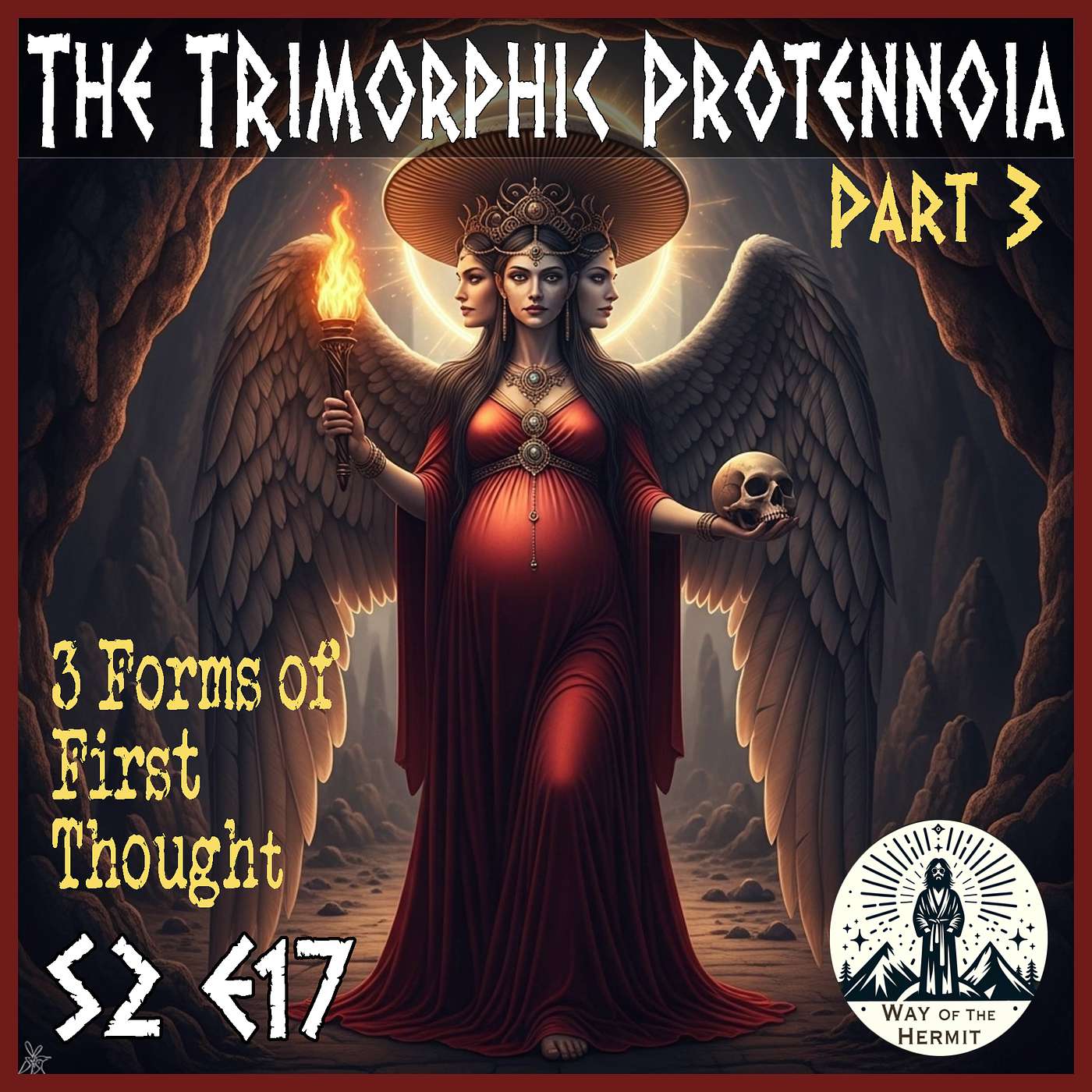 S2E17: The Trimorphic Protennoia - Part 3 of 4 31.08.2025 39นาทีIn this episode, David and Gene journey into the heart of one of Gnosticism's most profound and transformative myths - the second descent of the Trimorphic Protennoia. This stage represents the "pregnancy" phase in the evolution of consciousness, following the implantation of the seed idea of Unity, during the first descent.What follows is a psychic apocalypse, an inner "Dark Night of the Soul" where the very foundations of the ego-built world begin to crumble. The established parts of the mind, the Archons, are gripped by a terrifying premonition of their own dissolution. The text vividly portrays this as the birth pangs of a New Aeon, where the death of the old self gives way to the birth of the True Self, an identity conscious of its divine origins.The Protennoia, having planted the seed as Father, now reveals herself as the Mother - the womb in which this new consciousness gestates. She is the androgynous and self-contained, as symbolized by the Ouroboros. She is the Voice that emerges from the silent Thought. As a prophetess and teacher, she foretells the end of the age of ignorance ruled by the Demiurge.Hearing her "exalted Speech," the terrified Archons confront their creator, the "false god" who has claimed to be the sole deity. In this dramatic confrontation, the man behind the curtain is exposed, and the entire authority structure of the ego collapses. The Archons, realizing their "tree of life" is actually a "tree of death," are forced to question their very existence and all the choices they have made while under the spell of separation.From this chaos, a new hope dawns. Acting as a "Mother of Mercy," the Protennoia speaks directly to the "Sons of the Thought" - those parts of the mind ready to receive her hidden mysteries. She invites them into the "Aeon of Barbelo," a new and eternal state of being.This is a spiritual initiation, a promise of being glorified, enthroned, and baptized in a perfect, exalted Light. The episode unpacks this mystical initiation, explaining that it is not an external ceremony but an internal transformation, an organic process that unfolds from within. This journey leads consciousness back to its source, culminating in the Protennoia taking her seat on a branch of the true Tree of Life, having weathered the apocalypse to establish a new, unshakable center within the self.Deep Dive:The Trimorphic Protennoia - Three Forms of First ThoughtChapters:01:15 Introduction01:56 Review06:25 The Second Descent09:40 Voice From Thought14:00 The Changeless Aeon17:03 Shaking the Foundations of Chaos20:51 False God Revealed23:11 The End is Near26:25 Aeon of Barbelo29:42 Invitation to Initiation33:13 Voice of the Holy Spirit36:05 ConclusionsResources:Trimorphic Protennoia - John D. TurnerThree Forms of First Thought - Willis BarnstoneGnosis.org - The Gnosis Archive6The Nag Hammadi ScripturesShekinah (Wikipedia)Creative Evolution by Henri BergsonThe Red Book: A Reader's Edition by Carl JungJesus and the Lost Goddess by Freke and Gandy
 -
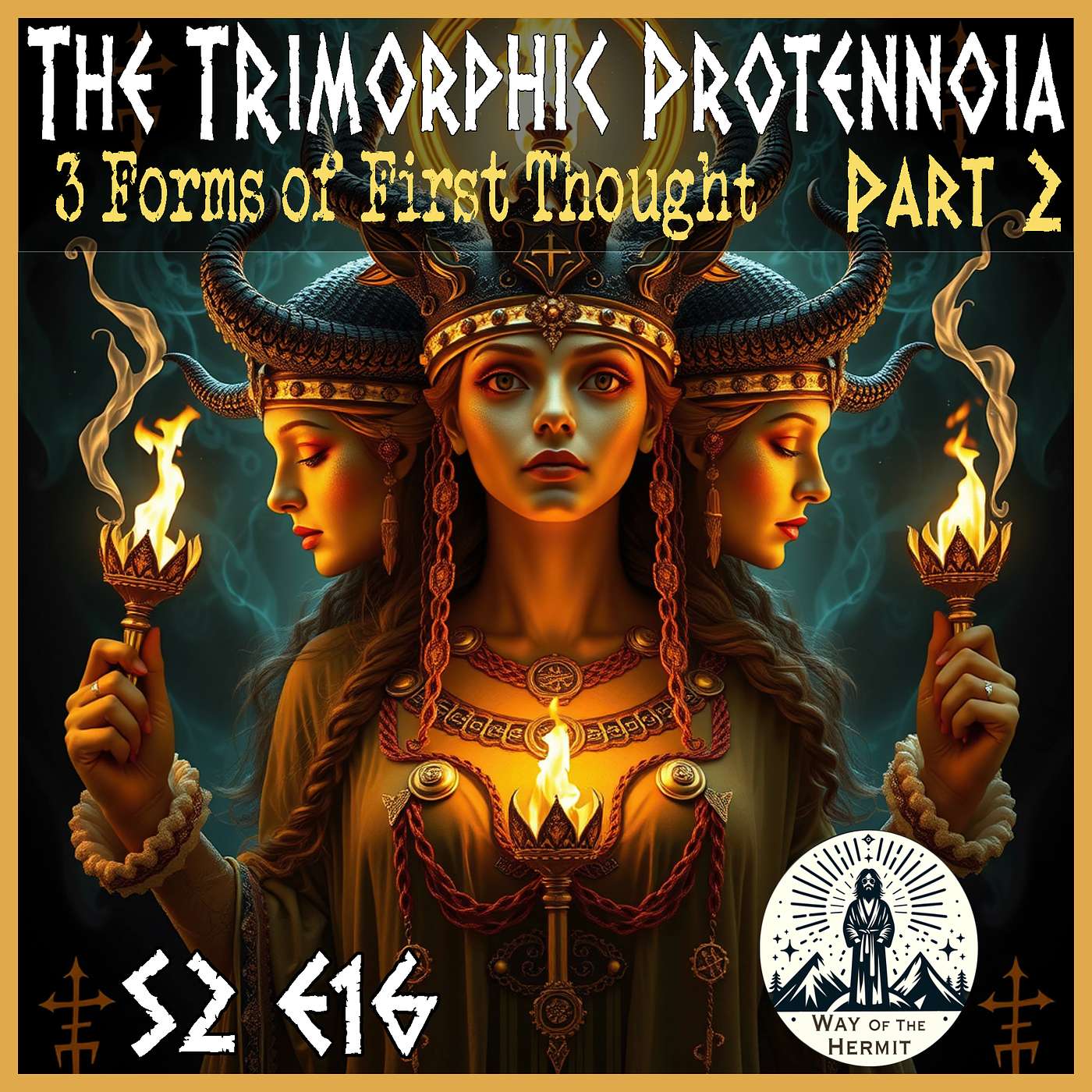 S2E16: The Trimorphic Protennoia - Part 2 of 4 01.08.2025 40นาทีIn this episode, Gene and David continue their deep dive into the Gnostic text, "The Trimorphic Protennoia," completing their discussion of the first of three descents of the divine feminine principle. They review how consciousness unfolds through the archetypes of Father (unmanifest thought), Mother (the threshold of voice), and Son (the manifest word), revealing the recursive and mysterious nature of reality itself. The dialogue illuminates the emergence of Christ not as a historical figure, but as the Logos or "Witness Consciousness" within each of us - the single, unchanging "Eye of Light" that observes the endless stream of our thoughts and emotions and gives us our core sense of identity.The discussion then descends into the cosmic drama of creation and illusion -how Protennoia (aka Barbelo), first establishes the celestial order of the "True Aeons" before it’s reflection emerges in the lower worlds. From the lowest heavenly realm, the ignorant creator god - the Demiurge, known by the names Saklas (fool), Samael (blind god), and Yaltabaoth (child of chaos) - arises to fashion a flawed world in the likeness of a divine pattern he can only dimly perceive. But then, the central mystery is revealed: the Protennoia has played a trick on the this “blind idiot god of chaos,” secretly embedding her own divine essence within his creation. This hidden spark is the very seed of the Demiurge’s eventual demise and the ultimate key to humanity's liberation - the reorganization of the personality into the divine pattern of the Trimorphic Protennoia.Finally, the text reveals the Gnostic path to wholeness. The Protennoia declares herself the "Father" to the "Sons of the Light" - those who activate their inner spiritual nature - and unveils an "ineffable mystery." She describes her own "Harrowing of Hell," which is an inner process of breaking the psychic chains of the Archons, or demons, that hold the soul in bondage. By working from within and speaking "below their language," she nullifies their power and plants a single, transformative thought: the realization that we are not, and never have been separate from the universal stream of life.David and Gene reiterate that these ancient texts are not mere stories but living maps for the soul, urging us to move beyond intellectual study and begin the practical work of self-discovery by listening to the silent, inner voice that speaks through dreams and visions.Deep Dive:The Trimorphic Protennoia - Three Forms of First ThoughtChapters:01:15 Introduction01:46 Review04:20 Three In One07:57 Christ10:23 Barbelo12:48 Son of God15:11 True Aeons17:56 The Demiurge21:22 False Aeons23:19 Creation of Man26:00 Sons of Light27:52 Mysteries of the Father32:17 Protennoia Mysteries34:46 ConclusionsResources:Trimorphic Protennoia - John D. TurnerThree Forms of First Thought - Willis BarnstoneGnosis.org - The Gnosis ArchiveThe Nag Hammadi ScripturesThe Little Book of Demons: The Positive Advantages of the Personification of Life's Problems - Ramsey DukesThe Red Book: A Reader's Edition - Carl JungJesus and the Lost Goddess - Freke and Gandy
 -
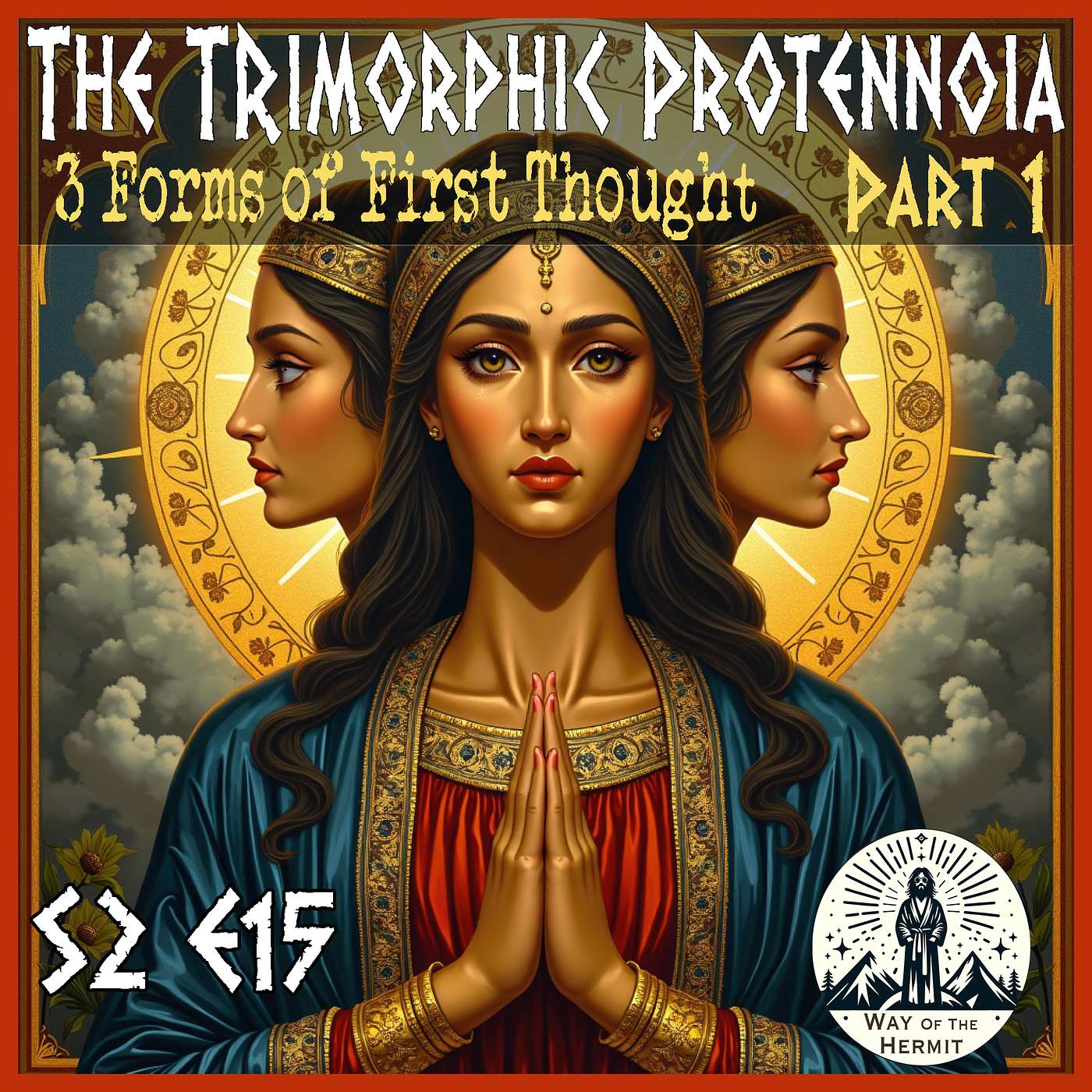 S2E15: The Trimorphic Protennoia - Part 1 of 4 28.06.2025 34นาทีIn this episode of the “Way of the Hermit” podcast, Gene and David embark on a 4-part exploration of the Trimorphic Protennoia (”Three Forms of the First Thought") - a cornerstone text from the Nag Hammadi library. This episode builds on their previous journeys through the "Secret Gospel of John" and the "Gospel of Thomas," tracing the descent and return of the soul through the mythic architecture of consciousness.In this discussion, the hosts unravel the Trimorphic Protennoia as both a cosmic autobiography and a practical manual for the inner life. They illuminate the text’s central claim: that all reality is an emanation of consciousness, unfolding through three archetypal forms - Thought, Voice, and Word - mirrored in the Gnostic Trinity of Father, Mother, and Son. Through poetic passages and careful exegesis, Gene and David reveal how this triadic process is not only the fabric of the cosmos but also the hidden engine of our own minds. The conversation weaves through profound symbols: Barbelo as the androgynous First Thought, the descent into the underworld as the awakening of the sleeping soul, and the “still small voice” as the intuitive guide within.Listeners are invited to contemplate the omnipresence of consciousness, the mystery of the “door” between the ineffable and the manifest, and the transformative power of recognizing the divine seed within. The discussion makes connections to alchemy, Kabbalah, and Jungian psychology, offering both theoretical insights and practical methods for tuning into the quiet, radiant voice at the heart of being.We hope that this episode deepens your understanding of the perennial wisdom tradition and inspires your own journey toward wholeness and gnosis.Deep Dive:The Trimorphic Protennoia - Three Forms of First ThoughtChapters:01:15 Introduction02:27 Review05:54 Trimorphic Protenoia08:49 Protennoia - First Thought12:23 Epinoia - Subsequent Thoughts15:19 Invisible One18:12 The Quiet Voice20:21 Radiant Waters23:32 The Door26:41 Seed and Fruit28:22 The Son30:55 ConclusionsResources:Trimorphic Protennoia (Wikipedia)Trimorphic Protennoia - John D. Turner (“Bible-like” but leaves names intact)Three Forms of First Thought - Willis Barnstone Translation (clearer, more readable)Analytic Idealism in a Nutshell - Bernardo KastrupIrreducible: Consciousness, Life, Computers, and Human Nature - Federico FagginCreative Evolution - Henri Bergson (Amazon)Gospel of Nicodemus (Sacred Text Archive)Gnosis.org - The Gnosis ArchiveThe Nag Hammadi ScripturesThe Red Book: A Reader's Edition - Carl JungJesus and the Lost Goddess: The Secret Teachings of the Original Christians - Freke and Gandy
 -
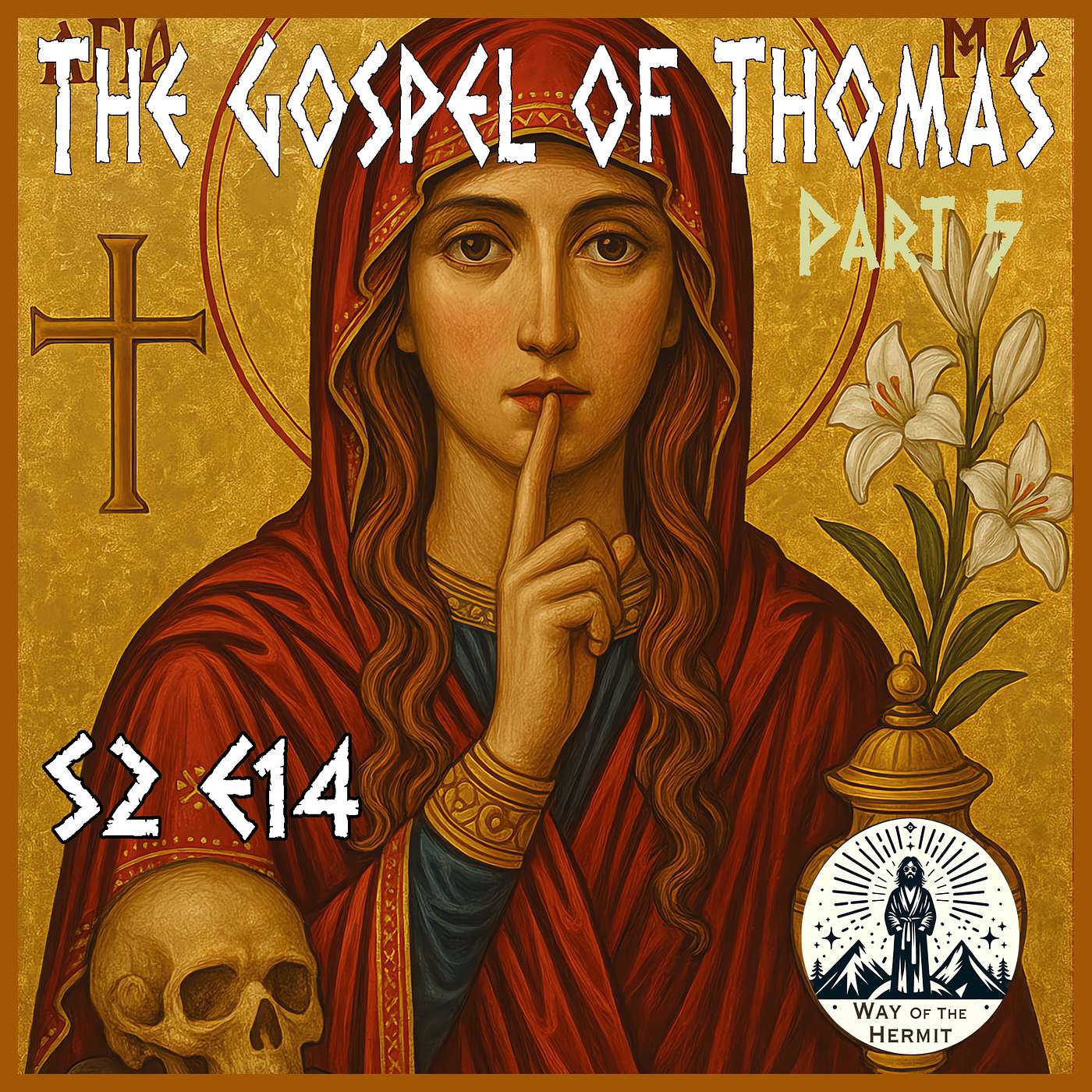 S2E14: The Gospel of Thomas - Part 5 of 5 31.05.2025 45นาทีIn this concluding episode of their five-part series, David and Gene explore the final 22 sayings of the Gospel of Thomas (93-114), revealing the text's most profound mysteries about spiritual transformation and divine realization.These culminating teachings address the protection of sacred wisdom ("pearls before swine"), the gradual process of inner transformation symbolized by yeast working through dough and hidden treasure requiring patient excavation, all of which support the ultimate goal of uniting the dual aspects of consciousness in the alchemical "Sacred Marriage."The hosts delve into Jesus's radical redefinition of kinship in spiritual rather than biological terms, the three Gnostic worlds of Spirit, Soul, and Matter that require different navigational approaches, and the esoteric meaning behind traditional spiritual practices like prayer and fasting. They examine the provocative final saying about Mary Magdalene needing to become "male," as representing the need for integration of analytical and intuitive faculties into divine wholeness - and how the saying speaks to the tension between orthodox (Peter) and esoteric (Mary) interpretations of spiritual truth.Other concepts discussed include:the door of consciousness that opens from within through persistent spiritual "knocking,"the distinction between those who seek firsthand Gnosis versus blind obedience (the "black sheep" who wanders away from the flock),and the intimate spiritual communion described as "drinking from Jesus's mouth."The episode culminates with the hosts' realization that the Gospel of Thomas presents the most revolutionary concept in Gnostic literature: that achieving Gnosis is itself the divine pattern - a fractal process where God comes to know Himself through human self-discovery, making each individual's spiritual journey a unique cosmic contribution requiring active practice rather than passive study.Deep Dive:The Gospel of ThomasChapters:01:15 Introduction01:52 Sayings 93-9507:19 Sayings 96-9812:41 Sayings 99-10117:28 Sayings 102-10421:05 Sayings 105-10726:26 Sayings 108-11030:25 Sayings 111-11441:55 ConclusionsResources:The Gospel of Thomas (history and various translations - Gnosis.org)Gospel of Thomas (Patterson and Robinson translation)Gnosis.org - The Gnosis ArchiveThe Nag Hammadi ScripturesCreative Evolution by Henri BergsonThe Exegesis of Philip K. Dick by PKDThe Red Book: A Reader's Edition by Carl JungJesus and the Lost Goddess: The Secret Teachings of the Original Christians by Freke and Gandy
 -
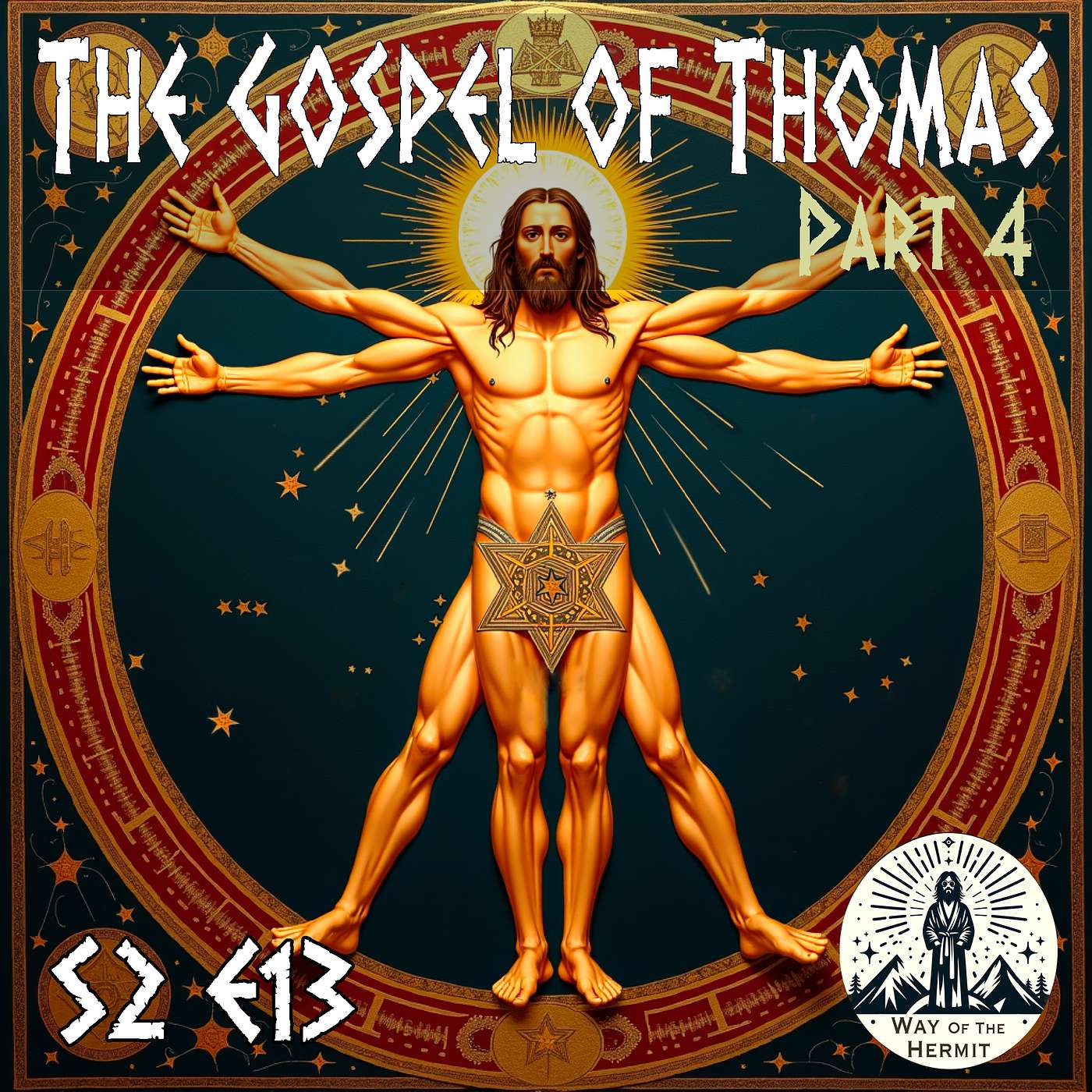 S2E13: The Gospel of Thomas - Part 4 of 5 01.05.2025 36นาทีIn this episode, David and Gene continue their exploration of the Gospel of Thomas, examining sayings 70-92. These sayings focus on navigating the duality between spiritual and material worlds and the constant choices we must make between them.The esoteric meaning behind the sayings of Jesus in the Gospel are discussed, starting with the call to activate the latent "divine spark" within us - a spiritual conception or “virgin birth” (Saying 70). They interpret Jesus’ saying about the destruction of the "house" (Saying 71) as referring to a personal apocalypse of Gnosis, an irreversible transformation of one's worldview. Jesus's refusal to be a "divider" of possessions (Saying 72) highlights the spiritual realm's inherent unity and the need to integrate the divided aspects of the self.Further discussion touches on the rarity of those undertaking the spiritual harvest (Saying 73) and the tendency to seek fulfillment externally in "empty wells" instead of looking within (Saying 74). The "solitary ones" who are allowed entry to the "wedding hall" (Saying 75) are presented as those who have achieved inner wholeness, akin to the "Chemical Wedding" in alchemy.David and Gene explore Jesus speaking as the omnipresent Logos ("I am the All," Saying 77), touching upon pan-psychism and the need to look beyond the surface of reality. They contrast seeking external validation (Saying 78, 91) with the necessity of internal realization and trusting inner authority.The hosts delve into the hidden nature of consciousness (Saying 83) and the profound challenge of confronting our divine archetypal "likeness" - “our original face before we were born.” (Saying 84). They discuss how the divine pattern must be tried through the fire of earthly life (Saying 85), and how the "Son of Man" finding "no place to rest" (Saying 86) as symbolic of humanity's hybrid nature, caught between two worlds.The episode concludes by examining the spiral nature of spiritual seeking, where readiness dictates understanding (Saying 92), and how reflecting on, and engaging with these profound sayings is itself a transformative process.Deep Dive:The Gospel of ThomasChapters:01:15 Introduction01:41 Review03:10 Sayings 70-7207:25 Sayings 73-7512:18 Sayings 76-7816:39 Sayings 79-8118:54 Sayings 82-8423:50 Sayings 85-8728:23 Sayings 88-9031:34 Sayings 91-9234:34 ConclusionsResources:The Gospel of Thomas (history and various translations - Gnosis.org)Gospel of Thomas (Patterson and Robinson translation)Gnosis.org - The Gnosis ArchiveThe Nag Hammadi ScripturesJesus and the Lost Goddess: The Secret Teachings of the Original Christians by Freke and GandyYou’re Not the Observer—You’re the Observed (YouTube)Lateralus - Tool (Spotify)
 -
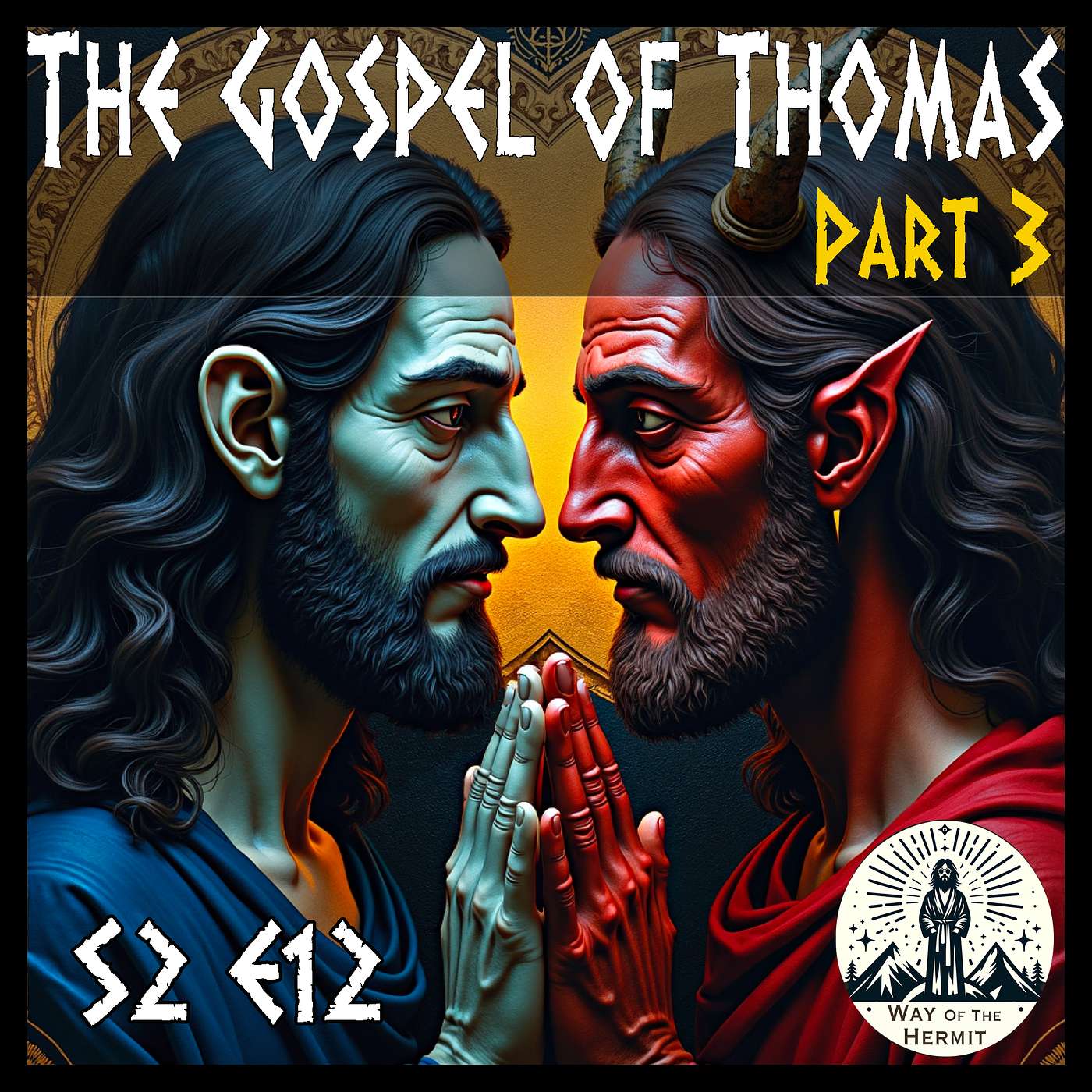 S2E12: The Gospel of Thomas - Part 3 of 5 29.03.2025 38นาทีIn this episode, David and Gene continue their discussion of the Gospel of Thomas, exploring sayings 47-69 of this profound and mysterious Gnostic text. The sayings it contains offer timeless insights into the spiritual path, providing guidance for those striving to transcend material attachments and awaken to higher consciousness.Building on their previous discussions, they delve deeper into the themes of spiritual unity, overcoming duality, and the transformative nature of self-realization.Their discussion begins with Saying 47, which uses a variety of vivid metaphors to illustrate the need for overcoming the dualities within ourselves and the means by which we can reconcile old cognitive frameworks with new spiritual truths. Sayings 48-49 emphasize achieving harmony within oneself and creating an internal sacred space for introspection. David and Gene interpret these teachings as a call to overcome internal duality and embrace wholeness, drawing parallels to esoteric traditions like the "Sacred Marriage" and Jungian individuation.Sayings 50-52 delve into the origins of light in the Gnostic tradition, the cyclical nature of existence, and esoteric meaning of "death" and "resurrection." The hosts unpack these teachings with references to Gnostic cosmology, emphasizing the importance of inner awareness over external rituals or authorities.The discussion continues with Sayings 53-55, which contrast external religious practices with inner spiritual work. Themes of detachment from societal conditioning and cultivating spiritual poverty emerge as essential steps toward true enlightenment.Sayings 56-58 explore the transient nature of the material world, the value of struggle in spiritual growth, and the importance of discernment in timing one's personal transformation. The episode concludes with Sayings 59-69, which address the urgency of seeking truth, protecting one’s spiritual vitality from lower distractions, recognizing true authority, and maintaining connection with divine wisdom despite worldly persecution. Throughout their discussion, David and Gene attempt to bring clarity to these ancient teachings, revealing how they speak directly to the modern seeker’s quest for self-knowledge. Deep Dive:The Gospel of ThomasChapters:01:15 Introduction01:41 Review03:06 Saying 4707:02 Sayings 48-4910:09 Sayings 50-5213:22 Sayings 53-5517:02 Sayings 56-5820:14 Sayings 59-6124:22 Sayings 62-6428:03 Sayings 65-6732:00 Sayings 68-6935:07 ConclusionsResources:The Gospel of Thomas (history and various translations - Gnosis.org)Gospel of Thomas (Patterson and Robinson translation)Gnosis.org - The Gnosis ArchiveThe Nag Hammadi ScripturesThe Red Book: A Reader's Edition by Carl JungJesus and the Lost Goddess: The Secret Teachings of the Original Christians by Freke and Gandy
 -
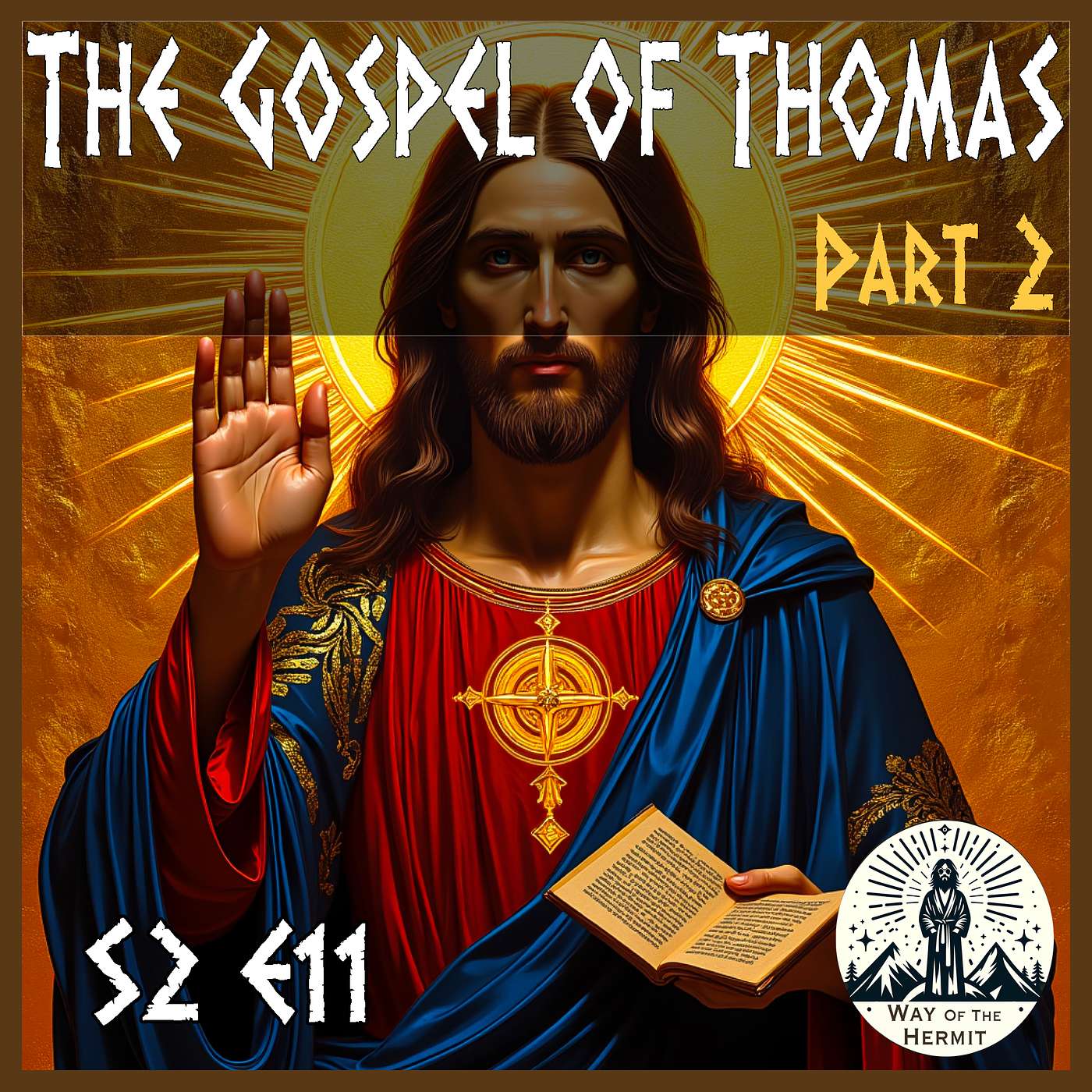 S2E11: The Gospel of Thomas - Part 2 of 5 28.02.2025 30นาทีIn this episode, David and Gene continue their exploration of the Gospel of Thomas, examining sayings 24-46 of this enigmatic Gnostic text. Building on their previous discussion, they delve deeper into the three-world Gnostic cosmology: the unity of the spiritual Pleroma, the duality of the realm of Soul/Mind (Heaven), and the unity in multiplicity of the physical world (Earth).They begin by discussing a listener comment about "combining all religions," noting that spiritual unity might indeed be the ultimate goal, as suggested in Ephesians 4:13, where the original Greek terms "Gnosis" (knowledge) and "Pleroma" (fullness) reveal deeper meaning about attaining wholeness through divine knowledge.This section of the Gospel contains powerful teachings about spiritual discernment and self-mastery:Sayings 24-26 emphasize finding inner light rather than seeking externally, loving others as manifestations of the divine, and addressing one's own spiritual blindness before criticizing others.Sayings 27-29 contrast spiritual awareness with material distraction, describing humanity as "drunk" with worldly concerns rather than "thirsty" for self-knowledge, while marveling at how consciousness (great wealth) resides within physical form (poverty).Sayings 30-32 outline the three stages of Gnostic initiation and the importance of consistent spiritual practice in establishing one's character as "a city on a high mountain."Sayings 33-35 explore spiritual discernment, warning against following blind guides while encouraging the sharing of inner wisdom.Sayings 36-41 address detachment from material concerns, the suppression of symbolic readings of sacred texts, and the principle that spiritual understanding multiplies when cultivated.Sayings 42-44 discuss becoming "passers-by" (detached observers), judging teachers by their fruits, and the consequences of acting against one's own experience of truth.Sayings 45-46 conclude with teachings on cultivating positive thoughts and transcending the ego, with John the Baptist representing the consciousness that can see Gnosis as the goal but requires the "final stroke" of ego death to achieve it.Throughout their analysis, David and Gene reveal how these ancient sayings speak to the modern seeker's journey toward self-realization, offering insights into overcoming material attachments, developing spiritual discernment, and achieving wholeness by overcoming the delusion of the false self.Deep Dive:The Gospel of ThomasChapters:01:15 Introduction03:41 Review04:57 Sayings 24-2608:01 Sayings 27-2911:32 Sayings 30-3214:38 Sayings 33-3517:43 Sayings 36-3819:51 Sayings 39-4122:42 Sayings 42-4425:16 Sayings 45-4628:26 ConclusionsResources:The Gospel of Thomas (history and various translations - Gnosis.org)Gospel of Thomas (Patterson and Robinson translation)Gnosis.org - The Gnosis ArchiveThe Nag Hammadi ScripturesThe Red Book: A Reader's Edition by Carl JungJesus and the Lost Goddess: The Secret Teachings of the Original Christians by Freke and GandyFederico Faggin on Idealism, Quantum Mechanics, Free Will, and Identity
 -
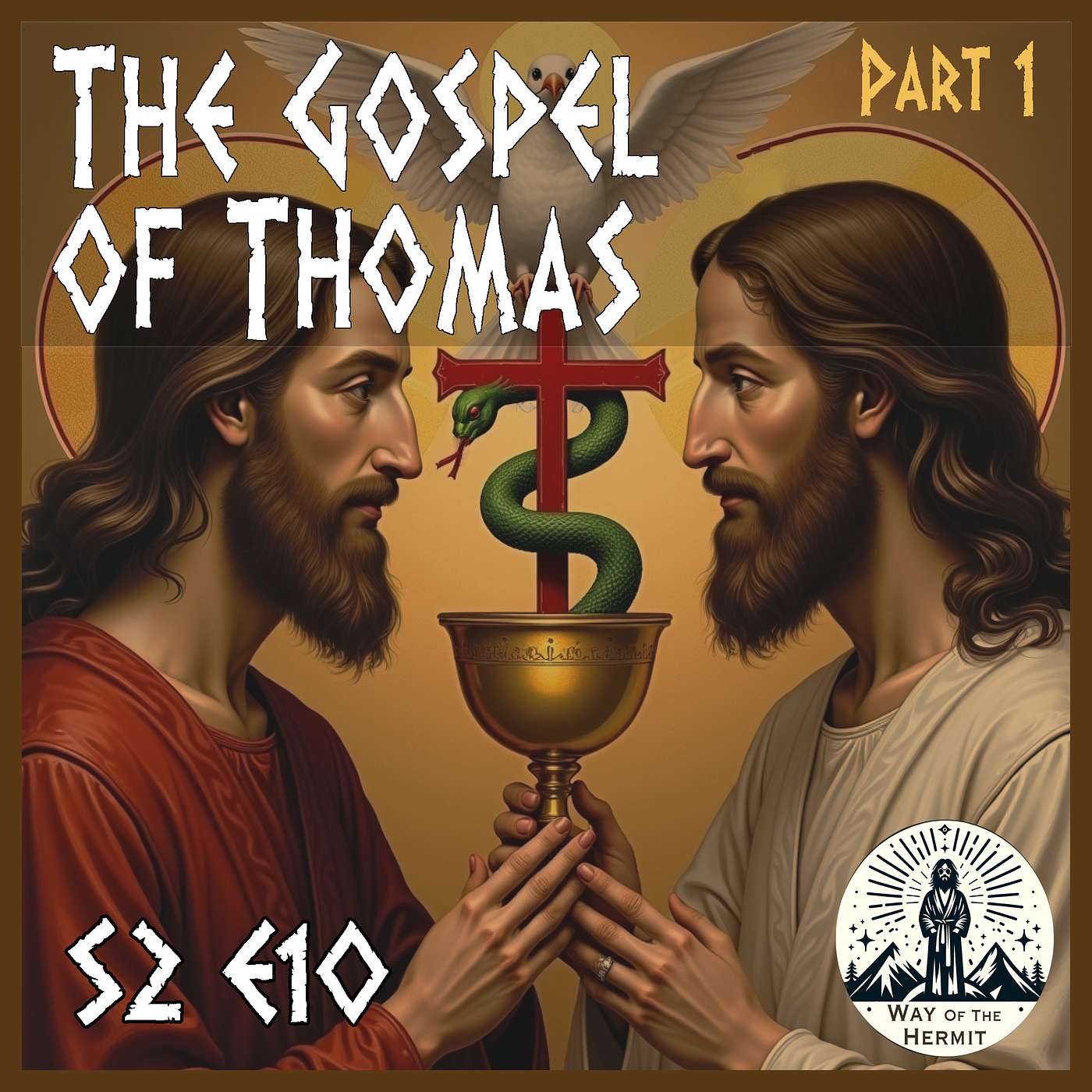 S2E10: The Gospel of Thomas - Part 1 of 5 01.02.2025 32นาทีIn this episode of the Way of the Hermit Podcast, David and Gene begin their exploration of the Gospel of Thomas, a collection of 114 enigmatic sayings attributed to the “Living Jesus,” that, like the other Gnostic texts discovered in the cache at Nag Hammadi, Egypt - challenges conventional religious notions.Unlike the cosmological narrative of the Secret Gospel of John, the teachings in the Gospel of Thomas are distilled into koan-like paradoxes and parables, designed to provoke self-realization. Labeled heretical by early church fathers, this primary text of the “Thomasine Tradition,” rejects dogma in favor of direct spiritual revelation, urging initiates to meditate on its riddles to awaken their divine nature, so as to “not taste death.”This episode discusses the first 23 sayings. Here are highlights from the sections:Sayings 1–3: immortality comes by transcending physicality and materiality through self-knowledge and identification with consciousness, while the path to sovereignty (“becoming king over the All”) demands confronting disturbing truths.Sayings 4–7: delve into Jungian shadow work, where innocence must be reclaimed consciously, and spiritual mastery requires “eating the lion” (integrating instinctual forces symbolized by the Demiurge).Sayings 8–11: contrast transient heavens with eternal unity, using metaphors like the fisherman’s “large fish” (ultimate truth) and the disruptive “fire” that the teachings help kindle, to dismantle outdated paradigms.A pivotal moment arises in Saying 13, where Thomas receives three secret words - keys to spiritual, soul, and material realms - after recognizing Jesus’s ineffable nature, also highlighting Peter’s and Matthew’s limited interpretations of Jesus as merely a prophet or a philosopher.Later sayings (14–23): critique performative piety, urging alignment with the “unborn” (bornless) divine essence within. These sayings include Kabbalistic references, and also refer to the alchemical unification of male/female polarities.The episode culminates in Saying 23’s stark reminder that few attain full unity with the divine - a “spiritual alchemy” reserved for those willing to dissolve egoic barriers, to die to who they thought they were, in order to become a “Twin of Jesus,” a spiritual master.David and Gene contextualize Thomas’ role as the archetypal Gnostic doubter, whose insistence on firsthand gnosis mirrors the text’s radical claim: that we are all potential “twins” of Christ, tasked with resurrecting the reflection of the divine, in our mind, heart and hands.Deep Dive:The Gospel of ThomasChapters:01:15 Introduction02:45 History and Significance05:10 The Gospel of Thomas06:36 Sayings 1-309:24 Sayings 4-712:02 Sayings 8-1115:43 Sayings 12-1319:14 Sayings 14-1622:59 Sayings 17-1925:27 Sayings 20-2330:15 ConclusionsResources:The Gospel of Thomas (history and various translations - Gnosis.org)Gospel of Thomas (Patterson and Robinson translation)Gnosis.org - The Gnosis ArchiveThe Nag Hammadi ScripturesThe Red Book: A Reader's Edition by Carl JungJesus and the Lost Goddess: The Secret Teachings of the Original Christians by Freke and Gandy
 -
 S2E9: The Secret Gospel of John - Part 4 of 4 28.12.2024 33นาทีIn this episode of Way of the Hermit, David and Gene conclude their deep dive into The Secret Gospel of John, uncovering its profound esoteric teachings on self-awareness, spiritual awakening, and the cosmic struggle between light and darkness.Picking up where the last episode left off, they explore how the creation of Eve symbolizes a division within Adam’s unified self, representing the separation of conscious and subconscious aspects. This psychic split, orchestrated by the Demiurge, obscures humanity’s divine nature, setting the stage for the journey back to wholeness. Eve, embodying the hidden spark of divinity (the luminous Epinoia), becomes a key figure in awakening Adam to his true nature - a process that mirrors humanity’s longing for self-realization and unity.The conversation delves into the symbolic narratives of Cain and Abel, representing material desire versus spiritual transience, and Seth, who emerges as a figure of divine recognition and alignment with higher consciousness. David and Gene unpack how these archetypes reflect humanity’s inner struggles and potential for liberation. They also discuss the “fate of souls,” emphasizing how choices influenced by either the Divine Spirit or Counterfeit Spirit determine one’s spiritual trajectory - liberation, imprisonment, or punishment.Finally, David and Gene examine the redemptive role of the Perfect Pronoia, who descends into darkness to awaken humanity from spiritual slumber. Her three attempts at awakening symbolize stages of moral preparation, philosophical understanding, and spiritual realization, mirroring the Blue Lodge Degrees of Freemasonry and the Scottish Rite.The episode concludes with an exploration of how Gnostic texts like The Secret Gospel of John serve as seeds (or mental viruses) planted in fertile minds, bearing fruit through shared understanding. So, join us for this thought-provoking conclusion to a discussion of one of history’s most profound spiritual texts.Deep Dive:Secret Book of JohnSecret Gospel of John correspondencesChapters:01:15 Introduction02:07 Review05:28 Creation of Eve08:16 Adam and Eve11:23 Cain and Abel14:48 Seth17:59 The Fate of Souls20:51 Chain of Fate25:27 Redemption29:30 ConclusionsResources:The Nag Hammadi ScripturesThe Apocryphon of John - Frederick Wisse TranslationGnosis.org - The Gnosis ArchiveThe Red Book: A Reader's Edition by Carl Jung
 -
 S2E8: The Secret Gospel of John - Part 3 of 4 30.11.2024 38นาทีIn this episode of Way of the Hermit, David and Gene continue their exploration of the “Secret Gospel of John,” delving deeper into the text’s esoteric description of the evolution of consciousness.The primary story arc of this episode concerns the awakening of self-consciousness and awareness, and also the accompanying feeling of being “not whole.” The narrative follows how Sophia, representing dawning self-awareness, experiences her separation from divine unity, leading to a profound journey of anguish, realignment and restoration. In a response from heaven to Sophia’s prayers, heaven grants a vision to her son, the Demiurge, of what the “perfect man” looks like. But, this “image of god” is distorted, as it is reflected down through the worlds into manifestation, resulting in man’s plight.This portion of the narrative of the “Secret Gospel of John” can be seen as the blackening phase of the alchemical process. It is the complete descent of spirit into matter, where it is in a sense, imprisoned, and yet, it is the spark that can reignite the ascent home.David and Gene discuss the idea of building and embodying a living temple, and how the blueprint for such a construction, is an unfolding of “archetype of archetypes,” the same pattern that unfolds and becomes embodied in everything that exists.So join us, as we continue our in-depth discussion of one of the most important spiritual texts of all time - “The Secret Gospel of John.”Deep Dive:Secret Book of JohnSecret Gospel of John correspondencesChapters:01:15 Introduction02:00 Review07:33 Sophia’s Call12:16 Pleroma’s Response16:34 Creation of Man20:42 Body of Light23:32 Luminous Epinoia27:54 Light Trapped in Shadow31:17 Tree of Death35:00 ConclusionsResources:MiddleChamber.org - Symposium on Masonic EsotericaThe Nag Hammadi ScripturesThe Apocryphon of John - Frederick Wisse TranslationGnosis.org - The Gnosis ArchiveThe Red Book: A Reader's Edition by Carl Jung
 -
 S2E7: The Secret Gospel of John - Part 2 of 4 31.10.2024 41นาทีIn this episode, David and Gene continue their exploration of the Secret Gospel of John, delving into its complex cosmology and comparing it with Neoplatonic philosophy. They review the discussion from the previous episode that detailed the first phases the evolution of consciousness through the emanations of (1) the Monad (pure undifferentiated consciousness - will), (2) Barbelo (first reflection - thought), and (3) Christ/Autogenes (self-generated awareness - life). They draw parallels between ancient spiritual concepts and contemporary neuroscience, and discuss how these concepts relate to the modern understanding of consciousness and psychological development. The conversation explores the emergence of the Four Lights from Autogenes and their correspondence to the Four Worlds of Kabbalah, representing different levels of consciousness from spiritual to physical.This text for this episode focuses on the dramatic turn in the narrative with the appearance of Sophia of the Epinoia and her creation of the Demiurge - a lion-faced serpent representing primal consciousness without higher reasoning. The text details how this "blind idiot god, born of chaos" creates the Archons (rulers) in an attempt to mirror the higher realms, resulting in a distorted reflection of divine patterns that governs the material world. In this episode, David and Gene (as always) weave together insights from various esoteric traditions, including Masonry, Kabbalah, Hermeticism, alchemy, and Christian Gnosticism, showing how these ancient texts are intended as grimoires or textbooks, detailing sophisticated models for understanding consciousness and human psychological development.Deep Dive:Secret Book of JohnSecret Gospel of John correspondencesChapters:01:15 Introduction02:29 Review05:32 Neoplatonism10:38 Autogenes14:03 The Four Lights19:06 Pigera-Adamas22:24 Sophia Epinoia25:52 The Demiurge29:09 The Archons33:53 A Jealous God36:52 ConclusionsResources:MiddleChamber.org - Symposium on Masonic EsotericaThe Nag Hammadi ScripturesThe Apocryphon of John - Frederick Wisse TranslationGnosis.org - The Gnosis ArchiveThe Red Book: A Reader's Edition by Carl Jung
 -
 S2E6: The Secret Gospel of John - Part 1 of 4 02.10.2024 31นาทีIn this episode, David and Gene begin their exploration of "The Secret Gospel of John," also known as the "Apocryphon of John," a pivotal text in the Sethian Gnostic tradition. They discuss the text's history, its multiple versions, and its significance as a comprehensive presentation of Gnostic cosmology and theology.The discussion delves into the concept of the Monad, the ultimate unity in Gnostic thought, comparing it to similar ideas in Pythagoreanism and Kabbalah, and exploring its characteristics as the ineffable, unnameable source of all qualities. In the process, David and Gene draw parallels with modern cosmology and to the symbolism of the point within a circle, relating it to biological concepts like seeds and zygotes, while always emphasizing the text's primary focus, which is on the inner world of the mind.This episode introduces Barbelo, the first emanation from the Monad, representing forethought and the beginning of psychic evolution. David and Gene examine the qualities attributed to Barbelo and how these relate to human consciousness. They conclude by discussing the "birth" of Christ as a metaphor for the self-reflective development of mind, emphasizing the importance of understanding these texts as spiritual guidebooks rather than mere stories.This is the first episode of a multi-part series on the “Secret Gospel of John.” It begins the exegesis of the text, and also stage for a deeper exploration of Gnostic philosophy as a path of spiritual discovery and growth.Deep Dive:Secret Book of JohnChapters:01:15 Introduction02:39 The Apocryphon of John04:28 History of the Text07:02 Secret Book of John11:06 The Monad14:42 Point in the Circle20:22 Barbelo25:13 The Birth of Christ27:57 ConclusionsResources:MiddleChamber.org - Symposium on Masonic EsotericaThe Nag Hammadi ScripturesThe Apocryphon of John - Frederik Wisse TranslationGnosis.org - The Gnosis ArchiveThe Red Book: A Reader's Edition by Carl Jung
 -
 S2E5: Gnostic Christianity 02.09.2024 25นาทีIn this episode, David and Gene delve into the fascinating world of Gnostic Christianity, exploring its origins, philosophical concepts, and enduring influence.The episode explores the historical and philosophical landscape that gave birth to Gnostic Christianity, focusing on Alexandria's crucial role as a melting pot of Eastern and Western thought. David and Gene also discuss the significance of the Septuagint and the works of Philo of Alexandria, in bridging Jewish and Greek philosophical traditions.The main Gnostic sects are introduced: the Sethians, Valentinians, Basilideans, Ophites, and Carpocratians, as well as the key texts associated with them, that were discovered in Nag Hammadi, Egypt. In preparation for later discussions, this episode summarizes many fundamental Gnostic concepts such as the Pleroma, Nous, Aeons, Barbelo, Sophia, the Demiurge, and the Archons.Carl Jung's contributions to understanding Gnosticism are examined, as are his interpretations of Gnostic concepts as representations of psychological processes and structures, shedding light on the potential of Gnostic thought to illuminate the human psyche.Deep Dive:Gnostic ChristianityChapters:01:15 Introduction02:43 Gnostic Christianity05:28 The Septuagint07:04 Philo of Alexandria09:34 Gnostic Sects11:54 Nag Hammadi Texts12:50 Gnostic Concepts15:14 Seven Sermons to the Dead17:04 Gnostic Psychology19:28 Gnostic Jung22:27 ConclusionsResources:MiddleChamber.org (A Symposium of Masonic Esoterika)Morals & Dogma: Annotated EditionThe Nag Hammadi ScripturesThe Red Book: A Reader's Edition by Carl JungSeven Sermons To the Dead by Carl JungGnosticism: New Light on the Ancient Tradition of Inner Knowing by Stephan A. Hoeller
 -
 S2E4: Gnosis Reborn 31.07.2024 29นาทีIn this episode of "Way of the Hermit," David and Gene dive down the rabbit hole, into the world of Gnosticism and its connection to Freemasonry. They explore how Gnostic teachings, once considered heretical, were driven underground and lay buried for centuries until their rediscovery in the 20th century. They discuss the core principles of Gnosticism, emphasizing its focus on direct inner knowledge of the divine (gnosis) rather than adherence to dogma or external rules.The episode traces the historical suppression of Gnostic ideas by early Christian literalists and examines key figures in Gnostic thought, including Simon Magus, Philo of Alexandria, and G.R.S. Mead. David and Gene highlight the significance of the Nag Hammadi texts discovered in 1945, which provided unprecedented insights into Gnostic Christianity. They also explore the symbolic interpretations of religious and Masonic stories, arguing that these allegories contain deeper truths about human consciousness and spiritual awakening.The discussion draws intriguing parallels between Gnostic concepts and Masonic symbolism, suggesting that Freemasonry is perhaps a form of Gnosticism. They propose that the three degrees of the Masonic Blue Lodge, as well as the Masonic quest for the “Lost Word”, the three names of God and three temples in the Scottish Rite, correspond to the three stages of Gnostic awakening.Deep Dive:Nag Hammadi's Gnostic RevelationsChapters:01:15 Introduction01:36 Gnosticism04:02 Masonry is Gnosticism06:33 The Key to the Mysteries09:56 Church of the Antichrist13:19 Simon Magus15:49 Philo of Alexandria18:05 G.R.S. Mead21:21 Nag Hammadi24:45 ConclusionsResources:The Gnostics: The First Christian Heretics by Sean MartinJesus and the Lost Goddess: The Secret Teachings of the Original Christians by Tim Freke & Peter GandyNovo Clavis Esoterika by Timothy HoganGnostic Religion in Antiquity by Roelof van den BroekPistis Sophia: The Gnostic Tradition of Mary Magdalene, Jesus, and His Disciples by G.R.S. MeadFragments Of A Faith Forgotten by G.R.S. MeadCorpus Hermeticum by G.R.S. MeadSimon Magus: The Gnostic Magician by G.R.S. MeadGnostic John the Baptizer by G.R.S. MeadGnosticism: New Light on the Ancient Tradition of Inner Knowing by Stephan A. HoellerThe American Religion: The Emergence of the Post-Christian Nation by Harold BloomThe Gnostic Gospels by Elaine PagelsGod is a Verb by David Cooper
 -
 S2E3: Introducing Gnosis 06.07.2024 29นาทีIn this episode, David and Gene begin their deep dive into Gnosticism and its intimate connection to Freemasonry. They explore the key concepts that form the foundation of Gnostic thought, including the Monad, Emanations, Duality, and the pursuit of Gnosis, and discuss how these ideas are woven into the fabric of Masonic philosophy, particularly within the Scottish Rite system. The Way of the Hermit Podcast: https://www.wayofthehermit.comDavid and Gene discuss how the ancient wisdom traditions use symbols and allegories to convey deeper truths about the nature of reality and human consciousness. Through the symbols and stories of sacred scriptures, they conceal hidden truths, that are revealed to those who possess the key to their interpretation. They also delve into the historical context of Gnosticism, touching on its suppression by orthodox religious authorities and its survival through esoteric traditions, and how Gnostic concepts like the Aeons are related to the Kabbalistic Tree of Life.The conversation also draw parallels between Gnostic ideas and Masonic symbols and rituals, revealing the esoteric underpinnings of Freemasonry, and discuss the works of influential thinkers like Albert Pike, Carl Jung, and contemporary Masonic scholars who have recognized the Gnostic elements within Masonry.Join us we begin our exploration of the mysteries of Gnosticism and its profound impact on Freemasonry, and on the world... and find out what it really means, to establish a "New Order for the Ages." Deep Dive:Gnosticism, Freemasonry and GnosisChapters:01:15 Introduction04:03 Why Gnosticism?06:33 Freemasonry and Gnosticism09:21 The Perennial Philosophy11:37 The Monad14:16 Duality15:42 Allegories and Symbols17:58 Gnostic Heresy23:13 Gnosis26:18 ConclusionsResources:2024 Southeastern Masonic Symposium & HarmonyContemplative Masonry: Basic Applications of Mindfulness, Meditation, and Imagery for the CraftArcanum Podcast - Ike BakerGnostic Philosophy: From Ancient Persia to Modern TimesThe Alchemical Keys To Masonic RitualNovo Clavis Esoterika
 -
 S2E2: A Path to Providence - Part 2 of 2 06.06.2024 41นาทีIn this episode, David and Gene delve into the world of esoteric Freemasonry with their esteemed guests, Worshipful Brother Ben Wallace and Most Worshipful Brother Shaun Bradshaw. As authors of the book "A Path to Providence", Shaun and Ben share their inspiring journey in reviving the mystery school roots of Freemasonry through the establishment of groundbreaking esoteric education programs in North Carolina. The Way of the Hermit Podcast: https://www.wayofthehermit.comFrom humble beginnings in small esoteric discussion groups to the formation of the first Traditional Observance Lodges in North Carolina, Ben and Shaun recount the challenges and triumphs they faced in introducing these programs to the Masonic community, as well as their vision for the future.Shaun and Ben emphasize the importance of "nudging" Masonry in a more esoteric and spiritual direction, as well as keeping their own curriculum within the bounds of Masonry while still exploring interconnections with other esoteric traditions. They discuss the development of the "Middle Chamber Program" for Blue Lodge Masons and the "Key to the Mysteries" initiative for Scottish Rite degrees, both aimed at providing a structured approach to esoteric education. They also discuss the profound experiences offered by the "Inner Chamber Experience", a capstone program involving guided meditations and other preparation for what has proven for many, to be a transformative Lodge exercise. In this fascinating conversation, Shaun and Ben share their insights on the role and future of Freemasonry, where they envision a shift towards greater emphasis on the philosophical, spiritual, and esoteric aspects of the Craft... and challenge listeners to not sit on the sidelines, but instead get involved with this esoteric movement at whatever level they feel capable.Join David, Gene, Worshipful Brother Ben Wallace and Most Worshipful Brother Shaun Bradshaw, on this enlightening exploration of the esoteric path within Freemasonry.Chapters:01:15 Introduction01:54 Shaun Bradshaw & Ben Wallace04:53 Esoteric Education11:41 Keeping it Masonic17:25 The Key to the Mysteries22:20 The Inner Chamber29:01 Outreach32:32 Closing Thoughts37:39 Concluding RemarksResources:A Path to Providence: The Creation of the Middle Chamber Program by Shaun Bradshaw and Ben WallaceObserving the Craft by Andrew HammerThe Way of the Craftsman by Kirk McNultyContemplative Masonry by Chuck DunningThe Meaning of Masonry by Walter WilmshurstFree Masonry: It's Hidden Meaning by George SteinmetzThe Rough and Rugged Road by Tony HornsbyIn Search of Light by Bob DavisContact Information:Most Worshipful Brother Shaun [email protected] Brother Ben [email protected]
พอดแคสต์ที่คล้ายกัน


ยอดนิยมใน
พอดแคสต์นี้ปรากฏในชาร์ตพอดแคสต์ของประเทศเหล่านี้ด้วย
