
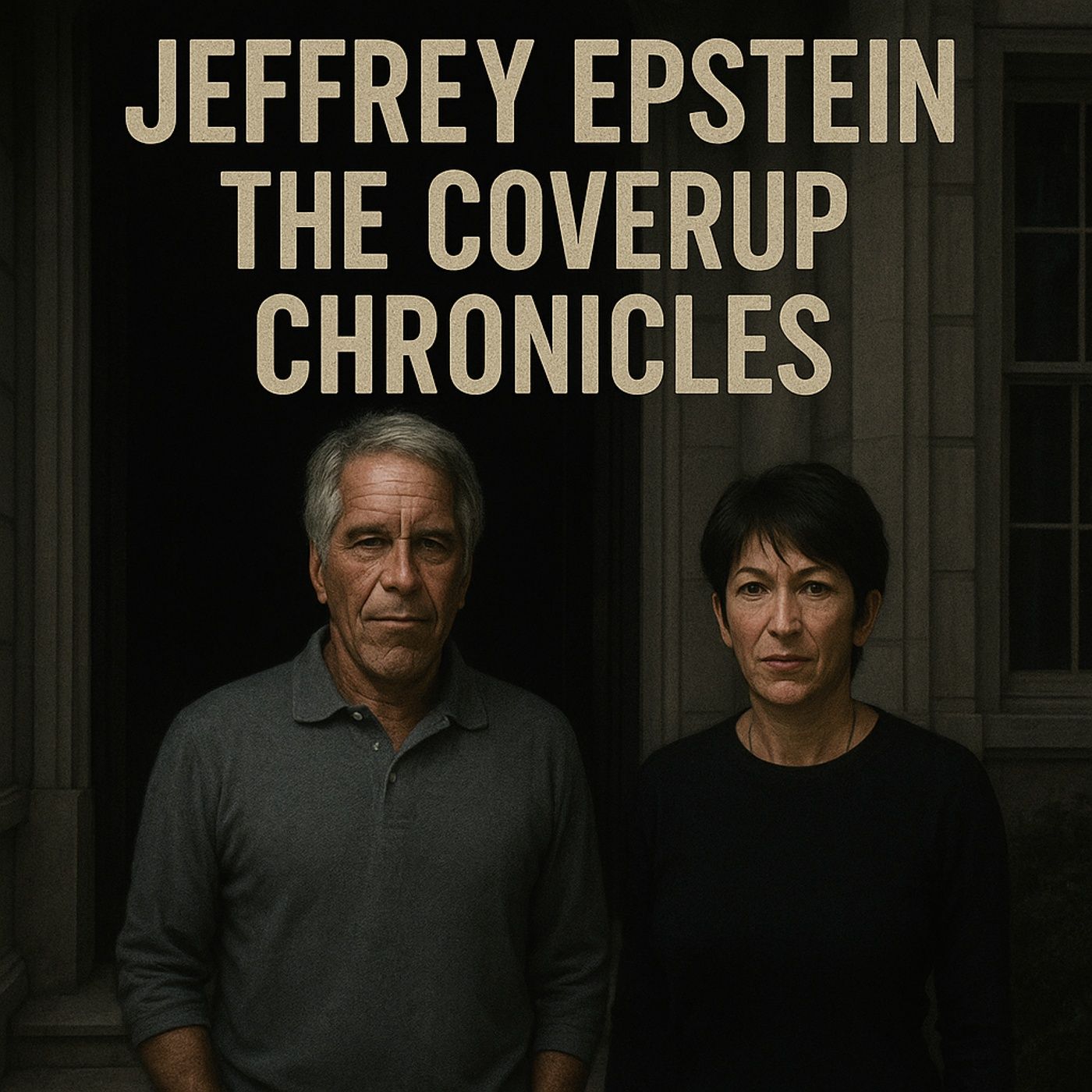
Jeffrey Epstein: The Coverup Chronicles
Jeffrey Epstein: The Coverup Chronicles is a podcast dedicated to examining not just who Epstein was and what he did, but how so many people and institutions worked—then and now—to keep it all hidden. This series cuts past the headlines and digs into the documentation: court filings, deposition transcripts, plea deals, sealed exhibits, and the bureaucratic paper trail that still tells the real story. Our focus isn’t on speculation or recycled outrage. It’s on facts—and the deliberate efforts to keep those facts out of public view. Each episode will feature in-depth analysis of newly surfaced records and underreported legal developments, alongside expert commentary that connects them to the broader machinery of power that shielded Epstein for decades.
ตอน
-
 Jeffrey Epstein and the Highbridge Capital Deal (Part 1) (9/23/26) 23.09.2026 12นาทีHighbridge Capital Management was a major New York hedge fund founded by Glenn Dubin and Henry Swieca that had grown into one of the most successful alternative-asset managers on Wall Street by the early 2000s. In 2004, JPMorgan Chase acquired a majority stake in Highbridge, which was managing roughly $7 billion at the time, giving the bank a much larger foothold in the rapidly expanding hedge-fund business. The deal became important to the Epstein story because Jeffrey Epstein was not simply an outside observer. Records from later litigation showed that he helped connect JPMorgan executive Jes Staley with Dubin and played a central role in bringing the two sides together. Staley himself later described the Highbridge acquisition as one of the most important transactions of his career.The financial records made Epstein’s role even harder to dismiss. JPMorgan admitted in litigation that Dubin and Swieca’s holding company paid Epstein’s Financial Trust Company a fee connected to the acquisition, and records showed Highbridge paid Epstein’s company $15 million in December 2004 for “merger and acquisition advice.” That payment placed Epstein directly inside a transaction that materially benefited JPMorgan’s asset-management business and strengthened Staley’s standing at the bank. The Highbridge deal therefore became one of the clearest examples of Epstein delivering real financial value to JPMorgan and the executives who dealt with him, helping explain why his relationship with the bank went far beyond that of an ordinary wealthy client.to contact me:[email protected]
 -
Mega Edition: Ghislaine Maxwell And Her Offer To Help Andrew (9/22/26) 23.09.2026 54นาทีPrince Andrew and Ghislaine Maxwell maintained a close friendship for years, moving in the same social circles in Britain and the United States and appearing together at royal residences, private gatherings and events connected to Jeffrey Epstein. Maxwell had unusually direct access to Andrew, and records released over the years have shown just how familiar their relationship was. Andrew’s contact information appeared in Epstein and Maxwell’s address book, Maxwell was photographed accompanying Andrew and guests through Buckingham Palace, and newly released emails have further illustrated the personal tone between them. In one 2002 exchange, Maxwell addressed him affectionately, while Andrew signed off with “masses of love.” Even after their association became a liability, Andrew reportedly turned to Maxwell for help in 2015 as Virginia Giuffre’s allegations were becoming increasingly difficult for him to escape.Maxwell continued publicly defending that relationship even after she was convicted and imprisoned. Speaking from federal prison in 2022, she described Andrew as a “dear friend,” said she cared about him and expressed sympathy for the price he had paid because of their association, although she acknowledged that their friendship was unlikely to survive her conviction. She also challenged the authenticity of the famous photograph showing Andrew with Giuffre at Maxwell’s London home, effectively supporting a central element of Andrew’s defense from behind bars. The episode underscored that, despite years of scandal and Andrew’s attempts to distance himself from the Epstein affair, Maxwell had not publicly turned against him and had instead continued offering statements that could help bolster his position.to contact me:[email protected]
-
Mega Edition: Prince Andrew And His Exile From The Jubilee Celebration (9/22/26) 23.09.2026 50นาทีPrince Andrew was excluded from the Buckingham Palace balcony appearance during Queen Elizabeth II’s Platinum Jubilee in June 2022, underscoring his diminished royal standing following the scandal over his relationship with Jeffrey Epstein. The Queen restricted the appearance to working royals, leaving Andrew outside one of the most prominent public moments marking her 70-year reign. He had withdrawn from public duties following his disastrous 2019 BBC interview about Epstein, and subsequently lost his honorary military appointments and royal patronages amid Virginia Giuffre’s sexual abuse allegations, which he denied.Andrew was not, however, barred from the entire Jubilee celebration. He was expected to attend the thanksgiving service at St. Paul’s Cathedral on June 3, but Buckingham Palace announced that he had tested positive for COVID-19 and would miss it. His exclusion from the balcony reflected the consequences of the Epstein scandal and his removal from working royal life; his absence from the cathedral service was officially attributed to illness. Together, those absences left him sidelined during a major celebration of his mother’s reign.to contact me:[email protected]
-
Mega Edition: Alan Dershowitz and The Criticism He Has Faced Due To His Epstein Relationship (9/22/26) 23.09.2026 41นาทีAlan Dershowitz has faced sustained criticism over both his legal work for Jeffrey Epstein and the depth of his personal relationship with him. Dershowitz was part of Epstein’s defense team during the Florida investigation that ultimately produced the extraordinarily favorable 2007 non-prosecution agreement, and he later defended that deal publicly even after its terms became a national scandal. Critics have argued that his role illustrated the enormous advantages Epstein gained from assembling an elite legal team capable of pressuring prosecutors and attacking the credibility of teenage accusers. The scrutiny went beyond the attorney-client relationship because Dershowitz had known Epstein socially for years, visited his properties and flew on his private plane multiple times. Epstein’s former housekeeper also testified that Dershowitz had been present at Epstein’s Palm Beach residence during the period when underage girls were being brought there, although that testimony did not establish that Dershowitz witnessed or participated in abuse. Dershowitz has consistently maintained that he never saw Epstein engage in sexual misconduct and has said his relationship with him ended years before Epstein’s 2019 arrest.The most serious controversy came from Virginia Giuffre, who accused Dershowitz of sexually abusing her while she was being trafficked by Epstein and Ghislaine Maxwell. Dershowitz categorically denied the allegation and fought Giuffre for years in highly contentious defamation litigation, publicly accusing her of lying and attempting to prove that she had misidentified him. In 2022, the two ended their lawsuits with a settlement in which Giuffre said she recognized that she may have made a mistake in identifying Dershowitz.to contact me:[email protected]
-
Dear Prince Andrew: A Letter From The British Public 23.09.2026 12นาทีThe scandal surrounding Prince Andrew has left the United Kingdom sick to its stomach—a kind of collective disgust that’s gone far beyond anger or tabloid gossip. His entanglement with Jeffrey Epstein wasn’t just a personal disgrace; it tore at the fabric of what the monarchy was supposed to represent. Watching him sit in that Newsnight interview, spewing absurd excuses about sweat glands and Pizza Express as if the British public were idiots, crystallized everything wrong with the modern aristocracy: arrogance, entitlement, and an utter disconnect from reality. It was the moment the illusion cracked, and what poured out was rot—privilege without conscience, power without accountability.Since then, the damage has only deepened. Every whisper of him trying to “return to public duties” provokes outrage because the people have made up their minds—there’s no coming back from this. The monarchy, already wobbling under centuries of contradictions, has never looked more hollow. Andrew’s disgrace has united the public in revulsion: the working class, the middle class, even the loyal royalists are fed up with watching one man drag the Crown through the mud. He’s become a symbol of everything this country despises about inherited power—a reminder that when the powerful fall, they don’t hit the ground like the rest of us. They just disappear behind palace walls, waiting for the storm to pass. This time, though, the storm isn’t passing. The nation’s disgust is permanent.to contact me:[email protected]
-
Alex Acosta And His Jeffrey Epstein Related Statement Back In 2011 23.09.2026 24นาทีIn 2011, Alex Acosta publicly defended his handling of the Jeffrey Epstein case while serving as U.S. Attorney for the Southern District of Florida. Acosta characterized Epstein’s 2008 non-prosecution agreement as the result of weighing difficult legal realities, claiming federal prosecutors believed the case hinged on vulnerable witnesses and posed significant trial risks. He asserted that the deal was intended to secure some measure of accountability—arguing that without it, Epstein might have avoided any jail time at all—and framed the outcome as a pragmatic compromise rather than a failure of justice.Acosta also emphasized that Epstein’s influential legal team and resources played a role in shaping the resolution, suggesting the prosecution faced extraordinary pressure and complexity. He maintained that the agreement, while imperfect, achieved convictions on state charges and required Epstein to register as a sex offender, portraying it as a better alternative than an uncertain federal trial. Critics, however, later pointed out that Acosta’s 2011 remarks glossed over the secrecy of the deal, the exclusion of victims, and the extraordinary concessions granted to Epstein—issues that would come to define the controversy surrounding the prosecution in the years that followed.to contact me:[email protected]
-
Tyler Robinson Preliminary Hearing Transcripts (Day 2 Part 8) (9/22/26) 22.09.2026 10นาทีDay two of Tyler Robinson’s preliminary hearing focused heavily on prosecutors’ effort to connect Robinson to the Utah Valley University campus and to the physical evidence recovered after Charlie Kirk was shot. Investigators introduced additional surveillance footage they said showed Robinson moving around UVU before and after the shooting, while the State also turned to forensic evidence recovered along the alleged escape route. A screwdriver found on top of the Losee Center and a towel recovered from a wooded area near the rifle became major points of testimony. The State Bureau of Investigation introduced an FBI laboratory report concluding that DNA from both Robinson and his roommate, Lance Twiggs, was present on the screwdriver and towel, evidence prosecutors argued helped connect Robinson to the rooftop area and to the abandoned rifle. The hearing also featured argument over the State’s allegation that Kirk had been targeted because of his political and religious views, an issue relevant to the victim-targeting enhancement prosecutors had attached to several chargesThe defense spent much of the day attacking how strongly the forensic evidence could actually be interpreted. FBI forensic examiner Amanda Bakker was questioned for roughly three hours as defense attorney Michael Burt dug into the technical details of the DNA testing, mixtures, statistical interpretation and the limitations of what the results could establish about when or how DNA was deposited on the objects. Robinson’s lawyers also pushed back against the State’s motive theory, challenging the attempt to characterize the killing as being driven by Kirk’s religious beliefs in addition to political disagreement. By the end of day two, prosecutors had added important physical evidence to the surveillance case presented on day one, but the defense had begun laying out the approach it would use throughout the hearing: concede that certain items contained Robinson-associated evidence while aggressively challenging what that evidence actually proved about possession, timing, motive and the circumstances of Kirk’s killing.to contact me:[email protected]
-
Tyler Robinson Preliminary Hearing Transcripts (Day 2 Part 7) (9/22/26) 22.09.2026 11นาทีDay two of Tyler Robinson’s preliminary hearing focused heavily on prosecutors’ effort to connect Robinson to the Utah Valley University campus and to the physical evidence recovered after Charlie Kirk was shot. Investigators introduced additional surveillance footage they said showed Robinson moving around UVU before and after the shooting, while the State also turned to forensic evidence recovered along the alleged escape route. A screwdriver found on top of the Losee Center and a towel recovered from a wooded area near the rifle became major points of testimony. The State Bureau of Investigation introduced an FBI laboratory report concluding that DNA from both Robinson and his roommate, Lance Twiggs, was present on the screwdriver and towel, evidence prosecutors argued helped connect Robinson to the rooftop area and to the abandoned rifle. The hearing also featured argument over the State’s allegation that Kirk had been targeted because of his political and religious views, an issue relevant to the victim-targeting enhancement prosecutors had attached to several chargesThe defense spent much of the day attacking how strongly the forensic evidence could actually be interpreted. FBI forensic examiner Amanda Bakker was questioned for roughly three hours as defense attorney Michael Burt dug into the technical details of the DNA testing, mixtures, statistical interpretation and the limitations of what the results could establish about when or how DNA was deposited on the objects. Robinson’s lawyers also pushed back against the State’s motive theory, challenging the attempt to characterize the killing as being driven by Kirk’s religious beliefs in addition to political disagreement. By the end of day two, prosecutors had added important physical evidence to the surveillance case presented on day one, but the defense had begun laying out the approach it would use throughout the hearing: concede that certain items contained Robinson-associated evidence while aggressively challenging what that evidence actually proved about possession, timing, motive and the circumstances of Kirk’s killing.to contact me:[email protected]
-
Katie Phang And Her Opposition To Todd Blanche Motion For A Stay (Part 2) (9/22/26) 22.09.2026 10นาทีKatie Phang is opposing Attorney General Todd Blanche’s request to partially stay a September 16 enforcement order requiring the Justice Department to begin reviewing and producing foreign-language materials potentially covered by the Epstein Files Transparency Act. Phang’s filing argues that Blanche has already ignored the underlying June 25 preliminary injunction for nearly three months, including a July 2 compliance deadline, and is now trying to stop enforcement only days before a new September 24 deadline. Her attorneys argue the stay should be denied for several reasons: Blanche allegedly failed to confer with opposing counsel before filing the motion, the enforcement order itself is not immediately appealable because it did not change the parties’ legal obligations, and the request came far too late. Phang’s filing says the September order merely reinforced an obligation DOJ was already under and argues that Blanche cannot turn his own delay into a basis for emergency relief.The filing also accuses Blanche of using successive motions and appeals to introduce arguments he did not make when the preliminary injunction was originally litigated. Phang’s attorneys argue that DOJ has not shown any irreparable harm from having to review records and comply with the law, while continued delay harms Phang’s work as a journalist and frustrates the public interest in disclosure of Epstein-related material. They also challenge DOJ’s position that FOIA is the proper mechanism for obtaining the records, noting that the government has simultaneously told FOIA requesters that the Epstein Files Transparency Act is the controlling avenue for release. Phang ultimately asks Judge Emmet Sullivan to deny the partial stay and leave the September 24 compliance deadline in place, arguing that Blanche has had months to address the foreign-language records and should not now be allowed to postpone the obligation through a late appeal.to contact me:[email protected]:gov.uscourts.dcd.291779.47.0.pdf
-
Katie Phang And Her Opposition To Todd Blanche Motion For A Stay (Part 1) (9/22/26) 22.09.2026 12นาทีKatie Phang is opposing Attorney General Todd Blanche’s request to partially stay a September 16 enforcement order requiring the Justice Department to begin reviewing and producing foreign-language materials potentially covered by the Epstein Files Transparency Act. Phang’s filing argues that Blanche has already ignored the underlying June 25 preliminary injunction for nearly three months, including a July 2 compliance deadline, and is now trying to stop enforcement only days before a new September 24 deadline. Her attorneys argue the stay should be denied for several reasons: Blanche allegedly failed to confer with opposing counsel before filing the motion, the enforcement order itself is not immediately appealable because it did not change the parties’ legal obligations, and the request came far too late. Phang’s filing says the September order merely reinforced an obligation DOJ was already under and argues that Blanche cannot turn his own delay into a basis for emergency relief.The filing also accuses Blanche of using successive motions and appeals to introduce arguments he did not make when the preliminary injunction was originally litigated. Phang’s attorneys argue that DOJ has not shown any irreparable harm from having to review records and comply with the law, while continued delay harms Phang’s work as a journalist and frustrates the public interest in disclosure of Epstein-related material. They also challenge DOJ’s position that FOIA is the proper mechanism for obtaining the records, noting that the government has simultaneously told FOIA requesters that the Epstein Files Transparency Act is the controlling avenue for release. Phang ultimately asks Judge Emmet Sullivan to deny the partial stay and leave the September 24 compliance deadline in place, arguing that Blanche has had months to address the foreign-language records and should not now be allowed to postpone the obligation through a late appeal.to contact me:[email protected]:gov.uscourts.dcd.291779.47.0.pdf
-
Jeffrey Epstein and the Early Bitcoin Power Network (Part 2) (9/22/26) 22.09.2026 12นาทีNewly released records show that Jeffrey Epstein cultivated a surprisingly deep relationship with the emerging cryptocurrency world years after his 2008 conviction, positioning himself as an investor, connector and adviser while Bitcoin and other digital assets were still in their infancy. The records detail his dealings with crypto entrepreneur Brock Pierce, who introduced Epstein to early investment opportunities, including Coinbase, and show Epstein discussing Bitcoin with figures such as Peter Thiel and former Treasury Secretary Larry Summers. Epstein ultimately put millions of dollars into crypto-related ventures and maintained relationships with people at the center of the industry, while also using those connections to expand his access to powerful figures in finance, technology and politics. The documents also show Epstein communicating with Steve Bannon, the former Trump adviser, about cryptocurrency contacts and people connected to Pierce’s network.The records also reveal that Epstein viewed cryptocurrency as more than an investment opportunity and apparently saw it as a potential instrument of geopolitical influence. In 2013, correspondence involving former Norwegian prime minister Thorbjørn Jagland discussed the possibility of presenting Russian President Vladimir Putin with a proposal involving cryptocurrency and attracting investment to Russia; Epstein’s calendar subsequently included an entry to prepare a “Putin Paper.” There is no public evidence that Epstein ultimately met Putin to deliver the proposal, but the episode adds another layer to the increasingly documented picture of Epstein operating simultaneously across finance, technology and international political circles. Taken together, the records show that Epstein was not simply observing the early cryptocurrency boom from the sidelines: he was investing in it, introducing people within it and attempting to place himself at the intersection of digital finance and global power.to contact me:[email protected]:Epstein’s secret crypto ties include Trump ally, Putin pitch | Miami Herald
-
Jeffrey Epstein and the Early Bitcoin Power Network (Part 1) (9/22/26) 22.09.2026 11นาทีNewly released records show that Jeffrey Epstein cultivated a surprisingly deep relationship with the emerging cryptocurrency world years after his 2008 conviction, positioning himself as an investor, connector and adviser while Bitcoin and other digital assets were still in their infancy. The records detail his dealings with crypto entrepreneur Brock Pierce, who introduced Epstein to early investment opportunities, including Coinbase, and show Epstein discussing Bitcoin with figures such as Peter Thiel and former Treasury Secretary Larry Summers. Epstein ultimately put millions of dollars into crypto-related ventures and maintained relationships with people at the center of the industry, while also using those connections to expand his access to powerful figures in finance, technology and politics. The documents also show Epstein communicating with Steve Bannon, the former Trump adviser, about cryptocurrency contacts and people connected to Pierce’s network.The records also reveal that Epstein viewed cryptocurrency as more than an investment opportunity and apparently saw it as a potential instrument of geopolitical influence. In 2013, correspondence involving former Norwegian prime minister Thorbjørn Jagland discussed the possibility of presenting Russian President Vladimir Putin with a proposal involving cryptocurrency and attracting investment to Russia; Epstein’s calendar subsequently included an entry to prepare a “Putin Paper.” There is no public evidence that Epstein ultimately met Putin to deliver the proposal, but the episode adds another layer to the increasingly documented picture of Epstein operating simultaneously across finance, technology and international political circles. Taken together, the records show that Epstein was not simply observing the early cryptocurrency boom from the sidelines: he was investing in it, introducing people within it and attempting to place himself at the intersection of digital finance and global power.to contact me:[email protected]:Epstein’s secret crypto ties include Trump ally, Putin pitch | Miami Herald
-
The Financial Cost of Surviving Jeffrey Epstein (9/22/26) 22.09.2026 16นาทีEpstein survivors say the financial consequences of the abuse have continued long after their encounters with Jeffrey Epstein ended, affecting their ability to work, obtain medical treatment and maintain financial stability. Survivors described paying significant out-of-pocket costs for therapy, physical rehabilitation and other health care while also losing income because of trauma, advocacy work or difficulty finding employment after publicly identifying themselves with the case. Some received compensation through Epstein-related settlements or mental-health funds, but the amounts varied widely, and survivors said those payments did not necessarily cover years of medical expenses, lost wages and disrupted careers.The financial strain has prompted Democratic lawmakers Ayanna Pressley, Teresa Leger Fernández and Deborah Ross to introduce the Survivors’ Rights Restitution Act, which would create a federal restitution fund for survivors of sexual violence whose rights were violated by the government, including victims of Epstein and Ghislaine Maxwell. Supporters argue that the long-term economic damage from sexual abuse is frequently overlooked, particularly when survivors lose years of earnings or must continue paying for specialized medical and psychological care. For many Epstein survivors, the renewed push for accountability has also carried additional costs, as some have taken time away from work and paid their own travel and related expenses to participate in congressional hearings, press conferences and other advocacy efforts.to contact me:[email protected]
-
Mega Edition: Prince Andrew And The Many Royal Snubs (9/21/26) 22.09.2026 43นาทีPrince Andrew has been progressively shut out of prominent royal occasions as his relationship with Jeffrey Epstein and the allegations made by Virginia Giuffre turned him into a reputational liability for the monarchy. Organizers planning Prince Philip’s 100th-birthday commemorations reportedly intended to exclude Andrew from the principal celebrations and omit photographs of him from a planned exhibition. Philip died at 99 before the centenary took place, but the preparations illustrated how far Andrew’s standing had fallen following his disastrous BBC interview and withdrawal from public duties.The pattern continued across the royal calendar. Andrew was excluded from the Buckingham Palace balcony during Queen Elizabeth II’s Platinum Jubilee and restricted to the private portions of the 2022 Order of the Garter gathering after Charles and William reportedly opposed his participation in the public procession. He subsequently appeared at some family ceremonies only in a diminished or private capacity, without the military affiliations, ceremonial prominence or official responsibilities he once held. The palace’s position became increasingly clear: Andrew could remain a family member behind closed doors, but the Epstein revelations had made him unwelcome in the public images used to represent the Crown.to contact me:[email protected]
-
Mega Edition: Ghislaine Maxwell Was Not A Fan Of Her Time At MDCC (9/22/26) 22.09.2026 1ชม. 1นาทีGhislaine Maxwell spends nearly two years in pretrial detention at the Metropolitan Detention Center in Brooklyn following her July 2020 arrest, repeatedly describing her confinement as unusually harsh and punitive. Through her attorneys, she tells the court that she is kept under constant surveillance, subjected to invasive searches and awakened throughout the night by guards shining flashlights into her cell every 15 minutes. She also complains about inadequate food, unsanitary conditions, poor drinking water, sewage problems, limited exercise and deteriorating physical and emotional health. Maxwell argues that the isolation and chronic sleep deprivation impair her ability to review millions of pages of evidence and participate meaningfully in her defense.Maxwell’s lawyers portray the restrictions as an overreaction to Jeffrey Epstein’s death in federal custody, arguing that prison officials treat her as a suicide risk despite her denying any intention to harm herself. Prosecutors and MDC officials dispute much of that account, maintaining that the monitoring is required because of her security profile and that she receives substantial access to attorneys, legal materials, electronic discovery and time outside her cell. Judge Alison Nathan repeatedly orders the government to explain specific practices, including the nighttime flashlight checks and the seizure of Maxwell’s legal materials, but the court does not find that the conditions justify her release. Maxwell remains at the MDC through her trial, conviction and sentencing before being transferred into the federal prison system.to contact me:[email protected]
-
Mega Edition: Jeffrey Epstein And The Many Layers Of Narrative (9/21/26) 22.09.2026 57นาทีOver the years, Jeffrey Epstein has been described in radically different ways depending on who was speaking and when. To some, he was a mysterious billionaire financier with powerful clients and an almost inexplicable fortune. To others, he was primarily a social climber who used wealth, access and famous friends to manufacture an image of importance. Former associates described him as a money manager, tax adviser, philanthropist, scientist patron, intelligence-connected fixer, blackmailer or simply a wealthy predator who understood how to make himself useful to powerful people. Survivors and prosecutors, however, described something far less ambiguous: a serial sexual abuser who built a recruitment system around paid “massages,” grooming, cash payments and young girls bringing in other girls. The problem is that Epstein deliberately cultivated secrecy around his business activities, finances and relationships, leaving behind enough gaps for competing narratives to flourish.Those contradictions only multiplied after his 2019 arrest and death. Some former friends suddenly minimized their relationships with him, institutions described his donations as limited or incidental, and government officials repeatedly pushed back on theories involving intelligence, blackmail or a broader criminal network. At the same time, civil litigation, banking records, flight logs, emails, calendars, depositions and survivor testimony kept revealing a much larger ecosystem of recruiters, employees, financiers, lawyers, social contacts and powerful associates. None of that automatically proves every theory surrounding Epstein, but it explains why the public record has remained so contested. The one constant through all of the shifting narratives is that Epstein was not simply an isolated offender operating in a vacuum. He built and maintained a sprawling world around himself, and the continuing fight has been over how much the people inside that world knew, what roles they played and why so many different versions of Epstein were allowed to exist for so long.to contact me:[email protected]
-
Julie K. Brown Calls Out The USVI For Their Epstein Hypocrisy (Part 2) 22.09.2026 28นาทีJulie K. Brown, the investigative reporter for the Miami Herald, not only reignited the Jeffrey Epstein case by exposing the sweetheart non-prosecution agreement in Florida but also turned her spotlight to Epstein’s Caribbean operations. In a 2023 Miami Herald piece titled “U.S. Virgin Islands cozied up to Jeffrey Epstein. Now they’re profiting from his sex crimes,” Brown detailed how Epstein benefited from deep ties to the territory’s institutions—securing lavish tax breaks and beneficial financial dealings through shell companies like Southern Trust. Her reporting underscored how USVI authorities, including those in positions of power, either overlooked or enabled Epstein’s operations, which later came under legal scrutiny through lawsuits and settlements.In the piece, Brown argued that the USVI not only allowed Epstein to operate with little interference but later positioned itself to collect financial benefits through penalties and settlements after his death. This framing suggested that the government was both complicit in allowing the criminal enterprise to flourish and opportunistic in profiting from its collapse. The article sparked strong pushback, including from the University of the Virgin Islands, which issued a public response disputing some of the claims. The controversy reflected the tension between investigative reporting that sought to highlight systemic failures and local institutions that rejected the characterization of their role.to contact me:[email protected]:U.S. Virgin Islands profiting from Jeffrey Epstein’s crimes | Miami Herald
-
Julie K. Brown Calls Out The USVI For Their Epstein Hypocrisy (Part 1) 22.09.2026 21นาทีJulie K. Brown, the investigative reporter for the Miami Herald, not only reignited the Jeffrey Epstein case by exposing the sweetheart non-prosecution agreement in Florida but also turned her spotlight to Epstein’s Caribbean operations. In a 2023 Miami Herald piece titled “U.S. Virgin Islands cozied up to Jeffrey Epstein. Now they’re profiting from his sex crimes,” Brown detailed how Epstein benefited from deep ties to the territory’s institutions—securing lavish tax breaks and beneficial financial dealings through shell companies like Southern Trust. Her reporting underscored how USVI authorities, including those in positions of power, either overlooked or enabled Epstein’s operations, which later came under legal scrutiny through lawsuits and settlements.In the piece, Brown argued that the USVI not only allowed Epstein to operate with little interference but later positioned itself to collect financial benefits through penalties and settlements after his death. This framing suggested that the government was both complicit in allowing the criminal enterprise to flourish and opportunistic in profiting from its collapse. The article sparked strong pushback, including from the University of the Virgin Islands, which issued a public response disputing some of the claims. The controversy reflected the tension between investigative reporting that sought to highlight systemic failures and local institutions that rejected the characterization of their role.to contact me:[email protected]:U.S. Virgin Islands profiting from Jeffrey Epstein’s crimes | Miami Herald
-
Tyler Robinson Preliminary Hearing Transcripts (Day 2 Part 6) (9/21/26) 21.09.2026 11นาทีDay two of Tyler Robinson’s preliminary hearing focused heavily on prosecutors’ effort to connect Robinson to the Utah Valley University campus and to the physical evidence recovered after Charlie Kirk was shot. Investigators introduced additional surveillance footage they said showed Robinson moving around UVU before and after the shooting, while the State also turned to forensic evidence recovered along the alleged escape route. A screwdriver found on top of the Losee Center and a towel recovered from a wooded area near the rifle became major points of testimony. The State Bureau of Investigation introduced an FBI laboratory report concluding that DNA from both Robinson and his roommate, Lance Twiggs, was present on the screwdriver and towel, evidence prosecutors argued helped connect Robinson to the rooftop area and to the abandoned rifle. The hearing also featured argument over the State’s allegation that Kirk had been targeted because of his political and religious views, an issue relevant to the victim-targeting enhancement prosecutors had attached to several chargesThe defense spent much of the day attacking how strongly the forensic evidence could actually be interpreted. FBI forensic examiner Amanda Bakker was questioned for roughly three hours as defense attorney Michael Burt dug into the technical details of the DNA testing, mixtures, statistical interpretation and the limitations of what the results could establish about when or how DNA was deposited on the objects. Robinson’s lawyers also pushed back against the State’s motive theory, challenging the attempt to characterize the killing as being driven by Kirk’s religious beliefs in addition to political disagreement. By the end of day two, prosecutors had added important physical evidence to the surveillance case presented on day one, but the defense had begun laying out the approach it would use throughout the hearing: concede that certain items contained Robinson-associated evidence while aggressively challenging what that evidence actually proved about possession, timing, motive and the circumstances of Kirk’s killing.to contact me:[email protected]
-
Tyler Robinson Preliminary Hearing Transcripts (Day 2 Part 5) (9/21/26) 21.09.2026 11นาทีDay two of Tyler Robinson’s preliminary hearing focused heavily on prosecutors’ effort to connect Robinson to the Utah Valley University campus and to the physical evidence recovered after Charlie Kirk was shot. Investigators introduced additional surveillance footage they said showed Robinson moving around UVU before and after the shooting, while the State also turned to forensic evidence recovered along the alleged escape route. A screwdriver found on top of the Losee Center and a towel recovered from a wooded area near the rifle became major points of testimony. The State Bureau of Investigation introduced an FBI laboratory report concluding that DNA from both Robinson and his roommate, Lance Twiggs, was present on the screwdriver and towel, evidence prosecutors argued helped connect Robinson to the rooftop area and to the abandoned rifle. The hearing also featured argument over the State’s allegation that Kirk had been targeted because of his political and religious views, an issue relevant to the victim-targeting enhancement prosecutors had attached to several chargesThe defense spent much of the day attacking how strongly the forensic evidence could actually be interpreted. FBI forensic examiner Amanda Bakker was questioned for roughly three hours as defense attorney Michael Burt dug into the technical details of the DNA testing, mixtures, statistical interpretation and the limitations of what the results could establish about when or how DNA was deposited on the objects. Robinson’s lawyers also pushed back against the State’s motive theory, challenging the attempt to characterize the killing as being driven by Kirk’s religious beliefs in addition to political disagreement. By the end of day two, prosecutors had added important physical evidence to the surveillance case presented on day one, but the defense had begun laying out the approach it would use throughout the hearing: concede that certain items contained Robinson-associated evidence while aggressively challenging what that evidence actually proved about possession, timing, motive and the circumstances of Kirk’s killing.to contact me:[email protected]
พอดแคสต์ที่คล้ายกัน


ยอดนิยมใน
พอดแคสต์นี้ปรากฏในชาร์ตพอดแคสต์ของประเทศเหล่านี้ด้วย

