
Breaking the Paradigm
Radically transforming education
0
Breaking the Paradigm is a media organization focused on transforming education through Montessori and learner-centered pedagogy. The podcast explores how these approaches can create a more humane, equitable, and liberatory world. It features discussions on educational reform and innovative teaching methods.
ตอน
-
 Crafting an Education for a World That Needed to Change Yesterday 06.09.2026 22นาทีI am so excited to announce that Developing Education has a brand new website! You’ll be able to see all of our offerings where we take the ideas in this podcast and bring them to life. Go check it out at www.developingeducation.org - we can’t wait to see you there!Maria Montessori’s birthday, August 31st, corresponded with the first day of school for me, as well as marking 10 years in education.As I was driving home, I was inspired to take some time that evening to reflect on the last 10 years- what am I still holding on to? What’s actually most important as we kick off this school year?That first day was not perfect (hint: it’s not supposed to be), but seeing the seeds of multiple years of culture building and prepared environment curation manifest in new ways was a beautiful sign.Ultimately, I am left with this: We need to offer an education for a world that needed to change yesterday. What kind of courage would that take? What would parents say? Would our colleagues kick us out of the staff lounge? (Hopefully not!)I hope you enjoy these end-of-day thoughts. Lots more amazing podcasts in the lineup that are in the final touches of editing. If you are working with adolescents, or any age group for that matter, I wish you all the best in guiding human development. It’s the most important work!Want to see where our podcast ideas come to life? Check out our website at www.DevelopingEducation.orgThe conventional education system had its chance.Now it’s our turn. This is a public episode. If you'd like to discuss this with other subscribers or get access to bonus episodes, visit breakingtheparadigm.org/subscribe
 -
 An Invitation to Look Inward 16.08.2026 11นาทีI am so excited to announce that Developing Education has a brand new website! You’ll be able to see all of our offerings where we take the ideas in this podcast and bring them to life. Go check it out at www.developingeducation.org - we can’t wait to see you there!There’s a single part of a teacher or leaders practice that (in my opinion) makes or breaks whether they will succeed in creating truly transformational experiences for their students.It’s not their credentials, years of experience, or where they went to school.It’s their ability to be a reflective practitioner- to do their spiritual preparation.In Montessori settings, spiritual preparation doesn’t refer to adhering to religious beliefs; rather, it is an invitation to look inward, reflect on who we are in relation to our students, and consider how we might continue to change ourselves to best serve the needs of our students.Without continuously engaging in our spiritual preparation, we fail to see the students in front of us, and we fail to understand how our behavior impacts them. I’ve seen guides with graduate degrees and AMI credentials that were ineffective because of their lack of spiritual preparation, and guides at the start of their careers be incredibly effective simply by constantly engaging in spiritual preparation and reflection.Over the past few years, I’ve given workshops on spiritual preparation at conferences at schools, and each time I hear the same comment: “This is the thing we most need - and also the thing that gets pushed to the side first.”This mini-episode is the “first period” of the most recent iteration of one of my workshops on spiritual preparation. It’s evolved as I’ve evolved- indeed, my own spiritual preparation is still ongoing.I hope that, if you are at the start of your school year, that this is your sign to focus on your spiritual preparation this year. In a time of chaos and contradiction, we need it more than ever.And if you want to bring this workshop to your school, reply to this email or fill out the Custom PD form on our website!Are you a Montessori Adolescent educator or leader? Join our Montessori Adolescent Collaborative Forum!Our Purpose:Solving the isolation that many adolescent guides feel by convening the first, bi-weekly forum for practitioners, leaders, and anyone who works with adolescents.Why join the MAC Forum?* Build community: Connect with fellow adolescent guides from around the world.* Co-create the forum: Your questions, observations, and experiments shape the discussion.* All are welcome: Regardless of your credentials or experience, your voice and perspective is important! We hold space for experienced and new guides alike.Forums are held virtually every second Tuesday at 7:00pm ESTJoin Today and Find Your Community!The conventional education system had its chance.Now it’s our turn. This is a public episode. If you'd like to discuss this with other subscribers or get access to bonus episodes, visit breakingtheparadigm.org/subscribe
 -
 Reading, Self-Determination Theory, and Me 09.08.2026 22นาทีI am so excited to announce that Developing Education, of which this podcast is a part of, has a brand new website! You’ll be able to see all of our offerings where we take the ideas in this podcast and bring them to life. Go check it out at www.developingeducation.org - we can’t wait to see you there!It all started at a doctors appointment, as I was reading Things Become Other Things by Craig Mod. Someone across the room said “Excuse me- how did you get into reading?”This simple question sparked the episode you hear above. It’s not quite an argument about how to “teach” reading, and more an argument about the stance we must take when seeking to foster meaningful capacities in our students (whether with reading or otherwise): namely that without the tenants of self-determination theory (autonomy, competence, and relatedness), our efforts won’t have the effect we hope they will.Ultimately, it’s a reminder to myself about the power of giving our students space. In a time where adult anxiety is running high, we must call on ourselves to give our children and adolescents space to just be. It may be an anecdote, but I believe it’s instructive: My Montessori high school students, who are given lots of space and no assigned summer work, are reading for pleasure. When I attended an elite private school where we had lots of homework (both during the year and the summer), I never read for pleasure- and I can’t recall my friends reading for pleasure either.I hope this sparks some interesting discussion and would love to hear your thoughts. If you haven’t already, definitely check out the latest edition of Provocations “The Revolutionary Adolescent,” because it’s jam packed with ideas that will certainly invigorate your practice going into the next school year. You can check out this latest edition, and all past editions, by becoming a paid subscriber to this Substack. You can also buy all past editions (not the current one, but that’s coming!) as standalone downloads on our website, developingeducation.org.Be well and have a great start to the school year!Are you a Montessori Adolescent educator or leader? Join our Montessori Adolescent Collaborative Forum!Our Purpose:Realizing Montessori’s vision of a new world starting with how we, as practitioners, transform through dialogue and community.Why join the MAC Forum?* Build community: Connect with fellow adolescent guides from around the world.* Co-create the forum: Your questions, observations, and experiments shape the discussion.* Access the archive: Can’t make it live? All sessions recorded and available.Forums are held virtually every second Tuesday at 7:00pm ESTJoin Today and Find Your Community!The traditional education system had its chance.Now it’s our turn. This is a public episode. If you'd like to discuss this with other subscribers or get access to bonus episodes, visit breakingtheparadigm.org/subscribe
 -
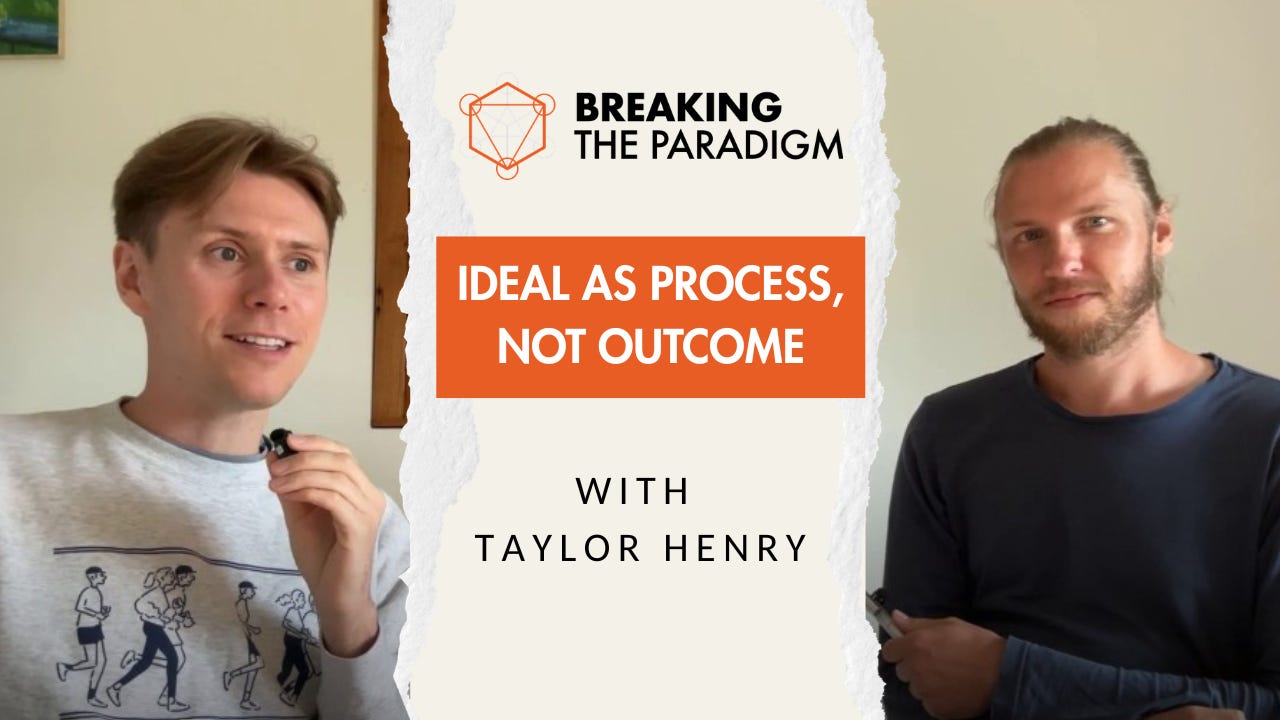 The Ideal Is a Process, Not an Outcome: A Conversation on Montessori and Letting Go with Taylor Henry 28.06.2026 47นาทีI’ve spent my career being told that shooting for the “ideal environment” for adolescents is impossible; that we must be “pragmatic” and make compromises when necessary in our work.What if the problem isn’t reality but our understanding of if? What if the “ideal environment” wasn’t a state of finality or achievement, but a never ending process that could begin immediately?In this episode of Breaking the Paradigm, Taylor Henry joins the Two Timers Club for a session recorded live at Bovina Center Montessori School. Over the course of our conversation, Taylor and I trace a thread that starts with the fear adults carry into adolescent environments. Along the way, we wrestle with the tension between giving up control and still being expected to deliver outcomes (and how we might get away from that). We also examine what happens when adults, out of fear, conditioning, and a culture that has socialized imagination right out of us, preemptively control the young people we claim to be liberating.And while this conversation broke new ground for Taylor and I, many of the threads that came up have been ruminating in our Montessori Adolescent Collaborative Forum, the first global community of practice made up of practitioners and leaders who gather to discuss how we can all live up to our calling to serve adolescent development. If you’d like to join our next session, check us out here!This is a conversation about patience, about the courage to let development unfold on its own timeline, and about living our ideal as a process, now.Thanks, Taylor, for a great conversation!Are you a Montessori Adolescent educator or leader? Join our Montessori Adolescent Collaborative Forum!Our Purpose:Realizing Montessori’s vision of a new world starting with how we, as practitioners, transform through dialogue and community.Why join the MAC Forum?* Build community: Connect with fellow adolescent guides from around the world.* Co-create the forum: Your questions, observations, and experiments shape the discussion.* Access the archive: Can’t make it live? All sessions recorded and available.Forums are held virtually every second Tuesday at 7:00pm ESTJoin Today and Find Your Community!The traditional education system had its chance.Now it’s our turn. This is a public episode. If you'd like to discuss this with other subscribers or get access to bonus episodes, visit breakingtheparadigm.org/subscribe
 -
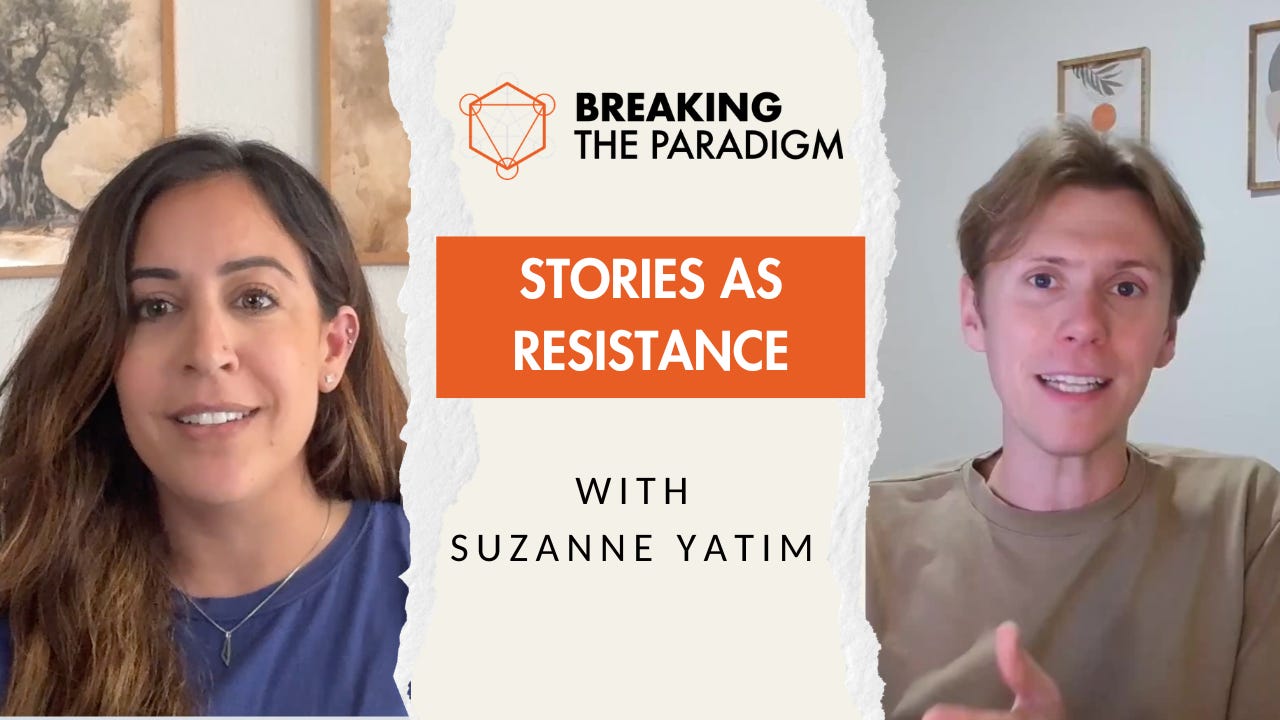 Palestinian Liberation Is Collective Liberation: A Conversation with Suzanne Yatim 07.06.2026 57นาทีAre you willing to be inconvenienced for someone else’s liberation… And your own?My guest, Suzanne Yatim, is a Palestinian-American actress, writer, filmmaker, and co-owner of Montessori Thrive. Her directorial debut, Breathe, filmed in Palestine, is currently in post-production. She’s also the bestselling author of Post Pardon Me, a dark comedy exploring motherhood and mental health. And when the genocide in Gaza began, she stopped everything she was doing and turned her full attention to getting people to understand what Palestinians have known their entire lives.Suzanne and I discussed the discomfort that solidarity requires and asks a question that we each must ask ourselves: how much are we really willing to change our daily life for collective liberation?We also dig into why neutrality is a myth and why Montessori herself would never have stayed silent in this moment.This episode is a continuation of our work with the third edition of Provocations Magazine, which centered Palestine and Montessori’s call for the liberation of all children. If that issue moved you, this conversation will too. Become a paid subscriber for full access to all issues of our paradigm breaking magazine!You can find Suzanne on Instagram (@TheActorvist) and learn more about Montessori Thrive at montessorithrive.com.Thanks, Suzanne, for a great conversation!Are you a Montessori Adolescent educator or leader? Join our Montessori Adolescent Collaborative Forum!Our Purpose:Realizing Montessori’s vision of a new world starting with how we, as practitioners, transform through dialogue and community.Why join the MAC Forum?* Build community: Connect with fellow adolescent guides from around the world.* Co-create the forum: Your questions, observations, and experiments shape the discussion.* Access the archive: Can’t make it live? All sessions recorded and available.Forums are held virtually every second Tuesday at 7:00pm ESTJoin Today and Find Your Community!The traditional education system had its chance.Now it’s our turn. This is a public episode. If you'd like to discuss this with other subscribers or get access to bonus episodes, visit breakingtheparadigm.org/subscribe
 -
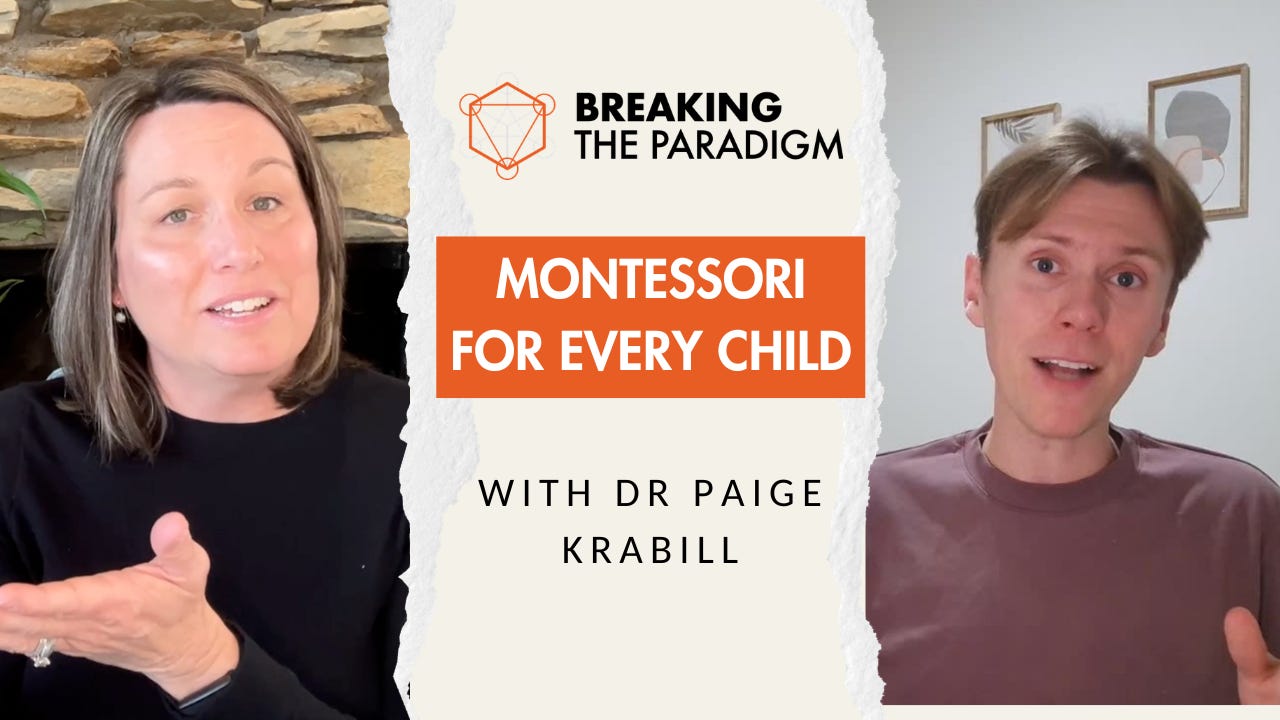 The Power of Possibility: Designing an Inclusive Montessori Environment with Dr. Paige Krabill 24.05.2026 47นาทีWhat is the best way to support students with diverse learning needs?It’s the question that almost every educator I know is asking.There’s a massive apparatus of intervention and support built around labels, diagnoses, and deficit-based thinking that was designed for conventional classrooms where compliance and uniformity are the goals. It’s referred to as the medical deficit model.When that apparatus gets imported into Montessori environments, it doesn’t just fail to help our young people, it actively undermines the very things we know children need: autonomy, competence, and meaningful relationships. In this conversation, Dr. Paige Krabill and I explore what it looks like to reject that apparatus and to build something in its place that’s rooted in the Montessori philosophy, building on the strengths and gifts inherent in every young person while providing them the support they need to cultivate independence and autonomy.Dr. Krabill is a clinical and school psychologist, an AMI-trained Montessori educator, and founder of PDK Educational Consulting. She spent the first chapter of her career working within the traditional intervention and support system, and kept hitting a wall. It wasn’t until she walked into a Montessori classroom with her own child that she found the language she’d been searching for. That discovery eventually led her to develop the Power of Possibility framework and to begin building something new: the Montessori Institute of Northeast Ohio, a training center dedicated to reimagining what inclusion can look like when it’s rooted in Montessori philosophy rather than layered on top of it.In this conversation, we dig into the cycle that so many schools get stuck in: how a behavioral manifestation leads to a label, which leads to separation, which leads to disconnection, which leads us to say Montessori “isn’t for this child.” Paige names the myths that keep that cycle spinning and calls us back to something deceptively simple: presume competence, start with yourself, prepare the environment, and observe.Montessori can (and should) be for every child, if we are willing to prepare environments to meet their needs.What would it mean to stop educating diagnoses and start being in communication with the child in front of us? What becomes possible when we trade the language of deficits for the language of aid to life, and when we trust that the prepared environment can do what no checklist of strategies ever could?This is a conversation about our spiritual preparation as adults; the kind that has to be practiced daily, that works against the grain of enormous systems, and that changes everything when we commit to it.Thanks, Paige for a great conversation!Are you a Montessori Adolescent educator or leader? Join our Montessori Adolescent Collaborative Forum!Our Purpose:Realizing Montessori’s vision of a new world starting with how we, as practitioners, transform through dialogue and community.Why join the MAC Forum?* Build community: Connect with fellow adolescent guides from around the world.* Co-create the forum: Your questions, observations, and experiments shape the discussion.* Access the archive: Can’t make it live? All sessions recorded and available.Forums are held virtually every second Tuesday at 7:00pm ESTJoin Today and Find Your Community!The traditional education system had its chance.Now it’s our turn. This is a public episode. If you'd like to discuss this with other subscribers or get access to bonus episodes, visit breakingtheparadigm.org/subscribe
 -
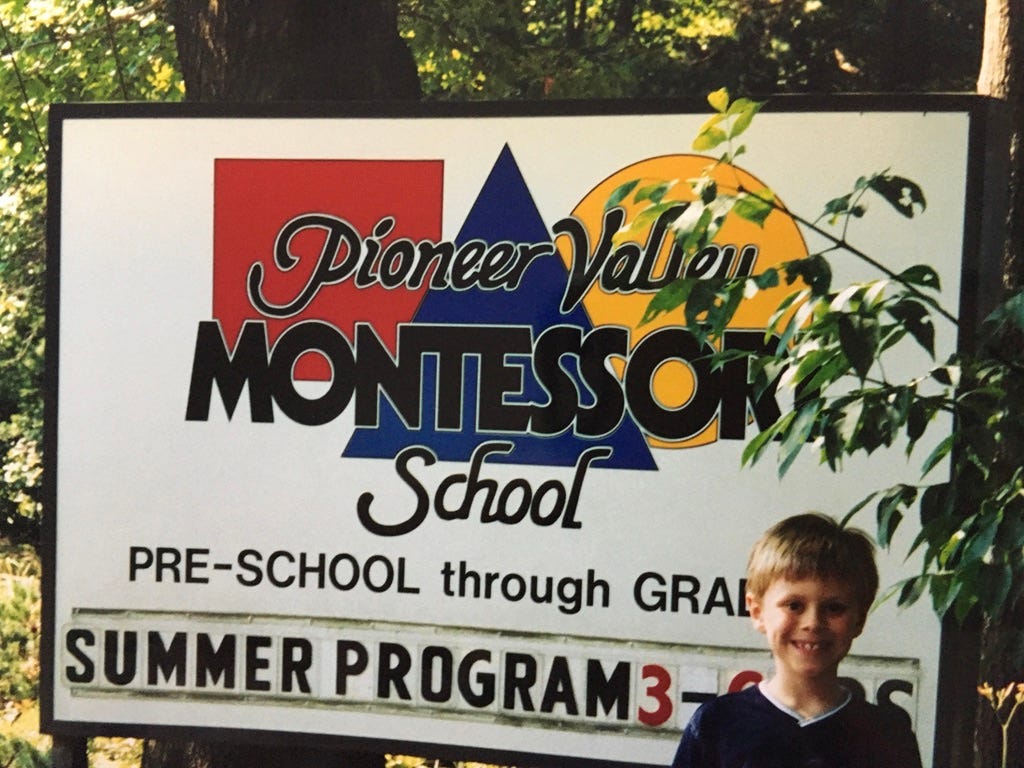 The Montessori Method, Continued: An Invitation to Change the World 10.05.2026 38นาทีI was honored to deliver the keynote at this year’s Montessori Educators of Alabama conference around their theme of “Better Together.” I wanted to use this time to sit with a question that’s been nagging at me for years: if Montessori education is so revolutionary, why haven’t we achieved the world of peace and justice that Montessori described? Why, nearly a century into this work, are we still so far from the equitable interdependence she believed was possible?That question led me back through my own journey: into my own childhood and adolescent experiences, some shocking revelations I had while working with 12-15 year olds, and into a hard look at what we might be unconsciously reproducing even in our most beautifully prepared environments. I wanted the room to wrestle with the reality that the dominant culture of modernity doesn’t just surround our schools, it lives inside each of us. And that meeting developmental needs, as essential as it is, may only be the starting point of our truly revolutionary work.Ultimately, this talk is about what’s becomes possible when we recognize the path we’re actually on: when we understand that Montessori didn’t leave us a recipe to follow, but a method to experimenting with. It’s about the new human that each of us is capable of becoming, and the courage it takes to walk that path alongside our students rather than sending them ahead alone.I’m grateful to the Alabama Montessori community for creating such a warm and generative space. After the talk, multiple participants wanted to share their Montessori origin stories with me. One school leader, who was a Montessori student at her mother’s school, said to me “I realize I am not just carrying on my mother’s legacy, but Maria’s too.”This is at the core of what I think needs to shift in our Montessori collective conscious: that we are carrying on Maria’s legacy and must act as she did- not as replicators of her end result, but of scientists of human development and radical social change.I hope you’ll give the talk a listen and share your thoughts. It was a labor of love to create, and so much was left on the cutting room floor. I hope it invites you to revisit your own origin story and consider how YOU are a part of this legacy too!Are you a Montessori Adolescent educator or leader? Join our Montessori Adolescent Collaborative Forum!Our Purpose:Realizing Montessori’s vision of a new world starting with how we, as practitioners, transform through dialogue and community.Why join the MAC Forum?* Build community: Connect with fellow adolescent guides from around the world.* Co-create the forum: Your questions, observations, and experiments shape the discussion.* Access the archive: Can’t make it live? All sessions recorded and available.Forums are held virtually every second Tuesday at 7:00pm ESTJoin Today and Find Your Community!The traditional education system had its chance.Now it’s our turn. This is a public episode. If you'd like to discuss this with other subscribers or get access to bonus episodes, visit breakingtheparadigm.org/subscribe
 -
 We're Losing the Tech Conversation Because Students Aren't a Part of It 26.04.2026 1ชม. 2นาทีThere’s a quiet truth most schools are avoiding right now: our students are navigating AI, social media, and digital life every single day; and if we’re not in that conversation with them, something else is.Probably AI itself.That was one of the most clarifying moments from our recent webinar with Dana Anderson, Building a Positive Tech Culture at Your School (and Why It’s Not About AI Bans and Phone Policing). Dana, who comes to this work as a Montessorian with experience across all three levels and who is one of the most thoughtful voices on digital citizenship I know, didn’t come to give us another policy template or a tighter phone ban. She came to ask a harder question:Who actually gets a voice in how your school handles technology?Because right now, in most schools, the answer is “adults.” And that’s exactly the problem.The reactive playbook isn’t workingSchools keep reaching for the same tools: ban the phones, block the AI. Write a stricter policy. Print it out. Post it on the website.But as Dana pointed out, a recent Gallup poll shows that 60 to 87 percent of teachers are already using AI for school-based work. Meanwhile, students in many of those same schools are told they can’t use AI at all, under any circumstances.This isn’t a policy problem. It’s a trust problem. And the fallout is predictable: young people circumvent the rules, hide their use, and stop bringing their real questions to the adults in their lives.Dana named it plainly: when students feel a tech policy has been imposed on them rather than built with them, the response is rebellion, not reflection.In a time when young people need to build discernment and critical thinking, not talking about technology is a disservice.What happens when we co-create rather than dictate?One powerful moment in the webinar came from Mara Weitzman, a Montessori educator who ran a service-learning program where her students used 3D printing and CAD design to create real replacement pieces, and entirely new materials, for other classrooms across her school.The students managed the projects, emailed the teachers, set up the meetings, and iterated until the material was right. The teachers ended up needing the students’ expertise. The students experienced themselves as contributors, not consumers. And the whole culture of the school shifted, not because someone wrote a better tech policy, but because young people were trusted with real responsibility.At Bridgemont International School, where Dana teaches, her AI literacy students are currently designing a professional development day on AI for the faculty. The students are teaching the teachers.That is what a positive tech culture actually looks like. Not surveillance. Not bans. Partnership.The paradigm we’re inviting you intoAs Dana reminded us, Maria Montessori wrote that education depends on a belief that the child has within themselves the capacity to develop into a being far superior to us, and that they will be the only ones who can show us a better way of living.Comfortable conversations don’t dismantle oppressive systems. Adult-only tech policies don’t prepare young people for a world saturated in technology they’ll inherit from us.The students are ready. The question is whether we are.What’s next!Dana and Developing Education are building something bigger around this work: a full course for educators and school leaders who are ready to stop reacting and start partnering with young people to build genuinely positive tech cultures in their schools.We want it to actually meet you where you are. If you’re even a little curious, we’d love your voice in shaping it.Share what YOU want to see in a course here!The revolution our students need starts with us having the courage to let them in.The traditional education system had its chance.Now it’s our turn. This is a public episode. If you'd like to discuss this with other subscribers or get access to bonus episodes, visit breakingtheparadigm.org/subscribe
 -
 Letting Go to Move Forward: The Unfinished Work of Montessori with Kathy Leitch 05.04.2026 58นาทีWhat if the biggest obstacle in Montessori is moving past our fear?Kathy Leitch, executive director of the International Montessori Council, joins Breaking the Paradigm to explore what it really means to carry Montessori forward as a living, experimental method rather than a fixed recipe. With decades of experience in Montessori schools around the world, Kathy makes a case that’s both provocative and deeply generous: Montessori is for every child, even if every school, every classroom, and every guide isn’t yet ready for every child.What would change if we stopped treating the album as the method? What happens when we let fear: of parents, of imperfection, of breaking with tradition, drive decisions that should be rooted in love? And what does it actually look like to transform our own spirit before we try to transform education?Kathy names the energy of love as the most powerful and least explored dimension of Montessori's legacy: an organizing force that shows up in highly functioning classrooms and lingers in the adults those classrooms produce. She challenges the protective instincts that keep our movement small: the hierarchy, the gatekeeping, the insistence on perfection. And she calls us back to the inner work that makes everything else possible: the kind of spiritual preparation that doesn't just happen once in training but every time a child triggers something we didn't know we were carrying.This is a conversation about courage, energy, and the unfinished work Montessori left us, not as a limitation, but as an invitation. Thanks Kathy for a great conversation!Are you a Montessori Adolescent educator or leader? Join our Montessori Adolescent Collaborative Forum!Our Purpose:Realizing Montessori’s vision of a new world starting with how we, as practitioners, transform through dialogue and community.Why join the MAC Forum?* Build community: Connect with fellow adolescent guides from around the world.* Co-create the forum: Your questions, observations, and experiments shape the discussion.* Access the archive: Can’t make it live? All sessions recorded and available.Forums are held virtually every second Tuesday at 7:00pm ESTJoin Today and Find Your Community!The traditional education system had its chance.Now it’s our turn. This is a public episode. If you'd like to discuss this with other subscribers or get access to bonus episodes, visit breakingtheparadigm.org/subscribe
 -
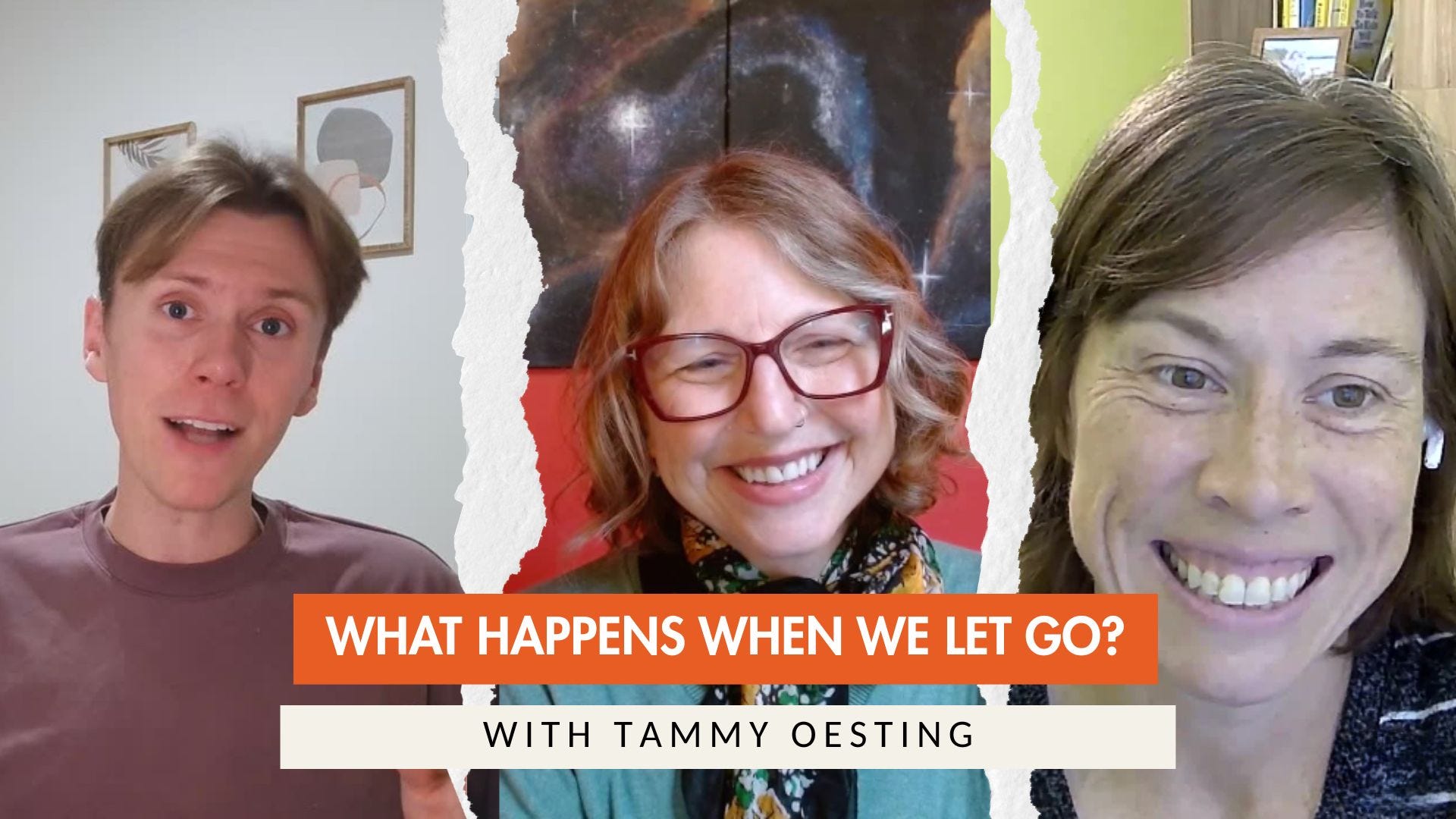 From Compliance to Emergence: Rethinking Peace Education and Montessori Teacher Preparation with Tammy Oesting 22.03.2026 1ชม.What if peace education has nothing to do with teaching kids to be calm?Here’s the provocation from Tammy Oesting in her third Breaking the Paradigm apprearance: Peace education isn’t about mindfulness exercises or conflict resolution scripts. It’s not the “kumbaya approach” where we shield children from the world’s hard truths. Real peace education creates conditions that produce a new human who has embodied interdependence: who knows in their bones that they are part of a web, not standing above it. That’s systems-level work. That requires us to look at what we’re afraid to see.And then there’s the question we need to ask about Montessori teacher preparation: Is all our scaffolding: the affiliations, the compliance measures, the rigid fidelity requirements, supporting the rise of human potential, or is it a cage? Why are we so committed to structures that don’t reflect how adults actually learn? And why do we trust children to organize their own time and follow their developmental path, but then demand adults comply with preparation programs that look nothing like the way Dr. Montessori herself taught?At the heart of everything Tammy is asking us to sit with is this: What happens when we let go of control? What emerges in the chaos? Because from chaos comes emergence.This conversation won’t give you easy answers. It will give you better questions.Thanks, Tammy, for bringing the courage we all need right now!Are you a Montessori Adolescent educator or leader? Join our Montessori Adolescent Collaborative Forum!Our Purpose:Realizing Montessori’s vision of a new world starting with how we, as practitioners, transform through dialogue and community.Why join the MAC Forum?* Build community: Connect with fellow adolescent guides from around the world.* Co-create the forum: Your questions, observations, and experiments shape the discussion.* Access the archive: Can’t make it live? All sessions recorded and available.Forums are held virtually every second Tuesday at 7:00pm ESTJoin Today and Find Your Community!The traditional education system had its chance.Now it’s our turn. This is a public episode. If you'd like to discuss this with other subscribers or get access to bonus episodes, visit breakingtheparadigm.org/subscribe
 -
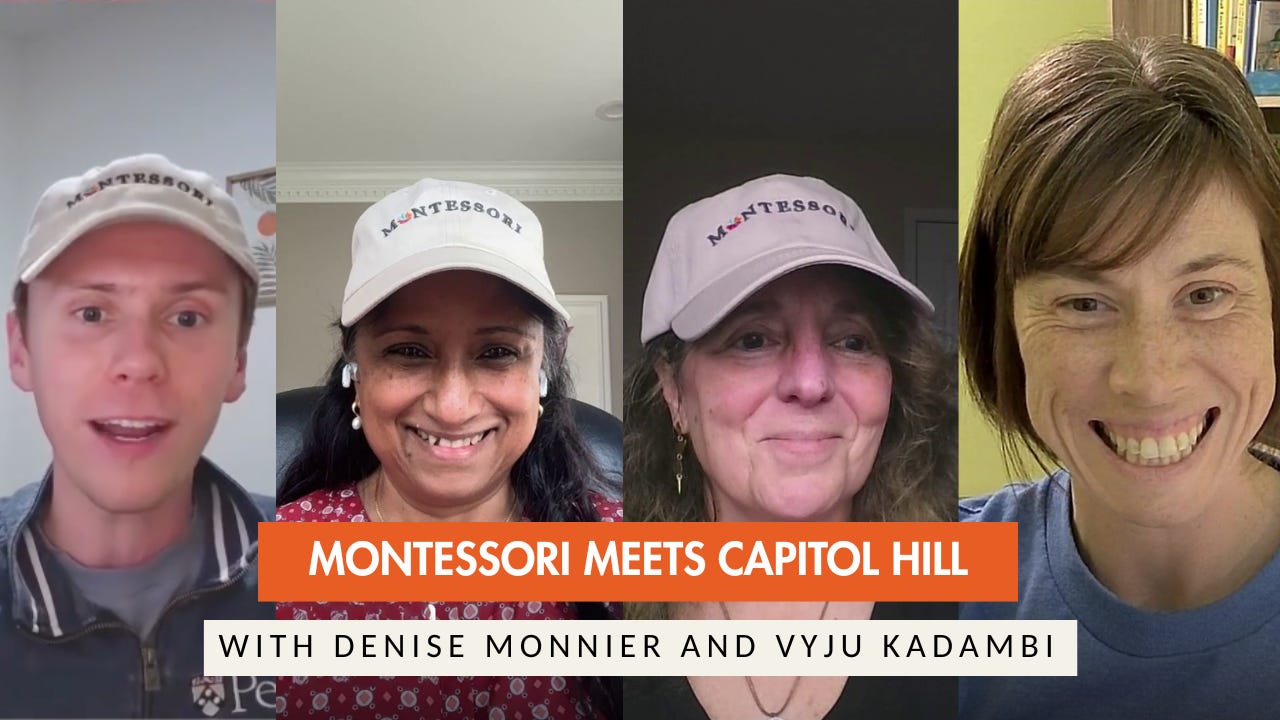 45 States, Two People, One Mission: The Work of the Montessori Public Policy Initiative 15.03.2026 38นาทีWhat if the most powerful thing Montessori educators could do for children right now isn’t in the classroom, but in the halls of Congress?Mixed-age groupings. The three-hour work cycle. Observation-based curriculum. Teacher preparation rooted in human development. Everything that makes Montessori transformative deserves to be reflected in the laws, funding streams, and regulations that shape what’s possible for schools and families. But when we’re not at the table, the language gets written without us; and that’s exactly what MPPI is working to change.In this special live episode, Kelly and I sit down with Denise Monnier and Vyju Kadambi of the Montessori Public Policy Initiative: a two-person organization with advocates in 45 states doing the essential work of making sure Montessori has a voice where it matters most. They’re not waiting for a crisis. They’re building relationships with legislators so public policy includes and uplifts our work in Montessori.This Thursday, as part of the AMS conference in Washington, D.C., MPPI is leading Montessori on the Move, a day of preparation, storytelling, and over 30 meetings on Capitol Hill. It’s the first time our community has organized something like this at the federal level, and Denise and Vyju want you there! It’s not too late to register. It’s not too late to show up for the afternoon. It’s not too late to be in that group photo on the Capitol steps (and get a cool Montessori hat while you’re at it!).And if you can’t make it to D.C., this conversation will convince you that advocacy is already something you do, and that the leap from advocating for a child in your classroom to advocating for Montessori in your statehouse is shorter than you think.You can find MPPI and get connected at MontessoriAdvocacy.org.See you in DC!Are you a Montessori Adolescent educator or leader? Join our Montessori Adolescent Collaborative Forum!Our Purpose:Realizing Montessori’s vision of a new world starting with how we, as practitioners, transform through dialogue and community.Why join the MAC Forum?* Build community: Connect with fellow adolescent guides from around the world.* Co-create the forum: Your questions, observations, and experiments shape the discussion.* Access the archive: Can’t make it live? All sessions recorded and available.Forums are held virtually every second Tuesday at 7:00pm ESTJoin Today and Find Your Community!The traditional education system had its chance.Now it’s our turn. This is a public episode. If you'd like to discuss this with other subscribers or get access to bonus episodes, visit breakingtheparadigm.org/subscribe
 -
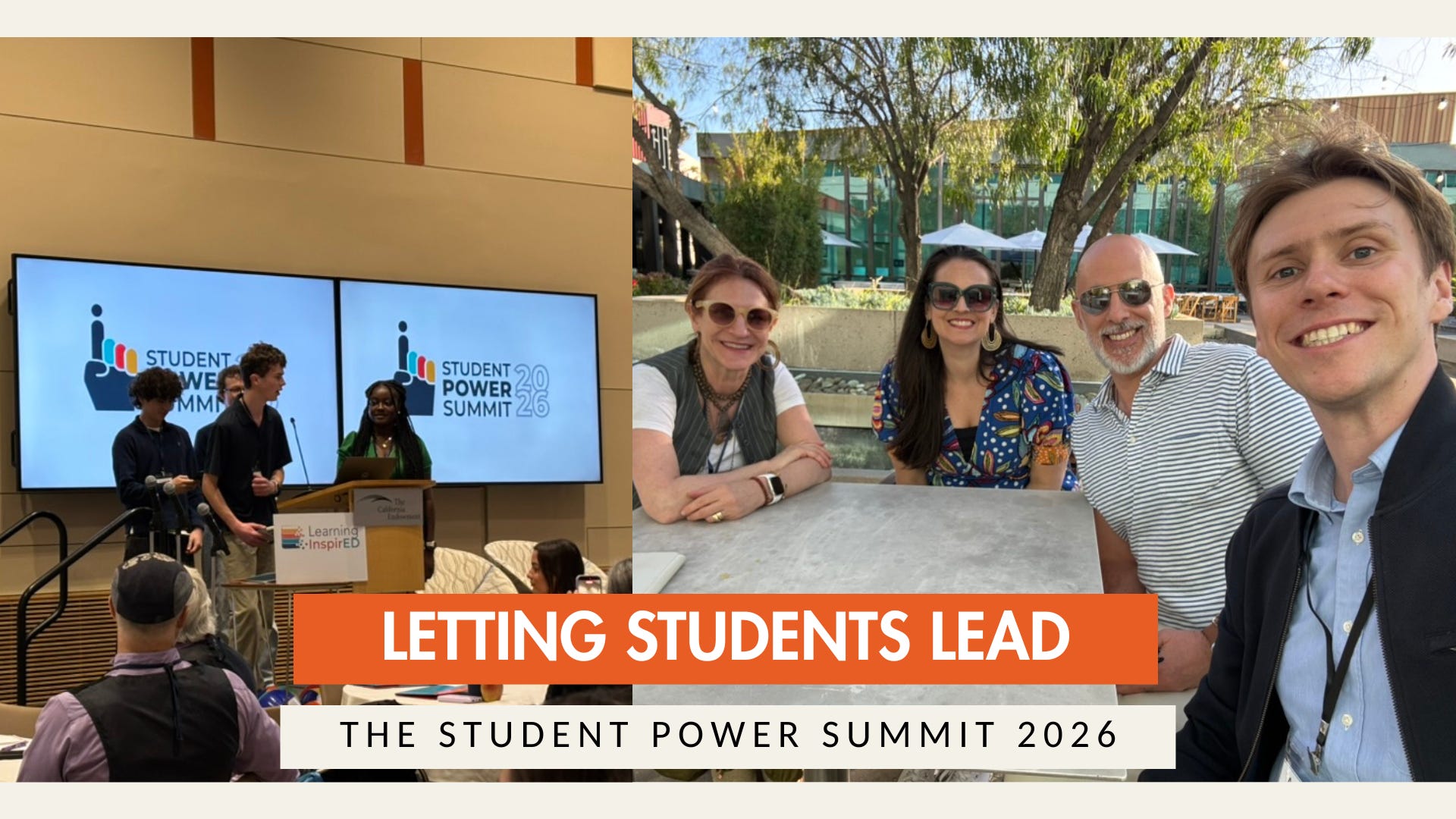 What If We Just Listened? Live from the Student Power Summit 2026 15.03.2026 46นาทีWhat if depression and anxiety in young people aren’t signs that something is wrong with them, but proof that something is wrong with what we’re doing to them?This is a special three-part episode recorded before, during, and after the Student Power Summit in Los Angeles: a conference that truly and authentically centered student voice. Students from across the country weren’t just in attendance, they were active participants in sessions, pushing back on what adults were saying, and ultimately presenting their own vision for what education should look like. You’ll hear that in the final segment, and it’s worth the wait.Part one begins with my reflections on Johann Hari’s Lost Connections and the research showing that depression is not a chemical imbalance to be medicated away, but rather a response to environments that disconnect us from meaningful work, from each other, from our values, from the natural world, and from a hopeful future. Sound like any institution you know?Part two is a conversation with Jason Blair, an elementary art teacher from Columbus, Ohio, and Jennifer Goen, teacher and instructional leader at HB Woodlawn, a democratic school in Arlington, Virginia. Fresh off the first day of the summit and inspired by the partnership with Homeboy Industries, Jason and Jennifer dig into what happens when we start from strengths instead of deficits, why the arts hold a key that most schools throw away, and why efficiency may be the single greatest enemy of real learning.Part three is the students themselves, and I’ll leave that for you to experience firsthand. They share clearly what they need in order to thrive.I also want to share some key takeaways I had from the breakout sessions. Dr. Stuart Slavin, while leading a medical school, found that his students had skyrocketing anxiety and depression that only worsened each year. His response wasn’t to offer more counseling. He cut class time by 10%, made all courses pass/fail, freed up every other Wednesday for student-chosen pursuits, and reduced daily homework by one to two hours. Board scores rose. The failure rate was cut in half. Students left their first year of medical school less anxious than when they entered. His metaphor says it all: when the canaries started dying in the coal mines, miners didn’t give the canaries antidepressants. They got out of the mine. Our young people are the canaries. And yet we keep pushing deeper.Slavin also names the toxic mindsets these environments produce: performance as identity, toxic comparison, maladaptive perfectionism, imposter phenomenon, self-blame, shame, and what’s known as the Stanford Duck: being calm on the surface, but with your feet paddling like crazy underneath. These aren’t personal failures. They’re the predictable outcomes of top-down, compliance-driven education.I also had the privilege of meeting Nick Covington and Chris McNutt, cofounders of the Human Restoration Project, for the first time in person. Their work using empathy interviews to collect real-time data from students, and then using that data to reshape the experience of school in the image of the young people inside it, is incredibly powerful work. And they’re doing it in public schools that on the surface seem untouchable. When we change the kind of data we collect, and we have the right intention behind the reforms we pursue, remarkable things become possible.Huge thanks to Mike Nicholson for organizing this truly incredible conference; the first I’ve attended that pushed meaningfully on the systemic implications of our schooling system with this kind of depth and honesty. And a special shout out to Dr. Mary Helen Immordino-Yang for a keynote that I hope to share parts of in a future episode.There’s more footage from the summit coming. But for now, listen to what happens when we stop talking about students and start listening to them.Want to hear more? Breaking The Paradigm will be LIVE, this afternoon, at 4:15pm!We’ll be talking with the Montessori Public Policy Initiative about their upcoming advocacy day as part of the AMS Conference here in DC. Tune in on Substack, LinkedIn, or Riverside! See you then!Are you a Montessori Adolescent educator or leader? Join our Montessori Adolescent Collaborative Forum!Our Purpose:Realizing Montessori’s vision of a new world starting with how we, as practitioners, transform through dialogue and community.Why join the MAC Forum?* Build community: Connect with fellow adolescent guides from around the world.* Co-create the forum: Your questions, observations, and experiments shape the discussion.* Access the archive: Can’t make it live? All sessions recorded and available.Forums are held virtually every second Tuesday at 7:00pm ESTJoin Today and Find Your Community!The traditional education system had its chance.Now it’s our turn. This is a public episode. If you'd like to discuss this with other subscribers or get access to bonus episodes, visit breakingtheparadigm.org/subscribe
 -
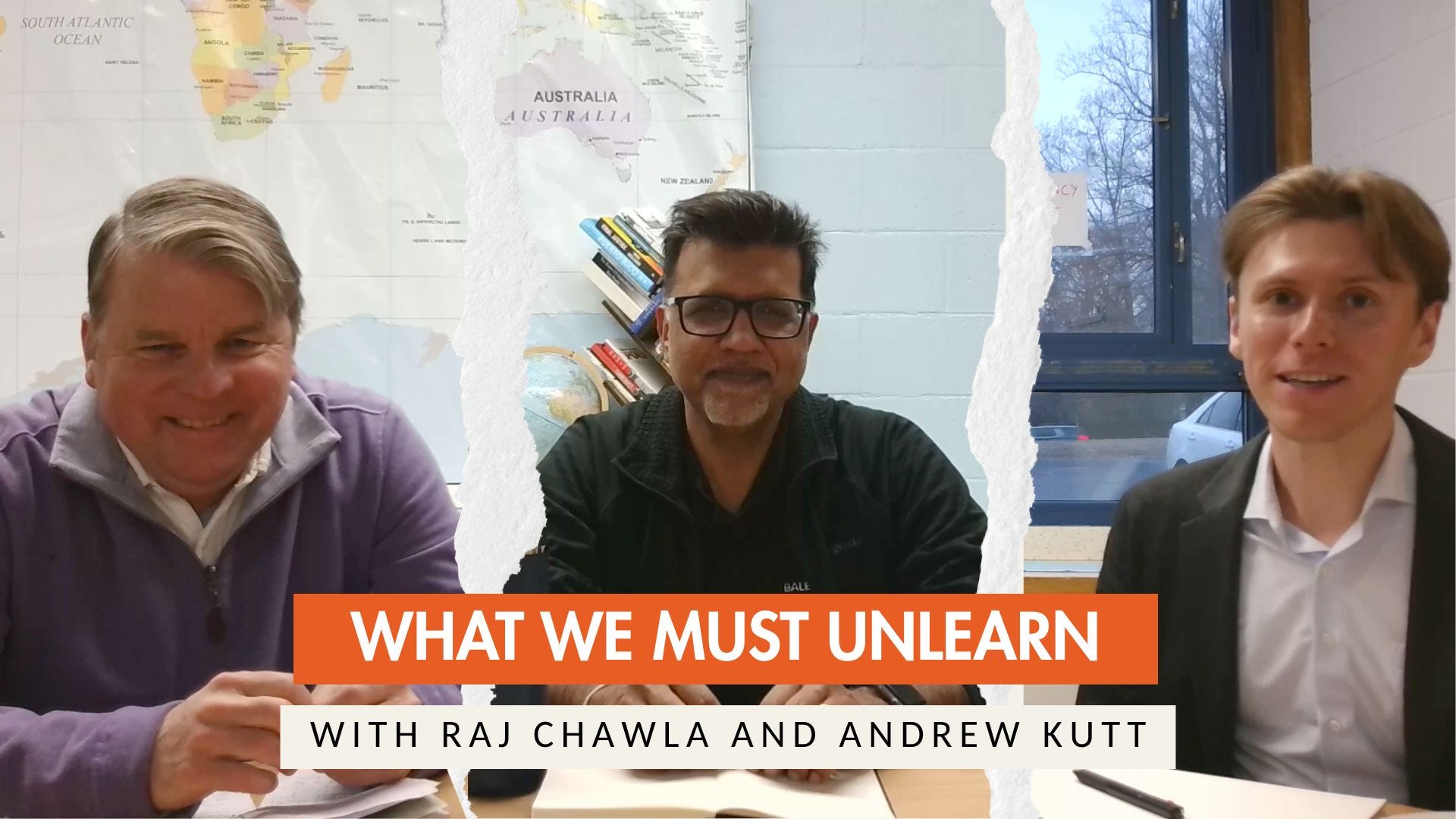 Composting Modernity: Unlearning the Stories That Are Unraveling Our World with Raj Chawla and Andrew Kutt 01.03.2026 1ชม.What if the crisis we’re facing isn’t something to be solved, but something to be composted?Raj Chawla and Andrew Kutt joined me for a conversation that asks us to slow down long enough to feel what’s actually happening beneath the surface of our world, our systems, and ourselves. What Raj illuminates so beautifully is that the assumptions driving our global unraveling: separation, domination, the compulsion to control, aren’t just “out there” in our institutions and economies. They live in our nervous systems. They live in us.This is not a comfortable conversation. It’s not meant to be.What does it mean to truly unlearn something that has been passed down through generations of conditioning? What do we lose when we let go of control, and what becomes possible when we do? And what does any of this have to do with how we educate young people in a time of collapse?Raj doesn’t offer answers. He offers something rarer: a slowing down, a bearing witness, an invitation to compost what modernity has accumulated in us so that something new might emerge in the clearing.This is one of those episodes that will sit with you long after you’ve finished listening.Thanks Raj and Andrew for a great conversation!Are you a Montessori Adolescent educator or leader? Join our Montessori Adolescent Collaborative Forum!Our Purpose:Realizing Montessori’s vision of a new world starting with how we, as practitioners, transform through dialogue and community.Why join the MAC Forum?* Build community: Connect with fellow adolescent guides from around the world.* Co-create the forum: Your questions, observations, and experiments shape the discussion.* Access the archive: Can’t make it live? All sessions recorded and available.Forums are held virtually every second Tuesday at 7:00pm ESTJoin Today and Find Your Community!The traditional education system had its chance.Now it’s our turn. This is a public episode. If you'd like to discuss this with other subscribers or get access to bonus episodes, visit breakingtheparadigm.org/subscribe
 -
 What Will Adolescents Do When We're Not Watching? 01.02.2026 58นาทีThis was our first ever live stream with Breaking the Paradigm, and Kelly and I tackled a question that keeps coming up in our work: What are we really afraid adolescents will do when left unsupervised?The answers people give, ranging from mischief to far more absurd fears, reveal something deeper about how we view adolescents: That there is a fundamental mistrust that erodes our ability to truly see them for who they are.Kelly and I dug into why we feel the need to surveil adolescents constantly, even in prepared Montessori environments where we claim to trust development.Here’s what we explored: When we create environments of control and compliance, we get exactly what we’re afraid of: adolescents who will act outside of the tight boundaries we try to draw. But when we prepare environments rooted in trust and autonomy, adolescents rise to meet our highest expectations and demonstrate meaningful, positive, and engaged citizenship. The question isn’t what they’ll do, it’s what our need to watch them reveals about our own inner preparation and reflection.We also talked about the impossibility of power struggles (spoiler: you (the adult) always lose) and what it actually means to be the prepared adult in relationship with adolescents.This episode launches our new Montessori Adolescent Collaborative (MAC) Forum!Bi-Weekly Dialogues for Practitioners and Leaders.MAC Forum Purpose:Realizing Montessori’s vision of a new world starting with how we, as adolescent practitioners, transform through dialogue and community.Why join the MAC Forum?* Build community: Connect with fellow adolescent guides from around the world.* Co-create the forum: Your questions, observations, and experiments shape the discussion.* Access the archive: Can’t make it live? All sessions recorded and available.Forums are held virtually every second Tuesday at 7:00pm EST in MarchJoin Today and Find Your Community! This is a public episode. If you'd like to discuss this with other subscribers or get access to bonus episodes, visit breakingtheparadigm.org/subscribe
 -
 Education, ICE, and Montessori - Live Stream Recording 25.01.2026 36นาทีYesterday, ICE murdered another innocent bystander, Alex Pretti. He was a US citizenEarlier this week, they took a 5 year old hostage in order to detain his parents. They are legally allowed in this country.Last week, they murdered Renee Good at point blank range outside of her home.These aren’t isolated incidents- it’s a call for those of us who are pushing the education revolution forward. Check out this conversation where Andrew discusses what this means for our work in education- how our human nature is NOT violence and competition, the role of education in creating emergent transformation toward equitable interdependence, and what we must be willing to lose to actually change these systems we find ourselves in.Please share your additional comments, thoughts, and ideas of how we can come together in interdependence and solidarity. Our young people need our collective courage now, more than ever.Thanks to all those who attended live, it was great to hear your thoughts in the comments!Quotes and other resources I shared in the podcast:* I LEAVE YOU FINALLY A RESPONSIBILITY TO OUR YOUNG PEOPLE. The world around us really belongs to youth, for youth will take over its future management. Our children must never lose their zeal for building a better world. They must not be discouraged from aspiring toward greatness, for they are to be the leaders of tomorrow. Nor must they forget that the masses of our people are still underprivileged, ill-housed, impoverished and victimized by discrimination. We have a powerful potential in our youth, and we must have the courage to change old ideas and practices so that we may direct their power toward good ends. (Mary Jane McLeod Bethune, 1999, p. 62)* Paths to the Light and Dark Sides of Human Nature: A Meta-analysis of the Prosocial Benefits of Autonomy and the Antisocial Costs of Control* “The schoolchild who is continually discouraged and repressed comes to lack confidence in himself. He suffers from a sense of panic that goes by the name of timidity, a lack of self-assurance that in the adult takes the form of frustration and submissiveness and the inability to resist what is morally wrong. The obedience forced upon a child at home and in school, an obedience that does not recognize the rights of reason and justice, prepares the adult to resign himself to anything and everything. The widespread practice in educational institutions of exposing a child who makes mistakes to public disapproval, and indeed to a sort of public pillorying, instils in him an uncontrollable and irrational terror of public opinion, however unfair and erroneous that opinion may be. And through these and many other kinds of conditioning that lead to a sense of inferiority, the way is opened to the spirit of unthinking respect, and indeed almost mindless idolatry, in the minds of paralysed adults toward public leaders, who come to represent surrogate teachers and fathers, figures upon whom the child was forced to look as perfect and infallible. And discipline thus becomes almost synonymous with slavery.” Maria Montessori, Education and Peace, pg 16* “Two paths lie open in the development of personality - one that leads to the man who loves and one that leads to the man who possesses. One leads to the man who has won his independence and works harmoniously with others, and the other to the human slave who becomes the prisoner of his possessions as he tries to free himself and who comes to hate his fellows.” Maria Montessori, Education and Peace, pg 53* “Nowadays it is considered antiquated and out of fashion to talk of morality or religion. In fact, in these times it is felt that, in order to respect the opinions of adults, one should give no opinions to children. How strange and illogical to think that in order to respect the feelings of adults we must deprive the children of a very necessary help. Now I feel certain that the child himself can be a great assistance to us in understanding this question of morality. That is why I say that the life of the child and the adult are two different things that can help each other. Without doubt we can, for what the child has shown us, consider morality in relation to social life. For the meaning of morality is our relation with other people and our adaptation to life with other people. Therefore, morality and social life are very closely united.” Maria Montessori, “Moral and Social Education” in Citizen of the World, pg 19* “The need that is so keenly felt for a reform of secondary schools concerns not only an educational, but also a human and social problem. This can be summed up in one sentence: Schools as they are today, are adapted neither to the needs of adolescence nor to the times in which we live. Society has not only developed into a state of utmost complication and extreme contrasts, but it has now come to a crisis in which the peace of the world and civilization itself are threatened. The crisis is certainly connected with the immense progress that has been made in science and its practical applications, but it has not been caused by them. More than to anything else it is due to the fact that the development of man himself has not kept pace with that of his external environment. While material progress has been extremely rapid and social life has been completely transformed, the schools have remained in a kind of arrested development, organized in a way that cannot have been well suited even to the needs of the past, but that today is actually in contrast with human progress. The reform of the secondary school may not solve all the problems of our times, but it is certainly a necessary step, and a practical, though limited, contribution to an urgently needed reconstruction of society. Everything that concerns education assumes today an importance of a general kind, and must represent a protection and a practical aid to the development of man; that is to say, it must aim at improving the individual in order to improve society.” Maria Montessori, From Childhood to Adolescence, pg 56 This is a public episode. If you'd like to discuss this with other subscribers or get access to bonus episodes, visit breakingtheparadigm.org/subscribe
 -
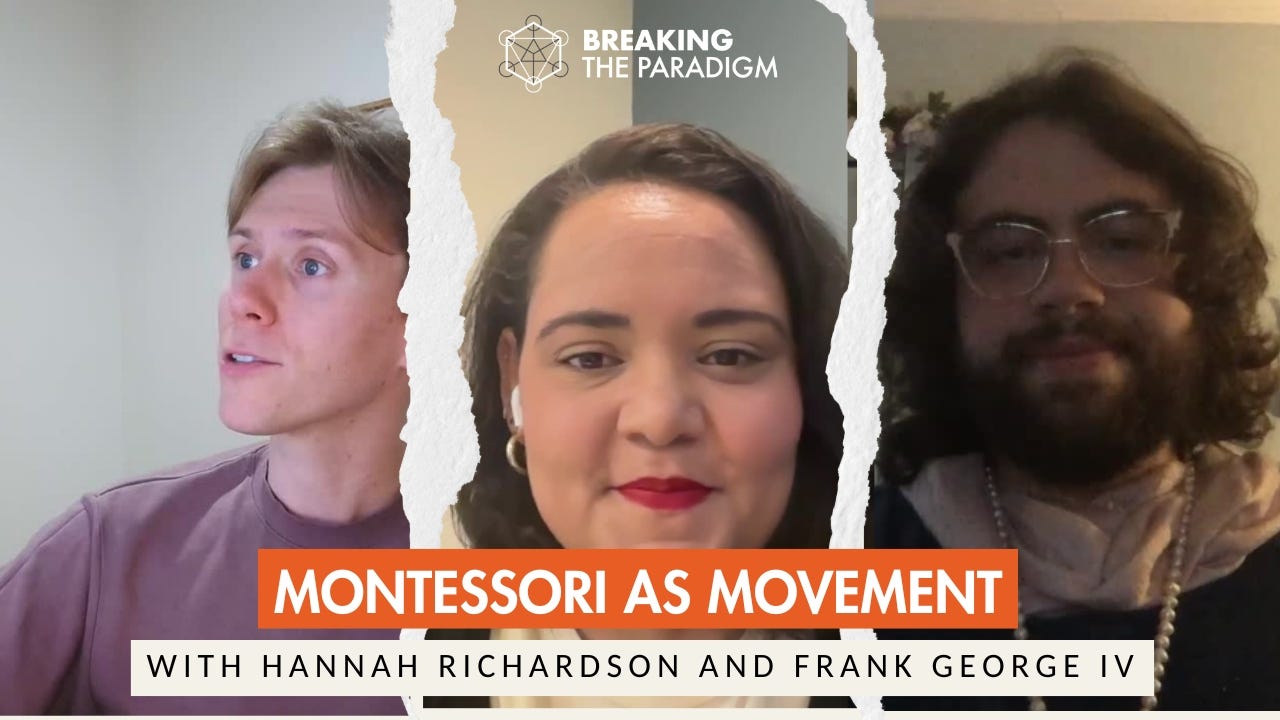 Montessori Lives in the World: Why Justice Can't Wait with Hannah Richardson and Frank George IV 25.01.2026 54นาทีWhat if honoring the whole child means honoring the whole of humanity?Sometimes we convince ourselves that our work stops at the classroom door- that if we just prepare beautiful environments and follow the child, peace will somehow emerge on its own. But we don’t have time to wait for perfectly prepared children to fix the world. We need justice now.In this urgent conversation with Hannah Richardson and Frank George IV, co-founders of the Peace Rebellion, we confront what it means to move from conversation to action. They’ve built a nonprofit organization providing Montessorians with concrete tools: emergency defense resources, ICE information, food access guides, labor rights support, community gathering spaces, and global solidarity dossiers.Why must Montessorians engage in justice work right now?How do we prepare environments for our children to grow into as adults, not just as students?What’s the difference between peace as compliance and peace as liberation?Hannah and Frank challenge us to see that Montessori is not safe from the world, it lives in the world. And that means we cannot abdicate our responsibility to create systems of justice and liberation for adults. From fighting for fair wages to providing SNAP benefits resources during government shutdowns, the Peace Rebellion embodies what it means to act with urgency.This conversation isn’t about adding justice to your to-do list—it’s about recognizing that without justice work, we’re not fully embodying Montessori.All these paradigm-shattering insights on action, urgency, and what it truly means to work toward peace, in this episode of Breaking the Paradigm.Thanks, Hannah and Frank, for a great conversation!Check out the Peace Rebellion here: https://www.thepeacerebellion.org/ You just heard another conversation that mainstream education won’t have.The question is: What are you going to do about it?Most educators listen to paradigm-breaking ideas and return to the same broken systems tomorrow.But you’re different - you’re here because you refuse to accept “that’s just how education works.”Ready to move from consuming revolutionary content to building revolutionary alternatives?Start Free: Join the Paradigm Breakers Community - Connect with educators worldwide who are questioning unspoken norms and implementing authentic alternatives. Share your breakthrough moments, get support for your experiments, and contribute to frameworks we’re building together.Go Deeper: Provocations Magazine Subscription - Quarterly investigations into topics mainstream education won’t touch. The conversations you just heard barely scratch the surface of what we explore.Transform Everything: Premium Provocations (Launching Soon) - Join the waitlist for quarterly group coaching calls, 50% off all courses, and direct access to building the frameworks that will reshape education.Here’s the reality: The educational revolution won’t be built by people who just listen to podcasts about change. It’s being built by educators who question everything, implement alternatives, and prove that transformation is possible.The traditional education system had its chance.Now it’s our turn. This is a public episode. If you'd like to discuss this with other subscribers or get access to bonus episodes, visit breakingtheparadigm.org/subscribe
 -
 How AMI/USA Is Reimagining Collaboration and Accessibility with Dr. KaLinda Bass-Barlow 11.01.2026 1ชม. 18นาทีWhat does it mean to create a space where people truly belong?Under Dr. KaLinda Bass-Barlow’s leadership, The Association Montessori International/USA (AMI/USA) is reimagining what it means to honor Maria Montessori’s legacy while meeting the evolving needs of our time and place.In this conversation, Dr. KaLinda shares the intentional work happening at AMI/USA: opening the annual conference to all Montessori educators regardless of training, visiting over 20 schools in four months to listen and understand needs, and building partnerships across Montessori organizations. Despite a tradition among Montessori organizations of competing with one another, Dr. KaLinda’s focus is clear and refreshing- we cannot keep competing with each other if we want to create the peace that Dr. Montessori fought so hard for in her lifetime. We must collaborate for the benefit for our children, teachers, and our world at large.Dr. KaLinda’s moral compass is clear: serving children requires courage to challenge the status quo, ask difficult questions, and move beyond “this is how we’ve always done it.” From her journey stumbling into Montessori in Kansas City Public Schools to now leading AMI/USA’s transformation, she demonstrates what happens when leaders suit themselves with the right tools and let their values guide strategic action.We have been so grateful to collaborate with AMI/USA to offer Provocations Magazine at a discount to AMI/USA Members and we will be having our first live podcast booth at The 2026 Montessori Experience: Refresher Courses and More in San Diego in February!All these insights on transformation, belonging, and courageous leadership in this episode of Breaking the Paradigm.Thanks, Dr. KaLinda, for a great conversation!Note: The reference to the Core Principles Course is an AMI course, not an AMI/USA courseYou just heard another conversation that mainstream education won’t have.The question is: What are you going to do about it?Most educators listen to paradigm-breaking ideas and return to the same broken systems tomorrow.But you’re different - you’re here because you refuse to accept “that’s just how education works.”Ready to move from consuming revolutionary content to building revolutionary alternatives?Start Free: Join the Paradigm Breakers Community - Connect with educators worldwide who are questioning unspoken norms and implementing authentic alternatives. Share your breakthrough moments, get support for your experiments, and contribute to frameworks we’re building together.Go Deeper: Provocations Magazine Subscription - Quarterly investigations into topics mainstream education won’t touch. The conversations you just heard barely scratch the surface of what we explore.Transform Everything: Premium Provocations (Launching Soon) - Join the waitlist for quarterly group coaching calls, 50% off all courses, and direct access to building the frameworks that will reshape education.Here’s the reality: The educational revolution won’t be built by people who just listen to podcasts about change. It’s being built by educators who question everything, implement alternatives, and prove that transformation is possible.The traditional education system had its chance.Now it’s our turn. This is a public episode. If you'd like to discuss this with other subscribers or get access to bonus episodes, visit breakingtheparadigm.org/subscribe
 -
 Building the First Worker Cooperative Montessori Organization with Carolyn Sweet and Suzanne Tipton 04.01.2026 58นาทีWhat if we organized Montessori organizations the way we organize Montessori classrooms?When The Institute of Montessori Training’s previous organization became financially unviable, Carolyn Sweet and Suzanne Tipton faced a choice: walk away or build something radically different. They chose to create the first worker cooperative Montessori training organization, where decisions are made collectively, autonomy is the default, and trust replaces micromanagement.Carolyn and Suzanne share how they rebuilt from the ashes with a simple principle: a good leader puts everybody on the right seat on the bus and then leaves them alone. No time clocks, no permission-seeking, no control. Just transparency, shared financial statements, monthly community meetings, and the spiritual preparation to trust each other.In this episode, we pondered:Why do we give autonomy to children but micromanage the most highly educated professionals?How do we shift from teaching the minutiae of lessons to passing down the spirit of Montessori?Their work proves that organizations can embody Montessori principles: assuming positive intent, celebrating individual strengths, and trusting people to do meaningful work without surveillance.This conversation isn’t about fixing what’s broken, it’s about what emerges when we have the courage to let go and build something better.All these paradigm-shifting insights on autonomy, accessibility, and living Montessori as adults, in this episode of Breaking the Paradigm.Thanks Suzanne and Carolyn for a great episode, and welcome to the “Two Timers Club” Suzanne!You just heard another conversation that mainstream education won’t have.The question is: What are you going to do about it?Most educators listen to paradigm-breaking ideas and return to the same broken systems tomorrow.But you’re different - you’re here because you refuse to accept “that’s just how education works.”Ready to move from consuming revolutionary content to building revolutionary alternatives?Start Free: Join the Paradigm Breakers Community - Connect with educators worldwide who are questioning unspoken norms and implementing authentic alternatives. Share your breakthrough moments, get support for your experiments, and contribute to frameworks we’re building together.Go Deeper: Provocations Magazine Subscription - Quarterly investigations into topics mainstream education won’t touch. The conversations you just heard barely scratch the surface of what we explore.Transform Everything: Premium Provocations (Launching Soon) - Join the waitlist for quarterly group coaching calls, 50% off all courses, and direct access to building the frameworks that will reshape education.Here’s the reality: The educational revolution won’t be built by people who just listen to podcasts about change. It’s being built by educators who question everything, implement alternatives, and prove that transformation is possible.The traditional education system had its chance.Now it’s our turn. This is a public episode. If you'd like to discuss this with other subscribers or get access to bonus episodes, visit breakingtheparadigm.org/subscribe
 -
 Community, Courage, and California Time: Justin Tosco Interviews Andrew and Kelly on Anniversary Special 28.12.2025 1ชม. 12นาทีThe best things I’ve ever done have been emergent- arising out of good conversation and dialogue with others.This is the MO of Breaking the Paradigm; bringing together Montessori and progressive practitioners and letting the right conversation emerge- no script, no pre-determined outcome, just trust in the power of presence.And was that spirit of emergence that led Justin Tosco, now a member of the Breaking the Paradigm Five Timers Club, to convince me to let him host our show and interview Kelly and I about our work with Breaking the Paradigm and Developing Education.This episode was so special to me- in part because this is the first time that we’ve been able to fully tell the story of this work. While longtime listeners have picked up snippets here and there, we are grateful for so many new listeners over the past few months- and this is your chance to get to know us a little better.This episode is also exciting because it comes on the precipice of some big announcements coming in January for Developing Education- so stay tuned and watch this space!So if you’re interested in the behind-the-scenes look at how Breaking the Paradigm works, and how many hours of sleep I do (or don’t get) every night, check out this anniversary episode of Breaking the Paradigm!Thanks, Justin, for being an excellent guest host!You just heard another conversation that mainstream education won’t have.The question is: What are you going to do about it?Most educators listen to paradigm-breaking ideas and return to the same broken systems tomorrow.But you’re different - you’re here because you refuse to accept “that’s just how education works.”Ready to move from consuming revolutionary content to building revolutionary alternatives?Start Free: Join the Paradigm Breakers Community - Connect with educators worldwide who are questioning unspoken norms and implementing authentic alternatives. Share your breakthrough moments, get support for your experiments, and contribute to frameworks we’re building together.Go Deeper: Provocations Magazine Subscription - Quarterly investigations into topics mainstream education won’t touch. The conversations you just heard barely scratch the surface of what we explore.Transform Everything: Premium Provocations (Launching Soon) - Join the waitlist for quarterly group coaching calls, 50% off all courses, and direct access to building the frameworks that will reshape education.Here’s the reality: The educational revolution won’t be built by people who just listen to podcasts about change. It’s being built by educators who question everything, implement alternatives, and prove that transformation is possible.The traditional education system had its chance.Now it’s our turn. This is a public episode. If you'd like to discuss this with other subscribers or get access to bonus episodes, visit breakingtheparadigm.org/subscribe
 -
 From Radical Acceptance to Slingshot Labs: Why Students Need Teachers Who Are Willing to Be Friends with Jarrett Arnold 21.12.2025 57นาทีWhat if friendship with students isn’t unprofessional- but essential?Sometimes the most radical thing we can do is challenge the unspoken rules about teacher-student relationships. When we bring our authentic selves to the classroom and treat young people as worthy of genuine connection, learning becomes possible in ways control never could.In this conversation with Jarrett Arnold—a science and math teacher who came to education as an artist, parent, and former puppeteer—we explore what happens when we choose radical acceptance over traditional authority.Why does vulnerability from teachers unlock vulnerability in learners?What becomes possible when we stop pretending the curriculum isn’t arbitrary and start building real relationships instead?This conversation isn’t about following the rules—it’s about having the courage to be yourself, trust young people, and remember that students are actually smarter than we are.All these paradigm-shattering insights on friendship, vulnerability, and radical acceptance, in this episode of Breaking the Paradigm.Thanks, Jarrett, for a great conversation!You just heard another conversation that mainstream education won’t have.The question is: What are you going to do about it?Most educators listen to paradigm-breaking ideas and return to the same broken systems tomorrow.But you’re different - you’re here because you refuse to accept “that’s just how education works.”Ready to move from consuming revolutionary content to building revolutionary alternatives?Start Free: Join the Paradigm Breakers Community - Connect with educators worldwide who are questioning unspoken norms and implementing authentic alternatives. Share your breakthrough moments, get support for your experiments, and contribute to frameworks we’re building together.Go Deeper: Provocations Magazine Subscription - Quarterly investigations into topics mainstream education won’t touch. The conversations you just heard barely scratch the surface of what we explore.Transform Everything: Premium Provocations (Launching Soon) - Join the waitlist for quarterly group coaching calls, 50% off all courses, and direct access to building the frameworks that will reshape education.Here’s the reality: The educational revolution won’t be built by people who just listen to podcasts about change. It’s being built by educators who question everything, implement alternatives, and prove that transformation is possible.The traditional education system had its chance.Now it’s our turn. This is a public episode. If you'd like to discuss this with other subscribers or get access to bonus episodes, visit breakingtheparadigm.org/subscribe
พอดแคสต์ที่คล้ายกัน


ยอดนิยมใน
พอดแคสต์นี้ปรากฏในชาร์ตพอดแคสต์ของประเทศเหล่านี้ด้วย
