
The Asian Mental Health Podcast
Shapes and Sounds
0
The Asian Mental Health Podcast is brought to you by Asami and Marcus from Shapes and Sounds, the leading voice for Asian mental health and wellbeing in Australia. With their incredible guests, they aim to normalise and destigmatise mental health conversations in Asian communities.
ตอน
-
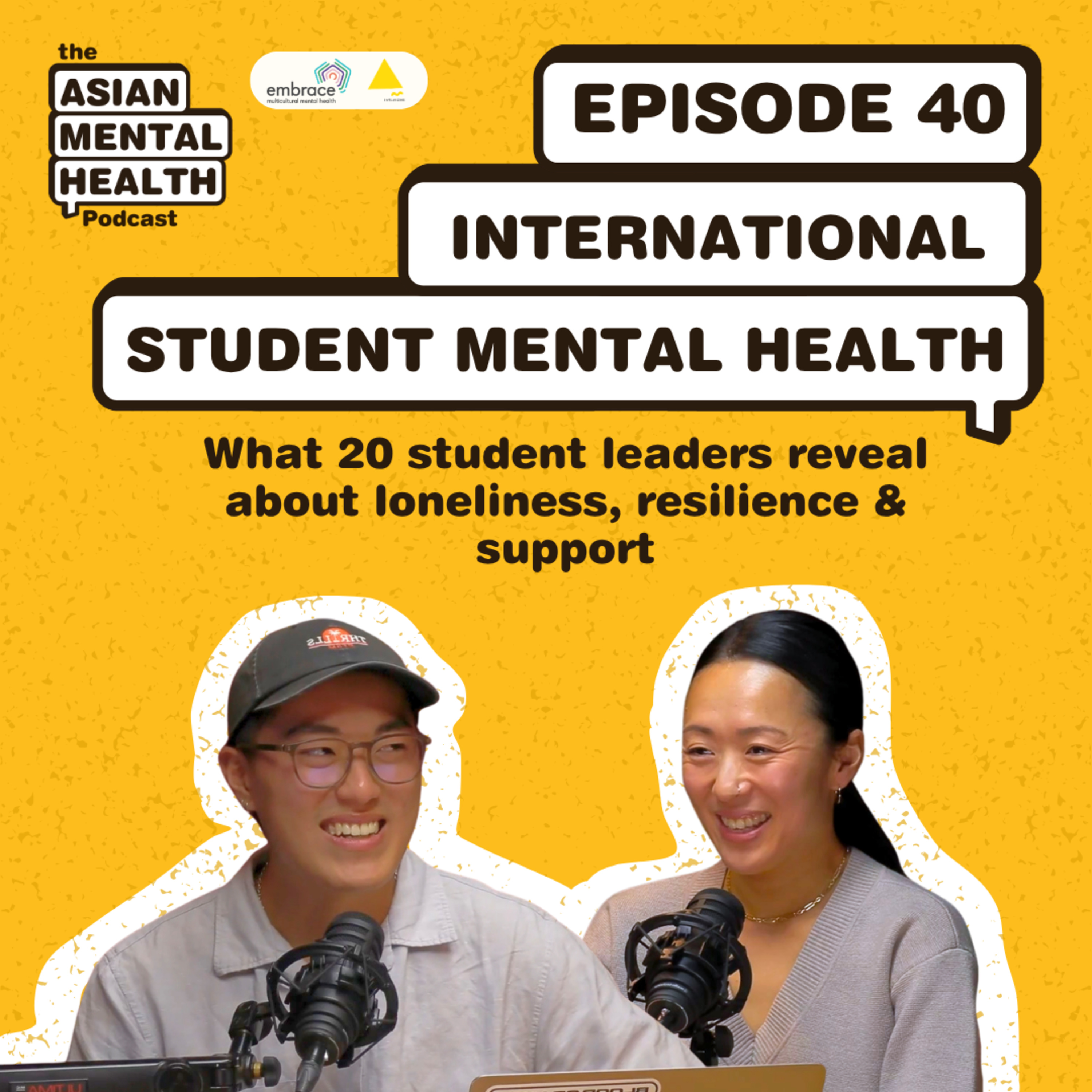 International Student Mental Health: What 20 Student Leaders Reveal About Loneliness, Resilience & Support 10.08.2026 51นาที🌟 Season 5 of the Asian Mental Health Podcast is a wrap. This finale episode looks back on everything: the Student Changemakers leadership program, the students who made it what it was, the practitioners who showed up for them, and the very big feelings the Shapes and Sounds team has about what the mental health sector still needs to do.Season finales are usually about celebration, and there's plenty of that here. Asami, Marcus, and senior producer Yeo Choong reflect on six weeks of running a first-of-its-kind international student mental health leadership program, a full season of conversations, and what it really takes to reach communities that larger services a seem to be finding too hard.The results were clear. Students came in thinking about how to help others. But, they left knowing that it's important to help themselves first. They built WhatsApp groups, they attended focus groups, they gave their time and their stories, and 88 of them tried to sign up to a program that only had room for 20.So yes, there is pride. There is also a rant, delivered with love, about why large, well-resourced organisations haven't yet figured out what two people (ie. us) planned in three months on the side. The answer, Asami and Marcus argue, is not complexity. It might be intention.🎧 You'll hear about:✅ How students' answers changed across six weeks of the leadership program✅ The three biggest challenges international students reported: finances, loneliness, and distrust of services✅ Why the peer practitioner model could change how international students access mental health support✅ Why culturally responsive care is often far simpler to implement than services pretend✅ The Shapes and Sounds definition of leadership (and why you already qualify)✅ What comes next for Shapes and Sounds and the Asian Mental Health Podcast🧠 Key Takeaways:Vinca: "Being a leader is not about being bossy. It's more about giving empathy, listening, and giving back to the team"Sania: "I wasn't aware of how many free mental health resources were available for international students. I also learned how I can support myself while helping my friends around me"Eva: "They gave you sample question styles, like what kind of question to ask people to actually let them self-reflect. It's really practical and I can use it"Marcus: "The answer is often so much more simple than we make it. We need to start so much more basic. Services need to do more, and more services need to care"Asami: "Focus back on a strengths-based model. These students are doing their best every single day. We have to recognise that positivity and that resilience"Yeo: "We got so much interest from students wanting to be on the podcast as guests. Real students talking about real experiences. That is the heart of this season" 🔗 Find culturally responsive practitioners on the Asian Mental Health Practitioner List 🌐 Shapes and Sounds website 🛠️ Resources and References Find them all over on the full show notes 🙌 Connect with Shapes and Sounds InstagramLinkedInWebsite🎁 Free Resource: Download "International Students and Mental Health" ✨ There are 39 other episodes to explore if you're looking for more. Please subscribe, rate, and review the Asian Mental Health Podcast on your favourite podcast app, and share this season with someone who might need it. Word of mouth is how we destigmatise mental health in Asian communities. 💛See you in season 6!The Asian Mental Health Podcast is a production from Shapes and Sounds, made on the stolen lands of the Wurundjeri Woi-wurrung people of the Kulin Nation. This show is hosted by Asami Koike and Marcus Lai and produced by Yeo Choong. This season is brought to you by Embrace Multicultural Mental Health (The Embrace Project). All thoughts and ideas you hear are independently ours and our guests.The Embrace Project is part of Mental Health Australia. For more information about the Embrace Project, visit here.
 -
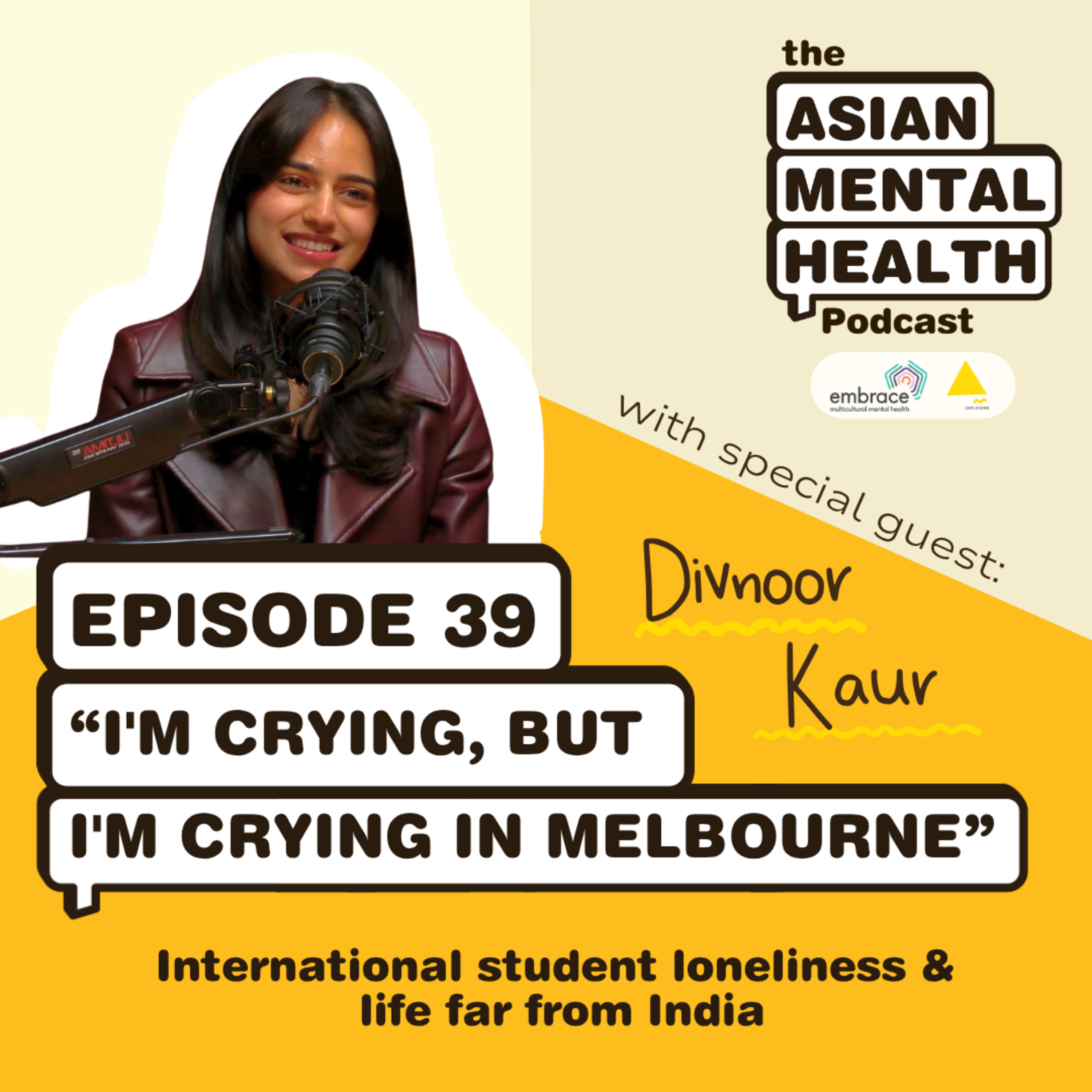 "I'm Crying, But I'm Crying in Melbourne": International Student Loneliness & Life Far From India 03.08.2026 51นาทีWhat does it really take to move across the world at 18, navigate a new city alone, and build a life from scratch? In this episode, Asami is joined by Divnoor Kaur, a Punjabi-Indian psychology graduate and early childhood diploma student who has been quietly determined to be part of Shapes and Sounds since 2023. It took three years, but we're so grateful that she made it here!The conversation also features voice memos from Tina Liu, a bilingual psychologist at one of our Practice Partners, MindBodyHeart Psychology, and former international student herself, who reflects on the challenges she witnessed both as a student and as a practitioner working with migrants and international students every day.Together, Asami, Divnoor, and Tina unpack what people get wrong about the international student experience: it's not just about managing study and a part-time job. It's about navigating racism you didn't expect, housing markets that weren't built for you, support services you didn't know existed, and a homesickness that only hits once you've left.This is one for every international student, every person who loves one, and everyone who has ever felt like a fish discovering what water actually is.🎧 You'll hear about:✅ What people get wrong about international students and their emotional reality✅ Racial slurs in the CBD two months after arriving in Melbourne✅ Melbourne's housing crisis and how it hits international students hardest✅ Mental health stigma in Indian communities and why "boys don't cry" sticks with you✅ The WEIRD bias in mental health research and why culturally matched practitioners matter✅ Peer mentorship programs, Bollywood clubs, and how to build a community from zero✅ Sleep, eating well, and why loneliness sometimes wins over a good night's rest👤 About the GuestsDivnoor Kaur is originally from Ludhiana, Punjab, India. She moved to Melbourne at 18 to study psychology at the University of Melbourne and is now completing a diploma in early childhood education. A passionate advocate for youth mental health, she was a peer mentor at UniMelb and a participant in the Shapes and Sounds Student Changemakers program. She has been trying to get involved with Shapes and Sounds since 2023. Three years later, she made it.Tina Liu is a practicing psychologist at MindBodyHeart Psychology, a bilingual Mandarin and English private practice in Melbourne and a Shapes and Sounds practice partner. Originally from China, Tina completed undergraduate studies at Monash, a PhD at Deakin, and a masters in psychology at VU. She worked for years teaching in a university foundation program before transitioning to clinical practice, where she works primarily with Mandarin-speaking migrants and international students.🔗 Find Tina Liu and other culturally-responsive practitioners on our Asian Mental Health Practitioner list🌐 Our Practice Partner, Mind Body Heart Psychology 🛠️ Resources Mentioned: Find them all in the full show notes over on our blog 🙌 Connect with Shapes and Sounds Instagram LinkedIn Website 🎁 Free Resource: Download "International Students and Mental Health" ✨ If this episode resonated with you, please subscribe, rate, and review the Asian Mental Health Podcast on your favourite podcast app. Share this episode with someone who is an international student, or who loves one. Word of mouth is how we destigmatise mental health in Asian communities. 💛The Asian Mental Health Podcast is a production from Shapes and Sounds, made on the stolen lands of the Wurundjeri Woi-wurrung people of the Kulin Nation. This show is hosted by Asami Koike and Marcus Lai and produced by Yeo Choong. This season is brought to you by Embrace Multicultural Mental Health (The Embrace Project). All thoughts and ideas you hear are independently ours and our guests.The Embrace Project is part of Mental Health Australia. For more information about the Embrace Project, visit: https://embracementalhealth.org.au/
 -
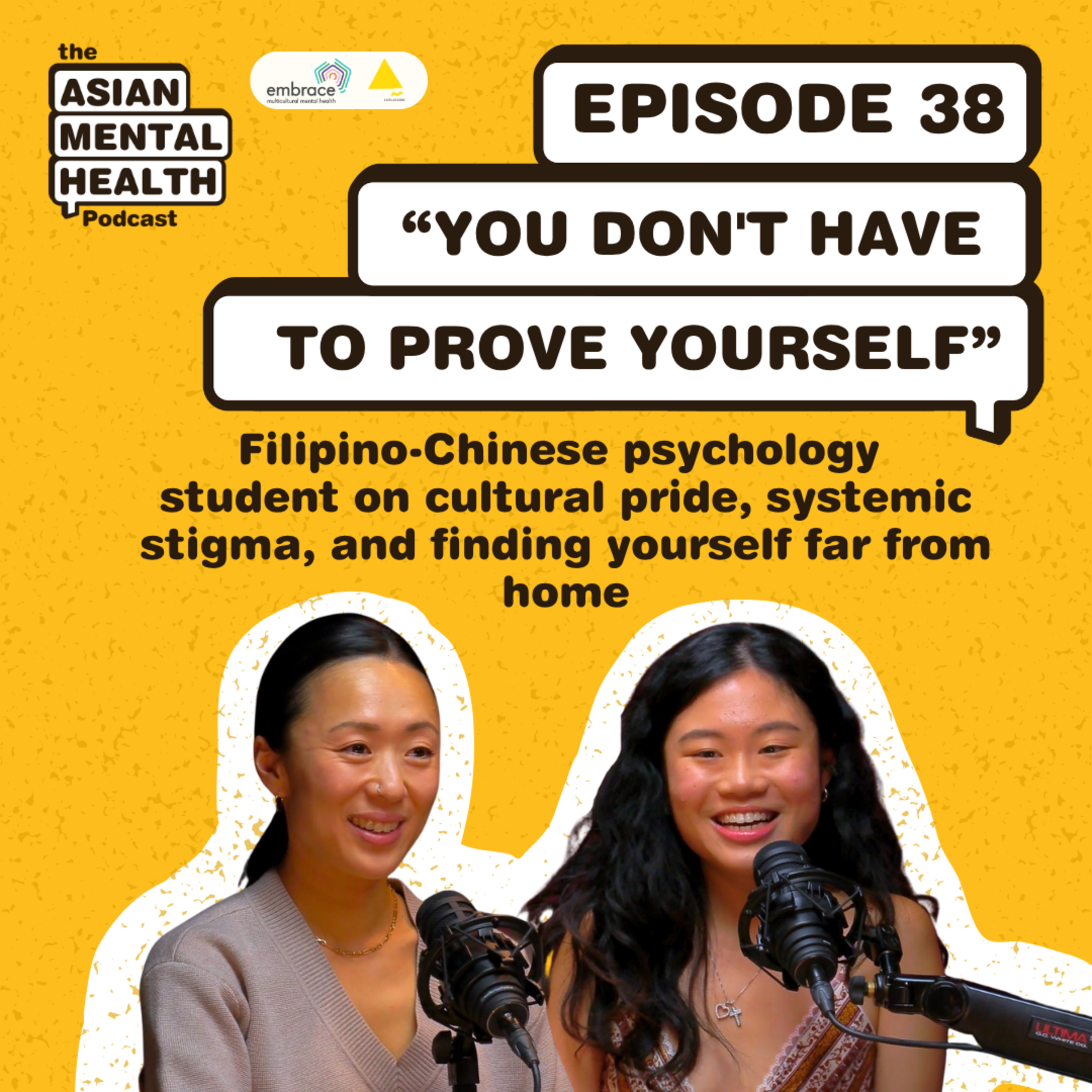 "You Don't Have to Prove Yourself": Filipino-Chinese Psychology Student on Cultural Pride, Systemic Stigma, and Finding Yourself Far From Home 27.07.2026 46นาที⚠️ Content warning: This episode includes mentions of eating disorders and depression. Please approach this carefully. If this doesn't feel right for you today, skip ahead or return when you're ready.What happens when your culture is something you only truly discover after leaving it behind? In this episode, Asami sits down with Cait, a Filipino-Chinese undergraduate psychology student, youth mental health advocate, and owner of 11 dogs (!) each with their own personality and their own wanted-poster photo frame.Cait moved from the Philippines to Melbourne to study psychology, carrying with her a history of depression, anxiety, and an eating disorder, none of which she disclosed when she arrived. "I had a clean slate," she says, "and it really backfired on me." What followed was a year and a half of navigating a new country, a fragmented mental health system, and the slow, surprising discovery of who she actually was as a Filipino, something she never had to think about back home.In this conversation with Asami, Cait opens up about the Filipino concept of kakayanin (to endure), how colonialism has shaped the way Filipinos understand mental health, why a diagnosis in the Philippines can feel more like a kryptonite than a lifeline, and what it means to fight for culturally grounded mental health research. This one is warm, funny, and deeply honest, and it's the kind of conversation that reminds you why representation in mental health spaces is a non-negotiable, not a "nice to have".🎧 You'll hear about:✅ Growing up Filipino-Chinese and falling short of academic expectations✅ Depression and navigating stigmatised mental health services in the Philippines✅ Moving to Australia and leaving your mental health history behind, and why that backfired✅ Kakayanin: the Filipino concept of endurance and its double edge✅ Why Filipinos telling stories through karaoke might actually be the research gap we need👤 About the GuestCait is a Filipino-Chinese undergraduate psychology student in Melbourne and a passionate advocate for youth mental health, particularly within Filipino communities. As a participant in the Shapes and Sounds Student Changemakers program, Cait carries both her own lived experience with depression, anxiety, and navigating cultural stigma, and the stories of other young Filipinos she has spoken with along the way. She is deeply invested in reshaping how mental health is understood and researched across Southeast Asian contexts, and believes those conversations start over food, language, and karaoke.🔗 Find culturally responsive practitioners on the Asian Mental Health Practitioner List 💡As a bonus, connect with Arthur De Jesus who's a Filipino clinical psychologist and the founder of AK Psychology, Melbourne's first Filipino psychology private practice 🛠️ Resources Mentioned: Find them all over on the full show notes on our blog 🙌 Connect with Shapes and Sounds InstagramLinkedInWebsite🎁 Free Resource: Download "International Students and Mental Health" ✨ If this episode resonated with you, please subscribe, rate, and review the Asian Mental Health Podcast on your favourite podcast app. It really helps other international students find these conversations. Share this episode with your friends, especially if you know, or are, a young Filipino navigating life far from home. Word of mouth is how we destigmatise mental health in Asian communities. 💛The Asian Mental Health Podcast is a production from Shapes and Sounds, made on the stolen lands of the Wurundjeri Woi-wurrung people of the Kulin Nation. This show is hosted by Asami Koike and Marcus Lai and produced by Yeo Choong. This season is brought to you by Embrace Multicultural Mental Health (The Embrace Project). All thoughts and ideas you hear are independently ours and our guests.The Embrace Project is part of Mental Health Australia. For more information about the Embrace Project, visit: https://embracementalhealth.org.au/
 -
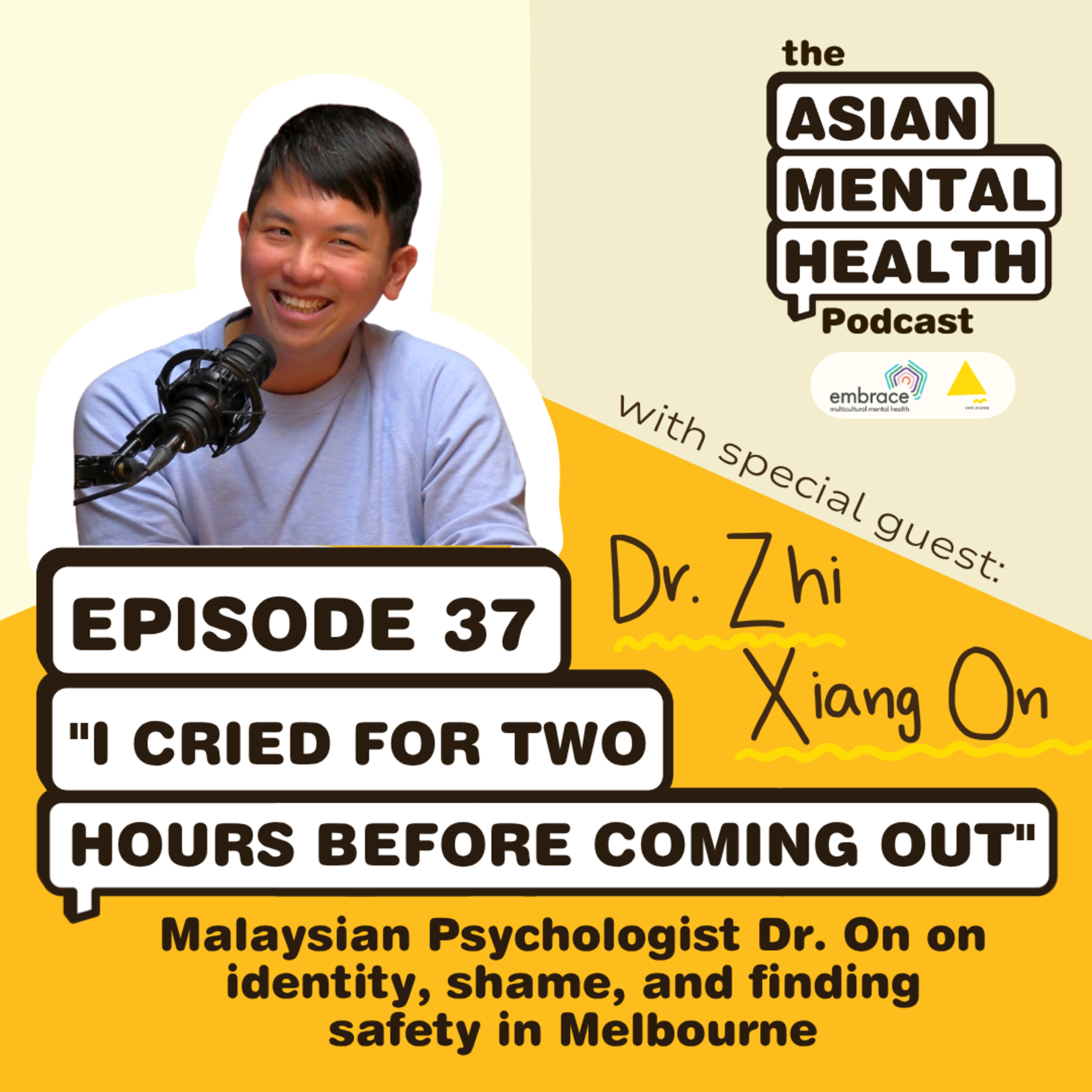 "I Cried for Two Hours Before Coming Out": Malaysian Psychologist Dr. On on Identity, Shame, and Finding Safety in Melbourne 20.07.2026 56นาทีWhat does it take to move to a new country at 19, navigate culture shock, come out as gay while studying psychology, work through perfectionism and shame, and eventually build your own clinical practice? In this episode, Dr. Zhi Xiang On takes us on that journey with warmth, humour, and remarkable honesty.On moved from Klang, Malaysia to Melbourne to study psychology at 19. What started as curiosity about a big city quickly became a complex navigation of identity, belonging, and self-discovery. From not understanding why everyone walked so much, to learning that "Asian Australian" was a thing, to spending two hours crying before coming out to a friend, to eventually becoming a clinical psychologist, forensic psychologist, and clinical neuropsychologist, On's story is both deeply personal and universally relatable.In this conversation with Asami, On opens up about the pressures of college party culture when you come from a conservative family, the guarded way he first approached university counselling, the moment a professor pointed out what he wasn't ready to hear about his sexual identity, and how working through his own "parts" transformed not just his studies but his entire approach to being a therapist.This episode is for anyone who's ever felt like they had to perform being okay, anyone navigating identity while far from home, and anyone wondering what it really means to "work on yourself."🎧 You'll hear about:✅ Moving from a small Malaysian town to Melbourne at 19 and experiencing culture shock✅ The loneliness crisis facing international students today✅ Coming out as gay to friends and family while studying abroad✅ University counselling: the benefits, barriers, and what students need to know✅ Understanding your "parts" and what it means to work on yourself✅ How to support peers using the HEAR framework👤 About the GuestDr. Zhi Xiang On is a clinical psychologist, forensic psychologist, clinical neuropsychologist, and the director of Back On Track Psychology, a private practice in Melbourne. Originally from Klang, Malaysia, On moved to Australia at 19 to study psychology at the University of Melbourne. His work emphasises a collaborative, safe, values-guided therapeutic relationship.🔗 Find Dr. On on the Shapes and Sounds Practitioner List HERE 🌐 Back On Track Psychology website 🛠️ Resources Mentioned: Find them in the full show notes over on our blog 🙌 Connect with Shapes and Sounds InstagramLinkedInWebsite🎁 Free Resource: Download "International Students and Mental Health" ✨ If this episode resonated with you, please subscribe, rate, and review the Asian Mental Health Podcast on your favourite podcast app. It really helps other international students find these conversations. Share this episode with your friends, especially if you know or are an international student, because word of mouth helps destigmatise mental health in Asian communities. 💛The Asian Mental Health Podcast is a production from Shapes and Sounds, made on the stolen lands of the Wurundjeri Woi-wurrung people of the Kulin Nation. This show is hosted by Asami Koike and Marcus Lai and produced by Yeo Choong. This season is brought to you by Embrace Multicultural Mental Health (The Embrace Project). All thoughts and ideas you hear are independently ours and our guests.The Embrace Project is part of Mental Health Australia. For more information about the Embrace Project, visit: https://embracementalhealth.org.au/
 -
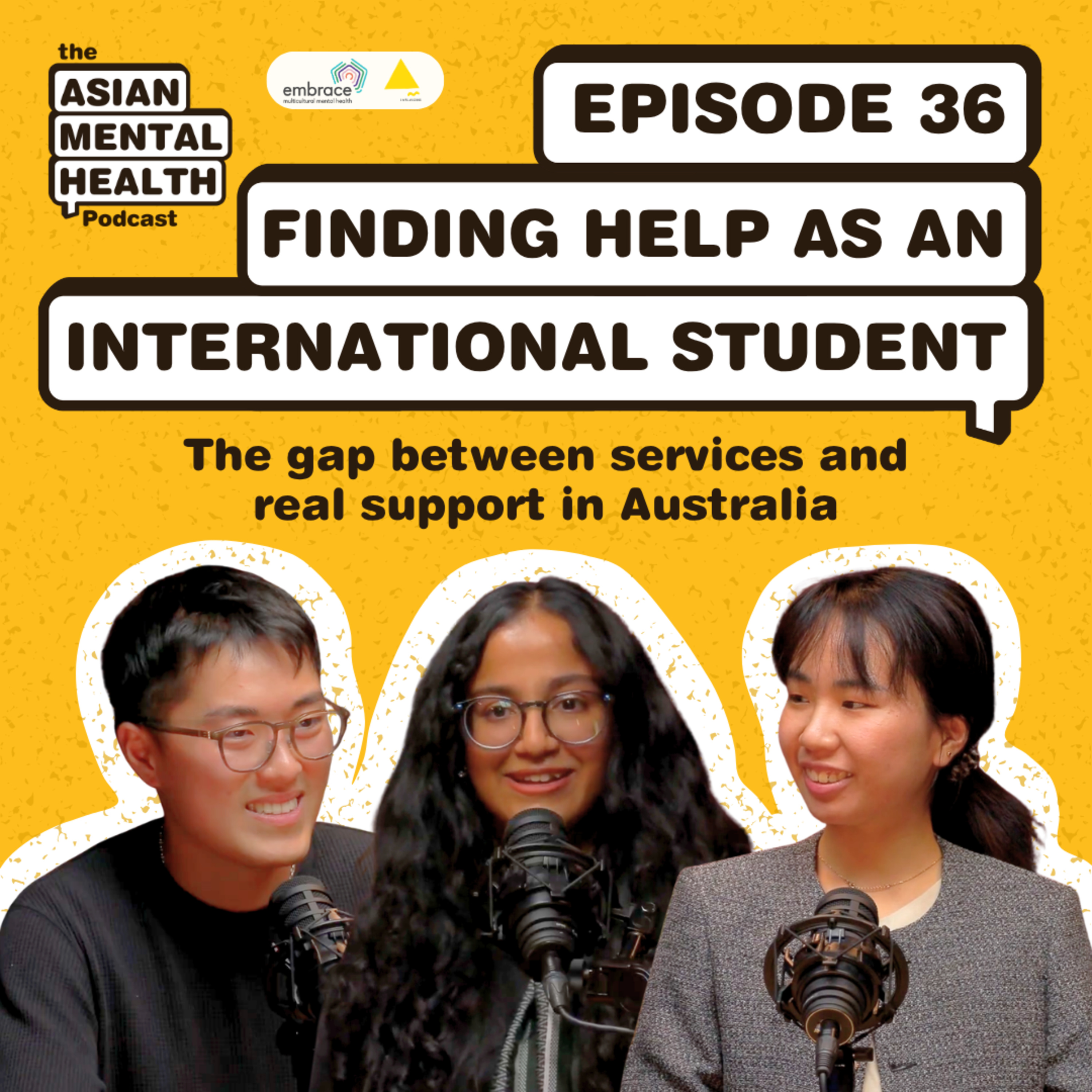 Finding Help as an International Student: The Gap Between Services and Real Support in Australia 13.07.2026 57นาทีWhy is it so hard to find help as an international student in Australia? When services exist but feel impossible to access, when information is scattered across a dozen websites, and when you're not even sure what "good therapy" looks like... where do you even start?In this episode of the Asian Mental Health Podcast, Marcus sits down with Vinca Metta Julicia and Sania Jatin Prabhu, two international students and Student Changemakers participants, for an honest conversation about what it's really like trying to navigate mental health services in Melbourne.Vinca, from Indonesia, has studied architecture in Taiwan and urban design in Melbourne. Sania, originally from India with time in South Africa, is pursuing her Master of AI at Monash. Together, they break down the barriers international students face: the one-month wait times for uni counseling, the confusion about costs and confidentiality, the fear that seeking help might affect your visa, and the overwhelming reality that no single place exists to guide you through it all.But this episode isn't just about what's broken. It's also about what helps: ClassPass and bouldering for moving your body, BumbleBFF for finding community, The Couch for free meals and connection, and the small acts of resilience that keep students going when the system fails them.🎧 You'll hear about:✅ Why international students struggle to access mental health services in Australia✅ The reality of university counseling: long wait times and mismatched support✅ The fear that accessing mental health services might affect your visa✅ What international students actually need: a single navigation point and welcoming spaces✅ How to build community through movement, online platforms, and university events👤 About the GuestsVinca Metta Julicia is an Indonesian international student who recently completed her Master of Urban Design in Melbourne after studying architecture in Taiwan. Her journey as an international student across multiple countries has shaped her understanding of resilience, belonging, and people-centered design. Vinca is passionate about creating environments where individuals feel safe, connected, and supported, which links closely to mental wellbeing. She participated in the Student Changemakers peer leadership program in Semester 1, 2026.Sania Jatin Prabhu is an Indian international student pursuing her Master of Artificial Intelligence at Monash University in Melbourne. She has moved countries three times: from India to South Africa at age two, back to India for high school and university, and now to Melbourne, where she's navigating student life completely alone without family nearby. Each move has felt progressively harder, and she joined Student Changemakers hoping to provide the kind of support she wished she'd had. Sania has been in Melbourne for nine months and is passionate about helping other international students find their footing.🛠️ Resources Mentioned: Find them all linked in the full show notes here! 🙌 Connect with Shapes and Sounds Instagram LinkedIn Website ✨ If this episode resonated with you, please subscribe, rate, and review the Asian Mental Health Podcast on your favourite podcast app. It really helps other international students find these conversations. Share this episode with your friends, especially if you know or are an international student, because word of mouth helps destigmatise mental health in Asian communities. 💛The Asian Mental Health Podcast is a production from Shapes and Sounds, made on the stolen lands of the Wurundjeri Woi-wurrung people of the Kulin Nation. This show is hosted by Asami Koike and Marcus Lai and produced by Yeo Choong. This season is brought to you by Embrace Multicultural Mental Health (The Embrace Project). All thoughts and ideas you hear are independently ours and our guests.The Embrace Project is part of Mental Health Australia. For more information about the Embrace Project, visit here.
 -
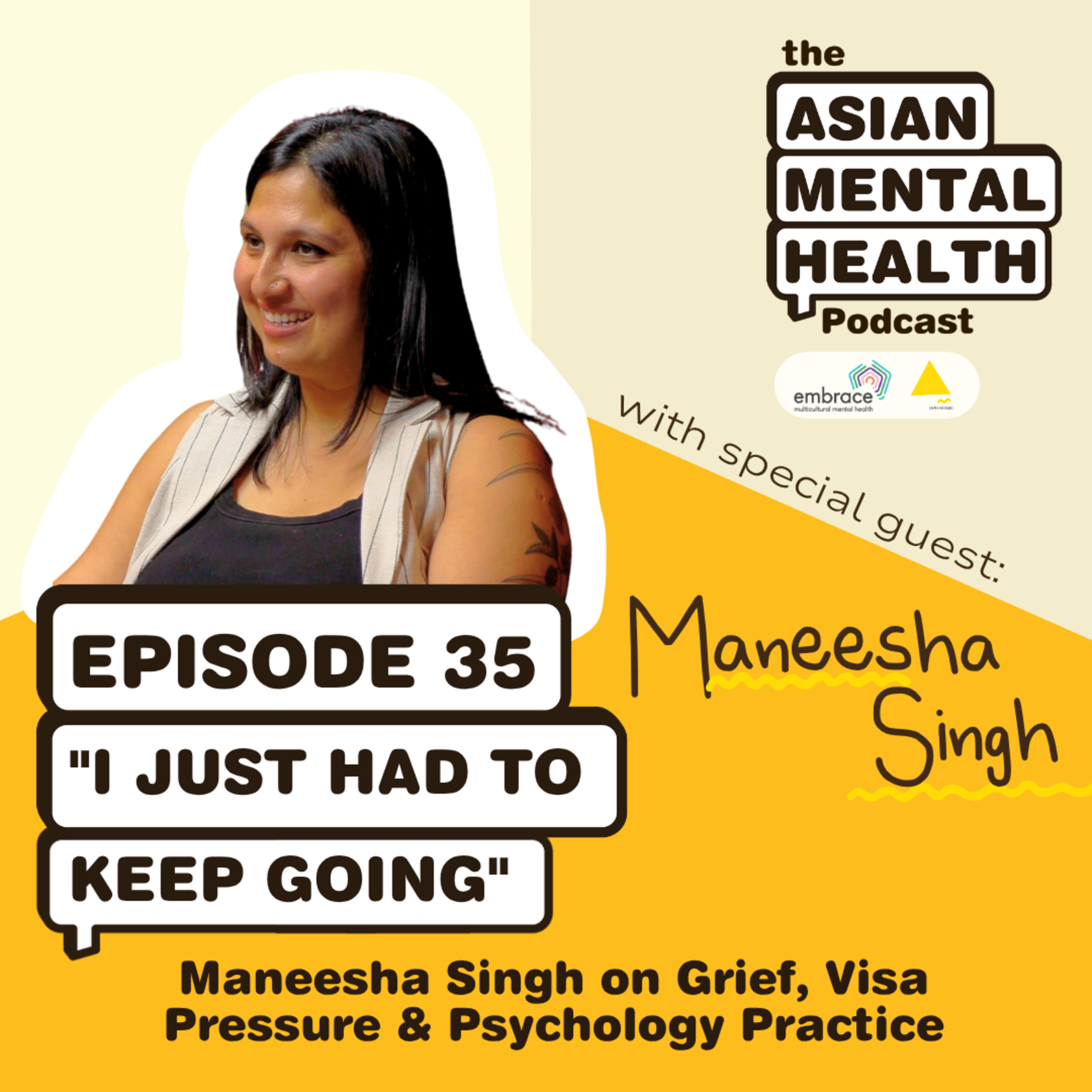 "I Just Had to Keep Going": Maneesha Singh on Grief, Visa Pressure and Psychology Practice 06.07.2026 51นาที⚠️ Content Warning: This episode includes discussions of grief, self-harm, and harassment. Please listen with care. If hearing about these topics doesn't feel right for you today, please skip to another episode or return at another point in time.What happens when you lose a parent just months after arriving in Australia as a 19-year-old international student? How do you keep going when grief, visa timelines, and financial pressure collide and there's no space to stop?In this powerful episode of the Asian Mental Health Podcast, Asami speaks with Maneesha Singh, a registered psychologist, founder of ManAsha Psychology, and former international student from India. Maneesha shares her deeply personal story of arriving in Melbourne at 19, navigating culture shock, losing her father within her first year, and feeling the overwhelming pressure to "just keep going" through grief, study, and survival.Now as a clinician specialising in culturally responsive trauma-informed care, Maneesha works with international students, migrants, and second-generation Asian Australians facing similar struggles. She opens up about what she sees in her practice: students arriving at crisis point, the shame and stigma around mental health in South Asian communities, self-harm as a coping mechanism, and the systemic barriers that keep international students from seeking help until it's almost too late.This conversation offers both a mirror for those who've walked this path and a roadmap for mental health services, educators, and peers who want to better support international students navigating migration, grief, and belonging. 🎧 You'll hear about:✅ Arriving in Australia at 19 from India: culture shock, food struggles, mixed-gender accommodation, and learning to navigate Melbourne alone✅ Losing a parent as an international student and the pressure to return to uni within a month✅ Why international students don't feel they have the option to pause, defer, or grieve✅ The financial and visa pressures that drive students to keep going at all costs✅ How grief manifests physically: panic attacks at ATMs, gut health issues, chronic headaches✅ Common patterns Maneesha sees in her clinical practice: late-stage crisis presentations, perfectionism, disconnection, and reversed sleep cycles✅ Stigma, shame, and the fear of being seen as "weak" or bringing shame to the family✅ Self-harm as a coping mechanism among international students✅ How to support a friend who's struggling without beating around the bush✅ What mental health services are missing when working with international students✅ The importance of language, cultural attunement, and small sustainable steps in therapy✅ The story behind ManAsha Psychology: mind, heart, and hope 👤 About the GuestManeesha Singh is a registered psychologist and founder of ManAsha Psychology, a Melbourne-based practice specializing in culturally responsive and trauma-informed care. Originally from India, Maneesha moved to Australia at 19 as an international student, where she navigated culture shock, grief, and the challenges of building a life abroad. Her lived experience deeply informs her clinical work. 🔗 Find Maneesha's profile on the Shapes and Sounds Asian Mental Health Practitioner List 🌐 ManAsha Psychology website 🙌 Connect with Shapes and SoundsInstagramLinkedInWebsite🎁 Free Resource: Download "International Students and Mental Health" ✨ If this episode resonated with you, please subscribe, rate, and review the Asian Mental Health Podcast on your favourite podcast app. It really helps other international students and migrants find these conversations. Share this episode with your friends, especially if you know or are an international student, because word of mouth helps destigmatise mental health in Asian communities. 💛The Asian Mental Health Podcast is a production from Shapes and Sounds, the leading voice for Asian mental health in Australia. Thank you for listening!
 -
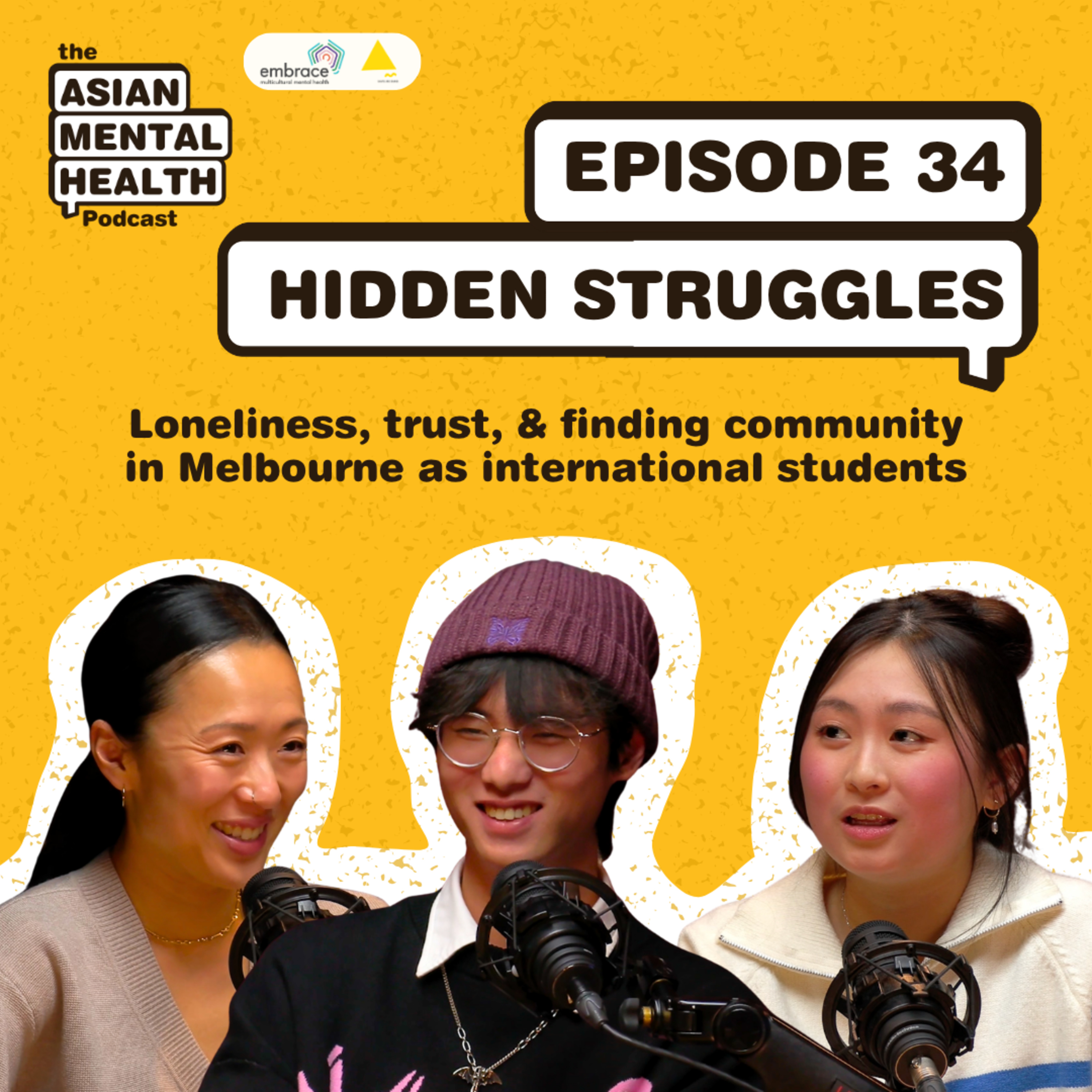 Hidden Struggles: Loneliness, Trust, and Finding Community in Melbourne as International Students 29.06.2026 1ชม. 1นาที⚠️ Content Warning: This episode includes discussions of mental health struggles, isolation, and burnout. Please listen with care.What does it really look like to be an international student in Melbourne? Beyond the curated social media posts and "day in the life" videos, what are the hidden struggles that students face every day?In this episode of the Asian Mental Health Podcast, Asami sits down with Rachel Tan Mun En and Cheng Qien Vrede, two Malaysian international students and Student Changemakers participants, for an honest conversation about loneliness, financial pressure, broken trust, and the realities of building a life from scratch in Australia.Rachel, a double degree student in education and music working three jobs, and Vrede, a final-year psychology student, share their raw experiences of what it's really like to navigate university life as an international student - from the small daily struggles that build up over time, to the moments of breaking down, to finding unexpected sources of strength like religion, community, and vulnerability.🎧 You'll hear about:✅ The gap between social media expectations and the reality of international student life in Melbourne✅ Why international students often don't feel they have "permission to struggle"✅ The hidden financial and emotional costs of studying abroad for Malaysian students✅ How online university courses make it harder to build consistent friendships and community ✅ The experience of loneliness even when surrounded by people on campus✅ Why religion and faith communities matter for international student wellbeing (and why mental health services need to talk about this)✅ Practical strategies for supporting struggling peers and building trust✅ The importance of vulnerability and consistency in creating meaningful connections💡 Episode Highlights:The reality check: life as an international student is 1% "cupcakes and rainbows" and 99% learning to cook, clean, manage money, and take care of yourself aloneHow loneliness "creeps up on you very quietly" when you can't find people who click with youThe cycle of no rest: working three jobs while doing a double degree and barely touching your violin for three monthsWhy showing weakness feels dangerous in Asian communities - and how that stops students from seeking helpThe role of Christian faith and prayer in Rachel's mental health journey (and why mental health services in Australia need to engage with religion more openly)How to know when a peer needs help - and why asking "are you okay?" once isn't enoughThe impact of online learning on student mental health: "You made friends in high school because you saw them every day. In uni, it's just fleeting moments"Why "not wanting to burden people" actually robs them of the opportunity to care for you🛠️ Resources Mentioned:Free mental health guide for international students HEREAll other resources are linked in the full show notes HERE🙌 Connect with Shapes and SoundsInstagramLinkedInOur Asian Mental Health Practitioner List✨ If this episode resonated with you, please subscribe, rate, and review the Asian Mental Health Podcast on your favourite podcast app - it really helps other international students find these conversations. Share this episode with your friends, especially if you know or are an international student. Word of mouth helps destigmatise mental health in Asian communities. 💛💡Do you work with international students? If so, you may be interested in learning more about the Student Changemakers program as well as downloading our project summary report HERE.This season is brought to you by Embrace Multicultural Mental Health (The Embrace Project). All thoughts and ideas you hear are independently ours and our guests.The Embrace Project is part of Mental Health Australia. For more information about the Embrace Project, visit: https://embracementalhealth.org.au/
 -
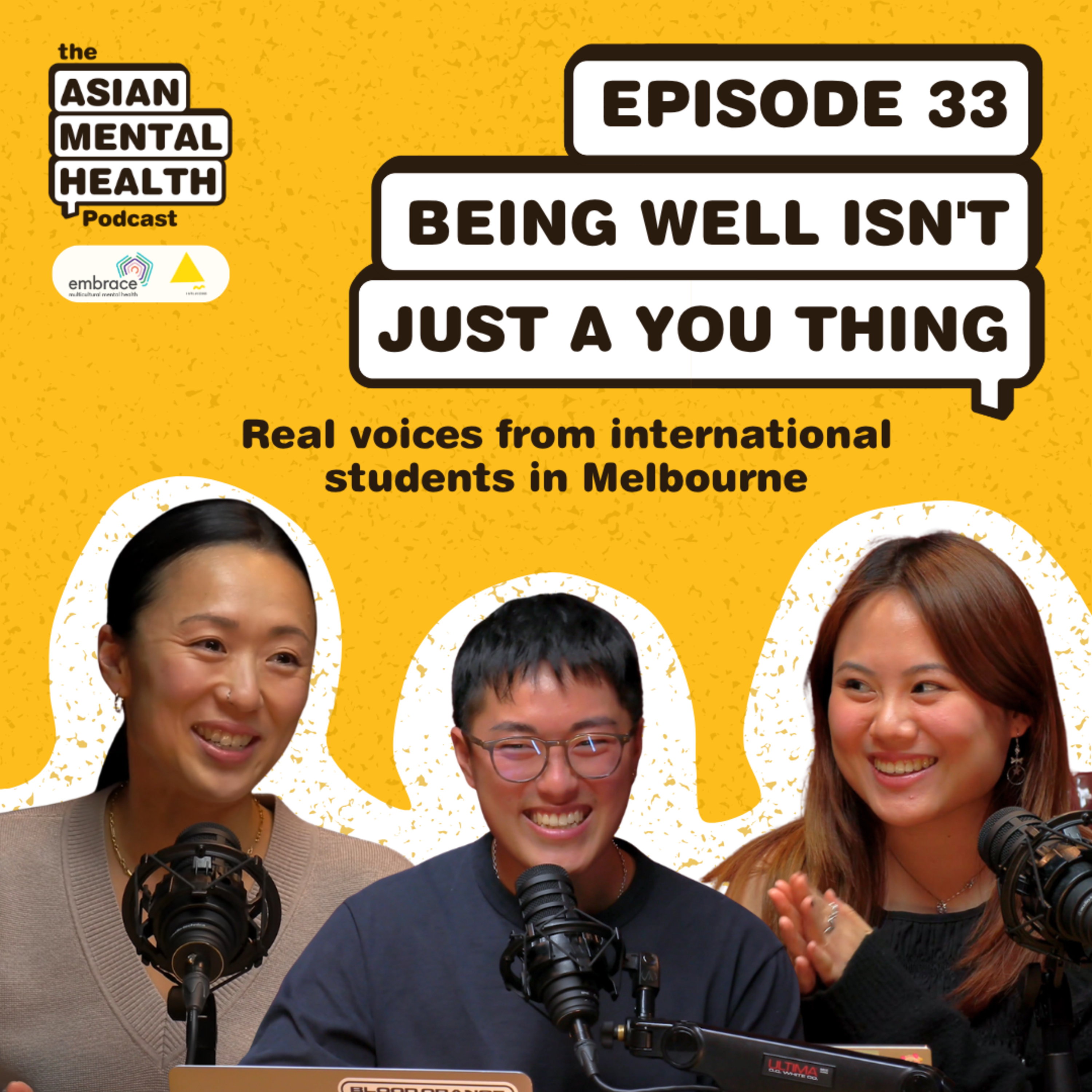 "Being Well Isn't Just a You Thing": Real Voices From International Students in Melbourne 22.06.2026 53นาที⚠️ Content Warning: Today's conversation includes mentions of suicide. Please approach this carefully. If hearing about suicide doesn't feel right for you today, please skip to another episode or return at another point in time.Welcome back to Season 5 of the Asian Mental Health Podcast! In this season opener, hosts Asami Koike and Marcus Lai reunite in the studio for the first time since August 2025 to introduce a very special season dedicated entirely to the international student experience in Australia. They're joined by Daleney Ing, facilitation support at Shapes and Sounds and psychology honours student, to unpack what they learned from running Student Changemakers: a peer leadership program for international students in Semester 1, 2026.You'll hear directly from students in their own words: voice memos, reflections, and raw honest moments about what it's really like to arrive in Melbourne full of hope, and navigate the gap between expectation and reality.🎧 You'll hear about: ✅ Why Shapes and Sounds dedicated Season 5 to international student mental health and wellbeing in Australia ✅ The alarming research on suicide rates and mental health challenges among Asian international students ✅ What the Student Changemakers peer leadership program was, who it was for, and how it ran in Melbourne ✅ Real voice memo reflections from international students about their experiences navigating life in Australia ✅ Why presence matters more than advice when supporting struggling students ✅ What "being well" means across different cultural frameworks, including collectivist and interdependent perspectives ✅ How financial stress, transport access, and everyday life logistics compound into serious mental health risks ✅ The protective factors that help international students thrive in Australia🛠️ Resources Mentioned:Student Changemakers - Shapes and Sounds' peer leadership program for international students in MelbourneAsian Mental Health Practitioner List - Find a culturally responsive therapist: https://justshapesandsounds.com/asian-mental-health-practitioner-listEmbrace Multicultural Mental Health - This season's supporting partnerSwinburne University (2023) study on Asian international student mental healthCoroners Court of Victoria report on international student deaths by suicide (2021)🙌 Connect with Shapes and Sounds InstagramLinkedInWebsite🎁 Free Resource: Download "International Students and Mental Health" ~Do you work with international students? If so, you may be interested in learning more about the Student Changemakers program as well as downloading our project summary report HERE.~Keywords: international student mental health Australia, Asian international students Melbourne, student suicide prevention, peer leadership program, culture shock, international student loneliness, Student Changemakers, homesickness support, international student wellbeing Melbourne, culturally responsive mental health, Embrace Multicultural Mental Health, Swinburne international students✨ If you enjoyed this episode, please subscribe, rate, and review the Asian Mental Health Podcast on your favourite podcast app - it really helps other people find us. And please share this episode, especially if you know or are an international student. Word of mouth helps destigmatise mental health in Asian communities. 💛The Asian Mental Health Podcast is a production from Shapes and Sounds, made on the stolen lands of the Wurundjeri Woi-wurrung people of the Kulin Nation. This show is hosted by Asami Koike and Marcus Lai and produced by Yeo Choong. This season is brought to you by Embrace Multicultural Mental Health (The Embrace Project). All thoughts and ideas you hear are independently ours and our guests.The Embrace Project is part of Mental Health Australia. For more information about the Embrace Project, visit: https://embracementalhealth.org.au/
 -
 Emotional Invalidation in Asian Families: Provisional Psychologist Larissa Qiu on BPD, Culture, and Boundaries 24.11.2025 50นาที🎁 Free Resource: For further growth and learning, download "Working with Invalidation in Asian Families" → HEREWhat happens when love is expressed through sacrifice, but not emotional presence? In this episode of the Asian Mental Health Podcast, Asami sits down with Larissa Qiu, a first-generation Chinese international student, provisional psychologist, and PhD candidate at Monash University, to unpack the hidden impact of emotional invalidation in Asian families.Larissa shares candidly about growing up in an emotionally restrained household, the challenges of moving to Australia at 16, and her lived experience with borderline personality disorder (BPD) symptoms.This conversation offers crucial insights for Asian Australians navigating cultural expectations and mental health, especially from a research perspective too. 🎧 You'll hear about: ✅ Why emotional invalidation is normalised in Asian families and why it still causes harm ✅ The fine line between cultural resilience and cultural silence ✅ Growing up as a "1.5-generation" migrant balancing Chinese and Australian identities ✅ The stigma surrounding borderline personality disorder (BPD) in Asian communities ✅ What healing looks like through culturally responsive therapy and supportive relationships ✅ Practical ways to set boundaries and seek validation, even when family can't provide it 💡 Episode Highlights:Growing up in an emotionally restrained Chinese household and moving to Melbourne as an international studentHow "be tough" messaging impacts mental health in Asian communitiesUnderstanding borderline personality disorder through a cultural lensThe unique challenges of 1.5-generation migrants navigating two cultural identitiesWhy material support isn't the same as emotional validationFinding culturally competent psychologists who understand Asian family dynamicsRecovery strategies and self-validation techniques for Asian AustraliansResearch insights from Monash's Culture, Trauma and Mental Health Research Group 🧠 Key Takeaways from Larissa: "Invalidation in Asian families isn't about lack of love - it's often about survival strategies passed down through generations.""As a 1.5-generation migrant, you're constantly translating - not just language, but emotions, expectations, and identities.""BPD is so stigmatised, especially in Asian communities. But with the right support and cultural understanding, healing is possible.""You can honour your culture while still needing emotional validation. Those two things aren't in conflict." 👤 About the Guest Larissa Qiu is a first-generation Chinese international student, provisional psychologist, and PhD candidate at Monash University specialising in culture, trauma, and mental health. Based in Melbourne, Larissa brings both lived experience and professional expertise to understanding how cultural factors impact mental health in Asian Australian communities. Her research focuses on culturally responsive approaches to supporting diverse populations.🔗 Monash Culture, Trauma and Mental Health Research Group🙌 Connect with Shapes and Sounds InstagramLinkedInFind Asian mental health practitioners here✨ If you enjoyed this episode, please subscribe, rate, and review the Asian Mental Health Podcast. It helps more Asian Australians and international students find culturally responsive mental health support. Conversations like these help destigmatise mental health in Asian communities. 💛Keywords: emotional invalidation Asian families, borderline personality disorder, Chinese Australian mental health, provisional psychologist Melbourne, international student mental health, 1.5 generation migrants, culturally responsive therapy, Monash psychologist, Asian family dynamics, cultural trauma
 -
 International Student Mental Health: Malaysian Counsellor Yi Tong Tew on Identity, Belonging, and Finding Support in Melbourne 17.11.2025 53นาที⚠️ Content warning: This episode discusses suicide and sexual assault. Please listen with care and use the support services listed below if you need them.🎁 Free mental health information for international students: Download "International students and mental health" → HEREHow do international students navigate identity, mental health, and belonging when studying abroad in Australia? In this episode, we hear from Yi Tong (Ethan) Tew, a Malaysian-born Chinese counsellor, founder of Comfy Counselling, and proud "Gaysian" living in Melbourne.Yi Tong shares his lived experience of moving to Australia at 17, studying in Melbourne, and later becoming a practising therapist and lived experience worker. His story reflects the challenges many international students and Asian Australians face when accessing culturally competent mental health support in Australia.Please note that we interviewed Yi Tong using his English name, "Ethan", however since recording this episode, Yi Tong prefers to be referred to by his name, Yi Tong.💡 Episode Highlights: Coming out to conservative parents and what family acceptance looks like over timeThe loneliness of studying in Melbourne as an international student without supportWhy Medicare doesn't cover most international students, and what mental health options exist insteadStruggles with suicidality, and how therapy with a culturally competent counsellor helped him survive and reconnectReframing emotions as "data points" - a culturally responsive approach to self-understanding for Asian AustraliansHow cultural competency in Australian mental health services can better support international studentsHis passion for healthy gaming habits as part of his counselling practice in Melbourne ✨ This episode is especially relevant for:International students in Melbourne seeking mental health supportAsian Australians looking for culturally responsive therapyLGBTQIA+ individuals from conservative Asian backgrounds 🧠 Key Insights from Yi Tong: "Emotions aren't problems to fix - they're data points telling us something important about our experience.""Finding a therapist who understood both my Malaysian background and my identity as a gay Asian made all the difference.""International students face unique mental health challenges, and the system isn't always set up to support us." 👤 About the Guest Yi Tong Tew is a Malaysian-born Chinese counsellor, founder of Comfy Counselling, and advocate for culturally responsive mental health care. Based in Melbourne, Yi Tong specialises in working with international students, Asian Australians, and LGBTQIA+ communities. He brings a unique approach that integrates cultural understanding with evidence-based therapy, including exploring healthy gaming habits as part of holistic wellbeing.📱 Instagram🔗 Website🔗 Find Yi Tong and other Asian Australian counsellors via the Asian Mental Health Practitioners List 🛠️ Dr K's Youtube 🙌 Connect with Shapes and Sounds InstagramLinkedInWebsite 🆘 Support Services (Australia)Lifeline: 13 11 14 (24/7 crisis support)Beyond Blue: 1300 22 4636QLife: 1800 184 527 (3pm–midnight, LGBTQIA+ peer support)Suicide Call Back Service: 1300 659 467Please note Shapes and Sounds is not an emergency service.If you're outside Australia, please check local crisis hotlines in your country.💬 If you found this episode meaningful, please share it with a friend, leave us a review, and subscribe so other international students and Asian Australians can find the Asian Mental Health Podcast. Your support helps us reach those who need these conversations most. 💛Keywords: international student mental health Melbourne, Malaysian counsellor, Asian Australian LGBTQIA+, culturally responsive therapy, international student support Australia, Melbourne counselling, Asian mental health practitioners, cultural competency, Medicare alternatives international students
 -
 Breaking Intergenerational Cycles: Asian Australian Parenting with Clinical Psychologist Vi Tran 10.11.2025 47นาที🎁 Free Resource: Download your Breaking cycles, keeping culture: A guide for the Asian community PDF for deeper learning → HEREIn this episode, Asami speaks with Vietnamese Australian clinical psychologist Vi Tran, founder of The Middle Bridge Project, about parenting, identity, and the unspoken ways Asian parents show love. From the "cut fruit" metaphor to redefining what it means to be "good enough," this conversation offers compassion, insight, and reflection for Asian Australians navigating family, culture, and self-care with professional guidance.🎧 You'll hear about: ✅ How survival-based parenting patterns are passed down in Asian Australian families ✅ Why "good enough" parenting looks different for Asian Australians today ✅ Gentle ways to practise self-compassion and set boundaries with family ✅ Working with culturally competent psychologists who understand Asian family dynamics ✅ Breaking intergenerational trauma while preserving cultural values💡 Episode Highlights:Vi's journey to parenthood during COVID as a Vietnamese Australian clinical psychologistAsian Australian parenting styles, cultural nuances, and moving beyond stereotypesBreaking cycles of guilt and self-criticism common in Asian familiesThe "cut fruit" metaphor and reparenting yourself with cultural understandingIntroducing The Cultural Compass values card deck for Asian AustraliansFinding mental health support that honours your cultural background🧠 Key Takeaways from Vi: "My parenting style is about attunement, noticing what my child is really asking for, even when the behaviour looks different.""That inner critic is so loud sometimes, telling me I'm not doing enough. I'm learning to hold myself with more compassion.""Cut fruit is such a simple but powerful metaphor, it's how our parents showed love, and it's also how we can show love to ourselves."👤 About the Guest Vi Tran is a Vietnamese Australian clinical psychologist and founder of The Middle Bridge Project. She specialises in working with Asian Australians navigating family dynamics, cultural identity, and intergenerational patterns. Vi created The Cultural Compass, a values-based card deck designed to help people reflect on what grounds them in life.🔗 Find Vi and other Asian Australian psychologists via the Asian Mental Health Practitioner List🌐 Vi's Website: https://www.themiddlebridgeproject.com/ 📱 Instagram: @middlebridgeproject 🙌 Connect with Shapes and Sounds Instagram: @justshapesandsoundsLinkedIn: Shapes and SoundsWebsite: https://justshapesandsounds.com If this episode helped you understand Asian Australian family dynamics, please subscribe and share to support other families navigating culture and mental health.💛Keywords: Asian Australian parenting, clinical psychologist Melbourne, Vietnamese Australian, intergenerational trauma, Asian family dynamics, culturally competent psychology, Asian Australian mental health, breaking cycles, cultural identity, Asian parenting styles
 -
 Can AI Replace Therapy? What Asian Australians Need to Know About Digital Mental Health 03.11.2025 41นาที🎁 Free Resource: Download "AI vs Therapy: What's the difference" to deepen your learning → HEREIn this mid-season episode of the Asian Mental Health Podcast, Asami and Marcus share candid stories about therapy. From messy counselling rooms at uni to the awkwardness of "breaking up" with a therapist. Along the way, they explore how to know when therapy is working, whether AI can ever provide the same support as a human relationship, and what Asian Australians should look for when seeking mental health support. You'll hear about: ✅ Red flags to watch for when choosing a psychologist or counsellor in Australia ✅ How to know if therapy is actually working for you ✅ Navigating Medicare mental health plans and switching therapists ✅ The rise of AI mental health tools and their limitations ✅ Why therapeutic rapport matters more than the latest technology✅ Cultural considerations for Asian Australians seeking therapy 💡 Episode Highlights:Personal experiences of therapy that felt unhelpful, including cultural stereotyping and lack of structureRed flags to notice in a therapist, and why containment is just as important as asking questionsThe realities of navigating Australia's mental health system: Medicare sessions, switching providers, and the admin that makes therapy feel clunkyHow AI is being used for companionship, journaling, and quick fixes - and why it can never replace therapeutic rapportRisks of using AI for mental health, from cultural bias to reinforcing unhelpful thinking or even fuelling paranoiaWhat "progress" in therapy really feels like: sometimes weeks later, when you realise you're calmer, more present, or laughing againFinding culturally competent mental health practitioners who understand Asian Australian experiences 🧠 Key Takeaways: [00:10:30] "Sometimes we just want to share our thoughts and frustrations quickly, and AI feels easier than calling someone." – Asami[00:22:00] "Obviously, when I read this, it's like Google… I could have just searched 'how to deal with uni stress.' It doesn't feel personalised." – Marcus[00:24:15] "Complaining to your AI is not therapy. It might feel like journaling, but it isn't the same as therapeutic change." – Asami[00:28:40] "One danger with using AI is that it can leave room for psychosis or delusional thinking, especially when it keeps reaffirming you without question." – Marcus[00:36:20] "Containment is really important in therapy — not just opening boxes, but closing them safely so you don't leave feeling raw or overwhelmed." – Asami[00:39:50] "Good therapy is when someone helps you land on one thing early in the session and actually works with you. That's not what AI can do." – Marcus[00:46:10] "Sometimes the signs that therapy is working are small — like realising you're calmer with your family, or hearing yourself laugh again." – AsamiWhy this matters: Many Asian Australians wonder what therapy is "supposed" to feel like, and whether digital tools can take its place. This conversation offers practical insights, cultural reflections, and gentle reassurance that while AI can feel supportive, it is not therapy - and finding the right human therapist who understands your cultural background makes all the difference.🛠️ Resources & Links: 🔗 Find culturally competent and real-life human mental health practitioners via the Asian mental health practitioner list🔗 Learn about Medicare mental health care plans and how to access therapy in Australia here (scroll to the bottom of the page)🔗 Related episode: Episode 28: Why Therapeutic Rapport Matters More Than You Think🙌 Connect with Shapes and Sounds Instagram: @justshapesandsoundsLinkedIn: Shapes and Sounds Website: https://justshapesandsounds.com 💬 If you found this episode helpful, please subscribe, share, and leave us a review so other Asian Australians can find honest conversations about navigating mental health support in Australia. 💛
 -
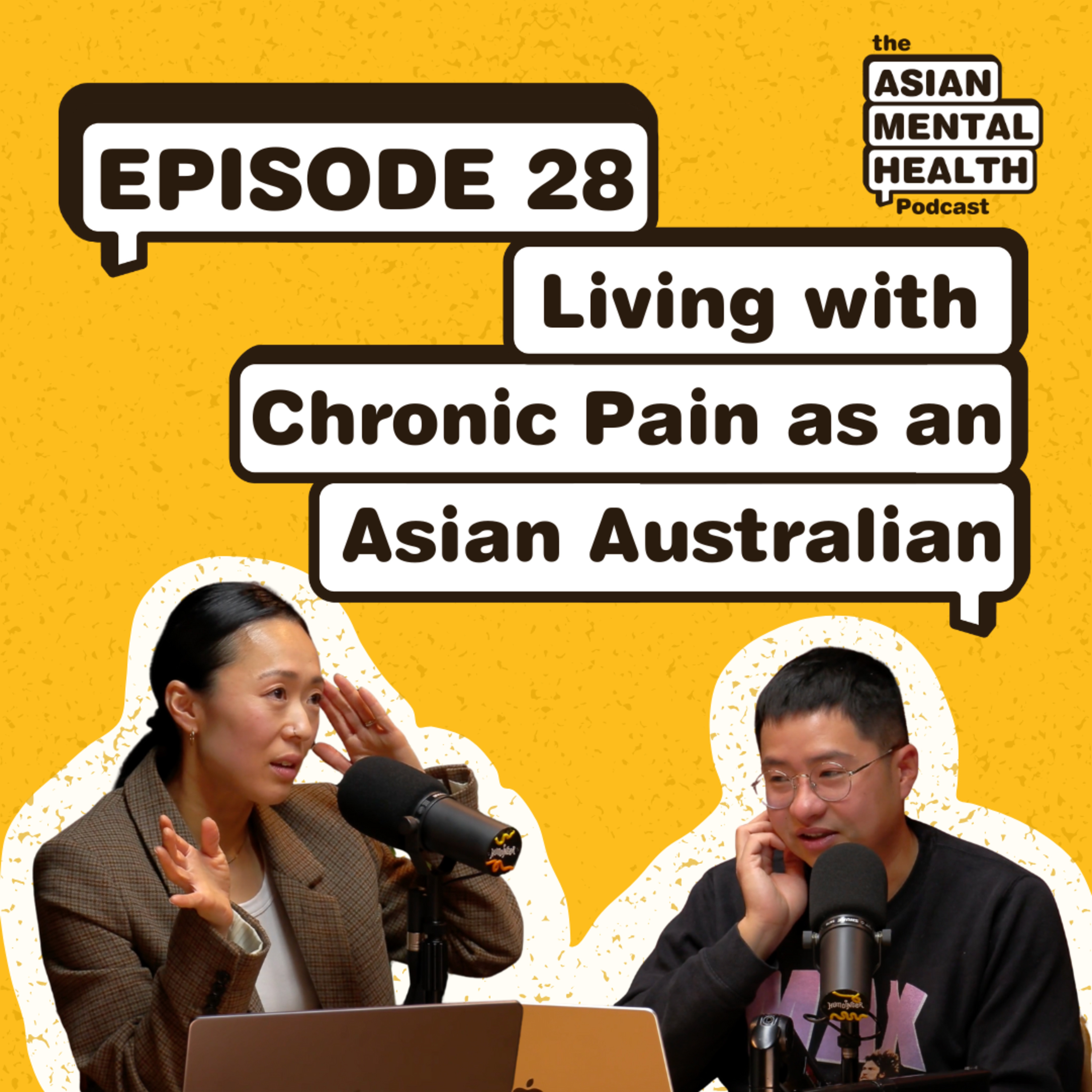 Living with Chronic Pain as an Asian Australian: One Session That Changed Everything 27.10.2025 44นาที🎁 Free Resource Download your free Cultural considerations in chronic pain guide → HERE. In this episode, Asami swaps roles to become the guest, opening up about years of living with debilitating chronic pain, the cultural values that shaped her response to it, and the surprising one-session breakthrough that changed everything. Whether you're an Asian Australian navigating your own health challenges, a mental health practitioner seeking deeper cultural understanding, or simply curious about the mind–body connection in multicultural contexts, this conversation offers insight, relatability, and hopefully, hope! You'll learn: ✅ How Asian cultural beliefs like grit and stoicism can shape our relationship to chronic pain and seeking help ✅ Why recovery isn't always a straight line, and how to balance rest with building resilience ✅ Practical mindset shifts to approach chronic pain without fear ✅ How to find culturally competent healthcare providers who understand Asian Australian experiences 💡 Episode Highlights Our senior producer Yeo takes over hosting duties Asami's life in 2018, working full-time in trauma, and the onset of chronic painFacing years of treatment with no improvement from various Melbourne practitionersThe single osteopath session that changed everythingParallels between chronic pain, mental health, and experiencing racism in AustraliaLessons from recovery and ongoing pain management strategies 🧠 Key Quotes: "The moment I realised my body wasn't broken was the moment I started to heal.""I think a lot of us grow up being told to just push through pain, and that can make it harder to ask for help when we really need it.""When you understand pain as your nervous system trying to protect you, it changes the way you respond to it." 🛠️ Resources & Links 🔗 Find culturally competent practitioners on our Asian Mental Health Practitioner List: justshapesandsounds.com/asian-australian-mental-health-practitioners🔗 Related episode: Interested in Asami's journey? Check out this episode. 🙌 Stay connected with us Website: https://justshapesandsounds.com Instagram: https://instagram.com/justshapesandsoundsLinkedIn: https://linkedin.com.company/justshapesandsounds If this episode helped you understand chronic pain from a cultural perspective, please subscribe and share to support other Asian Australians on their healing journeys. 💛Keywords: chronic pain, Asian Australian health, cultural competency healthcare, mind-body connection, chronic pain management, Asian cultural values, Melbourne practitioners, multicultural health, pain and mental health
 -
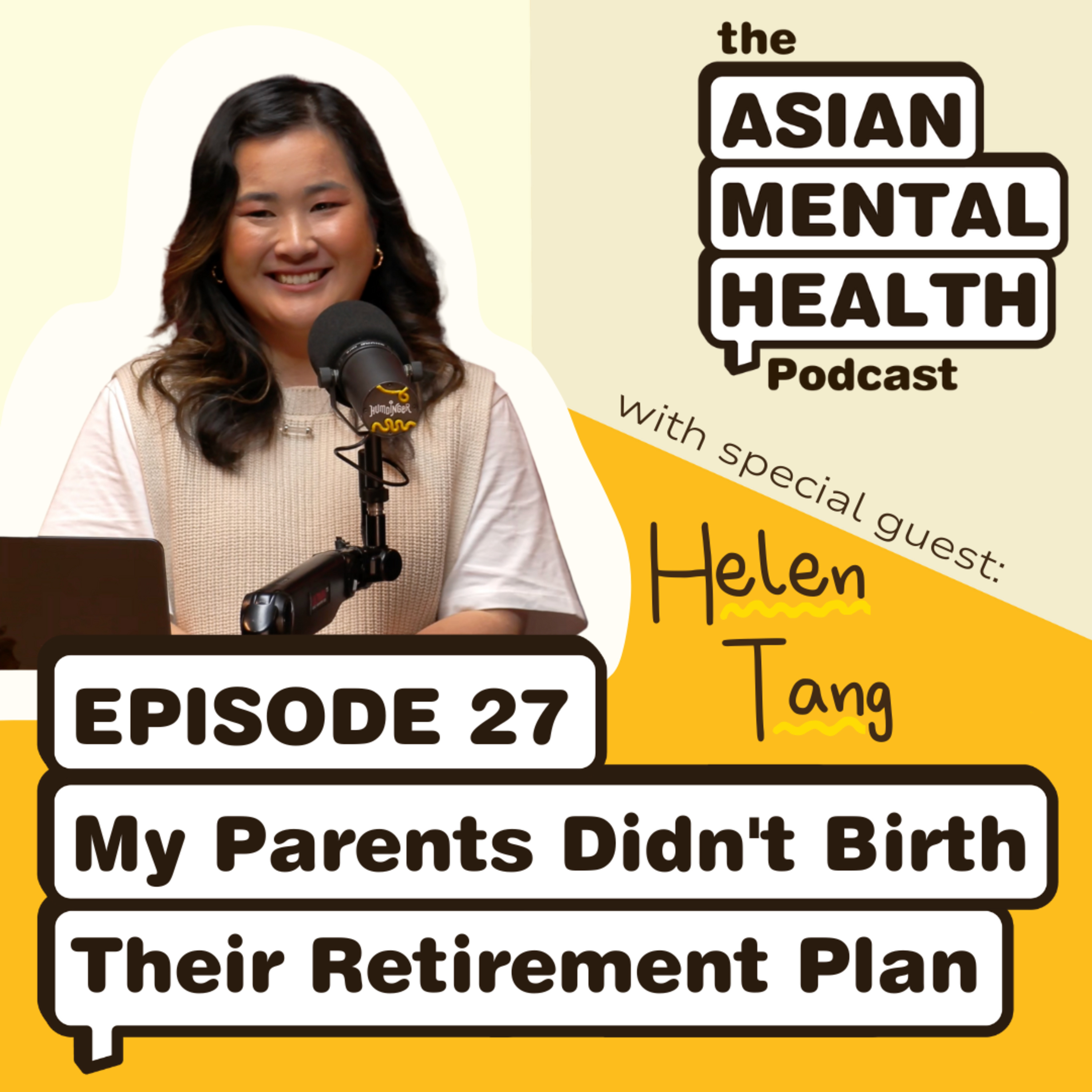 "My Parents Didn't Birth Their Retirement Plan": Vietnamese Australian Psychologist Helen Tang on Anxiety and Family 20.10.2025 45นาที🎁 Free Resource: Download our guide How to Talk About Mental Health with Your Asian Parents HERE.What do you do if you can't find the right words to talk about your mental health with your parents? Vietnamese Australian psychologist Helen Tang shares her journey with anxiety, medication, and learning how to care for herself while staying connected to her family - offering hope for other Asian Australians facing similar challenges.In this episode of the Asian Mental Health Podcast, Asami sits down with Melbourne psychologist Helen Tang, founder of True You Psychology, to explore what it means to navigate mental health when language, culture, and family expectations collide in Asian Australian households.Helen shares her lived experience of growing up speaking "Vietglish," managing panic attacks, and receiving a diagnosis of generalised anxiety disorder while working retail as a psychology student. She opens up about what therapy taught her, why medication was a turning point, and how working with a Vietnamese Australian psychologist made all the difference in her healing journey.🎧 You'll hear about: ✅ How to talk about mental health with Asian parents when language is a barrier ✅ Managing generalised anxiety disorder as an Asian Australian ✅ Why working with culturally competent psychologists matters ✅ Breaking down medication stigma in Asian communities ✅ Setting respectful boundaries while maintaining family harmony💡 Episode Highlights:What happens when you don't have the words to talk about mental health with Asian parentsPanic attacks, dread cycles, and receiving a diagnosis of generalised anxiety disorderThe power of psychoeducation: learning about the cortisol awakening responseTherapy vs anxiety: when self-care isn't enough, and why switching therapists is okayMedication stigma in Asian communities, and Helen's "flotation device" metaphorExplaining therapy and medication to parents when you only speak "Vietglish"Respectful boundaries: humour, playfulness, and love languages with Asian parents and auntiesFilial piety, obligation, and reframing the idea of being your parents' "retirement plan"Finding authenticity and becoming the "true you" as an Asian Australian👤 About the Guest Helen Tang is a Vietnamese Australian psychologist and founder of True You Psychology. She specialises in working with Asian Australians navigating anxiety, cultural identity, and family dynamics. Helen provides culturally responsive therapy that understands the unique challenges facing Asian Australian communities.📱 Helen's instagram: https://www.instagram.com/helentang.psychologist 🔗 Find Helen and other Asian Australian psychologists on the Asian Mental Health Practitioner List https://www.justshapesandsounds.com/asianaustralianmhpractitionerlist 🙌 Connect with us: Instagram: https://instagram.com/justshapesandsounds LinkedIn: https://linkedin.com/company/justshapesandsounds Website: https://justshapesandsounds.com Subscribe to the Asian Mental Health Podcast on your favourite app, and please leave a review so other Asian Australians can find these important conversations about mental health and cultural identity. 💛Keywords: Vietnamese Australian psychologist, Asian parents mental health, generalised anxiety disorder, Melbourne psychologist, Asian Australian therapy, culturally competent psychology, anxiety treatment, Asian family dynamics, mental health stigma
 -
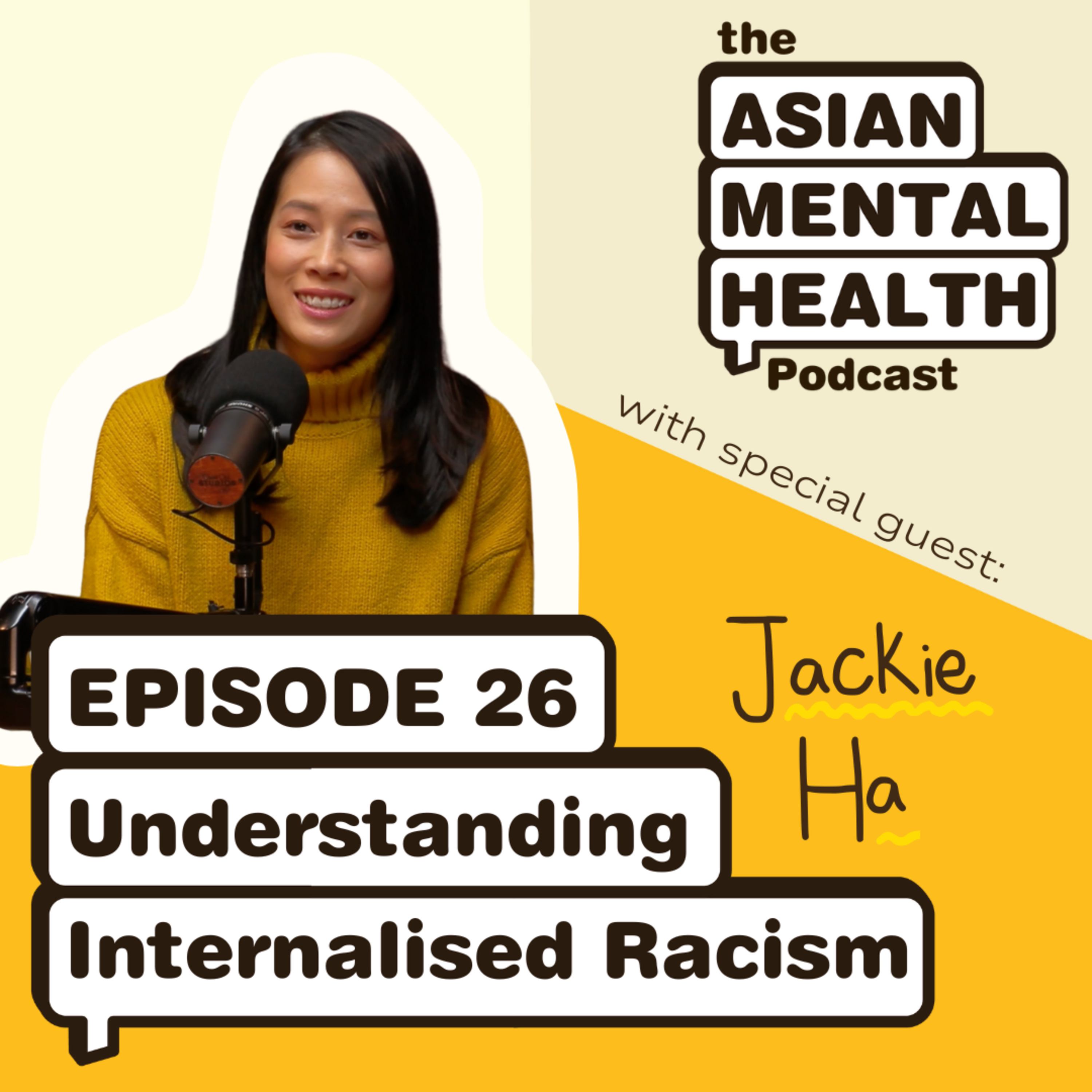 Understanding Internalised Racism: How Asian Australians Can Heal Identity Shame with Counsellor Jackie Ha 13.10.2025 45นาที🎁Free resource: Download your guide Navigating Internalised Racism HERE.✨ How does internalised racism shape the way we see ourselves, and how can we begin to heal? In this episode, Asami speaks with Asian Australian counsellor Jackie about identity, shame, and the subtle ways racism becomes internalised within Asian Australian communities. From distancing ourselves from culture to finding laughter in shared stories, Jackie offers honesty, warmth, and practical insights for anyone navigating the impact of internalised racism in Australia.🎧 You'll hear about: ✅ What internalised racism is and how it shows up in everyday life for Asian Australians✅ How shame and belonging are tied to racism and exclusion in Australian society ✅ Why storytelling and humour can transform pain into connection ✅ Finding culturally competent mental health support as an Asian Australian💡 Episode Highlights:Jackie's reflections on Asian Australian identity, shame, and survival strategiesHow internalised racism can impact mental health and belonging in multicultural AustraliaThe role of community and culturally responsive therapy in unlearning patternsFinding joy and laughter as part of the healing processPractical steps for Asian Australians seeking mental health support🧠 Key Insights from Jackie:Internalised racism isn't a personal flaw, it develops from systemic racism in Australian societyShame grows in silence; sharing our experiences with culturally aware therapists helps us realise we're not aloneLaughter can be healing, softening pain and creating connection within Asian Australian communitiesCultural competency in mental health practitioners makes a significant difference👤 About the Guest: Jackie is an Asian Australian counsellor who works with compassion, curiosity, and cultural sensitivity. She supports clients to navigate identity, belonging, and healing from the impacts of racism in Australian society.🌐 Find Jackie and other Asian Australian mental health practitioners over on the Asian Mental Health Practitioner List📱Jackie's Instagram: @morrow_endeavour 🙌 Connect with Shapes and Sounds Instagram: @justshapesandsounds LinkedIn: Shapes and Sounds Website: https://justshapesandsounds.com If this episode resonated with you, please subscribe and share to help other Asian Australians find culturally aware mental health conversations. Your support helps break down stigma in our communities. 💛Keywords: internalised racism, Asian Australian mental health, cultural competency, Asian Australian counsellor, multicultural psychology, racism and mental health, Asian Australian identity, culturally responsive therapy
 -
 Why therapeutic rapport matters more than you think: Finding the right psychologist for Asian Australians 09.10.2025 38นาที💡Download the free therapeutic rapport guide that accompanies this episode HERE.What makes therapy work? Is it the technique, the therapist's training, or something else? In this opening episode of Season 4, Asami and Marcus explore the underrated but essential ingredient in therapy: therapeutic rapport. Especially for Asian Australians seeking culturally responsive mental health support.From personal stories of EMDR gone too fast, to the awkwardness of 15-minute intro calls with Melbourne psychologists, this conversation unpacks why the relationship between therapist and client is often more powerful than the modality itself. Asami and Marcus share honest reflections on what has (and hasn't) worked in their own therapy journeys, with plenty of laughter and curiosity along the way.🎧 You'll hear about: ✅ Why therapeutic rapport predicts positive outcomes across all therapy types ✅ How validation, challenge, and boundaries shape the therapy experience ✅ What "green flags" and "red flags" to look out for when choosing a psychologist in Melbourne or Australia-wide✅ Why cultural competency and Asian Australian identity matters when seeking mental health support ✅ Practical tips for making the most of a 15-minute introductory call with potential therapists ✅ The story of how the Asian Australian Mental Health Practitioner List began and why it's still the most visited page on our websiteWhether you're new to therapy, looking for a culturally responsive psychologist, or curious about how Asian Australian identity shapes the experience of seeking help, this episode will leave you feeling informed and reassured: you deserve a therapist you can trust, who truly understands your cultural background.🔗Find culturally competent practitioners on the Asian Mental Health Practitioner List🙌 Connect with Shapes and Sounds Instagram: @justshapesandsounds LinkedIn: Shapes and SoundsWebsite: https://justshapesandsounds.com If you found this episode helpful, please subscribe, share, and leave us a review on your favourite podcast app. Your support helps us reach more people and break down stigma around mental health in Asian Australian communities. 💛Keywords for Asian Australians: therapeutic rapport, Asian Australian mental health, culturally responsive therapy, Melbourne psychologists, finding the right therapist, cultural competency in psychology
 -
 Bonus episode: Mindfulness through craft (Uncut) 30.06.2025 48นาทีAs promised, here is the unabridged version of the documentary that Oscar made during his travel through Japan. He dives deeper into the Eastern philosophies behind Fukumitsu’s calligraphy practice and discovers a fascinating link between art, language, nature and mental wellbeing.The transcript is available here.Help us destigmatise mental health conversations in Asian communities by downloading this episode on your favourite app and sharing it with your friends and family.We’d love to hear your thoughts and ideas about Asian mental health. Find us online at @justshapesandsounds or justshapesandsounds.comEnglish voiceovers provided by Kim Brockett, Vivan Vo, Junxin Peng and Yeo Choong.This podcast is supported by the Victorian Department of Health via the Diverse Communities Program. All information provided is general information only and should not be used in lieu of professional advice.
 -
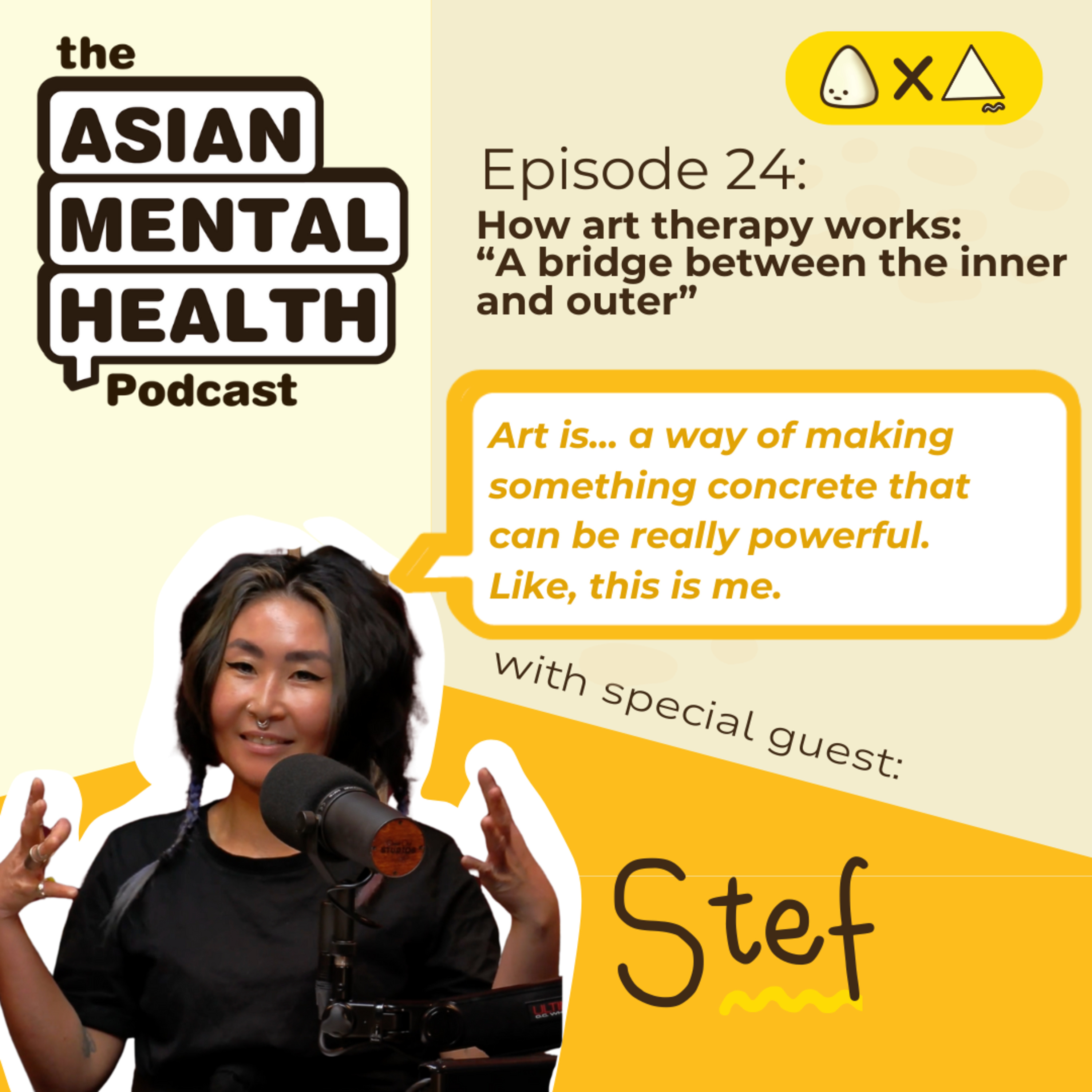 How art therapy works: 'A bridge between the inner and outer' 23.06.2025 55นาทีAsami and Marcus invite their beloved teammate Stef Kam onto the show to discuss their work as an art therapist and an artist. Stef explains how creating art in art therapy plays a role in helping people to deal with feelings and emotions that words cannot express. And don't worry, our third host Oscar reunites with the group at the end to wrap up the season.The transcript is available here.Help us destigmatise mental health conversations in Asian communities by downloading this episode on your favourite app and sharing it with your friends and family.We’d love to hear your thoughts and ideas about Asian mental health. Find us online at @justshapesandsounds or justshapesandsounds.comThis podcast is supported by the Victorian Department of Health via the Diverse Communities Program. All information provided is general information only and should not be used in lieu of professional advice.
 -
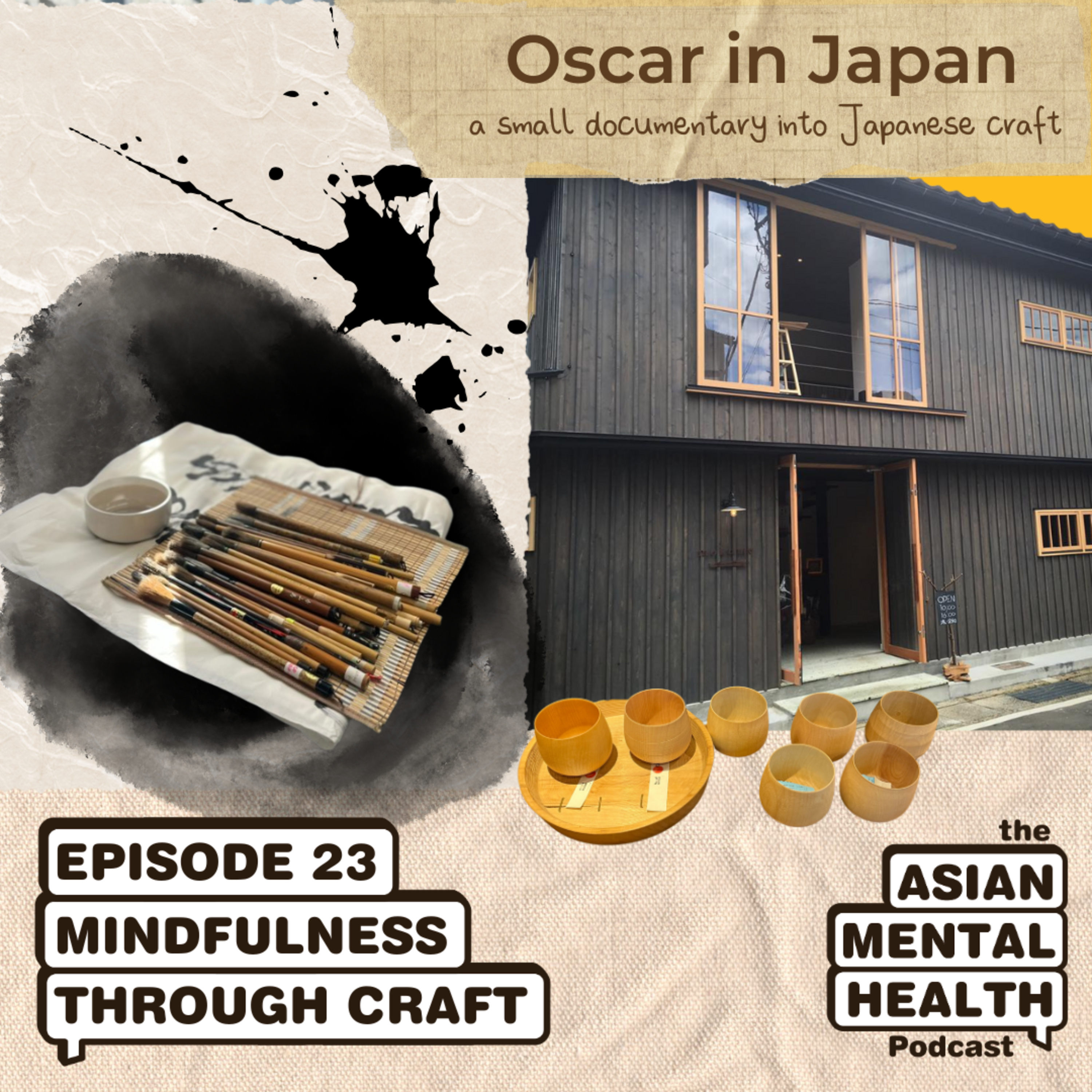 Oscar in Japan: Mindfulness through Japanese craft 16.06.2025 50นาทีIn a very special travel documentary episode, Oscar explores the intersection of work, honing a craft and mental health in Japanese craft. The team discuss the way Japanese culture, crafts and "Zen" are romanticised and appropriated by the Western gaze.The transcript is available here.Help us destigmatise mental health conversations in Asian communities by downloading this episode on your favourite app and sharing it with your friends and family.We’d love to hear your thoughts and ideas about Asian mental health. Find us online at @justshapesandsounds or justshapesandsounds.comEnglish voiceovers provided by Kim Brockett, Vivan Vo, Junxin Peng and Yeo Choong.This podcast is supported by the Victorian Department of Health via the Diverse Communities Program. All information provided is general information only and should not be used in lieu of professional advice.
 -
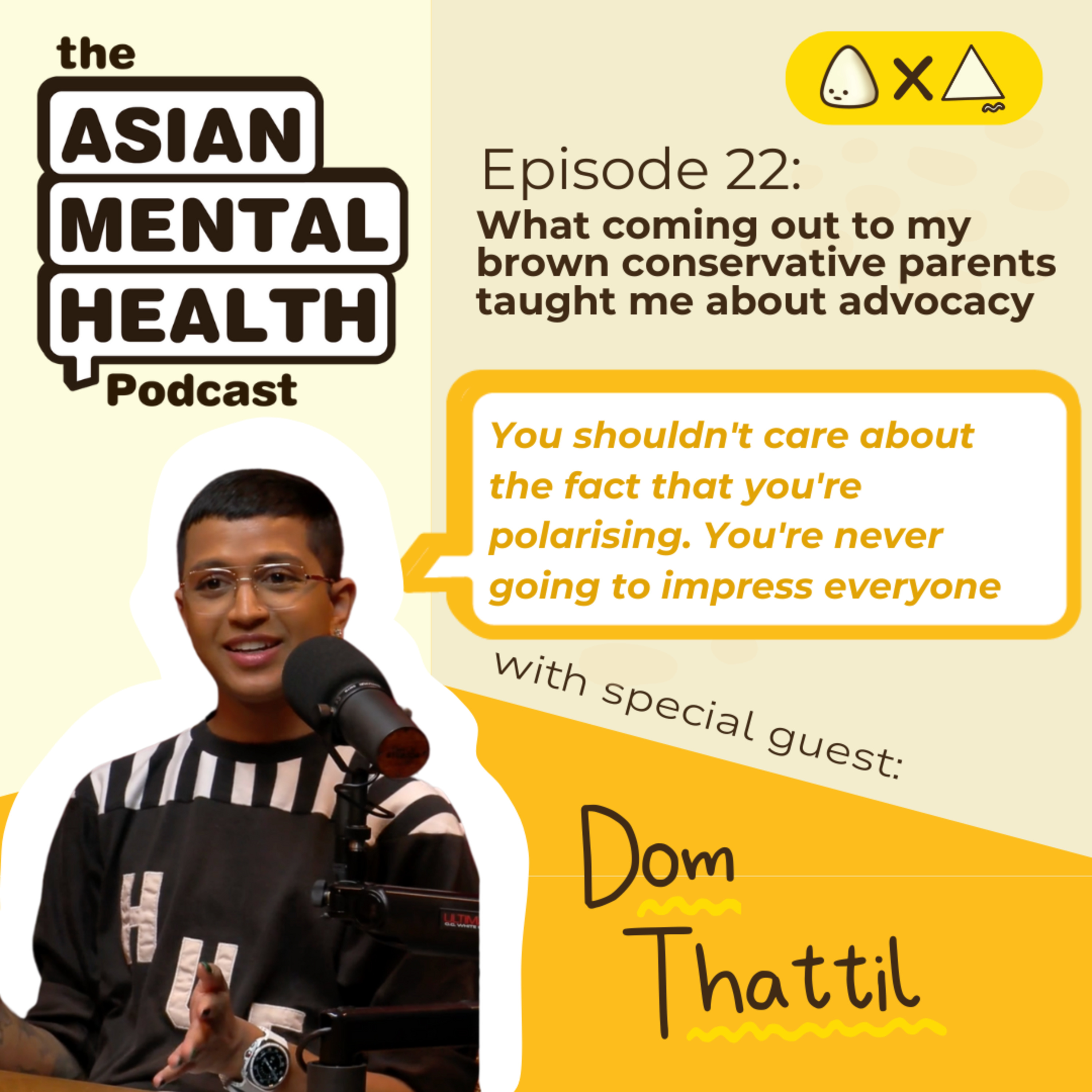 What coming out to my Brown conservative parents taught me about advocacy 09.06.2025 41นาทีDom Thattil, influencer and advocate for BIPOC and queer communities, drops into the studio for a chat with Asami about balancing safety with visibility, his relationship with his family and the inner work we need to do to keep ourselves mentally healthy.The transcript is available here.Help us destigmatise mental health conversations in Asian communities by downloading this episode on your favourite app and sharing it with your friends and family.We’d love to hear your thoughts and ideas about Asian mental health. Find us online at @justshapesandsounds or justshapesandsounds.comThis podcast is supported by the Victorian Department of Health via the Diverse Communities Program. All information provided is general information only and should not be used in lieu of professional advice.
พอดแคสต์ที่คล้ายกัน


ยอดนิยมใน
พอดแคสต์นี้ปรากฏในชาร์ตพอดแคสต์ของประเทศเหล่านี้ด้วย
