
The Creative Nonfiction Podcast with Brendan O'Meara
Brendan O'Meara
0
The Creative Nonfiction Podcast is a weekly interview show hosted by Brendan O'Meara that explores the art and craft of telling true stories. Each episode features conversations with leaders in narrative journalism, essay writing, memoir, documentary film, radio, and podcasting. Guests discuss how they report, structure, and write nonfiction, sharing practical lessons from their own work. The show is aimed at writers and storytellers who want to improve their craft and understand the creative process behind memorable true narratives.
ตอน
-
 Episode 546: Seth Wickersham is On That Hill 18.09.2026 1ชม. 15นาที"Writing is such a lonely job, and I feel bad for people who don't have a crew. I think you really have to have a crew. I had a college crew my first couple years at ESPN. There was a bunch of us who were young writers and very ambitious. That was a crew. And then we have our group now of people who are on various text threads, you need a band to always know where your head is at any given time, so they can help you tap into those things when you're doing your work," says Seth Wickersham, author of three books, including his anthology of his best ESPN work Be On That Hill. Today we welcome back Seth Wickersham, his third trip to the podcast. He has achieved anthology status. His best work over 26 years at ESPN is in 480 tidy pages titled Be On That Hill: Stories from the Summits of Sport, with a forward by his buddy and colleague and master in his own right, Wright Thompson. It's published by Hyperion Avenue. I should add right off the top that I should have in the coming week or two a Nieman Storyboard annotation of Seth's mammoth profile on Sean Payton. It's a 15,000-word feature that is a stunning piece of work. In any case, pay attention to this space for news on that. But, yes, Seth is the author It's Better to Be Feared and American Kings and let me be the one to tell you that he is one of the good ones, just a great person on top of being a tremendous writer and reporter. I think that comes across in how he speaks, his generosity of spirit and willingness to share his vast experience with you. I mean, take these blurbs for instance: from Jonthan Eig: "Wickersham stands with Plimpton and Halberstam among the finest sports chroniclers." And Peter King: "Wickersham's terrific prose and storytelling are buttressed by his tireless and insightful reporting." Damn. What a treat, what a ride you're in for. Seth's work can be found at espn.com [http://espn.com/] and you can visit his website sethwickersham.com [http://sethwickersham.com/] and follow him on IG @seth.wickersham. In this episode, we talk about: * Getting beyond access porn for his Payton profile * Having an idea of where you want to end a story * The messy creative process * Each time you're starting over * Shades of grayness * Not being dissuaded by lack of access * Lucky that people were invested in his success * Breaking through creative plateaus * The benefit of being a young writer * Everything in a story is a reflection of you * Needing a crew * How your writing voice can adapt * And the notes he has taped to his computer You might want to pair this episode with Pamela Colloff, Tony Rehagen and Justin Heckert.
 -
 Episode 545: Stories Can Sit in the Notebook for Years. Just Ask Matthew Wolfe. 11.09.2026 1ชม. 12นาที"There are a lot of stories that I come across that almost work or that don't quite work. And early in my career, I think I'd try and chase stories or force them to fit or force them to be a story when they don't actually work as a story," says Matthew Wolfe, author of the book Fires in the Night and the Atavist story "The Bleeding Hearts." Today we welcome back Matthew Wolfe for the third time in about a year. Why, you ask? Well, his first appearance was Ep. 482 for his Atavist story "The Talented Mr. Bruseaux," then, just a few weeks ago he was on for Ep. 536 to talk about his first book Fires in the Night. And now he's got another Atavist story. Wild, right? This is the way. Matt's story is titled The Bleeding Hearts: An ex-cop pulled off the largest armed robbery in Austria's history, with his friend's mistress as his accomplice. But he wasn't trying to get rich. He wanted to be a real-life Robin Hood. Now, we'll be chatting with Jonah Ogles soon and I didn't bring this up with him, and I will down the road, but listen to the deck again. If you want to sell a pitch to the Atavist, can you sum it up in one sentence like that? I will talk to them about that in the next one and how that distillation might help your pitches out either for the Atavist or any other publication. Matthew has written for the Atavist on 3 separate occasions, and he's also the author of Fires in the Night about the Earth Liberation Front. His work has appeared in the New York Times Magazine, Harper's, The Atlantic, and National Geographic In this conversation, we talk about: * His love of The Baffler, Harper's, and the New Yorker * Where his path and ambitions lie * Balancing fun, meaning, and value in a story * The almost-working stories that don't * Stories that sit in the notebook for years * Periods of spring cleaning * Missing the sprawl of book writing * And when a reporter can add commentary to a story
 -
 Episode 544: Writing a Book is Like Driving a Bus, says Joshua Robinson 04.09.2026 1ชม. 7นาที"Sometimes you swing and a miss on a story, or you get scooped by someone, and I think there's a constant feeling of like you're only as good as your last story, as the last thing you published, and it's hard to shake that," says Joshua Robinson, co-author of The Playbook: The Hidden Forces Shaping Winners and Losers in the Modern NFL (Mariner Books). Joshua Robinson is here. Now, it was SUPPOSED to be a two-headed monster with Jonathan Clegg but SOMEBODY got pulled into an urgent news situation at the Wall Street Journal and had to conveniently skip thus putting ALL the pressure on Joshua Robinson to shoulder the burden that is a conversation with me. JR and JC are the co-authors of four books in nine years. Four books in nine years. Their latest is The Playbook: The Hidden Forces Shaping Winners and Losers in the Modern NFL. It's published by Mariner Books and edited by Matt Harper, who made The Front Runner as good as it is. Joshua heroically stepped in and did the work of two people. He's the sports editor for the Wall Street Journal and has covered Formula 1, European football, the World Cup, the Tour de France, etc. He and Jonathan are the authors of The Club, The Formula, and Messi vs. Ronaldo. The Club and The Formula are rated 4.6 on the place that shall not be named out of more than 1,800 ratings. That's amazing. In this episode, we talk about: * Translating super niche sports for a reader * The co-author shared Google Doc * Amusing themselves * The Big Pages Stage * How they only write two big drafts, what? * Marrying the big idea to characters * Drive the bus * Understanding time value of money in the NFL * And how you're only as good as last story This episode will pair well with Episode 199 with Keith Law, and Ep. 540 with Mitch Weiss and Holbrook Mohr. Instagram: @creativenonfictionpodcast Substack: welcometopitchclub.substack.com
 -
 Episode 543: Doubt, Vulnerability, Confidence. Is Chris Bennett Talking About Writing or Running? 28.08.2026 1ชม. 13นาที"I think it's a great point with writing. You know early on you realize like putting pen to paper or starting to type early on was a massive achievement. There were huge gains, and now you're still grinding to figure out like 'I don't know how to end this chapter. How do I not know how to end a chapter? I've been writing for 20 years. What's wrong with me?' And you realize like this is the gig. This is part of the fun, though. It's also part of the grind, which is why if you asked a runner their their most fun runs, they're usually their hardest runs, and it's the same thing with any other passion," says Coach Chris Bennett, author of This is About Running. This is Not About Running. It's Coach Chris Bennett! He is the Nike Running Global Head Coach and now he's the author of This is About Running. This is Not About Running.: Lessons for Between and Beyond the Start and Finish Line. It's published by Dey St. If you're looking for workouts and training plans and pace charts and Zone 2 up the wazoo, this is NOT the book for you. But if you're looking for a 220-page metaphor for being a better writer, a better person, and yes, maybe even a better runner, then you're going to love this book. I read it twice. The chapters are, by and large, lean and range from confidence to doubt to hope and play and regrets. Maybe this podcast is about writing and not about writing. A little more about Coach Bennett, who is something of a real-life Ted Lasso. Prior to working with Nike, he was a high school history teacher who helped coach one of the most successful running programs in the U.S. He attended the Univ. of North Carolina where he captained the XC and Track teams. After college, he spent five years on the Olympic Development Nike Farm Team out of Palo Alto, CA. He used to live in Oregon, but moved back to his native New Jersey. In this episode, we cover a lot of ground including: * Why longform content is not dead * How he went from working in finance to Nike * How he cultivated his coaching philosophy * Confidence vs. Arrogance * Vulnerability * Reckoning with and the fear of success * The power of just focusing on yourself * Self-sabotage * And how running helped his writing I'd pair this episode Ep. 419 with Maggie Gigandet and her Atavist story about an ultrarunning couple and Ep. 525 with Mary Cain and her memoir of abuse at Nike called This is Not About Running.
 -
 Episode 542: Earl Swift and the Battle to Get the Reader to the Last Word 21.08.2026 1ชม. 16นาที"Our our first job, job one, for anybody writing a book, for anybody writing a story of any kind, any length, is to get the reader to that last word. If you don't do that, it doesn't matter what pretty words you drop in the middle of the story. Doesn't matter how brilliantly conceived it is. The story has failed because you have failed to get the reader to the end," says Earl Swift, author of Up on Cove Mountain. It's Earl Swift with his tenth book. He's the New York Times bestselling author of Chesapeake Requiem, and he makes his fourth trip to the podcast to talk about Up on Cove Mountain: Adventure, Tragedy, and a Quest for Meaning on the Appalachian Trail. It's published by Mariner Books, and what a book it is as it recounts Earl's first hiking of the AT in 1990 and the happenstance, devoid-of-reason tragedy that befell two fellow southbound hikers in Molly LaRue and Geoff Hood. In that quest for meaning, Earl, now in his 60s, hikes the trail again to ponder the meaning of reason, luck, chance, and the enduring allure of the trail. What a joy to welcome Earl back to the show. This was a toe-tappin' good time. The toes were tapping. We start the conversation with: * How to handle a book advance * What drove Earl to return to the AT * How Flip flopping the trail reflected the structure * Making the AT chronicle feel fresh * Trail angels * Narrative wormholes * The people he relies on for story help * Luck * How hiking the AT is like reading and writing * Hiking your hike * How he kept track of things on the trail * Proportionality * Getting the reader to the last word * And how nonfiction is a construct You can learn more about Earl at earlswift.com [http://earlswift.com/] and follow him on IG @earl.swift.
 -
 Episode 541: 'Touch the Work Every Day' says Shanda McManus 14.08.2026 1ชม. 7นาที"I applaud anyone out there who's done the book circuit and trying to reach readers, because I'm not in this to make a lot of money, not at all. I just want people to read the story. I kind of felt like I owed it to the book to do my end of this effort. That's kind of fueled me to keep going too," says Shanda McManus, MD, author of Brother Epistles: A Sister's Memoir. Today we have Shanda McManus. I'm sorry, Dr. Shanda McManus, whose debut book is a memoir titled Brother Epistles. It is a memoir written in letters to her brother Monir, who was murdered in 1992 in a drive-by shooting in Philadelphia. Monir was an Army veteran and when he was out of the army, he was involved in the drug trade and got caught up in a turf dispute. In Shanda's telling, we learn so much about Monir and you feel the love and the grief nearly 25 years after his death. It's a wonderful book and you're going to hear quite a bit about it shortly. So Shanda, this was nice, this was fun. You're really going to dig it. She's an assistant professor of family medicine at Hackensack Meridian School of Medicine. Brother Epistles, published by Split Lip Press is her first book and it received a starred notice from Kirkus Reviews. Shanda's writing has appeared in Bellevue Literary Review, Intima: A Journal of Narrative Medicine, among other places. She's got other myriad accomplishments that you can read about at shandamcmanus.com [http://shandamcmanus.com/] and follow her on Instagram @shandmdwrites. In this episode we talk about: * How she thinks about promotion * What we owe the book * The apprehension of working with an editor * The lawn sign that changed her life * Post-It notes * Integrating grief * Finding compassion for her younger self * How the story you tell leads you to the form * The guilt of getting out * Food journeys * How place informed her writing * How she shaped the book * Touching the work every day * And the power of reading aloud Parting shot on some major but minor changes to the podcast, but for now, it's high time we queue Shanda
 -
 Episode 540: Holbrook Mohr and Mitch Weiss Tackle the Atomic City for The Atavist 07.08.2026 1ชม. 21นาที"You have to remember to slow things down. In this world where there's this fast-paced news cycle, and everybody wants to get it out first, this is a different genre, so to speak. You have to slow down. You have to build that trust. You can't expect to get these details on the first interview. More importantly, you have to show you care," says Mitch Weiss, a Pulitzer Prize-winner and co-author of Toxic Lies for The Atavist. "When it comes to the writing, it helps that Mitch and I have similar worldviews and we have a similar voice to our writing, so it doesn't look choppy to readers. It's easy for him to take a chapter and I'll take another chapter, and we can make it flow together," says Holbrook Mohr, a Pulitzer finalist and co-author of Toxic Lies for The Atavist. Mitch and Holbrook's story is Toxic Lies: For Decades, workers at the nuclear facility in Kentucky were exposed to dangerous levels of radiation. Management assured them nothing was wrong. Then four friends risked everything to reveal the truth. It's a whistle-blower narrative and while the story dates back decades, you can feel the weight of the impact of industry encroaching on rural communities – i'm speaking specifically of data centers today – and what catastrophe and oversight will workers be subjected to next? How will they be exploited in the name of shareholders? To Holbrook and Mitch's credit, they have very little by way of an internet toehold, Holbrook is on Twitter @holbrookmohr and Mitch is @mitchsweiss on IG and Twitter, but I'll give them a greater intro when we reach their part of the podcast: spoiler alert, there are Pulitzer Prizes involved. Holbrook and Mitch are award-winning journalists with the Associated Press. They have reported together on a culture of abuse in the U.S. gymnastics program, the use of "less lethal" force by police, and the dangers of medical devices known as spinal-cord stimulators. They are the authors of the book Broken Faith: Inside of One of America's Most Dangerous Cults. Mitch won the Pulitzer Prize and Holbrook is a Pulitzer finalist. They have been working together as a tandem since 2009, lots of work for the AP, and now independently as they navigate the choppy waters of freelance investigative journalism. In this conversation we talk about: * Collaboration and trust * The death of the dad book * Stress testing a story as a magazine story before a book * Adapting and being nimble * Keeping interviews short * Developing trust with sources over time * Slowing things down * Hearing how sentences sound * And how they decompress after reporting on intense material So let's waste no more time.
 -
 Episode 539: How Jennifer Keishin Armstrong Writes Biographies of TV Shows 31.07.2026 1ชม. 20นาที"We probably have some sense of what narrative is. So when your brain starts turning into the little movie camera because this is a juicy scene, then it's like, well, what would I want to show? What what would I want to know here?" says Jennifer Keishin Armstrong, author of Parks and Rec: The Underdog TV Show That Lit'rally Inspired a Vision for a Better America. Dude, we have Jennifer Keishin Armstrong here today. What brings her to the CNF Pod-o-Verse is her latest book, her ninth, titled Parks and Rec: The Underdog TV Show That Lit-rally Inspired a Vision for a Better America. It's published by Dutton with a forward by Nick Offerman. Jennifer also is the best selling author of Seinfeldia, and we talk about that as well, how timing is everything and there are so many things out of our control … She can be found @jmkarmstrong on IG and jenniferkamrstrong.com [http://jenniferkamrstrong.com/]. OK, so Jennifer's Parks book came out earlier this year and it's a wonderful, breezy read about one of my all-time favorite TV shows, a show that is deeply important to me. We watch it all the time. We own the DVDs so we actually OWN it, not beholden to the whims of streaming platforms who can deplatform shows at the click of a mouse, presumably. Jennifer's book takes you behind the scenes with actors, writers, producers and shares never before told anecdotes and insights as to why this show has such staying power despite nearly being cancelled after every season. So, yes, we talk about Parks, but we mainly talk about: * Dictionaries * When your brain turns into a movie camera * Jennifer's "practice book" she never talks about * Her guidelines for pursuing a book * How the dialogue around TV has changed in the last 25 years * The ruthlessness of story craft * How Parks got out from under the shadow of The Office * Serendipity and non-meritocracy * Living on the long tail * Lessons from the Parks run * And all the things out of our control Instagram: @creativenonfictionpodcast Substack: welcometopitchclub.substack.com
 -
 Episode 538: The Enduring Mystery of Amelia Earhart with Rachel Hartigan 24.07.2026 1ชม. 16นาที"My career is not a straight path; it's a lot of happenstance where I just sort of somehow get a job and then figure out how to do it once I'm there," says Rachel Hartigan, author of Lost: Amelia Earhart's Three Mysterious Deaths and One Extraordinary Life. Today we have Rachel Hartigan, who, yes, is dignified and reputable. She's the author of Lost: Amelia Earhart's Three Mysterious Deaths and One Extraordinary Life. It's published by Nat Geo. We share an agent, so that was how her book got on my radar. If you're a relative newb to the Amelia Earhart story, Rachel's book is a riveting take on the three main theories of Earhart's tragic death either by castaway, captive, or having sunk at sea in her beautiful Lockheed Electra. Rachel weaves together all these theories with a lean, propulsive biography of a woman far ahead of her time. She's written about everything from the genetics of persimmon trees to the long road to women's suffrage for National Geographic. She is the former editor of the Washington Post's Book World and she has also covered education and culture for U.S News & World Report. You can learn more about her at rachelhartiganauthor.com [http://rachelhartiganauthor.com/]. Had a lot of fun with this as we talk about: * Happenstance * Hard-earned experience * Breaking down David Grann's The Lost City of Z * Modeling a text * Focusing on clarity * Being in partnership with the reader * Being a minimalist interviewer * Saying yes to things * Finding something new to say about Earhart * Why Earhart is still appealing to this day * Cave Day * And learning how to sell your story as if you're telling it at a cocktail party (this echoes Alex Ronan's quip) Pair this episode with David Grann's two appearances, Nick Davidson's appearances, as well Cassidy Randall's appearances.
 -
 Episode 537: Pamela Colloff's Now-or-Never Moment with 'Catch the Devil' 17.07.2026 1ชม. 26นาที"I feel like before I have the confidence to write in the way that I want to write, where I really own the material, I have to spend so much time with people. I will say at the outset, once I walk someone through what it's going to involve after they say yes to talking to me, I'll say I'm going to be around a lot and you're going to get sick of me," says Pamela Colloff, author of Catch the Devil. Today's guest, I mean, wow, from the bottom of the diaphragm up, wow. It's Pamela Colloff. You know her from her National Magazine Award winning work for Texas Monthly and ProPublica/The New York Times Magazine. She's THE premier investigative reporter in the country and she's now the author of Catch the Devil: A True Story of Murder, Deception, and Injustice on the Gulf Coast. It's published by Knopf. This book upends what you think a true crime story is about where the true villain isn't a person at all. It chronicles, among others, Paul Skalnik, a jailhouse snitch, whose non-credible testimony places numerous men on death row, Jim Dailey, in particular, and Pamela takes us through this riveting narrative and punishing commentary on capital punishment and why Florida seems hellbent on being No. 1 in executions. Here's just a slice of what Pam is about: She is a two-time National Magazine Award winner, once for reporting and once for feature writing. Her work has been adapted for narrative and documentary films including Tower, which was short-listed in 2016 for an Oscar. Her work has been anthologized in Best American Magazine Writing, Best American Crime Reporting, and Next Wave: America's New Generation of Great Literary Journalists. She joined ProPublica/The New York Times Magazine in 2017 after many years at Texas Monthly. Listen, I could go on. You get the gist. In this episode, we talk about: * What drew her to Tom Wolfe and Hunter S. Thompson * Speaking with Tom Junod * The Boys Club of longform writing * Her start at Texas Monthly * Being a journalism dork * The elation and despair * How every story is a Rubix cube * The Skip Hollandsworth Method * Owning the material * Knowing when to quote and when not to * Idea generation * Writing is hard * How magazine writing and book writing are different animals * Why Catch the Devil is her now-or-never moment * Beginnings are the worst * Being more disciplined with a book vs. magazine writing * Writing in this attention economy Pair this episode with Ep. 255 with Maddy Crowell and Ep. 414 with John Rosengren, and many other Atavist true crimey pods, too many to mention here. I'd also chuck in Ep. 224 with Patrick Radden Keefe. He'll be back on the show for the paperback run of London Calling.
 -
 Episode 536: The Blood, Flesh, and Messiness of Human Existence with Matthew Wolfe 10.07.2026 56นาที"I love talking with people. I also like that process of trying to shape messy reality into some kind of story, or that moment when you're alone with your notes, and you're trying to figure out how to organize it, and how to bend it into something that works as a story that will carry readers. That's the probably that's the kind of calmest moment for me," says Matthew Wolfe, author of Fires in the Night: The Earth Liberation Front, the FBI, and Secret History of Eco-Sabotage. Hey, CNFers, another LIVE podcast recording, this at Hodgepodge Books & Taps in Eugene, where I spoke to author and journalist Matthew Wolfe and about the art and craft of telling true stories. Pretty great. I love bringing my rig to places and gigging the podcast. This was a standing-room only event and they sold out of books, and two kegs were kicked. Is it the CNF Pod effect? You tell me. Matthew was on the show last year when he had an Atavist story so I HAD to talk to him, haha, but he reached out to me several weeks ago wondering if I'd be willing to interview him as part of a book event and I was like, I know a venue and we'll make it a podcast. HIs book is Fires in the Night: The Earth Liberation Front, the FBI, and a Secret History of Eco-Sabotage. It's published by Viking. I cut out the Q&A portion of this because you couldn't hear the question and I wasn't assertive enough to repeat the question into the mic. I'll be better about that in the future, but also, that's the ephemeral part of the live experience: part of why we attend live events is because it's here and then it isn't. So in this live podcast, Matt and I talk about: * The ledger of invisible debts * Asking questions in a stakeless way * How Matt interviews * Shaping messy realities * How research is like cooking * Broad stroke outlining * Writing through quotes * Why he's still drawn to this kind of work * Competing with the phone * And the blood, flesh, and messiness of human existence Do enjoy.
 -
 Episode 535: Alex Ronan's Masterclass in the Depth of Reporting 03.07.2026 1ชม. 31นาที"One of the things that Patrick Radden Keefe told me was, when I'm doing interviews, I'm always thinking about the anecdote that I will tell someone later at a bar, this is the thing I talk about. That's helpful because there's so much to work with even in one interview or one scene, and the those little gems that you pull out instinctively when you're talking to other people have value, and so I'm often thinking about that in terms of writing," says Alex Ronan, who wrote "The Extremist in the Family" for the Atavist Magazine. Today we welcome Alex Ronan who wrote The Extremist in the Family: The Kerrs were devoted to one another and to their faith. But when one of their own rejected modern medicine in the name of God, they faced a dire question: What if her children ever needed a doctor to save their lives? There's a note as well: This story contains descriptions of child abuse and death. It draws from testimony given by many of the named subjects and extensive court records. That sets the table, no? It reminded me of the Metallica song "The God That Failed." You should check it out. It's what happens when people who believe in divine healing reject medical treatment on religious grounds and die. This story has newborn deaths in it, wholly preventable with a little vaccine that addresses Rh incompatibility. Essentially, when an Rh negative mother conceives a child with an Rh positive father, and the fetus is Rh positive, the mother creates antibodies that attack the fetus's blood cells, which will lead to a potentially fatal case of jaundice, if untreated within a day or so after birth. Abigail, the baby, was Rh positive. Prayers did not, nor could they ever, have saved her. She wasn't the only one. Alex Ronan is a journalist whose work has appeared in Elle, New York, The New York Times, n + 1, The Nation, and Vogue. She was a 2023 recipient of a New York Foundation for the Arts fellowship. She has had work optioned for film/television by Amazon Studios and Hulu, which is kinda cray. You can find her on Instagram at alexronan and on Substack at reallyalexronan. This was a really rich conversation, and she really came to play ball, which I always appreciate. We talk about: Using short fiction as a model for nonfiction writing * How she builds character in nonfiction * Active listening * Divine healing * The family, the story, and the stakes * Putting the reader in different people's shoes * Walking before writing * Seeking the anecdote (a tip she learned from Patrick Radden Keefe) * The power of practice * And what she struggles with Parting shot will be right after this part of the podcast. Let's wait no more. Here's Alex Ronan.
 -
 Episode 534: Shoeleather Reporting and Exploring the Riddles of America with Wil Haygood 26.06.2026 1ชม. 6นาที"The mission of a nonfiction writer is to get the damn thing done," says Wil Haygood, author of several books, including his latest The War Within A War: The Black Struggle in Vietnam and at Home. I'm so thrilled to welcome back Wil Haygood to the show to talk about and celebrate his latest book The War Within a War: The Black Struggle in Vietnam and at Home. It's published by Knopf. Wil is one of the most accomplished journalists and authors working in American letters and just a good-ass dude. He's the author of several books including The Butler (which was made into a movie), Showdown, The Harlem Renaissance, In Black and White, Sweet Thunder, and Colorization. He and I both have ties to the Goucher College MFA in Creative Nonfiction Program and he was generous enough to blurb my first book, Six Weeks in Saratoga, and it's those little things like that that can make an insecure, low-on-confidence person like myself feel like a king for a day. Had a great time catching up with Wil. He was on the podcast back on Ep. 295 when I interviewed him as part of Goucher's winter residency, so that's a fun one to check out. When we spoke, the U.S. had just started bombing Iran in a senseless barrage of violence that appears to have been a monumental loss for the U.S., so that is some of the context of this conversation as we talk about Vietnam and how this country still wrestles with the legacy of it. Wil is one of the good ones and so happy you get to hear him chat about: * How he needs the research to be finished before he writes * Exploring the riddles of America * His encounters with the late great David Halberstam * How luck and fortune come into play * Shoeleather reporting * Tape recorders and notebooks * The stirring cover of this book * Why this country still grapples with the Vietnam War * Highlighting untold stories of women who served during Vietnam * And what kept him going through the doubt Stick around for a parting shot Chuckanut conference prep and an update on the forthcoming audio magazine.
 -
 Episode 533: Susan Orlean on Her 'Best' Rejection, Coming Up with Ideas, and Letting the Reporting Meander 19.06.2026 1ชม. 16นาที"You don't have to go to the far ends of the earth, but I'm willing to do that for you, and tell you what I found," says Susan Orlean, bestselling author of several books, including her latest, Joyride: A Memoir. Look who's back! It's Susan Orlean, author of the memoir Joyride about her roller coaster career as a writer and journalist spanning decades from her time at Willamette Weekly here in Oregon to the summit of The New Yorker, from her first book Saturday Night to reaching bestseller heights with The Orchid Thief, Rin Tin Tin, and The Library Book. It's a book that braids her life story along with hard-earned writing wisdom. We talk about: * Using notebook and pen over the recorder * The quality of her attention * Resilience * What is it that clicks with her for a story * Working through three regime of trust at The New Yorker * The more you learn of the world the better * Curiosity as a form of compassion * Idea generation * Her 'best' rejection * Why books loom larger for her * There is no end to a story * The breeding ground of jealousy * Letting the reporting meander * And Patreon questions! This episode pairs well with: Eps. 61, 121, and 281 with Susan Ep. 500 with John McPhee Ep. 514 with Tony Rehagen Follow the show on Instagram @creativenonfictionpodcast and subscribe to my newsletters Pitch Club and Rage Against the Algorithm.
 -
 Episode 532: Barry Meier Likes to be Open to Surprises 12.06.2026 1ชม. 19นาที"You never know what insight or information you're going to glean from someone, and so I want to be open to surprises. And not have any preconceived notions of what, who this person is, what they're going to tell me, imposing my own values, beliefs, whatever on them, because it's all a discovery," says Pulitzer Prize-winner Barry Meier, whose piece "You Can Run" appears in The Atavist Magazine. Barry Meier is here for another Atavistian chat! Yeah, these have not come out in as timely a manner as I had hoped. The late delay of the "revived" one with Mac Montandon, and having pods that were getting moldy in the can too precedence. Anyway … Barry Meier has won this little award you might have heard of called the, what is it, oh, yes, the Pulitzer Prize as part of a team of reporters in International Reporting for the New York Times. He's also been a finalist for the Pulitzer and a two-time winner of the George Polk Award. He's got a new piece out for The Atavist magazine titled: You Can Run: When their parents ripped two young sisters from their privileged lives, gave them fake names, and took them on the lam, they thought it was because their father was in trouble with the IRS. It would be years before they learned the truth about his life of crime." He's the author of three books, Pain Killer, which was the first to chronicle the Sackler family and the origin of the opioid epidemic. "The book that started it all," wrote Patrick Radden Keefe, whose book Empire of Pain was heavily informed by Barry's work. Barry also wrote Spooked and Missing Man. You can learn more about Barry at barryemierbooks.com [http://barryemierbooks.com/] . In this conversation we talk about: * Using the boundaries of an envelope to map out a story * Interviewing and the tools he uses or doesn't use * Being open to surprises * Beginnings, endings, and pacing This episode pairs well with Ep. 385 with Robert Kolker
 -
 Episode 531: Austin Kleon Goes Beast Mode in 'Don't Call It Art' 05.06.2026 1ชม. 13นาที"I always think, 'Jesus, this person could be reading War and Peace, and they picked up this dopey little book.' You know what I mean? So the best thing I could do is be interesting or helpful. I can't be boring, and I've got to try to be helpful," says Austin Kleon, author of Don't Call It Art: 10 Ways to Create Like a Kid Again. What a pleasure to welcome back Austin Kleon to the show to chat up his new book, his first in seven years, Don't Call It Art: 10 Ways to Create Like a Kid Again. It's published by Tarcher. Like Austin's previous books in Steal Like an Artist, Show Your Work, and Keep Going, this pink wonder is the size of those old double-album CD cases you'd get in the 90s and it's packed with insights and inspiration Austin learned from his two young boys about being an artist and how to be a creative person in times where creativity is needed more than ever. Fun stuff. So Austin is a funny, irreverent, sometimes cranky, but almost always inspiring based on his posture in the creative world. The stuff he curates and his generosity in sharing it is a big reason his Substack audience is 309,000 people strong and as of this taping, #5 in art & illustration on the stack. You can also learn more about him at austinkleon.com [http://austinkleon.com/] where he frequently blogs, though he's turned the dial down on that a bit in favor of the paid audience of his Tuesday newsletters. I've been plugged into the Kleon-verse since about 2014 right when Show Your Work came out and he made appearances on Creative Live with Chase Jarvis, so it's been cool to see the arc of his career to date. In this episode, we talk about: * Place and his Ohio roots * The farmer approach * The idea of uncertainty * Knowing less * Getting back to that thing * The most punk thing Metallica did * What if Austin is the apprentice now? * A revelation from Fiona Apple * How his paid newsletter audience helped cook the book * Researching in the open * Knowing what weight class he's in * Being interesting and helpful * Going full-on Beast Mode * The coveting of creative people * How jealousy shows what's broken in you * And how his kids brought punk back into his life If you're going to pair this episode with anything, check out: * Episode 146: Austin Kleon * Episodes 169 and 433 with Chase Jarvis * Episode 266 with Kristen Radtke * Episode 369 with Akeem S. Roberts * Episode 480 with Dana Jeri Maier * Episode 486 with Roz Chast
 -
 Episode 530: Finding that 'Sinewy Strength' in the Prose with Maccabee Montandon 04.06.2026 1ชม. 2นาที"Maybe your first images are some bulked up organism, or whatever. Then there's that kind of like sinewy strength that you see in like middleweight fighters. Roberto Duran comes to mind as the epiphany, like a super powerful, sinewy guy, right? And so I think that's what we're talking about too, is just those different forms of power, economy is really seductive to me now," says Maccabee Montandon, whose piece on his brother Asher is featured as a "revived" Atavist story. The factory is running behind here at CNF Pod HQ, but we've got the first of two Atavist pods coming this month. It's Maccabee Montandon being featured for The Atavist's "revived" series. This story, originally published by Gawker in 2013, details the story of Mac's brother Asher, who was murdered in Los Angeles in the 1990s. Mac is a journalist, writer, filmmaker, all around creative person and in this episode we talk about: * Obsessions and the best forms to tell stories * Being creatively impulsive * Word economy and sinewy strength * How the proximity to tragedy often activates people * Writing through grief * And his strength as a writer (he's fast) Visit magazine.atavist.com to read "A Hollywood Ending."
 -
 Episode 529: Dan John says, 'Inspiration is for Amateurs' … and He's Correct 29.05.2026 1ชม. 7นาที"They want the secret, and the secret is little and often over the long haul," says Dan John, author of several books on strength and fitness, most recently The Fitness Forge: Master Coaching Tools that Build Real Strength. Today we've got a bit of a curve ball, a backdoor slider, but not really. It's Dan John, who is something of a Swiss army knife of wisdom and kindness and strength and conditioning. He's been a long time strength coach and a master communicator of how to get real-life strong, not influencer, flash-in-the-pan strong, the kind of strong that allows you to fill out your shirt, carry all the groceries in one go, and shovel the driveway without leaving yourself in traction for four days. I've recommended his books many times on this show and in newsletters, and his approach to strength very much rhymes with writing, so that's a big reason why I wanted to invite him on to talk it out. You can visit danjohnuniversity.com [http://danjohnuniversity.com/] to learn more about him and to buy books like the Easy Strength Omnibook, Easy Strength for Fat Loss, his two Armor Building Formula books and his latest The Fitness Forge: Master coaching tools that build real strength. The real crux of easy strength is that it echoes what Percy Cerutty, the Australian running coach, had his runners do in the 1950s, and it's an approachable system that doesn't feel like you've been put through a wood chipper. I spent most of my 30s training like I was a juiced up bodybuilder, hobbling around most days with that deep, bone ache. As I've aged, training in that manner is unfeasible and, well, fucking stupid, plus easy strength is awesome for running, which I'm doing quite a lot these days. So Dan John has been a champion discus thrower coming up on the coattails of the great throwers of the 1970s, guys like Brian Oldfield and Mac Wilkins and Peter Shmock. His lifting approach has always been geared around utility, not aesthetics, by and large. He has written many books like Mass Made Simple, 40 Years with a Whistle, Can You Go, Never Let Go, and several others. Some are only available on the big A, others are available as PDFS through his website. They imbue a sense of possibility, that things are achievable, and that little and often over the long haul is doable and repeatable. If you're into fads, Dan is not for you and he often injects so much personal anecdote and wisdom from a life of nearly 70 years into his work and his podcast, the Dan John University Podcasts where he answers listener questions every week. He's very centering for me. Even hearing him talk through something as simple as his daily pirate map, which is a collection of daily habits, and merely hearing him so often articulate that defrags my computer, if that makes any sense. So in this conversation, we talk about: * Parasocial relationships * Marvel and Greek heroes * The spiderweb effect of his brain * Open Culture * Little and often over the long haul * The secret * Being a slave to habits * Parallels between lifting and writing * Collecting the links * Getting small, easy wins out of the way * Inspiration is for amateurs * Having skin in the game * And community making us great You'll find dan @coachdanjohn on instagram and of course visit danjohnuniversity.com [http://danjohnuniversity.com/] to see if his books or his inner circle is right for you.
 -
 Episode 528: Stuck? Ramona Ausubel Will 'Unstuck' You! 22.05.2026 1ชม. 11นาที"It all has to come from within. So we each have to be in conversation with ourselves and with the work. It's really a relationship, not a project," says Ramona Ausubel, author of Unstuck: A Writer's Guide. Today we have Ramona Ausubel, author of Unstuck: A Writer's Guide. It's published by Tin House. Ramona's curriculum vitae is pretty dope. She's the author of the novels The Last Animal, Sons and Daughters of East and Plenty and No One is Here Except All of Us and the craft book Unstuck: 101 Doorways Leading from the Blank Page to the Last Page. Had a TON of fun with this one and it's a craft bomb. Ramona's work has appeared in The New Yorker, Tin House, The New York Times, Electric Literature, and The Paris Review online. She has taught with Tin House, Bread Loaf, and she's a professor at Colorado State University. This is a really fun and really crafty chat. We talk about: * Why people want to be writers in the first place * The people who stick around * Coming up with ways through * It's a relationship not a project * No writing is ever wasted * Nobody needs a kind-of-written book * Submission clubs * The offering is the action * Community * Shame, doubt, and envy * Lifelong process of voice * Inviting in other influences * When querying asking 'who will you be?' * Platform You can learn more about Ramona at ramonaausubel.com [http://ramonausubel.com/] and follow her on Instagram @ramonaausubel. If you like this episode, I would definitely check out: * Eps. 48 and 207 with Roy Peter Clark * Ep. 49 with Dinty W. Moore * Ep. 50 with Ted Conover
 -
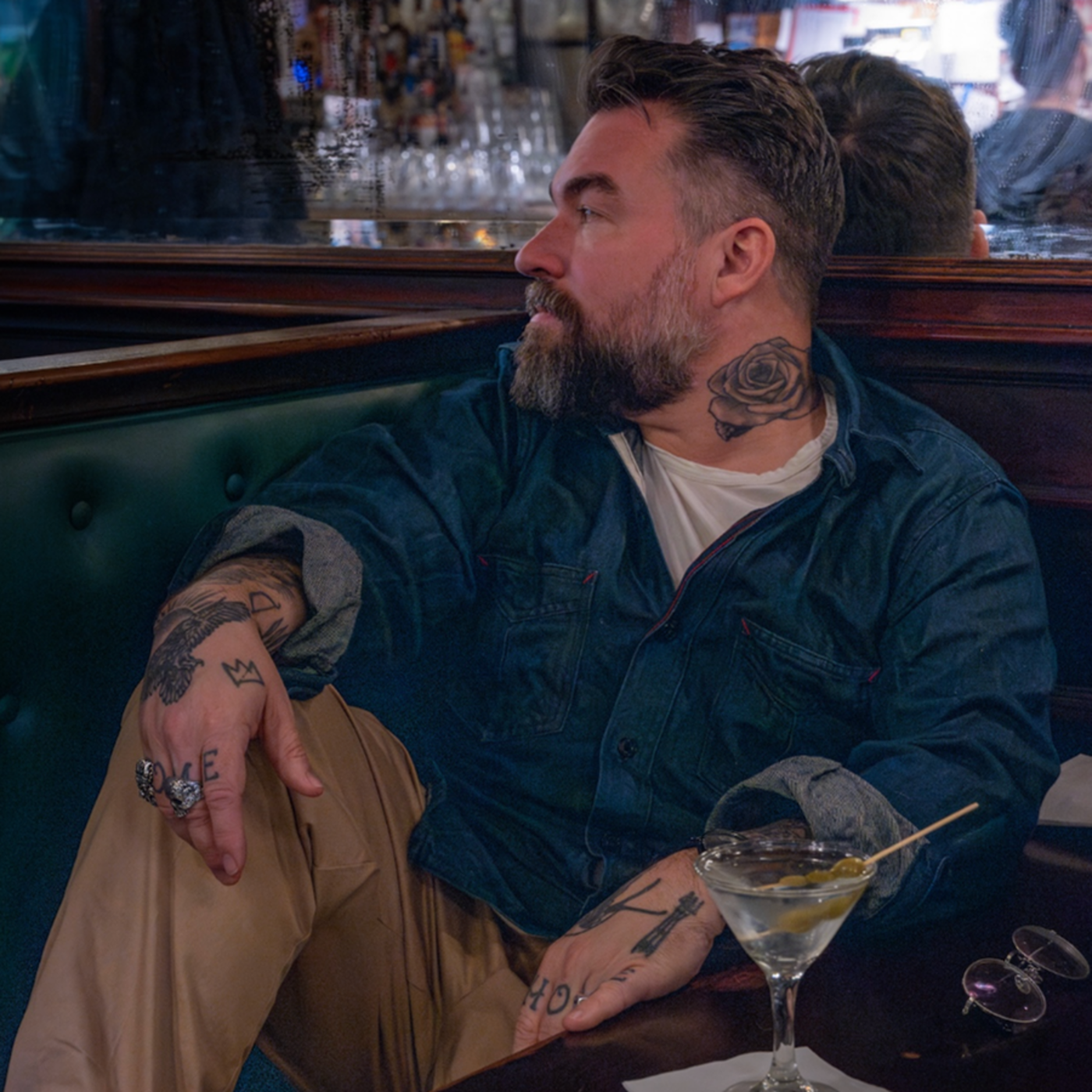 Episode 527: Isaac Fitzgerald says the Truth is a Block of Wood 15.05.2026 1ชม. 15นาที"I say this all the time, and I'll say it again: the truth is a block of wood, and I know the sculpture I carve out of that block of wood looks different than the sculpture my mother carves out of that block of wood, right? But the truth — the block of wood — is what what happens, but the art we make out of that is up to us," says Isaac Fitzgerald, author of American Rambler: Walking the Trail of Johnny Appleseed. We've got Isaac Fitzgerald returning to the podcast. He's going to be at Powells on May 29, 7 p.m., in convo with Lidia Yuknavitch, and I'll likely be heading up the 5 to photo bomb them because Isaac has a new book out called American Rambler: Walking the Trail of Johnny Appleseed. It is published by Knopf. Great talk. We were buzzin', man. In any case, you know Isaac maybe from his bookish appearances on The Today Show, and he's also the author of the brilliant memoir Dirtbag, Massachusetts, a coming of age story. I liken American Rambler to a coming of middle-age story and as Isaac walks and drives in the footsteps of one John Chapman, better known as Johnny Appleseed. It's a book that deals with that squishy time as we crest into our forties and reckon with mortality as well as the greater disconnection we're collectively experiencing, which is why Isaac set out, largely on foot, to put his phone down and live in the world. His essay on walking for The Guardian, linked up in the show notes, very much informed and even catalyzed American Rambler. So Isaac is a pretty special dude. I love the posture he takes in the world. When I had lunch with Lidia before her live appearance on the show, we talked about how Isaac had jumped into the comments on a couple of our Instagram posts and Lidia asked me, "Is Isaac coming to this?" I said, "I don't think so. I mean he's in New York." "It would totally be like him to just show up." And I kinda love that idea. I want to make more of that effort myself. So in this episode we talk about: * Putting the phone down * Living in the world * Walking 20,000 steps a day * The tension between building community and withdrawing into solitude * The scaffolding of the story * How he was late to the arc of his own story * Stories become what they're supposed to be * How the truth is like a block of wood * The black dog as literary device * First lines * And how On The Road informed American Rambler Isaac can be found on Instagram at isaac.fitzgerald and you can join his Substack list Walk It Off and learn more about him at his website isaacfitzgerald.net [http://isaacfitzgerald.net/]. He's also collaborated with the brilliant cartoonist Wendy McNaughton on two books about tattoos, Pen and Ink and Knives and Ink. Great stuff. If you like this episode, I would definitely check out Isaac's first appearance on Ep. 353. I'd also check out: * Ep. 100 with Mary Karr * Episode 200 with Nick Flynn * Ep. 358: Erica J. Berry * Ep. 472 with Melissa Febos * Ep. 503 with Jason Brown
พอดแคสต์ที่คล้ายกัน


ยอดนิยมใน
พอดแคสต์นี้ปรากฏในชาร์ตพอดแคสต์ของประเทศเหล่านี้ด้วย
