
Journal of Biophilic Design
Vanessa Champion, editor, Journal of Biophilic Design
0
The Journal of Biophilic Design podcast features interviews with workplace consultants, futurists, interior designers, architects, urban planners, and professionals in healthcare, wellbeing, and other industries. Each episode explores the latest developments in biophilic design and how it is being applied in different environments. The series is produced by the Journal of Biophilic Design and edited by Vanessa Champion. More information can be found at journalofbiophilicdesign.com.
ตอน
-
 Nature, Nervous Systems and the Places that help us heal 21.09.2026What happens when we step away from the noise of everyday life and enter a space designed to help us restore and reconnect? For holistic wellbeing expert Ali Oetjen, the answer begins with something fundamental: safety. Ali is founder of Ali Wellness in Australia and an internationally recognised holistic wellbeing expert. Through meditation, breathwork, retreats and immersive experiences, she helps people reconnect with themselves, each other and the natural world. Her work explores personal transformation, nervous-system regulation and the relationship between human wellbeing and the environments we inhabit. Ali creates retreats and workshops designed to help people step out of their habitual routines and reconnect with themselves. She describes what happens when people leave behind the familiar cues and patterns of everyday life and enter an environment consciously designed for restoration. “They come into a new space and this space is usually designed for safety, for regulation, for healing, for their optimum health,” she explains. Once those familiar environmental cues are removed, people can begin to make more conscious choices, question old habits and, importantly, reconnect with what they are feeling within themselves. And nature is central to that process: “Nature is so healing and it really resonates safety within us,” she says. We are not separate from nature, she argues; our relationship with it is fundamental to how we experience the world. That connection doesn't necessarily require an elaborate retreat or a journey into the wilderness. Looking up at the sky, hearing birdsong, feeling natural materials beneath our hands, noticing the smell of trees or simply walking outdoors can all become sensory reminders of connection. “Simple things can even regulate our nervous system,” Ali says. Looking up at the sky, she suggests, can send signals to the nervous system associated with the parasympathetic, restorative state. Natural sounds, fresh air and the sensory qualities of the outdoors can similarly contribute to a feeling of safety and calm. This has important implications for the spaces we design. Light, temperature, air quality, acoustics, materials, smell and even silence are not merely aesthetic considerations. They form the sensory environment in which our bodies and minds operate. Ali points to natural light as particularly important, both for circadian rhythms and mood, while comfortable temperatures and fresh, clean air can help create an environment in which people can relax rather than remain on alert. “It’s all a sensory experience,” she says. Natural wood, the smell of eucalyptus, essential oils, fresh air and the textures of natural materials can all provide cues that remind us of something deeply familiar. “It’s all that connection. That keeps reminding us of home.” That word — home — feels significant. The most restorative environments are those that allow our bodies to recognise something familiar, safe and deeply human. The relationship between nature and wellbeing is also, for Ali, much more than a question of what nature can do for us. It is reciprocal. When she walks among trees, she doesn't think only about what she might receive from the natural world. She thinks about what she can give back. She describes walking among the trees on the Sunshine Coast, greeting them and noticing the different environments around her. Nature becomes a relationship rather than a resource — something to engage with, listen to and care for. Nature, she believes, can also act as a mirror for our own lives: “When we see the chaos and the beauty expressed in nature, we can also see that within ourselves,” she says. Trees and landscapes remind us that growth isn't always linear. Trees shed their leaves. Seasons change. Landscapes transform. There are periods of dormancy, darkness and renewal. Nature offers a different rhythm from the constant pressure to perform, produce and
 -
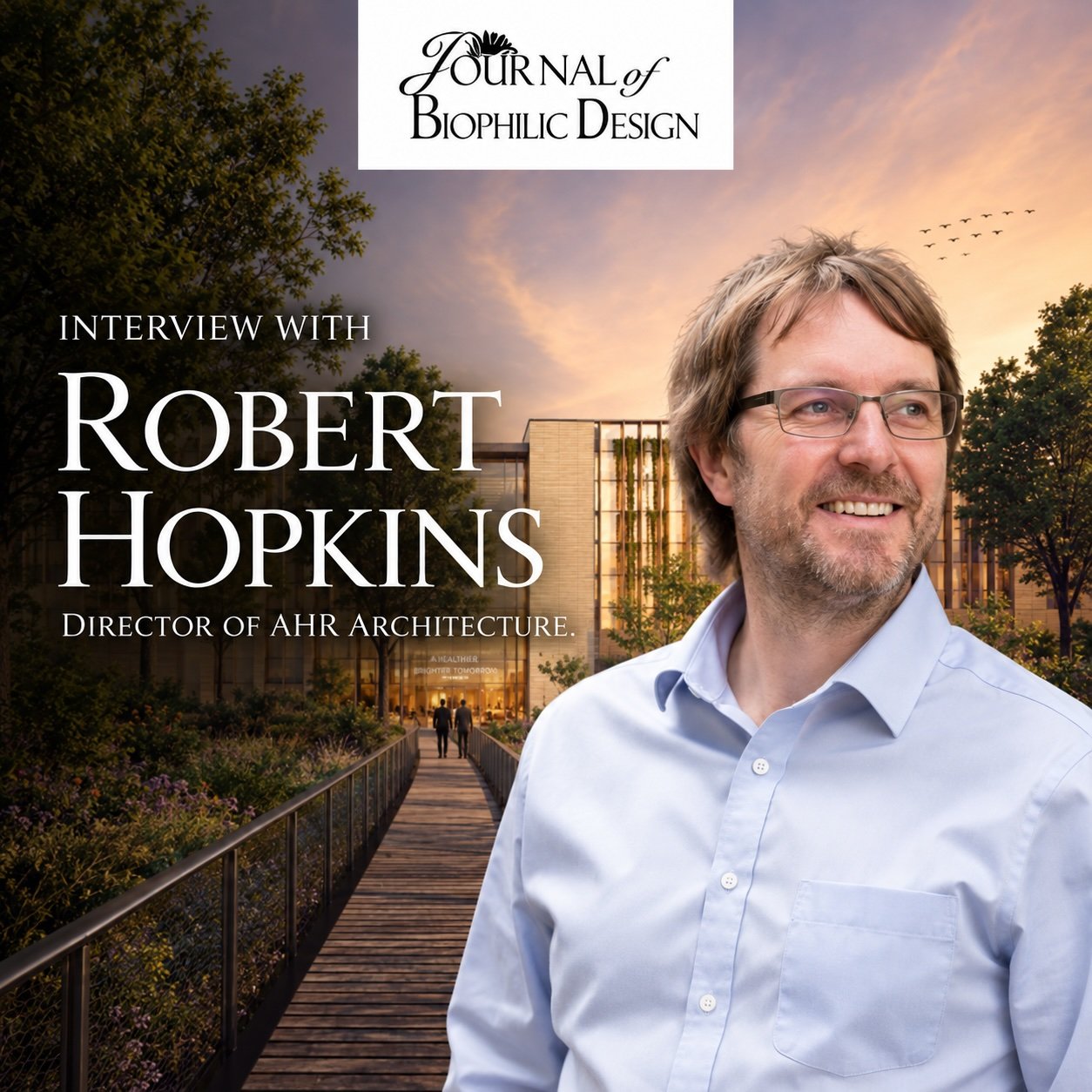 Designing for How We Feel - Robert Hopkins on Biophilic Architecture 09.09.2026What happens when we stop designing buildings only for what they do, and start designing them for how they make us feel? For architect and sustainability leader Robert Hopkins, it is a question that has shaped more than 25 years of practice. From the Spine for the Royal College of Physicians to the extraordinary forest at the heart of the Thrive Health and Wellbeing Centre in Salford, Robert’s work brings together sustainability, health, nature and people in ways that feel both deeply considered and surprisingly intuitive. His journey began at university, when a group of students watched the Bullring shopping centre in Birmingham being demolished to make way for another shopping centre and thought: “This is absolutely potty.” They wondered whether there was another way, and set up their own sustainability studio, exploring the reuse of buildings and the environmental issues that mattered to them. That instinct to question the obvious has stayed with him. Initially focused heavily on building performance, Robert says that around ten years ago he began to refocus his efforts on a different question: how do people actually feel when they are in these really interesting buildings? That shift towards people and health has become central to his understanding of biophilic design. “For me, biophilia was actually about accessibility,” he explains. Not whether people can physically get into and around a building, but whether they can access it neurologically: whether they can feel comfortable, feel themselves and feel happy in the space. “It was actually just about taking a step back and thinking what really makes people feel really good somewhere.” The Spine, in Liverpool, became an extraordinary opportunity to put that thinking into practice. The building was developed with the Royal College of Physicians, a client that challenged the design team to provide evidence for the decisions they were making. Robert introduced the WELL Standard, but the process quickly became something much deeper than collecting accreditation points. Because the College’s own members and fellows had authored much of the medical research underpinning the standard, Robert and his team were able to speak directly to the people behind the research — and challenge it. Although both The Spine and Daphne Steele have both achieved WELL platinum, “we weren't actually that bothered about the score that we got at all,” he said. Instead at each stage, his team kept asking why it mattered to people. That thinking filtered down into thousands of decisions. Materials is something that we in Biophilic Design focus on. On the Spine, they set rule: “If you could touch it, it's real.” Materials were chosen for their authenticity, biophilic quality and longevity, recognising that spending a little more at the outset could create an interior that would remain good for decades. Other rules they worked to was that nobody would sit more than seven metres from a window and a view. Light was carefully considered, including a façade designed to create the effect of dappled light associated with Japanese forest bathing. Plants were selected for their ability to help remove toxins from the atmosphere based on research from NASA. Air filtration, food, lighting and even the possibility of birdsong were considered as part of the wider experience. The result is a building where, Robert observes, people behave differently. “Everyone's really nice to one another. And everyone talks to one another.” That matters. This is evidence that Biophilic Design can change behaviour. The same principle runs through Thrive, the University of Salford’s Health and Wellbeing Centre, where Robert and his team approached trauma-informed design from the very beginning. The brief started with a blank sheet of paper and a request to create an environment that encourages and supports trauma-informed care. The team explored the research and broke the idea down into practical principles, beginning with a
 -
 How do we make our increasingly dense cities healthier, greener and more resilient? 02.09.2026 40นาทีAs our cities grow, access to clean air, clean water, biodiversity and meaningful connections with nature will become ever more important. In this conversation, we explore living architecture, green infrastructure, urban density, clean air and water — and how we can design cities that work better for both people and the planet. In this episode, we’re joined by James Worth, a landscape architect whose work is focused on finding practical, sustainable solutions for the future of our built environment. James is particularly passionate about Green Infrastructure and living architecture. James has also launched a very exciting series of roundtable online discussions: International Design Conversations. They started on Thursday 13 August and continue all year, I am joining one in October Biophilic Hospitality, Wellness & Regenerative Tourism 22 October 2026 What happens when we stop thinking of nature as something we add to a building and start thinking about it as part of the infrastructure of the city itself? For landscape architect James Worth, the answer lies in bringing disciplines, ideas and people together — and fundamentally rethinking how we design our urban environments. James has loads of experience spanning parks and gardens, civic spaces, urban design, ecology and biodiversity. James believes landscape architecture has a critical role to play in creating healthier, more resilient cities. As urban populations grow, access to clean air, clean water, biodiversity, shade and meaningful connections with nature cannot remain an afterthought. “There is the risk of green for aesthetic only,” he says, warning against greenwashing that makes a development look sustainable without delivering genuine environmental function. The answer is to go beyond the appearance of greenery and consider how landscape systems actually work, managing water, reducing heat, supporting biodiversity and reconnecting people with nature. “It’s very hard to retrofit trees and walls and roofs,” he points out. This is why landscape architects need to be part of the conversation from the beginning. Trees, rain gardens, green roofs, green walls, water systems and communal spaces cannot simply be retrofitted once the buildings have been designed. That philosophy is also behind James’ International Design Conversations, a series of online round-table discussions bringing together voices from different disciplines, cultures and areas of expertise. His motivation came partly from seeing how professional and governmental departments can operate in silos. “The best decisions come around the round table,” he says. The conversations deliberately bring academia together with private industry, alongside architects, town planners, engineers, ecologists, water specialists and biologists. “We can all advance sustainability together at a micro and macro planning level.” For biophilic designers, this interdisciplinary approach is crucial. Biophilic design helps practitioners understand the complex relationships between people, place, ecology, materials, water, climate and biodiversity. James describes this as a form of professional “symbiosis, one helping the other rather than not being mutually beneficial.” His vision for the future is not necessarily about building less densely, but about building more intelligently. Mid-rise development, green roofs, rain gardens, communal spaces, tree canopy and nature-based infrastructure can help us achieve density without creating ever more hostile concrete environments. Asked what he would create if he could paint the world with a magic brush of biophilia, James answered: “I would ensure that the places we inhabit don't take up so much space and give a lot more back to the greenery of the nature in the environment that we're living in.” That feels like a very good place to begin rethinking the city. • Visit our events page to find out more: https://journalofbiophilicdesign.com/events-1 • Or go straight to the Intern
 -
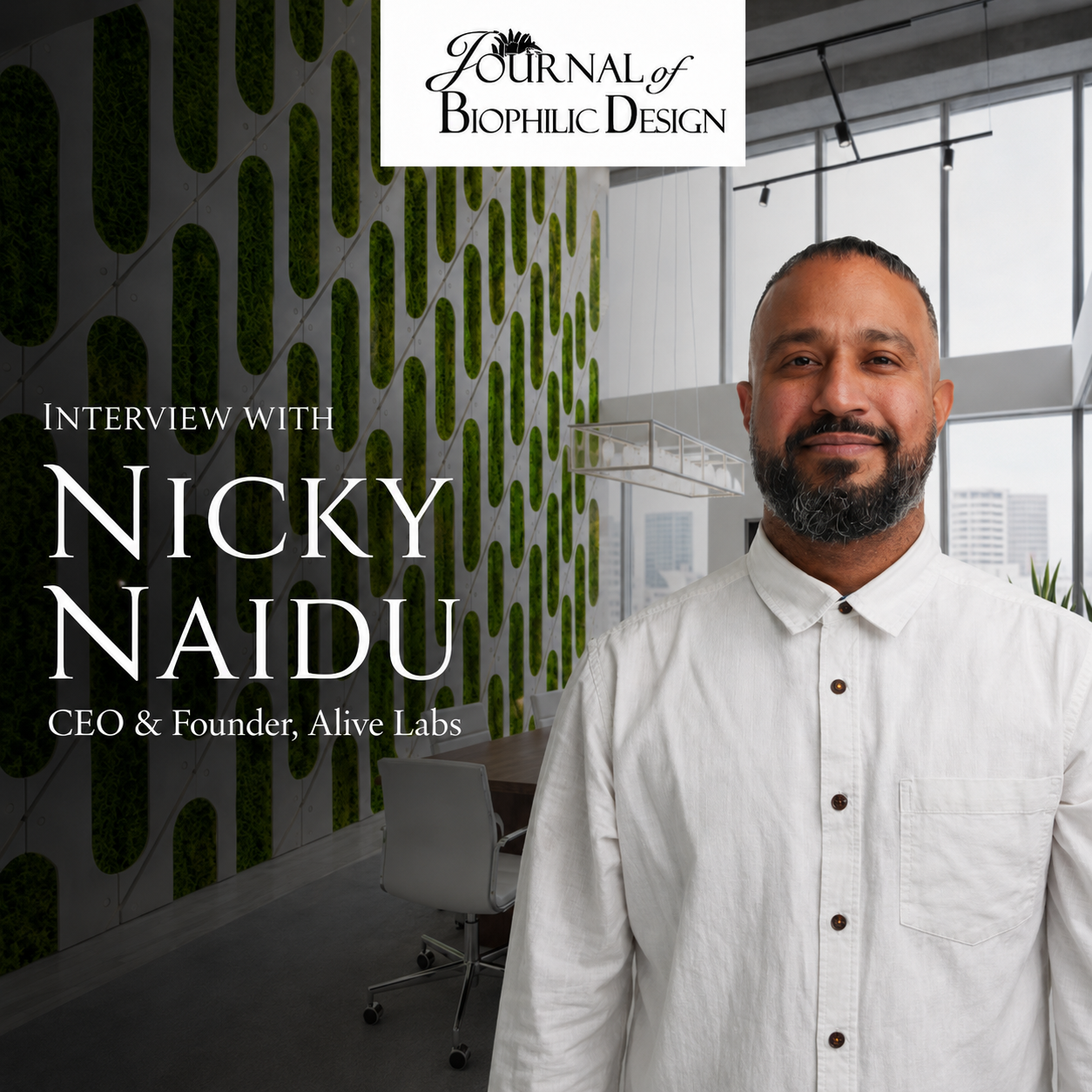 Living Architecture: Bioreceptive Design for People and Planet 20.08.2026 44นาทีWhat if the buildings that help us tackle climate change were also the buildings that lift our spirits? We talk a great deal about the performance of buildings: how to reduce carbon, manage heat, conserve energy, deal with water and increase biodiversity. But perhaps we need to ask another question. What should these buildings look and feel like? For architect and Alive Labs founder Nicky Naidu, the answer is not to choose between performance and beauty. We should expect both. Nicky has spent 20 years working in architecture, including with Foster + Partners, Arup and Wilkinson Eyre, before stepping away from conventional practice to explore different ways of living and building. His journey ultimately led to Alive Labs, where he is developing bioreceptive materials designed to allow nature to become part of architecture itself. His starting point is philosophical. “We build what we are.” For Nicky, buildings are a reflection of the societies that create them. If we want a society that values nature, connection and care, perhaps our architecture should express those values too. That thinking has led Alive Labs to develop Terranite, a bioreceptive, carbon-negative construction material designed to support biological colonisation. Rather than simply attaching vegetation to a building, the material creates a substrate in which nature can participate. Moss is central to the approach. An ancient and remarkably resilient organism, it can absorb atmospheric pollutants, retain water, contribute to water filtration and provide thermal benefits. Alive Labs' system is designed to help reduce surface temperatures, while moss can contribute to cooling through evaporative processes and insulation in colder conditions. The implications for cities are considerable. Our buildings could become part of the infrastructure that helps address urban heat, stormwater and biodiversity loss rather than simply contributing to those pressures. But there is another opportunity here – and it is one we don't discuss enough. Beauty. Naidu questions the contemporary obsession with architecture as a diagram or a highly efficient box. “No one wants to live in a diagram, right?” He points instead towards the great architectural traditions of the past: Gothic cathedrals, Renaissance buildings and ancient temples, where proportion, geometry, ornament and symbolism were connected to ideas about nature, mathematics, spirituality and the cosmos. This is particularly relevant to Biophilic Design. Why shouldn't climate-responsive buildings be beautiful? Why shouldn't cladding become an opportunity for pattern, texture, shadow, planting and delight? Why should a building envelope have to be a flat, anonymous surface? Think about Palladian architecture and its extraordinary attention to proportion and rhythm. Think about the awe created by Gothic architecture. Think about the tactile qualities of natural materials. Now imagine bringing that same ambition into the buildings of the future – using contemporary materials and living systems that also cool, insulate, capture water and support biodiversity. As Nicky puts it, “net zero alone” is not enough. The ambition should be to do more. This could change how we think about the facade. It is no longer simply a protective skin between inside and outside. It can become infrastructure: environmental, ecological, sensory and cultural. And this applies inside as well as out. Alive Labs is developing living interior systems that can bring nature into schools, hospitals, workplaces and other buildings, creating spaces that people can see, touch and experience. Perhaps this is where the next chapter of Biophilic Design lies: not simply putting nature into buildings, but designing buildings that work with nature. Because, ultimately, architecture is about more than solving today's problems. “Buildings and our expressions in them are an expression of hope.” That feels like a good place to start imagining our c
 -
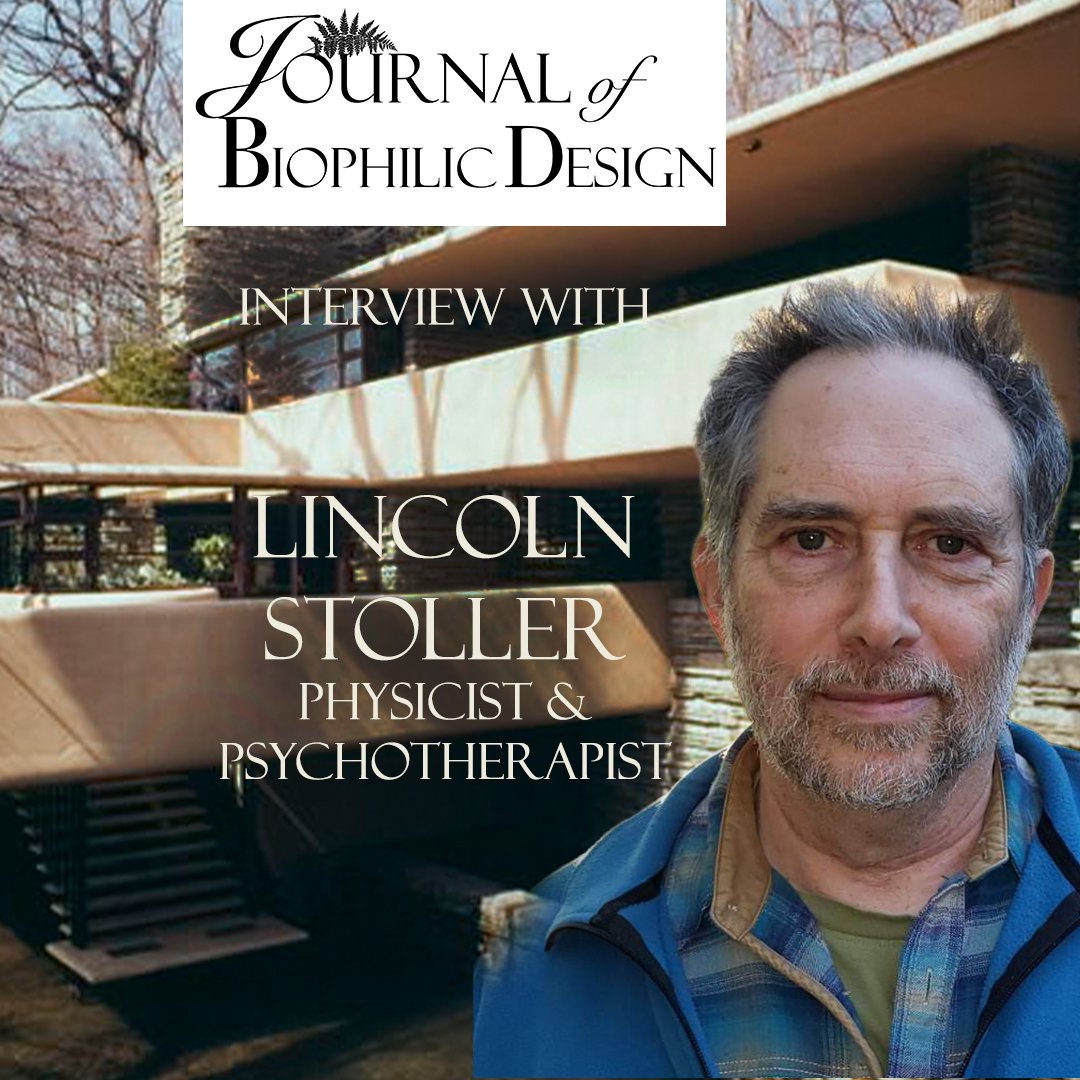 Eye of the Beholder: Frank Lloyd Wright, Photography, Biophilia and Awe 13.08.2026 45นาทีWhat happens when we stop looking at a building simply as a building? For Lincoln Stoller, physicist, psychotherapist and son of celebrated architectural photographer Ezra Stoller, the answer lies somewhere between architecture, psychology, nature, photography and the human capacity to experience something beyond the immediately visible. Ezra Stoller was regarded as one of the pre-eminent architectural photographers of his generation. His extraordinary archive includes some of the most significant buildings of twentieth-century modernism, photographed not simply as objects, but as experiences. His approach was distinctive: rather than producing straightforward images designed to showcase a building, he sought something beyond it – what Lincoln describes as the “essential and ethereal.” This is particularly fascinating when we consider Frank Lloyd Wright, whose architecture is now frequently discussed through the lens of Biophilic Design, despite Wright never using the term. Wright trusted Ezra to understand what he was trying to achieve without needing to explain it. Lincoln describes their relationship as almost a meeting of opposites: Wright the forceful creator, Ezra the sensitive and receptive observer. Together, they understood something difficult to put into words – the ineffable quality of space. And perhaps this is where photography and Biophilic Design meet. We talk increasingly about awe: the experience of encountering something larger, more complex or more powerful than ourselves. In Biophilic Design, awe can be created through views, scale, natural processes, unexpected vistas, light, movement and encounters with the living world. Wright intuitively understood the power of these experiences. At Fallingwater, for example, architecture, water, landscape, movement and changing views combine to create something that is far more than a collection of rooms. Ezra's photographs similarly invite us to pause. They create vistas within vistas, playing with light, scale, confinement, openness and perspective. They ask us not simply to look, but to notice, associate, feel and imagine. As Lincoln puts it, the best photographs can call into our minds things we have not previously seen, felt or thought. That makes Eye of the Beholder more than an architectural photography book. It is an invitation to reconsider how we see the built environment – and what it might reveal about ourselves. Lincoln is currently raising support through Kickstarter to preserve Ezra Stoller's remarkable photographic archive and bring these images and their stories together in a new book. For architects, designers, photographers, students and anyone interested in the relationship between people, place and perception, it is an opportunity to encounter some familiar buildings through very different eyes. Because sometimes the most important thing a photograph can show us is not the building itself, but what the building makes us feel. ** Win one of 50 digital subscriptions to the Journal of Biophilic Design, just sign up to our free newsletter throughout August 2026 sign up for the chance of winning: https://mailchi.mp/journalofbiophilicdesign.com/50-free-subscription-promotion Links mentioned in the Podcast: https://www.mindstrengthbalance.com https://www.kickstarter.com/projects/mindstrengthbalance/from-the-eye-of-the-beholder Lincoln’s Substack article “Is Architecture History or Prophecy?”, https://mindstrengthbalance.substack.com/p/is-architecture-history-or-prophesy?triedRedirect=true What is Biophilic Design: https://journalofbiophilicdesign.com/what-is-biophilic-design If you love Architecture why not download our PDF on Biophilic Design and Architecture: https://journalofbiophilicdesign.com/shop/journal-of-biophilic-design-issue-17-architecture-ebook Please register for our newsletter on our website https://journalofbiophilicdesign.com/podcasts-journal-of-biophilic-design Credits: with thanks to George Harvey Audio Production for
 -
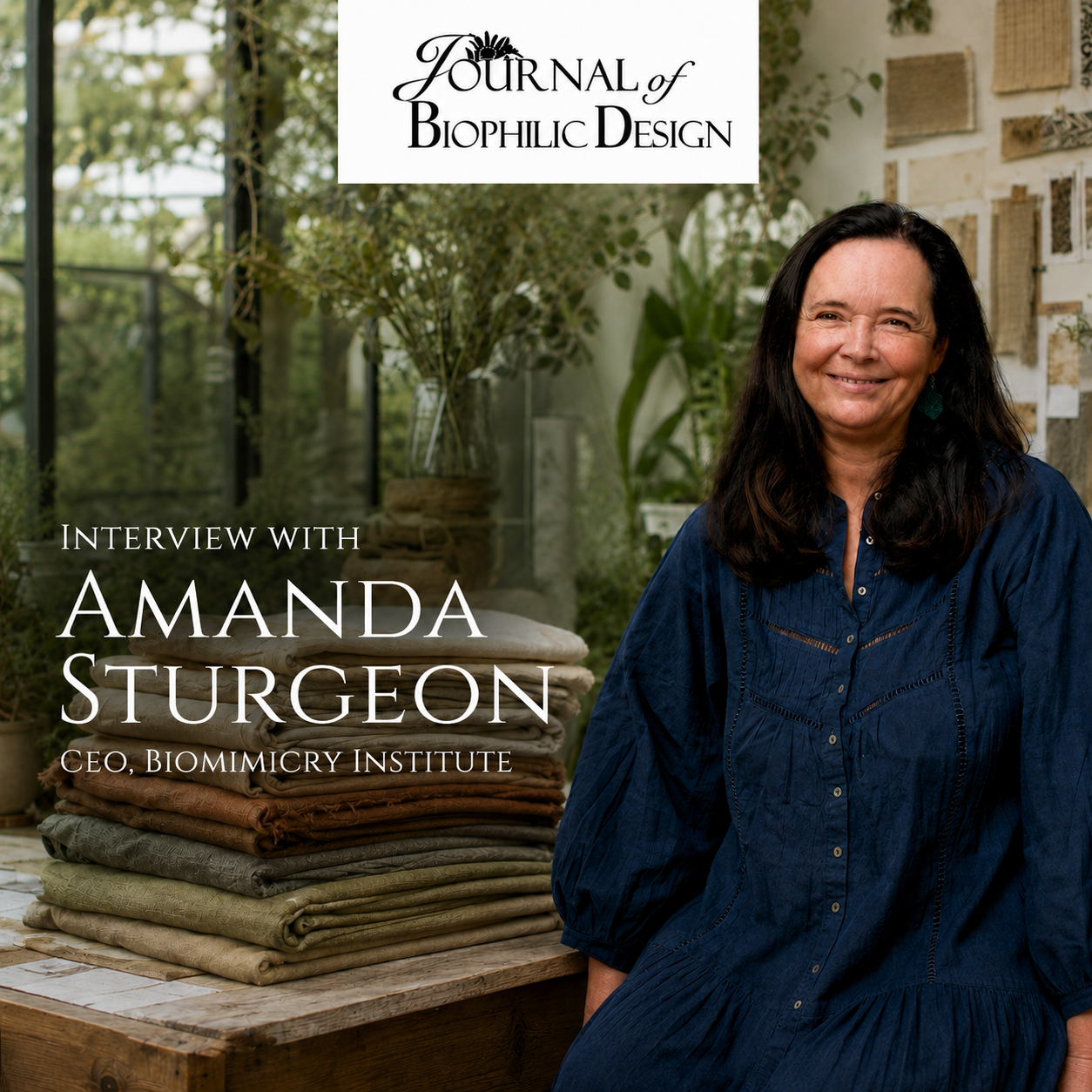 3.8 Billion Years of Design Intelligence - Why the future of design begins by learning from living systems 03.08.2026 40นาทีBiophilic Design and biomimicry are often discussed as separate disciplines, yet they are deeply complementary. Biophilic Design reconnects people with nature, creating healthier places that nurture wellbeing and strengthen our relationship with the living world. Biomimicry asks a different, but equally important question: how can nature’s 3.8 billion years of evolution teach us to solve human challenges? Together they offer a blueprint for creating buildings, products and systems that help all life flourish. While architecture often looks inward for innovation, one of the most fascinating lessons for the built environment is currently emerging from an unexpected place: fashion. Amanda Sturgeon, CEO of the Biomimicry Institute, has been leading the Institute’s Nature of Fashion initiative, exploring how lessons from natural decomposition could help address one of the world’s fastest-growing environmental challenges—textile waste. Working alongside partners including The Or Foundation in Ghana, Circle Economy in the Netherlands and the Beneficial Design Institute in Germany, the project asks a deceptively simple question: what if the materials we create behaved more like nature? Nature, after all, has no landfill. Every leaf, feather, branch and shell eventually becomes food for something else. Waste is simply another stage in a continuous cycle of regeneration. Human-made materials, however, often have no such ending. Polyester, nylon and complex blended fabrics can persist for decades or centuries, creating pollution long after their useful life has ended. The Nature of Fashion project is investigating whether biological processes such as fermentation and enzymatic decomposition could safely break down difficult textile waste into valuable raw materials that can be returned to production systems rather than discarded. It is a striking example of biomimicry in action—not simply copying nature’s appearance, but learning from nature’s processes. As Amanda explains, “Nature has been learning how to do things for 3.8 billion years.” For those of us working in architecture, interiors and product design, this conversation feels remarkably familiar. The built environment has become increasingly focused on operational carbon, embodied carbon and material passports. Yet Amanda highlights another important consideration: designing for the entire lifecycle of a product or building from the very beginning. As she observes, “The implications of the things we consume and create—from their extraction to their end of life—are just not considered.” It is a challenge that extends far beyond fashion. Whether specifying flooring, acoustic panels, furniture, wall coverings or façade systems, designers make decisions every day that influence ecosystems far beyond the project boundary. Where did the material come from? What habitats were disturbed during extraction? Can it be repaired? Reused? Returned safely to biological or technical cycles? These questions are becoming just as important as aesthetics or cost. Amanda also draws fascinating parallels between fashion and architecture. Both industries begin with a design decision. Both are shaped by trends, client expectations and commercial pressures. Yet those early creative choices often determine environmental impacts decades later. The difference, she suggests, is that fashion has the ability to change rapidly. Buildings remain for generations, while clothing collections can evolve every season. This makes fashion a valuable testing ground for material innovation. From mycelium-grown textiles and protein-based fibres inspired by spider silk to structural colours that mimic the microscopic surfaces of butterfly wings and beetles without relying on toxic pigments, biomimetic innovations are already demonstrating what becomes possible when designers look to living systems rather than petrochemicals for inspiration. Many of these same innovations could influence interiors, finishes, furniture and fu
 -
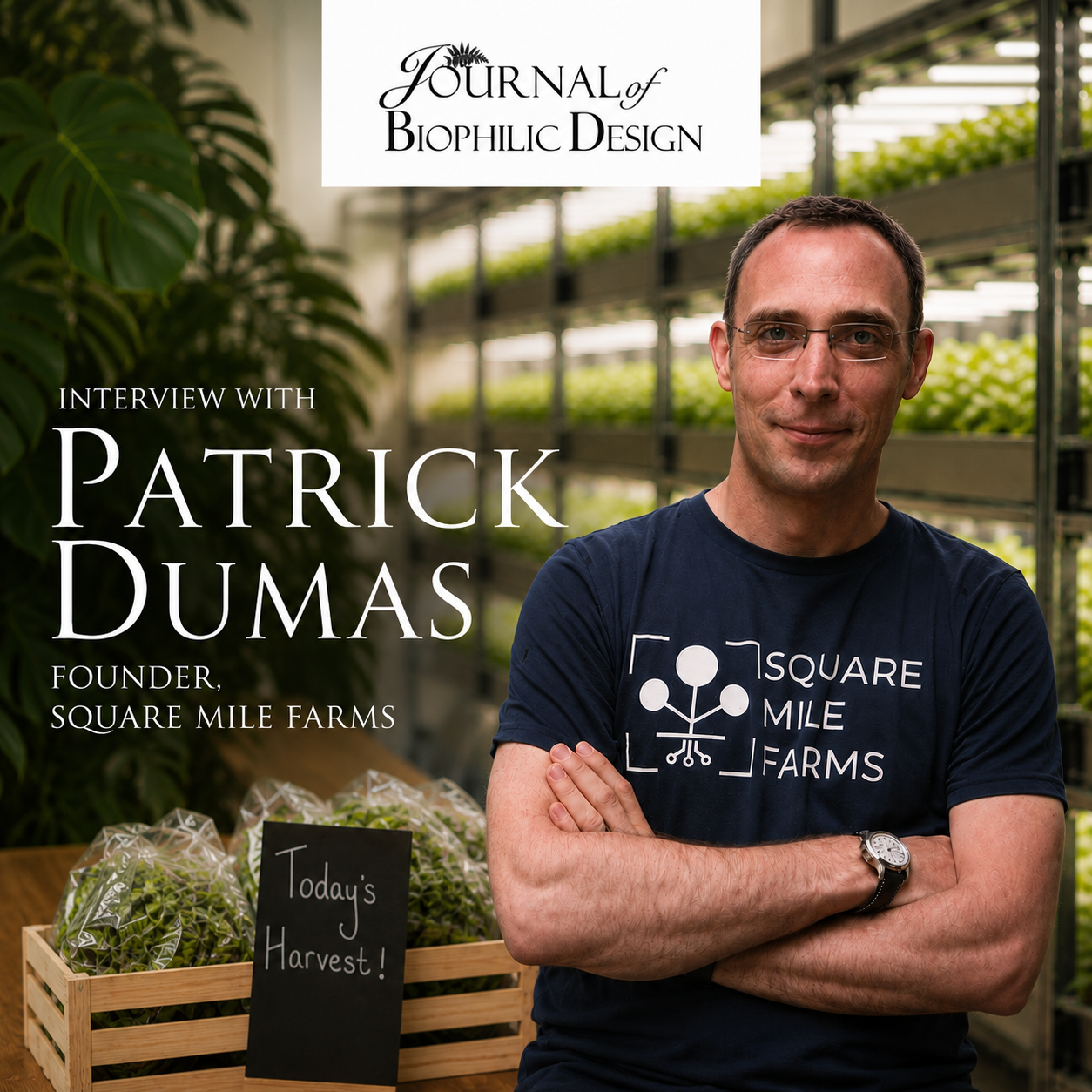 Biophilic Design you can Taste - How Urban Farming is transforming Workplaces and Cities 27.07.2026 29นาทีHow can our buildings become active contributors to healthier lives rather than passive consumers of resources? Our cities are grappling with climate change, biodiversity loss, employee wellbeing and the changing role of the workplace, for Patrick Dumas, Founder and CEO of Square Mile Farms, the answer begins with growing food. His concept has evolved into one of the UK's largest networks of indoor urban farms, with more than 120 installations and over 75,000 plants growing inside workplaces and residential developments. Yet the plants, herbs and vegetables are only part of the story. "We reconnect people with one another, with nature and with their own wellbeing," explains Patrick. "Food is simply the medium through which we do that." Biophilic Design that People can taste Biophilic design has long focused on bringing nature into buildings through plants, natural materials, daylight and views. Square Mile Farms extends this concept into something immersive. Instead of greenery becoming passive decoration, employees become active participants. They watch herbs mature, vote on what will be grown next, harvest fresh produce together and swap recipes over lunch. The result is a multi-sensory experience that engages sight, smell, touch and taste simultaneously. "The experience of biophilia is much richer," says Patrick. "It looks good, smells good, tastes good and you're using your hands. You're getting up close with nature before eating what you've grown." This aligns closely with many of biophilic design's recognised patterns, including direct experience of nature, sensory richness, connection with natural systems and seasonal change. Watching food grow over weeks reconnects people with rhythms that many urban lives have lost. Growing Community alongside Vegetables Perhaps the greatest surprise has been that the farms' most valuable harvest isn't basil or salad leaves—it's human connection. Harvest days have become social events. Employees queue to collect herbs, learn growing techniques from on-site farmers and exchange ideas about cooking and sustainability. Rather than another workplace amenity, the farms become magnets that naturally draw people together. "We have people saying they come into the office because it's harvest day," he explains. "People stop buying basil from the supermarket because they know they can harvest it themselves." Square Mile Farms' team are highly visible within each building. Their farmers don't just maintain installations behind the scenes—they actively engage with occupants, teaching growing skills, discussing recipes and nurturing relationships alongside the plants themselves. Reimagining Forgotten Spaces One of the most exciting aspects of the model is its ability to transform overlooked parts of buildings. Disused basements, redundant plant rooms, underused lobbies and vacant corners become productive landscapes that contribute to health, biodiversity awareness and workplace culture. One installation now grows around 25,000 plants beneath the headquarters of a major global company, supplying fresh produce directly to its catering operation. Suddenly, the most interesting part of the building isn't the executive floor—it's the basement. As retrofit becomes central to sustainable architecture, these interventions demonstrate that regeneration doesn't always require rebuilding. Sometimes it requires rethinking how existing space can support both people and nature. Food as Urban Infrastructure Looking ahead, Patrick believes cities should begin thinking about urban farming in the same way they now think about cycle infrastructure. Just as many buildings are expected to provide bike storage or electric vehicle charging, why shouldn't they also provide space for growing food? "If every building had provision for growing some food," he suggests, "collectively that capacity becomes quite substantial." His vision is ambitious but practical. He sees a distributed network of product
 -
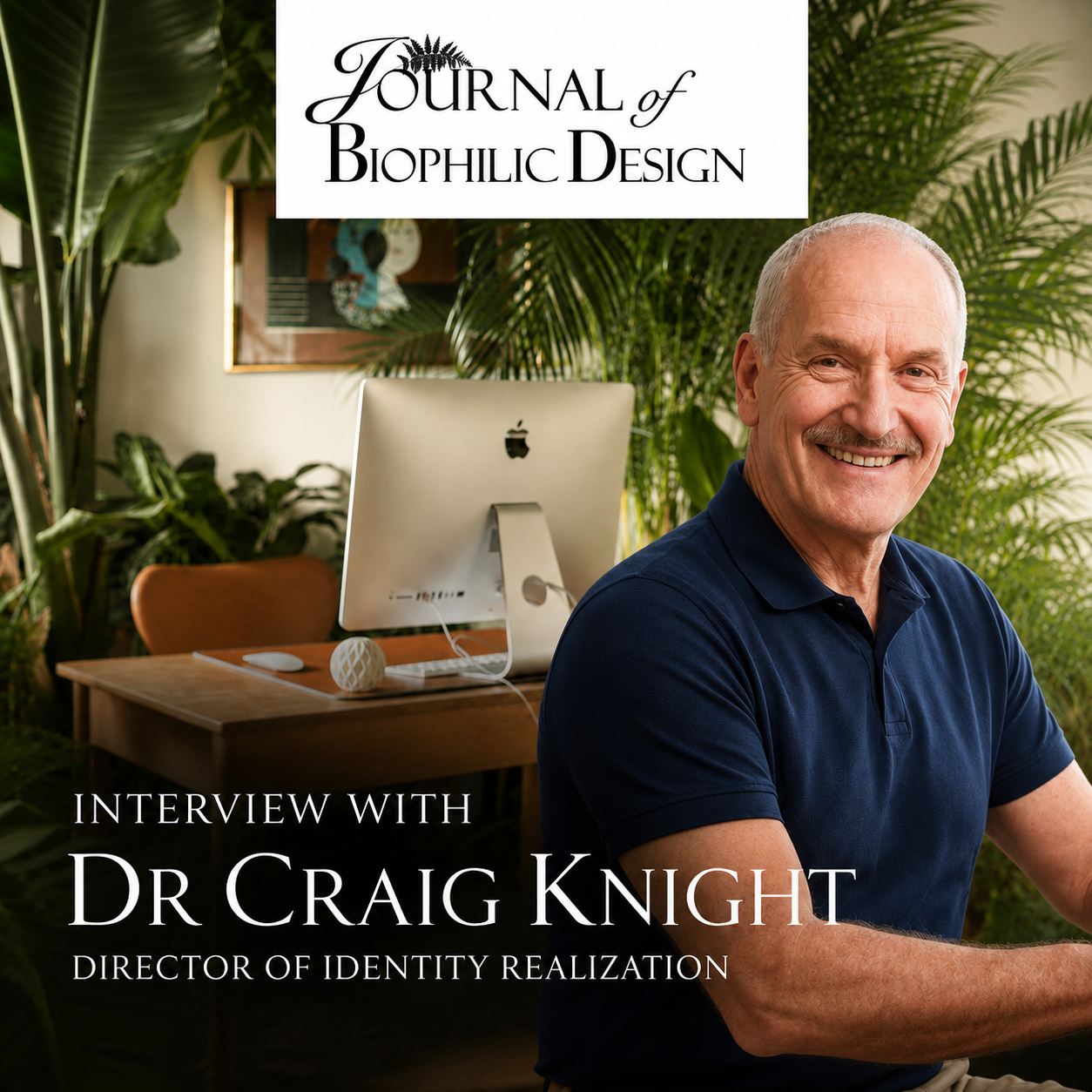 How many plants do we need for wellbeing? 20.07.2026 39นาทีThankfully… walk into almost any contemporary office and you are likely to find a few strategically positioned plants, a moss wall in reception or perhaps another biophilic feature intended to soften an otherwise corporate environment. Over the past decade, introducing greenery into workplaces has become almost synonymous with employee wellbeing. Yet according to workplace and environmental psychologist Dr Craig Knight, if organisations believe that adding a few plants alone will transform productivity, they have misunderstood the research. Craig's work at the University of Exeter, challenged one of the most enduring assumptions in workplace design, namely that the most productive offices are those that are minimalist and stripped back to their essentials. These highly controlled environments were long thought to minimise distraction and maximise concentration. His research demonstrated precisely the opposite. Employees working in enriched environments containing plants, artwork and opportunities for personalisation consistently performed better than those working in lean, standardised offices. “Wellbeing improved, stress reduced and productivity increased by as much as 15%.” Although plants became the headline of many reports about the research, Craig is keen to put them into context. They are not magical objects capable of transforming a workplace by themselves. Rather, they are one of the simplest and most affordable ways of enriching an environment. This is important for designers, facilities managers and employers to remember. Environmental enrichment can take many forms, including artwork, light, texture and even scent. Plants have proved particularly effective because they are relatively inexpensive, flexible and easy to introduce into existing buildings. Unlike a major refurbishment, they can transform a space almost immediately. The psychology behind their success is equally compelling. Rather than distracting employees from their work, enriched environments provide opportunities for brief moments of cognitive recovery. Looking away from a screen towards a plant or another visually engaging feature gives the brain the chance to reset before returning to the task at hand. These small interruptions help sustain attention rather than diminish it. As Craig puts it, people are happier and more productive when their surroundings offer something meaningful to engage with. Yet as our conversation developed, it became clear that the plants themselves were not the most significant finding from decades of workplace research. The real story is choice. People perform better when they have some control over the environment in which they work. The ability to personalise a desk, influence the layout of a workspace or decide where plants should be positioned may appear insignificant, but psychologically these decisions communicate something much larger. They demonstrate trust. One of the most interesting examples he describes comes from a company in Paris that invited staff to shape their own working environment. Employees created artwork, rearranged spaces, introduced planting and developed breakout areas that reflected their own personalities. There was no substantial design budget. Instead, the organisation trusted its employees to create an environment that suited the way they worked. Productivity increased, but equally important was the sense of ownership people developed towards the workplace. It became somewhere they wanted to be rather than somewhere they were required to attend. This idea of ownership runs through much of his research. Organisations often invest heavily in beautifully designed offices only to prevent employees from moving furniture, repositioning plants or displaying personal objects. In doing so, they unintentionally undermine many of the psychological benefits the design was intended to create. Craig argues that even the best designers cannot predict what will make every individual feel comfort
 -
 Biophilia: Africa, Nature and Remembering What It Means to be Human 09.07.2026As Biophilic Design continues to gather momentum around the world, much of the conversation has centred on research emerging from Europe, North America and Australia. Yet one of the most powerful perspectives may come from a continent where living with nature has never been considered a design trend at all. For Wangui Mwangi, Founding Chair of the Green Biophilic Living Society and Convener of the Africa Biophilic Building Conference & Expo 2026, biophilia is less about innovation than remembering. "Africa has always lived biophilically. Our ancestors have always lived biophilically." Wangui believes the rest of the world has much to learn from centuries of indigenous knowledge, vernacular architecture and cultural traditions that have always recognised humanity as part of nature rather than separate from it. Speaking on the Journal of Biophilic Design podcast, she describes traditional African settlements where buildings were constructed using local materials, courtyards encouraged natural ventilation, communities lived outdoors, and architecture reflected both ecological intelligence and spiritual connection. "Nature was never separate from humanity," she explains. "Nature was part of everything that we did." That philosophy extended far beyond buildings. Food, farming, storytelling, music, clothing and community life all reinforced a reciprocal relationship with the natural world. Today, as cities across Africa expand rapidly, Wangui believes those principles are becoming more important than ever. Remembering rather than reinventing One of the most refreshing aspects of Wangui's work is her refusal to romanticise the past. "This is not about necessarily going back to building how we built in the 20s," she says. "It's about picking the techniques. It's about using the tech that we have right now and enhancing that." This blend of indigenous wisdom with contemporary innovation sits at the heart of the Green Biophilic Living Society, an organisation that has grown remarkably quickly since Wangui first began sharing her passion for biophilia on LinkedIn. After growing up surrounded by wildlife on the outskirts of Nairobi, Wangui found herself working within increasingly urban environments. She noticed she felt calmer whenever she escaped into nearby green spaces during lunch breaks. "I started Googling what is going on? Why are my afternoons better?" Discovering the science of biophilia gave language to feelings she had always understood instinctively. "I became completely passionate, obsessively passionate about wanting to share this information." That passion has now brought together architects, doctors, farmers, lawyers, policymakers, educators and developers, all recognising that healthier futures require systems thinking rather than isolated solutions. This resonates so closely with our journey here at the Journal of Biophilic Design as well. My own personal journey was linked to direct emotional and physical transformation after connecting with nature. Why policy matters Throughout our conversation, one theme repeatedly emerged: policy. We agreed we need to embed biophilic thinking into national building standards. "I think biophilia needs anchorage within the policy structure, within the building codes." Kenya is already making significant progress through the development of its own green building standards, where considerations such as indigenous planting, bioswales, pollinator habitats, bird feeders and water management are becoming part of mainstream conversations. This mirrors a growing international recognition that Biophilic Design is a framework capable of supporting biodiversity, climate resilience, public health and long-term economic value simultaneously. Community is infrastructure Perhaps the most moving part of our discussion came when imagining Africa twenty years from now. Rather than talking first about technology or buildings, Wangui spoke about people. She imagin
 -
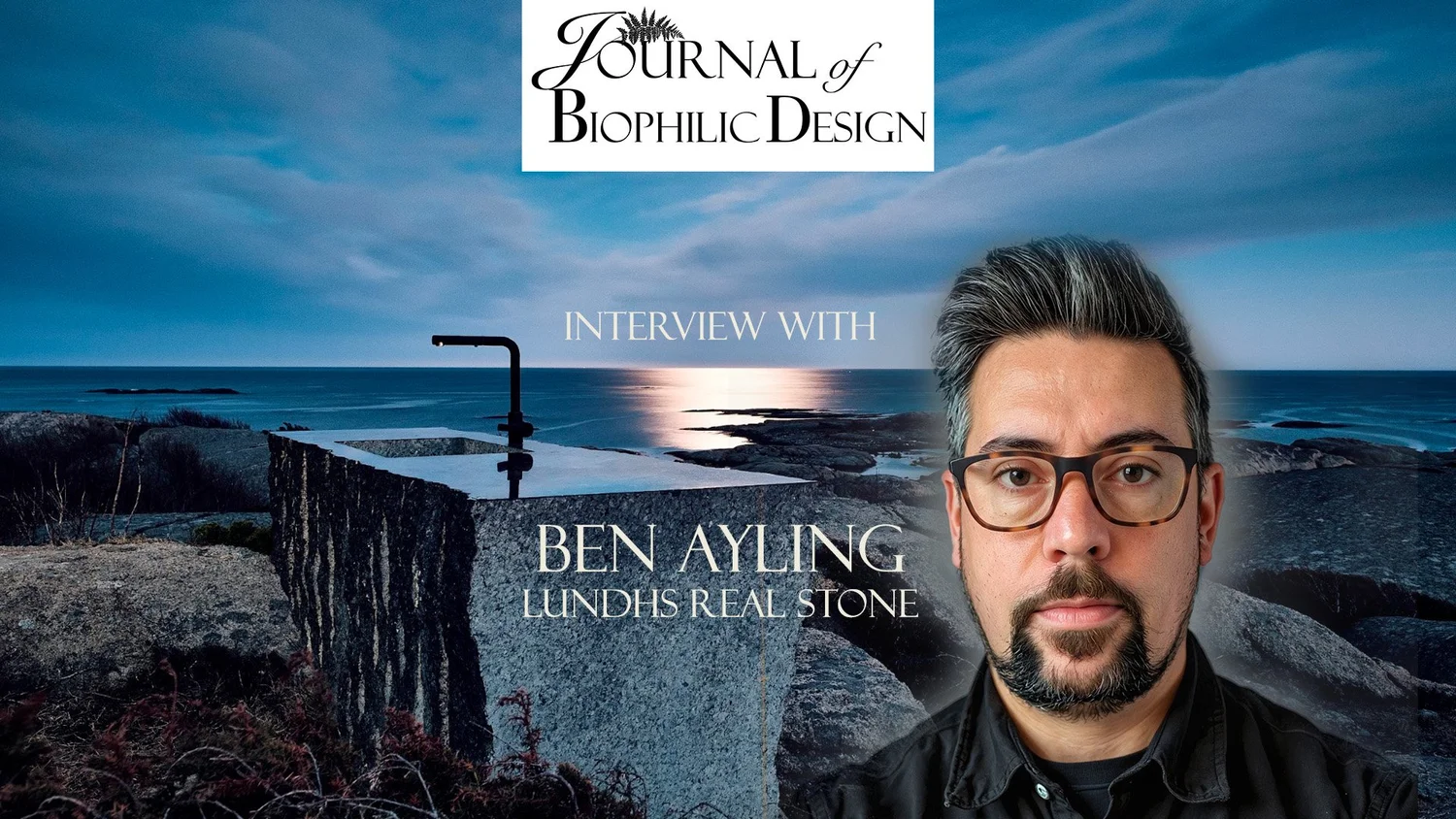 Dare to Dream - Why Stone is calling us back to Nature 30.06.2026"Engage with the material… don't dictate. Let the material help dictate the design… and dare to dream." — Benjamin Ayling There is something deeply timeless about holding a piece of natural stone. Perhaps it is the cool surface beneath our fingertips. Perhaps it is the intricate mineral patterns that could never be replicated twice. Or perhaps it is something much older than conscious thought—a recognition that for almost all of human history, stone has been our shelter, our monuments, our meeting places and our memories. While we are searching for healthier, more sustainable ways to design our buildings, natural stone deserves to be part of the Biophilic Design conversation once again. During this conversation on The Journal of Biophilic Design Podcast, Benjamin Ayling, UK Business Development Manager for Lundhs and founding member of the Stone Collective, reflected on why this ancient material still resonates so deeply today. More than a material "It's not just a material, it's a geological process," Ben explains. Every slab tells the story of immense natural forces—volcanoes, minerals, pressure and time. Lundhs' Larvikite, quarried in Norway, is around 300 million years old, while its anorthosite dates back almost one billion years. That perspective alone shifts the way we think about specification. Rather than seeing stone as another surface finish, we begin to understand it as a fragment of Earth's history. Every vein, crystal and fossil record tells a story that simply cannot be manufactured. As biophilic designers, we often talk about our innate connection to nature. Stone reminds us that nature is not simply something outside the window—it can become part of the spaces we inhabit every day. The memory of the cave Biophilic Design is built upon our evolutionary relationship with the natural world. Ben suggests that perhaps our attraction to stone runs even deeper than aesthetics. "Humans have evolved around rock and timber and water." Long before cities, our ancestors sought protection within caves and rocky landscapes. Stone provided shelter, thermal comfort and security. Those ancient associations may still influence how we experience space today. Environmental psychologists have long recognised that our surroundings shape our behaviour and wellbeing. Ben believes natural stone communicates something increasingly rare in modern construction. "Natural stone has the ability to communicate permanence and care... it tells us that the place was built to last." That feeling matters, where permanence can itself become restorative. Touching time Anyone who has watched visitors encounter a large piece of natural stone will recognise the instinct. People reach out to touch it, children climb on it, we run our hands on it almost without thinking. Ben witnessed exactly this during a project at the Carbon Garden in Royal Botanic Gardens, Kew. "The first thing they do is make a beeline for it and they just put their hands on it." Unlike synthetic materials, stone engages multiple senses simultaneously. It is cool before it is warm, it’s smooth in one place, but textured in another, it’s heavy, reassuring and utterly unique. No two pieces are ever identical. This richness of sensory experience is central to Biophilic Design. We know that natural variation—the subtle imperfections, textures and complexity found in nature—helps reduce stress and maintain attention far more effectively than uniform, manufactured surfaces. Stone embodies that principle effortlessly. Designing with honesty Perhaps one of the most thought-provoking moments in our conversation centred not around stone itself, but around our approach to design. We have become accustomed to engineering materials until they obey every specification perfectly. Ben questions whether that mindset has taken us too far. Instead of forcing natural materials to behave like manufactured ones, perhaps we should begin with the material itself. Look at it’s strength, it
 -
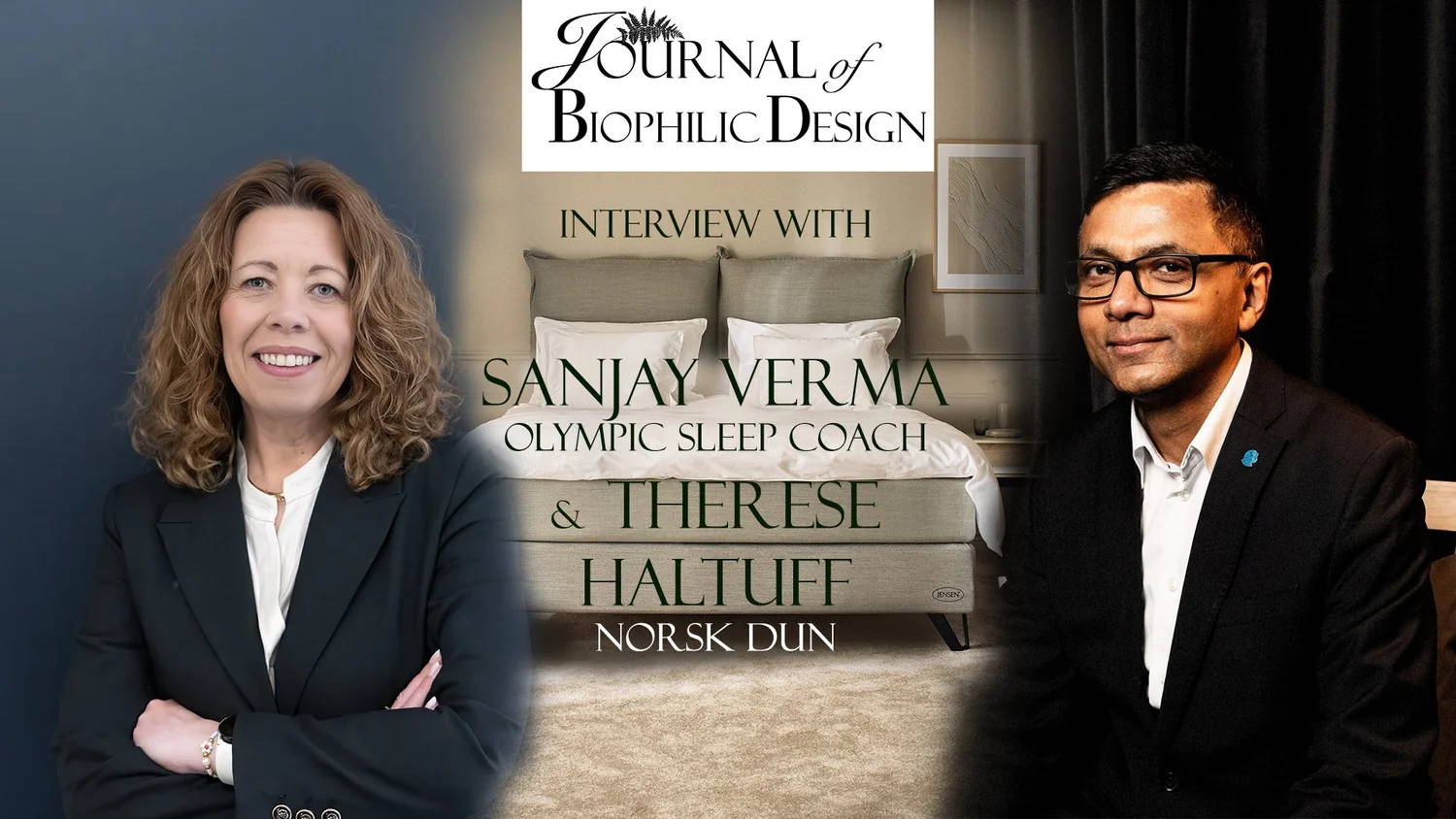 Sleep by Design - Can your bedroom improve your health? 30.06.2026 54นาทีPeople say time is the greatest healer. But actually, if you look closely, it's sleep which is the greatest healer." Sleep is the Foundation of Wellbeing For years, nutrition and exercise have dominated conversations around health and performance. Sleep has often been treated as an afterthought. Not anymore. Sanjay argues that sleep is not simply another pillar of wellbeing—it is the foundation upon which everything else depends. "It's not one of the third or fourth legs of wellbeing. It is the foundation of health and wellbeing." Without sufficient sleep, even the healthiest diet or most carefully planned exercise programme cannot deliver the benefits we expect. Muscles fail to recover properly. Learning is impaired. Creativity falls. Emotional resilience declines. In other words, sleep is where the work of the day is completed. Designing a Bedroom as Nature intended Perhaps the strongest message throughout the discussion is that the bedroom itself should become an environment designed specifically for restoration. Sanjay offers a wonderfully simple description: "The bedroom should be like a cave: dark, cool, quiet." For anyone working in Biophilic Design, this immediately echoes the concept of prospect and refuge. Throughout human evolution we slept in places that felt protected, sheltered and secure. Our brains continue to seek those same environmental cues today. He identifies the essential ingredients for better sleep: • A cool room with good temperature control • Complete darkness • Quiet surroundings with minimal noise disturbance • Fresh, well-ventilated air • Comfortable humidity levels • Minimal electronic devices • A clutter-free space that feels safe Even tiny details matter. "Our eyes can sense light even when our eyes are closed." That small standby LED on a television or charger may seem insignificant, but our brains remain remarkably sensitive to light throughout the night. Likewise, even slight increases in room temperature can fragment deep sleep, reducing the quality of overnight recovery. Why Nature helps us sleep better One of the most compelling parts of the conversation explores how our connection with nature throughout the day influences sleep at night. Morning daylight is particularly important. "If you want really good quality sleep in the night, start in the morning getting bright light." Natural morning light resets our circadian rhythm, signalling to the brain that a new day has begun. Around sixteen hours later, this helps stimulate the release of melatonin—the hormone that prepares us for sleep. Time outdoors offers even more benefits. Walking, exercising and simply spending time in natural surroundings reduces stress while increasing serotonin production. "Being in nature is de-stressing." That serotonin later becomes melatonin, reinforcing the body's natural sleep cycle. Biophilic Design has long recognised these benefits. Access to daylight, views of nature and opportunities to connect with the outdoors are not aesthetic luxuries—they are essential components of healthy buildings. A Scandinavian approach to Rest Therese offers a fascinating insight into Norwegian attitudes towards sleep. Rather than viewing sleep as something to squeeze into busy lives, Scandinavians tend to treat it as an essential form of recovery. Fresh air plays a central role. "Fresh air, movement and light is something that we relate to as wellbeing." Bedrooms are often kept cool with windows open throughout the year. Most couples also sleep under separate duvets. "Sleep is personalised. It's not romantic at all." The idea is beautifully practical. No disturbed sleep from fighting over bedding, and no overheating from sharing one duvet! Each person creates their own ideal microclimate. It is a simple solution grounded in comfort rather than convention. Natural Materials are best.. The conversation then moves beyond architecture into one of the most overlooked aspects of sleep: the materials that surround us. Therese bel
 -
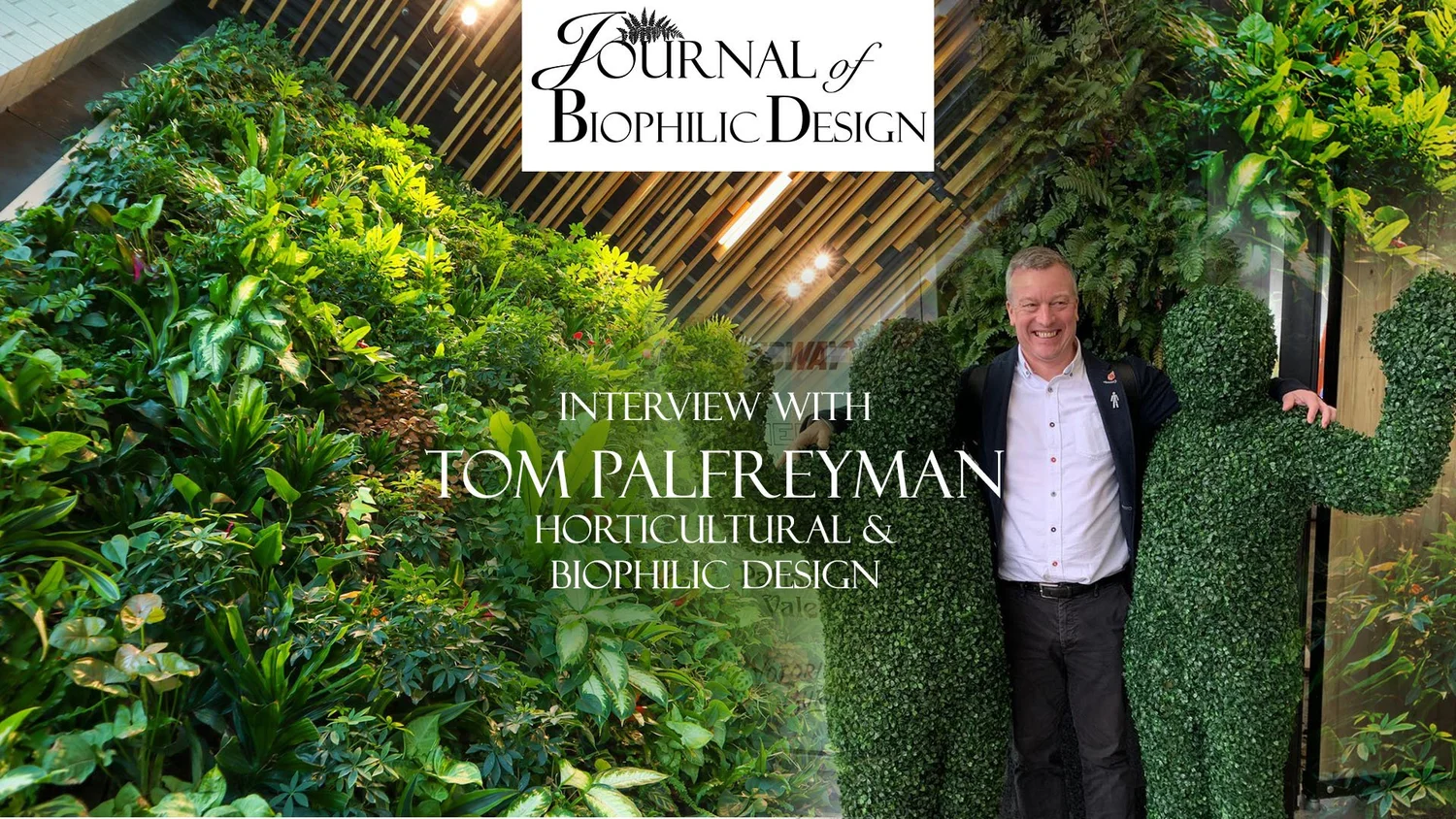 Why we need nature inside our buildings - The Future of Healthy Buildings with Biophilic Design 18.05.2026 42นาทีIn this episode of the Journal of Biophilic Design podcast, we speak with landscape specialist Tom Palfreyman, whose work across commercial, hospitality, retail and workplace environments has focused on the principle that plants fundamentally change how people experience space. With more than twenty years’ involvement in interior and exterior landscaping, Tom has spent his career exploring how nature can improve the places where we work, rest and play, and why maintenance, care and long-term thinking are just as important as the initial design itself. As Tom reflects during the conversation, “Plants have transitioned from a nice-to-have decoration in the corner of the building to being an intrinsic essential part of any building.” It is a shift many designers are now recognising. The conversation around biophilic design has matured significantly over the past decade. What was once dismissed as aesthetic enhancement is increasingly understood as part of a much wider discussion around health, wellbeing, productivity, ecology and human resilience. The heart of biophilic design beats out that human beings are not separate from nature, we are an intrinsic part of it. “We evolved to live outside,” Tom says. “That connection with nature, sadly, I believe, has been lost.” Modern life has created increasingly artificial environments - sealed buildings, screen-based working, urban density and spaces designed more for efficiency than human experience. Yet our biology has not changed at the same pace as our architecture. Research across neuroscience, environmental psychology and workplace wellbeing continues to show that exposure to nature can reduce stress, restore attention, support cognitive performance and improve emotional wellbeing. What becomes clear in this discussion is that successful biophilic design is never simply about adding greenery into a room. It is about creating meaningful and lasting relationships between people and living systems. For Tom, this begins with understanding plants properly. “Putting the right plant in the right place so it’s happy, healthy, survives,” he explains. There is something important in that statement. Too often, planting schemes are treated as visual afterthoughts rather than living ecosystems requiring expertise, maintenance and long-term stewardship. The strongest biophilic projects understand that planting design is not decoration. It is infrastructure for wellbeing. Tom highlights his collaboration with Dr. Craig Knight, emphasising the benefits of biophilic ‘enrichment’, a word maybe more commonly associated with ecology or animal wellbeing than commercial interiors. “Enrichment is a very, very strong part of what we do, putting the right plants in the right place,” he says. “If we can have engaged enrichment, then that is far more powerful.” Tom shares an example of a project with a pharmaceutical company where biophilic enrichment was introduced, leading to significant improvements in the work environment and prompting the company to adopt a global biophilic strategy. This notion of engaged enrichment feels particularly relevant in workplaces today. Many office environments continue to struggle with issues of stress, disengagement and sensory fatigue. In contrast, spaces designed with visible natural systems, daylight, planting and moments of restoration often feel fundamentally different. They soften the intensity of modern working life and reintroduce cues of life, seasonality and care into daily experience. Even relatively small interventions can have measurable impact. “Just one plant per four square meters can make a difference,” Tom notes, pointing to research that demonstrates improvements in wellbeing and engagement through relatively modest levels of planting integration. Importantly, the placement of greenery matters as much as quantity. Tom speaks about focusing on “main areas of circulation, so entrance and exit points of the buildings, communal spaces, places wher
 -
 Is Colour the Missing Link in Nature-Centric Biophilic Spaces 24.04.2026 57นาทีEver wondered why some spaces instantly relax you, while others energise or even irritate? The secret might lie in the colour! Karen Haller, is an expert in applied colour psychology, and reveals how understanding the emotional dance of colours can transform our built environments into havens of well-being and productivity. Whether you're an interior designer, architect, or simply a lover of nature-inspired spaces, this podcast dives deep into the unseen forces of colour. You’ll learn how colour influences behaviour, how to select the perfect hues for different environments, and why true biophilic design demands more than green and brown, it's about the symphony of natural colours that heal and energise us. Colour Psychology seems to be a bit of a missing link in biophilic Design. Not a lot of people are talking about it but it is vitally important. We’ve all seen it—spaces drenched in beige, sterile white corridors, or overly vibrant hues that overpower instead of soothe. Spaces, especially healthcare environments, often neglect the impact colour can have on users of the space. Karen shatters the myth of “neutral” colours being emotionally neutral altogether. Every colour triggers a response, whether it is positive or negative, each is embedded in our personal memories, cultural beliefs, and innate responses. For example, red energises or stimulates physical reactions, but excess can overwhelm. Blue can be calming or stimulating, depending on its shade and context. Recognising this nuanced language of colours allows designers to craft environments that truly support human health and behaviour. Whether it's selecting hues for a hospital or designing a peaceful workspace, understanding the emotional implications of colour creates spaces that nurture rather than numb. 3 ways we relate to Colour – and how to use them! Karen’s theory identifies three distinct ways we connect with colour: 1. Personal Associations: Colours evoke memories and feelings unique to each individual. A bright yellow might remind someone of their childhood joy or a dull green might trigger childhood discomfort. These associations drive our preferences and aversions—so understanding clients’ personal ties to colours is key. 2. Cultural Meanings: Deep-rooted beliefs shape cultural responses—red for luck in China, white as a symbol of death elsewhere. Ignoring these can cause disconnect in design choices for diverse spaces. 3. Colour Psychology: Each hue has a spectrum of responses aligned with nature’s endless diversity. Recognising these layers allows designers to create intentionally harmonious spaces—be it a calming hospital room or an energetic collaborative zone. Nature's palette can guide authentic Biophilic Design Nature’s colours can be perceived almost like a blueprint for emotional well-being. Karen emphasises the importance of sticking to true natural colours, no artificial greens or overly saturated hues. These colours, like the rust reds of autumn leaves or the soft lavender of seasonal blooms, carry intrinsic harmony and emotional resonance. When designing with nature in mind, identify the desired outcome, calm, energy, focus and select natural hues that support these goals. For a high-energy space like a bustling office, vibrant reds or energizing oranges may work. In contrast, serene blues and gentle greens foster calm in healthcare or relaxation zones. But please avoid the cliché of “green and brown”, these are just two colours among many. True biophilic design encompasses the entire spectrum of natural colours, creating an ecosystem of shades that balance, connect, and heal. Good biophilic design comes complete with a understanding of emotional language of colours. Genuine biophilic design is rooted in understanding this language, aligning space with human innate responses, and collaborating across disciplines. Whether it’s a hospital, office, or school, the goal is harmony, balancing energy levels, fostering comfort, encouraging productivity. This is achieved by starting from the outcomes and working backwards, what behaviours must be supported? What emotions should be evoked? Then, select colours accordingly. Remember, every space is an ecosystem, and our role is to nurture human-nature connection through thoughtful colour choices, never just following trends but listening to what nature and our psychology say. When you understand the true language of colour, you wield a tool you can use to shape environments that heal, energise, and sustain us. Dive deeper with Karen Haller’s courses or consult her for tailored strategies. Start viewing spaces as living ecosystems filled with the colours of nature, inspired by human psychology, and crafted for well-being. Because colour can also help restore our innate connection to the natural world. To find out more about Karen please connect with her: Instagram: https://www.instagram.com/karen_haller_colour Facebook: https://www.facebook.com/KarenHallerColourAndDesign LinkedIn: https://www.linkedin.com/in/karenhaller Consulting https://karenhaller.com Free design industry e-book https://karenhaller.com/free-10-myths-ebook Colour & Design courses https://karenhaller.com/courses Little Book of Colour https://thelittlebookofcolour.com Free first chapter https://thelittlebookofcolour.com/free-chapter Have you got a copy of the Journal? You can now subscribe as a member of the Journal of Biophilic Design or purchase a gorgeous coffee table reference copy or PDF download of the Journal journalofbiophilicdesign.comor Amazon and Kindle. Credits: with thanks to George Harvey Audio Production for the calming biophilic soundscape that backs all of our podcasts. Listen to our podcast on Audible, Amazon Music, Spotify, iTunes, YouTube and all the RSS feeds. https://www.facebook.com/journalofbiophilicdesign/ https://www.linkedin.com/company/journalofbiophilicdesign/ https://www.instagram.com/journalofbiophilicdesign If you like this,please subscribe!
 -
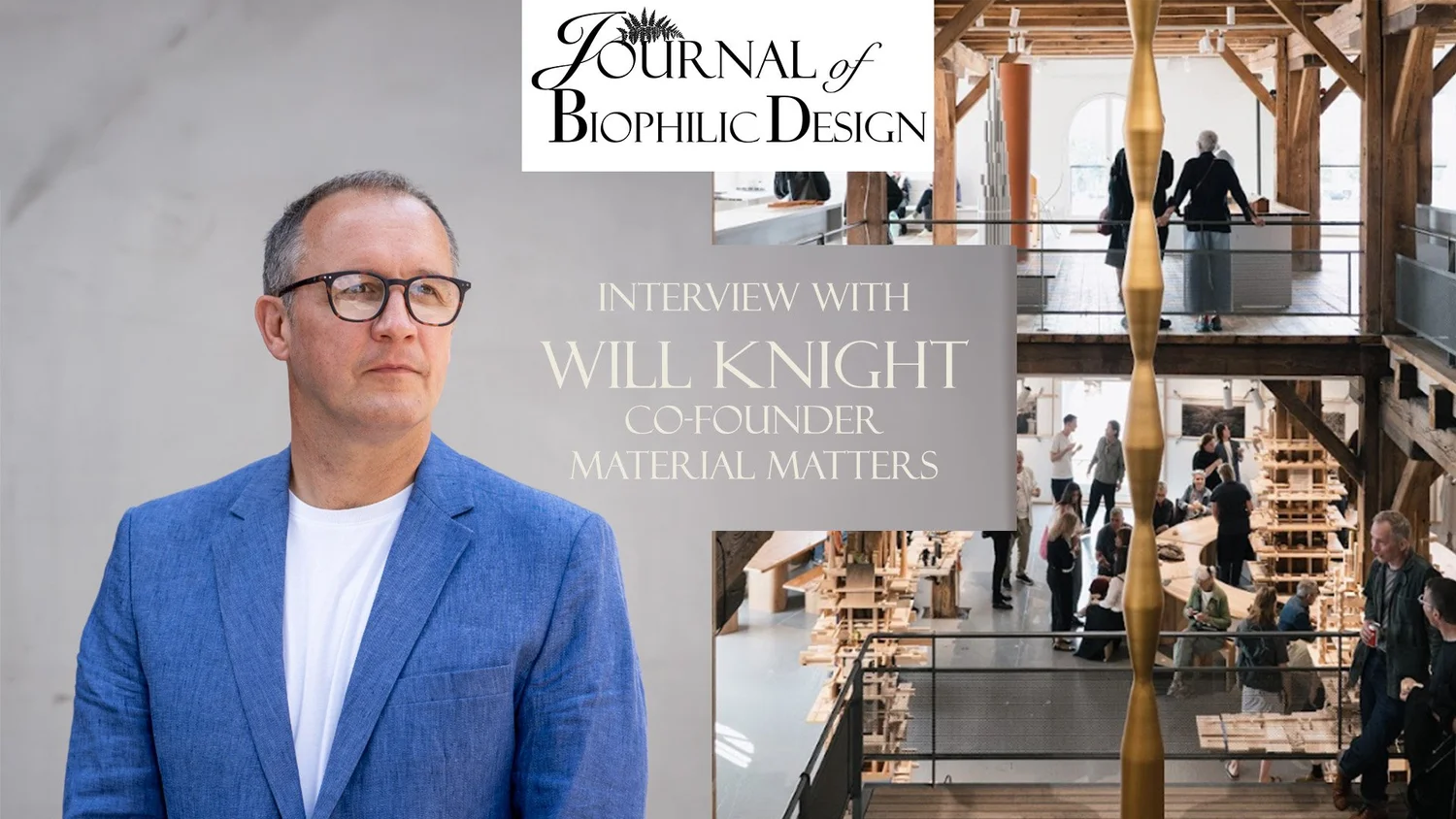 The Future of Material Innovation and Biophilic Design 14.04.2026 39นาทีHave you ever wondered how materials shape our environment? What happens when design meets nature? If you’re craving a fresh perspective on sustainable, regenerative design, dive deep with us into the world of materials, creativity, and a future where biophilic principles transform every building, every product, and every space. William Knight, co-founder of Material Matters, is a passionate advocate for a future where materials tell stories, innovate endlessly, and reconnect us to nature. His journey from politics to design might surprise you, but his journey has driven him to demystify material innovation that truly inspires. In this post, you’ll discover how materials are pushing boundaries, why understanding them is critical, and how a shift in industry mindset can accelerate regenerative, biophilic environments. Living Materials and Regenerative Design Will emphasises that many materials we overlook have rich stories. Think about timber, agricultural waste, natural extracts, all of these can inspire radically different design solutions. For example, his work with companies using tree sap, algae-based bioplastics, or recycled aluminium demonstrates that every material is an opportunity. This perspective challenges the traditional sourcing black book, pushing designers to explore alternatives that are biophilic, regenerative, and resourceful. Yes, natural waste and renewable sources are eco-friendly but they can also create compelling products that challenge our assumptions and expand design possibilities. Will’s own story began unconventionally, with his early career in the House of Commons. From navigating politics to working with the UK Design Council, his journey reflects a passion for shaping perceptions and pushing creative boundaries. His work has spanned exhibitions, festivals, and major design events, with a focus on how materials are the foundation of design innovation. Today, Material Matters is a platform for exploring the pulse of material intelligence. Its an accessible, open conversation about process, resourcefulness, and ecological mindfulness. It’s about bringing transparency and democratising knowledge so everyone, from designers to end consumers, can make smarter, sustainable choices. Designing for a Biophilic Future One of the most exciting areas Will touches on is the role of biophilic design principles, the integration of natural elements into environments to foster wellbeing and sustainability. He reminds us that design is inherently reactive, it responds to market demand, manufacturing capabilities, and cultural shifts. But the real game-changer? Materials that mimic or derive directly from nature, like bio-based concrete infused with moss, or fungi-based textiles, enable us to create living buildings and products. William highlights an inspiring example: materials with embedded bio-growth, which grow, adapt, and even repair themselves. They embody nature’s resilience and regenerative capacity, leading us toward healthier, more adaptable spaces. Designers can act as catalysts, demonstrating and advocating for natural, sustainable materials. Success hinges on collaborating across sectors. Supply chains, manufacturing, regulation—each influences whether innovations reach the mainstream. We need inclusive platforms and storytelling, engaging property developers, clients, and end users in the process. When supply chains embrace natural waste, local resources, and regenerative practices, scale becomes feasible, collaborative, cross-sector thinking is key. Regenerative and biophilic materials must be supported by resilient supply chains and more succinct regulation, a collective effort fuelled by shared knowledge and a willingness to challenge orthodoxies. Your challenge: Think beyond the usual. Dive into local resources, embrace natural waste, and collaborate across disciplines to create environments that resonate deeply with human nature. The future of architecture and design is rooted in materials that are alive, local, and regenerative. To find out more about Will and Material Matters check out these links below: Material Matters: materialmatters.design Podcast (Apple Podcasts) - Material Matters with Grant Gibson: https://podcasts.apple.com/gb/podcast/material-matters-with-grant-gibson/id1450375359 Bookshop: https://shop.materialmatters.design/ What is Biophilic Design? https://journalofbiophilicdesign.com/what-is-biophilic-design Have you got a copy of the Journal? You can now subscribe as a member of the Journal of Biophilic Design or purchase a gorgeous coffee table reference copy or PDF download of the Journal journalofbiophilicdesign.comor Amazon and Kindle. Credits: with thanks to George Harvey Audio Production for the calming biophilic soundscape that backs all of our podcasts. Listen to our podcast on Audible, Amazon Music, Spotify, iTunes, YouTube and all the RSS feeds. https://www.facebook.com/journalofbiophilicdesign/ https://www.linkedin.com/company/journalofbiophilicdesign/ https://www.instagram.com/journalofbiophilicdesign If you like this, please subscribe!
 -
 The Biophilic Imperative - From Sustainability to Regeneration 10.04.2026 44นาทีBiophilic Regenerative Design Is it Utopian thinking to imagine a world architected not just to sustain, but to regenerate. A space where every brick, every plant, every human interaction pushes us closer to harmony with nature? Enrique Soler, is Design Director for Major Projects at Area, where he leads a multidisciplinary team of designers. Formerly Head of Design for Willmott Dixon Interiors, Enrique is a design visionary and passionate advocate of biophilic and regenerative spaces. In this podcast interview he takes us on a journey beyond eco-friendly clichés to uncover how biophilic design can fundamentally transform our relationship with the planet and each other. Sustainability alone is no longer enough. It’s become a hollow badge; a marketing tab on products. We have to be specifying with regeneration as a fundamental baseline. We have to aim to be net positive, to give back to the earth, and nurture all life through design. If we want to thrive, we must shift from mere mitigation to conscious creation of spaces that actively enhance biodiversity, air quality, and human well-being. Enrique’s practice extends deep into the core of biophilic philosophy. "It’s not about just having a plant here or there, it’s systems thinking, connecting everything: natural materials, community involvement, local art, and the web of life. Design must be holistic." He illustrates that interior environments capable of reducing noise, improving sleep, and fostering healthy ecosystems are essential. He shares the surprising outcome of how circadian lighting actually also reduced the sound levels in an office environment, as people were calmer. It’s amazing how biophilic elements can have a far-ranging effect on human health and productivity. We also discuss urgency. Without Biophilic Design, we're simply continuing a path of destruction. The materials we would otherwise turn to: plastic, synthetic, cheap, are the very things that threaten our future. Through Biophilic Design we’re correcting course now, returning to natural, renewable resources like hemp, timber, and even innovative composites like mycelium. We have to respect nature’s way, we have to design with circularity in mind, with long-term thinking. Modular systems, lifespan-aware biophilic materials, community-centred projects are practical strategies to future-proof spaces while healing our planet. Enrique urges designers and clients alike to rethink their priorities: "It’s not just about what looks good. It’s about systems, life cycles, interconnectedness. Our spaces should give back, support biodiversity, and reflect the complex web we’re part of." He reminds us that each choice, from material to layout, matters. "The butterfly effect is real," he says. "A simple plant, a thoughtfully designed community space, can ripple into broader ecological and social benefits." I think more and more of us are ready to build responsibly, mindfully, regeneratively. Whether you’re a designer, a business leader, or just someone who cares about planet and people, Enrique’s insights challenge you to see your role differently. Not just as someone working in design or build, but as a steward of life. Each one of us can shape the environment to support thriving communities and ecosystems for generations to come. Are we ready to change the way we create, to heal what’s broken, and to embrace a truly regenerative future? We have a collective future. For anyone committed to redefining purpose in design, this episode is an essential listen. Because the truth is, we have no other option but to build a world that regenerates, not just sustains. To find out more about the places Enrique talks about in this podcast visit: Case studies for Area’s offices in both London and Windsor, where you can read a bit about the design approach and sustainability aspects: https://area.co.uk/case-studies/area-london https://area.co.uk/case-studies/area-windsor And the plasterboard alternative that his client suggested for a project: https://adaptavate.com/products/breathaboard Ise Shrine in Japan: https://www.isejingu.or.jp/en/about/index.html#history You can see what Enrique talked about in terms of preserving the craft as opposed to the original materials, as well as the forest surrounding the shrine, here: https://www.worldhistory.org/Ise_Grand_Shrine/ https://www.smithsonianmag.com/smart-news/this-japanese-shrine-has-been-torn-down-and-rebuilt-every-20-years-for-the-past-millennium-575558/ Photos featured copyright Henry Woide. Have you got a copy of the Journal? You can now subscribe as a member of the Journal of Biophilic Design or purchase a gorgeous coffee table reference copy or PDF download of the Journal journalofbiophilicdesign.comor Amazon and Kindle. • Book tickets and join us in PERSON and LIVE STREAMED Biophilic Design Conference www.biophilicdesignconference.com Credits: with thanks to George Harvey Audio Production for the calming biophilic soundscape that backs all of our podcasts. Listen to our podcast on Audible, Amazon Music, Spotify, iTunes, YouTube and all the RSS feeds. https://www.facebook.com/journalofbiophilicdesign/ https://twitter.com/JofBiophilicDsn https://www.linkedin.com/company/journalofbiophilicdesign/ https://www.instagram.com/journalofbiophilicdesign If you like this,please subscribe!
 -
 The New Stone Age 26.03.2026 41นาทีImagine furniture, cities and buildings that tell stories rooted in local geology, where the materials and forms echo the unique landscapes of their region. Imagine a design language spoken with local stones and traditions, elevating cultural identity. Beyond its primal beauty and ancient aura, STONE is a material that embodies sustainability, resilience, and storytelling. If you’ve ever danced barefoot on marble floors or admired the stone facades adorning historic cities, you’ve felt that deep, almost breathing connection to the earth’s history. But how often do we truly understand this miracle of nature and see its potential to transform our built environment? Today, we dive into the heart of biophilic design and explore how embracing natural stone could upscale our approach to architecture, sustainability, and beauty with Matt Robb, Marketing and Media Manager for the Stone Federation of Great Britain. I think you’ll enjoy this interview where we celebrate our relationship with one of the earth’s oldest, most remarkable gifts. Matt shares with us how the story starts deep beneath our feet, formed over millions of years by geological forces, sedimentary layers, thermal metamorphosis, and the slow crystallization of minerals. From limestone and marble to granite and sandstone, each type tells a story of time, place, and process. There's no such thing as a bad stone, only badly used stone. When we understand the qualities of each material we can allow them to inform your design, not constrain it. Think Right Stone, Right Place. Architects like Amin Taha are leading this movement utilising full-range stone blocks, drastically reducing carbon footprints, and proving that sustainability and innovative design are not mutually exclusive. The key? Embrace the narrative of each stone, respect its natural essence, and allow it to shape your architecture—timeless, responsible, and inherently beautiful. When you learn how stone is formed which Matt shares brilliantly where it comes from, and what it can do, your designs become richer, more authentic, and more sustainable. Also there is the sustainability aspect of Stone. Imagine a world where buildings are seen as part of a living, breathing ecosystem, where materials cycle and recycle with grace. That’s the promise of stone. Its longevity is legendary think of Edinburgh’s historic streets or the enduring facades of ancient temples. Stone can be carefully dismantled, catalogued, and reimagined in future projects. The challenge? Building the infrastructure to support this reuse. But progress is happening. Architect-led networks and heritage specialists are leading the charge, turning old buildings into treasure troves of reconditioned stone. Consider this: If the entire 8 billion-strong human population built with stone, the required quarry would be just a tiny pinprick in the Earth’s crust no scars, only stories. Yes, quarrying involves extracting from the earth, but the narrative isn’t black and white. Modern practices focus on minimising impact, returning sites to nature, and enhancing biodiversity. UK quarries, for instance, often serve as reclaimed habitats and even public spaces. Stone has a 74% lower global warming potential than ceramics, and UK-produced bricks made from quarry offcuts boast 75% lower embodied carbon than traditional clay. Plus, with proper design, stone’s durability means it outlives many materials—cutting long-term waste and carbon footprints. While high-tech CNC machinery and ultra-slim stone cladding grab headlines, the most exciting innovation comes from returning to the roots of stone’s purpose. Think: robust, honest, and unpretentious. Using the full range of a stone block, giving it room to breathe, to express its natural beauty is a boundary-pushing act that challenges the wastefulness of modern architecture. Think beyond the CAD drawings with the perfect seam running through the centre of the wall panel, and instead embrace the randomness of nature’s beauty and maybe even let the stone dictate the design not the other way around. Building with the natural grain, textures, and colours celebrates its integrity while reducing waste and costs. Inside and out, designers are reimagining what’s possible when they listen to stone. From structural uses that cut entire carbon footprints to creative installations that tell stories of time and place, the future is rooted in natural materials. How to Integrate Stone into Your Practice Are you new to specifying stone? Here’s the essential first step: 1. Visit a quarry or large slab yard (which we are going to organise, so make sure you sign up to our Journal newsletter or become a member). See the full range of colours, textures, and sizes. 2. Connect with a stone specialist. Understand how each material is formed and suited to different applications. 3. Challenge misconceptions about cost. Remember: the true cost is what you reject. Use the raw potential of the stone, not just the prettiest face. 4. Design for longevity. Match the stone’s properties to its environment—porous limestone for decorative surfaces, hardy granite for high-wear zones. Takeaway: Know your stone; then, let it inform your design. That’s the route to beauty and sustainability hand-in-hand. Want to go deeper? Explore the Stone Federation’s resources, join their network, and start your journey toward a more sustainable, beautiful, and authentic built environment. To find out more about the Stone Federation visit: https://www.stonefed.org.uk where there is also a lot of technical resources and you can find a local supplier in the UK too. Want to find out more: What is Biophilic Design: https://journalofbiophilicdesign.com/what-is-biophilic-design Have you got a copy of the Journal? You can now subscribe as a member of the Journal of Biophilic Design or purchase a gorgeous coffee table reference copy or PDF download of the Journal journalofbiophilicdesign.comor Amazon and Kindle. • Book tickets and join us in PERSON and LIVE STREAMED Biophilic Design Conference www.biophilicdesignconference.com Credits: with thanks to George Harvey Audio Production for the calming biophilic soundscape that backs all of our podcasts. Listen to our podcast on Audible, Amazon Music, Spotify, iTunes, YouTube and all the RSS feeds. https://www.facebook.com/journalofbiophilicdesign/ https://twitter.com/JofBiophilicDsn https://www.linkedin.com/company/journalofbiophilicdesign/
 -
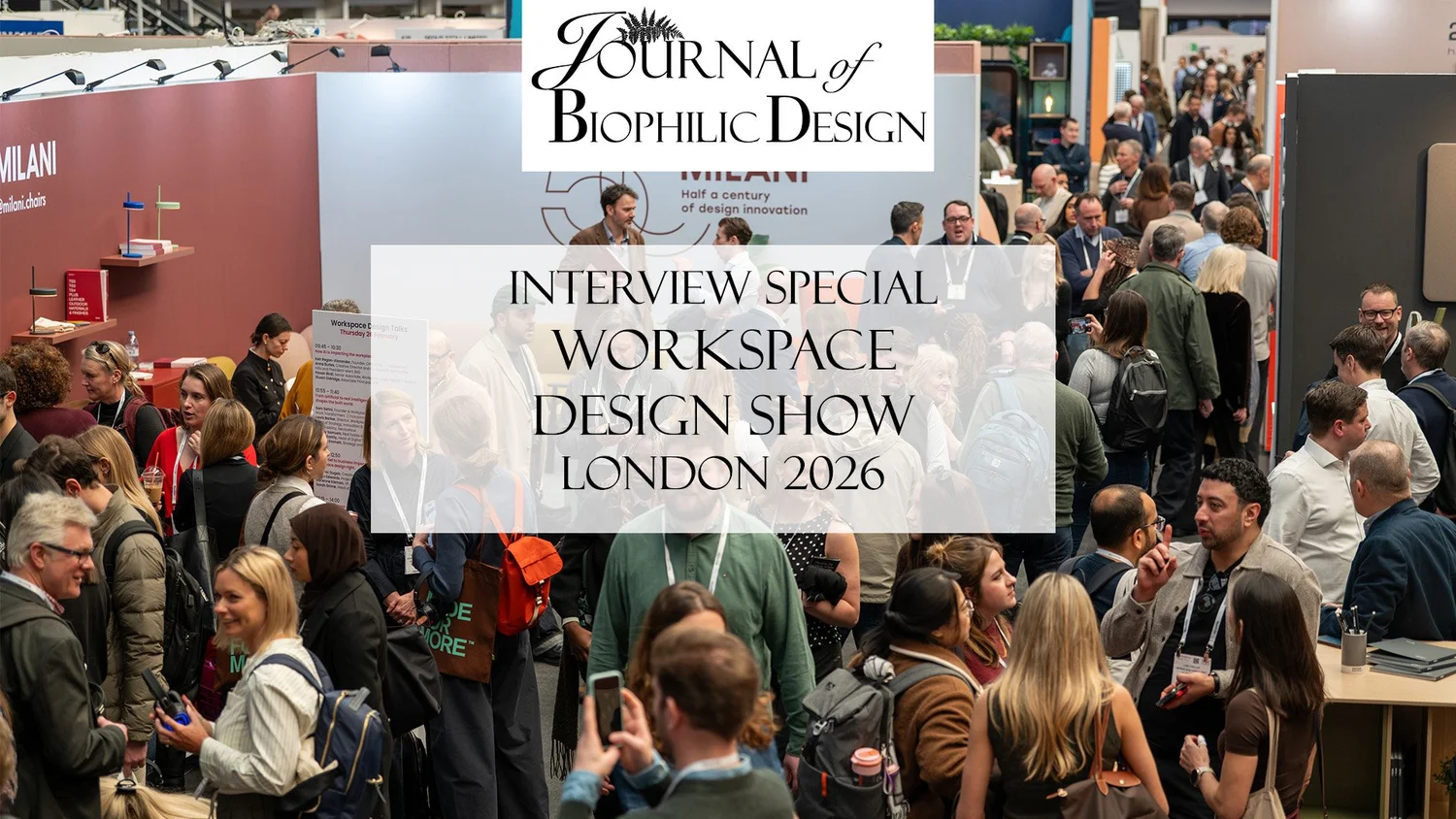 Interview Special - Workspace Design Show 2026 London 25.03.2026 17นาทีAt The Workspace Design Show at the Business Design Centre in London this year, I had the privilege of chairing a dynamic panel featuring industry leaders Nicola Tomkins Head of Design for Major Projects at Overbury, Lidia Johansen Associate Environmental Consultant at chapmanbdsp and Paulo Ribeiro Head of Interior Design at Aecom. It was a lively and dynamic discussion to a full house at the show. We looked at how we could reframe Biophilia, moving from Aesthetic to a Performance System. We explored how through collaboration, sourcing and configuring the brief early we can accelerate biophilic design specification. After the panel I took my camera and mic and interviews other biophilic design experts visiting the show to ask them to share their insights on the show and biophilic design, emphasising its critical role in modern architecture and interior spaces. Biophilic Design reconnects us back to nature, to our roots, to what makes us truly human. If you've ever wondered why natural elements in our spaces feel so vital, or how design can heal and inspire us, here’s what you’ll discover: how biophilic design transforms spaces, the science proving its benefits, and the urgent need to rethink our environments for mental, physical, and planetary health. Biophilic Design transforms spaces from mere workplaces into living ecosystems. As Katrina Dalley from Plant Designs puts it, “bringing nature inside makes a massive difference. It’s not just visual—it's psychological, emotional, and physiological.” Emi Melin of Plus Creatives, has been spending a lot of time researching about the impact of Biophilic and multi-sensory design as a layer over conventional interior design, looking at intangible elements like light, smell, humidity or human emotions. Plants, water features, natural textures—they all trigger our senses, grounding us, reducing stress, and boosting creativity. Moreover, as Nicola Tomkins, Head of Design for Major Projects at Overbury notes, “there’s a growing awareness of sensory elements, not just greenery, but all the layers of nature that help us feel more connected and well.” When we surround ourselves with the natural, we foster a sense of belonging that’s essential for mental health and resilience. Visitors like architect, biophilic designer and environmental psychology consultant Lucilla Malara who was visiting from Italy, emphasise the importance of how biophilic elements impact our physiology. Light, especially circadian lighting, influences our body clocks, improving sleep and alertness. Infrared light, with its deep cellular reach, even supports mitochondrial energy production, our cellular powerhouses. Diving deeper, Ulysse Dormoy CEO of Atrium, explains that “light enters our bodies beyond just vision, influencing every cell.” Our planet’s energy, derived from sun, light energy, sustains all life. Modern design must tap into this natural energy flow, not block or distort it. On a personal note, Nicola reflects, “I’m an advocate of evidence-based solutions. When you can prove that biophilic design improves wellbeing and productivity, it’s impossible to ignore.” From reduced stress and better focus to even improving conditions for those with dementia or mental health challenges, the data is compelling. The future is clearly calling for spaces that harmonise with nature, not oppose it. Think: facades punctured with green patches, windows that mimic daylight rhythms, water features inside and out, and materials that echo organic textures. More trees as Loulou Elliott of Plant Designs also advocates. Ulysse’s vision: “We need to design environments that entice people outdoors, spaces that make stepping outside the conscious choice, not a necessity.” We have the power to reimagine cities and workplaces that invite nature in, rather than keep it out. Take it from Nicola: “We’re shifting toward products that integrate greenery and biomaterials, aligning with our modern need for sustainability and wellbeing.” It’s a transformation led by awareness, innovation, and a sense of responsibility. But it’s not just aesthetics. It’s about creating spaces that support human health, emotional balance, and even planetary recovery. As Katrina states, “Biophilic design makes spaces more restorative, not just functional. It’s a holistic approach to wellbeing.” As Ulysse warns, “We are increasingly disconnected from nature, and that’s dangerous. We need to act now — for our health, our planet, and future generations.” A vision of 2100 could show a world where cities are alive with plants, and indoor-outdoor boundaries blur, enabling us to be outside more often and reconnect deeply. In the words of Lucilla: "Nature isn't just plants; it’s sounds, smells, materials, the mystery of complexity. We need to harness all of this to heal and inspire." So, do we continue down a path of disconnection or embrace a biophilic revolution. The choice is ours, and the time is now. If you’re inspired by the transformative potential of biophilic design, start small but think big. Advocate for green spaces, natural light, and sensory-rich environments in your work and community. The future belongs to those who nurture their connection to nature, because ultimately, it’s the key to our survival and thriving. Don’t wait for the perfect solution. Begin today, the roots of change start with you. Join us at the Journal of Biophilic Design as a member and help us push through this better way of designing. www.journalofbiophilicdesign.com Visit Workspace Design Show and get ready for their 2027 show! https://workspaceshow.co.uk FAQ: Why is biophilic design so effective? Q: How does biophilic design improve mental health? A: It reduces stress, enhances mood, and boosts focus by creating environments that mimic natural patterns and stimuli. Q: Can biophilic design be implemented in small spaces? A: Absolutely. Even small plants, natural textures, and lighting adjustments make significant impacts. Q: What is the biggest challenge to integrating biophilic elements? A: Often it’s awareness and prioritisation, understanding the importance and committing resources to make it happen. Q: How does biophilic design contribute to sustainability? A: It promotes natural materials, green infrastructure, and reduced reliance on energy-intensive artificial environments. Want to find out more: What is Biophilic Design: https://journalofbiophilicdesign.com/what-is-biophilic-design
 -
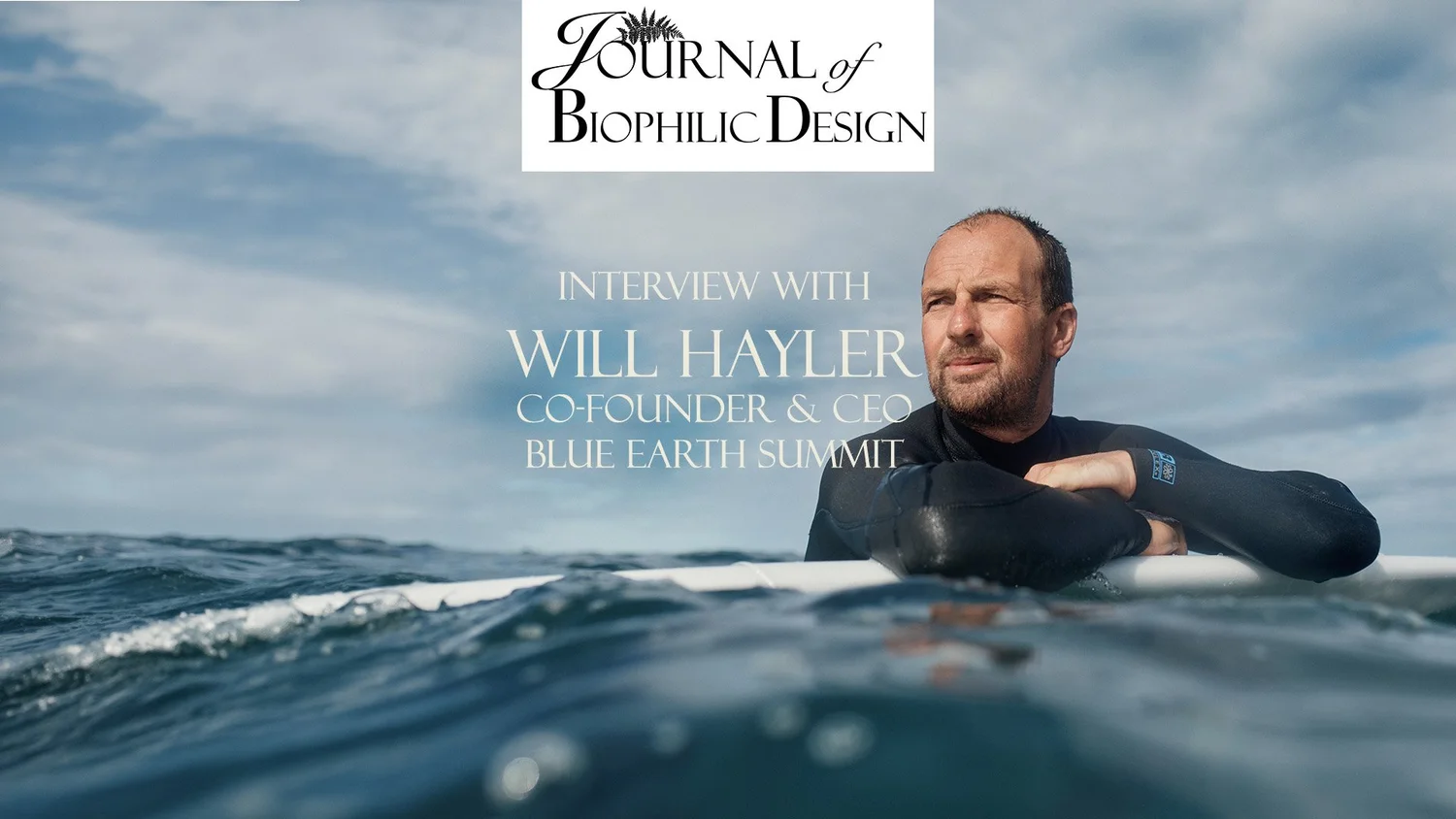 How to Fast-track a Regenerative Future 08.03.2026 40นาทีThe idea that business can help solve environmental problems is still controversial in some circles. Corporations are frequently blamed for accelerating climate change and biodiversity loss. Yet Will Hayler, co-founder of The Blue Earth Summit, argues that excluding business from the conversation would be a strategic mistake. Nowhere is this more important than in the built environment. More and more of us are living and working in cities, and our urban environment is already shaping humanity’s relationship with nature for generations. Buildings, materials, public spaces and infrastructure will determine whether urban living disconnects people from nature, or reconnects them to it. It is why we are so passionate about Biophilic Design. The design principle is critical.
 -
 We spend 90% of our time indoors. Here’s how Biophilic Design can make that healthier. 03.03.2026 57นาทีWe spend about 90% of our lives indoors, yet our cities, offices and homes are rarely designed with the biological reality of that fact in mind. That disconnect between humans and the natural systems we evolved within is becoming harder to ignore. Biophilic Design is a growing movement in architecture and planning, which argues that bringing nature back into the built environment is not a luxury or aesthetic flourish but a public-health, economic and social necessity. Alexandra Bowen, founder of the Biophilic Design Community on LinkedIn, puts it bluntly: “Our minds and bodies evolved over thousands of years to thrive in nature. If we’re indoors almost all the time, we have to be deliberate about reconnecting with it.” Her argument echoes a growing body of research suggesting that the benefits are measurable. Studies cited by designers show that access to daylight and views of nature can improve cognitive performance and memory recall by around 15%, while hospitals with natural light have reported 41% shorter patient stays. In schools, improved ventilation has been linked to 14% better maths scores and significantly reduced sickness absence.
 -
 Collect 2026: Metamorphosis and the Polish Design Connection 19.02.2026 51นาทีHave you ever wondered why we feel so alive when we’re surrounded by nature? Why certain textures, materials, or natural elements spark deep emotions within us? The truth is reconnecting with nature through thoughtful design is a necessity, it is how we restore our bond with the earth and the more we do this, the more we are shaping a new way of living that sustains us all. Polish craft and innovation is going to take centre stage at Collect 2026 which opens in London on 25 February this year 2026. Nature connection, craft and design is taking centre stage. Biophilic Design helps people reconnect with nature. I am also a maker and artist (I sculpt, weave, sketch, etc), and for me, creating things with natural materials gives me a direct connection to nature and our planet. In this podcast we speak with the curator of this year’s Collect Corinne Julius and one of the Polish artists featured during the show. We explore the significance of biophilic design, the metamorphosis of Polish craft, and the role of materiality in art. The conversation also touches on the challenges of the craft industry in the context of climate change and the importance of tactile experiences in our lives. Can slow craft be the antidote to the disconnection and environmental crisis we face today? Have you noticed when you touch a rough piece of wood, a cool stone, or a warm fibre, something stirs inside? That tactile experience connects us directly to natural material grounding us amidst what can sometimes be quotidian chaos. It’s not accidental that craft practitioners, like Anna Bera, choose wood, stone, and clay to create, natural biophilic materials conduct our senses directly to our well-being and consciousness. Anna, a Polish artist from the mountains, explains it beautifully: “Working with natural materials is like engaging in a dialogue with the earth.” She crafts large-scale sculptures from wood, embracing imperfections, knots, and fungi. Her work isn’t flawless in the mass production sense; instead, it’s alive, real, and deeply connected. Contrast that with the sterile, sanitised surfaces of modern mass-produced objects. They’re designed to be invisible, to blend into the background. But Anna’s work demands you notice — it beckons tactile engagement, invites you to touch and reflect. Natural materials are imperfect, and that’s what makes them beautiful. Their flaws tell stories—of growth, decay, evolution. When we embrace this, we find healing, grounding, and a fresh perspective on our relationship with nature. Corinne Julius, the curator of the Metamorphosis exhibition, champions the idea that craftsmanship embodies deep intellectual effort and storytelling. She believes that authentic craft can challenge our fast-paced, disposable culture. “Craft is a form of soft power. It shows us that beauty can win minds and hearts, making deep environmental and social issues approachable.” Her exhibitions, like Metamorphosis showing at Collect this year at Somerset House in London, celebrate transformation of materials, of countries, of ideas. The craftspeople and artists she showcases, like Alicia Patanowska or Marcin Rusak use their work to COMMENT. Their pieces question consumption, waste, and sustainability through poetic, tactile means. A tile that’s thrown, cut, reassembled; a flower encased in resin—each reflects an urgent truth: We can transform waste into wonder, making us see the world differently, inspiring us to act consciously. So what is the biggest barrier to more craft specification? We have been disconnecting from nature more and more over the last two hundred years especially. Our built environments, homes, school, offices and hospitals, are often cold, uniform, and disconnected from the rhythms of the natural world. No wonder stress skyrockets, mental health suffers, and our environment degrades. Biophilic design flips this script. It’s about embedding natural elements, wood, plant life, water, into our daily spaces. Think of the Polish artists who create immersive installations from living plants, or designers reimagining architecture with curving, organic shapes that mirror the human body. As Anna says: "We need more biomorphic shapes, fewer harsh lines, more presence of trees and nature in our surroundings." Her work, touching even those with sight impairments, demonstrates how materiality influences well-being. Touching a rough wood sculpture can ground you, calm you, reconnect you with your roots. Corinne agrees: “In a world obsessed with speed and perfection, slow craft and natural materials are an antidote. They remind us who we are—living, breathing, interconnected.” This of course is the heart of biophilic design. The Polish crafts scene, with its optimism and innovation, exemplifies a can-do attitude. Corinne points out: “When we collaborate properly with craftspeople, we create spaces and products that are sustainable, soulful, and inspiring." But it’s not enough just to wish for it. We need action, whether in architecture, fashion, or daily choices. How? • Specify handmade, natural materials in projects. A wooden table with visible grain, a ceramic vessel with imperfections. These aren’t flaws, they’re stories. • Support artisans who work with sustainable practices. Their work embodies a dialogue with nature. • Prioritise slow, thoughtful craftsmanship over mass-produced sameness. It’s a rebellion, a stand against waste and environmental destruction. • Educate and inspire others to value authenticity. Share stories, visit workshops, touch materials—rediscover the power of doing. As Corinne says "Join exhibitions, follow artists, advocate for crafted materials. That’s how shifts occur." Every piece of authentic craft, every natural material, and every mindful space transforms our lives and our world. We can’t afford to wait for systemic change alone; we must start with our own choices and specification. Visit Collect 2026 for more inspiration, and especially Metamorphosis curated by Corinne Julius, showcasing the work of Polish artists and experience the tactile, interactivity and beauty that is in handmade craft. Let’s champion slow craft, embrace imperfections, and reconnect with nature’s wisdom. Because if enough of us do, we can change the story—crafting a future rooted in sustainability, beauty, and genuine human connection. Want to see the full exhibition? To find out more about Collect, get tickets, and also explore the UK-Poland Season and learn more about the artists featured during this programme visit: https://www.craftscouncil.org.uk/collect-fair/ https://www.britishcouncil.pl/en/programmes/uk-poland-season-2025 Corinne Julius Freelance journalist, critic, broadcaster and curator she has a special interest in contemporary craft and design. She was for many years a reporter and producer on BBC Radio’s Woman’s Hour, made features for Radio 4 and contributes to the Arts programme ‘Front Row’. Anna Bera,is a multidisciplinary artist from Lechów in the Świętokrzyskie Mountains, Poland, specializing in functional art. She runs her studio in Warsaw, where she creates predominantly large-scale works in wood. In her work, Anna focuses on the sensory perception of the materiality of the world. Have you got a copy of the Journal? You can now subscribe as a member of the Journal of Biophilic Design or purchase a gorgeous coffee table reference copy or PDF download of the Journal journalofbiophilicdesign.comor Amazon and Kindle. Watch the Biophilic Design Conference 2026 - www.biophilicdesignconference.com Credits: with thanks to George Harvey Audio Production for the calming biophilic soundscape that backs all of our podcasts. Listen to our podcast on Audible, Amazon Music, Spotify, iTunes, YouTube and all the RSS feeds. https://www.facebook.com/journalofbiophilicdesign/ https://www.linkedin.com/company/journalofbiophilicdesign/ https://www.instagram.com/journalofbiophilicdesign If you like this,please subscribe!
พอดแคสต์ที่คล้ายกัน


ยอดนิยมใน
พอดแคสต์นี้ปรากฏในชาร์ตพอดแคสต์ของประเทศเหล่านี้ด้วย
