
Stories Fables Ghostly Tales
Stories Fables Ghostly Tales Podcast
0
Stories Fables Ghostly Tales is a horror and folklore podcast that pairs Japanese true crime cases with myths sharing similar themes, such as Sada Abe and the jorōgumo. It also draws on a large archive of over 900 episodes featuring creepypasta, NoSleep, Let's Not Meet, Old Time Radio, Project Gutenberg, and original audio drama. New episodes are released weekly, with no adverts. The host, known as the Tale Teller, invites listeners to stay curious and a little scared.
ตอน
-
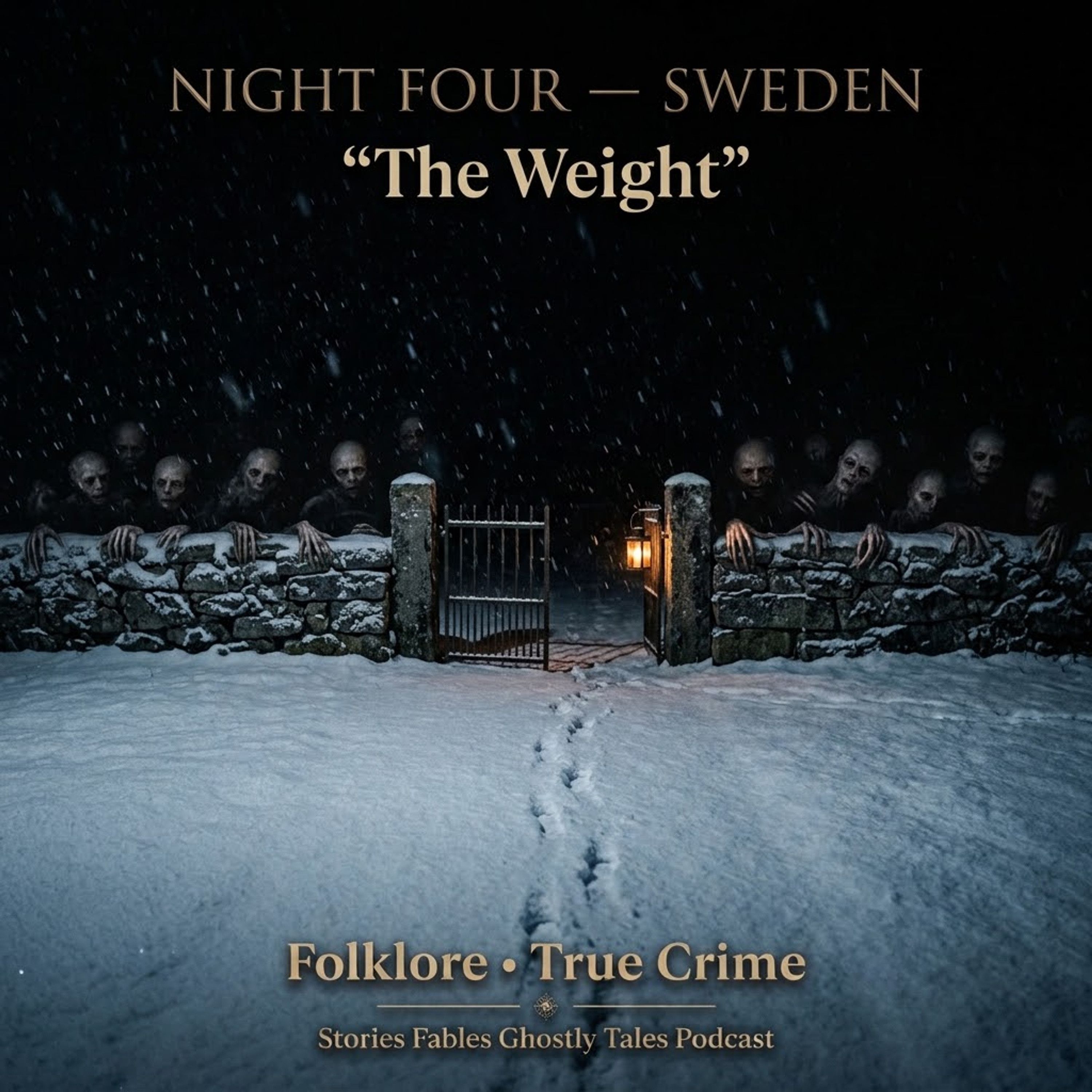 The Horse That Takes Children 19.09.2026 19นาทีThe last night — and the one I nearly didn't write...Mørketid ends tonight. Sweden.Fair warning on this one...This episode is about children. The bäckahästen drowns them and the Myling is one that was left in the woods to die, and while I've kept the detail out, it's there for the whole half-hour. If that's a hard subject for you, take this one at your own pace or skip it — the series works without it and I'd rather you were alright than completist.What I worked out while writing it...The bäckahästen is a white horse standing in a summer meadow. A child climbs on. Nothing happens, so a second climbs on behind them. And there's room. However many climb on, there is room, because the back gets longer — never suddenly, just, each time, space for one more. And a child being helped onto a horse isn't measuring the horse.Then it walks — walks, not gallops — into the water.Sweden has close to a hundred thousand lakes and children drowned in the summer in numbers we'd find unbearable now. And I don't think this story is a warning to children at all. It's far too appealing for that, and it clearly didn't work.It's for the parents. It's a story in which it wasn't the water and nobody looked up too late and nothing could have been done, because a beautiful white horse chose them.And the myling...A child left in the woods, which waits by the road and cries and asks to be carried to the churchyard so it can be buried properly. It gets heavier the closer you get to the gate — so the last two hundred yards are worse than the whole mile before them. If you make it, it rests. If you put it down, it kills you.I kept trying to work out why it gets heavier, and the answer isn't cruelty. It's that the nearer you get, the more it becomes a child, and the more the entire weight of what was done — and of a village that knew exactly what had happened and asked nothing — is on one person's back at once, in the dark, in sight of the wall.What the four nights turned out to be about...I didn't plan this and I only saw it writing the last Turn. Every one of these countries is dark for a third of the year. Every one had people living six miles from the next house with no light and no help.And what all four of them built wasn't a set of monsters. It was a set of instructions. Say the name out loud. Turn your coat inside out. Don't laugh at her. Watch what's in her hand. Don't put it down.Small, stubborn, faintly ridiculous things that a frightened person can actually do.That's what folklore is, I think. Not an explanation of the dark. A list of things to do while you're in it.Next week...Back to Japan True Crime. Back to the hundred candles. Back to the other kind of dark — the kind people do to each other.Thank you for four nights my librarians of the dark... 🕯️🕯️🕯️🕯️
 -
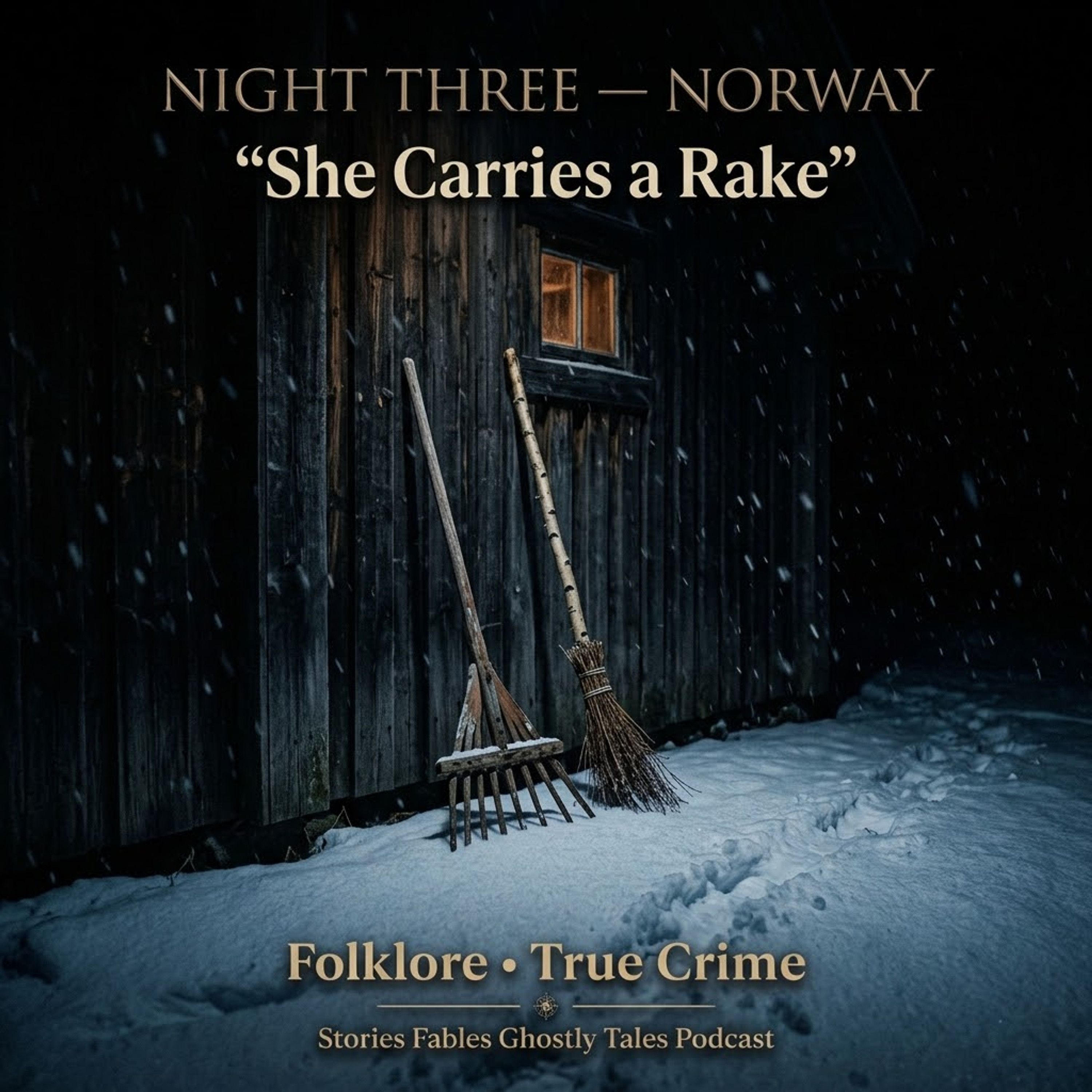 The Black Death Was An Old Woman 12.09.2026 18นาทีNight three of Mørketid is out. Norway.She Carries a Rake...A craft decision I want to explain...The draug should have been the finale. He's the better monster by any obvious measure — a drowned fisherman in oilskins with a mass of seaweed where his head should be, sailing half a boat against the wind, screaming out on the water where there is nobody. That's a closing image.I put him second, and gave the ending to an old woman walking up a path.Here's why. Everything in these four episodes has a countermeasure. Say the Näkki's name. Turn your coat inside out. Be polite to the Huldra and keep your luck. Stay off the water. Every horror in this series comes with something small and stubborn you can do about it — that's the whole argument the finale makes.Pesta has nothing. She isn't cruel and she isn't kind and she cannot be bargained with and nothing you did brought her. In 1349 the plague came into Bergen on a ship and Norway lost somewhere between half and two thirds of its people in about eighteen months, and because Norway is a country of valleys reachable by one path each, it didn't sweep. It walked. At the speed of a person, because it was carried by people.So you knew it was coming. You'd had word. It had been three valleys over, and then two, and then the next one.And what they made out of that is the most efficient piece of horror I've ever come across. She carries either a rake or a broom. A rake has gaps — things slip between the tines, and some of you live. A broom has none.And you can see her on the path, a long way down, for about an hour. And the only thing you are doing for that entire hour is trying to work out what's in her hand.If you want to go deeper...Theodor Kittelsen painted Pesta over and over in the 1890s and those images are what most Norwegians still picture. Worth looking up before you listen. It's the flatness of her face that does it — she isn't malicious. She's just arriving.Next Episode...Sweden. And that one was the hardest of the four to write, so fair warning.The candle stays lit. 🕯️🕯️🕯️🕯️🕯️🕯️
 -
 The Finnish Forest Hides People 05.09.2026 20นาทีNIGHT TWO — FINLANDNight two: Finland has a word for a person who isn't lost, isn't taken, and cannot be found — while standing right in front of you.Night two of Mørketid is out. Finland.MetsänpeittoIt translates as "the forest cover," and it describes something Finns believed happened often enough that the language needed a word for it.A person walks into the forest they've known their whole life. They don't come back. The village searches properly — small community, everyone knows the ground, they go out in a line and call.And the belief isn't that the person wandered off. The belief is that they are still there. Six feet away. Possibly standing directly in front of the search line. And the forest has put something over them.Here's the part I had to stop reading and walk away from: in the collected accounts, from people who said it had happened to them, the person under the cover is awake the whole time. They can hear the search party. Some of them describe watching people walk past. They can't be seen, can't be heard, and can't make their legs carry them toward the voices.No creature. Nobody arrives. Nothing hurts you. You are simply removed from the category of things that can be found.And then there's the cure....Turn your coat inside out. Put your shirt on backwards. Take your shoes off and swap them onto the wrong feet.That's it. That was the remedy, believed all across Finland and into Karelia and Estonia. And it makes an awful sense — if the forest has taken the shape of you and put a lid over it, stop being that shape.But picture actually doing it. A grown adult in failing light who has been shouting for three hours and has stopped shouting, sitting down on the pine needles and very carefully swapping their shoes over, because it is the only thing left in the world that they can try.That's the cover art for this episode, by the way. Just the boots.The other half...The Lemminkäinen section is the saddest thing I've written for this show. His mother rakes the black river of the underworld until she has all eight pieces of him, sews him back together, wakes him — and he stretches and says he's been asleep a long time and slept well.He never knew. She never told him.Next Episode...Norway. An old woman walking up a valley path carrying either a rake or a broom, and everything depends on which.The candle stays lit. 🕯️🕯️🕯️🕯️🕯️
 -
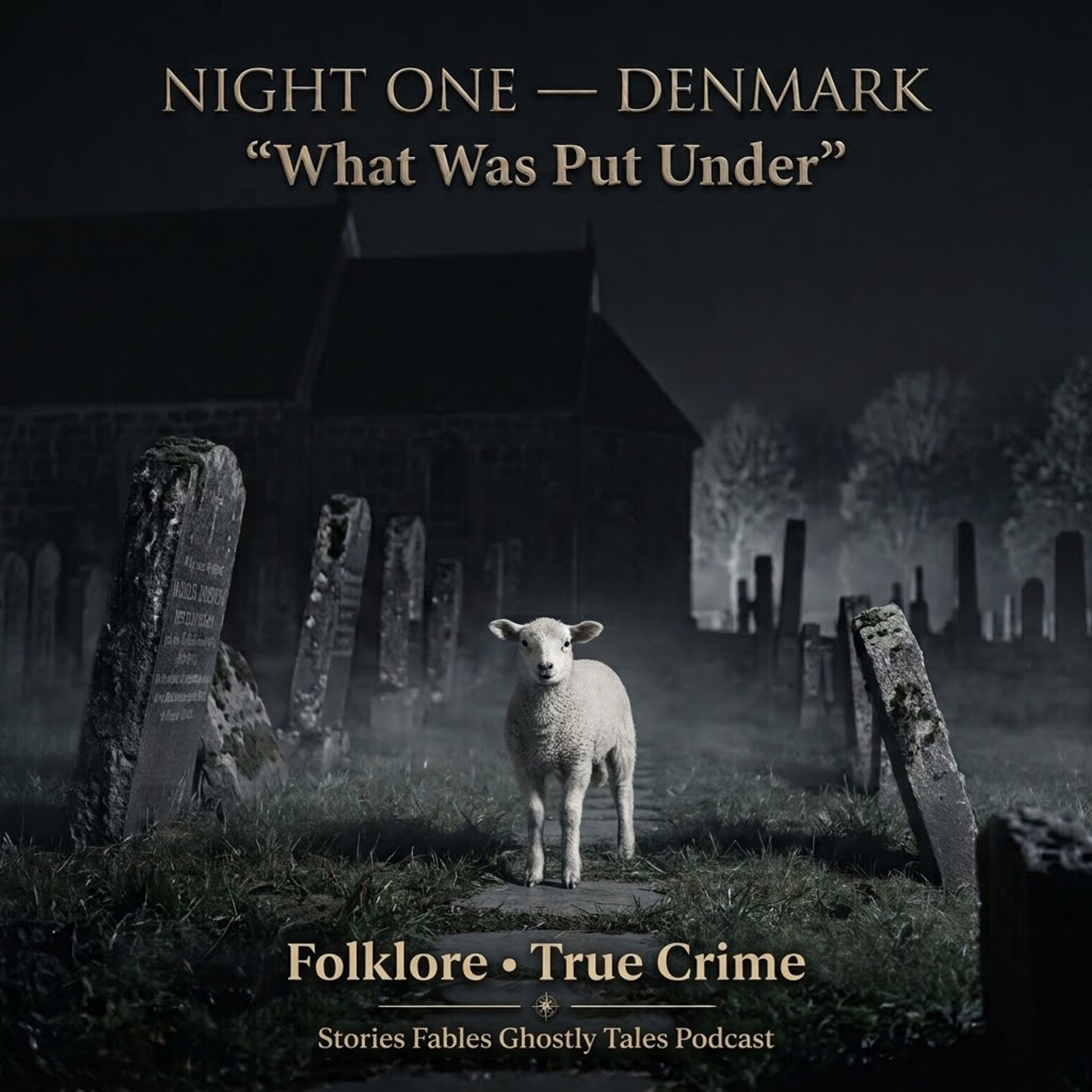 Denmark's Sleep Paralysis Demon 29.08.2026 20นาทีFour nights of Nordic folklore. Night one: Denmark buried things alive under its churches — and some of them are still working.
 -
 The Kobe Cannibal Got A Food Column 22.08.2026 43นาทีJapanese true crime and Japanese folklore. In 1981 a student in Paris killed and ate his classmate. He was never imprisoned. Japan gave him a food column.
 -
 Three Waters, Dark Tides: Two Myths, One Truth (Ep01) 09.08.2026 36นาทีWhat happens when folklore becomes too terrible to be fiction? Can you listen past the performance and find the true forensic history?Welcome back to Stories Fables Ghostly Tales. In tonight’s interactive special, the Tale Teller presents an impossible challenge: "Three Waters, Dark Tides: Two Myths, One Truth."We have gathered three haunting accounts of Japan's relationship with the dark, cold element of water. One is a factual, historical tragedy; the other two are timeless legends. Your mission is to determine which of these deep, dark tides actually swept across our reality. Do not let the mythology fool you. Lock in your guess internally. Story 1: The Riverman’s Debt. We travel to the muddy riverbanks of the Edo period to meet the Kappa, the bizarre, polite river imp possessing a lethal obsession with the human shiridama. Story 2: The Bailing Phantoms. We step onto a 1930s fishing trawler in the open ocean to face the Funayūrei, ghost ships manned by the victims of maritime tragedy, draped in white funeral shrouds, demanding empty dippers to flood passing vessels. Story 3: The Saint of Shinjuku. We travel to the crumbling ruins of post-war Tokyo to confront the terrifying modern legend of the sanatorium run by "Sensei," also known as "The Saint," who was whispered to perform a chilling "mercy ritual" in the nursery known as "Cold Storage." Keep your tea hot, keep your porch lights burning against the rising fog, and remember... sometimes the Saint is just a monster with a good alibi. Until next time... pleasant dreams... if you can sleep at all.Did you guess the story...correctly? I am your Tale Teller...Have a wonderful night... 💜💜💜
 -
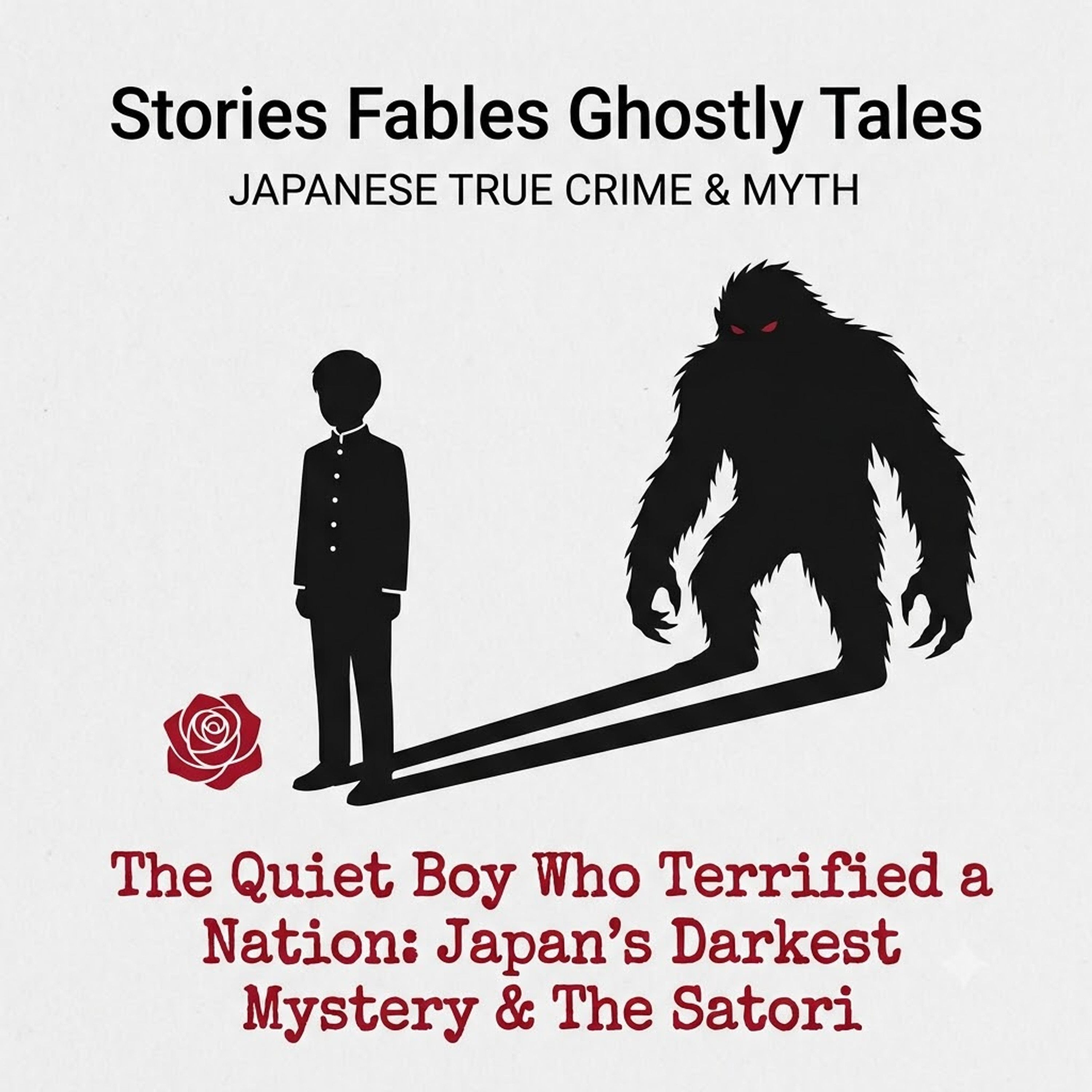 The Quiet Boy Who Terrified a Nation: Japan's Darkest Mystery & The Satori 02.08.2026 37นาทีTurn the lights down low...It is time for Tall Tales and True Crime...In this episode of Stories Fables Ghostly Tales, we explore one of the most widely discussed and psychologically complex cases in modern Japan: The 1997 Kobe Case, historically known across the nation as the Sakakibara Investigation.In the spring of 1997, the peaceful neighbourhood of Suma Ward in Kobe, Japan was gripped by sudden fear following a series of alarming suburban incidents. For three long months, an entire community lived in heightened state of caution while detectives worked tirelessly to track down a phantom subject who communicated through cryptic notes sent to local newspapers. When law enforcement finally identified the individual responsible, the revelations reshaped Japan's legal framework and societal views on youth mental health forever.In the second half, we step away from modern investigative archives and journey into the deep mountain forests of ancient Japan to explore the legend of the Satori —a famous Yōkai from Edo-period folklore known for its uncanny ability to read human thoughts in real time and unmask hidden intentions. We weave these two worlds together, contrasting the mind-reading spirit of mythology against the real-world psychological mystery of silent warnings and unexamined shadows. Turn down the lights...Lock your doors...Stay Safe...Thank you for listening!💜✨💜✨💜✨💜✨💜✨
 -
 27 Pieces: The Unsolved Horror of Inokashira Park - True Crime Japan 26.07.2026 33นาทีOn the morning of April 23, 1994, a park cleaner in Inokashira Park opened a utility trash container expecting ordinary market waste, only to find a severed human foot inside a translucent blue plastic bag. Within hours, police recovered twenty-seven separate body parts distributed across twenty-seven public trash bins—each piece meticulously cut to an exact length of twenty centimetres, drained completely of blood, and scrubbed clean.Despite deploying over 110,000 police officers, investigating countless leads, and uncovering forensic perfection that defied normal criminal behaviour, two-thirds of the victim's body—including his head and internal organs—were never found. The case eventually hit the statute of limitations, leaving investigators staring into an absolute void.In this episode, we explore the chilling Inokashira Park dismemberment and pair it with the ancient Japanese myth of the Noppera-bō (The Faceless Phantom)—examining how a human predator wiped away a man's face, identity, and record from history, leaving behind a blank, featureless slate.Unique Facts About This Case The killer cut every single body part to an exact length of 20 centimeters specifically because that was the precise width of the trash can slots in the park. The remains were so thoroughly drained of blood and treated that investigators found no bloodstains inside the plastic bags or the bins where they were left. To this day, two-thirds of the victim's body—including his face, skull, and internal organs—have never been recovered. Thank you for listening legends...Stay curious...Stay a little scared...And whatever you do... if you pass a stranger in the dark tonight... don't look too closely at their face.Have a great week ahead legends! 💀
 -
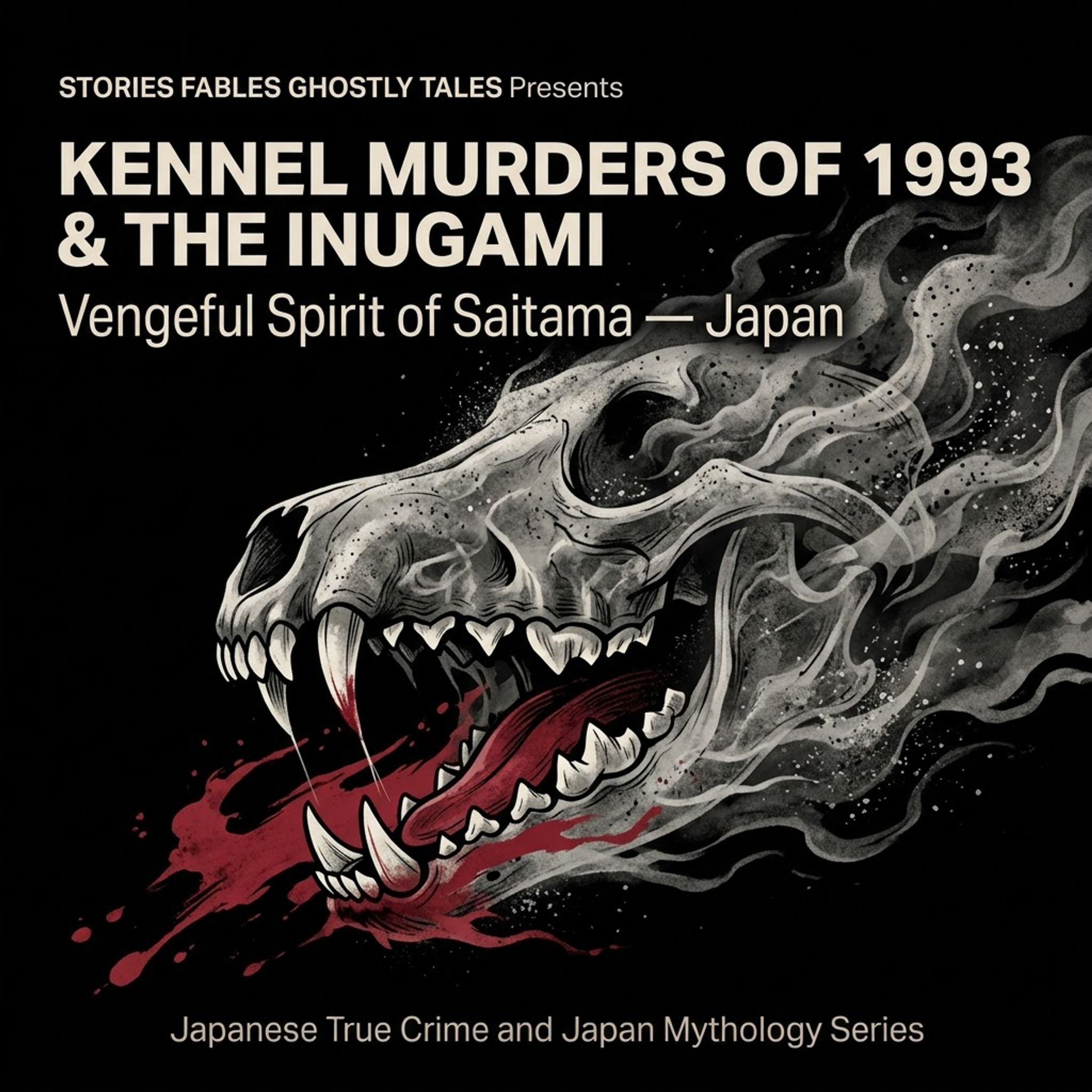 Japanese Kennel Killers - Turning Their Enemies to Dust (1993) 19.07.2026 30นาที⚠ CONTENT WARNING: This episode contains extensive, highly detailed accounts of real-world serial murder, financial exploitation, the complete thermal destruction of human remains, and themes of animal cruelty. Listener discretion is absolutely mandatory.Welcome back to Stories Fables Ghostly Tales. Tonight, we present The Art of Transparency: The Saitama Dog Lover Murders — Japan, 1993.Deep within the mountain passes of Saitama Prefecture, a remote wooden hut once hid a factory of absolute non-existence. We pull back the friendly, commercial facade of a luxury pet breeding kennel to dissect a terrifying pattern of cold-blooded, economically driven slaughter.🎧 The Case: Making Men InvisibleIn 1993, the charismatic operator of the Africa Kennel, Gen Sekine and his cold, analytical partner, Hiroko Kazama , found themselves drowning in millions of yen of bubble-era debt. Their solution was chillingly simple: make their creditors and business rivals completely "transparent." Utilizing a lethal veterinary compound mixed into polite health tonics, they killed their victims in minutes, dismembered the remains, incinerated the tissue to powder, and hammered the bones to dust before casting them into mountain rivers. They believed that without a body, there was no crime—until forensic teams literally began sifting the riverbeds for tooth shards.🐕 The Myth: The Volatile Fury of the HoundThe cold, predatory architecture of this modern kennel crime perfectly mirrors a forbidden, ancient folk sorcery from Japan's rural past: the invocation of the Inugami . Born from an act of unspeakable human cruelty—starving a hound and severing its head at the absolute peak of its fury—this invisible dog-spirit was bound to households to destroy competitors and generate immense, illicit wealth. But the folklore carries a terrifying trap. The Inugami obeys only out of constraint, and if the master's willpower slips or their greed becomes too bloated, the curse turns entirely inward, consuming the family until they descend into madness.Did Gen Sekine truly master the art of non-existence, or did the ancient malice of the kennel jar simply turn around to bite back?Hit play, sit back, and get comfortable.And remember... if you see a ripple of heat moving through a freezing fog... don't assume you're walking alone.Stay curious.Stay a little scared.Goodnight. 💀
 -
 The Reeds of Twilight: The North Kanto Serial Murders Japan 12.07.2026 25นาที⚠ CONTENT WARNING: This episode contains detailed descriptions of a real-world serial crime involving children, systemic judicial failure, and heavy themes of unresolved communal grief. It also contains an extended discussion of traditional Japanese supernatural folklore. Listener discretion is strongly advised.Welcome back to Stories Fables Ghostly Tales. Tonight, we present The Reeds of Twilight: The North Kanto Serial Child Murders — Japan, 1979–1996.Along the gravel bars and misty lowlands of the Watarase River valley, there is a weight that standard criminology cannot seem to lift. We step into the dense river fog of the North Kanto plain to dissect a harrowing cross-prefectural mystery, a devastating failure of justice, and the ancient folklore that steps in when the living choose silence.🎧 The Case: The Wolf in the ValleyBetween 1979 and 1996, within a tiny, suffocating radius of just twenty kilometres along this river valley, five young girls vanished. Hunted from the neon distraction of local pachinko parlours and quiet neighbourhood parks, their stories were ultimately buried under the paperwork of a false conviction. For seventeen years, the state kept an innocent man behind bars to protect institutional face—leaving the real predator to walk the river roads completely free.🌾 The Myth: The Unyielding Weight of the MotherWhen a catastrophic loss is systematically ignored by the world of the living, the old stories say that energy curdles. It pools in the low boundaries where land meets water. Enter the Ubume—the mourning mother spirit of Japanese folklore. She stands in the high reeds at twilight, begging passers-by to hold her swaddled bundle. But what feels like a child quickly turns to solid iron. It is the literal, crushing mass of unresolved grief, anchoring the unprotected to the mud.From modern logistics truck drivers experiencing sudden, atmospheric engine stalls on the Route 51 bridge to elderly fishermen encountering white silhouettes in the pre-dawn mist, we ask: Has the Watarase River valley generated its own manifestation of forgotten justice?Hit play, sit back, and get comfortable.And remember... if the air near the river turns to stone... don't assume you're walking alone.Stay curious.Stay a little scared.Goodnight. 💀
 -
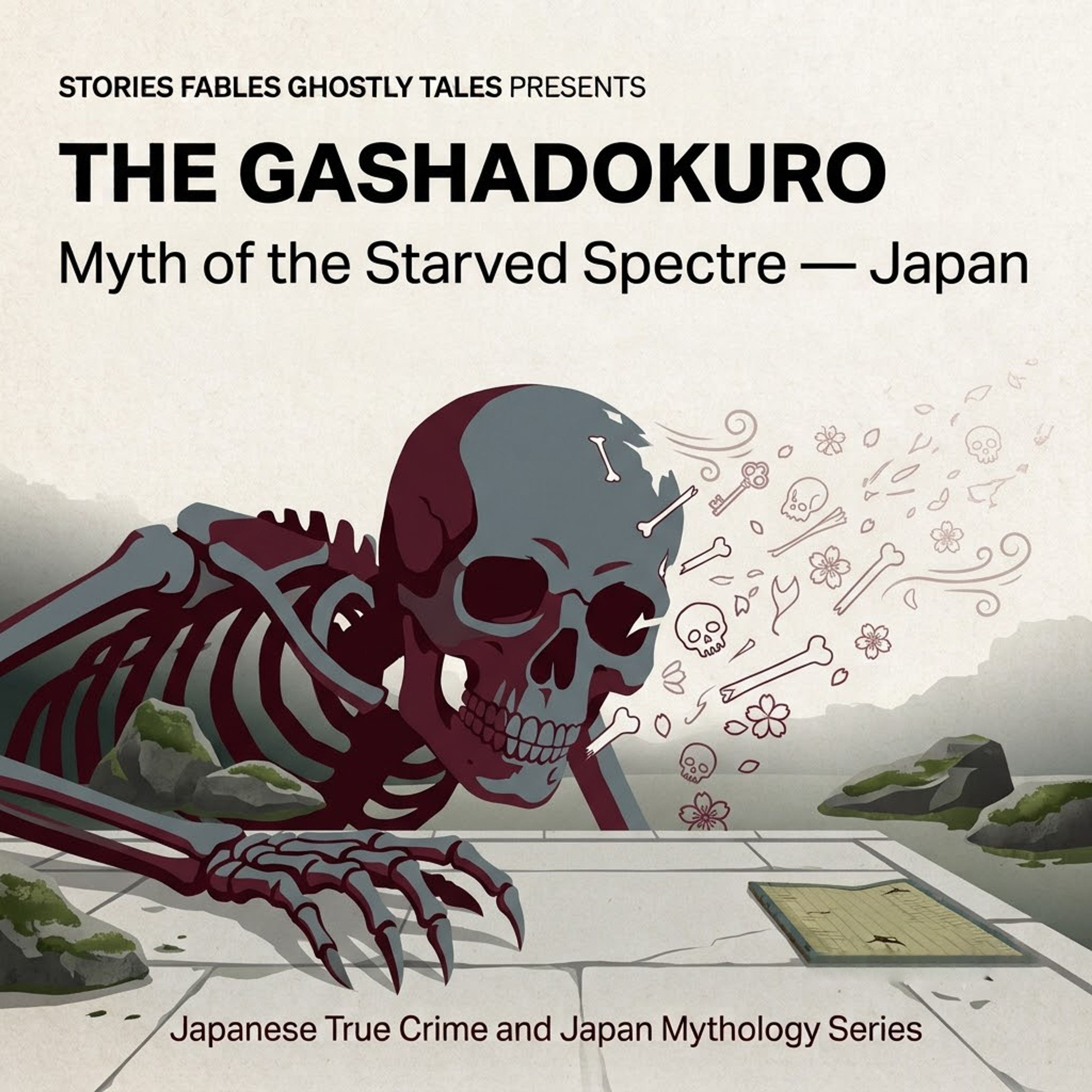 30 People. 90 Minutes. One Village. Japan's Tsuyama Massacre & The Gashadokuro 05.07.2026 33นาทีG'day Tale Tellers and fans of Japanese True Crime! 👋Thank you to my Patreon Supporters! Support me here: https://www.patreon.com/SFGTNew episode is live right now — and this one hit differently while I was writing it.Tonight we're going to a mountain village in Japan called Kaio [KAH-ee-oh].On the night of the 20th of May, 1938, a twenty-one-year-old man named Mutsuo Toi [MOOT-soo-oh TOH-ee] walked through that village with a rifle, two shotguns, and a sword...He had a torch strapped to his head.So that the people he was coming for could see his face.In ninety minutes, he killed thirty people. Then he walked to a hillside at the edge of the village, sat down, and cut his own throat.He left a note.The note explained everything...And that — more than anything else — is what makes this case so deeply unsettling. Because Mutsuo Toi wasn't chaotic. He wasn't random. He had a list, and the village that had known him his entire life was on it.Todays episode of crime and myth covers the following:🔍 The full true crime story — a tuberculosis diagnosis, social exile, a diary that tracked his descent in chilling detail, and ninety minutes that ended thirty lives🏚️ What happened to Kaio after that night — the emptying, the silence, the overgrown cemetery that almost nobody visits anymore👁️ The witness accounts from the mountain roads near the site — the ones that don't have easy explanations💀 The Gashadokuro [GAH-shah-doh-KOO-roh] — the ancient Japanese creature born specifically from mass death and the silence that follows it — and why this case fits that mythology in a way that genuinely unsettled me while writing itThe first part of the episode is free to listen to below — you'll hear the cold open and Act One, which sets the scene and takes you into the world Mutsuo Toi was born into.One last thing before you listen...The old stories say the Gashadokuro is born not just from the dead, but from the silence afterward. From the failure of the living to acknowledge what happened.Kaio has been silent for a long time.Stay curious. Stay a little scared.— THE TALE TELLERSOURCES & FURTHER READING:Tsuyama Massacre — Okayama Prefecture historical records (1938).Toi, M. — Personal diary and farewell note, examined in Japanese criminology literature.Kwaidan (Hearn, L., 1904) — Classic English-language source on Japanese folklore including Gashadokuro traditions.Foster, M. — The Book of Yokai (2015) — Comprehensive academic study of Japanese supernatural creatures.Reider, N. — Japanese Demon Lore (2010) — Gashadokuro origin traditions.Okayama local history archives — Kaio village records (partial).
 -
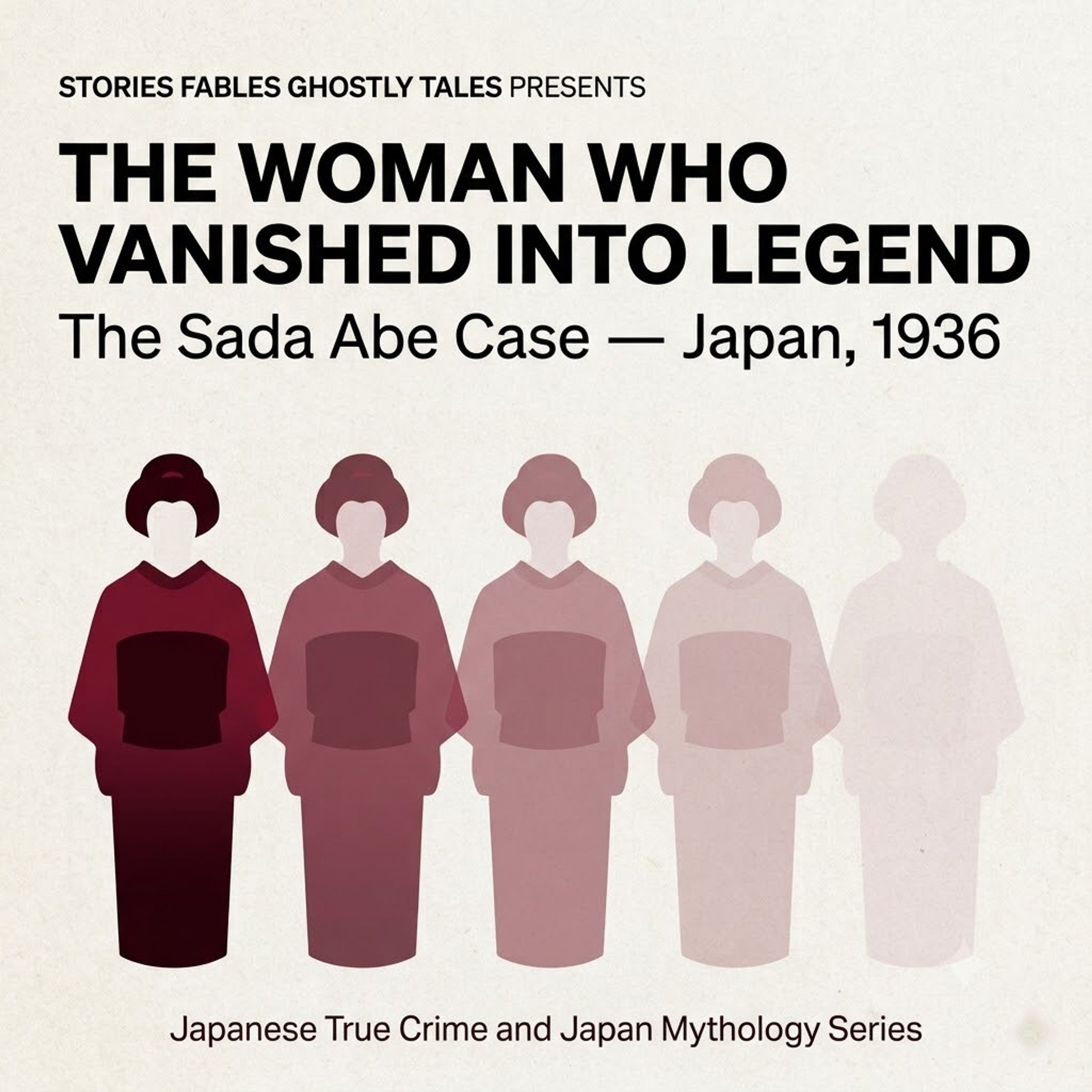 Sada Abe: Japan's Most Infamous Murder & The Ancient Spirit That Never Left | True Crime Japan 28.06.2026 41นาทีG'day everyone! And Happy Weekend! 👋New episode is UP — and honestly? This one has been sitting with me for weeks.This episode we're covering the Sada Abe case. If you're not familiar — in May 1936, a woman named Sada Abe walked out of a Tokyo inn, through the city, bought new clothes, ate meals, read the newspaper coverage of her own crime... and didn't run. Not really.What she left behind in that room, and what she took with her, made her one of the most infamous figures in Japanese history. What happened to her after she was released from prison — where she went, how she lived, whether she's even still alive — nobody knows. She just... stopped existing in any record.No death certificate. No grave. No confirmed sighting after 1970.This episode goes deep on:🔍 The full true crime story — Pre-war Tokyo, the affair, the investigation, the trial!🗾 Why Japanese society made her into a legend instead of just a criminal!👁️ The Jorōgumo — the ancient spider spirit of Japanese folklore, and why it fits this case in a way that genuinely unsettled me while writing it📍 The unexplained sightings. The waterfall. The old woman nobody could account for.The first part of the episode is free to listen to below — you'll get the cold open and Act One, which covers Sada's background and the world that made her.As always — stay curious, stay a little scared.— The Tale TellerSOURCES & FURTHER READING:Sato, M. — investigative reporting on Sada Abe post-release (1970, various Japanese publications).Oshima, N. — In the Realm of the Senses (1976) — cinematic treatment; note: legally restricted in Japan.Pflugfelder, G. — Cartographies of Desire (1999) — academic context on prewar Japanese sexuality.Reider, N. — Japanese Demon Lore (2010) — Jorōgumo mythology in depth.Original police interrogation transcripts (partial) — held at National Diet Library, Tokyo.#StoriesFablesGhostlyTales #TrueCrime #JapaneseTrueCrime #SadaAbe #JapaneseHistory #TrueCrimePodcast #Horror #JapaneseHorror #Patreon
 -
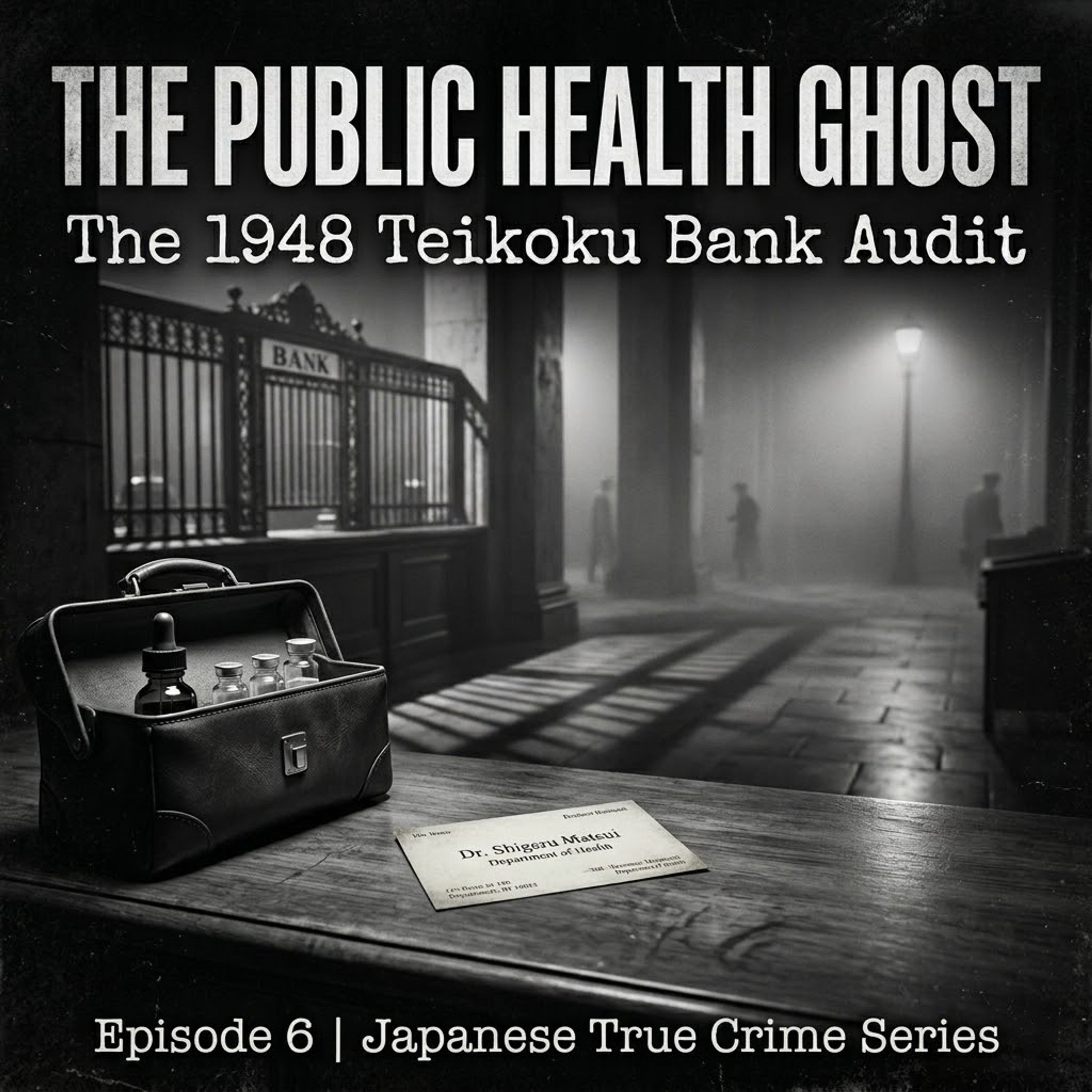 EP06 | The Public Health Ghost: The 1948 Teikoku Bank Incident 21.06.2026 50นาทีWelcome back to the archive, inner circle...Deep Dive: The Sovereign Paralysis of the 1948 Teikoku Bank IncidentWhen we look back at the forensics of post-war true crime, few cases carry the chilling, systemic precision of the Teikoku Bank Incident (Imperial Bank Incident) of January 26, 1948. It stands not just as a cold-blooded mass murder, but as a terrifying demonstration of how structural authority can be weaponized against human psychological systems.To truly understand how a lone individual walked into a prominent Tokyo financial institution and convinced sixteen people to voluntarily swallow a lethal chemical agent, we have to look closely at the unique environmental stasis of the Allied Occupation.Inside the Case File Audit The Spatial Shadow & The Pre-Tests: We reconstruct the raw reality of a devastated city where an official armband was the line between survival and erasure. We expose the phantom doctor's two real-world "dry runs" at separate banking branches where he perfected his behavioral telemetry before striking. Eleven Minutes on the Stone Floor: A clinical, second-by-second breakdown of the choreography inside the Shiunamachi branch. We analyse the dark chemistry of acetone cyanohydrin—a military-grade toxin masterfully stabilized to delay its lethal onset for exactly sixty seconds so an entire room would swallow it synchronously. The Shadow Unit & The Geopolitical Stonewall: The forensic trail that led detectives straight to the remnants of Unit 731—the Imperial Army's covert biological warfare division. We untangle the high-stakes deal cut by the American GHQ to aggressively bury the investigation in exchange for classified human experimentation data. The Painter’s Purgatory: The controversial frame-up of classical artist Sadamichi Hiraishi. We dissect a confession extracted under forty-four days of duress, and the historic 32-year death row paradox where thirty-three consecutive Ministers of Justice refused to sign his execution warrant because they knew the state was protecting a ghost. A Taste of today's story...The room fell into absolute silence as the killer pulled out a silver pocket watch, tracking the sixty-second countdown. But Phase Two would never be delivered.The fluid was a masterfully stabilized solute of potassium cyanide, engineered with an industrial acetone base designed to mask the immediate scent of bitter almonds and delay cellular suffocation just long enough to ensure everyone swallowed their dose before the first symptom manifested. Within seconds, the line disintegrated into a claustrophobic scene of horror as sixteen bodies collapsed onto the cold linoleum, their central nervous systems disconnecting from their lungs.The killer stood completely motionless, watching the room with detached efficiency until the last movements ceased.When absolute silence returned, he walked around the counter partition. Millions of yen in wrapped banknotes sat in plain view inside the open cash cages. Yet, behaving like a meticulous corporate auditor rather than a desperate thief, the killer bypassed the massive wealth. He selected a modest packet of exactly 164,000 yen in loose bills and a small stack of daily clearing checks.He packed his porcelain cups, his vials, and his pipettes back into his worn leather medical satchel, adjusted his government armband, and stepped back out into the grey, smoke-choked afternoon fog. Eleven minutes after entering, the public health ghost had vanished, leaving behind a profound forensic mystery that would echo through international forensics for decades to come.I hope you enjoy this episode legends, and it's good to be finally back from being sick for so long. Still not 100% but I'm almost there!! Thank you for the love and support! 💜💜💜💜
 -
 The Locked Room & The Harbour Torso — Malta’s Darkest Archival Voids 07.06.2026 39นาทีWelcome back to the archive. In this special dual transmission, we turn our forensic radar toward a tiny, sun-bleached rock sitting in the literal centre of the Mediterranean Sea: the island of Malta.Built entirely out of soft, honey-coloured Globigerina limestone, Malta's hyper-dense historic cities are marvels of defensive architecture. In a space so profoundly compressed, where secrets are supposed to be impossible to keep, two completely different killers attempted to use the physical environment to construct the perfect cryptographic mystery.This week, we open two distinct historical drawers to execute a parallel forensic audit, proving that no matter how deep the water or how thick the limestone walls, the material signature of a crime can never be completely erased from the ledger.The Case Files Act I: The Marsamxett Harbor Torso Murder (1955) We descend into the post-WWII soot, coal grime, and severe economic desperation of the Valletta dockyards. When local fishermen haul up waterlogged burlap sacks from the silent depths of Marsamxett Harbour, they discover the cleanly dismembered torso of a missing dockyard clerk. The head and hands are entirely missing—a calculated tactical void designed to strip the victim of his biological identity. We trace the parallel micro-grooves of an industrial bone saw, a rare maritime double-hitch knot, and a single, crumpled scrap of local newspaper caught in a printing-press registration error that collapsed the dragnet directly onto a brutal domestic conspiracy.WHO was killed, and WHO killed them?? Act II: The Strait Street Locked-Room Inquest (1843) We slide the chronological grid back more than a century, climbing the steep stone steps into the dark, elite world of faded aristocracy along the infamous, vice-ridden corridor of Strada Stretta. A wealthy noblewoman is found smothered in her grand four-poster bed. The room is an airtight box: windows barred from within, the heavy oak door locked from the inside, and the key still resting firmly in the interior cylinder. Across the room, her private safe sits completely gutted. This wasn't a supernatural evasion—it was a masterful, low-fidelity mechanical deception. We dissect the material relics that unravelled the plot: an English gold pocket watch intentionally fractured to freeze the time at 3:14 AM, microscopic traces of white beeswax left deep inside a lock, and a simple silk thread trick that shattered an ironclad alibi.How....on earth did the key to the lock....remain stuck on the inside of the door opposed to the outside? In This Episode, We Explore: How hyper-compressed living spaces dictate the logistics of criminal concealment. The mechanical signatures left by industrial tools on bone structure. The physics of the classic "silk thread" locked-room exploit. How microscopic anomalies in everyday objects—from ink alignment to fractured brass gears—become permanent investigative anchors. Thank you so much for your support as always legend and have a FANTASTIC week ahead mates!!! 💜💜💜💜 I hope you enjoyed this little deviation from the Japanese True Crime episodes!!— The Tale Teller
 -
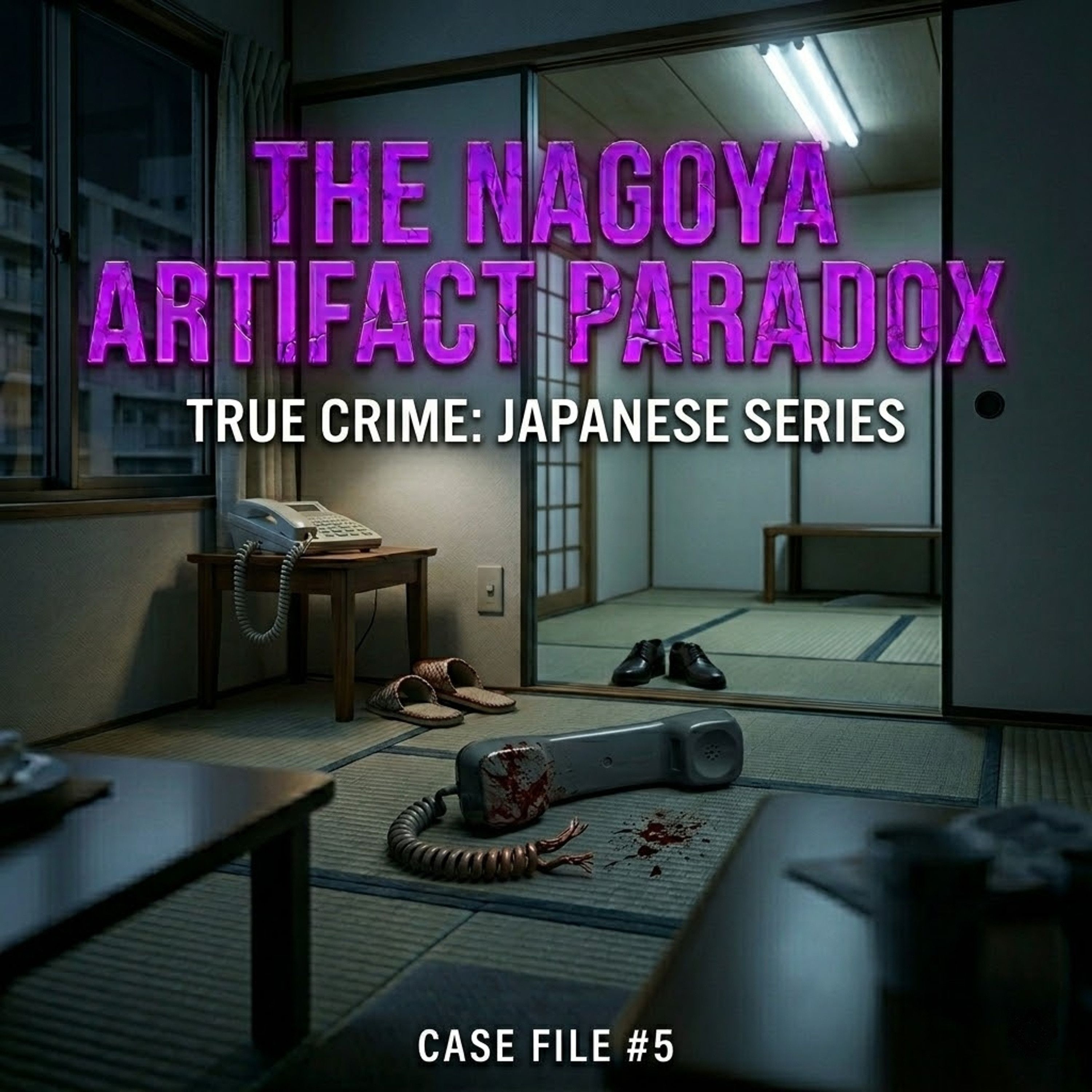 The Womb That Held a Telephone Handset | Japanese True Crime Series 24.05.2026 42นาทีG'day Tea Totalling Guardians 🍵🍵🍵🍵🍵On a cold afternoon in the spring of 1988, a quiet, uniform residential grid in Nagoya, Japan, became the theater for an act of absolute absurdity and horror. A heavily pregnant young mother is strangled from behind in her own living room. What followed was a primitive surgical extraction executed with a common consumer box cutter.But this was not a foetal abduction...The predator didn't steal the child. The newborn boy was left naked and crying on the cold tatami mats, while a monster treated the mother’s body as a symbolic vault—packed with a severed charcoal-grey telephone handset and a mysterious Mickey Mouse keyring... what on earth!?Every piece of physical material at the scene explicitly cancels out the logic of the action before it: If the objective was foetal theft, you do not leave the baby behind to freeze. If the objective was pure sadistic thrill-killing, you do not execute an internal extraction with the meticulous, non-injurious precision of an expert surgeon. If the objective was an untraceable escape, you do not transport a mass-produced consumer relic into the absolute center of a crime scene. A massive regional dragnet checking over 12,500 local women yielded nothing but a permanent void. Then, on March 24, 2003, the statute of limitations ran out, granting the perpetrator permanent, total legal immunity under old Japanese law.The state's legal authority has dissolved, but the archive remembers...and we will explore this case tonight, to find out what took place...and think on what on earth could have caused / lead to it taking place.Adjust your headphones. Check the seal on your own door. Let us turn the pages back to 1988 and stare into a conceptual void that offers no trajectory for resolution.Thank you legends as always!!!THE TALETELLER 💜💜💜💜Case Evidence:
 -
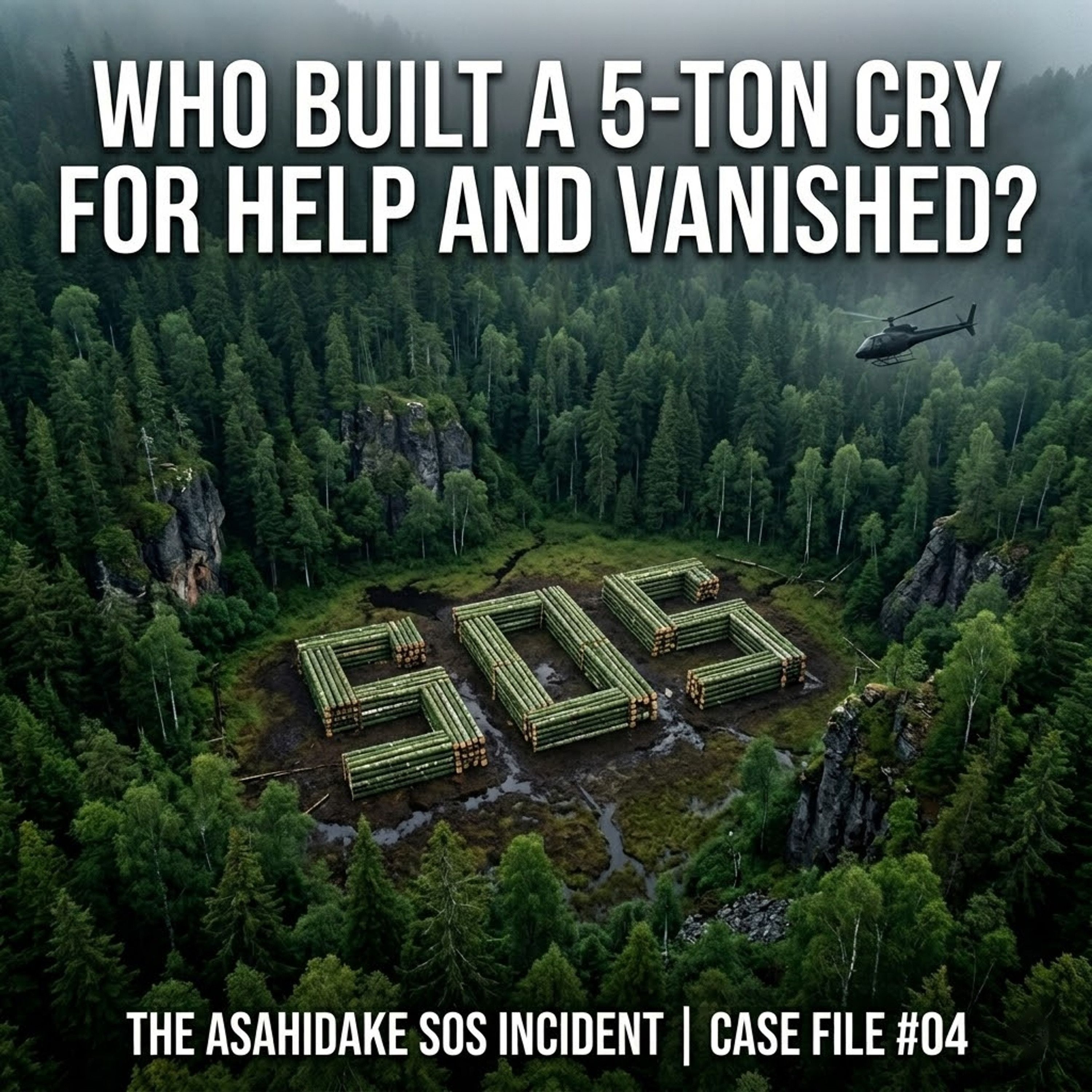 The Unsolved Asahidake SOS Incident: Mystery of the Terror Tape | Japan True Crime 17.05.2026 59นาทีCase File #04: The SOS Tape Puzzle | The Asahidake Wilderness Anomaly 🔓Welcome back to the archives, Guardians.The vault is officially open for Case File #05, and this week we are leaving behind the concrete lanes and digital footprints of metropolitan Tokyo. Our destination is the northern wilderness of Hokkaido, specifically the jagged, volcanic heights of Mount Asahi.This file documents an anomalous event from the summer of 1989. While searching for two missing hikers, a regional police helicopter spotted a massive, perfectly rendered 19-meter SOS signal constructed from heavy birch logs in a remote mountain gorge. The missing men were found safe kilometres away, completely unaware of the sign. When ground teams hacked their way into the clearing to investigate, they uncovered an impossible forensic matrix: human remains, a mould-coated backpack from 1984, and a battery-corroded cassette recorder containing a frantic, terrifying scream for help.This isn’t a standard cold case. It is a clinical exploration of a geographic trap, a multi-ton structural paradox, and an audio artifact that defied the foundational rules of forensic identification.What is in Store for you legends tonight...Inside this high-fidelity audio restoration, we dismantle the entire investigative file piece by piece. Here is what is waiting for you in this archive deep dive:The Architecture of "Safe Rock": A deep look into the severe topography of Daisetsuzan National Park and the deadly optical illusion of an upper false boulder that funnelled hikers away from safety and into a silent, signal-swallowing dead zone. The Five-Metric-Ton Paradox: A mechanical and metabolic analysis of the log structure. We break down the sheer physics of moving, stripping, and triple-stacking over fifty mature birch trunks—a feat that flatly contradicts the muscular atrophy of a starving human being. The Restored Acoustic Artifact: The journey of the Sapporo Forensic Science Laboratory as they baked a degraded magnetic ribbon to recover the raw, real-time audio of a terminal survival struggle. The Voice Paradox: The chilling moment the victim’s own mother and father listened to the frantic audio tape and flatly denied that the screaming voice belonged to their son. The Anthropological Conflict: The administrative chaos that ensued when skeletal landmark profiling identified the remains as a biological female, and the 1990 DNA chromosome amplification that finally established the genetic ground truth. The Logistics of Isolation: The resolution of the mystery, revealing how regional forestry experts mapped seasonal avalanche data to explain the timber harvest, and how the psychology of "hysterical strength" rewrote the survival timeline. Thank you deeply to every single one of you standing watch over the archives, keeping our high-fidelity equipment running, and making these exhaustive historical deep dives possible week after week. Your support keeps these forgotten cases alive!!!Forensic Reference Section: Case File SchematicsThe following ASCII mappings and structural diagrams have been extracted from the official Hokkaido regional police report and are consolidated here for visual reference while listening to the narrative.Figure 1: The Topography Grid (Summit to Gorge Funnel)Figure 2: The 1984 Flight Sequence & Disorientation PathFigure 3: Aerial Reconnaissance Grid (Clearing Discovery)Figure 4: The 19-Meter Layout ParametersFigure 5: Tree Root Excavation LayoutFigure 6: Lab Spectrograph Visualizer (Audio Core Analysis)Figure 7: Amelogenin Genetic Spectrum (1990 Core Core Sample)Figure 8: Regional Remediation & Warning Infrastructure
 -
 Mother’s Day Special: From "Mother Bird" Comedy to Toxic Obsession | Jack Benny & Suspense 10.05.2026 1ชม. 1นาทีMOTHERS DAY SPECIAL!!!Good evening Occult Librarians! In celebration of Mother’s Day, we are diving into the radio archives for a special double-feature that explores the many faces of motherhood—from the comedic vanity of a "mother bird" to the chilling obsession of a mother who refuses to let go!!The Jack Benny Program: "Mother's Day Show" (May 8, 1938)Our first program takes us to May 8, 1938, for the Jack Benny Program. In this holiday broadcast, Jack jokingly insists that he is the maternal leader of his radio family, assuming the role of the "mother bird" who cares for the well-being and salaries of his cast. While the episode features the sharp banter and comedic timing Jack was known for—including topical jokes about the Kentucky Derby and his signature Jell-O sponsorship—it is also a difficult historical document.This broadcast offers a stark look at how far we’ve come from a societal perspective, reminding us of the progress made in our media standards while reflecting on the complex history that brought us here. I present this unedited to acknowledge that history, even as we explore the holiday spirit and the cast's legendary chemistry.Neeext Up...Suspense: "Don’t Call Me Mother" (January 4, 1959)Following the lighthearted comedy of Benny, we move into the darkness of psychological horror with the January 4, 1959, episode of Suspense titled "Don’t Call Me Mother". Starring Agnes Moorehead, this thriller explores a mother’s toxic, murderous devotion to her adult son, Larry.To keep her son from marrying his fiancée, Roberta, Moorehead's character, Lori, utilizes every manipulative tool at her disposal: She fakes a life-threatening heart condition to guilt her son into staying by her side. She lies to her son, claiming his father was "hopelessly insane" in an asylum to discourage him from ever having children of his own. She successfully convinces her son that his fiancée is an evil woman, eventually manipulating him into murdering her by staging a car accident off a 100-foot cliff. The episode ends on a terrifying note, with Lori claiming that she and her son were the only "lovely couple" people ever talked about.Two very different mothers. Two very different eras of radio. We begin with the comedy of the "mother bird," followed by the terror of a mother’s obsession.Thank you SO much for your support, your kindness, and supporting me enough to get access to the RX12 software that lets me editing this and repair it in the way that I do. This tool is UBER powerful, and let me really showcase what it was like to hear it LIVE on air. Have a wonderful SPECTACULAR Mothers Day legends!! 🥰🥰🥰🥰
 -
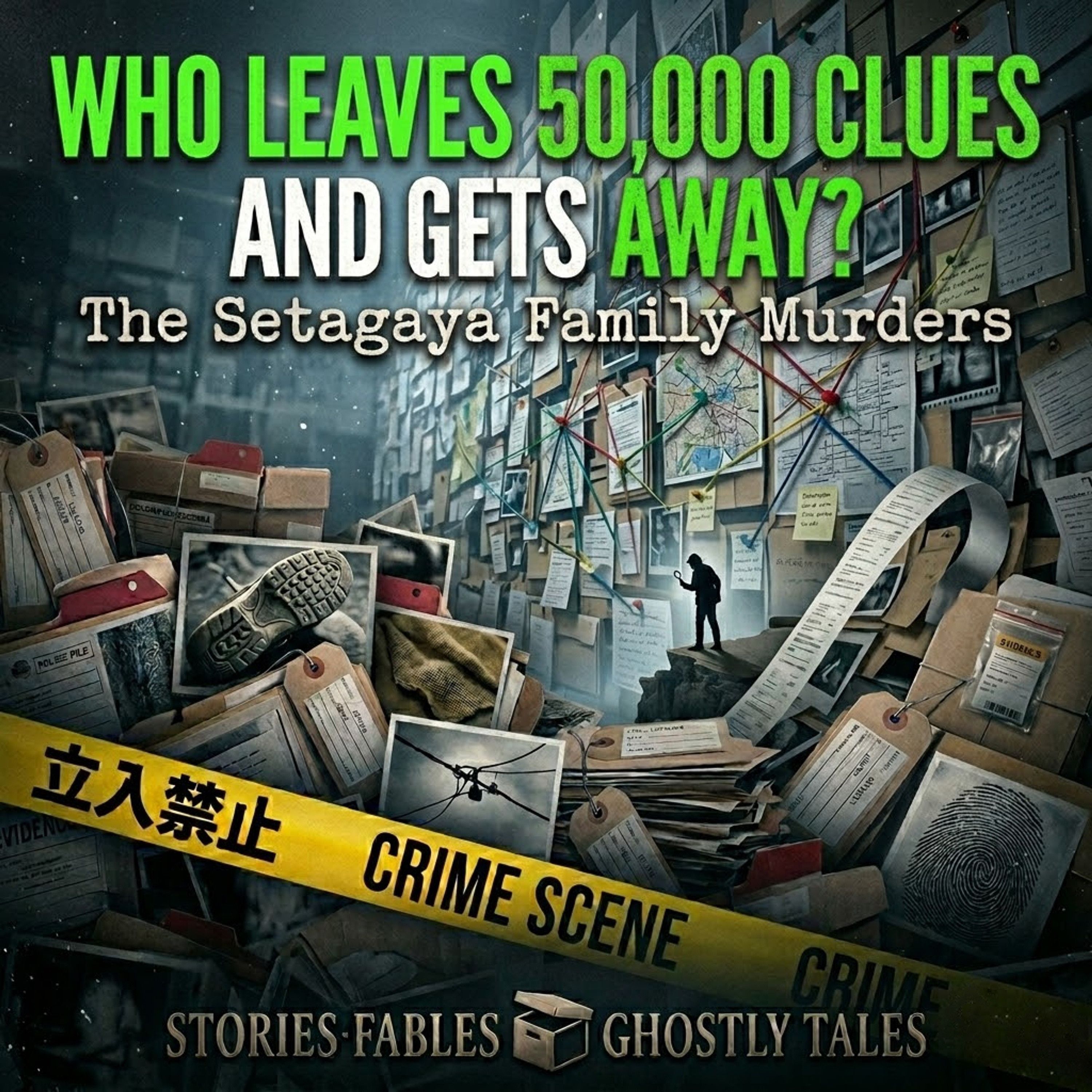 Who Leaves 50,000 Clues and Gets Away? | The Setagaya Family Murders 03.05.2026 34นาทีCase File #03: The Millennium Ghost is Now Open 🔓Welcome to the latest archive Tale Teller Detectives...This week, we are stepping into a true crime puzzle that has frustrated investigators for over two decades. We are traveling to the Setagaya Ward in Tokyo, right on the threshold of the year 2000. While the world was holding its breath for the Y2K digital apocalypse, a very physical nightmare was taking up residence in the Miyazawa family home.This isn't just a story about a break-in; it’s an exploration of an impossible timeline and a "Forensic Zero."Inside Case File #04, we cover: The 10-Hour Occupation: How a killer slaughtered a family and then decided to stay—eating melon ice cream, browsing the internet, and taking a nap while surrounded by his own crime scene. The Mountain of Evidence: From the specific Uniqlo sweatshirt and Korean-exclusive Slazenger shoes to the pristine, mixed-race DNA profile that has never found a match in any global database. The Traveller's Sand: The microscopic traces of Nevada/California sand found deep in the pockets of the killer's discarded hip bag. The 35-Minute Window: The terrifying realization that the killer likely slipped out the back window just moments before the grandmother unlocked the front door on New Year's Eve morning. This episode is a heavy one, demanding the highest level of clinical, high-fidelity audio reconstruction to properly convey the eerie silence of that ten-hour stay.I want to hear from you in the comments below: When you look at the evidence—the foreign sand, the theatre dye, the absolute lack of a DNA match—where does your mind go? Was this an incredibly lucky, chaotic drifter who slipped through the cracks, or a calculated phantom who intentionally planted a false trail?Thank you for standing guard at the gates and making these deep-dives possible.QUESTION: Do you have any Japanese True Crime stories you want me to explore? If so, let me know in the comments or email me at [email protected] 💜💜💜💜💜💜 Check the seal. Stay safe. And I will see you in the archive!**I also wanted to include a High Quality, no background music audio download for supporters, see the below attached legends!
 -
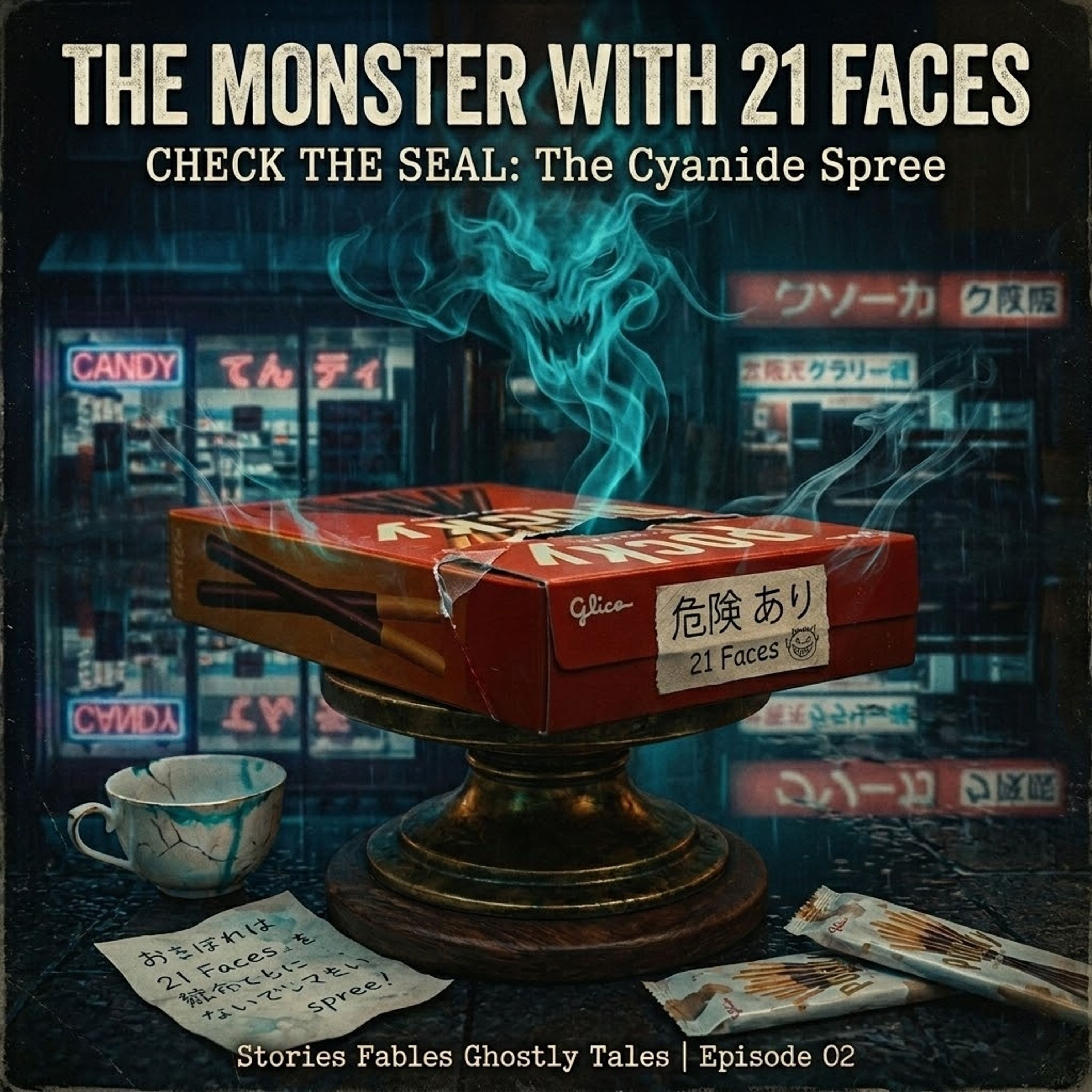 The Monster with 21 Faces: The Cyanide Phantom That Shattered Japan 26.04.2026 34นาทีThe lanterns are lit, the archive doors are bolted, and tonight, we are diving into a file that redefined the meaning of "Safety" in the modern world.The Glico-Morinaga CaseIn 1984, Japan wasn't just an economic powerhouse; it was considered the safest place on Earth. That ended the moment a CEO was dragged naked from his bathtub and the nation’s candy supply was turned into a chemical weapon. We are exploring the reign of The Monster with 21 Faces—a group that didn't just want money; they wanted to see a superpower crumble.The Content: A Masterclass in the "Forensic Zero"This isn't just a retelling of a crime spree; it’s a deep dive into how a group of shadows managed to stay one step ahead of 1.3 million police officers. The Kidnapping: The high-stakes abduction of Katsuhisa Glico and the impossible ransom of gold and cash. The Letters: We break down the mocking, poetic taunts sent to the media using modified typewriters that created a "synthetic" evidence trail. The Poison: The "Vending Machine Medusa" effect—how the fear of a single cyanide tablet brought corporate giants to their knees. The Hooks: Why This Case Haunts Us The Fox-Eyed Man: We analyse the only physical lead—a man who looked a detective in the eye on a moving train and simply... walked away. The Psychological Siege: How the Monster used the Japanese virtue of Mottainai (wastefulness) to trick people into consuming poison. The Ultimate Price: The tragic story of Superintendent Yamamoto, who chose fire as his only way out of the shame of failure... Interesting Details: The Mechanical PredatorIn this episode, we go beyond the headlines to look at the technical precision of the Monster. We discuss how they modified the type-bars on their machines to ensure the police were hunting a "ghost" machine that didn't technically exist. We also look at the "Stiff Alley" phenomenon and how this case is the reason every bottle you buy today has a vacuum-sealed "pop" cap.The Next Japan True Crime Case...The Monster may have retired, but the archives never sleep. Our next investigation takes us away from the neon lights of Osaka and into a much darker, clinical setting. We are moving from the grocery store to the hospital ward.Prepare yourselves for the next Case File: The Stomach Pump Murders. Keep the lights on, check your surroundings, and—as always—check the seal.Thank you again legends for your support and for listening to these True Crime Japanese focused episode. I really love Japanese True Crime because they are always different, and always unique, both culturally, and the lessons learned from them. Next week I cannot wait to explore more from the True Crime, with the Japanese cultural backdrop in mind. 💜💜💜💜
 -
 The Adventures of Sam Spade: The Death Bed Caper [Remastered] 19.04.2026 32นาที🤒🤧 TALE TELLER IS SICK TODAY 🤒🤧Legends writing this to let you know that there’s going to be a short delay with today's scheduled Japanese True Crime Episode due to being sick 🤧. Unfortunately, I’ve come down with a pretty stubborn chest infection, and chest infections hit me really hard, as I had asthma growing up (makes me more susceptible to chest infections) . I tried to push through it to get the recording finished, but my voice and my lungs just aren't cooperating right now.As much as I hate missing a upload day for this true crime series, I need to take a few days to rest and recover so I can get back to 100% and deliver the quality you all deserve. In saying that I have a pre-recorded intro, and spent a chunk of today remastering an Old Time Radio episode from the Sam Spade era - because I LOVE remastering, genuinely, it's relaxing.I’m aiming to have the true crime episode live as soon as I’m back on my feet (and have my voice back!). Thank you all so much for your patience and for your incredible ongoing support—it truly means the world to me, especially when things don’t go according to plan.Stay safe, and I’ll talk to you all very soon. I'm getting my Zzzz's, but you're awesome, and I cant wait to record for next Sunday!! 💜💜💜💜
พอดแคสต์ที่คล้ายกัน


ยอดนิยมใน
พอดแคสต์นี้ปรากฏในชาร์ตพอดแคสต์ของประเทศเหล่านี้ด้วย
