
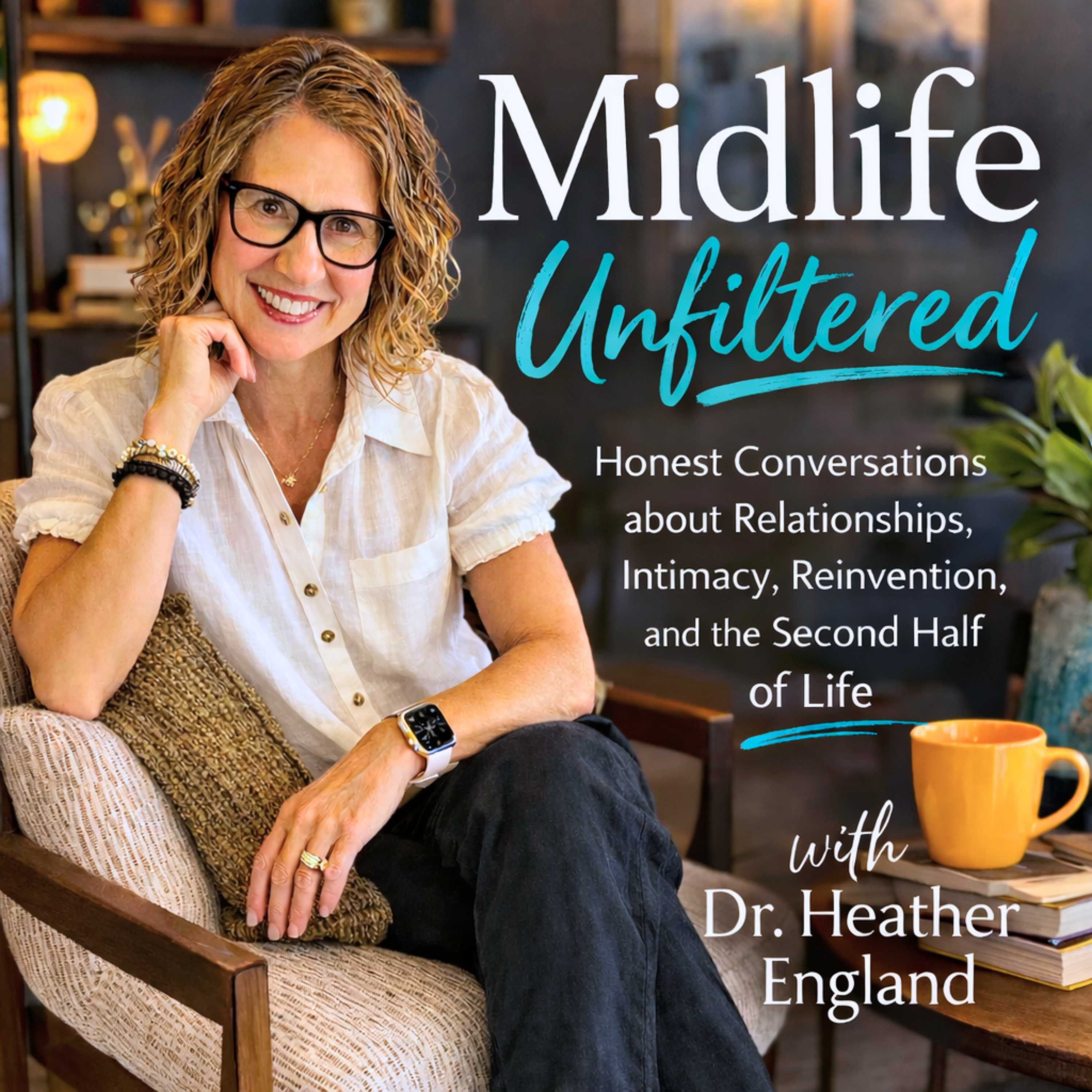
Midlife Unfiltered
Heather England
0
Midlife Unfiltered is hosted by Dr. Heather England and focuses on the real truths about intimacy, love, and relationships during midlife. Each episode explores topics relevant to people navigating this stage of life, aiming to help listeners build more meaningful connections and a more fulfilling life. The show blends educational and informational content with practical guidance for enhancing relationships and sexual intimacy. It is intended for personal enrichment and is not a substitute for therapy or medical advice.
ตอน
-
 The Midlife Loneliness Women Rarely Talk About 24.04.2026 27นาทีSummary:In this episode, Dr. Heather England explores the profound loneliness many women experience in midlife, despite outward success and stability. She shares personal stories, research-backed insights, and practical strategies to foster deeper connections with ourselves, our marriages, and our friendships.Key topics:The subtle signs of loneliness despite having a seemingly perfect lifeThe importance of emotional intimacy over social activityHow midlife reveals unrecognized feelings of disconnectionThe difference between belonging and fitting inStrategies to build authentic friendships and improve marriage connectionsThe neuroscience behind loneliness and our need for safe, emotional bondsHow to reframe negative narratives about ourselvesPractical steps for nurturing existing relationships and building new onesThe significance of vulnerability and authenticity in forming meaningful connectionsAddressing the societal messages that lead women to prioritize others over their own emotional needsResources:Conversation StartersConnect with Heather England:WebsiteLinkedInSubstack (A Midlife Reckoning)WorkshopsTime Stamps00:00 - The unrecognized loneliness in women who seemingly have it all 01:21 - Heather’s background and why she understands midlife transitions 01:47 - Stories of women facing empty nest and feelings of profound loneliness 02:38 - Guilt and societal expectations around self-care and friendship post-childrearing 03:29 - Personal experience with loneliness and the impact of neglecting friendships 04:23 - Overcoming shame and childhood stories affecting adult connection 05:19 - The imposter syndrome and feeling flawed compared to other women 06:39 - The biological and neurological basis of human need for connection 08:24 - Recognizing superficial connections vs deep emotional intimacy 09:14 - The health risks associated with chronic loneliness 10:27 - Brain science: our evolution for belonging and safety 11:51 - The hidden disconnects in long-term marriages and friendships 12:43 - How familiarity can breed emotional disconnection over time 13:30 - The key components of vulnerability and responsiveness in relationships 14:35 - How life’s responsibilities expose the loneliness beneath the surface 16:08 - Challenging negative stories about ourselves and reframing for agency 17:30 - Turning awareness into intentional behavior changes 18:36 - Building authentic relationships, even with just a few close friends 19:00 - Choosing authenticity over fitting in in social settings 20:15 - The difference between belonging and superficial fitting in 21:07 - The power of showing up as your true self in social groups 21:32 - Practical tips for improving marriage intimacy and communication 24:23 - The courage needed to reach out and cultivate new friendships 25:11 - Success stories of women creating meaningful connections 26:26 - Final encouragement: it’s never too late to rebuild your social and emotional lifeThis podcast is for educational purposes only and is not intended to be therapy or medical advice. For personal concerns, please consult a professional.
 -
The Shocking Origin of Women’s Perfectionism (It’s Not What You Think) 17.04.2026 12นาทีSummary:Discover how perfectionism is more than a personality trait—it's a survival strategy rooted in childhood that can hold women back in midlife. Heather England explores how letting go of the need for perfection opens space for authenticity, rest, and genuine self-trust.Main Topics:The origins of perfectionism as a survival tool rooted in childhood experiencesHow societal and social media pressures reinforce perfectionist tendenciesThe shift from striving for perfection to embracing "good enough" in midlifePractical ways to release the need for constant approval and reframe self-worthThe importance of small decisions in reclaiming authenticity and personal freedomIn this episode:The emotional cost of perfectionism and how it can drain creative energyPersonal story of how a simplified Christmas card brought newfound freedomHow early approval-seeking behaviors are reinforced by childhood experiences and societal expectationsThe cultural messages that promote impossible standards for womenRecognizing when perfectionism becomes a barrier to genuine connection and self-trustThe concept of "good enough" as an act of self-care and prioritizationA powerful question: “What would you stop doing if your worth wasn't on the line?”Connect with Dr. Heather England:WebsiteLinkedInSubstack (A Midlife Reckoning)WorkshopsResource PageSubmit a Podcast TopicReady to spice up your sex life? Get my guide “69 Ways to Spice Up Your Sex Life”Time Stamps00:00 - Perfectionism as a survival strategy, not a personality trait00:48 - The story behind Heather’s simplified Christmas card01:48 - How perfectionism leads to emotional exhaustion and false praise02:46 - The cultural and social influences reinforcing perfectionist standards03:16 - Perfectionism as an adaptive response rooted in childhood experiences04:13 - Heather’s personal story of her mother’s conditional love05:34 - How societal pressures and social media perpetuate impossible standards06:53 - The impact of chronic self-surveillance and body criticism07:22 - The importance of capturing real moments and challenging social media narratives08:20 - When survival strategies harm authentic relationships in midlife09:11 - Embracing “good enough” as a form of self-trust and prioritization09:40 - Practical examples of letting go of perfectionism for better priorities10:07 - The healing power of trusting ourselves and changing our relationship with worth11:08 - Reflective question: “What would you stop doing if your worth wasn’t on the line?”11:18 - Closing thoughts and invitation to connect with HeatherNote: This podcast is for educational purposes only and is not intended to be therapy or medical advice.
-
Why Women Are Running on Empty and How Saying No Can Change Everything 17.04.2026 15นาทีSummary:Are you exhausted from carrying the invisible burdens of household and emotional labor without recognition? In this episode, Heather England dives deep into the societal expectations placed on women, the true cost of mental load, and practical steps to reclaim your agency and voice.Key Topics:The origins of the mental load and how it’s patterned from childhood experiencesThe list of invisible tasks women manage daily—from household chores to emotional laborThe impact of the mental load on women’s physical and emotional healthWhy helping is not enough; emphasizing ownership and responsibility in partnershipsThe project management perspective as a tool for sharing responsibilitiesThe importance of saying "no" and outsourcing tasks that drain your energyHow societal expectations shape women’s roles before they even realize itThe significance of having honest conversations with your partner about responsibilityPractical steps for women to start using their voice and set boundariesThe ongoing need for women to prioritize themselves without guilt or apologyConnect with Dr. Heather England:WebsiteLinkedInSubstack (A Midlife Reckoning)WorkshopsResource PageSubmit a Podcast TopicResourcesThe Piggy Book by Anthony BrownTime Stamps00:00 - Introduction to the unchosen hats women wear and mental load00:16 - Heather’s background and the purpose of the episode00:46 - The societal role model observed in the 70s and its lasting effects1:13 - Personal story of growing up with the same expectations2:09 - The societal expectations and invisible chores women carry3:07 - Specific responsibilities women often manage daily4:03 - How the mental load costs women more than just effort4:33 - Challenging the perception of help versus ownership5:00 - The project management analogy for household responsibilities5:57 - The invisibility of women’s work and societal denial6:26 - Exhaustion and its effects on intimacy and desire7:25 - The fatigue as a bandwidth issue, not a libido problem8:23 - The importance of mental and emotional space for intimacy9:15 - Introduction to "The Piggy Book" as a metaphor for shared responsibilities10:10 - How women need to reclaim time for themselves11:09 - Having honest conversations with partners about responsibility12:36 - Starting small: saying no and outsourcing tasks13:31 - Personal example of outsourcing household chores14:01 - Reclaiming agency and the importance of unapologetic self-prioritization14:37 - The message of deserving more and creating boundaries15:21 - Final encouragement for women to use their voice loudly15:48 - Subscription, sharing, and connecting16:14 - Disclaimer on medical advice and encouragement to seek professional helpNote: This podcast is for educational purposes only and is not intended to be therapy or medical advice.
-
The Midlife Question That Could Change How You Live Your Remaining Years 17.04.2026 16นาทีSummary:Are you feeling a sense of unrest despite your seemingly "successful" life? Heather England explores how midlife is a pivotal time for women to reconnect with themselves, challenge societal expectations, and make meaningful changes without the need for crisis or upheaval.In this episode:How common midlife feelings of dissatisfaction are rooted in a natural psychological stage, not failureThe concept of generativity versus stagnation from Erik Erikson’s developmental theoryWhy the "midlife crisis" is a misnomer and what a true "reckoning" actually entailsThe signs of a midlife awakening: questioning accomplishments, body changes, and the meaning of lifeHeather’s personal journey from success-driven corporate career to fulfilled psychotherapistHow shifting from achievement to authenticity can improve relationships and overall happinessPractical questions to guide your reflection: “If I had five years left, what would I truly do?”Why embracing curiosity and self-compassion is crucial in this processSmall steps to start living aligned with your desires today rather than waiting for a crisisConnect with Dr. Heather England:WebsiteLinkedInSubstack (A Midlife Reckoning)WorkshopsResource PageSubmit a Podcast TopicResourcesErik Erikson’s Stages of Psychosocial DevelopmentTime Stamps00:00 - Understanding the deeply personal nature of midlife feelings00:20 - Who is Heather England and what this podcast offers00:51 - Common midlife feelings of something being off01:20 - What is a midlife reckoning and how it differs from a crisis01:50 - Overview of Erik Erickson’s stages of human development02:18 - Explaining generativity versus stagnation in midlife02:48 - How midlife questions reflect the psyche asking if this is it03:19 - The influence of over-functioning and "shoulding" women in midlife03:47 - The impact of children leaving, careers plateauing, and relationships shifting04:31 - Personal reflections on Heather’s own awakening process05:02 - Recognizing slow accumulation of questions about life fulfillment05:31 - How success initially felt but lacked true fulfillment06:30 - Heather’s return to school at age 49 and embracing lifelong learning07:52 - The importance of authentic life connection and self-acceptance08:47 - How ceding to societal images of perfection is unsustainable09:16 - The power of showing up as your authentic self09:43 - Women exhausted from societal expectations and their awakening10:38 - The illusion of effortless perfection perpetuated by social media11:05 - The system that pressures women but doesn’t nourish them11:35 - Recognizing the midlife awakening as clarity, not failure12:04 - Erickson's drive for generativity as part of natural aging12:33 - Outgrowing old strategies that no longer serve us13:03 - Imagining the last five years of your life and living intentionally13:32 - Actions that align with your deepest desires now14:01 - The importance of asking: “What do I want?”14:27 - Taking small, deliberate steps toward the life you desire14:56 - Giving yourself permission to explore, even if messy15:24 - Redefining success based on personal truth, not societal expectations15:42 - Closing thoughts and encouragement to start your own reckoning16:09 - A reminder that the podcast is for educational purposes16:36 - Seeking professional support when neededNote: Remember, this podcast is educational and not medical or therapeutic advice. Seek professional guidance if needed to support your personal journey.
-
Introducing Midlife Unfiltered 17.04.2026 3นาทีConnect with Dr. Heather England:WebsiteLinkedInSubstack (A Midlife Reckoning)WorkshopsResource PageSubmit a Podcast Topic
-
The Great Sex Podcast is Becoming Midlife Unfiltered 06.04.2026 1นาทีIntroducing Midlife Unfiltered In this episode, Dr. Heather England shares the vision behind the relaunch of her podcast, now called Midlife Unfiltered. She discusses the importance of honest conversations about midlife women’s experiences, especially around relationships, identity, and purpose, aiming to create a supportive space for those navigating this complex life stage.Connect with Dr. Heather England:WebsiteLinkedInSubstack (A Midlife Reckoning)WorkshopsResource PageSubmit a Podcast TopicReady to spice up your sex life? Get my guide “69 Ways to Spice Up Your Sex Life”
-
39: Erectile Dysfunction Series: The Hidden Triggers that Cause Your Erectile Dysfunction to Keep on a Keep'in On 02.03.2026 14นาทีSummary:In this episode of The Great Sex Podcast, Dr. Heather England dives into the often-overlooked emotional and relational roots of erectile dysfunction (ED). Discover how stress, relationship dynamics, shame, and performance anxiety contribute to ED—and learn actionable insights to break the cycle and improve your sexual confidence.Resources & Links:Workshop on Mastering Performance AnxietyWorkshop for Female Partners of Men with EDConnect with Dr. Heather England:WebsiteLinkedInSubstack (A Midlife Reckoning)WorkshopsResource PageSubmit a Podcast TopicReady to spice up your sex life? Get my guide “69 Ways to Spice Up Your Sex Life”In this episode:Key topics covered:Overcoming Erectile Dysfunction: The Psychological and Relational Factors You Need to KnowKey Topics:The cyclical nature of psychological causes of ED and how they reinforce each otherThe critical role of emotional intimacy and communication in recoveryHow stress, depression, and life changes impact sexual performanceThe influence of shame and limiting beliefs about sexPerformance anxiety: how it develops and how to interrupt itThe dangers of avoidance behaviors and how to reframe intimacyPractical strategies: talking openly about ED, reducing secrecy, and seeking supportTimestamps:00:00 - The story of Andy: understanding performance anxiety and ED cycle02:05 - Physical causes of ED versus psychological and relational factors03:01 - The impact of relationship quality, communication, and trust on ED03:45 - How emotional withdrawal can worsen ED and the importance of emotional intimacy04:26 - The role of conversations about sex in improving intimacy and ED recovery05:22 - Stress as a major contributor to ED: work, financial, and family stressors06:08 - The connection between depression and ED, and addressing mental health07:05 - Life transitions and their effects on sexual functioning07:59 - Sexual concerns such as low desire, premature ejaculation, and pain08:28 - Shame, cultural beliefs, and secrecy: barriers to recovery09:20 - The importance of open communication and empathy in reducing shame09:52 - How limited sexual knowledge affects confidence and contributes to ED10:17 - Avoidance behaviors and their reinforcement of ED cycles11:02 - Performance anxiety: how anticipatory worries sabotage arousal11:56 - The neurological process of anxiety and its impact on presence during sex13:03 - Breaking the cycle: reassurance that ED symptoms are human, not failures13:41 - The core message: connection and honest conversation as the keys to recovery14:09 - Practical tips: talk openly, seek therapy, and foster emotional intimacy14:30 - Final thoughts and encouragement to prioritize communication and support
-
38. Erectile Dysfunction Series: The Many Medical Causes for Erectile Dysfunction 02.03.2026 14นาทีSummary:In this episode of the Great Sex Podcast, Dr. Heather England explores the complex causes of erectile dysfunction (ED), emphasizing that it’s a medical condition with physical and psychological roots. She aims to dispel myths and empower men and their partners with knowledge and actionable steps to address ED effectively.Resources & Links:Workshop on Mastering Performance AnxietyWorkshop for Female Partners of Men with EDConnect with Dr. Heather England:WebsiteLinkedInSubstack (A Midlife Reckoning)WorkshopsResource PageSubmit a Podcast TopicReady to spice up your sex life? Get my guide “69 Ways to Spice Up Your Sex Life”In this episode:Key topics covered:The physical factors contributing to ED, including cardiovascular health, diabetes, obesity, medication side effects, and hormonal imbalancesHow lifestyle choices such as smoking, alcohol consumption, sleep quality, and fatigue influence erectile functionThe psychological cycle of performance anxiety and how physical causes can lead to long-term mental and emotional impactsThe importance of consulting healthcare providers for proper diagnosis, blood work, and early interventionPractical steps for lifestyle modifications and addressing emotional well-being to improve sexual healthTimestamps:00:00 - Introduction: Real stories behind ED and what nobody tells you00:30 - The physical causes of ED: exhaustion, high blood pressure, and more01:27 - The significance of understanding ED as a medical and psychological condition02:46 - The role of cardiovascular health in sexual performance03:42 - How clogged arteries can be an early warning sign for heart problems04:39 - The impact of diabetes on erectile function and the importance of blood sugar control05:06 - Obesity's link to ED and the power of weight loss and activity05:31 - Medications that can cause ED and the importance of consulting your doctor05:58 - Tobacco use increases ED risk; quitting can restore vascular health06:28 - Alcohol's depressant effects on arousal and testosterone levels07:00 - Low testosterone’s impact on erections and overall health07:41 - Sleep apnea as an underdiagnosed contributor to ED08:15 - Fatigue and exhaustion as significant yet often overlooked causes09:01 - Neurological conditions, prostate treatments, Peyronie’s disease, and other medical factors10:37 - The cycle of physical and psychological causes, and how worry perpetuates ED11:05 - Practical advice: get medical testing, lifestyle changes, and emotional support12:22 - The importance of addressing both physical and psychological factors for recovery13:10 - Success story: Dan’s journey to overcoming ED through medical care and lifestyle adjustments13:47 - Closing remarks: hope, support, and creating fulfilling sexual relationships
-
37. Erectile Dysfunction Series: When the Little Blue Pill Doesn't Work; Reigniting Intimacy with Erectile Dysfunction 02.03.2026 11นาทีSummary:In this episode, Dr. Heather England explores the nuanced nature of erectile dysfunction (ED), emphasizing that medications like Viagra are helpful but not foolproof solutions. She discusses the impact of performance anxiety, relationship dynamics, and lifestyle factors, offering practical guidance to improve intimacy and emotional connection.Resources & Links:Workshop on Mastering Performance AnxietyWorkshop for Female Partners of Men with EDConnect with Dr. Heather England:WebsiteLinkedInSubstack (A Midlife Reckoning)WorkshopsResource PageSubmit a Podcast TopicReady to spice up your sex life? Get my guide “69 Ways to Spice Up Your Sex Life”In this episode:Key Topics:The story of Joe: the emotional toll of ED and quiet sufferingWhy medications like Viagra may fail for 30% of menThe role of performance anxiety and how the brain reacts to sexual setbacksThe physiological effects of stress and fear on arousalHow avoidance behaviors deepen intimacy issuesThe importance of emotional connection and relationship health in desireMedical options beyond medication, including dosage adjustments and alternative treatmentsThe significance of open communication with your partnerShifting the definition of sex to reduce pressure and enhance intimacyBasic lifestyle factors impacting erectile health: sleep, diet, stress, alcoholThe value of addressing psychological factors like anxiety and relationship issuesSuccess stories: Joe’s journey into therapy and improved intimacyTimestamps:00:00 - Introduction: The emotional impact of ED and why it matters00:27 - Joe’s story: silence and suffering in ED01:03 - Description of Dr. Heather’s ED series and available workshops02:15 - The benefits and limitations of ED medications02:44 - Why 30% of men don’t respond well to pills like Viagra03:08 - Practical factors influencing medication effectiveness (timing, health conditions)03:48 - Performance anxiety: what it is and how it affects physiology04:13 - The brain’s threat detection response during sexual activity04:34 - How anxiety redirects blood flow away from arousal05:03 - The cycle of anxiety, medication, and failure05:30 - The dangers of self-medicating and supplement misuse05:56 - Avoidance as a barrier to intimacy and increased anxiety06:23 - The importance of emotional connection in desire06:53 - Creating desire through emotional intimacy and shared experiences07:20 - Practical steps: medical consultation and treatment options07:46 - Open communication with your partner and addressing silence08:15 - Directly addressing performance anxiety with tools like mindfulness08:41 - Redefining what sex means to reduce pressure and promote relaxation09:08 - The role of life habits: sleep, diet, stress management09:58 - Broader solutions: psychological work, relationship repair, and personal growth10:27 - Success story: Joe’s therapy journey and renewed intimacy10:45 - Encouragement: overcoming silence and deepening connection**Resources
-
36. Erectile Dysfunction Series: The Biggest Contributor to Erectile Dysfunction 27.02.2026 12นาทีSummary:In this episode of the Great Sex Podcast, Dr. Heather England explains the often-misunderstood phenomenon of performance anxiety erectile dysfunction (ED). She shares practical insights, physiological explanations, and actionable strategies to help men rebuild confidence and trust in their bodies for healthier intimacy.Resources & Links:Workshop on Mastering Performance AnxietyWorkshop for Female Partners of Men with EDConnect with Dr. Heather England:Substack - A Midlife ReckoningDr. England's WebsiteLinkedInIn this episode:Understanding and Overcoming Performance Anxiety-Related ED with Dr. Heather EnglandKey Topics Covered:The difference between physical ED and performance anxiety EDHow anxiety triggers physiological responses that impair erectionsThe role of the nervous system and safety in arousalWhy reassurance and more effort often worsen performance anxietyThe limitations of medication for anxiety-driven EDSkill-based practices to retrain your body's responseThe importance of practicing in a pressure-reducing wayAddressing partner involvement and reassurance tipsReassuring men that ED is a learned pattern, not a character flawSteps to rebuild trust in your body and enjoy intimacy againTimestamps:00:00 - Introduction to performance anxiety ED and why it matters00:23 - Real-life example of performance anxiety and its impact0:52 - What is performance anxiety ED and common misconceptions1:20 - The role of emotional and physiological responses during sex2:16 - Understanding the difference: Physical issues vs. anxiety-driven ED3:13 - How anxiety creates a self-fulfilling cycle of ED3:42 - The physiology of erections and the importance of feeling safe4:10 - Why anxious thoughts interfere with the nervous system's response4:35 - How the nervous system reacts to threat and the effect on blood flow5:03 - The paradox of reassurance and attempts to 'try harder'5:58 - Limits of medication in solving anxiety-based ED6:27 - The importance of retraining the nervous system through practice6:56 - Why desire to eliminate anxiety entirely isn't realistic7:07 - How avoidance can reinforce anxiety and the importance of exposure7:21 - Moving from managing to experiencing pleasure without pressure7:50 - Recognizing that physiological responses are learned, not flaws8:16 - Strategies for changing the response pattern through skill-based practice8:46 - Accepting that anxiety may always show up and how to handle it9:15 - The significance of staying in your body and sensations9:44 - Clarifying common myths: It’s not ‘in your head’ or a character flaw10:13 - When medication doesn’t work, and the importance of matching tools to issues10:41 - The role of partner involvement and reassurance tips11:12 - Key takeaways: ED as a nervous system pattern that’s learnable11:41 - Final encouragement: You’re not broken, and recovery is possibleThis episode offers a compassionate, science-based approach to understanding ED caused by performance anxiety, emphasizing skills and practice for lasting change.
-
35. Erectile Dysfunction Series - How ED Poisons Relationships and What to Do About It 27.02.2026 15นาทีSummary:Discover how erectile dysfunction affects relationships beyond the bedroom, and learn practical strategies to foster intimacy, communication, and emotional connection during this challenging time. Hosted by Dr. Heather England, a certified sex therapist, this episode offers candid insights from someone living with ED and shares resources to support couples.Resources & Links:Workshop on Mastering Performance AnxietyWorkshop for Female Partners of Men with EDConnect with Dr. Heather England:WebsiteLinkedInSubstack (A Midlife Reckoning)WorkshopsResource PageSubmit a Podcast TopicReady to spice up your sex life? Get my guide “69 Ways to Spice Up Your Sex Life”In this episode:Key Topics:The prevalence of ED: 30 million men in the US and 326 million worldwide experience ED, increasing with ageEmotional and relational impact of ED: how withdrawing from touch and intimacy affects both partnersSocietal and cultural silence around ED: the shame and unspoken secrecy that worsen the problemThe role of psychological factors: anxiety, depression, stress, and performance pressure often contribute to EDStrategies for navigating ED: ongoing communication, redefining intimacy beyond penetrative sex, and seeking professional supportPersonal perspective: Dr. England shares her experience living with her husband's ED and how their relationship evolvedResources for support: online workshops for partners and individuals dealing with performance anxiety and intimacy challengesImportance of continuous dialogue: treating ED as a chronic issue rather than a one-time crisis
-
34. Erectile Dysfunction Series - Why Trying Hard Makes Your ED Worse and What to Do Instead 27.02.2026 13นาทีSummary:Discover how psychological and societal factors intertwine with physical health to shape men's experiences with ED, and learn practical strategies to redefine success and foster genuine connection.Resources & Links:Workshop on Mastering Performance AnxietyWorkshop for Female Partners of Men with EDConnect with Dr. Heather England:WebsiteLinkedInSubstack (A Midlife Reckoning)WorkshopsResource PageSubmit a Podcast TopicReady to spice up your sex life? Get my guide “69 Ways to Spice Up Your Sex Life”In this episode:The emotional toll of ED exemplified through Marcus's story of shame and vulnerabilityHow spectatoring and the fight-or-flight response impact erection and intimacyThe harmful "manhood myth" and its role in identity and performance pressureThe psychological spiral that sustains ED beyond physical causesPractical tips to shift from performance focus to authentic connectionThe importance of honesty and professional support in overcoming EDSuccess stories illustrating the power of redefining intimacy and self-perceptionTimestamps:00:00 - A real-life story illustrating the emotional impact of ED00:25 - The shame and identity crisis triggered by first episodes00:53 - Introducing the episode and Dr. Heather England’s background01:19 - Changes in podcast focus and midlife exploration02:16 - Resource: Substack for intimacy and midlife topics03:12 - Workshop details for performance anxiety and partner support03:46 - ED as an emotionally charged experience beyond physical causes04:15 - How the brain interprets initial ED episodes as a threat04:44 - Spectatoring: Being an observer of oneself during sex05:13 - The biological fight-or-flight response affecting blood flow05:40 - The myth of the "real man" and its effects on self-worth07:09 - How societal stories about masculinity shape perceptions of performance07:34 - The impact of performance-based identity on men's confidence08:04 - The physical and psychological components of ED08:32 - Situational causes versus ongoing anxiety loops09:01 - The sleep analogy: Relaxation is key to relaxation and erection09:29 - Reframing what success means in intimacy09:57 - Moving from performance to connection and pleasure10:27 - The importance of genuine intimacy over solely physical success10:53 - Partner's perspective and the emotional impact of shutdowns11:23 - The critical need to seek support and avoid isolation11:52 - The role of therapy and honesty in recovery12:22 - Summary of key points: psychological influences, myths, and the healing process12:50 - Success stories and transforming perceptions of intimacy13:12 - Marcus’s turnaround through self-perception and managing anxiety13:40 - Encouragement to prioritize authentic connection and seek supportRemember:Overcoming ED involves understanding both the physical and emotional layers. Seeking support is a sign of strength, not weakness. Transform the narrative around masculinity and intimacy, and rediscover pleasure and connection beyond performance.
-
33. Avoiding Masturbation Mistakes 22.05.2024 11นาทีSummaryIn this episode, Dr. Heather England discusses male masturbation and the importance of using the right technique. She advises using lube, a lighter touch, and a slower motion during masturbation to create neural pathways that mimic partnered sex. She acknowledges that her opinion may be controversial but encourages listeners to consider the information and apply it to their own lives.TakeawaysThe right masturbation technique can help with arousal and prevent issues contributing to erectile dysfunction.Using a hard grip, no lube, and a fast motion during masturbation can cause your penis to expect intense stimulation to stay aroused and thus hinder arousal during partnered sex.Train the penis to be aroused during masturbation in a way that mimics partnered sex by using lube, a lighter touch, and a slower motion.Be mindful of the neural pathways created during masturbation and aim to create pathways that are similar to partnered sex.Consider the information shared and apply it to your own life, taking into account your own experiences and preferences.Connect with Dr. Heather England:WebsiteLinkedInSubstack (A Midlife Reckoning)WorkshopsResource PageSubmit a Podcast TopicReady to spice up your sex life? Get my guide “69 Ways to Spice Up Your Sex Life”🙂 If you have erectile dysfunction, performance anxiety may be impacting you. Learn how to overcome performance anxiety erectile dysfunction.🔥 Learn How to use Sex Toys to Enhance your Pleasure. Toy Talk Sex Toy Course available at www.lovefilledlife.com/ToyTalk
-
32. Creating Ways to Get in the Mood for Sex 02.04.2024 19นาทีSummaryIn this episode, Dr. Heather England discusses the process of transitioning from a non-sexual state to a sexual one. She emphasizes the importance of consent and empowerment in one's sexuality. Dr. England provides practical tips and activities to help individuals get in the mood for sex, such as engaging in activities that create closeness with their partner, thinking about past fulfilling sexual experiences, and exploring fantasies and erotica. She also highlights the significance of mental and emotional preparation, including self-talk and relaxation techniques. The episode concludes with a challenge for listeners to identify ways to transition themselves into a sexual mindset.TakeawaysConsent and empowerment are essential in one's sexuality.Engaging in activities that create closeness with your partner can help get you in the mood for sex.Thinking about past fulfilling sexual experiences and exploring fantasies and erotica can enhance sexual desire.Mental and emotional preparation, such as self-talk and relaxation techniques, can facilitate the transition to a sexual mindset.It is important to embrace and empower your sexuality.Chapters00:00 Setting the Stage03:48 Transitioning from Being Non-Sexual to Sexual07:57 Activities to Get in the Mood13:19 Mental and Emotional Preparation15:09 Exploring Fantasies and EroticaConnect with Dr. Heather England:WebsiteLinkedInSubstack (A Midlife Reckoning)WorkshopsResource PageSubmit a Podcast TopicReady to spice up your sex life? Get my guide “69 Ways to Spice Up Your Sex Life”🔥 Learn How to use Sex Toys to Enhance your Pleasure. Toy Talk Sex Toy Course available at www.lovefilledlife.com/ToyTalk
-
31. Signs of an Unhappy Relationship 19.03.2024 13นาทีSummary:Join Dr. England as she highlights common signs you are in an unhappy relationship. Connect with Dr. Heather England:WebsiteLinkedInSubstack (A Midlife Reckoning)WorkshopsResource PageSubmit a Podcast TopicReady to spice up your sex life? Get my guide “69 Ways to Spice Up Your Sex Life”🔥 Learn How to use Sex Toys to Enhance your Pleasure. Toy Talk Sex Toy Course available at www.lovefilledlife.com/ToyTalk
-
30: What Happens in Therapy and Sex Therapy? 12.03.2024 42นาทีSummaryIn this episode, Dr. Heather England interviews Beverly Rouse, a licensed clinical professional counselor and executive coach, about therapy and sex therapy. Beverly shares her journey from the military to becoming a therapist and explains the role of therapy in helping individuals navigate challenges and improve their relationships. She also discusses the misconceptions about sex therapy and highlights the importance of self-care in maintaining overall well-being.TakeawaysTherapy provides a safe and non-judgmental space for individuals to explore their challenges and work towards personal growth.Sex therapy is a specialized form of therapy that focuses on addressing sexual issues and improving sexual well-being.It is important to find a therapist who is a good fit for you and with whom you feel comfortable discussing sensitive topics.Self-care is essential for maintaining overall well-being and should be prioritized to prevent burnout and promote self-compassion.Chapters00:00 Introduction and Background02:24 Becoming a Therapist05:16 Challenges of Deployment08:11 Asking for Help10:35 The Role of Therapy14:51 What is Sex Therapy?Ms. Rouse's Contact Information: Empowering Insight, LLCEmail: [email protected] LinkedInConnect with Dr. Heather England:WebsiteLinkedInSubstack (A Midlife Reckoning)WorkshopsResource PageSubmit a Podcast TopicReady to spice up your sex life? Get my guide “69 Ways to Spice Up Your Sex Life”🔥 Learn How to use Sex Toys to Enhance your Pleasure. Toy Talk Sex Toy Course available at www.lovefilledlife.com/ToyTalkMentioned in this episode:Toy Talk Sex Toy Course
-
29. Redefining Sex: Moving Beyond Intercourse for Deeper Intimacy 05.03.2024 17นาทีSummaryIn this episode, Dr. Heather England discusses the importance of talking about sex and challenges the societal norms around intercourse. She emphasizes the need for open communication and negotiation in sexual relationships. Dr. England also highlights the unrealistic expectations set by Hollywood and the pressure it puts on both men and women. She encourages listeners to explore other pleasurable and connecting activities beyond intercourse.TakeawaysTalking about sex is important for healthy relationships and overall well-being.Intercourse is not the only goal of sex and may not be pleasurable or satisfying for everyone.Societal norms and media portrayals of sex can create unrealistic expectations and feelings of inadequacy.Couples should explore and redefine their own sexual menu based on what is pleasurable and connecting for them.Connect with Dr. Heather England:WebsiteLinkedInSubstack (A Midlife Reckoning)WorkshopsResource PageSubmit a Podcast TopicReady to spice up your sex life? Get my guide “69 Ways to Spice Up Your Sex Life”🔥 Learn How to use Sex Toys to Enhance your Pleasure. Toy Talk Sex Toy Course available at www.lovefilledlife.com/ToyTalk
-
28. Is it OK if I Don't Want to Have Intercourse Anymore 20.02.2024 21นาทีSummaryIn this episode, Dr. Heather England addresses a listener's question about not wanting to have intercourse with their partner. She emphasizes the importance of consent and the negative effects of having sex when not desired. Dr. England explores various reasons for not wanting intercourse, including lack of enjoyment, past traumas, societal influences, and unmet needs. She encourages open communication and relationship negotiation to find a solution that satisfies both partners. Dr. England also suggests exploring other pleasurable activities and addressing pain during intercourse. Lastly, she discusses the concept of viewing sex as a gift for one's partner.TakeawaysConsent is crucial in any sexual activity, and it is important to feel safe saying no.Understanding the reasons behind not wanting intercourse can help address underlying issues.Open communication and negotiation are key to finding a solution satisfying both partners.Exploring other pleasurable activities and addressing pain during intercourse can enhance sexual intimacy.Chapters00:00 Introduction: Question about not wanting intercourse03:19: Reasons for not wanting intercourse07:19: Exploring underlying issues11:34: Negotiating and compromising in the relationship13:00: Finding other pleasurable activities13:59: Addressing pain during intercourse19:10: Viewing sex as a gift19:38: Conclusion and call to actionConnect with Dr. Heather England:WebsiteLinkedInSubstack (A Midlife Reckoning)WorkshopsResource PageSubmit a Podcast TopicReady to spice up your sex life? Get my guide “69 Ways to Spice Up Your Sex Life”🔥 Learn How to use Sex Toys to Enhance your Pleasure. Toy Talk Sex Toy Course available at www.lovefilledlife.com/ToyTalkMentioned in this episode:Toy Talk Sex Toy Course
-
27. A Special Announcement and a Fabulous Valentine's Day 13.02.2024 9นาทีIn this episode, Heather shares an announcement about rebranding the podcast and then provides a tip for Valentine's Day.The tip focuses on making your partner feel valued and cherished.TakeawaysThe podcast is being rebranded to cover a broader range of topics beyond just sex.Valentine's Day is an opportunity to make your partner feel valued and cherished.There are many simple and thoughtful ways to show your love and appreciation. These don't have to be a grand gesture or expensive.Investing in your relationship and doing little things for your partner can strengthen your bond whether you do them on Valentine's Day or all of the other days of the year.Connect with Dr. Heather England:WebsiteLinkedInSubstack (A Midlife Reckoning)WorkshopsResource PageSubmit a Podcast TopicReady to spice up your sex life? Get my guide “69 Ways to Spice Up Your Sex Life”
-
26. Beyond the Baby Blues: Postpartum Anxiety and Depression 06.02.2024 30นาทีSummaryIn this episode, Dr. Heather England and Michelle Tangeman discuss postpartum anxiety and depression. They explore the typical responses and challenges that new parents face after having a baby, including hormonal changes and the impact on relationships. They differentiate between baby blues and postpartum depression, emphasizing the importance of seeking help if symptoms persist beyond two weeks. The prevalence of postpartum mood disorders is highlighted, with one in five moms experiencing a perinatal mood and anxiety disorder. The episode concludes with practical tips for supporting a loved one and finding a competent therapist for postpartum mood disorders.TakeawaysPostpartum anxiety and depression can have a significant impact on new parents' emotional well-being, identity, relationships, and sex life.It is important to differentiate between baby blues and postpartum depression, with the latter characterized by persistent symptoms beyond two weeks.Risk factors for postpartum mood disorders include personal and family history, lack of support, medication changes, history of domestic violence or abuse, and pregnancy loss.Support from friends, family, and professionals is crucial in helping new parents navigate the challenges of the postpartum period.Cognitive Behavioral Therapy (CBT) can be an effective treatment for postpartum mood disorders, helping individuals challenge negative thoughts and reduce symptoms.Guest Bio:Michelle Tangeman is a Licensed Marriage and Family Therapist and Board Certified Behavioral Analyst in private practice in the LA area. She is a child and family therapist in private practice at Michelle Tangeman Behavioral Health. Michelle has extensive experience in individualized behavior intervention, Functional Behavior Assessments, school-based services, family-focused intervention, early start services, and social skills training and provides these services to families across Ventura and Los Angeles counties. She has also completed the training as part of the Postpartum Support International’s Advanced Perinatal Mental Health Psychotherapy Training Program.Additionally, Michelle founded an online education company, Thriving Toddler focused on helping as many people as possible become the parents they want to be.Michelle is also a podcast host and the co-founder of the Parenting Understood podcast. Michelle and her co-host are passionate about teaching parents about evidence-based interventions grounded in science to make a positive impact on the parent-child relationship.Connect with Dr. Heather England:WebsiteLinkedInSubstack (A Midlife Reckoning)WorkshopsResource PageSubmit a Podcast TopicResources:Beyond the Blues: Understanding and Treating Prenatal and Postpartum Depression & Anxietyby Shoshana S. Bennett PhD and Pec Indman PA,EdDPostPartum Support International
พอดแคสต์ที่คล้ายกัน


ยอดนิยมใน
พอดแคสต์นี้ปรากฏในชาร์ตพอดแคสต์ของประเทศเหล่านี้ด้วย
