
Renaissance English History Podcast: A Show About the Tudors
Heather Teysko
0
Renaissance England was a bustling and exciting place...new religion! break with rome! wars with Scotland! And France! And Spain! The birth of the modern world! In this weekly podcast I'll explore one aspect of life in 16th century England that will give you a deeper understanding of this most exciting time.
Bölümler
-
 They Tried to Demolish Hampton Court. Then the Queen Died. 14.09.2026 11dkLearn more about your ad choices. Visit megaphone.fm/adchoices
 -
 Where Were You on 9/11? Walsingham in Paris, 1572 11.09.2026 11dkTwenty-five years ago today, I was at my desk in Soho, emailing my friends about Thanksgiving plans, when one of them told me to open Yahoo because something big was happening in New York. For the anniversary, I wanted to tell you where I was that day. Then I want to take you back to another morning that started out completely normal: Paris, August 1572. The St. Bartholomew's Day Massacre began just days after a royal wedding that was supposed to bring peace. Francis Walsingham, Elizabeth's ambassador, was right in the middle of it. His pregnant wife and his little daughter were in the house, and a teenage Philip Sidney was sheltering with them while refugees came to his door. We'll also follow the news back to England, including the refugees who landed at Rye, and look at how quickly grief turned into a demand for safety, both in 1572 and in 2001. Take care of each other this week, and if you want to, tell me in the comments where you were. Learn more about your ad choices. Visit megaphone.fm/adchoices
 -
 Henry VIII Lost at Cards to Anne Boleyn. It's in His Own Accounts. 11.09.2026 35dkIn 1540, a printer in Venice published a beautiful, enormous book that let you tell your fortune with a deck of cards. The same year Henry VIII married Anne of Cleves, annulled it, and married Catherine Howard on the day Thomas Cromwell was executed. So I went looking for the English version of that book. There isn't one. And working out why turned into a much better episode than the one I set out to make. The Tudors were obsessed with cards. Henry gambled at them constantly, and there's an entry in his own Privy Purse expenses recording him losing twenty crowns at a game called Pope Julius to "my lady Marques," which is Anne Boleyn, on the road home from Calais in November 1532. Possibly during their first week of marriage, if you believe Edward Hall. But nobody was reading cards. Not tarot, which was a card game in Italy and never really crossed the Channel, and not ordinary playing cards either, at least not in any way we can evidence before the middle of the seventeenth century. Tarot divination was invented in 1781 by a French pastor who decided the deck was secretly ancient Egyptian, at a time when nobody alive could read a hieroglyph. What Tudor England had instead was stranger and much more practical. Two acts of Parliament in the same session, one banning cards for labourers on the grounds that it was ruining English archery, the other making witchcraft a felony and naming as its chief targets treasure hunters and people who found your stolen property. A countrywide trade in divination using a sieve balanced on a pair of shears. And one Kentish gentleman who sat down to argue that witches weren't real and accidentally wrote the first book in English explaining how card tricks work. Sponsor This episode is sponsored by Context Travel, who took me round Hampton Court Palace this summer in a group of six with a guide who actually knows the historiography. The on-location video from that day is coming to the channel soon. contexttravel.com Learn more about your ad choices. Visit megaphone.fm/adchoices
 -
 Murder at Crowhurst: A Tudor Cold Case 03.09.2026 25dkIn August 1532 a charcoal burner named Robert Grame was murdered in a wood in Surrey. He worked alone, he carried a checkered board so he could count his money out there among the trees, and half the county seems to have known it. What happened next is why we can still tell this story. The local justice of the peace, Sir John Gaynesford, was an old man who had no obligation to do any of this well, and he did it beautifully. He examined the body, checked for signs of suicide because a widow's survival depended on the answer, found a broken knife handle, took depositions from witnesses more than twenty years before the law required it, and eventually hauled his suspect in front of the Privy Council in Westminster. When that went nowhere, he wrote nine folio pages to Thomas Cromwell and told him he would rather leave the county than keep living like this. And then the case vanishes from the record entirely. This episode is about who Robert Grame was, what Gaynesford did, what probably happened to Anastasia Grame, and how much of the past is missing from the documents we have left. Follow the show so the next one turns up on its own. The autumn collection is up at TudorFair.com, including Bonfires and Boleyns and Sweater Weather and Sovereigns. Source: William B. Robison, "Murder at Crowhurst: A Case Study in Early Tudor Law Enforcement," Criminal Justice History. The underlying document is Gaynesford's report to Cromwell, State Papers 1/72/76-87, at The National Archives. Learn more about your ad choices. Visit megaphone.fm/adchoices
 -
There's a Written Recipe for Henry VIII's Perfume 31.08.2026 47dkThere is a written recipe for Henry VIII's perfume. It's in a 1608 book called A Closet for Ladies and Gentlewomen, and it's rosewater, sugar, musk, ambergris, and civet, boiled down softly for an entire day. I had no idea that existed until I sat down with Jen Siems of Immortal Perfumes, who has spent 14 years building fragrances out of archival research. Jen is a self-taught perfumer and a former English teacher, which means she talks about rare book rooms the way most people talk about their favorite TV show. She also has Elizabeth's recipe, which includes marjoram for headaches and a truly unreasonable amount of sugar. If you know anything about Elizabeth's teeth, that tracks. We get into: Where ambergris actually comes from, and why a kid walking on an English beach can stumble onto $50,000 worth of it Whether the Tudors really stank, and how much of that reputation we've made up Miasma theory, and why smelling magnificent was a health strategy and a PR strategy at the same time Catherine de' Medici, perfumed gloves, and how French perfume as we know it started with a Florentine bride Mary Queen of Scots' golden pomanders, and the violets-and-sparkling-wine legend that got misattributed to Anne Boleyn for years What Jude Law wore on the set of Firebrand to play a dying Henry, and why Alicia Vikander couldn't stand to be near him Fair warning, Jen explains how civet gets harvested and it involves a comparison to taking your dog to the vet. I was not ready. GIVEAWAY: Jen is giving away a vintage Avon Queen Elizabeth bottle (her torso lifts off, it's wonderful) filled with the Immortal Perfumes scent of the winner's choice. Enter here: https://www.englandcast.com/immortal-perfumes-giveaway/. Closes September 14, US shipping, 18+. Find Jen: immortalperfumes.com | Immortal Perfumes on Instagram and TikTok | the Immortal Perfumes Substack Learn more about your ad choices. Visit megaphone.fm/adchoices
-
The Rebellion That Started Because a Lawyer Paid a Bribe 27.08.2026 18dkIn July 1549, a crowd in Norfolk showed up to tear down Robert Kett's fences. Instead of stopping them, he agreed with them, helped pull down his own hedges, and led them to Norwich. What followed was seven weeks of about 16,000 people running the county from a camp on Mousehold Heath, with a court, a supply system and a signed list of demands. It ended at the Battle of Dussindale on 27 August 1549.This one has been on my list for seventeen years and I somehow never made it. Fixing that today. Related video on Tudor Vagrancy laws that I mentioned: https://youtu.be/q4Gku_0H_kg 📅 TASTE OF TUDORCON, THIS SATURDAY Free online event, Saturday 29 August, 1pm ET, about two hours. Eight TudorCon speakers each share a piece of their talk: Henry VIII and head trauma, John Dee, the history of English, a dress that took seven years to make, and more. Drop in and out, and there's a replay if you can't make it live. Register: https://tudorcon.englandcast.com/tasteoftudorcon2026/ Learn more about your ad choices. Visit megaphone.fm/adchoices
-
What Things Actually Cost in Tudor England 24.08.2026 24dkJoin me for Taste of TudorCon, a free online preview of this year's conference, on August 29th: https://tudorcon.englandcast.com/tasteoftudorcon2026/ A skilled craftsman in early Tudor London earned sixpence for a day's work. I've been staring at that number for ages, because on its own it tells you nothing. Sixpence out of what? Buys what? Compared to whom?So I went digging, and it turns out if you follow that one coin up and down the Tudor social ladder you end up seeing the whole society. The housemaid on a pound a year. The brewer on ten. The king who spent thirty-six thousand pounds on an eighteen-day party in a field. We get into the coins themselves, which have the best names in the world, including the gold angel that doubled as medicine. We climb from the bottom of the ladder to the top. We work out what sixpence would actually buy you at a market stall. And then we get to 1544, when Henry VIII started secretly putting less silver in the coins, and everybody's wages stopped working. Learn more about your ad choices. Visit megaphone.fm/adchoices
-
 The Tudors Were Obsessed With Troy (But Never Actually Read Homer) 19.08.2026 20dkI just watched Nolan's Odyssey and went down a rabbit hole: did the Tudors even know this story? Turns out, not the way you'd think. For most of the dynasty, England's version of the Trojan War came from a completely different, largely invented medieval tradition, one that literally cut the gods out of the story. The real, translated Homer didn't arrive in English until the dynasty was basically over. In this one: two forged "eyewitness" accounts of the Trojan War, the first book ever printed in English, the Tudors' fake Trojan ancestor Brutus, Cambridge's Greek revival, and why not a single Tudor monarch ever got to read a finished English Homer. Join me for Taste of TudorCon, a free online preview of this year's conference, on August 29th: https://tudorcon.englandcast.com/tasteoftudorcon2026/ Get the newsletter: https://www.englandcast.com/newsletter-sign-up/ Learn more about your ad choices. Visit megaphone.fm/adchoices
 -
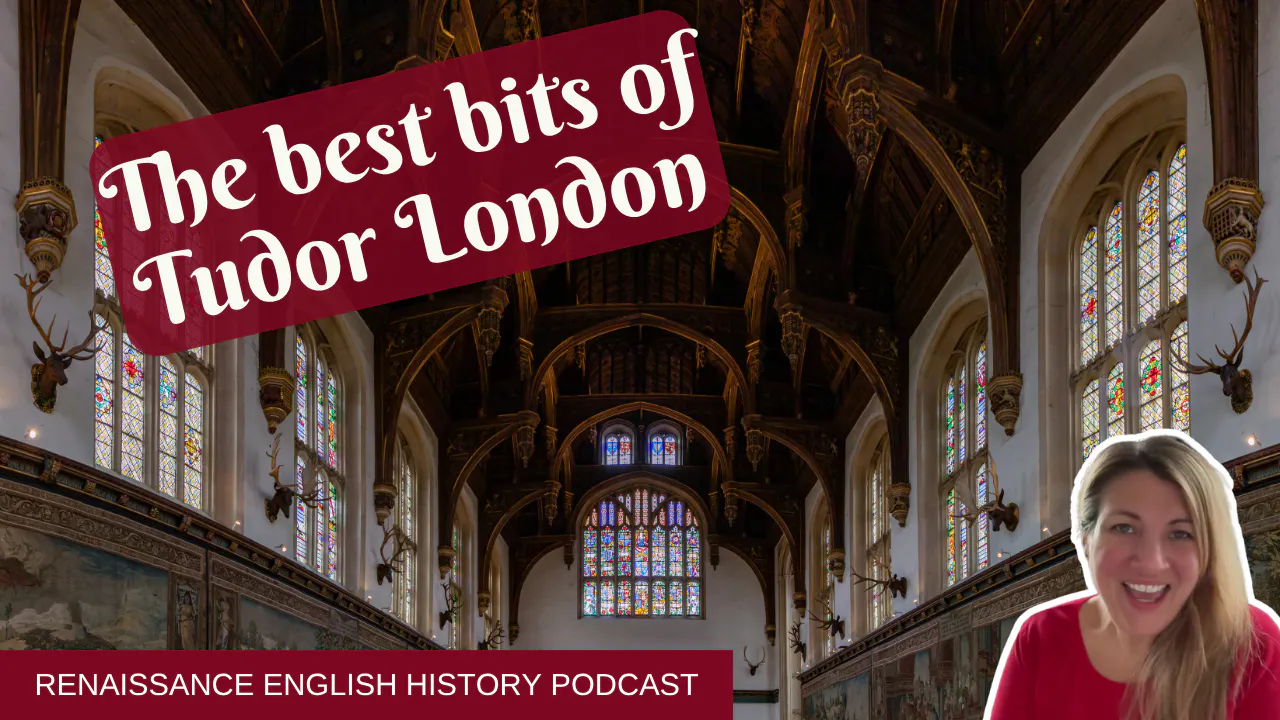 Two London Historians Show Me the Tudor City Everyone Walks Right Past 18.08.2026 48dkI got on a Zoom call with two Blue Badge guides from Context Travel, and by the end of it I had a list of about a dozen places in London I've never been and now desperately need to see. Sean spent almost 30 years in financial services before deciding life was too short not to spend it obsessing over history and art instead. Caroline taught history at a girls' school and specialized in Edward VI, the Tudor everyone skips past on the way from the six wives to Elizabeth I. We talked about the pieces of Tudor London hiding in plain sight: a tennis court wall tucked behind Buckingham Palace, a portrait of Edward VI you can only see properly through a spy hole, a single rose that's been paid as rent since 1381, and why Henry VIII's waistband tells you basically his entire biography. I've been doing this for over 15 years and I did not know most of this going in. Keep a notebook handy, you're going to end up with a list. Context Travel does small private tours led by working historians (not flag tours!) all over London and beyond. Link to check them out: https://www.contexttravel.com/ TudorCon 2026 is October 23-25 in Richmond, VA. In-person tickets are almost gone (less than 10 left), or join virtually with TudorCon From Home: https://tudorcon.englandcast.com Sign up for the newsletter: https://www.englandcast.com/newsletter-sign-up/ This video was made in partnership with Context Travel. Learn more about your ad choices. Visit megaphone.fm/adchoices
 -
I Stayed in a 600-Year-Old Inn Full of Secret Smuggling Tunnels 13.08.2026 16dkSo I recently went to England to sleep in historic places. This is the first episode of a mini series I'm calling Heather Stays in Olde Inns, because England is full of medieval places to stay, and I wanted to stay in them. First stop: The Mermaid Inn in Rye. The cellars here date back to 1156. The building you see today went up in 1420, after the French burned the whole town to the ground in 1377 (yes, really). A very organized gang of 18th century smugglers used the place as one of their bases. There are still tunnels running under the building to another inn down the street, because apparently that's just what you do when you're moving contraband and don't want the authorities noticing. I got to sleep in a building that has survived fire, smugglers, and about 600 years of English history going about its business upstairs from a bar. Come stay with me. Book your own stay at The Mermaid Inn: https://www.mermaidinn.com/ Learn more about your ad choices. Visit megaphone.fm/adchoices
-
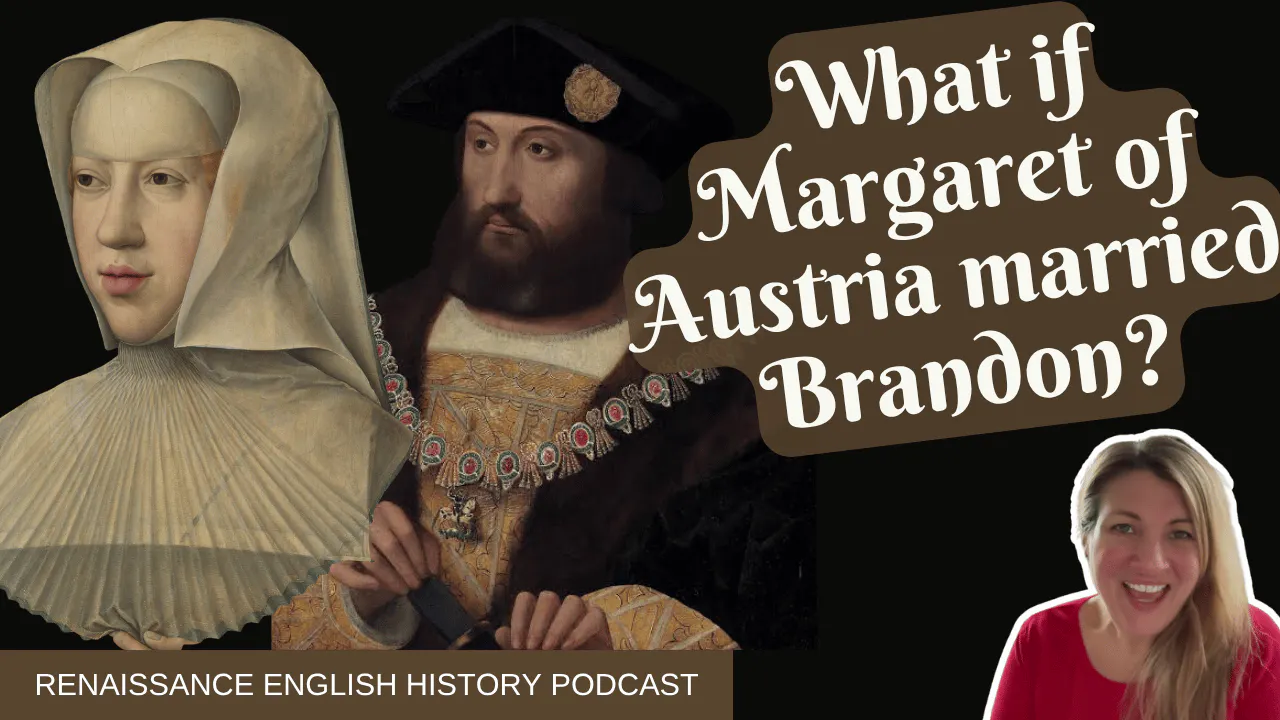 The Almost-Marriage That Could Have Erased Lady Jane Grey 10.08.2026 18dkIn 1513, Charles Brandon knelt in front of Margaret of Austria, regent of the Netherlands, and lifted the ring right off her finger. Twice. The gossip reached all the way to her father, the Holy Roman Emperor, and for a minute, Henry VIII was actually pushing for his best friend to marry one of the most powerful women in Europe.It never happened. But what if it had? In this episode I dig into the real story behind the ring, why the marriage was never actually going to happen, and what it would have meant for England, the Habsburgs, and the entire Tudor succession, including a very direct line to Lady Jane Grey never existing at all. Join us for TudorCon 2026, October 23-25 in Richmond, VA. About 20 in-person tickets remain: tudorcon.englandcast.com Can't make it in person? Join us for TudorCon From Home, and for a limited time get early bird pricing on the Privy Council tier (ends September 15): tudorcon.englandcast.com Learn more about your ad choices. Visit megaphone.fm/adchoices
 -
Tracy Borman Makes Me Rethink EVERYTHING About the Boleyns 06.08.2026 29dkThis conversation totally rearranged some things in my brain. I sat down with Tracy Borman, Chief Historian at Historic Royal Palaces, to talk about her new novel The House of Boleyn, and it flips the whole family on its head. Thomas Boleyn, the guy we all love to hate as the scheming dad pimping out his daughters? Tracy did the research and found basically none of that. He comes across as actually protective, terrified of what Henry could do to Anne. And Jane Boleyn, who Wolf Hall (and basically everyone else) paints as the ultimate betrayer? Tracy found letters of her BEGGING Henry to spare her husband. We also get into Anne's grandmother Lady Margaret Butler, who Tracy compares to the Maggie Smith character from Downton Abbey (I'm obsessed with this comparison), plus the Duke of Norfolk, who might be one of the most legitimately villainous people in Tudor history, no rehabilitation needed there. And Tracy tells this incredible story about inventing a plot line for the book, and then finding actual historical evidence afterward that proved she'd accidentally landed on the truth. Chills. Tracy also gives her take on whether Anne actually loved Henry (spoiler: she doesn't think so), and where she thinks Anne's heart really was. Huge thanks to Tracy for coming back on the channel; and also a shoutout for her talk at Tudorcon a few years back (tickets for October 23-25 still available, by the way - https://tudorcon.englandcast.com for details!). Grab The House of Boleyn here: https://www.amazon.com/House-Boleyn-Novel-Tracy-Borman/dp/0802167853/ Learn more about your ad choices. Visit megaphone.fm/adchoices
-
The Mistress Who Almost Made Henry VIII's Bastard Son His Heir 04.08.2026 43dkOkay so today's episode is a blast from the past, but stick with me because it's a good one. Back in 2016 I had James Bolton from the Queens of England Podcast on to talk about Bessie Blount, and it completely changed how I think about Henry VIII's love life. Here's the thing everyone gets wrong: we've all heard "divorced, beheaded, died, divorced, beheaded, survived" a thousand times, but almost nobody talks about his mistresses. And there's this whole historian debate about whether Henry only had two affairs his entire life, which, come on. James makes a really compelling case that he had way more, we just don't have the paper trail because writing about royal mistresses was basically taboo. But Bessie is the one who mattered. She's the one who proved to Henry that he could actually father a healthy son, years before Anne Boleyn ever showed up. And what happened to that son, Henry FitzRoy, is wild. The king elevated him so high in the peerage that some historians think he was being groomed as an actual backup heir to the throne. A Duke, an Earl, Lord Lieutenant of Ireland, the works, for an illegitimate kid. There's even a mystery second child that might change the whole timeline of the affair. It's a great one, enjoy the rewind. Learn more about your ad choices. Visit megaphone.fm/adchoices
-
 The Secret That Changes Everything We Thought About "Bloody Mary" 28.07.2026 44dkI'm in the UK this week, so I dug into the archive and found this gem from way back when approximately six people were watching my channel. It's an interview with Melita Thomas of Tudor Times about her book The King's Pearl, and honestly, it wrecked what I thought I knew about Mary I. We get into how Henry VIII was building Mary a whole fancy apartment at Whitehall years before Catherine Parr ever showed up, which blows apart the story we usually hear about how Mary got back in her dad's good graces. Turns out Mary was also a serious gambler, gave money to Welsh strangers on the street to hang onto her old title as Princess of Wales, and played some savvy political games with Cromwell and the imperial ambassador while everyone thought she was just quietly enduring her fate. She was not the tragic, broken figure we've been sold. She was scheming, charming, funny, and a lot more in control than history gives her credit for. Lots of new stuff coming your way soon once I'm back from my UK travels, but I promise this old episode holds up. Learn more about your ad choices. Visit megaphone.fm/adchoices
 -
 How Do We Actually Know What Anne Boleyn Looked Like? Art Historian Roland Hui Breaks It Down (Tudor Summit Throwback) 27.07.2026 30dkThis is a throwback from the very first Tudor Summit back in 2017, the little online conference that eventually grew into TudorCon. I'm digging through the archives while I'm traveling in the UK, and I found this one with art historian Roland Hui, and it's just as fascinating now as it was then. Roland walks through the six wives one by one and it's honestly wild how much detective work goes into figuring out who's actually in these paintings. Catherine of Aragon has tiny roses and Ks hidden in her jewelry to show off her new Tudor loyalty. Anne Boleyn's most famous portrait wasn't even painted until Elizabeth's reign, decades after Anne died, so we're not even 100% sure it looks like her. And that whole "Flanders mare" story about Anne of Cleves? Roland explains why that's probably more about Henry's ego than her actual portrait. We also get into how historians use things like jewelry inventories to figure out who's really in a painting (the Catherine Parr one that used to be labeled as Jane Grey is a great example), plus a preview of Roland's research into why Anne Boleyn got saddled with a "witch" reputation that didn't even show up until centuries after she died. Roland Hui is the author of "The Turbulent Crown: The Story of the Tudor Queens" and has written for Renaissance Magazine and Tudor Life Magazine. Learn more about your ad choices. Visit megaphone.fm/adchoices
 -
 How the Tudors Decided Who Deserved to Eat 22.07.2026 28dkIn 1547, Parliament passed a law saying that if you refused to work, even for nothing but food, you could be branded and handed over as a slave for two years. Your children could be taken. They repealed it in two years. Not because anyone softened toward the poor, but because barely anybody would enforce it. This episode is about how England spent the sixteenth century building a welfare system and a punishment regime at exactly the same time, out of exactly the same panic, and usually in the same paragraph of the same statute. It's about a country whose money was getting worse and whose food was getting dearer, with no concept of inflation to explain any of it. It's about the parish accounts where the same neighbours who paid for a dying woman's shroud also paid to have a sick stranger carried over the boundary before he could die on their books. And it's about Thomas Harman, a Kentish magistrate who in 1566 published a bestselling exposé of fake beggars, complete with a dictionary of their secret criminal slang, and more or less invented a character we are still arguing about today. The law they finally landed on in 1601 stood until 1834. Two hundred and thirty three years. 📬 I write a free newsletter with Tudor words of the week, games, news stories, behind the scenes, and the bits that don't fit in a video: https://www.englandcast.com/newsletter-sign-up/ Learn more about your ad choices. Visit megaphone.fm/adchoices
 -
 What If Elizabeth I Had Married Robert Dudley? (The Decision That Nearly Broke Her) 21.07.2026 26dkA woman is found at the bottom of a staircase in 1560. And the one person who benefits most from it is the Queen of England. This week I'm digging into one of the wildest what-ifs in Tudor history. Amy Robsart, wife of Robert Dudley, dies suddenly at Cumnor Place, right when the rumors were already swirling that Dudley meant to get rid of her so he could marry Elizabeth I. The obstacle is gone. The queen could have married the man she loved. And she said no anyway. I wanted to know what would have happened if she'd said yes. Turns out it touches everything, her entire approach to foreign policy, the Mary Queen of Scots plots, even whether she'd ever have had to sign that execution warrant. There's no clean answer here, and that's what makes it such a good one. Also, quick note, I've built an app called Tudor Scroll. Daily Tudor puzzle, all your favorite Tudor creators in one feed, and more. Android testers are in now (thank you all so much) and iPhone is about to go into final App Store testing. Want in early? Email [email protected]. Related episodes: Jill McCracken on her murder mystery podcast https://youtu.be/yplUI7pbEWY Janet Wertman on the woman who had Robert Dudley's baby: https://youtu.be/2UEyw4q_dto Tudor Times' Melita Thomas on Robert Dudley: https://youtu.be/Bot35V6CPCo Learn more about your ad choices. Visit megaphone.fm/adchoices
 -
 The Priest Hunter's Nightmare: Nicholas Owen and the Hiding Places No One Could Find 20.07.2026 22dkThere is a Catholic saint whose actual job, canonized and everything, is patron of magic tricks. Escapologists. Illusionists. And he earned it the hard way: by spending nearly twenty years building hiding places so good that people still can't find them today, standing right next to them, with a guidebook in hand. Nicholas Owen was a small, injured, entirely unremarkable-looking carpenter. He was also the most important man in Elizabethan and Jacobean England's Catholic underground, a one-man counter-surveillance operation who broke a priest out of the Tower of London, built hides that beat the hunters' own measuring tricks, and kept every single location locked in his head so it could never be tortured out of anyone else. This is his story, the arms race he ran against the state, the night at Hindlip Hall when the escape artist chose to appear instead of vanish, and what happened to him in the Tower afterward. Plus: a heads up on a free live illumination workshop I'm doing tomorrow with the wonderful Julia Bangert, teaching you to paint a Tudor rose in true medieval style. Link below. 🌹 Free illumination workshop w/ Julia, tomorrow 12pm ET: https://page.co/kxj56n Learn more about your ad choices. Visit megaphone.fm/adchoices
 -
 The Women Who Hid Priests in Their Walls 17.07.2026 25dkFREE ILLUMINATION WORKSHOP Royal Letters: How to Paint a Tudor Rose Initial, with illuminator Julia Bangert. Tuesday. Free, total beginners genuinely welcome, and if you can't make it live, register anyway and we'll send you the recording. https://page.co/kxj56n Somebody is knocking on your door. You know who it is. And upstairs, folded into a hole in the wall behind your fireplace, is a man whose presence in your house can get you killed.Last time I told you about John Gerard, the Jesuit who escaped the Tower of London on a rope. But Gerard had to sleep somewhere. He had to say Mass somewhere. He had to hide somewhere. And house after house after house, the person answering the door was a woman. Learn more about your ad choices. Visit megaphone.fm/adchoices
 -
 The Priest Who Escaped the Tower of London 14.07.2026 24dkIn 1588, a tall, well-dressed gentleman rode through Norfolk talking about hawks with anyone who'd listen. He had a gilt-handled rapier, excellent French, and impeccable manners. He also had a Mass kit hidden in his saddlebags and a hair shirt under his doublet, because he was a Jesuit priest in a country where that was a capital offense. John Gerard spent seventeen years running an underground network across Elizabethan England. He built safe houses, ran couriers, sent at least thirty men abroad to train for the priesthood, and stayed one step ahead of Walsingham's intelligence apparatus. When they finally caught him in 1594, they hung him by his wrists in a Tower of London dungeon to make him give up the head of the Jesuit mission. He fainted eight or nine times in a single day. He never gave them a name. Then he wrote to his friends in invisible ink made from orange juice, and escaped from the Tower on a rope strung across the moat, with hands so ruined by torture he could barely grip it. And then he went straight back to work for another eight years. This is his story, and almost all of it comes from his own account, which he wrote as a field manual for the young men who'd be following him into England. FREE ILLUMINATION WORKSHOP Royal Letters: How to Paint a Tudor Rose Initial, with illuminator Julia Bangert. Monday, July 21, 12pm Eastern. Free to attend, total beginners welcome, and if you can't make it live, register anyway and we'll send you the recording.https://page.co/kxj56n Learn more about your ad choices. Visit megaphone.fm/adchoices
Benzer podcastler


Şurada popüler
Bu podcast şu ülkelerin podcast listelerinde de yer alıyor.


