
Learn English with Bob the Canadian
Bob the Canadian
0
This podcast helps you learn English with weekly lessons and Q&A sessions. Bob the Canadian, a YouTube English teacher, answers your questions about the language. Each episode covers a specific topic to improve your vocabulary and grammar. It's designed for learners of all levels who want to practice listening and speaking.
Bölümler
-
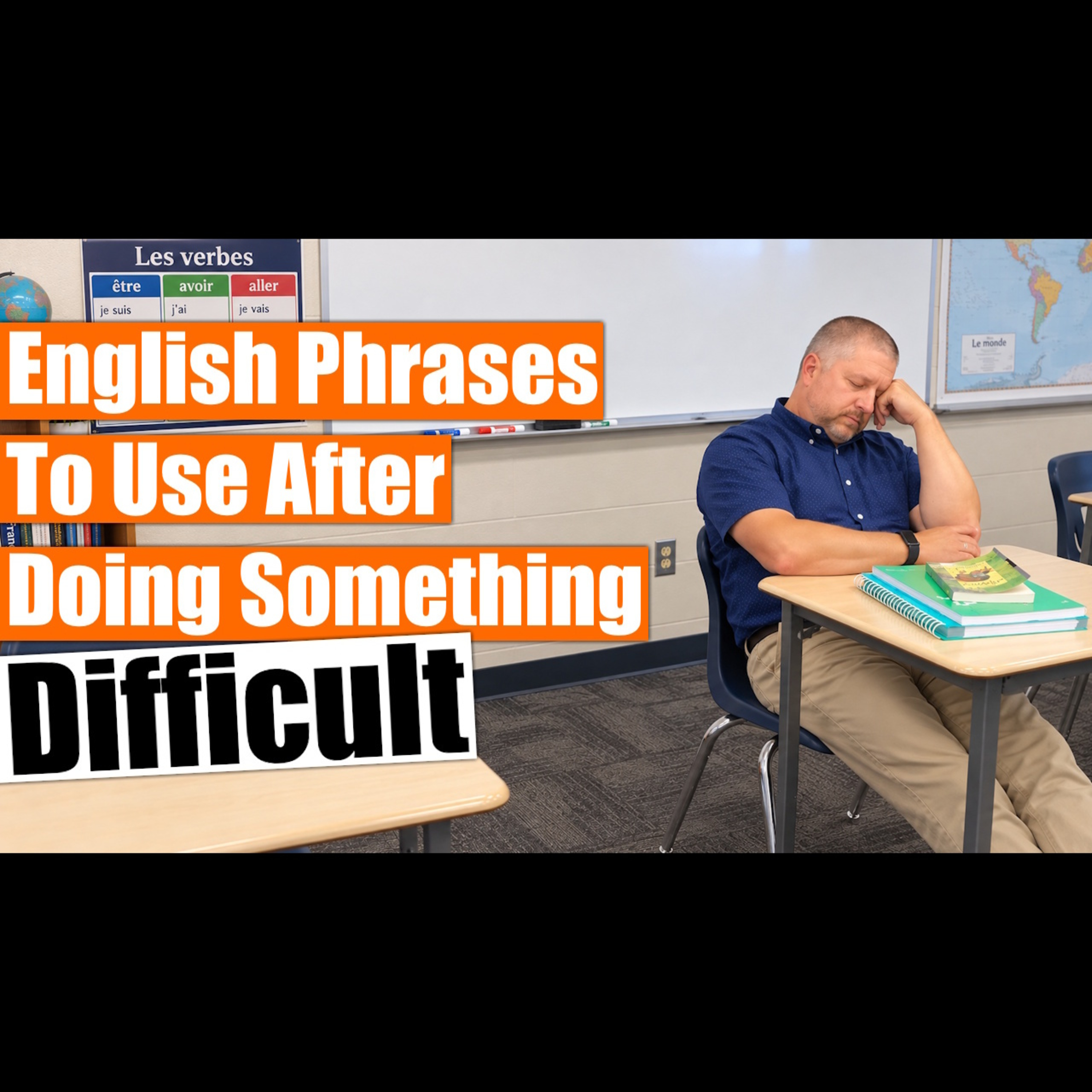 I Survived! 8 English Phrases to Use After Difficult Situations 15.09.2026 6dkIn this English lesson, you’ll learn 8 common English phrases that you can use after doing something difficult, stressful, or challenging.Sometimes we use these phrases seriously, and sometimes we use them as funny exaggerations. You might say “I survived!” after your first week back at work, “What a relief!” after finding something you lost, or “The hard part is over” after finishing something stressful.In this lesson, you’ll learn phrases like I survived, I did it, I made it, the worst is behind me now, I lived to tell the tale, what a relief, the hard part is over, I weathered the storm, and I made it through in one piece.I’ll explain what each phrase means and give you an easy-to-understand example so you’ll know how to use it in your next English conversation.I hope you enjoy the lesson and that it helps you learn some useful, natural English phrases. Have a great day!
 -
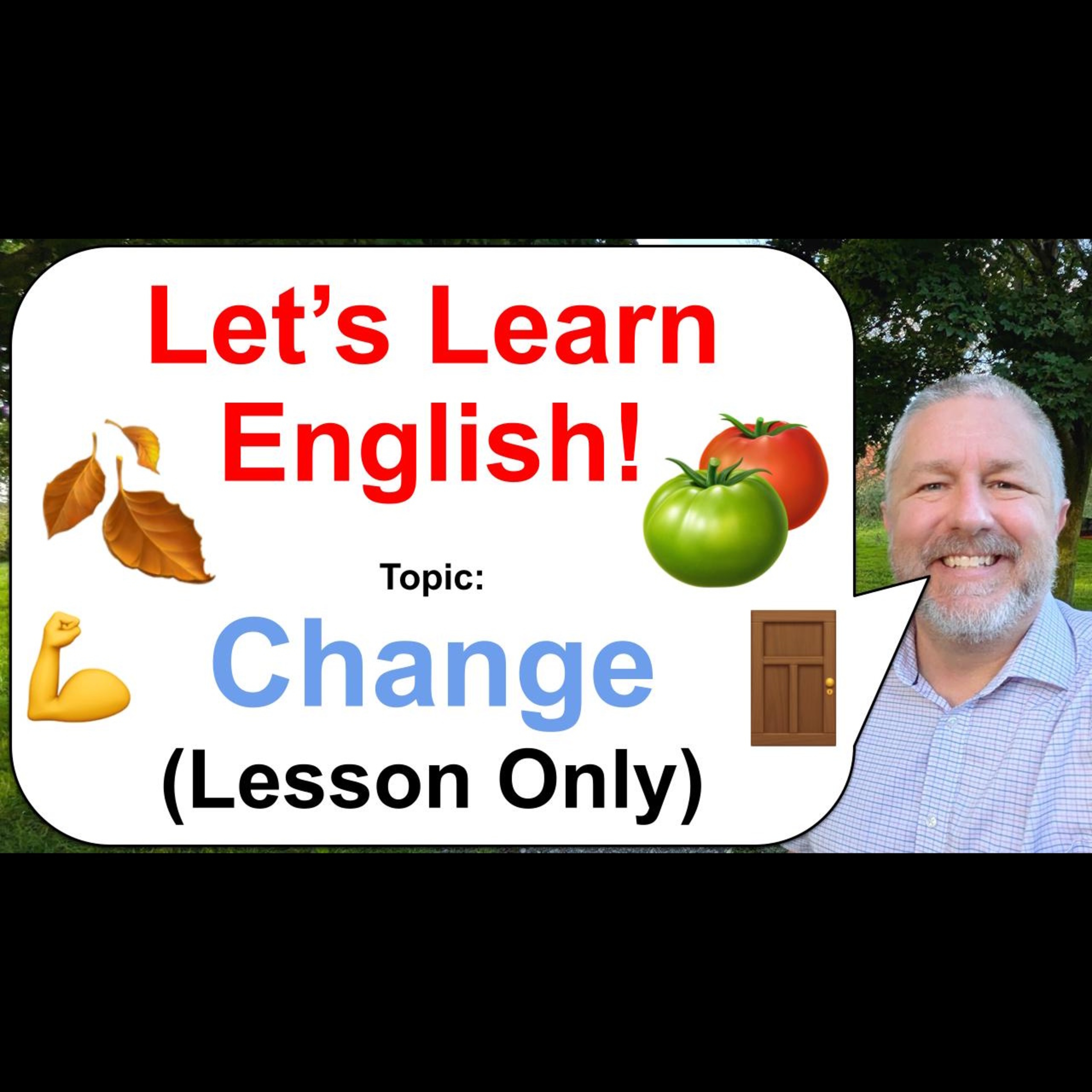 Let's Learn English! Topic: Change! 🍅🍂🚪 13.09.2026 24dkIn this English lesson I'll help you learn how to talk about change in English. Things around us are constantly changing. Fruit ripens, colours fade, people age, weather conditions worsen, and old things can deteriorate.In this free English class, I’ll teach you common words and phrases we use when talking about change. You’ll learn how to use to change, to change into, to turn into, to become, to transform, to adapt, to adjust, to modify, to alter, to revise, to edit, to upgrade, to replace, to switch, to swap, to convert, to deteriorate, to ripen, to develop, to worsen, to fade, to shrink, to reverse, to increase, and to decrease, as well as how to talk about things that age over time.I’ll explain each word and phrase using clear, easy-to-understand definitions and examples, and I’ll show you a picture to help you understand and remember the meaning.I hope you enjoy this English lesson, learn some useful new vocabulary, and continue to improve your English. Have a great day!
 -
 Learn the English Phrases "the real deal" and "to keep it real" 09.09.2026 4dkIn this English lesson, I wanted to help you learn the English phrase "the real deal." If you say someone is the real deal, it means they're really good at what they do. If you think about the sport of soccer or football, and you think about a player like Messi, he's the real deal.When he plays soccer, it's obvious that he knows how to play the game at a very high level. If you were to go see someone like Ed Sheeran in concert, he's the real deal. He has these loop pedals I've heard and he plays guitar and he sings and he makes like a beat on his drum like he's the real deal he's a real musician and a really good singer-songwriter. So when you say someone is the real deal it just means they are really good at what they do the second phrase I wanted to teach you today is to keep it real when you keep something real when you keep it real it means that it's truthful, it's honest, it's authentic. When I do these English lessons, I try to keep it real.It's just me. I'm just some guy in Canada making videos for you. There's no elaborate script. There's no photo crew. I just try to keep it real. I tell you about my life, and I hope that as I do this, you're able to learn English through the things that I share as I keep it real.So to review. If something's the real deal or if someone's the real deal, it just means that it is the... the best thing in that category, or the best person in that category, and to keep it real means to keep it honest, to keep it truthful, to keep it human, to keep it very, very authentic.But hey, let's look at a comment from a previous video. It's a pretty long one, so I might skip part of it for the sake of time. But I really enjoyed this comment from Harald. Hello, Bob the Canadian. I imagine you've already received plenty of compliments and thanks for the exceptional way in which you do these learning videos, I would like to thank you personally and in a very special way.I've been trying to learn English for about 3 years now, unfortunately with very little success. I suppose that when you're already 68, you don't learn as easily or as quickly as you used to. Anyway, I was so frustrated that I decided to give up learning. As a sort of farewell, I had one last look for learning videos on YouTube and stumbled across Bob's Short English lessons by chance.I was thrilled and now after about 4 weeks, I've decided to carry on learning English. My compliments, you've given me new energy and renewed courage. Thank you, Harald the Austrian. And then Ismail quickly points out, "Hi Harold, I'm not sure if you've come across Bob's main channel as well. Learn English with Bob the Canadian.So a little shout out there from Ismail. Thank you very much. And then my response: "It is never too late to learn, and I'm so happy to hear that you have found new motivation from my channel. I try to keep things real, as we say in English." You'll find if you follow me here and on my other channel, you'll not just learn English, but I'll try to give you a window into an English speaker's life.Enjoy and welcome. So thank you so much, Harald, for that comment. That is one of the nicest things I have heard someone say in a comment on one of my videos. Now, I'm not trying to take away from the other nice things people have said, but I felt very humbled and honored to know that you found my channel and that gave you motivation to keep learning English.So, that's great. So, all the best to you and to all of the rest of you out there who have similar stories, where you have maybe lost your motivation and found it again through a song or music or a video or a YouTube video. That's just awesome. Keep at it.Keep doing it. You're doing a great job. So I have to be honest with you. It's not Tuesday. And I know you're watching this on Wednesday. It's actually Monday. I'm trying to get ahead of my YouTube work before the first week of teaching starts.
 -
 Talking about Likes and Dislikes in English - A Real English Conversation with Bob and Jen 08.09.2026 11dkIn this English lesson, you’ll join Jen and me for a relaxed English conversation about the things we like, don’t like, and prefer!This lesson is a little different from my usual English lessons. My daughter is behind the camera asking us questions, and Jen and I answer them naturally. You’ll hear us talk about food, flowers, family, work, movies, TV shows, and more.You’ll hear questions like: What do you like better, pizza or hamburgers? Do you prefer working indoors or outdoors? Would you rather watch a movie or a TV show? We’ll also explain why we like or dislike certain things.As you listen, pay attention to the words, phrases, and sentence patterns we use to express our opinions and preferences. You can then use the same kinds of sentences when you have conversations in English. This is a great lesson for practicing your English listening skills and learning how real, everyday English conversations sound.I hope you enjoy this relaxed English conversation with Jen and me, and I hope it helps you feel more confident talking about the things you like and prefer!Have a great day!
 -
 Let's Learn English! Topic: Action Verbs! 🤲😎🌷 06.09.2026 19dkIn this English lesson, I’ll help you learn some common English action verbs that you might not know yet! Action verbs are an important part of everyday English, and learning them will help you describe what you and other people are doing more clearly and naturally.In this lesson, you’ll learn English verbs like: bend, kneel, lean, stomp, march, chase, drag, stack, press, scratch, rip, mop, pedal, honk, stamp, flip open, squirt, scoop, pluck, and detach.I’ll explain what each action verb means, show you a picture to help you understand it, and give you example sentences so you can see how we use each verb in everyday English. I’ll also talk about some related words and phrases along the way to help you expand your English vocabulary even more.As you watch, try to think about situations in your own life where you might use each of these verbs. You should also practice by making your own example sentence for each one!I hope you enjoy this English lesson about action verbs and that you learn a few new words and phrases along the way! Have a great day and thanks for watching!
 -
 Learn the English Phrases "Good catch!" and "a real catch" 02.09.2026 4dkIn this English lesson, I wanted to help you learn the English phrase "good catch." We say this phrase when someone else tells us about a mistake we've made. Let's say you put two big crates on the back of a truck, and you put straps on the one crate to hold it down, and you forgot about the second one, and someone said to you, "Hey, you forgot to put straps on that crate." You would say, "good catch."Sometimes when I give students a test I make a mistake, and a student might say, "Hey, question number four has a mistake in it." And I would respond and say, "Good catch." Basically, it's kind of like saying, "Thank you for finding the mistake." If one of you heard me make a mistake in a video and you mentioned it in a comment, I would reply by saying, "Good catch." Basically saying, "Hey, you noticed the mistake.That's awesome." The second phrase I wanted to teach you today is the phrase "a real catch." When you say someone is a real catch. It means that they are a good person to have as a boyfriend or girlfriend, and maybe eventually marry. So here's a good example.Let's say your cousin is dating someone, and he's a doctor, and he has lots of money, and he's kind and generous, and he's not selfish, and he treats your cousin really, really well. You would say, "Wow, he's a good catch." Basically, a good catch, a real catch, a catch.You can use any of those. He's a real catch. Basically, saying that. Wow, you found a really special person to be your boyfriend or girlfriend. But hey, oh, to review, good catch means hey, you saw a mistake and you told me about it and I thanking and I'm thanking you for it.A real catch or a catch is simply someone, just a really nice person. They don't have to be rich, they don't have to be a doctor, but just someone who you would want to spend the rest of your life with. Sorry, I'm a little distracted at all the traffic, and I also feel like my new haircut.And this sky always makes me look like I have no hair at all. I don't know, it's kind of weird lighting. Anyways, let's look at a comment from a previous video. This is from Prince. Please also do C1 - C2. I can't find enough good material on YouTube, cause most is basic.Thank you. And then my response, good point. Most of my lessons are based on phrases I've heard in real life the past week, so I'm sure some C1 - C2 slips in once in a while. So Prince, thank you for that comment. And yes, that is the reality that there are going to be some words that slip in because I don't actually, it's kind of loud over there.I hope you can't hear that. I don't actually look for A2, B1, and B2 phrases to teach you. I actually just listen and I think to myself, oh, that's an interesting phrase. I should explain it to all of my viewers. So yes, because of that, there will occasionally be C1 and C2 phrases that come in.Hey, do you want to see the town I'm in? This is the town of Fenwick. You might have seen that when I was doing the first part of the video. There was a nice sign. I thought I would show you this town because it is a typical small Canadian town.I don't think I've visited this town to make a video at all. But you can see there is a nice little family restaurant, and they even have a patio that you can sit on. There's parking along the road, which is kind of handy because I parked my car down there.I think up here we have a post office as well, so you have the Fenwick post office. Honestly, the post office is looking a little bit dated, which means it looks a little bit old. Across the road, you have a coffee shop.I think it's called, I'm not sure what it's called. I thought it was called the Bin, and then a little convenience store. And then, of course, because I'm in North America, we always have really fancy pickup trucks to look at. There's no shortage of those.Anyways, thanks for watching. You're all awesome. I will see you next week with another short English lesson and leave you with a nice view of the truck. Bye.
 -
 English Slang: 12 Words You Need to Know! 01.09.2026 11dk✅ If you need help while learning English, Preply is a great way to find an English conversation partner who will help! Use this link: https://preply.sjv.io/Gb2Gjk to get 50% off your first lesson or use code BOB50 at checkout. In my experience Preply is a great way to take your language learning to the next level, and as mentioned in this lesson, you'll be learning all the English slang you need!In this English lesson, you’ll learn 12 common English slang words and expressions that you might hear in everyday conversations, on social media, in movies, and online. Slang can change quickly, so knowing some of the words people are using right now can make it much easier to understand native English speakers.In this lesson, I’ll help you learn slang like lit, mid, fire, GOAT, sus, flex, locked in, vibe, vibing, cringe, W, L, and ghost. You’ll learn what each word means, how it is used, and I'll give examples to help you understand when you might use it yourself.For example, you’ll learn why a great song can be fire, why an excuse might be sus, what it means when someone is locked in, and what has happened when someone ghosts you. 😎I hope this lesson helps you understand more of the informal English you hear around you and gives you a few new slang words to use in your next English conversation. Just maybe don’t use all 12 at once!Thanks for watching, and have a great day!
 -
 Let's Learn English! Topic: The Outside of Things! 🍞🍫🍌 30.08.2026 22dkIn this English lesson, I'll help you learn English vocabulary for talking about the outside of things! English has many different words for the outer part, surface, or covering of something. A banana has a peel, an egg has a shell, a tree has bark, a loaf of bread has a crust, and a fish has scales. But those are just a few examples. There are many more useful words to learn!In this English class, I’ll help you learn words like: wrapper, peel, skin, rind, shell, husk, crust, bark, coating, finish, packaging, exterior, hull, pod, jacket, case, cover, breading, sheath, fur, feathers, scales, and outer layer.I’ll explain what each word means, give you a nice picture to help you remember it, and show you how we use each word in everyday English. You’ll see examples from food, animals, plants, objects, and other things you encounter in daily life.As always, you can listen, learn, and practice your English as I go through the lesson. Feel free to take notes, repeat the example sentences, and think of your own examples as well. I hope this lesson helps you understand these words better and adds some useful new vocabulary to your English!Thanks for watching and learning English with me. Have a great day!
 -
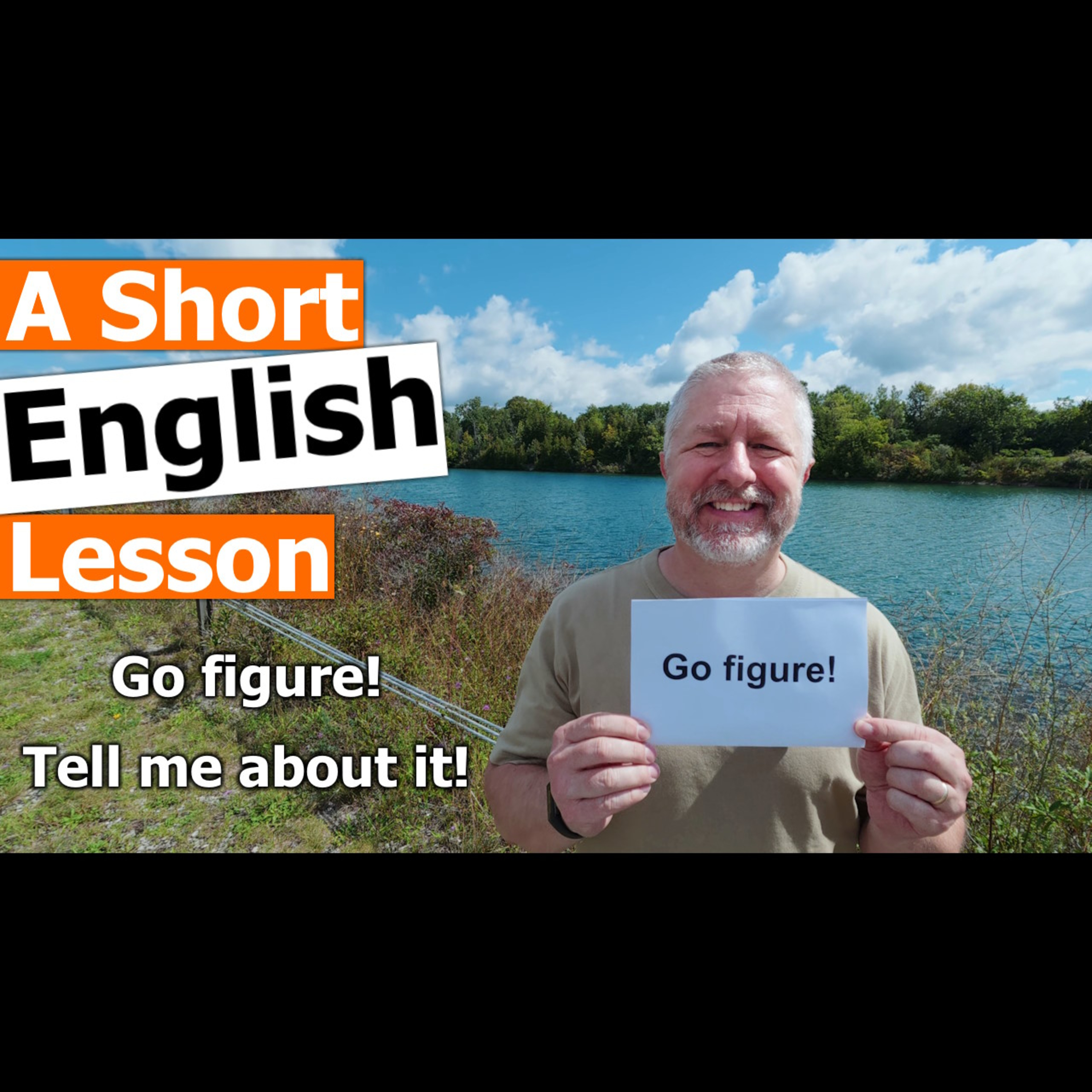 Learn the English Phrases "Go figure!" and "Tell me about it!" 26.08.2026 4dkRead along to learn the English phrases GO FIGURE! and TELL ME ABOUT IT!In this English lesson, I wanted to help you learn the English phrase "go figure." When you say to someone "go figure," it means there's a situation that is illogical and doesn't make any sense and is hard to understand. Here's a great example: in Canada, gas is a dollar seventy a liter, and the federal government removed the carbon tax a few months ago, and they're going to put it back on in September.Go figure. Basically, what I'm saying there is the government putting the tax back on doesn't make sense. Gas is already too expensive, so I say go figure to indicate that I find that situation illogical and hard to understand. The other phrase I wanted to teach you today is the phrase "tell me about it." When you say to someone "tell me about it," it means you agree with what they just said.If someone said the price of gas is way too expensive, I might say "tell me about it." Basically meaning tell me more about it, but it really just means I agree with you. If you said my lessons were awesome, I might say tell me about it. Sorry, that was a little bit cocky there. Anyways, to review, when you say go figure, it means you're expressing your opinion about a situation that doesn't make sense, that is illogical.I actually think it's short for go figure it out. Like you need to actually research and think about it to understand it. And tell me about it simply means tell me... sorry simply means I agree with you. Sorry... I in my mind I was finishing this phrase and thinking I forgot the comment from the previous video in my van, which is a kilometer away.It was a longer walk than I expected here, but it's in my pocket. So hey, let's look at a comment from a previous video. This comment is from Tacagero. C2 English, a bit complicated for me now, but thanks. And my response: You're right, Tacagero, I try to target B1 to B2, but I guess I overshot a bit.Here is the ChatGPT breakdown. So I put the script, the transcript into ChatGPT from the last video. I'd rate this video B2 overall, with a few C1 phrases and features. I definitely would not call it C2, but it's considerably considerably above A2.The interesting distinction is that your delivery and sentence structure are often B1 B2, but the target language pushes parts of the lesson into B2 C1 - from ChatGPT. And and then I'm writing again. I'd say a lesson like this helps a lot of you because I'm floating around the B1 B2 area with how I talk and explain, but I'm helping you learn a C1 phrase. Works for me! And I hope it works for you too.So yeah, I try to kind of have this balance where I'm talking using B1 language as much as I can, B2 language, which is actually common in everyday English.That's not like me trying to sound simpler. It's just how I talk. And then sometimes I will teach phrases that are C1 or C2 level maybe. But hopefully most of you on this channel at least don't mind it being a little more challenging.Hey, so where am I today? Well, I am by a body of water. Which you might think, I think there's a loon there. By the way, that's the bird that's on our coin, the loony. Which you might think is a river, but it's actually an old shipping canal.And what they've done is they've put this bike path or walking path along the edge. There's even a nice pavilion over there. I don't want to disturb the person sitting over there having a peaceful day by videotaping, but yeah, it's just nice.I guess this canal, which I think is part of the old Welland canal system, became too old and then they dug another one. So this is used a lot for recreation. People use this for boating and jet skiing and water skiing and all that kind of stuff.Anyways, thanks for watching this short English lesson. I hope you enjoyed it. I'll see you next week with another one. Bye.
 -
 How to Talk About Clothes & How People Dress in English! 👕👔🧥 25.08.2026 9dkIn this English lesson, you’ll learn common words and phrases you can use to talk about clothes and describe how people are dressed. You’ll learn phrases like dressed for the weather, dressed for success, dressed to impress, dressed for work, dressed in layers, and dressed for the occasion.I’ll also explain the difference between being overdressed and underdressed, what we mean by work clothes and comfy clothes. You’ll also learn what it means to dress up and how to choose clothing that is appropriate for different situations, from going to work or a job interview to attending a wedding or simply relaxing at home.I hope this lesson helps you learn some useful everyday English vocabulary and gives you the confidence to describe what you or other people are wearing.
 -
 Let's Learn English! Topic: Phrasal Verbs I Haven't Taught You Yet! 💑🧳🍕 23.08.2026 22dkIn this English lesson I'll help you learn 25 common phrasal verbs that I haven’t taught in one of my lessons yet! Phrasal verbs are extremely common in everyday English, so learning more of them can help you understand English conversations, movies, TV shows, and native English speakers.In this free English class, I’ll help you learn phrasal verbs like to break up, to break out, to bring back, to call back, to carry out, to check in, to clean up, to come over, to end up, to give in, to grow up, to let down, to look into, to make up, to move on, to pass out, to set off, to take over, to turn out, and more.For each phrasal verb, I’ll give you the definition of the verb, a picture to help you remember its meaning, and an example sentence so you can see how it is used in everyday English.Phrasal verbs can be tricky because the meaning isn't always obvious from the individual words. The best way to learn them is to see and hear them used in context.I hope this lesson helps you add 25 useful phrasal verbs to your English vocabulary! Have a great day!
 -
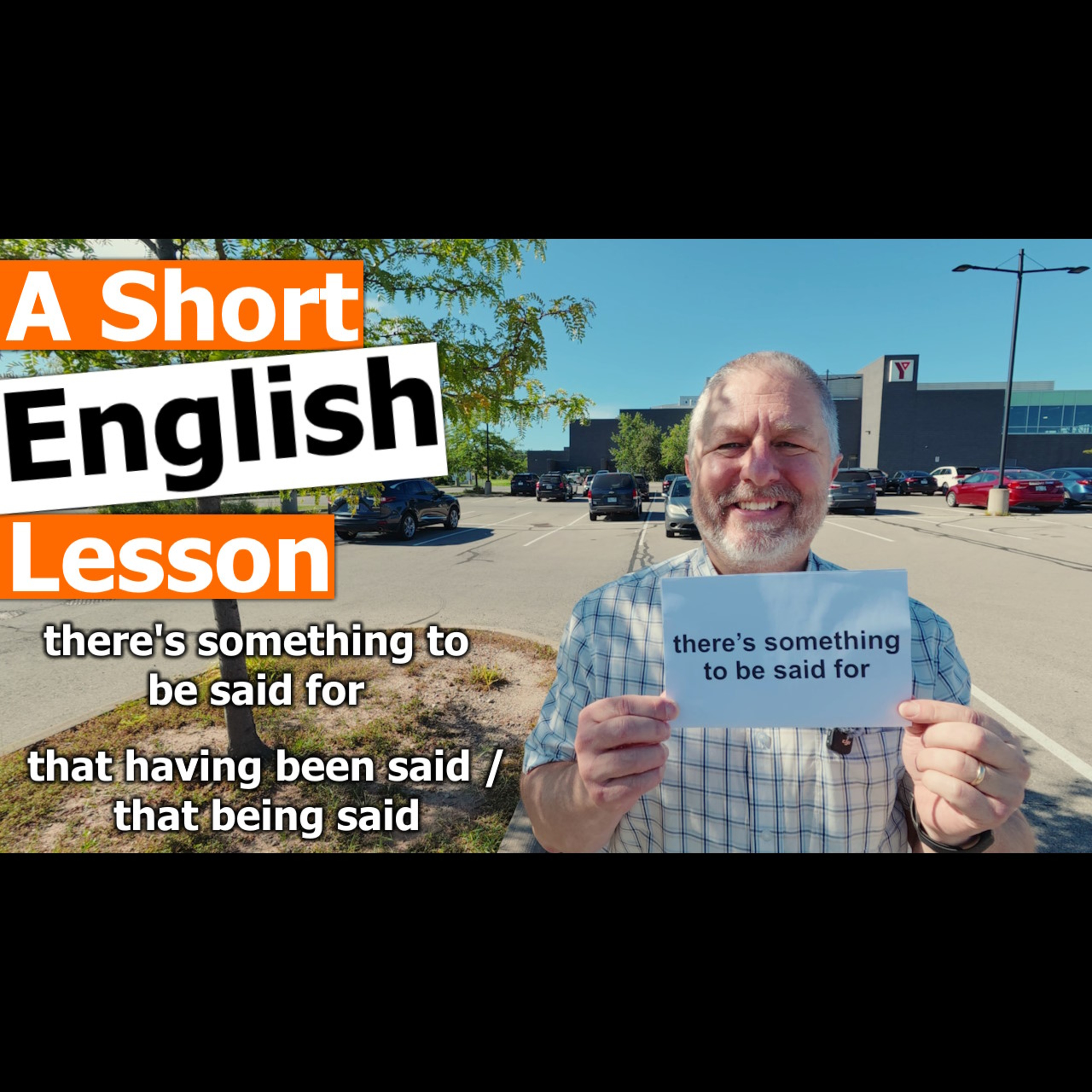 Learn the English Phrases "there's something to be said for" and "that having been said" 19.08.2026 4dkRead along to learn the English phrases THERE'S SOMETHING TO BE SAID FOR and THAT HAVING BEEN SAID / THAT BEING SAIDIn this English lesson, I wanted to help you learn the English phrase, "There's something to be said for," and then after that phrase, you mention something. There's something to be said for exercise. It really makes you feel good. So when you use this phrase, you're about to say something positive about something.There's something to be said for free education. It creates better citizens in your country. There's something to be said for sunshine and a nice warm day. It makes people happy. So when you say there's something to be said for, you're going to say something positive about something.The other phrase I wanted to teach you today is the phrase "that having been said." This is where you introduce kind of like a contrasting opinion. So even though there's something to be said for exercise, it's really really good. That having been said, sometimes you can injure yourself.So you see how I talked about the positive part of exercise. And then I use this phrase to introduce something that's a little bit negative about it. The sunshine is amazing. That being said, though, if I stand out here too long, I'll probably get a sunburn. So to review, when you say there's something to be said for, you're about to say something positive about the thing that you mentioned right after that phrase.And then when you say that having been said, you're about to introduce something that is in contrast or the opposite of what you've just said or even something negative. But hey. Let's look at a comment from a previous video. This comment is from Konstantin.Nice to see you alive and kicking as always. Never say never, eh? As for the preference for used vehicles over new ones, it makes sense nowadays with mass production soaring and quality plummeting. I'm longing for old quality standards. Nice to see you alive and kicking as always, and thanks a lot for your efforts.And my response, I agree. There is definitely something to be said for the durability of old vehicles. In the 70s, we had a Mercury Marquee and it was built like a tank. So, I used the phrase there in my response. Did you see that? And then you learned a new phrase there: built like a tank.When you say something is built like a tank, it means that it's built really, really well. And I could also use the other phrase. I could say, that being said, about older vehicles, they were gas guzzlers. There's another phrase for you, which I think most of you know.They definitely used a lot of gas. So, anyways, thanks, Konstantin, for that comment. You might be wondering where I am. Well, I am outside my gym. You can see it in the background behind me. I don't want to go too close because people want their privacy, and you're not actually allowed to film in the gym, which makes sense.I actually like the fact that you can't film in the gym. I... I would... I prefer going to gyms where people aren't making videos, although I do think I took a little selfie there. So I said this was my gym. That's not exactly true. I am a member of what's called the YMCA, and I usually go to one in the town of Welland.But today I had to bring one of my other kids to work because our car is in the garage, and so I am in the town of... Well, I would say Grimsby, but we're kind of right on the border between Grimsby and Beamsville, and so I went to this Y. And the cool thing is, my membership works at any Y, I think in the world probably.Okay, don't quote me on that. I'm pretty sure my membership works at any Y in Ontario, Canada, and quite possibly any YMCA in the entire world. By the way, we refer to the YMCA by just saying the Y. It's kind of a short and easy way to mention it.So I'm a little further away now. There was a man looking at me outside the window. I'm not sure he was too happy. What does the Y have? It has a walking track. It has a pool. It has machines...
 -
 How To Describe Yourself In English Part 2! (Also Some Things You Might Not Know About Me!) 18.08.2026 21dkIn this English lesson, you’ll learn how to describe yourself in English by listening to me answer questions about my life, personality, interests, childhood, family, work, and more. Many of you asked me a lot of interesting questions, and I chose some of my favourites to answer. As you listen, pay attention to how I organize my answers and the words and phrases I use to talk naturally about myself.You’ll hear me answer questions such as: Have you ever been to Thailand? What did you enjoy as a child? Are you an introvert or an extrovert? What do you do when you’re bored? What are you most proud of? What is your favourite comfort food? I’ll also talk about my school years, my interest in computers and technology, my grandparents coming to Canada, and how I’ve changed as I’ve gotten older.Think of my answers as models or templates for your own English conversations. After you watch the lesson, try answering some of the same questions about yourself. You can borrow the structure of my answers and change the details to match your own life. This is a great way to practice speaking English, prepare for real conversations, and build confidence talking about yourself.I hope you enjoy the lesson, learn some new English, and maybe learn a few new things about me too!
 -
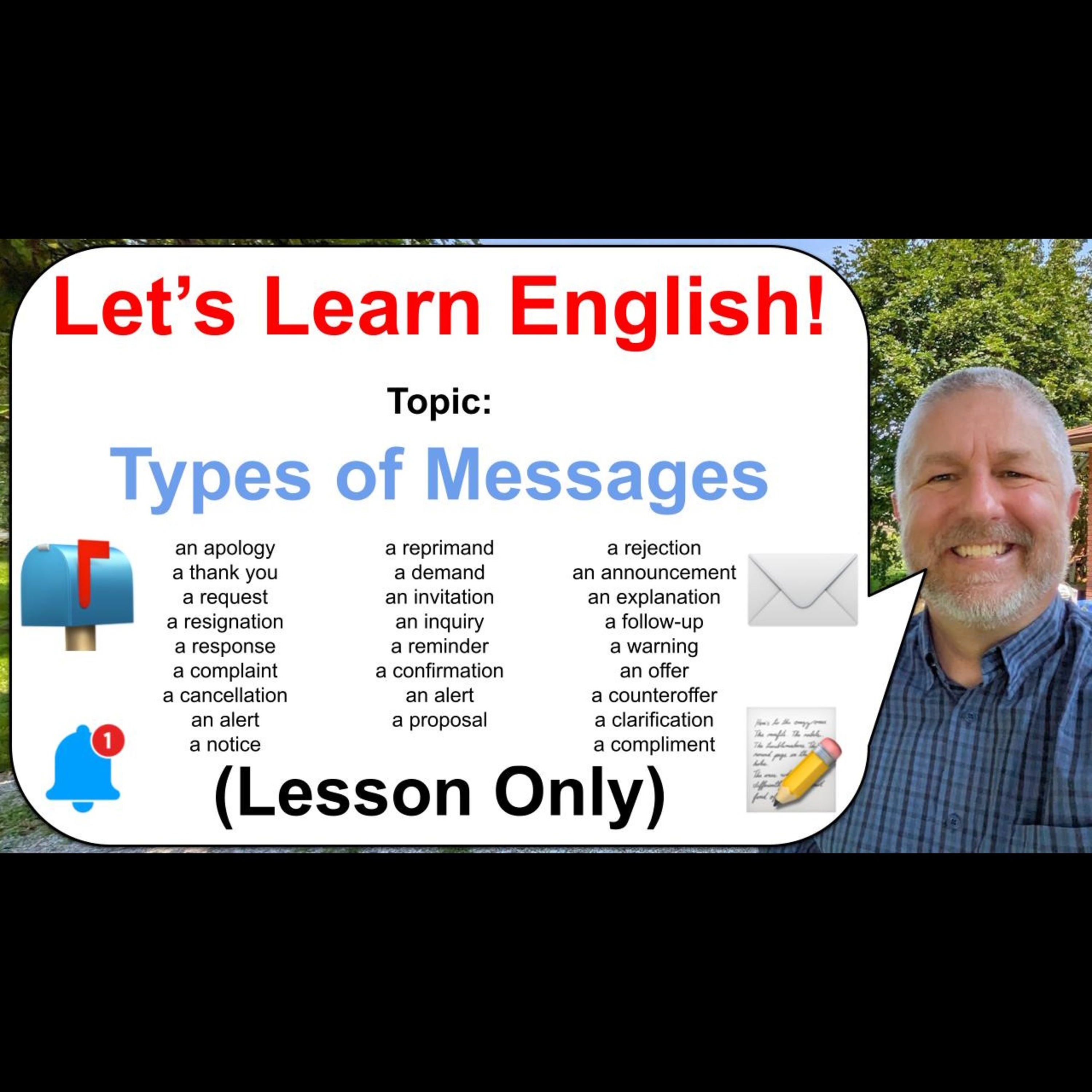 Let's Learn English! Topic: Types of Messages! 📫🔔📝 TOEIC TOEFL IELTS Prep 16.08.2026 27dkIn this English lesson, you’ll learn some vocabulary for different types of messages that we send and receive every day. Messages can be friendly, formal, helpful, or urgent, and they often contain important information.In this free English class, I’ll help you learn common types of messages, including an apology, a thank you, a request, a complaint, an invitation, an inquiry, a reminder, a confirmation, a warning, an offer, a proposal, a notification, an update, a compliment, and more. You’ll also learn some more formal words, such as a resignation, a reprimand, a demand, a rejection, a counteroffer, a clarification, and a notice.For each word, I’ll explain what it means, show you a picture to help you understand it, and give you examples of when you might send or receive that type of message. These words are useful for everyday conversations, text messages, emails, school, and work.This lesson is also useful if you’re preparing for an English test such as the TOEIC, IELTS, or TOEFL. Learning how to understand different types of messages can help improve your vocabulary, reading, and listening skills for these exams.I hope you enjoy this English lesson about types of messages and that it helps you understand more of the messages you send and receive every day. Have a great day!
 -
 Learn the English Phrases "almost never" and "hardly ever" 12.08.2026 4dkIn this English lesson, I wanted to help you learn the English phrase almost never. When you say that you do something almost never, it means you do do it. I just used the word do two times in a row. That's kind of a funny thing with the English language, isn't it? You do do that thing, but just not very often.I'm in a town today called Beamsville. And I almost never come to this town. None of my kids work in this town. No one that I am related to lives in this town. I don't have any friends in this town. And so I almost never come here.So that doesn't mean I never come here. I do come here every once... come here every once in a while. I'm here today because a family member had an appointment and they asked if I could drive them to it. So I brought them to their appointment, and now I have to wait an hour before they are done. But I almost never come to this town.The other phrase I wanted to teach you today is hardly ever, which means exactly the same thing. I hardly ever come to this town. That doesn't mean that I don't come here once or twice a year, but I hardly ever come to this town. I'm sure there's things in life where you could use both of these phrases.So let's review. When you almost never do something, it means you do it rarely. And when you hardly ever do something, it means that you rarely do it. Right now, I hardly ever eat sugar. Added sugar. I almost never eat added sugar, which it sounds like that's like this amazing thing I'm doing.But I've only done it for like two weeks. It's not that impressive yet. But hey, let's look at a comment from a previous video. This comment is from Rosario. Hi, Bob. I am happy you notice our skills are improving. I want to highlight your lessons are rather short, efficient, and relaxing.That is why most of us improved a lot over the time. And my response. I'm happy to hear that you appreciate the length and the tone. I try to teach, but also show. I think that helps. So thank you, Rosario, for that comment. Yeah, I try to teach and I try to show.I have to admit, I haven't been getting out as much as I would like to for these little English lessons. Today it is nice to be out and about. Right now, I'm walking in front of what we would call a car dealership.It is a GM Dealership, and I think it sells mostly used cars and trucks. You can See, here they have some nice shiny cars lined up ready for people to buy. I have to say, though, in my family, we hardly ever buy new vehicles.Like me and my siblings or my siblings and I. Sorry. Sorry about that. My siblings and I hardly ever buy brand new vehicles. We almost always buy used vehicles. So, yeah, we almost never buy new.I do know that my sister, I think bought a new vehicle once. But, yeah, we hardly ever buy brand new vehicles. But someday maybe I'll do that. I don't know. Maybe someday I'll buy a brand new vehicle. But we'll just have to wait and see how well the current vehicles keep running.I'm sure you probably want a bit of a bigger view. So here's the car dealership. In the distance, there's just... I think there's some farms across the road. There is a subdivision. In English, we would call that a subdivision.A grouping of houses kind of all in one spot, where people enjoy their lives. But it looks a little crowded to me. Being from the country, whenever I see a subdivision, I feel like it looks a little bit crowded, but it probably isn't.Anyways, thanks for watching this short English lesson. I hope you were able to learn a couple new little English phrases that you can use in your next conversation. And I'll leave you with a view of all of these cars ready to be purchased and driven all over Ontario, Canada.Anyways, Bye. See you next week.
 -
 10 Mistakes People Make When Learning English! 11.08.2026 12dk✅ If you are making any of these mistakes, Preply is a great way to find an English conversation partner who will help you fix that. Use this link: https://preply.sjv.io/R0WNd2 to get 50% off your first lesson or use code BOB50 at checkout. In my experience Preply is a great way to take your language learning to the next level!Learning a new language is exciting, but it's also easy to make mistakes that slow your progress. In this English lesson, I'll talk about 10 common mistakes people make when learning English and how to avoid them.We'll discuss why expecting quick results can lead to frustration, why taking a placement test is so important, and how creating an immersive environment can help you improve faster. I'll also explain the value of finding a speaking partner, practicing writing, following a study schedule, tracking your progress, and using repetition to build long-term fluency.We'll also look at two traps many learners fall into: spending too much time on the skills they already enjoy while avoiding the difficult ones, and becoming too comfortable instead of gradually challenging themselves with more difficult English.I hope these tips help you study more effectively and stay motivated on your language-learning journey. Have a great day, and happy English learning!
 -
 Let's Learn English: Topic: Attachments, Addons, Doodads, and More! 📥🎮🚗 09.08.2026 20dkIn this English lesson, you’ll learn vocabulary for the extra things, parts, features, and accessories that come with products or can be added to them.You’ll learn useful words like attachment, add-on, doodad, accessory, extension, expansion, upgrade, bonus, option, feature, module, plugin, adapter, spare, refill, sleeve, cover, and carrying case.I’ll also teach you some very common phrases that you’ll see when shopping or reading product descriptions, including comes with, sold separately, and not included.These are useful English words for talking about electronics, tools, appliances, computers, vehicles, equipment, and many other everyday products. You’ll learn what each word means and how English speakers use it naturally.I hope you enjoy this English vocabulary lesson and that it helps you learn a few new words and phrases! Have a great day!
 -
 Learn the English Phrases "to hit the ground running" and "to throw your hat in the ring" 05.08.2026 4dkRead along to learn the English phrases TO HIT THE GROUND RUNNING and TO THROW YOUR HAT IN THE RINGIn this English lesson, I wanted to help you learn the English phrase to hit the ground running. When you're about to do something, if you are completely prepared and you have lots of energy and you're ready to do it, we say that you are ready to hit the ground running. We always want students to be ready to hit the ground running on the first day of school.When they come to class, we want to make sure they have pens and pencils and a binder and paper to write on. And then we give them their textbook so that their school year can go really, really well. If they come prepared, we would say they're ready to hit the ground running. The other phrase I wanted to teach you today is the phrase to throw your hat in the ring.A few towns away from here, not the town where I sometimes shoot videos, the one where Jen has market, right now, people are running for mayor. If I lived in that town, I might decide to throw my hat in the ring. You could decide to throw your hat in the ring if you are interested in being part of the election process and hopefully people will vote for you and then you will become mayor.So when you throw your hat in the ring, it doesn't always have to be a political thing, but it means to volunteer or allow your name to be, included in something like a vote for a new mayor. So to review, to hit the ground running means to be completely prepared and ready to do something.If you're going to sit down and learn English tonight, in order to hit the ground running, then make sure your phone is charged or your laptop is charged. Make sure you have a pen and a piece of paper to take notes on. You'll be ready to hit the ground running. And maybe in your local town, they need a new mayor or maybe you want to, be the leader of your country.In that case, you should throw your hat in the ring so that people know you are interested in doing that. But hey, let's look at a comment from a previous video. The comment might relate to the phrases I just taught. This is from Unsal. Thank you for another wonderful video and for all the great phrases you teach us since you often tell us you're awesome, which has become my favorite go to phrase as well.I immediately thought of you when I heard Bryan Adams new song, you're awesome from his Toughtown album. While listening to it, I noticed two phrases that I wasn't quite sure about. To hit the ground running and to put your hat in the ring. Whenever you have a moment, I'd be so Grateful if you could share a quick explanation or an example for them.No problem. Thanks as always for your great energy and have a wonderful day. You're awesome. Bye. And my response, those are great phrases to learn. I will definitely keep them in mind for a future video. So it's kind of like time travel now. If you're like, what are those phrases? Well, if you rewind and go to the beginning of the video, you can see me teach them.Once again. Thanks, Unsal, for that comment. That's very awesome. Bit of a long comment, but I do like how many of you are improving your English writing over time. I actually do notice for some of the regular people commenting that over the last four or five years on this channel, your writing has become better and better.So good job, Unsal. Hey, guess what happened after the live stream last week. Actually, the day after the live stream, it rained quite a bit. And so the river is actually a little bit bigger than it normally is.So normally the river is quite a bit smaller way in the distance. It's probably hard to see. I do have some soybeans underwater. About an acre of soybeans is underwater. And if you look across, you can kind of see some grass sticking out on the neighbor's field.
 -
 3 Goals You Can Set To Help Improve Your English 🎯 05.08.2026 5dkIn this English lesson I'll help you learn how to set goals that will actually help you improve your English over time. Learning a language takes consistency, and having goals can make it much easier to stay motivated and keep making progress.In this lesson you'll learn about three different types of English learning goals: daily goals with a clear finish line, long-term goals that prepare you for something important in the future, and goals that help you focus on your weakest English skill. Whether you're studying for a test, planning a trip, or simply trying to become more fluent, these strategies can help you stay on track and keep improving.I hope you enjoy this English lesson, and I hope it helps you create a plan that keeps you motivated as you continue learning English. Have a great day!
 -
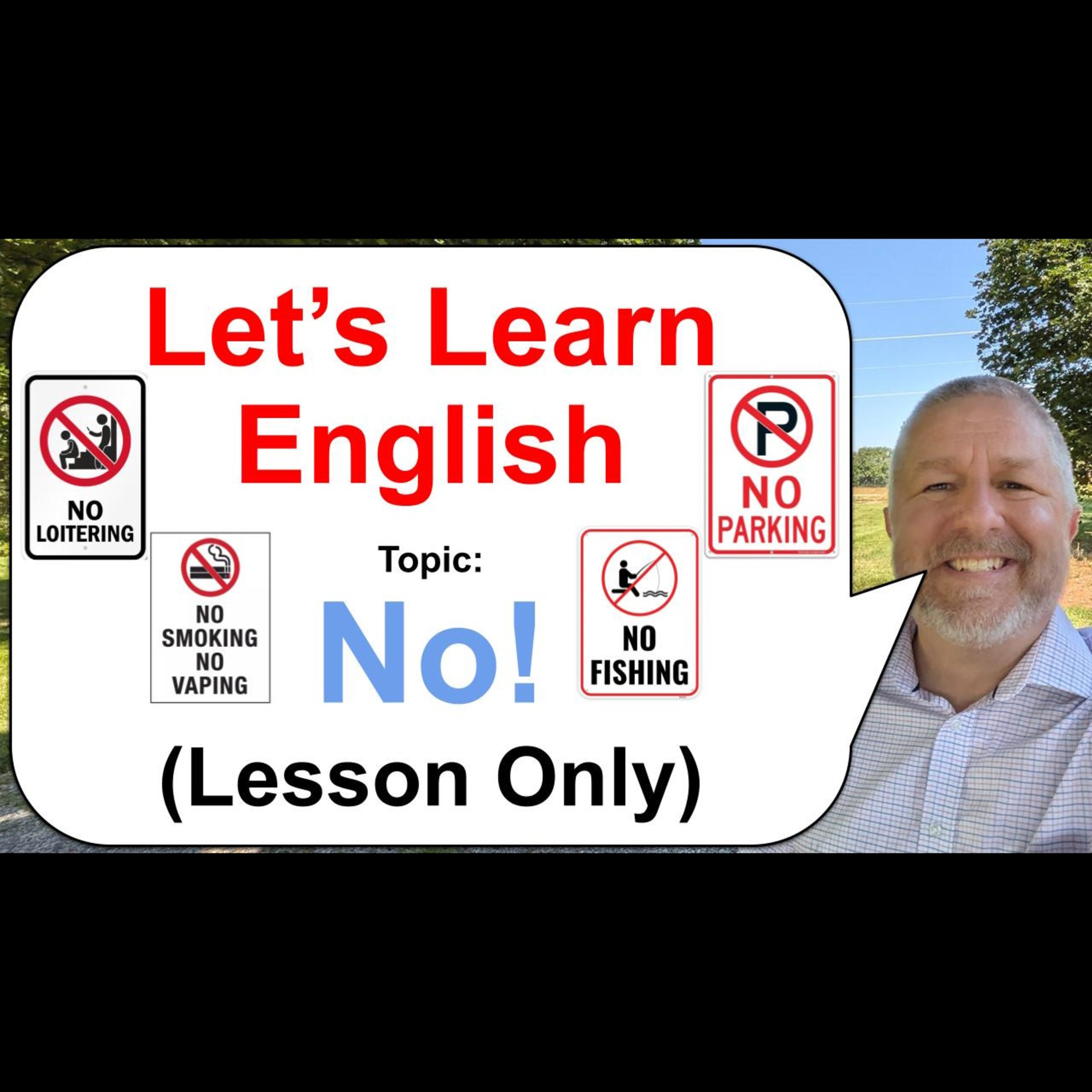 Let's Learn English! Topic: NO! 🚷🚯🚳 02.08.2026 28dkIn this English lesson I'll help you learn how to understand many of the common signs you'll see that tell you what you are not allowed to do. Whether you're traveling, visiting a park, store, beach, campground, or public building, these signs are everywhere, and understanding them will help you avoid confusion and follow the rules.In this English class you'll learn phrases like: no smoking, no parking, no loitering, no fishing, no littering, no entry, no exit, no trespassing, no hunting, no camping, no swimming, no diving, no fires, no dogs, no pets, no off-road vehicles, no food or drink, no outside food or drink, no shirt, no shoes, no service, no photography, no video recording, no soliciting, no returns, no refunds, no running, no horseplay, no dumping, no wake, no alcohol, no overnight parking, and no engine brake.I hope you enjoy this English lesson, and I hope it helps you better understand the signs and rules you see in English-speaking countries. Have a great day!
Benzer podcastler


Şurada popüler
Bu podcast şu ülkelerin podcast listelerinde de yer alıyor.


