
Investing in Regenerative Agriculture and Food
Koen van Seijen
0
Investing in Regenerative Agriculture and Food podcast features the pioneers in the regenerative food and agriculture space to learn more on how to put our money to work to regenerate soil, people, local communities and ecosystems while making an appropriate and fair return. Hosted by Koen van Seijen.
Bölümler
-
 440 Christian Holzleitner - How EU regulation could unlock the soil carbon market for European farmers and investors 15.09.2026 45dkFive years ago, many people in the regenerative agriculture space thought that simply paying farmers for soil carbon storage would rewire the agricultural system in a heartbeat. It turned out to be considerably more difficult. The European soil carbon market has not scaled at the speed needed. The voluntary carbon market has not delivered the financing that was hoped for. Is regulation part of the answer? The solar market suggests yes. Christian Holzleitner is Head of Unit for Land Economy an...
 -
 439 Farm data can and will be used against you - Live from Groundswell 2026 08.09.2026 1saOnly 4% of Benedikt Bösel's customers scanned the QR code on their meat — even though that code would have shown them the life of the specific cow they were eating, its pasture, its movement, everything. The other 96% either trusted the brand completely, or simply didn't care. That number sits at the centre of this conversation. This episode was recorded live at Groundswell 2026, the UK's largest regenerative agriculture festival. Koen moderated a 55-minute panel on a question that matters as...
 -
 438 Eric Smith - How nutrient quality data rewires the food system 01.09.2026 1sa 23dkEric Smith is the founder of Edacious, a company building the infrastructure to make food quality and nutrient density measurable, objective and comparable. After spending years building a nutrition-testing platform capable of measuring macronutrients, micronutrients, bioactives and phytochemicals, alongside the benchmarks and data systems needed to make those measurements useful, he returns to sit down with us to share what they have been building, how the field of nutritional testing has ev...
 -
 437 Abby Rose - Storytelling in Regenerative Agriculture: Who Funds Stories That Shift Systems? 25.08.2026 1sa 2dkAbby Rose is an experienced agricultural storyteller, co-host of the award-winning podcast Farmerama Radio, and co-founder of the soil monitoring and data platform VidaCycle. With a background spanning technology and hands-on farming on her family's farm in Chile, Abby has spent nearly a decade amplifying the voices of the regenerative farming movement and creating tools to help farmers build healthier soils. This July, Abby is back on the podcast to share an update on Cereal, her six-part se...
 -
 436 Erica Gies - Water always wins, and we can still cool the planet if we let it 11.08.2026 52dkWater always wins. The question is whether we let it cool the planet while it does — or keep fighting it until there's nothing left to fight with. Erica Gies is the author of Water Always Wins: Thriving in an Age of Drought and Deluge, and is currently writing her second book, Roots to Sky: How Life and Water Can Help Cool Earth's Climate, due in 2028. She is an environmental journalist who has spent more than a decade travelling the world to document how communities are rebuilding their rela...
 -
 435 Gonzalo Úrculo - Inside Crowdfarming’s model of 500,000 customers and 350 farmers 04.08.2026 57dkAn orange farm near Valencia, abandoned for a decade, a family debt, and a website. Seventeen years later: 500,000 customers, 350 partner farmers, 400 employees, and not a single discount ever run. Gonzalo Úrculo is co-founder of Crowdfarming, the direct-to-consumer platform that connects European consumers directly with farmers — no wholesaler, no distributor, no price negotiation after harvest. He came back from his Erasmus in Berlin, talked his family out of selling the grandfather's farm,...
 -
 434 Marc Leiber - 200 euros, 160,000 trees, and how to build a syntropic paradise from scratch 28.07.2026 1sa 54dk200 euros in a bank account, no contract, and a vision. Six and a half years later: 160,000 trees, a soil temperature at 15cm depth of a constant 21°C — while the bare field metres away peaks at 38°C — and a landscape so full of birds that visitors ask to walk through it in silence. Marc Leiber, founder of Grow Back and farmer at Quinta das Abelhas, in Portugal, is German agroforestry practitioner who spent nine months on Ernst Götsch's farm in Brazil, arrived in Portugal's Alentejo with almo...
 -
 433 Dimitri Tsitos - Three years of R&D in intensive almonds: can you really do regen? 21.07.2026 1sa 2dkDimitri Tsitos, co-founder of Agrosystemic, left Greece a decade ago, spent years working across European farming systems, and eventually landed in Portugal to run what has become one of the most rigorously monitored regenerative trials in Mediterranean intensive tree crop agriculture. He is the lead on the field research side of the Arbo-Innova project, a multi-farm, multi-consortium research platform focused specifically on the question of whether regenerative practices can be meaningfully ...
 -
 432 João Valente - 26 years no-till, outcompeting monocultures, and now teaching his neighbours 14.07.2026 1sa 13dkJoão Valente, owner of Monte Silveira, took over his family farm in central-eastern Portugal that was running on tobacco, broccoli, and melons with sixty-five people employed year-round, the rotation designed entirely around subsidies. When the tobacco subsidy disappeared at the end of the 1990s, he found himself with a question: what does this land actually want to be? That question led him to organic agriculture conferences in Portugal, to a magazine showing no-till, to a German seed compan...
 -
 431 Diogo Pinho - Why Europe's largest silvopasture system is collapsing and how grazing fixes it 07.07.2026 1sa 22dkDiogo Pinho started his scientific career in the first DNA sequencing lab in Portugal, then did a hands-on PhD on the soil microbiome of cork and holm oak, studying why the trees get sick, before spending two years with Biome Makers, a soil microbiome analysis company, running labs and translating bacterial and fungal profiles into colour-coded, farmer-readable reports for growers around the world. Three years ago, a chance conversation at a farm visit twenty minutes from where he was living ...
 -
 430 Lara Espirito Santo - Source the cream, not the butter: fixing food waste through regen sourcing 30.06.2026 1sa 27dkLara Espírito Santo grew up shuttling between Rio de Janeiro and her father’s industrial farms in Paraguay and Brazil, traded a planned career in politics and international development for a kitchen job at Silo in London, and went on to co-found SEM, the zero-food-waste restaurant in Lisbon she ran with her partner George McLeod until closing it ten days before this conversation (not for financial reasons, but to figure out what comes next). Source the cream instead of buying butter, and one ...
 -
 429 Raiza Rezende - Closing the gap between soil health and human health 23.06.2026 40dkBrazilian-trained chemical engineer, Raiza Rezende left a career path lined up by petroleum, gas, and pharmaceutical companies to study syntropic agriculture with Ernst Götsch, then WWOOFed her way across Spain, Portugal, and Greece before co-founding two organisations working from opposite ends of the same problem: Agrosystemic, which helps large farms in Portugal and Brazil transition toward regenerative practices, and RHEA, the Regenerative Healthcare European Association, which is trying ...
 -
 428 John Gilliland - Why a top UK regen farmer hasn't sold his carbon yet 16.06.2026 1sa 20dkJohn Gilliland is a sixth-generation UK farmer and advocate for sustainable agriculture with a legacy in policy, academia, and innovation. As a leader of the ARC Zero project, his own farm is a model for "Beyond" Net Zero practices, where willow cultivation, livestock grazing, and renewable energy initiatives work together in a circular system. He has credits he could sell tomorrow and hasn't sold any. The reason cuts to the heart of the whole carbon market: on the voluntary market, he says, ...
 -
 427 James Barrett - Europe has a water retention problem 09.06.2026 22dkEurope doesn't have a water problem. The rain still falls; we've just spent a few hundred years engineering it off the land as fast as we can, which James Barrett likens to hauling your garden clippings to the dump only to drive back in spring and buy compost. James is a regenerative hydrology consultant, founder of Decent Water Company and lead regenerative designer for Ten Lives Festival in Portugal — where 150 people spent their mornings digging rock-lined "smiles" into a semi-arid, 70-hec...
 -
 426 Ivana Gazibara - Deploy $1.4 billion in catalytic capital to transform the Midwest agricultural system 02.06.2026 1sa 16dkThe Midwest: 140 million acres of corn and soybeans, rural economies slowly dying, a system with no real long-term future in terms of soil or human health. It's also where roughly 25% of farmland could flip the entire region toward regeneration—but only if you coordinate capital the right way. Ivana Gazibara, Director of Systemic Investment Programmes at the TransCap Initiative, spent two years mapping the intervention points needed to drive systemic change across the agricultural heartland. ...
 -
 425 Daniel Vidal - How to build a zero-waste restaurant with deep ancestral Mexican roots 26.05.2026 29dkDaniel Vidal, head chef of Baldío, LATAM's first zero-waste restaurant, joined Koen in the kitchen in Mexico City to talk about what it actually takes to make radical food accessible to the people it was always meant for. When Baldío won a Green Michelin Star, Daniel didn't think to take his mother there for her birthday as the restaurant back then could win over critics but not his own community. Daniel walks through how Baldío rebuilt its menu from the ground up shifting from a Nordic-infl...
 -
 424 Benedetta Kyengo - The Green Revolution stole her paradise, now she's bringing it back through syntropic agroforestry 22.05.2026 1sa 15dkAs a child in Nairobi, Benedetta Kyengo spent holidays climbing trees and eating mangoes and papayas at her grandmother's food forest in eastern Kenya. Eight years later, every tree was gone, replaced by maize and beans, and her grandmother, who used to send food to the city, was depending on money sent from it. That reversal, from abundance to dependency in a single generation, is the wound this episode is about healing. Benedetta, founder of Feedback to the Future and a practitioner of synt...
 -
 423 Chris Locke - Fermentation is the future of food 19.05.2026 36dkFermentation is the oldest food technology on earth. It happens in our guts, in the soil, in every cup of coffee and most restaurants still throw the juiced lime away. At Baldío, Mexico City's zero-waste restaurant, Chris Locke has built an entire philosophy around that lime: a Korean-style raw syrup, a lacto-fermented powder for seasoning, a tapache, and finally a koji-based shoyu. Four products, zero waste, from something already used. In this conversation, recorded inside Baldío's pr...
 -
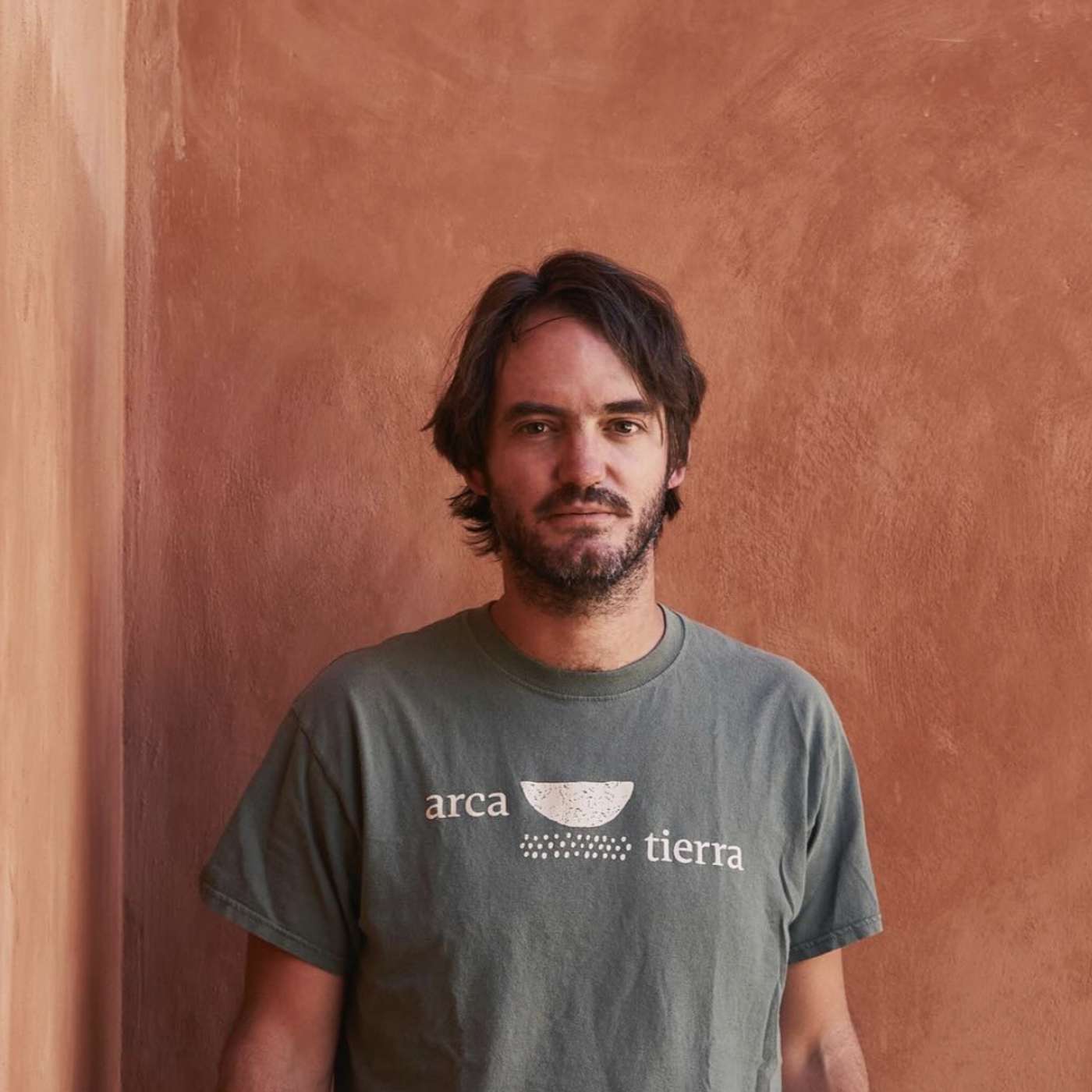 422 Pablo Usobiaga - Building nature's favourite restaurant in Mexico City 12.05.2026 56dkAn ancient farm system, built by hand on top of water, hidden inside one of the largest cities on earth and almost nobody knows it exists. The chinampas of Xochimilco are human-made islands, constructed over centuries in the lakes that Mexico City was built on. At their peak they fed an entire civilisation. Today, more than 60% are abandoned, the city is slowly swallowing the edges, and once a chinampero stops farming, another one rarely takes their place. Pablo Usobiaga from Arca Tierra is t...
 -
 421 Janet Maro — Farmers are the architects, not the audience 08.05.2026 53dkWhen Janet Maro started building training programs with farmers in Tanzania, she didn't arrive with a curriculum. She asked farmers what they knew, what they needed, and what they could bring to the table — and built from there. That instinct, to treat farmers as the architects rather than the audience, turns out to explain most of what makes Sustainable Agriculture Tanzania unusual: why groups keep meeting and planning years after projects end, why an organic shop opened in Morogoro in 2012 ...
Benzer podcastler


Şurada popüler
Bu podcast şu ülkelerin podcast listelerinde de yer alıyor.

