
unSILOed with Greg LaBlanc
Greg La Blanc
0
unSILOed with Greg LaBlanc is a podcast that features interdisciplinary conversations aimed at inspiring new ways of thinking about the world. It seeks to build a community of lifelong learners who are curious and eager to gain insights about themselves and the world around them. The podcast is produced by University FM.
Bölümler
-
 684. Picky Eaters of the 20th Century: How Americans Learned to Eat with Helen Zoe Veit 15.09.2026 47dkHelen Zoe Veit is a professor of history at Michigan State University and also an author and editor. Her latest books are titled Picky: How American Children Became the Fussiest Eaters in History and Modern Food, Moral Food: Self-Control, Science, and the Rise of Modern American Eating in the Early Twentieth Century. Greg and Helen discuss changes in American eating habits during the 20th century. Helen explains that food history became a viable academic field largely in the last 25 years, and describes early-20th-century shifts toward government regulation, nutrition science, calories, home economics, and factory food, which encouraged Americans to distrust appetite and pleasure while fueling diet culture and moralized views of weight. Their conversation traces how children’s “natural” pickiness was culturally constructed through things like Clara Davis’s studies, rising processed foods and instant alternatives, advice from Dr. Spock, and marketing power via supermarkets and the media. They discuss diluted “foreign” foods, faddists like Fletcher, the decline of Home Ec classes, and how history could inform a more balanced, pleasurable relationship to food. *unSILOed Podcast is produced by University FM.*
 -
 683. A Woman’s Economic Toolkit for a Happier Life with Corinne Low 11.09.2026 52dkIs it true that divorced moms actually do less housework than married moms? Is there an optimal time for women to pause their careers to start a family? How can you tell by the third date whether or not your relationship is a good deal? Dr. Corinne Low is a professor of public policy and economics at the Wharton School of Business at the University of Pennsylvania. Her book, Having It All: What Data Tells Us About Women's Lives and Getting the Most Out of Yours, provides a roadmap for optimizing your resources and maximizing your satisfaction in life, whether it be with your career or your family. Corinne and Greg discuss the problems modern women face in the workplace and at home, the economic tools women can apply to make the most out of what they’ve got, and the importance of strategically picking a romantic partner. They also unpack the million dollar question with profound social implications: Why are women still expected to do the majority of the housework? *unSILOed Podcast is produced by University FM.*
 -
 682. Exploring Complexity: From Physics to Economics with J. Doyne Farmer 08.09.2026 50dkJ. Doyne Farmer is a Professor of Complex Systems Science at Oxford University, Hedge-Fund Founder, and author of the new book, Making Sense of Chaos: A Better Economics for a Better World. Greg and Doyne discuss why complexity science has not displaced mainstream economics. Doyne argues that economics is intellectually conservative and overly committed to closed-form math, with behavioral challenges and the 2008 crisis highlighting endogenous dynamics. He also recounts working to beat roulette using physics, his work on chaos (sensitive dependence, strange attractors), and using simulation as a core complex-systems method. When they shift to the topic of finance, he describes “market ecology,” specialists with noisy skill, and why even uninformed trades have market impact. Doyne notes bounded rationality’s rise with modern computing and data, critiques systemic regulation, and describes industry-leading simulation work, including COVID UK economic-policy modeling and energy-transition/climate models that emphasize data-driven forecasts and policy nudges. *unSILOed Podcast is produced by University FM.*
 -
 681. Dining with Purpose: Exploring Taste and Tradition with Scott Samuelson 03.09.2026 59dkScott Samuelson is a professor of philosophy at Iowa State University and the author of several books. His latest work is called To Taste: On Cooking and the Good Life. Greg asks Scott about his views on why philosophy and aesthetics have sidelined food and actual taste in favor of nutrition, consumer preference, or narrow ethics. Scott argues food, cooking, and communal meals are central to human meaning, ethics, and hospitality, and that taste is a form of wisdom joining truth, goodness, and beauty while bridging the labels of subjective, objective, and intersubjective judgment. He links taste to style through cooking as an active practice of tasting and adjusting, critiques consumer capitalism’s push toward radical aesthetic subjectivity and “food porn,” and the subject of tradition as an evolving conversation. They also connect food to education via metaphors of digestion, emphasizing initiation, attention, and the cultivation of judgment and style, and Scott defends ‘festivity’ and ‘shared meals' as two foundations for intimacy and flourishing. *unSILOed Podcast is produced by University FM.*
 -
 680. Decoding Change Management in the Workplace with Ashley Goodall 01.09.2026 52dkAshley Goodall is a longtime consultant, Fortune 50 executive, speaker, researcher, and writer in the areas of leadership and human resources. His two books are Nine Lies About Work: A Freethinking Leader’s Guide to the Real World and The Problem with Change: And the Essential Nature of Human Performance. Greg and Ashley discuss how rapid transformation, especially with AI, often worsens work because human employees are wired for stability, ritual, predictability, and belonging. Change and improvement are not synonyms. They discuss creating “equilibrium under varying load” by making decision processes transparent, offering voice without confusing it with vote, and giving people information to improve predictions, since bad news is often preferable to no news. Ashley notes how leaders underinvest in people due to short-termism, and layoffs and constant uncertainty damage both remaining employees and health. He emphasizes building many great teams, choosing and training team leaders well, recognizing excellence publicly, making contributions legible to boost self-efficacy, and reorienting HR toward long-term human performance and organizational prosperity as administrative work is automated. *unSILOed Podcast is produced by University FM.*
 -
 679. Happy Spending and Joyful Climate Action with Elizabeth Dunn 27.08.2026 55dkElizabeth Dunn is a professor of psychology at the University of British Columbia, and director of their Happiness Lab. She’s also the co-author of two books, Leave the Lights On: How Joyful Decisions Can Save Our Species and Happy Money: The Science of Happier Spending. Greg and Elizabeth discuss how her work links common errors in forecasting happiness with misunderstandings about carbon impact. Elizabeth argues that experiences generally bring more lasting joy than material goods do because of comparison and hedonic adaptation. However, savoring and creating scarcity can renew enjoyment. She shares experiments showing people become happier when spending money on others, with studies where participants were given cash and a TED-backed $10,000 project where other-focused spending and charitable donations produced the greatest happiness. On climate, Elizabeth says guilt and fear exhaust people, and a better plan would be “more math, less moralizing,” focusing on high-impact actions like commuting choices, housing size and location relative to work, and travel decisions (nonstop flights, carry-on). She also debunks myths about straws and individual AI use, highlights contagious positive behaviors like solar adoption, defends having children, and emphasizes voting and civic action as key ways to make a difference alongside individual change. And for curious car fans, Greg’s college and current car is a 1983 Mercedes 240d, which is described as a legendary, over-engineered diesel sedan built on the indestructible W123 platform. *unSILOed Podcast is produced by University FM.*
 -
 678. Exploring Exponential Organizations with Salim Ismail 24.08.2026 55dkSalim Ismail is a co-founder & partner at Exponential Venture Capital, founder of OpenExO, founding Executive Director at Singularity University, and an author. His latest work is, Exponential Organizations: Why new organizations are ten times better, faster, and cheaper than yours (and what to do about it). Greg and Salim discuss Salim’s shift from focusing on exponential technologies to organizational design as the main bottleneck to organizations adopting disruption. He traces the idea to his experience leading innovation at Yahoo, where disruptive ideas were rejected by a corporate “immune system,” and to building Singularity University with a tiny team, which led him to study fast-scaling unicorns and develop the Exponential Organizations (ExO) model. They also talk about how legacy firms optimize for predictability and efficiency, making them hostile to disruption, and why change must often happen at the edge via spin-outs (e.g., Nespresso, Google X, Apple teams). Salim argues that AI agents will replace much middle management coordination (60–80% in 5–7 years), making judgment and accountability scarce, reshaping universities and expertise, and accelerating permissionless, low-cost innovation and startups. *unSILOed Podcast is produced by University FM.*
 -
 677. AI-Driven Futures: Business Strategies for the Digital Age with Carlos Escapa 17.08.2026 54dkCarlos Escapa is a venture partner at Across Legal and Masia VC, an AI expert, investor, and former technology leader at Meta and Amazon AWS. He is also the co-author of The AI Driven Business: Leading, Competing and Thriving in the Age of Artificial Intelligence. Greg and Carlos discuss why AI adoption is primarily an organizational and talent challenge rather than a pure technology play. Carlos argues companies need a “talent flywheel” to complement their “data flywheel,” CEO-led change, and strong data culture; many pilots fail when organizations can’t adapt roles, workflows, and governance. They discuss continuity vs discontinuity in AI (transformers and reasoning as shifts), agentification vs automation, and the risks of vibe coding: including security, maintenance, and tacit-knowledge dependence. Carlos emphasizes that value accrues mainly to applications powered by proprietary data and better data infrastructure (catalogs, access, ontologies), not necessarily frontier model vendors, and has an optimistic view on the relevance of enterprise SaaS due to efficiency and cost. Their conversation also highlights burnout, mental health, and the need for more humanistic workplaces as AI scales. *unSILOed Podcast is produced by University FM.*
 -
 676. Failing Fast and Learning Hard with Pascal Finette 14.08.2026 54dkIf how much you learn is directly correlated to how much you fail, how do organizations crack the science behind using failure to their advantage? Pascal Finette is the co-founder of Radical, an advisory firm that helps organizations turn disruption into competitive advantage. He’s also the author of several books including, Disrupt Disruption: How to Decode the Future, Disrupt Your Industry, and Transform Your Business and OUTLEARN: The Art of Learning Faster Than the World Can Change. In this episode, Pascal shares with Greg the lessons he picked up working for Mozilla, reframing failure as the “first attempt in learning,” the importance of psychological safety in the workplace, and what organizations can do to make learning cheap and fast. *unSILOed Podcast is produced by University FM.*
 -
 675. Even Medieval Monks Had Trouble Concentrating with Jamie Kreiner 10.08.2026 45dkEven without the attention-consuming technology we’re immersed in today, humans have always been easily distractible. So what distracted the mindful monks of the past? And are there lessons from the monks’ practice that we can apply to today’s level of distraction? Jamie Kreiner is a history professor at UCLA and the author of The Wandering Mind: What Medieval Monks Tell Us About Distraction. In the book, she details the strategies monks used to improve concentration and connects the past to the present – examining why the human mind has persistently been prone to wandering. Jamie and Greg discuss monks’ theories of distractibility and why concentration mattered for salvation, ethical obligation, and getting beyond self-fixation. The conversation also contrasts monastic aims with Stoicism and Buddhist mindfulness, and considers what modern people can learn from the monastic approach. *unSILOed Podcast is produced by University FM.*
 -
 674. What Most People Misunderstand About Persuasion & How to Get It Right with Josh Bandoch 07.08.2026 1saIt might sound counterintuitive, but when it comes to the art of persuasion, using a logic-first approach is the last thing you want to do. This is because, in reality, every human being is wired to feel first, and reason later. Josh Bandoch is Senior Vice President for Policy Research at the Foundation for Research Into Equal Opportunity and has spent years becoming a master of persuasion. His latest book, How to Get What You Want: Mastering the Art and Science of Persuasion, is the ultimate guide to understanding the techniques that will actually move people, and the science behind why. In this episode, Greg and Josh discuss the critical role of emotional intelligence in effective persuasion, how to listen and engage with your audience, “the granny test,” and how Montesquieu’s teachings on particularism can apply to persuasion. *unSILOed Podcast is produced by University FM.*
 -
 673. The World’s Progress Has Stagnated & AI Might Not Change That with Carl Benedikt Frey 05.08.2026 52dkWhat does the history of human innovation tell us about the current moment we’re in? It tells us that, despite the computational and AI gains of the last few decades, the world’s progress is a bit flat. Why? Carl Benedikt Frey is an associate professor of AI & Work at the University of Oxford and directs the Future of Work Programme at Oxford. His latest book, How Progress Ends: Technology, Innovation, and the Fate of Nations, examines the world’s start and stall relationship with progress over the last thousand years. In this episode, Carl and Greg dive into the history of how centralized and decentralized systems have impacted the world’s technological innovation. They contrast China’s earlier technological lead and bureaucratic state-building with Europe’s decentralized politics that enabled the Scientific and Industrial Revolutions, Prussia’s critical role in advancing progress, and why despite the breakthroughs with AI, the world could be facing an era of less progress and more stagnation. *unSILOed Podcast is produced by University FM.*
 -
 672. Robot-Proof Yourself: Navigating AI's Impact on Work and Life with Vivienne Ming 31.07.2026 58dkVivienne Ming is the executive chair at Human Trust, Founder and Executive Chair at Socos Labs, Professor, and author of the book Robot-Proof: When Machines Have all the Answers, Build Better People. Greg and Vivienne talk about how AI will reshape work and why the common narratives are really “lazy myths.” Vivienne argues that AI is superhuman at well‑posed problems but humans still retain a relative advantage in ‘ill‑posed problems,’ contributing to a U‑shaped labor demand with erosion of jobs in the middle of it. She criticizes benchmark-driven, autonomous AI development and calls for optimizing hybrid intelligence, better education focused on foundation/meta‑learning skills (curiosity, working memory, perspective-taking, intellectual humility). Vivienne and Greg debate the merits of UBI as a solution, when discussing how destabilizing mass unemployment would be, and describes experiments where human‑AI “cyborgs” matched expert prediction markets when participants actively challenged AI rather than copying it. She ultimately delivers her message of hope for the future and belief in the humanity of humans. *unSILOed Podcast is produced by University FM.*
 -
 671. The Intersection of Culture and Data with Sebastian Wernicke 28.07.2026 56dkDr. Sebastian Wernicke is a data scientist, a partner at Oxera Consulting, and author of the new book Data Inspired: Building an Organizational Culture of Inquiry for Lasting Transformation. Sebastian talks with Greg about why he thinks culture, not tools, is the biggest obstacle to effective data/AI adoption. Sebastian critiques the “data deficit” assumption that more data yields obvious answers, arguing data often increases complexity and should drive inquiry, psychological safety, and willingness to be proven wrong. They contrast data-driven optimization with a data-inspired mindset that also asks “what if” questions to enable transformation, noting A/B testing examples like Google’s “50 shades of Blue” experiment don’t generalize out to most business decisions. Sebastian also explains why initiatives fail when they treat technology as the hard part, while they ignore tacit decision-making, incentives, and workflows, and rely on pilots/lighthouse projects that don’t scale. He outlines strategy using Rumelt’s framework, discusses silos vs “swamps,” leadership behavior, and why CDO/AI roles need explicit transformation mandates, resources, and CEO-level support. *unSILOed Podcast is produced by University FM.*
 -
 670. Exploring Jewish Assimilation, Legacy, and Identity with Nicholas Lemann 24.07.2026 1sa 1dkNicholas Lemann is the Pulitzer-Moore Professor of Journalism at Columbia University and a staff writer for The New Yorker. He is the author of several books, including Higher Admissions: The Rise, Decline, and Return of Standardized Testing, Transaction Man: The Rise of the Deal and the Decline of the American Dream, and most recently, Returning: A Search for Home Across Three Centuries. Greg speaks with Nicholas about Returning, his memoir tracing five generations of his German Jewish family in New Orleans. Nicholas reflects on how the pursuit of acceptance led many German Jews to downplay their Jewish identity, distance themselves from Eastern European Jewish immigrants, and oppose Zionism, before describing his own gradual return to Jewish tradition and community later in life. From there, the conversation broadens into a discussion about the changing role of identity and institutions in American life. Greg and Nicholas explore the decline of religious and ethnic identity, the growing secularization of academia and journalism, and how changing ideas of merit, belonging, and fairness have shaped debates over standardized testing, affirmative action, and elite college admissions. Finally, they discuss Transaction Man, examining the rise and fall of the “company man,” the shift from stakeholder-oriented corporations to shareholder primacy, and Nicholas’s argument that today’s more individualistic, network-driven society has transformed how people find purpose, stability, and community. unSILOed Podcast is produced by University FM.
 -
 669. Liberalism and Discontent: Exploring Modern Democracy with Francis Fukuyama 21.07.2026 57dkFrancis Fukuyama is the Olivier Nomellini Senior Fellow at Stanford University's Freeman Spogli Institute for International Studies (FSI), and a faculty member of FSI's Center on Democracy, Development and the Rule of Law (CDDRL). He is also Director of Stanford's Ford Dorsey Master's in International Policy, and a professor (by courtesy) of Political Science. In addition he is the author of several books. His most recent titles are Liberalism and Its Discontents, Identity: The Demand for Dignity and the Politics of Resentment, and the upcoming In the Realm of the Last Man: A Memoir. Greg and Francis talk about Frank’s “End of History” thesis and later work on liberalism, identity, trust, and political order. Fukuyama argues long-run historical progress is visible in the gap between developed and developing societies, but he still sees no coherent “higher” alternative to liberal democracy and market society. He also explains that modern discontent through generational forgetting of 20th-century horrors and a deeper human desire for recognition and struggle (thymos), including megalothymia - the drive for superiority, which can turn tyrannical. They discuss how modern prosperity arose from Europe’s unique mix of innovation culture, political fragmentation, religious schism, and family changes that fostered individualism. Frank contrasts state strength with constraint, and traces democracy’s path through England to parliament and common law, critiques American anti-statism in state-building, and examines China vs India. They also discuss war’s effects on state capacity, the internet’s role in polarization and factual disagreement, and the need for shared liberal norms. *unSILOed Podcast is produced by University FM.*
 -
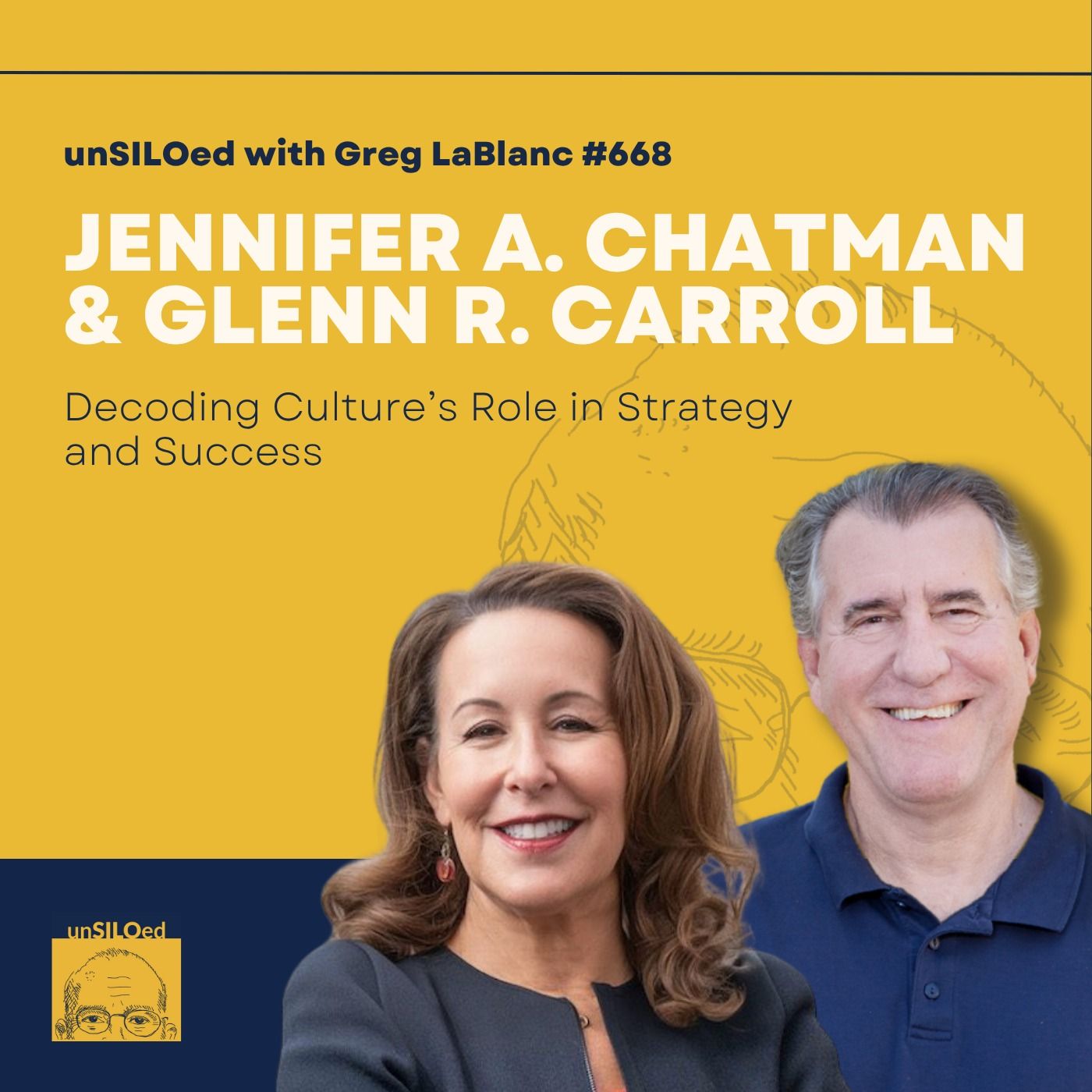 668. Decoding Culture’s Role in Strategy and Success with Jennifer A. Chatman and Glenn R. Carroll 15.07.2026 55dkHow do leaders create a unified culture at their organizations that’s not only sustainable but propels growth and success? Psychologist Jennifer A. Chatman and sociologist Glenn R. Carroll put their expertise on management and organizational behavior together in the new book, Making Organizational Culture Great: Moving Beyond Popular Beliefs. Chatman is Dean of the Haas School of Business at UC Berkeley and Carroll is a professor of management at Stanford University. On this episode, they join Greg to discuss how organizational culture research has evolved, valid methods for measuring culture within a firm, the defining characteristics of strong cultures, how culture and strategy are complements to each other, and practices for changing an organization’s culture. They also delve into case studies from existing organizations like Netflix, Genetech, and Berkeley Haas. *unSILOed Podcast is produced by University FM.*
 -
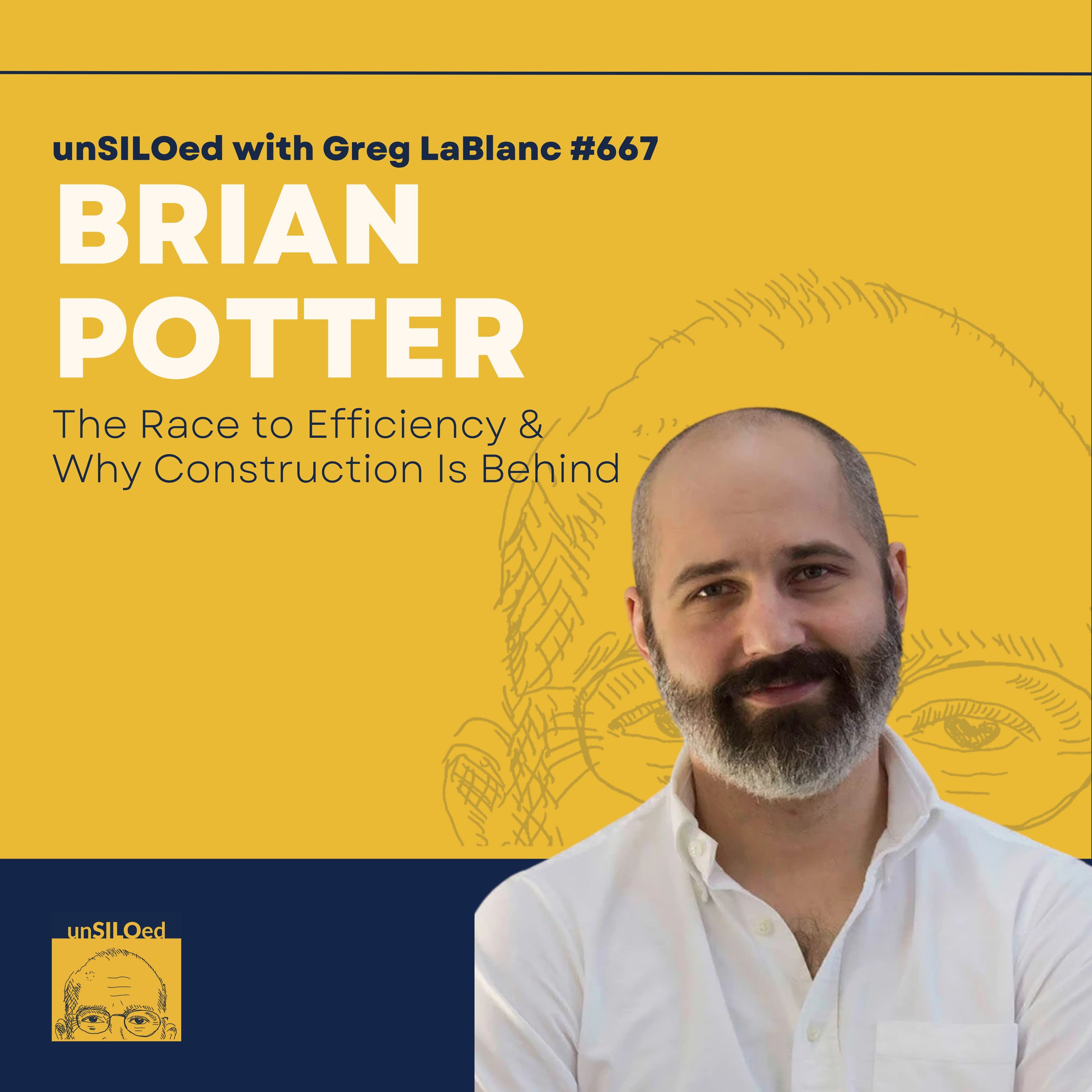 667. The Race to Efficiency & Why Construction Is Behind with Brian Potter 08.07.2026 46dkIn a world of constant, rapid digital transformation, one industry has struggled to evolve: construction. With all the gains made in efficiency and productivity, what’s holding the construction industry back? Brian Potter is a senior fellow at the Institute for Progress and author of the book, The Origins of Efficiency which charts the history of production efficiency, examining the great leaps forward with inventions like penicillin, the light bulb, and automobiles. Brian joins Greg to share his experience in the construction industry that prompted his research into productivity and why construction productivity appears flat compared with manufacturing and agriculture. They also discuss distinctions between labor productivity and overall efficiency, the central role of scale and fixed costs, why tacit knowledge makes process transfer hard across plants and countries, and political obstacles such as guilds and unions resisting automation, including AI. *unSILOed Podcast is produced by University FM.*
 -
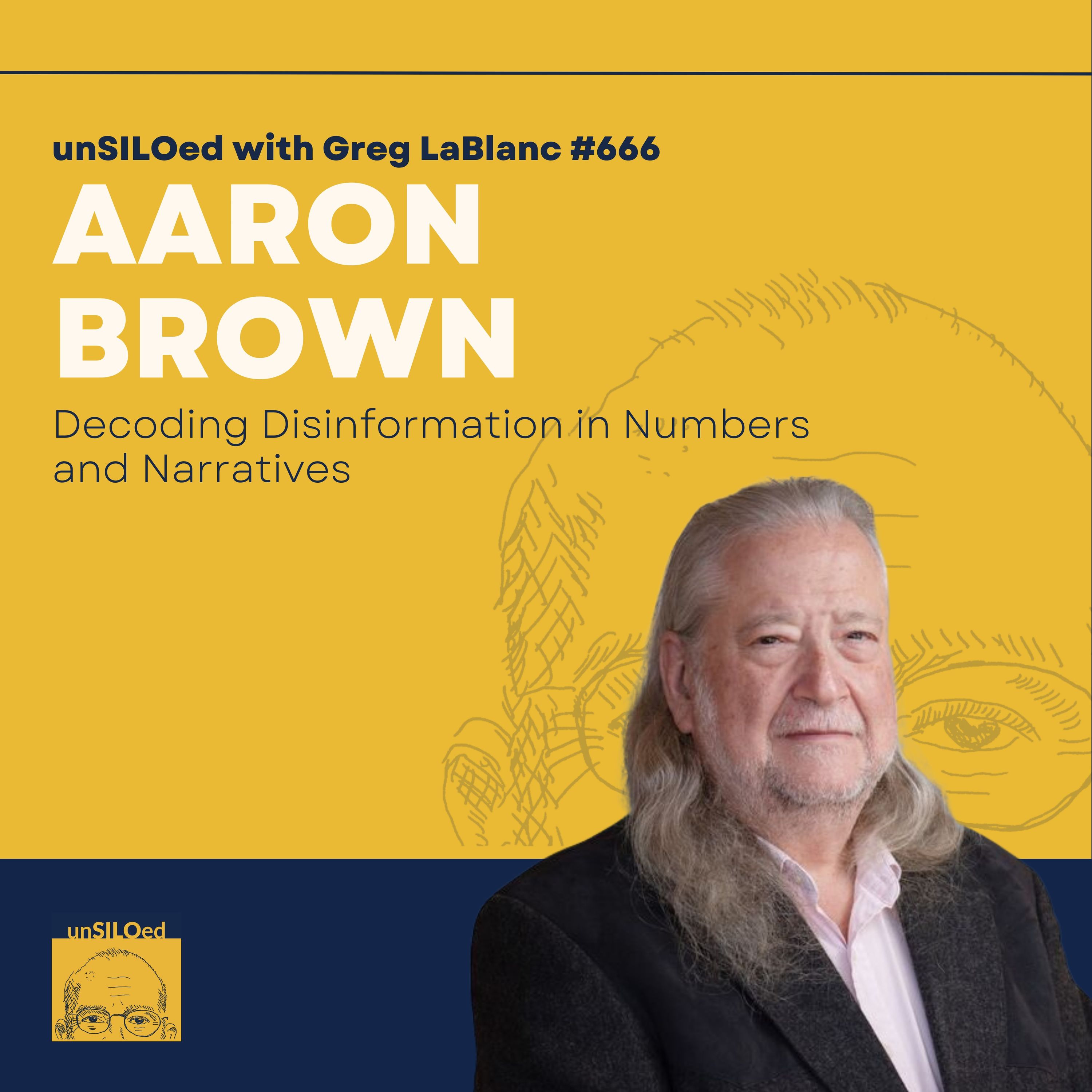 666. Decoding Disinformation in Numbers and Narratives with Aaron Brown 07.07.2026 57dkAaron Brown is an author and risk management professional, formerly the Chief Risk Officer at the hedge fund AQR. Aaron’s recent works are titled Wrong Number: How to Extract Truth From a Blizzard of Quantitative Disinformation and The Poker Face of Wall Street. Greg and Aaron discuss why quantitatively flawed studies still persist today. Aaron argues that the central problem is not just incompetence or conspiracy but a macro phenomenon he calls tribalism, combined with the diffusion of responsibility across authors, reviewers, journals, and journalists. He discusses examples, including an NTSB “Chinatown bus” study, a USAID mortality claim, a Chunnel fire-risk study, an observational marijuana/heart-attack paper, and a study claiming 40% of COVID deaths were caused by evictions and later cited in courts and legislation. They contrast academia’s weak incentives with finance and gambling, where betting forces accountability, and Aaron describes the empirical Bayesian approach he prefers using base rates and evidence. *unSILOed Podcast is produced by University FM.*
 -
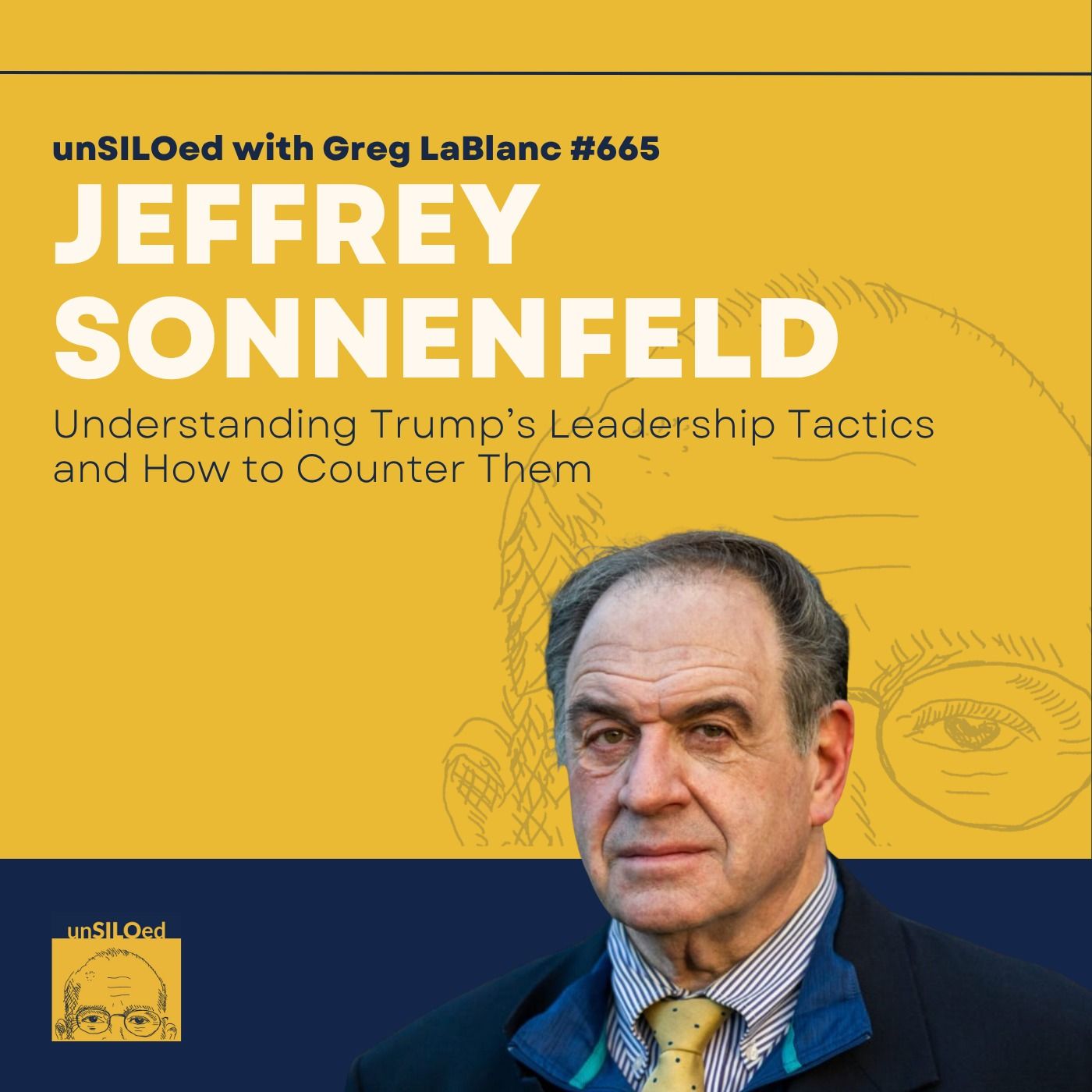 665. Understanding Trump’s Leadership Tactics and How to Counter Them with Jeffrey Sonnenfeld 03.07.2026 1sa 2dkJeffrey Sonnenfeld is a professor of management and senior associate dean for leadership studies at the Yale School of Management. He is also the author, co-author, and editor of a number of books. His works include The Hero's Farewell: What Happens When CEOs Retire, Firing Back: How Great Leaders Rebound After Career Disasters, and, most recently, Trump's Ten Commandments: Strategic Lessons from the Trump Leadership Toolbox with Steven Tian. Greg and Jeff discuss why Jeff thinks leadership scholars and journalists misread Donald Trump. He argues the goal should be not to normalize or judge Trump but to understand Trump’s predictable, strategic patterns—often mistaken as impulsive—so they can be countered, and he criticizes the labeling Trump as “stupid” or “crazy” for helping create widespread complacency. Jeff recounts a contentious 30-year relationship with Donald Trump that began with his Wall Street Journal critiques of “The Apprentice,” and then continued through Trump’s attempts to win him over (including with a position at Trump University), and Trump’s use of tactics like divide-and-conquer, distraction, the “sleeper effect,” and “wall of sound.” The discussion contrasts personal power versus institutional success,and stresses collective action as an effective counter. *unSILOed Podcast is produced by University FM.*
Benzer podcastler


Şurada popüler
Bu podcast şu ülkelerin podcast listelerinde de yer alıyor.


