
Widowed AF: Real stories of love, grief and beyond - With Rosie Moss
Rosie Moss
0
Widowed AF is a podcast hosted by Rosie Moss, who lost her husband in a diving accident in 2018. The show features honest conversations about grief, covering practical challenges like finances and single parenting, as well as emotional realities such as anger and loneliness. Through guest stories and expert advice, Rosie aims to help others feel less alone in their loss. The podcast won the British Podcast Awards 2025.
Bölümler
-
 Say the Word: Suicide, Survival & the People Left Behind with CALM’s Michael Jarvis 21.09.2026 59dkSay the Word: Suicide, Survival & the People Left Behind with CALM’s Michael JarvisWhat happens when we stop being afraid to say the word suicide?This week, Rosie is joined by Michael Jarvis from CALM (Campaign Against Living Miserably) for a conversation about suicide, the people left behind, and why talking openly could help save a life.Michael comes to the conversation from both sides. He works in suicide prevention, but he also knows the devastation of suicide loss personally. In 2016, his close friend Matt died by suicide at just 23. Matt was the loud one, the funny one, the friend who filled a room and grabbed life by the horns. His death landed like a bomb in their friendship group and changed the course of Michael’s life.Rosie and Michael talk about the questions that can haunt those left behind: Were there signs? Should I have known? Could I have done something? They explore the guilt, anger, confusion and isolation that can make suicide bereavement so uniquely complicated, as well as the unexpected ways grief can reshape friendships and futures.They also tackle one of the biggest fears around suicide: if we ask someone directly whether they are suicidal, could we put the idea into their head?Michael explains why asking the question can instead create a safe space for someone to tell the truth, and why you don't need to be a mental health professional to notice that something isn't right, start a conversation and help someone find support.From talking side-by-side rather than face-to-face, to choosing the right moment, creating a safety plan and knowing what to do if somebody says, “Actually, no, I'm not okay,” this is a practical conversation as much as an emotional one. Michael also shares the tools and support available through CALM for people experiencing suicidal thoughts, those worried about someone they love, and those bereaved by suicide.And, because this is still Widowed AF, there is dark humour, marathon chat, an unexpected cat appearance and plenty of swearing along the way.Most importantly, this episode is about bringing suicide out of the darkness and into conversation. Because sometimes asking an uncomfortable question could be the beginning of somebody feeling less alone.Support CALMThroughout September, Widowed AF is taking part in CALM’s Stay Tuned campaign, raising money to support its suicide prevention work. If you’d like to donate, you can support Rosie’s fundraiser here:Rosie’s CALM fundraiser:https://www.justgiving.com/page/rosie-moss-1For information, practical resources and support from CALM:CALM:https://www.thecalmzone.net/Content warning: This episode contains frank discussion of suicide, suicidal thoughts and suicide bereavement. If you are affected by anything discussed, please seek support. In an immediate emergency, call 999.
 -
 Widowed With Kids: Sharon Rosenbloom on Parenting Through Grief, 24 Years On 14.09.2026 54dkContent warning: cancer, death, end-of-life care, child bereavement and serious illness.Twenty-four years ago, Sharon Rosenbloom’s husband Simon died from cancer, leaving her with two young children and a life she had never imagined having to live without him.Today, Sharon is a bereavement therapist, coach and author of Widowed With Kids. But before we get to everything she has learned since Simon died, we go right back to the beginning.Sharon and Simon met on a blind date she nearly didn’t go on. She spilled his Diet Coke all over him, somehow didn’t put him off, and he went on to drive from Surrey to North London night after night just to see her.Both had already survived major health scares before they met. Simon had undergone major surgery following pancreatic cancer, while Sharon survived a brain tumour at just 26 after initially being sent home with what doctors thought was a virus.Together they built a family and had Sophie and Oliver.Then Simon became ill again.Secondary cancer was discovered, followed by chemotherapy, a precious family trip to Disneyland Paris, sepsis, a rapid deterioration and hospice care at the end.And then Sharon had to work out how to raise two grieving children while grieving herself.Sophie was seven. Oliver was five and had complex additional needs, meaning his understanding of his dad’s death unfolded very differently. Every day he would ask, “When’s Daddy coming ding dong?”, waiting for Simon to come home.We talk about children grieving in completely different ways, the advice Sharon was given not to cry in front of them and why she now believes the opposite. We also discuss children and funerals, solo parenting, family support and the sheer practical weight of becoming the only adult responsible for everything.Simon’s funeral took place on Father’s Day. Afterwards, Sophie would give Sharon cards telling her:“You’re my mum and my dad.”And Sharon says that is exactly what she became.What makes this conversation particularly special is the length of the view. Twenty-four years later, Sharon can tell us what happened next.There were relationships, mistakes, difficult lessons, training in counselling and coaching, writing Widowed With Kids, supporting other bereaved people and eventually learning how to be genuinely happy in her own company.This is an episode about raising grieving children, becoming mum and dad, surviving the years that follow and discovering that while widowhood may stay with you, life keeps growing around it.Take care of yourselves, and each other.
 -
 “I Don’t Believe His Death Was Preventable” | Reshma Kearney on Suicide, Stigma & Raising Grieving Children 12.09.2026 1sa 1dkIn this episode of Widowed AF, Rosie speaks with Reshma Kearney, a US-based mum of three, trauma-informed yoga teacher and grief advocate, whose husband Sean died by suicide in September 2022.Sean was an orthopaedic surgeon, a lieutenant colonel in the US Army, a dad, husband, outdoorsman and high achiever. He had also lived for years with periods of depression, anxiety, anger and increased alcohol use.But when he died, Reshma wasn’t expecting it.There was no obvious final downward spiral. No neat collection of warning signs. Sean had recently left the military, started a new job and moved with his family to the Seattle area to begin the “forever” life they had spent years working towards. He had plans. He had a fishing trip booked.And then, on Friday 30 September 2022, he died by suicide.Reshma talks candidly about the shock of his death and the extraordinary moment she had to tell their three children, then aged 10, eight and seven, that their dad had died. With the help of a volunteer police chaplain, she made the decision to tell them the truth from the very beginning.She shares the simple but powerful way she explained depression to them, describing a mind in which illness had taken away the brightness and filled it with darkness, and why she believes honest, age-appropriate conversations about suicide can help children feel safer, rather than more frightened.Rosie and Reshma also talk about something much harder to say: what if a suicide simply wasn’t preventable at the point at which it happened?Reshma explains why the language of Suicide Prevention Month can be painful for those left behind, particularly when it seems to place responsibility on families to recognise the right signs, say the right thing or somehow save the person they love.Because sometimes people do ask. Sometimes families do see someone struggling. Sometimes they desperately try to get them help. And sometimes the person still dies.They discuss the barriers that can prevent people, particularly men in high-stakes professions and military environments, from seeking mental-health support. Sean feared that therapy, medication or admitting he was struggling could appear on his record, affect his career or make him look weak.Reshma also speaks about the judgement that still surrounds suicide, the cruel comments she receives online, why she sometimes deliberately leaves them visible, and the uncomfortable reality that stigma is still very much alive.There’s also an honest conversation about parenting after traumatic bereavement, watching three children grieve in three completely different ways, and the hypervigilance that can come with knowing that your children have already experienced something you desperately wish you could have protected them from.And ultimately, there is acceptance.As Reshma beautifully puts it: “Acceptance does not mean the same thing as preference.”She can accept that Sean died. She can accept that he died by suicide. That does not mean she wanted this life. Instead, she is choosing to honour the 17 years they shared, the three children they created and the man he was, while speaking openly about the reality of his death.A quick production note: due to a technical hiccup at our end, we sadly lost the video recording of this conversation. The audio survived, thankfully, and this was far too important a conversation not to share. So this week, Widowed AF is going slightly old school: podcast for your ears rather than your eyes.This is a conversation about suicide, but it is also about honesty, stigma, motherhood, mental health, grief and what happens when we stop looking for someone to blame.As Reshma says at the end of the episode:Hold grace. For yourself, and for other people. We never really know what somebody else is carrying.Content note: This episode contains detailed discussion of suicide, suicidal thoughts, mental illness and bereavement. Please listen with care and seek appropriate support if you need it.
 -
 “Look Through the Turn."The Day Paula’s Husband Didn’t Come Home 07.09.2026 1sa 10dkContent warning: sudden death, fatal road collision, bereavement, anxiety and depression.Paula Thomas had spent years knowing that her husband Jeff’s job carried risk.He was an active-duty US Navy submariner. There were long deployments, months without contact and the strange reality of loving someone whose job sometimes took him beneath the ocean for months at a time.But when the knock at the door finally came, it wasn’t because of something that had happened at sea.Jeff had gone out for an afternoon motorcycle ride with friends from the Navy. His own bike was in the shop, so he asked Paula if he could borrow hers.She said yes.It was a decision she would inevitably revisit after he was killed in a collision later that day. But Paula doesn't regret it. Because saying no would have meant allowing fear to dictate their marriage, and that simply wasn't who they were.In this episode, Paula brings Jeff properly into the room.We hear about the sweet, slightly awkward boy she met in high school, the hours they spent driving around talking, the man she eventually drove to the Navy recruiting station herself, and the husband whose steadiness helped her through years of anxiety and depression.We also talk about the terrible mechanics of sudden death. The knock at the door. The uniforms. The instinctive search for another explanation. The woulda, coulda, shoulda that follows when someone dies doing something you could theoretically have stopped them from doing.And Paula tells me what happened in the final seconds of Jeff's life.Realising a truck was turning across his path, Jeff used precious seconds to warn the motorcyclist behind him. That rider stopped just inches from the vehicle. His wife was pregnant at the time.Jeff almost certainly saved his life.But this isn't only an episode about how Jeff died. It's about how Paula has continued to live.She talks about returning to riding, finding tiny daily reasons to get off the sofa, getting her dog Phoenix, allowing herself to love again, and carrying Jeff with her into the life she is still building.And she shares the piece of motorcycle advice that became a philosophy for surviving grief:Look through the turn.You don't pretend the hazard isn't there. You don't ignore it. But you don't stare at it so hard that it becomes the only place you can go.You acknowledge it, and then you look towards where you're going next.This is a conversation about love, fear, guilt, survival and what it means to keep moving when the road ahead looks nothing like the one you thought you were on.Take care of yourselves, and each other.If this episode resonated with you, please follow Widowed AF, rate and review the podcast.
 -
 “We Have to Clock In Today”: Keisha Wheeler on Widowhood & Raising Seven Children 17.08.2026 1sa 6dkWhen Keisha Wheeler met Patrick at college, she wasn’t looking for a husband. Patrick, however, seemed fairly certain he’d found his wife.What followed was a marriage full of faith, family, music, ministry and, eventually, seven children.Then, in December 2021, everything changed.Patrick developed chest pain while the family were preparing to deliver food to their community. Within hours, Keisha was being told that he had suffered a ruptured aorta. He underwent emergency surgery but never regained consciousness, dying six days later.Suddenly, Keisha was a widow and the sole parent of seven children.In this episode of Widowed AF, Keisha joins Rosie for a remarkably open conversation about the reality of surviving a loss that changes absolutely everything.They talk about the strange autopilot of those first hours and days, the impossible responsibility of telling your children their dad has died, and what it means to keep getting up when other people mistake functioning for coping.Keisha also speaks candidly about something that is often much harder to discuss: what happens to faith when the person you prayed to doesn’t save the person you love.Having spent much of her life in church and ministry, Patrick’s death profoundly changed Keisha’s relationship with God. She talks about anger, betrayal, losing her ability to sing and watching her children wrestle with their own faith, including one daughter crying out: “I know you love us, God, this doesn’t feel like love.”Rosie and Keisha also talk about solo parenting after bereavement: the relentless decisions, the exhaustion, the compromises you make simply to keep everybody going and the reality that the parent your older children had may be very different from the one your younger children experience after loss.But this is also a conversation about community and what can grow alongside grief.After discovering the power of grief support for her own children, Keisha went on to create a space for other bereaved families through the Patrick Wesley Wheeler Foundation. What began with her own seven children has grown to support dozens of others, giving children somewhere they can grieve, laugh, remember and simply be around people who understand.There is no neat ending here. Keisha still misses Patrick. Her children still miss their dad. Life hasn’t become “normal”.But, together, they keep showing up.As Keisha puts it: sometimes you wake up wanting to quit. But you woke up alive today.So you clock in.FIND KEISHA & SUPPORT HER WORKInstagram: @servingwith7Keisha is the founder of Hand in Hand Brandon, part of the Patrick Wesley Wheeler Foundation. The grassroots organisation supports bereaved children and families, offering a space where they can grieve openly and be alongside others who understand.As Keisha says: “We can’t fix your grief, but we can walk alongside you.”Website: handinhandbrandon.orgYou can find out more about Hand in Hand, the Patrick Wesley Wheeler Foundation, upcoming events and ways to support or donate through the website.
 -
 Renata Scofield on Cancer, Sudden Loss and Raising Two Young Daughters Alone 27.07.2026 1sa 16dkFor ten years, Renata Scofield and her husband Colin packed a lot of living into a short time. They met online despite living a block apart, married quickly, moved countries, built careers, welcomed two daughters and created a life together in Edinburgh.Then, in April 2023, Colin was diagnosed with kidney cancer that had already spread to his lungs.The treatment appeared to be working. Five days before he died, doctors told them the immunotherapy was shrinking lesions and things were looking positive. But what nobody realised was that the cancer had spread to his brain. A sudden stroke changed everything.In this episode, Renata shares the devastating reality of becoming widowed while raising two young girls aged just three and six, with no family nearby and no time to prepare. She talks about doing school drop-offs and pick-ups while her husband lay in hospital, making the decision to switch off life support, and the practical chaos that follows when the person holding your family together is suddenly gone.We also talk about Colin himself: a fourth-degree black belt in jiu-jitsu, a devoted hands-on dad, and the calm, steady presence who made everything feel possible.Along the way we discuss children’s grief, the importance of community, returning to work after loss, and why preparation is one of the greatest gifts we can leave the people we love, from wills and insurance to the passwords we never think to share.A conversation about love, resilience, solo parenting, and finding a way forward when life changes in an instant.
 -
 Widowed Far From Home | Nathalie Bruneau 20.07.2026 1sa 34dkWhat happens when the worst day of your life unfolds thousands of miles from home?This week I'm joined by Nathalie Bruneau, who moved from France to China for what was meant to be a short adventure. Instead, she fell in love with Leo, built a life in Shanghai, and together they had two young sons.Nathalie shares the extraordinary story of navigating marriage across cultures, the challenges alcohol brought to their relationship, and the difficult decision to separate while continuing to co-parent.Then, one Sunday morning, everything changed.After a phone call in a language she barely understood, Nathalie was taken to a police station and then a hospital, where she discovered she was there to identify Leo's body. Alone, in a foreign country, she suddenly found herself having to navigate grief, language barriers, unfamiliar traditions and the unimaginable task of telling her two little boys that their dad had died.We also explore Chinese mourning rituals, life after sudden loss, parenting through trauma, and how, somehow, we find the strength to keep going when we think we can't.This is a remarkable conversation about love, culture, addiction, resilience and the universal language of grief.If this episode resonates with you, please follow Widowed AF, leave a rating or review, and share it with someone who might need to hear it. Your support helps these conversations reach more people.
 -
 Funerals: Everything Nobody Tells You | With Poppy Mardell 13.07.2026 1sa 11dkMost of us don’t think about funerals until we’re forced to.And by then we’re expected to make some of the biggest decisions of our lives whilst barely able to think straight.This week Rosie is joined by funeral director Poppy Mardell, founder of Poppy’s Funerals, for one of the most practical, eye-opening conversations we’ve ever had on Widowed AF.Together they dismantle the myths surrounding death, funerals and grief, exploring why so many of us feel rushed, overwhelmed and completely unprepared when someone dies.They discuss why the funeral industry remains unregulated, why there often isn’t the urgency we’re led to believe, and how reclaiming time and choice can make an enormous difference to grieving families.Rosie and Poppy also talk about seeing the person who has died, whether children should attend funerals, the importance of ritual (whether you’re religious or not), and why wakes might be one of the most important parts of saying goodbye.They also look to the future of funerals, from direct cremation and natural burials to water cremation, human composting and what really happens to thousands of unclaimed ashes.Whether you’re recently bereaved, supporting someone who is, or simply want to feel less afraid of talking about death, this is an episode everyone should hear.In this episode:• How Poppy went from Sotheby’s to founding one of the UK’s most progressive funeral companies• Why the funeral industry is still unregulated — and why that matters• The myth that funerals have to happen quickly• Why seeing the body can help us “see to believe” — for adults and children alike• Practical ways to include children in funerals without overwhelming them• Creating meaningful farewells that genuinely reflect the person who has died• Why rituals matter, even if you have no faith• Direct cremation, natural burial, water cremation and human composting explained• What happens to unclaimed ashes — and why the law is finally changingAs always, if this episode resonated with you, please consider leaving a review or sharing it with someone who might need it. It really does help more grieving people find the podcast.
 -
 Holly Matthews: “Just Tell Them I Was Alright” | Brain Cancer, Anticipatory Grief & Parenting Through Loss 29.06.2026 1sa 53dkWhat happens when you have to grieve the person you love before they’ve even gone?This week I’m joined by Holly Matthews. Holly is a former actress, TEDx speaker, founder of The Happy Me Project, and was widowed at just 32 when her husband Ross died from grade four brain cancer, leaving her to raise their two young daughters alone.But before any of that, there was a Pimm’s promotional job, an instant connection, and a love story that moved at lightning speed. Holly and Ross built a relationship full of adventure, brutal honesty and the kind of laughter that makes two people feel like they’re speaking a language nobody else understands.Then came headaches. Anxiety. Focal seizures that were dismissed as panic attacks. Until one scan changed everything.Holly talks candidly about anticipatory grief, watching the person you love slowly disappear while they’re still alive, and the impossible conflict of desperately wanting more time while also wanting their suffering to end.We also discuss what good healthcare communication looks like, why Holly later stood in front of a room full of brain surgeons to tell them exactly where they were getting it wrong, and how a single compassionate doctor made all the difference.As always, we don’t shy away from the harder conversations. Holly shares what it was like preparing two little girls for the death of their dad, why she chose honesty over euphemisms, and the practical ways she’s helped them navigate grief ever since.This is a conversation about love, truth, parenting, neurodivergence, identity, and what it really means to live fully when you’ve learned just how fragile life is.In this episode we cover:• Falling in love almost instantly and trusting your instincts, even when everyone else thinks you’re making a mistake.• The symptoms that were repeatedly dismissed before Ross’s brain tumour was finally discovered.• Anticipatory grief and losing someone long before they physically die.• Hospice life, dark humour, and navigating the final weeks together.• Why the way doctors deliver devastating news matters so much.• Raising bereaved children with honesty, curiosity and space to ask every question.• Neurodivergence, masking and building a life that feels authentic after loss.
 -
 S4 - EP22 - How’s the Weather? Erin Clark on Grief, Love and Learning to Live Again 22.06.2026 1saWhat do you say when “How are you?” feels impossible to answer?This week I’m joined by Erin Clark, whose husband Greg died suddenly from a heart attack in 2021 after more than 30 years of marriage. One moment they were enjoying a simple family dinner with their children, and the next Erin found herself performing CPR on the man she’d loved since she was 19.In this deeply moving conversation, Erin shares the reality of losing her person overnight, the guilt she carried after falling asleep in a different room for the first time in three decades, and the crushing loneliness of learning to navigate a world that no longer made sense.We talk about the strange business of grief, the impossible task of telling your children their father has died, and why the second year can sometimes feel even harder than the first.Erin also shares the story behind How’s the Weather?, a simple but powerful question she created when she realised she no longer knew how to answer “How are you?”. Together we explore the idea that grief, like the weather, is constantly changing. Storms give way to sunshine, only for clouds to roll back in again.This is a conversation about enduring love, surviving the unsurvivable, and finding your way back to life one tiny step at a time.If you’re currently in the thick of grief, consider this your reminder that surviving today is enough.🎧 Trigger warning: This episode contains discussion of sudden death, CPR, grief, trauma and bereavement.
 -
 S4 - EP21 - Chatty Episode- The Life We Never Got to Have with Julie Farrin 19.06.2026 58dkIn this 'chatty' episode I’m joined once again by the wonderful Julie Farrin, who first appeared on Widowed AF to share the story of losing her husband Andy to glioblastoma just months after they were married.A year on from her first appearance, we’re talking about what happens after the immediate chaos of grief. After the funeral, after the paperwork, after everyone else has gone back to their lives. What does rebuilding actually look like?Julie opens up about losing not only her husband, but also the future they had planned together. We discuss the children they hoped to have, the difficult decisions that followed Andy’s diagnosis, and the complicated grief that comes with losing a life you thought was still ahead of you.We also talk about widowhood without children, redundancy, identity, therapy, dating apps, panic attacks, endometriosis, hysterectomy grief, body confidence, boudoir photoshoots, yoga, friendship and learning to put yourself first after years of caring for someone else.Along the way, we explore why so many widowed people struggle to find purpose after loss, the pressure society places on us to “move on”, and how rebuilding your life often starts with something much smaller: learning that you are worth getting out of bed for.It’s an honest, funny and deeply moving conversation about love, loss, womanhood, friendship and discovering that life isn’t over just because everything changed.Whether you’re newly bereaved, years down the line, or supporting someone through grief, I think you’ll find something in Julie’s story that resonates.As always, if this episode speaks to you, I’d love to hear from you.You can find me on Instagram at @widowed_af or visit the website at www.widowedaf.com.
 -
 S4- EP20 – Josh Was 33: Charlotte Jenkins on SADS, Survivor’s Guilt and Solo Parenting 15.06.2026 59dkWhen Charlotte’s husband Josh died suddenly from SADS (Sudden Adult Death Syndrome), she was just 32 years old.One ordinary Monday morning, Josh went for a run, came home, started work and then, without warning, collapsed and died. Hours later, Charlotte found him at home while their two-year-old daughter waited downstairs.In this deeply moving episode, Charlotte shares the reality of navigating life just nine months after losing the love of her life. We talk about the trauma of finding Josh, the crushing guilt that followed, and the endless questions that come when someone young and healthy dies without explanation.Charlotte speaks candidly about raising a toddler who is beginning to ask questions about her dad, the fear of living with uncertainty after a sudden death, and the challenge of rebuilding a life that no longer resembles the one she planned.We also discuss EMDR, grief therapy, widowhood in your thirties, learning to parent alone, and why connecting with other widowed people can make all the difference.This is a conversation about devastating loss, but also about love, resilience and finding hope when life has been turned completely upside down.If you’ve ever wondered how someone survives the unimaginable, this episode is for you.
 -
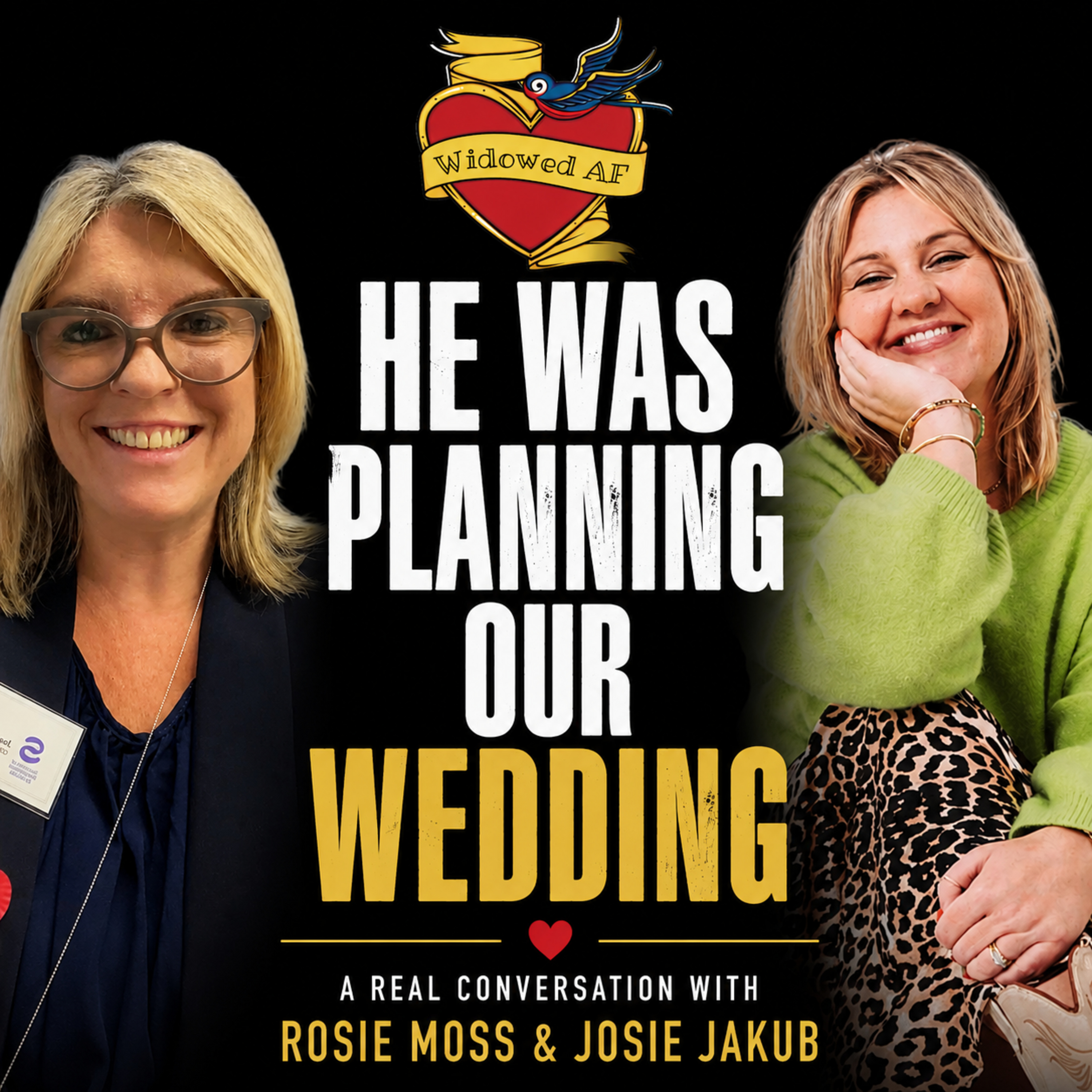 S4 - EP19 - He Was Planning Our Wedding: Josie Jakub on Suicide Loss, Love and Life After Olivier 08.06.2026 1sa 15dkIn this episode of Widowed AF, Rosie is joined by Josie Jakub, CEO of Survivors of Bereavement by Suicide (SOBS).Josie shares the story of her fiancé Olivier, a kind, spiritual French lorry driver who was loved by everyone around him. Together they were building a life, planning their wedding and creating a future in rural France. Then, just weeks before they were due to marry, Olivier died by suicide.Josie talks openly about the mental health struggles that Olivier had hidden for years, the shocking way she received the news of his death, and the impossible task of making sense of a loss that seemed to come out of nowhere.She also shares one of the most extraordinary stories ever told on Widowed AF: her attempt to marry Olivier after his death through a little-known French law that allows posthumous marriage with presidential approval. What followed was a four-year journey involving handwritten letters, evidence of their love story and a dossier that eventually reached the desk of President Emmanuel Macron.Rosie and Josie discuss suicide bereavement, stigma, mental illness, survivor guilt, finding community through SOBS and the life-changing power of peer support.This is a conversation about grief, love, resilience and what happens when the future you planned disappears overnight.
 -
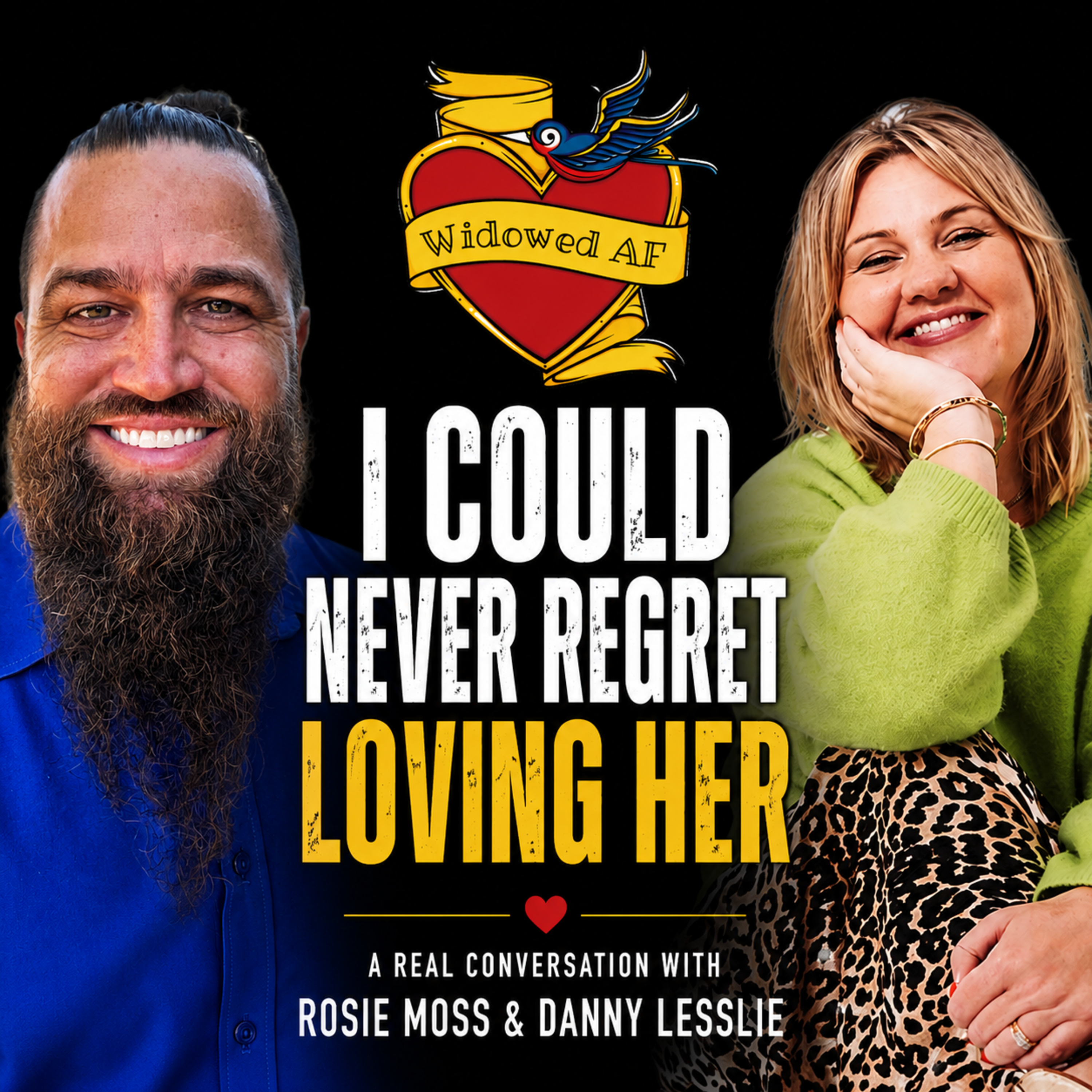 S4- EP18 - “I Could Never Regret Loving Her” Danny Lesslie on Grief, Gratitude and Raising Their Girls Alone 01.06.2026 1sa 10dkIn this episode Rosie Moss speaks with widower, writer, coach and devoted girl dad Danny Lesslie.Danny shares the extraordinary love story he built with his wife Rafaela, known to everyone who loved her as Raffi. They met on the bluffs of Santa Monica, fell hard, built a family together and chose each other every day. But when Raffi was diagnosed with a rare and aggressive squamous cell carcinoma at just 30 years old, everything changed.What followed was five years of treatment, uncertainty, heartbreak and anticipatory grief. As the cancer spread, Danny and Raffi faced not only the reality of her illness but a cascade of secondary losses including financial pressure, housing instability, job loss and the exhausting reality of navigating a healthcare system that often seemed unable to help.In this deeply moving conversation, Danny reflects on caring for Raffi through her illness, raising their daughters through grief, and the faith that carried them when every sense of control had disappeared. He shares the remarkable moments of provision that became known in their family as “Jesus moments”, the decision to be completely honest with their children throughout Raffi’s illness, and the legacy she left behind through her journals, which became the foundation of their book, Thank You, Cancer.This is a conversation about great love, devastating loss, family, faith, fatherhood and the complicated work of learning how to hold gratitude and grief in the same hand.A beautiful and profoundly honest episode about what it means to keep choosing life after the person you love most is gone.
 -
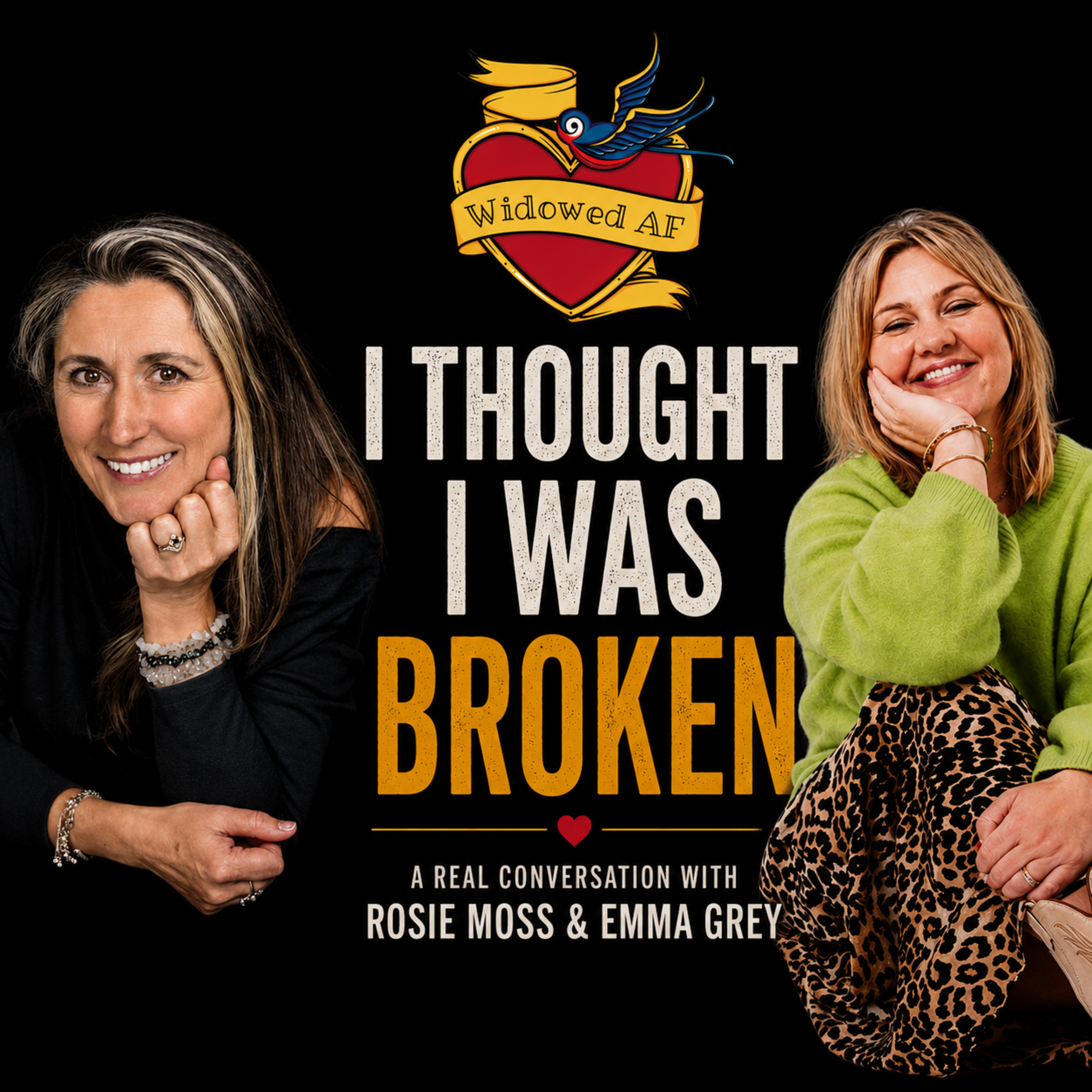 S4 – EP17 – “I Thought I Was Broken”: Emma Grey on Late Diagnosis, Grief and Learning to Regulate 19.05.2026 1sa 8dkIn this episode Rosie Moss is joined once again by Emma Grey. Emma is a former wills and probate lawyer turned grief-informed coach and counsellor, and founder of Rainbow Hunting.The conversation moves into the reality of long-term grief and the parts people don’t really talk about once the initial shock fades. Emma speaks openly about how bereavement can strip away the coping strategies and masking that once held everything together, leaving people overwhelmed, hypervigilant, emotionally shut down or simply exhausted from surviving.Together Rosie and Emma explore the overlap between grief and neurodivergence, late ADHD and autism diagnosis, rejection sensitivity, people pleasing, burnout, therapy, nervous system regulation and the strange process of rebuilding yourself after loss.They talk honestly about fear of abandonment, the pressure of solo parenting whilst dysregulated, and the tiny practical things that can help when life feels too loud: noise-cancelling headphones, retreating to bed, familiar TV shows, breathing exercises and learning that sometimes shutting down is not weakness, but protection.This is a raw, funny and deeply validating conversation about grief that doesn’t end neatly, the parts of ourselves we lose along the way, and the freedom that can come from finally understanding who you are underneath the survival mode.Including:• The story behind “Sadmin™” and why the paperwork after death can feel impossible• Why grief behaves more like trauma than a timeline• “You can become the best surfer in the world, but the waves still come”• Window of tolerance explained: hypervigilance, shutdown and nervous system overwhelm• Neurodivergence, masking and why grief often blows coping strategies apart• Rejection sensitivity, abandonment wounds and the fawn response• Why receiving help can feel harder than giving it• Therapy as self-discovery rather than “fixing” yourself• “Dormousing,” sensory regulation, noise-cancelling headphones and practical tools for overwhelm• Why so many widowed parents are surviving in burnout modeA thoughtful, funny, validating conversation for anyone navigating grief, neurodivergence, overwhelm, or simply trying to understand themselves a little better.
 -
 S4 – EP16 – “This One Was Different”: Donna Rice-Hannam on Hospital Failures, Grief and Surviving Without Mark 18.05.2026 58dkIn this episode Rosie Moss speaks with Donna Rice-Hannam, who found Widowed AF just five weeks after her husband Mark died suddenly in October 2024. What follows is a conversation full of heartbreak, fury, dark humour, and the kind of honesty that makes grief feel a little less lonely.Donna shares the story of meeting Mark through mutual friends, a “blind blind date,” and a pub-stairs snog that turned into a relationship built on safety, tenderness and fierce loyalty. After years of difficult relationships, mental health struggles and recovery, Donna found in Mark someone who didn’t just love her, but actively protected her wellbeing.Together they survived the devastating late-pregnancy loss of their daughter, privately named Charlotte but publicly known as “Pebbles.” Donna talks candidly about stillbirth, trauma, and the way grief bonded them even more deeply together. She describes Mark’s quiet acts of love, from packing the car and taking her to the sea during bipolar episodes, to proposing in Paris simply because “he just wanted to see you smile.”The conversation then turns to the terrifying weeks leading up to Mark’s death: repeated hospital admissions, catastrophic internal bleeding, blood transfusions, discharge decisions Donna felt deeply uneasy about, and the growing horror of realising something was being missed. Donna recounts the final hours in devastating detail, from the ambulance ride and failed attempts to stabilise him, to watching doctors perform CPR while begging him to come back.Rosie and Donna also talk about what happens afterwards: the rage of unanswered questions, delayed inquests, poor bereavement care, losing friendships alongside your partner, and the dangerous pull of alcohol when grief feels physically unbearable. Throughout it all, Donna speaks openly about bipolar disorder, surviving early widowhood, and the conscious decision to protect her mental health because Mark fought so hard to protect it while he was alive.This episode covers:• Falling in love after difficult relationships and finding safety in another person• Bipolar disorder, recovery, and supportive partnership without losing independence• Stillbirth, grief after baby loss, and naming their daughter Charlotte (“Pebbles”)• The role of humour, routine and practical care in long-term love• Hospital trauma, internal bleeding, repeated discharge attempts and advocating for loved ones• The shock of sudden death and witnessing resuscitation efforts firsthand• Anger, delayed accountability and ongoing inquest proceedings• Friendship, community and the people who quietly keep you alive in early grief• Alcohol, counselling, medication and surviving the “messy middle” of widowhood• Why protecting your mental health can become an act of love for the person you lost#widowedaf #widowhood #griefpodcast #griefsupport #bipolardisorder #pregnancyloss #stillbirth #nhs #medicaltrauma #inquest
 -
S4 – EP15 – “I Don’t Know Where to Go for Comfort Now”: Corinne Longland-Malam on Sudden Loss, Trauma and Surviving After Lee 11.05.2026 1sa 1dkIn this episode Rosie Moss speaks with Corinne Longland-Malam, known online as the “Fairy Grief Mother,” about losing her partner Lee after a rare and devastating illness turned their lives upside down in the space of months.Corinne shares the story of meeting Lee “very romantically on Facebook,” falling quickly into a relationship that felt less like fireworks and more like finally feeling safe. Together they built a blended family, a quiet life, and the kind of love rooted in contentment, companionship and being fully yourself with another person.Everything changed when Lee was diagnosed with cardiac amyloidosis caused by myeloma, a rare condition affecting both the heart and blood. What follows is a brutally honest conversation about sudden illness, complicated treatment decisions, and the impossible balance between hope and reality.Corinne speaks candidly about becoming Lee’s advocate while trying to protect their children, the trauma of repeated cardiac arrests at home, and the night he died beside her after another emergency. She describes performing CPR, waiting for the coroner, making impossible phone calls, and the surreal practical reality of grief in its earliest hours.Rosie and Corinne also talk about what comes afterwards: the secondary losses that ripple through blended families, being forced to leave the home they shared, parenting while grieving, and using TikTok as an outlet for pain that felt too raw to share anywhere else.This episode covers:• Falling in love after difficult past relationships and finding safety in another person• Cardiac amyloidosis and myeloma, including missed symptoms and delayed diagnosis • The emotional impact of rare illness and navigating uncertainty around treatment• Advocacy, medical trauma, and protecting loved ones from frightening realities• Cardiac arrests at home, CPR, and the shock of sudden death• Parenting grieving children while trying to survive your own grief• Wills, legal planning, and the practical chaos that follows loss• Social media, community, and why sharing grief online can sometimes feel safer than doing it face to face• Rebuilding safety, identity and family life after losing your person
-
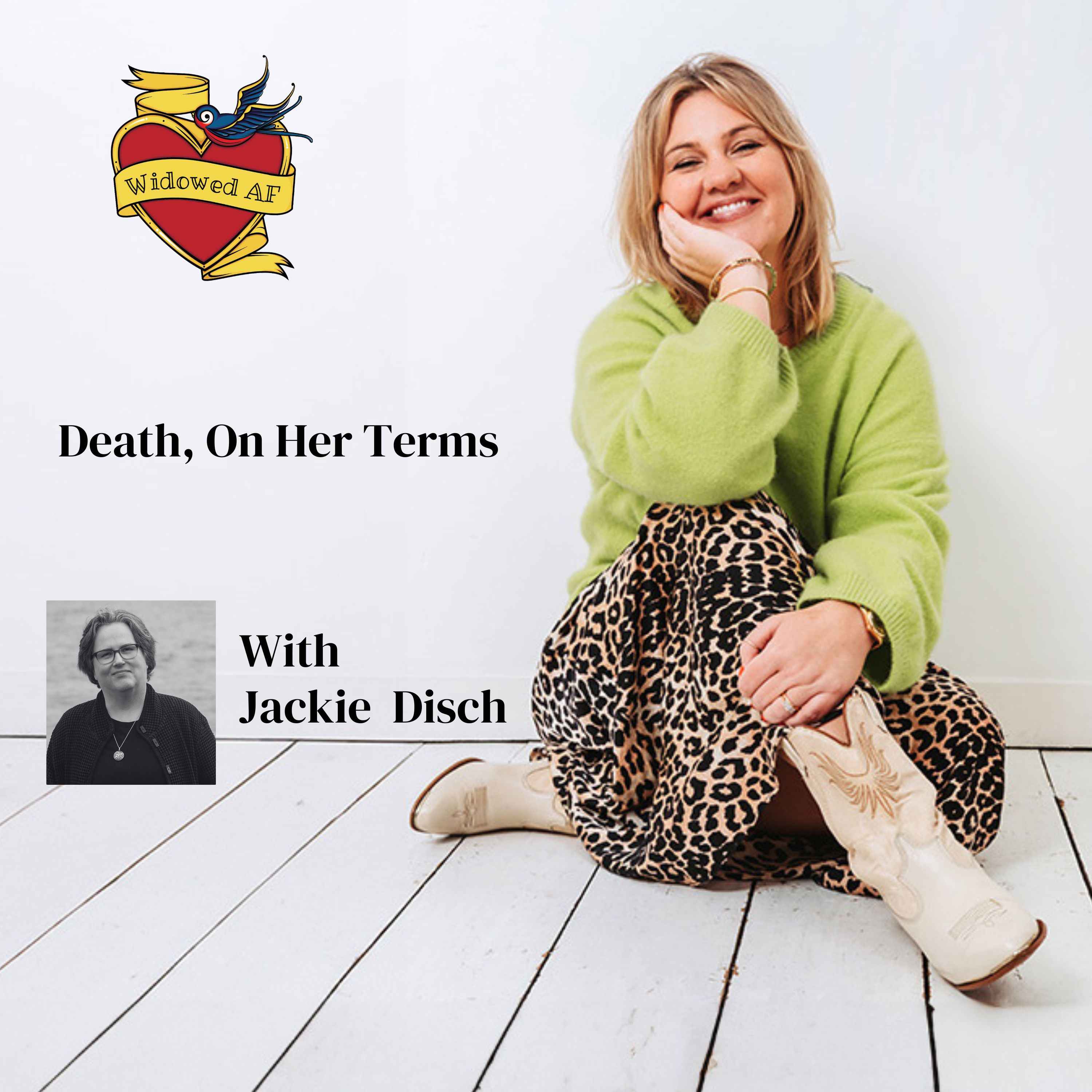 S4 – EP14 – “Katie’s Death, On Her Terms”: Jackie L. Disch on Love, Advocacy and Loss 04.05.2026 51dkIn this episode Rosie Moss speaks with Jackie L. Disch, who shares the story of her wife Katie and the life they built together over 23 years. A relationship rooted in deep acceptance.Katie’s death came suddenly in 2020 after a series of strokes, during a time when COVID restrictions meant hospitals were inaccessible, isolating, and frightening. What followed was a rapid shift from normal life into end-of-life care at home, as Jackie supported Katie through her final weeks.This is a conversation about presence. About what it means to stay when things are hard. About advocating for the person you love, even when every part of you wants a different outcome. Jackie speaks candidly about the decisions they made to prioritise comfort over intervention, and the complexity of holding both love and loss in the same space.There is honesty here about fear, anger, and the practical realities that come after death. But there is also something else running through it, a thread of dignity, connection, and what Jackie describes as “living grief” rather than moving on from it.This episode covers:• A long-term partnership built on acceptance and deep emotional safety• The impact of COVID on medical care and end-of-life choices• Katie’s strokes and the rapid progression to home hospice • Caring for a partner at home, including communication loss and dependency• Advocacy, autonomy, and the idea of a “good death”• The emotional reality of early grief, including anger and administrative overwhelm• Lockdown, stillness, and being unable to avoid grief• Writing, memory, and learning to live alongside loss rather than resolve it
 -
S4 – EP13 – “You’re Going to Die From This”: Orlagh Reynolds on MND, Parenting and Letting Go 27.04.2026 1sa 12dkIn this episode I’m joined by Orlagh Reynolds, whose husband Fraser died from motor neurone disease.Their story starts the way so many of the best ones do. A chance meeting in Dublin, a bit of boldness, and a gut feeling that turned into a life. Together they built something full. Australia, travel, work, marriage, and their daughter, Una.And then another gut feeling. This one telling Orlagh they needed to go home to Ireland.Not long after, Fraser was diagnosed with MND.What follows is a conversation about what happens when you are told, in no uncertain terms, that the person you love is going to die, and there is nothing you can do to stop it. Oriagh talks about what the disease took from Fraser, slowly and relentlessly, and how they made a conscious decision to focus on what remained. Their home became a place of care, honesty, humour, and, perhaps most strikingly, gratitude. Not forced positivity, but a daily practice that carried them through the worst of it.We talk about parenting through terminal illness. How you explain something like this to a child. How you include them without overwhelming them. And what it looks like to raise a child in the middle of something most adults would struggle to survive.We talk about Fraser’s creativity in the face of unimaginable loss. The art he created using only his eyes. The legacy he built while his body failed him. And the letter he left behind for his wife and daughter, waiting until the moment it was needed.And we talk about what comes after. Solo parenting. The empty house at night. The decisions that are yours and yours alone. And the relentless reality of continuing on.This one is devastating in places. But it’s also full of love, strength, and a kind of perspective that stays with you.
-
S4 – EP12 – He Died on the Flight Home: Fran Milne on Sudden Loss, Grief and the Day Everything Changed 20.04.2026 1sa 16dkRosie is joined by Fran Milne, whose husband Matt died suddenly after collapsing on a flight home from Singapore.What begins as a familiar story of work travel, school runs and family life shifts in an instant into something unthinkable. A knock at the door. A police officer standing on the driveway. And the kind of shock that splits your life into before and after.In this deeply honest conversation, Fran talks Rosie through the moment everything changed. From the surreal wait in her living room, to the phone call from the air ambulance, to the long drive to the hospital knowing something was very wrong. And then the moment no one can prepare you for.They talk about the practical and emotional chaos that follows sudden loss. Telling the children. The decisions you never thought you’d have to make. The strange, jarring details that stay with you. And the small moments of humanity that carry you through the worst day of your life.There is heartbreak here, but also warmth, humour, and the kind of clarity that only comes from living through it.This episode covers:Sudden death and medical traumaThe reality of a police knock at the doorDeep vein thrombosis and missed symptomsThe experience of hospital after a sudden lossTelling children their parent has diedEarly grief, shock, and survival
Benzer podcastler


Şurada popüler
Bu podcast şu ülkelerin podcast listelerinde de yer alıyor.
