
Trauma, Tea, and Tangents
Hannah Guy
0
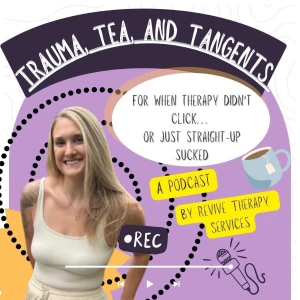
Trauma, Tea, & Tangents is a weekly podcast hosted by Hannah Guy, a licensed clinical social worker and trauma therapist. The show offers unfiltered conversations about trauma, nervous system regulation, and personal growth, blending real talk with science and humor. Each episode encourages listeners to embrace the messiness of healing while enjoying a cup of tea.
Bölümler
-
 GLP-1s, Body Image & Self-Trust: Can They Heal Your Relationship With Food? 18.09.2026 24dkIf you’ve ever wondered whether GLP-1 medications can actually help heal your relationship with food and your body — or whether they might make things more complicated — this episode is for you. In this episode of Trauma, Tea & Tangents, Hannah Guy, LCSW, sits down with Lizzie Fischer, a certified intuitive eating counselor and certified therapeutic recreational therapist, to have a nuanced conversation about GLP-1 medications, body image, eating disorders, diet culture, and self-trust. GLP-1s have become nearly impossible to avoid talking about. But the conversation around them is often incredibly black and white: you’re either completely for them or completely against them. Hannah and Lizzie take a different approach. Instead of telling people what they should or shouldn’t do, they explore the bigger questions underneath the decision — What is motivating you to take a GLP-1? How does seeing your body become smaller affect your confidence? Can you still trust your hunger cues? And what happens when weight loss becomes tied to feeling worthy, lovable, healthy, or “enough”? For people with a history of eating disorders or disordered eating, weight loss and appetite suppression can bring up complicated feelings and behaviors. Lizzie and Hannah talk about how GLP-1s can intersect with restriction, food rules, cognitive rigidity, body image, and the desire to finally feel comfortable in your body. They also discuss why choosing to use a GLP-1 doesn't automatically mean someone is doing something wrong — and why having an open, nonjudgmental conversation about the decision can be more helpful than shame. At the center of the conversation is self-trust. Healing your relationship with food and your body isn't about finding the perfect rule or making the perfect decision. It's about developing the ability to stay curious, pay attention to what your body is telling you, and trust yourself to make decisions that support you. Lizzie also shares practical ways to begin building body trust, including eating consistently, paying attention to how food feels physically and mentally, approaching your body's responses with curiosity instead of judgment, and finding movement that you genuinely enjoy. In this episode, we discuss: GLP-1 medications and the current conversation around them Why the conversation about GLP-1s is often so black and white Intuitive eating, body acceptance, and Health at Every Size The difference between body respect and body size GLP-1s, weight loss, and body image How GLP-1s may affect people with a history of eating disorders or disordered eating Food rules, restriction, and cognitive rigidity Why weight loss doesn't automatically heal body image The connection between trauma healing and self-trust Building trust with your hunger and fullness cues Curiosity instead of judgment when noticing how your body responds Moving your body for enjoyment rather than changing its appearance Practical ways to start building body trust This conversation isn't about deciding whether GLP-1s are “good” or “bad.” It's about making room for nuance, curiosity, autonomy, and a more compassionate relationship with your body and food. Chapters:00:57 – Welcome & Meet Lizzie Fischer01:33 – The Conversation Around GLP-1s01:47 – GLP-1s & Intuitive Eating02:33 – Why GLP-1s Aren’t a Black-and-White Issue03:06 – Body Acceptance vs. Demonizing Thinness03:53 – Creating Open Conversations About GLP-1s04:51 – Are GLP-1s Just Another Diet Trend?05:59 – Understanding the Motivation Behind Taking a GLP-106:51 – GLP-1s, Body Image & Eating Disorder History08:12 – Can You Build Body Trust While Taking a GLP-1?08:34 – Self-Inquiry & Understanding Confidence09:25 – Self-Trust as Part of Healing10:19 – What Does Body Trust Actually Mean?11:16 – Food, Fear & Letting Go of Rigid Rules11:25 – “One Food Won’t Change Your Body”12:32 – Food Moralization & Wellness Culture13:18 – Why GLP-1s Can Feel L
 -
Music Therapy & Trauma: Why Stabilization Comes First 11.09.2026 26dkWhat if healing from trauma doesn't always start by talking about the trauma itself? In this episode of Trauma, Tea & Tangents, Hannah Guy, LCSW, is joined by Chris Morrison, LPC, owner of Minds and Melody Therapy Services, to explore the role of music therapy in trauma healing, nervous system regulation, and building a sense of safety before deeper trauma processing begins. Together, they unpack what music therapy actually is, what a music therapy session can look like, and how music can be used as a therapeutic tool to support emotional, cognitive, and social goals. Chris explains how interventions like active music listening, guided imagery, songwriting, and instrument playing can create opportunities for healing that may feel different from traditional talk therapy. They also dive into the importance of stabilization before trauma reprocessing. Because trauma therapy isn't about forcing yourself to relive everything that happened or jumping straight into the most painful memories before your nervous system is ready. Whether you're navigating PTSD, complex trauma, anxiety, dissociation, emotional overwhelm, or simply curious about music therapy, this conversation offers a deeper look at how we can build capacity, expand our window of tolerance, and create experiences of safety in the body. You'll learn how music can become an anchor during difficult moments, how predictable and repetitive sounds can support nervous system regulation, and how gradually introducing discomfort in a safe environment can help build distress tolerance without overwhelming your system. Whether you're interested in music therapy, currently doing trauma work, or wondering why your therapist keeps focusing on coping skills before getting into the “real” work, this episode is a reminder that stabilization is not avoiding healing. Sometimes, stabilization is the healing. Before we ask the nervous system to revisit what once felt unbearable, we may first need to help it learn something new: that discomfort can come and go, that activation doesn't have to mean danger, and that you can return to safety again. Chapters 00:59 – Welcome & Meet Chris Morrison01:49 – Chris's Experience as a Music Therapist02:10 – What Is Music Therapy?03:16 – What Does Music Therapy Look Like in Session?04:00 – Why Music Can Access Experiences Beyond Words05:12 – Music, Memory & Emotional Expression06:31 – Using Music as a Therapeutic Intervention08:04 – Why Stabilization Comes Before Trauma Reprocessing09:18 – Understanding the Window of Tolerance10:42 – Building Capacity for Trauma Healing12:05 – When Trauma Therapy Moves Too Fast13:30 – Why You Don't Have to “Rip Off the Band-Aid”15:02 – Safety, Readiness & Collaborative Trauma Work16:24 – Why Going Outside Your Window of Tolerance Can Be Harmful17:21 – The “Jumping Off the Cliff” Myth of Trauma Therapy18:03 – Using Music Therapy to Build Capacity18:26 – Combining Breathwork & Music19:46 – Music as a Tool for Distress Tolerance20:14 – Using Breath as an Anchor During Discomfort21:30 – Gradually Building Nervous System Capacity22:40 – How Music Can Support Emotional Regulation23:50 – Bringing Stabilization Skills Into Everyday Life25:02 – Chris's Work & Resources26:00 – Final Thoughts & Closing ✨ Connect with Chris Morrison: Instagram: @christophermorrisonlpc ✨Looking for trauma therapy in Pennsylvania or Colorado? Revive Therapy Services specializes in trauma therapy, EMDR therapy, eating disorder treatment, body image concerns, PTSD, complex trauma, and Ketamine Assisted Psychotherapy (KAP). We offer virtual and in person therapy throughout Pennsylvania and Colorado. Learn more: https://www.revivetherapyservices.com/?utm_source=Bio&utm_medium=Pod Instagram & TikTok: @revivetherapyservices Worksheets: https://www.revivetherapyservices.com/store
-
The Lie That Keeps You Hating Your Body 04.09.2026 27dkWhat if losing weight, following the “perfect” diet, or finally changing your body doesn't actually make you feel confident? In this episode of Trauma, Tea & Tangents, Hannah Guy, LCSW, is joined by certified intuitive eating coach and therapeutic recreation therapist Lizzie Fischer to unpack one of the biggest lies behind body image struggles: the belief that happiness, confidence, and self-worth are waiting for us on the other side of a smaller body. Together, they explore diet culture, disordered eating, intuitive eating, eating disorder recovery, food freedom, and the complicated relationship between trauma, the nervous system, and our relationship with food and our bodies. Lizzie shares her own journey from dieting and body dissatisfaction to bulimia, orthorexic behaviors, and eventually finding a more compassionate and trusting relationship with food through intuitive eating and body awareness. Hannah and Lizzie also discuss why eating disorders and disordered eating can become coping mechanisms, how food and body image can act as a distraction from deeper emotional pain, and why healing often requires more than simply changing your eating habits. Whether you're struggling with body image, chronic dieting, binge eating, disordered eating, or constantly feeling like you'll finally be happy once you lose “just a few more pounds,” this conversation offers a different perspective. You'll learn why the goalposts around body image often continue to move, why unconditional permission to eat can feel so scary, how rebuilding trust with your body takes time, and why healing your relationship with food doesn't have to mean achieving a particular body size. In this episode, we discuss: Why losing weight doesn't automatically create body confidenceThe lie that the “perfect” body or diet will finally make you happyGrowing up in diet culture and learning body dissatisfactionLizzie's experience with bulimia, orthorexic behaviors, and recoveryHow intuitive eating can help rebuild trust with food and your bodyWhy disordered eating can become a coping mechanismThe connection between trauma, dissociation, and eating disordersWhy food and body image can distract us from deeper emotional painHow the nervous system influences eating patterns and behaviorInterrupting binge eating patterns with curiosity and mindfulnessWhy healing your relationship with food takes timeMaking small changes that feel safe for your nervous systemWhy there is no one-size-fits-all approach to eating disorder recoveryWhat unconditional permission to eat actually meansLetting go of rigid food rules and the fear of losing controlHow to rebuild self-trust around food and eatingBody awareness, interoception, and learning what your body is communicatingWhy your body can be resilient—even when you don't make the “perfect” choiceThe pressure to believe healing will automatically lead to weight lossWhy your healing, self-worth, and progress cannot be measured by the number on a scale Whether you're in eating disorder recovery, exploring intuitive eating, or simply exhausted from constantly thinking about food and your body, this episode is a reminder that healing isn't about finally finding the perfect set of rules. It's about learning to step outside of them. Your relationship with food and your body may take time to heal, and that healing might look different than you expected. You may lose weight, gain weight, or stay the same—but none of those outcomes determine whether you've healed. Because your worth was never supposed to depend on the size of your body in the first place. Chapters 00:57 – Welcome & Meet Lizzie Fischer01:58 – Lizzie's Journey With Diet Culture & Body Image03:00 – When Dieting Turned Into an Eating Disorder04:00 – Bulimia, Recovery & Asking for Support05:27 – Discovering Intuitive Eating & Food Freedom06:17 – How Diet Culture and Disordered Eating Become Normalized07:27 – The Lie of the “Perfect” Body08:07 – Food Freedom
-
Therapists & Money: Why You Deserve to Make More 28.08.2026 23dkWhat if wanting to make more money as a therapist doesn't make you greedy, selfish, or less compassionate? In this episode of Trauma, Tea & Tangents, Hannah Guy, LCSW, sits down with fellow therapist and group practice owner Jen Nobo, LCSW, to have an honest conversation about the complicated relationship therapists have with money, charging their worth, and building a financially sustainable private practice. Together, they unpack the message so many therapists—especially social workers—hear throughout their education and careers: "We didn't get into this work to make money." But what happens when that mindset becomes a belief that therapists shouldn't want financial stability, abundance, or a better quality of life? Hannah and Jen explore therapist money mindset, the pressure to keep therapy affordable, low wages in mental health, the financial investment required to become a therapist, and why therapists shouldn't have to sacrifice their own financial well-being to care deeply about their clients. Whether you're a therapist considering private practice, a newer clinician figuring out what to charge, or an established practice owner struggling with pricing and limiting beliefs around money, this conversation will challenge the idea that making a good living and being a compassionate therapist are mutually exclusive. You'll learn why charging what you're worth can actually support better client care, how therapist burnout is connected to unsustainable workloads, and why building a financially sustainable practice can give therapists more capacity to specialize, seek consultation, continue their education, and show up more fully for their clients. In this episode, we discuss: Why therapists are taught that they shouldn't get into the field for the moneyHow therapist money mindset can impact pricing and private practice decisionsWhy wanting financial abundance doesn't make you a bad therapistThe financial investment involved in becoming a licensed therapistWhy therapists often undervalue their education, training, and clinical expertiseThe pressure to offer low-cost or sliding-scale therapyHow charging sustainable rates can support therapist well-beingThe connection between therapist burnout and excessive caseloadsWhy seeing 30–40 clients a week isn't sustainable for everyoneHow therapist capacity impacts the quality of mental health careWhy newer therapists don't necessarily need to discount their servicesChallenging limiting beliefs around what clients can and cannot affordWhy specialization and advanced training require financial investmentHow private practice can create more freedom and flexibility for therapistsThe return on investment of therapy for clientsWhy therapy is a long-term investment rather than a quick fixWhy therapists can care deeply about their clients and still want to make moneyCreating a sustainable therapy practice without sacrificing your values Whether you're a therapist in community mental health, considering private practice, building a group practice, or simply questioning your relationship with money, this episode is a reminder that financial sustainability and compassionate care can coexist. Therapists deserve to be paid fairly for the education, emotional labor, expertise, and responsibility they bring to their work. Caring about people and wanting a financially stable life aren't mutually exclusive. Chapters 00:57 – Welcome & Meet Jen Nobo01:22 – Why Therapists Have Complicated Relationships With Money01:46 – “We Didn't Get Into This to Make Money”02:04 – Can Therapists Have an Abundance Mindset?02:34 – Is Affordable Therapy the Therapist's Responsibility?03:39 – Why Therapists Are Expected to Sacrifice Financially04:37 – The Financial Investment of Becoming a Therapist05:47 – How Long Does It Take to Become a Licensed Therapist?06:20 – The Emotional Labor of Being a Therapist07:43 – Low Pay & the Cost of Mental Health Work08:27 – Unrealistic Caseloads & Therapist Bur
-
Why Trauma Therapy Feels So Slow: EMDR, Intensives & Healing 22.08.2026 19dkEver wondered why therapy feels so slow or why you aren't "better" yet? What if slow doesn't mean therapy isn't working? In this episode of Trauma, Tea & Tangents, Hannah Guy, LCSW, is joined by Hannah Ciampini, LCSW, owner of Hello Calm Therapy, to talk about why trauma therapy can feel frustratingly slow and why building the capacity to heal often requires more time and preparation than we expect. Together, they explore the differences between weekly therapy and EMDR intensives, why some clients seek intensive therapy when they feel stuck, and how nervous system capacity plays a major role in trauma recovery. They also discuss why healing from complex trauma can't always be rushed and why sometimes the most important work happening in therapy may not feel like you're making progress at all. Whether you're considering EMDR therapy, trauma therapy, an EMDR intensive, or you've been in therapy for months and are wondering when you're finally going to feel better, this conversation offers an honest look at what trauma healing can actually look like. You'll learn why consistency matters, how your nervous system's capacity affects trauma processing, why EMDR has multiple phases for a reason, and how going too fast in trauma therapy can actually make the healing process more difficult. In this episode, we discuss: Why trauma therapy can feel slow even when you're making progressThe difference between weekly therapy and EMDR intensivesHow EMDR intensives can help clients who feel stuck in weekly therapyWhy consistency matters in trauma recoveryHow the nervous system responds to stress and traumaWhat "nervous system capacity" actually meansWhy trauma healing requires building your capacity slowlyThe relationship between complex trauma and consistent therapeutic relationshipsWhy EMDR preparation is just as important as reprocessingThe eight phases of EMDR and why therapists shouldn't skip the preparation stagesHow rushing trauma therapy can lead to overwhelm or retraumatizationWhy your therapist should be able to explain what you're working on and whyHow to ask your therapist questions about your treatment planWhy therapy isn't one-size-fits-allHow clients can continue building nervous system capacity outside of therapy Whether you're frustrated that therapy isn't moving quickly enough, wondering if EMDR is right for you, or simply trying to understand why trauma healing takes time, this episode is a reminder that slow doesn't necessarily mean stuck. Trauma therapy isn't about jumping off the highest cliff and hoping you'll somehow land safely. It's about building enough safety, coping skills, and nervous system capacity that you can eventually face what once felt impossible—and know that you can handle it. Chapters 00:58 – Welcome & Meet Hannah Ciampini01:28 – Why Does Therapy Feel So Slow?01:44 – What Is an EMDR Intensive?02:32 – Weekly Therapy vs. Intensive Therapy03:19 – Why We Want Healing to Happen Faster03:46 – The Value of Consistent Weekly Therapy04:37 – How the Therapeutic Relationship Can Be Healing05:32 – Using Intensives to Get Unstuck05:47 – What Is Nervous System Capacity?06:57 – Building Your Nervous System "Response Team"07:54 – Why Trauma Healing Takes Time08:23 – Why Healing Requires Going Slowly09:09 – Who Is a Good Fit for an EMDR Intensive?10:30 – You Don't Have to Jump Off the 60-Foot Cliff11:15 – The Importance of EMDR Preparation11:58 – Why EMDR Has Eight Phases12:44 – Why You Shouldn't Rush Trauma Work13:31 – When Urgency Is a Sign to Slow Down14:04 – Can EMDR Be Re-Traumatic?14:41 – Why the "Slow" Work Matters15:16 – How to Ask Your Therapist About Your Progress15:58 – Advocating for Yourself in Therapy16:49 – What a Healthy Therapeutic Relationship Looks Like17:44 – Understanding Your EMDR Treatment Plan17:56 – EMDR Intensives & Coaching for Therapists18:11 – Resources for Building Nervous System Capacity19:02 – Final Thoughts & Closing ✨ Connect with Hannah Ciampini: Instagram
-
Embodiment & Somatic Therapy: Reconnecting With Your Body 14.08.2026 23dkWhat if healing isn't just about understanding what's happening in your mind—but learning to listen to what's happening in your body? In this episode of Trauma, Tea & Tangents, Hannah Guy, LCSW, is joined by somatic therapist, author, retreat facilitator, and embodiment practitioner Megan Sherer to explore what embodiment actually means and why reconnecting with your body can be such an important part of trauma healing. Together, Hannah and Megan unpack the difference between intellectualizing your emotions and actually experiencing them in your body. They discuss somatic therapy, nervous system regulation, interoception, dissociation, emotional regulation, and why understanding your patterns isn't always enough to create meaningful change. Whether you're navigating trauma, anxiety, chronic pain, panic, emotional overwhelm, body image concerns, or simply feel disconnected from your body, this conversation offers a compassionate introduction to embodiment and practical ways to begin developing greater body awareness. You'll learn why healing doesn't always mean fixing or getting rid of uncomfortable sensations, how to recognize when your nervous system is outside your window of tolerance, and why building a relationship with your body can ultimately strengthen self-trust. In this episode, we discuss: What embodiment actually means and how it differs from intellectualizing emotions The connection between somatic therapy and trauma healing Why understanding your patterns isn't always enough to create change How the body responds to emotional and physical pain Learning to sit with uncomfortable sensations without immediately trying to fix them The difference between healthy distraction, dissociation, and avoidance Understanding your window of tolerance and practicing nervous system regulation How pendulation can help you move between discomfort and regulation Using small, manageable steps to build your capacity for emotional discomfort Interoception and learning to recognize your body's internal signals How trauma can disconnect us from our body's needs, wants, and boundaries Simple ways to practice body awareness in everyday life Using music and other low-stakes experiences to recognize your body's "yes" and "no" How listening to your body can strengthen self-trust Moving from analytical self-awareness to embodied self-awareness Whether you're new to somatic therapy or you've been doing trauma healing work for years, this episode is a reminder that you don't have to understand every feeling before you can begin to listen to your body. Your body isn't something you have to fight, fix, or escape from. With practice, it can become a source of information, self-trust, and connection. Chapters 01:28 – Welcome & Introducing Megan Sherer01:52 – What Is Embodiment?03:39 – Megan's Journey Into Somatic Work06:21 – When Talk Therapy Isn't Enough08:00 – Learning to Feel Instead of Intellectualize09:15 – You Don't Have to Fix Every Sensation10:49 – How the Body Responds to Emotional Pain12:02 – Sitting With Discomfort & Building Capacity12:28 – Knowing When You've Reached Your Limit13:13 – Dissociation, Distraction & Healthy Coping14:42 – Pendulation & Staying Within Your Window of Tolerance15:00 – Using Small Steps to Build Emotional Capacity16:25 – Trauma, Dissociation & Reconnecting With the Body16:56 – Interoception & Listening to Your Body's Basic Needs17:50 – Building Body Awareness Through Everyday Experiences19:11 – Trauma, Self-Trust & Learning to Listen to Yourself19:33 – From Analytical Self-Awareness to Embodied Self-Awareness21:25 – Megan's Embodiment Work & Resources22:10 – Revive Therapy Services & Healing Resources22:56 – Final Thoughts & Closing ✨ Connect with Megan Sherer: Instagram: @megansherer TikTok: @healwithmegs Website: www.megansherer.com ✨Looking for trauma therapy in Pennsylvania or Colorado? Revive Therapy Services specializes in trauma therapy, EMDR ther
-
When Good Doesn't Mean Compatible: How to Know if Your Relationship Is Right 07.08.2026 29dkCan someone be a good partner... and still not be the right partner for you? In this episode of Trauma, Tea & Tangents, Hannah Guy, LCSW, sits down with relationship coach and MFT intern Ella Ozer to explore one of the most difficult dating questions: How do you know whether to stay in a relationship or walk away? Together, they discuss why compatibility is more than checking boxes, how childhood trauma and attachment wounds can make relationship decisions feel overwhelming, and why learning to trust yourself is often the most important part of finding a healthy relationship. Whether you're questioning your relationship, struggling with relationship anxiety, navigating attachment wounds, or wondering if your doubts are intuition or fear, this episode offers practical guidance to help you better understand yourself and your relationships. You'll learn why there isn't a one-size-fits-all answer to love, how to distinguish compatibility from chemistry, and why building self-trust is essential before making life-changing relationship decisions. In this episode, we discuss: Why a good partner isn't always the right partner The difference between chemistry and compatibility How childhood trauma impacts relationship decisions Understanding relationship anxiety vs. genuine incompatibility Building self-trust when making difficult dating decisions Why values matter more than checking every box The difference between needs, wants, and non-negotiables How healthy relationships repair conflict Letting go of the idea of the "perfect" relationship How therapy and coaching can help you gain clarity Whether you're dating, in a long-term relationship, or simply trying to better understand your attachment patterns, this episode will help you approach relationship decisions with greater clarity, confidence, and self-trust. Chapters 00:00 – Welcome & Meet Ella Ozer00:40 – When Good Doesn't Mean Compatible02:00 – Ella's Story: Staying vs. Leaving Relationships05:40 – Defining Your Relationship Values & Non-Negotiables08:45 – Expectations vs. Compatibility09:45 – Making Relationship Decisions Without Fear12:15 – Relationship Anxiety or True Incompatibility?15:00 – Listening to Yourself Instead of Outside Opinions17:00 – Needs, Wants & Long-Term Compatibility22:00 – Healthy Conflict, Repair & Secure Relationships24:30 – Redefining What Makes a Relationship Successful28:20 – Final Advice for Anyone Questioning Their Relationship ✨ Connect with Ella Ozer: Instagram: @clarityinlove ✨Looking for trauma therapy in Pennsylvania or Colorado? Revive Therapy Services specializes in trauma therapy, EMDR therapy, eating disorder treatment, body image concerns, PTSD, complex trauma, and Ketamine Assisted Psychotherapy (KAP). We offer virtual and in person therapy throughout Pennsylvania and Colorado. Learn more: www.revivetherapyservices.com Instagram & TikTok: @revivetherapyservices Worksheets: https://www.revivetherapyservices.com/store
-
High-Functioning Anxiety: Why Women Can Overthink Everything 31.07.2026 25dkWhy do so many high-functioning women struggle with overthinking, anxiety, and feeling like they have to do everything on their own? In this episode, Hannah Guy, LCSW, is joined by Leslie Santana, LMFT, to explore the connection between high-functioning anxiety, childhood trauma, hyper-independence, and chronic overthinking. Together, they unpack why so many women appear successful on the outside while privately battling perfectionism, people-pleasing, emotional overwhelm, and the constant pressure to "have it all together." They discuss how childhood experiences shape our nervous system, why overthinking is actually a survival strategy rather than a personality trait, and what it takes to begin healing. Whether you're navigating childhood trauma, anxiety, perfectionism, people-pleasing, attachment wounds, or hyper-independence, this conversation offers practical insights and compassionate reminders that healing doesn't happen alone. You'll learn why asking for help can feel so uncomfortable after trauma, how to recognize when overthinking is keeping you stuck, and why building safe relationships is one of the most powerful parts of the healing process. In this episode, we discuss: Why high-functioning anxiety is so common in women The connection between childhood trauma and hyper-independence How perfectionism and people-pleasing become survival strategies Why overthinking isn't actually problem-solving The role of the nervous system in anxiety and emotional regulation How somatic therapy helps reconnect you with your body Why asking for help feels unsafe after trauma Building healthy relationships and supportive community Practical ways to interrupt anxious thought spirals Learning to receive support without guilt Whether you're in therapy, considering therapy, or simply trying to understand why your mind never seems to slow down, this episode will help you better understand the roots of high-functioning anxiety—and remind you that healing doesn't require doing everything on your own. Chapters 00:00 – Welcome & Introducing Leslie Santana 01:45 – Why High-Functioning Anxiety Is So Common in Women 03:30 – Childhood Trauma & the Roots of Hyper-Independence 07:15 – Overthinking as a Survival Strategy 10:45 – When Anxiety Disguises Itself as Problem-Solving 13:15 – Why Asking for Help Feels So Difficult 16:10 – Healing Through Safe Relationships & Community 19:00 – What Healthy Connection Really Looks Like 20:15 – Learning to Receive Help Without Guilt 24:10 – Final Thoughts & Takeaways ✨ Want more of Leslie Santana? Find her here: Instagram: @leslieinsession ✨Looking for trauma therapy in Pennsylvania or Colorado? Revive Therapy Services specializes in trauma therapy, EMDR therapy, eating disorder treatment, body image concerns, PTSD, complex trauma, and Ketamine Assisted Psychotherapy (KAP). We offer virtual and in person therapy throughout Pennsylvania and Colorado. Learn more: www.revivetherapyservices.com Instagram & TikTok: @revivetherapyservices Worksheets: https://www.revivetherapyservices.com/store
-
Leaving Corporate America: Is Entrepreneurship Right for You? 24.07.2026 31dkWhat does it really take to leave corporate America and build a career that aligns with your values? In this episode of Trauma, Tea, and Tangents, host Hannah Guy is joined by former life coach and entrepreneur Samantha Pillsbury for an honest conversation about the realities of transitioning from corporate life to entrepreneurship. Drawing from her experience helping others navigate personal and professional growth, Samantha shares practical insights into making intentional career changes, overcoming fear, and building a business that reflects your values. Together, Hannah and Samantha explore the emotional and practical trade-offs of leaving a traditional career, challenge common myths about entrepreneurship, and discuss how self-awareness, patience, and intentional skill-building can set you up for long-term success. They also talk about creating financial stability before making a career pivot and why growth often happens more slowly—and more meaningfully—than we expect. Whether you're considering entrepreneurship, freelancing, or simply searching for a healthier relationship with work, this episode offers practical guidance and encouragement for building a career that fits your life instead of the other way around. In this episode, you'll learn: The realities and trade-offs of leaving corporate America Common misconceptions about entrepreneurship How self-awareness can guide your career decisions Practical ways to prepare financially and professionally for a career pivot Why patience and persistence are essential for long-term growth How to create work that aligns with your values and lifestyle If you're navigating burnout, dreaming of starting a business, or wondering whether it's time for a career change, this conversation will leave you feeling informed, empowered, and inspired. Subscribe to Trauma, Tea, and Tangents on Spotify and Apple Podcasts, and leave a review to support the show. New episodes drop every Friday! Chapters 00:00 – Escaping Corporate America 02:31 – Evaluating the Trade-Offs of Career Choices 05:22 – Is Corporate Culture Toxic? 08:05 – Alternatives to the Traditional 9-to-5 10:53 – Why Self-Reflection Matters Before Making a Career Change 13:30 – Navigating the Fear of Leaving Your Job 16:21 – Building a Financial Runway Before You Quit 19:03 – Growth Takes Time: Patience, Persistence & Progress 21:54 – Embracing the Entrepreneurial Journey 26:31 – Samantha's New Venture: Exhale Operations ✨ Want more of Sam Pillsbury? Find her here: Website: https://exhaleoperations.com IG: @exhaleoperations Tiktok: @samanthapillsbury Youtube: : youtube.com/@samanthapillsbury ✨Looking for trauma therapy in Pennsylvania or Colorado? Revive Therapy Services specializes in trauma therapy, EMDR therapy, eating disorder treatment, body image concerns, PTSD, complex trauma, and Ketamine Assisted Psychotherapy (KAP). We offer virtual and in person therapy throughout Pennsylvania and Colorado. Learn more: www.revivetherapyservices.com Instagram & TikTok: @revivetherapyservices Worksheets: https://www.revivetherapyservices.com/store
-
Will You Ever Be Fully Healed? A Somatic Therapist Explains Self-Trust, Trauma Recovery & Living Authentically 17.07.2026 29dkIf you've ever wondered, "Will I ever finally feel healed?" this episode is for you. In this powerful conversation, Hannah Guy, LCSW, is joined by Megan Sherer, somatic therapist, author, podcast host, and retreat facilitator, to explore one of the biggest misconceptions in the mental health world: that healing is a destination. Together, they unpack the self-improvement trap, why so many people feel like they are constantly trying to "fix" themselves, and how true healing is less about becoming a different person and more about building the capacity to fully experience life; including uncertainty, grief, joy, discomfort, and authentic connection. Whether you're navigating trauma recovery, PTSD, CPTSD, anxiety, perfectionism, people-pleasing, or simply trying to trust yourself more, this conversation offers practical tools and compassionate insights grounded in somatic therapy and nervous system regulation. You'll learn why self-trust isn't about always making the "right" decision, it's about knowing you'll be there for yourself no matter what life brings. In this episode, we discuss: Why healing is an ongoing journey, not a finish line The hidden dangers of the self-improvement trap How trauma influences our need for certainty and safety Building genuine self-trust through everyday actions Why discomfort is necessary for growth and authentic living Somatic therapy techniques for nervous system regulation How to stop people-pleasing and begin taking up space The role of emotional resilience in trauma recovery Why accepting difficult emotions is part of healing, not a setback Whether you're in therapy, considering therapy, or simply interested in personal growth, this episode will challenge the idea that you need to be "fixed" before you can fully live your life. Chapters 00:00 – Welcome & Meet Megan Sherer 02:54 – The Self-Improvement Trap: Why Healing Never Feels "Done" 05:41 – Safety, Trauma & Learning to Tolerate Uncertainty 08:30 – Why Healing Is a Lifelong Journey 11:06 – Accepting Emotions Instead of Fighting Them 13:56 – What Self-Trust Really Means 16:38 – Practical Ways to Build Self-Trust Every Day 19:33 – Taking Up Space & Choosing Authenticity Over People-Pleasing 21:52 – Final Takeaways & Resources for Continued Healing ✨ Connect with Megan Sherer: Instagram: @megansherer Tiktok: @healwithmegs Podcast: https://podcasts.apple.com/us/podcast/well-then/id1482678110 Website: https://www.megansherer.com/ ✨Looking for trauma therapy in Pennsylvania or Colorado? Revive Therapy Services specializes in trauma therapy, EMDR therapy, eating disorder treatment, body image concerns, PTSD, complex trauma, and Ketamine Assisted Psychotherapy (KAP). We offer virtual and in person therapy throughout Pennsylvania and Colorado. Learn more: www.revivetherapyservices.com Instagram & TikTok: @revivetherapyservices Worksheets: https://www.revivetherapyservices.com/store If you enjoyed this episode of Trauma, Tea, and Tangents, please subscribe, leave a review on Spotify or Apple Podcasts, and share this episode with someone who could use the reminder that healing isn't about perfection, it's about learning to trust yourself through every season of life.
-
High-Functioning Anxiety in Gen Z & Millennial Women: Perfectionism, People Pleasing & Healing 10.07.2026 29dkWhat does high-functioning anxiety actually look like? Why do so many successful, high-achieving women appear to have everything together while quietly battling constant self-doubt, perfectionism, people pleasing, and burnout? In this episode of Trauma, Tea, and Tangents, host Hannah Guy, LCSW, sits down with Jennifer Nobo, LCSW, co-owner of Reimagine Mental Health Collective, to explore why high-functioning anxiety is so common among Gen Z and millennial women and why it's often overlooked because it looks "successful" from the outside. Together, they discuss how childhood experiences, achievement, parentification, perfectionism, and emotional masking shape anxious patterns that follow us into adulthood. They also explain why healing isn't about becoming perfectly calm or giving up ambition, it's about building nervous system capacity, learning to trust yourself, and finding a healthier, more sustainable way to thrive. Whether you've ever thought, "I don't have a reason to be anxious," struggled to slow down, or constantly felt like nothing you accomplish is ever enough, this conversation will help you understand where those patterns come from—and how to begin changing them. In this episode, you'll learn:• What high-functioning anxiety really is (and why it isn't a diagnosis)• Signs you may be experiencing high-functioning anxiety• How perfectionism and people pleasing develop• Why successful people often struggle with hidden anxiety• The connection between childhood experiences, achievement, and anxiety• Why healing can't be rushed• Practical ways to regulate your nervous system and build self-trust• How therapy, EMDR, and nervous system work can support long-term healing If this episode resonates with you, be sure to subscribe, leave a review, and share it with someone who needs the reminder that healing doesn't require perfection. Chapters 00:00 Welcome & Meet Jennifer Nobo, LCSW 01:10 What Is High-Functioning Anxiety? 03:05 Signs You Might Have High-Functioning Anxiety 05:15 Why Success Never Feels Like Enough 11:40 Where High-Functioning Anxiety Comes From 17:20 Why High Achievers Eventually Burn Out 20:00 Healing Isn't Something You Can "Win" 22:00 People Pleasing, Self-Trust & Perfectionism 25:00 Why Your Nervous System Needs to Slow Down 27:30 Small Ways to Start Healing Today 30:30 Learning to Rest Without Feeling Guilty 32:00 Jen's ADHD Support Group & Resources 33:20 Free Nervous System Worksheets from Revive Therapy Services 34:40 Closing Thoughts ✨ Connect with Jennifer Nobo: Instagram & TikTok: @jen.nobo Website: reimaginementalhealthcollective.com ✨Looking for trauma therapy in Pennsylvania or Colorado? Revive Therapy Services specializes in trauma therapy, EMDR therapy, eating disorder treatment, body image concerns, PTSD, complex trauma, and Ketamine Assisted Psychotherapy (KAP). We offer virtual and in person therapy throughout Pennsylvania and Colorado. Learn more: www.revivetherapyservices.comInstagram & TikTok: @revivetherapyservices If you enjoyed this episode, be sure to follow Trauma, Tea, and Tangents on Spotify, Apple Podcasts, and wherever you listen to podcasts. Leaving a rating and review helps more people discover conversations about trauma, healing, mental health, and personal growth.
-
How to Know When It's Time to Break Up: Signs to Stay, Leave, and Trust Yourself 03.07.2026 23dkIf you've ever wondered "How do I know if it's time to break up?" or found yourself questioning whether to stay in a relationship, this episode is for you. In this episode of Trauma, Tea & Tangents, Hannah Guy, LCSW, sits down with relationship coach and MFT intern Ella Ozer, founder of Clarity in Love, to unpack one of the hardest relationship questions people face: When is it time to leave—and when is it worth staying? Together, they explore why relationship decisions are rarely black and white, how anxiety and attachment wounds can cloud your judgment, and why having doubts doesn't automatically mean your relationship is doomed. They discuss the importance of understanding your non-negotiable values, recognizing emotional compatibility, and learning how to make decisions from a place of confidence rather than fear. Whether you're dating, in a long-term relationship, engaged, or simply navigating uncertainty, this conversation offers compassionate, practical guidance to help you better understand yourself and your relationships. In this episode, you'll learn: How to know if it's time to break up The difference between relationship anxiety and true incompatibility Why "good on paper" doesn't always mean "right for you" What healthy emotional compatibility actually looks like How attachment styles influence relationship doubts Why your non-negotiable values matter more than your checklist How to seek advice without getting overwhelmed by everyone else's opinions Why you don't owe the world an explanation for your relationship decisions If today's conversation resonated with you, be sure to subscribe so you never miss an episode of Trauma, Tea & Tangents. New episodes explore trauma, mental health, relationships, attachment, nervous system healing, and practical tools to help you thrive both inside and outside of therapy. Chapters 00:00 Introduction 00:57 Meet Ella Ozer & Today's Topic 02:35 The Hidden Signs It May Be Time to Leave a Relationship 05:45 Why Relationship Decisions Feel So Difficult 07:25 Learning to Trust Yourself Instead of Seeking Validation 09:15 Choosing the Right People for Relationship Advice 11:55 What Healthy Emotional Compatibility Looks Like 15:00 When Your Partner Is Trying…But Something Still Feels Off 16:20 Commitment, Marriage & Knowing When You've Tried Everything 18:30 Leaving Doesn't Make You the Villain 20:00 Why You Don't Owe Everyone an Explanation 21:10 Ella's Clarity Sessions & Resources 22:00 Closing Thoughts ✨ Connect with Ella Ozer: Instagram: @clarityinlove ✨Looking for trauma therapy in Pennsylvania or Colorado? Revive Therapy Services specializes in trauma therapy, EMDR therapy, eating disorder treatment, body image concerns, PTSD, complex trauma, and Ketamine Assisted Psychotherapy (KAP). We offer virtual and in person therapy throughout Pennsylvania and Colorado. Learn more: www.revivetherapyservices.comInstagram & TikTok: @revivetherapyservices If you enjoyed this episode, be sure to follow Trauma, Tea, and Tangents on Spotify, Apple Podcasts, and wherever you listen to podcasts. Leaving a rating and review helps more people discover conversations about trauma, healing, mental health, and personal growth.
-
Why Understanding Your Trauma Isn't Healing It 26.06.2026 27dkHave you ever felt like you understand your trauma but still can't seem to move past it? In this episode of Trauma, Tea, and Tangents, host Hannah Guy sits down with EMDR Intensive Therapist and Hello Calm Therapy owner Hannah Ciampini, LCSW, to explore one of the most common frustrations in trauma recovery: feeling stuck despite years of insight and self-awareness. Together, they unpack why intellectual understanding alone isn't always enough to heal trauma, how emotional processing differs from simply talking about your experiences, and why nervous system regulation plays such a critical role in recovery. Hannah Ciampini shares her expertise on evidence-based trauma treatments including EMDR (Eye Movement Desensitization and Reprocessing) and Brainspotting, explaining how these approaches help clients access and process trauma stored in the body. The conversation also explores how to recognize meaningful progress in therapy, what healing actually looks like, and how to find a therapist who is the right fit for your unique needs. Whether you're currently in therapy, considering trauma treatment, or simply curious about how trauma impacts the brain and body, this episode offers practical insights and compassionate guidance for anyone navigating the healing journey. In This Episode, We Discuss: Why insight alone doesn't always create lasting change• The difference between intellectualizing trauma and truly processing it• How trauma affects the nervous system• The role of body awareness in healing• EMDR therapy and Brainspotting explained• Signs that trauma therapy is working• How to find a therapist who aligns with your needs• Why feeling stuck doesn't mean you're failing About Our Guest: Hannah Ciampini, LCSW, is a trauma therapist, EMDR Intensive Therapist, and owner of Hello Calm Therapy. She specializes in helping individuals move beyond survival mode through trauma-informed approaches that support nervous system regulation, emotional processing, and lasting healing. CHAPTERS 00:00 – Introduction to Trauma and Therapy 01:36 – Why Understanding Trauma Isn't Always Enough 04:29 – Intellectualizing Trauma vs. Emotional Processing 08:59 – EMDR Therapy and How It Supports Healing 16:18 – Recognizing Progress in Trauma Recovery 24:19 – Finding the Right Therapist for You ✨ Connect with Hannah Ciampini: Instagram: @blueprintandbloomlab Website: www.Hellocalmtherapy.com ✨Looking for trauma therapy in Pennsylvania or Colorado? Revive Therapy Services specializes in trauma therapy, EMDR therapy, eating disorder treatment, body image concerns, PTSD, complex trauma, and Ketamine Assisted Psychotherapy (KAP). We offer virtual and in person therapy throughout Pennsylvania and Colorado. Learn more: www.revivetherapyservices.comInstagram & TikTok: @revivetherapyservices If you enjoyed this episode, be sure to follow Trauma, Tea, and Tangents on Spotify, Apple Podcasts, and wherever you listen to podcasts. Leaving a rating and review helps more people discover conversations about trauma, healing, mental health, and personal growth.
-
EMDR Therapy Explained: Healing Trauma, PTSD & Attachment Wounds 19.06.2026 42dkWhat is EMDR therapy, and how does it actually help people heal from trauma? In this episode of Trauma, Tea, and Tangents, host Hannah Guy, LCSW, sits down with EMDR consultant and therapist Dana Carretta-Stein, LMHC, to break down one of the most misunderstood trauma therapies available today. Together, they explore how EMDR (Eye Movement Desensitization and Reprocessing) works, why trauma gets "stuck" in the nervous system, and how healing happens when traumatic memories are safely reprocessed. Whether you're a therapist, someone considering EMDR therapy, or a trauma survivor looking to better understand your experiences, this episode offers practical insights into trauma recovery, PTSD treatment, complex trauma, attachment wounds, nervous system regulation, and emotional healing. Dana explains how childhood experiences shape adult relationships, why triggers continue showing up long after a traumatic event has ended, and how EMDR can help people move from survival mode into a greater sense of safety, connection, and self-compassion. In this episode, you'll learn: What EMDR therapy is and how it works• Common misconceptions about EMDR• How trauma impacts the brain and nervous system• Why attachment wounds continue affecting adult relationships• The role of self-regulation and co-regulation in healing• How EMDR helps process complex trauma and PTSD• What clients can expect during EMDR sessions• Using EMDR with addiction, OCD, and developmental trauma• Why therapists must prioritize their own nervous system health• Practical tools for healing both inside and outside of therapy Whether you're new to EMDR or already familiar with trauma treatment, this conversation provides a compassionate and accessible look at one of the most effective evidence-based approaches for trauma recovery. CHAPTERS 00:00 Introduction to Dana and EMDR01:07 Media Representation of EMDR02:05 What EMDR Actually Is02:57 Attachment Trauma and Unmet Needs03:58 How Childhood Trauma Shows Up in Adulthood05:25 Understanding Trauma Responses06:24 Child Parts vs. Adult Parts07:12 Trauma Activation and Triggers08:29 Re-Parenting and Self-Regulation09:09 Psychoeducation and Trauma Resources10:39 Intergenerational Trauma and Parenting11:45 Therapist Regulation and Boundaries13:48 Creativity and Flexibility in EMDR14:59 Working with Specific Traumatic Memories16:18 How the Brain Responds to Trauma17:32 Transformative EMDR Moments18:08 Body Awareness and Memory Processing19:21 Implicit Memory and Early Trauma20:35 Addressing Pre-Verbal Trauma22:24 EMDR for Addiction and OCD23:32 What to Expect in an EMDR Session25:07 Window of Tolerance Explained27:28 Safety and Pacing in Trauma Therapy29:24 Why Healing Often Happens Slowly29:37 Self-Acceptance and Lasting Change29:48 The Therapist as a Regulated Presence31:39 The Importance of Therapist Self-Work33:09 Co-Regulation and Nervous System Healing34:25 Building Healthy Support Systems36:53 Managing Therapist Burnout and Dysregulation37:44 Balancing Connection and Self-Care39:14 Dana's Book and Additional Resources41:05 Colorado's EMDR Community41:56 Integrating EMDR with Other Modalities43:16 Healing Beyond Therapy44:21 Closing Thoughts About Dana Carretta-Stein Dana Carretta-Stein, LMHC, is an EMDR consultant, therapist, speaker, and educator who specializes in helping clinicians and clients understand trauma through the lens of attachment, nervous system regulation, and EMDR therapy. ✨ Connect with Dana: Instagram: @the_emdr_coach Website: www.peacefullivingmentalhealthcounseling.com ✨Looking for trauma therapy in Pennsylvania or Colorado? Revive Therapy Services specializes in trauma therapy, EMDR therapy, eating disorder treatment, body image concerns, PTSD, complex trauma, and Ketamine Assisted Psychotherapy (KAP). We offer virtual and in person therapy throughout Pennsylvania and Colorado. Learn more: www.revivetherapyservices.comInstagram & TikTok: @revivetherapyservices If you enjoyed this episod
-
Attachment Styles & Modern Dating: How to Build Healthy Relationships 12.06.2026 27dkDating can feel confusing, overwhelming, and emotionally exhausting—but what if the challenge isn't just dating itself? In this episode of Trauma, Tea, and Tangents, Hannah Guy sits down with trauma therapist Sarah Russ, LCSW, to explore how attachment styles, vulnerability, communication patterns, and nervous system regulation influence the way we connect in romantic relationships. Together, they unpack common dating pitfalls, the impact of social media and dating apps, unrealistic expectations, and the mindset shifts that can help you approach dating with greater confidence, authenticity, and self-awareness. Whether you're actively dating, healing from past relationships, or simply trying to understand your relationship patterns, this conversation offers practical tools and trauma-informed insights to help you build healthier, more meaningful connections. In This Episode, You'll Learn:• Why modern dating feels so challenging• Common communication mistakes that sabotage connection• How vulnerability creates stronger relationships• The role attachment styles play in dating• How social media and dating apps impact expectations• Why shifting from a scarcity mindset to an abundance mindset matters• Strategies for building authentic, healthy relationships• How to navigate dating with confidence and self-awareness Chapters:00:00 – Introduction to the Dating Detox Workshop02:55 – Navigating Modern Dating Challenges05:28 – The Importance of Vulnerability in Dating08:12 – Understanding Emotional Connections11:04 – Managing Expectations in Dating13:50 – Shifting from Scarcity to Abundance16:30 – Finding Balance in Relationships19:22 – Workshop Wrap-Up & Final Thoughts 🎟️ Interested in our Dating Detox Workshop? Get your tickets here: Detox Workshop Tickets ✨ Want more of Sarah Russ? Find her here: Instagram: @mentalhealthformillenials ✨ Want to work with Hannah and the trauma therapy team at Revive Therapy Services?You’ve gotta be a PA resident—check us out at revivetherapyservices.comAnd don’t forget to follow along on TikTok & IG: @revivetherapyservices If you enjoyed this episode, be sure to follow Trauma, Tea, and Tangents on Spotify and Apple Podcasts, leave a review, and share this episode with someone who could benefit from a healthier approach to dating and relationships! #DatingAdvice #AttachmentStyles #HealthyRelationships #TraumaTherapy #RelationshipPodcast
-
How Your Nervous System Impacts Dating 05.06.2026 26dkWhy do some relationships feel safe while others leave you feeling anxious, overwhelmed, or constantly second-guessing yourself? In this episode of Trauma, Tea, and Tangents, Hannah Guy sits down with therapist Sarah Russ, LCSW, to explore the powerful connection between nervous system regulation, trauma, attachment styles, and modern dating. Together, they break down how past experiences can shape relationship patterns, influence decision-making, and impact your ability to trust yourself when dating. Whether you struggle with dating anxiety, overthinking, people-pleasing, fear of rejection, or finding yourself stuck in unhealthy relationship dynamics, this conversation offers practical tools to help you recognize trauma responses, regulate your nervous system, and build healthier, more secure connections. You'll learn how to identify when your nervous system is driving your dating decisions, improve communication in relationships, navigate pressure and uncertainty, and strengthen self-trust throughout the dating process. If you've ever wondered whether you're following your intuition or reacting from past wounds, this episode is for you. WHAT YOU'LL LEARN:• How nervous system regulation impacts dating and relationships• Common trauma responses that show up while dating• The role of attachment styles in relationship patterns• How anxiety can influence decision-making• Building self-trust and confidence in relationships• Recognizing compatibility versus chemistry• Navigating dating pressure and uncertainty• How healthy relationships can support healing CHAPTERS:00:00 – Introduction to Nervous System Regulation in Dating02:31 – Understanding Trauma Responses in Relationships05:28 – Mindfulness and Decision Making in Dating08:29 – Communication Needs and Compatibility11:00 – Healing Through Relationships13:53 – Self-Worth and Negative Self-Talk16:44 – Navigating Pressure in Dating19:51 – Surrendering Control in Relationships22:35 – Dating Detox Workshop Announcement & Practical Guidance 🎟️ Interested in our Dating Detox Workshop?Get your tickets here:Detox Workshop Tickets ✨ Want more of Sarah Russ? Find her here: Instagram: @mentalhealthformillenials ✨ Want to work with Hannah and the trauma therapy team at Revive Therapy Services?You’ve gotta be a PA resident—check us out at revivetherapyservices.comAnd don’t forget to follow along on TikTok & IG: @revivetherapyservices Follow Trauma, Tea, and Tangents for more conversations on trauma healing, mental health, relationships, nervous system regulation, attachment theory, and personal growth. #TraumaTeaAndTangents #DatingAdvice #NervousSystemRegulation #AttachmentStyles #TraumaHealing #MentalHealthPodcast #RelationshipAdvice #DatingAnxiety
-
Therapist Burnout: How to Build a Sustainable Mental Health Career 29.05.2026 33dkIn this episode of Trauma, Tea, and Tangents, Hannah Guy sits down with licensed professional counselor Ashley Pettway, LPC, for an honest conversation about therapist burnout, mental health careers, private practice, and the emotional toll of helping professions. Together, they explore why so many therapists, counselors, and social workers experience chronic stress, compassion fatigue, and financial burnout — and what it actually takes to build a sustainable and fulfilling career in mental health. Ashley and Hannah share insights on the realities of graduate school, the pressure placed on new therapists, the challenges of agency work, and the scarcity mindset often embedded in the mental health field. The conversation also dives into entrepreneurship for therapists, creating healthier work boundaries, building resilience, and redefining success in counseling and social work. Whether you’re a therapist, counseling student, social worker, mental health professional, or someone navigating burnout in a helping profession, this episode offers practical insight, validation, and encouragement to create a career and life that feels sustainable. Topics discussed include:• Therapist burnout and compassion fatigue• Mental health career challenges• Burnout in social work and counseling• Private practice realities• Financial stress for therapists• Scarcity vs. abundance mindset• Sustainable careers in mental health• Building boundaries as a therapist• Counseling entrepreneurship• Mental health work culture If you enjoyed this episode, be sure to follow Trauma, Tea, and Tangents on Spotify and Apple Podcasts, leave a review, and share this episode with someone in the mental health field who needs this conversation. CHAPTERS00:00 Introduction to Professional Burnout01:07 The Reality of Burnout in Therapy02:55 The Impact of Graduate School on Burnout05:13 Challenges Faced by New Therapists08:29 The Financial Struggles of Mental Health Professionals09:25 Work Culture and Its Effects on Burnout10:22 Devaluation of Helping Professions11:11 Changing the Narrative Around Social Work13:10 Creating a New Path in Counseling14:41 Building a Sustainable Practice16:01 Embracing Abundance Over Scarcity19:03 Transforming Mindsets: From Scarcity to Abundance21:27 Navigating Career Paths in Counseling24:31 The Reality of Private Practice28:32 Building Resilience and Community29:47 Empowerment Through Connection and Innovation ✨ Want more of Ashley Pettway? Find her here: Instagram & TikTok: @theunseriouscounselor ✨ Want to work with Hannah and the trauma therapy team at Revive Therapy Services?You’ve gotta be a PA resident—check us out at revivetherapyservices.comAnd don’t forget to follow along on TikTok & IG: @revivetherapyservices
-
Overcoming Decision Paralysis 22.05.2026 31dkWhat if the hardest part of decision-making isn’t choosing wrong — but learning to trust yourself enough to choose at all? In this episode of Trauma, Tea, and Tangents, Hannah Guy sits down with former life coach Sam Pillsbury for an honest conversation about decision paralysis, anxiety around making the “right” choice, and how to build confidence in yourself one small decision at a time. Together, they explore how nervous system regulation impacts decision-making, why so many people struggle with uncertainty, and how learning to trust your future self can completely change the way you navigate life. Sam also shares practical tools, mindset shifts, and spiritual perspectives that help create more peace, clarity, and confidence when life feels overwhelming. Whether you constantly overthink, fear making mistakes, struggle with self-trust, or feel stuck in indecision, this episode offers grounded and relatable insight to help you move forward with more confidence. In this episode, we discuss: How to overcome decision paralysis Why anxiety and overthinking keep us stuck Building self-trust through everyday decisions Nervous system regulation and emotional safety Letting go of perfectionism and control Spiritual perspectives on uncertainty and faith Practical tools for making empowered decisions If you enjoyed this episode, make sure to follow, rate, and review the podcast on Spotify and Apple Podcasts so more people can find these conversations around mental health, healing, trauma, and personal growth. CHAPTERS:00:00 Introduction and the Impact of Coaching02:47 Navigating Decision-Making Challenges11:10 Building Confidence in Decision-Making16:49 Embracing Uncertainty and Trusting the Process22:58 Faith, Perspective, and Life Decisions27:38 Conclusion and New Beginnings ✨ Want more of Sam Pillsbury? Find her here: Website: https://exhaleoperations.com IG: @exhaleoperations Tiktok: @samanthapillsbury Youtube: : youtube.com/@samanthapillsbury ✨ Want to work with Hannah and the trauma therapy team at Revive Therapy Services?You’ve gotta be a PA resident—check us out at revivetherapyservices.comAnd don’t forget to follow along on TikTok & IG: @revivetherapyservices
-
Emotional Eating Explained by a Dietitian & Therapist: How to Break the Cycle 15.05.2026 26dkIn this episode of Trauma, Tea, and Tangents, Hannah Guy sits down with non-diet dietitian Rachel Meyer to explore the psychology behind emotional eating, overeating, and the restrict-binge cycle. Together, they unpack how stress, emotional triggers, and deeply wired neural pathways can shape our relationship with food — and what it actually takes to create sustainable change. Rachel shares practical tools for managing emotional eating, building mindfulness, increasing self-awareness, and developing healthier coping skills without shame or extreme restriction. This conversation dives into habit formation, relapse, self-compassion, intuitive eating, and why healing isn’t about perfection — it’s about consistency and small wins over time. Whether you struggle with binge eating, stress eating, or feeling out of control around food, this episode offers compassionate, realistic strategies to help you better understand your behaviors and begin breaking the cycle. Topics Covered:• Emotional eating and overeating• The restrict-binge cycle• Neural pathways and habit formation• Intuitive eating and mindfulness• Stress management and coping skills• Self-compassion in recovery• Sustainable behavior change CHAPTERS:00:00 – Introduction to Emotional Eating02:41 – Understanding Emotional Triggers05:38 – The Restrict-Binge Cycle08:20 – Change, Relapse & Recovery10:59 – Building Awareness & Mindfulness13:49 – Why Small Wins Matter16:47 – Final Thoughts & Support If this episode resonated with you, be sure to follow Trauma, Tea, and Tangents on Spotify and Apple Podcasts, leave a review, and share this episode with someone who may need it. ✨ Want more of Rachel Meyer? Find her here: Website: www.prolifestylenutrition.com IG: @the.nondiet.dietitian FB Page: Pro Lifestyle Nutrition ✨ Want to work with Hannah and the trauma therapy team at Revive Therapy Services?You’ve gotta be a PA resident—check us out at revivetherapyservices.comAnd don’t forget to follow along on TikTok & IG: @revivetherapyservices
-
Brain Spotting Explained: How Trauma Is Stored in the Body & Brain 08.05.2026 29dkWhat if healing trauma wasn’t about talking more — but about helping the brain process what words can’t reach? In this episode of Trauma, Tea, and Tangents, Hannah Guy sits down with licensed therapist Ashley Pettway, LPC, to explore Brain Spotting — an innovative trauma therapy modality often compared to EMDR that helps clients process unresolved trauma, nervous system dysregulation, and deeply stored emotional experiences. Ashley breaks down how Brain Spotting works, why traditional talk therapy sometimes falls short for trauma healing, and how this brain-body approach can help people process experiences that feel “stuck.” Together, they discuss complex trauma, emotional processing, the role of the therapist during sessions, and why individualized treatment matters in trauma therapy. Whether you’re curious about Brain Spotting for yourself, are already in trauma therapy, or simply want to better understand how trauma impacts the brain and body, this episode offers an accessible and insightful introduction to one of the fastest-growing trauma modalities. In this episode, we cover:• What Brain Spotting is and how it works• The difference between Brain Spotting and EMDR• Why trauma is often stored in the body• The limitations of traditional talk therapy• Complex trauma and nervous system healing• Emotional processing and regulation• What a Brain Spotting session actually looks like• Integrating Brain Spotting with other therapy approaches• Accessibility, insurance, and trauma therapy costs If you enjoyed this episode, be sure to subscribe, leave a review, and share it with someone interested in trauma healing, EMDR, Brain Spotting, somatic therapy, and mental health. Watch the full episode on YouTube and follow along for more conversations around trauma recovery, nervous system healing, therapy, and mental wellness. CHAPTERS00:00 – Introduction to Brain Spotting01:00 – Understanding Brain Spotting02:17 – Why Talk Therapy Sometimes Isn’t Enough05:05 – The Role of Emotions in Healing06:48 – The Iceberg of Therapy09:31 – Insurance & Accessibility in Therapy12:18 – Navigating Trauma Therapy Funding15:16 – Client Engagement During Brain Spotting15:41 – Trauma, Memory & Brain Processing16:45 – Complex Trauma Explained18:35 – The Therapist’s Role in Brain Spotting20:30 – Brain Spotting Techniques & Tools24:15 – Combining Brain Spotting with Other Modalities27:18 – Final Thoughts on Healing & Recovery #BrainSpotting #TraumaTherapy #EMDR #MentalHealthPodcast #TraumaHealing #SomaticTherapy #NervousSystemHealing #ComplexTrauma #TherapyPodcast #MentalHealthAwareness ✨ Want more of Ashley Pettway? Find her here: Instagram & TikTok: @theunseriouscounselor ✨ Want to work with Hannah and the trauma therapy team at Revive Therapy Services?You’ve gotta be a PA resident—check us out at revivetherapyservices.comAnd don’t forget to follow along on TikTok & IG: @revivetherapyservices If this episode resonated with you, be sure to follow Trauma, Tea, and Tangents and share it with a fellow therapist or someone considering private practice.
Benzer podcastler


Şurada popüler
Bu podcast şu ülkelerin podcast listelerinde de yer alıyor.

