
The Next Move
John Paton - @johngetstrong
0
The Next Move is a podcast about endurance, strength, and long-term health. Host John Paton interviews athletes, coaches, scientists, and thinkers to explore how to train, think, and live better. The show aims to provide insights and inspiration for improving physical and mental performance.
Bölümler
-
 “I Sacrificed Years of Performance by Not Eating Enough”—How Lydia O’Donnell Broke Every PB (#34) 14.09.2026 53dkLydia O’Donnell is a New Zealand 10K national champion, a 20th-place finisher at the New York City Marathon and the founder of FEMMI, a running app built specifically for women.In this episode, Lydia shares how years of underfueling, overtraining and pressure to make her body smaller brought her running career close to breaking point. After losing her period and eventually landing in hospital, she began learning about female physiology, changing her relationship with food and adapting her training around what her body genuinely needed. The result was a remarkable late-20s breakthrough in which she improved her personal bests across every distance from 5K to the marathon.We explore the warning signs athletes commonly ignore, why weight loss isn’t the answer to better performance and how women can adjust training across the menstrual cycle. Lydia also explains how FEMMI personalises its running programs, why every female athlete should track her cycle, how she approaches hydration and heavy strength training, and where research into female physiology still needs to improve.Episode breakdown:00:00 — Meet Lydia O’Donnell00:27 — Are Most Training Plans Built for Men?01:37 — The Coach Who Taught Her Patience04:55 — When Did Her Progress Begin to Stall?06:44 — “They Didn’t Know How to Coach Women”08:30 — The Hospital Visit That Changed Everything10:26 — What Warning Signs Did She Ignore?14:48 — Is Your Body Asking You to Stop?16:42 — Does Losing Weight Really Make You Faster?19:14 — The Book That Saved Her Running Career20:12 — Why Lydia Started Coaching Herself23:02 — From Personal Struggle to Founding FEMI26:43 — How Does the FEMI App Work?28:32 — Should Training Change Across Your Cycle?32:55 — Can AI Create Truly Personalised Training?34:41 — The One Thing Every Female Athlete Should Track36:16 — Are Runners Too Obsessed With Data?37:31 — Why Lydia Once Avoided Drinking Water39:04 — Should Runners Lift Heavy?42:16 — Inside Lydia’s Strength Sessions45:19 — Why Is Female Physiology So Understudied?48:12 — Can Self-Knowledge Improve Performance?49:02 — Where Can Women Find Credible Information?51:37 — Giving Female Athletes a Bigger Platform This is a public episode. If you would like to discuss this with other subscribers or get access to bonus episodes, visit johngetstrong.substack.com
 -
 “For the First Month, It Was Only the SkiErg”—How Carolyn Watkins Finished 4th in HYROX North America (#33) 08.09.2026 47dkCarolyn Watkins finished fourth at the HYROX North American Regional Championships—just 12 seconds from the podium—despite tearing her hip labrum and spending two months unable to run during the build-up.In this episode, Carolyn explains how SkiErg, rowing, and assault-bike sessions helped preserve her fitness through injury, and how she balances 14–15 hours of weekly training with the final year of her chemistry PhD. We break down her more polarized approach to training, including high-intensity running, compromised sessions, strength work, heart-rate-controlled aerobic training, and the recovery habits that allow her to perform consistently.Carolyn also shares where she believes she can find her next one or two minutes, why fueling during hard sessions changed her approach to racing, and how her background in ice hockey and marathon running shaped her into an elite HYROX athlete. We finish by exploring her interest in biotechnology, wearables, and the emerging potential of continuous lactate monitoring.Episode breakdown:00:00 — Fourth Place After an Injury-Plagued Build01:23 — The 12 Seconds She Can’t Forget02:10 — How Far Can Carolyn Go in HYROX?03:00 — Balancing Elite Training With a PhD05:02 — Why Hockey Was the Perfect Foundation08:41 — The Injury That Changed Everything11:25 — What Went Wrong in Las Vegas?12:23 — Can Cross-Training Replace Running?15:02 — The Brutal 5K SkiErg Test16:02 — Faster Ergs—or Simply More Efficient?17:27 — Why Austin Is a HYROX Hotspot19:16 — Inside a 15-Hour Training Week21:25 — What Makes Compromised Running So Hard?23:45 — Building Strength for the Sleds26:02 — How Easy Should Easy Training Feel?27:52 — The Recovery Lesson Carolyn Had to Learn29:11 — Should You Take Gels During HYROX?30:25 — Where Can She Find Two More Minutes?32:30 — How Do You Train a Major Weakness?33:38 — The Athletes Who Inspire Her Most34:37 — Can Everyone Handle Huge Training Volume?36:09 — Defending a PhD One Week Before Worlds37:30 — How to Balance Training With a Demanding Career39:24 — Does Elite Training Require Sacrifice?41:15 — Could Biosensors Transform Performance?43:36 — The Case for Continuous Lactate Monitoring44:43 — How Carolyn Studies the Science of Training45:49 — What Happens With a Perfect Training Block? This is a public episode. If you would like to discuss this with other subscribers or get access to bonus episodes, visit johngetstrong.substack.com
 -
 “I’ve Got a Treadmill in My Kitchen”—How a Father of Four Became a Sub-56 HYROX Athlete (Ronan Lindsay #32) 04.09.2026 35dkRonan Lindsay is one of the fastest HYROX athletes yet to qualify for the Elite 15, with several sub-57-minute performances—including a 55:58 in London and a 56:19 in ViennaIn this episode, Ronan explains how he transformed his performance by increasing his training from eight or nine hours to 18–20 hours per week, building toward 100 kilometres of running and making aerobic development the foundation of his program. We break down his double-threshold days, strength sessions, long Zone 2 work, race-specific training and the pacing lessons that helped him cut almost seven minutes from his HYROX time.Ronan also shares how he fits elite-level training around a full-time job and four children—including why he keeps a treadmill and C2 BikeErg in his kitchen. We explore the family support behind his Elite 15 pursuit, why consistency experience and patience matter, and why consistency heavier sled training isn’t always the best way to become faster.Episode breakdown:00:00 — Meet Ronan Lindsay: Chasing the Elite 1500:26 — The Race That Nearly Made Him Quit02:44 — When Did Ronan Go All In?04:11 — Was He Simply Training Too Little?05:42 — Is Sub-55 Fitness Already There?06:54 — Why a Perfect HYROX Race Doesn’t Exist09:35 — Where Are HYROX Races Really Won?11:50 — How Hard Should You Push the Sleds?13:11 — From Gaelic Football to HYROX16:31 — Can Four Kids Make You a Better Athlete?18:41 — Why There’s a Treadmill in His Kitchen20:28 — The Team Behind an Elite 15 Pursuit24:16 — What Does “Recovery Isn’t Optional” Mean?25:28 — Inside an 18–20-Hour Training Week27:49 — How Do You Find Eight Extra Training Hours?29:53 — Why There’s No Fast Track to Sub-6031:35 — Are You Training the Sleds Too Heavy?33:59 — How Far Can Ronan Go in HYROX? This is a public episode. If you would like to discuss this with other subscribers or get access to bonus episodes, visit johngetstrong.substack.com
 -
 Athletes Showing ‘Overtraining’ Symptoms Often Perform Better—When to Push Through Fatigue (and When to Pull Back) (Dan Plews #31) 23.03.2026 34dkIn this episode, Dan Plews returns for a deep dive into fatigue and recovery, clarifying the difference between functional overreaching, non-functional overreaching, and true overtraining. He breaks down the key warning signs to watch for—including changes in motivation, performance, sleep, and heart rate—and how to interpret them within the context of your training. We also explore the role of life stress and nutrition in maintaining consistency, including practical approaches to energy balance and carbohydrate periodization.Send us your Hyrox training questions 👇https://www.instagram.com/theplews/https://www.instagram.com/johngetstrong/Try Dan’s Hyrox Training System with 7-Days Free 👉 EnduroxEpisode breakdown:00:00 Intro: Dan’s injury recovery and return to training00:08 Post-surgery routine: why “something is better than nothing”01:54 Fitness retention during downtime and early cycling comeback02:18 German Volume Training: Dan’s bench press surprise03:21 John’s training update: increasing volume for Hyrox progress04:57 Can you turn weak stations into strengths?07:12 Beginner frustration on ergs and skill-based endurance work08:20 The “snowplow” analogy for long-term aerobic development11:42 Fatigue vs overtraining: when should athletes worry?13:52 Functional vs non-functional overreaching explained17:23 Motivation, performance, sleep, and HRV as warning signs22:14 Elevated vs suppressed heart rate: what they can mean23:09 Training through illness: when to push and when to rest23:51 Life stress, consistency, and unavoidable training disruptions26:18 What uninterrupted training looks like at a high level27:32 Nutrition for consistency: energy balance and recovery29:49 Carb periodization: fueling for the work required33:48 Outro: next Q&A episode and listener questions This is a public episode. If you would like to discuss this with other subscribers or get access to bonus episodes, visit johngetstrong.substack.com
 -
 HYROX Is More Aerobic Than You Think! Joel Jamieson — Morpheus Founder on HRV, Aerobic Development & Strength-Endurance (#30) 16.03.2026 50dkJoel Jamieson is one of the leading experts in conditioning and recovery science, known for his work with elite athletes across combat sports, endurance sports, and professional teams. He is the creator of the 8 Weeks Out coaching program and founder of Morpheus, a recovery-based training system used by athletes to optimize performance through heart rate and HRV data.In this episode, Joel breaks down the physiology behind HYROX performance, explaining how aerobic capacity, strength endurance, and efficiency combine to determine race outcomes. We discuss why maximal strength has limited transfer to HYROX, how athletes should balance running and strength work across the training week, and why building a deep aerobic base is essential for sustaining performance across a 60–90 minute race.Joel also explains how tools like heart rate monitoring, HRV tracking, and dynamic training zones can help athletes personalize their training, improve pacing, and make better long-term progress. Finally, we explore what heart-rate data from elite HYROX athletes might reveal — and how emerging AI-driven coaching tools could shape the future of performance training.Episode breakdown:00:00 Intro to Joel Jamieson, 8 Weeks Out, and Morpheus00:28 The energy system demands of Hyrox01:43 How to balance running, strength, and endurance in training04:06 Powerlifting vs. Hyrox: very different physiological demands07:31 Does max strength actually transfer to strength endurance?11:01 Why more max strength is not always better13:04 The best strength exercises for Hyrox athletes14:45 General training vs. sport-specific training17:03 What aerobic fitness really means18:57 How Joel defines anaerobic threshold for sport performance20:50 Why zone 2 and easier training matter25:57 Resting heart rate, stroke volume, and aerobic progress28:09 Why aerobic development takes years, not weeks29:10 What Morpheus is and how it works31:37 Static vs. dynamic heart rate zones36:35 How to measure HRV properly41:35 What elite Hyrox heart rate data might reveal44:39 Why economy is everything in Hyrox46:18 The most useful metrics to track besides heart rate48:01 How AI could transform personalized training50:47 Outro This is a public episode. If you would like to discuss this with other subscribers or get access to bonus episodes, visit johngetstrong.substack.com
 -
 How Jess Pettrow Built the Aerobic Engine for HYROX’s Elite 15 — From 400m Speed to 20-Hour Training Weeks (#29) 10.03.2026 46dkJess Pettrow is one of the fastest athletes in HYROX, combining elite track speed, strength training, and a relentless commitment to the process. In this episode, she shares how she cut eight minutes from her HYROX time by building her aerobic capacity, increasing training volume, and developing a structured program with coach James Kelly.We break down her 18–20 hour training weeks, the alternating easy-day/quality-day structure she uses to stack consistent volume, and the key lessons she’s learned about racing — from pacing burpee broad jumps to managing energy before the decisive wall balls. Jess also explains why fueling and heart-rate monitoring are underrated, why maximal strength is often overrated for HYROX, and how a strong training environment on Australia’s Sunshine Coast has helped elevate her performance as she prepares for the World Championships.Episode breakdown:00:00 Intro: Jess Pettrow’s season highlights and world record00:28 Total dedication to sport and love of the process02:24 Why the athlete lifestyle is so rewarding04:00 From first HYROX to cutting 8 minutes off her time05:20 Track background: 400m, 800m, and college running07:18 From track to strength training, CrossFit, and hybrid fitness10:25 First HYROX race and what hooked her into the sport11:50 Training environment with James Kelly and Joanna Wietrzyk14:05 Weekly training structure: 18–20 hours, easy vs quality days19:56 Building volume, aerobic capacity, and long-term progression22:03 Future improvement and identifying performance limiters24:28 Trusting her coach and building the athlete-coach relationship26:59 Overrated vs underrated: sprints, long runs, gels, squats, HR monitors31:52 How to race HYROX well: pacing, energy management, and strategy35:08 Burpee broad jumps: pacing, EMOMs, and movement breakdown38:57 Wall balls: fatigue, breathing, rhythm, and technique42:19 2026 season goals and World Championship mindset43:52 Coaching philosophy and helping athletes of all levels This is a public episode. If you would like to discuss this with other subscribers or get access to bonus episodes, visit johngetstrong.substack.com
 -
 Most Hyrox Athletes Are Skipping the Real Foundation of Performance | The Hyrox Training Pyramid (Dan Plews #28) 09.03.2026 47dkDr. Dan Plews explains the Hyrox Training Pyramid—a framework for structuring your Hyrox training from the ground up. We discuss why training volume and frequency form the foundation, how to distribute intensity across the week, and when to layer in threshold work, strength endurance, and race simulations. We also cover tapering strategies, common mistakes athletes make with intensity, and how to prioritize your training when time is limited.Send us your Hyrox training questions 👇https://www.instagram.com/theplews/https://www.instagram.com/johngetstrong/Try Dan’s Hyrox Training System with 7-Days Free 👉 EnduroxEpisode breakdown:00:00 Intro: The Hyrox Training Pyramid explained00:44 Why Dan created the Hyrox training hierarchy02:06 Is this a blueprint for coaching Hyrox athletes?03:23 Overview of the pyramid: from volume to taper03:53 Why tapering matters and how much it can improve performance06:39 Should frequent racers taper for every event?08:51 Why frequency and volume sit at the base of the pyramid10:21 One long session vs two-a-days: what works better?13:43 Concurrent training effect: separating strength and cardio14:49 Molecular signaling, mitochondria, and endurance adaptation20:03 Training intensity distribution and avoiding the “black hole”25:54 Threshold development: why it matters for Hyrox28:10 How threshold training should progress toward race day33:48 Strength endurance and why it sits high on the pyramid36:57 Hyrox-specific simulations and race preparation37:35 Key takeaway: don’t put the cart before the horse38:35 Q&A: Sub-threshold vs LT2 training40:03 How to find your threshold pace41:48 VO2 max vs threshold: which matters more?44:13 Strength and cardio on the same day: does interference matter?45:16 Minimum Hyrox training while preparing for a marathon This is a public episode. If you would like to discuss this with other subscribers or get access to bonus episodes, visit johngetstrong.substack.com
 -
 How 16-Year-Old Sam Ruthe Ran a 3:48 Mile — Coach Craig Kirkwood Breaks Down His 60–80km Training Weeks (#27) 01.03.2026 44dkAt just 16 years old, Sam Ruthe ran 3:48 for the mile — the fastest performance ever by an athlete his age.In this episode, his coach Craig Kirkwood breaks down how it happened: the 60–80km training weeks, the balance between speed and aerobic development, and the deliberate decision not to rush a generational talent.We explore race-day lessons from competing against Olympic champion Cole Hocker, why VO₂ max doesn’t tell the whole story, and how consistency, culture, and long-term thinking are shaping Sam’s trajectory toward the top of the sport.Episode breakdown:00:00 Meet Craig Kirkwood (Sam Ruthe’s coach)00:41 What will it take for Sam to run the mile world record?01:13 When do milers actually peak?02:18 Sam’s training load at 16 (60–80km/week)03:22 Is more mileage always better?04:27 How is a 16-year-old running 3:48?06:33 Inside a typical training week07:20 What his key workouts look like08:49 Why you shouldn’t race your training09:44 Lab testing vs training by feel11:14 VO₂ max: useful or overrated?12:34 Arthur Lydiard’s influence on Craig14:24 Adopting trends (double threshold?)15:12 Over/Underrated: zones, long runs, carbs, hills19:37 How seasons shape the training plan21:18 Why racing accelerates development22:10 North Carolina: chaos at world-record pace25:07 Nike backing + stepping onto the world stage28:15 What’s Sam’s best distance long-term?28:59 Developing elite 800m speed30:09 Flying 30s, 150s & finishing fast31:22 Strength & plyos (movement first)35:25 Why lift right after track sessions?36:40 The #1 takeaway: consistency beats hero workouts38:04 Why so many runners get injured40:38 Spotting and fixing running mechanics41:59 The Tauranga effect: culture builds champions43:26 Craig’s biggest coaching challenge now44:40 Final thoughts This is a public episode. If you would like to discuss this with other subscribers or get access to bonus episodes, visit johngetstrong.substack.com
 -
 Q&A: Hyrox Endurance Sessions, Burpee Breathing, Zone 2 with Limited Time & Bodyweight Myths — Dan Plews (#26) 22.02.2026 22dkDr. Dan Plews and I break down what a Hyrox endurance session actually looks like, how to manage breathlessness on burpee broad jumps, and how to structure Zone 2 training when you only have 6–8 hours per week.We also tackle the “lighter equals faster” myth and explore how HRV-guided recovery helps you handle multiple hard sessions without burning out.Send us your Hyrox training questions 👇https://www.instagram.com/theplews/https://www.instagram.com/johngetstrong/Try Dan’s Hyrox Training System with 7-Days Free 👉 EnduroxEpisode breakdown:00:00 — What a Hyrox endurance session looks like: duration, structure, continuous stations, and HR targets.02:00 — How long endurance sessions build pacing discipline and efficiency.02:49 — Struggling to catch breath on burpee broad jumps.03:12 — Using heart-rate monitoring to control effort and breathing.04:05 — Four burpee broad jump techniques ranked by heart-rate demand.05:13 — Why kneel/step variations can preserve pace with lower fatigue.06:38 — The role of repetition and exposure in improving movement economy.06:42 — Smart burpee training variations and band-assisted drills.08:19 — Training 6–8 hours/week: should Zone 2 still be prioritized?09:13 — Polarized vs pyramidal intensity distribution explained.10:03 — Increasing volume: why lowering intensity helps adaptation.10:36 — Designing effective HR zones with a wide Zone 2.12:55 — Debunking the “lighter equals faster” myth in Hyrox.14:02 — Demand-driven training vs chasing weight goals.14:42 — Should athletes gain weight for Hyrox performance?15:48 — How event-specific training naturally alters body composition.17:24 — Fueling and weight changes in hybrid vs endurance training.18:35 — Managing 2–3 hard sessions/week without burnout or illness.20:28 — HRV-guided training for recovery and CNS resilience.21:05 — HRV deep dive teaser and call for listener questions. This is a public episode. If you would like to discuss this with other subscribers or get access to bonus episodes, visit johngetstrong.substack.com
 -
 Hyrox Requires Incredible Aerobic Capacity! Chris Bayens - Coach to Elite 15 Athletes (#25) 19.02.2026 1sa 5dkChris Baynes is one of the most respected coaches in the Hyrox space, working with elite athletes including Josh Van Zeeland and Cole Learn. In this episode, we unpack his training philosophy: why Hyrox is fundamentally an endurance event, the difference between maximal strength and strength endurance, and how heart rate and HRV guide his programming. We explore training density, injury prevention, treadmill and StairMaster work, and what athletes get wrong when chasing volume.Episode breakdown:00:00 — Meet coach Chris Baynes & what to expect00:35 — “Treat Hyrox like endurance”: aerobic engine first01:52 — Strength in Hyrox: “strong enough” vs strength endurance04:17 — Quick primer: aerobic vs anaerobic energy (and why it matters)07:55 — Max strength: develop vs maintain, and how little you need12:46 — Building the week: 2–3 quality days, batching intensity15:25 — Quality Day Session 1: threshold run + race-specific intervals + wall balls21:13 — Training density: why Hyrox volume can’t mimic triathlon volume26:00 — Why treadmill work: control, safety, reducing injury risk28:29 — Heart-rate obsession: intensity control + readiness-based training30:46 — Morpheus & HRV: adjusting training and zones to recovery41:31 — Life stress and recovery: adapting the plan, not the person44:14 — Quality Day Session 2: strength maintenance + machine-based strength endurance50:00 — Easy days: Zone 2/3 builds with stations mixed in55:42 — The StairMaster: why it’s a staple (and how much they do)58:25 — Benchmarking: less testing, more steady progression + race data1:01:23 — Coach curiosity: movement standards, judging, and “faster racing”1:05:12 — Where to find Chris This is a public episode. If you would like to discuss this with other subscribers or get access to bonus episodes, visit johngetstrong.substack.com
 -
 Stair Stepper + Weight Vest: Dom Sheppard’s Low-Impact Build Back to a Sub-60 Hyrox (#24) 18.02.2026 36dkDom Sheppard is one of Australia’s fastest Hyrox athletes, clocking a 57-minute Open and a 53:56 Pro Doubles — all while working a demanding 9–5. In this episode, we explore what it really takes to train at the top level, the lessons from a humbling World Champs experience, and how smarter recovery-driven training is shaping his comeback.Episode breakdown:00:00 – Who is Dom Shepard, and how fast can you go while working 9–5?00:33 – How much training does it really take to chase a Hyrox podium?02:11 – What goals survive when injuries disrupt your season?04:05 – How did Dom win his very first Hyrox back in 2023?05:53 – What level of running fitness actually translates to Hyrox success?07:32 – Did HIIT + running accidentally build a competitive engine?08:21 – Can group classes and altitude training prepare you for Hyrox?10:15 – What did Nice 2024 reveal about Dom’s biggest weaknesses?12:45 – Which lessons truly change performance from Open to Pro?15:30 – What does a comeback race teach you after eight months out?16:01 – How did Dom’s training evolve under coach Chris Bayens?18:56 – Can HRV-guided training (Morpheus) unlock smarter gains?23:15 – Why might the stair stepper be a Hyrox secret weapon?27:56 – Can ditching music build real mental toughness?30:28 – What do you learn about Hyrox by judging athletes?33:44 – How do everyday athletes find belonging through Hyrox?35:52 – What time could Dom hit once he’s fully fit? This is a public episode. If you would like to discuss this with other subscribers or get access to bonus episodes, visit johngetstrong.substack.com
 -
 Cycling Is the Best Form of Cross-Training! Why Top HYROX Athletes Spend Hours on The Bike: Dan Plews (#23) 15.02.2026 27dkElite HYROX athletes are cycling more to boost aerobic fitness with less muscle damage and lower injury risk.Dr. Dan Plews breaks down indoor vs outdoor riding, power/FTP testing, and what “good” watts-per-kilo looks like.Plus: how to program cycling for 6–8 vs 15+ training hours/week—and how it stacks up against the StairMaster.Send us your Hyrox training questions 👇https://www.instagram.com/theplews/https://www.instagram.com/johngetstrong/Try Dan’s Hyrox Training System with 7-Days Free 👉 EnduroxEpisode breakdown:00:00 Why High Rocks Athletes Are Cycling More00:27 Indoor vs Outdoor Cycling Differences00:47 Is Indoor Cycling Harder Than Outdoor?01:20 Hierarchy of Training Needs Explained02:34 Cycling for Volume, Frequency & Low Injury Risk03:20 Why Running Causes More Muscle Damage04:30 Aerobic Benefits Without Excess Fatigue05:00 Why Intensity Regulation Matters06:23 LT1 vs LT2 Thresholds Explained06:49 Why Cyclists Train Using Power (Watts)07:21 Key Cycling Performance Metrics07:42 FTP & Threshold Testing Explained09:06 Ramp Test vs 20-Minute FTP Test10:35 Interpreting FTP Numbers11:12 What’s “Good” Cycling Power?12:47 Watts per Kilo & High Rocks Performance14:02 How Fast Does Cycling Fitness Improve?14:54 The Value of Long Bike Rides15:53 Strength Endurance & Low Cadence Work16:30 Choosing a Bike for Training17:06 Benefits of Smart Bikes & ERG Mode18:52 Outdoor Bike Options (Road vs Gravel vs MTB)19:22 Fat Oxidation & Performance Myths20:54 Programming Cycling for Different Training Volumes23:53 Cycling vs Stairmaster for Cross-Training25:14 Eccentric vs Concentric Muscle Load26:32 Weighted Vest Stairmaster Training27:02 The #1 Performance Driver: Consistency This is a public episode. If you would like to discuss this with other subscribers or get access to bonus episodes, visit johngetstrong.substack.com
 -
 Does Getting Stronger Actually Make You Faster in HYROX? Dr. Adam Storey (#22) 13.02.2026 43dkDr. Adam Storey is a world-class coach, researcher, and HYROX competitor.In this episode, Adam shares lessons from Olympic weightlifting, explains how strength and endurance truly interact, and reveals what hybrid athletes often misunderstand about training and recovery.Connect With Adam:https://www.instagram.com/dr.adam.storey/https://www.endurox.co/Episode breakdown:00:00 — Who is Dr. Adam Storey and what can Olympic coaching teach HYROX athletes?00:32 — What would it take for HYROX to become an Olympic sport?03:14 — How did Adam’s journey from weightlifting shape his coaching philosophy?05:29 — Can extreme training change gene expression and recovery capacity?08:52 — How important is max strength vs strength endurance in HYROX?11:41 — Does increasing 1RM automatically improve race performance?13:34 — What role do muscle fiber types play in HYROX success?16:21 — How should strength- vs endurance-dominant athletes train differently?17:56 — What limitations did Adam discover in his own HYROX races?19:33 — Why does proper periodization matter more than “random hard workouts”?21:33 — How should you structure a year-long HYROX build?26:15 — Can we identify an athlete’s single biggest performance limiter?29:35 — Which metrics matter most for elite HYROX potential?32:05 — Will HYROX body types converge as the sport matures?36:32 — Is too much Zone 3 training quietly hurting performance?38:21 — Do circuits interfere with strength and endurance adaptations?41:11 — Where can athletes and coaches learn HYROX-specific science?42:52 — What’s on the cutting edge of HYROX research and training? This is a public episode. If you would like to discuss this with other subscribers or get access to bonus episodes, visit johngetstrong.substack.com
 -
 Protein Helps… But Only If You’re Sending the Right Muscle Signal – Sam Jezak on Senescent Cells, Protein Myths & Longevity (#21) 11.02.2026 44dkSamantha Jezak is a biomolecular nutrition researcher completing her PhD at Tufts University, where she studies how diet influences aging at the cellular level. On this episode, we explore the science of longevity through the lens of senescent “zombie” cells, inflammation, and the powerful interaction between nutrition and exercise.We break down protein hype, keto and carb-loading myths, and why whole foods and micronutrient diversity matter more than extreme diet trends. Samantha also shares her evidence-based perspective on fasting for women, explains the critical role of estrogen in long-term health, and dives into the emerging science of ovarian aging and menopause. Along the way, we discuss how to evaluate nutrition information in a world of social media noise and what the future of “food as medicine” could mean for extending healthspan.Episode breakdown:00:00 — Welcome + what Sam studies00:39 — Senescent cells (hallmark of aging) + nutrition angle01:55 — Why she chose nutrition + longevity03:28 — Longevity inputs: genes, exercise, diet, social connection, stress06:48 — Common misunderstanding: protein hype without training context09:16 — Keto/low-carb: who it can help + “listen to your body”11:07 — What a “good diet” means: whole foods + variety12:36 — Feeling fine vs hidden risk + early markers14:43 — Nutrient pathways example: niacin → NAD + why restriction can backfire17:47 — Key micronutrients: vitamin D + magnesium (and creatine)19:05 — Why supplements aren’t the default: food synergy + absorption20:33 — Endurance vs strength for longevity22:39 — High-carb fueling + carb-loading misconceptions24:23 — Career next steps: postdoc + ovarian aging26:14 — Fasting for women: autophagy, cortisol, and evidence30:07 — How to judge nutrition info quality33:14 — Ovarian aging: follicles, menopause, and the “why” question35:32 — Estrogen drop: whole-body impacts + HRT reframing36:59 — Perimenopause: timeline + what women can do now41:25 — Advice for young scientists43:12 — The future: AI, robotics, and “food as medicine”44:39 — Wrap-up This is a public episode. If you would like to discuss this with other subscribers or get access to bonus episodes, visit johngetstrong.substack.com
 -
 Hyrox Training is a Dose Relationship! Priority #1: Build Your Weekly Hours! (Hyrox Coaching Corner #1 - Dan Plews) 08.02.2026 42dkDan Plews joins The Next Move podcast for a new Hyrox Coaching Corner series. In this episode, we break down Dan’s endurance and Hyrox background, recap racing in hot conditions at Auckland Hyrox, and explain how pacing, heat management, and station intensity impact performance. We also discuss why many athletes struggle in singles compared to doubles and how building weekly training volume is the biggest lever for long-term improvement.Send us your Hyrox training questions 👇https://www.instagram.com/theplews/https://www.instagram.com/johngetstrong/Try Dan’s Hyrox Training System with 7-Days Free 👉 EnduroxEpisode breakdown: 00:00 — Hyrox Coaching Corner begins: purpose and goals of the series02:20 — Dan Plews’ athletic background: from youth triathlon to Kona06:40 — Training volume & consistency: what actually built elite endurance09:30 — John’s training journey: late start, rapid gains, current limitations13:30 — Setting Hyrox goals: elite marginal gains vs beginner breakthroughs17:30 — Auckland Hyrox recap: injuries, heat, course difficulty21:00 — Racing in the heat: pacing, physiology, and avoiding blow-ups26:00 — Why stations ruin your run: W′ balance and intensity control30:50 — Singles vs doubles: recovery, thresholds, and performance gaps35:00 — How Dan plans training: demand-driven, not traditional periodization39:00 — John’s next steps: building from 6–8 to 12–15 hours per week41:20 — ENDUROX Dynamic plan: how to train smarter and scale volume safely43:00 — Wrap-up: goals for the series and where to follow along This is a public episode. If you would like to discuss this with other subscribers or get access to bonus episodes, visit johngetstrong.substack.com
 -
 Cross-Training Will Increase for HYROX! Why Elite Athletes Are Training More, But Running Less – Dena & Tom Hogan (#19) 04.02.2026 56dkDena and Tom Hogan are two of the most experienced athletes and coaches in HYROX, with over 40 races and five World Championships between them. As founders of Team Hogan, they coach athletes across all levels while continuing to compete at the sharp end of the sport.In this episode, Dena and Tom break down how HYROX training has evolved since 2020, why endurance and efficiency matter more than max strength, and how athletes should think about race weight, cross-training, and longevity.We also explore individualized coaching, smarter ways to train sleds and wall balls, the role of community in long-term motivation, and why enjoyment—not constant PB chasing—is key to staying in the sport.Episode breakdown:00:00 — How has HYROX training changed from 2020 to 2026, and what were people getting wrong early on?01:50 — Why did elite athletes start dialing in an “ideal race weight,” and how do you find the sweet spot between muscle and run pace?03:44 — Should most athletes try to gain/maintain weight for HYROX, and how do you test where your tipping point is?04:40 — Why might HYROX be more sustainable long-term than Ironman/ultras, and what does that change about training priorities?05:39 — Is HYROX “mostly endurance,” and why do long hill efforts often beat gym max-strength for real station performance?07:26 — Do newcomers need an aerobic “base sport” first, or is the right plan entirely dependent on their current background?10:36 — What questions do you ask a new client to personalize training, and why do “circumstances” matter as much as fitness?13:58 — What is a “test week,” and how do you use it to set paces, strength targets, and training intent?15:57 — How do you keep performance high while running very little due to injuries, and where do you “get the stimulus” instead?18:16 — Will elite training keep shifting toward high-volume, low-impact work (ergs/bikes), and why does it beat more running?21:06 — How should strength training look for HYROX if max strength isn’t the main limiter?22:42 — What’s a practical playbook to improve sleds, and why do hills + varied sled loading matter more than “race weight only”?25:17 — Why do wall balls break people (mobility + technique), and how should you train them under fatigue instead of fresh?28:15 — How do you define “efficiency” on stations, and why might being slightly slower but fresher be the winning tactic?30:27 — What are the best ways to teach efficiency (video, timing, stroke rate, settings), and why is it all trial-and-error?35:44 — What keeps you motivated to keep competing for years, and how does community (and family) shape that?41:35 — How do you enjoy the sport more—especially if you’re always chasing PBs or comparing yourself to others?48:34 — What advice would you give to someone who wants to build a coaching career in HYROX without becoming “generic”?53:11 — What training trends are you watching in early 2026 (volume pullbacks, coach changes), and will more elite runners enter HYROX? This is a public episode. If you would like to discuss this with other subscribers or get access to bonus episodes, visit johngetstrong.substack.com
 -
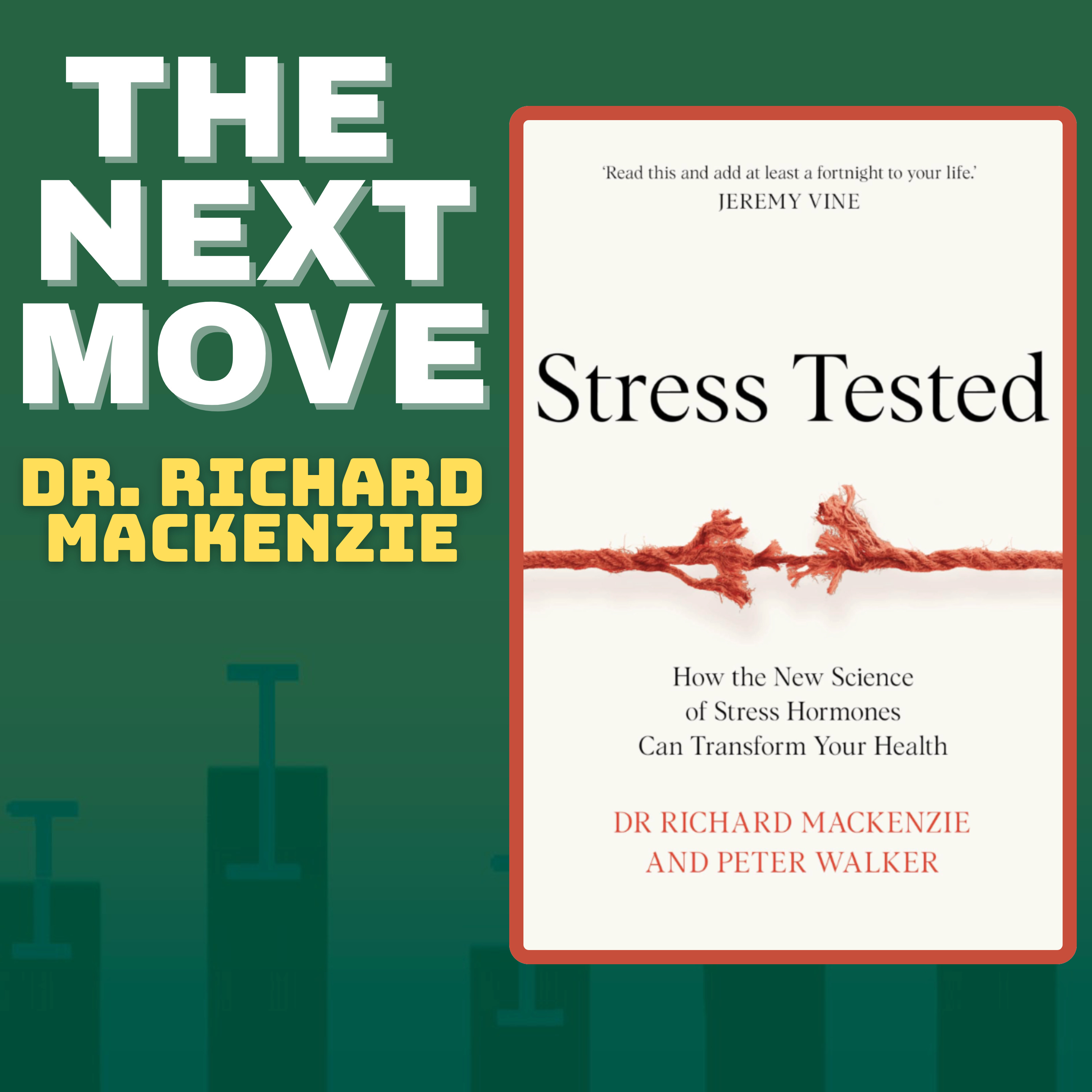 “Stress Is One of the Biggest Issues We’ve Got”: How Stress Undermines Health and Training — Dr. Richard MacKenzie (#18) 26.01.2026 41dkDr. Richard MacKenzie is an associate professor specializing in human metabolism and a clinician working at the intersection of exercise physiology, metabolic health, and stress. He is the author of Stress Tested: How The New Science of Stress Hormones Can Transform Your Health. In this episode, Richard unpacks what stress actually is from a physiological perspective, how acute and chronic stress differ, and why chronic stress can quietly undermine insulin sensitivity, recovery, sleep, and training adaptations.We also explore how stress shows up in metrics like heart rate variability, glucose variability, and fuel metabolism, why mindset and perception dramatically alter stress responses, and how exercise, nutrition, caffeine, sleep, and even cold exposure can either buffer or amplify stress. Episode breakdown:00:00 – Who is Dr. Richard MacKenzie?00:16 – Why write Stress Tested now?02:23 – What is stress?04:28 – When does stress turn from helpful to harmful?04:52 – How does chronic stress show up day to day?06:15 – Can stress actually be measured?07:41 – What does a personal “stress dashboard” look like?09:59 – How changeable is stress with mindset?13:59 – Does exercise reduce stress—or add to it?15:29 – Is stress one of our biggest health threats?19:56 – What hidden stressors are we missing?26:06 – Can diet increase—or reduce—stress?36:04 – What has stress research changed for Richard?41:05 – What’s next: protein, metabolism, and future research? This is a public episode. If you would like to discuss this with other subscribers or get access to bonus episodes, visit johngetstrong.substack.com
 -
 The In-Depth Science of HYROX: What Exercise Physiology Tells Us About Performance - Gommaar D’Hulst (#17) 19.01.2026 58dkGommaar D’Hulst is an exercise physiologist at ETH Zurich and the mind behind the WOD Science YouTube channel, with a background rooted in CrossFit and a growing focus on HYROX and hybrid endurance sports. Through his research and applied lab work, Gommaar bridges elite performance, physiology, and real-world training decisions for functional fitness athletes.In this episode, Gommaar breaks down the key physiological differences between CrossFit and HYROX, why HYROX is best understood as an endurance-dominant sport, and how muscle fiber types, VO2 max, lactate threshold, and anaerobic power shape performance. He shares insights from lab testing with elite athletes—including novel functional ramp tests using burpees and thrusters—explains why fatigue dramatically alters running economy in HYROX, and explores how tools from endurance science (like threshold training, Zone 2 work, and power metrics) can be adapted to functional movements. We also dive into interference effects, fueling strategies, and where sports science is headed as HYROX continues to professionalize.Episode breakdown:00:00 — Intro: Gommaar (ETH Zurich) + WOD Science + CrossFit → HYROX00:24 — CrossFit vs HYROX demands: longer duration, lower intensity, aerobic bias01:40 — Can you excel at both? Specialization, rising level, and the Tia example03:13 — Is HYROX endurance or strength? Why it’s primarily endurance (and sled/turf impact)04:48 — Muscle fibers 101: slow vs fast twitch and what they’re built for07:50 — Why strong powerlifters can struggle: strength vs strength-endurance11:01 — HYROX strength training: when (and if) low-rep work fits in the season12:17 — VO2 max + lactate threshold: what they are and why they matter15:56 — Elite CrossFit VO2 findings: lower-than-expected on the bike + specificity issue18:27 — Functional ramp test: burpees + thrusters protocol + what lactate curves show21:55 — Run → lunges/deadlifts → run: fatigue increases VO2 cost (running economy drop)26:02 — What predicts HYROX performance beyond VO2: fatigue-resistance across stations28:22 — Heart rate: good for running, limited for stations + why VO2 can drop in strength work34:15 — Interference effect: separating strength and endurance (same-day vs split) outcomes46:53 — Nutrition rapid-fire: carbs (timing + high intakes) and bicarb/creatine practicality This is a public episode. If you would like to discuss this with other subscribers or get access to bonus episodes, visit johngetstrong.substack.com
 -
 You Are The Expert In Your Own Life! The Surprising Benefits of Hiring a Life Coach - George Hearn (#16) 08.01.2026 47dkGeorge Hearn is a life coach who came into coaching through a high-achieving academic and corporate path—studying Geography at Cambridge, spending years in strategy consulting, and then moving into the startup world—before realizing he was more drawn to helping people design intentional, fulfilling livesIn this episode, George breaks down what coaching actually is (and why it’s often not about giving advice), how he structures sessions using tools like the Wheel of Life, Ikigai, and visualization, and how everyday practices like journaling, distraction-free walks, and even AI chatbots can support self-reflection. He also shares the behind-the-scenes of building his coaching business from scratch—finding clients, learning marketing and sales on the fly, navigating uncertainty, and building the support network needed to go all-in.Episode breakdown:00:00 — What a coach actually does01:01 — Coaching vs therapy, consulting, and mentorship03:04 — George’s life coaching origin story10:34 — The Wheel of Life: mapping the key areas and finding gaps13:27 — Prioritization + Pareto: focusing on what actually moves the needle14:04 — Ikigai: purpose at the intersection of skills, love, value, and need16:26 — Visualization: the “80-year-old you” exercise18:59 — Self-coaching tools: journaling for clarity + momentum21:34 — Thinking walks: default mode network and the “exam question”24:11 — Using chatbots for reflection: powerful, but don’t outsource decisions28:20 — Building the coaching business: learn-by-doing + finding clients32:28 — Living with uncertainty: risk, confidence, and growth mindset35:23 — The solo founder problem: building a support network38:22 — Developing coaching skills: listening, communication, self-work41:01 — When self-improvement becomes obsessive: staying balanced44:32 — What George is curious about: why people don’t aim for a 10/10 life46:44 — Closing reflections This is a public episode. If you would like to discuss this with other subscribers or get access to bonus episodes, visit johngetstrong.substack.com
 -
 Strength Changes Everything! No Running To Elite HYROX Athlete in One Year: Gabrielle Nikora-Baker (#15) 06.01.2026 42dkGabrielle Nicora-Baker is an Elite 15 HYROX athlete who came into the sport from a pure strength and bodybuilding background, with almost no running experience before her first race in 2024. In less than a year, Gabrielle progressed from her first mixed doubles race to competing in elite fields. In this episode, Gabrielle breaks down how her strength base accelerated her rise in HYROX, how she trains and fuels for elite racing, and what she’s learned from racing frequently, hiring a coach, and chasing a Worlds-level performance.Episode breakdown:00:00 – Intro01:48 – Strength background and rapid rise into elite competition03:57 – Bodybuilding years: training splits, progressive overload, big lifts06:09 – Early running volume (~20km/week) 08:11 – How strong do HYROX athletes really need to be?11:11 – Current training structure: thresholds, speed, long runs (~15 hrs/week)17:28 – Home gym setup: treadmill, ergs, bikes, and winter training21:43 – Nutrition shift from bodybuilding to endurance fueling (carbs, prep)26:39 – Race weaknesses: wall balls, burpees, fatigue management, mindset32:42 – Learning the sport fast: podcasts, racing reps, hiring a coach36:02 – Worlds relay experience + doubles vs solo racing39:42 – 2026 goals, testing curiosity, Phoenix prep + where to find Gabrielle This is a public episode. If you would like to discuss this with other subscribers or get access to bonus episodes, visit johngetstrong.substack.com
Benzer podcastler


Şurada popüler
Bu podcast şu ülkelerin podcast listelerinde de yer alıyor.

