
Human School
Miles Adcox
0
Human School is a podcast that explores the inner human experience, focusing on emotional growth, presence, and purpose. It reframes pain as instruction and productivity as presence, offering stories, tools, and raw conversations to help listeners stop performing and start participating in their lives. The podcast was born from a personal breakdown and aims to provide the education we never received about being human.
Bölümler
-
 4 Lessons To Stop Burnout: What My 7-Year-Old Taught Me About Stress 16.09.2026 13dkWe spend an enormous amount of energy trying to learn how to be healthier, less stressed adults – but what if the answer isn't learning something new, but remembering what we knew before we got so complicated? In this special solo episode of The Human School Podcast, host Miles Adcox hands the microphone to his seven-year-old daughter, Birdie Rose. With zero media training and absolute honesty, Birdie shares her thoughts on art, missing teeth, strawberries and ketchup, and what makes her feel closest to the people she loves.In this conversation and reflection, Miles unpacks four unexpected lessons on stress, curiosity, presence, and connection that children carry naturally — lessons that adults spend a lifetime trying to find their way back to.In this episode: 00:00 - Introducing Birdie Rose: The 7-Year-Old Podcast Guest 01:20 - Lesson 1: Curiosity Over Certainty (The Power of "I Don't Know") 04:00 - Lesson 2: Presence Over Productivity (Why Play Doesn't Need a Reason) 05:50 - Lesson 3: Expression Over Impression (Strawberries in Ketchup and PR Filters) 07:45 - Lesson 4: Relationship Over Performance (What Kids Actually Want From Us) 09:40 - Finding Courage: How We Regulate Fear Inside Relationships 11:45 - Final Encouragement from Birdie (And How to Keep Showing Up) If you’re looking for ways to connect back to yourself, Onsite can help. Learn more about our experiences: https://hubs.la/Q04xcj150Follow Human School: https://hubs.la/Q04xcj450Follow Miles: https://hubs.la/Q04xch_N0Subscribe to Substack: https://hubs.la/Q04xcj3y0
 -
 How to Rewire Your Brain for Peace, Creativity, and Purpose with Dr. Martha Beck 08.09.2026 1sa 47dkAre you living the life you actually want, or are you just trying to please everyone around you? In this episode of Human School, Miles sits down with world-renowned author, sociologist, and life coach Dr. Martha Beck for an exceptionally honest and deep conversation on human nature, breaking free from anxiety, and finding your true path. Martha shares her personal journey — from her time writing for Oprah’s Magazine and earning degrees from Harvard, to radically transforming her life by committing to a full year of total honesty. Together, Miles and Martha explore the biological roots of anxiety, how societal expectations force us to sell out our true nature at an early age, and how simple creative acts can serve as a direct antidote to mental distress. In this episode, you’ll discover: The Root of Modern Anxiety: Why our current educational and social systems conflict with human evolution. The "Visual Cliff" Study: How children learn to judge their own worth by watching the adults around them. The Power of Caving Early: Why learning to apologize quickly and drop ego heals relationships faster than anything else. Creativity vs. Anxiety: How engaging the creative parts of your brain actively shuts down panic and stress. The "One-Degree Turn": How making tiny, honest shifts in your day-to-day choices can completely realign your life. The K.I.S.T. Method: A practical, step-by-step tool using Kind Internal Self-Talk to navigate intense panic attacks and internal conflict. Whether you’re feeling burned out, stuck in people-pleasing patterns, or simply searching for more peace in your daily routine, this episode provides a compassionate roadmap back to your whole self. Onsite offers a range of experiences to do life-changing work around your story and what your body might be holding onto. Learn more at www.experienceonsite.com Episode Chapters: 00:00:00 Welcome Martha Beck 00:02:46 What Comfort Means Today 00:04:41 Root Causes of Modern Anxiety 00:07:08 How Kids Learn Self-Worth 00:13:21 The "Cave Early" Practice 00:15:53 Left-Brain vs. Right-Brain 00:21:05 The Real Curriculum of Life 00:24:00 Ancestral Wisdom & Magic 00:28:13 African Hospitality & Ubuntu 00:34:52 Finite vs. Infinite Games 00:44:03 Using Art to Fight Anxiety 00:47:38 Guided Visualization Exercise 00:54:02 Finding Magic in Technology 01:00:52 Humanizing High Performers 01:08:18 Living One Year Without Lies Connect with Human School: YouTube: https://hubs.la/Q04wFHGz0 Human School on Instagram: https://hubs.la/Q04wFHPK0 Miles on Instagram: https://hubs.la/Q04wFJHn0 Follow Human School on Substack: https://hubs.la/Q04wFJZt0
 -
 "I Had to Learn to Live Again" — Amy Grant on Starting Over at 65 03.09.2026 1sa 48dkWhat happens when life completely rewires your timeline overnight? Six-time Grammy winner Amy Grant joins the show for an exceptionally raw and vulnerable conversation about navigating back-to-back life-altering health crises — from emergency open-heart surgery to a traumatic brain injury that forced her to pause everything. Amy candidly opens up about the physical reality of memory loss, the emotional weight of starting over at 65, and why she ultimately decided to write a eulogy to her younger self. She also breaks down the worst advice she received early in her career, and how letting go of control allowed her to finally embrace the gift of unplanned interruptions. Whether you are navigating your own unexpected life shift, recovering from trauma, or searching for margin in a chaotic world, this episode is a masterclass in grace, resilience, and true freedom. Key Takeaways from This Episode Interruptions are often invitations. Real growth happens when you stop viewing life's disruptions as obstacles and start viewing them as redirections. Release past versions of yourself. Holding onto who you used to be prevents you from accepting and healing who you are right now. Margin isn't extra time — it's intentional space. Recovery and peace require actively protecting your energy from external expectations. Are you looking for support after your own season of change? Onsite offers a range of experiences to do life-changing work around your story and what your body might be holding onto. Learn more at www.experienceonsite.com Episode Chapters: 00:00 - Dragging Old Suitcases: Amy Grant’s New Season 00:38 - "Don't Talk So Much, Just Sing" 06:01 - The First Recording at Age 15 08:24 - Overcoming Limits 12:22 - The "River of Life" & Facing the Waterfall 20:56 - Health Scares: Open-Heart Surgery & the Bike Accident 27:17 - Living with a Traumatic Brain Injury (TBI) 31:02 - The Assignment: Writing a Eulogy to Her Younger Self 35:57 - Undoing Childhood Scripts and Deconstructing the Past 40:15 - Finding "Margin" and the Story of the Good Samaritan 45:24 - Morning Rituals: Unplugging from Autopilot 50:13 - Turning Pain into Grace and Finding Identity 01:10:53 - Rewiring the Brain: Neuroplasticity and Healing 01:12:24 - "Lead Me to Those I Need": Surplus and Need 01:19:00 - Post-Traumatic Growth and Repurposing Your Story 01:24:24 - Navigating Fame, Criticism, and Living off the Screen 01:31:17 - Collaborative Music and Embracing a Life Reset 01:37:19 Breathwork 01:40:09 Marriage is the Great Rock Tumbler 01:47:59 Closing Prayer Sendoff Connect with Human School: YouTube: https://hubs.la/Q04vZlYs0 Human School on Instagram: https://hubs.la/Q04vB96T0 Miles on Instagram: https://hubs.la/Q04vB9CJ0
 -
 Overcoming Self-Judgment and Walking Through Grief with Judah & the Lion 25.08.2026 1sa 31dkWhen life throws loss, grief, and change your way, how do you allow the pain to transform you rather than destroy you? In this episode of Human School, host Miles Adcox sits down with Judah Akers and Brian Macdonald of the alt-folk band Judah & the Lion on the release day of their album, Process. Together, they walk through a raw and vulnerable conversation about what it truly takes to heal. Judah opens up about losing family members to mental health struggles, navigating divorce, and working through addiction while performing on major stages around the world. Brian shares his perspective on stepping into fatherhood while on tour, keeping the band's brotherhood intact through dark seasons, and learning to redefine identity. From the metaphor of a caterpillar in a cocoon to learning how to stop harsh self-judgment, this conversation is a grounded reminder that transformation is messy, but hope is always available. In this episode, we discuss: The Cocoon Metaphor: Why real emotional growth requires letting go of who you were. Grief & Mental Health: Processing tragic loss, addressing addiction, and separating the symptom from the disease. Self-Compassion: Overcoming shame, letting go of control, and learning to speak kindly to yourself. Parenting & Growth: Navigating big life transitions and raising kids while working through your own past.Behind the Songs: The spontaneous origin story behind their track "Prism". Memorable Quotes: "The caterpillar has no memory of wings." — Judah Akers "We're not through the pain, but we're in it together, and there's hope." — Brian Macdonald "Addiction is a symptom. Shame, guilt, and not knowing yourself... are the disease." — Judah Akers "It's okay to be scared and brave at the same time. You can actually do both." — Miles Adcox Episode Timestamps: 00:00:00 – Meet Judah & The Lion00:04:42 – The Metaphor of Transformation00:11:42 – Fatherhood & Evolving Identity00:15:39 – Unpacking Rock Bottom & Vulnerability00:21:44 – Growing Up & Early Influences00:36:34 – The Band’s Origins & Personal Loss00:47:31 – Brotherhood & Supporting Each Other Through the Storm00:50:23 – Addressing Addiction, Shame, and Grief00:00:21 – Mentors, Support Systems, & Encouraging Voices01:07:33 – The Meaning Behind "Prism"01:11:46 – "Open Your Eyes, Kid"01:24:20 – "Scared and Brave at the Same Time" Links & Resources: Stream Judah & the Lion's Music Learn more about emotional wellness intensives at Onsite Workshops If you loved this episode, please rate and review Human School on Apple Podcasts or Spotify to help us reach more people who need these conversations! Follow Human School Instagram: https://hubs.la/Q04v8Q7K0Follow Miles: https://hubs.la/Q04v8QcZ0Human School YouTube: https://hubs.la/Q04v8Qdh0
 -
 What if Stress Isn't The Enemy? with Miles Adcox 18.08.2026 9dkIt seems like everyone is talking about stress. How to manage it. How to get rid of it. How to avoid it at all costs. But maybe in our journey to eradicate stress from our lives, we’re losing something far more valuable. In this solo conversation, Miles Adcox reframes our entire relationship with stress. Instead of treating stress like an opponent to beat, what if we treated it like a system trying to protect us? Join Miles as he shares the importance of building capacity over elimination, why meaningful living requires being stretched, and how to become a trusted partner to your own nervous system. In this episode, we explore: Why "trauma" can feel clinical, but stress is universal Stress as the body's brilliant system for adaptation The difference between removing stress and building capacity How curiosity replaces shame when looking at our nervous systems Looking to go deeper into your personal growth journey? The conversations on Human School are shaped by the work happening at Onsite Workshops. If you're looking to slow down, break patterns, and do the inner work, visit experienceonsite.com Episode chapters: 00:00 Intro: Is stress really the enemy? 00:40 The room that changed how I view trauma vs. stress 01:45 How burnout and emotional exhaustion actually begin 02:35 Why modern wellness tools miss the mark 03:15 Stress is an adaptation system, not a design flaw 04:15 Every meaningful thing in life asks something stressful of you 05:10 Increasing capacity vs. eliminating stress 05:55 Everyday pressure vs. profound adversity 06:45 Stress is an experience, not an identity 07:20 Why modern nervous systems are carrying more than ever before 07:50 Swap shame for curiosity: Becoming a student of your nervous system 08:35 Stop playing tug-of-war with your body Follow Human School on Instagram: https://hubs.la/Q04tfRwT0
 -
 Finding Success Without Losing Yourself: Larry Fleet on Fame, Fatherhood, and Staying Grounded 11.08.2026 2sa 9dkWhat do you do when you go from singing at local bars to millions of video views, playing at Madison Square Garden with Morgan Wallen, and hearing 20,000 people sing your lyrics back to you? If you’re Larry Fleet, you still shop at Ace Hardware. Larry Fleet writes the kind of country songs that feel like your own memories — jumping railroad tracks in a truck bed, learning how to tell stories in a barbershop chair, the sound of truck tires in the gravel. In this conversation, Larry opens up about the “simple” mistakes we’re making in modern storytelling, what fatherhood has changed in his songwriting, and how he's managed to tour and write with Willie Nelson, Morgan Wallen, and other heroes of the genre without losing the guy from White Bluff, Tennessee. The conversations we have on Human School are shaped by the work happening every day at Onsite. If you feel stuck in the same patterns, Onsite's Living Centered Program helps you slow down, go deeper, and do the inner work that changes things. If you’d like to learn more about Onsite, visit us –– experienceonsite.comIn this conversation: Why “clutter” might be the enemy of great storytelling The $5-a-head night Larry still keeps close, and why he never lets himself forget it Why he built his newest record with zero radio in mind — and what happened when it hit anyway The ways fatherhood has changed him, including teaching him new ways to communicate with others The surprising place his storytelling voice actually comes from What it actually takes to stay a person instead of becoming a product once people start paying attention How to build a songwriting career one bad song (then a hundred more) at a time How to stay "a normal dude" while touring arenas with Willie Nelson and Morgan Wallen Why simple, honest storytelling can reach people that polished products can't Episode timestamps: 00:00:00 — Welcome to Human School 00:06:30 — Small-town origins00:25:30 — Another Year Older — the new record 01:01:30 — The true story behind "5:25" 01:04:00 — Why Larry stopped writing for the radio 01:07:30 — What We Can Learn from Kids01:15:00 — $5 a head in North Georgia 01:19:30 — The Radio Said "No" to "Where I Find God"01:20:30 — The call from Morgan Wallen, and Madison Square Garden 01:38:30 — What it means to stay human when you're a "product"01:47:00 — The barbershop that taught him how to tell a story 01:51:30 — What "Where I Find God" means to the people who needed it 01:59:00 — Scotland, and the tears neither of them expected 02:07:30 — Larry on prison ministry and San Quentin Follow Human School YouTube: @humanschoolofficial Instagram: @humanschoolofficial TikTok: @humanschoolofficial
 -
 Is Certainty Making Us Lonely? with Miles Adcox 04.08.2026 17dkWhy does being right feel so much better than being curious? And is our obsession with certainty the cause of our greatest divides?This episode breaks down the psychology behind certainty — why our brains default to it, what it costs us in our relationships, and why curiosity might be the more reliable path to actually feeling connected to other people.What you'll learnHow confirmation bias shapes what we believe is true, without us noticing it happeningWhat the illusory truth effect is, and why repetition can make an opinion feel like factHow to tell the difference between healthy disagreement and contemptWhy algorithms and media incentives reward certainty over nuance — and what that does to us over timeA mindset shift for staying curious under pressure, borrowed from an unlikely place: horsemanshipWhy feeling understood does more for anxiety than winning an argument ever doesHow to hold strong beliefs without needing everyone around you to agreeBuilding your curiosity muscles? Onsite offers a range of experiences to do life-changing work around your story and what your body might be holding onto. Learn more here.Timestamps00:00 — This might be why you're feeling lonely02:30 — Illusory truth effect and confirmation bias05:30 — Making content in the age of outrage07:00 — The real product is Identity09:45 — A horse changed everything13:00 — Understanding vs. "winning"15:00 — Becoming harder to recruit Stay connected with Human School:YouTube - https://hubs.la/Q04rLNLl0Instagram - https://hubs.la/Q04rLNVX0Threads - https://hubs.la/Q04rLP6D0TikTok - https://hubs.la/Q04rLPfY0
 -
 Is Your Gut Connected to Your Mental Health? with Funcitonal Medicine Practitioner, Dr. Chris Motley 28.07.2026 1sa 40dkHave you ever gotten a clean bill of health and still felt like something was wrong? What if the anxiety, the brain fog, the thing you can't explain isn't in your head, but a story your body inherited?Dr. Chris Motley is a functional medicine practitioner and acupuncturist based in Nashville, and the host of the Ancient Health Podcast. For over 22 years, he's blended Chinese medicine, kinesiology, and biofeedback with Western diagnostics to find what standard testing misses — the chronic weaknesses that don't show up on a bloodwork panel but show up in how we sleep, how we digest, and how we carry stress in our bodies.In this episode, Dr. Motley and Miles talk about how inflammation from food can weaken the blood-brain barrier and surface in surprising ways — and why the weakest organ in your body often maps straight back to how your parents and grandparents lived. Today, you'll learn how to read your body's own signals, why curiosity heals faster than fear, and what it actually looks like to get to the root of a problem instead of managing its symptoms.In this conversation, you'll learn:How chronic inflammation from food can weaken the blood-brain barrier and show up as anxiety, depression, or brain fogHow to read your body's own signals — sleep patterns, digestion, even facial features — the way a functional medicine practitioner doesHow your weakest organ can map directly back to how your parents and grandparents livedWhy processed food, not just screens, may be driving the rise in childhood behavioral changesHow the gut-brain axis connects what you eat to how you feel within hoursWhy getting curious about a weakness — instead of afraid of it — is the first step to healing itSimple, low-cost first steps to a more fulfilled, healthier life anyone can start todayIf this stirred something in you, Onsite offers a range of experiences to do life-changing work around your story and stored trauma that your body is asking for. Learn more at experienceonsite.com Follow Human School:YouTube - Human School PodcastInstagram - @humanschoolofficialThreads - @humanschoolofficialTikTok - @humanschoolofficial What We Discuss:00:00:00 – Meet Dr. Chris Motley00:02:41 – Why He Left a Growing Practice00:08:19 – The Danger of Expertise Without Curiosity00:12:04 – Meeting Overwhelmed Patients with Optimism00:13:50 – How Motley Found His Interest in Medicine00:17:51 – Motley’s Story Through His Gallbladder00:23:30 – Where He Starts with Every New Patient00:28:00 – Are Emotions Hiding Inside Our Organs?00:33:54 – The Benefits of Integrated Medicine: Treating Mind & Body00:42:36 – The Anxious Patient 00:47:51 – "What You Eat Is What You Think"00:52:44 – The Health Goal Every Day00:55:06 – Your Gut is Your Second Brain: Explaining Gut-Brain Axis01:01:06 – Drivers of the Mental Health Crisis Happening Now01:05:54 – Why Do We Have So Many Food Allergies?01:06:45 – People, Food, & the ADD and ADHD Rise01:08:51 – The Habit Change to Reset Your System01:11:58 – Motley’s “Basic” Steps Towards Physical Wellness01:14:01 – Miles’s Steps Toward Emotional Wellness01:16:47 – What is behind Chronic Constipation?01:17:54 – Getting Back into Your Body01:25:22 – What Your Face Reveals About Your Story01:27:50 – Ancient Practices over Modern Technology01:33:06 – Motley Outside of Medicine 01:35:41 – The Lesson Weaving Throughout 22 Years PracticingThis episode is a conversation between practitioners sharing personal experience and professional perspective — it is not medical advice. Please consult your own physician or healthcare provider before making any changes to your health, diet, or treatment plan.
 -
 Building Self Worth Without Approval with Tori Kelly 17.07.2026 1sa 14dkHave you ever believed you're only worthy of attention when you're performing and perfect?What if the thing you fear your kid will inherit is the exact thing you've never worked through yourself? Tori Kelly, a Grammy-winning vocalist who's been sharing her voice with the world since she was a kid, sits down with Miles for a conversation about identity, motherhood, and what happens when the performance stops. Tori opens up about growing up in a mixed-race householdwhere she often felt othered, getting signed at 12 and "shelved" before she'd lived enough life to have something to say, and the lie she quietly believed for years: that she wasn't worthy of attention unless she was singing. She talks about touring stadiums with Ed Sheeran while pregnant, writing her new album, God Must Really Love Me, in two weeks while holding her newborn son, and why his first cry made the record. Tori and Miles go deep into the perfectionism she traces back to her earliest days on stage, the phone cleanses she uses to fight comparison, and why motherhood has made her want her son to see her mess up, say sorry, and be human. Miles shares a mentor's metaphor about gratitude that reframes how you see whatever you're circling right now, and Tori tells the story of the drive where the phrase "God must really love me" came out of her mouth before it became an album title. Ever notice the pattern you're trying to protect your kids from is usually the one you haven't fully worked through yourself? Onsite's Living Centered Program for parents and adults ready to finally do their own work, not just manage everyone else's. It's not about becoming a perfect parent; It's about becoming an honest one. Learn more at experienceonsite.com In this conversation, you'll learn:How to Trace Perfectionism Back to the Stage Instead of the Story You Tell YourselfHow to Stop Performing for Approval and Start ActuallyFeeling ItHow Becoming a Parent Can Break a Pattern You Didn't Know You Were RepeatingHow to Use a Phone Cleanse to Get Your Voice Back FromComparisonHow to Write an Album in Two Weeks Once You Stop Editing YourselfHow to Let Your Kids Watch You Mess Up on PurposeHow to Reframe a Career "Setback" as the Setup for Something BetterHow Growing Up Feeling "Othered" Shapes the Way You Tell the Truth LaterHow to Turn Gratitude Into a Practice Instead of a MoodHow to Know the Difference Between Being a Vocalist andBeing Yourself Follow Human School:YouTube - Human School PodcastInstagram - @humanschoolofficialThreads - @humanschoolofficialTikTok - @humanschoolofficial What We Discuss:00:00:00 – Meet Tori Kelly00:01:51 – Her Grand Ole Opry Debut, One Night Before ThisConversation00:05:34 – Genre-less on Purpose00:08:41 – The Vocalist Everyone Expects, the Storyteller She's Becoming00:10:51 – The Soundtrack of Her Childhood00:12:43 – Signed at 12 & Promised the World00:23:05 – A Career Built on Slow Builds, Not Big Breaks00:28:24 – How Becoming a Mom Rewired Her as an Artist00:29:24 – Touring Stadiums With Ed Sheeran While Pregnant00:31:13 – What Motherhood Cracked Open00:36:29 – She Doesn't Want Her Son Thinking He Has to BePerfect00:38:46 – Tracing Her Perfectionism Back to the Root00:40:59 – How Approval Got Tangled Up With Her Voice00:47:31 – The Phone Cleanse That Gave Her Mind Back00:56:06 – The Story Behind "God Must Really Love Me"01:01:46 – The Vulture Metaphor: Reframing Gratitude01:04:41 – Congruence, Not Perfection01:09:25 – Her Husband and Life on Tour01:13:34 – Ending on the Only Line That Fits
 -
 Raising Capable Kids in the Anxious Generation with Sissy Goff & David Thomas 09.07.2026 1sa 31dkHow do you help an anxious child build real confidence instead of just managing their fear?What if the very thing keeping your kid unsafe is how hard you're working to protect them? Sissy Goff and David Thomas are two of the most trusted voices in child and adolescent mental health today, counselors at Daystar Counseling Ministries and hosts of the popular Raising Boys and Girls podcast. With more than three decades combined sitting across from kids and their families, they've become go-to resources for parents navigating anxiety, emotional development, and resilience in childhood. Their new New York Times Bestselling book, Capable, just carried them through a national press tour, including a stop on the Today Show, and for good reason: it takes on one of the most urgent questions facing parents right now. In this conversation, Sissy, David, and Miles unpack why so many kids today aren't just anxious; they're increasingly unwilling to try, and what parents can actually do to build resilience instead of just managing symptoms. They talk through the difference between attunement and over-protection, why "trust your gut" might be the most important piece of parenting advice out there, and how to set healthy boundaries around technology and social media without shutting your kids out of the world they're growing up in. It's a grounded, hopeful conversation about childhood anxiety, parenting under pressure, and what it actually takes to raise capable, confident kids in an overwhelmed world. Your kids are watching you more closely than they're listening to you. Onsite's Living Centered Program is a place for parents ready to do their own work, so the patterns they pass down are worth passing on. Learn more at experienceonsite.com. Follow Human School:YouTube - Human School PodcastInstagram - @humanschoolofficialThreads - @humanschoolofficialTikTok - @humanschoolofficial For more resources and tools from Sissy Goff & David Thomas, visit raisingboysandgirls.com or follow along on Instagram @raisingboysandgirls. In this conversation, you'll learn:How to Tell Attunement From Rescuing Your KidHow to Read the Emergency Behind Their AnxietyHow to Stop Outsourcing Instincts to Strangers OnlineHow to Decide When They Get a Phone or Social AccountHow to Turn a Hard No Into a Creative YesHow to Use "Trust the Process" in Their Hardest StretchHow to Spot a Problem They Should Solve ThemselvesHow to Rebuild Your Resilience Before Teaching ItHow to Hold Grief and Purpose at the Same TimeHow to Give Your Kids a Front-Row Seat to Your GrowthHow to Raise a Capable Kid Without Raising an Anxious OneHow to Pick Two Parenting Voices You Actually Trust What We Discuss:00:00:00 – Meet Sissy Goff and David Thomas00:04:21 – Over-Correction: the Field's New Blind Spot00:05:35 – Catching Up & Life After the Capable Press Tour00:08:31 – The Soap Opera Character & Camp Job that Shaped Careers00:14:02 – A Working 32-Year Partnership 00:17:09 – Sissy’s Dog Who Came to Work & Comforted Teen's Tears 00:20:20 – Sammy, Onsite’s Beagle Who Escorted Every New Guest00:30:15 – Backstage at the Today Show00:36:58 – What This Work Taught Them About Being Human00:41:55 – A National State of Emergency Hiding in Plain Sight00:49:32 – Escape and Avoidance Feel Like Good Parenting00:53:29 – What Attunement Actually Looks Like00:59:25 – “Go in the Strength You Already Have”01:03:22 – What's Really Underneath a Lack of Confidence01:10:56 – Trust the Process, Even in Their Hardest Stretch01:18:25 – Is my child ready for technology?01:26:18 – Doing Your Own Work Is the Greatest Gift to Your Kids01:27:16 – A Look Inside Daystar Counseling Ministries
 -
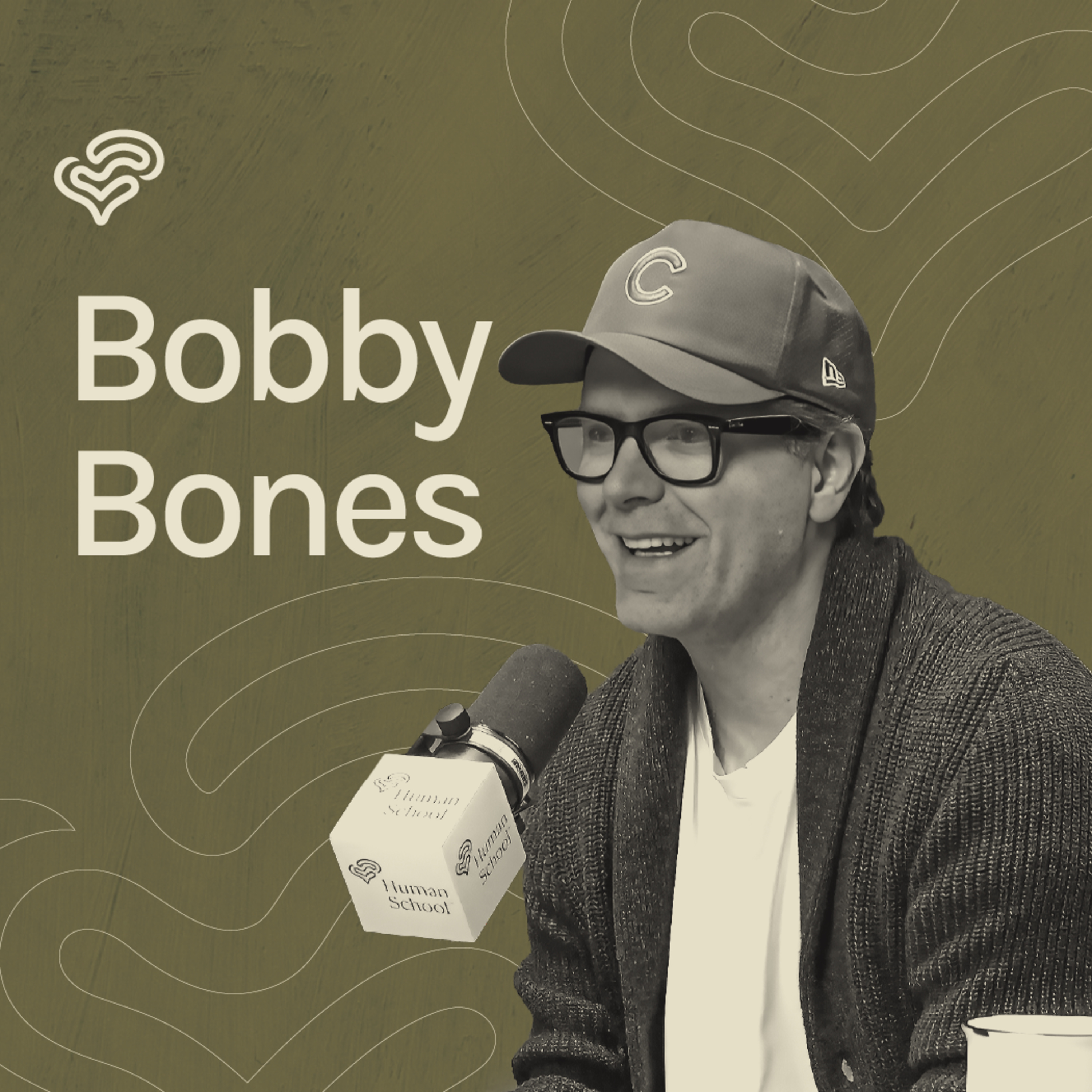 How to Talk to Anyone with Bobby Bones 02.07.2026 1sa 15dkWhat's the real difference between showing up for someone and rescuing them?Can a single pair of socks undo years of not letting yourself feel anything?Bobby Bones went from a campus radio station in Arkansas to the National Radio Hall of Fame, two #1 New York Times bestsellers, and a syndicated morning show heard by millions, turning his own story into a reason other people feel less alone in theirs. He sits down with Miles Adcox eight weeks into fatherhood, in a season that's forced him to slow down after two decades of never having to.Bobby opens up about being raised by a 16-year-old motherwho struggled with addiction his whole childhood, the trailer he bought her the first time he made real money, and the hard lesson in what enabling actually looks like when you love someone who's sick. He reveals the moment a stranger's kindness at a therapy intensive at Onsite finally broke him open, and shares the four-letter word his mother never said but it’s the one his grandmother said so consistently it became the only safety he knew. Miles and Bobby go deep into being triggered by both praise and criticism, why Bobby only checks hiscomments on Tuesdays, and the grief of having a daughter who'll never meet the grandmother who shaped him most. In this conversation, you'll learn:How to Turn Your Own Insecurities Into a Bridge for Someone Else'sHow to Tell the Difference Between Supporting Someone in Addiction and Enabling ThemHow to Stay Consistent With Someone Even When It Feels Like Nothing Is ChangingHow to Recognize When Both Praise and Criticism Are Actuallya ThreatHow to Build Boundaries So Social Media Doesn't Run YourNervous SystemHow to Respond Instead of React When You Feel ChallengedHow to Find Safety in a Relationship After a ChildhoodWithout ItHow to Let a Stranger's Small Act of Kindness Actually LandHow to Talk to Your Kids About the Parts of Your Story ThatStill HurtHow to Know You Were Consistent Enough, Even When Nothing Else Felt Certain Feeling stuck in patterns you can't quite name? Onsite'sLiving Centered Program is built for people ready to slow down and do the deeper work that creates real change. Learn more at experienceonsite.com.Follow Human School:YouTube - Human School PodcastInstagram - @humanschoolofficialThreads - @humanschoolofficialTikTok - @humanschoolofficialWhat We Discuss:00:00:00 – Meet Bobby Bones00:03:47 – Why every performer is secretly insecure00:05:09 – The secret to connecting with people in interviews00:15:47 – Finding the line between public and private life00:17:56 – Getting rejected to 2 Bestsellers00:22:32 – Bobby’s Mom: 16 years old, no support, and anaddiction that never let go00:31:57 – What to say to someone who is supporting an addict00:38:06 – "I wish our baby could meet my mom"00:39:33 – The four-letter word his grandma never stoppedsaying00:47:11 – Why compliments feel like threats to him00:50:29 – The boundaries that keep him from spiraling online00:53:35 – Property and therapy: the two best investments he'smade00:58:27 – His Onsite story he's never told quite like this01:07:03 – The TEDx talk that flopped & the one that gothim back on stage01:11:06 – What watching his wife become a mom taught himabout love01:13:43 – His message to his daughter, twenty years from now
 -
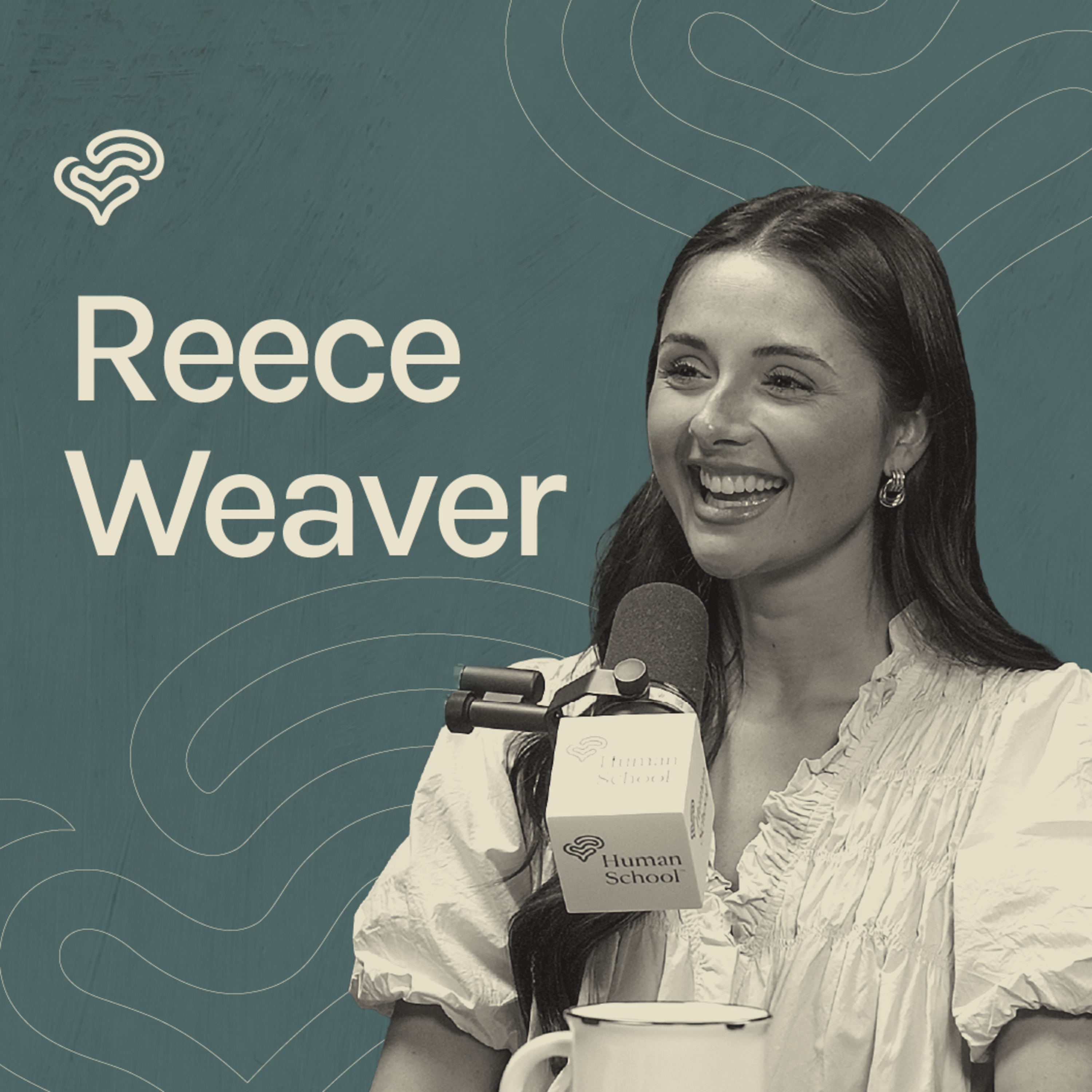 When One Dream Ends with Reece Weaver 25.06.2026 1sa 30dkHave you ever lived a dream so fully that you felt the quiettug to walk away? Not because it failed you, but because something new was calling.What does it look like to anchor your identity in somethingthat can never be taken from you, even when everything you've built your life around closes a chapter? Reece Weaver spent her entire third season as a Dallas Cowboys Cheerleader (DCC) carrying a decision nobody outside her closest circle knew about yet. The preacher's granddaughter from Jacksonville, Florida who started dancing at three, earned a scholarship to the University of Alabama —where she also met her husband Will — and felt something shift in her chest the moment she walked into AT&T Stadium as a sophomore. In the years to follow she has become the most-followed DCC in the franchise's history, a breakout presence on Netflix's America's Sweethearts: Dallas Cowboys Cheerleaders,and then spent a year in therapy, prayer, and conversation with people she trusts, processing a feeling of “what’s next?” she couldn't explain and couldn't ignore.In this conversation, Miles Adcox and Reece gets to the story underneath her retirement announcement. Reece opens up about the mental and emotional toll that the spotlight created long before the headlines caught up. She talks about the comparison trap that quietly became perfectionism, not being able to ignore people’s opinions and critiques on social media, her mom's reminder that "if that crown ever gets too tight, we can easily take it off," and why the word "retirement" still doesn't sit right with her. Miles and Reece also get to explore the joy of this next season and what is to come: a book, new hometown, being a cheerleader to her friends, and open hands for more opportunities. In this conversation, you'll learn:How to Know When a Dream Is Finished vs. When You AreHow to Separate Your Identity from the Thing You're Best AtHow to Let "Two Things Can Be True" Change YourNext DecisionHow to Carry Perfectionism Without Being Carried By ItHow to Survive Being Watched Without Being Defined By ItHow to Hear the Tug Before It Becomes a RoarHow to Find Community That Tells You the TruthHow to Serve Something Bigger Than Your Own Highlight ReelHow to Take a Leap of Faith Into a Blank CanvasHow to Turn a Page Without Calling It Quitting The conversations we have on Human School are shaped by thework happening every day at Onsite. Stuck in the same emotional patterns? Onsite's Living Centered Program helps you slow down, go deeper, and do the inner work that changes things. Learn more at experienceonsite.com. Follow Human School:YouTube - Human School PodcastInstagram - @humanschoolofficialThreads - @humanschoolofficialTikTok - @humanschoolofficial What We Discuss:00:00:00 – Meet Reece Weaver00:04:10 – Jacksonville, Florida & the Preacher's Granddaughter00:09:39 – "I Was a Sponge" — How It All Started at Three00:22:33 – Dance as an Expressive Therapy00:24:34 – When Dance Becomes Your Whole Identity00:27:44 – Who defines your identity? 00:32:42 – What Belonging Really Means00:33:46 – One Song, Two Auditions, & Dreams She Didn't Know Yet00:37:22 – Running Out on Bryant-Denny for the First Time00:39:32 – Learning to Fail Well00:42:21 – Where Perfectionism Really Comes From00:50:18 – How Cutthroat Is It Inside the Dallas Cowboy Cheerleaders?00:55:37 – Reminder from Mom: "If That Crown Ever Gets Too Tight"00:59:17 – What to Tell a Young Girl in the Comparison Trap01:02:18 – America’s Team: The Dallas Cowboys01:06:52 – The Cotton Bowl Moment That Changed Everything01:09:47 – The Mental Weight Nobody Talks About01:17:05 – What’s next for Reece?01:19:59 – Moving Onto the Next Phase of Life – Goodbye DCC01:23:17 – Why She Refuses the Word "Retirement"01:26:47 – What the Tears are Saying
 -
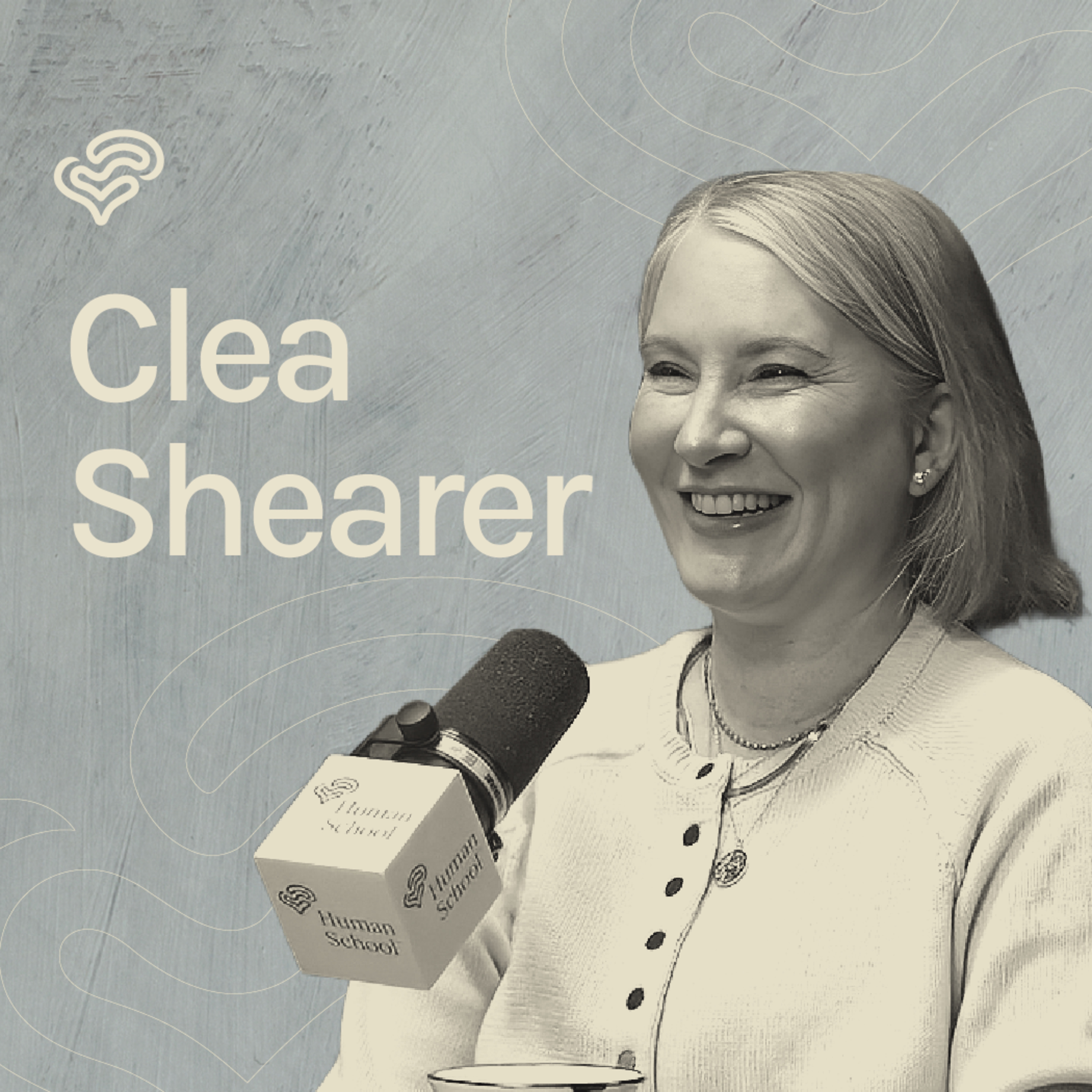 Refusing to Waste Pain with Clea Shearer (The Home Edit) 18.06.2026 1sa 10dkHave you ever fought the hardest battle of your life and then not known what to do once it was over?What if the story you thought defined you was actually the prologue to something even bigger? Clea Shearer is co-founder of The Home Edit — the brand, the Netflix show, the New York Times bestselling books. But the Clea in this conversation has spent four years navigating a cancer journey her own doctors call a medical anomaly. From her diagnosis to a double mastectomy, followed by many emergency surgeries, she has faced complications most people never encounter. And she's done it all publicly, because she made a promise in Paris the day after her diagnosis: she was going to make her cancer purposeful. Miles and Clea go into all sides of facing a cancer treatment, especially the ones no one mentions. She opens up about the depression that hit after ringing the bell, being medically induced into menopause, losing her breast for the third time, and the first real fight she and her husband, John, had in 21 years. But she also shares how making her suffering public became the thing that saved her, why she considers cancer one of the great honors of her life, and what she's learned about building community and finding purpose on the other side. In this conversation, you'll learn:How to find purpose in the middle of the worst thing that's ever happened to youHow the “ring the bell” moment can become its own kind of rock bottomHow illness fatigue affects even the most loving support systemsHow to receive help without guilt or resistanceHow sharing your story publicly can become the thing that heals youHow to tell the difference between relief and healing and why you need bothHow to rebuild meaning when you don't know what you were fighting for anymoreHow the community becomes your greatest medicine when nothing else worksHow to find the honor inside the hardest thing you've never asked forHow to keep going when you don't know if there's another side Whether you're navigating grief, burnout, or a quiet sensethat something feels off, Onsite’s Living Centered experience gives you the tools, the community, and the space to change. Learn more at experienceonsite.com. Follow Human School:YouTube - Human School PodcastInstagram - @humanschoolofficialThreads - @humanschoolofficialTikTok - @humanschoolofficial What We Discuss:00:00:00 – Meet Clea Shearer00:03:31 – Hot Flashes & Getting Drop-Kicked Into Menopause00:06:23 – Diagnosis Day: March 8, 202200:07:45 – What Happens After Active Treatment Ends00:13:35 – The Medical Anomaly Nobody Wants to Be00:17:52 – The Dark Month No One Saw Coming00:21:05 – Eight Surgeries and a Year of Reconstruction00:26:47 – Losing Her Breast for the Third Time00:29:28 – The Undertow Nobody Else Could See00:34:25 – The First Real Fight in 21 Years of Marriage00:38:28 – 2026: The Year of the Fire Horse00:42:48 – Presence Over Words: Horse Therapy00:49:30 – The Two Things the Human Brain Fears Most00:50:06 – Champagne, a Kindle, and Unconventional Coping00:52:02 – Why She's Never Really Done Therapy00:54:02 – Inner-Circle Friendship: Sitting Like a Chicken on an Egg00:56:14 – Community Is the Most Powerful Antidote01:00:30 – The Moment in Paris That Changed Everything01:04:46 – Why Cancer Became the Honor of Her Lifetime01:06:04 – A taste of what they didn’t get to
 -
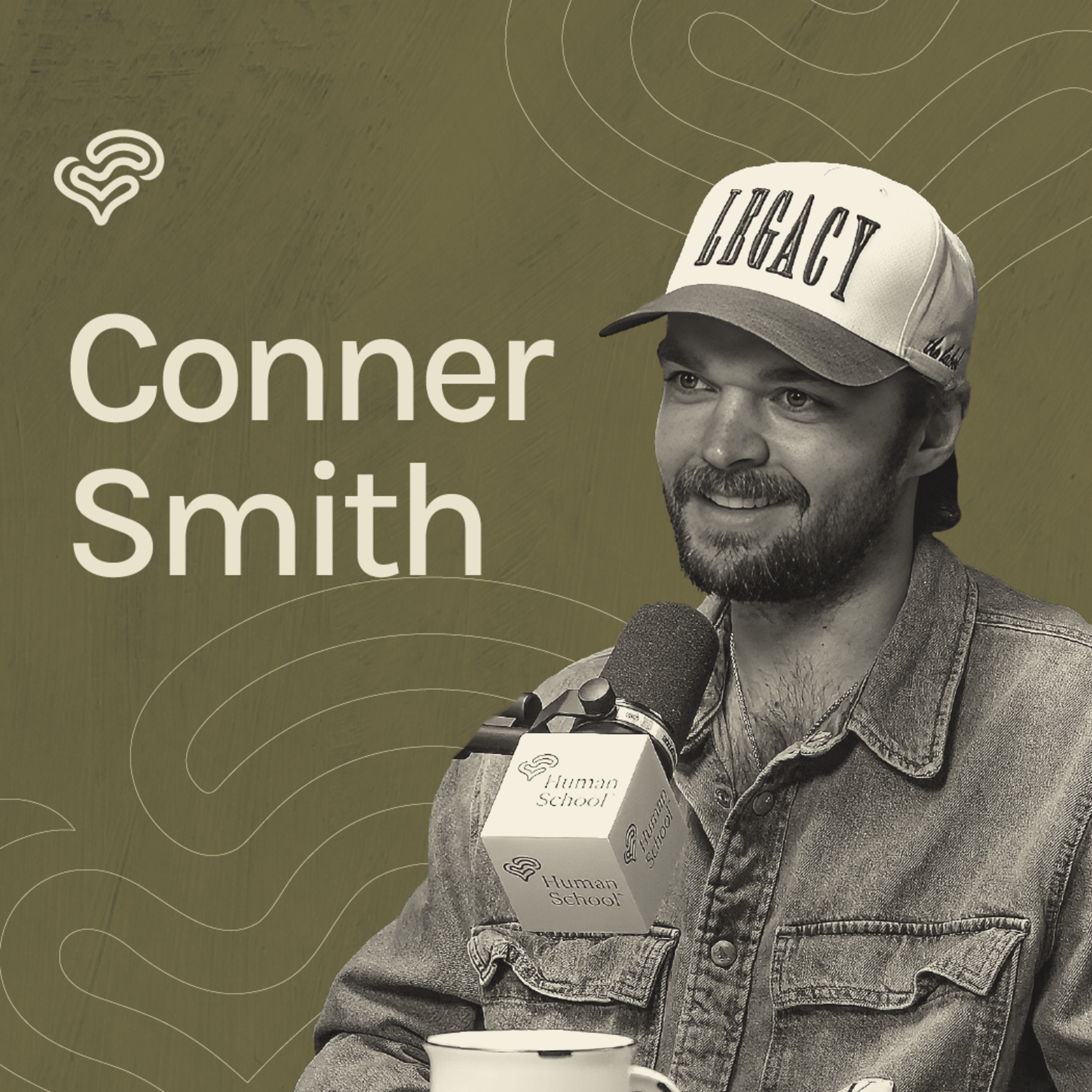 Keeping a Soft Heart After Hard Things with Connor Smith 11.06.2026 1sa 29dkWhat does it actually look like to rebuild from the insideout — before the world even knows you needed to?What happens to a person when tragedy arrives not as a slowunraveling, but all at once — and the only thing left standing is who you actually are? What does it look like to grieve something you can't talkabout, for a family you can't reach, while the world keeps watching? Country singer-songwriter Conner Smith landed his firstpublishing deal on Music Row at 16 years old. By 21, he was opening for his heroes. By 24, he'd gone independent, walked away from a label, and released a raw 10-song acoustic record, not because anyone told him to, but because it wasthe first music he ever actually believed in.In this conversation, Conner opens up to Miles about themoment he stopped writing songs for approval and started writing them for himself, why going independent felt less like a career risk and more like self-respect, and the story of June 8th — the night he was involved in a fatal accident. He shares how grief, silence, and the community that showed up becamethe foundation for the most important growth of his life, what it was like to sit with the family of the woman who died, and why honoring her legacy is now woven into who he's becoming. The conversations we have on Human School are shaped by the work happening every day at Onsite. For more than 45 years, Onsite has helped people slow down, get honest about their stories, and experience meaningful change through world-class therapeutic experiences. Learn more at experienceonsite.com. In this conversation, you'll learn: How to know when you're writing someone else's song with your own life How early success can quietly steal your sense of self How to rebuild your artistic identity from the inside out How to tell the difference between stewardship and striving How community carries you when you can't carry yourself How to redefine success before the milestone redefines you How forgiveness can be the most unexpected turning point in a tragedy How to let suffering shape you without letting it define youHow your greatest weakness becomes your greatest strength How to let people carry what you've spent your whole lifecarrying alone Follow Human School:YouTube - Human School PodcastInstagram - @humanschoolofficialThreads - @humanschoolofficialTikTok - @humanschoolofficial What We Discuss:00:00:00 – Meet Conner Smith00:04:49 – Growing Up Inside the Dream Before You're Ready00:08:20 – What Thomas Rhett Taught Him About Priorities00:10:23 – The Story behind Milestones00:13:50 – When He Stopped Writing for Himself00:16:06 – Songwriting & Why He Put the Record Out Anyway00:21:41 – The First Time He Believed the Compliments00:28:17 – Redefining Success Without Losing the Dream00:31:34 – Stewardship vs. Striving00:34:16 – "Industry Plant": The Song That Got Him in Trouble00:39:22 – What Happens Before You Find Who You Are00:41:26 – What He Told a 14-Year-Old About to Sign a Deal00:47:20 – June 8th: The Night Everything Stopped00:50:33 – The Weight No One Could Prepare Him For00:54:46 – Getting Help Early Helped01:01:48 – Forgiveness Around a Table with Miss Dot's Family01:03:03 – Miss Dot & Why Her Legacy Matters01:05:34 – How Tragedy Changed Him01:14:00 – The 18-Year-Old Who Shared His Story01:15:32 – Friends Who Showed Up Without Asking01:18:09 – Transactional vs. Transformational Relationships01:27:11 – Closing Blessing for Listeners
 -
 Learning You Don't Have to Earn Love with Alana Springsteen 04.06.2026 1sa 4dkWhat if the songs you've been writing were actually thetherapy you desperately needed? What if the version of you that felt like the black sheep your whole life was the one who would help the rest of us feel less alone? Alana Springsteen has been performing since before she knewwhat performing cost her. She signed her first publishing deal at 14, earned a gold record before she turned 25, CMT's Next Women of Country, and has shared stages with Keith Urban and Tyler Hubbard — all while quietly carrying a version of herself she hadn't yet figured out how to put down. Her sophomorealbum, I Hope This Helps, is the result of what happened when she stopped grinding and started digging. Miles and Alana go deep into the fear woven into her faith,the people-pleasing that had her questioning “why,” the EMDR session that surfaced a memory from four years old, and the eating disorder she kept hidden until she was finally ready to let her mom in. This is a conversation about what it costs to become who you were always meant to be and the honesty aboutthe journey to get there. In this conversation, you'll learn:How to Tell the Difference Between Faith and FearHow Performing for Love Slowly Erodes Your IdentityHow to Use Curiosity as a Tool for DeconstructionHow People-Pleasing Becomes a Mask You Can't Take OffHow to Pick Up the Mirror Instead of the MicroscopeHow EMDR Unlocks Childhood Memories Still Running Your Adult LifeHow to Recognize When Validation Has Become a DrugHow to Write Your Way Through Seasons That Would Otherwise Break YouHow to Let Your Parents See Who You Actually AreHow to Stop Waiting for Permission to Love Yourself The conversations we have on Human School are shaped by the work happening every day at Onsite. For more than 45 years, Onsite has helped people slow down, get honest about their stories, and experience meaningful change through world-class therapeutic experiences. Learn more at experienceonsite.com. Follow Human School:YouTube - Human School PodcastInstagram - @humanschoolofficialThreads - @humanschoolofficialTikTok - @humanschoolofficialWhat We Discuss:00:00:00 – Meet Alana Springsteen00:04:39 – The Two Years That Reshaped Everything00:08:02 – Growing Up in Small Town Virginia00:12:16 – The Gift and the Burden of a Religious Upbringing00:18:57 – Moving to Nashville at 1400:20:11 – Learning to See Your Parents as Human00:21:17 – Advice for those Questioning Faith00:23:27 – The Story Behind "Same God"00:29:57 – Learning to Trust Your Own Inner Voice00:31:48 – Wearing So Many Masks You Forget Your Own Face00:36:52 – Being Public Before You Know Yourself00:41:02 – Rick Rubin’s Influence on Creating Art00:45:42 – Learning to Love Yourself Without Conditions00:48:56 – EMDR Therapy and What It Surfaced00:51:49 – Picking Up the Mirror Instead of the Microscope00:56:52 – The Story Behind "Note to Self"01:00:13 – “It's Never Too Late to Have a Happy Childhood.”01:00:58 – Affirmations from Alana
 -
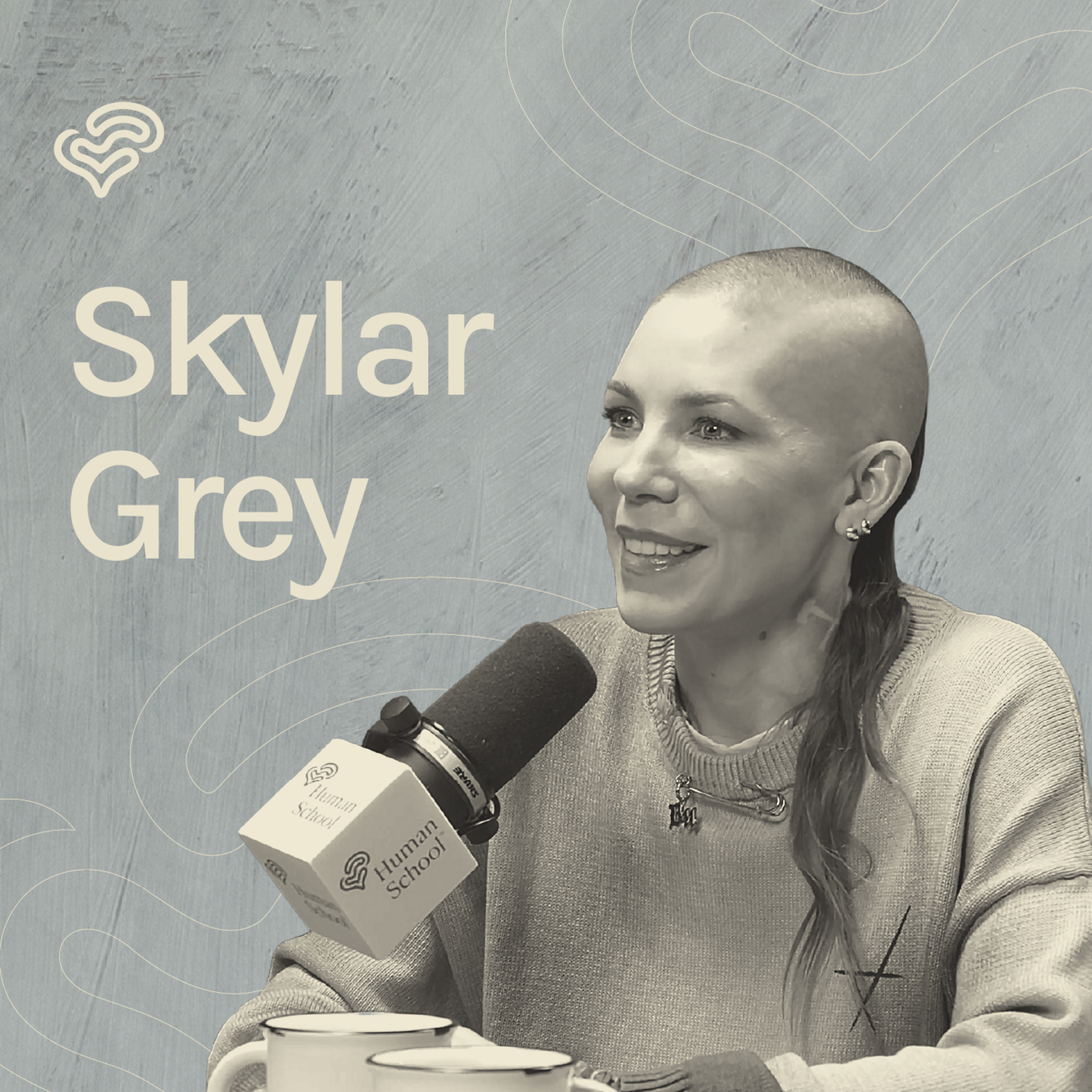 The Courage to Be Yourself with Skylar Gray 28.05.2026 1sa 50dkHave you ever felt like becoming quieter was the only way to survive being too much?What if the chaos you chased and the life you almost missed were both pointing you home? Skylar Grey is a five-time Grammy-nominated artist, SpotifyBillions Club member, and one of the most distinctive voices of the last two decades. Known for her work with Eminem and Dr. Dre, she sits down with Miles Adcox to talk about the parts of her story the highlight reel never shows: a 1,500-person Wisconsin town, being told she was too much, a friendship breakup she never forgot, and a teacher who said music wasn't a career — the last day she went back to class. Skylar opens up about retreating to an Oregon cabin afterher record deal fell apart, how that silence gave her "Love the Way You Lie," and the fears that kept her shrinking even as the world grew louder. She shares what it took to believe she deserved real love, why she's letting the wild little girl back out, and how Wasted Potential became a story she wrote for herself — one that might save someone else. In this conversation, you'll learn:How childhood fractures quietly shape your adult lifeHow being "too much" can become what makes youunforgettableHow to find yourself after the world trains it out of youHow to tell the difference between influence and inspirationHow burnout signals you've drifted from your own voiceHow fear of criticism shrinks your art and your lifeHow to know when you've earned the right to want what you wantHow polarizing art finds the people who need it mostHow to write through darkness without forcing a resolutionHow to build a life that makes the work worth doing The conversations we have on Human School are shaped by the work happening every day at Onsite. For more than 45 years, Onsite has helped people slow down, get honest about their stories, and experience meaningful change through world-class therapeutic experiences. Learn more at experienceonsite.com. Follow Human School:YouTube - Human School PodcastInstagram - @humanschoolofficialThreads - @humanschoolofficialTikTok - @humanschoolofficial What We Discuss:00:00:00 – Meet Skylar Grey00:02:19 – What it feels like to be truly seen00:04:25 – Turning 40 and why now was the time to tell her story00:06:49 – Growing up in a small town00:10:48 – The childhood fractures that still live in her00:13:50 – Carrying the past into the music industry00:19:12 – A Celtic harpist mom and a barbershop quartet dad00:21:36 – "Generations" – the duo that started her career00:24:11 – Going solo at 12 and buying her first piano00:27:18 – Influenced vs. inspired 00:34:24 – Tunnel vision work ethics00:41:30 – The teacher who said "music isn't a career"00:44:16 – Running off stage in tears & what the crowdfelt in it00:47:09 – Her message to those who feel like they don't belong00:51:29 – The grocery store pick-up line & dream partner00:54:03 – "Love the Way You Lie" Origin Story01:05:11 – How Eminem's "Stan" changed everything01:11:53 – What setbacks taught her01:14:16 – The burnout she didn't see coming01:16:18 – Why success scared her & fear held her back01:28:16 – "Bubble Grunge" Era 01:33:54 – The story behind "Bruises"01:37:06 – Her journey to the "That'll Be Fine" girl01:38:48 – What the younger Skylar would think of all this01:41:08 – Meet Time - the AI stuffed animal voiced by Skylar Grey
 -
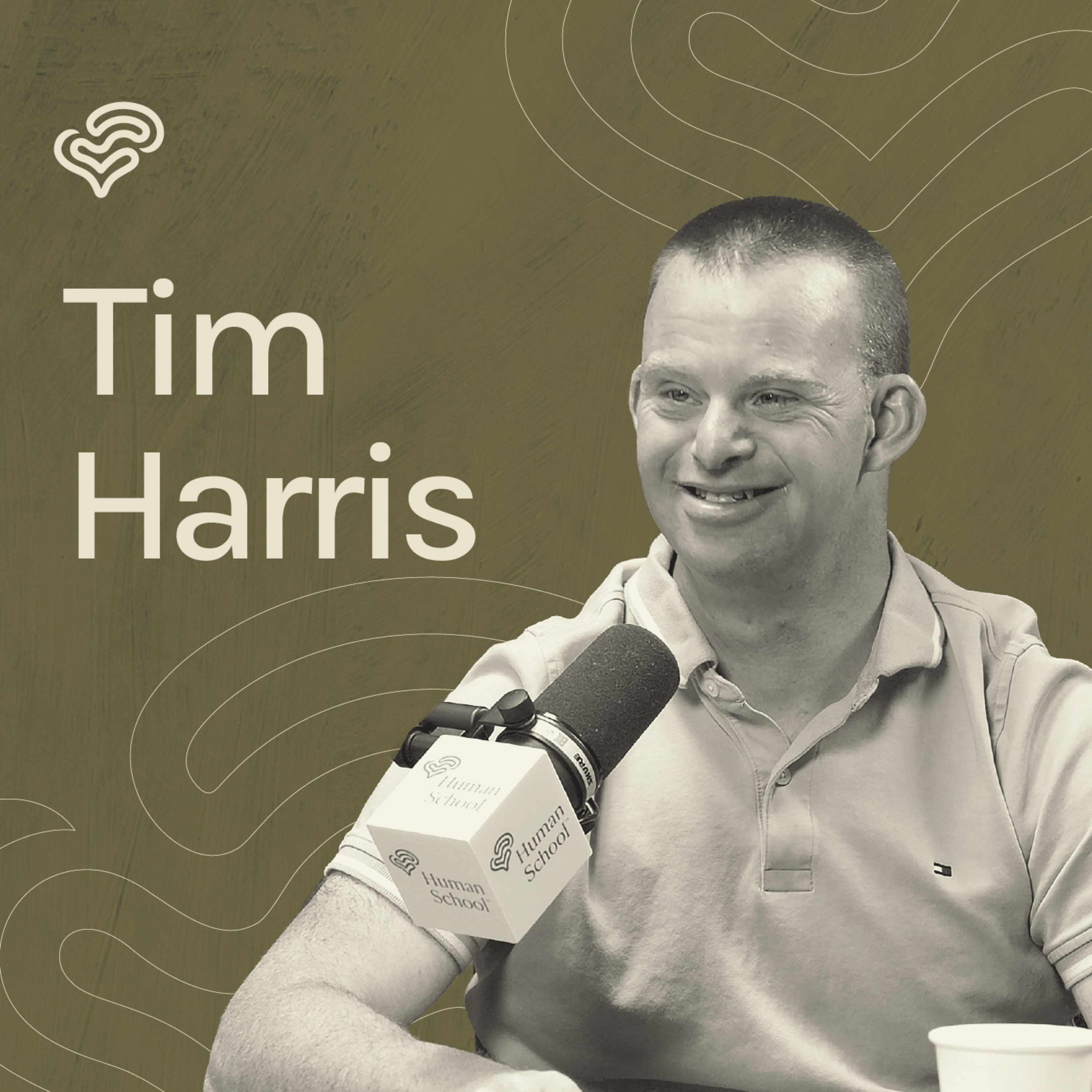 Hugging the World Back Together with Tim Harris 21.05.2026 1sa 33dkWhat if the most powerful thing you could offer the world wasn't your résumé or achievements, but simply your presence and a hug? Tim Harris is an entrepreneur, philanthropist, Special Olympics athlete, author of The Book of Hugs, host of the Big Heart Talks with Tim podcast, and founder of Tim's Big Heart Foundation. Raised in Albuquerque, Tim built a life around one belief: love, kindness, and connection can change everything. He ran Tim's Place: Breakfast, Lunch & Hugs, greeting every guest at the front door — all while living with Down syndrome, not in spite of who he is, but because of it. In this conversation, Tim shares about his seven steps to an awesome life, what he told a worried father whose baby would be born with Down syndrome, and why hugs are the best medicine in the world. Miles and Tim talk about their love of country music and feature a special performance of a country classic. These new best friends cover it all before Tim’s 5 o’clock flight home. In this conversation, you'll learn:How to be the light instead of complaining about the darknessHow to use your superpower to lift someone in their hardest momentHow to dream something and then do the work to make it realHow friendship becomes the foundation for everything worth buildingHow to lead with love in every room you walk intoHow kindness attracts more kindness back into your lifeHow to grieve loss while still showing up for the worldHow asking first makes connection strongerHow to recognize the gift in people that the world underestimatesHow to love someone for a thousand years, starting today Human School is powered by the work happening at Onsite, a place where people step out of their normal rhythms to do deeper healing work in community. Learn more here. Follow Human School:YouTube - Human School PodcastInstagram - @humanschoolofficialThreads - @humanschoolofficialTikTok - @humanschoolofficial More from Tim:Book Tim to Speak in your CommunityListen to Tim's PodcastFollow Tim on Instagram What We Discuss:00:00:00 – Meet Tim Harris00:03:02 – Country music fan since 13: Garth Brooks, Josh Turner & the deep cuts00:05:20 – Nashville coffee taste test00:10:39 – Tim's Big Heart Foundation00:13:42 – "Oh, yeah": the trademark and how his dad gave him the hype00:14:25 – Tim’s 7 steps to an awesome life00:16:05 – Tim's Place: Breakfast, Lunch & Hugs00:21:36 – Special Olympics USA Games Athlete: representing New Mexico00:26:55 – The Book of Hugs: monkeys, bananas, and the world's biggest softie00:30:21 – "Hugs are the best medicine to heal the world"00:39:25 – Grief and the friend who gave his book away before he passed00:43:14 – Speed dating, proposals, and dreaming about love00:44:57 – A special performance from Tim & Miles00:51:09 – Meeting Reba McEntire on the job01:02:28 – World Down Syndrome Day and Tim Tebow's Night to Shine01:13:41 – Emcee at the World Games & Hugging the Obamas01:18:21 – "We should love each other for a thousand years"01:19:03 - Tim makes Miles his new best friend — officially01:21:33 - Tim McGraw reached out about "Humble and Kind"01:23:01 - Nashville boots, cowboy hat, and a human school gift
 -
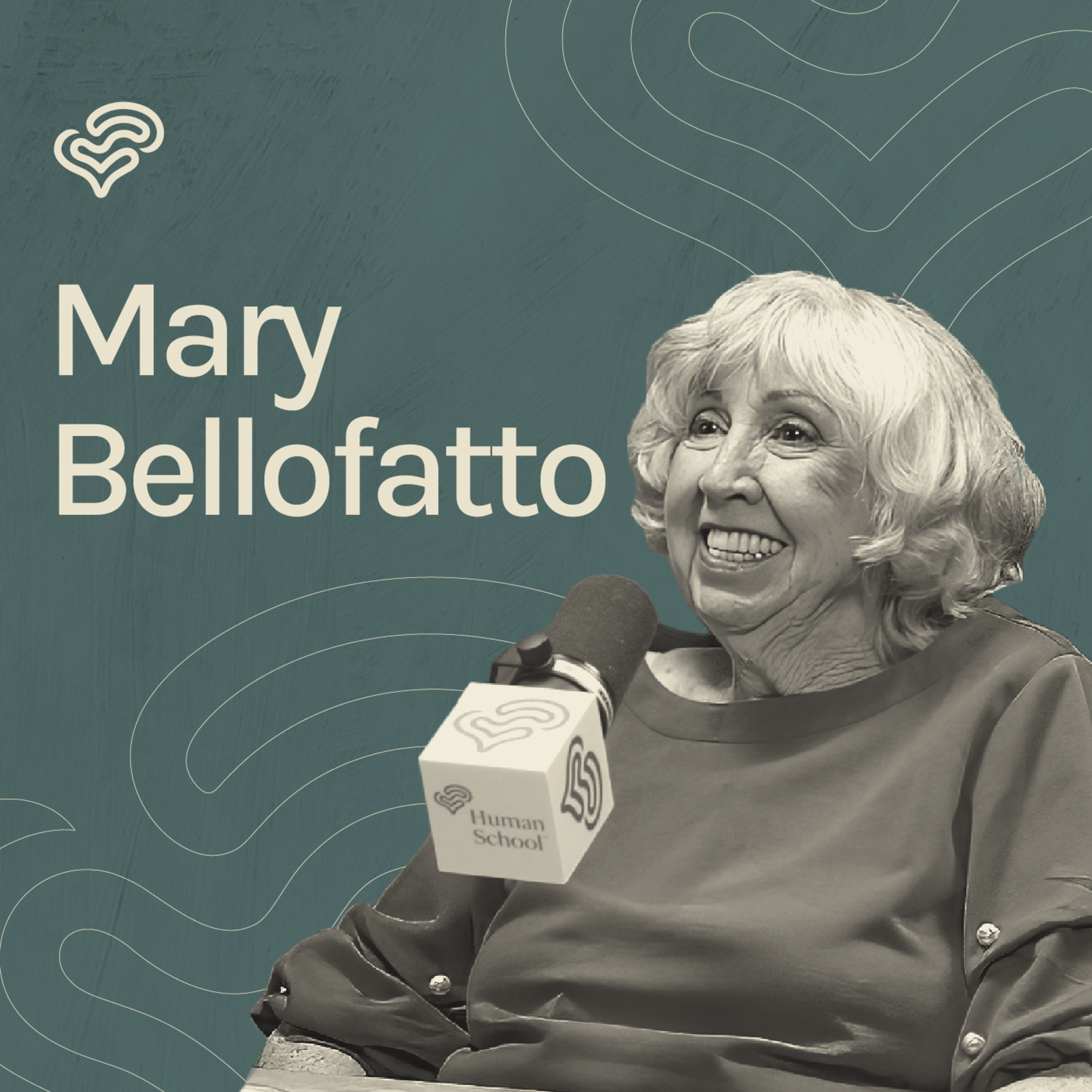 How to Make People Feel Truly Seen with Mary Bellofatto 15.05.2026 1sa 58dkHave you ever met someone who spent 50 years healing others and somehow became more human with every one of those years? What would it mean to stop hiding behind your busyness, your title, or your phone, and let someone actually see you? Mary Bellofatto is a pioneer in mental health who has spent five decades walking the hardest terrain human experience offers — trauma, disordered eating, addiction, grief, and couples work. With deep mastery in psychodrama, she has brought healing to therapy rooms across the world. At 81, she still wakes up excited, tears up at the thought of never retiring, and gets out of Ubers last because someone needs to finish their story. In this conversation, Mary opens up about what it means to be a catalyst without burning out, why loneliness is cured by learning to be alone, and how shame shields the grief we won't feel. She shares the moment a young man in Uganda said, "I'm just a boy," and freed himself from years of soldiers' shame. Miles and Mary go deep into disordered eating, including what she said in a bathroom that finally unlocked the real story underneath. Eighty years of hard-won wisdom, delivered with Arkansas common sense and lack of clinical jargon. In this conversation, you'll learn:How to Be a Catalyst Without Losing YourselfHow Loneliness Can Be Cured by Learning to Be AloneHow Shame Functions as a Shield for Unprocessed GriefHow to Widen Your Definition of Grief Beyond LossHow the Stories We Tell Ourselves Build a Lifetime Around a LieHow Psychodrama Unlocks What Talk Therapy Can't ReachHow to Hold Space Without Trying to Fix AnyoneHow to Recognize When Busyness Is a MedicatorHow Disordered Eating Is Really About DignityHow to Live Your Legacy Right Now — Not Someday Human School is powered by the work happening at Onsite, a place where people step out of their normal rhythms to do deeper healing work in community. Learn more at experienceonsite.com.Learn more about the Pastor's Living Centered Program through The Onsite Foundation at theonsitefoundation.org.Follow Human School:YouTube - Human School PodcastInstagram - @humanschoolofficialThreads - @humanschoolofficialTikTok - @humanschoolofficial What We Discuss:00:00:00 - Meet Mary Bellofatto00:04:31 - The Currency of Miracles00:05:55 - How to Hold Space Without Fixing Anyone00:09:37 - Wounded in Relationship, Healed in Relationship00:09:10 - The Airport Wave That Said Everything00:10:54 - Tears Are Actually Talking00:12:30 - Why Strangers Always Pour Their Stories Out to Her00:13:53 - Hugging Your Uber Drivers00:20:04 - What We Miss When We Hide Behind Technology00:21:52 - Grief in the Coffee Aisle00:23:22 - What Hurry Is Really Running From00:25:19 - Loneliness and the Courage to Be Alone00:26:44 - Shame Is the Shield00:29:57 - The Many Faces of Grief00:32:11 A - Country That Stopped Grieving00:40:18 - Does Kindness Still Work?00:43:06 - Trauma Is…00:44:18 - The Stories We Tell Ourselves vs What We Hear00:48:32 - How Mary Walks into a Room Full of Strangers00:52:11 14 - Years of Monthly Psychodrama Training01:00:38 - The Child Soldiers of Uganda01:03:37 - Rwanda After the Genocide01:05:02 - The Brain When People Move Their Bodies01:13:44 - Wisdom from 53 Years of Marriage01:22:27 - Disordered Eating Is Not Like Any Other Addiction01:35:58 - Mary Doubles for Miles Live, On Air01:41:19 - Legacy is the Now01:48:22 - Words to the World Right Now01:54:04 - Pastor’s Living Centered Program at Onsite01:55:08 - Five Grammy Moments from Mile’s North Star
 -
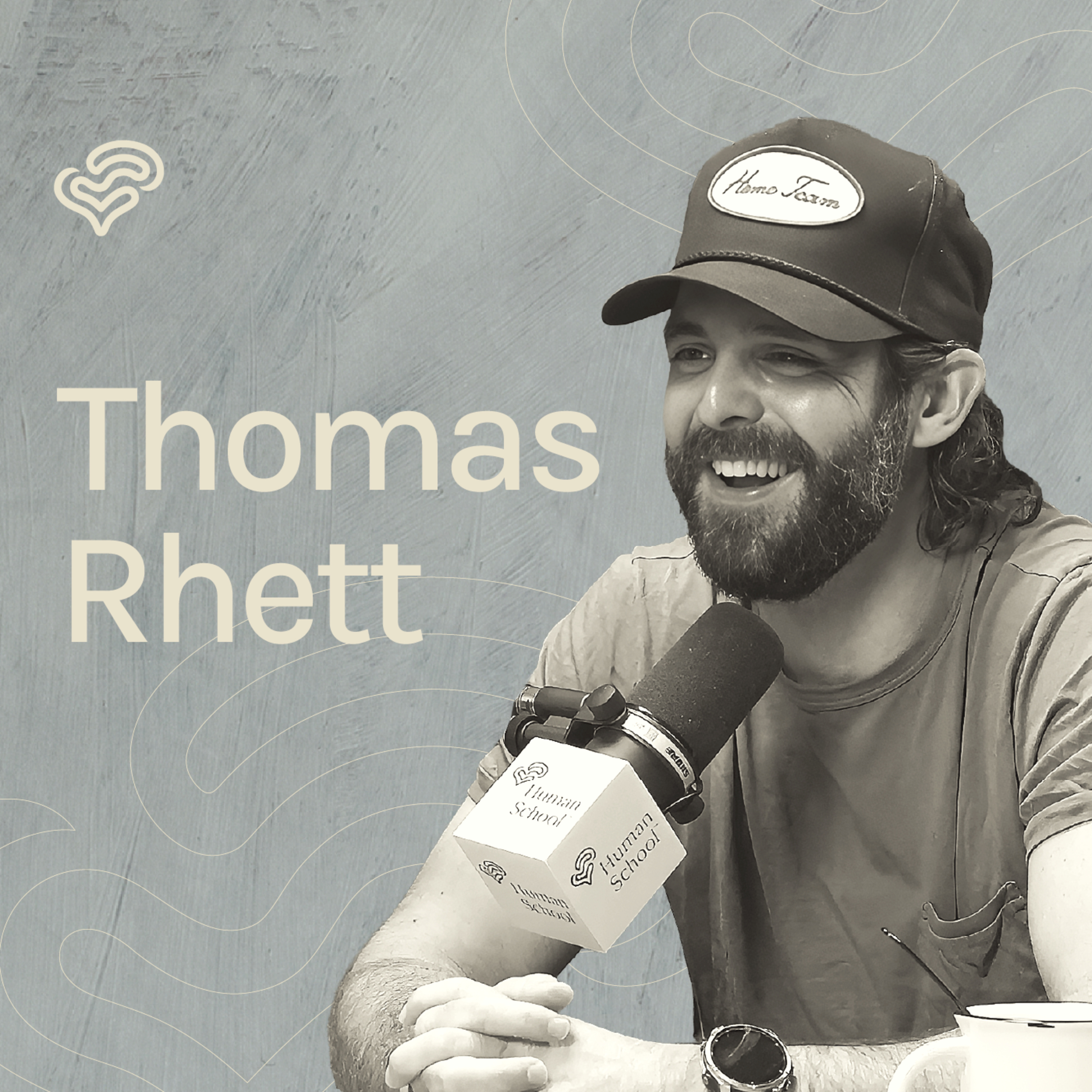 The Pressure to Get It "Right" with Thomas Rhett 06.05.2026 1sa 59dkHave you ever stood in the middle of a life that looks great on paper and still felt like you were failing the people right in front of you?What if being hard on yourself isn't humility? It's just the long way around to never believing you're enough? And what happens when the same obsessive drive that makes you world-class at your craft is the exact thing that makes it hard to just sit down and watch your kid eat cereal slowly? Miles sits down with his longtime friend for one of the most honest and wide-open episodes yet. Thomas Rhett brings all of himself — the songwriter who goes all in on everything he loves, the dad of five learning to trade productivity for presence, and the man doing the real work to make sure who his family experiences every day is the same person the world admires from a distance. This one is full of laughter, hard-won wisdom, and the kind of honesty that only happens between two people who genuinely trust each other. This conversation is about the guy who flips on the bedroom lights at 6:30 AM, trying to get five kids out the door, and wonders on the drive home if he loved them well at all that morning. The man who told a new friend upfront, "I'm not a good friend" — and actually believed it. The songwriter who can make strangers cry but struggles to list three ways he was showing up for his own kids. Miles and Thomas Rhett go deep into what it actually looks like to chase congruence, to be as present and real inside your home as you are when the world is watching. Thomas Rhett shares what his first trip to Onsite taught him about letting go, how a simple question from his counselor cracked something open about the way he sees himself as a father, why he's writing his most intentional album yet, and what he hopes his kids say about him long after the number ones stop counting. In this conversation, you'll learn:How to Stop Measuring Your Worth by Rooms That Aren't FullHow to Ask the Question: "How Do I Know I'm a Great Father?"How to Parent Five Kids Completely Differently Without Losing Your MindHow to Shed Your Stage Persona the Moment You Walk Through Your Front DoorHow to Redefine Success So You Can Actually Sleep at NightHow to Have the Friendship You Want Instead of the One You've Labeled Yourself WithHow to Live Like You Know You're Going to Die - Ecclesiastes editionHow to Stop Fixing and Start Being Present in the MessHow to Give Yourself the Dugout Grace Every Parent Desperately NeedsHow to Use Your Obsessive Nature as a Superpower Instead of a Trap Human School is powered by the work happening at Onsite, a place where people step out of their normal rhythms to do deeper healing work in community. Learn more: experienceonsite.com.Follow Human School:YouTube - Human School PodcastInstagram - @humanschoolofficialThreads - @humanschoolofficialTikTok - @humanschoolofficial Chapters:00:00:00 – Meet Thomas Rhett Akins00:03:18 – Trucks, Gear & Going All In00:07:54 – Soundtrack of the Masters: A Career Highlight00:09:29 – Golf is a Metaphor for Life00:17:44 – Tiger Wood’s & Nick Saben’s Life Advice00:22:01 – The 6:30 AM Spiral with Five Kids00:24:17 – Wisdom from John Maxwell & Worst-Case Scenarios00:28:19 – The Question That Started This Friendship00:30:14 – What Raising Four Daughters is Teaching Him00:35:49 – The Discipline of Being Present00:41:23 – Work-Life Balance Is a Myth00:42:37 – "They Just Need to See Your Eyes"00:47:10 – What Breaks His Heart Most as a Dad00:52:07 – "How Do You Know You're a Great Father?"00:54:10 – The Coach’s Influence Still Impacting Him00:55:14 – Showing Up in Friendships 00:58:01 – The Round Table & A, B & C Friendships01:04:10 – Answering the “Great Father” Question01:20:30 – Ecclesiastes & Living Like You're Going to Die01:37:44 – Redefining What a “Hit” Actually Means01:43:32 – Onsite & The Rock in the River 01:47:52 – 36-Year-Old TR Would Tell 25-Year-Old TR01:52:49 – What He Hopes His Kids Will Remember
 -
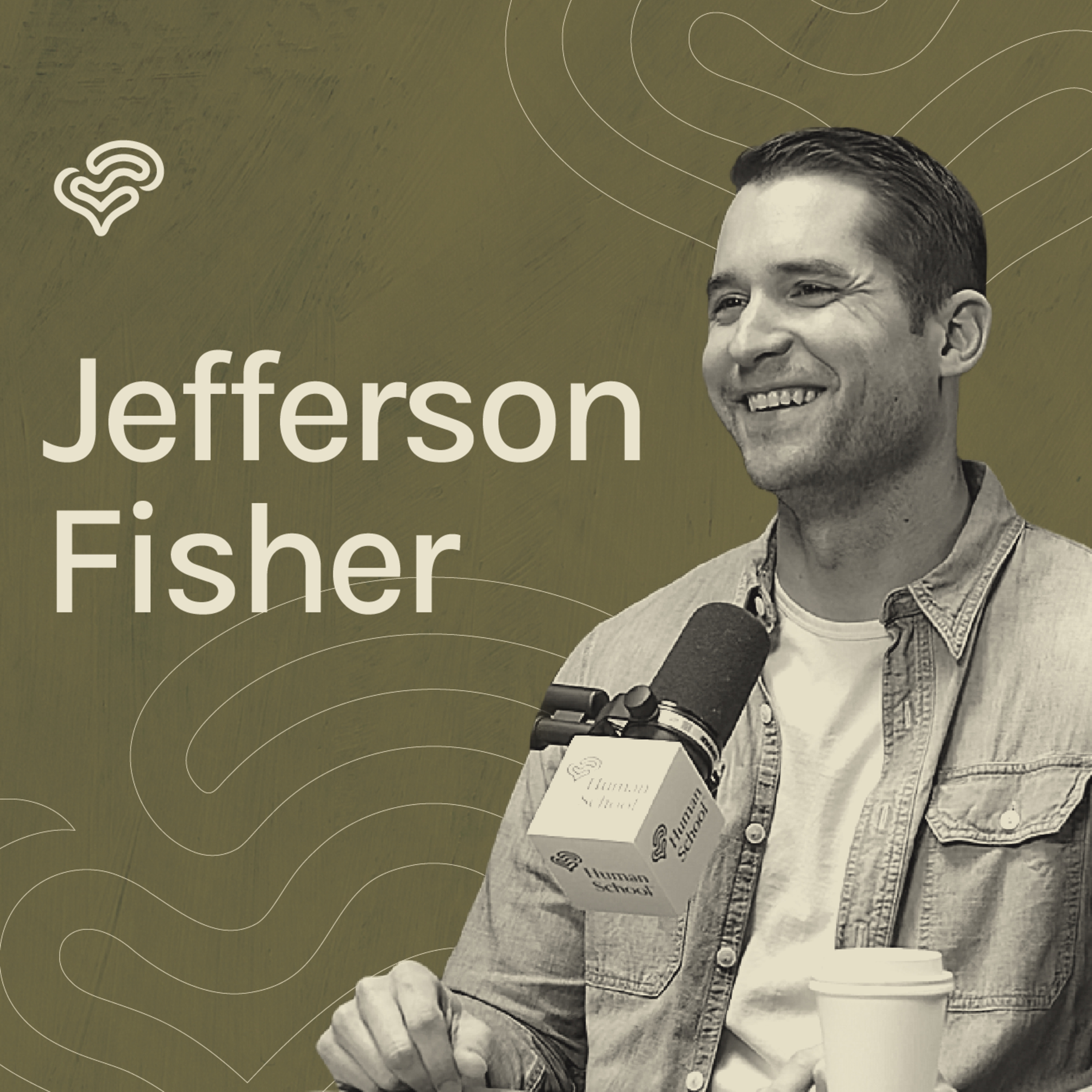 How To Navigate Hard Conversations with Jefferson Fisher 29.04.2026 1sa 22dkStuck in the same emotional patterns? Onsite's LivingCentered Program is a five-day intensive that helps you slow down, go deeper, and do the inner work that changes things. Learn more at https://hubs.la/Q04dV_Xl0 Have you ever taught others how to communicate, but still lost it in your own kitchen? What if the best communicators in the world are still works in progress, and that's exactly the point? Jefferson Fisher is a board-certified trial attorney, NY Times bestselling author of The Next Conversation, and one of themost-followed voices on communication online. Behind the millions of views is a husband, a dad, and a fifth-generation attorney from small-town Texas still figuring it out in real time. In this conversation, Miles and Jefferson get into the real stuff — a flooded house, a morning fight, imposter syndrome, and why even the best communicators still have to earn their reps every day. Jefferson opens up about the moment being a public-facing person started changing his everyday life, why going to extremes in arguments almost never works, and the phrase his wife came up with mid-argument that changed how he sees conflict. Miles shares a raw moment from his kitchen and what happened when he finally stopped doubling down and let his wife bring the temperature down. In this conversation, you'll learn:How to Enter Hard Conversations with Something to Learn, Not Something to ProveHow the Ignition and Cooling Phases Work in Real ArgumentsWhy Affirming a Feeling First Is the Most Disarming Move You Can MakeHow Vulnerability Builds More Trust Than Any Credential on the WallHow to Stop Going to Extremes in Conflict and What to Do InsteadWhy the Best at Being Human Learn It From Living, Not StudyingHow to Tell the Difference Between a Reaction and a RepairHow Fame Makes the Very Things You Teach Harder to PracticeWhy What's Good for the Family Is Good for the BusinessHow to Let Go of the Conversation You Had Scripted in Your HeadFollow Human School:YouTube - Human School PodcastInstagram - @humanschoolofficialThreads - @humanschoolofficialTikTok - @humanschoolofficial What We Discuss:00:00:00 - Meet Jefferson Fisher00:03:54 - What law school doesn’t teach00:04:42 - How a trial attorney became a communication voice00:06:09 - Small Town Silsby, Texas00:08:14 - 800 friends to millions of strangers00:10:24 - Contrast is the unlock for building an audience00:27:17 - IBC Root Beer & A Story Told Twice 00:12:33 - His Dad Raised Him with Questions, not Answers00:19:57 - Imposter Syndrome feels different when your job istalking00:23:42 - Does he actually use any of this at home?00:29:18 - Miles's morning: A flooded house, a fight, and arepair00:38:08 - Ignition and cooling phases in action00:39:51 - The one move that stops almost any argument00:45:08 - One Take Videos: Just being Real on Camera00:47:45 - Have something to learn, not something to prove00:53:33 - Surrender as a daily practice00:57:19 - Even the experts are still chasing the tools theyteach01:01:48 - Why therapists send clients Jefferson's book01:06:41 - What Jefferson doesn't like about therapy01:14:26 - ‘Either way, it's good’— the phrase that reframed conflict01:15:39 - Embarrassment makes men double down instead of own it01:19:38 - Jefferson’s Motto on Choosing What’s Next01:21:05 - Projects in the works from Jefferson
Benzer podcastler


Şurada popüler
Bu podcast şu ülkelerin podcast listelerinde de yer alıyor.


