
Mises Institute
Mises Institute
0
The Mises Institute, founded in 1982, is an educational institution dedicated to advancing Austrian economics, freedom, and peace in the classical-liberal tradition. The website provides thousands of free books, hours of audio and video, and rare journals, biographies, and bibliographies of great economists. This podcast likely features lectures and discussions from the institute's resources.
Bölümler
-
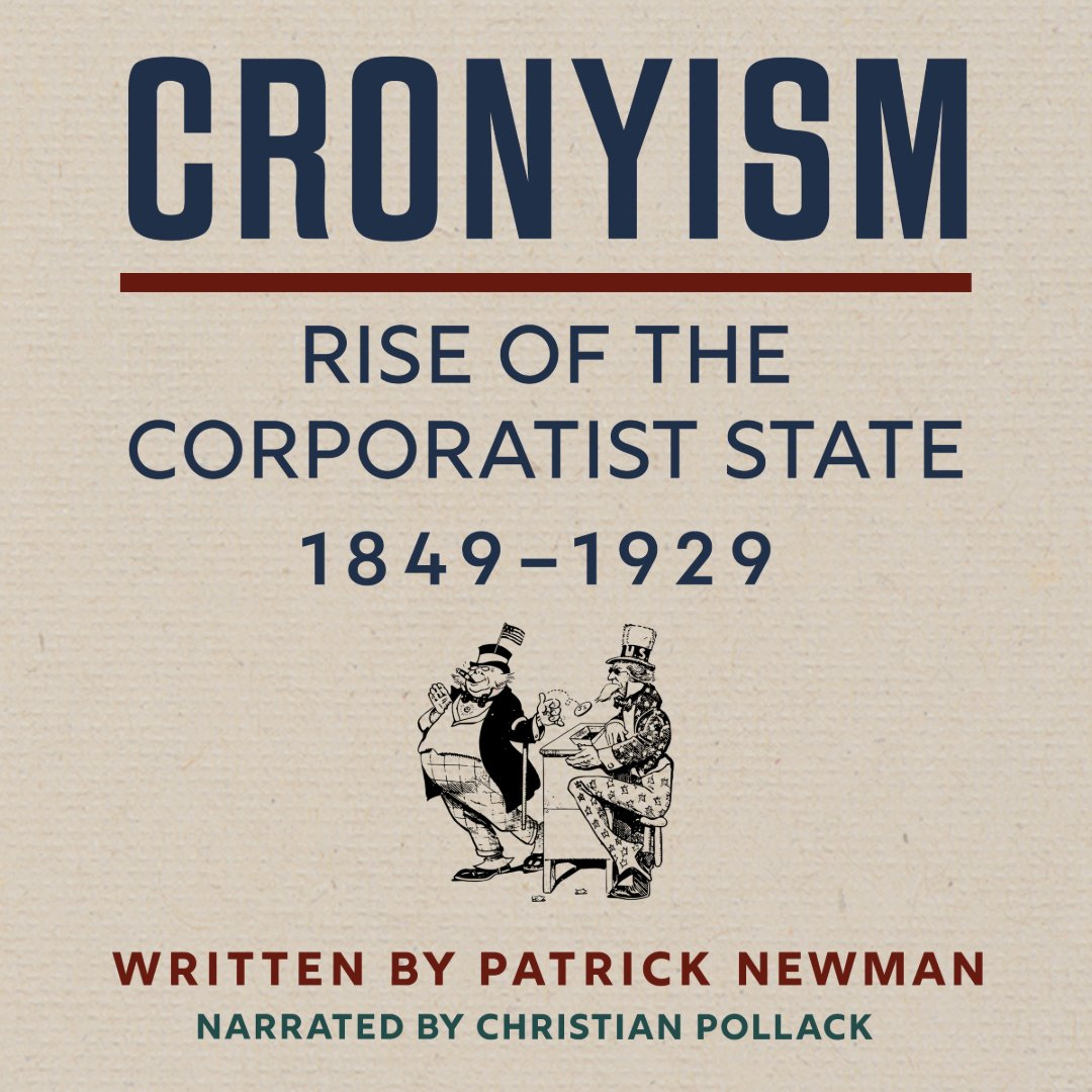 Conclusion 16.09.2026 5dkBy the close of the 1920s, business elites led by Wall Street had secured government enforcement of their cartels across banking, industry, transportation, and health—always advocated in the name of the public interest, always intended to serve private ones. The party that lost was the broader public belonging to no interest group; the growth of 1849 to 1929 came from free-market forces, which the corporatist network inhibited, delayed, and distorted.
 -
Chapter 6. Wall Street’s Central Bank 16.09.2026 50dkBy the new century the power elite was Morgan, Kuhn Loeb, Baker’s First National, and Stillman’s National City, yet New York’s share of central reserve city deposits was slipping as Chicago and St. Louis gained. Patrick Newman covers Jekyll Island, the National Citizens’ League organized as a front to manufacture grass-roots support, and the pivot once Congress refused the Aldrich plan: if the central bank had to look decentralized, then control its personnel instead.
-
Introduction 16.09.2026 23dkPatrick Newman defines cronyism as government intervention that benefits special interests at the expense of the public interest, and argues the corporatist state was built in stages over eight decades rather than arriving at once. He explains why his earlier “Liberty versus Power” framework stops applying after 1849: parties no longer divided over liberty and favoritism, only over which special interests they would reward.
-
Chapter 8. Capturing the Regulations 16.09.2026 56dkThe Federal Trade Commission’s first chairman institutionalized “advance advice” and uniform cost accounting, letting businessmen define what counted as unfair competition and making it harder to sell below a given margin. Patrick Newman then tracks the reversal as Wilson appointed opponents of big business, and the recapture under Harding and Coolidge, when the commission enforced cartel agreements and Hoover’s Commerce Department added subsidies and patent restrictions.
-
Chapter 7. A Trade Commission for Industry 16.09.2026 1sa 1dkAfter the merger wave of 1898 and 1899, big business wanted relief from antitrust suits and protection from price-cutting. Patrick Newman shows the Morgan concerns working to neutralize an unexpectedly hostile Theodore Roosevelt and securing preferential treatment, then the years of lobbying for a trade commission that would restrain competition under the banner of promoting it.
-
Chapter 10. Purifying the Competition 16.09.2026 1sa 16dkThree campaigns waged in the name of public health. Patrick Newman covers the Beef Trust turning federal meat inspection into taxpayer-subsidized cartelization, the pure-food coalition in which sugar producers, straight-whiskey distillers, and a cream-of-tartar baking powder maker each sought to handicap a cheaper rival, and the American Medical Association’s drive to restrict the supply of doctors and suppress homeopathic and eclectic competitors.
-
Chapter 9. Fighting Over Railroad Regulation 16.09.2026 1sa 7dkBarred from rate associations after 1897, the railroads formed communities of interest by buying their competitors’ stock—cartels in a disguised form. Patrick Newman details the reversal of the 1910s, when the ICC shifted to delivering cronyism to shippers and unions and regulation caught the lines in a cost-price squeeze, followed by wartime federalization under McAdoo and the 1920s overhaul that finally secured pools and minimum rates.
-
Chapter 5. Wall Street’s National Banks 16.09.2026 1sa 5dkPatrick Newman traces the National Banking System from Salmon P. Chase’s wartime bond sales and initially hostile relations with New York financiers through the pyramid of bankers’ balances that concentrated reserves on Wall Street. He follows J. P. Morgan and George Baker’s First National Bank, the defense of monopolistic restraints after the Panic of 1873, and the silver fight that fractured the Democrats and culminated in the election of 1896.
-
Chapter 11. Wall Street’s World Reserve Currency 16.09.2026 1sa 8dkThe Great War wrecked European finance and opened the door for the dollar to displace the pound. Patrick Newman follows Thomas Lamont and Paul Warburg’s ambitions for an imperial banking system, the Federal Reserve’s first inflationary boom and bust in the Depression of 1920 to 1921, and the 1920s high tide of the “Money Lords,” when Benjamin Strong’s easy money reshaped monetary systems across Europe and Latin America.
-
Chapter 3. Cartelizing the Railroads 16.09.2026 36dkCompetition among the trunk lines meant lower rates and better service, so the railroads tried pools to stop it—and the pools kept collapsing, because without government coercion some member always defected with a secret rebate. Patrick Newman shows how the Interstate Commerce Commission supplied the enforcement common law would not, with commissioners reading their mandate in the railroads’ favor and cartelization temporarily strengthened at the shippers’ expense.
-
Foreword 16.09.2026 12dkThomas Sargent places Patrick Newman in a tradition of American historians—Charles Beard, Forrest McDonald, Richard Hofstadter, and Murray Rothbard—who compress data and look for patterns in how the state is designed and managed. He draws the dividing line between those who read bad policy as unintended error correctable by better administration and those who see a government constituted with excessive powers that will inevitably serve some private interests at the expense of others, closing on Argentina’s industrial policies and their growing appeal among leaders of both US parties.
-
Chapter 2. Railroading the Nation 16.09.2026 48dkA transcontinental railroad was unprofitable on market terms—“1800 miles of railroad through an uninhabited country”—but attractive once Congress supplied land and subsidies. Patrick Newman follows the four Sacramento merchants who saw the opportunity and the Republicans who justified it as a wartime necessity, then the reversal of the 1870s, when the subsidized lines moved from the Great Barbecue’s dinner table onto the menu.
-
Chapter 1. The Republican Ascendancy 16.09.2026 53dkPatrick Newman shows how liberty-minded reformers, once holding the levers of power, were pulled toward favoritism of their own—beginning with Jefferson, who could not refuse five hundred million acres. He traces the 1850s scramble over land grants, bailouts, and transcontinental subsidies, the slavery-extension fight that stalled the parceling of the spoils, and the Panic of 1857, which turned the Republicans into a supercharged Federalist-Whig coalition reviving Henry Clay’s American System.
-
Chapter 4. The Failure to Monopolize 16.09.2026 1sa 7dkBeginning with the Morrill Tariff of 1861, Patrick Newman documents protection sought and monopoly repeatedly denied. Market competition kept defeating attempts to corner markets—real GDP rose 184 percent between 1870 and 1890 while retail prices fell 30 percent and real wages rose—driving established firms back to Washington for higher tariffs, the Billion Dollar Congress, and an antitrust law deliberately left weak and vague.
-
Acknowledgements 16.09.2026 3dkPatrick Newman describes this volume as the second act in a three-act play, the bridge connecting the country’s founding to the modern America of the present generation. He thanks Hunter Lewis for underwriting publication costs, the Mises Institute and the reviewers who read the manuscript.
-
 The Crony Capitalists Who Financed the Bolshevik Revolution 16.09.2026 10dkLenin wrote that the capitalists would provide the rope by which they would hang themselves. That certainly seems to be the case with the Bolshevik Revolution of 1917, which received strong financial help from the center of crony capitalism itself: Wall Street. Original article: https://mises.org/mises-wire/crony-capitalists-who-financed-bolshevik-revolution
 -
The AI "Threat" is Replacing Covid and "Global Warming" 15.09.2026 15dkGet ready to hear a lot about how we need government regulation to ensure that only state-approved, expensive, crony “capitalist” firms are allowed to develop AI. Original article: https://mises.org/mises-wire/ai-threat-replacing-covid-and-global-warming
-
Understanding Entrepreneurship Has Major Implications for Economic Analysis 15.09.2026 6dkBy ignoring the entrepreneur, mainstream economists are also removing a vital part of economics theory. It is like designing a car and leaving out the engine. Original article: https://mises.org/mises-wire/understanding-entrepreneurship-has-major-implications-economic-analysis
-
Times Change, Principles Don’t 14.09.2026 16dkWhat followed 9/11 was 25 years of systematic destruction of American liberties, and the final destruction of the Bill of Rights, all in the name of “safety” and “patriotism.” Original article: https://mises.org/mises-wire/times-change-principles-dont
-
Foreign Policy Gnosticism: The Appeal to the Black Box of “Our Leaders Know More” 14.09.2026 21dkIgnorance is treated as a reason to trust the state rather than a reason to withhold judgment about its exercise of coercion. To assume that the state’s unknown information is correct and justifying is therefore to err on the side of violence. Original article: https://mises.org/mises-wire/foreign-policy-gnosticism-appeal-black-box-our-leaders-know-more
Benzer podcastler


Şurada popüler
Bu podcast şu ülkelerin podcast listelerinde de yer alıyor.

