
Human & Holy
Tonia Chazanow
0
A podcast featuring honest, spiritual conversations that delve into the core of human experience. It explores Jewish and Chassidic wisdom, women's Torah study, and the everyday practice of Judaism. Hosted by Tonia Chazanow, the show aims to connect ancient teachings with modern life. For more information, visit humanandholy.com.
Bölümler
-
 Teshuvah and the God We Think We Know | Rus Devorah Wallen 14.09.2026 1sa 8dkA conversation about Teshuvah through the dual lens of clinical attachment theory and Torah sources. We explore why perfect attunement in any relationship is a myth, and how the rupture and repair cycle of Teshuvah is actually what deepens our connections, rather than threatening it. Rus Devorah walks through how our early attachment styles get unconsciously projected onto our relationship with God, and offers concrete practices for moving toward a more secure, honest connection with Hashem during this season of return. Rus Devorah Wallen is the founder and owner of Torah Therapeutics. She is an accomplished musician, performer, social worker, psychotherapist, administrative consultant, lecturer, and community leader whose work bridges psychology and Torah wisdom. Find out more at toratherapeutics.com. Article referenced in this episode: https://substack.com/@toratherapeutics/p-212834537* * * * * * *To inquire about sponsorship & advertising opportunities, please email us at [email protected] support our work, visit humanandholy.com/sponsor.Find us on Instagram @humanandholy & subscribe to our channel to stay up to date on all our upcoming conversations ✨Human & Holy podcast is available on all podcast streaming platforms. New episodes every Sunday & Wednesday on YouTube, Spotify, Apple Podcasts, and Google Podcasts.* * * * * * *TIMESTAMPS:00:00:00 ---- "Back to the future," not back to who you were00:00:18 ---- Host intro00:01:33 ---- Rupture, Repair, and the God We Think We Know00:02:42 ---- The myth of perfect attunement 00:04:46 ---- Why rupture & repair creates a more stabilized relationship00:05:07 ---- Attachment 00:07:55 ---- Projecting childhood attachment templates onto God 00:09:44 ---- Is it trauma,or is it truth? 00:10:49 ---- The HALTS acronym00:13:12 ---- "The prisoner can't free himself from his own cell" 00:15:20 ---- Mapping secure / anxious / avoidant attachment onto our relationship with God00:15:50 ---- What secure attachment looks like relationally 00:19:30 ---- Bringing the secure-attachment framework into relationship with Hashem00:20:19 ---- Avoidant attachment with God 00:23:09 ---- Moving from an unhealthy attachment pattern toward a more secure connection with God00:24:23 ---- Step one: learning to love yourself unconditionally 00:25:26 ---- The shofar's sounds (tekiah, shevarim, teruah) as a metaphor for inner emotional release00:27:12 ---- "Back to the future" — becoming fuller, not returning to a former self00:30:35 ---- Teshuvah as "a descent for the sake of an ascent" 00:34:12 ---- The difference between reunion and real repair — Rambam's stages of teshuvah00:41:31 --- Controlled stress as models for growth00:42:44 ---- Starting with the smallest possible action00:43:48 ---- Practical example: rebuilding belief in God one tiny step at a time00:45:22 ---- Finding an outside perspective to guide the process00:45:48 ---- Secure attachment with God makes room for doubt 00:47:00 ---- Coming to God honestly, without whitewashing pain00:48:31 ---- Needing secure human relationships first00:52:13 ---- Reconciling a loving, all-seeing God with the felt experience of suffering00:52:59 ---- Her stroke story; trusting there was a purpose in crisis00:55:26 ---- Teshuvah creates something new, not a return to a childhood faith00:56:52 ---- Holding childlike wonder within an adult relationship with God00:58:23 ---- Using imagination and visualization to access sweetness 01:00:20 ---- What if your childhood has no sweet memories to draw from?01:03:26 ---- Building everyday resilience through imaginal rehearsal01:04:16 ---- Bringing our full, imperfect selves to God01:06:40 ---- Avinu Malkeinu: God as both King and Father01:07:25 ---- Closing question 01:08:01 ---- Host's outro
 -
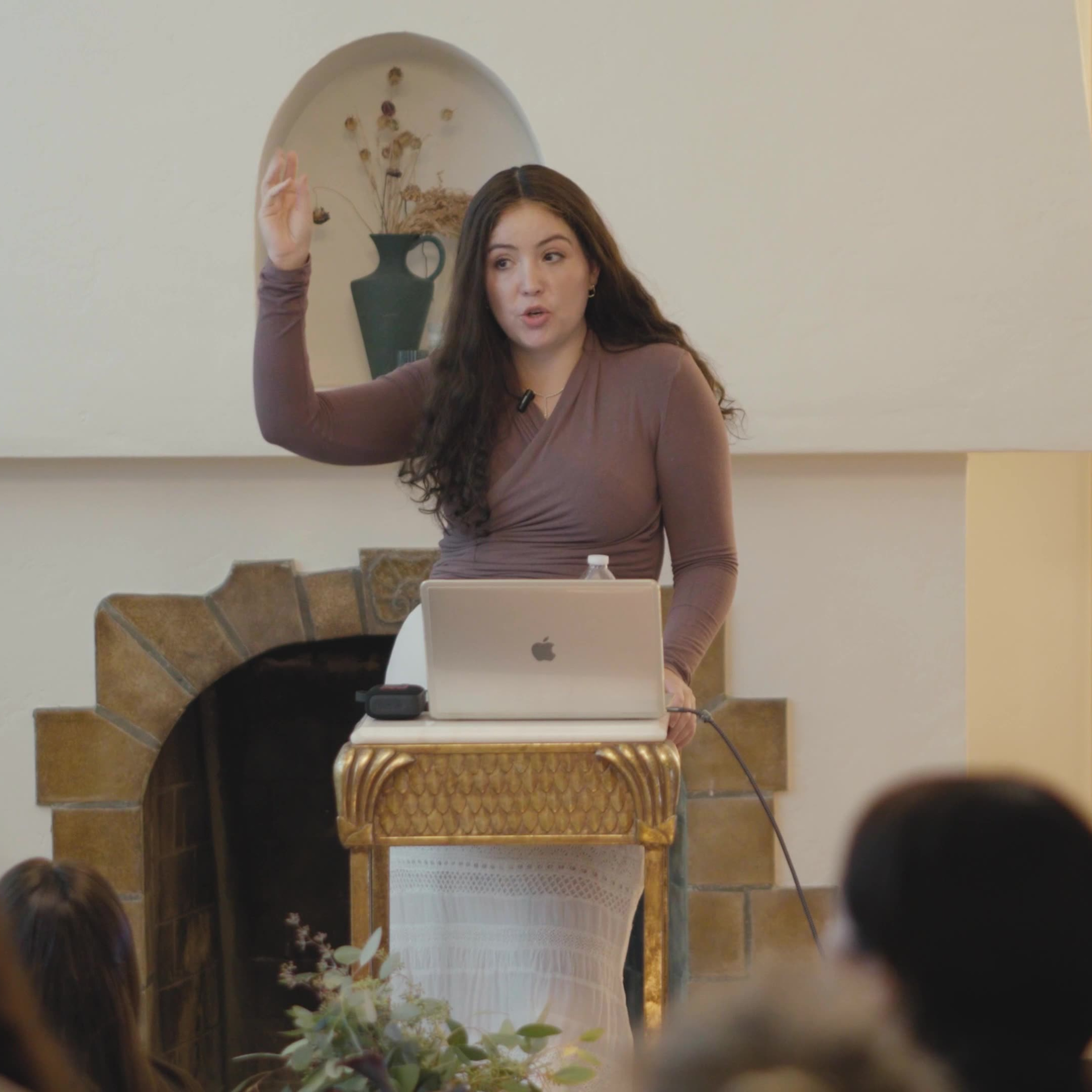 Where Are You? A Rosh Hashanah Reckoning with Choice 09.09.2026 35dkWhat is Rosh Hashanah, the birthday of the world, inviting us to? In this recording of our Human & Holy Rosh Hashanah event in LA, we sit with powerful Torah sources to look at the opportunity available right now to co-create a new year with G-d. This episode explores why Rosh Hashanah is a relationship story, this time of year as a renewal of our capacity for choice, why being fully seen by Hashem can fill us with safety rather than dread, and why the mitzvah of the shofar has no single "right" sound, because the sound it's supposed to produce is whatever it produces in you.Join us on Youtube to follow along with the slideshow of sources.* * * * * * *To inquire about sponsorship & advertising opportunities, please email us at [email protected] support our work, visit humanandholy.com/sponsor.Find us on Instagram @humanandholy & subscribe to our channel to stay up to date on all our upcoming conversations ✨Human & Holy podcast is available on all podcast streaming platforms. New episodes every Sunday & Wednesday on YouTube, Spotify, Apple Podcasts, and Google Podcasts.* * * * * * *TIMESTAMPS:00:00–01:44 Capacity for choice & waking up from sleep 01:45–03:56 Breath and the Shofar03:57–07:25 Moving to a shorter line07:26–07:53 Judgment or compassion?07:54–12:09 Being fully seen by Hashem12:19–14:07 What if you have a fear of being seen?14:08–16:38 Teshuvah as ongoing relational repair 16:40–20:13 Hour by hour of the first day of creation 20:14–24:22 Ayeka: where are you?24:41–29:36 What if.I bring no intention to Shofar?29:37–30:16 Only the individual can say "You are my King" 32:31–35:15 What does the Shofar's sound produce in you?
 -
 Hashem Is In with Mimi Hecht, Rivki Rabinowitz, Chani Lisbon and ChayaLeah Sufrin 07.09.2026 1sa 54dkSo...how are we doing? We're ringing in the new Jewish year with a Jewish State of the Union: where have we been this last year and where are we headed?Today, I sit down with four people who each have a finger on a different pulse of Jewish life. ChayaLeah Sufrin, executive director of Beach Hillel and host of the Ask a Jew podcast, walks through the year's defining global stories, reflects on what this moment is asking of the Jewish people and gives us some predictions for the year ahead.Comedian Chani Lisbon joins for a lighter, faster cultural check-in: why comedians are having a moment, what the whole Jewish world got obsessed with this year, and a rapid-fire round of "in or out" on everything from Pesach programs to WhatsApp statuses.Rivki Rabinowitz, a beauty influencer and interior designer whose work has been featured in Architectural Digest, The Wall Street Journal and more, gives modest fashion the real trend report it deserves: what's replacing slip skirts, her one unforgivable fashion sin, and how she holds beauty and depth as the same thing, not opposites.Closing with a brilliant bang is writer and culture shaper Mimi Hecht's reflections on language: why the term "Hashem" is having a comeback, why words like "healing" and "capacity" have worn thin, the return of words like service and collective, and why specificity is rising in our culture's choice of words. Underneath every conversation, one thread kept showing up: this is the year where every Jew just wants to feel like a Yid. * * * * * * *To inquire about sponsorship & advertising opportunities, please email us at [email protected] support our work, visit humanandholy.com/sponsor.Find us on Instagram @humanandholy & subscribe to our channel to stay up to date on all our upcoming conversations ✨Human & Holy podcast is available on all podcast streaming platforms. New episodes every Sunday & Wednesday on YouTube, Spotify, Apple Podcasts, and Google Podcasts.* * * * * * *TIMESTAMPS:00:00:00 Segment 1— ChayaLeah Sufrin: The Jewish Year in Review 00:03:31 The five biggest Jewish stories of the year00:07:35 How to stay informed without living in fear00:12:54 What is this moment asking of the Jewish people?00:13:36 A worry people should let go of 00:16:16 What Israel needs from Diaspora Jews right now and vice versa 00:21:18 ChayaLeah's predictions for the new year 00:24:44 Young Jews seeking authentic, substantial Judaism00:27:00 Segment 2 — Chani Lisbon: A Cultural State of the Union 00:27:59 Why comedians are having a cultural moment right now00:29:16 Top cultural moment of the year00:30:06 What everyone got obsessed with this year00:32:43 Hot take: Why Chani doesn't want a "trendy" rabbi00:36:15 Rapid-fire "In or Out": pickleball, WhatsApp status, and group tours to Kazakhstan 00:43:11 What people are actually craving 00:45:00 Segment 3 — Rivki Rabinowitz: The Modest Fashion Report 00:46:43 How social media made modest fashion mainstream and immediate00:52:27 The current "modest girl uniform"00:52:46 Fashion predictions for the year ahead00:55:46 Modest makeovers by profile00:57:01 Rapid-fire01:00:12 Can aesthetics and depth coexist? 01:04:58 What modesty invites her into creatively01:09:01 Segment 4: Mimi Hecht on the State of words 01:09:10 Returning to the word "Hashem"01:15:02 Why we reached for substitute language in the first place01:18:18 Choosing specific Jewish language as an act of confidence01:19:34 Why is our culture tired of the word "healing"?01:26:04 A generational shift in language from self-focus back toward giving01:32:11 Rapid-fire "Replace the Word"01:36:29 Defining Chassidic terms in plain language: neshama, mitzvah, and kelipah 01:45:02 Why the term Avodas Hashem makes Mimi emotional01:46:55 Using words honestly01:48:43 Host's Outro
 -
 The Moment that Stuck | Rachel Jacobs: Why Numbers Don't Measure Success 30.08.2026 16dkHuman & Holy is on a season break for the rest of the summer! During this time, we're airing your favorite moments from the past few seasons. This episode is an impactful moment extracted from the original conversation. Watch the episode in full here: https://www.youtube.com/watch?v=-VuF9NwQt8oRebbetzin Rachel Jacobs built a Jewish community in Birmingham, UK from the ground up: a Chabad house, a Torah Tots nursery, a Hebrew school, and a role as the only Jewish studies teacher in a school of 160 students. In this excerpt, we explore what happens when you feel called to build something and no one shows up, and how she learned to measure success by relationships instead of numbers. Rachel shares the Torah teaching that convinced her to start a Hebrew school with just six kids, and what it felt like years later watching those same kids read fluently from the Torah at their own bar and bat mitzvahs. A conversation about faith, community building, Jewish education, and redefining what success actually means.Rachel Jacobs, originally from Los Angeles, California, currently serves as Rebbetzin of Singers Hill Synagogue in Birmingham, England. She is also the Educational Director of the Torah Tots nursery school, the Cheder, and the Jewish studies program at the local King David Primary School. Over the past 20 years, Rachel has gained recognition as an inspiring Jewish speaker, with a particular focus on women’s issues and marriage. Her warmth, charisma, and insightful teachings have touched the lives of Jewish women across the United States and Europe. You can contact Rachel via [email protected] and on instagram @Rachelcjacobs.* * * * * * *To inquire about sponsorship & advertising opportunities, please email us at [email protected] support our work, visit humanandholy.com/sponsor.Find us on Instagram @humanandholy & subscribe to our channel to stay up to date on all our upcoming conversations ✨Human & Holy podcast is available on all podcast streaming platforms. New episodes every Sunday & Wednesday on YouTube, Spotify, Apple Podcasts, and Google Podcasts.* * * * * * *TIMESTAMPS:00:00 — The ache of being called to something and hearing crickets back00:23 — Rachel on the early, hardest days of building a Chabad house04:03 — The real question underneath it all: are we measuring success by numbers?04:21 — Starting Torah Tots with six kids: "affecting children from a young age is infinite"05:41 — The reality now: down to two kids, and showing up anyway05:53 — Called into King David School as the lone Jewish voice for 11 students among 16007:35 — Leading through bureaucracy and red tape: "you have to go back to your why"09:23 — Redefining the metric of success: deep impact on one person over reach to many09:50 — Rachel's husband and the minyan he shows up for every night, no matter the count12:53 — The Torah source that named her calling: Matos Masei and the tribes who chose to build12:54 — Starting Cheder Club with five boys and one girl14:56 — Years later: those same kids reading fluently from the Torah at their bar and bat mitzvahs16:04 — "It's the positivity. People want to be part of success."16:14 — Outro
 -
 The Moment that Stuck | Devori Nussbaum: Why You Feel Numb (And How to Reconnect to G-d) 23.08.2026 32dkHuman & Holy is on a season break for the rest of the summer! During this time, we're airing your favorite moments from the past few seasons. Watch the original episode in full here: https://www.youtube.com/watch?v=FhnlNd2zd2wIn this excerpt from a past episode with Devori Nussbaum, we explore healing a blocked heart, rooted in Tanya and Chassidic thought. We explore why arrogance and honesty are opposites, the Torah's real definition of humility, and the difference between grief and depression. Devori shares how the animal soul keeps us "small, safe, and in control" and the exact language for asking G-d for help from wherever you honestly are, not where you think you should be. If you've been feeling numb, disconnected, or far from Hashem, this episode is a way back in.Devori is an integrative psychotherapist who has trained in many different healing modalities including body psychotherapy, imago therapy, logotherapy, the energetics of food, quantum touch, breathwork, CBT, NLP, EMDR, IFS, inner child work and somatic modalities. She is also passionate about teaching Chassidus in a way that is accessible, relevant and embodied, showing people that these teachings are not just nice ideas, but a description of our reality. Get in touch with Devori and find out more about her work on www.devorinussbaum.com. * * * * * * *To inquire about sponsorship & advertising opportunities, please email us at [email protected] support our work, visit humanandholy.com/sponsor.Find us on Instagram @humanandholy & subscribe to our channel to stay up to date on all our upcoming conversations ✨Human & Holy podcast is available on all podcast streaming platforms. New episodes every Sunday & Wednesday on YouTube, Spotify, Apple Podcasts, and Google Podcasts.* * * * * * *TIMESTAMPS:0:00 — The antidote to the desire to be "transformed"0:15 — Presencing your block: how to begin when you feel numb or disconnected1:09 — Why honesty is what unlocks connection to Hashem1:40 — The Tanya's teaching on the oneness of God and the kelipah (shell) of separation2:57 — Pain vs. suffering: the difference between what hurts and the story we tell about it4:08 — The void as a portal: Ayin (nothingness) as the source of infinite potential5:09 — Bringing G-d's presence into your darkness: how tears open the way to joy5:30 — The classic teaching: "To open hearts, to know what one sees and hears"6:59 — Seeing past people's defenses to "the light behind their eyes"8:22 — Living in constant one-on-one conversation with G-d9:14 — Why we judge the external shell before we ever see the soul underneath10:22 — The frequency of oneness: hearing it like a heartbeat, an undercurrent11:49 — Clearing the noise: expanding your capacity to notice the sacred in ordinary things13:31 — Where blocked hearts really come from: unacknowledged grief14:12 — Grief, attachment, and learning to move through the seasons of life17:25 — Is being present with pain against Jewish values? 17:56 — Merirut vs. atzvut: the Tanya's distinction between grief and depression19:26 — Moving through the cycle of grief back into joy21:41 — "Ask for help from where you actually are" 23:04 — Arrogance and honesty as opposites, and what true humility actually means24:00 — Moshe Rabbeinu, humility, and the honesty of naming your own greatness25:28 — "Small, safe, and in control": the animal soul's real agenda26:26 — Living from the divine soul: success and failure as opportunities, not identity28:20 — The real cost of letting go of an identity you've outgrown30:22 — Peeling away the layers: why every threshold in life asks you to release something31:51 — Closing thoughts
 -
 The Moment That Stuck | Inbal Levin: Our Light is Our Weapon 16.08.2026 31dkHuman & Holy is on a season break for the rest of the summer! During this time, we're airing your favorite moments from the past few seasons. Watch the original episode in full here: https://www.youtube.com/watch?v=U3u2c4ErF-4In this excerpt, we discuss why being "chosen" isn't a status, but a responsibility to model moral clarity for a world that's lost it. Why the Lubavitcher Rebbe called Shabbos candles a campaign, a mitzvah, an army, and why that language matters more after October 7th than it ever has before. Why the Haggadah spends almost no time on our slavery and nearly all of it on our freedom, and what that says about the story we choose to live inside of right now. This is an episode about the difference between reporting on darkness and building light, and why Inbal chooses the second one, every single day.Inbal Levin is a writer, former fashion model, and social media director for Chabad on Campus. You can connect with her via instagram @itsinbal.* * * * * * *To inquire about sponsorship & advertising opportunities, please email us at [email protected] support our work, visit humanandholy.com/sponsor.Find us on Instagram @humanandholy & subscribe to our channel to stay up to date on all our upcoming conversations ✨Human & Holy podcast is available on all podcast streaming platforms. New episodes every Sunday & Wednesday on YouTube, Spotify, Apple Podcasts, and Google Podcasts.* * * * * * *TIMESTAMPS:00:00 — Being chosen means holding up a mirror07:21 — The Seven Noahide Laws and moral clarity for everyone09:02 — The Baal Shem Tov's answer to "Moshiach, when are you coming?"11:24 — Trusting Hashem in the long security line and the delayed flight14:15 — How every Jewish girl, age three and up, started lighting Shabbos candles18:03 — The menorah they wouldn't let into Auschwitz 20:14 — Why the Rebbe used military language for mitzvahs23:25 — Choosing to build light instead of reporting on darkness26:15 — What Dara Horn's People Love Dead Jews gets right 26:56 — The Rebbe never said the word "antisemitism": what the Haggadah teaches about what you choose to emphasize30:53 — Closing thought: you're not just living a story, you're choosing which one it is
 -
 The Moment that Stuck | Chanie Krasnianski: The Soul of Intimacy 09.08.2026 57dkHuman & Holy is on a season break for the rest of the summer! During this time, we're airing your favorite moments from the past few seasons. Watch the original episode in full here: https://www.youtube.com/watch?v=k_0i0EAAC_4This excerpt with Chanie Krasnianski explores the Jewish view on sexual intimacy and marriage. We explore the soul-level magnetism between men and women that is sourced in the creation of the world, and talk honestly about the lived experience: what it means when attraction shows up outside your marriage, why halacha starts to feel like a checklist the second you lose the relationship underneath it, and what it looks like to reclaim the mikvah as an immersion into light instead of one more item on the list.We also sit in the places that don't resolve as cleanly: religious guilt, growing spiritually at a different pace than your spouse, wanting closeness during niddah and not always getting it, and navigating personal discomfort around immersion in the mikvah.Mrs. Chanie Krasnianski is the shlucha in the Upper East Side in Manhattan, NY and a seasoned educator and Torah teacher. Contact Chanie at [email protected].* * * * * * *To inquire about sponsorship & advertising opportunities, please email us at [email protected] support our work, visit humanandholy.com/sponsor.Find us on Instagram @humanandholy & subscribe to our channel to stay up to date on all our upcoming conversations ✨Human & Holy podcast is available on all podcast streaming platforms. New episodes every Sunday & Wednesday on YouTube, Spotify, Apple Podcasts, and Google Podcasts.* * * * * * *TIMESTAMPS:00:00 — The soul-level reason for attraction between husband and wife04:05 — Attraction outside your marriage: where it's really coming from 07:23 — Halacha as relationship, not checklist 10:32 — When the framework feels restricting, not freeing 12:44 — "We're human, not angels" 13:58 — Trust in Hashem, and the mikvah as immersion into light 20:18 — Bare minimum vs. growing on purpose 22:11 — Why halacha is freedom, not restriction 24:16 — Body image and privacy at the mikvah 26:30 — The headstand story 29:18 — Checking in with yourself when you won't call a rabbi 30:35 — Why none of us are objective about our own lives 37:53 — Calling a rabbi on a different continent — privacy and permission 40:05 — Religious guilt and "you're not your spouse's rabbi" 43:30 — Growing faster than your spouse — baby steps, not pressure 47:07 — When you're the one resisting your spouse's growth 48:49 — Your spouse as your mirror — the Adam-and-Eve reframe 50:49 — Does absence really make the heart grow fonder? 52:25 — Marriage as decades of weather 55:49 — Closing reflection and outro
 -
 The Moment that Stuck | Shternie Rosenfeld: How Gratitude Got Me Through My Divorce 02.08.2026 23dkHuman & Holy is on a season break for the rest of the summer! During this time, we're airing your favorite moments from the past few seasons.In this excerpt, Shternie describes the way she moves through the world: not with a basket she guards, protecting what's "owed" to her, but with an empty one, open-handed, saying thank you every time something lands in it. Shternie Rosenfeld went through what she calls her own tsunami: a devastating divorce that cracked her open completely. In this conversation, she shares what actually got her through: a relationship with Hashem that is raw, honest, and full of open gratitude. We talk about the difference between feeling entitled to goodness and feeling worthy of it and about how gratitude isn't whitewashing our pain, but allowing it to live in the same body that is screaming, grieving, and being honest with G-d.* * * * * * *Shternie Rosenfeld has spent more than 25 years in Jewish education and community leadership, teaching everyone from preschoolers to seniors. She spent 15 years as director of the Chabad Fox Chapel Jewish Center, building its Hebrew School, summer camp, and adult education programs from the ground up. She went on to found The Jewish Spark, a nonprofit running weekly Kabbalah classes and community Shabbat and holiday programming, and now serves as Program Director of the Yonah Foundation, where she supports 38 community centers worldwide and empowers women to lead Torah classes globally. She has also taught at Yeshiva Schools, Hillel Academy, and Tzohar Seminary. Find out more at shternie.comTo inquire about sponsorship & advertising opportunities, please email us at [email protected] support our work, visit humanandholy.com/sponsor.Find us on Instagram @humanandholy & subscribe to our channel to stay up to date on all our upcoming conversations ✨Human & Holy podcast is available on all podcast streaming platforms. New episodes every Sunday & Wednesday on YouTube, Spotify, Apple Podcasts, and Google Podcasts.* * * * * * *00:00 — What got her through divorce02:16 — Talking to Hashem like a best friend03:55 — A real relationship, not a performed one05:02 — Seeing kindness as Hashem's hand05:40 — The basket metaphor10:36 — Entitlement vs. worthiness11:41 — What to do when you feel shortchanged13:54 — Gratitude in the tiny things15:08 — Modeh Ani as the daily reset16:40 — The Torah source on what is owed to us18:29 — Is gratitude ever dishonest?19:28 — "There's room for both"20:40 — Day by day22:41 — Marriage as a mirror for Hashem23:30 — Outro
 -
 The Moment that Stuck | Chani Heyman on Raising Kids Who Stay Close as They Grow 26.07.2026 39dkHuman & Holy is on a season break for the rest of the summer! During this time, we're airing your favorite moments from the past few seasons.How do you instill Jewish values from a young age, while leaving space for a child to grow into them on their own? In this conversation, we talk about why Judaism has to start as routine for young children before it becomes relationship, why “yes, unless you have a value to say no” changes everything with a teenager, the importance of physical touch in raising healthy children, and why mourning openly when our children's religious choices look differently than ours do can do real damage, even when it comes from love. This is a conversation about giving our children strong roots in their Judaism, and navigating the evolution from childhood to adulthood, as they begin to make their own choices in their relationship with G-d.Chani Heyman is a dynamic parenting coach, motivational speaker, educator, and Torah teacher who's passionate about empowering families to thrive. Originally from Los Angeles, Chani now calls Israel home. With a background rooted in the timeless wisdom of Rebbetzin Spetner and her own experiences as a mother of eight, Chani shares practical and inspiring guidance with parents worldwide.Through her engaging group classes, popular parenting column, and vibrant Instagram community @parentingwithchani, Chani sparks meaningful connections and helps families unlock their full potential. Find out more at https://theparentingclub.info.* * * * * * *To inquire about sponsorship & advertising opportunities, please email us at [email protected] support our work, visit humanandholy.com/sponsor.Find us on Instagram @humanandholy & subscribe to our channel to stay up to date on all our upcoming conversations ✨Human & Holy podcast is available on all podcast streaming platforms. New episodes every Sunday & Wednesday on YouTube, Spotify, Apple Podcasts, and Google Podcasts.* * * * * * *TIMESTAMPS:00:00 How to build Yiddishkeit routines that feel as natural as brushing teeth01:06 Building the routine: start at the smallest sustainable level06:24 The teen shift09:13 Foundation vs. peer pressure10:45 The reframe: “Yes, unless you have a value to say no”11:38 Choosing your battles 12:49 “Copy paste” — are we raising kids to replicate our table, or to be halachically their own person?14:41 Finding a rav to define the lowest level that is still 100% halacha — the loose-fitting-pants story16:44 When your child doesn't look like you17:44 Is “because it would make my mother happy” a legitimate motivation for a teen’s mitzvah observance?21:43 Why building the habit before the meaning arrives is so much easier than trying to build both at once at 2022:17 Parental fear and projection 22:34 For ba’alei teshuva parents specifically — “I’m trying to give you what I didn’t have,” and why force backfires23:33 Beyond 100% halacha — what it looks like when a child’s practice truly diverges25:36 “Keep your relationship strong” 27:03 The sapling-and-tree image 28:17 The emotional baseline — what it is, and why it differs by age28:26 Ten minutes of true one-on-one time30:33 For teens: it’s not about the ten minutes, it’s about being available the moment they want you32:15 Modeling adult relationships 33:37 Physical touch as an emotional need 35:40 The mother who couldn’t remember the last time she’d touched her 19-year-old son38:45 Host's Outro
 -
 The Moment That Stuck | Jackie Glaser: When Turning to G-d Becomes a Way to Hide From Yourself 19.07.2026 28dkHuman & Holy is on a season break for the rest of the summer! During this time, we're airing your favorite moments from the past few seasons.In today's excerpt with Jackie Glaser, we cover spiritual bypassing, noticing the patterns that keep showing up in our lives, cultivating self-worth and self-trust, navigating rejection, our flaws as filters while dating, recognizing that matchmakers do not have control over people's future when navigating the shidduch system, and strengthening our trust in God. To watch the full episode this excerpt is from, click here: https://www.youtube.com/watch?v=243HxQfOx9ETo contact Jackie or learn more about her courses, you can find her at jackieglaser.com or find Jackie on Instagram: datingbyjackieg * * * * * * *To inquire about sponsorship & advertising opportunities, please email us at [email protected] support our work, visit humanandholy.com/sponsor.Find us on Instagram @humanandholy & subscribe to our channel to stay up to date on all our upcoming conversations ✨Human & Holy podcast is available on all podcast streaming platforms. New episodes every Sunday & Wednesday on YouTube, Spotify, Apple Podcasts, and Google Podcasts.* * * * * * *TIMESTAMPS:0:00 Spiritual bypassing2:04 How our patterns are signposts from Hashem, not punishments3:07 Why we avoid taking responsibility, and turn anxiety into blaming Hashem instead5:27 Going inward with compassionate curiosity instead of judgment7:11 Turning to G-d as an escape hatch7:21 Normalizing the pattern before moving forward9:08 Self-trust as the real foundation behind who you marry9:17 The somatic work begins: tuning into the body as a source of real data12:45 Surrendering 14:23 Clearing subconscious blockage to make more room for closeness with Hashem16:13 How our internal beliefs get projected onto strangers 17:35 Why healing the felt state dissolves the belief system underneath it18:58 How the fear of rejection actually dissolves with this work20:42 "I reject myself" — the most important relationship you'll ever build is with you22:23 Disability or flaws as a filter in dating, not a disqualifier24:05 Boundaries with matchmakers25:44 When parents choose to "play the game" with a difficult shadchan for their child's sake26:27 Hashem was never limited to a shadchan
 -
 The Questions Women Don't Ask Out Loud | Dena Block 12.07.2026 48dkA conversation about women's health & Jewish law, the more sensitive questions hidden behind women's seemingly straightforward halachic questions, how the concept of a Yoetzet Halacha came about, the difference between a halachic ruling and halachic advice, why the advice of "don't look at the toilet paper" can sometimes do more harm than good, the evolution of halachic thinking on IVF, the medical red flags that can be associated with "halachic infertility", the questions Dena gets most often, the ones that break her heart, and the ones that surprise her the most. Dena Block is the Co-Director of Nishmat's Miriam Glaubach Center. Previously, she served as the Center's Associate Director and as a Yoetzet Halacha for several congregations throughout the tri-state area. She taught Gemara and Halacha at Ma'ayanot Yeshiva High School for Girls in Teaneck, NJ, where she also served as Director of Admissions. A graduate of the first class of Nishmat's Miriam Glaubach Center's U.S. Yoatzot Halacha Fellows Program, Dena worked on numerous MGC initiatives to broaden the impact of of Yoatzot Halacha before joining the Center full-time in 2021. Dena lives in Raanana with her husband and 5 children and can be reached at [email protected][00:00] Welcome Dena Block [01:00] Meeting women where they're at[01:50] Defining the term "Yoetzet Halacha" (women's halachic advisor)[02:48] The origin story: why the role was created[03:30] How women were being more stringent on themselves in silence, not more lenient — and the health/marital cost of that silence[04:24] Why more questions asked = more comfort, not less trust in rabbinic authority[05:00] How a Yoetzet answers — always with context, not just yes/no, to empower future understanding[05:48] The "question behind the question" — when the real issue isn't the halachic one[05:52] Example: a woman asking to go to mikvah early — the real story underneath[07:44] How that extra context changes the answer a posek gives[08:11] Story: a woman whose ongoing staining was actually a birth control issue [10:15] Defining the boundary between a Yoetzet and a rav/posek[11:06] What "psak" actually means vs. general halachic knowledge[12:00] Judgment calls vs. established rulings [12:16] Should women be taught to examine their own bedikah cloths? [16:27] The bigger question — why can't a woman hold a halachic ruling position?[18:23] The humility and reverence in deepened knowledge[20:47] How halacha creates unusual bodily attunement[24:41] Why "don't look at the toilet paper" is advice Dena wants retired [27:36] What IVF is and the original halachic concerns when it emerged[28:11] The concern over hashchatat zera (wasting seed) and how sperm collection is handled[29:36] How halachic opinion evolved as the technology became safer and more regulated[32:54] Common misconceptions about halachic infertility[34:34] Why a very short cycle can be a medical red flag, not just a halachic inconvenience [35:22] Halachic literacy often reveals underlying health issues[35:23] Why unexplained staining should always prompt a doctor visit, even when it's halachically minor[37:08] Misconceptions around halacha and sexuality[38:53] The most common question Dina receives [39:35] The hardest questions — women asking about mikvah while heading toward divorce[40:31] The range of what women are carrying — infertility, loss, mental health, marital strain[40:48] What makes Dina feel hopeful — when a woman expects "no" and hears "yes"[41:43] Witnessing halachic commitment and sacrifice[42:00] The number one thing women struggle with in this mitzvah — physical separation and lack of touch, more than the absence of sex itself[43:25] How the separation period affects men too, not just women[44:03] The biggest friction point between couples — the story of a woman who lied about her niddah status to avoid intimacy[46:26] Most unexpected mikvah locations[47:23] Closing question
 -
Why I Stopped Waiting for a Miracle | Chavie Bruk 05.07.2026 1sa 31dkA conversation about the gritty, messy experience of faith when the things you want are not a "not yet" but a "no", life as a mother of five adopted children while grieving a permanent infertility diagnosis, why sometimes we need to stop waiting for a miracle, trying again and being told “no” again by God after 20 years of accepting, the impact of life setbacks on marriage and being willing to get support, the spiritual framework that makes Chavie's faith possible, and choosing to live with joy even when life doesn’t go as planned. Chavie Bruk is the host of Totally Unexpected!, a podcast featuring long-form interviews that uncover the one unexpected moment that shaped her guests’ lives. She is the author of a weekly blog on Substack, a sought-after public speaker, and a passionate advocate for adoption and infertility awareness. She and her husband are the directors of Chabad-Lubavitch of Montana, where they have spent nearly two decades building Jewish life out west and are the parents of five adopted children. She is an avid reader, traveler, fitness and health enthusiast, and endlessly curious about this messy ride we all call life.Listen to Totally Unexpected! wherever you get your podcasts and read her blog at www.totallyunexpected.blog.Chavie can be reached on Instagram @chaviebruk or by email [email protected] inquire about sponsorship & advertising opportunities, please email us at [email protected] support our work, visit humanandholy.com/sponsor.00:00 Introducing Chavie Bruk 02:52 Chavie introduces herself04:23 Seasons of family vs. seasons of community service08:39 Why she lets her community see the harder parts of her life10:42 Permanent infertility diagnosis 15:33 Choosing to live fully inside the hardest years instead of just surviving them17:22 The "why me" question — and how it eventually became "how"20:11 Acceptance isn't linear — re-accepting the same grief at a deeper layer, years later22:50 Holding grief and gratitude at the same time23:09 Her unconventional relationship to miracles — the decision she made on her 30th birthday26:02 When spiritual belief becomes spiritual bypassing — and how to tell the difference29:12 On waiting: traveling with a child with special needs instead of waiting for "someday"34:00 Living in the thick of life — why she started her podcast without waiting for it to be easier35:25 The toll hard circumstances take on a marriage — and the stigma around therapy40:24 Learning your couple's "trigger dance," and the tools that actually hold a marriage together51:04Turning a canceled marriage-counseling slot into a standing weekly coffee date53:16What it actually looks like to grieve a life that didn't turn out how you expected54:11 The twinge she feels when someone close to her gets pregnant — and giving it room instead of shame58:56 The story she's never said out loud before: a new fertility possibility reopens after 20 years1:00:09 Saying no, then yes, then the test — and the result1:02:20 "Why did You do that?" — wrestling openly with Hashem after the door closed again1:04:38 What her therapist helped her see: this wasn't a setback, it was another layer of healing1:07:07 "That's not my story" — choosing what this experience gets to mean1:11:14 Not every "not yet" is a not-yet — sometimes it's a no, and that's its own form of faith1:13:33 Faith isn't feeling good when things go well — it's staying okay when they don't1:14:22 Why she teaches Tanya — the mechanics of the spiritual world as grounding, not platitude1:17:18 Living in the present moment as the antidote to shame about the past and fear of the future1:22:36 Real bitachon isn't toxic positivity — Hashem wants your anger too, not just your best behavior1:24:47 What "messy" actually looks like behind a polished, recorded conversation1:26:35 Knowing your own constitution — why she's "fire," not Zen, and why that's not a flaw to fix1:28:03 Rapid fire & outro
-
 Am I a Follower of the Lubavitcher Rebbe? 14.06.2026 39dkI recently opened a box of my middle school journals, and found the question that has followed me for nearly twenty years: could I honestly call myself a chossid of a Rebbe I had never met? In honor of Gimmel Tammuz, the anniversary of the Lubavitcher Rebbe's passing, I explore some of the questions that have gnawed at me for as long as I can remember: Should my relationship to the Rebbe be defined by longing? Am I fundamentally missing out on a nostalgic, golden age of Chabad if I never met him? What distinct message did the Rebbe have for a generation with a strong emphasis on the self? Is our determination to feel deeply "aligned" with our life choices a flaw, or a gift? Was the Rebbe passing on the baton, and if yes, to who?Drawing on a community survey and a close reading of V'atah Tetzaveh, this episode explores the generational shift the Rebbe himself outlined, what a relationship shaped by ignition, not loss, might look like, and how the Rebbe encouraged each person to step into their mission, to embrace the specificity of their identities and be the unique, unrepeatable messengers of Hashem the world is waiting for. * * * * * * *To inquire about sponsorship & advertising opportunities, please email us at [email protected] support our work, visit humanandholy.com/sponsor.Find us on Instagram @humanandholy & subscribe to our channel to stay up to date on all our upcoming conversations ✨Human & Holy podcast is available on all podcast streaming platforms. New episodes every Sunday & Wednesday on YouTube, Spotify, Apple Podcasts, and Google Podcasts.* * * * * * *TIMESTAMPS:00:00 Finding my middle school journals01:33 "Do we have the right to call ourselves a Chossid?" 04:00 Should I yearn for the physical presence of a Rebbe I never met?06:00 Growing up on shlichus in Houston, TX 08:30 The enormous grief of Gimmel Tammuz 10:30 The community survey about the Rebbe12:00 The message from the Rebbe that changed people's lives13:15 Would you call yourself a chossid?14:30 The final piece of the Torah the Rebbe distributed15:30 Generation of self-sacrifice vs. religious freedom17:55 Exploring V'atah Tetzaveh19:30 What is higher than self-sacrifice?21:36 Why connect to a Tzadik?24:00 This generation's power27:00 The specificity of who you are is your mission30:00 Every person can be a Rebbe33:00 When the Rebbe passed on the baton35:58 Am I a follower of the Lubavitcher Rebbe?37:48 The vision of Moshiach 38:50 Outro
 -
 Raising Children When You're Still Figuring It Out | Elisheva Segelman 07.06.2026 1sa 21dkAn honest, joyful, and deeply practical conversation about Jewish parenting. We talk about how to genuinely infuse your home with love of Judaism, what to do when you want to teach a value you don't fully keep yourself, the difference between an inherited Judaism and discovered Judaism, how to see every child as an individual, and what to do when your child doesn't fit the school system. We explore confidence-building for kids who struggle academically or socially, the balance between school and home, and why the home is more powerful than we give it credit for. We also talk about technology and eye contact, parenting without controlling, and how to stay open to who your child is actually becoming. * * * * * * *Mrs. Elisheva Segelman is a respected educator, mentor, and community leader whose warmth, wisdom, and dedication have impacted students, families, and community members across a wide range of settings. She currently serves as the Program Director at Yavneh Hebrew Academy in Los Angeles and as the Mashgicha Ruchanit for the middle school girls, where she is known for her ability to inspire meaningful personal growth, cultivate strong relationships, and help students develop a deep connection to Torah and Jewish values.Mrs. Segelman also serves as the Rebbetzin of the Young Israel of Hancock Park, where she plays an active role in supporting and enriching the spiritual life of the community. A highly sought-after kallah teacher, she has guided countless brides with sensitivity, wisdom, and genuine care. During the summer months, she serves as the Director of Orah Day Camp in Far Rockaway, New York, where she oversees a thriving camp program and mentors both campers and staff.Together with her husband, Rabbi Elan Segelman, Mrs. Segelman has served Jewish communities in both New York and Los Angeles. Rabbi and Mrs. Segelman are the proud parents of six children. Contact her at [email protected]* * * * * * *To inquire about sponsorship & advertising opportunities, please email us at [email protected] support our work, visit humanandholy.com/sponsor.Find us on Instagram @humanandholy & subscribe to our channel to stay up to date on all our upcoming conversations ✨Human & Holy podcast is available on all podcast streaming platforms. New episodes every Sunday & Wednesday on YouTube, Spotify, Apple Podcasts, and Google Podcasts.* * * * * * *TIMESTAMPS:0:00 Host's Intro1:44 Introducing Elisheva Segelman4:22 Parenting with the long view — seeing your child as a future adult6:58 Transparency and authenticity at home9:19 What if you hate Pesach? Finding the Jewish joy you actually feel13:23 Is it hypocrisy? Teaching a value you don't fully keep yourself17:39 The Finding Nemo story: what we expose children to leaves a mark21:00 The power of your home: what you fill it with is yours to choose23:18 Family pride and identity as a vessel for Judaism27:11 Inherited Judaism vs. discovered Judaism30:17 Seeing past your child's grades and struggles 32:36 The teacher who changed everything35:10 "Just because you failed a class doesn't mean you're a failure as a human"38:42 Choosing the right school for your specific child45:14 "You are fingerprinting the world with the next generation of humans"52:37 School vs. home — where does the real education happen?57:13 Social struggles — what every child needs to know59:32 Eye contact, technology, and what our children are actually asking for1:02:56 Staying open to who your child becomes1:05:31 Three practical things to infuse your home with Judaism1:10:52 It's never too late to change course1:12:32 Building your support system as a parent1:15:01 Soul to soul message 1:16:00 The "feel good folder" and surrounding yourself with the right people
 -
 You Are Harder on Yourself Than G-d Is | Karen Hochhauser 31.05.2026 54dkThe Torah opens up with failure after failure, we have laws of repair (teshuvah) baked into our Judaism, and yet many who live a value-driven life live in enormous fear of failing. Why are we harder on ourselves than G-d is?Today, we talk about the Jewish perspective on failure, along with Karen's own experiences. How do you hold your mistakes seriously without becoming them? Does forgiving yourself mean letting yourself off the hook? We get into the Rambam's laws of teshuva, Rav Soloveitchik's framework of fate versus destiny, and a seminary interview answer that always made Karen uncomfortable. * * * * * * *With more than 25 years of dedicated experience in Jewish education, Karen Hochhauser brings a deep passion for learning and leadership to her role as Co-Director of the Miriam Glaubach Center. In this senior leadership position she helps guide the Center’s mission of supporting, educating and certifying Yoatzot Halacha—women trained as halachic advisors—and of strengthening communities across North America and beyond. Prior to this appointment, Karen spent 17 years at Tiferet, a thriving seminary in Ramat Beit Shemesh, both as a teacher and an administrator. During that time she developed expertise in mentoring young adults, designing and implementing enriching programs, and cultivating vibrant educational communities.She holds a B.A. in English Literature and an M.A. in Jewish Education from Yeshiva University. Karen lives in Beit Shemesh with her husband. Dr. Carl Hochhauser, and their five children. Find her on instagram @torahwithmymother. Karen can be reached at [email protected] inquire about sponsorship & advertising opportunities, please email us at [email protected] support our work, visit humanandholy.com/sponsor.Find us on Instagram @humanandholy & subscribe to our channel to stay up to date on all our upcoming conversations ✨Human & Holy podcast is available on all podcast streaming platforms. New episodes every Sunday & Wednesday on YouTube, Spotify, Apple Podcasts, and Google Podcasts.* * * * * * *TIMESTAMPS:0:00 — We are much harder on ourselves than G-d is1:16 — Why the Torah begins with a series of human catastrophes2:46 — "Failure is almost a four-letter word in my house" 5:04 — Adam, Kayin, Noach: what the Torah's biggest stumbles have in common8:55 — Failure is inevitable. So why did Hashem design it that way?9:01 — The Rambam's radical idea: return is always possible10:53 — Asking for forgiveness vs. granting it, which is actually harder?11:18 — The mirror exercise: what it really means to forgive yourself12:38 — The seminary interview answer Karen couldn't stand13:51 — The difference between shame that destroys and accountability that heals15:26 — Chapter one of Tanya: why calling yourself a rasha is dangerous17:32 — Rav Soloveitchik's fate vs. destiny 21:10 — From "why is this happening to me" to "what am I going to do with this"22:01 — Can failure be fate? 23:59 — The missed train on the way to a lecture about failure 25:22 — "You don't have to do it alone" 26:22 — Was your worst mistake destined? 28:41 — The responsibility to respond 44:23 — Why letting your kids fail at small things is an act of love45:59 — When the suffering isn't your fault at all46:00 — The rabbi of the Warsaw Ghetto, what he wrote in his final year48:50 — "G-d is right next to us, crying" 50:50 — What it means to not be alone in your pain52:37 — "Hashem believes in you. So you need to believe in yourself."
 -
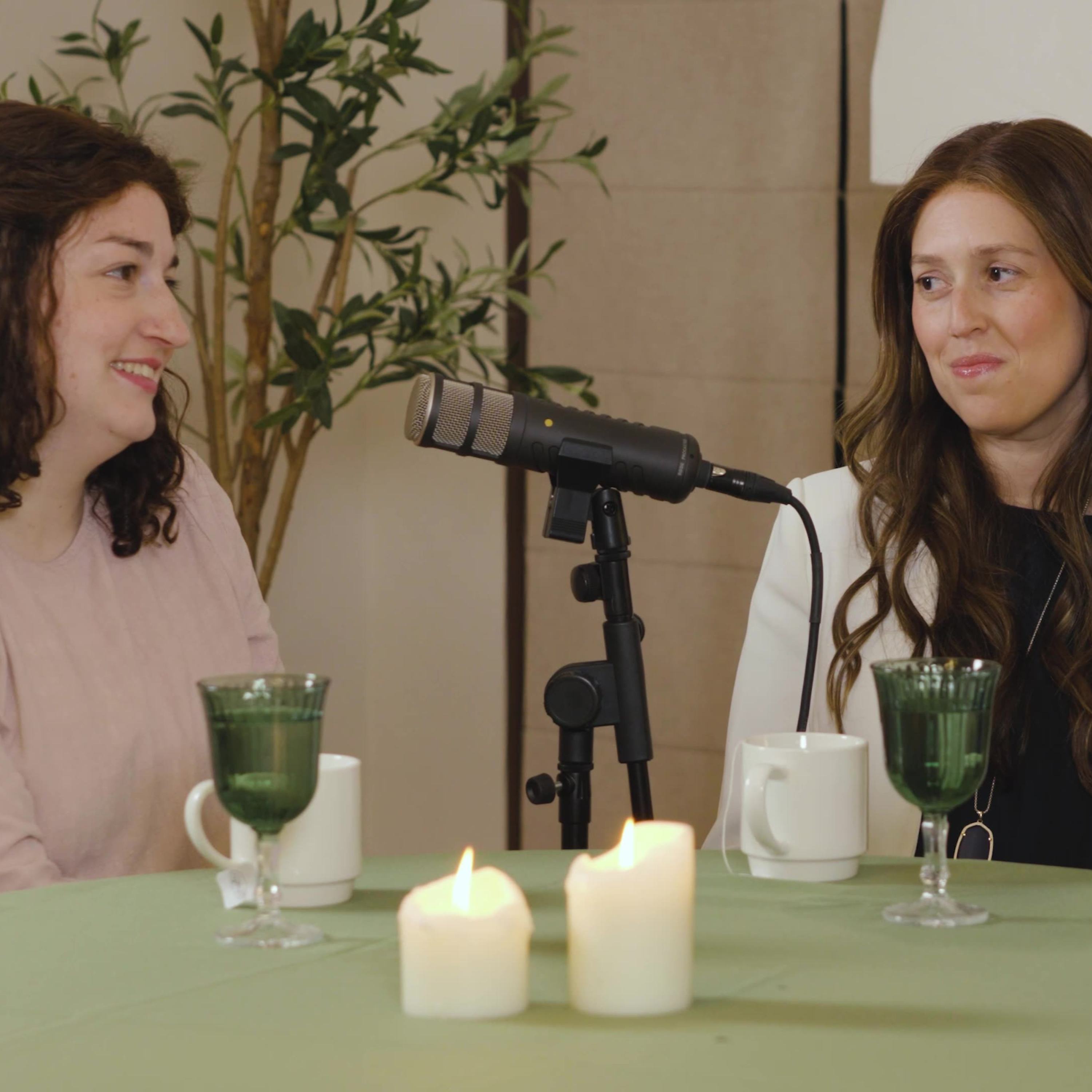 It Already Belongs to You | Annie Nagel & Hadassah Shemtov on Women's Torah Study 24.05.2026 1sa 7dkDoes the Torah belong to every woman? This week, I host a roundtable with two women who've built their lives around Torah: Annie Nagel, who left a thriving law career for the classroom and a PhD in Tanakh, and Hadassah Shemtov, founder of Batsheva Learning Center. We trace the halachic sources on women's Torah study, where the historic hesitation came from, and the Lubavitcher Rebbe's radical reframe: that women's learning isn't damage control, but the direction history was always moving towards.We also talk about the practical experience of Torah study for women: How do you keep Torah alive when you're working eighty hours a week with three babies? What does learning look like in a season when deep scholarship simply isn't possible? And what would it take for the next generation of girls to believe, without question, that no Jewish book on the shelf is off-limits to them?EPISODE SPONSOR: This week's episode was sponsored by a woman who wants to empower other women to learn and take ownership of their birthright within Torah. * * * * * * Hadassah Shemtov is the founding director of Batsheva Learning Center, an organization that offers text-based Torah learning opportunities for women. She runs a chavrusa-based track at Ohel Chana High School and is the junior Rebbetzin at Young Israel of Los Angeles.Annie Nagel is a PhD candidate at the Bernard Revel Graduate School of Jewish Studies and teaches Chumash at YULA Girls High School. She holds a JD from UCLA School of Law and practiced real estate law in Los Angeles.* * * * * * To inquire about sponsorship & advertising opportunities, please email us at [email protected] support our work, visit humanandholy.com/sponsor.Find us on Instagram @humanandholy & subscribe to our channel to stay up to date on all our upcoming conversations ✨Human & Holy podcast is available on all podcast streaming platforms. New episodes every Sunday & Wednesday on YouTube, Spotify, Apple Podcasts, and Google Podcasts.* * * * * * *TIMESTAMPS:00:00 "The Torah belongs to every woman" — who this episode is for02:19 Annie's story: from law to a classroom and a PhD in Tanakh04:42 Hadassah's story: the year in Israel that set her trajectory07:32 "I'm not making the time I want to for my own learning"09:26 What the pivot cost Annie: trade-offs and peers making partner13:55 Framing the sources: were we all really at Sinai?16:07 The halacha, plainly: are women obligated in Torah study?21:33 Why the hesitation was about an era, not about women's minds22:03 Moshe waits a day: Hashem holds back the Shechinah until every woman is there24:14 Do women feel the Torah is theirs?28:03 How Annie kept Torah alive when life was consuming33:08 The Lubavitcher Rebbe's reframe: not a concession to the times, but the trajectory toward Moshiach38:19 The common language of the house is Torah42:54 The "living Torah" — when your whole life is already an offering47:00 "Listen to what stirs your neshama" — Torah study without pressure or guilt50:01 Why reading it yourself is irreplaceable53:35 What would it take for the next generation to know the Torah is theirs?54:08 Ending the split between text and hashkafa58:00 "No sefer on the shelf is off-limits to you"01:00:13 Rapid fire: one text to start with, the woman who lost her practice, where to begin from zero01:06:18 One message, soul to soul01:07:00 Closing
 -
 To Be Both a Traveler and at Home: Receiving the Torah 17.05.2026 29dkWhat does it mean to be both a stranger and at home in your Judaism? To be deeply connected to your faith and still feel othered from a piece of your own practice?This week, in honor of Shavuos, we sit with a Talmudic dispute between Rabbi Akiva and Rabbi Yishmael about how the Jewish people received the Torah at Sinai, and the much bigger question underneath it. What does it mean to be completely at home in your Judaism, swept up in it like one unifying truth? And what does it mean to be a traveler in it, seeing each piece of it on its own terms?A conversation about Sinai, sight and sound, the hedgehog and the fox, receiving the Torah as both a homecoming and an invitation to the road, and what to do when you feel like a stranger within your own Jewish self.This episode is dedicated in honor of Reuven Morrison hy"d, killed in the Bondi terror attack on Chanukah. May his memory be a blessing, and may his life continue to inspire Jews to live openly and proudly as themselves.* * * * * * *To inquire about sponsorship & advertising opportunities, please email us at [email protected] support our work, visit humanandholy.com/sponsor.Find us on Instagram @humanandholy & subscribe to our channel to stay up to date on all our upcoming conversations ✨Human & Holy podcast is available on all podcast streaming platforms. New episodes every Sunday on YouTube, Spotify, Apple Podcasts, and Google Podcasts.* * * * * * *TIMESTAMPS:0:00 Welcome, and a Shavuos teaching on receiving the Torah 1:30 Preview: next Sunday's roundtable on women's Torah study 2:45 Dedication: Reuven Morrison hy"d5:00 A joke the Lubavitcher Rebbe told: what is Judaism? 6:30 The question underneath the joke: general vs. particular 7:30 The first luchos vs. the second 8:30 Rabbi Akiva and Rabbi Yishmael on how the Oral Torah was given10:00 "They saw the thunder, they heard the lightning" — the verse at Sinai11:00 Synesthesia, Beethoven, and scrambled senses 12:30 Sight vs. sound: the whole first, or the details first? 14:30 The Alter Rebbe and his grandson — who is Zaideh? 17:00 Isaiah Berlin's The Hedgehog and the Fox 18:30 Two temperaments, two ways of meeting the world 20:00 Returning to R' Akiva and R' Yishmael through this frame 21:30 Why they each had a different orientation23:00 Back to the joke: Shabbos within Judaism vs. Shabbos as itself24:00 A relationship has a story, but it also has its moments 25:30 Home vs. traveling, and why we see the details when we travel 27:00 Areas of our Judaism where we feel at home, and areas where we feel like strangers28:30 Allow yourself to be a stranger in your own life 29:30 Receiving both the panorama and the particulars 30:30 What I'm taking with me into Shavuos
 -
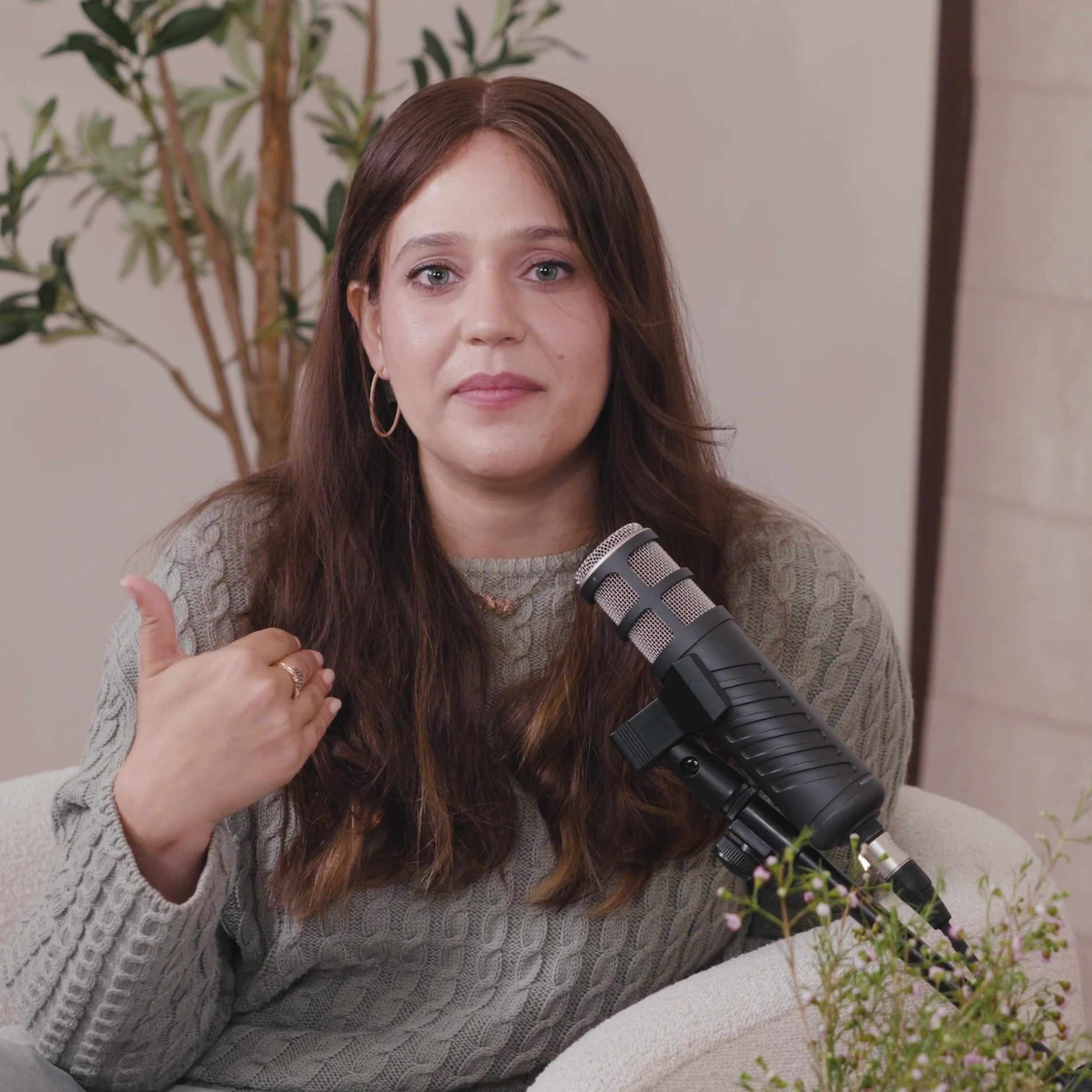 Why Rest Doesn't Cure Burnout: A Conversation with My Friend, Zisi Zirkind 10.05.2026 48dkToday, I sit down with my friend, Zisi Zirkind for an unscripted conversation about burnout, motherhood, faith, friendship, and the holy delusion of believing your soul is needed in this world.This isn't an interview; it's a conversation between two close friends. We talk about why it's not always doing less that restores our energy, the undervaluing of women's work and how we each experience meaning in our homes, why faith doesn't have to be rigid to be strong, how we hold paradox in every identity, and how friendship can help us each remember who we are.Zisi Zirkind is the Rebbetzin of Yeshiva Center in Melbourne, teaches Chassidus through her weekly women’s Torah classes, teaches guided research classes at Ohel Chana Seminary, and is the host of the podcast Standing Between Earth and Sky. Find her podcast here: https://open.spotify.com/show/0EOKqR8gwDDnEEvq7W02z3?si=0c228c7fbde34a5f Contact her at [email protected].* * * * * * *To inquire about sponsorship & advertising opportunities, please email us at [email protected] support our work, visit humanandholy.com/sponsor.Find us on Instagram @humanandholy & subscribe to our channel to stay up to date on all our upcoming conversations ✨Human & Holy podcast is available on all podcast streaming platforms. New episodes every Sunday & Wednesday on YouTube, Spotify, Apple Podcasts, and Google Podcasts.* * * * * * *TIMESTAMPS:00:00:00 Host's Intro: A Conversation Between Friends00:02:25 Welcome Zisi Zirkind 00:02:50 Springboarding ideas as a way of bridging the human and holy00:04:01 How much do I trust myself?00:04:53 When you're taking a leap 00:05:19 A friend who can see you clearly 00:06:14 Sustained creative devotion is supported by a witness00:08:14 Why sharing an idea forces it to become real00:10:10 Is this my animal soul or my divine soul?00:11:41 Delusion of separateness vs. delusion of holiness00:12:54 Does what I do matter?00:14:28 Burnout happens when you're not lit up by what you're doing00:14:41 What will actually energize you?00:17:06 Busy but not doing the right things00:17:36 The Rebbe's "add another one" — what was he actually saying?00:18:27 Showing up before the energy comes00:20:27 The seductive permission to wallow 00:21:50 "I had to make a choice that I'm going to love my life again"00:22:08 Hosting vs. being hosted — what really makes a place yours00:24:08 Dissolution of self prepares you to rise00:24:50 When to add, and when you need more support 00:25:42 Delegating what depletes you -- "I'm sick of cleaning" 00:27:10 Excellence and pride in the work nobody sees00:27:55 Bringing the same creativity to home life 00:28:35 Why the years that look like pause are often the years that change you00:31:51 Bringing your full self into your home 00:32:29 Letting yourself enjoy what you didn't think was "you" — dropping the identity attachment00:33:43 Paradox: when opposing realities exist at once00:35:17 Teaching style: opening to the text vs. filing it into systems00:38:05 Tanya's permission for multiple parts of self to coexist00:38:08 Trusting that Torah's truth can hold your questions00:38:39 After the Bondi terror attack: "Faith doesn't have to be rigid to be strong" 00:41:51 Faith from intuition, not intellect00:42:35 Why paradox can only be experienced00:43:02 Faith as identity: "I'm here. This is who I am."00:44:34 The ego in Torah study, and what it costs us00:45:50 The never-ending process00:47:38 Host's Outro
 -
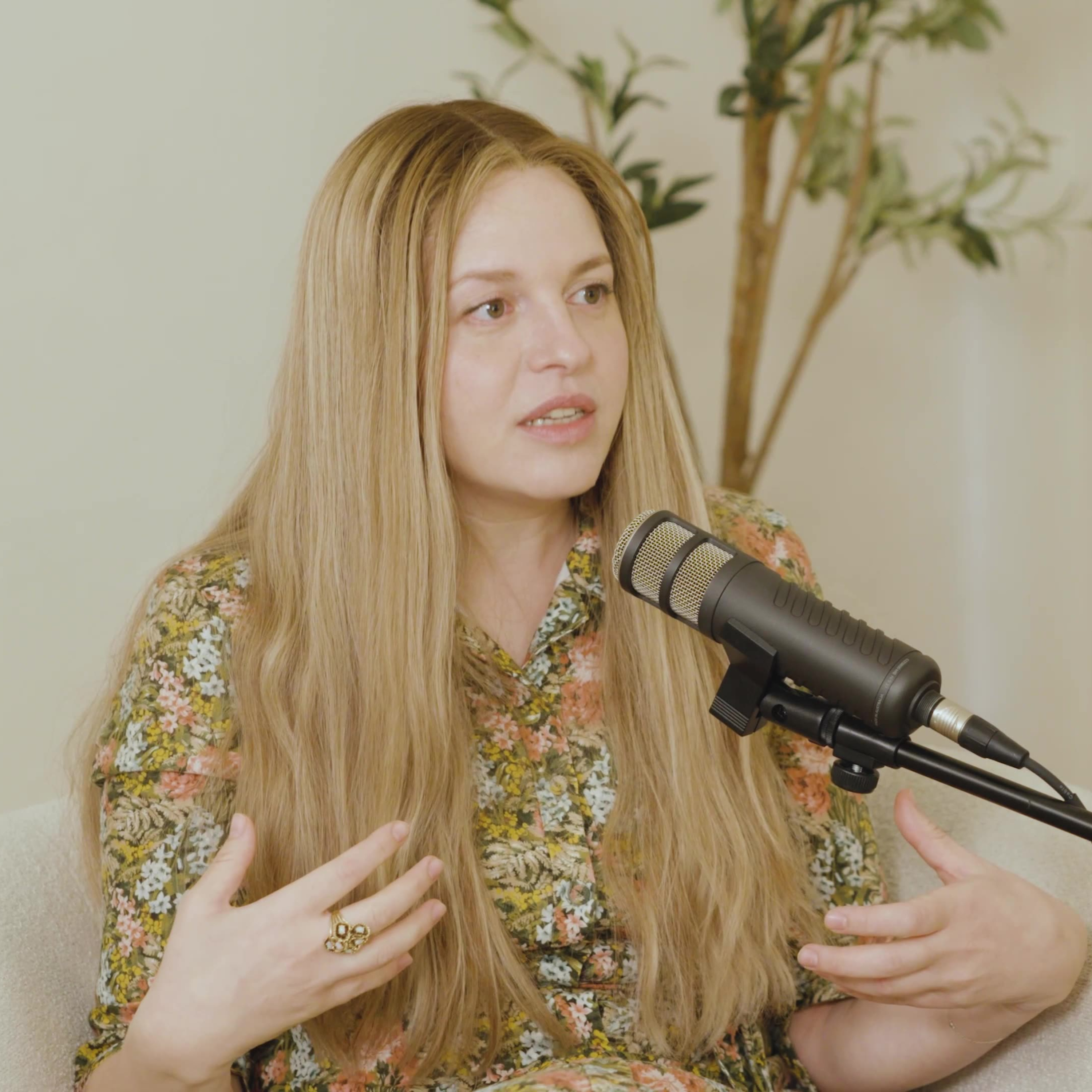 Loved Into Existence: A Soulful Guide to Sefiras Ha'Omer | Chana Kalmenson 03.05.2026 1sa 13dkA conversation with Chana Kalmenson: shlucha of Chabad of Belgravia in London, poet, and teacher of Jewish mysticism, on the Sefirot of the Omer.Chana walks through each of the seven emotional Sefirot: Chesed, Gevurah, Tiferet, Netzach, Hod, Yesod, and Malchut. What each one is, how they relate to each other, and how they show up in everyday emotional life. The episode also covers how the months of Nissan, Iyar, and Sivan mirror human development from childhood to maturity, why the inner work of the Omer is what prepares us to receive the Torah at Sinai, and how to approach the counting without falling into perfectionism.The conversation goes especially deep on three Sefirot: Hod (humility, gratitude, surrender), Tiferet (compassion, holding paradox, the antidote to shame), and Malchut (dignity, agency, authentic expression). Chana shares what she learned about humility from her father-in-law, the Chassidic teaching on the soul's forgetting at birth, and how to step out of comparison with others.A grounded, accessible introduction to the Sefirot for anyone counting the Omer or wanting to understand the Kabbalistic map of the inner life.* * * * * * *To inquire about sponsorship & advertising opportunities, please email us at [email protected] support our work, visit humanandholy.com/sponsor.Find us on Instagram @humanandholy & subscribe to our channel to stay up to date on all our upcoming conversations ✨Human & Holy podcast is available on all podcast streaming platforms. New episodes every Sunday & Wednesday on YouTube, Spotify, Apple Podcasts, and Google Podcasts.* * * * * * *TIMESTAMPS:0:00 Opening reflection: loved into existence, loving me as me00:31 Tonia's Intro01:58 Welcome, and Chana on women's circles05:25 What is Sefirat HaOmer, really? Pesach as emergence, Sinai as the destination11:38 Nissan, Iyar, Sivan — the child, the teenager, the partner17:45 Walking through each Sefirah: Chesed, Gevurah, Tiferet, Netzach, Hod, Yesod, Malchut22:10 Why we use consciousness to look at the inner emotional life29:17 When perfectionism hijacks the practice (and what to do instead)33:03 On Hod: humility, gratitude, the quiet power of the left leg40:33 What Chana learned from her father-in-law about humility46:10 The trauma of forgetting at birth, and the long work of remembering50:37 On Tiferet: holding paradox, growing up, why compassion is truth56:09 Self-compassion as the antidote to shame1:00:14 On Malchut: dignity, agency, and what emerges when everything inside has a voice1:09:33 Soul to soul
 -
 I Am a Dreamer | Jerusalem Open Mic 26.04.2026 1sa 19dkA live Human & Holy Women's Open Mic Night in Jerusalem, exploring the theme "I Am a Dreamer". A deeply moving evening of poetry, prose and song about dreams fulfilled and dreams shattered, on the dreams laid to rest and the ones held onto with quiet persistence, on the courage to keep dreaming. Listen for an expansive, heart opening hour of soulful art that will dare you to your own dreams. Thank you to Sara & Joel Halpern for hosting this evening in Jerusalem.Featured in this episode (in order of appearance):Mazal ZaikinZeesy GurevitchRivka Mazal TauberChanah RothbergHindel SwerdlowEstee Silberberg (30:07) Name Missing(32:28) Name Missing Ariella SeltzerShani PollackMiriam SebbagLeah KatzKeren VardiDevorah RutnerChana BennettTonia Chazanow* * * * * * *To join our virtual Tanya class, click here: https://humanandholy.mykajabi.com/tanyaclassTo inquire about sponsorship & advertising opportunities, please email us at [email protected] support our work, visit humanandholy.com/sponsor.Find us on Instagram @humanandholy & subscribe to our channel to stay up to date on all our upcoming conversations ✨Human & Holy podcast is available on all podcast streaming platforms. New episodes every Sunday & Wednesday on YouTube, Spotify, Apple Podcasts, and Google Podcasts.
Benzer podcastler


Şurada popüler
Bu podcast şu ülkelerin podcast listelerinde de yer alıyor.
