
Sumud Podcast: Inspired by Palestine
Dr. Ed Hasan
0
Sumud Podcast, inspired by Palestine, is a platform dedicated to inspiration and empowerment for marginalized communities worldwide. The show amplifies sidelined voices by sharing their stories, experiences, and insights. Hosted by Dr. Ed Hasan, each episode aims to uplift perspectives that demand attention. The podcast also connects with listeners across major social media platforms.
Bölümler
-
 Colette Ghunim & Melissa Barrera: Inside ‘Traces of Home’ | Sumud Podcast w/ Dr. Ed Hasan 18.09.2026 1sa 19dkIn this episode of the Sumud Podcast, Dr. Ed Hasan sits down with filmmaker Colette Ghunim and actress, producer, and Palestine advocate Melissa Barrera to discuss ‘Traces of Home,’ Ghunim’s deeply personal documentary tracing her family’s roots in Palestine and Mexico. Together, they explore forced migration, intergenerational trauma, identity, family, and the difficult process of returning to the places their families were forced to leave. Barrera also reflects on her advocacy for Palestinian freedom and dignity, while Ghunim shares how making the film transformed her relationship with her parents and her understanding of home. At the heart of the conversation is Sumud: the resilience, dignity, and determination to remain rooted in who you are. As a documentary filmmaker and nonprofit co-founder, Colette Ghunim’s soul purpose is to use the power of film and storytelling for those oppressed around the world to be seen, to be heard, and to heal. Her first documentary, The People’s Girls (2016), received over 2 million views and won Best Short Documentary at the Arab Film Festival for its bold spotlight on street harassment in Egypt. In co-production with Kartemquin Films and funded by Latino Public Broadcasting, she is directing Traces of Home, her first feature-length film documenting her inner quest to find home through unearthing her parent’s forced migrations from Mexico and Palestine. Colette is also the co-founder of Mezcla Media Collective, a nonprofit organization aimed to cultivate a thriving landscape for over 700 women and non-binary filmmakers of color in Chicago. Her work has been highlighted on international outlets such as Huffington Post, Al Jazeera, Univision, and TEDx. Colette was selected as a 2023 Obama Foundation USA Leader, 2024 Sundance Institute x ISF Fellow, and was featured on Arab America’s “30 Under 30” list. Melissa Barrera is a Mexican actress, singer, and producer known for her roles in Vida, In the Heights, Scream, Scream VI, and Abigail. She also serves as an executive producer of Traces of Home. Beyond her work on screen, Barrera has been outspoken in support of Palestinians and calls for a ceasefire in Gaza. In 2023, she said she would “continue to speak out” and “continue to advocate for peace and safety, for human rights and freedom.” She is also listed among the signatories of Artists4Ceasefire, a collective calling for a permanent ceasefire, humanitarian aid to Gaza, the return of hostages, and a just and lasting peace. In this conversation, we explore → The journey behind Traces of Home and Colette Ghunim’s search for home in Mexico and Palestine → Intergenerational trauma, family silence, and healing → Colette’s father returning to Palestine decades after the Nakba → Why Melissa Barrera joined the film and continued speaking out for Palestinian freedom and dignity → The cultural and emotional connections between Mexico and Palestine → How Colette came to understand home as something found within → The power of art, vulnerability, and Sumud to reclaim identity and heal across generations Learn more about your ad choices. Visit megaphone.fm/adchoices
 -
 Roger Waters & Mona Miari: Inside ‘Comfortably Numb Re-Imagined’ | Sumud Podcast 04.09.2026 1sa 28dkIn this episode of the Sumud Podcast, Dr. Ed Hasan sits down with Palestinian singer-songwriter Mona Miari and legendary musician Roger Waters to discuss their powerful reimagining of Comfortably Numb and the story behind its creation. Mona and Roger reflect on the year-long creative process, the grief and inspiration behind the song, Palestinian history and culture, and how music can challenge indifference and keep people from becoming numb to human suffering. They also discuss the emotional story behind the song’s Palestinian lullaby, the making of its accompanying film, and the responsibility artists have to speak out for freedom, justice, and human rights. Watch 'Roger Waters & Mona Miari – Comfortably Numb Re-Imagined (Official Music Video)': https://www.youtube.com/watch?v=WBmrT3uqmeM Mona Miari is an internationally acclaimed Palestinian singer-songwriter and artistic director based in New York City, whose work bridges global audiences while rooted in Arabic traditions. The first Arab singer to perform at Boston’s Hatch Memorial Shell with the Boston Landmarks Orchestra, she has headlined major venues including Lincoln Center, BAM, and The Public Theater, and performed internationally across Europe, the Arab world, and South Africa. She is the Artistic Director of the New York Arab Chorus and a recipient of residencies from the Rockefeller Brothers Fund and La Maison de Beaumont. Her debut album, releasing in 2026, showcases a bold body of original work grounded in storytelling and cross-cultural influence. Roger Waters, founding member and principal lyricist of Pink Floyd, is one of the most influential figures in modern music history. As the creative force behind landmark albums including The Dark Side of the Moon and The Wall, his work has shaped generations of listeners through its political consciousness and emotional depth. A lifelong activist, Waters’ connection to Palestine traces back to his childhood, when his father worked as a teacher in the region, shaping his early awareness of its realities. In this project, Waters revisits Comfortably Numb not as nostalgia, but as a living work - reframed through collaboration as a response to the present moment. In this conversation, we explore → The story behind Comfortably Numb Reimagined → How Roger Waters and Mona Miari began collaborating → Roger Waters’ response and the year-long creative collaboration → Hind Rajab, the Palestinian lullaby, and the story behind the rising sun → Palestinian musical traditions and the meaning of “Falastin” → Centering Palestinian humanity, culture, memory, and everyday life → How music and artists can challenge propaganda, injustice, and indifference → The meaning of Sumud, resilience, and remaining human through resistance Sponsored by The Karate Attorney (@karateattorney) fighting for justice inside and outside the courtroom. Visit KarateAttorney.com Full episode on https://sumudpod.com Follow @dredhasan | @sumudpod | @monamiari | @rogerwaters | @empire.wana Learn more about your ad choices. Visit megaphone.fm/adchoices
 -
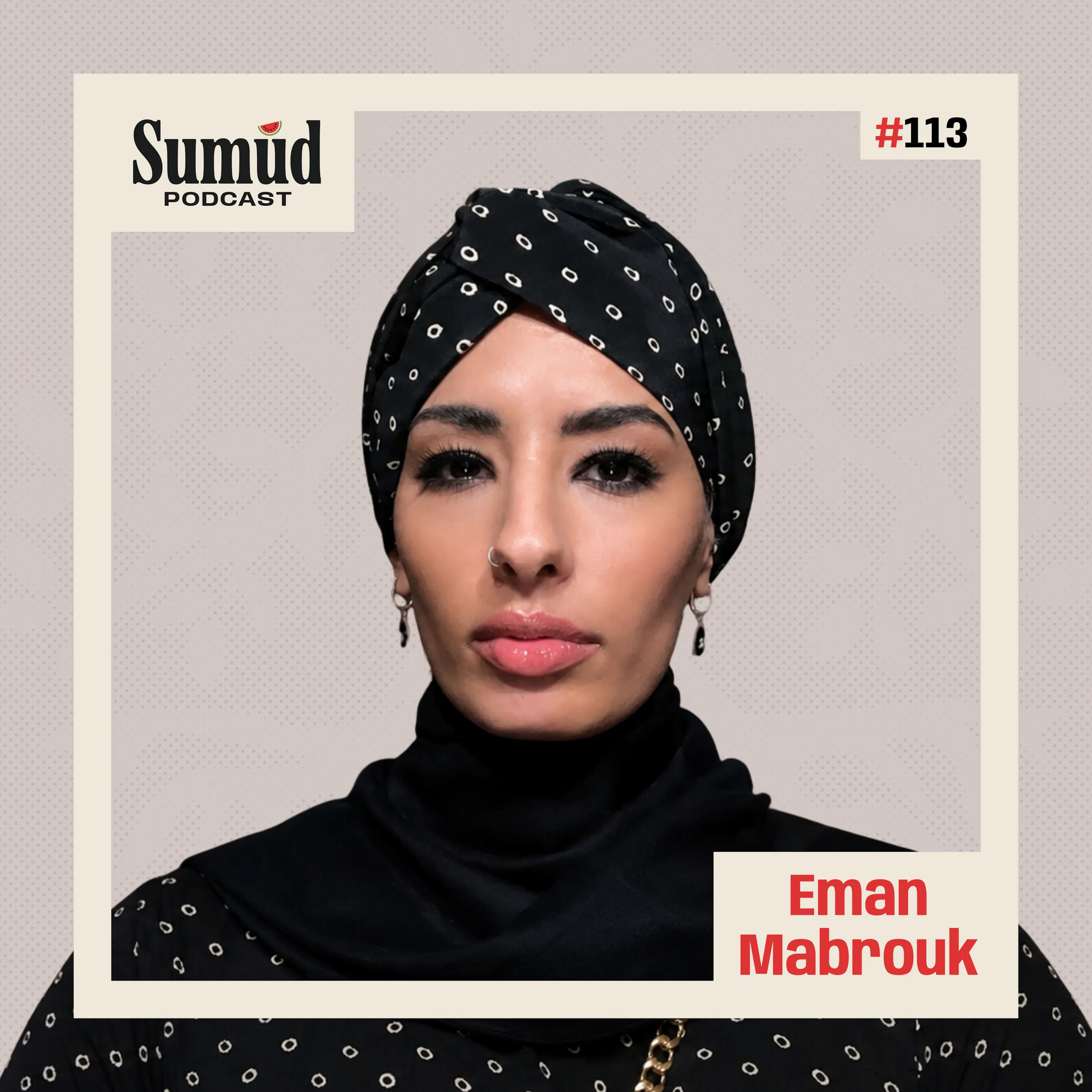 Eman Mabrouk: The Injustice We Refuse to Address | Sumud Podcast 21.08.2026 1sa 20dkIn this episode of the Sumud Podcast, we sit down with Eman Mabrouk for a powerful conversation about injustice, identity, humanitarian work, anti-Blackness, and the responsibility to speak up. Eman shares her experience fighting for hijab rights, witnessing the treatment of African migrant women, and confronting the racism, exploitation, and silence she encountered across the region. She also discusses how these experiences shaped her understanding of advocacy and solidarity. The conversation explores the kafala system, the treatment of migrant workers, the humanitarian crises affecting vulnerable communities, and the importance of looking beyond the issues most visible to the public. Eman also explains her work with the Rammun Foundation, how to responsibly vet humanitarian organizations, and why real change requires organizing, accountability, and solidarity across communities. Eman Mabrouk, formerly known as Eman B. Fendi has built her career around one instinct: taking care of people. First through fashion. Now through humanitarian relief. Mabrouk built her styling career, working shows, athletes, and influencers, while simultaneously pursuing her degrees in neuropsychology. The two ran in parallel: a passion for people and a background in the mind shaping how she worked with clients, on set and off. Her talent for styling the body was matched by an ethos for styling the mind. Today Mabrouk leads Rammun Foundation, a humanitarian nonprofit delivering relief across Gaza, Sudan, and Egypt. She also runs Amaanah & Co, a strategic creative consultancy, and Collective Souk, a community and product platform.Three ventures. One throughline: seeing people, and showing up for them. In this conversation, we explore → Eman’s experience with arrest, discrimination, and the fight for hijab rights → How a painful experience at 19 became a case that helped protect other Muslim women → Eman’s experiences witnessing the treatment of African migrant women and racial hierarchies → The kafala system, exploitation of migrant workers, and vulnerability during times of conflict → The culture of denial surrounding injustice and the need for humanitarian accountability → Eman’s work with the Rammun Foundation, humanitarian relief, and responsible giving → Why meaningful solidarity requires organizing, building coalitions, and taking action Sponsored by The Karate Attorney (@karateattorney) fighting for justice inside and outside the courtroom. Visit KarateAttorney.com 🎬 Full episode on https://sumudpod.com 📲 Follow @dredhasan | @sumudpod | @ms.emanmabrouk | @theemanmabroukshow Learn more about your ad choices. Visit megaphone.fm/adchoices
 -
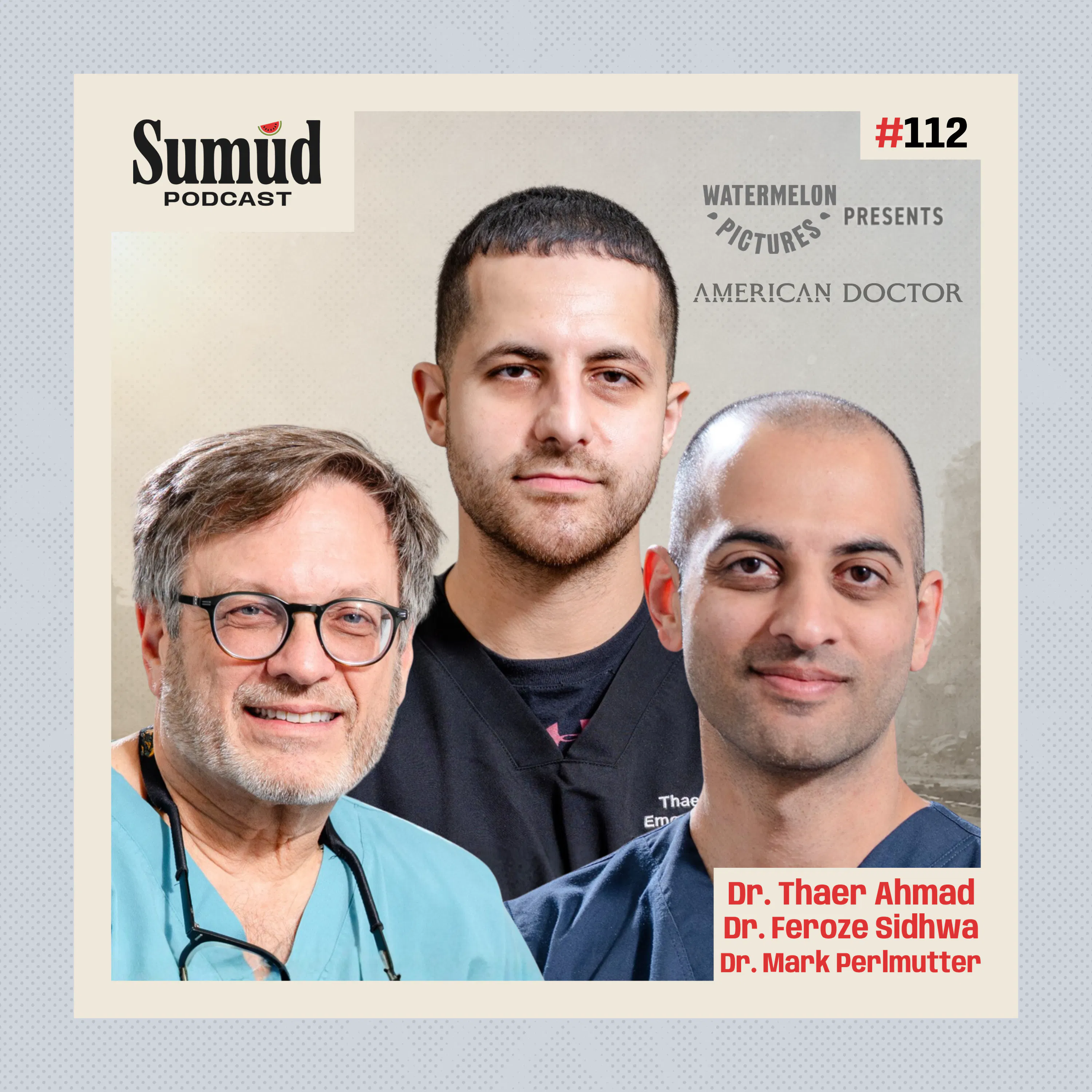 Bearing Witness: Inside 'American Doctor' | Sumud Podcast 07.08.2026 1sa 28dk🎙️ In this episode of the Sumud Podcast, Dr. Ed Hasan sits down with American doctors Thaer Ahmad, Feroze Sidhwa, and Mark Perlmutter to discuss what they witnessed while working inside Gaza’s overwhelmed hospitals, and what happened when they returned home and tried to make the world listen. The doctors share firsthand accounts of treating patients amid shortages, destroyed medical infrastructure, hunger, displacement, and widespread injuries. They discuss the ethics of documenting suffering, the responsibility of becoming witnesses, and the challenges of bringing these stories to American media and political leaders. The conversation also explores U.S. involvement, growing public awareness, grassroots organizing, the future of healthcare in Gaza, and what ordinary Americans can do to advocate for change. 🌍 Dr. Thaer Ahmad is a board-certified emergency medicine physician and humanitarian who has provided medical relief in conflict zones including Gaza, Syria, Lebanon, Jordan, Turkey, and Kenya. He has conducted five medical missions to Gaza, most recently in early 2024, and has since been denied entry four times by Israeli authorities due to his Palestinian heritage. He is an attending physician at Advocate Christ Medical Center, where he serves as assistant program director for the Emergency Medicine Residency Program and Global Health Director for the emergency department. He also holds faculty appointments at the University of Illinois at Chicago and Wake Forest University School of Medicine, and sits on the board of the Palestinian American Medical Association. 🌍 Dr. Mark Perlmutter is an orthopedic hand surgeon in rural North Carolina and past President of the American Academy of Neurological and Orthopedic Surgery, the International College of Surgeons, and the World Surgical Foundation. He has completed 40 overseas surgical mission trips across four continents, and responded to Ground Zero on 9/11, Hurricane Katrina, and Port-au-Prince within six hours of Haiti's 2010 earthquake. In 2024 and 2025, he volunteered in three Gaza hospitals. 🌍 Dr. Feroze Sidhwa is a general, trauma, and critical care surgeon in California. He has worked on humanitarian deployments in Gaza, Ukraine, the West Bank, Haiti, Zimbabwe, and Burkina Faso. 🌍Poh Si Teng is the producer of the Oscar®-nominated ST. LOUIS SUPERMAN and Emmy® Award–winning executive producer of PATRICE: THE MOVIE. She is a former creative executive for ABC/Disney, documentary commissioner for Al Jazeera, IDA grants director, and New York Times journalist. She is the founder of Tiny Boxer Films, which produces non-fiction feature docs, and docu- and unscripted-series for the US and global majority markets. AMERICAN DOCTOR marks her debut as a feature documentary director. 🔑 In this conversation, we explore → American doctors’ firsthand experiences inside Gaza’s hospitals → The collapse of Gaza’s healthcare system and humanitarian crisis → The ethics of documenting war and bearing witness → U.S. media, politics, and public understanding of Gaza → Advocacy, organizing, and humanitarian efforts in the United States → Palestinian healthcare workers and the importance of centering Palestinian voices → Rebuilding Gaza’s healthcare system and training the next generation of doctors Sponsored by The Karate Attorney (@karateattorney) fighting for justice inside and outside the courtroom. Visit KarateAttorney.com 🎬 Full episode on https://sumudpod.com 📲 Follow @dredhasan | @sumudpod | @thaerahmadmd | @fsidhwa | @markperlmuttermd Learn more about your ad choices. Visit megaphone.fm/adchoices
 -
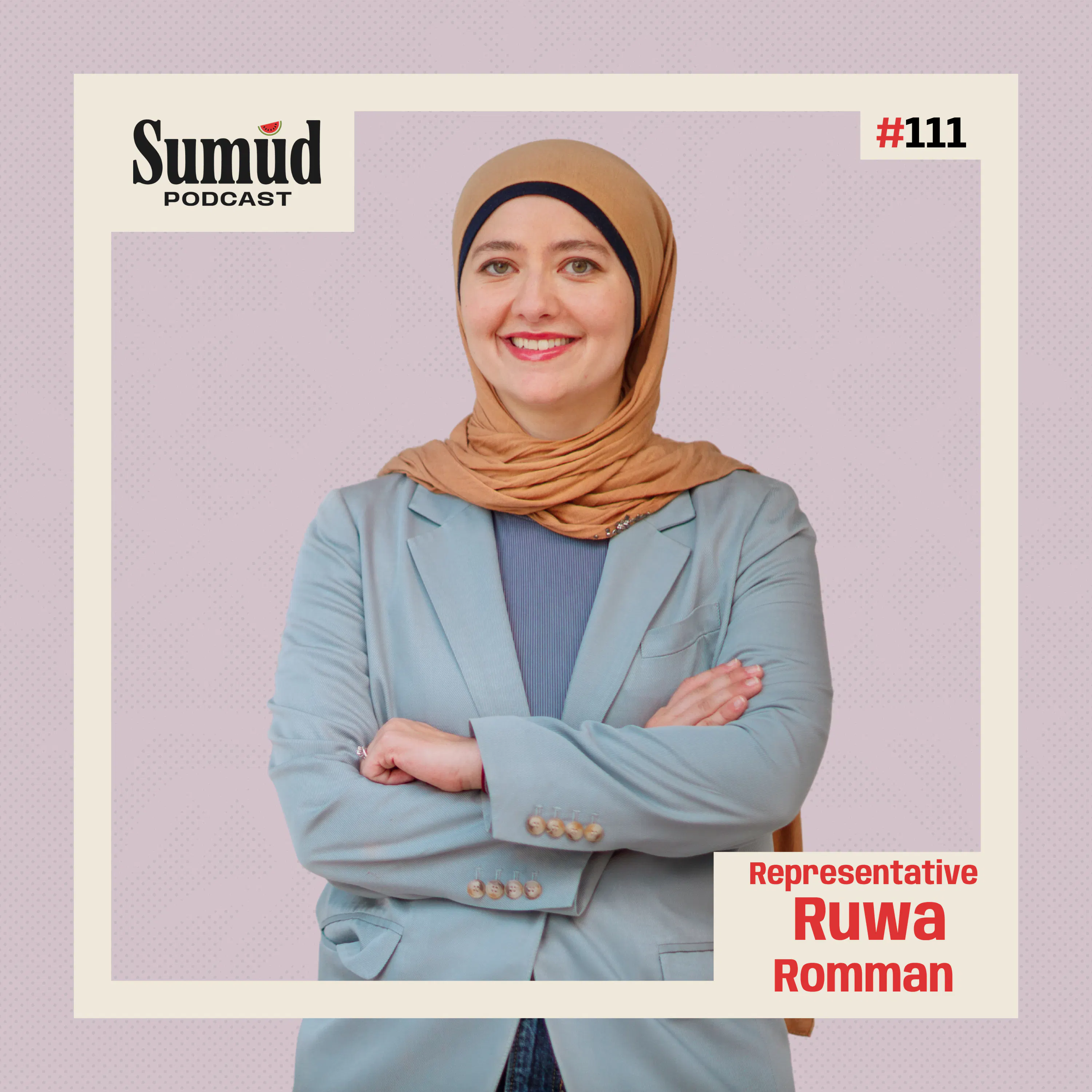 Rep. Ruwa Romman: Representation, Resistance, and Organizing | Sumud Podcast 31.07.2026 1sa 39dk🎙️ In this episode of the Sumud Podcast, Dr. Ed Hasan speaks with Georgia State Representative Ruwa Romman about political organizing, coalition building, and the challenges of representing her community during the ongoing crisis in Palestine. Ruwa reflects on navigating public criticism, advocating for Palestinian human rights, and balancing principle with political strategy. Together, they discuss why lasting change depends on local organizing, long-term movement building, and grassroots action, not just election cycles or viral moments, and what it takes to remain hopeful and accountable in the fight for justice. 🌍 Georgia State Representative Ruwa Romman is not only a Georgia legislator—she is also an organizer, a policy strategist, and a bridge builder. Born in Jordan and the granddaughter of Palestinian refugees, Ruwa moved to Georgia with her family when she was just eight years old. Growing up as a Muslim girl in post-9/11 America, she learned early on what it meant to be misunderstood—and what it would take to be heard. She’s carried that lesson with her into every aspect of her work. Ruwa has volunteered in every election cycle since 2014 to help flip Georgia blue. Whether she was organizing at the grassroots level, informing thousands of Georgians on how to vote in 2020, or helping launch the Georgia Volunteer Hub to mobilize thousands of national and local volunteers, Ruwa has been laser-focused on empowering communities to take ownership of their civic power. Ruwa served as a field organizer for the Georgia Muslim Voter Project and the Asian American Advocacy Fund, communications director for CAIR Georgia, and a trusted strategy and operations expert in both the public and private sectors. Ruwa deeply believes in fighting for a state that we can afford and where we belong. In 2022, Ruwa made history as the first Muslim woman elected to the Georgia State House and the first Palestinian American elected to any office in the state. And from day one, she’s fought to take homes back from corporate landlords, lower utility costs, raise the minimum wage, support EMS services, and pushed for a more inclusive, people-powered democracy. She leads with compassion, conviction, and clarity—and she’s a fierce example of what’s possible when you stay rooted in your values and strive for systemic change. Ruwa is now running for State Senate District 7 because the old playbook has failed too many times. At a moment of fear and uncertainty, Ruwa deeply believes that when we all collectively organize, we can build a better future. 🔑 In this conversation, we explore Ruwa Romman's journey as one of the first Palestinian-American state legislators The backlash she faced after the Democratic National Convention Why she rejected accusations of "selling out" her community Organizing on the ground vs. online activism Why local elections and long-term political infrastructure matter Coalition building, political strategy, and lasting civic engagement The emotional toll of representation and showing up for your community Sponsored by The Karate Attorney (@karateattorney) fighting for justice inside and outside the courtroom. Visit KarateAttorney.com 🎬 Full episode on https://sumudpod.com 📲 Follow @dredhasan | @sumudpod | @ruwaromman Learn more about your ad choices. Visit megaphone.fm/adchoices
 -
 Misan Harriman: Inside ‘Shoot the People’ | Sumud Podcast 26.06.2026 1sa 30dk🎙️ In this episode of the Sumud Podcast, Dr. Ed Hasan sits down with acclaimed photographer, filmmaker, and activist Misan Harriman for a powerful conversation on storytelling, identity, justice, and the responsibility of bearing witness. Misan reflects on his journey from growing up in Nigeria and Britain to becoming one of the world's most influential visual storytellers. Together, they explore childhood trauma, neurodiversity, fatherhood, the power of photography, and why documenting human struggles matters now more than ever. The conversation also dives into Misan's documentary Shoot the People, the role of artists and journalists in preserving truth, the lasting impact of colonialism, and the importance of community, hope, and solidarity in challenging times. 🌍 Misan Harriman is a renowned photographer, filmmaker, and social activist celebrated for his powerful imagery that captures pivotal moments in contemporary history. As the first Black photographer to shoot a British Vogue cover in the magazine’s 104-year history, Misan has gained international acclaim for his work documenting social justice movements, including the Black Lives Matter protests, as well as his striking portraits of influential figures like Rhianna, Tom Cruise, Julia Roberts, and Cate Blanchett. Misan’s 2023 short film ‘The After,’ produced by Nicky Bentham (Neon Films), was nominated for an Academy Award for Best Live Action Short Film. His work has been featured in Vogue, TIME, and The Guardian, solidifying his place as a leading voice in visual storytelling. Beyond his photography, Misan is a passionate advocate for change, using his platform to spotlight issues of inequality and human rights. With a keen eye for emotional depth and cultural significance, he approaches each project with a mission to inspire and provoke thought, creating images that resonate deeply with audiences around the world 🔑 In this conversation, we explore → The story behind Shoot the People → Growing up Black in elite British schools → Trauma, anxiety, and neurodiversity → How photography became a tool for change → The importance of documenting social movements → Colonialism and its lasting impact → Media narratives and independent journalism → South Africa, global justice movements, and solidarity → Fatherhood, family, and healing → The role of artists during moments of crisis → Why hope and community remain essential → How storytelling can preserve truth for future generations Sponsored by The Karate Attorney (@karateattorney) fighting for justice inside and outside the courtroom. Visit KarateAttorney.com 🎬 Full episode on https://sumudpod.com 📲 Follow @dredhasan | @sumudpod | @misanharriman Learn more about your ad choices. Visit megaphone.fm/adchoices
 -
 Haitham Arafat: Aboard the Global Sumud Flotilla | Sumud Podcast 19.06.2026 1sa 27dkIn this episode of the Sumud Podcast, Dr. Ed Hasan sits down with activist and Global Sumud Flotilla Haitham Arafat to discuss his journey from Gaza to becoming a leading voice for justice and humanitarian advocacy. After losing more than 100 family members, Haitham shares the personal tragedies that changed the course of his life, leading him to leave behind a successful career and dedicate himself to raising awareness about the ongoing suffering of civilians. He recounts his experiences aboard the Global Sumud Flotilla, the international effort to challenge isolation and deliver aid, as well as the risks, sacrifices, and realities faced by those who participated. * Disclaimer: This episode includes discussion of sexual violence, torture, imprisonment, and abuse. Viewer and listener discretion is advised. A Palestinian American born in Gaza, Haitham Arafat has lost many members of his family to the Israeli illegal occupation and genocide. Haitham is a cyber security expert that decided to leave professional work and dedicate the rest of his life to stop the genocide and fight for human rights. Haitham has been very active protesting in the USA to expose Zionism and illegal weapon chain of supply to Israel, he joined the Global Sumud Flotilla to deliver humanitarian and medical aid to Gaza. Haitham was kidnapped in international waters and was tortured by Israelis. In this conversation, we explore → Growing up in Gaza and the experiences that shaped Haitham’s life → Losing over 100 family members, grief, and survivor’s guilt → Leaving cybersecurity behind to become a full-time activist → The meaning of Sumud and the mission of the Global Sumud Flotilla → Life at sea, international solidarity, and multiple interceptions → Social media, independent reporting, and the importance of bearing witness → The humanitarian crisis, grassroots action, and a message of courage and dignity Learn more about your ad choices. Visit megaphone.fm/adchoices
 -
 Said Durrah: From Comedy Stages to Community Impact | Sumud Podcast 12.06.2026 1sa 31dkIn this episode of the Sumud Podcast, we sit down with comedian, humanitarian, and community organizer Said Durrah for a wide-ranging conversation about identity, service, storytelling, and purpose. Said reflects on growing up Palestinian-American, balancing comedy with humanitarian work, and the experiences that shaped his commitment to serving communities around the world. From fundraising efforts and refugee camp visits to building cultural platforms and launching his new Arab Is Me podcast, he shares personal stories about faith, resilience, representation, and the responsibility of preserving culture through art. The conversation also explores the challenges facing younger generations, the importance of authentic storytelling, mental health, and how creative work can become a vehicle for impact during times of crisis and uncertainty. Palestinian by way of Gaza, Syrian by way of Damascus, and American by way of Detroit, Said Durrah has made audiences laugh in ways that transcend borders, languages, and cultures. Said's first performances as a young child were in front of his family, where he’d tell stories and impersonate other family members. It was only a matter of time until Said made his way on to an official comedic stage -- first, at the Comic Strip in NYC in 2010, and since, at famous venues such as the Kennedy Center, Carnegie Hall, Hollywood’s Laugh Factory, DC Improv, Caroline's in Times Square and even a performance on Broadway, just to name a few. Thousands have seen his performances live via tours including Allah Made Me Funny, 1001 Laughs Comedy Tour, Funatical Comedy Tour, and performances throughout Palestine including the historic El-Hakawati theater in Jerusalem. Said has also taught comedy workshops for children in the West Bank. Combining his love of comedy with his dedication to humanitarian work, Said has led, supported, and lent his comedic stylings to dozens of fundraising efforts, helping provide millions of dollars in vital aid for people in need around the world. In this conversation, we explore - Said’s journey from stand-up comedy to humanitarian and advocacy work - Fundraising efforts and supporting families affected by conflict and displacement - The balance between entertainment, service, and community leadership - Why preserving Arab and Palestinian culture matters for future generations - The story behind the launch of the Arab Is Me podcast - Identity, belonging, and growing up Arab in America - The role of comedy in storytelling, healing, and cultural representation - Navigating public criticism, activism, and community expectations - Mental health conversations within Arab and Muslim communities - Why authentic human connection matters more than social media validation - Lessons learned from years of community organizing and nonprofit work - Supporting young people pursuing creative careers and unconventional paths - Said's biggest comedy influences and the future of Arab-American storytelling Sponsored by The Karate Attorney (@karateattorney) fighting for justice inside and outside the courtroom. Visit KarateAttorney.com This video is for educational purposes only. It documents personal experience, public encounters, and political dialogue. 🎬 Full episode on https://sumudpod.com 📲 Follow @dredhasan | @sumudpod | @saidsworld Learn more about your ad choices. Visit megaphone.fm/adchoices
 -
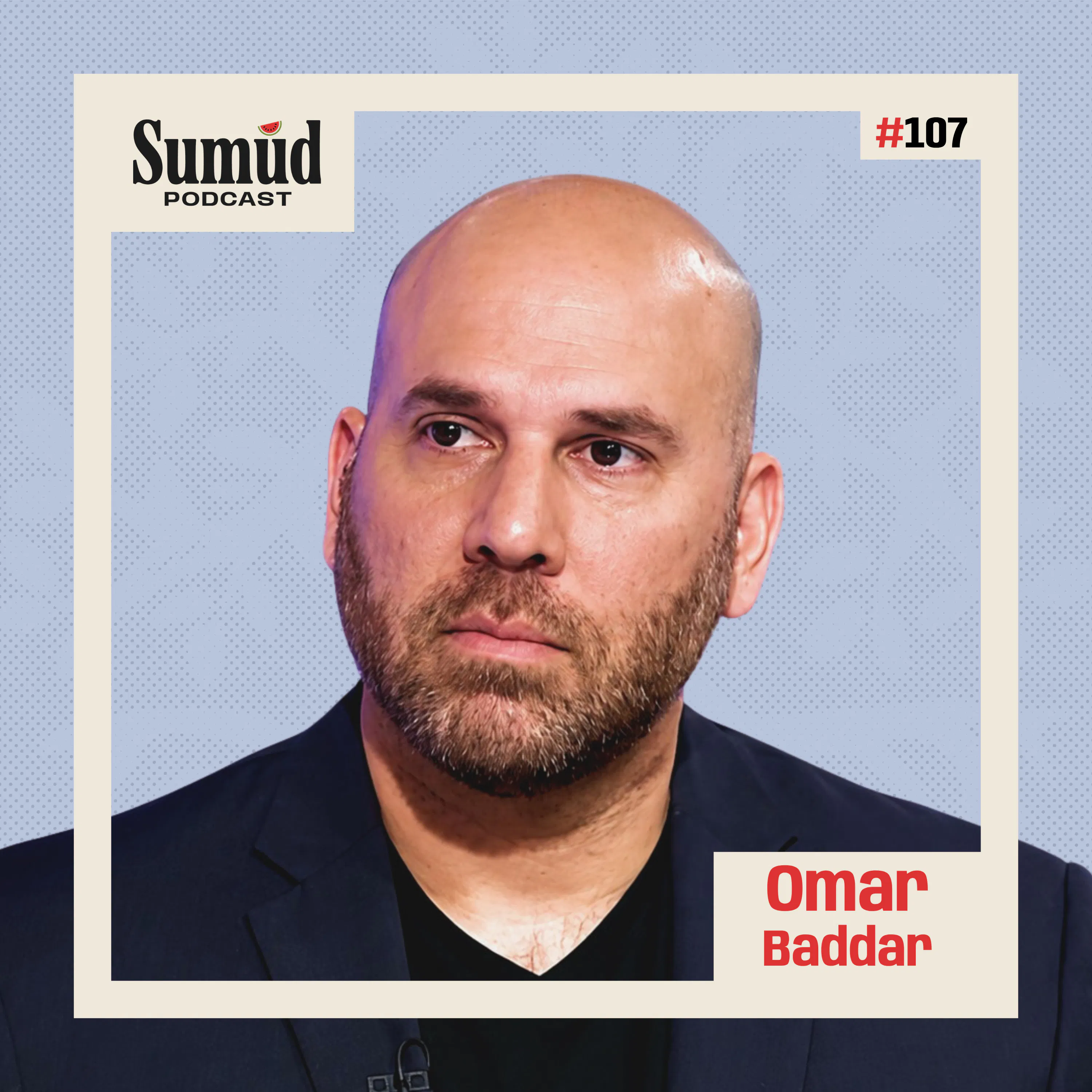 Omar Baddar: Win the Argument Without Losing the Cause | Sumud Podcast 05.06.2026 1sa 15dk🎙️ In this episode of the Sumud Podcast, we sit down with Omar Baddar for a wide-ranging conversation on Palestine advocacy, American politics, media strategy, and the art of public debate. Omar shares his thoughts on electoral politics, the challenges facing the Palestinian movement, lessons from debating some of the most prominent pro-Israel voices in the media, and why effective advocacy requires discipline, strategy, and a deep understanding of your audience. He also reflects on movement-building, public opinion shifts on Palestine, and the responsibility of activists navigating a rapidly changing political landscape. 🌍Omar Baddar is a Palestinian American Middle East analyst and a member of the National Policy Council of the DC-based Arab American Institute. He previously served as Communications Director at the Institute for Middle East Understanding, Deputy Director at the Arab American Institute, and Executive Director at the American Arab Anti-Discrimination Committee of Massachusetts. He wrote his Master's thesis on US policy towards Israel and Palestine. His media appearances include CNN, MSNBC, BBC, Al-Jazeera, Democracy Now, Uncensored with Piers Morgan, and many other outlets, and his writings have appeared in Salon, Newsweek, Huffpost, the Daily Beast, and Jadaliyya, among other platforms. 🔑 In this conversation, we explore → Omar Baddar’s journey into advocacy and public debate → Strategy, communication, and effective Palestine advocacy → Debates, media narratives, and engaging diverse audiences → Palestine’s impact on U.S. politics and voting → Shifting U.S. opinion on Israel–Palestine → Building a movement and driving policy change → Lessons and advice for the next generation of advocates Sponsored by The Karate Attorney (@karateattorney) fighting for justice inside and outside the courtroom. Visit KarateAttorney.com 🎬 Full episode on https://sumudpod.com 📲 Follow @dredhasan | @sumudpod | @OmarBaddar Learn more about your ad choices. Visit megaphone.fm/adchoices
 -
 Maysoon Zayid: Defending the Homeland With Comedy | Sumud Podcast 29.05.2026 1sa 15dkInquire to book Maysoon: https://www.caa.com/caaspeakers/maysoon-zayid/ Support Maysoon's Work Amplifying Disabled Voices: https://app.thefield.org/home/donation/general/622112/0 For more information, please send Maysoon a DM @maysoonzayid 🎙️ In this episode of the Sumud Podcast, we sit down with comedian, actress, author, and activist Maysoon Zayid for a powerful conversation on identity, resilience, representation, and survival. From growing up as a Palestinian Muslim woman with cerebral palsy in New Jersey to breaking barriers in comedy and becoming a leading disability advocate, she reflects on the experiences that shaped her voice. Through humor and sharp social commentary, she discusses Hollywood, stereotypes, discrimination, and the realities facing Arab communities today, and why dignity and truth matter more than ever. 🌍 Maysoon Zayid is a comedian, actress, writer, and disability advocate. She is a graduate of Arizona State University, and a current Georgetown Qatar fellow. She has taught at Princeton University and NYU. Maysoon is the co-founder/co-executive producer of the New York Arab American Comedy Festival and the Muslim Funny Fest. Her Ted Talk, “I Got 99 Problems...Palsy is Just One,” has been translated into 42 languages, and was one of the most popular talks of 2014. As a professional comedian, Maysoon has sold out top New York City clubs and has toured extensively at home and abroad. She was a headliner on the Arabs Gone Wild comedy tour and the Together Live tour. Maysoon has collaborated with Rock ‘n Roll Hall of Famer Dave Matthews, and was a consultant for Disney. Maysoon had a recurring role on General Hospital, has limped in New York Fashion Week, tap-danced on Broadway, and is an ambassador for Huda Beauty. She is the author of the bestselling memoir Find Another Dream and the award-winning Scholastic graphic novel, Shiny Misfits. Learn more at Maysoon.com. 🔑 In this conversation, we explore - Maysoon’s journey growing up Palestinian, Muslim, and disabled in America - How comedy became a tool for resistance, healing, and storytelling - The story behind her viral TED Talk and rise to global attention - Breaking barriers in Hollywood and the entertainment industry - The challenges of navigating identity, safety, and public life - The pressures of assimilation and preserving cultural identity in America - Why humor can be one of the most powerful forms of truth-telling Sponsored by The Karate Attorney (@karateattorney) fighting for justice inside and outside the courtroom. Visit KarateAttorney.com 🎬 Full episode on https://sumudpod.com 📲 Follow @dredhasan | @sumudpod | @maysoonzayid Learn more about your ad choices. Visit megaphone.fm/adchoices
 -
 Mosab Abu Toha: Stones of Rubble have Amnesia | Sumud Podcast 22.05.2026 1sa 51dk🎙️In this episode of the Sumud Podcast, Dr. Ed Hasan sits down with acclaimed poet, writer, and educator Mosab Abu Toha for a deeply personal conversation on literature, displacement, memory, and survival. Mosab reflects on growing up under siege, founding the Edward Said Library, writing through war and family separation, and using poetry to preserve truth amid destruction. He also shares the stories behind his poems, his experience of detention, and why books, memory, and storytelling remain acts of resistance. 🌍 Mosab Abu Toha is a Palestinian poet and writer who was born in Gaza. In 2025, he was awarded the Pulitzer Prize for Commentary for his series of essays on Gaza published in The New Yorker. He is the founder of the Edward Said Library, Gaza’s first English-language library, and the author of two acclaimed poetry collections. His debut, Things You May Find Hidden in My Ear (City Lights, 2022), won an American Book Award and a 2022 Palestine Book Award, and was a finalist for the National Book Critics Circle Award. His second collection, Forest of Noise (Knopf, 2024), was named a New York Times Notable Book of the Year and won the Brooklyn Public Library Book Prize. Abu Toha was also named to the 2026 CULT100 list by Cultured Magazine. His poetry and reporting have appeared in major outlets including The New York Times, The Atlantic, The Washington Post, The Nation, The Paris Review, and Poetry. His work has been further recognized in several Best American anthologies, including The Best American Food and Travel Writing 2024, The Best American Poetry 2025, and The Best American Essays 2025. A frequent guest on international broadcast media, he has been interviewed on CNN by Christiane Amanpour, PBS NewsHour, Democracy Now!, MSNBC with Chris Hayes, and NPR. 🔑 In this conversation, we explore → Growing up in a refugee camp and discovering literature under blockade → Founding the Edward Said Library and building cultural spaces in Gaza → How poetry documents grief, survival, family, and displacement → The story behind Things You May Find Hidden in My Ear → Mosab’s detention, separation from his family, and reunion → Why memory, storytelling, and literature matter during destruction → The dream of creating an international literary festival in Gaza Sponsored by The Karate Attorney (@karateattorney) fighting for justice inside and outside the courtroom. Visit KarateAttorney.com 🎬 Full episode on https://sumudpod.com 📲 Follow @dredhasan | @sumudpod | @mosababutoha Learn more about your ad choices. Visit megaphone.fm/adchoices
 -
 Ramsey Hanhan: Palestine Bleeds For You | Sumud Podcast 15.05.2026 45dk🎙️ In this episode of the Sumud Podcast, we sit down with Palestinian author and former academic Ramsey Hanhan for a powerful conversation about Fugitive Dreams, Palestine Bleeds For You, censorship, the Nakba, faith, and the responsibility of witnessing. Ramsey reflects on being in Palestine on October 7, writing in real time as Gaza was being destroyed, and why Palestinian voices must continue to speak even when the world tries to silence them. 🌍 Ramsey Hanhan is the author of two books: Palestine Bleeds For You (2026) and the autobiographical Fugitive Dreams (2022). His short stories, essays, and poetry appear in The Harvard Advocate, Fikra magazine, Scene48, Mondoweiss and other publications. He also speaks about Palestine and literature. Formerly a physics professor, Ramsey holds a Ph.D. from the University of Michigan and lives near Baltimore, Maryland. Ramsey's Linktree: https://linktr.ee/ramseyhanhan Ramey's Substack (Renegade Living): https://renegadeliving.us Pre-order 'Palestine Bleeds for You' at your favorite local bookstore using ISBN # 9781967022281 Pre-order at 'Palestine Bleeds for You' on Bookshop: https://bookshop.org/p/books/palestine-bleeds-for-you-ramsey-hanhan/20686de9959e9091?ean=9781967022281&next=t Order 'Fugtive Dreams':https://ramseyhanhan.org/ 🔑 In this conversation, we explore → How Palestine Bleeds For You began on October 7 → Why Palestinian voices are being censored and silenced → What it means to witness genocide in real time → Palestinian Christian identity and the weaponization of religion → The Nakba, the Right of Return, and Palestinian survival → Why “Do you condemn Hamas?” is the wrong question → Ramsey’s message to Palestinians: “Don’t give up, ever” Sponsored by The Karate Attorney (@karateattorney) fighting for justice inside and outside the courtroom. Visit KarateAttorney.com 🎬 Full episode on https://sumudpod.com 📲 Follow @dredhasan | @sumudpod | @RamseyHanhan Learn more about your ad choices. Visit megaphone.fm/adchoices
 -
 A New Policy: Creating a New Playbook | Sumud Podcast 08.05.2026 1sa 29dk🎙️ In this episode of the Sumud Podcast, we sit down with former Biden administration officials Tariq Habash and Josh Paul; co-founders of A New Policy — for one of the most candid conversations yet about Washington, political power, and the growing movement demanding accountability in U.S. foreign policy. The conversation goes far beyond headlines. From student protests and free speech crackdowns to arms transfers, ICE training programs, campaign financing, and the future of American politics, this episode explores how the issue of Palestine intersects with nearly every major political debate in America today. Together, they discuss the creation of A New Policy, their strategy for building political power, and why they believe the next decade could completely transform the conversation around Palestine in the United States. 🌍 Tariq Habash, Co-Founder: Tariq Habash resigned from the U.S. Department of Education in January, 2024 due to the Biden Administration’s policy on Gaza and its unrestricted support for Israel’s aggression against Palestinians. Tariq served for three years as a political appointee and policy advisor in the U.S. Department of Education’s Office of Planning, Evaluation and Policy Development, where he led the policy office’s student loan portfolio, regulatory policy planning, and budget development process across higher education issues. He was the first political appointee to publicly resign from the Biden Administration. Before entering government, he spent years working on federal policy regarding education finance and racial equity, and co-founded Protect Borrowers. Tariq is a Palestinian-American, and grew up in Middletown, Ohio. He holds degrees from the University of Miami and Harvard Graduate School of Education. 🌍 Josh Paul. Co-Founder: Josh Paul resigned from the State Department in October 2023 due to his disagreement with the Biden Administration’s decision to rush lethal military assistance to Israel in the context of its war on Gaza. He previously spent over 11 years as a Director in the Bureau of Political-Military Affairs, which is responsible for U.S. defense diplomacy, security assistance, and arms transfers. He previously worked on security sector reform in both Iraq and the West Bank, holding additional roles in the Office of the Secretary of Defense, U.S. Army Staff, and as a Military Legislative Assistant for a Member of the U.S. House Armed Services Committee. Josh grew up between London and New York, and holds Masters degrees from the Universities of Georgetown and St Andrews, Scotland. He is a recipient of the 2023 Callaway Award for Civic Courage and the 2024 MedGlobal Award for Courage. 🔑 In this conversation, we explore → Why Tariq Habash and Josh Paul resigned from the Biden administration → How U.S. foreign policy is shaped behind closed doors → The role of lobbying, campaign money, and AIPAC in Washington politics → How Gaza, student protests, and campus crackdowns changed the national conversation → Why Palestine has become central to debates around education, policing, and civil rights → How A New Policy is working to change U.S. policy from within the system → How elections, grassroots pressure, and younger voters are reshaping Congress and the Democratic Party Sponsored by The Karate Attorney (@karateattorney) fighting for justice inside and outside the courtroom. Visit KarateAttorney.com 🎬 Full episode on https://sumudpod.com 📲 Follow @dredhasan | @sumudpod | @tariqhabash_ | @anewpolicy | @anewpolicyorg Learn more about your ad choices. Visit megaphone.fm/adchoices
 -
 Rahma Zein: Fearless Journalism & Reclaiming the Narrative | Sumud Podcast 01.05.2026 1sa 18dk🎙️ In this episode of the Sumud Podcast, Egyptian journalist Rahma Zein discusses journalism, propaganda, resistance, and identity, with a focus on Palestine. She shares her upbringing, experiences covering revolutions and war zones, and insights on media bias and Western narratives. Rahma reflects on reporting from Rafah during Gaza, the viral moment that amplified her voice, and the emotional toll of witnessing injustice. The conversation highlights ethical storytelling, challenges dehumanizing narratives, and explores themes of solidarity, Arab identity, and resilience in a raw and deeply human exchange. 🌍 Rahma Zein is an Egyptian journalist with over a decade of experience in field reporting, media strategy, and public relations. She began her career as an investigative reporter for Egyptian TV and CBC, covering the Arab region during 2011 political changes in Egypt and Libya and interviewing key political figures. Currently Rahma works as a consultant for Tech for Palestine, an incubator for advocacy projects across the world. 🔑 In this conversation, we explore → Rahma’s upbringing in a family of journalists and political thinkers → The power of storytelling in shaping empathy and public understanding → Media propaganda, Western bias, and narratives around Palestine → Her experiences reporting during the Egyptian revolution and Arab Spring → The emotional toll of covering war, including at the Rafah border → The viral Clarissa Ward confrontation and its global impact → Identity, activism, and the role of solidarity in the fight for justice ⏱ Chapters 00:00 Opening message and introducing Rahma Zein 03:30 Growing up in a family of journalists 08:00 Spearfishing, freediving, risk, and life outside comfort zones 17:45 Why journalism must be learned in the field 29:00 Media, self-awareness, values, and the foundation of journalism 38:30 Rafah, bombing, fear, and the moment that changed everything 1:15:00 Tech for Palestine, ethical alternatives, and final message Sponsored by The Karate Attorney (@karateattorney) fighting for justice inside and outside the courtroom. Visit KarateAttorney.com 🎬 Full episode on https://sumudpod.com 📲 Follow @dredhasan | @sumudpod | @zein_rahma Learn more about your ad choices. Visit megaphone.fm/adchoices
 -
 Rami Abushhab: Identity, Comedy, and the Fight to Be Seen | Sumud Podcast 24.04.2026 1sa 9dk🎙️ In this episode of the Sumud Podcast, Palestinian-American comedian Rami Abushhab opens up about growing up in Chicago as one of the only Palestinians in his community and navigating Hollywood as an Arab actor. He shares personal stories about identity, representation, and the pressure to hide who he is, while reflecting on the emotional toll of witnessing the ongoing tragedy in Palestine. Rami explores how comedy serves as both a coping mechanism and a form of resistance, and speaks on generational trauma, privilege, and his mission to create space for future Palestinian creatives. The episode also features a moving letter to his future children, capturing grief, hope, and pride. 🌍 Rami Abushhab is an award-winning Palestinian-American actor and stand-up comedian. As an actor, he’s known for his work on TV shows like Law & Order and Chicago Fire, as well as his role in BJ’s Mobile Gift Shop, an official selection of the Sundance Film Festival. Beyond acting, Rami writes, directs, and produces his own short films, using storytelling to highlight Palestinian narratives and challenge stereotypes. As a comedian, he has toured internationally and been featured on platforms like WGN and Forbes. His style blends sharp storytelling with political satire, tackling difficult topics with humor, honesty, and purpose. Rami continues to tour and create, with a mission to represent his people authentically and open doors for the next generation of Palestinian artists. 🔑 In this conversation, we explore → Growing up Palestinian in Chicago and discovering identity → Realizing Palestine wasn’t on the map → Navigating Hollywood and pressure to hide his identity → Comedy as resistance and storytelling → The emotional toll of witnessing tragedy in Palestine → Representation, art, and humanizing Palestinians → A powerful letter to future children about being Palestinian ⏱ Chapters: 00:00 Opening reflection: privilege, dreams, and global reality 01:00 Introducing Rami: comedy, acting, and early career 05:00 Growing up in Chicago: identity and being Palestinian 09:00 Acting breakthrough: Maqluba and representation impact 16:30 Theater school & Meisner method: emotional transformation 21:00 Stand-up journey: bombing, crowd work, and finding confidence 32:00 Career struggles, identity, family, and future ambitions (to end) Sponsored by The Karate Attorney (@karateattorney) fighting for justice inside and outside the courtroom. Visit KarateAttorney.com 🎬 Full episode on https://sumudpod.com 📲 Follow @dredhasan | @sumudpod | @ramiabushhab Learn more about your ad choices. Visit megaphone.fm/adchoices
 -
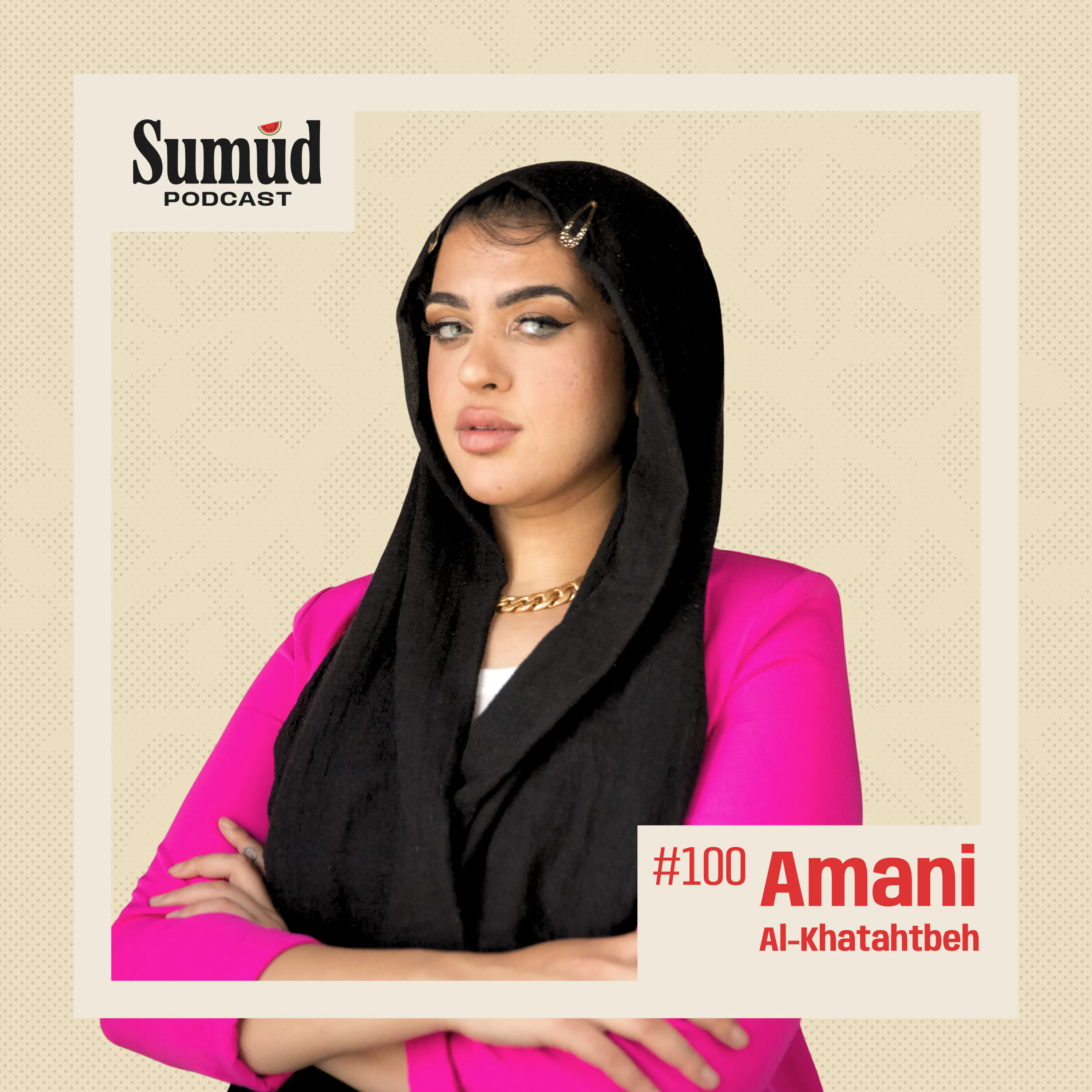 Amani Al-Khatahtbeh: Muslim Women, Media & Speaking Out | Sumud Podcast 17.04.2026 1sa 28dk🎙️ In this episode of the Sumud Podcast, we speak with Amani Al-Khatahtbeh, activist, author, and founder of MuslimGirl.com, about the personal and political realities shaping Muslim and Palestinian lives today. She reflects on grief, identity, and resilience amid the ongoing violence in Gaza, and discusses how media narratives, systemic oppression, and collective trauma intersect with her own experiences growing up Muslim in post-9/11 America. The conversation explores storytelling, community responsibility, and the importance of humanizing Palestinian voices, while highlighting how courage, solidarity, and truth-telling can challenge injustice from within and beyond our communities. 🌍 Amani Al-Khatahtbeh is a global media founder, political strategist, and leading voice at the intersection of digital rights, culture, and power. As the creator of Muslim Girl, she has spent the past decade reshaping the narrative of Muslim women in the West, transforming it from a point of marginalization into a cultural and political force. Her work sits at the forefront of critical global conversations on free expression, platform accountability, and the future of the digital public square. Named one of CNN’s “25 Most Influential American Muslims,” Amani became the first Muslim woman from New Jersey in American history to run for U.S. Congress. Her first book, Muslim Girl: A Coming of Age (Simon & Schuster), is a two-time Editors’ Pick on The New York Times Best Sellers list. Labeled by The Economist as a “generation prophet,” her writing and commentary have appeared in TIME, The Washington Post, Variety, and beyond. Amani’s influence spans media, policy, and culture. She has been recognized by Forbes 30 Under 30 and has collaborated with leading institutions, brands, and international organizations. She has shared stages with President Bill Clinton, Gloria Steinem, Shonda Rhimes, Hasan Minhaj, and other influential voices shaping global discourse. She is currently building Digital Assembly, a next-generation think tank focused on redefining participation, equity, and governance in the digital age. 🔑 In this conversation, we explore → The emotional and psychological impact of the ongoing tragedy in Palestine → How collective grief and personal loss intersect in times of war and crisis → Growing up Muslim in post-9/11 America and navigating identity under scrutiny → The role of media in shaping narratives about Muslims and Palestinians → Islamophobia, misogyny, and the unique challenges faced by Muslim women → Internal community struggles and the importance of solidarity and accountability → The intersection of feminism, faith, and cultural identity → Activism, moral courage, and making difficult ethical decisions in public life → The power of storytelling to humanize marginalized communities → Why protecting and uplifting vulnerable voices is essential for collective liberation ⏱ Chapters 00:00 Opening clip: Protecting women + liberation message 01:00 Introducing Amani + background and achievements 03:00 Ramadan, grief, and mental health in community 07:00 Identity, hijab journey, and finding roots in Jordan 13:00 Muslim Girl origin: blogging, bullying, and representation 20:00 Activism, backlash, and navigating public visibility 32:00 Community tensions, feminism, and protecting Muslim women Sponsored by The Karate Attorney (@karateattorney) fighting for justice inside and outside the courtroom. Visit KarateAttorney.com 🎬 Full episode on https://sumudpod.com 📲 Follow @dredhasan | @sumudpod | @amani | @amaniverified | @amaniuniverse | @watermelonplusco Learn more about your ad choices. Visit megaphone.fm/adchoices
 -
 Dr. Abdul El-Sayed: Healing Systems, Not Symptoms | Sumud Podcast w/ Dr. Ed Hasan 03.04.2026 58dk🎙️ In this episode of the Sumud Podcast, we sit down with Dr. Abdul El-Sayed to explore identity, public service, and political courage in a time of crisis. He reflects on how his upbringing shaped his commitment to equity, healthcare, and human dignity, and unpacks how systemic inequality operates across both the United States and globally. The conversation also turns to Palestine, where he examines the human cost of war, the contradictions in U.S. policy, and the urgency of centering universal human rights. Throughout, he challenges divisive narratives and calls for a politics rooted in shared humanity, empathy, and meaningful change. 🌍 Dr. Abdul El-Sayed is a physician, epidemiologist, author, and public servant currently running for the U.S. Senate in Michigan. Born and raised in Southeast Michigan to an Egyptian immigrant father and an American mother, his life has been shaped by navigating multiple cultures and perspectives. At just 30 years old, Dr. El-Sayed became the youngest health official of a major American city, rebuilding Detroit’s Health Department after its collapse. He later served as Director of Wayne County’s Health, Human & Veterans Services Department, where he oversaw services for 1.8 million residents. His work has focused on expanding healthcare access, removing lead from schools, providing free glasses to children, combating the opioid crisis through Narcan distribution, and canceling hundreds of millions in medical debt. A Rhodes Scholar and graduate of the University of Michigan, he holds both an MD and a PhD in epidemiology. He is also the author of Healing Politics and host of the podcast America Dissected. A union member and advocate for working people, Dr. El-Sayed is running to build a government that prioritizes human dignity, equity, and the needs of everyday Americans over corporate interests 🔑 In this conversation, we explore: → Growing up between cultures and finding identity across worlds → The influence of family, especially his grandmother, on purpose and leadership → Why public health and politics are deeply interconnected → The realities of systemic inequality in the U.S. healthcare system → U.S. foreign policy and the human cost of war abroad → Navigating media narratives, misinformation, and public attacks → Why the issue of Palestine is rooted in universal human rights, not identity → Political courage and standing firm under pressure and criticism → The role of empathy, principle, and accountability in leadership @AbdulElSayed ⏱ Chapters 00:00 Opening clip: War, funding, and moral clarity 01:00 Introducing Abdul El-Sayed 05:00 His grandmother and sense of purpose 08:00 Growing up between worlds 14:00 Science, politics, and purpose 24:00 Responsibility, faith, and service 34:00 Palestine, justice, and moral clarity 49:00 Media, controversy, and political courage 56:00 Closing message: building something better Sponsored by The Karate Attorney (@karateattorney) fighting for justice inside and outside the courtroom. Visit KarateAttorney.com 🎬 Full episode on https://sumudpod.com 📲 Follow @dredhasan | @sumudpod | @AbdulElSayed Learn more about your ad choices. Visit megaphone.fm/adchoices
 -
 Annemarie Jacir: Inside Palestine ’36 | Sumud Podcast 27.03.2026 1sa 18dk🎙️ In this episode of the Sumud Podcast, Dr. Ed Hasan sits down with acclaimed Palestinian filmmaker Annemarie Jacir to discuss her film Palestine ’36 and the realities of creating under occupation. Jacir shares the challenges of filmmaking in Palestine, from restricted movement to rebuilding entire productions, and reflects on how the film became a testament to resilience and collective effort. The conversation explores identity, displacement, and the deeper themes of resistance and unity, revealing how storytelling becomes an act of memory and defiance. 🌍 Annemarie Jacir is a Palestinian filmmaker who has written, directed, and produced over sixteen films, with premieres at major festivals including Cannes, Berlin, Venice, and Toronto. Her work has broken ground, including her short film 'Like Twenty Impossibles' becoming the first Arab short selected at Cannes, and her debut feature 'Salt of This Sea' marking the first feature by a Palestinian female director. Her films, including 'When I Saw You and Wajib' have received numerous international awards, and all three of her feature films were selected as Palestine’s official Oscar entries. She is the founder of Philistine Films, supports independent cinema in the region, and directed her fourth feature film, 'Palestine ’36', which premiered at the Toronto International Film Festival and was selected as Palestine’s submission to the Academy Awards. 🔑 In this conversation, we explore → The making of Palestine ’36 and why this story matters now → The realities of filmmaking under occupation and restricted movement → Rebuilding sets, navigating loss, and creating under constant uncertainty → Identity, exile, and the emotional weight of displacement → The role of cinema in preserving memory and resisting erasure → Unity across religious and social lines in Palestinian history → Storytelling as an act of survival, resistance, and defiance ⏱ Chapters 00:00 Opening clip: Filmmaking under occupation 01:00 Introducing Annemarie Jacir 03:00 Why Palestine ’36 and why now 08:30 The challenges of filming in Palestine 18:00 Loss, rebuilding, and production obstacles 32:00 Identity, exile, and personal connection 48:00 Cinema as resistance and historical memory 01:02:00 Unity, storytelling, and closing reflections Sponsored by The Karate Attorney (@karateattorney) fighting for justice inside and outside the courtroom. Visit KarateAttorney.com 🎬 Full episode on https://sumudpod.com 📲 Follow @dredhasan | @sumudpod | @annamariajacir | @watermelonplusco | @watermelonpictures Learn more about your ad choices. Visit megaphone.fm/adchoices
 -
 Dr. Ibram X. Kendi: The Rise of Great Replacement Theory | Sumud Podcast 20.03.2026 1sa 5dk🎙️ In this episode of the Sumud Podcast, Dr. Ed Hasan sits down with renowned historian and antiracist scholar Dr. Ibram X. Kendi to discuss his latest book" Chain of Ideas: The Origins of Our Authoritarian Age" and the dangerous ideologies shaping politics and conflict around the world. Dr. Kendi breaks down how Great Replacement Theory has evolved into a powerful global narrative used to justify racism, authoritarianism, and violence. The conversation explores how these ideas connect movements across countries and how similar narratives have been used to frame conflicts, including the ongoing tragedy in Palestine, revealing the ways propaganda and fear-based politics can dehumanize entire populations and rationalize oppression. 🌍 Dr. Ibram X. Kendi is one of the world’s foremost historians of racism and a leading antiracist scholar. He is the Carter G. Woodson Endowed Chair at Howard University and the founding director of the Howard University Institute for Advanced Study, an interdisciplinary research enterprise examining global racism. Dr. Kendi is the author of numerous critically acclaimed and bestselling books, including Stamped from the Beginning: The Definitive History of Racist Ideas in America, which won the National Book Award for Nonfiction, and the international bestseller How to Be an Antiracist. His newest book, Chain of Ideas: The Origins of Our Authoritarian Age, examines how modern authoritarian movements are connected through shared ideologies rooted in historical racism. His work has been translated across the Americas, Africa, Europe, and Asia, and Time Magazine named him one of the 100 most influential people in the world. He is also the recipient of a MacArthur Fellowship, widely known as the “Genius Grant.” 🔑 In this conversation, we explore → What Great Replacement Theory is and how it became a dominant political narrative → How racist ideologies evolve and adapt across different countries and movements → The concept of “genocide theory” and how it can be used to justify mass violence → The connections between propaganda, politics, and global authoritarian movements → How narratives of demographic fear are used to mobilize political power → Why Palestine appears prominently in Dr. Kendi’s research on modern political propaganda → The role of scholars and journalists in confronting misinformation and propaganda → The global networks of politicians, financiers, and influencers spreading these ideas → How solidarity across communities can challenge racism and authoritarianism ⏱ Chapters 00:00 Opening clip: Genocide theory explained 01:00 Introducing Dr. Ibram X. Kendi 03:00 What is Great Replacement Theory 07:00 Realizing it’s a global ideology 22:00 Orchestrated distancing explained 37:20 Why Palestine is central to the book 55:20 The “renovated house of Hitler” + closing thoughts Sponsored by The Karate Attorney (@karateattorney) fighting for justice inside and outside the courtroom. Visit KarateAttorney.com 🎬 Full episode on https://sumudpod.com 📲 Follow @dredhasan | @sumudpod | @ibramxk Learn more about your ad choices. Visit megaphone.fm/adchoices
 -
 Nurse Lana: Bearing Witness in Gaza | Sumud Podcast 13.03.2026 1sa 16dk🎙️In this episode of the Sumud Podcast, Palestinian-American nurse and humanitarian volunteer Nurse Lana shares her firsthand experiences working inside Gaza during the war. Through powerful testimony, she recounts what she witnessed in hospitals overwhelmed with casualties, and reflects on the emotional weight of hearing the stories of those who survived unimaginable violence, torture, and displacement. She also discusses the personal toll of returning home after witnessing war, the responsibility she believes healthcare workers have to “bear witness,” and how those experiences led her to help create Peace Med, a network of medical professionals advocating for humanitarian aid and a ceasefire. DISCLAIMER: This episode contains traumatic eyewitness testimony from Gaza, including descriptions of war, medical emergencies, violence and abuse and may be difficult for some viewers. Viewer discretion is advised. 🌍In February of 2024 and again in 2025, Nurse Lana entered Gaza not just as a nurse, but as a witness to humanity’s breaking point. She worked in hospitals running on more hope than supplies. Each moment carved a scar into her heart, each life lost became a weight she still carries. In nursing, they say “if it wasn’t documented, it wasn’t done”. And with a heart forever scarred by genocide, she documented the cries, the chaos, and the courage, not in medical charts, but in a book. Her recently released book, "Healing Under Fire" is her testimony to what it felt like to work at the bedside of a genocide as a privileged American nurse. 🔑 In this conversation, we explore → The moment Nurse Lana decided to volunteer in Gaza → Preparing for the possibility of death before leaving home → Entering Gaza and witnessing the reality of life under siege → Treating patients in hospitals with almost no supplies → The emotional weight of losing patients who could have survived elsewhere → The resilience, generosity, and humanity of Palestinians in Gaza → Witnessing the release of Palestinian detainees and signs of torture → The psychological toll of returning home and learning how to cope ⏱ Chapters 00:00 Opening message 01:00 Introducing Nurse Lana 03:00 The decision to volunteer in Gaza 06:00 Preparing for the possibility of death 10:30 Entering Gaza and first impressions 18:00 Working inside Gaza’s overwhelmed hospitals 32:00 Living and working under bombardment 43:00 Witnessing the release of Palestinian detainees 56:00 Returning home and coping with trauma Sponsored by The Karate Attorney (@karateattorney) fighting for justice inside and outside the courtroom. Visit KarateAttorney.com 🎬 Full episode on https://sumudpod.com 📲 Follow @dredhasan | @sumudpod | @Nurse_Lana Learn more about your ad choices. Visit megaphone.fm/adchoices
Benzer podcastler


Şurada popüler
Bu podcast şu ülkelerin podcast listelerinde de yer alıyor.


