
Womanhood & International Relations
Natalia A. Bonilla Berrios
0
Womanhood and International Relations is a weekly podcast created by Natalia A. Bonilla Berrios that explores the intersection of feminist theory and international relations. The show examines how personal experiences of womanhood connect to broader global political and social structures. Each episode aims to bridge the gap between individual feminist perspectives and international issues, offering a platform for discussing gender, power, and global affairs from a feminist standpoint.
Bölümler
-
 204. Nicko Nogués: Algoritmos y Arquitectura de la VGFT 10.08.2026 44dkAre digital masculinities being radicalized or commodified by social media platforms? How much of Technology-Facilitated Gender Based Violence is a result of human or machine amplified decisions? To what extent do algorithms impact our identities and the cultural or advocacy groups we choose to join, are unconsciously drawn into, or find ourselves being pitted against? In what ways has the evolution of the internet, apps, and social media platforms mined or eroded our offline human rights, civil rights and sovereignty?A new interview conducted in the Spanish language with Nicko Nogues, director of Instituto para el Desarrollo de las Masculinidades Anti-Hegemonicas.For the full C.A.R.A. research in the English language please visit: Paper: Relational Risk in Recommendation Systems: Evidence from a 45-day Instagram Field Study and Implications for EU Platform Oversight Listen to related episodes: 143. Roundtable: Countering Militarized Masculinities for Feminist Peace190. Dr. William T. Armaline on The Crisis of Human Rights in the Age of Global CapitalismRecommended links to this episode:Investigación C.A.R.A. Website Instituto para el Desarrollo de las Masculinidades Anti-Hegemónicas
 -
 203. Ruchira Gupta on Cultivating Hope & Protecting Freedom for Humanity 25.09.2025 41dkWhy are hope, kindness, and freedom essential to safeguarding humanity’s future? And how can arts and storytelling serve as powerful tools for social justice and interfaith understanding?In this conversation with journalist, activist and bestselling author Ruchira Gupta, we explore the transformative power of storytelling to bridge divides surrounding interfaith relationships, migration, and systemic violence, central themes in her new novel The Freedom Seeker.We discussed how small acts of kindness can restore our shared humanity in a time when freedoms—of speech, movement, and the press—are increasingly under threat due to armed conflicts, authoritarianism, and the misuse of emerging technologies like AI.Together, we reflected on the role of advocacy through the arts and how both young and adult audiences can draw powerful life lessons from literature to inspire resilience and collective action from grassroots to policymaking levels.Join us in this exploration, follow us on LinkedIn and subscribe to our podcast newsletter community here.Recommended links to this episode:Ruchira Gupta’s Official WebsiteApne Aap Women WorldwideThe Freedom SeekerI kick and I fly Documentary: The Selling of Innocents
 -
 202. Kurt Warner on How Idol Worship Undermines Democracy 02.09.2025 1sa 7dkAre citizens evolving into fans or merely behaving like it? Does the worship of political figures, celebrities, pop culture or sports idols reflecting a deeper cultural shift in how people engage with democracy and its values?How does the creation and following of idols, and the emotional investment they evoke, affecting the mental health of individuals and collectives?Is the fixation on seemingly superficial cultural phenomenons, such as tv programming, famous celebs or child-like items like dolls mirroring back to us how unsafe and restrictive political discourse and freedom of speech have become?What are the economic ideologies running, advertently or not, behind these figures and the media narratives that sustain them?How and why do "the masses" willingly surrender so much of their power, effectively infantilizing themselves in the process?An interview with Kurt Warner, psychotherapist, LCSW, and author of the book “False Idols: How Diversion is Destroying Democracy”. Listen to related episodes:91. Dr. Paul Slovic & Dr. Scott Slovic on the Science Behind the Limits of Compassion165. Rachel Winny on the Rise of Disinformation & Conflict Escalation190. Dr. William T. Armaline on The Crisis of Human Rights in the Age of Global Capitalism192. Nicole Steward on Radical Self-Care for ChangemakersRecommended links to this episode:Kurt Warner Books Official WebsiteVictory in Every Fall: The Antaeus Approach to Overcome DisabilitiesFalse Idols: How Diversion is Destroying Democracy
 -
 201. Dr. Bruna Soares de Aguiar: El Branding de las PEF en Latinoamérica y Brasil 21.08.2025 1sa 28dkAre feminist foreign policy models from the Global South being constrained by unequal power dynamics? To what extent must they conform their design and implementation to norms or expectations set by Global North states in order to be recognized as legitimate? Why some ffps in Latin America are falling for the allure of the “branding” because of a secure hegemonic bet that discourages deep and meaningful structural reforms? What can we learn from Sweden’s FFP model implementation in Bolivia? In what ways do decolonial feminist perspectives from Latin America expose the enduring legacies of colonialism and the presence of a double patriarchy that may shape the current and future adoption of feminist foreign policies in the region? Why does Brazil, under Lula da Silva’s Administration, serve as a compelling example of these tensions and contradictions?A new interview conducted in the Spanish language with Dr. Bruna Soares de Aguiar, Coordenadora de Projetos doObservatório de Política Externa Inclusiva in Brazil and author of the new book Política Externa Feminista como Branding Governista. Listen to related episodes: Ep. 9 Marissa Conway on How Feminist Foreign Policies is Transforming World AffairsEp. 47 Isabella Esquivel Ventura on Mexico's FFPEp. 130 Alice Ridge and Liz Gill-Atkinson on FFP Research in Australia and the Global SouthEp. 149. Kirthi Jayakumar on Anticolonialism in International RelationsEp. 189. María Paulina Rivera Chávez on How Mexico's FFP is Part of a Global ProjectRecommended links to this episode:OPEFI Official WebsitePolítica Externa Feminista como Branding GovernistaBruna Soares de Aguiar: LinkedIn profilePolicy Brief: Only a Label? The Dilemmas of Maintaining A Feminist Foreign Policy (Available in English, Portuguese and Spanish languages)Policy Brief: Feminist Development Policies and the Reform of Global Governance: Challenges and Opportunities (Available in English, Portuguese and Spanish languages)Politicas Externas Feministas en Perspectiva: Tendencias e DebatesSeminario de Politica Externa Feminista Inclusiva en Brasil 🌟Join our podcast newsletter community here.
 -
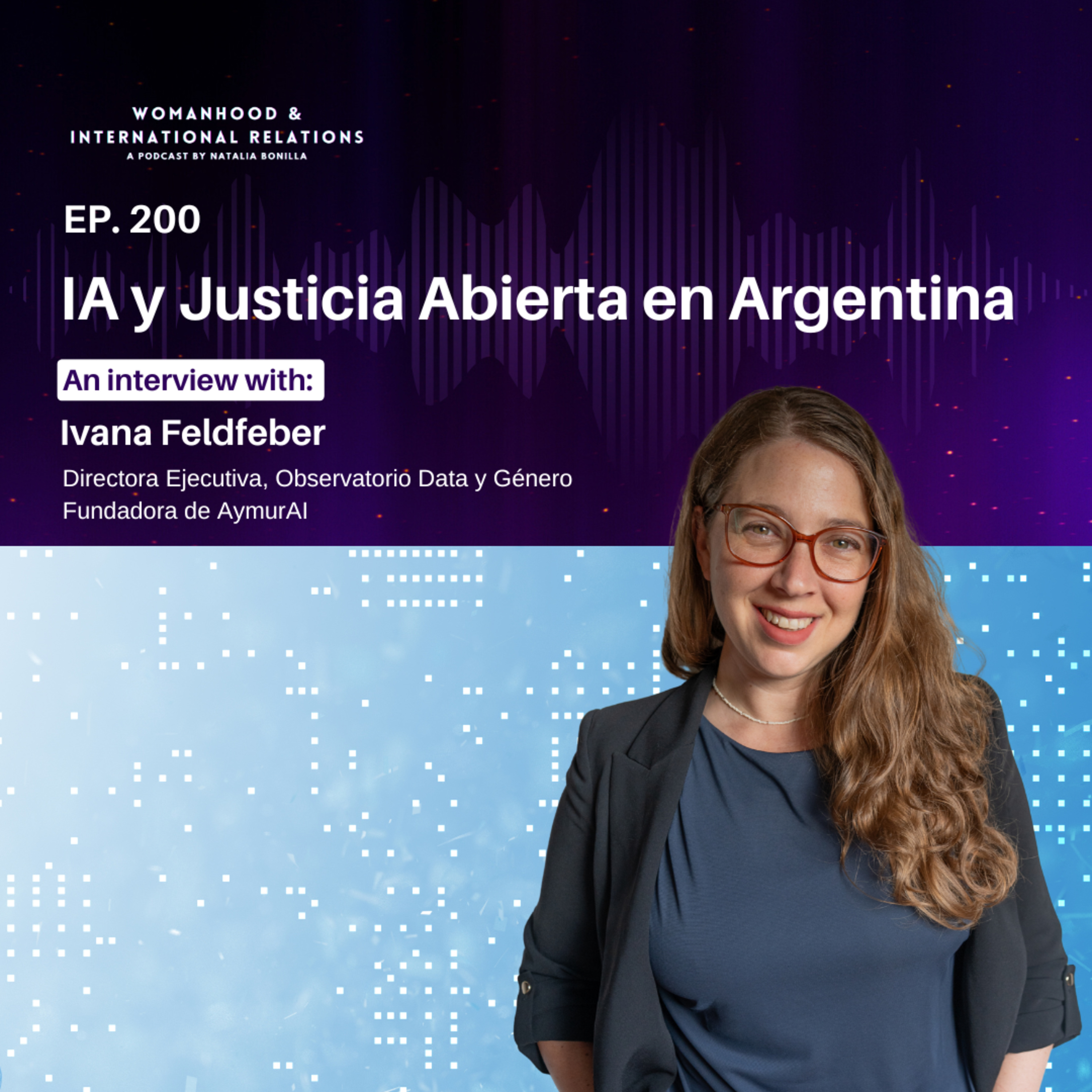 200. Ivana Feldfeber: IA y Justicia Abierta en Argentina 10.08.2025 45dkWhat challenges and opportunities does AI presents for States and Peoples? How can the data from our online and offline lives be coded and used to support or threaten our livelihoods? What are feminist perspectives to the responsible uses of AI? What social phenomenons caused the heavy reliance on AI and what can we expect or prepare for in the future?A new interview conducted in the Spanish language with Ivana Feldfeber, executive director of Observatorio Data Género and founder of the open justice software AymurAI.Listen to related episodes: 190. Dr. William T. Armaline on The Crisis of Human Rights in the Age of Global Capitalism196. Rebecca Irby on Rethinking Nuclear Deterrence & Youth Action for PeaceRecommended links to this episode:Observatorio Data GéneroAymurAI SoftwareDoing the Feminist Work in AI: Reflections from an AI Project in Latin America Perspectivas Feministas de la Inteligencia Artificial¿La IA es realmente neutral? Una charla sobre poder, género y regulación en América LatinaWebinar “Justicia abierta: un enfoque desde los datos y la Transparencia” a cargo de Ivana Feldfeber
 -
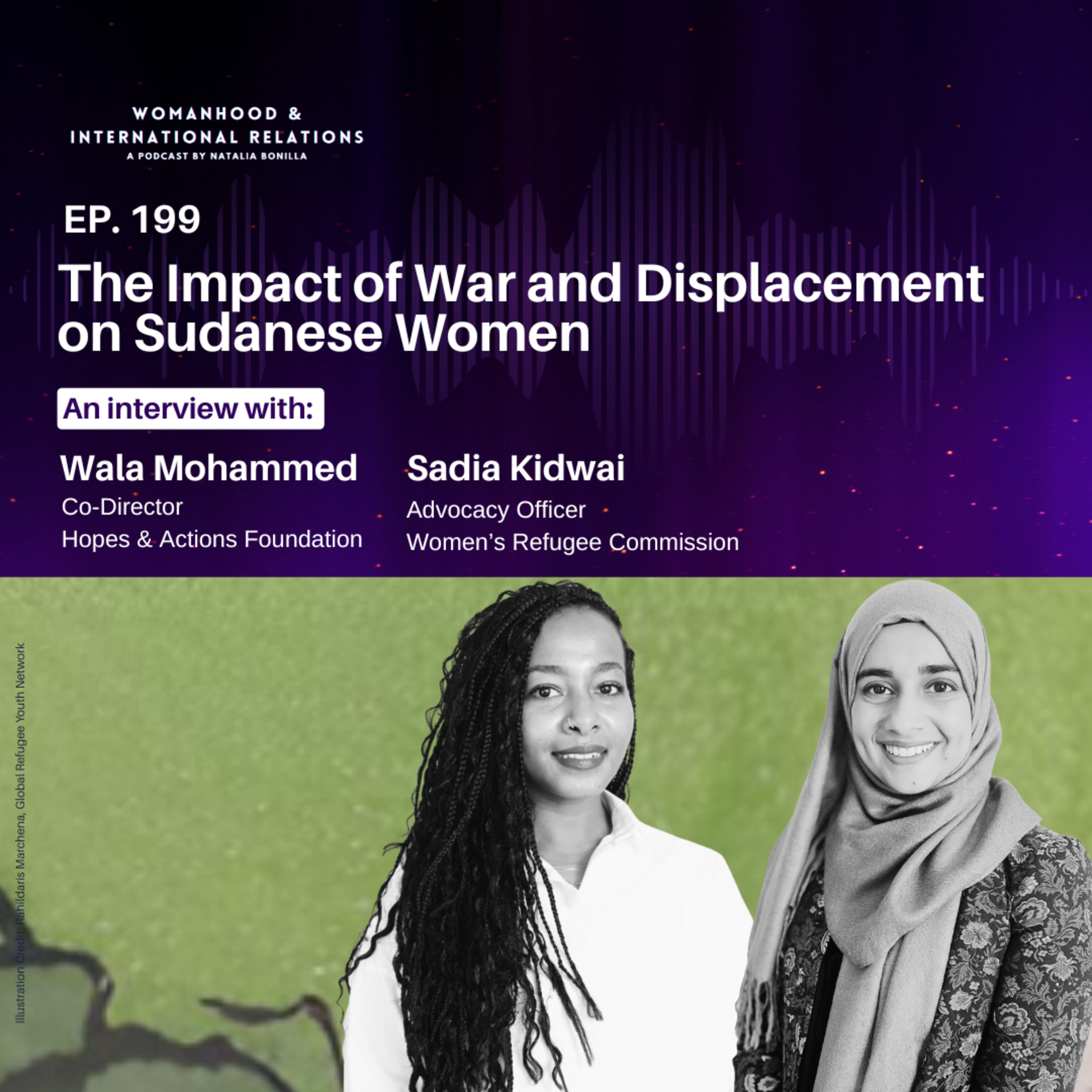 199. Wala Mohammed and Sadia Kidwai on The Impact of War and Displacement on Young Sudanese Women 31.07.2025 51dkHow the significant loss of caregivers, education and financial opportunities alongside the trauma related to war, displacement and pre-existing health conditions has affected many young Sudanese women?In this interview with Wala Mohammed, co-director of Hopes & Actions Foundation and Sadia Kidwai, Advocacy Officer at Women’s Refugee Commission, we examined both the shared and distinct experiences of young Sudanese refugees and displaced women across Egypt, Chad, West Kordofan, and Uganda. Join us in this exploration, follow us on LinkedIn, subscribe to our Substack and subscribe to our podcast newsletter community here.Listen to related episodes: 190. Dr. William T. Armaline on The Crisis of Human Rights in the Age of Global Capitalism193. Devon Cone on USAID Funding Freeze: A Worldwide Setback for Refugee Women194. Melanie Nezer on The Impact of U.S. Immigration Orders on Displaced Women and GirlsRecommended links to this episode:Futures on Hold: How War and Displacement Are Impacting Young Sudanese Women (report)In Her Own Words: Voices of Sudan (report)Overburdened and Under Siege: Women in Sudan's War (webinar)Hate Speech in Sudan: A Driver of Conflict and DisplacementHopes & Actions Foundation Website: https://hopesandactions.org/LinkedIn: https://sd.linkedin.com/company/hopes-actions-foundationInstagram: https://www.instagram.com/hopes.and.actions.foundation/?hl=enWomen’s Refugee Commission Website: https://www.womensrefugeecommission.orgLinkedIn: www.linkedin.com/company/wrcommissionFacebook: https://www.facebook.com/wrcommission/Instagram:https://www.instagram.com/womensrefugeecommission/Threads: https://www.threads.com/@womensrefugeecommissionBlueSky: https://bsky.app/profile/wrcommission.bsky.social
 -
 198. The Human-Matrix Web 20.06.2025 49dkHow Are Media, AI and Technologies Altering Human Relations and World Affairs Today? How has our increasing exposure, consumption and engagement with international news throughout the decades changed our perception of ourselves, our relations with others and the current and future state of the world? Is the hyper-mediatization of Politics and International Relations, in this new era of global digital algorithms, new weapons and AI machine learning, fragmenting human connection and eroding Individuals and States’ sense of power and quest for peace and justice?Beyond the perils of manufacturing of consent for conflict and wars and the weaponization of information, are humans (even those in political and economic power positions) willingly becoming utilitarian and transactional versions of themselves to survive the violence in the online and offline world? Is the world today reflecting back to us a Human-Matrix divide?Join us in this exploration, follow us on LinkedIn and subscribe to our podcast newsletter community here. If you want to support our independent work and learn more in community, subscribe to our podcast’s Substack today.Listen to recommended interviews: 26. Kimberly Loh on Compassionate Conversations36. Dr. Roudabeh Kishi on Mapping Political Violence86. Chloé Meulewaeter on Global Military Spending & Demilitarization Efforts91. Dr. Paul Slovic & Dr. Scott Slovic on the Science Behind the Limits of Compassion98. Elaine Briere on How & Why Colonial Powers Want to Control Haiti143. Roundtable: Countering Militarized Masculinities for Feminist Peace 165. Rachel Winny on the Rise of Disinformation & Conflict Escalation180. Dr. L. Ayu Saraswati on Pain, Power and Transnational Feminism190. Dr. William T. Armaline on The Crisis of Human Rights in the Age of Global Capitalism192. Nicole Steward on Radical Self-Care for ChangemakersOther related podcast explorations and film/series reviews: 76. War Journalism's Effect on Us102. The Matrix Trilogy - What Can We Learn From It?130. How to Become a Tyrant: A Gender Lens Doc Review164. The Diplomat: When Does Soft Power Cave In?174.Social Media Warfare Effects On Us182. Our Brand is Crisis - Film ReviewRecommended links for this episode:ACLED Conflict Watchlist 2025ICRC in 2024: Upholding humanity in conflictThe African Spatial Conflict Life Cycle The Arithmetic of Compassion ProjectNumbers and Nerves: Information, Emotion, and Meaning in a World of DataCenter for Information Resilience Pain Generation: Social Media, Feminist Activism, and the Neoliberal SelfieHuman Rights Praxis and the Struggle for SurvivalRadical Self-Care for Helpers, Healers, and ChangemakersCompassionate Conversations: How to Speak and Listen from the Heart
 -
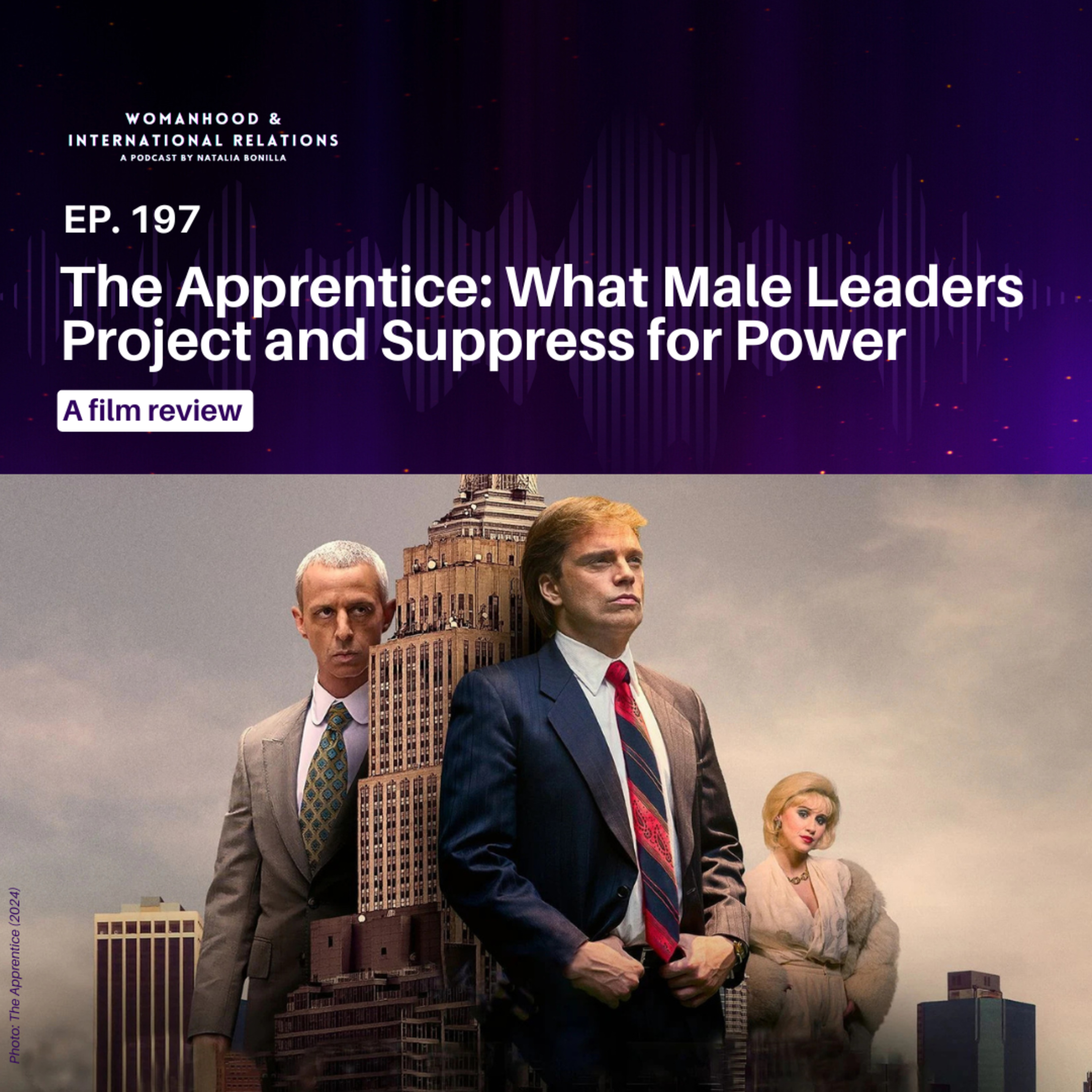 197. The Apprentice: What Male Leaders Project and Suppress for Power 01.05.2025 54dkHow do masculine understandings of power shape the public personas of male leaders? How do they cultivate masculine energy traits, repressing feminine energy expressions internally but seeking them externally in the forms of bodies, territories, nations or States? How nuanced are the concepts of “strength” and “weakness” in human relations, particularly in leadership and decision-making within domestic and foreign affairs?A gender lens film review of The Apprentice (2024). Join us in this exploration, follow us on LinkedIn and subscribe to our podcast newsletter community here.Listen to related episodes:23. Hegemonic Masculinity and Hegemonic Femininity in World Politics44. Denormalizing the Concept of "Statesmen": A First Look into Masculinities in IR71. The Masculine/Feminine National Cultures Index142. Psychology in International Relations150. Healing Our Inner/Outer Masculine & Feminine Imbalances166. Hypermasculinity & Hyperfemininity on States
 -
 196. Rebecca Irby on Rethinking Nuclear Deterrence & Youth Action for Peace 24.04.2025 1saIs nuclear deterrence an outdated policy? And if so, what’s holding us back from transitioning to a nuclear ban once and for all? What are the racial and gendered dimensions of nuclear weapons production and nuclear waste storage? How do these policies impact marginalized communities, both domestically and abroad? What role can youth action play in shifting nuclear politics and advocating for lasting peace at local and UN levels?In this interview with Rebecca Irby, founder of P.E.A.C. Institute and organizer of the upcoming 24-Hour Global Pause for Peace to be held on October 4, 2025, we dive into the complex world of nuclear politics, exploring what we know and what we don’t.From the impact of nuclear weapons testing and waste storage on marginalized communities to the rising threats and calls for nuclear deterrence, we touch on the underplayed significance of the UN treaty to ban nuclear weapons, the evolving divestment movement in the nuclear field, and the looming collapse of the industry as only a few political leaders continue to support nuclear armament.We also address how we can engage youth in these critical conversations, emphasizing the importance of including their voices in decision-making processes and the need of peace education programs in supporting the next generations to shape the future of International Relations and, hopefully, build a more peaceful world.Join us in this exploration, follow us on LinkedIn and subscribe to our podcast newsletter community here.Recommended links to this episode:Treaty on the Prohibition of Nuclear WeaponsOppenheimer: what you need to know before watchingRacism and nuclear weaponsThe Ultimate Coloniser: Challenging Racism and White Supremacy in Nuclear Weapons Policy MakingThey didn't know their backyard creek carried nuclear waste. Now, they're dying of cancer.
 -
 195. Dr. Nourhan Bassam on Feminist Urbanism: Shaping the Cities of the Future 28.03.2025 43dkHow are modern cities creating hostile and exclusionary urban spaces? Who has the right to access and fully participate in cities?In this interview with Dr. Nourhan Bassam, feminist urbanist, architect, author and founder of The Gendered City, we explored how urban spaces reflect societal and gender norms, often reinforcing power imbalances and marginalizing individuals from diverse gender, racial, economic, and religious backgrounds.We discussed how outdated urban planning designs confine individuals to specific gender roles and behaviors, limiting their access to—and safe, meaningful participation in—city environments.We also reflected on current efforts by modern cities to address gender-based violence and power inequalities in areas like mobility, transportation, housing, and employment (including unpaid care labor). Additionally, we considered how feminist perspectives on urbanism are shaping what non-sexist cities could look like, both today and in the future.Join us in this exploration, follow us on LinkedIn and subscribe to our podcast newsletter community here.Recommended links to this episode:The Gendered City Official Website The Gendered City bookFem.DES NetworkFeminist PlacemakingWomen After Dark SeriesFem Green
 -
 194. Melanie Nezer on The Impact of U.S. Immigration Orders on Displaced Women and Girls 20.03.2025 47dkHow outdated are U.S. immigration laws? What are the long-term, intended and unintended consequences of Trump Administration new executive orders such as the repeal of the Ending Sensitive Zones Policy, the suspension of the U.S. Refugee Admissions Program, the USAID Funding Freeze, and the reinstatement of the Global Gag Rule? Are anti-immigration discourses genuinely focused on 'protecting' women, both domestically and abroad, or are they driven by other underlying goals and agendas?In this interview with Melanie Nezer, Vice President of Advocacy and External Relations at Women’s Refugee Commission, we explored how recent executive actions fail to protect vulnerable groups, including women, children, and victims of different forms of violence, drug trafficking, and human trafficking who are seeking asylum and safety in the U.S.We also examined the critical link between rising U.S. and global military spending and the violent conflicts that are driving populations to flee their home countries in search of protection abroad.Join us in this exploration, follow us on LinkedIn and subscribe to our podcast newsletter community here.Listen to related episodes: 86. Chloé Meulewaeter on Global Military Spending & Demilitarization Efforts95. Jose R. Rivera-Gonzalez on US Withdrawal of Afghanistan190. Dr. William T. Armaline on The Crisis of Human Rights in the Age of Global Capitalism193. Devon Cone on USAID Funding Freeze: A Worldwide Setback for Refugee WomenRecommended links to this episode:Women’s Refugee Commission Official WebsiteWRC Crisis Response ProgramsIn Name Only: The False Allure of Anti-Immigration Policies That Claim to Protect Women from HarmThe Global Gag Rule Endangers Refugee Women’s LivesWomen’s Refugee Commission’s Statement on the Laken Riley ActElimination of “Sensitive Zones” Will Create Fear, Cause Harm to Immigrant Women and Kids Seeking Safety From Domestic Abuse
 -
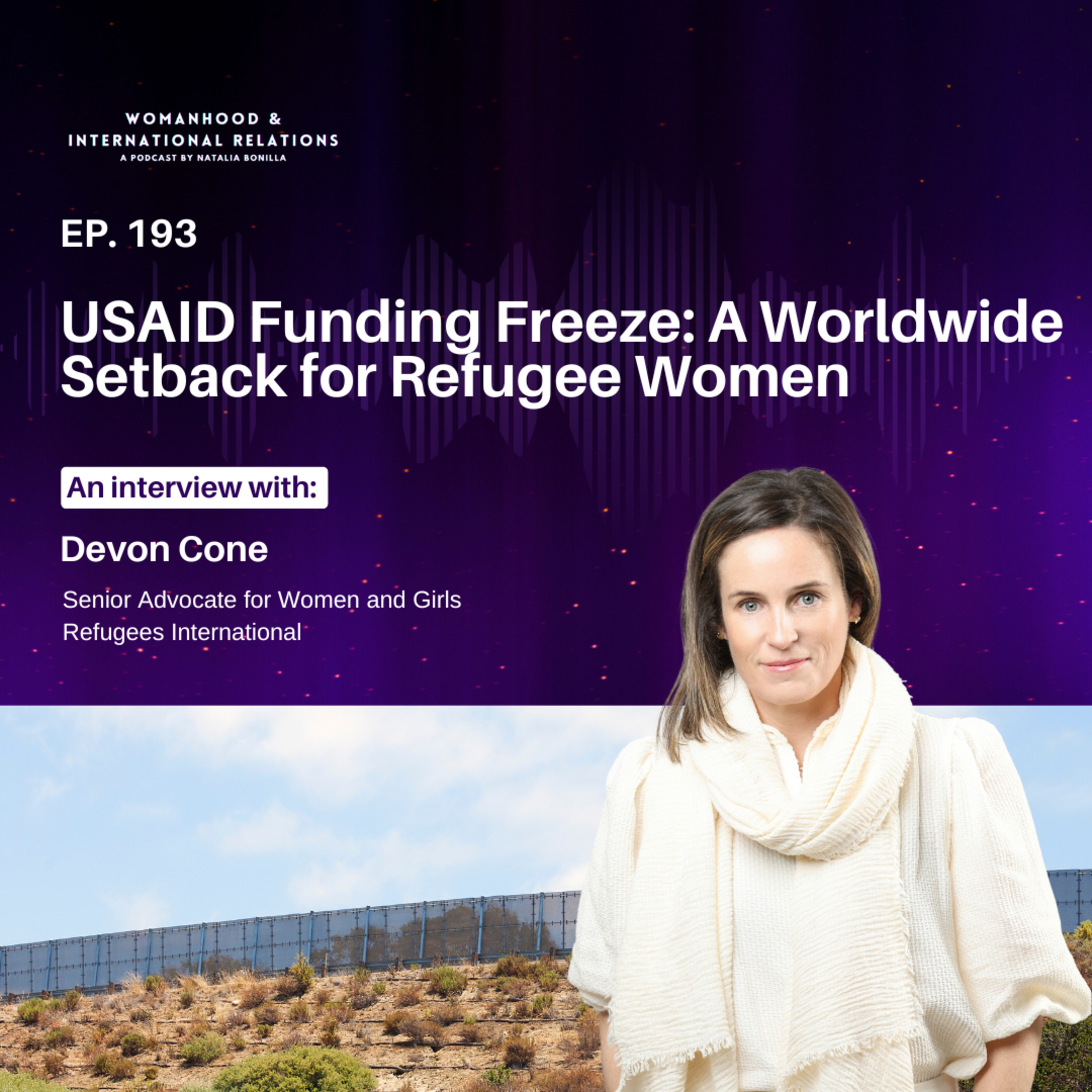 193. Devon Cone on USAID Funding Freeze: A Worldwide Setback for Refugee Women 13.03.2025 56dkWhat are the long-term, intended and unintended consequences of the USAID funding freeze? How the suspension of the U.S. Refugee Admissions Program, the reinstatement of the Global Gag Rule, and other executive orders from the new Trump Administration related to the US-Mexico border and the End of the Sensitive Zones Policy will impact the rights, safety, and lives of refugee women and girls in the U.S. and worldwide? In this interview with Devon Cone, Senior Advocate for Women and Girls at Refugees International, we explored the factors behind the growing disinterest in the protection of migrants' human rights and we examined how these measures will disproportionately affect women and girls fleeing violent conflict in Afghanistan, Sudan, the Democratic Republic of Congo, Mexico, and countries in the Northern Triangle of Central America. Join us in this exploration and subscribe to our podcast newsletter community here.Listen to related episodes: 91. Dr. Paul Slovic & Dr. Scott Slovic on the Science Behind the Limits of Compassion112. Devon Cone on COVID-19 Impact on Migration & Humanitarian Crises179. Marta Saiz on Human Rights Journalism & Foreign Affairs190. Dr. William T. Armaline on The Crisis of Human Rights in the Age of Global CapitalismRecommended links to this episode:Refugees International Official WebsiteWhat Do President Trump’s Week One Actions Mean for Refugees International’s Global Advocacy?No Model of Refuge: Sudanese Refugees in EgyptThe Nuba Mountains: A Window into the Sudan CrisisGaza Dispatches: Hunger and Siege“They Left Us Without Any Support”: Afghans in Pakistan Waiting for SolutionsIn Apparent Quid Pro Quo Deal, Panama and Costa Rica Facilitating U.S.-Sponsored Human Rights Violations of Asylum Seekers Tell Your Member of Congress: Save USAID, Save Lives
 -
 192. Nicole Steward on Radical Self-Care for Changemakers 05.03.2025 1sa 6dkWhat is the health impact of the work we do in International Relations and Humanitarian Settings?In this interview with Nicole Steward, MSW and author of the new book Radical Self-Care, we delved into how shock doctrines, global conflicts, media narratives, and disaster relief efforts impact not only everyday people but also those on the frontlines—doctors, crisis responders, soldiers, diplomats, peacemakers, activists, journalists, and political leaders.We explored how racial, economic and social systems, along with work environments, thrive on people working in survival mode and how conditions like vicarious trauma, moral injury, burnout, compassion fatigue, ptsd and depression affect the health and decision-making of those of us driving change.We uncovered simple yet powerful approaches to radical self-care and liberation pedagogies, aimed at fostering both personal and collective healing as well as systemic transformation.Nicole is a social worker with more than two decades working in foster youth services, rape crisis, juvenile justice, and in education as a behavior intervention specialist, and foster youth/homeless youth liaison. She is a certified yoga instructor and author of the new book Radical Self-Care for helpers, healers and changemakers. Join us in this exploration and subscribe to our podcast newsletter community here.Listen to related episodes: Ep. 24 Kimberly Loh on Compassionate ConversationsEp. 91 Dr. Paul Slovic & Dr. Scott Slovic on the Science Behind the Limits of CompassionEp. 142 Psychology in International RelationsEp. 169 Jeff Hardy on The Care for Peace and Our Second Human EvolutionEp. 180 Dr. L. Ayu Saraswati on Pain, Power and Transnational FeminismRecommended links to this episode:Nicole Steward WebsiteRadical Self-Care for Helpers, Healers, and Changemakers
 -
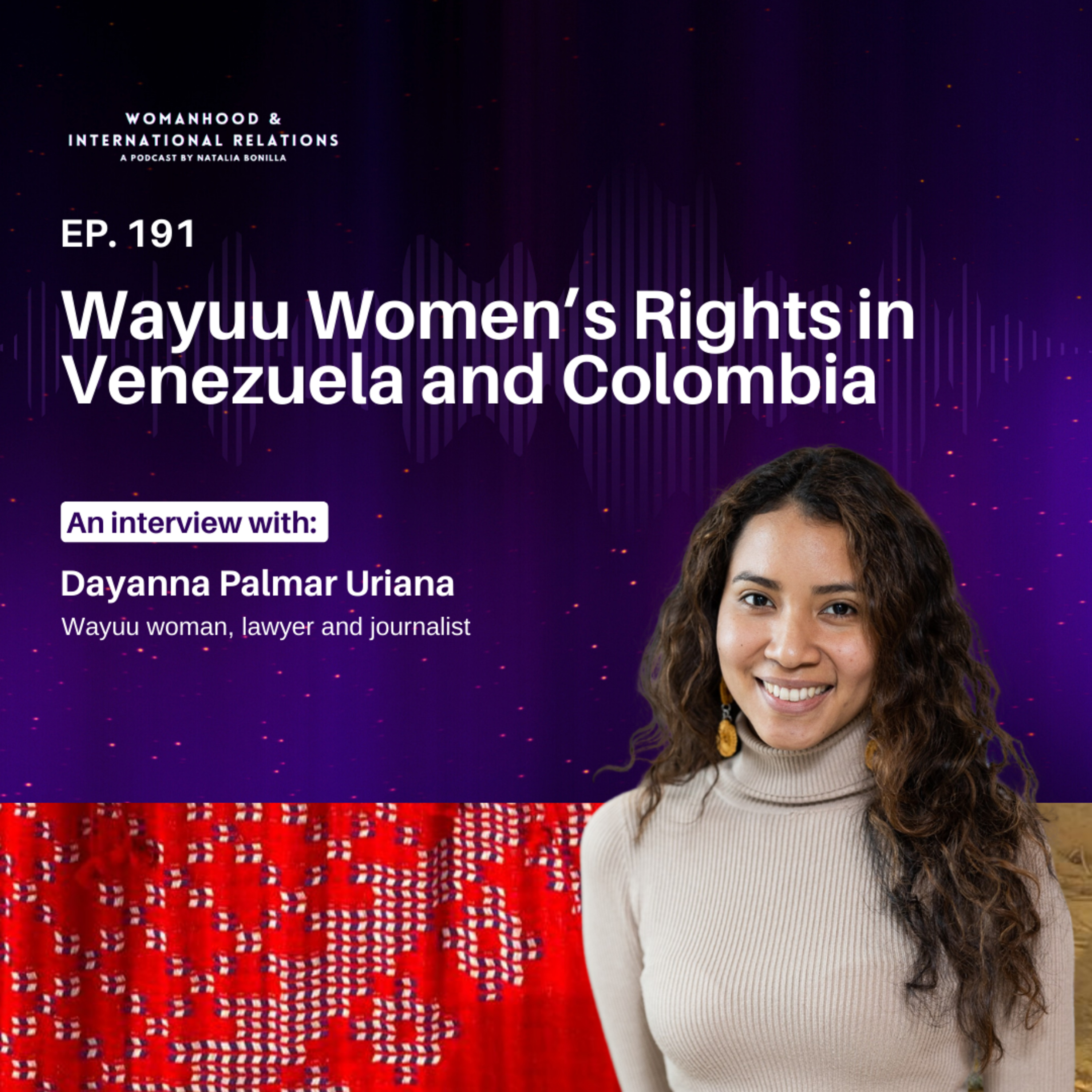 191. Dayanna Palmar Uriana on Wayuu Women's Rights in Venezuela and Colombia 13.02.2025 1saHow do colonial, state, gender-based, and spiritual forms of violence impact the rights of Wayuu women in La Guajira? How do the governments of Venezuela and Colombia differ or align in their recognition and protection of the Wayuu indigenous population's rights and cosmovisions?An interview with Dayanna Palmar Uriana, Wayuu woman, lawyer, journalist and Non-Residential Fellow of the Violence, Inequality and Power Lab of the Joan B. Kroc Institute for Peace and Justice.Join us in this exploration andsubscribe to our podcast newsletter community here.Listen to related episodes: Ep. 131 Annette Perez on Anti-Racism & 2022 Presidential Elections in ColombiaEp. 149 Kirthi Jayakumar on Anticolonialism in International RelationsEp. 151 Dr. Luke Moffett on Reparations in Post-Conflict SocietiesEp. 180 Dr. L. Ayu Saraswati on Pain, Power and Transnational FeminismRecommended links to this episode:Dayanna Palmar Uriana LinkedInDiscrimination Against Wayuu Women as a System of Collective Violence Against the Wayuu Indigenous People in Venezuela and Colombia by Dayanna Palmar UrianaLa Discriminación hacia la Mujer Wayuu como Sistema de Violencia Colectiva en el Pueblo Wayuu en Venezuela y ColombiaLa encrucijada wayuu: respeto a los derechos frente a energías limpiasCrónica: el gota a gota que viola los derechos del pueblo wayuuLocal stories of justice and reparation in the face of extractivism in Latin AmericaEl Estado y La GuajiraNotiWayuu
 -
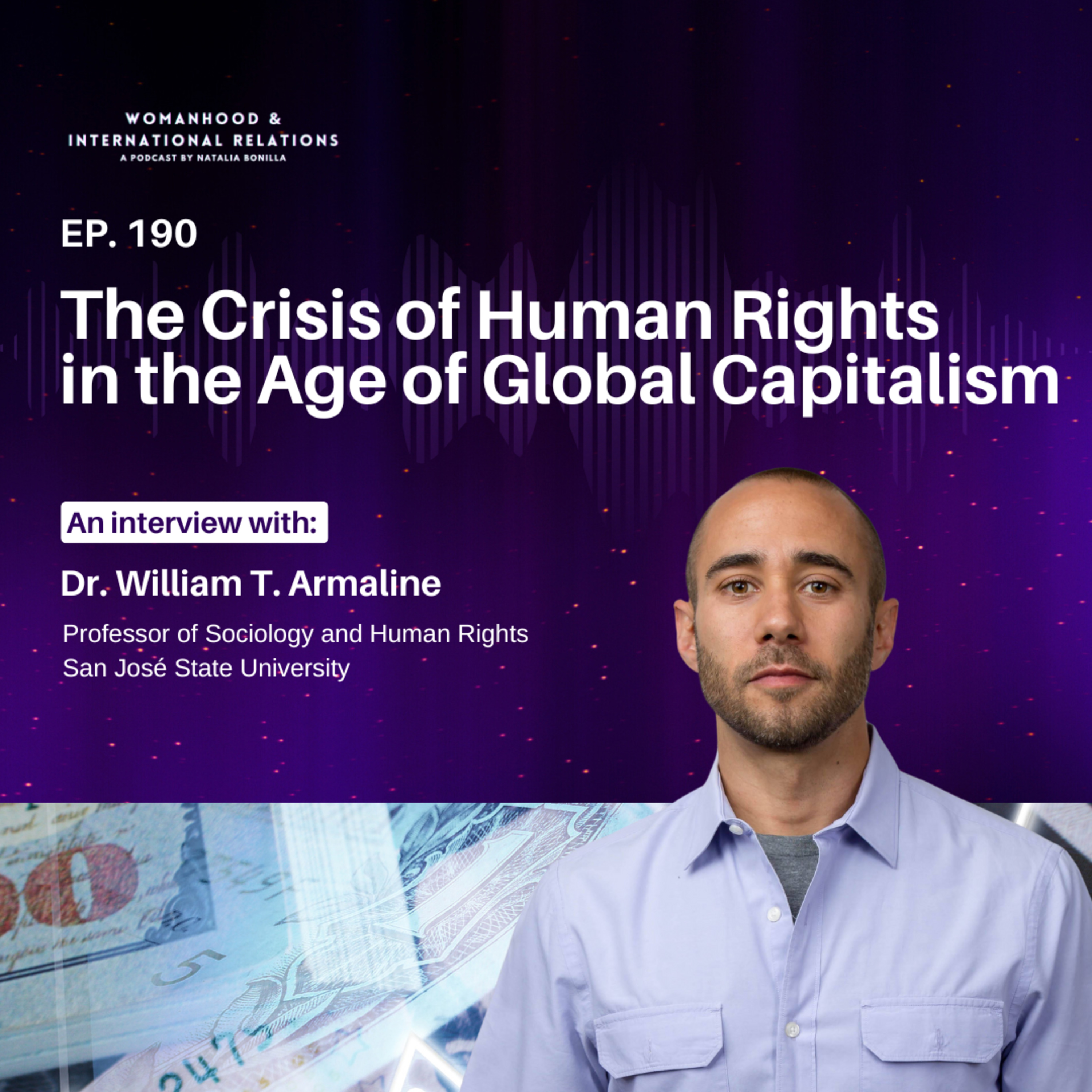 190. Dr. William T. Armaline on The Crisis of Human Rights in the Age of Global Capitalism 05.02.2025 1sa 23dkHow global capitalism intersects with inter-state relations? How are forces of private equity and transnational capital shaping the domestic and foreign policies that governments design to fulfill capital accumulation and geopolitical interests - often at the expense of human and environmental rights and dignity? An interview with Dr. William T. Armaline, Professor of Sociology and Human Rights at the San José State University and co-author of the new book Human Rights Praxis and the Struggle for Survival with Davita Silfen Glasberg. Join us in this exploration and subscribe to our podcast newsletter community here. Listen to related episodes: Ep. 36 Dr. Roudabeh Kishi on Mapping Political Violence Ep. 86 Chloé Meulewaeter on Global Military Spending & Demilitarization Efforts Ep. 91 Dr. Paul Slovic & Dr. Scott Slovic on the Science Behind the Limits of Compassion Ep. 151 Dr. Luke Moffett on Reparations in Post-Conflict Societies Ep. 180 Dr. L. Ayu Saraswati on Pain, Power and Transnational Feminism Recommended links to this episode: Dr. William T. Armaline SJSU Profile Human Rights Praxis and the Struggle for Survival by William T. Armaline and Davita Silfen Glasberg What Will States Really Do For Us? The Human Rights Enterprise and Pressure from Below by William T. Armaline and Davita Silfen Glasberg Cannibal Capitalism:How our System is Devouring Democracy, Care, and the Planet – and What We Can Do About It, by Nancy Fraser Can Global Capitalism Endure?, William I. Robinson
 -
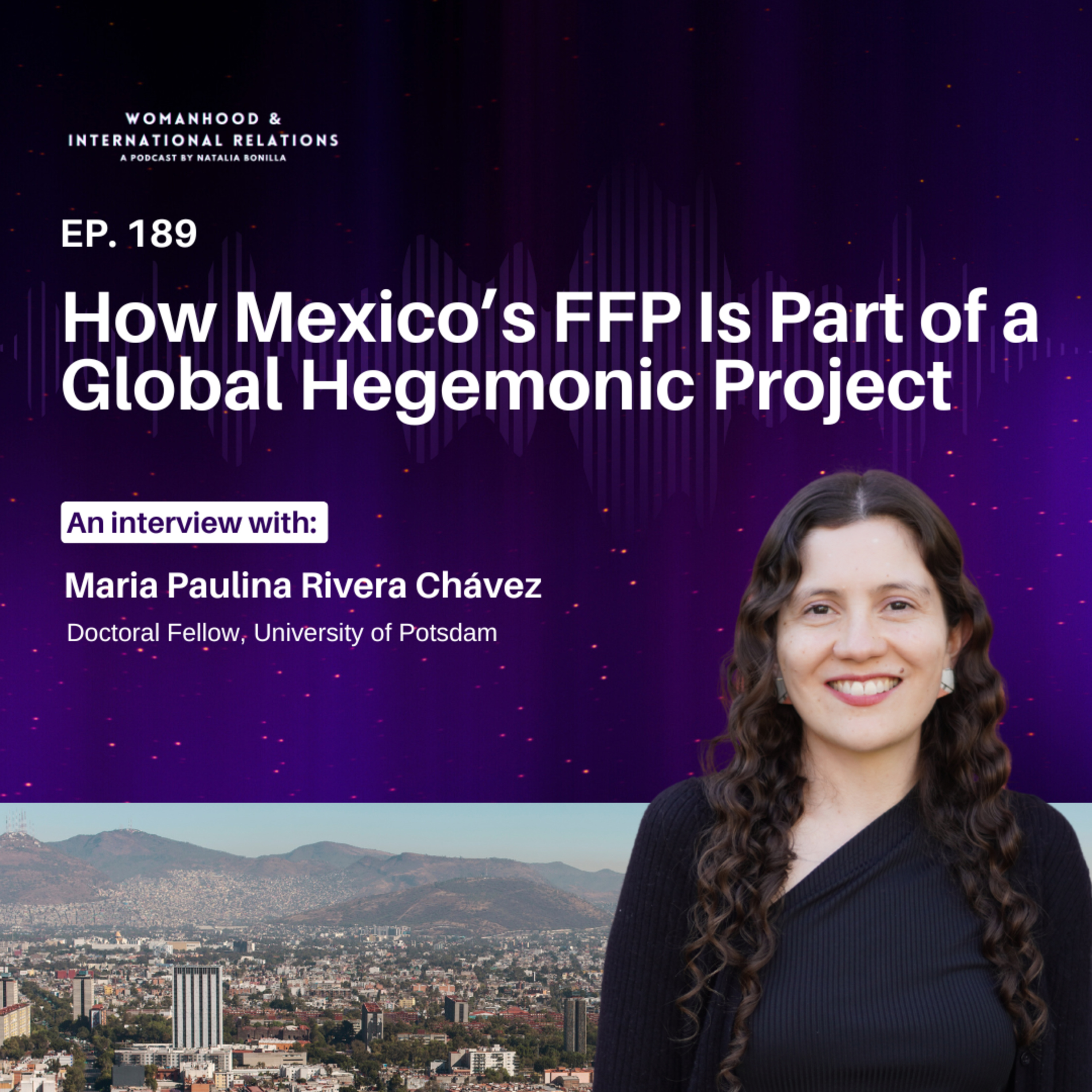 189. María Paulina Rivera Chávez on How Mexico's FFP is Part of a Global Project 29.01.2025 59dkAre Feminist Foreign Policy models building a Global Project? Is it based on a universal “feminist idealism” or a “Western” view of “modernization” to end systemic unequal power and oppressions? How is Mexico's FFP playing a part on this Global Hegemonic Project? What racial, care and (de)colonial power dynamics are influencing FFP’s models creation and implementation in the Latin America region? An interview with María Paulina Rivera Chávez, doctoral fellow at the University of Potsdam. Listen to related episodes: Ep. 9 Marissa Conway on How Feminist Foreign Policies is Transforming World Affairs Ep. 47 Isabella Esquivel Ventura on Mexico's FFP Ep. 130 Alice Ridge and Liz Gill-Atkinson on FFP Research in Australia and the Global South Ep. 159 Helena Monzón Pérez on 'Ley Monzón' & Prosecuting Femicides in Mexico Recommended links to this episode: María Paulina Rivera Chávez - Doctoral Fellow Profile Feminist Foreign Policy: Coloniality in new clothes? Seeing through Alterity/Otherness. A Conceptual Approximation from a Postcolonial to a Decolonial Feminist Foreign Policy 🌟Join our podcast newsletter community here.
 -
 188. 2024 SDG Gender Index: Review 15.01.2025 51dkWill the world be less equal in 2030 than in 2015? How are international financial flows, government debt burdens, austerity measures and colonial legacies affecting the achievement or backsliding of Gender Equality laws, policies, social and cultural norms? Is money the big "silent" player in the advancement of SDG5? If so, why? Is Gender Equality a goal that can *only* make sense through economic lenses? How are current data sets and data gaps helping paint a picture of the progress or decline of Gender Equality worldwide? A review and commentary on the latest report 2024 SDG Gender Index by Equal Measures 2030. Join us in this exploration, subscribe to the podcast on Spotify and follow us on LinkedIn and Twitter @womanhood _ ir. Recommended links: EqualMeasures 2030: 2024 SDG Gender Index Full Report UN SDG5 Targets and Indicators OECD Gender Equality Ringing the alarm bell? What recent ODA trends indicate for gender equality The two major donor countries facing billions in aid cuts Data2X A Sharp Decline in Funding for Gender Data Puts SDG 5 at Risk: Charting a Way Forward Financing for Gender Equality in the Context of the Sustainable Development Goals Gender bonds: A promising solution to accelerate SDG5 Symposium in China discusses how to increase investment in women The gendered costs of austerity: The IMF, Gender Equality and Expenditure Policy From Rhetoric to Action: Empowering Women Through Gender-Responsive Budgeting Cuts to public services in England will ‘reverse’ gender equality, unions warn Argentina Under Milei: The First 120 Days Of A Government Marked By Wide-Ranging Attacks On Women’s Rights Webinar Series: Solutions in Scarcity: Smart Financing for Gender Data Gender Financing - Publish What You Fund How the DEI backlash will impact gender equality at work
 -
187. Healing our Inner/Outer Masculine and Feminine Imbalances Part 2 19.11.2024 58dkHow are the wounded masculine and feminine shaping Domestic and Foreign Affairs? Listen to related episodes: 46. Hannah Ruth Dyson on The Deep Feminine 102. The Matrix Trilogy - What Can We Learn from It? 103. Patriarchy & The Triad of Men’s Violence 150. Healing our Inner/Outer Masculine and Feminine Imbalances 160. Jeff Hardy on The Care for Peace and the Second Human Evolution 165. Rachel Winny on the Rise of Disinformation and Conflict Escalation 166. Hypermasculinity and Hyperfemininity on States 178. The World (Dis) Order 180. Dr. L. Ayu Saraswati on Pain, Power and Transnational Feminism
-
186. Abundance in Politics & IR 19.10.2024 1sa 21dkHow do we measure an Individual, State or System has “too much” power? How are Individuals and Structures of Governance envisioning the acquisition, distribution and removal of Power(s)? If power exists in relation, are humans framing abundance of power through self and collective defeating or thriving modes? Why is an abundance of violence in Politics and IR normalized while an abundance of nonviolence, love and empathy is disregarded, if not seen, as incompatible with these fields? Is there a “fair” and “nonviolent” way to have an Abundance of Power in Politics and IR that doesn’t bring others the perception of being stripped away from their own power, that doesn’t fuel the notion of Scarcity? Let’s continue the conversation, follow us on LinkedIn and Twitter at @womanhood_ir Listen to related episodes: 185. Scarcity in Politics & IR 166. Hypermasculinity & Hyperfemininity on States 169. Jeff Hardy on The Care for Peace and Our Second Human Evolution 182. Our Brand is Crisis - Film Review Recommended reading: Allowing Light In - Substack
-
185. Scarcity in Politics & IR 25.09.2024 55dkDo we relate to power from a perspective that “Others” have it? Do we look at power as something that is scarce? When do people stop believing, feeling or acting like they have any power? When do Individuals, States or Systems accept they are…power-less? Are we scared of discovering or growing our own power for fear of being held accountable for it? Listen to related episodes: 166. Hypermasculinity & Hyperfemininity on States 169. Jeff Hardy on The Care for Peace and Our Second Human Evolution 182. Our Brand is Crisis - Film Review Join the upcoming EU-LAC Foundation Feminist Foreign Policy Model Best Practices Forum on October 1-2, 2024. Hybrid model, registration link: https://eulacfoundation.org/es/foro-politica-exterior-feminista-eu-lac-conceptos-buenas-practicas-y-lecciones-aprendidas-para
Benzer podcastler


Şurada popüler
Bu podcast şu ülkelerin podcast listelerinde de yer alıyor.

