
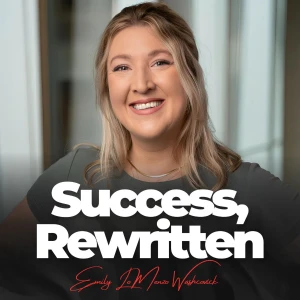
Success, Rewritten
Success, Rewritten explores the moments that change how ambitious people think about achievement, work, and the lives they are building. Hosted by Emily Washcovick, former Yelp Small Business Expert and host of Behind the Review, this show features candid conversations with founders, executives, and leaders who have faced pivotal moments that forced them to rethink what success actually means. Some left high-powered careers, some rebuilt after burnout, illness, or loss, and others discovered that the version of success they were chasing was not sustainable. In each episode, guests share the turning points that reshaped their priorities and how redefining ambition helped them build businesses and lives that work together.
Bölümler
-
 32: Solo Ep. 6: Say the Words: Breaking the Silence Around Suicide 17.09.2026 13dkEmily introduces Say the Words, a new event series beginning with a suicide symposium on September 24, 2026, in Milwaukee, Wisconsin.She shares how conversations with people who have experienced suicide loss opened her eyes to how much stigma, uncertainty, and discomfort still surround the topic, even within mental health spaces. Emily explains why bringing together practitioners, loss survivors, people with lived experience, and community members can create more open and compassionate conversations.She also explores why language matters when talking about suicide, how prevention messaging can sometimes unintentionally affect those who have lost someone, and why sharing personal stories can help others feel less alone. The episode offers a look at the purpose behind Say the Words and Emily’s hope to create space for imperfect but meaningful conversations about mental health.In this episode:Introducing the Say the Words Event SeriesWhy Suicide Is Still Difficult to Talk AboutEmily’s Personal Mental Health JourneyLearning From People Who Have Experienced Suicide LossCharlotte Maya’s Story and Sushi TuesdaysRealizing How Much Stigma Still Surrounds SuicideHow Say the Words Became a Suicide SymposiumBringing Lived Experience and Professional Perspectives TogetherCreating Space for Loss Survivors and Prevention ConversationsQPR Training, Crisis Resources, and NeurodiversityWhy Imperfect Conversations MatterWhy the Language We Use Around Suicide MattersHow Sharing Experiences Can Help Others Feel Less AloneDifferent Losses, Shared GroundWhen Prevention Messaging Can Unintentionally HurtThe Bigger Vision for Say the WordsHow Sharing Our Stories Can Reduce StigmaResources MentionedSay the Words Suicide SymposiumNAMI Southeast WisconsinCharles E. Kubly FoundationSushi Tuesdays by Charlotte MayaQPR TrainingSuccess, Rewritten keynoteFind me: Success, Rewritten | Website | Instagram Emily LoMenzo Washcovick | LinkedIn | Instagram Bipolar Brought Balance | InstagramTo go deeper on my experience with bipolar disorder, visit bipolarbroughtbalance.com
 -
31: Motherhood, Mental Health, and Ambition with Emily Guarnotta 15.09.2026 38dkDr. Emily Guarnotta is a psychologist, mom of two, and cofounder of Phoenix Health who specializes in supporting families through infertility, pregnancy, postpartum, loss, and parenthood.In this episode of Success, Rewritten, Emily opens up about experiencing postpartum depression after becoming a mother, despite being a mental health professional herself. She shares why she struggled to admit she needed help, the barriers she faced finding care, and how therapy, medication, and hearing other mothers' experiences helped her heal.Emily and Emily also discuss intrusive thoughts during postpartum, balancing motherhood with ambition, protecting time for self care, navigating the division of labor between partners, and using mindfulness to manage anxiety.Above all, Emily reminds parents that they don't have to wait until things become unbearable to reach out: it's never too early or too late to seek support.In this episode:Motherhood Didn't Take Away Emily's AmbitionMeet Dr. Emily GuarnottaExpecting Motherhood to Be an Easy TransitionWhen Postpartum Depression Started to SurfaceIntrusive Thoughts During PostpartumWhy Emily Was Afraid to Admit She Needed HelpMedication, Therapy, and Finding the Right SupportPreparing for Motherhood the Second Time AroundHow Her Experience Inspired Phoenix HealthBalancing Motherhood With AmbitionMaking Self Care NonnegotiableSharing the Mental and Physical Load With Your PartnerUsing Mindfulness and Meditation for AnxietyWhy It's Never Too Early or Too Late to Seek HelpGiving Yourself Grace as an Ambitious ParentResourcesPhoenix HealthPostpartum Support InternationalNew episodes of Success, Rewritten every Tuesday. Check out the show website for previous episode articles and more about our guests. And check out the show on YouTube: https://www.youtube.com/@SuccessRewrittenShowTo connect with Emily, email [email protected] or follow her on social: Emily's Instagram, Mental Health Advocacy profile Bipolar Brought Balance, and the show's Instagram: Success, Rewritten
-
30: Clear, Real, and Repeatable: Craig Smith on Connection, Career Pivots, and What Really Matters 08.09.2026 48dkCraig Smith is a professional speaker and live TV host who has spent more than 15 years learning what makes a message truly connect.In this episode of Success, Rewritten, Craig shares his journey from sports broadcasting to sales, QVC, and professional speaking. He opens up about chasing money, getting caught in the "golden handcuffs," and eventually realizing that enjoying his work mattered more than external validation.Craig also shares how losing his father changed his perspective on success, grief, and the impact we have on others. He explains why meaningful connection matters in both life and business and shares his simple framework for creating a message people remember: make it clear, real, and repeatable.Above all, Craig reminds us that careers and definitions of success will continue to evolve, and sometimes the most important question is simply: What matters most to you?In this episode:Why Your Message Needs to Connect FastMeet Craig SmithWhy Career Pivots Are the New NormalChasing Money and the Golden HandcuffsThe Sales Meeting That Changed Craig's Definition of SuccessHow Craig Found His Way to QVCWhy Networking and Real Connections MatterWhat Joan Rivers Taught Craig About ConnectionLosing His Father and Discovering His LegacyThe Story That Changed Craig's Perspective on SuccessNavigating Grief and Learning What Doesn't WorkHow Grief Created More Compassion for OthersHow to Create a Message That Actually ConnectsWhy Being Imperfect Makes You More RelatableCan You Explain What Your Business Does Quickly?ResourcesCraig Smith Speaks on InstagramCraig Smith on LinkedInCraig Smith Speaks websiteNew episodes of Success, Rewritten every Tuesday. Check out the show website for previous episode articles and more about our guests. And check out the show on YouTube: https://www.youtube.com/@SuccessRewrittenShowTo connect with Emily, email [email protected] or follow her on social: Emily's Instagram, Mental Health Advocacy profile Bipolar Brought Balance, and the show's Instagram: Success, Rewritten
-
29: Solo Ep. 5: Redefining Success Before You Reach a Breaking Point 03.09.2026 13dkEmily reflects on her experience speaking at the 2026 Pool Nation Women Summit and shares some of the most important lessons from her Success, Rewritten keynote.Emily looks back at the early years of her career when being constantly busy, needed, and productive felt like proof that she was successful. Behind that success, however, she was slowly burning herself out. She shares how a manic episode and hospitalization at 28 forced her to reconsider her relationship with work, boundaries, mental health, and her own identity.She also explains why no one else can manage your output for you, why protecting time at the beginning and end of your day matters, and how having boundaries gives you a structure to return to when life gets off track.The episode is a reminder that you do not need to wait for a diagnosis or breaking point to make a change. Sustainable success means learning when to step away, reset, protect your energy, and create a definition of success that can support you for the long haul.In this episode:When Physical Symptoms May Actually Be Stress and AnxietyReflecting on the Pool Nation Women SummitThe Power of Being in a Supportive Room of WomenThe Story Behind Emily's Success Rewritten KeynoteHow Boundaries Help Emily Maintain BalanceWhen Career Success Was Actually BurnoutHow Work Became Part of Emily's IdentityWhen Mania Looked Like ProductivityWhy No One Else Is Going to Manage Your OutputRedefining Success After a Mental Health CrisisWhy You Shouldn't Wait for a Breaking Point to RestBuilding a Structure You Can Return ToProtecting the Beginning and End of Your DayLearning to Cancel or Reschedule Without SpiralingYou Don't Need a Diagnosis to Set Better BoundariesThe Personal Impact of the Pool Nation Women SummitBringing the Success Rewritten Keynote to More AudiencesWhy Human Connection Cannot Be ReplacedLearning From Other People's Stories and Pivot PointsResources MentionedPool Nation Women SummitSuccess, Rewritten keynoteFind me: Success, Rewritten | Website | Instagram Emily LoMenzo Washcovick | LinkedIn | Instagram Bipolar Brought Balance | InstagramTo go deeper on my experience with bipolar disorder, visit bipolarbroughtbalance.com
-
28: Recovery Is Worth It: Jordan Kernen on Eating Disorders, Mental Health, and Asking for Help 01.09.2026 45dkJordan Kernen is a teacher and mental health advocate who knows firsthand how difficult it can be to recognize when you need help, and how powerful life can become when you finally accept it.In this episode of Success, Rewritten, Jordan shares her experience with anxiety, depression, OCD, and anorexia, tracing her mental health journey back to college when two traumatic events left her searching for something she could control. Food and exercise became that outlet, eventually developing into an eating disorder that she initially struggled to recognize as a problem.Jordan opens up about reaching a life threatening point in her eating disorder, entering inpatient and residential treatment at Rogers Behavioral Health, and discovering through treatment that she wasn't alone. She and Emily discuss exposure therapy, challenging disordered thoughts, finding the gray area between black and white thinking, and why recovery doesn't necessarily mean never struggling again.The conversation also explores Jordan's work as a teacher and how her own recovery shapes the way she talks to children about food, bodies, emotions, and mental health. Jordan explains why adults need to be mindful of the messages children absorb around dieting, calories, body image, and emotional expression, and why creating spaces where kids can safely be themselves matters.Above all, Jordan shares the message she wishes she had heard sooner: asking for help can be terrifying, but once you realize you have people in your corner, recovery becomes possible.In this episode:Why Jordan Wishes She Had Asked for Help SoonerMeet Jordan KernenWhen Anxiety and Mental Health Struggles First AppearedRecognizing That Something Wasn't RightHow Trauma Led to Controlling Food and ExerciseWhen "Healthy" Behaviors Become Warning SignsDisordered Eating vs. Eating DisordersRed Flags That Someone You Love May Be StrugglingFinding Mental Health Support in CollegeBeing Diagnosed With Anorexia, Anxiety, Depression, and OCDThe Two Year Struggle Before Entering TreatmentThe Medical Crisis That Changed EverythingEntering Inpatient and Residential TreatmentRealizing She Wasn't Alone at RogersChallenging Anxious Thoughts and Choosing the Opposite ActionWhat Eating Disorder Recovery Actually Looks LikeCreating Food and Body Positivity in the ClassroomWhy Comments About Bodies Can Be TriggeringWhy Eight and Nine Year Olds Are Already Talking About CaloriesHow Adults' Relationships With Food Influence ChildrenWhy Asking for Help Makes Recovery PossibleTeaching Kids That It's Okay to Feel Their EmotionsResources for Eating Disorder SupportYou Are Not Alone and Recovery Is Worth ItResourcesRogers Behavioral HealthNational Eating Disorders Association, NEDANEDA WalksJordan Kernen on InstagramNew episodes of Success, Rewritten every Tuesday. Check out the show website for previous episode articles and more about our guests. And check out the show on YouTube: https://www.youtube.com/@SuccessRewrittenShowTo connect with Emily, email [email protected] or follow her on social: Emily's Instagram, Mental Health Advocacy profile Bipolar Brought Balance, and the show's Instagram: Success, Rewritten
-
27: Finding Your People: Christine Burns on Childfree Life and Community 25.08.2026 1sa 2dkChristine Burns spent more than two decades building a corporate career before a layoff forced her to confront a difficult question: who was she without the job title, salary, and professional identity that had defined so much of her life?In this episode of Success, Rewritten, Christine shares how panic attacks, career pivots, money scarcity, and eventually losing her corporate role pushed her to rethink what success was supposed to look like. She opens up about moving from accounting and consulting into HR, becoming an entrepreneur, and learning why clarity about what you offer matters when building a business.Christine also shares the story behind Lady No Kids, the community she is building for women without children, whether by choice, chance, or circumstance. She and Emily discuss friendship, identity, finding community as other people's lives shift toward parenthood, and why women without children deserve spaces centered on connection, opportunity, learning, and celebration rather than judgment or division.The conversation closes with an honest look at burnout, therapy, hyper-independence, and learning to ask for help instead of carrying everything alone.In this episode:Meet Christine BurnsBuilding Lady No KidsFollowing the Traditional Corporate Success PathWhen Anxiety Became a Wake-Up CallFrom Accounting to HR and LeadershipThe Layoff That Changed Her IdentityStarting Over as an EntrepreneurUnrealistic Timelines and Money ScarcityWhy Entrepreneurs Need a Clear PositionValidating the Idea for Lady No KidsMoving to Toronto, Sailing, and Finding CommunityCreating a Community Without Being Anti-Mom or Anti-KidHow Motherhood Changed Her FriendshipsBurnout, Mental Health, and Asking for HelpWhat's Next for Lady No KidsConnect with ChristineLady No KidsLady No Kids NewsletterLady No Kids on InstagramChristine Burns on LinkedInNew episodes of Success, Rewritten every Tuesday. Check out the show website for previous episode articles and more about our guests. And check out the show on YouTube: https://www.youtube.com/@SuccessRewrittenShowTo connect with Emily, email [email protected] or follow her on social: Emily's Instagram, Mental Health Advocacy profile Bipolar Brought Balance, and the show's Instagram: Success, Rewritten
-
26: Betting on Yourself: How Ali Schwartz Left Corporate for Music 18.08.2026 59dkAli Schwartz spent years building a successful corporate career while treating singing, songwriting, and dance as a side passion. Eventually, she realized the creative work she was doing outside her day job was what truly energized her.In this episode of Success, Rewritten, Ali shares how she went from working at Yelp and Fortune Media to pursuing music full time. She discusses treating creativity like a business, using skills from her corporate career to build her music career, and why streaming numbers and social media views are not the best measures of success.Ali also talks about earning income through songwriting and vocal work, developing a more authentic creative identity, and building Pop Hang, a community connecting artists, producers, and songwriters in New York.The conversation is a practical look at entrepreneurship, creativity, community building, and why meaningful progress often happens much more slowly than social media makes it appear.In this episode:Meet Ali SchwartzLife as a Singer, Songwriter, and EntrepreneurTurning a Creative Hobby Into a CareerHow Corporate Skills Helped Her Music CareerRedefining Success Beyond Views and StreamsWhy Relationships Create OpportunitiesLessons From Building Community at YelpKindness, Boundaries, and Handling Difficult PeopleLearning to Adapt When Events Go WrongHow the Pandemic Changed Her Corporate CareerLeaving Corporate and Choosing MusicMaking Money Through Songwriting and VocalsFinding an Authentic Creative IdentityBuilding Community Through Pop HangWhy Progress Is Like an Ice Cube MeltingConnect with AliAli’s websiteAli on InstagramAli's Youtube ChannelAli on SpotifyNew episodes of Success, Rewritten every Tuesday. Check out the show website for previous episode articles and more about our guests. And check out the show on YouTube: https://www.youtube.com/@SuccessRewrittenShowTo connect with Emily, email [email protected] or follow her on social: Emily's Instagram, Mental Health Advocacy profile Bipolar Brought Balance, and the show's Instagram: Success, Rewritten
-
25: Solo Ep. 4: Why Better Sleep Makes You More Effective 13.08.2026 14dkIn this solo episode of Success, Rewritten, Emily shares why sleep has become one of the most important foundations of her mental health, productivity, and long-term success. She reflects on how she once viewed needing less sleep as a strength, and how that mindset changed after experiencing a manic episode and hospitalization in 2018.Emily explains how consistent sleep habits, earlier wind-down times, a better sleep environment, and tracking her sleep have helped her feel sharper, calmer, and more focused. She also challenges the idea that sacrificing sleep is necessary to be productive or successful.The episode is a reminder that better sleep is not about slowing down. It is about creating the energy, stability, and focus needed to keep going without constantly running on empty.In this episode:Why Emily Used to See Less Sleep as a StrengthWhy Sleep Became Essential to Her Mental HealthEmily's Experience With Severe Sleep Loss and ManiaChallenging Hustle Culture and the "Sleep When You're Dead" MindsetWhy Consistent Sleep Habits MatterPractical Habits That Help Emily Sleep BetterCreating a Consistent Sleep and Wake WindowWhy Winding Down Before Bed MattersCreating a Better Sleep EnvironmentUsing an Oura Ring to Track Sleep PatternsHow More Sleep Improved Emily's ProductivityProtecting Sleep as an EntrepreneurWhy Sleep Loss Affects Mood and Mental PerformanceRedefining Success Without Sacrificing SleepGoing Back to Basics When Your Sleep Gets Off TrackFind me: Success, Rewritten | Website | Instagram Emily LoMenzo Washcovick | LinkedIn | Instagram Bipolar Brought Balance | InstagramTo go deeper on my experience with bipolar disorder, visit bipolarbroughtbalance.com
-
24: Adapting Without Losing Yourself: Quint Boa on AI, Sobriety, and Success 11.08.2026 56dkQuint Boa has spent more than 25 years building a global video and animation production company through constant changes in technology, from VHS tapes and DVDs to social media, animation, and generative AI.In this episode of Success, Rewritten, Quint shares how anxiety often pushed him to stay ahead of industry changes, how his background in psychotherapy shapes the way he approaches storytelling, and why animation is such a powerful tool for explaining complex ideas in healthcare, finance, and technology.He also discusses the difficult decisions that come with adopting AI, including helping creative teams adapt without treating people as replaceable. Later in the conversation, Quint opens up about his experience with alcoholism, 12 years of sobriety, and how recovery gave him more freedom, empathy, and clarity about what truly matters.This episode is an honest conversation about innovation, mental health, leadership, addiction, and learning how to keep evolving without losing yourself along the way.In this episode:Meet Quint BoaBuilding a Video Production Company From the Ground UpThe Anxiety Behind Constant InnovationHow Psychotherapy Connects With Visual StorytellingUsing AI and Animation to Explain HealthcareThe Difficult Reality of Adopting AILeading Employees as People, Not NumbersQuint’s Journey With AlcoholismWhat You Learn When You Stop DrinkingMental Health, Therapy, and Reducing StigmaNew episodes of Success, Rewritten every Tuesday. Check out the show website for previous episode articles and more about our guests. And check out the show on YouTube: https://www.youtube.com/@SuccessRewrittenShowTo connect with Emily, email [email protected] or follow her on social: Emily's Instagram, Mental Health Advocacy profile Bipolar Brought Balance, and the show's Instagram: Success, Rewritten
-
23: Building More Than a Flower Shop: Mikel McGee on 414loral, Pricing Your Work, and Redefining Success 04.08.2026 52dkMikel McGee did not set out to become a florist.Before 414loral became a beloved Milwaukee flower shop, before the bouquet bar, weddings, workshops, farmers markets, and the bigger space on Historic King Drive, Mikel was working in nonprofits with survivors of domestic violence and human trafficking. She had a master’s degree in criminal justice. She had student loans. She had a full-time job with healthcare, PTO, and a path that made sense on paper.Flowers were the thing she did for fun.She would buy bunches from Trader Joe’s or Pick ’n Save, arrange them at her kitchen counter, and give them to friends. It was creative, low stakes, and joyful. Then that joy slowly became pop-ups, deliveries, subscriptions, weddings, and eventually a brick-and-mortar shop.In this episode, Emily sits down with Mikel, founder and owner of 414loral in Milwaukee, to talk about the path from criminal justice to flowers, the early delusion of entrepreneurship, what it means to price your work properly, and how success can become something much more meaningful than money.In this episode:What 414loral Is TodayBuilding a Flower Shop That Feels Like CommunityThe Early Days of Hustling and Figuring It OutLearning to Price Her Work ProperlyFrom Speech Pathology to Criminal Justice to FlowersFlowers as a Creative Outlet After Heavy Nonprofit WorkChoosing a Life Centered Around Joy and CreativityRedefining Success Beyond MoneyStaying Present in a Growing BusinessBringing Her Identity Into the BusinessHonoring King Drive and BronzevilleThe Support System Behind 414loralHow Her Husband Ray Supports the BusinessThe Valentine’s Day Flower DisasterWhat Comes Next for 414loralUsing Social Media to Stay Human and ConnectedNew episodes of Success, Rewritten every Tuesday. Check out the show website for previous episode articles and more about our guests. And check out the show on YouTube: https://www.youtube.com/@SuccessRewrittenShowTo connect with Emily, email [email protected] or follow her on social: Emily's Instagram, Mental Health Advocacy profile Bipolar Brought Balance, and the show's Instagram: Success, Rewritten
-
22: Solo Ep. 3: They Built Empires With Bipolar Disorder and ADHD 30.07.2026 18dkWhat do the founder of JetBlue, the co-founder of Kayak, the founder of Bonobos, and Olympic gymnast Simone Biles have in common?They have each spoken publicly about living with ADHD or bipolar disorder while achieving extraordinary success.In this solo episode of Success Rewritten, Emily explores what their experiences reveal about mental health, entrepreneurship, achievement, and the assumptions we make about successful people.These stories are not meant to frame ADHD or bipolar disorder as automatic superpowers. Both diagnoses can bring serious challenges. Instead, the episode looks at how people can better understand how their brains work, create systems that support them, and find success without hiding or feeling ashamed of their diagnoses.In this episode:Billion-Dollar Founders with ADHD and Bipolar DisorderEmily’s Diagnosis and Return to WorkWhat We Assume About Successful PeopleAndy Dunn and His Hidden Bipolar DiagnosisBurn Rate and Building BonobosHow Hiding a Diagnosis Can Affect HealingPaul English, Bipolar Disorder, and KayakThe Benefits and Risks of IntensityDavid Neeleman, ADHD, and JetBlueWhen ADHD Challenges Became Visible at WorkBuilding a Company Around How Your Brain WorksWhy a Diagnosis Is Not Always a SuperpowerSimone Biles, ADHD, and Mental HealthSuccess Without Romanticizing a DiagnosisWhen Mania Resembles Startup CultureDisclosure, Support, and Finding BalanceResources and Closing ThoughtsFind me: Success, Rewritten | Website | Instagram Emily LoMenzo Washcovick | LinkedIn | Instagram Bipolar Brought Balance | InstagramTo go deeper on my experience with bipolar disorder, visit bipolarbroughtbalance.com
-
21: The CIA Research Behind Headphones That Calm Your Brain | J Johnson Jr, High Frequency Highway 28.07.2026 36dkJ Johnson Jr borrowed $100 from his mom at 14 to put his first app on the App Store. It hit #7 on paid entertainment apps. That instinct to spot the trend early and just build the thing has followed him ever since.In this episode, Emily talks with J Johnson Jr, founder of High Frequency Highway, about a journey that runs from #1 in the nation for track at age 17, to walking away from D1 athletics for Silicon Valley, to building a frequency wearable company now shipping over 1,000 units a month. It started with an ADHD diagnosis and a medication that helped his focus but wrecked his appetite as a sprinter, which pushed him to look for another way and led him to the power of sound.J gets into the skeptical experiment that made him a believer, the declassified CIA document behind his obsession with frequency, and how he went from prototype to shipping in seven months through a run of rooms most founders never get into. He also shares how he protects his energy, why he refuses to "go below neutral," and how his definition of success moved from "normal jock trying to make a lot of money" to peace on Earth and raising the frequency of the planet. As J puts it, "You live life differently when you're at a high frequency."High Frequency Highway (get the headphones!)Follow High Frequency Highway on Instagram and TikTok And Follow J for more of his personal journey on Instagram and TikTok New episodes of Success, Rewritten every Tuesday. Check out the show website for previous episode articles and more about our guests. And check out the show on YouTube: https://www.youtube.com/@SuccessRewrittenShowTo connect with Emily, email [email protected] or follow her on social: Emily's Instagram, Mental Health Advocacy profile Bipolar Brought Balance, and the show's Instagram: Success, Rewritten
-
20: Jay Laurie & Charlotte Maya: Surviving a Suicide Loss, and Learning to Live Again 21.07.2026 1sa 7dkContent note: this episode is an honest conversation about suicide loss. If you or someone you know is struggling, call or text 988 to reach the Suicide & Crisis Lifeline, free and available 24/7.Jay Laughrey and Charlotte Maya met at a yoga studio. He complimented her ring, she told him the story behind it, and within minutes they had found the one thing nobody wants to have in common: they had each lost someone to suicide. Charlotte lost her husband Sam. Jay lost his brother Jeff. This week, Emily brings them together for a group conversation about the loss that so many people carry and so few people talk about.It is an imperfect conversation on purpose. Charlotte, a former attorney and the author of Sushi Tuesdays, and Jay, a business owner who became an advocate after his brother's death, talk through the language that heals and the language that hurts, why "died by suicide" matters, and why 988 belongs in everyone's phone. They get into what actually helps a grieving family, from the lasagna on the porch to the idea that everybody has a light and the job is to bring it, and the things people say with good intentions that land all wrong.They also sit with the harder stuff: comforting everyone else while you are the one who lost the most, the questions you will never get answered, and how you learn to hold grief and joy at the same time. As Charlotte puts it, suicide is a disease that takes our loved ones, it just looks uglier from the outside. And as both of them keep proving, the way you honor the people you lost is by living, out loud, with their names still in the room.For their individual stories, listen to Charlotte's and Jay's one-on-one episodes.Charlotte's solo episodeJay's solo episodeIN THIS EPISODEHow Jay and Charlotte met, and why that connection was instantWhy the words we use around suicide matterWhat actually supports a grieving family, and what to stop sayingSuicide literacy: how to ask someone directly, and why it does not plant the ideaWhy 988 belongs in your phone right nowHonoring the people we lost by living with joyRESOURCES988 Suicide & Crisis Lifeline: call or text 988Sushi Tuesdays: A Memoir of Love, Loss, and Family Resilience by Charlotte MayaNew episodes of Success, Rewritten every Tuesday. Subscribe, rate, and follow wherever you listen.
-
19: Solo Ep. 2: Suicide Literacy: What to Say, What to Ask, and Why Language Matters 16.07.2026 13dkMost of us have been touched by suicide in some way, either directly or through someone we know. But when someone we love is struggling, most of us don’t actually know what to do.Not because we don’t care.Because nobody taught us.That gap has a name: suicide literacy.Emily talks about what suicide literacy means, why it matters, and how having the right language can help us respond with more care, clarity, and confidence when someone may be in crisis.This episode follows Emily’s conversations with Jay Laughrey and Charlotte Maya, both of whom lost someone they love to suicide. Those interviews made Emily aware of the gaps in her own understanding, and this solo episode is her way of helping listeners prepare before they ever find themselves in that moment.Suicide literacy is not clinical training. It is not about having all the answers. It is about knowing enough to recognize warning signs, ask direct questions, use careful language, and know where to turn for support.If you or someone you know is struggling, call or text 988 to reach the Suicide & Crisis Lifeline.In this episode:Suicide Literacy and Why It MattersWhy Language Is the First StepWhy “Died by Suicide” MattersSuicide Is Not a Lack of LoveWarning Signs Can Look Different for EveryoneThe Guilt Trap Around Warning SignsThe Direct Question That Can Save a LifeSelf-Harm and Suicide Are Not the Same QuestionWhat to Ask Next If Someone Says YesKnow 988 Before You Need ItFor Survivors, There May Never Be a Clear AnswerGrief as a Heavy SandbagJay and Charlotte’s Upcoming ConversationKeep Talking, Even When It’s HardFind me: Success, Rewritten | Website | Instagram Emily LoMenzo Washcovick | LinkedIn | Instagram Bipolar Brought Balance | InstagramTo go deeper on my experience with bipolar disorder, visit bipolarbroughtbalance.com
-
18: Charlotte Maya: Surviving Suicide Loss and Learning to Love Again 14.07.2026 1sa 3dkCharlotte Maya was terrified she'd be ostracized by her community after her husband Sam died by suicide in 2007. Instead, being open about it drew people closer.In this conversation, Charlotte talks about writing her memoir, Sushi Tuesdays, raising two young sons through grief, and the messy, nonlinear reality of loss. She shares why asking someone directly if they're struggling can open a door instead of planting an idea that wasn't already there, and how she eventually found love again with her husband, Tim, building a blended family out of two families shaped by loss.Charlotte Maya is an author, attorney, and suicide loss survivor. Learn more about her and her book, Sushi Tuesdays, at charlotte-maya.com.If you or someone you know is struggling, call or text 988 to reach the Suicide & Crisis Lifeline.
-
17: Jay Laughrey on Losing His Brother to Suicide, Grief, and Rebuilding After Loss 07.07.2026 51dkJay Laughrey has built Proteus Pools into a thriving pool business, but the road there was rocky and started with losing his brother and mentor, Jeff, to suicide in 2009.In this episode, Jay shares what it was like to watch Jeff's rapid decline into depression at a time when almost nobody talked about mental health, the day he got the call that changed everything, and the words from a police officer that he credits with saving his own life. He talks about rebuilding his brother's business, learning to reframe grief instead of anger, and why sharing his story, including with total strangers, has become part of his own healing.This is a conversation about loss, men's mental health, and what it really takes to rebuild.If you're struggling, call or text 988 to reach the Suicide and Crisis Lifeline.New episodes of Success, Rewritten every Tuesday.
-
16: Solo Ep. 1: The Habits That Protect My Mental Health as an Entrepreneur 30.06.2026 13dkThe mental health advice entrepreneurs don't want to hear is that working less can actually make you more effective in your life and business. I can prove it, because it happened to me.In 2018, I had a manic episode that turned into psychosis. I was hospitalized, diagnosed with bipolar disorder, and spent three months on medical leave from a full-time job I loved. When I came back, I rebuilt my work life around three things: sleep, structure, and workload limits. I thought it would break my career. It made me sharper.Then in fall 2025, I got laid off and became an entrepreneur. Every habit I'd fought to protect came under pressure again. This episode is about what those habits actually look like, why they work, and what it costs when life breaks the routine.If you've ever worn "busy" as a badge of honor, this one is going to challenge that directly.In this episode:Why sleeping more and working less made me better at my jobMy eight-hour sleep minimum and the rules that protect itHow a weekly to-do list beats a daily one for sustainable outputWhat it cost me when I stopped saying yes to everythingThe mindset shift my therapist forced me into around work hoursWhy habits never stay linear, and how I do a hard reset back to zeroFind me: Success, Rewritten | Website | Instagram Emily LoMenzo Washcovick | LinkedIn | Instagram Bipolar Brought Balance | InstagramTo go deeper on my experience with bipolar disorder, visit bipolarbroughtbalance.com
-
15: Gabe Howard: Why Mental Illness Isn't Something You Get Over 23.06.2026 51dkSubscribe to the newsletter at Success, Rewritten for more conversations like this one.The language around mental illness is completely wrong.Gabe Howard, a sought-after mental health speaker, author of Mental Illness is an Asshole and Other Observations, and host of the Inside Bipolar podcast, joined me to crack that wide open. We both live with bipolar disorder, but our experiences land in very different places. That contrast is what made this conversation feel refreshingly candid.Gabe walks through what suicidal thoughts sound like day-to-day, including the "good days" where the thought is still present. He explains why asking someone directly about suicide does not plant the idea, and why softening the language often fails the person you're trying to help.We also get into the parts of mental health advocacy I rarely hear questioned: the person-first language debate, who actually carries the blame when the system breaks, and what daily management of a serious mental illness really looks like.If you love someone living with mental illness, or you're living with one yourself, this conversation will give you something to hold onto.You’ll Learn:[00:00] Introduction[2:19] Gabe thought constant suicidal ideation was just part of being human[5:56] What suicidality actually feels like on good days, not just bad ones[10:11] Asking "are you thinking about hurting yourself" and "are you thinking about killing yourself" are not the same question[14:31] The importance of taking any suicide threat seriously, even if it’s a frustrated teenager[19:32] Mania, garbage, hypersexuality, psychosis, and the full spectrum most people never talk about[23:56] Why "walking through sludge" is an incomplete description of depression[29:35] The person-first language debate and why telling sick people how to speak backfires[40:42] The mental health system isn't broken, it's working exactly as designed[44:25] Bipolar disorder as a reluctant roommate you negotiate with, not a battle you win[48:21] Why "are you okay" needs to be replaced with words that actually mean somethingResources Mentioned:NAMI (National Alliance on Mental Illness) | WebsiteNAMI Crisis Intervention Team (CIT) Programs | WebsiteTune in to Gabe’s shows, Inside Bipolar Podcast and Inside Mental Health Podcast, here.Find more from Gabe:Gabe Howard | Website | LinkedIn | YouTube | Facebook | InstagramMental Illness is an Asshole and Other Observations by Gabe Howard | BookFind more from Emily:Success, Rewritten | Website | InstagramEmily LoMenzo Washcovick | LinkedIn | InstagramBipolar Brought Balance | Website | Instagram
-
14: Mignon François, The Teenage Mother Who Risked Her Last $5 to Build a $10M Empire 16.06.2026 49dkCan you turn $5 into $10 million?Mignon bet the last $5 she had for dinner to build a bakery business that has sold over five million cupcakes and crossed $10 million in revenue.She didn't know how to bake initially. She had six kids, a stack of bills, and a customer who promised to pay her the next day. She gambled the $5 on cupcakes instead of groceries, turned it into $60 by morning, and $600 by the end of the week.What followed was two years of baking out of her house in Historic Germantown before there was ever a storefront. The Cupcake Collection now ships nationwide and operates across two states, but Mignon still runs it with the same principle she started with: all you have is all you need.I sat down with Mignon to walk through the early years as a young mother trying to make ends meet, the spiritual practice that shaped how she built the company, the moments she had to fire good employees so they'd stop playing it safe, and what she tells entrepreneurs who think they need money, credentials, or permission before they begin.She also shared with me why she's started bringing her four-month-old grandson into work meetings, and what she wants other mothers to take from that.You’ll Learn:[00:00] Introduction[01:10] The $5 gamble that started Mignon’s multi-million dollar bakery[05:53] What being a teenage mom taught her kids, and what her kids taught her [10:16] The moment she realized favor had been sitting in her house the whole time [19:34] Why Mignon fires people who play it safe[23:28] Why her children's boldness is the real proof the cycle broke[29:04] Mignon’s philosophy: All you have is all you need [38:44] Speaking what you seek until you see what you said[40:07] How small businesses win by collaborating with bigger onesResources Mentioned:Made From Scratch by Mignon François | Book or AudiobookStart speaking life with intention, get your copy of Mignon’s new book: Speak Like Every Word Counts.Find more from Mignon:Mignon François | Instagram | LinkedInThe Cupcake Collection | Website | InstagramFind more from Emily:Success, Rewritten | Website | InstagramEmily LoMenzo Washcovick | LinkedIn | InstagramBipolar Brought Balance | Website | Instagram
-
13: Amy Morin: The Therapist Who Wrote the List That Helped 50 Million People 09.06.2026 48dkFor deeper reflections on work, resilience, and redefining the way we live, subscribe to the Success, Rewritten newsletter.Mental health and mental strength are not the same thing.Amy is a psychotherapist, host of the Mentally Stronger podcast, and the author of 13 Things Mentally Strong People Don’t Do. Her TEDx Talk has been viewed over 24 million times. But the part of her story most people skip is where that list actually came from.She wrote it after losing both her mother and her husband by age 26. The viral article started as a letter to herself on one of her worst days. “I didn’t write this from the top of the mountain,” she told me. “I wrote it from the bottom of the valley”.What struck me most was that she almost let the world believe she had mastered the list. Instead, she decided to tell the truth about struggling with every single thing she wrote.We talked about why mental health and mental strength are not the same thing, why emotions aren’t positive or negative, and how your brain consistently underestimates what you can handle.This episode felt like an honest conversation about what helps when life breaks your heart.You’ll Learn:[00:00] Introduction[05:59] Only three days of bereavement leave, and America wonders why we can't grieve [10:08] What Amy’s coworkers did right when she came back to work as a widow [14:25] The absence of tears is not a sign of strength [17:05] The physical toll of grief that nobody warns you about[21:46] From a $15 internet article to seven books: how the mental strength franchise was built[29:58] Why mindfulness alone isn't enough, and what to do instead [35:15] Name it to tame it, the labels keeping you stuck [37:52] The two-minute gratitude flash that can turn your entire day around[41:46] Most executives can only name five feeling words, and that's a problem [46:09] Mental health and mental strength are not the same thingCheck out Amy's books here.Find more from Amy:Amy Morin, LCSW | Website | LinkedIn | Instagram Mentally Stronger Podcast | YouTubeFind more from Emily:Success, Rewritten | Website | InstagramEmily LoMenzo Washcovick | LinkedIn | InstagramBipolar Brought Balance | Website | Instagram
Benzer podcastler


Şurada popüler
Bu podcast şu ülkelerin podcast listelerinde de yer alıyor.
